Thanksgiving 2020, Covid Style

Thanksgiving is right around the corner and it’s not going to be what any of us imagined. But that’s ok and what we need to do right now. We’ll make it up for it next year!

To be honest though, for a variety of reasons our Thanksgivings have always been small, ranging from 3-9 people each year. So this isn’t really that different, at least number-wise. Every year friends would ask who’s cooking this year, I always say me. The whole meal. And you know what, it’s been awesome. But I do love to cook so maybe I’m biased. We’ve created family Thanksgiving traditions that’ll live on through my kids and made this one of our favorite days of the year. So don’t be nervous, you can do it!!!

This year, there’ll just be three of us. Our other two kids, our moms and the rest of our family all live out of state. I’m hoping they can find a way to enjoy the day, each in their own away. But it’s definitely hard when you’re alone.

Standard Disclosure: This post contains affiliate links. I may receive a commission from purchases you make through the links in this post

What’s some of our traditions?

One of the things about not having guests is that you get to settle in, be comfortable, and go at your own pace. You are in completely in charge of the day’s schedule. Be creative–sleep in, watch that football game and eat at 5, stay in pajamas until noon, eat on tv trays, create an intimate setting at the dining room table. Make it your kind of day. Here’s the highlights of our Thanksgiving this year.

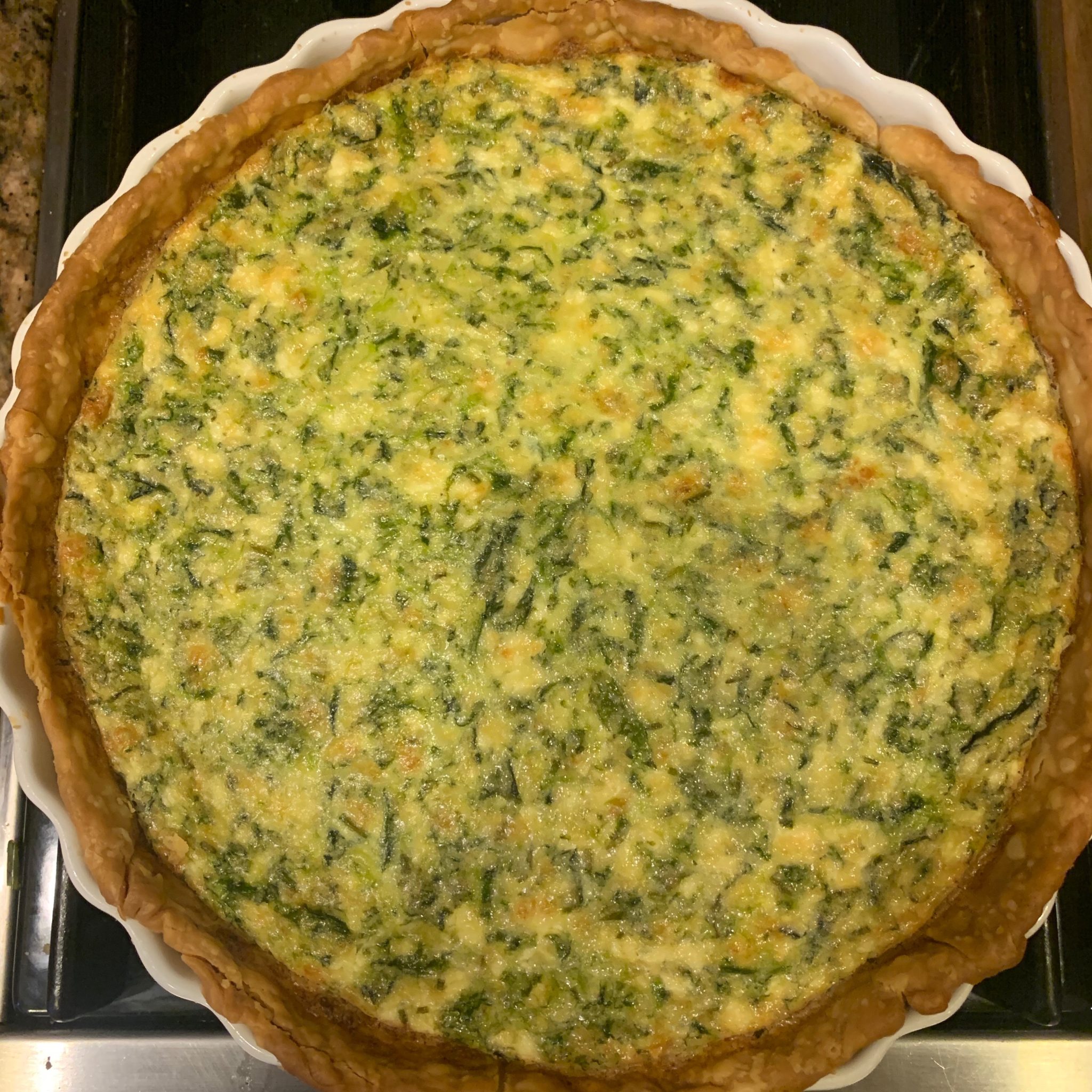
  • We’ll start the day with brunch centered around a delicious Kale, Chive and Goat Cheese quiche (jump to recipe). This year, I’ll have homemade sourdough banana bread and Waseda Farms Bacon on the menu as well.
  • In recent years, I’ve planned a signature holiday cocktail. One of the benefits of having adult children 😉. This year is going to be a Calvados Apple Cider Cocktail (jump to recipe).
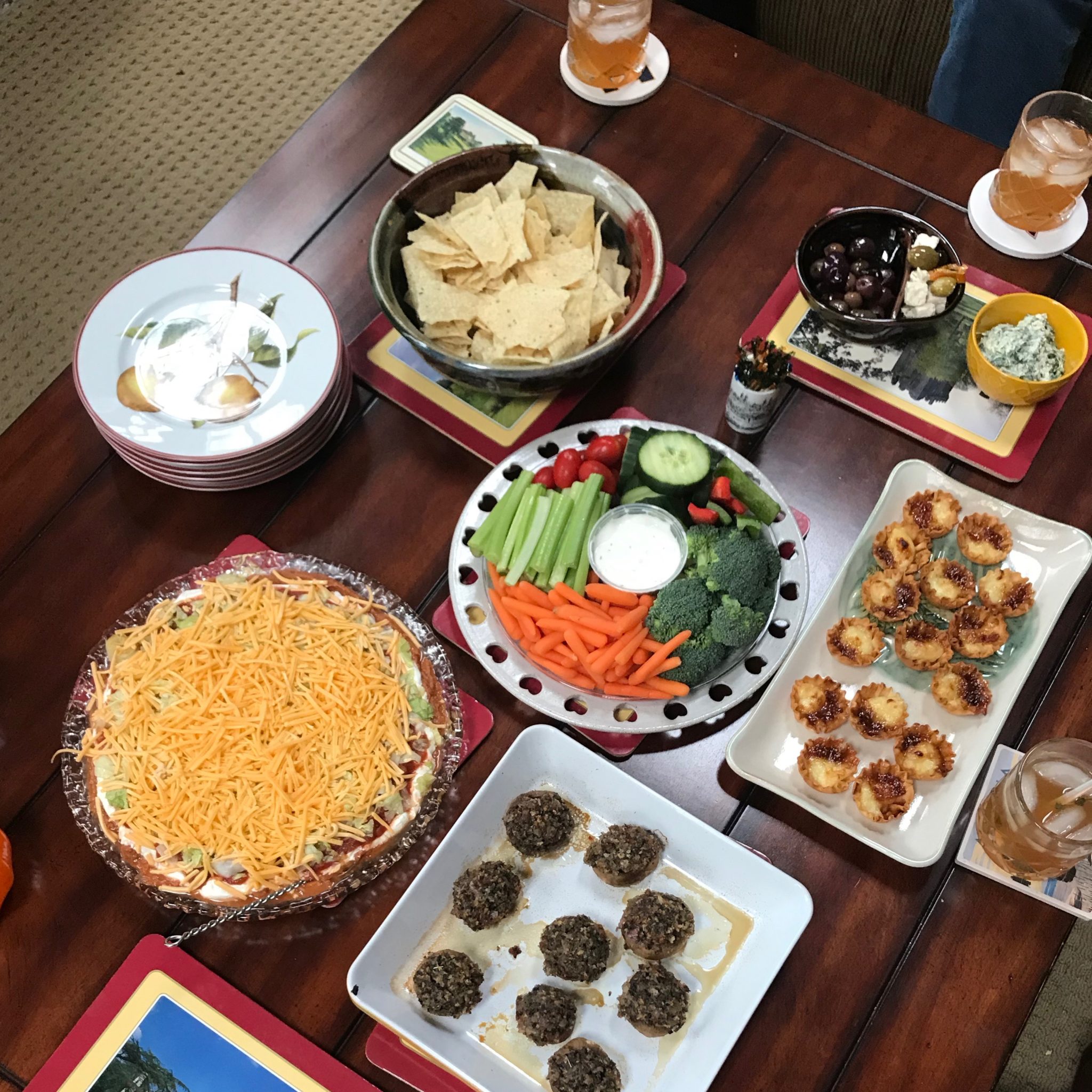
  • During the early football game, we’ll have some tasty, light snacks to munch on while the turkey is cooking.
  • Then late afternoon, we’ll enjoy a delicious Thanksgiving spread. Turkey, gravy, stuffing, mashed potatoes, vegetable, rolls, cranberry sauce, and apple and pumpkin pie are on the menu. I usually make a 14-16 lb turkey no matter the number so I can get enough stuffing in the bird and guarantee leftovers. The leftovers never go to waste that’s for sure!

  • At the table, we started a new tradition a few years ago after my dad passed away suddenly. We light a candle to remind us of these who can’t be with us this year, for whatever reason. It’s a special moment when we light the Love candle, and even more so this year with so many in our family spread far and wide.

What’s going to be new this year?

  • We’ll be a little smaller than normal.
  • Shopping has been a little different. As the covid rates have gone up in recent weeks, I am making full use of curbside pickup and can personally vouch for Whole Foods, Target, Williams Sonoma (my source for chestnuts for the stuffing), and in our area, Jewel and Mariano’s grocery stores. I submit my order online and pick it up later in the day. They’ve really worked out the kinks since earlier in the spring
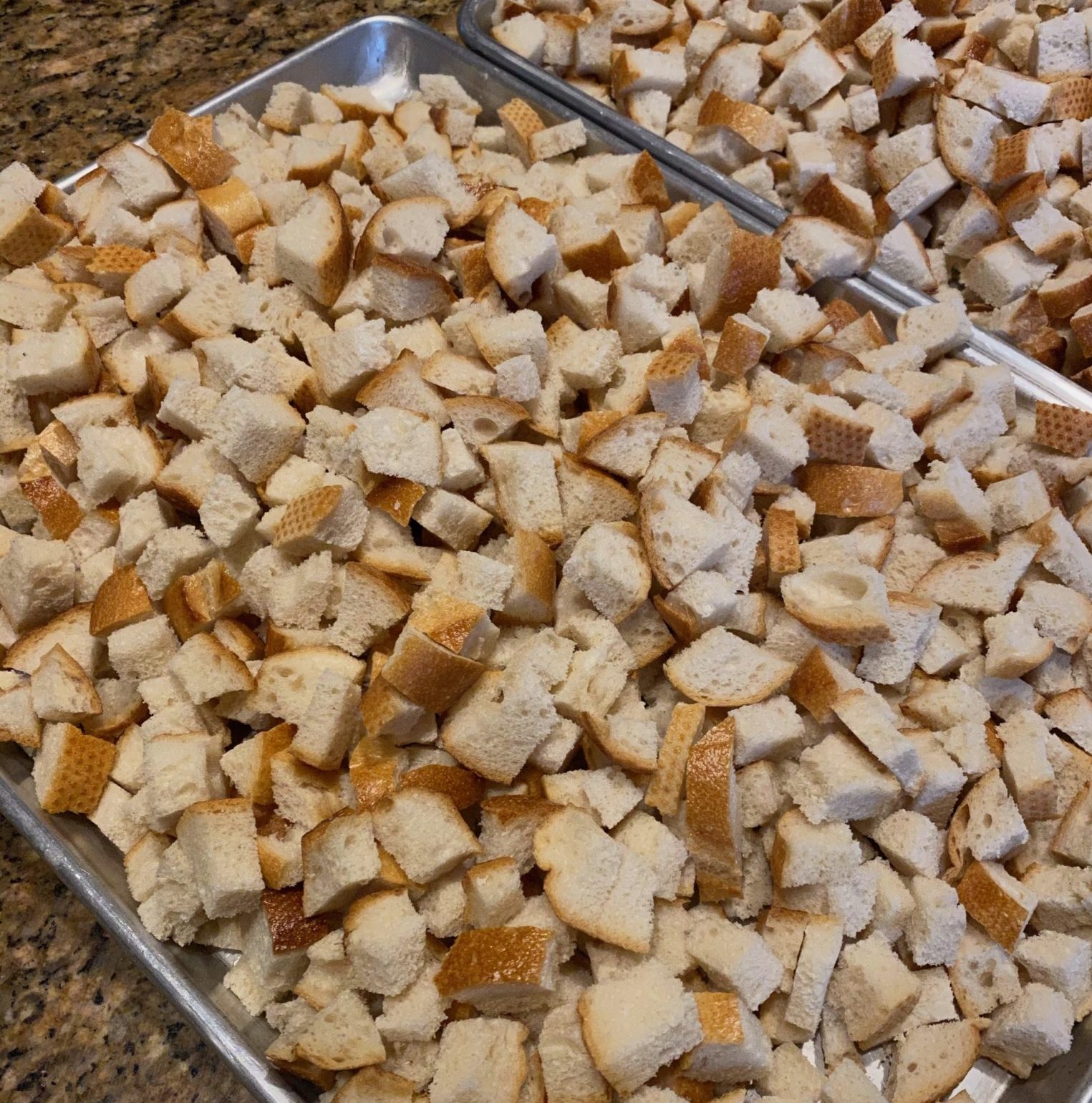
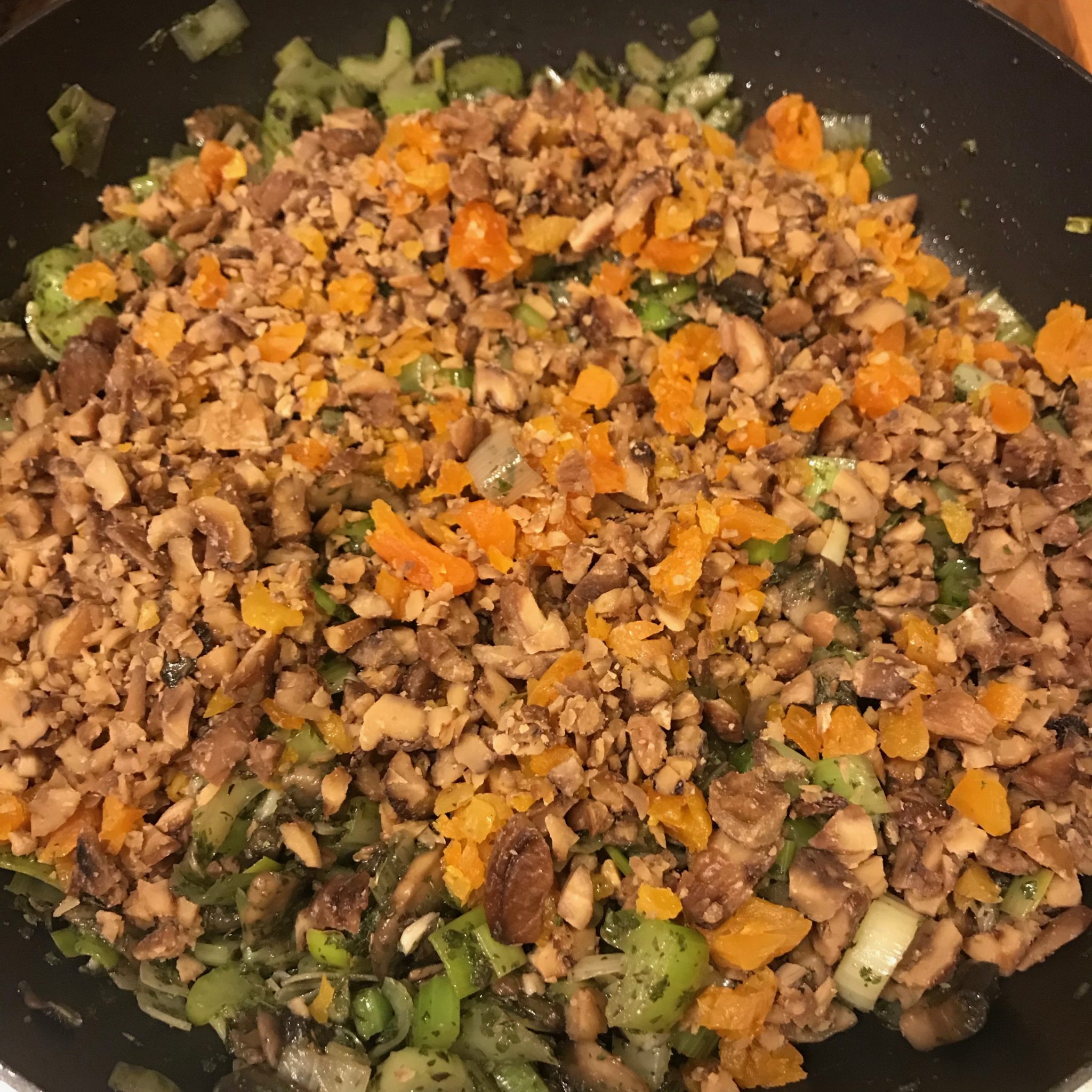
  • A group of my friends have put together a contact free, Thanksgiving Share-a-Dish. We all have picked one of our Thanksgiving favorites and will deliver a portion to everyone else’s homes on Wednesday. While for me making the whole meal is nothing new, I can see how this year’s meal prep could be daunting and unexciting when you’re used to guests bringing a dish to share. I’m super excited to try some of my friend’s favorites that have never made it onto my menu. You can only cook so much food for 3-5 people to eat. What am I sharing? My Leek, Apricot and Chestnut Stuffing (jump to recipe).
  • We’ll be spending time with family this year throughout the day through video streaming. Hopefully the internet doesn’t crash, but it’ll be nice for everyone to be able to spend some time together watching football, having snacks, or even joining us at the table.
  • I’m also planning to set up some fun games to play with family of all ages across all the miles. I’m thinking of Bingo, Trivia and a football pool.

Wishing you and yours a wonderful Thanksgiving however you are celebrating this year,
Stephi
Recipes mentioned above

Kale, Chive and Goat Cheese Recipe

[mv_create key=”2″ type=”recipe” title=”Kale, Chive and Goat Cheese Quiche” thumbnail=”http://stephigardens.com/wp-content/uploads/2020/11/IMG_9967-2-1-scaled.jpeg”]

Leek, Apricot and Chestnut Stuffing

[mv_create key=”1″ type=”recipe” title=”Leek, Apricot and Chestnut Stuffing” thumbnail=”http://stephigardens.com/wp-content/uploads/2020/11/IMG_9255-3-scaled.jpeg”]

Calvados Apple Cider Cocktail

[mv_create key=”3″ type=”recipe” title=”Calvados Apple Cider Cocktail” thumbnail=”http://stephigardens.com/wp-content/uploads/2020/11/IMG_6880-scaled.jpeg”]

Sprouts!!

When I was a teenager, growing sprouts was all the rage. Then came an e. coli problem and they went away. My mom mentioned to me a few weeks back that she was growing sprouts (mostly for her chickens but that’s another story). I was a bit concerned based on my memories, but soon realized that growing sprouts was now safe and easier than ever to do.
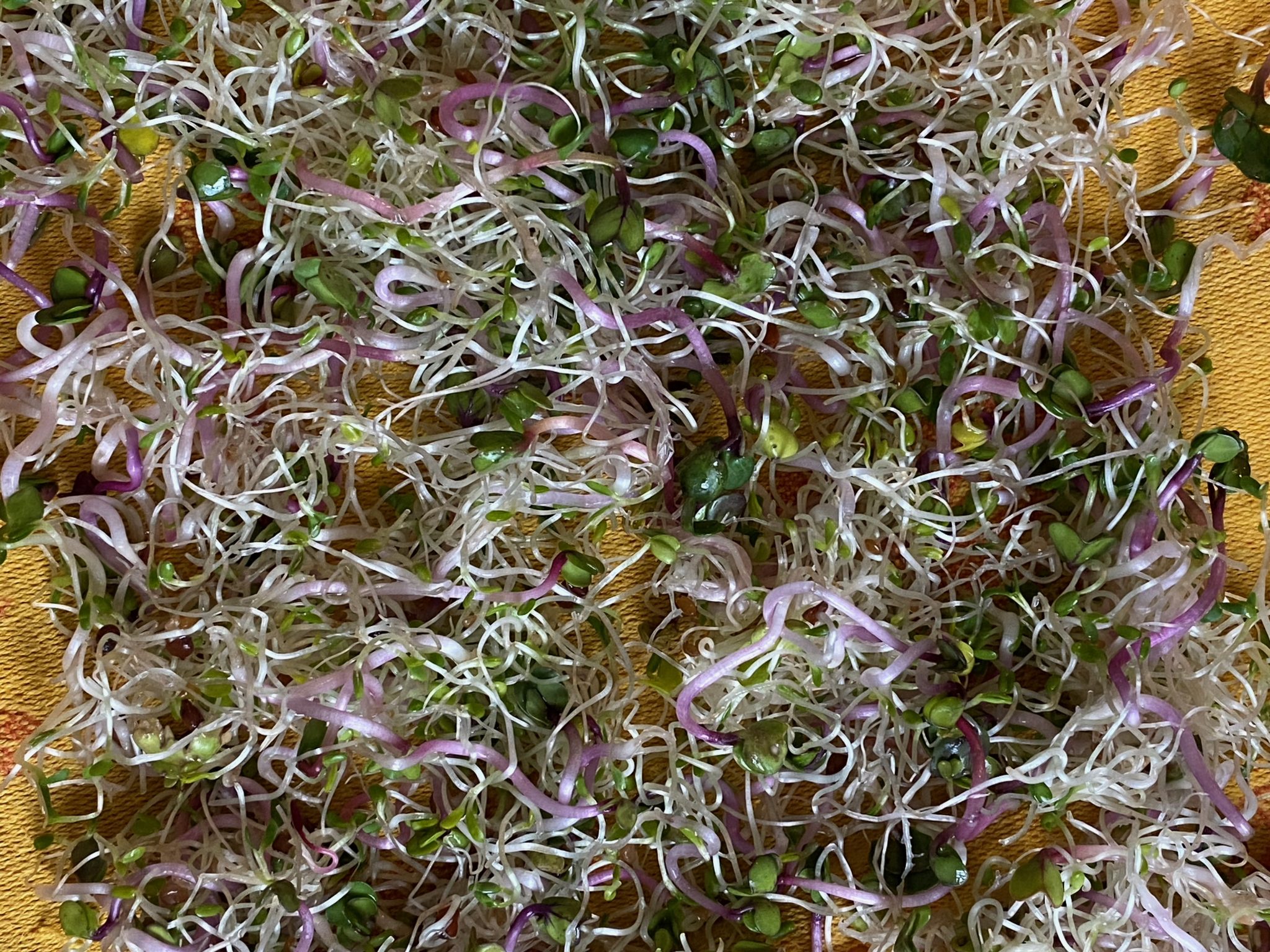
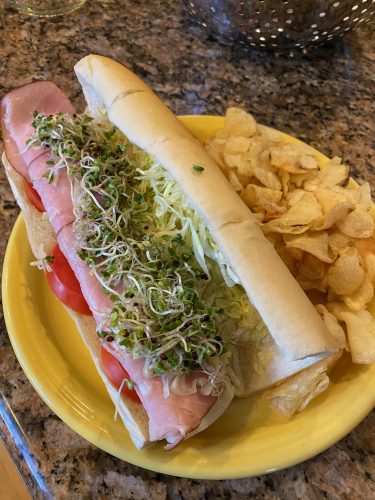
It also couldn’t have been better timing with our Stay at Home situation right now. What’s better than some fresh sprouts on your salad, sandwich, or even scrambled eggs? A healthy, nutritious, tasty addition to almost everything!

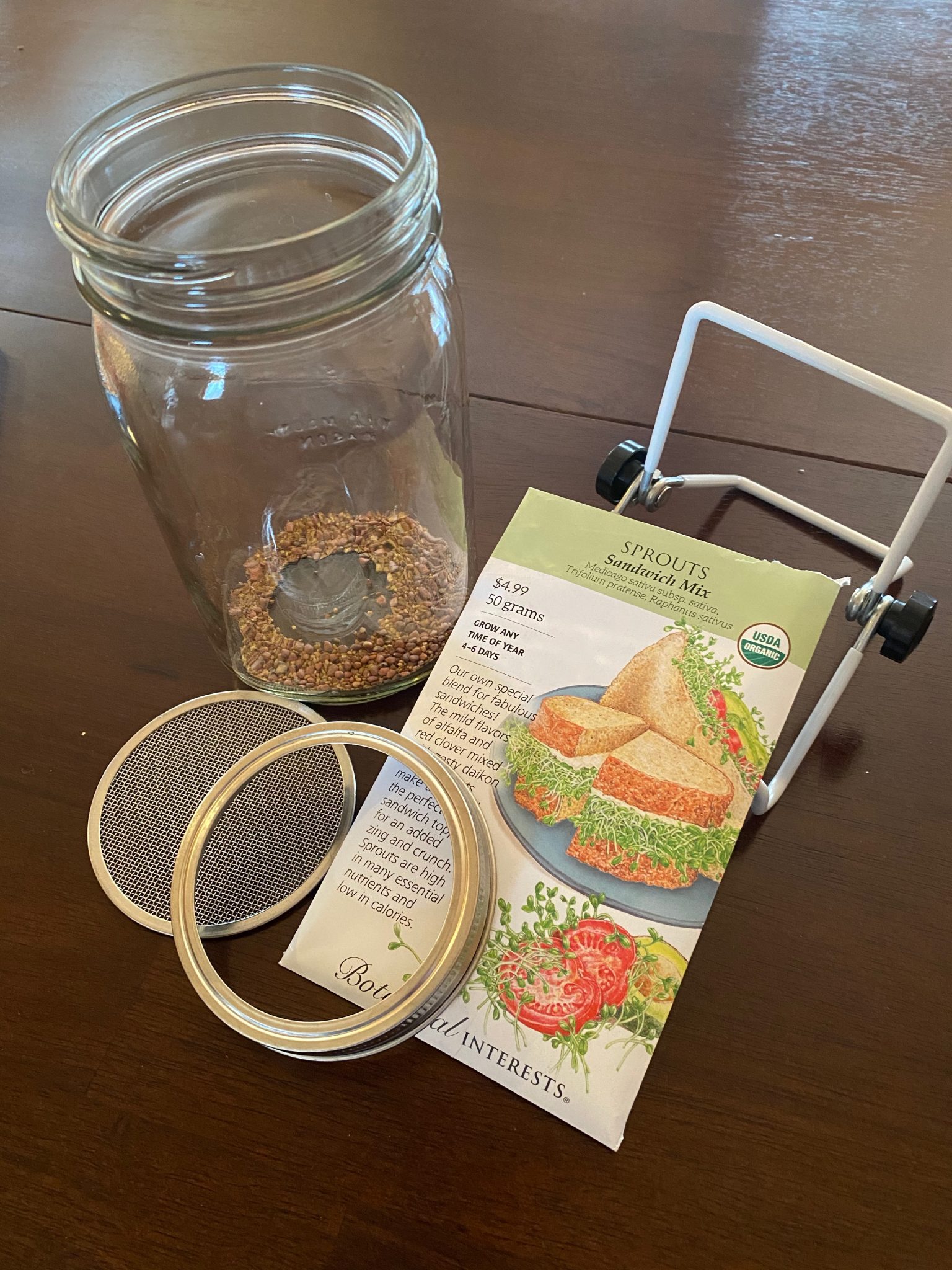
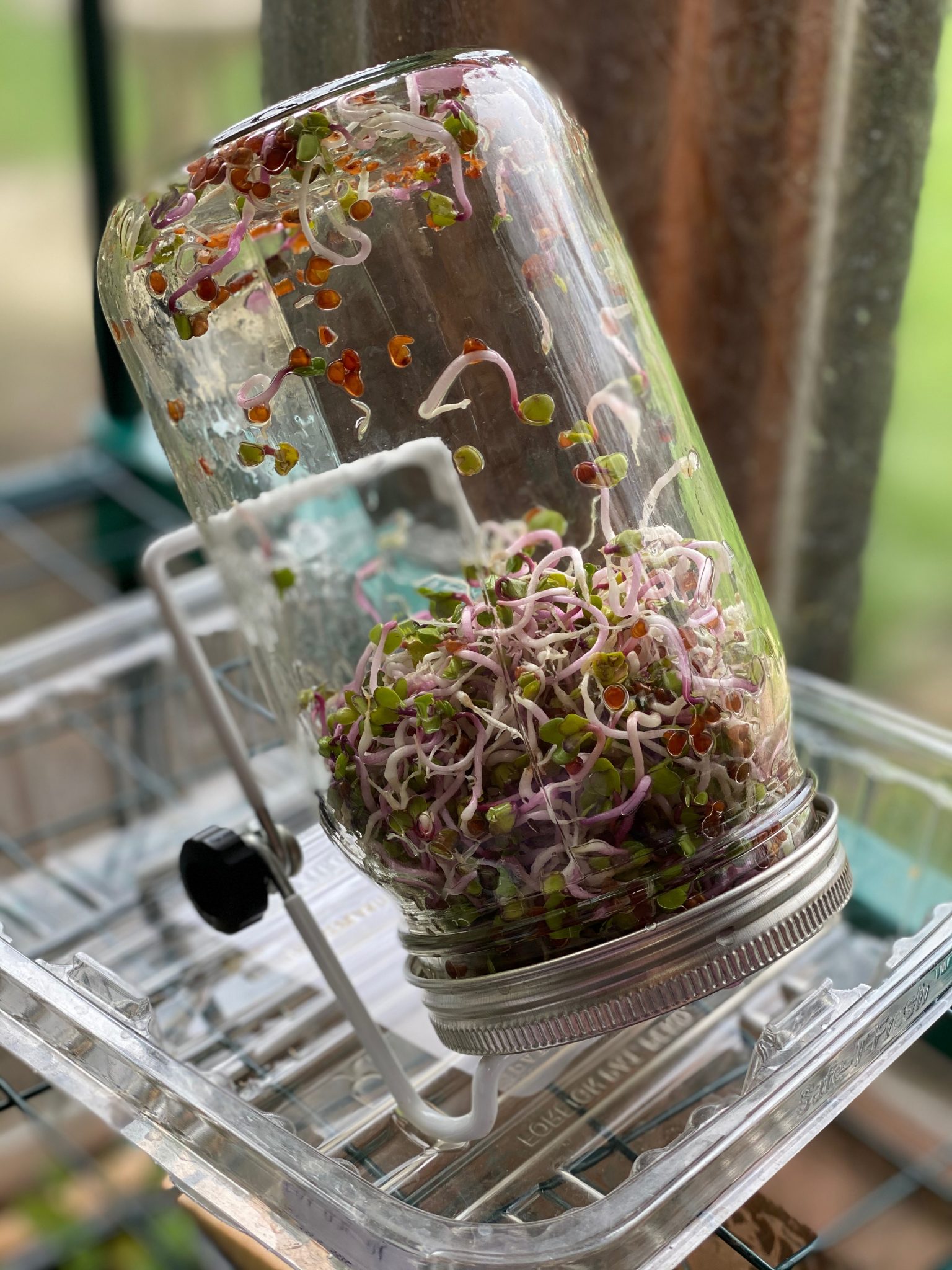
I’ve been growing mine in mason jars with mesh lids. Here’s how:

Supplies:

And of course sprouting seeds!.

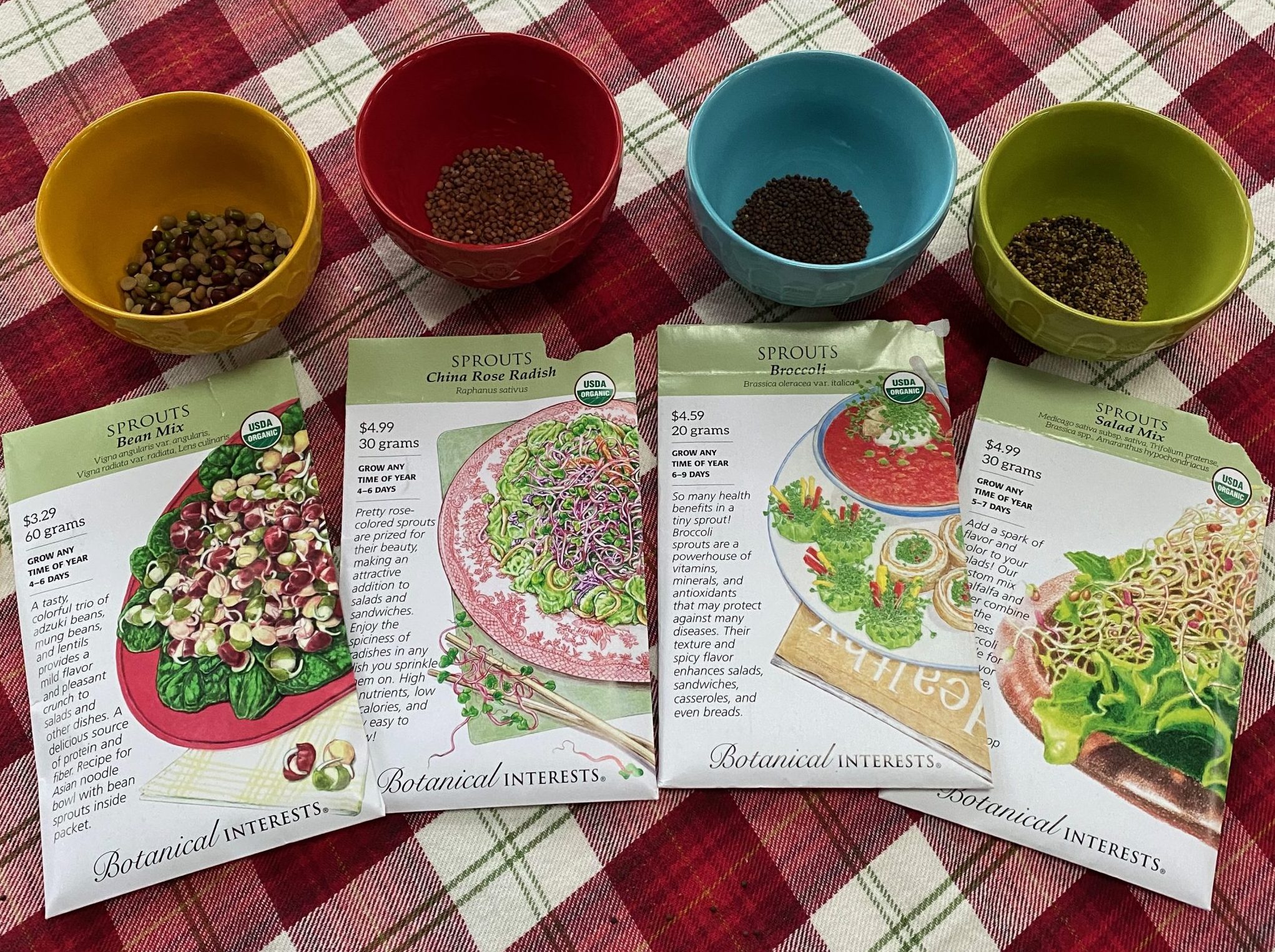
It’s extremely important that you use specifically labeled seeds for sprouting to prevent an e. coli infection. They’ll be listed as “sprouts”, “sprouting seeds” or “for sprouting”. They should also have a clear description of how the seeds have been tested for dangerous food-borne pathogens. I’ve bought my seeds from Botanical Interests and they have a clear safety explanation. They also mention that the seeds can be further disinfected if you desire. I haven’t done this, but it is an option.

Now you are ready…

Growing Your Sprouts:

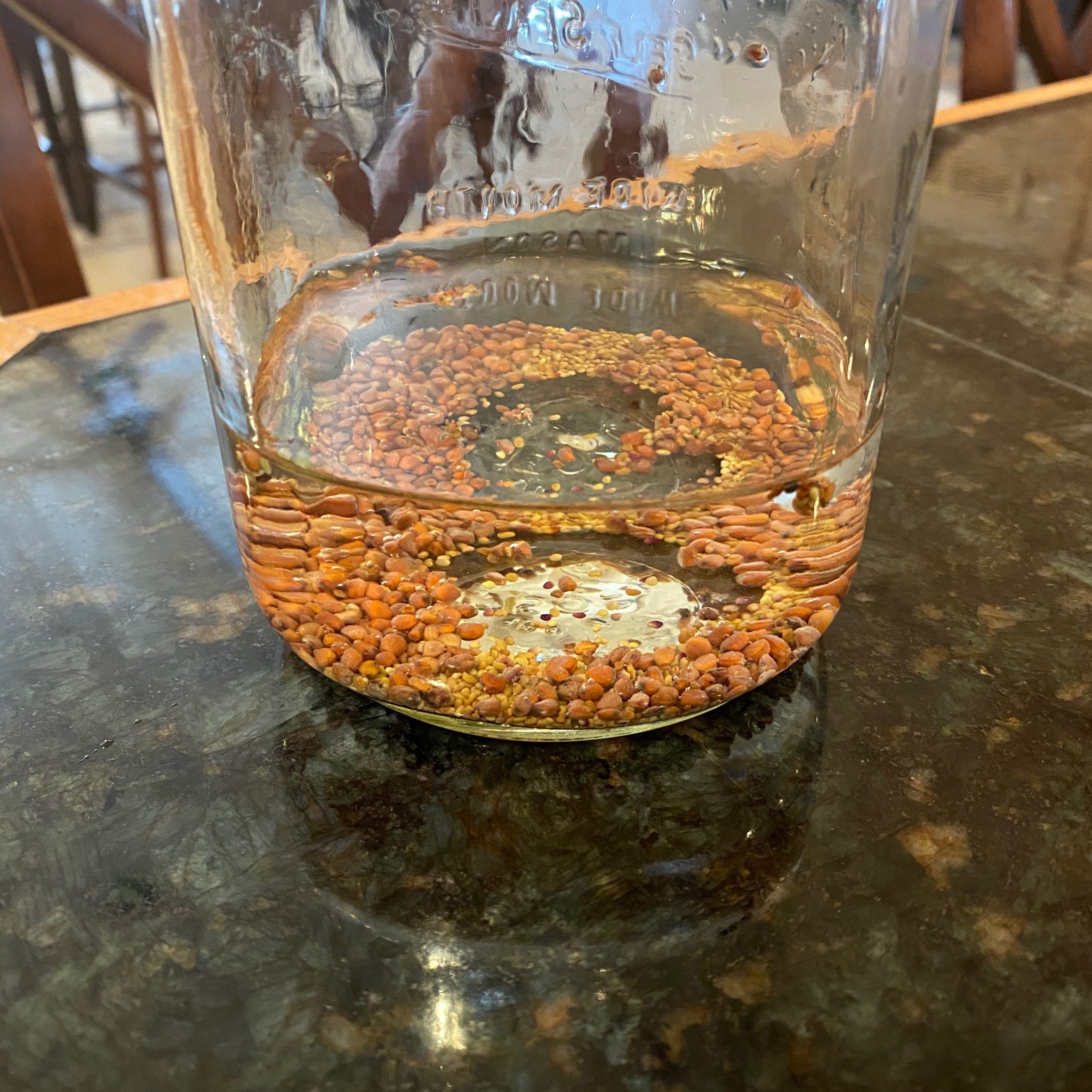
  • In the wide mouth mason jar, place 1-2 tablespoons of seeds and cover with 4 inches of warm (not hot) water. Screw on the mesh screen and stainless lid.
  • Let sit overnight.
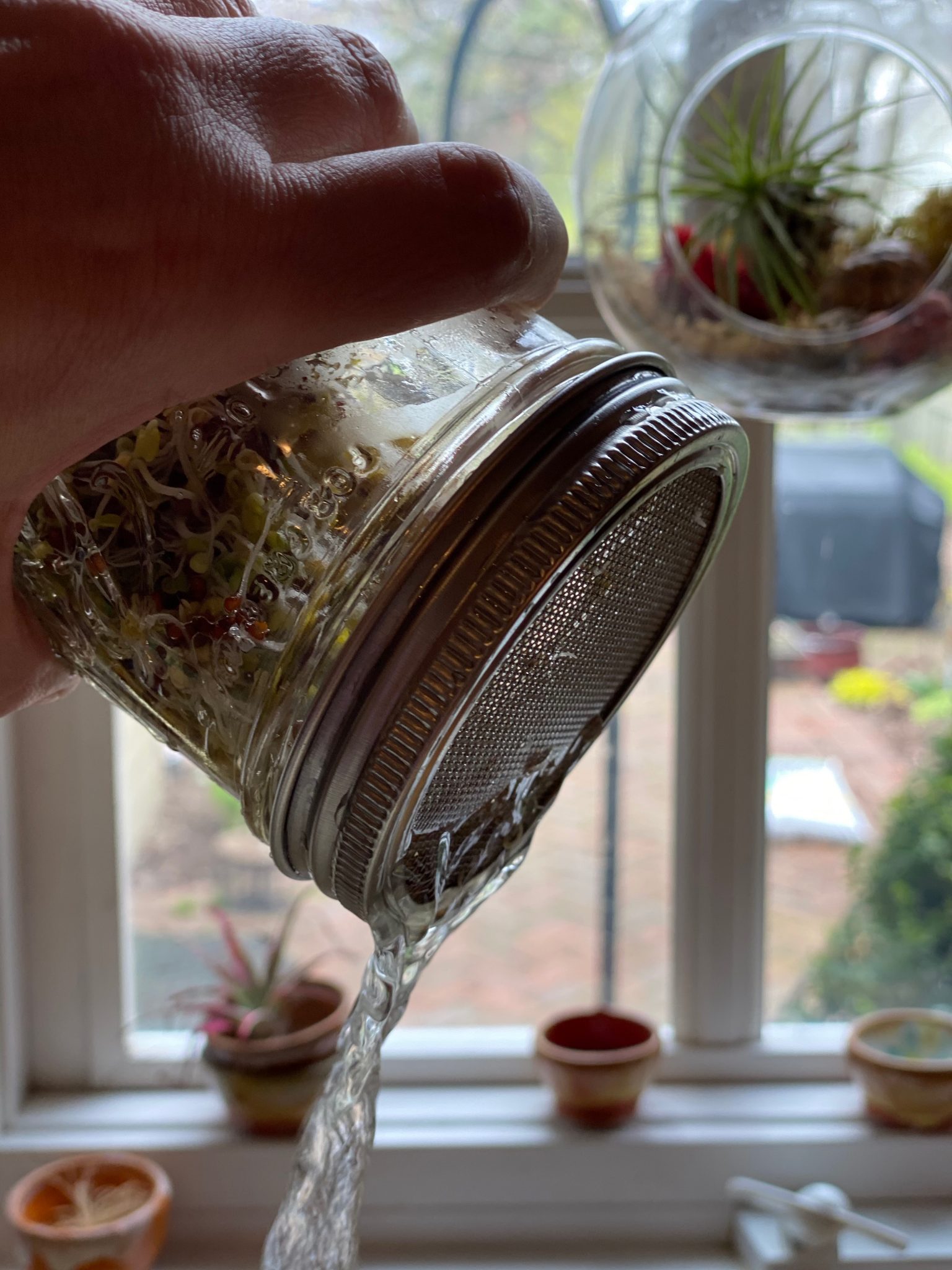
  • Drain the water through the mesh screen, rinse by adding more water, then drain again. Give it a good shaking to break apart the sprouts to rinse thoroughly
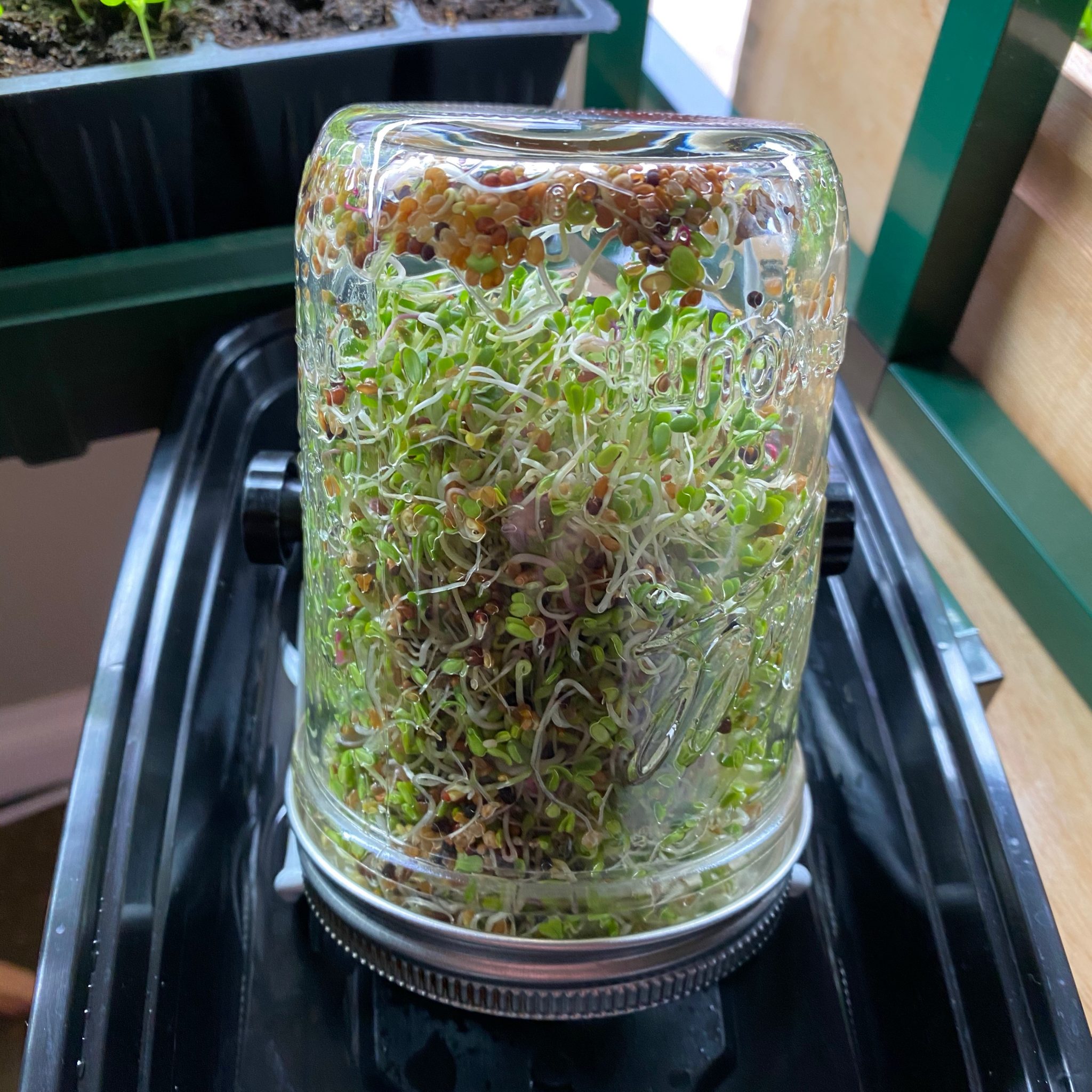
  • Place the jar, mesh screen down, on the sprouting stand in indirect sunlight. I put the stand in a cleaned plastic to go container to catch the water that drips.
  • Repeat the rinsing and draining 2x per day until sprouts are the size you want, which can take three-seven days depending on the seeds and what size sprouts you like.
  • Harvest your sprouts when they have two small leaves. Sometimes I’ll put them in a sunnier location for a day to green them up right before harvesting

Harvesting and storing your sprouts:

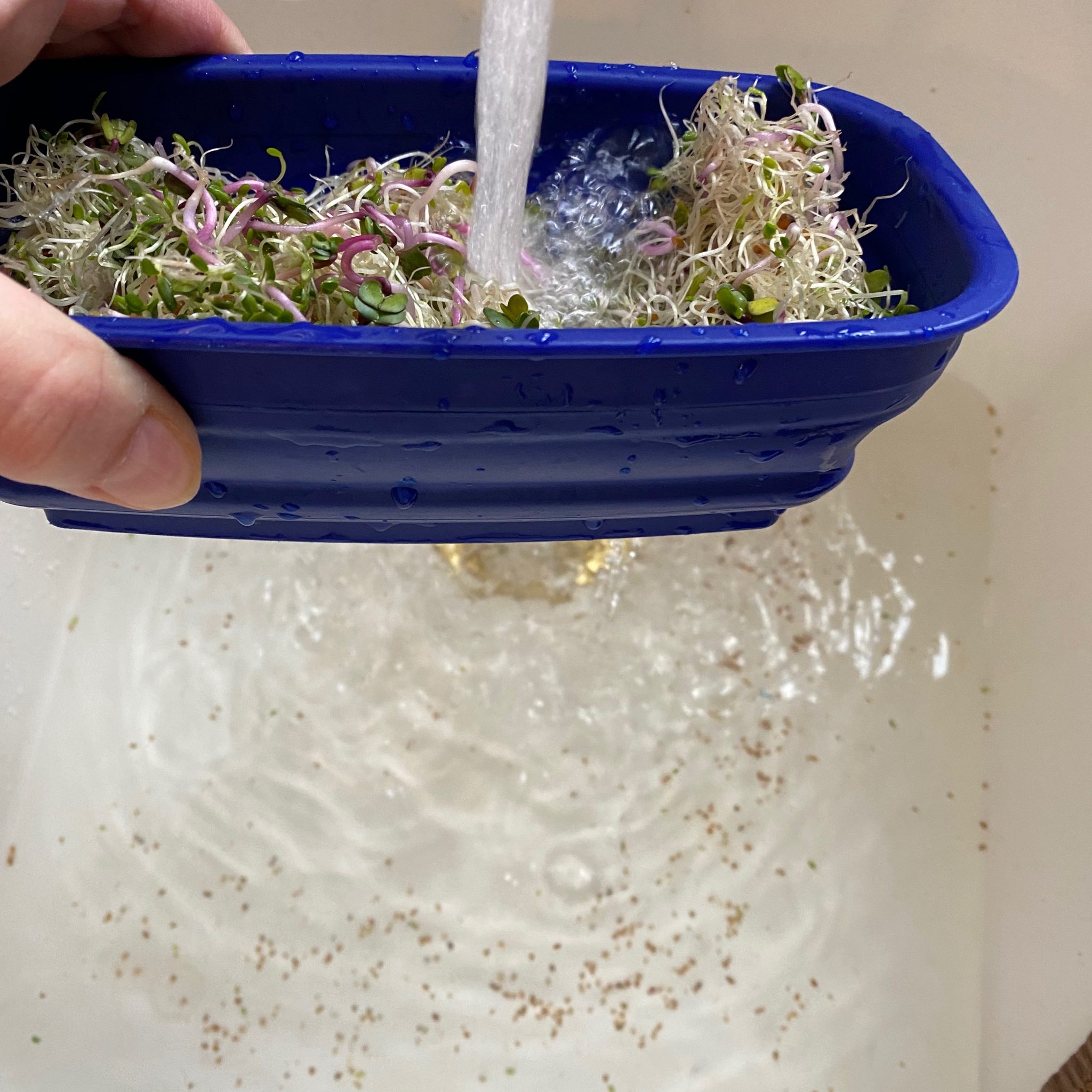
When sprouts are ready, you can eat them as is, or rinse them to remove any unsprouted seeds and hulls. To remove these crunchy bits, I first fill the opened jar with water and pour off any seeds and hulls that float up.

Then I use a mini colander to rinse the seeds and let the seeds and hulls rinse through.

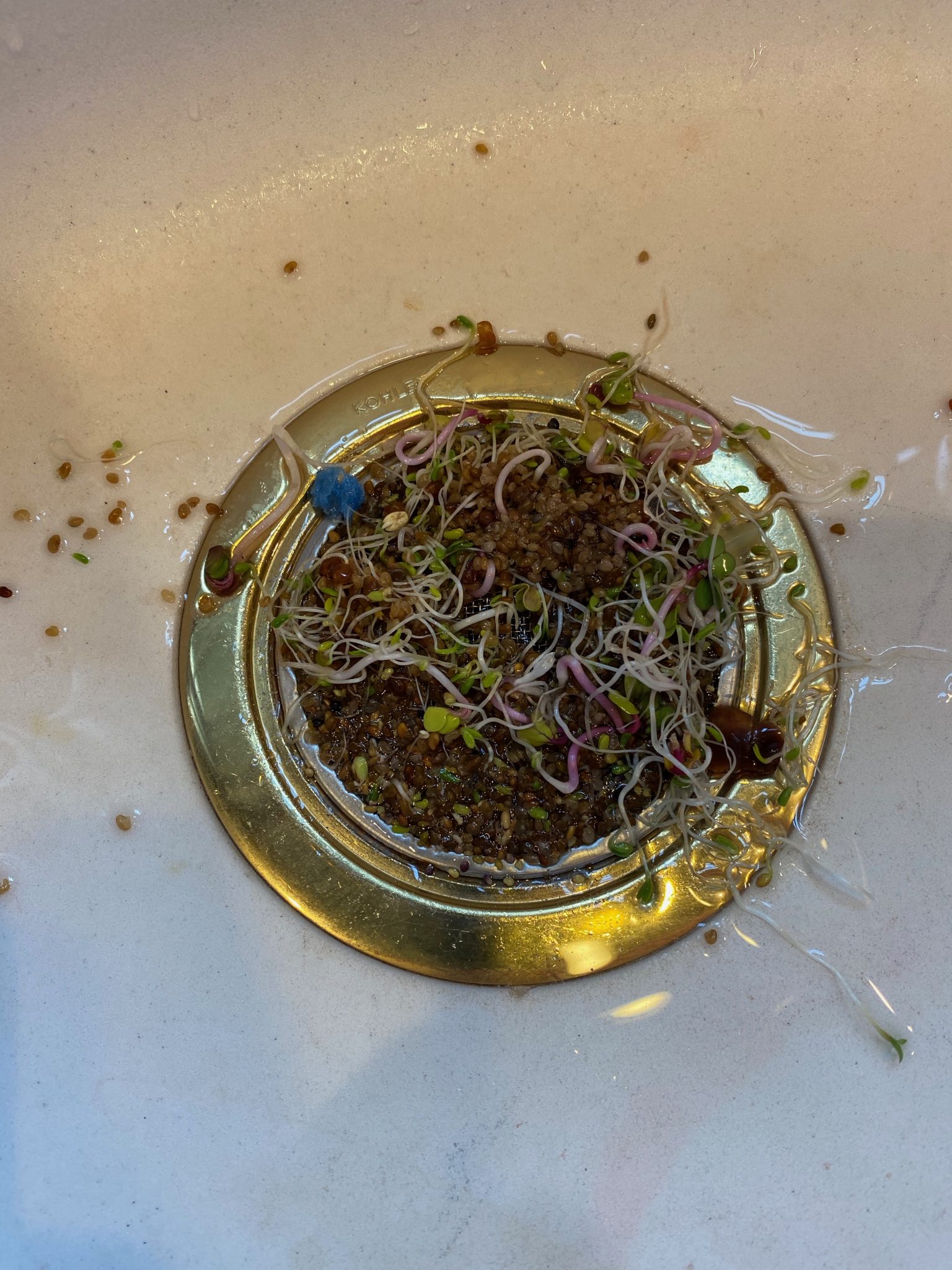
I recommend using either a kitchen mesh strainer or the mesh jar insert to catch any seeds that may go down the drain. In a pinch a paper towel will work too.

Why not let them go down the drain? These seeds in the sink are bringing back memories of our hamster days. My daughter would clean the cage in her bathroom sink and eventually we had seedlings growing on the drain! I do not want that to happen again. So use a screen to be safe.

I let the sprouts dry for a while in the colander, clean kitchen towel, or on a produce drying towel.

I’ve had the most success storing them in the refrigerator in small Rubbermaid FreshWorks Produce Saver Containers. You want some air circulation to keep them fresh. I’ve had them stay fresh up to a week. If not looking fresh before a week, obviously toss them and make some more.

What are my favorites?

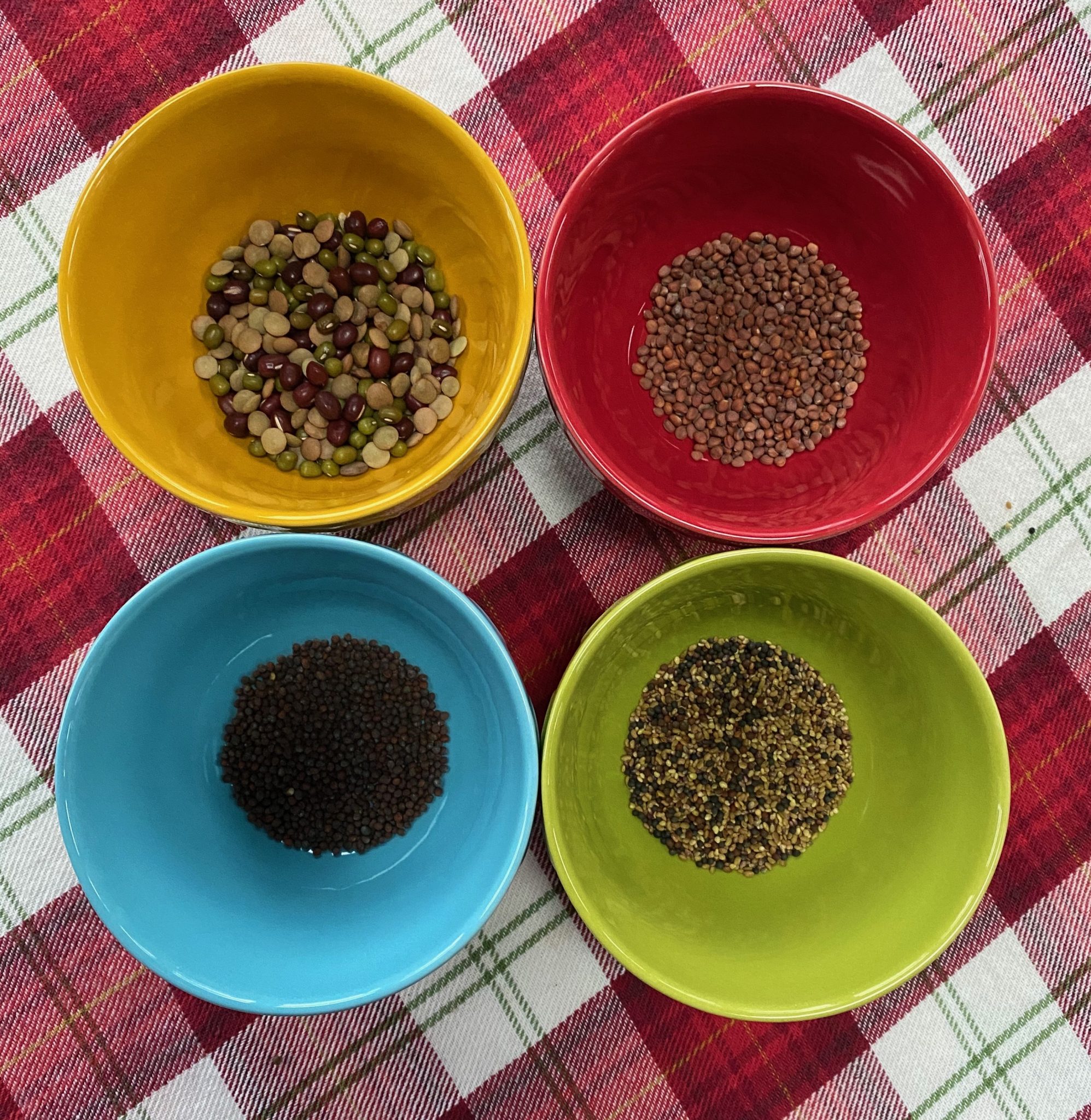
From Botanical Interests I’m loving all their sprout seeds. I just started a batch of China Rose Radish to add some zestiness to my favorite foods. The Sandwich and Salad blends are good all around mixes, and the broccoli sprouts actually smell like broccoli!

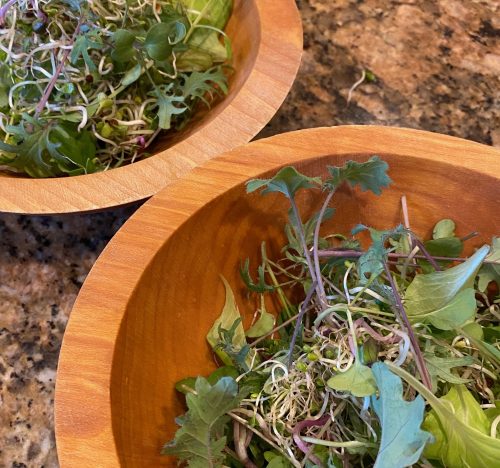
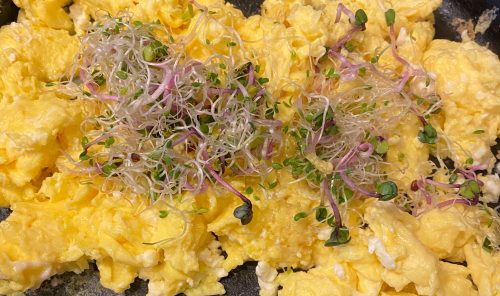
How do I use my sprouts? Adding to a salads is always easy and a great way to extend your lettuce right now when we can’t ship as often. They can also add great flavor to sandwiches, scrambled eggs (with feta cheese, yum), or whatever you want to add a little boost to.

Note: To stay safe, please remember to only use seeds marked for sprouts!

It’s Garlic Time!

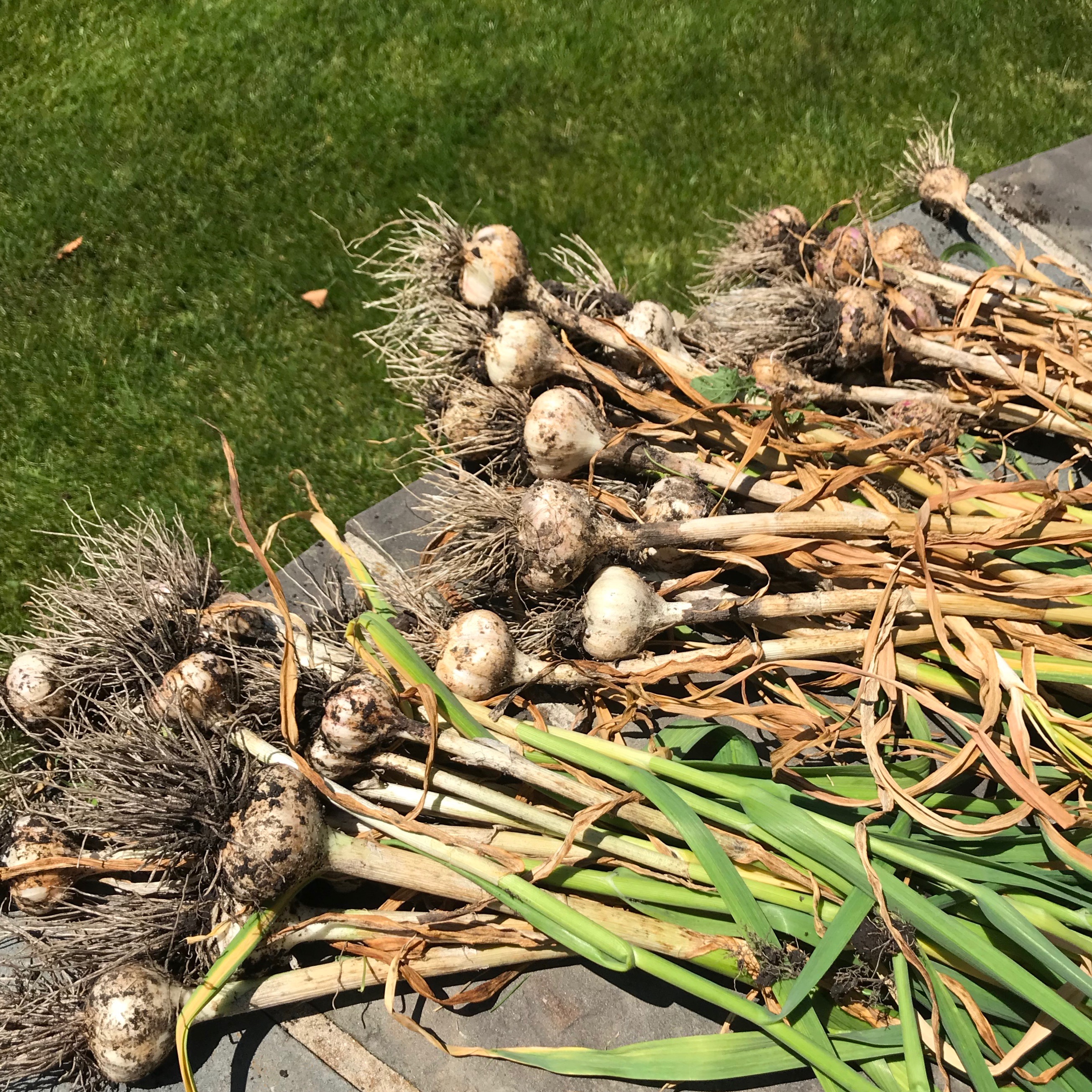
If you’ve followed my blog at all, you know I love to grow garlic. I recently harvested this season’s crop and right now is the perfect time to order your garlic bulbs for fall planting.

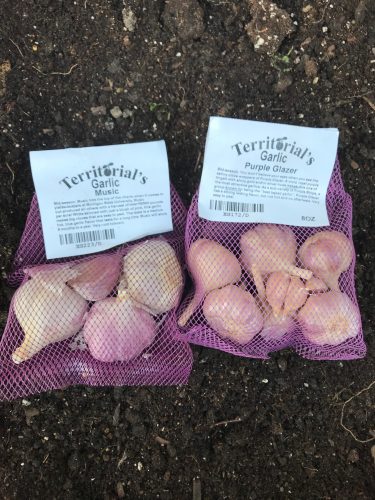
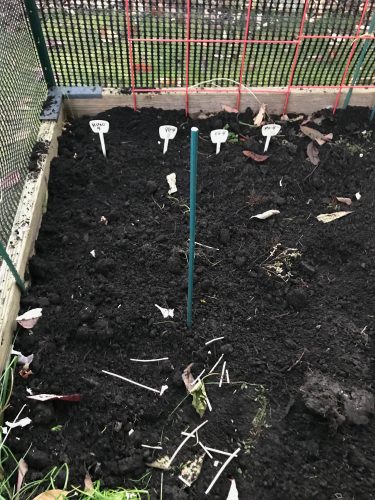
While a lot of things in the garden didn’t do well this year, it was a banner year for garlic in my home garden, but unfortunately not so much in the Wisconsin garden. I grew two hardneck varieties this year, Purple Glazer and Music, both from Territorial Seeds. Before planting, I replenished the soil with some new garden soil and compost. After a while, soil in raised beds sink and new soil and nutrients need to be added.

Garlic comes in two types, hardneck and softneck. Hardneck varieties require some time in frozen ground, so are not recommended for warmer climates. In the spring, they produce a tall edible stem called a “scape” and are generally known for their stronger taste. Softneck varieties tend to grow in a wider variety of climates, last longer in storage and are good for braiding. They also tend to be a little milder in taste. For whatever reason, I’ve had much better luck with hardneck varieties in my northern Zone 5b garden.

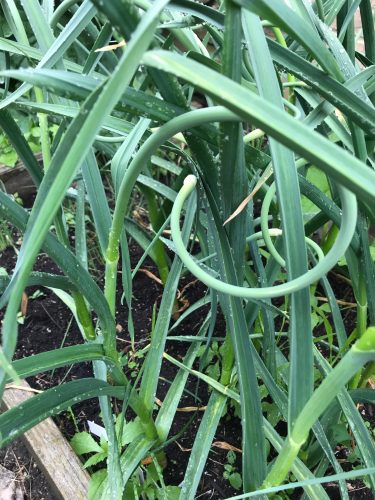
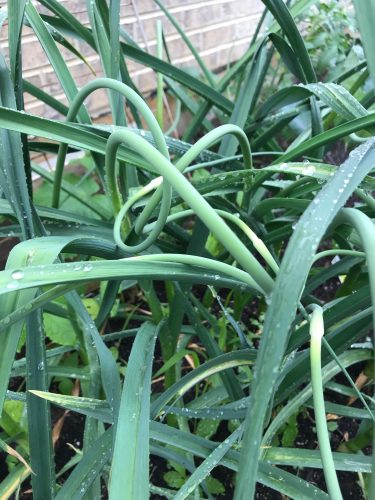
Late spring, the garlic scapes appeared.

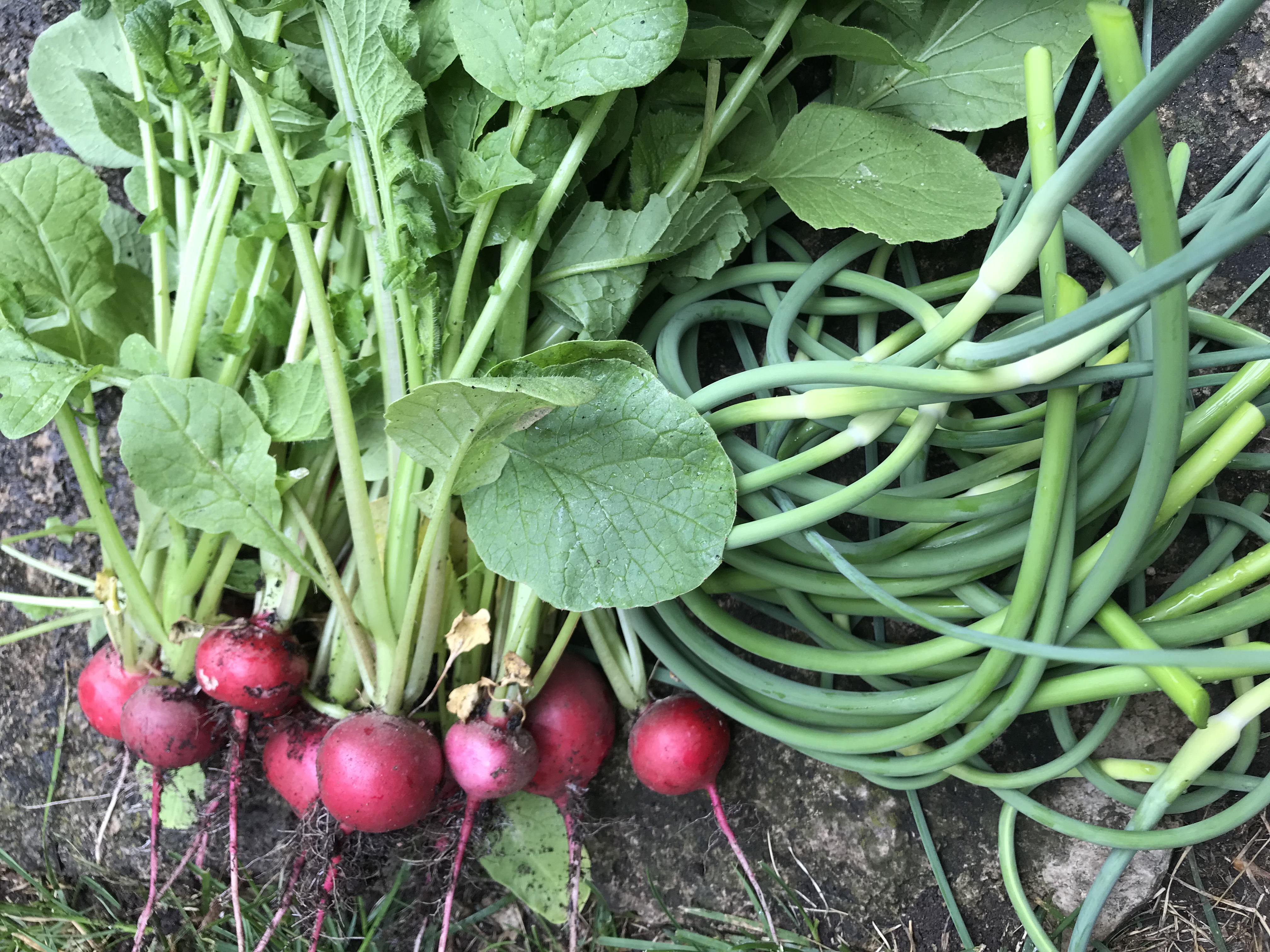
Garlic scapes are the garlic flower stalks that twist and turn when young, and end with a terminal pod containing garlic bulbils. It’s these young, tender, twisting and turning scapes that are a delicacy to eat. Removing them also tells the garlic to put its energy into making the garlic bulb and not producing new seeds.

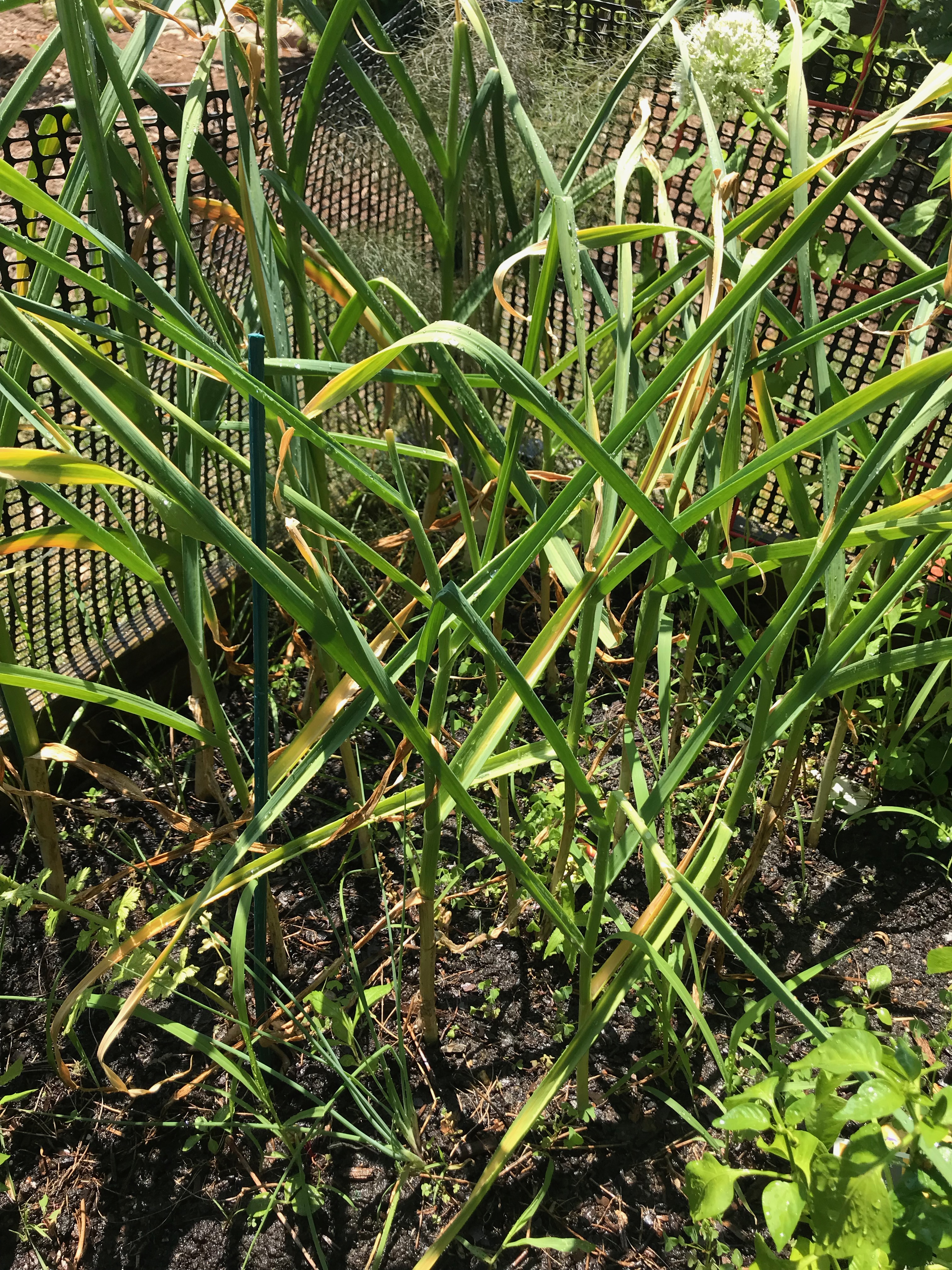
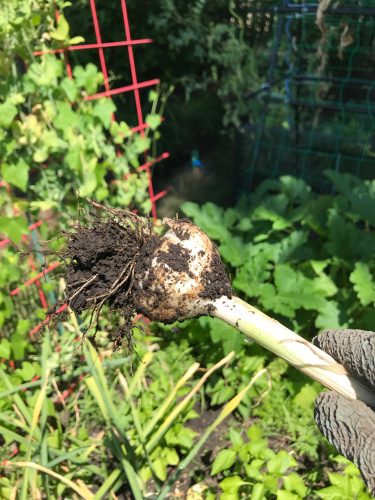
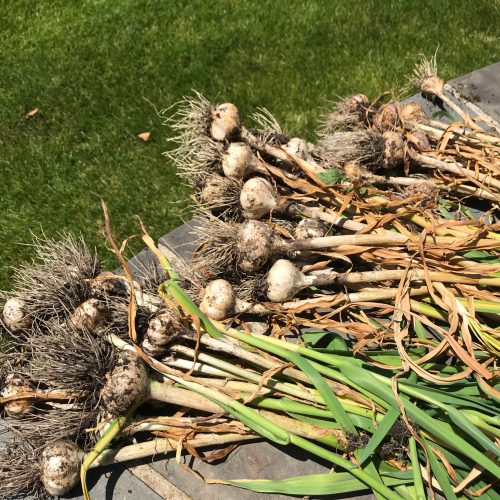
Mid summer, when the lower leaves are starting to turn brown, but the upper level are still green, the garlic is ready to harvest. Harvesting the garlic is easy, but you need to be gentle.  Unlike onions, you can’t just yank it out of the ground.  Too easy to damage the head or accidentally tear off the leaves.  Garlic also cures better when the leaves are still on.

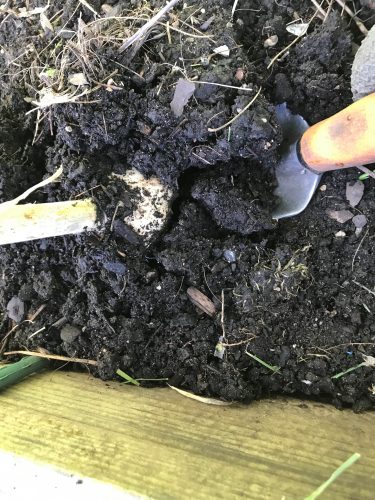
So grab a trowel and dig gently around the bulbs to loosen the soil.  Be careful not to hit the heads and damage the tight cluster of cloves.

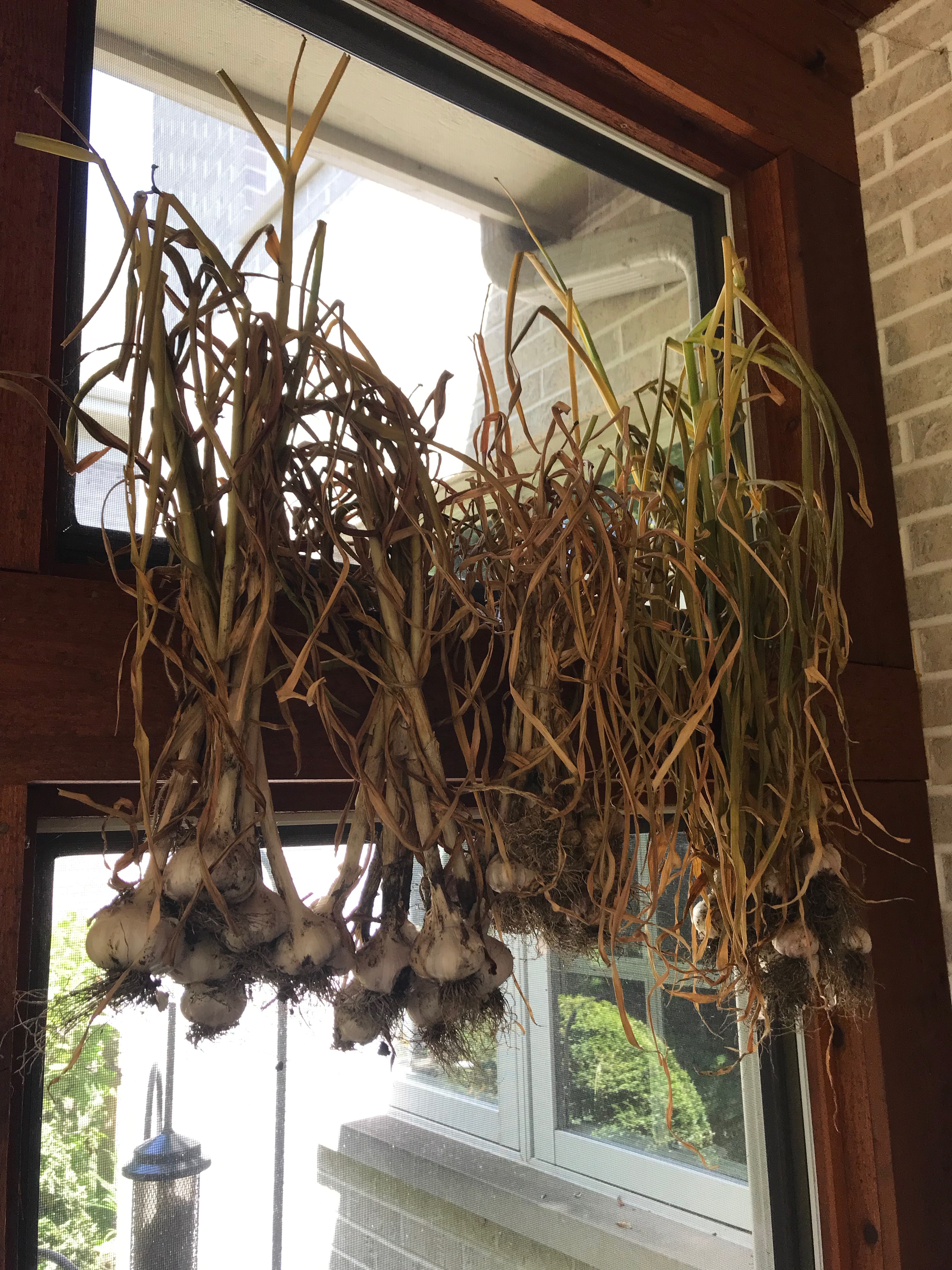
Then it’s time to find a spot to cure the garlic so that it’ll be ready to store for the winter.  Garlic should be cured in a protected area, like a garage or porch, out of direct sunlight and where there is reasonable air circulation.  It should be hung with the leaves and roots still attached. Even some dirt is fine.  I hung mine in the screen porch.  On particularly hot days, I turn on the overhead fan to keep the air circulating. After 3-4 weeks, I’ll trim the leaves and roots, and gently clean off the remaining dirt. Then I’ll store it in a cool, dry spot to use all winter.

Now that I’ve harvested this year’s crop, time to plan for next year. I’ve already placed my order for Music and Duganski garlic from Territorial Seeds.

I’ve had really good luck with Music, which is a mid-season porcelain type. It’s one of the larger garlics I’ve grown, has creamy white cloves, a medium hot, true garlic flavor and has a long shelf life. Duganski is similar to the Purple Glazer I grew this year, both being mid-season purple stripe types, but is a bit stronger flavored. I love the beautiful purple cloves that purple stripe types have, but thought I’d try something little different this year.

Garlic doesn’t ship until late September or early October depending on your location, so I have a little bit to wait until they arrive. Good thing because its spot is currently growing a second season of beets and swiss chard.

Want to grow garlic this year? I’d recommend ordering soon for best selection. I’ve had good experiences with garlic from Territorial Seeds, Botanical Interests, and Burpee. Just don’t plant the garlic you buy in the grocery store!

Want more information in growing garlic? Check out some of my other garlic posts or get tips from:

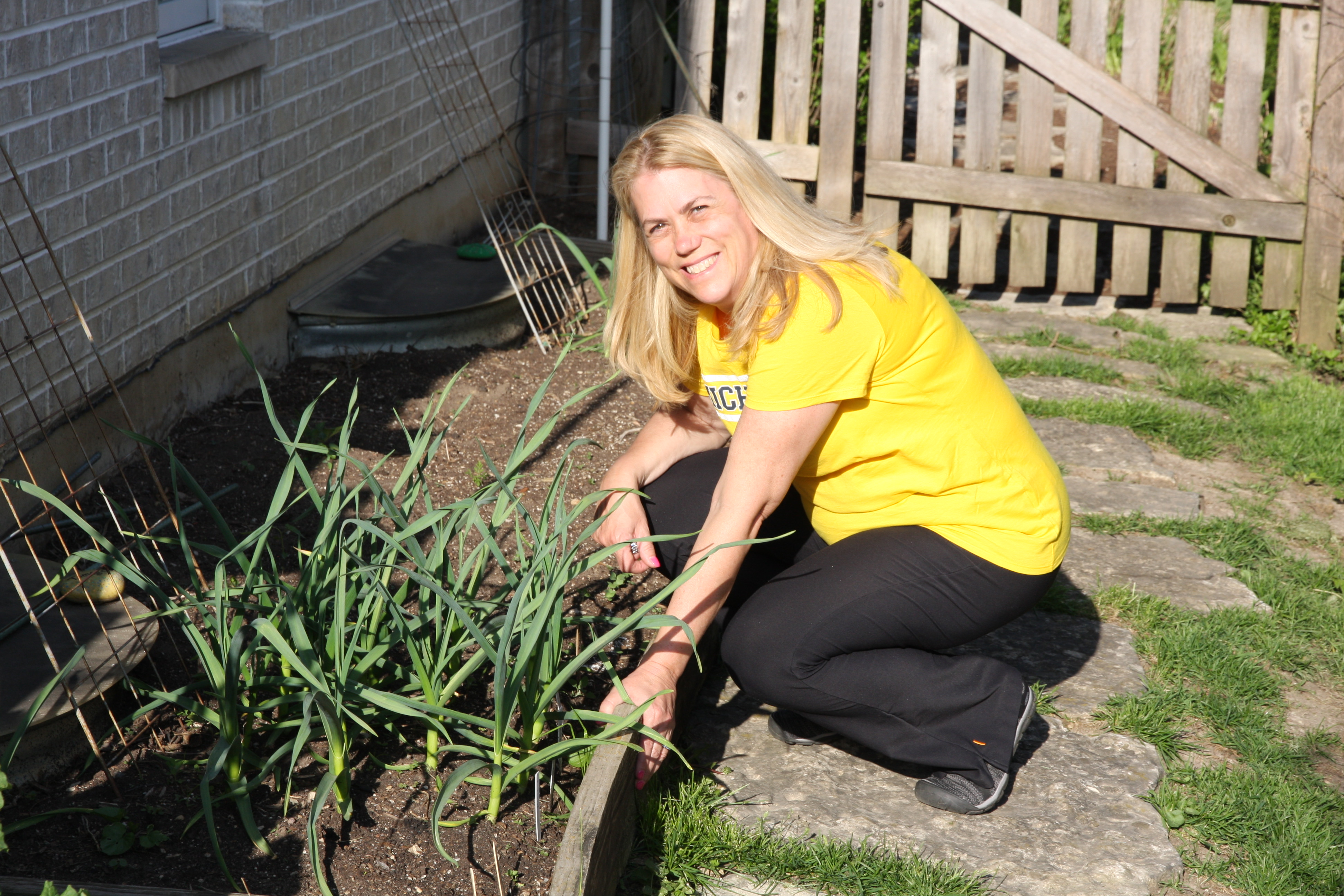
Me checking out the early garlic!

First of the Season

I always love when I go over to the vegetable beds and I find my first ripe vegetable of the summer. It means that so much more goodness is on the way. I got a bit of a late start in the vegetable garden this year because of very poorly timed travel and a cold spring. Then this post got pushed back just a little bit because my computer broke and needed to go away for repairs 🙁 So I am definitely late with my first to harvest this year.

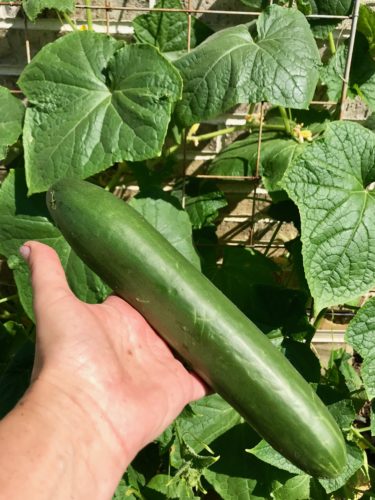
In any case, the first of the harvest winner this year was my Sweet Burpless Cucumber from Burpee.

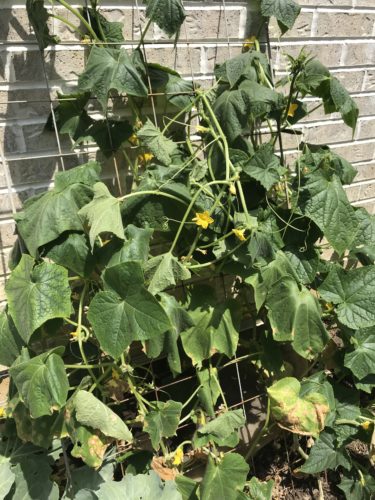
I’m growing 2 kinds of cucumbers this year, the sweet Burpless and Telegraph Improved (Botanical Interests), an English style cucumber. I meant to only grow the telegraph cucumber since I’ve really come to enjoy the thinner, soft-seeded variety, but decided at the last minute to plant my old stand-by as well. This has been a great year for cucumbers based on the vigor of the plants on the cucumber trellis. There are an abundance of flowers so there will be a good harvest.

One of my favorite cucumber recipes is a Sweet and Sour Cucumber Salad.  This is an easy recipe that can be made with thinly sliced or chopped cucumbers and makes a great side-dish for almost any summer dinner. It can easily be jazzed up with tomatoes, green peppers, kohlrabi- whatever is available in your garden that day.

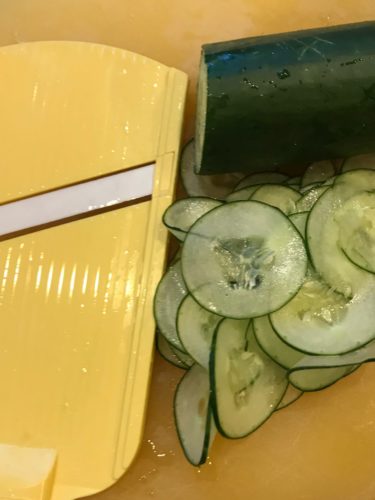
Start with your favorite cucumber and either slice it thinly, spiralize it or dice it. All make for a tasty salad. For making wafer thin slices, I love my Kyocera ceramic slicer. But be careful where you store it, it is REALLY sharp.

Earlier in the day I made my dressing:

Sweet and Sour Cucumber Salad
Print
Author:
Ingredients
  • ½ c Rice Wine Vinegar (unsalted)
  • ⅔ c water
  • 2½ T sugar
  • 3 cucumbers, sliced, diced or spiralized
  • optional: ½ medium thinly sliced medium red onion
Instructions
  1. Bring vinegar and water to a boil in a saucepan over medium heat. Stir in sugar to dissolve and simmer 15 min, stirring occasionally. Remove from heat and let cool to room temperature.
  2. Pour over prepared cucumbers in a bowl, toss to coat, chill in refrigerator until ready to serve.
  3. Extra dressing can be refrigerated and used within a week.

Then at dinner I have a wonderful side dish to go with whatever my husband has grilled that night!

How is your garden growing this year?


Leeks!

One of my favorite flavors to cook with is leeks. They have a unique and interesting mild onion taste and are part of the allium family that also includes onions, garlic, shallots, scallions and chives. Last year, I found I had wild leeks (ramps) on our WI property and have really enjoyed finding, harvesting and cooking with them (see Spring Leeks (aka Ramps)).

But they are only around for a short period in the spring, and I have to be careful not to harvest too many or run the risk of wiping out the wild colonies. I’d rather err on the side of harvesting too few than too many and be sorry in a few years.

So what to do? How about grow some cultivars in my own garden? I’ve already started growing my own garlic, onions, shallots and chives. So how about adding leeks!

It seems like as with most alliums in a home garden, it’s best to start with some type of starter plant or bulb rather than seeds. In that regard, a numbers of sources sell lots of different varieties of leek seeds, but only a couple of varieties come as starter plants. I decided to make it easy on myself and ordered King Richard (Allium porrum) starter plants from Johnny’s Seeds.

It was a toss up between the King Richard and Lancelot (Allium ampeloprasum) leek plants. King Richard is an early season leek, maturing in just 75 days, is frost-hardy but will not overwinter, while Lancelot is a mid season leek, maturing in 105 days, and is winter hardy.

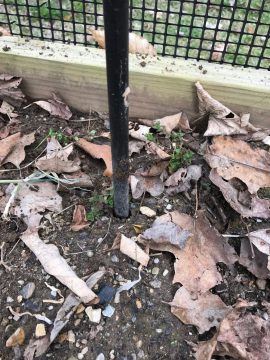
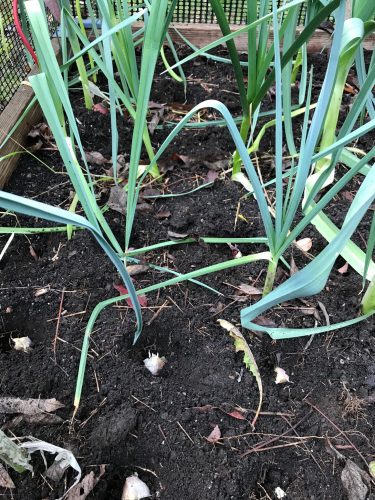
My packet of starter leek plants came in early spring, a few weeks before the last frost date. Leeks are cold season plants, so they should be planted before the last frost date. They’ll tolerate a light frost just fine and need the extra growing time. Like garlic, shallots, and potatoes, they have their own unique way to be cultivated. In order to keep the nice white part of the leeks white, the growing plants need to be blanched, which means that part of the plant needs to be grown out of sunlight. You can grow them in trenches that you fill in as the plant grows, or plant in holes using a dibbler. I used the dribbler method, although I had to improvise with a thick garden stake last year. I now have a dibbler and it’ll be much easier to do this year.

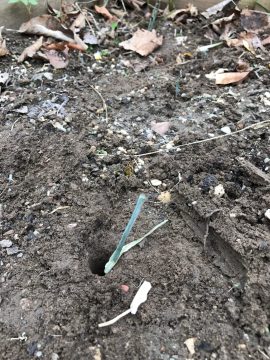
In early spring, in light, soil poke holes with a dibbler or thick stake, 6 inches deep, 6 inches apart, in rows 24 inches apart. 

Drop one plant in each hole leaving only 1–2 inches of the leaves above the soil surface.

Do not fill in the soil around plants, but let rain or irrigation or rain slowly fill in the holes. This allows for self-blanching of the edible white part. If need be, later in summer soil can be pushed up against the growing plant to increase the white blanched part.

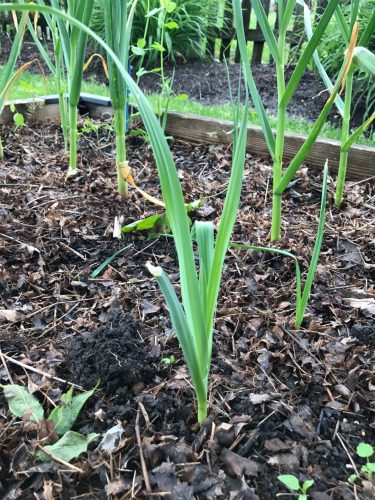
I staggered my leek and garlic plants since they are opposite in growing seasons (which is why my garden above in the planting photos looks “messy”). The garlic is planted in the fall and harvested mid-summer, the leeks planted in spring, harvested in late summer/fall. Leeks can be grown in between many early vegetables, but keep away from legumes like beans since the leeks will inhibit their growth.

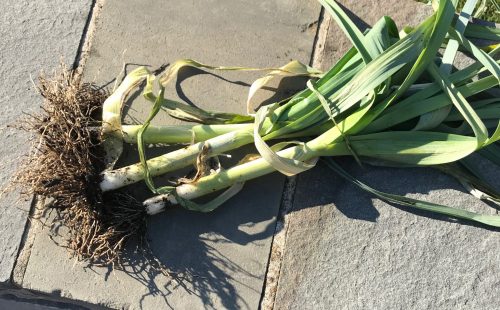
Leeks can be harvested anytime late summer (after they get about 1 inch in diameter) through early winter. Best way is to dig around the plant to loosen the soil, and then give a good pull.

Most leeks are winter hardy and can withstand light to hard freezes depending on variety. Harvest as you need them, they stay fresher in the ground than in your refrigerator.

Unfortunately for me, I got a little cavalier with the plants in my Wi garden and the ground froze solid before I got all of the leeks out.  I’m hoping they survive the winter and I’ll have fresh spring leeks 😔

In early winter, before the ground freezes solid, harvest whatever you have left, peel off the dead outer leaves and trim the roots and leaves. Store in the refrigerator crisper drawer until needed.

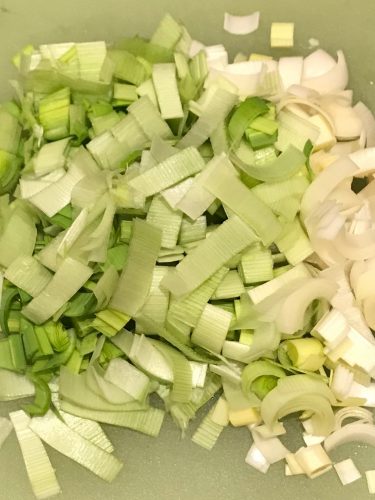
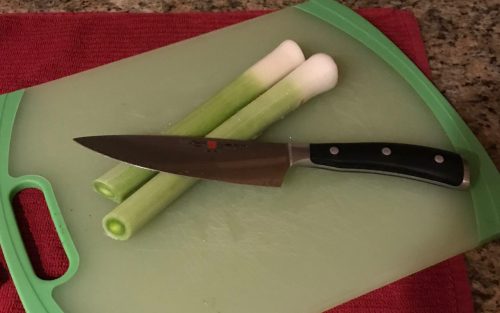
To use in cooking, trim off the roots and cut off the tops where the white is turning light green. Generally, only the white and lightest green parts are used for cooking. Then cut in half and rinse well. Because of how they are grown, dirt and sand often finds its way between the leaves and needs to be rinsed out.

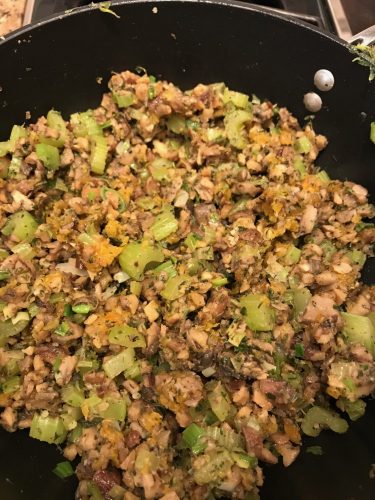
They can now be blanched for freezing, or used fresh in your favorite leek recipe. A few of mine are my Thanksgiving Leek, Apricot and Chestnut Stuffing (recipe here)

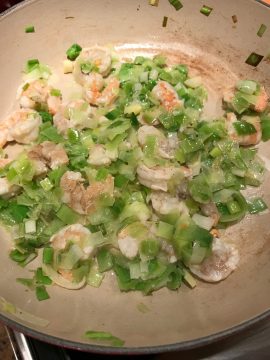
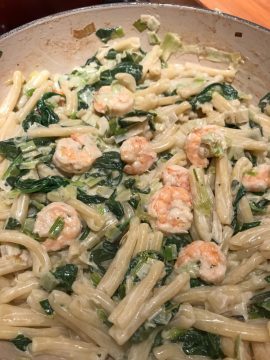
Shrimp, Leek and Spinach Pasta from Real Simple is wonderful for a quick, tasty dinner.

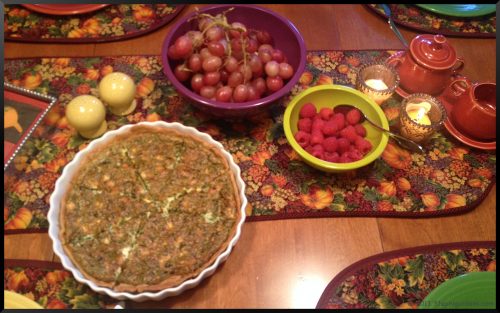
Spinach, Goat Cheese and Leek Quiche. The original recipe calls for chives, but I like to substitute sautéed leeks for the chives, and to simplify things I often use a refrigerated Pillsbury pie crust. This is a staple in our house for holiday brunches.

I’m getting ready to order my plants for this year. I think I’m going to try the Lancelot variety from Dixondale Farms. Lots of good advice on growing onions, leeks and shallots on their website.  Johnny’s has tons of great advice too!

So many ways to use these versatile, mild onions. What’s your favorite?


Healthy and Tasty Infused Water

I know you’re supposed to drink a lot of water throughout the day, but I’m just not a big fan. I’d much rather have iced tea.

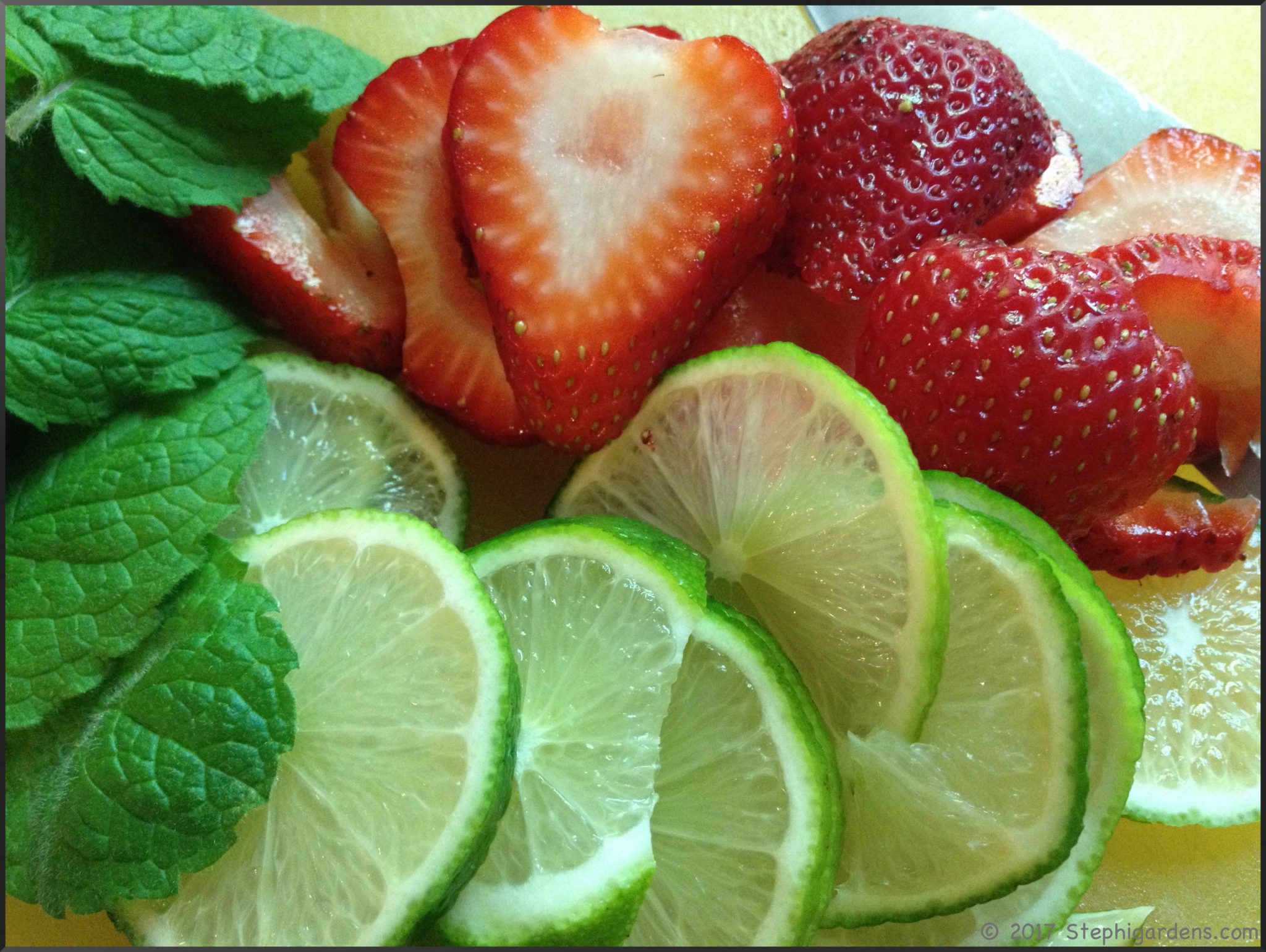
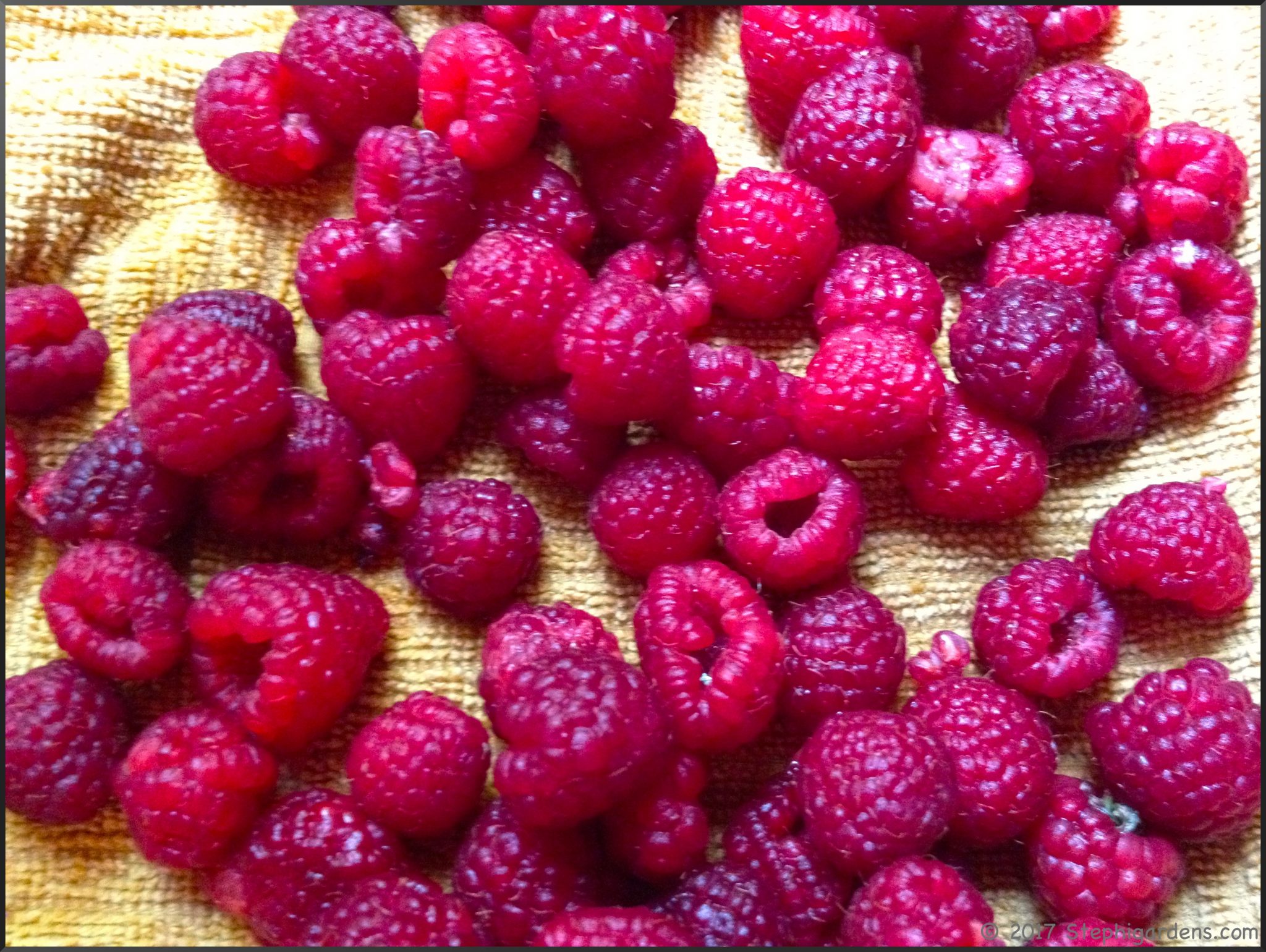
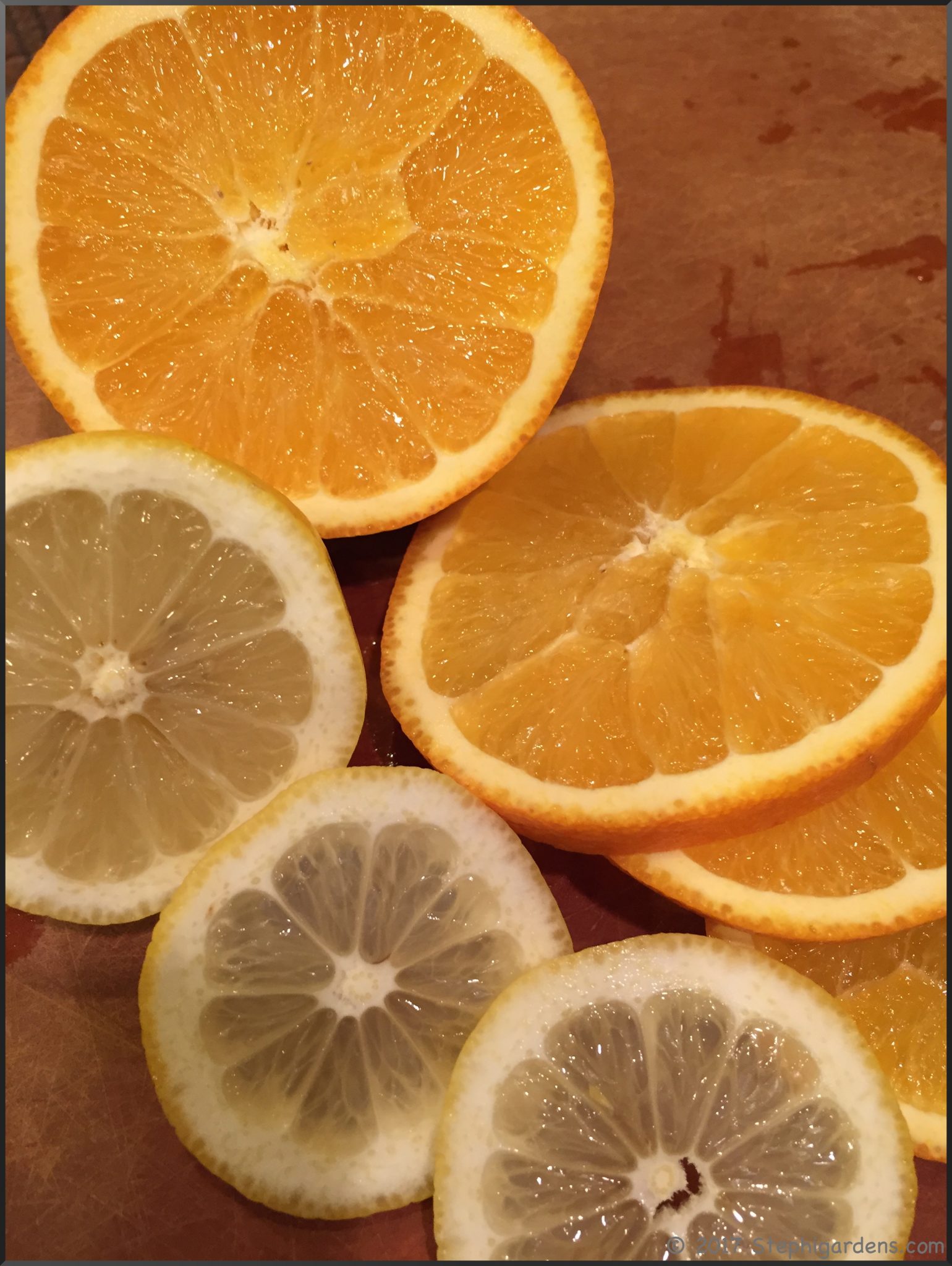
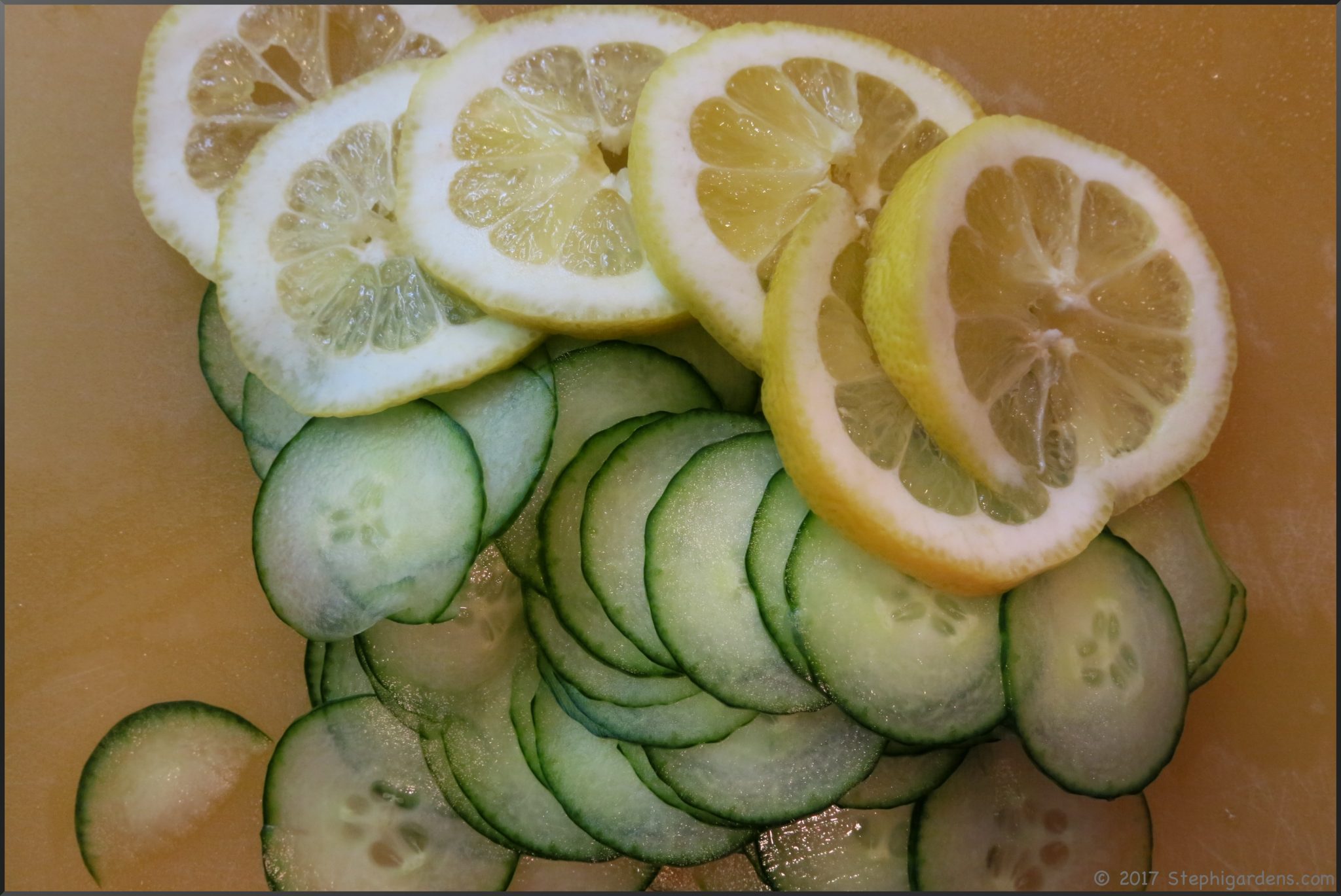
But, I know I need to drink more water. So what to do?? I finally found that creating a seemingly endless combination of fruit, herbs and vegetable infused water did the trick.

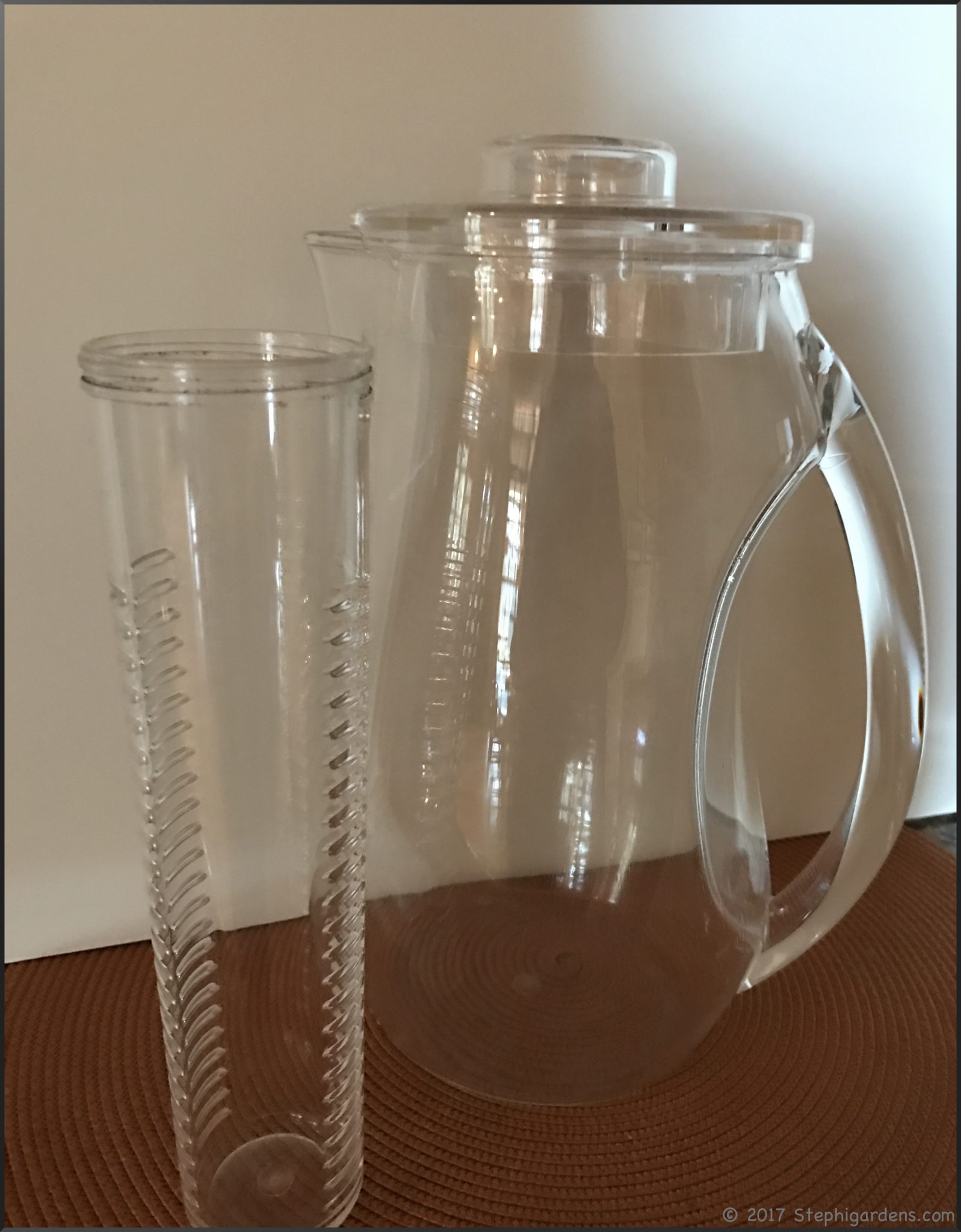
Using a pitcher specially designed to hold the fruit in an infusion rod, it’s easy to make, keep fresh, refill and clean. I really like the Prodyne Fruit Infusion Flavor Pitcher.

It’s a BPA free, clear acrylic pitcher that has a slotted, removable rod that can be filled with your favorite flavors. Since the pitcher is not dishwasher safe, I found the OXO Good Grips Bottle Brush perfect for cleaning the pitcher and tube. Also, since you’re trying to be your healthiest it’s a good idea to use filtered water. A Brita filter pitcher is useful to have around to keep fresh, filtered water handy.

Along with the taste benefits, infused water can provided lots of health benefits! Here’s just a few of the reasons to drink infused water.

  • Fruits like lemon, oranges, limes, strawberries, watermelon, pineapple and raspberries are all high in Vitamin C.

  • Lemons are alkaline to the body, contain citric acid and can help prevent kidney stones.
  • Strawberries, raspberries, blackberries, blueberries, limes, ginger, basil, pineapple and cantaloupe have anti-inflammatory properties.

  • Strawberries, honeydew melon, papaya and cucumber are high in B-complex vitamins.
  • Strawberries, raspberries, blackberries, blueberries, watermelon, limes, basil, pineapple, cantaloupe are good anti-oxidants.
  • Raspberries, strawberries and blackberries are anti-aging
  • Oranges and limes contain calcium for good bone health.  Strawberries and blueberries contain vitamins that are also good for bone health.

  • Lemons, limes, cucumbers, ginger and basil aid in digestion.

  • Strawberries, cucumbers, papaya and cantaloupe are high in B-vitamins
  • Watermelon is high in lycopene to aid in heart health and betacarotene for eye health
  • All fruits and vegetables will have varying amounts of vitamins, minerals and phytonutrients to provide additional health benefits.

Infused water is simple to make. To a clean infuser rod add your fruit, vegetables, and herbs.

I like to use organic varieties and farm fresh whenever possible. Be sure to wash the fruit thoroughly, remove seeds, peel and slice or cube if necessary.  Attach the infuser rod to the pitcher top and fill pitcher with filtered water.  Depending on the ingredients added, you may want to add less (think lemon or ginger) or more (think berries) to get the right taste.  Similarly, milder flavored berries take longer to infuse than the stronger citrus fruits.

Generally, I can keep the refrigerated infused water a few days IF the ingredients are always covered with water.  Clean and remake after a few days, or whenever it begins to taste too weak or strong, the water gets cloudy, or ingredients don’t look fresh any longer.

Looking for recipes?  You can use your imagination and use 1 or more ingredients to make your water.  Some of my favorite combos are strawberry basil, strawberry mint, lemon blueberry, lemon blueberry basil, lemon lime, orange ginger basil and cucumber mint.

There’s lots of recipe books out there that can give you even more ideas.  Two of my favorites are Fruit Infused Water: 50 Quick & Easy Recipes for Delicious & Healthy Hydration by Elle Garner and Fruit Infused Water: 98 Delicious Recipes for Your Fruit Infuser Water Pitcher by Susan Marque.

If you don’t want to always have a pitcher around, or don’t have any more space in your fridge, I have friends who carry their infused water made right in their 24 oz tervis tumbler or specially designed infuser water bottles.

What’s your favorite infused water flavor?  I’m always looking for new combos!

Grill Roasted Potatoes

Now that I’ve planted and grown all those potatoes last year, what was my favorite way to eat them?  Roasting on the grill!

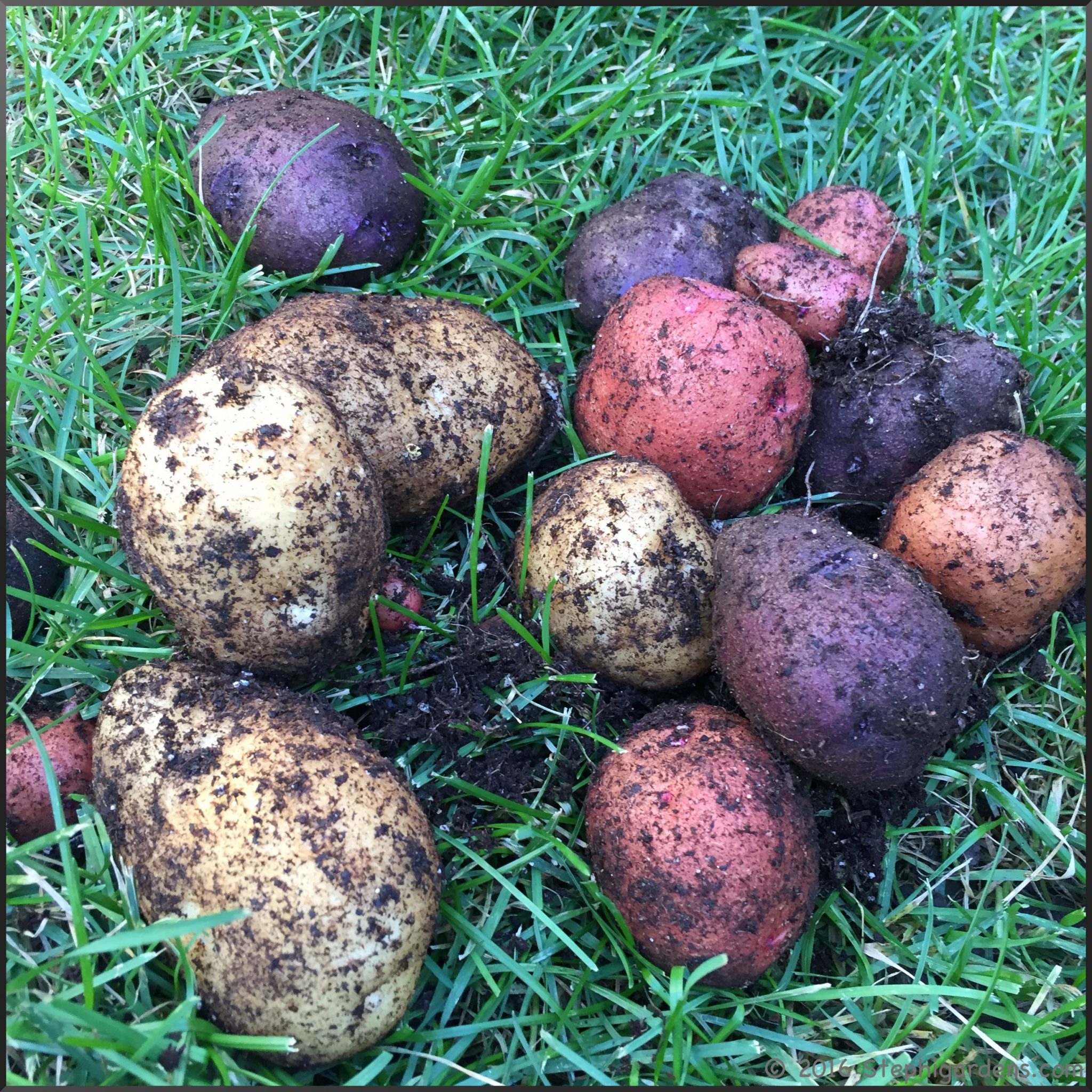
This is a great simple recipe that can be adapted for the grill or the oven.  Pick your favorite potatoes.  I mainly used thin skinned Yukon Gold or an assortment of the Red, White and Blue blend potatoes that I grew last summer.

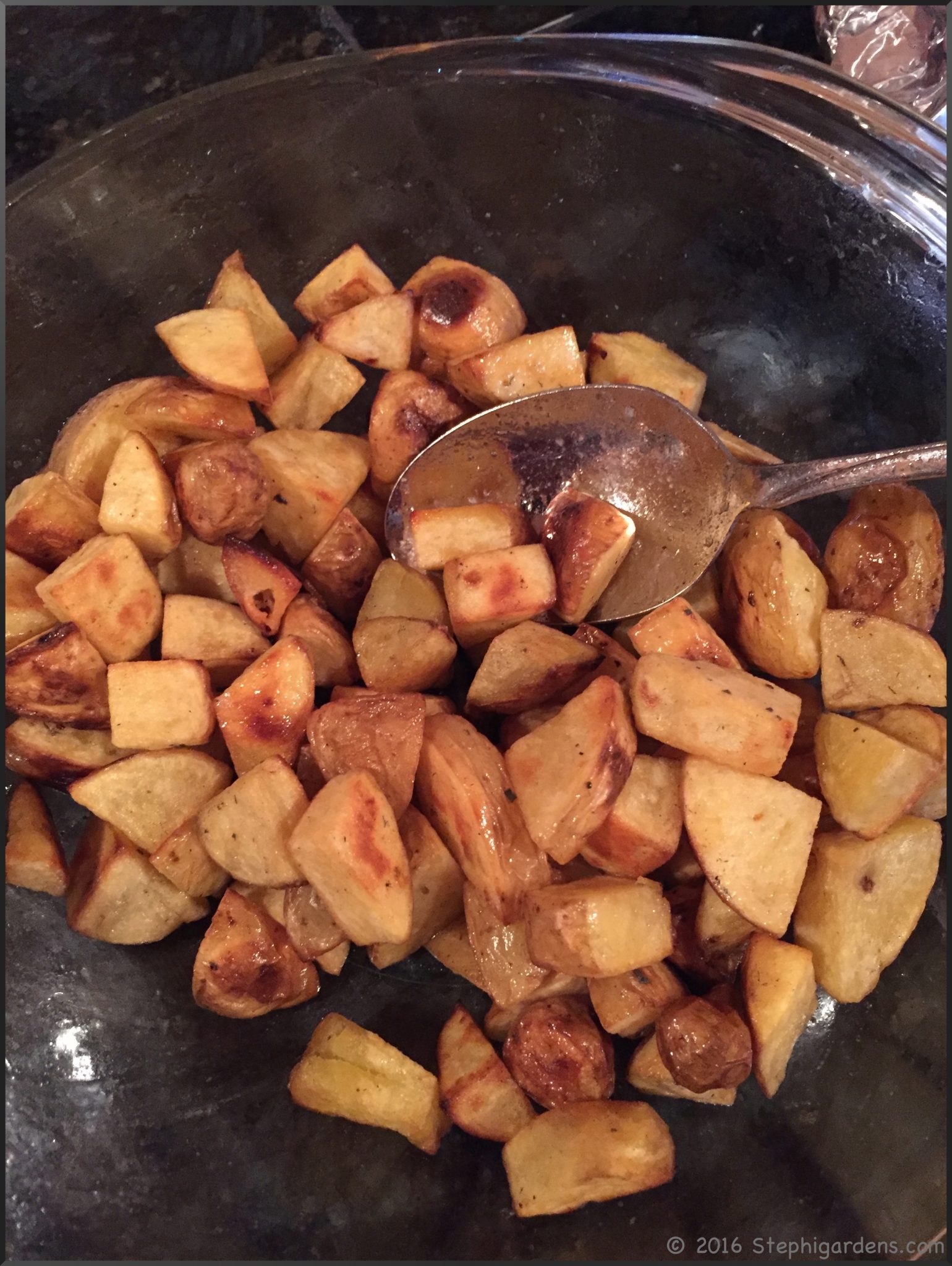
Wash and dry 1 1/2 pounds of potatoes and cut into quarters or cubes depending on the size of your potatoes.  You’re looking for even pieces of about 1 inch cubes.  In a large bowl, toss the potato cubes and with 2 Tbsp extra-virgin olive oil and salt (if desired).

Preheat a grill pan over indirect high heat for about 10 min.  Add the potatoes.  To keep grill flare-ups to a minimum, I recommend spooning on the potatoes rather than dumping them onto the pan.

Grill the potatoes 30-45 minutes, keeping gill cover closed as much as possible, and turn 2-3 times until golden brown and fork tender.

When finished, remove potatoes, place in a aluminum foil “boat”, pan or heat safe bowl.  Don’t cover or the potatoes will lose their awesome crispness.  Toss with 1/2 c feta (or grated or shredded Parmesan cheese), 2 Tbsp fresh chopped parsley and freshly ground black pepper.

Cooking Notes:

  • Great with any of your favorite grated or shredded cheeses.
  • Change up the seasoning–cook with sliced onions or add chives, garlic salt, dash of cayenne powder–endless ideas.
  • You can par cook the oiled potatoes in the microwave before grilling to speed things up. Cook 2-3 minutes on potato setting, check with a fork.  Done when just getting soft, but can’t get fork all the way through.
  • Not grilling, cook in a 400°F oven.
  • Easily adapted for fewer or more people
  • Low sodium?  Omit the salt and cut back on cheese as desired

What a great side dish for any grilled meal!

Grill Roasted Potatoes
Print
Recipe type: Side dish
Cuisine: American
Author:
Ingredients
  • 1½ lbs thin skinned potatoes (Yukon Gold or red), washed and cut into 1 inch cubes or quarters
  • 2 T extra virgin olive oil
  • salt (optional)
  • ½ cup crumbled feta, shredded Parmesan or grated Parmesan cheese
  • 2 T chopped parsley
  • fresh ground pepper
Instructions
  1. Wash and dry 1½ pounds of potatoes and cut into quarters or cubes depending on the size of your potatoes.
  2. In a large bowl, toss the potato cubes and with 2 Tbsp extra-virgin olive oil and salt (if desired).
  3. Preheat a grill pan over indirect high heat for about 10 min.
  4. Add the potatoes to the grill pan.
  5. Grill the potatoes 30-45 minutes, keeping gill cover closed as much as possible, and turn 2-3 times until golden brown and fork tender.
  6. When finished, remove potatoes, place in a aluminum foil "boat", pan or heat safe bowl.
  7. Toss with ½ c feta (or grated or shredded Parmesan cheese), 2 Tbsp fresh chopped parsley and freshly ground black pepper.
  8. Keep warm over indirect heat until ready to eat.

Adapted from Weber’s Way to Grill Book.

SaveSave

A Fun Garden to Table Kitchen Gadget-A Countertop Spiralizer

zucchini spiralizer

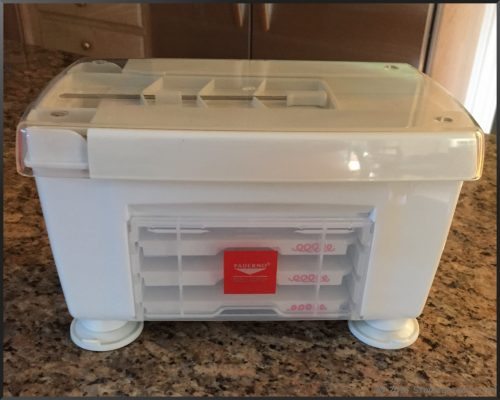
I’m almost embarrassed to admit I bought a Paderno World Cuisine Spiralizer Pro last winter and then promptly let it sit in its box until this week.  As much as I thought it looked so cool to use, it just sat there taunting me because it also looked so complicated.  I couldn’t have been more wrong!!

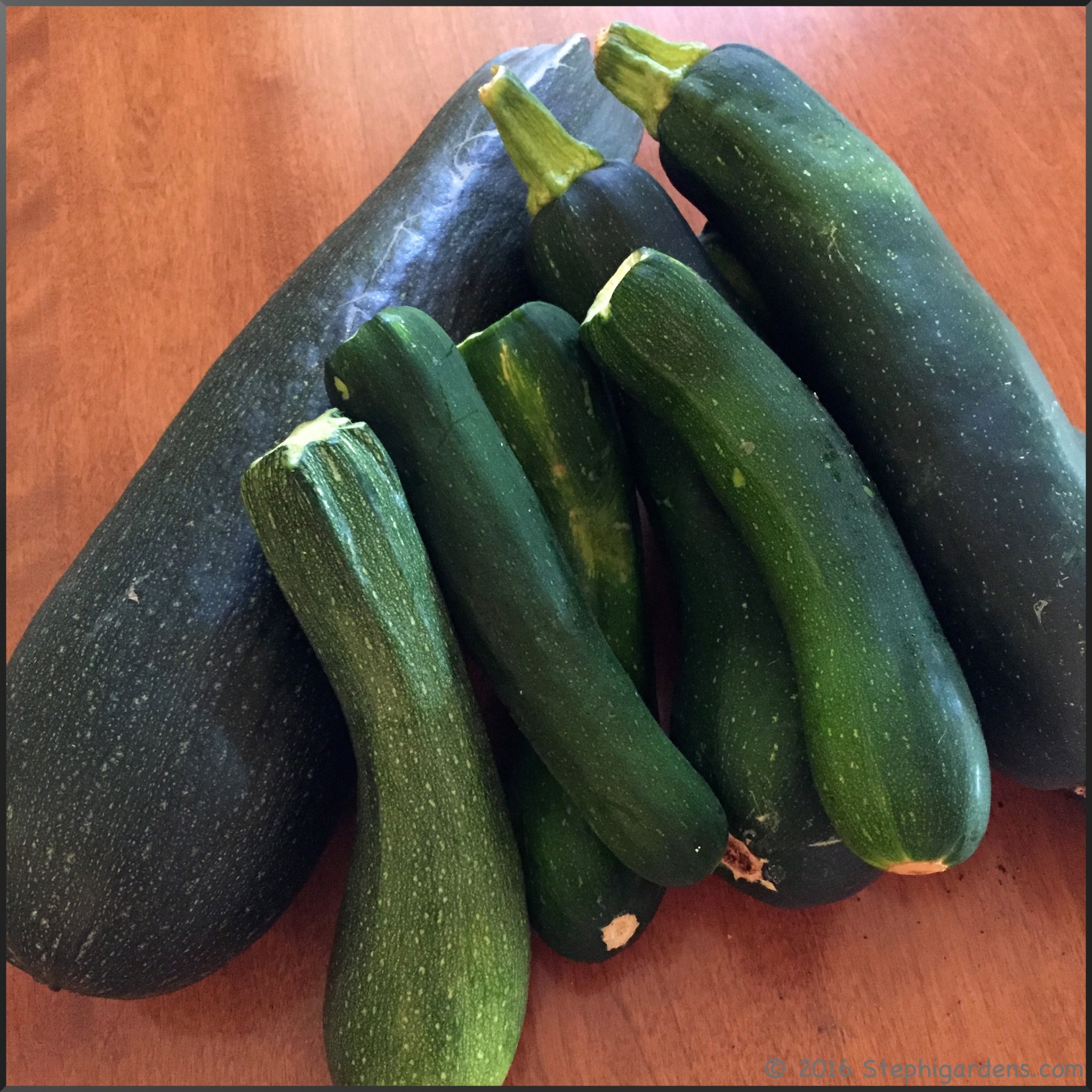
I was finally prompted to get it out of the box when I began to be overwhelmed by a very large zucchini harvest and was getting tired of zucchini au gratin.  (Can’t spiralize the “baseball bats“, so those will be shredded for zucchini bread).

zucchini

I was truly surprised as to how easy this was to use.

Paderno World Cuisine Spiralizer Pro

Just take out the very neatly and conveniently stored parts, pick your blade (I used the “fine shredder” blade) and prepare the zucchini.

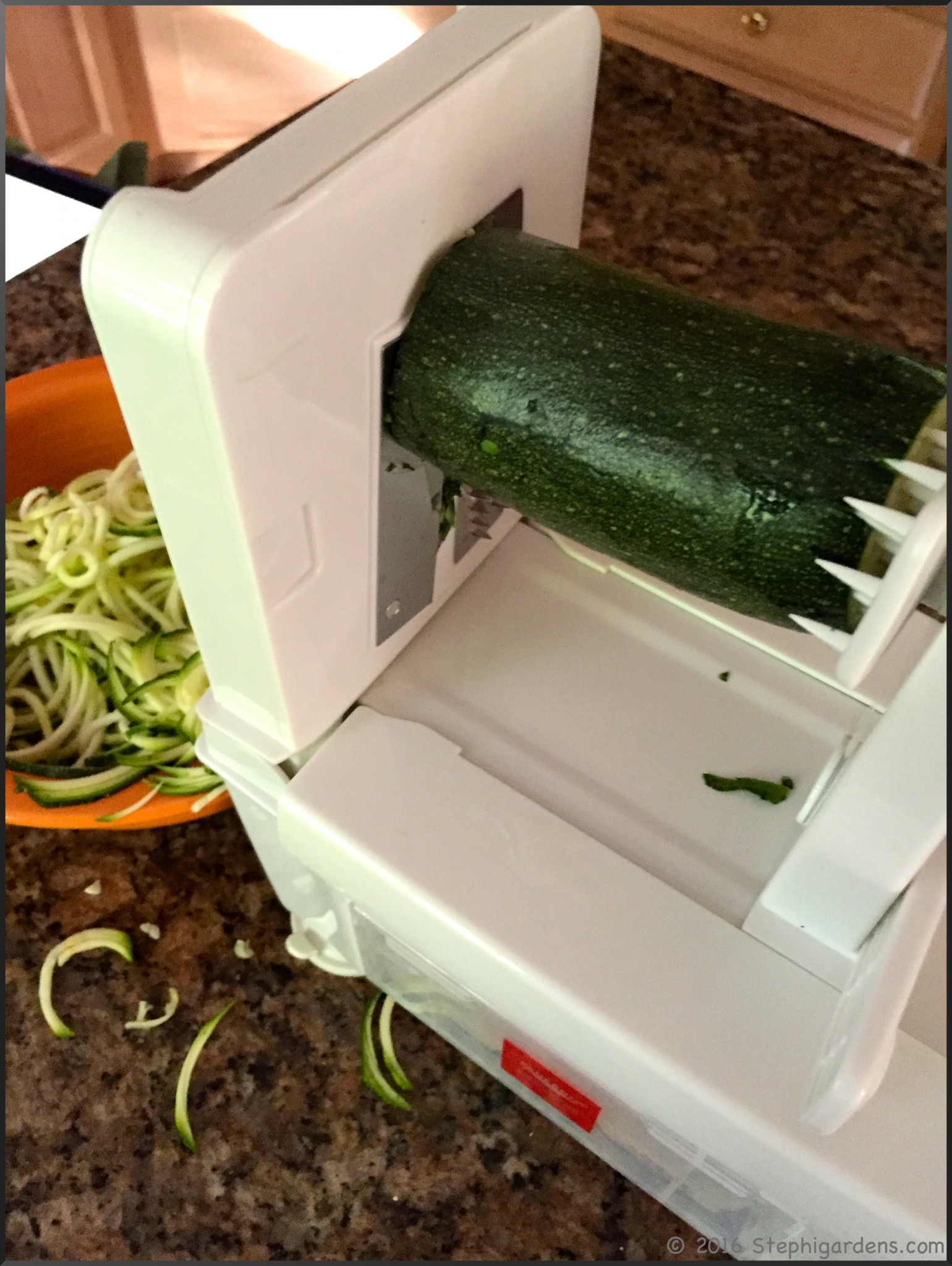
Preparation is pretty simple.  Peel if you’d like, but it’s not necessary, and cut off the ends to make 2 flat surfaces.

spiralizer

Push onto the pronged wheel and line up on the circular coring blade.  Then start turning with the hand crank.

spiralizer

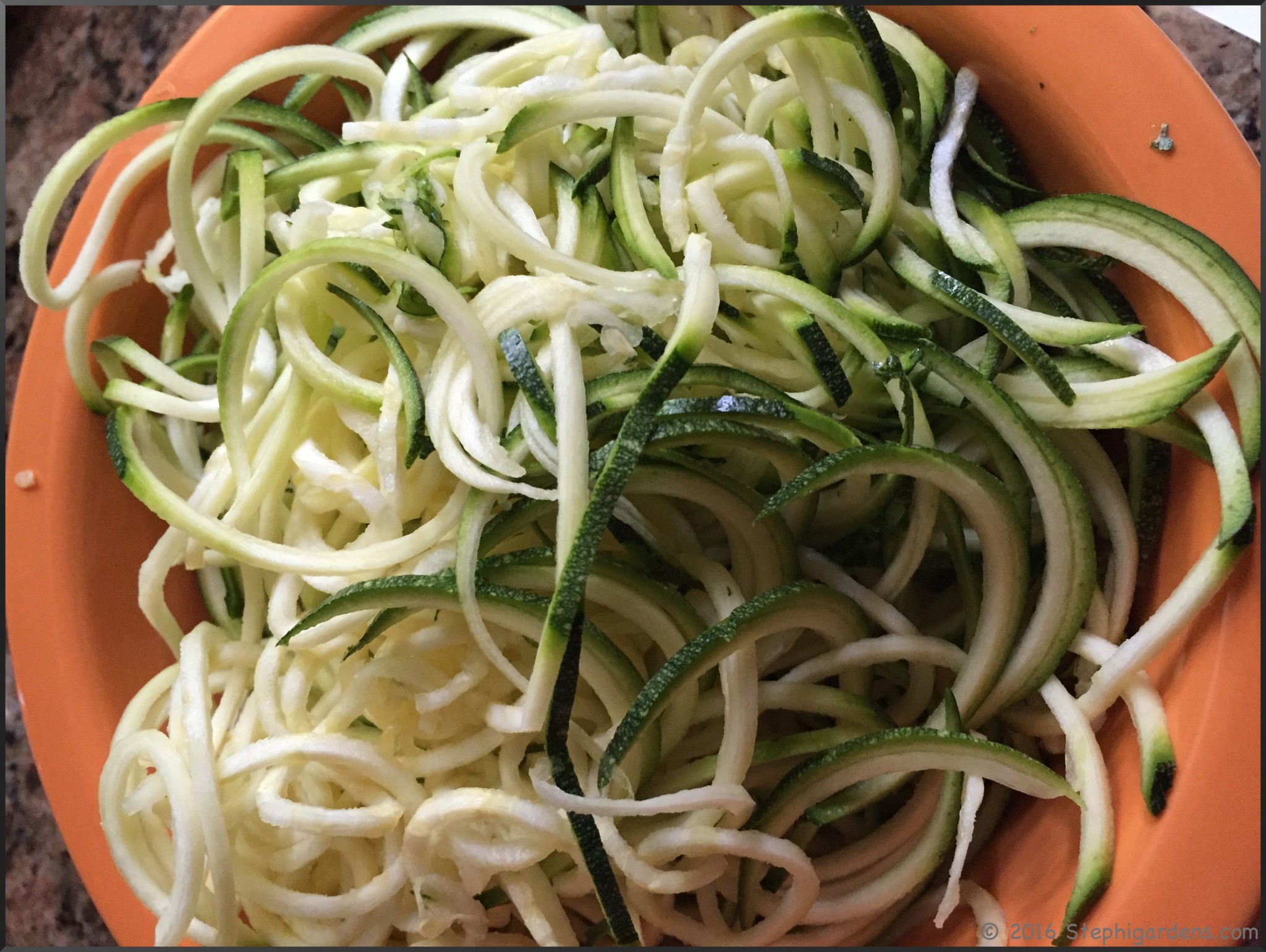
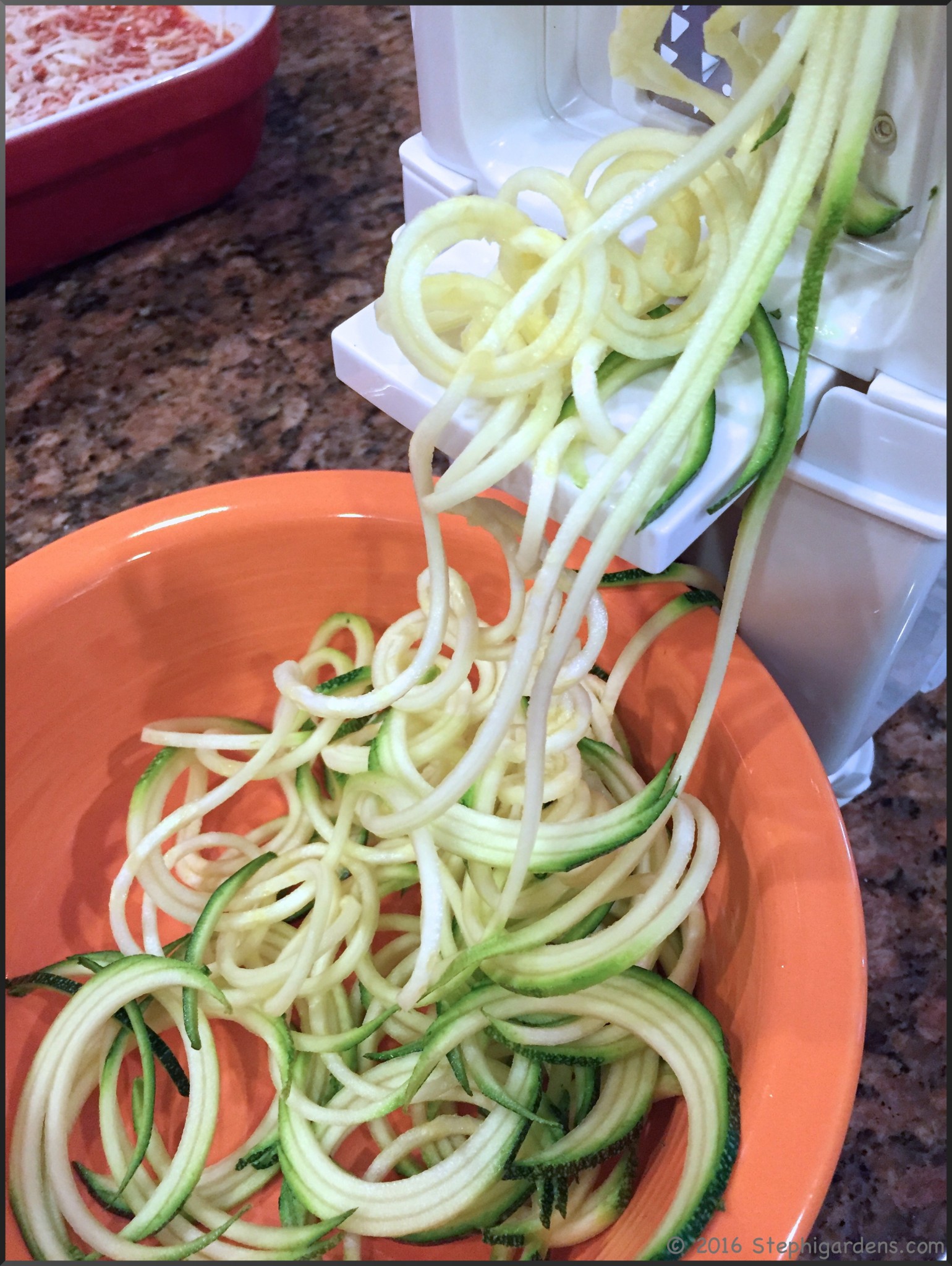
Out comes beautifully spiraled zucchini “noodles”!

spiralized zucchini

Start to finish was less than 5 minutes.  What have I been waiting for?

zucchini spiralizer

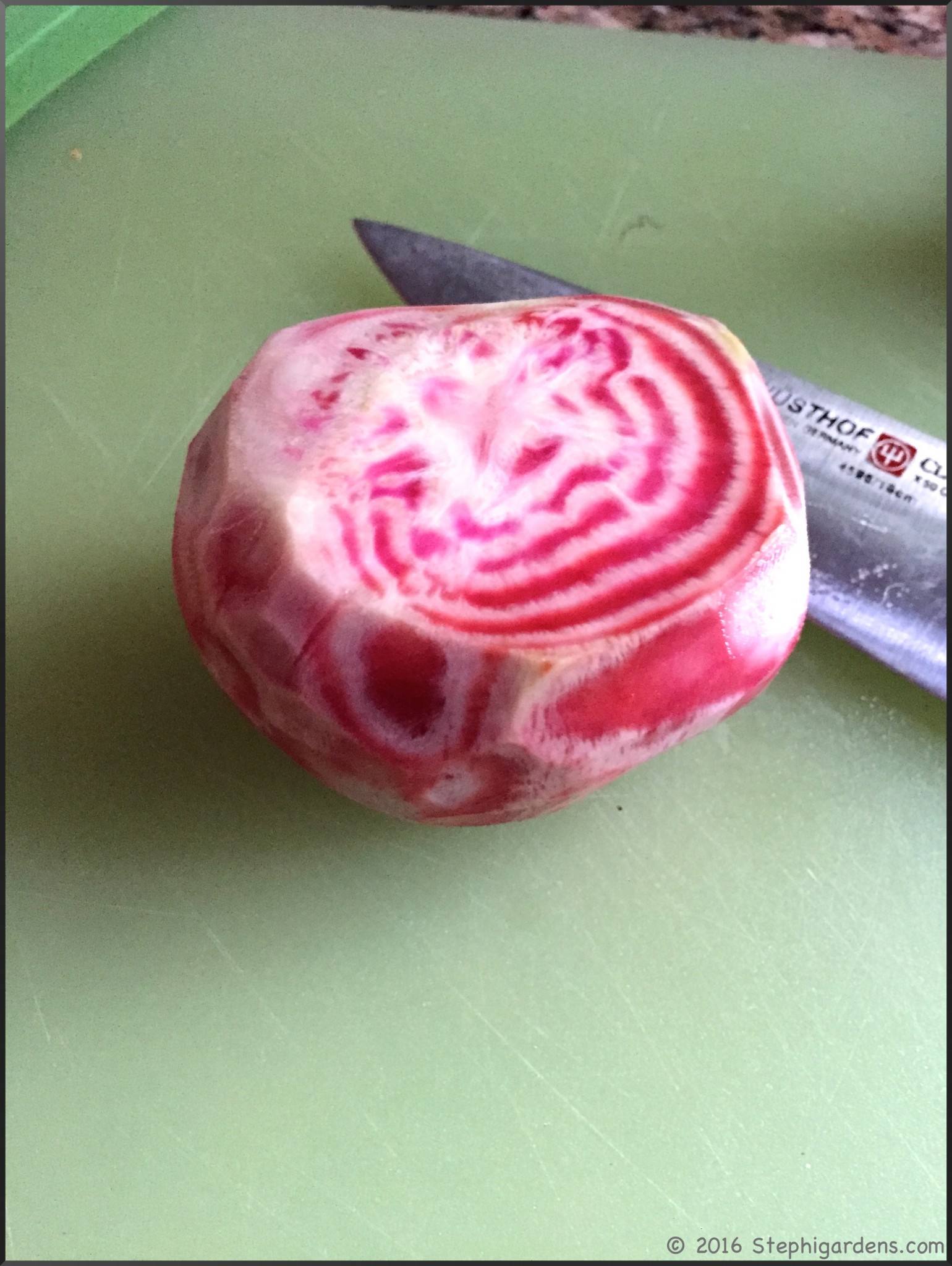
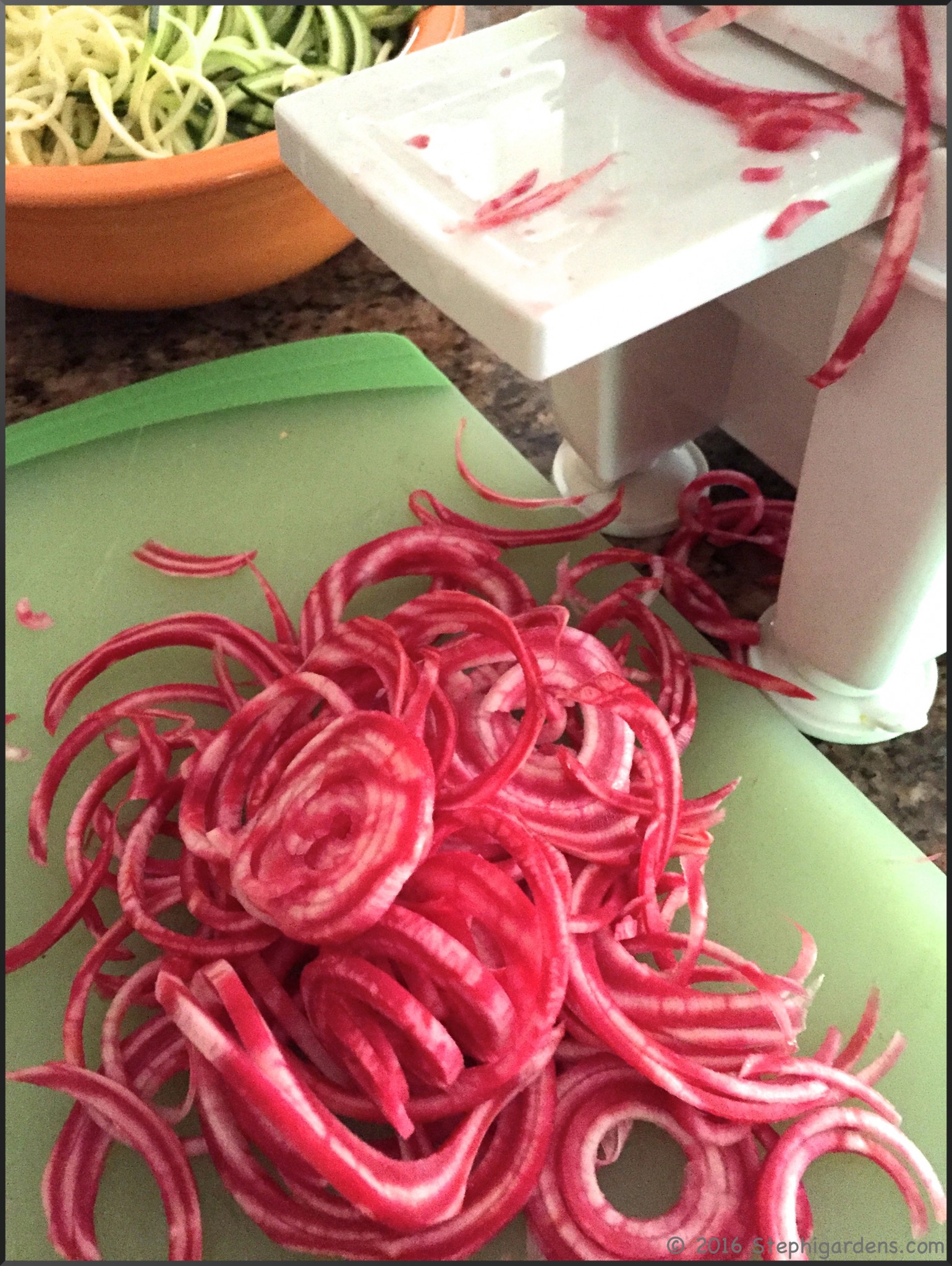
This was so fun I decided to add spiralized beets to the sauté.  With beets, you want to use gloves to keep from staining your hands.  Just cut off the ends, peel and it’s ready. Be sure to clean your spiralizer immediately to keep from staining it.

spiralizer

beet spiralizer

Because the beets are so hard, I think I need a little more practice to get perfect spirals.  But even these less than perfect, spiralized beets were just fine.

There’s lots of spiralizer recipes on the web and I also recommend Inspiralized, The Spiralizer Cookbook, and The Spiralizer Cookbook 2.0 if you like “real” cookbooks like I do.

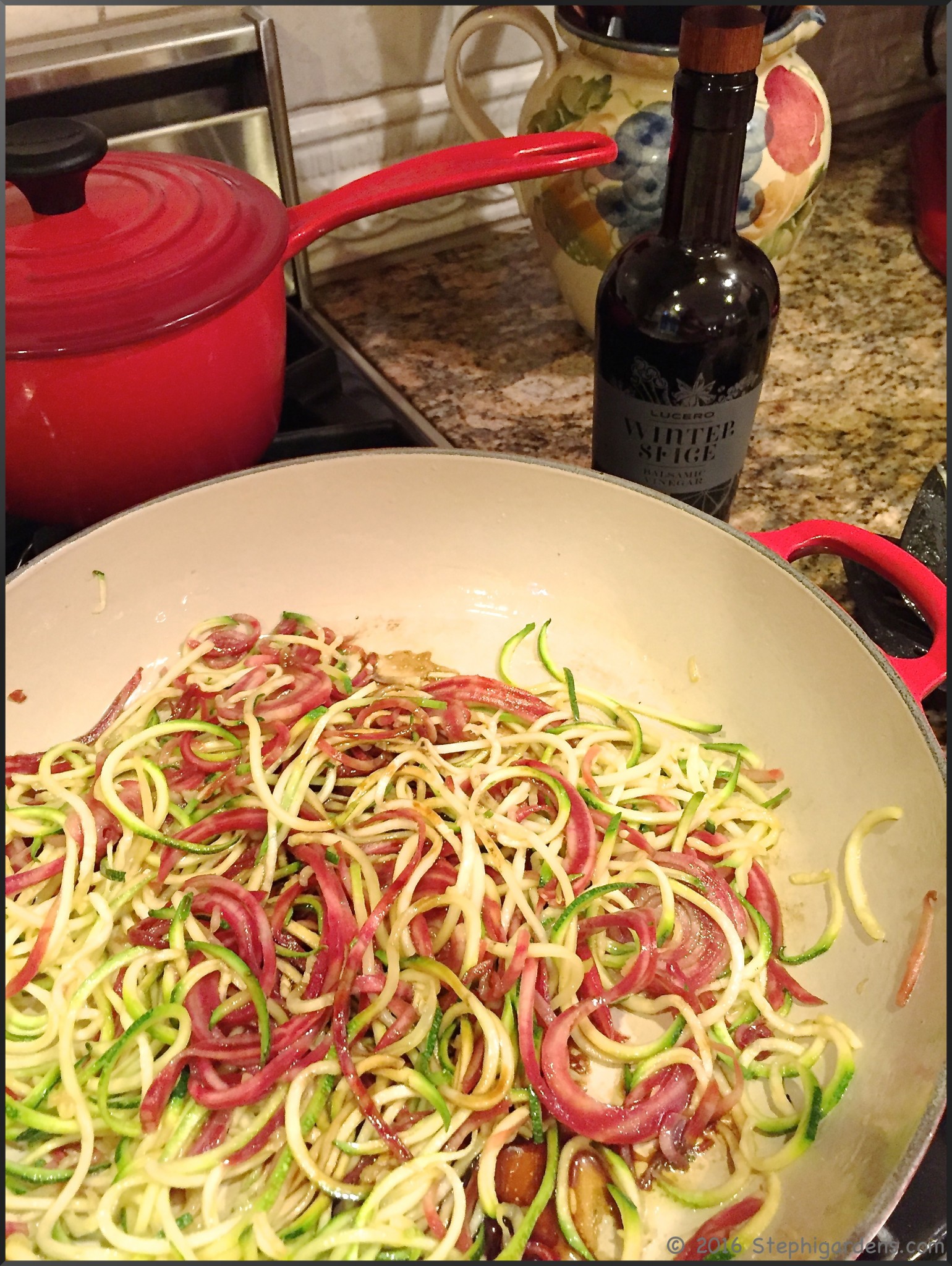
Tonight’s sauté was simple, yet tasty and low-sodium for those looking to lower your sodium intake. I heated olive oil over medium high heat, added the beets to just barely soften them.  About 3-5 minutes stirring frequently.  Add the zucchini for about 3-5 minutes more.  Finish with balsamic vinegar.  I used Lucero’s Winter Spice Balsamic Vinegar, but there’s lot of flavored EVOO and balsamic vinegar combos to try.

spiralized zucchini beet saute

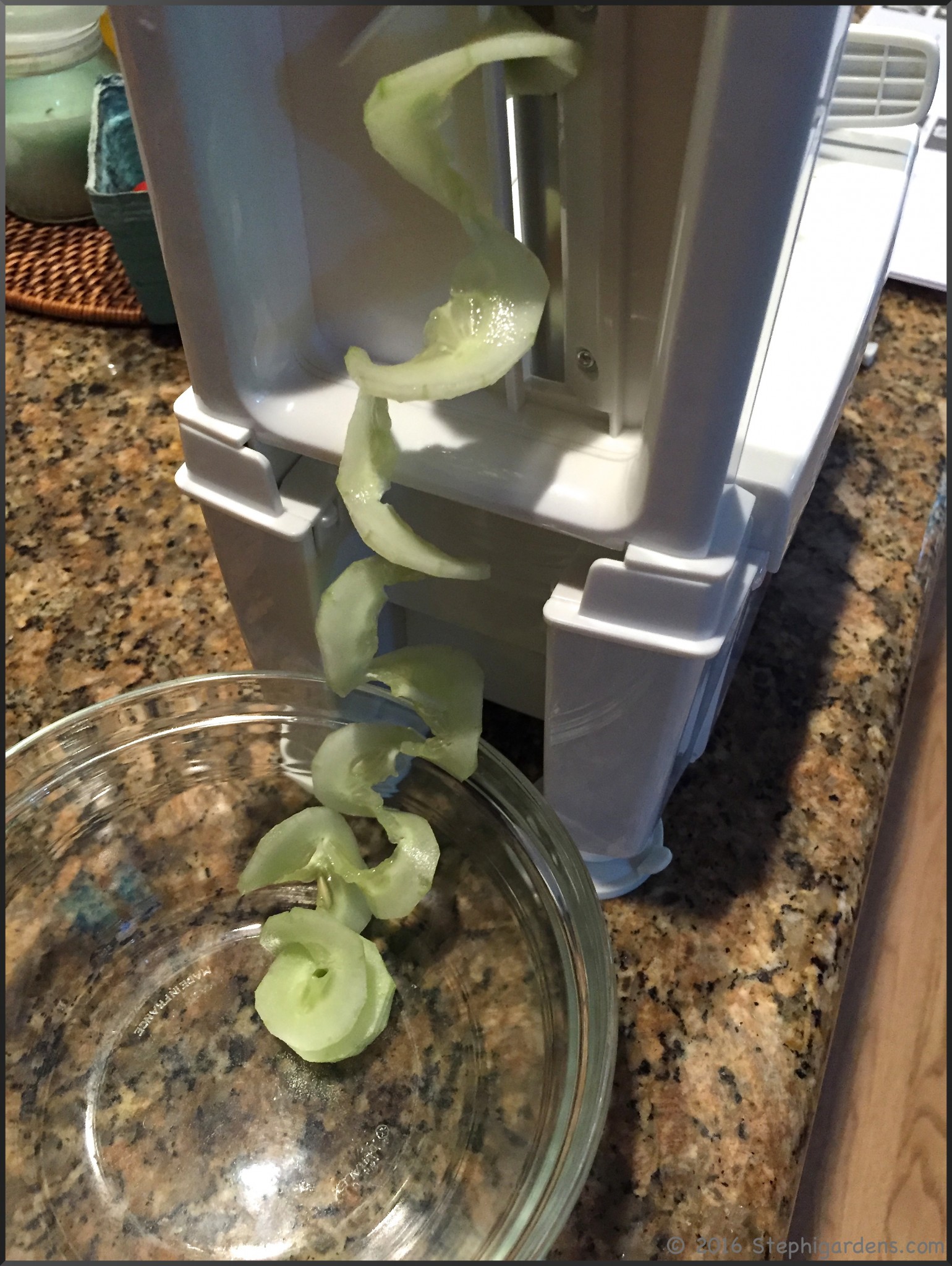
I also have a bounty of cucumbers this year so we also had a yummy cucumber salad.

cucumber spiralizer

Have you ever spiralized your vegetables?  What’s your favorite?

Harvesting Garlic Scapes

Last year I ventured into the world of growing garlic for the first time (Planting Garlic and Warding Off the Vampires).  It was great having homegrown garlic all winter, and even into early spring.

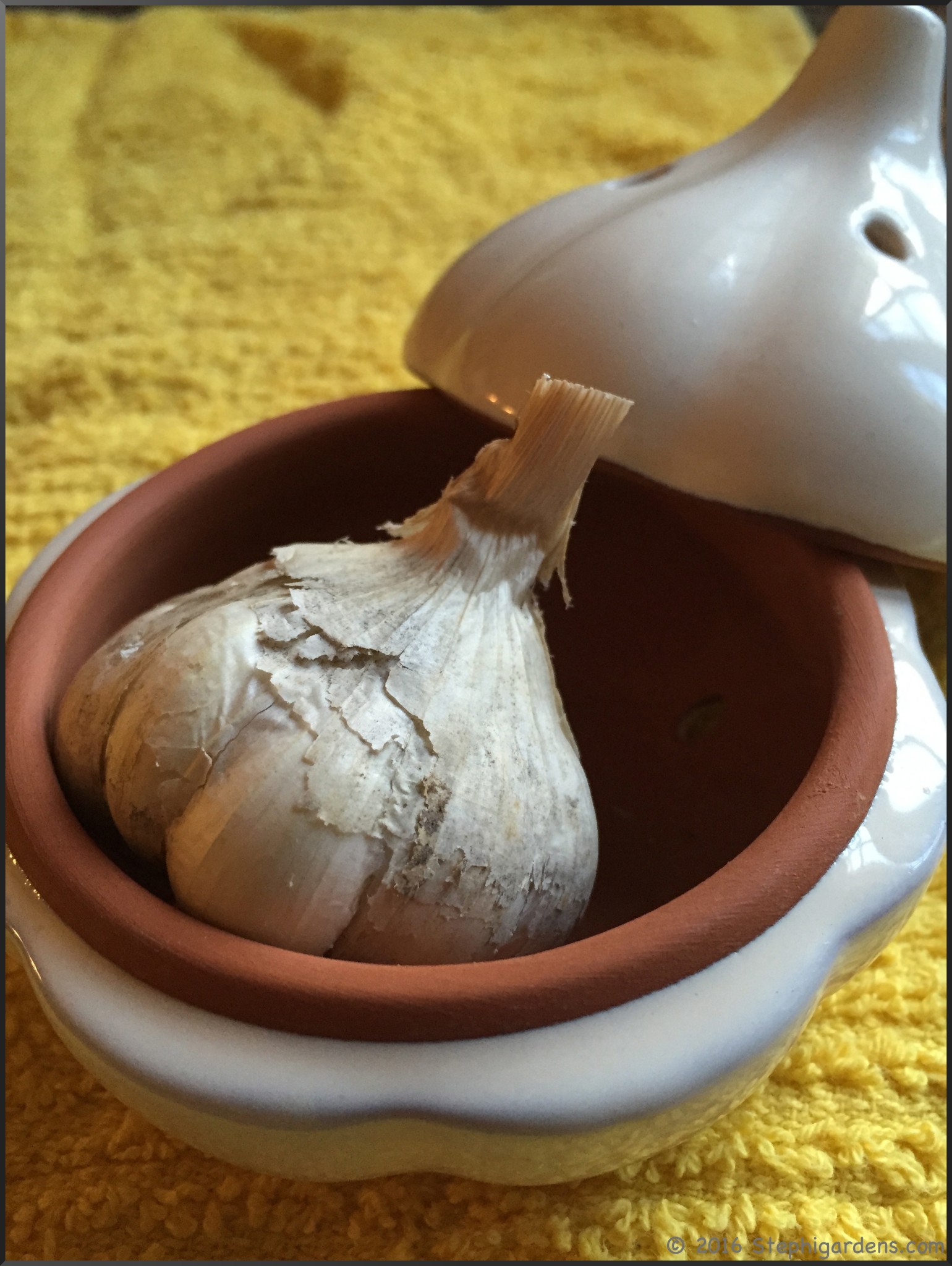
terra cotta garlic keeper

I am totally sold on how much better homegrown is than the store bought variety, and it couldn’t be easier to grow.  This past fall, I planted another crop of garlic, this time planting Music and Purple Glazer hardneck garlic varieties and Susanville softneck garlic (Another Fall Crop In the Ground).  I doubled the amount I grew last year since I had space both here at home and in my Door County, WI garden.

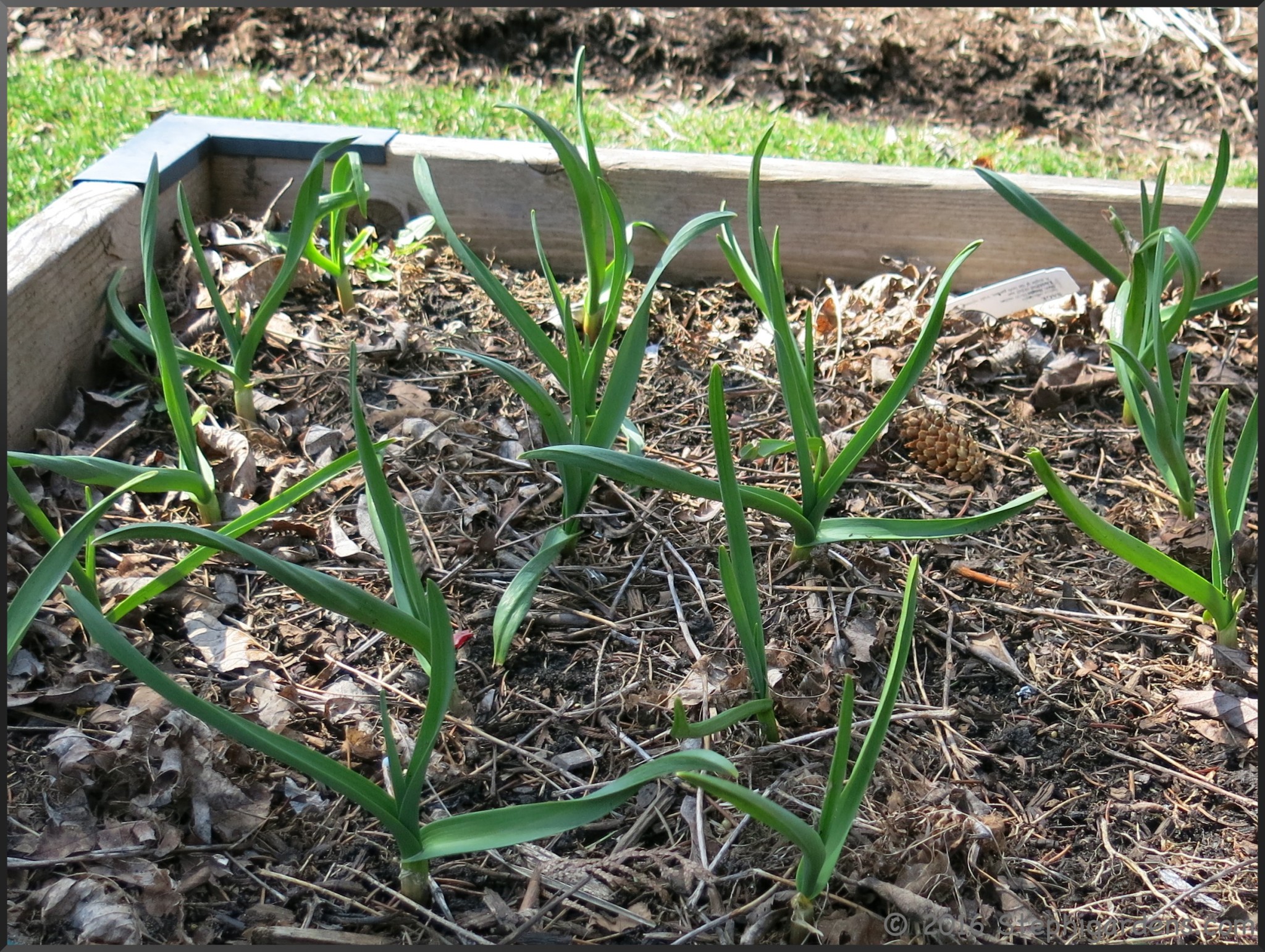
Last fall brought the early green shoots that sprout before winter sets in.

garlic

This spring, it became obvious that none of the Susanville survived in either location and I’m not sure why.  Maybe it was too cold late in the late winter/spring.

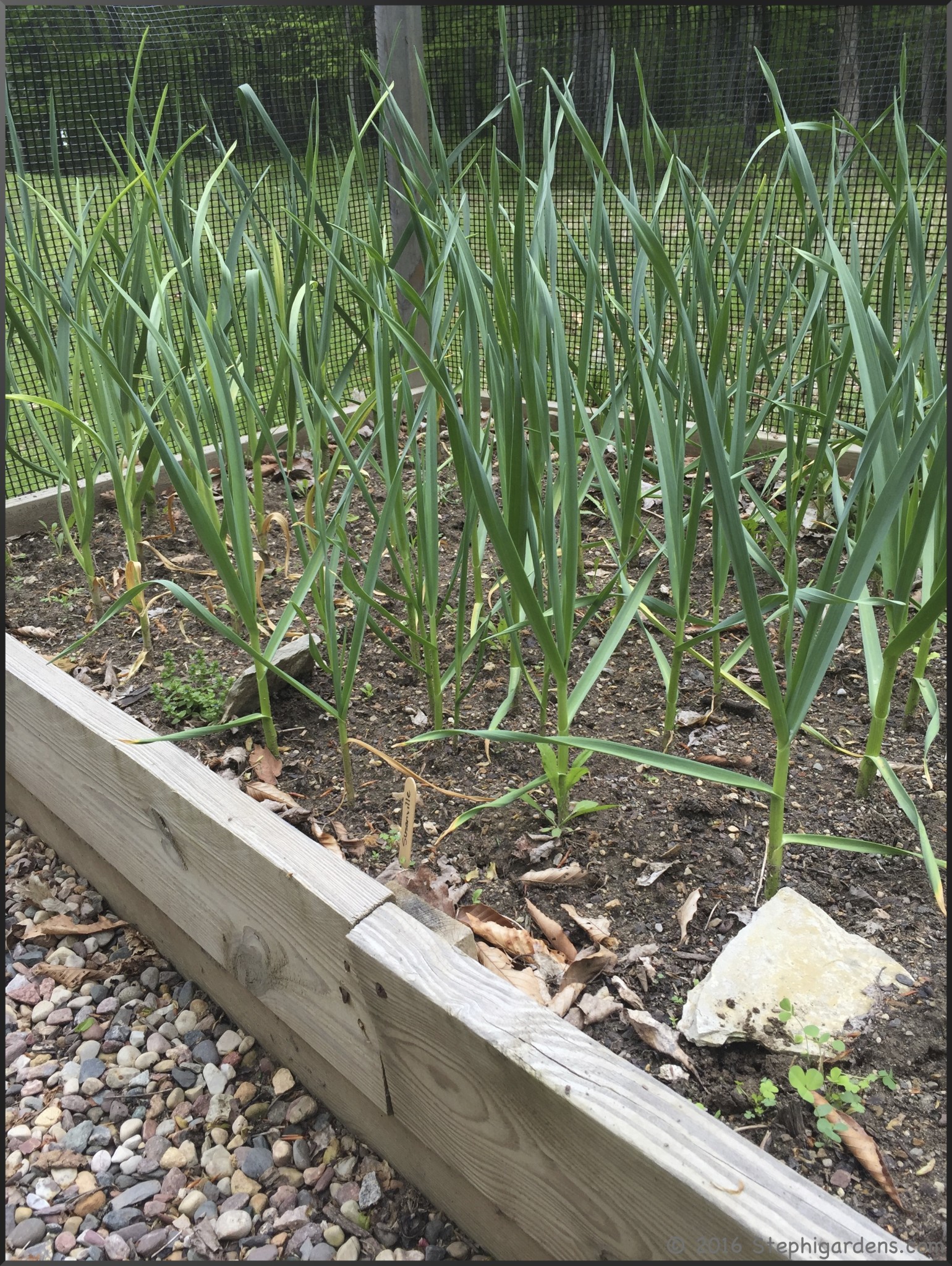
But that serves as a good reminder to plant more than one variety when testing something new in your vegetable garden.  Spring also came a little later to Door County, so those plants have been a couple of weeks behind the ones at home.

garlic

And that turned out be a good thing for harvesting scapes this year.

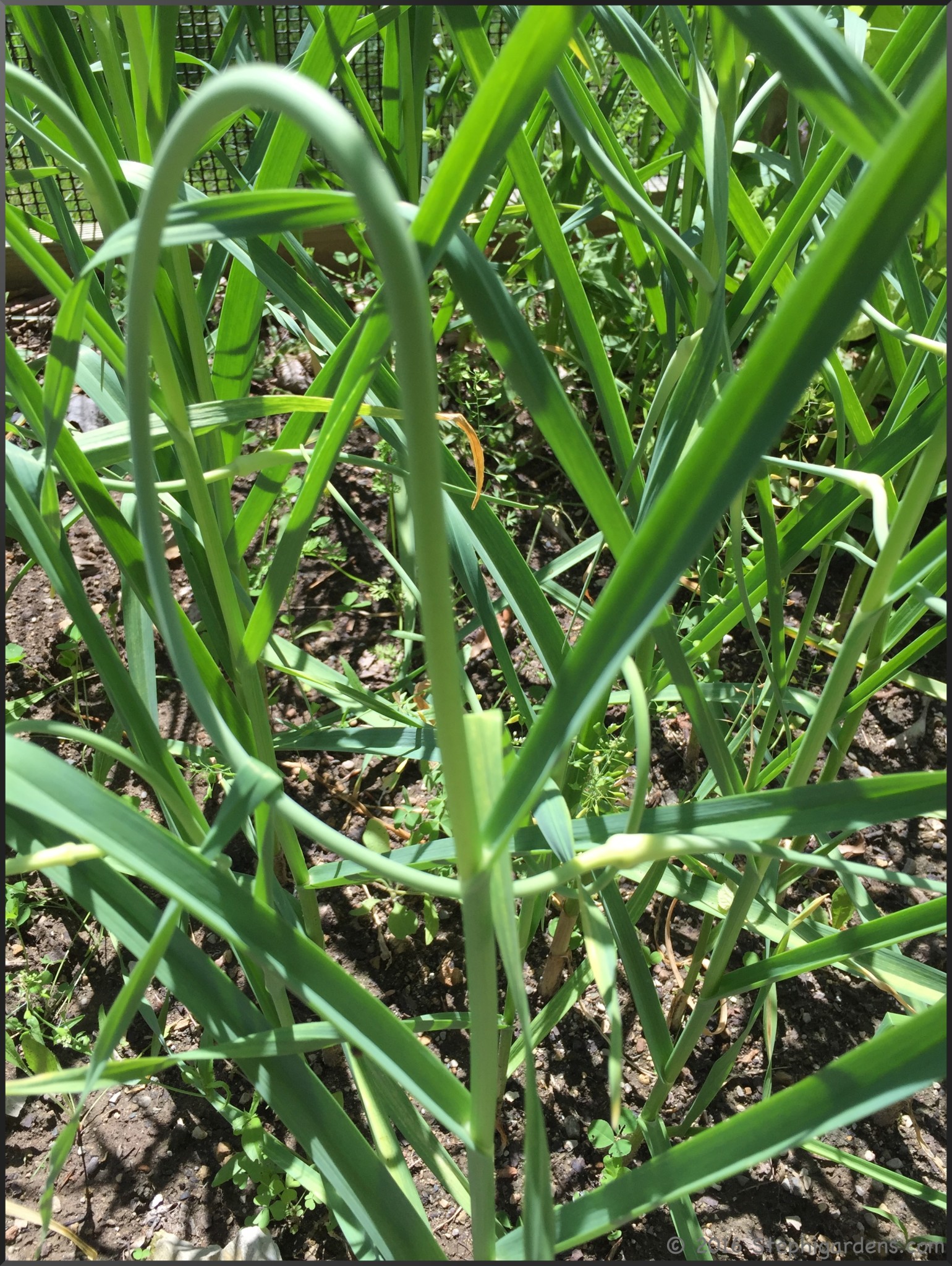
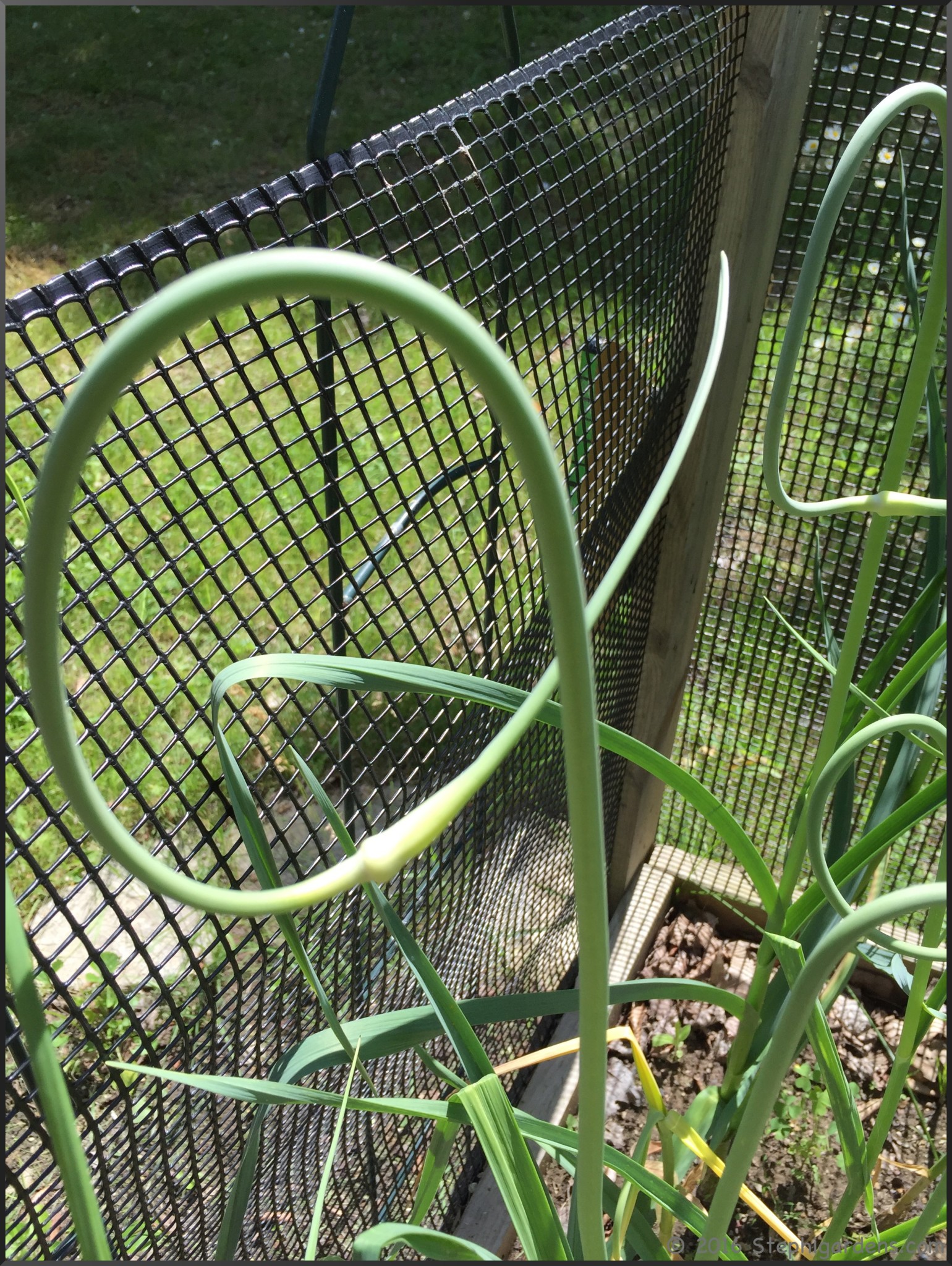
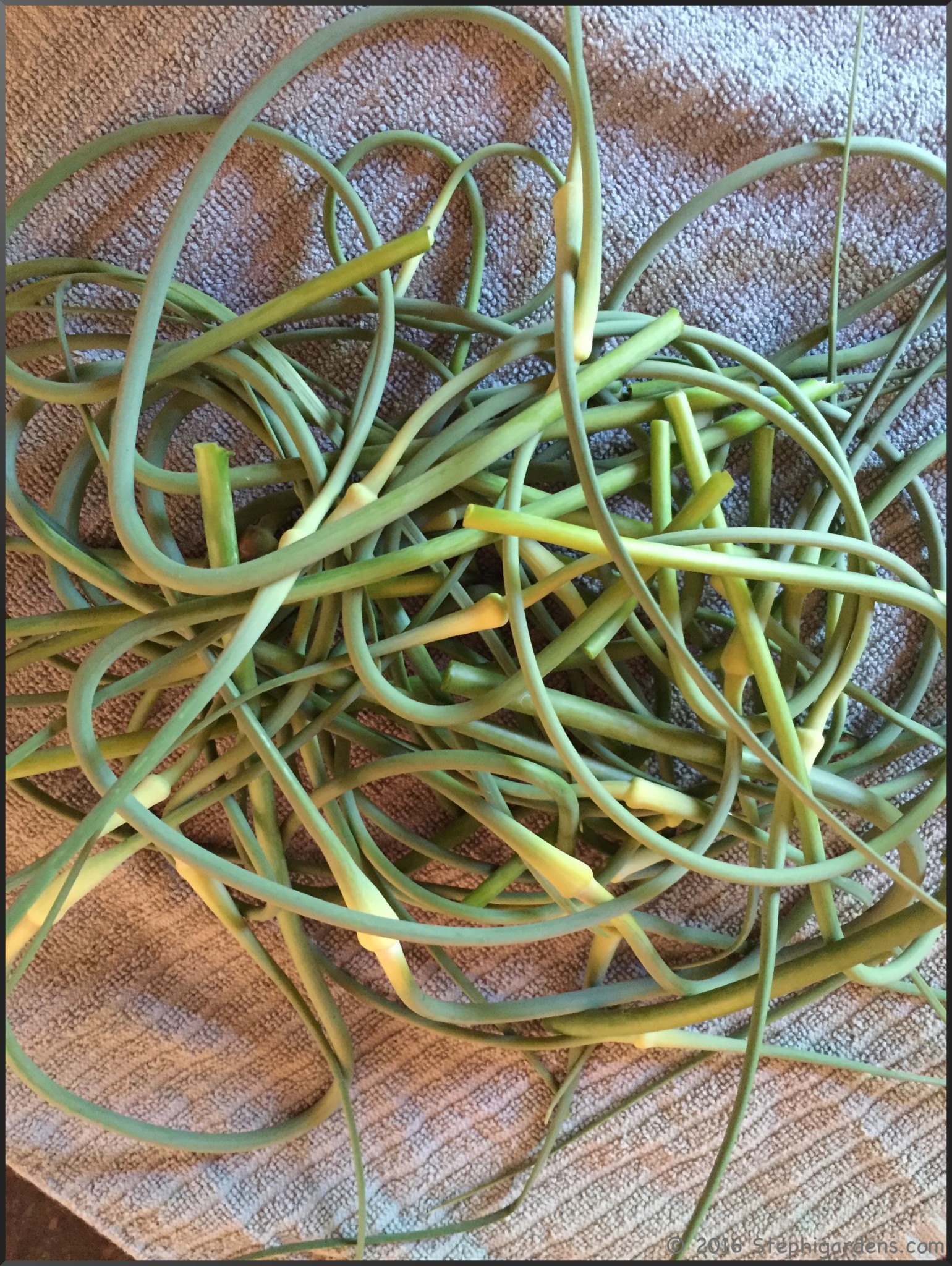
garlic scapes

Scapes are the garlic flower stalks that twist and turn when young, and end with a terminal pod containing garlic bulbils.  It’s these young, tender, twisting and turning scapes that are a delicacy to eat.  Removing them also tells the garlic to put its energy into making the garlic bulb and not producing new seeds.

Last year, I totally missed the season and the scapes grew straight and woody.  I also didn’t really know what to do with them, so ended up cutting them off and throwing them in the compost pile.

This year I was ready, but went on vacation and came back to straight, tall, woody scapes! Ugh!!

garlic scapes

I had missed it again!  But I did have another opportunity.  I was hoping that since the WI garden was a couple of weeks behind, I might have better timing.

garlic scapes

Success!!

garlic scapes

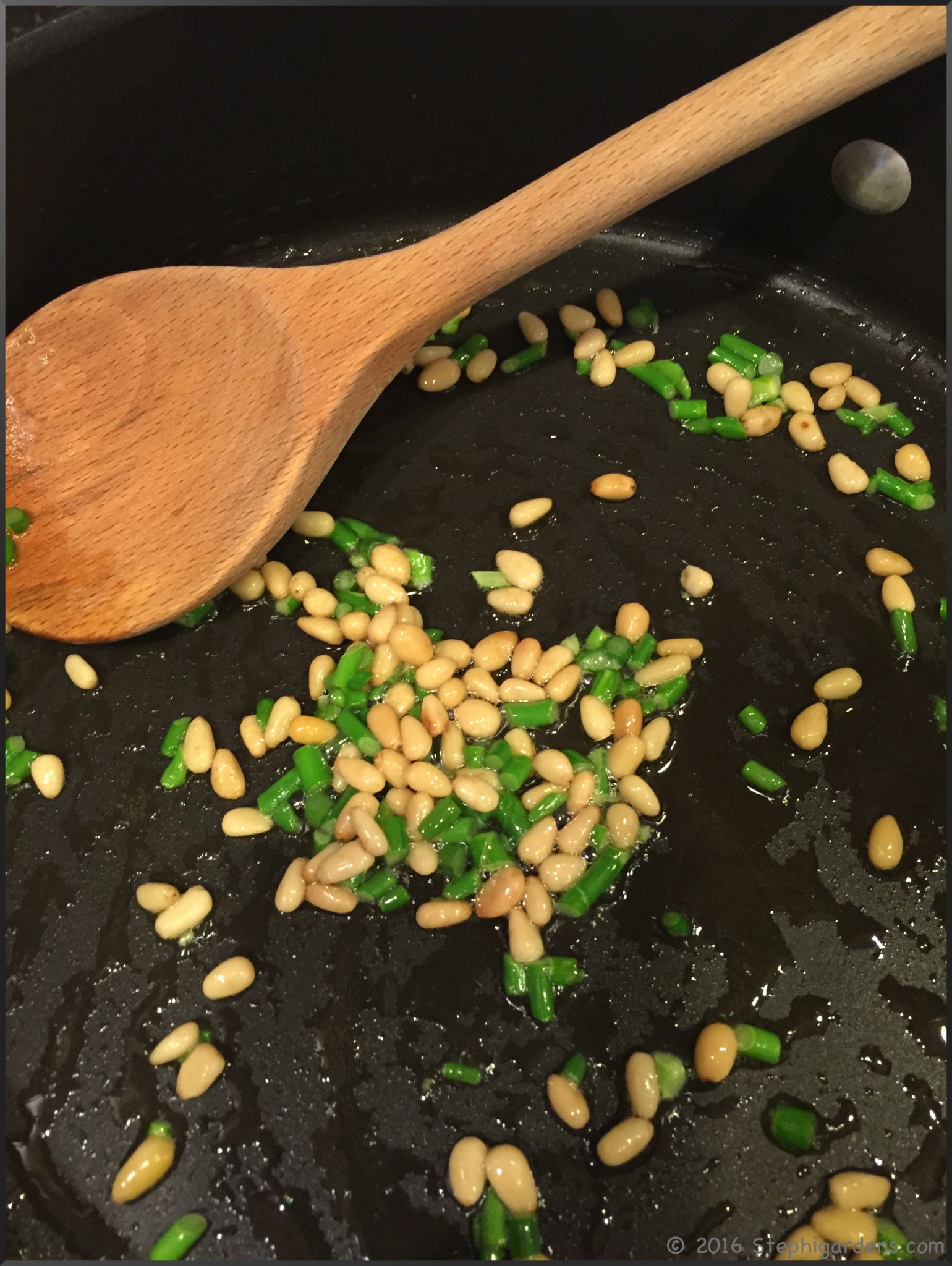
I harvested them by snapping the scapes off at the base near the first set of leaves.  Then removed the swollen tip, and the rest is ready to use.  I used the first small batch to season some sauteed spinach with pine nuts.

garlic scapes

I usually find that garlic overpowers the spinach, but the scapes were perfect.  Just a delicate hint of garlic to jazz up the spinach.  For more recipe ideas, check out my Pinterest page.

The rest I’m going to coarsely chop, blanch for 20 seconds in boiling water and freeze to use later.

garlic scapes

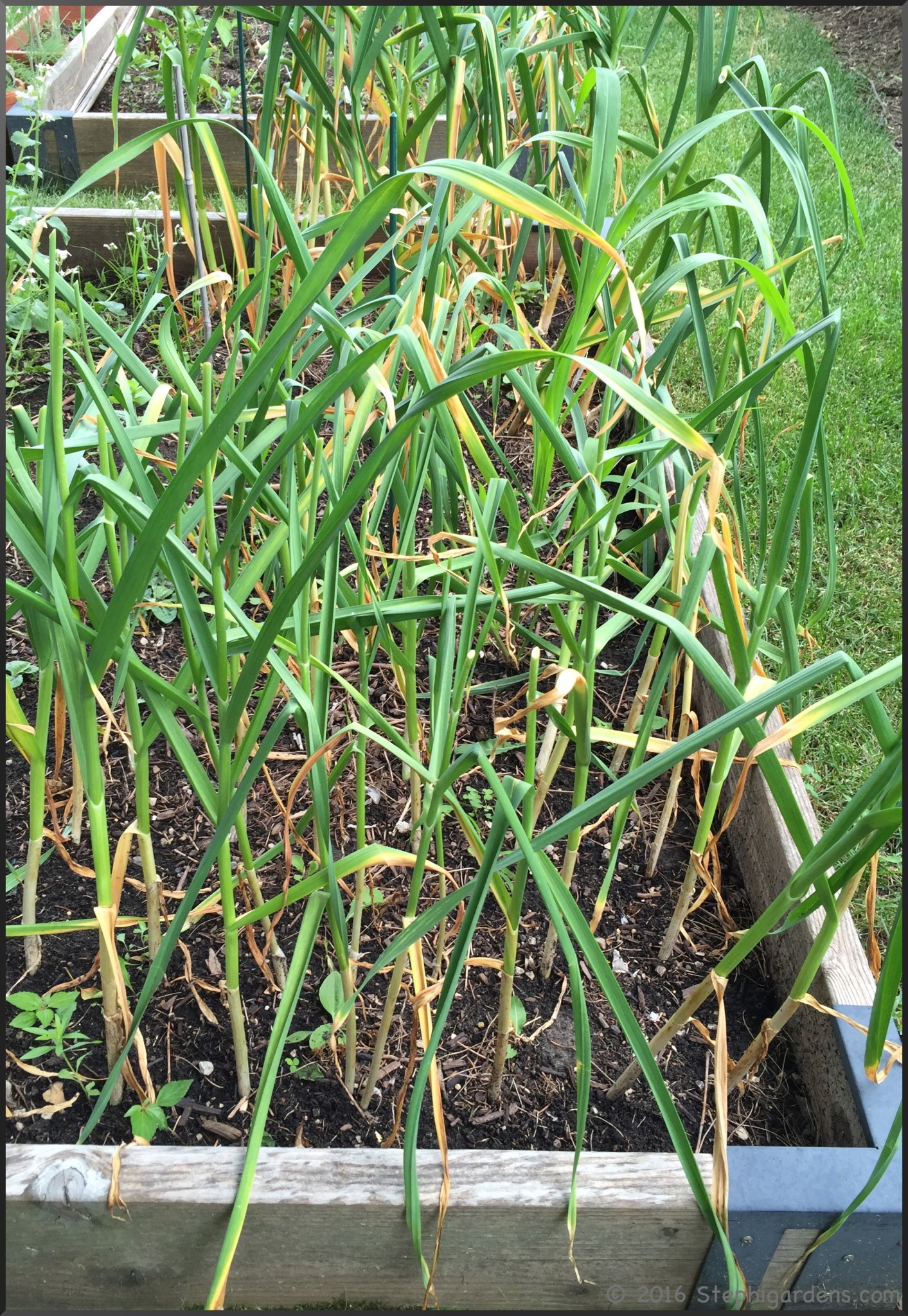
The production of scapes also means that garlic is almost ready to harvest.

garlic

Ideally, garlic should be harvested when there are 5-6 green leaves remaining and the rest brown.  Fewer green leaves mean fewer wrappers keeping the bulbs tight and ultimately healthier for storage.  I’m anxious to again have garlic hanging on the porch to cure (Warding Off The Vampires).  But in the meantime, I’m enjoying the little tease of garlic that the scapes are giving me.


Save

Spring Leeks (aka Ramps)

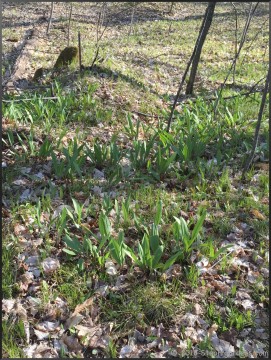
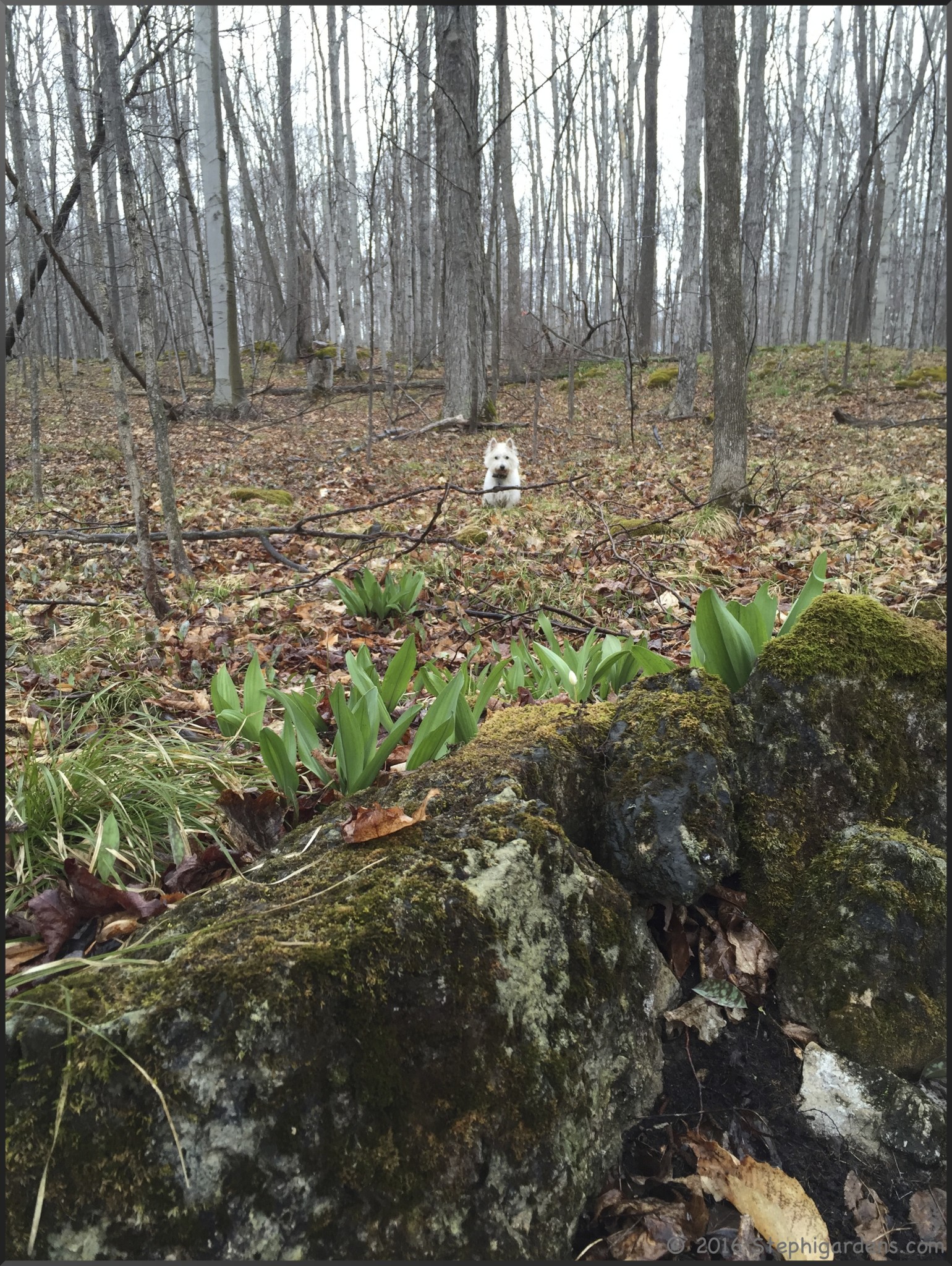
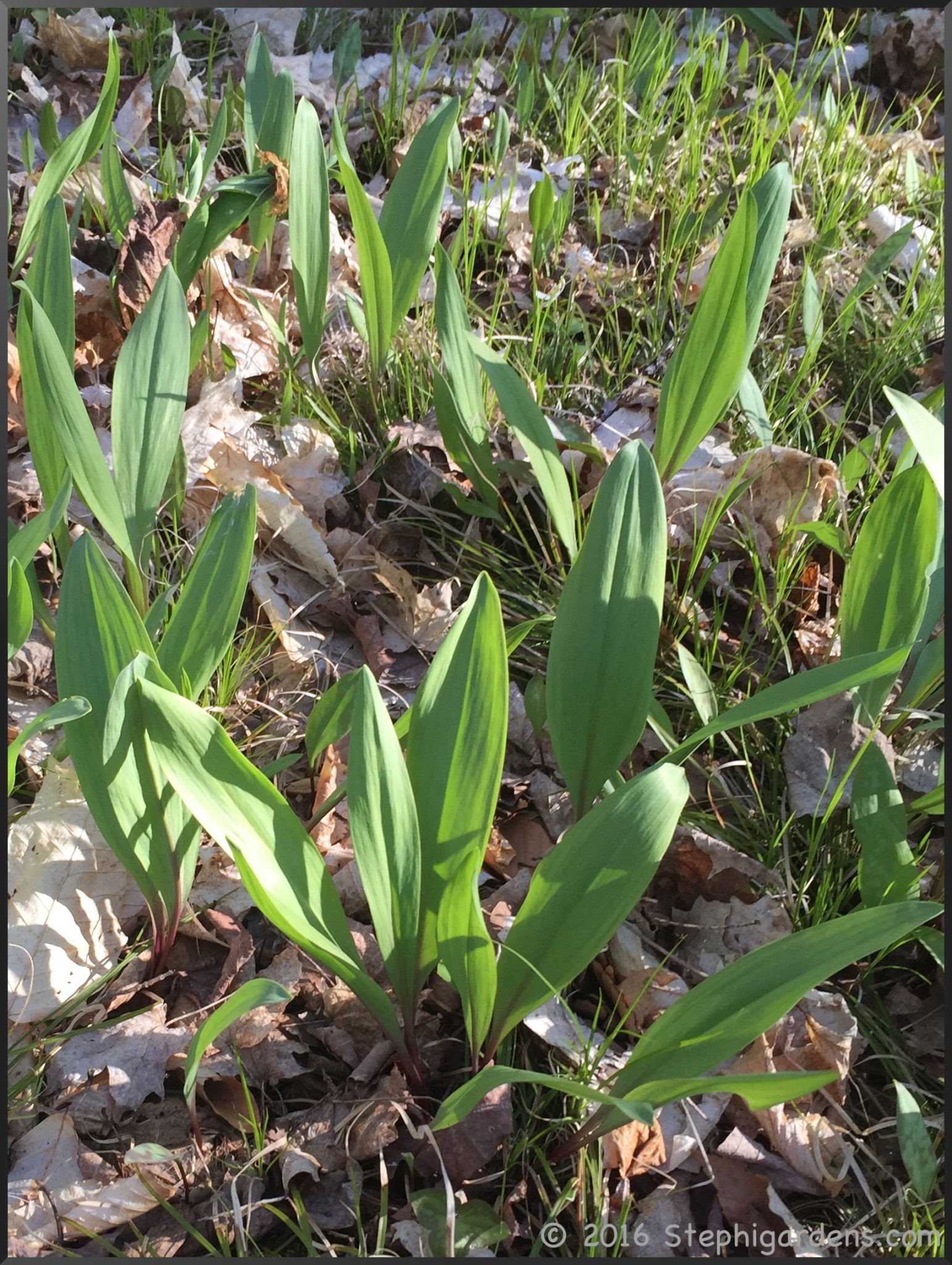
This past spring while wandering my Door County, Wisconsin woods, the ground was covered with beautiful, light green leaves.

Wild Leeks

I knew it wasn’t trout lilies, since the leaves weren’t mottled, but I also knew it looked familiar.  Without a flower, I wasn’t sure what this plentiful plant was.  I sent a photo to my expert and she instantly answered “Leeks”!   My mom went on to remind me when I was a kid, we had people who would pull off the road near our cabin in Western NY and scramble around in the woods harvesting them.  I knew I had seen them before.

Wild Leeks

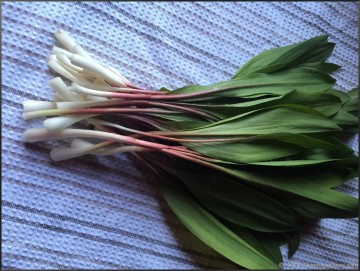
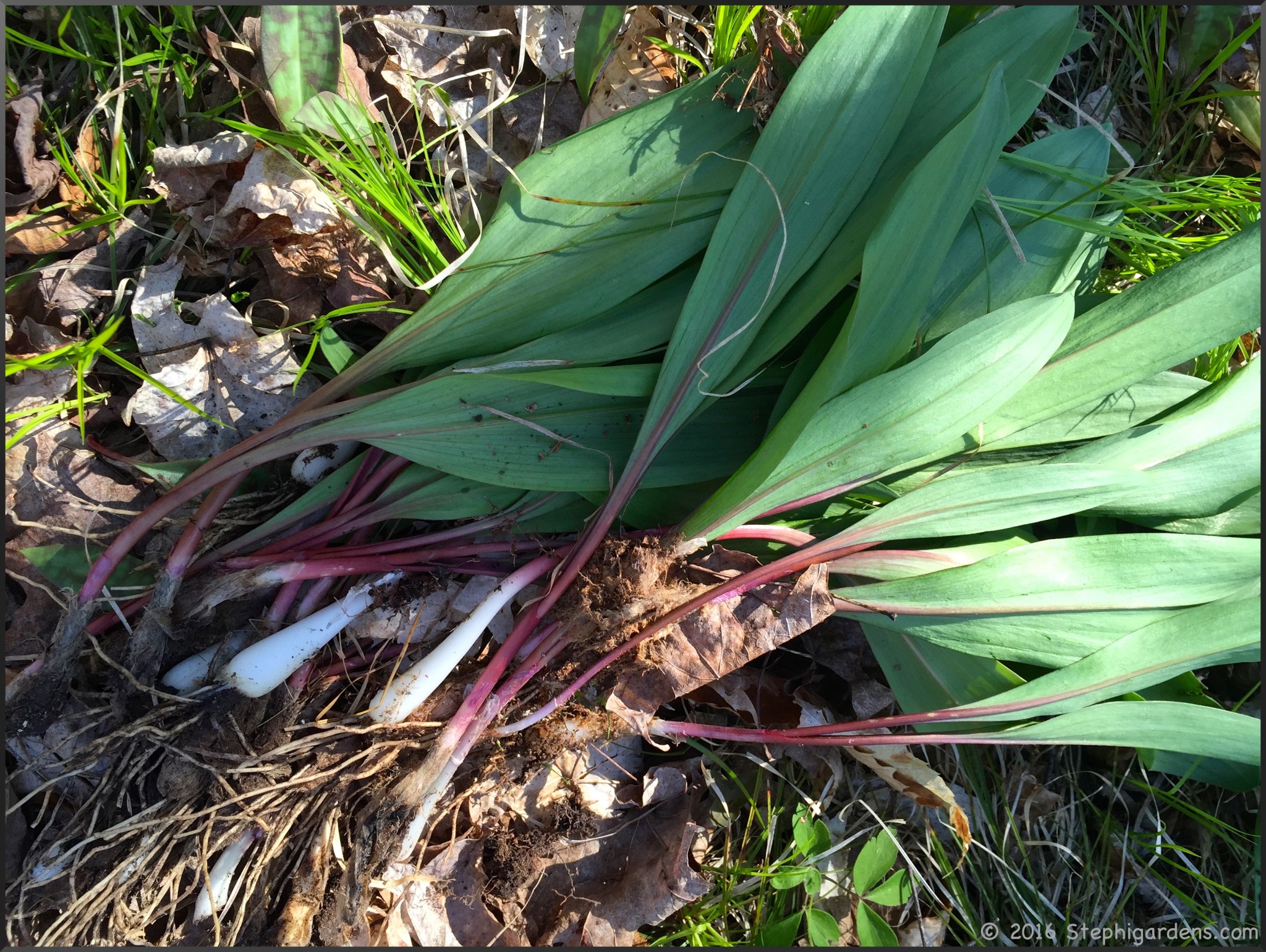
I did a little more research and realized I had a little foodie gold mine back there in the woods.  Wild Leeks, or Ramps,  (Allium tricoccum) have a sharp flavor, similar to an onion or garlic and come into season in the early spring.  You can recognize them by their smooth green leaves that emerge from the ground, with a hint of purple on the lower stem.

Wild Leeks

You know for sure you have ramps, when you break a leaf and you can distinctively smell onion/garlic.  No smell, no eating!!

I had never used them before, so I harvested just a little to try out in a couple of recipes.  Wild leeks are actually endangered or rare in many areas because of over-harvesting and they are hard to cultivate.  Rule of thumb to maintain a healthy patch is to only pick 5-10% of a patch, or harvest only the leaves.  To harvest, it’s easiest to use a trowel and loosen the dirt to make it easier to pop out the bulb and greens as a one.  Or, just have a clean shears to trim off the leaves and leave the bulbs behind.

Wild Leeks

Once I picked what I thought was enough to try in a couple of recipes, I left the rest alone to grow and be healthy for many years to come.  I also knew I wasn’t going to be able to eat them right away so I chose to freeze them for later use.

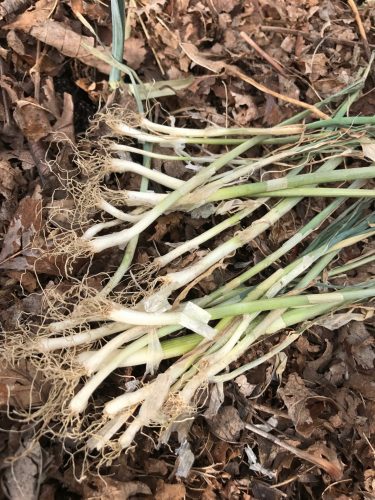
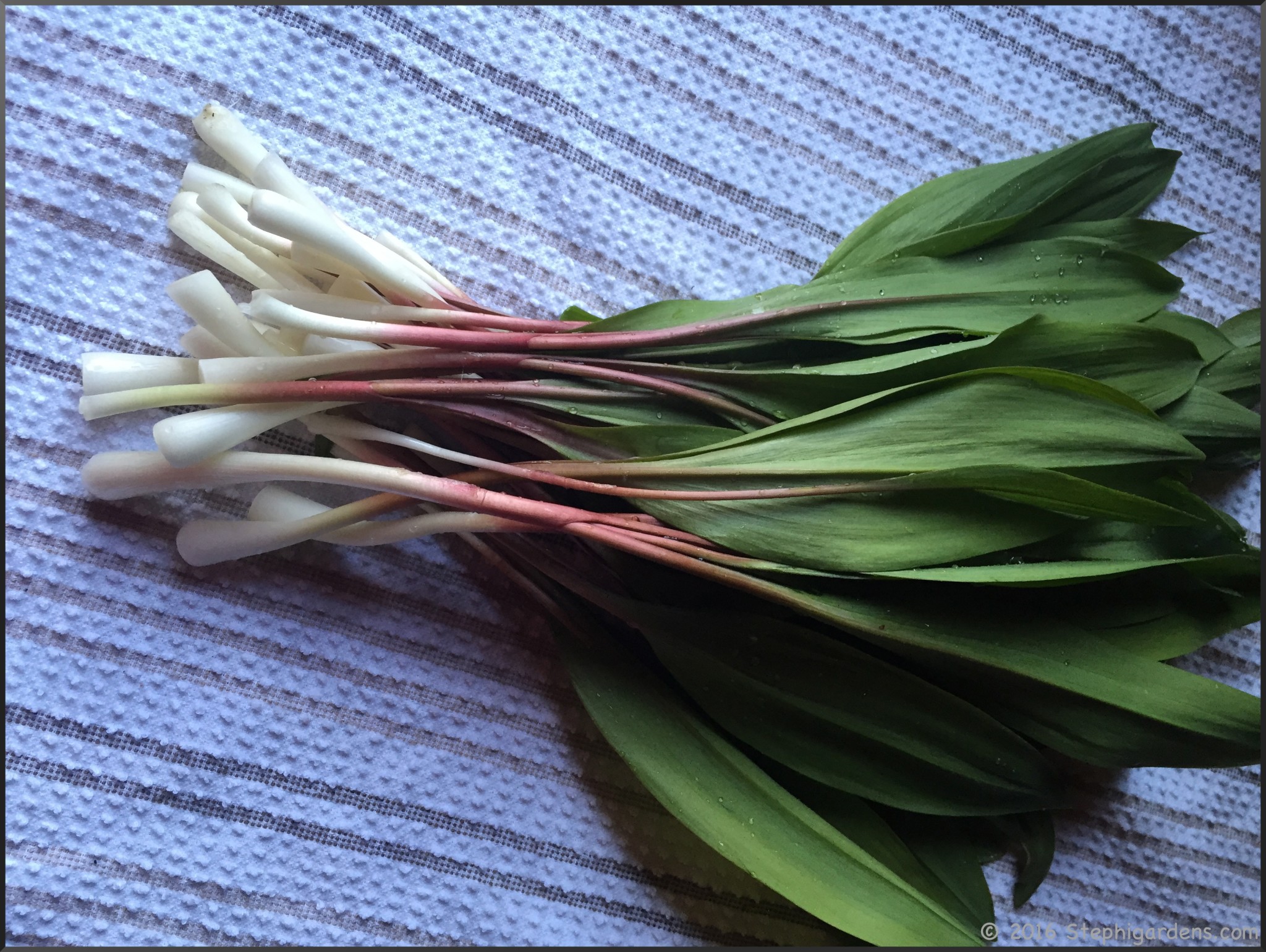
To freeze, first clean off the dirt, peel off any slimy outer skins and cut off the root end.

Wild Leeks

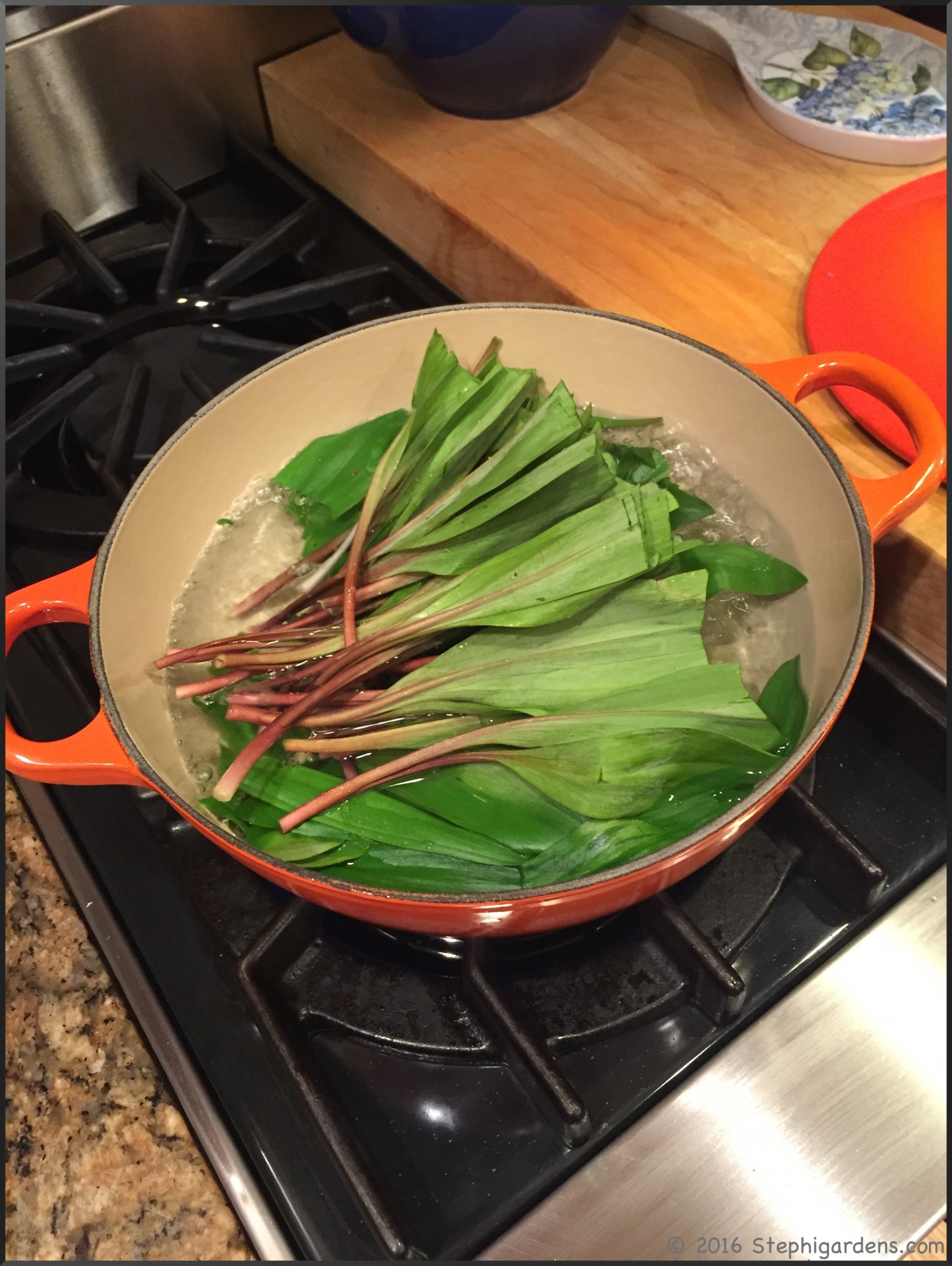
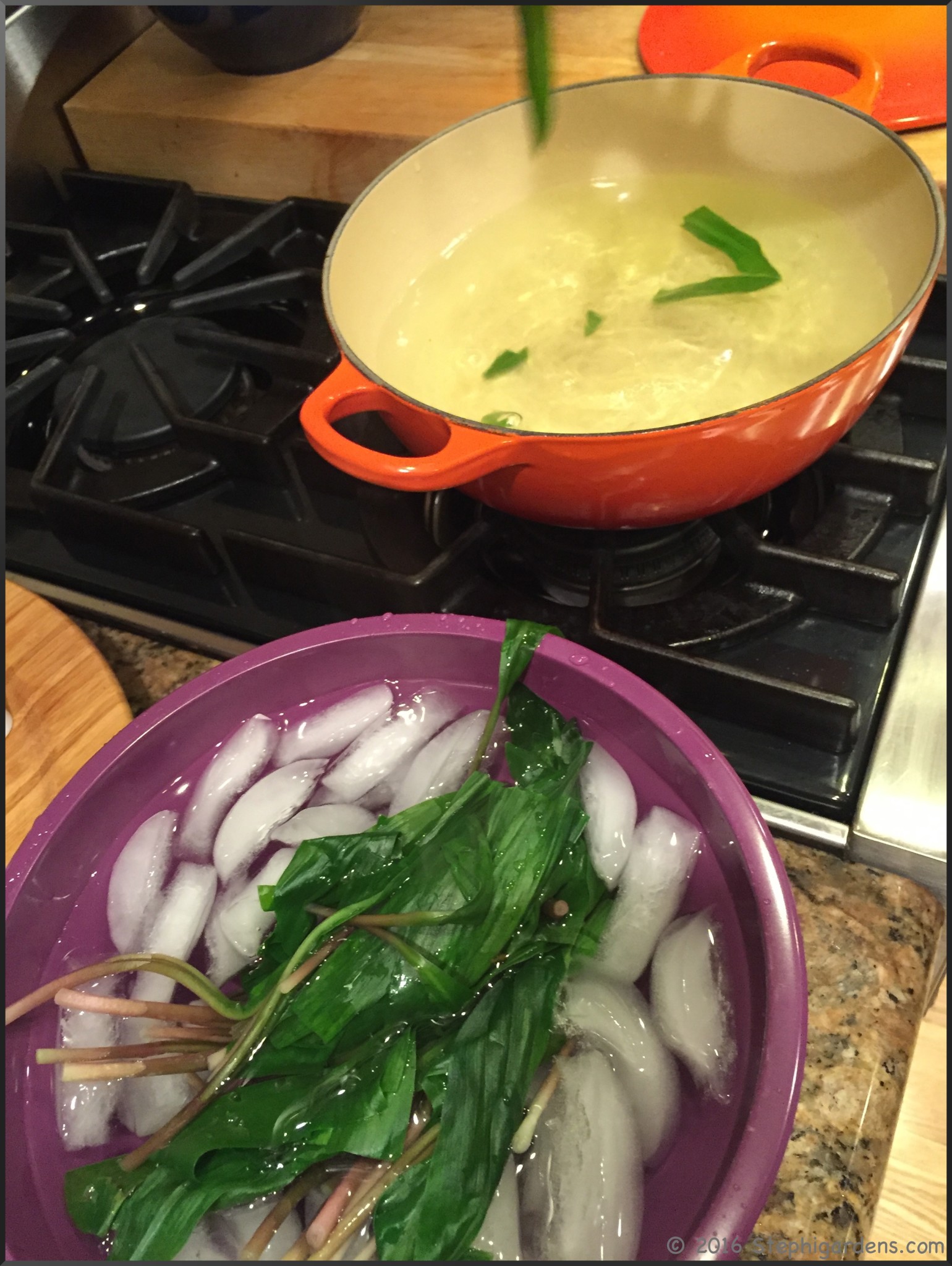
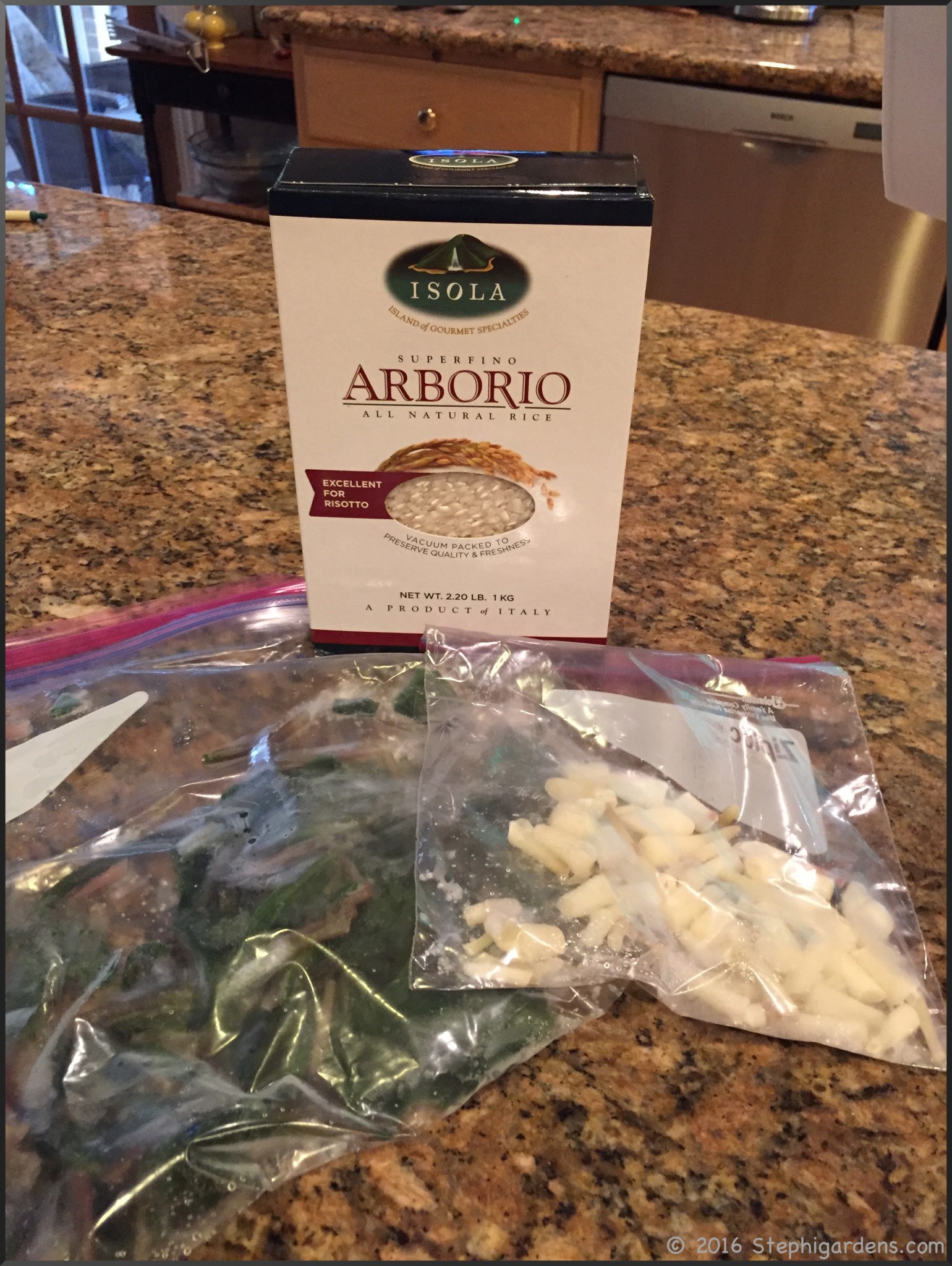
Oh, they look so delicious and the house smells so tasty. I then cut off the white bulbs and and put them directly into a freezer bag.  The greens I blanched for 1 minute in boiling water, plunged into ice water and then placed in a separate freezer bag.

blanching wild leeks

Wild Leeks

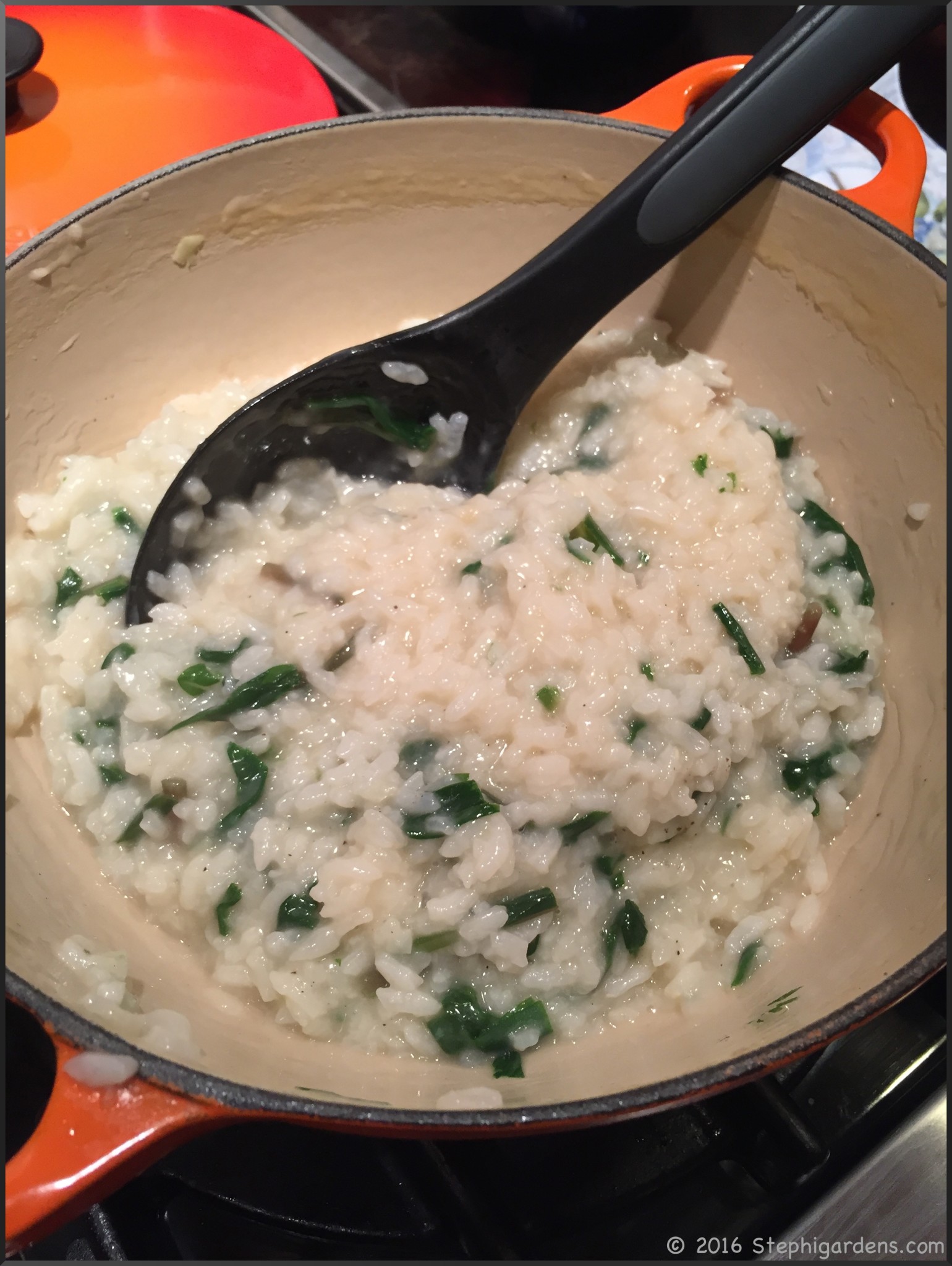
Once things had settled down a bit, I finally was able to get them out of the freezer to try.  I decided a Wild Leek Risotto was a good place to start.

Wild Leek Risotto

Using a tasty recipe for Wild Ramp Lemon Risotto from DOC  from The Kitchn, I made my first recipe.  Yum, is all I can say.  What a perfect low sodium side dish for some grilled Copper River Salmon.

Wild Leek Risotto

I still have enough for another meal and I have a bunch more risotto options to try. Check out my Pinterest site for some wild leek/ramp ideas.

Have you tried any foraging foods this spring?

BTW, the two things that are easily confused wild leeks are Trout Lily and Lily of the Valley.  Trout Lily have mottled leaves and white or yellow flowers that will appear at the same time and do not smell like onions.  Lily of the Valley are toxic and have two or three leaves on one stem, come up later in the season, and DO NOT SMELL LIKE ONION. As one who is not keen on foraging, I can attest to the fact that wild leeks smell like onions/garlic and lily of the valley do not.  Use that as your guide and all with be fine and delicious.

Now I’m ready to try out my garlic scapes.