Finally, Planting Season is Beginning

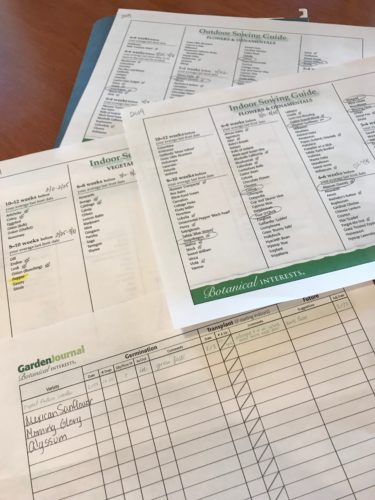
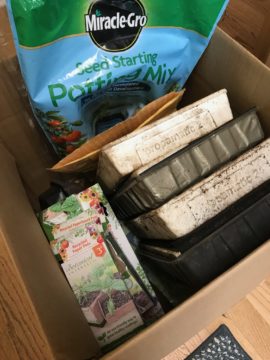
Finally, I can stop thinking about last year’s garden and start thinking about this year’s. I’ve ordered all my seeds, (maybe) and printed out my growing resources from Botanical Interests.

I’ve used these garden resources for years to organize my plantings, both for indoor and outdoor sowing. I thought they didn’t have them this year, but instead they made them part of this journal package. Phew! I really rely on them to know when to plant and keep track of what I’ve planted, when and where.

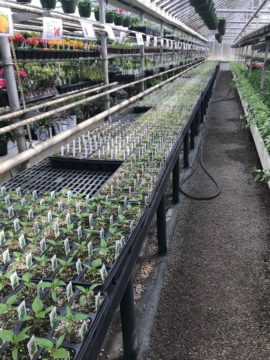
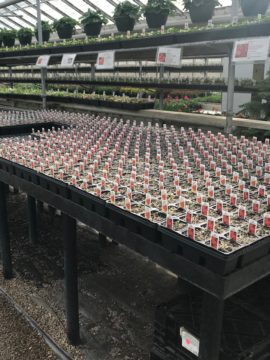
I’m finally ready to get started sowing the inside seeds. I grow some things myself and rely on my local nursery for the rest (shout out to Vern Goers Greenhouse!). Along with wonderful annuals and perennials, they have an amazing selection of peppers, tomatoes and other vegetables. I went to visit them the other day to see how things are coming along. Looks like it’ll be a little while until they’re ready, but it is only the beginning of April.

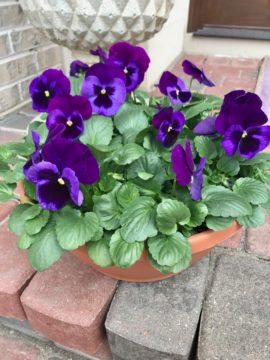
While I was there I did get some beautiful pansies to brighten the porch.

What did I sow today?

Flowers:

Vegetables:

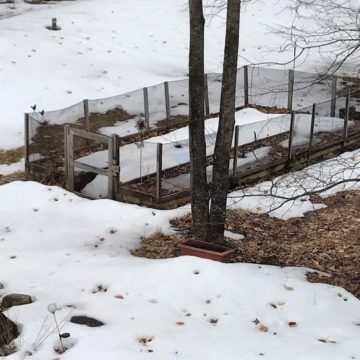
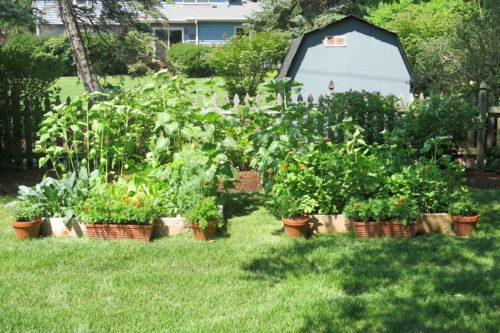
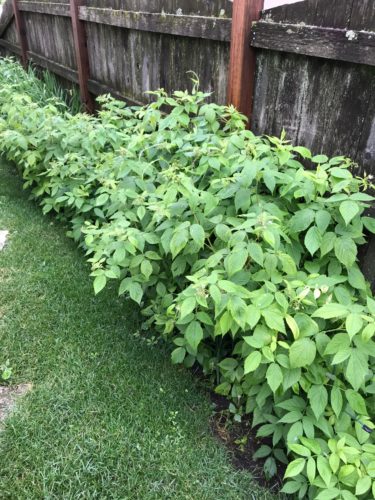
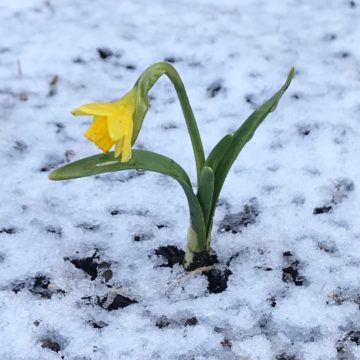
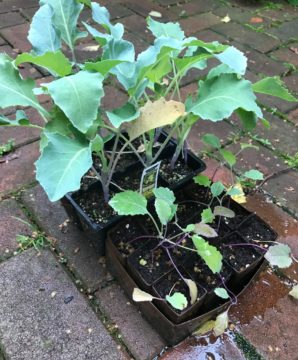
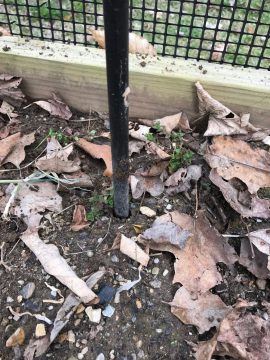
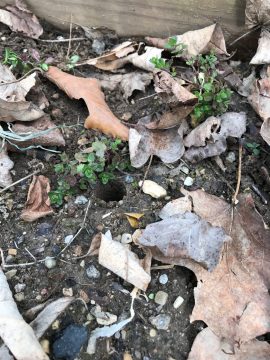
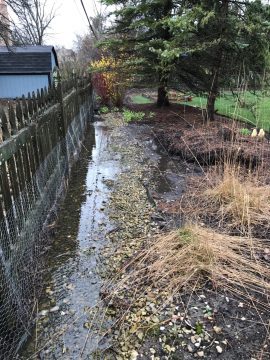
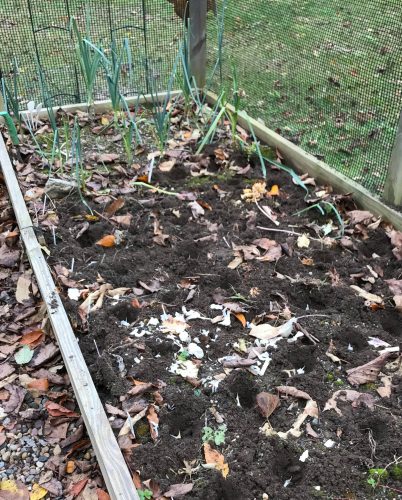
I was hoping to get some cold weather seeds sowed this weekend, but my WI garden looked like this:

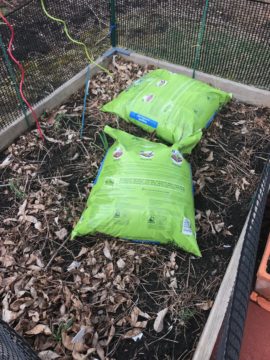
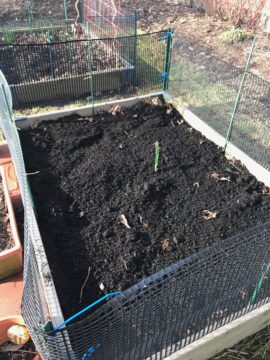
Still had to get some new dirt turned into the beds at home, so got that done this afternoon. Next post, I’ll let you know what I planted!

2018 Garden Recap: Vegetables (Part 2)

Now that we’ve mostly recovered from a record breaking, bone-chilling winter, it looks like spring may finally be coming. I thought it was time to get back to one final review of last year’s gardens before the spring growing season is fully upon me. I checked in on the flowers, 2018 Garden Recap: Flowers and started reviewing the veggies here, 2018 Garden Recap: Vegetables (Part 1). Time to finish the veggies!

As I wrote back in December, my vegetable garden was not very successful for a bunch of reasons. In Veggies Part 1, I described the attack on my squash by the very devastating squash vine borers. But that was only one of the things that hindered my garden this year.

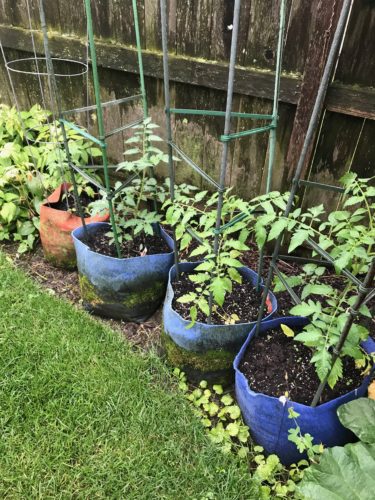
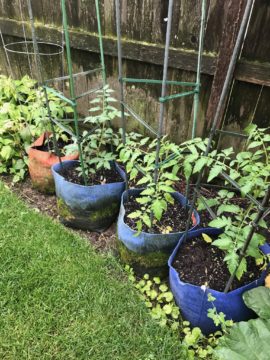
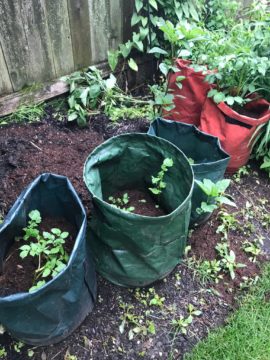
So what else happened? First there were the chipmunks who have a taste for ripe tomatoes. I planted my tomatoes in bags this year to free up space in the main raised bed.

They grew fine in the bags, but the cold spring got them off to a slow start. Just as I finally started to get red, ripe tomatoes, the chipmunks helped themselves and took a nice big bit out of each one. 😡 They did it to so many I actually entertained the idea of just cutting off the bit side and eating the other. Decided not to…

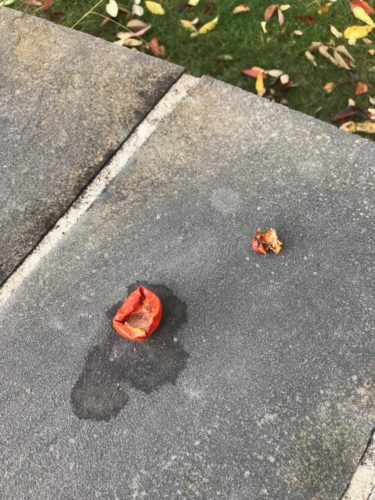
One chipmunk truly had a sinister sense of humor and dragged a ripe tomato across the yard to taunt me by leaving the remnants on the back patio.

I had trouble with the garlic and leeks this year as well. A lot didn’t come up in the spring and what did grow was small.

The previous winter and spring were tough, so that may have had an impact. But more importantly, I hadn’t realized how shady that this particular raised garden had become from the thriving ash tree nearby. When I put the gardens in, the ash was suffering pretty badly from an Emerald Ash Borer infestation and was pretty thin. We had been treating it for years, but a few years ago switched to a trunk injection treatment. I’m thrilled the ash is doing so well, but I need to rethink what I plant in that particular bed going forward. Need to leave autopilot and do some planning.

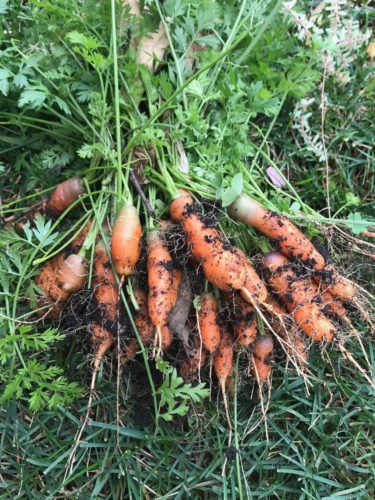
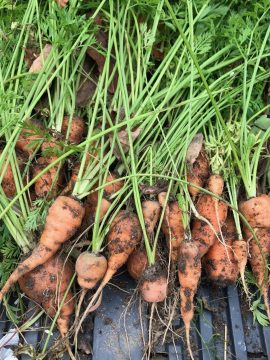
What was successful? Carrots! I had one of my best carrot harvests this year. I switched varieties this year from Danvers to Little Finger Baby Carrots from Botanical Interests, so that may have helped. I also changed out the dirt in the carrot bag so maybe some fresh soil and nutrients was also needed.

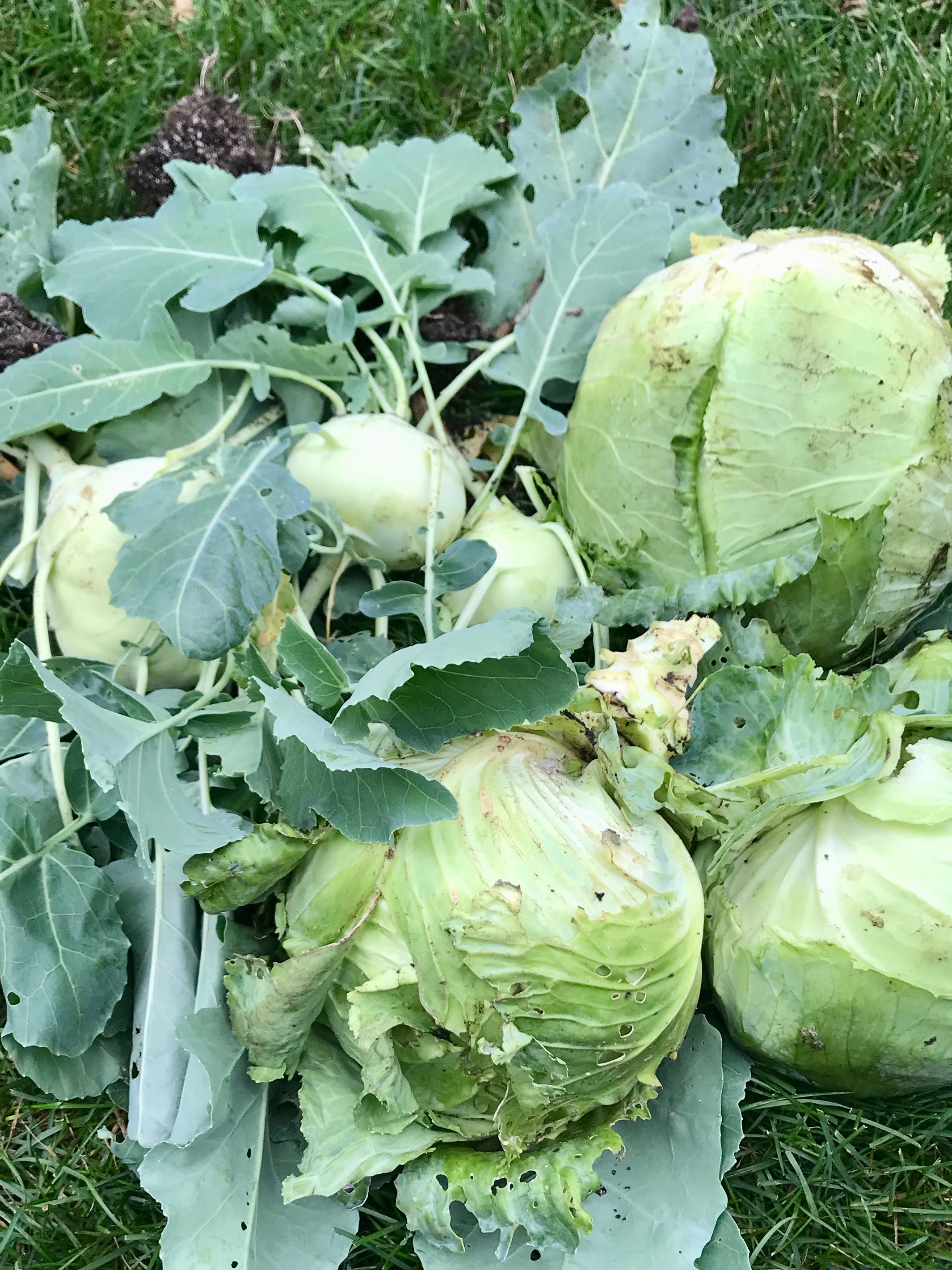
Cabbage and kohlrabi grew unusually well this year. I got the plants from a local nursery and the weather must have been just right for them to grow huge. That was a lot for the two of us, but luckily they store really well.

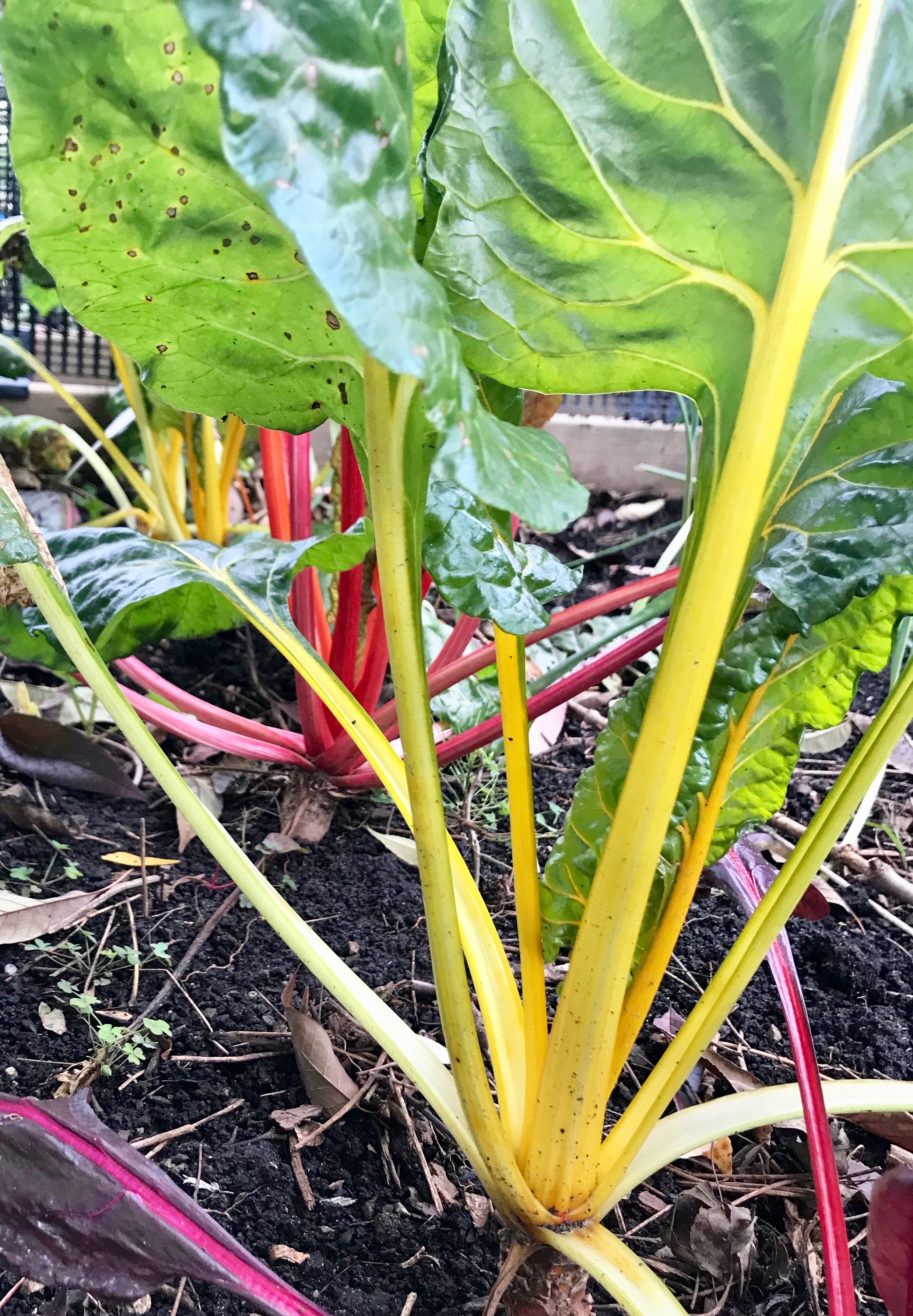
Rainbow swiss chard (Burpee) was also a great grower late into the fall, especially in the shady raised garden bed.

What to do with all that swiss chard? I’ve decided that I am not a huge fan of kale (even though it is probably the vegetable of the decade) so I pretty much use swiss chard in place of kale in recipes. I use a lot of swiss chard in stir fries and love this recipe for Creamy Polenta with Sausage and Chard from Real Simple.

I’ve done some seed shopping for next year already, and have been thinking of a bunch of garden projects to tackle first thing when the weather cooperates! Starting to think that spring might actually come. Just need to get through March.

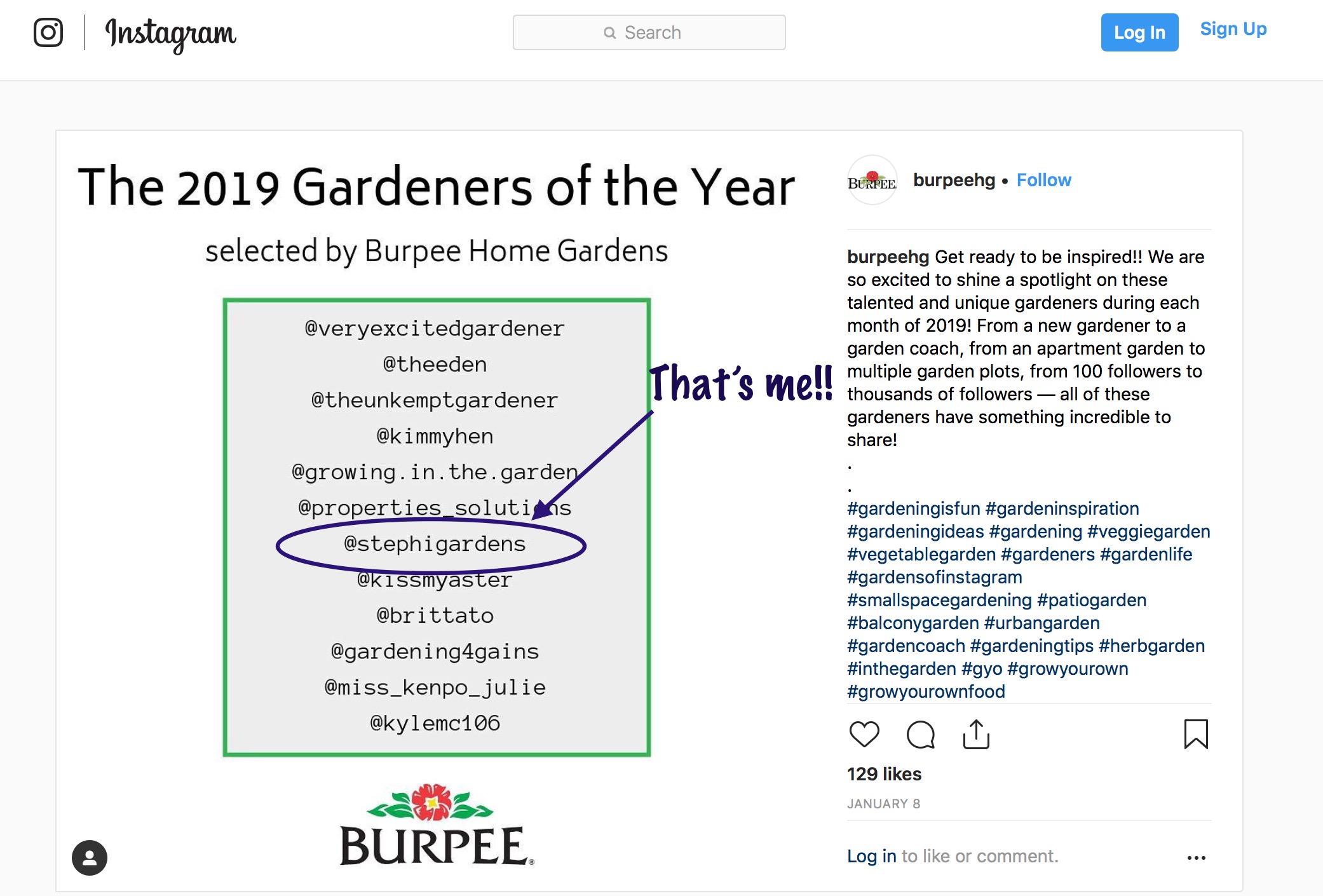
Burpee Home Garden 2019 Gardeners of the Month-I’m July!

Yep, that’s me! Last fall on Instagram, Burpee Home Gardens asked gardeners to enter themselves or a friend to be one of BHG’s 2019 Gardeners of the Month. I shamelessly submitted my name with the following description:

“I would love to be one of your featured gardeners. I may not have the most perfect garden, but it’s immensely fun to see what’s going on out there in the yard, to see what has worked well this year, and think about what I might try next year. Check out my blog and see what’s going on in my suburban yard!”

I didn’t really think I’d get picked since there are so many exceptional, passionate gardeners out there. Then much to my surprise, or rather shock, I got the following message by to me Instagram inbox:

“We apologize for the delay, but we have good news! You’ve been selected as one of Burpee Home Gardens’ 2019 Gardeners of the Year! What does this mean? Either you submitted yourself or a friend submitted you to be featured on our account! We think you’re great and will feature you on the following month: July 2019. As a gift for being such an awesome gardener, we’d like to send you an exclusive plant sample box of our new varieties for 2020! Please reply with an address to which we can ship the box. (You won’t receive these until early summer, but we need to confirm you on our list now.) Congrats again, and we look forward to showing our followers how amazing you are! 🌱😁”

Wow, wow, wow!!! How exciting is this?

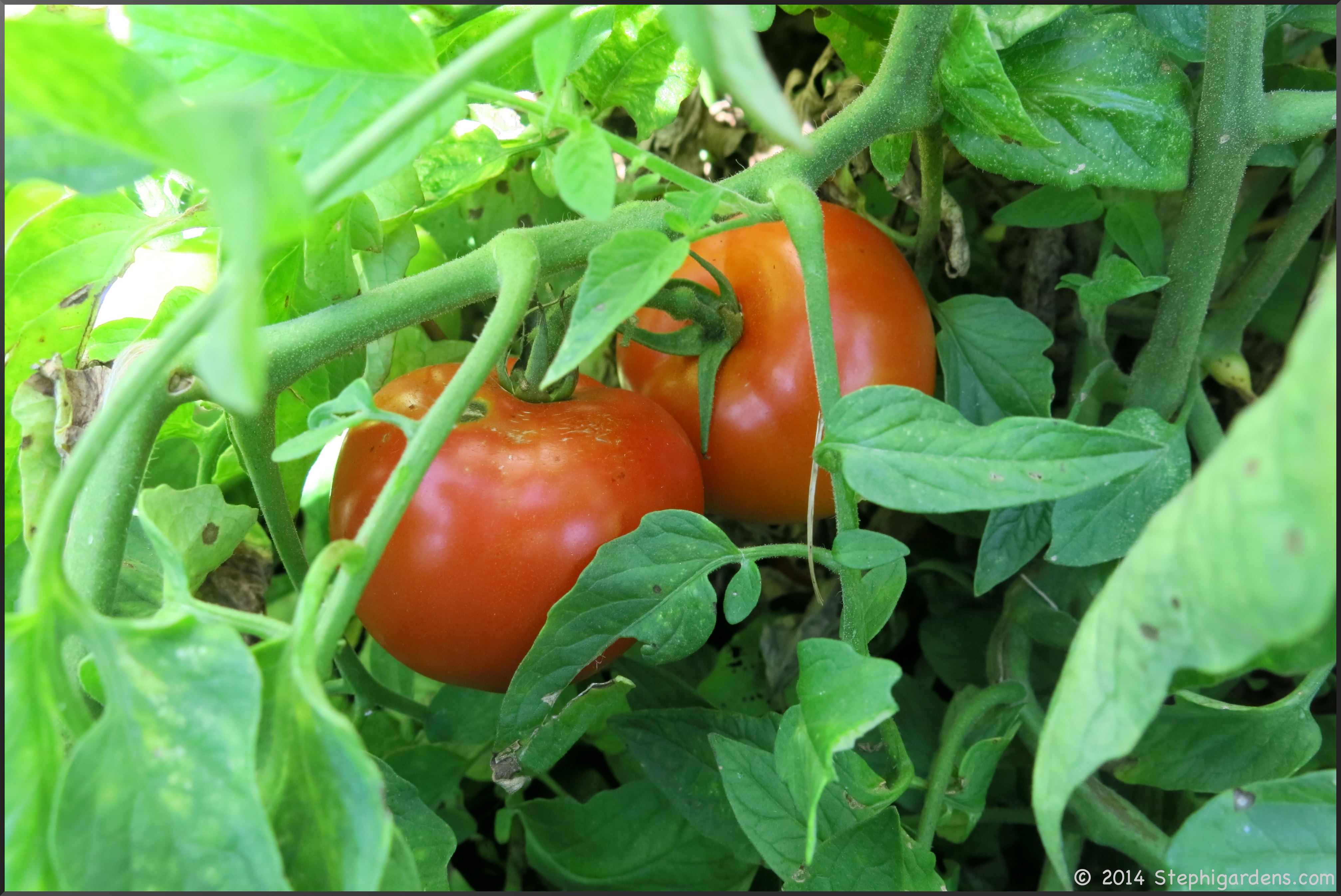
Burpee Early Girl Tomato

Announcement from the Burpeehg instagram site last week:
“Get ready to be inspired!! We are so excited to shine a spotlight on these talented and unique gardeners during each month of 2019! From a new gardener to a garden coach, from an apartment garden to multiple garden plots, from 100 followers to thousands of followers — all of these gardeners have something incredible to share!”

Now the pressure is on. What am I going to grow this year? What new things do I want to try? How will I compare to the other gardeners? What unexpected things are going to happen this year? What, what what…

One thing I do know, is that people garden for all different kinds of reasons and no one really has a perfect garden. I grow what makes me happy and I love writing about it. The good and the bad. That’s real life. I hope some of what I experience encourages someone else to try their hand at growing something, or just getting outside to appreciate nature.

Can’t wait to follow Burpee and Burpee Home Gardens as they highlight all these gardeners this year.  Watch for me in July on their Instagram site and blog. I’ll be sure to let you know when I’m featured 😉

2018 Garden Recap: Vegetables (Part 1) (aka Attack of the Squash Vine Borer)

In my last post, I wrote about how my flower gardens fared this year. Next up is the vegetable gardens.

In a word, this year the vegetables gardens were a disaster. Not for any one reason, just a lot off bad things conspired to really take a toll and make it one of the worst years I’ve ever had gardening. Makes me long for the days when I gardened in New Jersey and everything just grew lush and beautifully. Except for the year I had hornworms on the tomatoes. Those were disgusting.

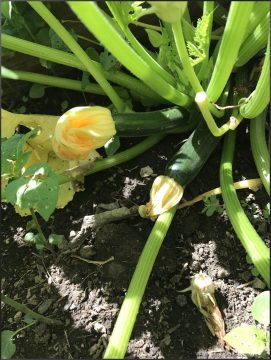
Back in the spring, I was so hopeful for a summer of fresh vegetables. But that was not to be. The squash and zucchini was looking great through early July. I was getting tasty Emerald Delight Zucchini (Botanical Interests) and Gold Hybrid Gourmet Gold (Burpee), and the vines were covered in flowers.

Then over about a week in early July, they just up and died.

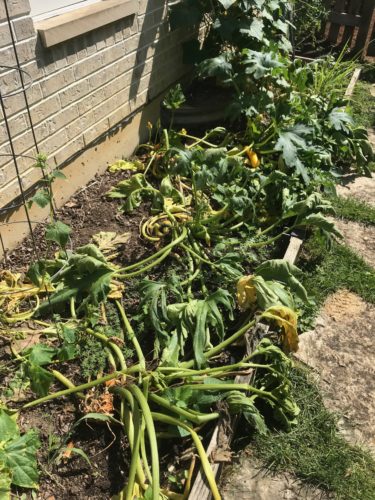
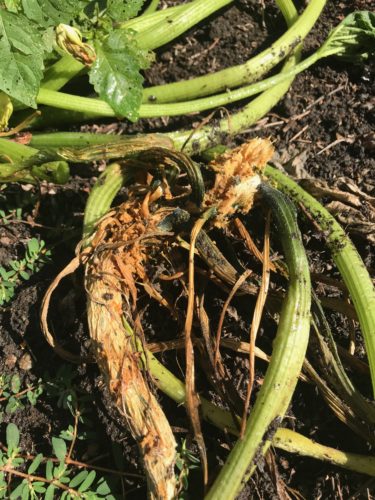
I thought it was powdery mildew, but it was so dramatic. I’ve had plenty of powdery mildew and it didn’t really look like it. I pulled it all out and threw it into a garden waste bag (you don’t want diseased plants hanging around your yard). Didn’t think much of until I was writing this post and wondered what had really happened. As soon as I started doing some investigating, it quickly it became quite obvious from the pictures that mine had been attacked by squash vine borers, not powdery mildew.

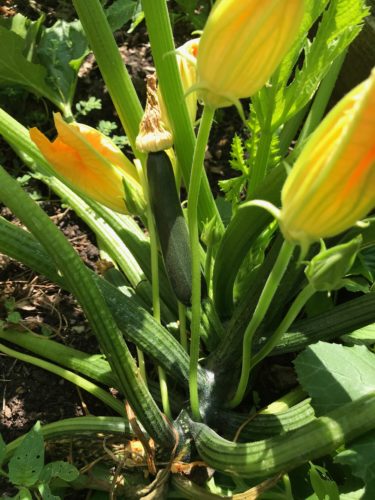
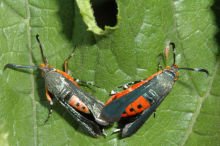
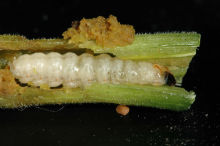
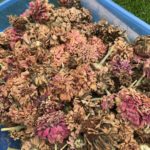
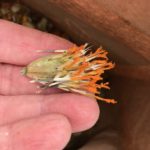
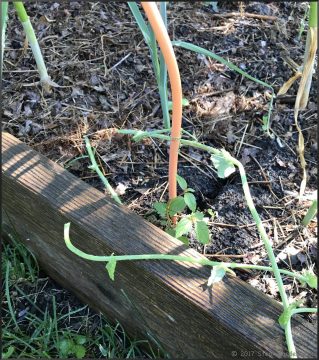
All that orange mess around the base of the plant is a moist orange sawdust-like material called frass, or insect droppings. It was everywhere. Yuck. That is a sign that the squash vine borer larvae is eating away at the material inside the stems of the plants. I never looked close enough to see them, but the evidence was pretty overwhelming. Here’s photos of the adult and larvae (Photo credit to the UMN Extension)

So what to do now? Obviously I totally lost this year’s crops, but how do I prevent this from happening again?

First off, I need to be better about practicing crop rotation. I pretty much never rotate crops to different garden areas, but obviously I need to be better about that. Squash vine borers spend the winter in the soil near their recently infected host plants, so I need to have next years plants as far away as possible.

Then, according to the UMN Extension, I will need to check for adult squash vine borers starting the end of June. I’m not sure if I’ve ever seen them, but I will be on the lookout after this. You can also try to use some kind of container filled with water with yellow food coloring added to attract and trap them.  Check each day to see if you’ve trapped any.

If you do find the squash vine borers in the area you’ll need to change things up a bit. Easiest is to practice crop rotation. You can also try planting other crops that aren’t as susceptible like butternut squash, cucumbers, melons and watermelons. Although none of them are really substitutes for summer squash and zucchini.

Try planting a second planting in early July after any adult borers have finished laying eggs on the mature plants. But, this is tough in the northern climates that already have a short growing season.

Try using a physical barrier.  Wrap a collar of aluminum foil around lower stems to prevent egg-laying. Alternatively, secure floating light fabric row covers over your squash until they start to flower. Don’t use row covers if the infected squash plants were planted in the same area as the previous year. This is because squash vine borers spend the winter in the soil near their host plants. When the adults emerge the following summer, they may be trapped under the row cover instead of being kept out.

Hopefully this was a one time event and I can go back to having way too much squash and zucchini for one family to eat. Whenever something like this happens, it really makes me appreciate the organic farmers who grow on a large scale and how precarious each year’s crop is. At least I can just pack it in for the year and go to my local farmer’s market.

There’s a lot more good information on how to deal with these pests at these sites:

I would like give a shout to the land-grant University Extensions and their educational and problem-solving assistance they provide to the public. These community outreach programs provide invaluable scientific knowledge and expertise on a variety of topics. I’ve watched a number of webinars on gardening topics from the University of Illinois Extension and have found them to be really interesting, useful and free!

Have you ever had a whole crop wiped out like this?

Next post will look at the rest of the vegetable garden–stay tuned!

First of the Season

I always love when I go over to the vegetable beds and I find my first ripe vegetable of the summer. It means that so much more goodness is on the way. I got a bit of a late start in the vegetable garden this year because of very poorly timed travel and a cold spring. Then this post got pushed back just a little bit because my computer broke and needed to go away for repairs 🙁 So I am definitely late with my first to harvest this year.

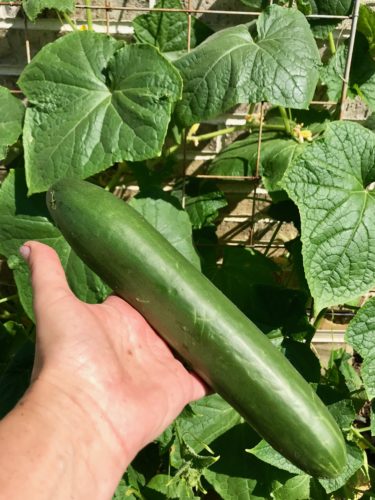
In any case, the first of the harvest winner this year was my Sweet Burpless Cucumber from Burpee.

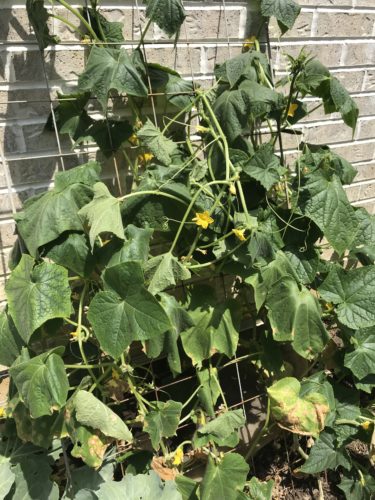
I’m growing 2 kinds of cucumbers this year, the sweet Burpless and Telegraph Improved (Botanical Interests), an English style cucumber. I meant to only grow the telegraph cucumber since I’ve really come to enjoy the thinner, soft-seeded variety, but decided at the last minute to plant my old stand-by as well. This has been a great year for cucumbers based on the vigor of the plants on the cucumber trellis. There are an abundance of flowers so there will be a good harvest.

One of my favorite cucumber recipes is a Sweet and Sour Cucumber Salad.  This is an easy recipe that can be made with thinly sliced or chopped cucumbers and makes a great side-dish for almost any summer dinner. It can easily be jazzed up with tomatoes, green peppers, kohlrabi- whatever is available in your garden that day.

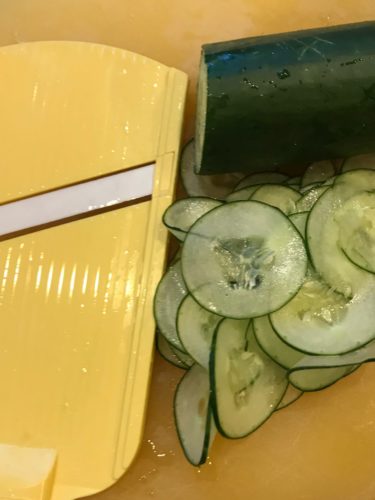
Start with your favorite cucumber and either slice it thinly, spiralize it or dice it. All make for a tasty salad. For making wafer thin slices, I love my Kyocera ceramic slicer. But be careful where you store it, it is REALLY sharp.

Earlier in the day I made my dressing:

Sweet and Sour Cucumber Salad
Print
Author:
Ingredients
  • ½ c Rice Wine Vinegar (unsalted)
  • ⅔ c water
  • 2½ T sugar
  • 3 cucumbers, sliced, diced or spiralized
  • optional: ½ medium thinly sliced medium red onion
Instructions
  1. Bring vinegar and water to a boil in a saucepan over medium heat. Stir in sugar to dissolve and simmer 15 min, stirring occasionally. Remove from heat and let cool to room temperature.
  2. Pour over prepared cucumbers in a bowl, toss to coat, chill in refrigerator until ready to serve.
  3. Extra dressing can be refrigerated and used within a week.

Then at dinner I have a wonderful side dish to go with whatever my husband has grilled that night!

How is your garden growing this year?


Spring Into Summer

You may have noticed I took another little break from blogging.  Nothing exciting going on, just got busy with some other projects. But, my garden is in full growing mode after a tough winter and spring. Winter was long, cold and at our place in Door Co, WI, very snowy.  Spring came slow and seemed as though wouldn’t ever arrive.

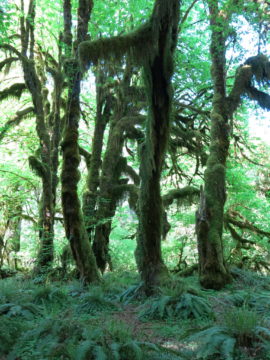
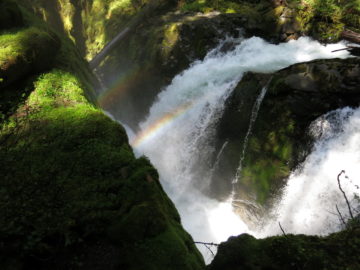
I was late getting the flowers and vegetables in the ground because of a combination of the ground being too cold, and some poorly timed travel plans.  Really, who plans a vacation right at the peak of planting season?  But, it was fun visiting Seattle and Olympic National Park, and having both college kids home for a visit.

Then finally, spring and summer arrived almost all at once. All the spring blooms seemed to explode at the same time making for a spectacular show.

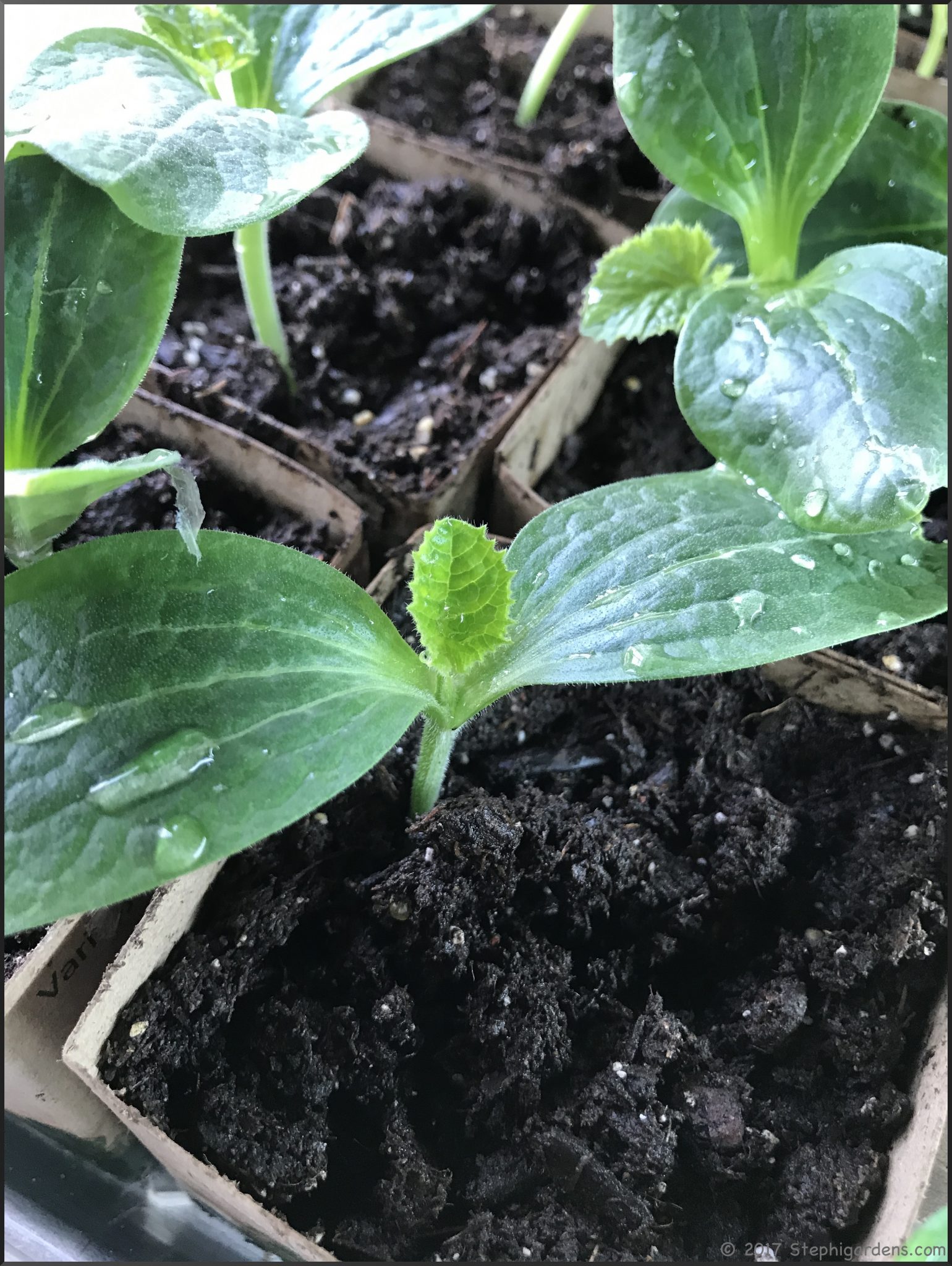
Back in early April, I started some of my favorite vegetables indoors;

  • English Telegraph Cucumber (Botanical Interests)
  • Sweet Burpless Hybrid Cucumber (Burpee)
  • Emerald Delight Zucchini (Botanical Interests),
  • Gold Hybrid Gourmet Gold (Burpee).
  • I tried growing Kohlrabi, but again they just didn’t grow well for me.  Luckily, my local nursery had plenty!
Mine in the front, nursery grown in the back


Outdoors in late April, I planted my early, cool temperature loving seeds including

More recently, I got the rest of the seeds planted including a second planting of the cool weather plants, and added Danvers and Calliope Carrots (Botanical Interests).  I also bought beautiful

  • Tomato (Sweet Million Cherry, Early Girl and Champion)
  • Sweet Pepper (Yolo Wonder, California Wonder and North Star)
  • Herbs for the “right outside the door” herb pots
  • cabbage and kohlrabi plants

from Vern Goers, a local nursery. I was also gifted a lovely yellow pear tomato plant from my mom. (I’ve switched to growing my non-cherry tomatoes in bags to leave more room in the raised bed for the squash, zucchini, cucumbers and kohlrabi.)

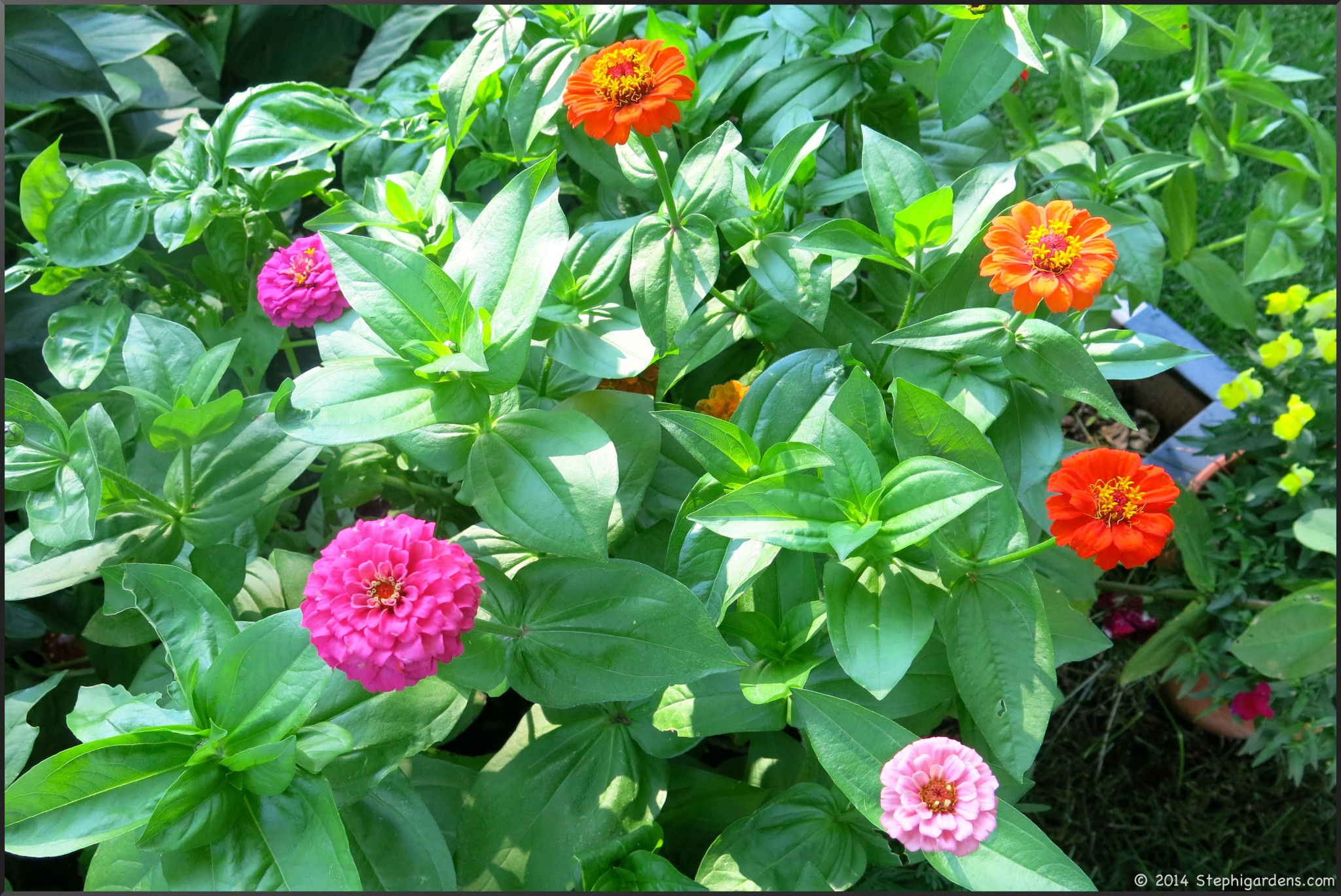
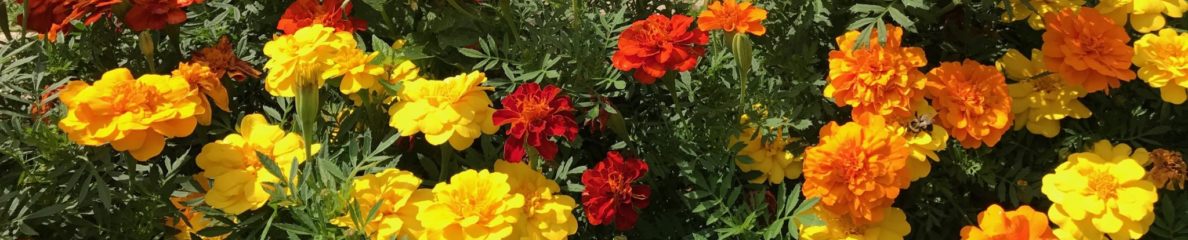
I also got my bed of zinnias sowed, and this year added a bed of marigolds from seeds I collected last fall. Check out my previous post, Cheerful and Bright Zinnias Bed, for an easy how-to.

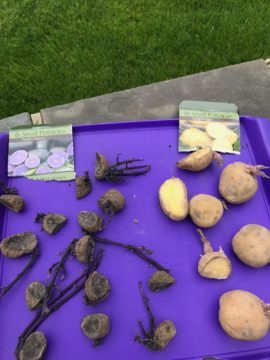
Last but not least, I got my potato bags going with three different varieties (for more info, visit these past potato posts) and planted lots of Lancelot leeks, shallots, and yellow sweet Spanish onions (Dixondale Farms).

Almost forgot, I got all my flower pots planted too!

So I think I’m all caught up for now, but lots more to write about! Hope you’ve had a good spring and your gardens are growing beautifully!

SaveSave

SaveSave

SaveSave

SaveSave

SaveSave

Leeks!

One of my favorite flavors to cook with is leeks. They have a unique and interesting mild onion taste and are part of the allium family that also includes onions, garlic, shallots, scallions and chives. Last year, I found I had wild leeks (ramps) on our WI property and have really enjoyed finding, harvesting and cooking with them (see Spring Leeks (aka Ramps)).
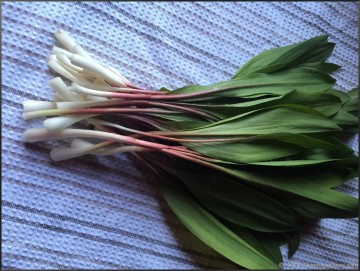
But they are only around for a short period in the spring, and I have to be careful not to harvest too many or run the risk of wiping out the wild colonies. I’d rather err on the side of harvesting too few than too many and be sorry in a few years.
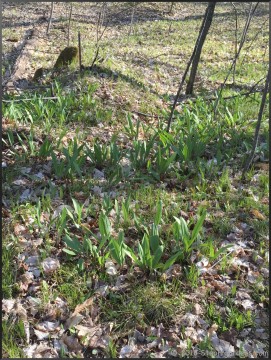
So what to do? How about grow some cultivars in my own garden? I’ve already started growing my own garlic, onions, shallots and chives. So how about adding leeks!

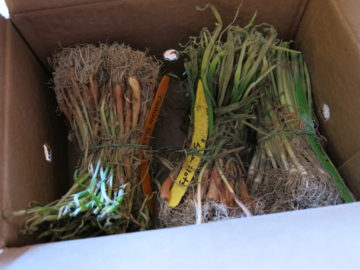
It seems like as with most alliums in a home garden, it’s best to start with some type of starter plant or bulb rather than seeds. In that regard, a numbers of sources sell lots of different varieties of leek seeds, but only a couple of varieties come as starter plants. I decided to make it easy on myself and ordered King Richard (Allium porrum) starter plants from Johnny’s Seeds.
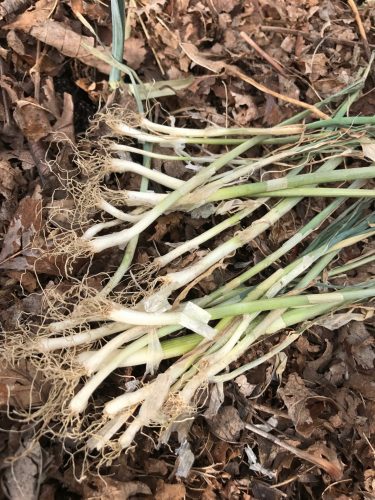
It was a toss up between the King Richard and Lancelot (Allium ampeloprasum) leek plants. King Richard is an early season leek, maturing in just 75 days, is frost-hardy but will not overwinter, while Lancelot is a mid season leek, maturing in 105 days, and is winter hardy.

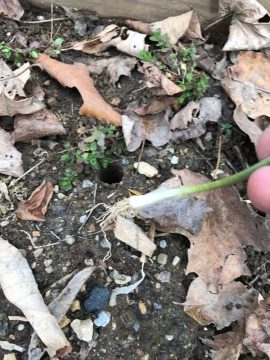
My packet of starter leek plants came in early spring, a few weeks before the last frost date. Leeks are cold season plants, so they should be planted before the last frost date. They’ll tolerate a light frost just fine and need the extra growing time. Like garlic, shallots, and potatoes, they have their own unique way to be cultivated. In order to keep the nice white part of the leeks white, the growing plants need to be blanched, which means that part of the plant needs to be grown out of sunlight. You can grow them in trenches that you fill in as the plant grows, or plant in holes using a dibbler. I used the dribbler method, although I had to improvise with a thick garden stake last year. I now have a dibbler and it’ll be much easier to do this year.

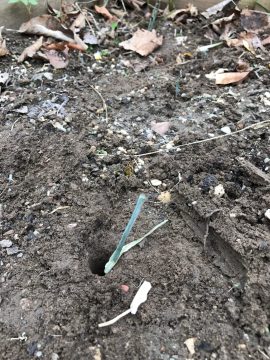
In early spring, in light, soil poke holes with a dibbler or thick stake, 6 inches deep, 6 inches apart, in rows 24 inches apart. 

Drop one plant in each hole leaving only 1–2 inches of the leaves above the soil surface.

Do not fill in the soil around plants, but let rain or irrigation or rain slowly fill in the holes. This allows for self-blanching of the edible white part. If need be, later in summer soil can be pushed up against the growing plant to increase the white blanched part.
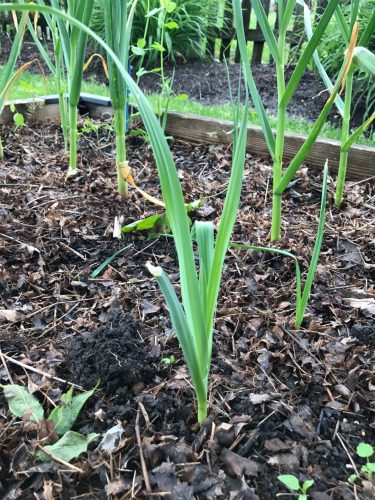
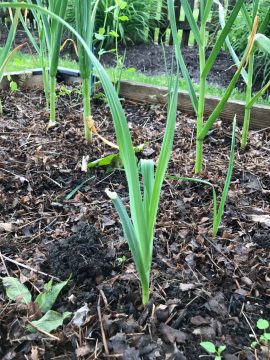
I staggered my leek and garlic plants since they are opposite in growing seasons (which is why my garden above in the planting photos looks “messy”). The garlic is planted in the fall and harvested mid-summer, the leeks planted in spring, harvested in late summer/fall. Leeks can be grown in between many early vegetables, but keep away from legumes like beans since the leeks will inhibit their growth.
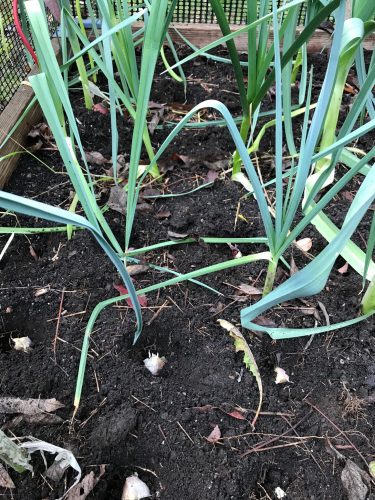
Leeks can be harvested anytime late summer (after they get about 1 inch in diameter) through early winter. Best way is to dig around the plant to loosen the soil, and then give a good pull.
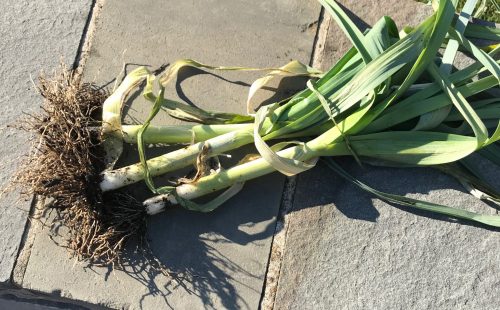
Most leeks are winter hardy and can withstand light to hard freezes depending on variety. Harvest as you need them, they stay fresher in the ground than in your refrigerator.

Unfortunately for me, I got a little cavalier with the plants in my Wi garden and the ground froze solid before I got all of the leeks out.  I’m hoping they survive the winter and I’ll have fresh spring leeks 😔

In early winter, before the ground freezes solid, harvest whatever you have left, peel off the dead outer leaves and trim the roots and leaves. Store in the refrigerator crisper drawer until needed.
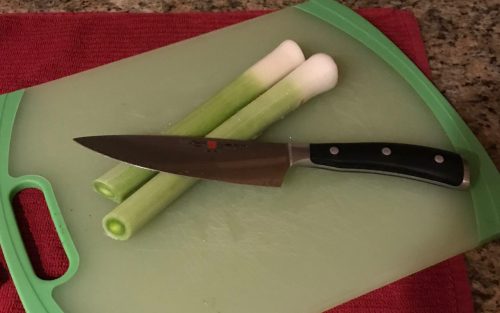
To use in cooking, trim off the roots and cut off the tops where the white is turning light green. Generally, only the white and lightest green parts are used for cooking. Then cut in half and rinse well. Because of how they are grown, dirt and sand often finds its way between the leaves and needs to be rinsed out.
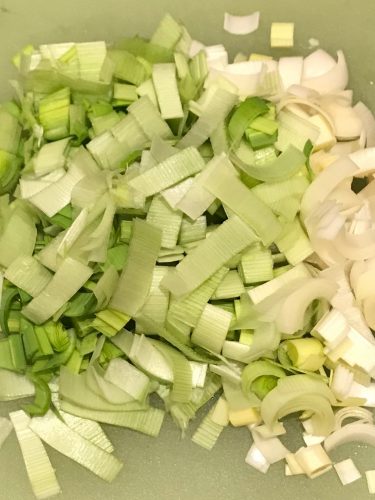
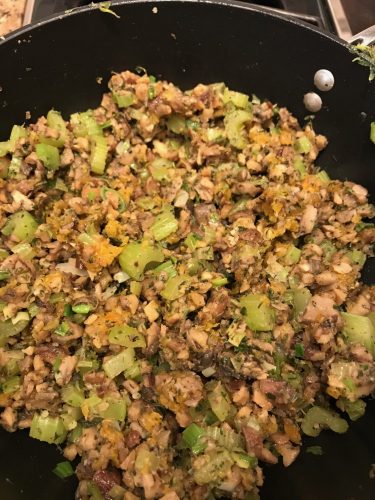
They can now be blanched for freezing, or used fresh in your favorite leek recipe. A few of mine are my Thanksgiving Leek, Apricot and Chestnut Stuffing (recipe here)
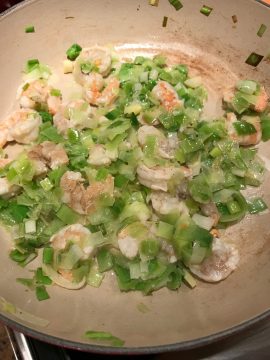
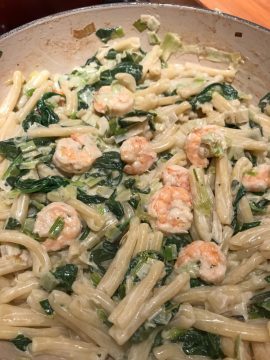
Shrimp, Leek and Spinach Pasta from Real Simple is wonderful for a quick, tasty dinner.

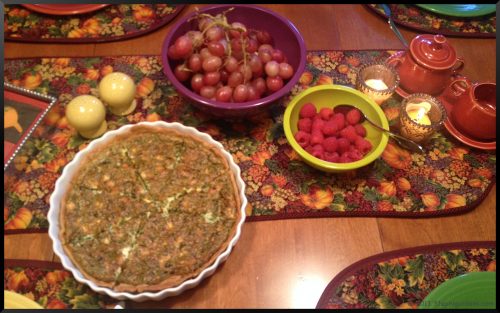
Spinach, Goat Cheese and Leek Quiche. The original recipe calls for chives, but I like to substitute sautéed leeks for the chives, and to simplify things I often use a refrigerated Pillsbury pie crust. This is a staple in our house for holiday brunches.
I’m getting ready to order my plants for this year. I think I’m going to try the Lancelot variety from Dixondale Farms. Lots of good advice on growing onions, leeks and shallots on their website.  Johnny’s has tons of great advice too!

So many ways to use these versatile, mild onions. What’s your favorite?
 

Happy New Year 2018!

Happy New Year! I hope this post finds you healthy and happy. I’ve been on a bit of a hiatus with my writing, but hopefully the new year will get me back on track. While I was still attentive to my garden all fall, I do most of my writing in the evenings and I got distracted the last few months watching all seven seasons of Game of Thrones with my husband. (In case you were thinking about watching, it was just as great as the kids said it is and the final season can’t come fast enough!)

But, that’s done and most shows don’t require that level of attention so I have my evenings back! We also did a fair amount of traveling to see visit the kids and out of town family and I’ll share some of the highlights of those trips in the next couple of months.

Lastly, I got a new laptop and the transition was pretty straightforward except for switching from Apple iPhoto to Photos. I procrastinated for a long time since I had everything organized so nicely in iPhoto for my blog, but it was time to convert. You’d think it would be as easy as say “Go”, but for a bunch of reasons, I couldn’t get it to transfer properly. Eventually I did it, but I’m still dealing with photos scattered about in a bit of a disorganized way. Does anyone use a photo manager to organize your photos? The edit features in Photos are fine, but I don’t love the organizational options.
What have I been up to in the garden? Well, like many of you it was a very strange fall with warm temperatures well into November keeping things green and growing well past normal times. Great for the vegetable garden, but probably not so great for the trees and shrubs that really need to get ready for winter. Here’s some of what I was harvesting the end of October.

I spent a lot of time this fall watering to be sure the plants were ready for winter (First Too Much Water, Now Not Nearly Enough). But, with temperatures hovering around 0°F for some time now, I’m not sure how the plants will tolerate this winter no matter what I did.

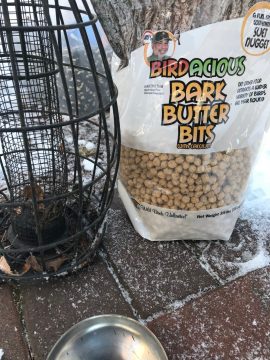
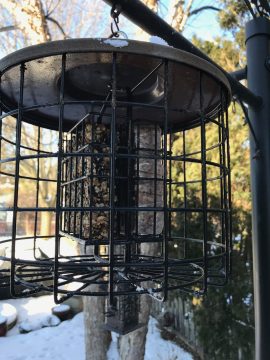
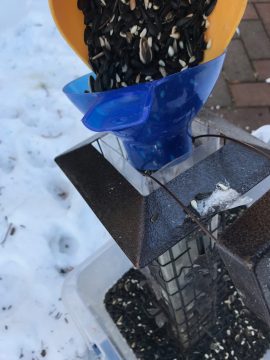
With all this cold weather, I’ve been going through a lot of bird seed trying to help the birds survive this extreme weather. Glad I bought lots of seed at the fall seed sale at my local Wild Bird Unlimited in Lisle, IL. By the way, they are currently having their January Feed sale, so if you live in the area it’s a great time to stock up. They even store it for you until you need it.

My new gardening adventure this year was planting leeks. Leeks are one of my favorite foods to cook with and growing them seemed intriguing. I’m already looking where to buy my starter plants this spring, so it definitely worked out well.  A post with more details will be coming soon.

Right now, all snuggled warm in my house I’m enjoying all the teaser emails from the seed companies and the catalogs that are starting to come in. What new vegetables to grow? What new gadgets to buy? Check out my Vendors and Resources page to see where I like to order from. I’ve recycled all the Christmas catalogs to make room for them. I have a couple of areas that need attention so I need to find some time to research what will work best in these areas. One is the swale area that seems perpetually wet, then of course dries out mid summer.

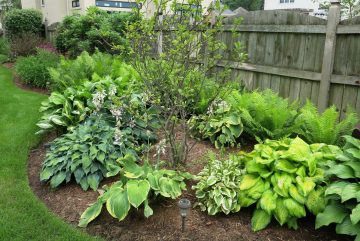
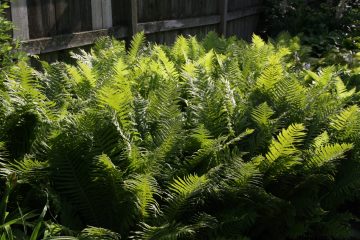
The other is under the new magnolia that replaced the Freeman maple tree that died a couple of years ago. The hostas are doing fine in the new found sun, but the ferns have gone crazy! Not sure the species, but in the shade they were kept in check, but they’ve proliferated out of control in the sun. And they are hard to pull out! Word to the wise, be careful where you plant ferns!

I look forward to sharing you more about what’s up in my garden and where I’ve been, but in the meantime I wish you all a Happy New Year and Go Bills!

While I live in Chicago, I grew up in Buffalo and will always be a Bills fan.  This has been an exciting year for us!!

So Much Planting to Do!

When I looked at the pile of fall bulbs and garlic waiting to be planted, I had to wonder what I was thinking when I ordered it all.

This year I decided to plant a little more garlic, mostly because I wanted to try a couple of new varieties.  I’ve been planting garlic the last few years and love the different varieties. No matter what you grow, it’s always better than the store bought kind.

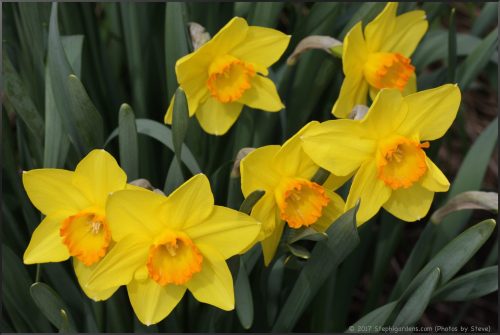
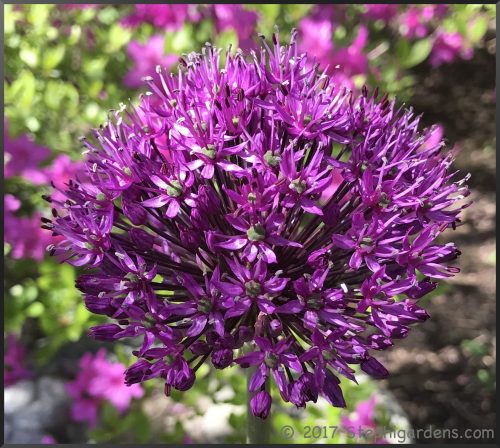
Then there’s the bulbs I ordered. I hadn’t planted many new bulbs in a long while and it was starting to show in my gardens. I became inspired last year to add some alliums and daffodils, both at home at at the cabin in WI.

It was so pretty this spring, I decided to add more this fall and Groupon obliged by offering some great deals back in August. I’ve actually had pretty good luck with bulbs from Groupon, but I can’t vouch for all their garden offerings. If you have a special plant, bulbs or seeds in mind, I would still go to my tried and true plant and seed companies.

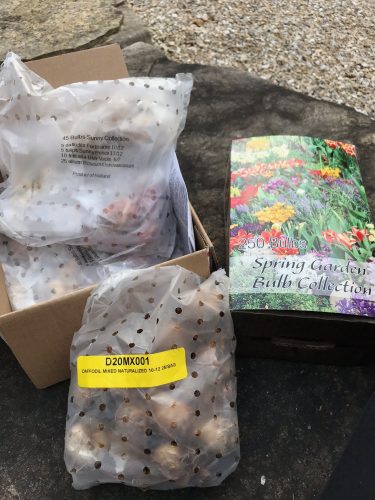
As it happens sometimes when I order on-line, I lose track of what I bought and then the boxes start to arrive. And then more come… Here’s just some of the hundreds of bulbs that came!

For some people that’s not an issue, but planting bulbs isn’t my favorite thing to do and I’m a terrible procrastinator.

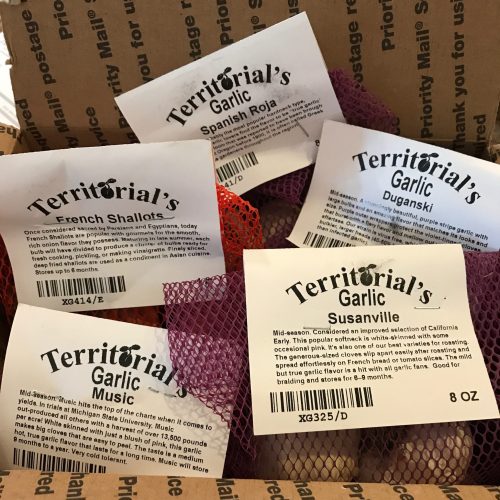
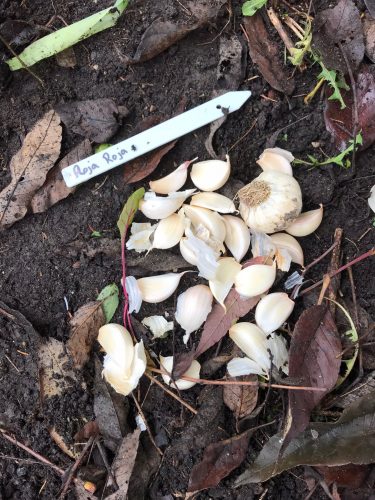
After sitting in the house for a couple of weeks (or maybe a few) while it was weirdly hot for September, I finally got all the garlic in the ground last week. This year I planted two varieties that grew well for me before; Music, a hardneck porcelain type, and Susanville, softneck artichoke type. I also planted two new hardneck varieties, a rocambole Spanish Roja and a purple stripe Duganski, all from Territorial Seeds.

The garlic cloves are in their holes ready to be covered up for the winter and that’s my leeks looking awesome in the background!

I was careful this year to mark every row. I have a bad habit of planting and forgetting. This way if the garlic doesn’t come up, I know something should have been in that row, plus I’ll know what I’ve harvested. I often have to guess.

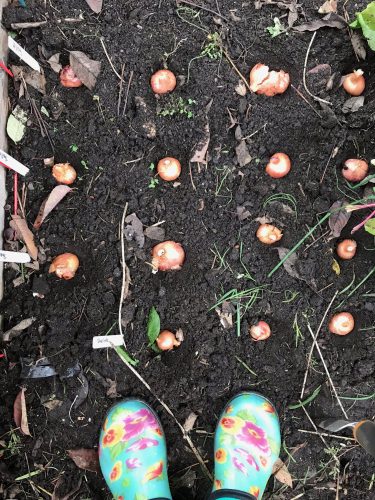
While I was at it, I got the french shallots planted as well. They’re one of my favorites to cook with!  Here they are all ready to be covered with about an inch of soil. My Sloggers garden clogs are perfect for this kind of muddy work.

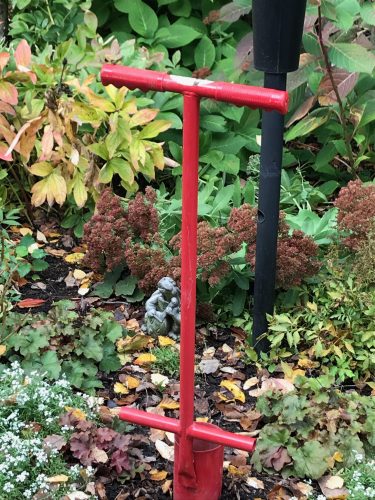
Once that was done, the bulbs started calling my name to get them in the ground. I do love my bulb digger for planting bulbs in our hard clay soil. Using it speeds things up, ensures that I’ve dug my holes deep enough and saves my back. Still need to get the smaller bulbs in and for those I’ll use a trowel or dibber (I just ordered this one, so I’ll let you know if I like it).

Did you add any bulbs for spring this year?

July Vegetables

My spring vegetables really took a beating from the rabbits and the weather. Even though I had shored up the rabbit fence around the yard, all it took was a couple of holes and I had a nice happy family of rabbits devouring almost everything I planted. Radishes, swiss chard, spinach, lettuce, kale, beets and carrots were all gone. The last straw was when my bean plants were each bitten cleanly off at the base.

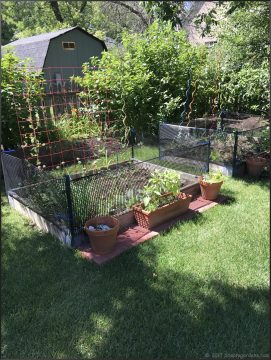
Since this spring was a loss, I put up a rabbit fence around these two beds to protect what was left.

By now the weather has turned too warm to replant any cool weather seeds, so I’ll have to put my focus into what’s remaining and plan for some fall planting.

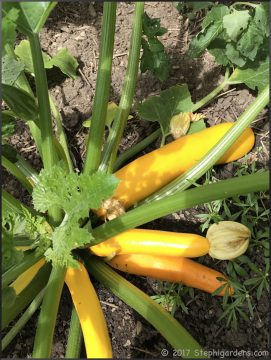
The Gourmet Gold Hybrid Summer Squash (Burpee) is truly a beautiful bright yellow summer squash and seems to be an early and heavy producer. A great addition when trying to eat a “rainbow of colors”. The Emerald Delight Zucchini has just started producing and so far I’m liking what I’m harvesting. Both are wonderful on a fresh veggie platter!

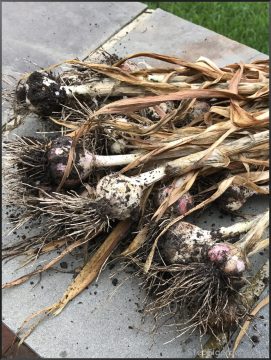
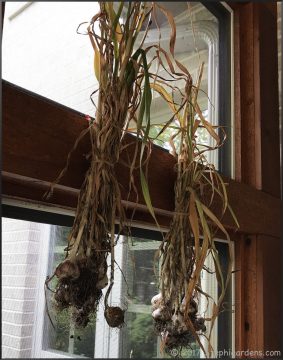
The garlic was ready to harvest last week and it’s now curing on the porch! I’m so spoiled by the amazing taste of homegrown garlic, that come late spring I dread having to buy garlic.

I planted the hardneck varieties Music and Purple Glazer, and the softneck Early California from Botanical Interests this year. My WI garlic is a little bit behind and probably won’t be ready for a couple more weeks. Want to know more about growing and harvesting garlic? Check out my previous garlic posts or search for the tag “growing garlic” on the right sidebar.

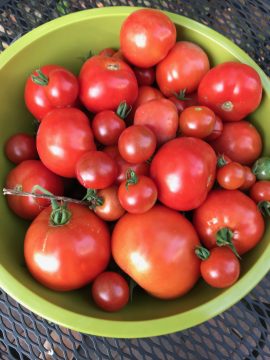
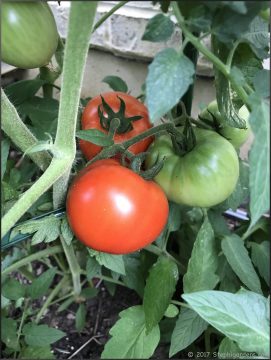
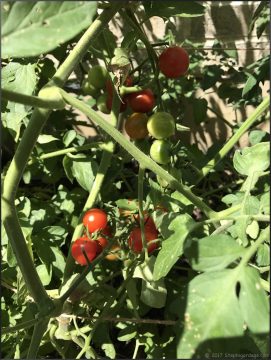
The Early Girl tomatoes have lived up to their name and already been producing tasty tomatoes perfect for salads and sandwiches, and the Better Boys aren’t too far behind. The Super Sweet 100’s cherry tomatoes are just starting to ripen as well. Tomato season is here!

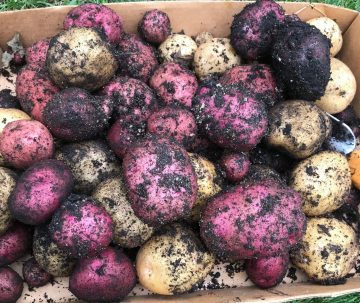
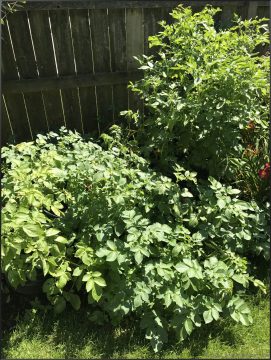
Last but not least are my potatoes. I planted a lot of Yukon Gold and Dark Red Norland potatoes. Even had to buy more potato bags to plant them all. They look really healthy this year since they’ve had plenty of rain. Want to grow your own next year? It’s really easy to do and fun to find all those potatoes in the fall. Check out my how-to’s on planting, growing and harvesting potatoes.

How are your vegetables doing? Have weather or creatures been a problem for you?

Maybe since it’s been cooler in WI, and the garden fenced in better, I’ll have better luck with the mid-summer harvests of my spring planted seeds that I planted there. I’ll be checking on that soon.


Save

Save

Save

Save

Save