Blog-Themed Christmas

The gifts under the tree this year from my kids definitely had a outdoor theme to it.  My daughter has been one of my first blog followers, and even a photo contributor to my site, but who knew my 17 yr old boys paid attention at all?  (To be honest, I may have given the boys some hints, but they put their own spin on it)

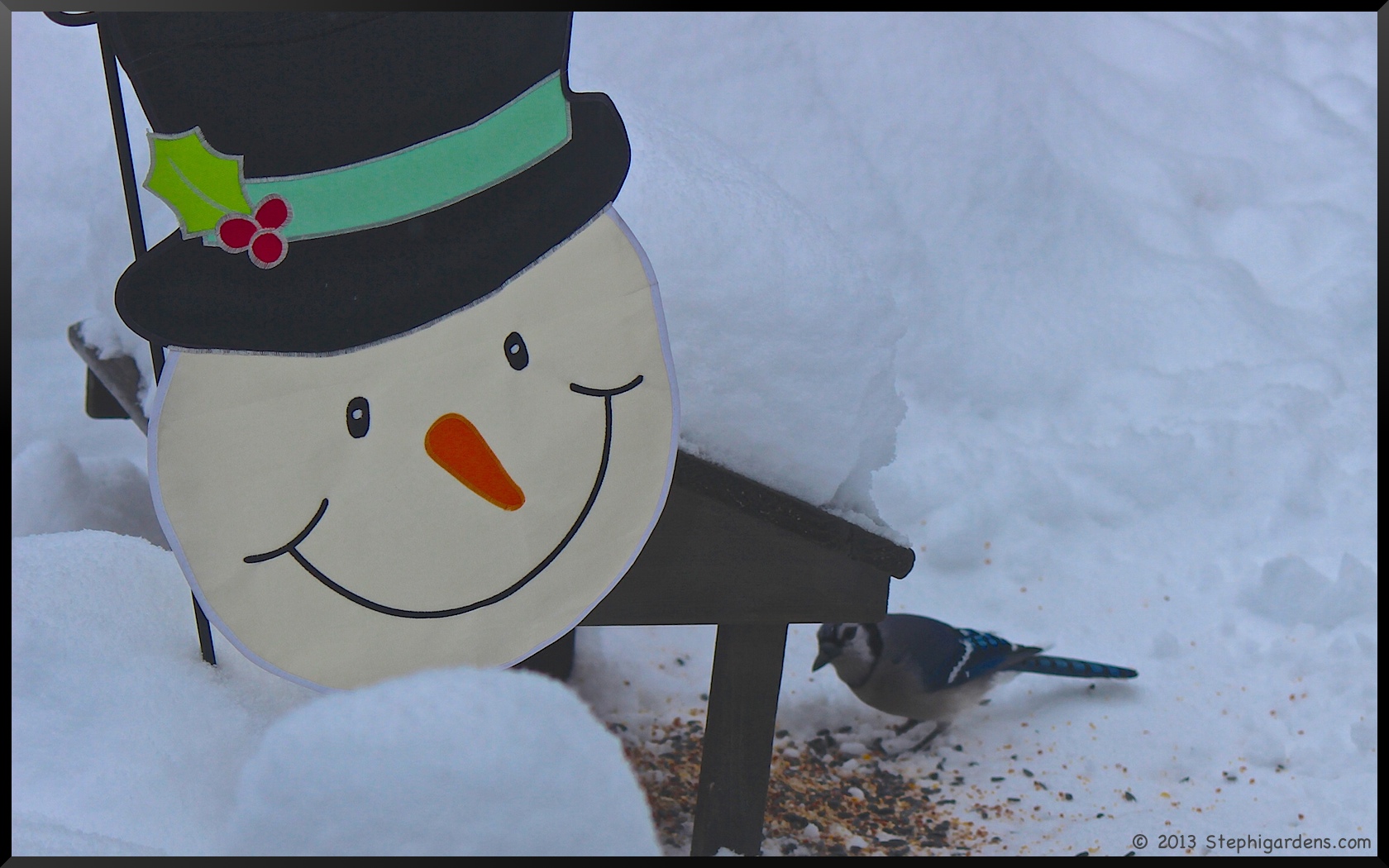
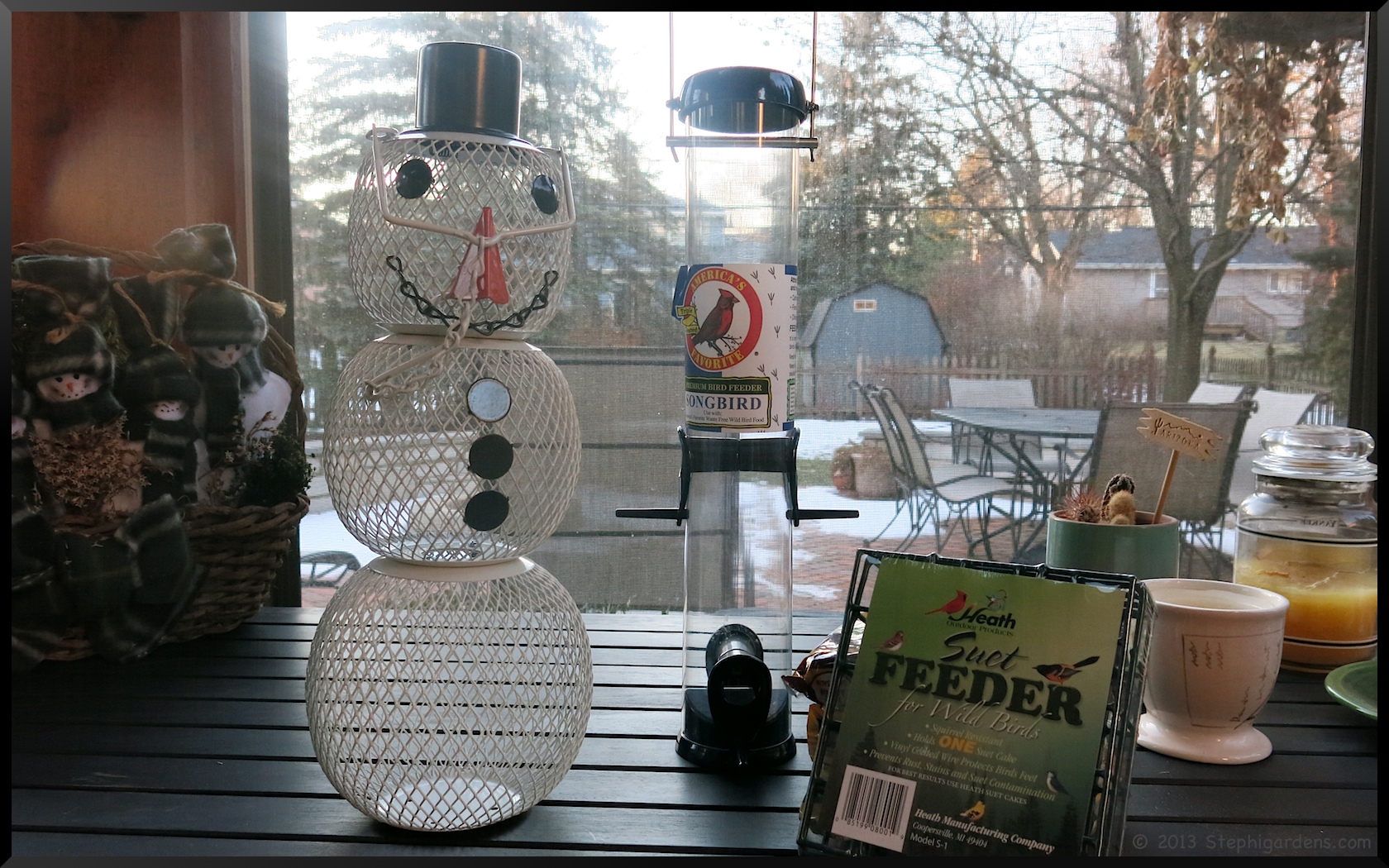
First, I already get a few gardening and cooking magazines, but now I can add  Organic Gardening (sorry no longer in print) to my reading list.  I already follow it on-line, and I’m sure it’ll come in handy as I expand my gardening skills and knowledge.  Then, they got me a new bird tube feeder, a suet feeder and suet to go with the nyjer sock feeder.  I’m enjoying the visits from the goldfinches, but I hope I’ll be seeing more birds arriving in my yard with these new feeders.  I also put the feeders out just in time too, with the frigidly cold weather and snow settling in for a while.   The cute snowman feeder I saw on the Feeder Cam, also mysteriously made it under the tree.
bird feeders

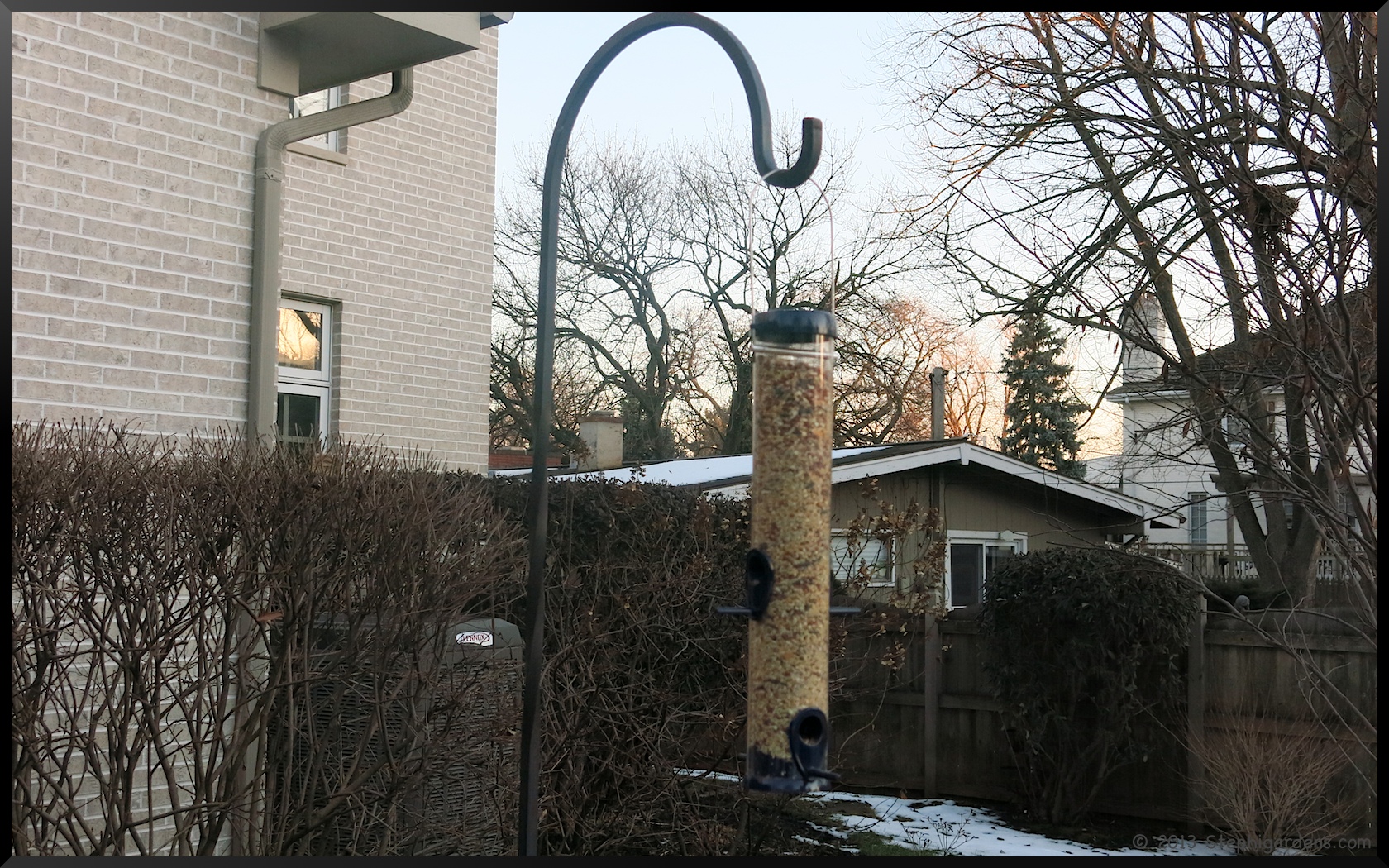
Luckily we had a couple of days above freezing and I could get this pole moved into the right spot.
bird feeders

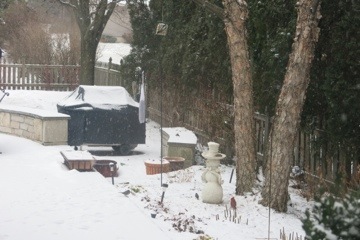
Then, I added the suet feeder and moved the snowman to the area.  I filled his brim with seed and hope we don’t have any winds to knock him over.  This area has the added bonus of being visible from the kitchen window.  But, this was the view and as soon as the birds started showing up, I knew there was a problem.
20140102-123724.jpg

The screens were going to have to go!  Now the view is much better!  Cardinals, Juncos, a Downy Woodpecker are already visiting.  Being at the sink is going to be much more fun now.
bird feeder

My daughter surprised me with a very cute air-plant terrarium from a garden shop near her apartment. I’ll show that in an upcoming post.  

Hope you had a lot of fun things under your tree, too.  
Winter Birds

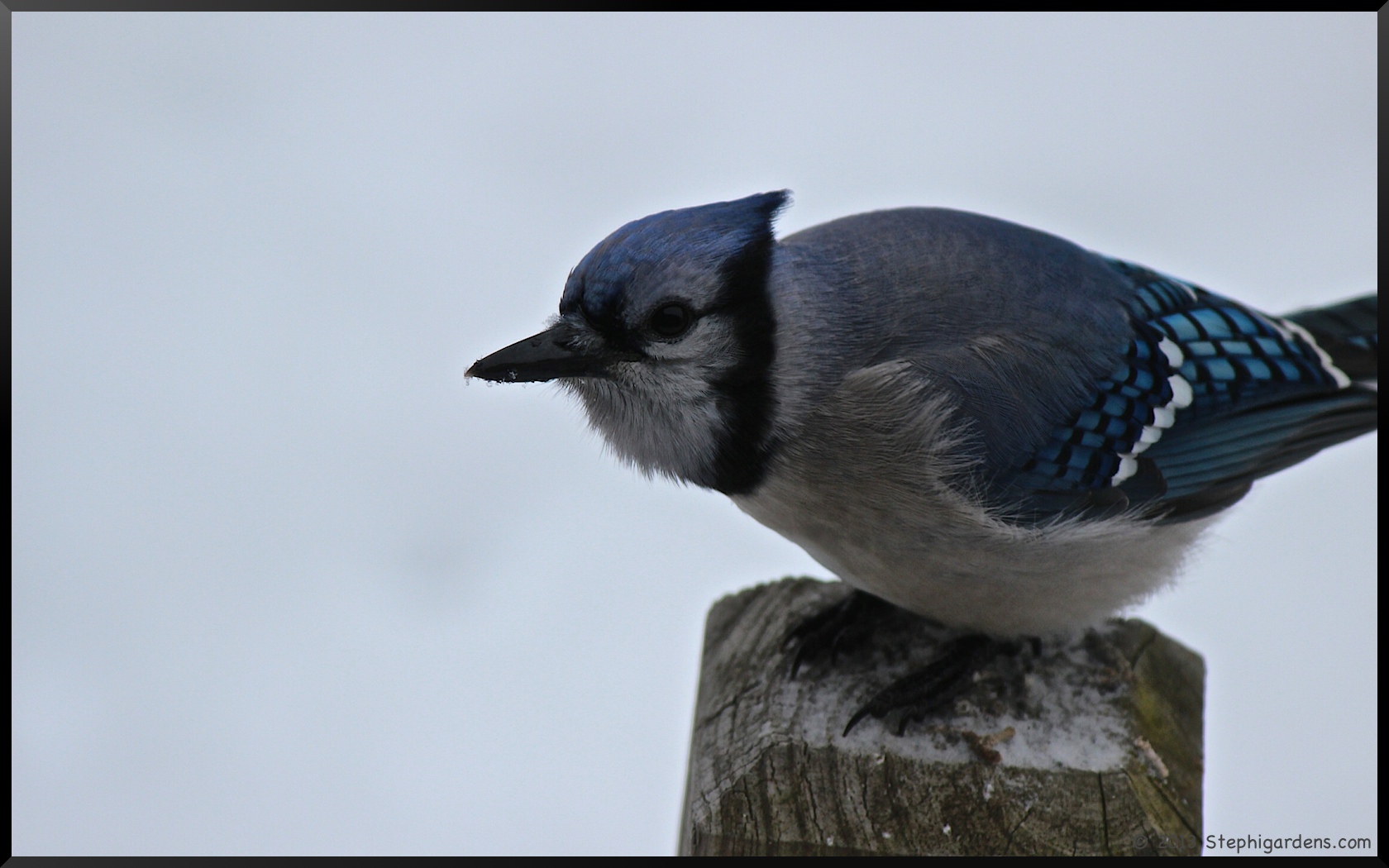
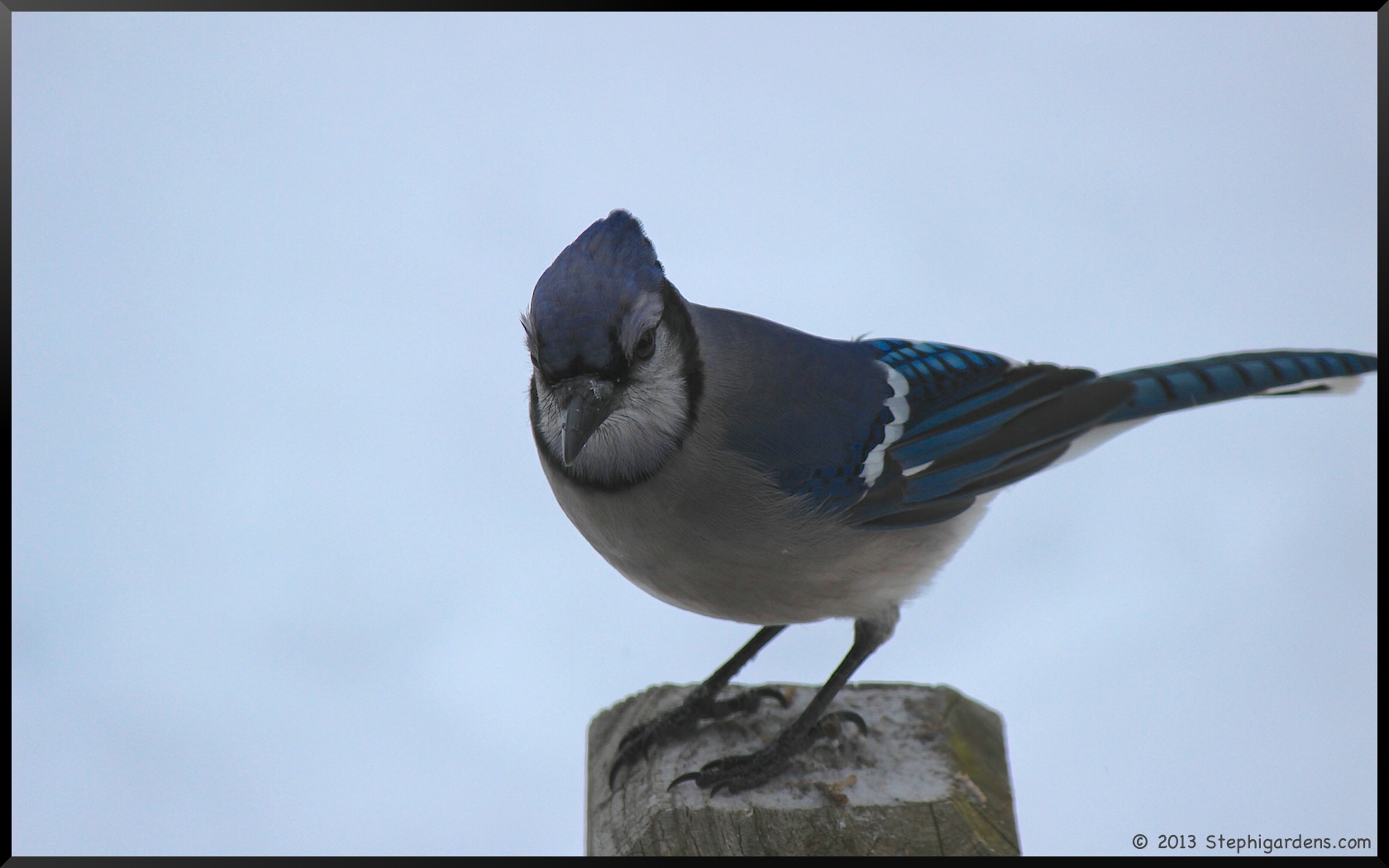
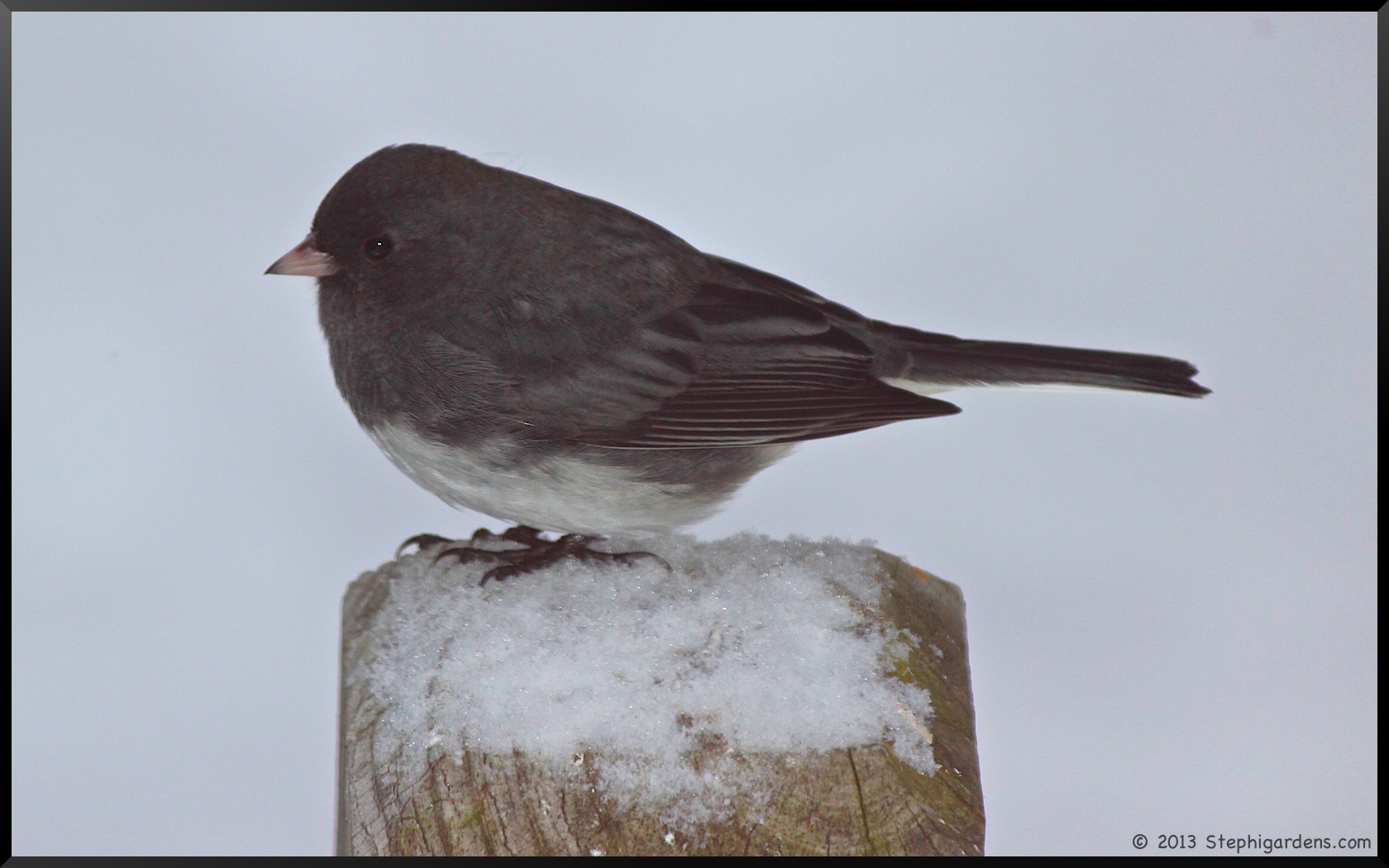
I showed you my mom Peggy’s bird feeders in a recent post (Peggy’s Feeders).  A natural follow up is to show off some of the birds that visit her in Northern Michigan in the winter.  Enjoy!

Junco

Junco


Blue Jay

Bluejay


Bluejay


Bluejay


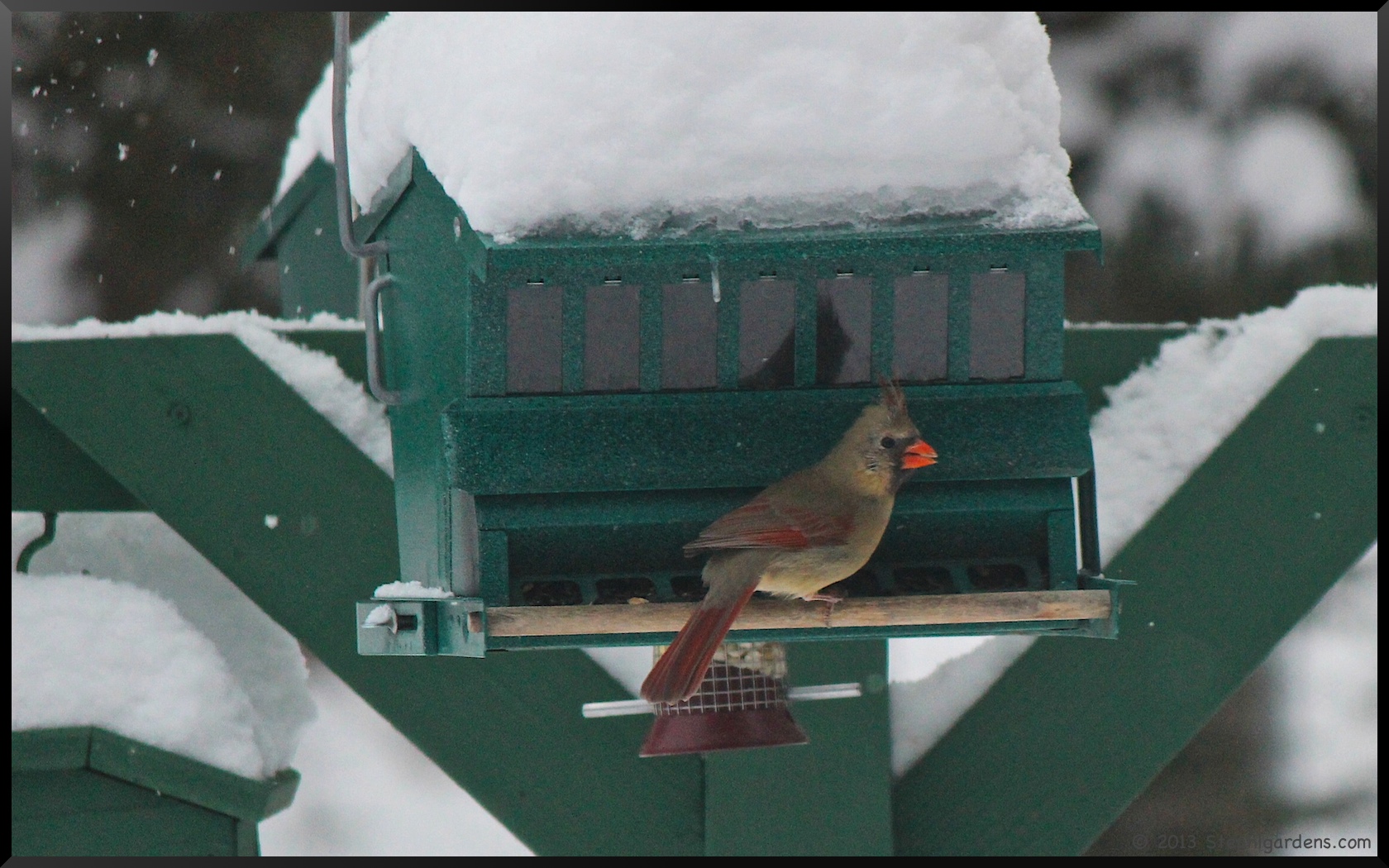
Mrs. Cardinal

Female Cardinal


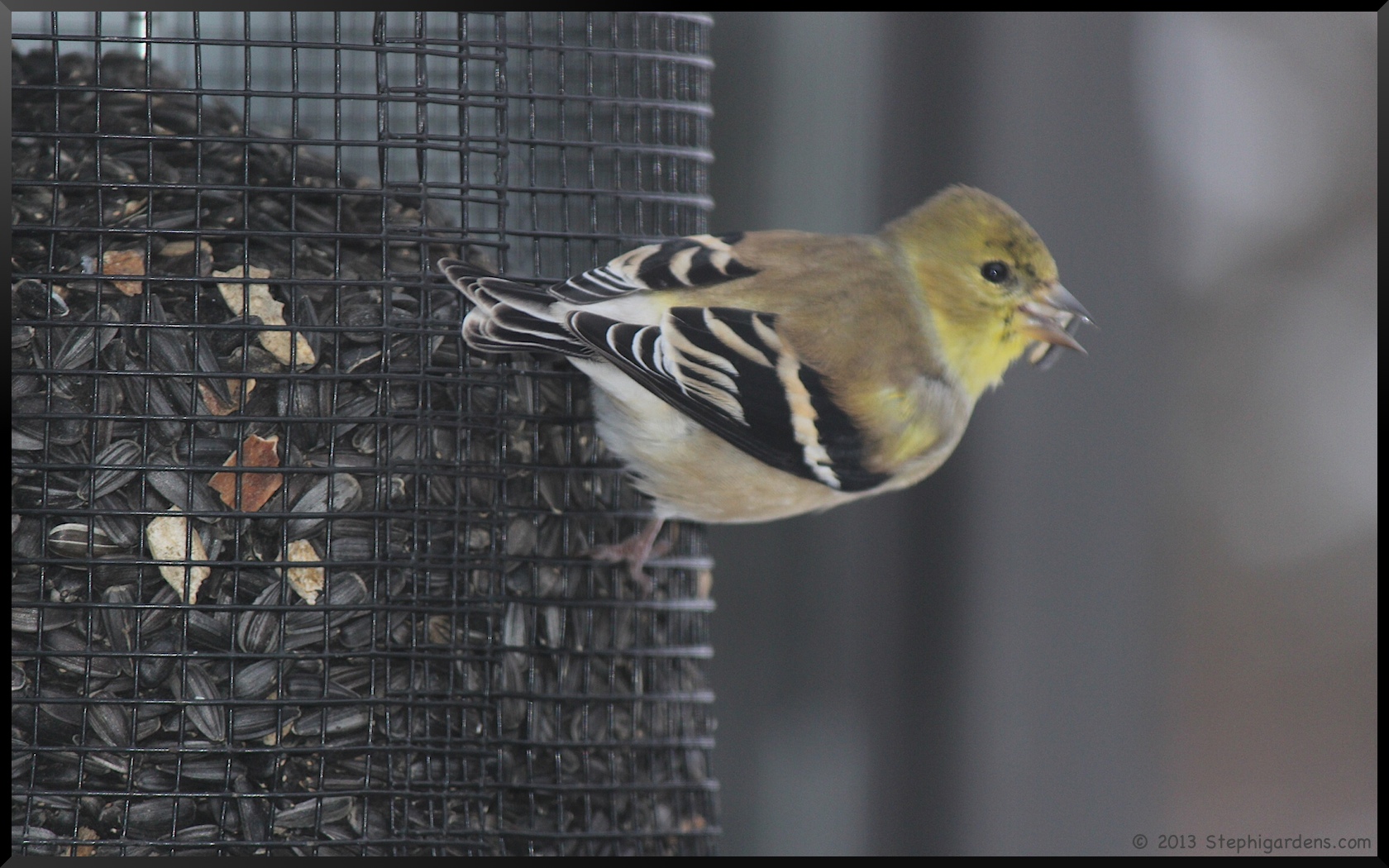
Mr. Goldfinch

Goldfinch


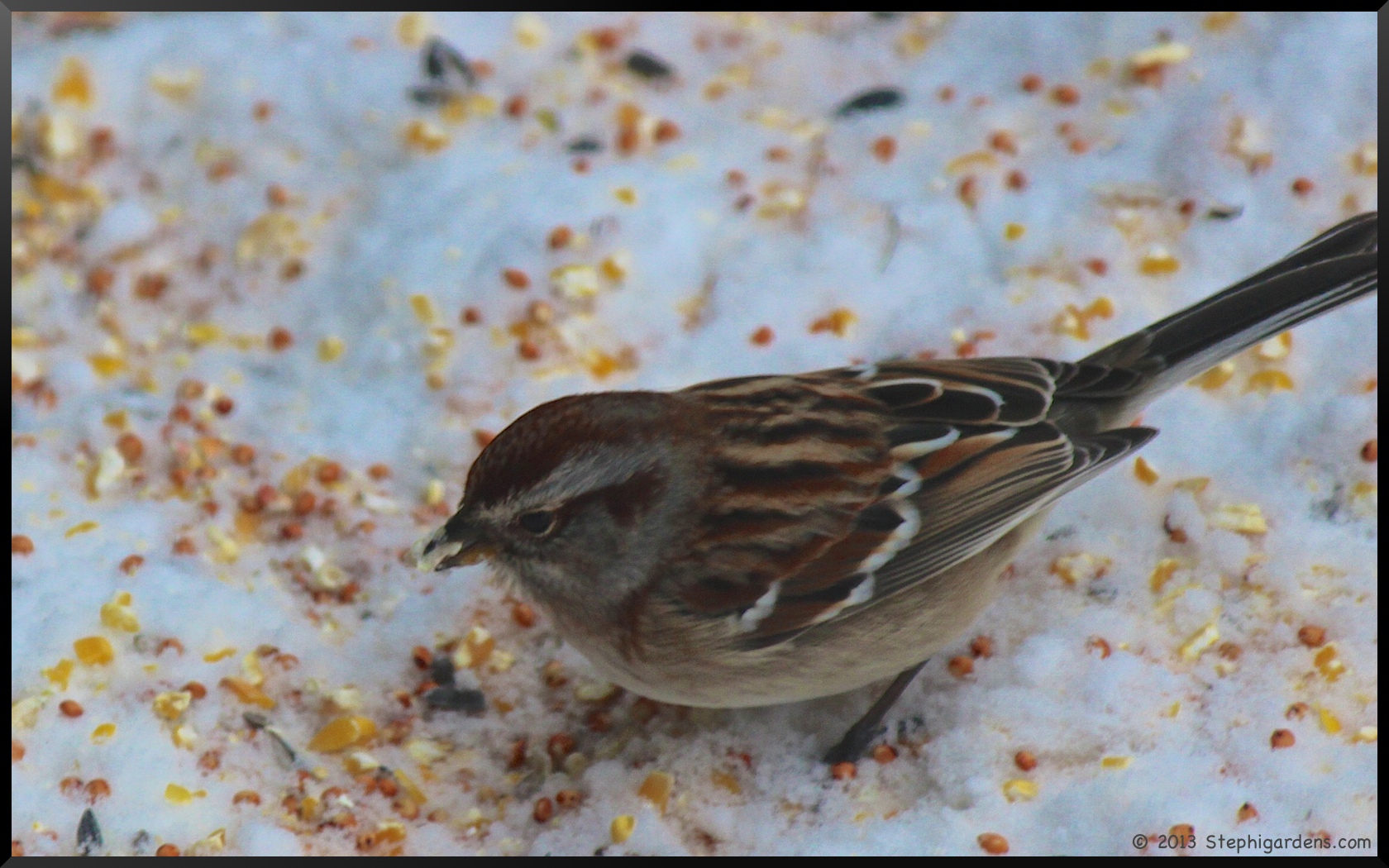
Tree Sparrow

Tree Sparrow


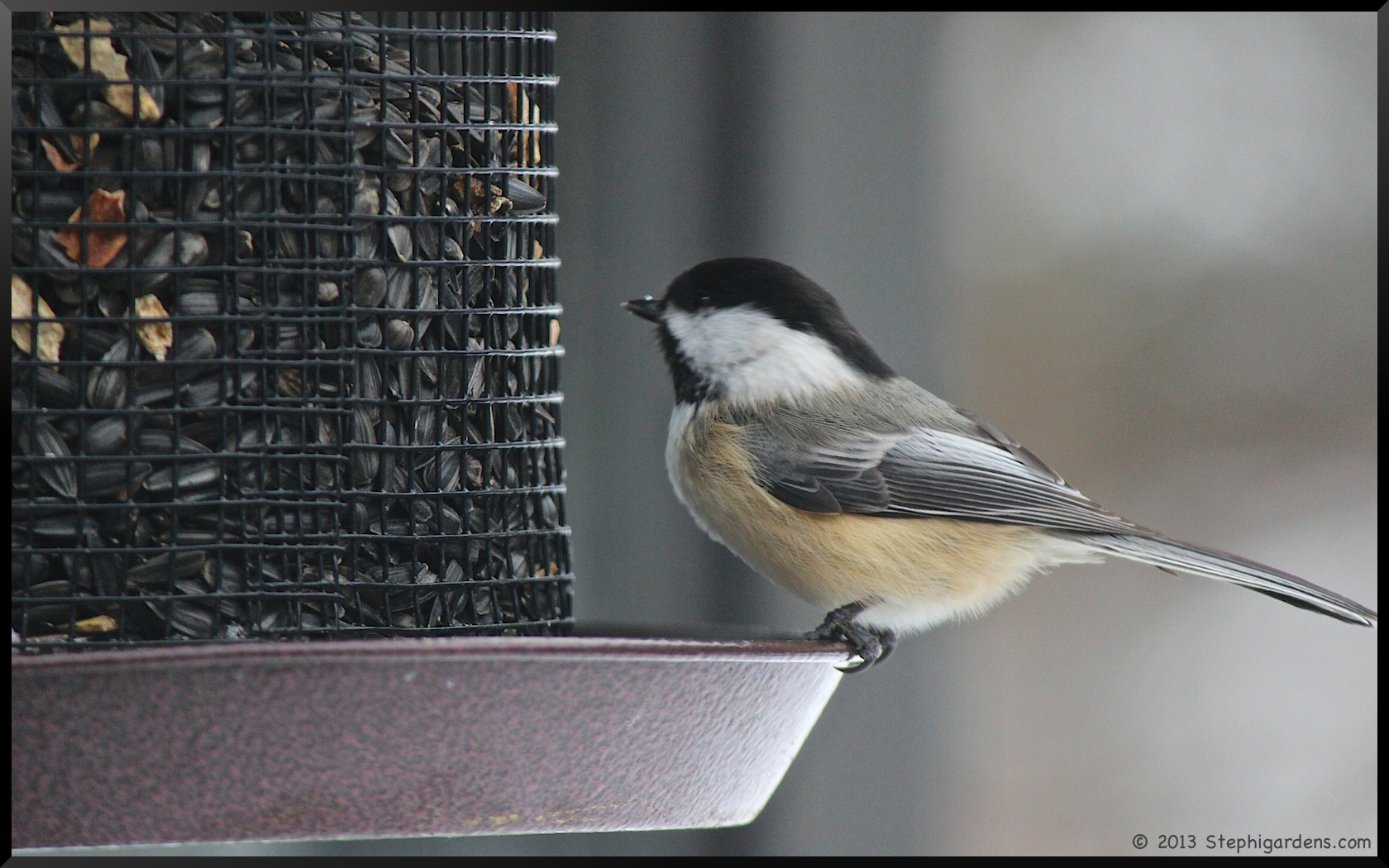
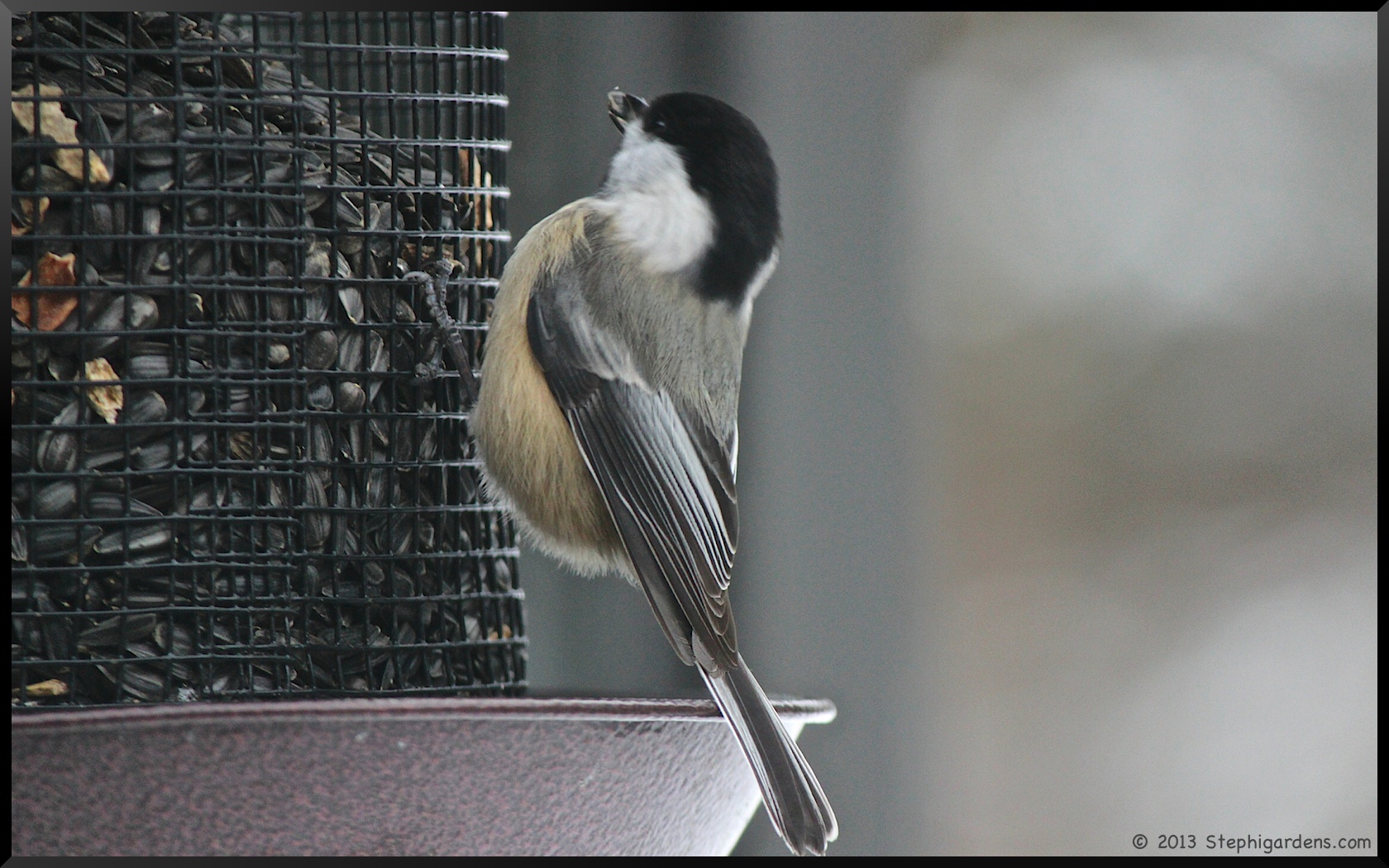
Black-capped Chickadee

Chickadee


Chickadee


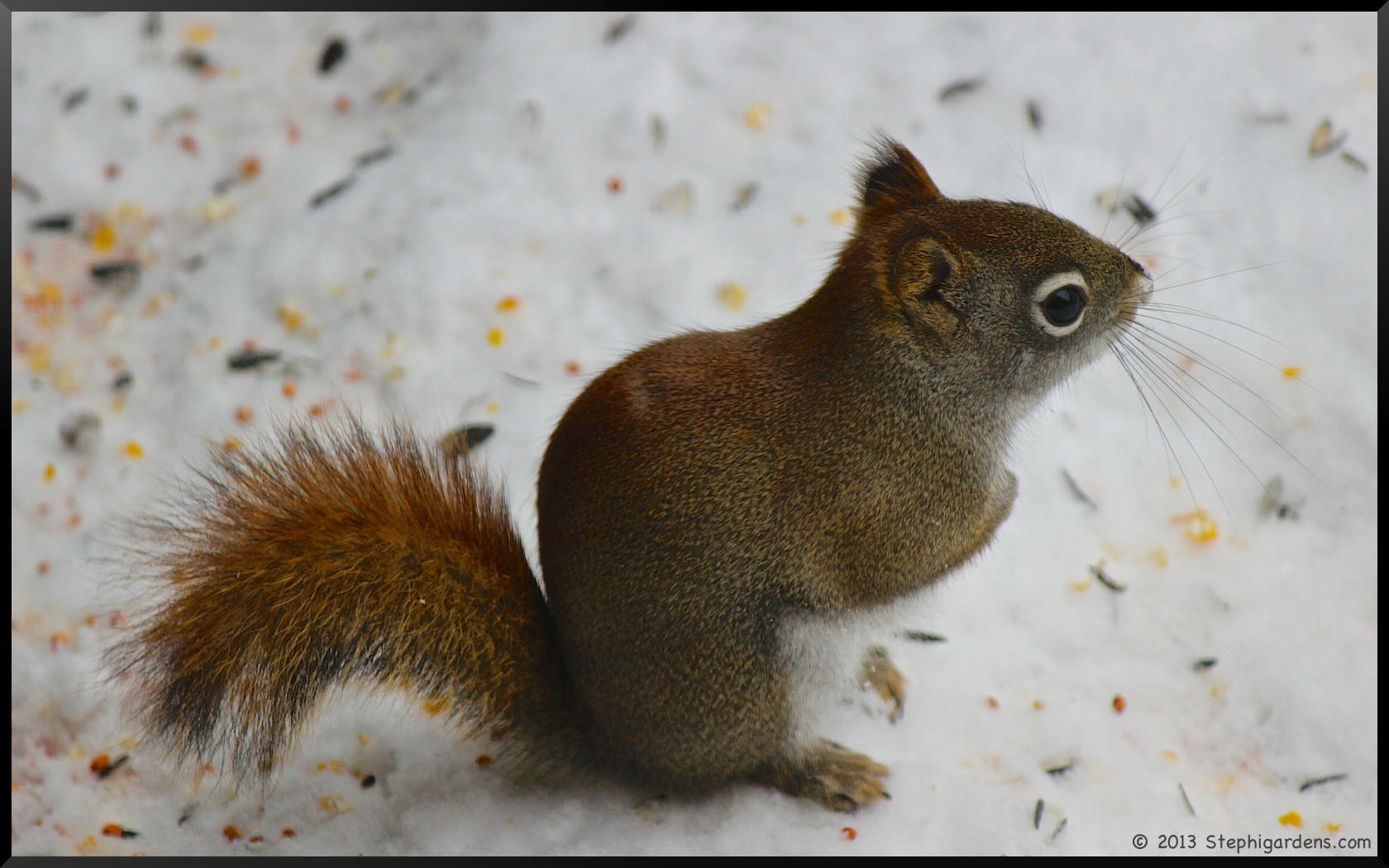
And of course where there is bird seed, there’s a squirrel.  

Squirrel


Squirrel


 Photos by Peggy 

Peggy’s Feeders

While watching the Cornell Bird FeederCams, it got me to thinking about the very creative set up my mom Peggy has in her backyard in Michigan for feeding birds.  She’s been watching and feeding birds for as long as I can remember, and I owe her for passing on her passion for nature and gardening to me.  Although I often feel as though something has been “lost in translation” when I look at my yard, I always know who to turn to for an answer.

I love sitting on her back porch and watching all the different birds come to the feeders.  It’s really a party out there.  She gets all kinds of interesting birds that either live in the area year round, or just seasonally.  Some even visit every year while passing through on migration.  I think they know she’s there every year for them.  She changes things up a bit from summer to winter based on who is in town for the season and she recently sent me some pictures of her feeders this winter.

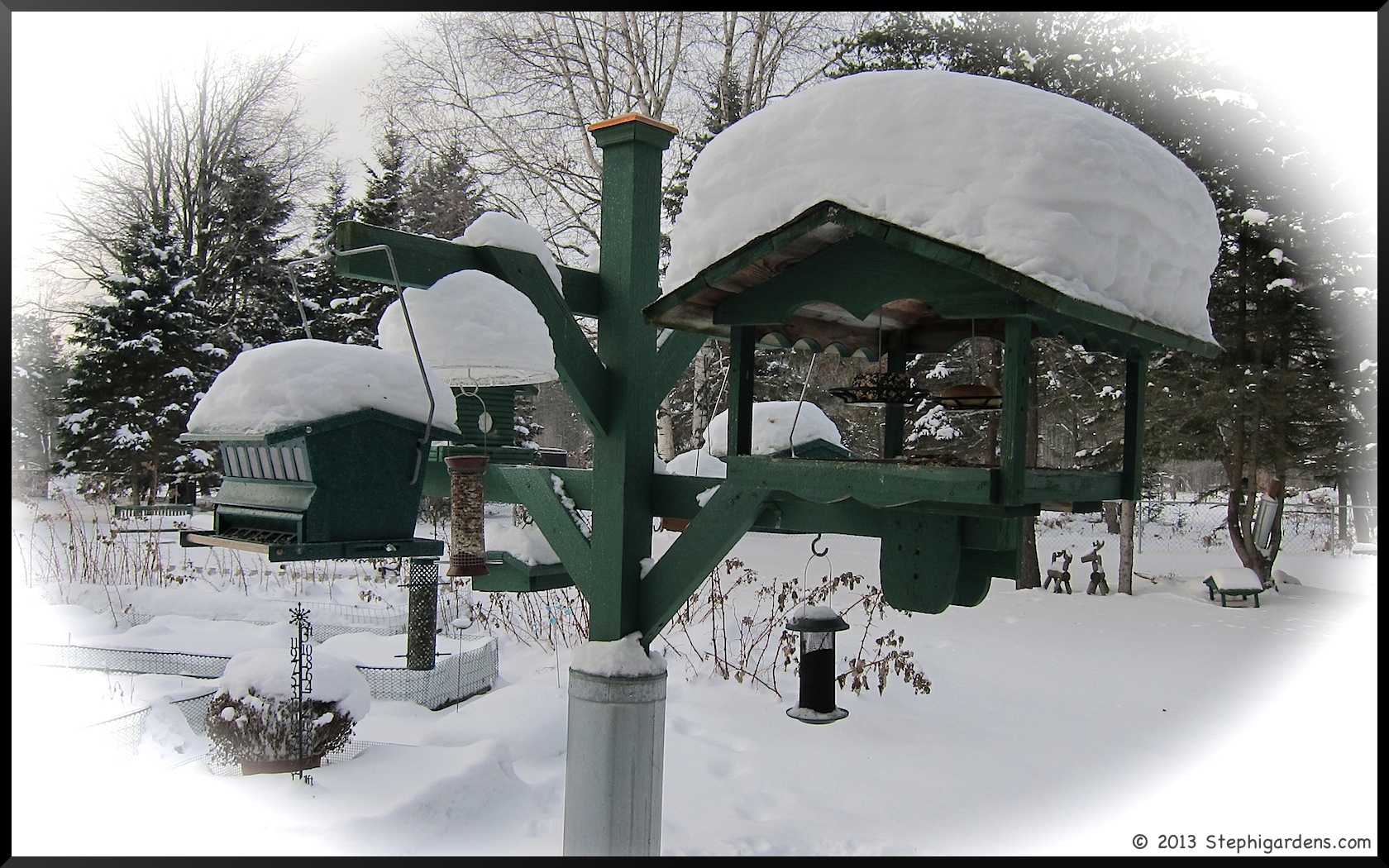
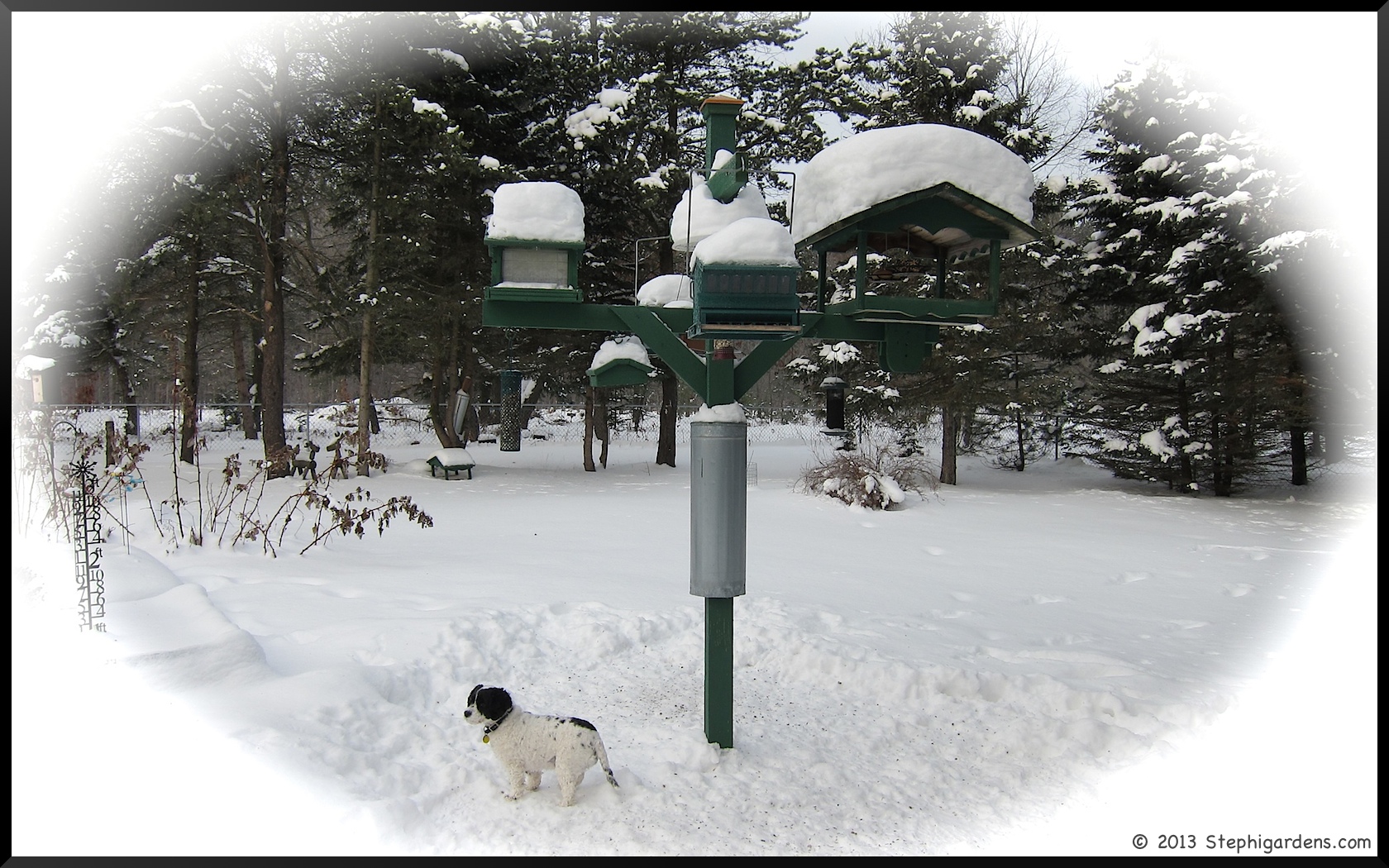
Bird feeders on a pole

Bird feeders on a pole

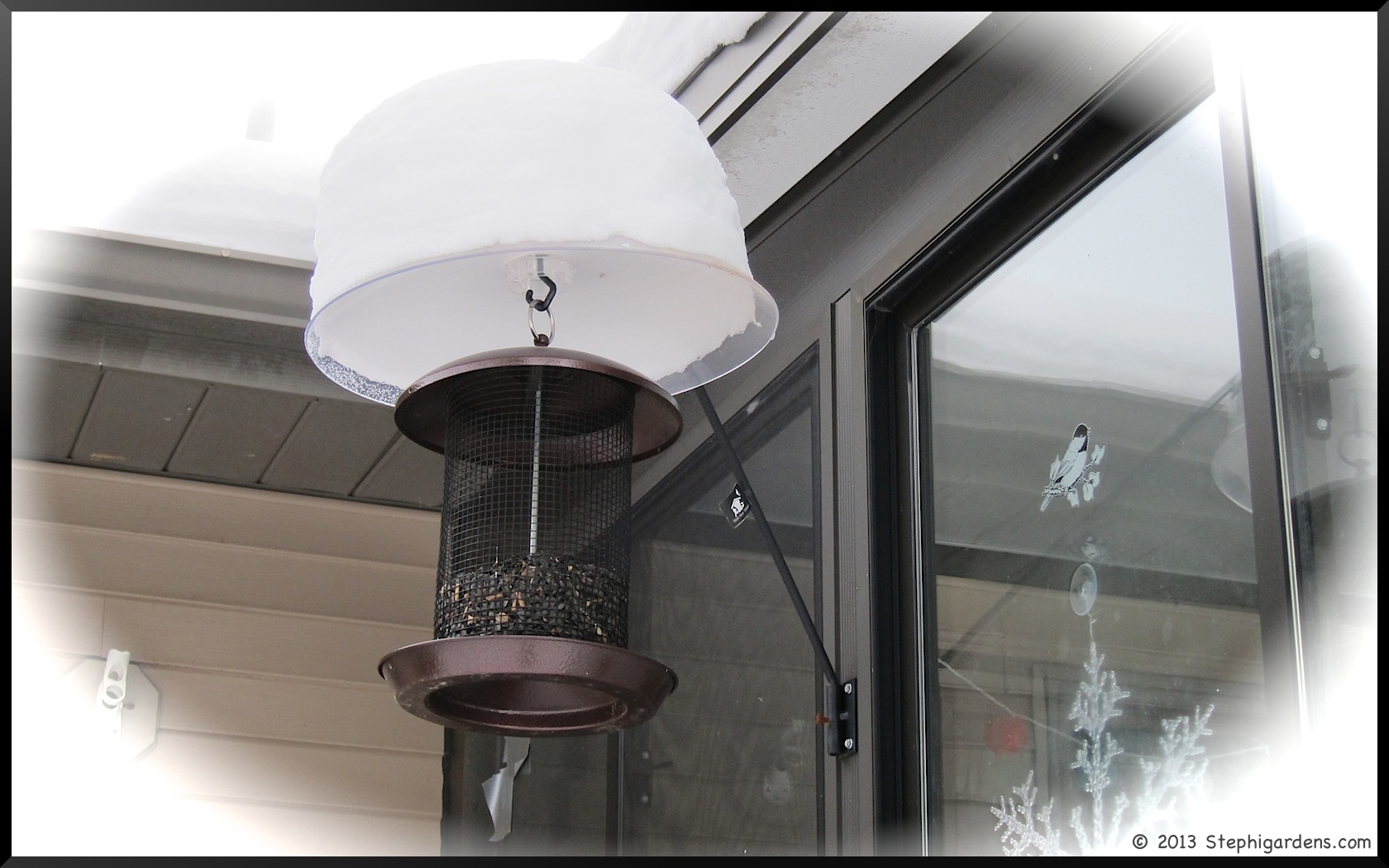
Bird feeder

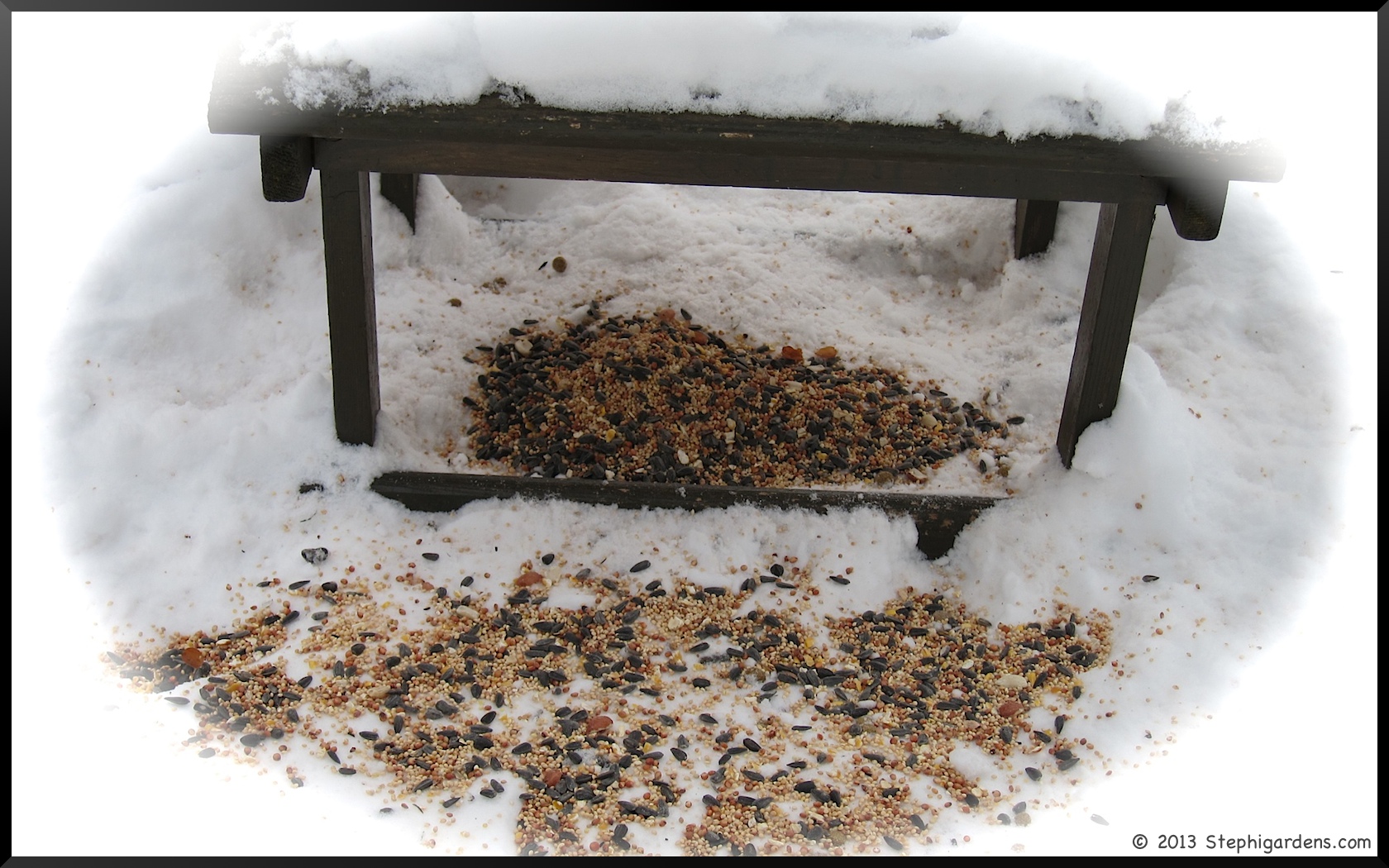
Ground Bird feeder

Do you have feeders in your yard?  Do you have someone that you’ve learned your passion for gardening or nature from?

Looking for feeders and birding supplies?  Check out Amazon, The Bird Shed, Wild Bird Unlimited, Gardener’s Supply Company.

Birdfeeder Cams

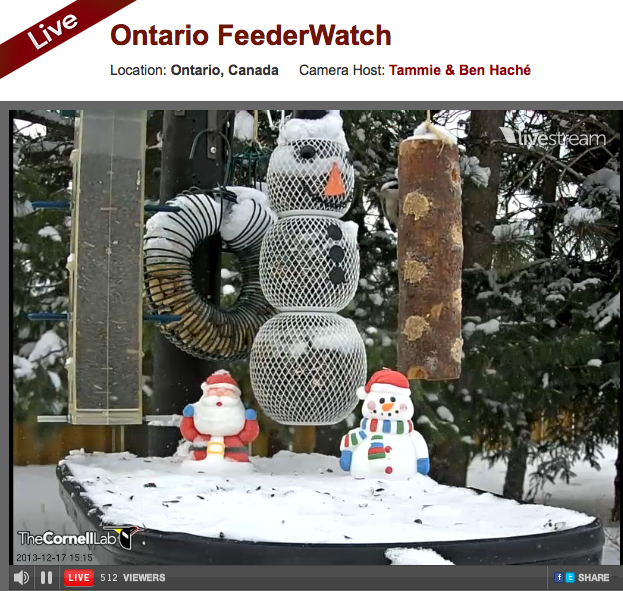
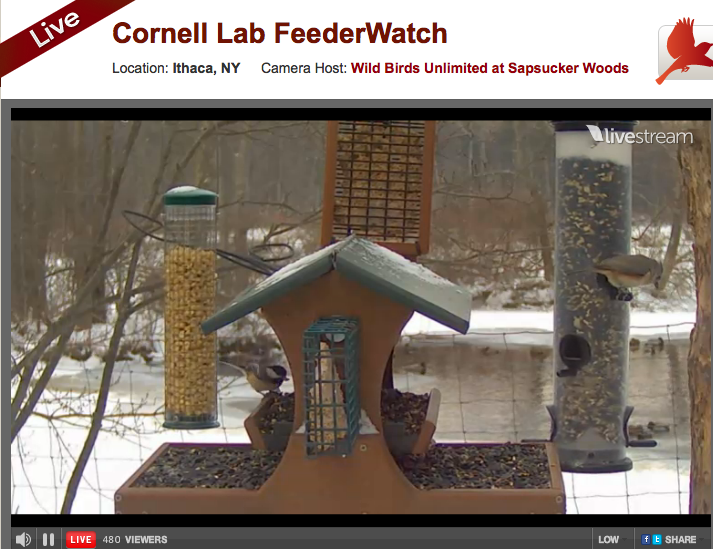
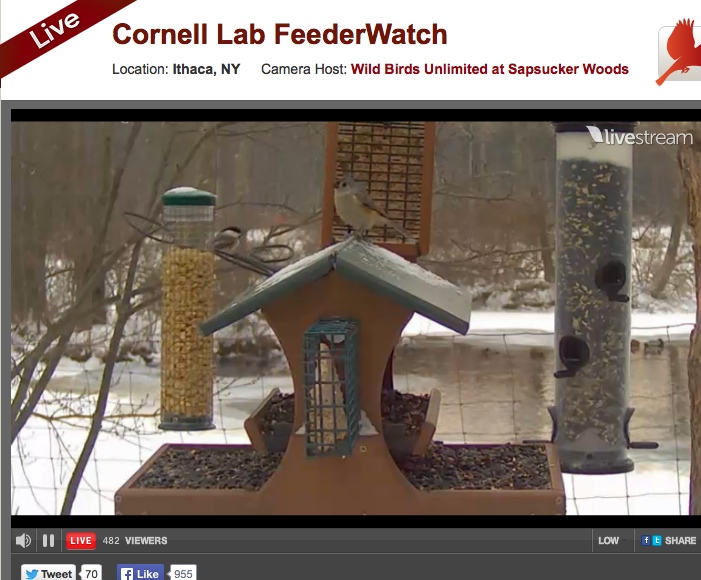
From my computer, I can’t really see much outside. Even if I did, my feeder (yes, only one right now) doesn’t usually attract a wide variety of birds.  I do enjoy watching the Goldfinches, Chickadees and Juncoes, but they are often overrun by the usual suburban fare.  So, I’ve taken to watching the bird cams that have popped up the last few years.  Many watch nests, but those are pretty quiet or off-line right now.  Instead, in the winter I mainly watch the bird feedercams run by the Cornell Lab of Ornithology: All About Birds.  They have 2 feeders that have cameras on them.  One in Ontario, Canada, and the other at the Cornell Labs in Ithaca, New York.  The Ontario site is in a large, diverse, residential backyard in northern Ontario and is only on during the day.  (update: this feeder is no longer art of their live feed, but there’s many others to choose from). The Cornell Labs site is located on the edge of Sapsucker Woods, right near a pond.  It’s supported generously by Wild Birds Unlimited and runs 24 hours a day.  Both are great locations for attracting birds and they get a variety of visitors.  If you have some time to watch , it’s a nice diversion, especially when your own yard isn’t all that interesting.   It’s also nice sometimes to just have it open in the background.  You can hear all the visitors and it makes you feel like you are there.

Here’s what I saw today:

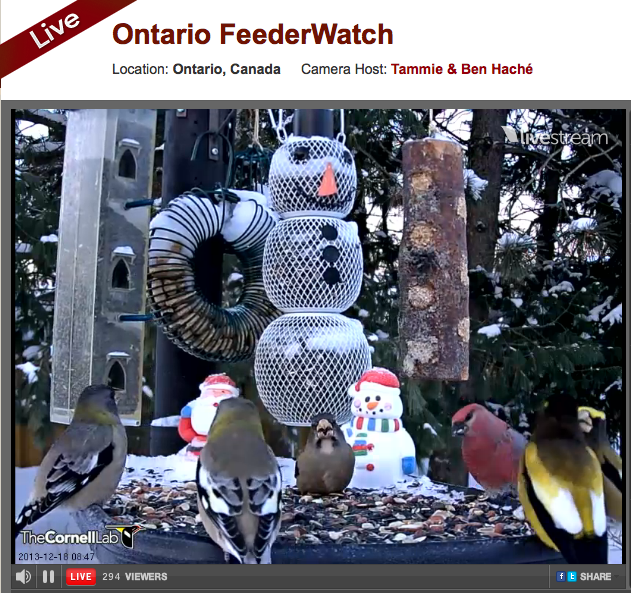
Ontario was a little quiet today, probably due to snow and wind.  The Chickadees did venture out, though.  I love the holiday theme!

Cornell Lab Feederwatch

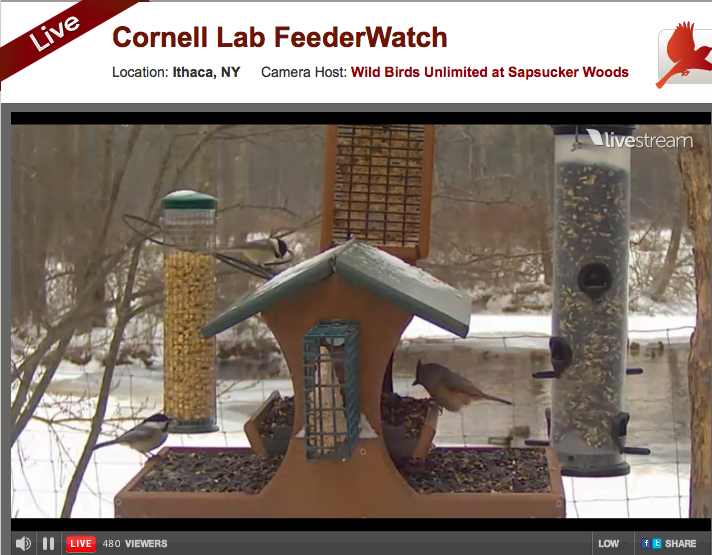
The Cornell labs location was quite busy today.  Lots of Chickadees, the Tufted Titmouse visited for a while, and ducks swam in the pond.  There were also some sparrows that were a little tricky to identify, but the consensus from watchers was that they were American Tree Sparrows.  I have to admit I am not very good at identifying LBJ’s (little brown jobs).

Cornell Lab Feederwatch

Cornell Lab Feederwatch

Cornell Lab FeederCam

I visited quickly this morning before my post was scheduled to go out and the Ontario feeder was a having a gathering of Grosbeaks!  

Cornell Lab Feederwatch

Do you watch any Feedercams?

How Much Rain Did We Get?

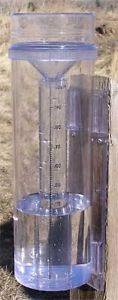
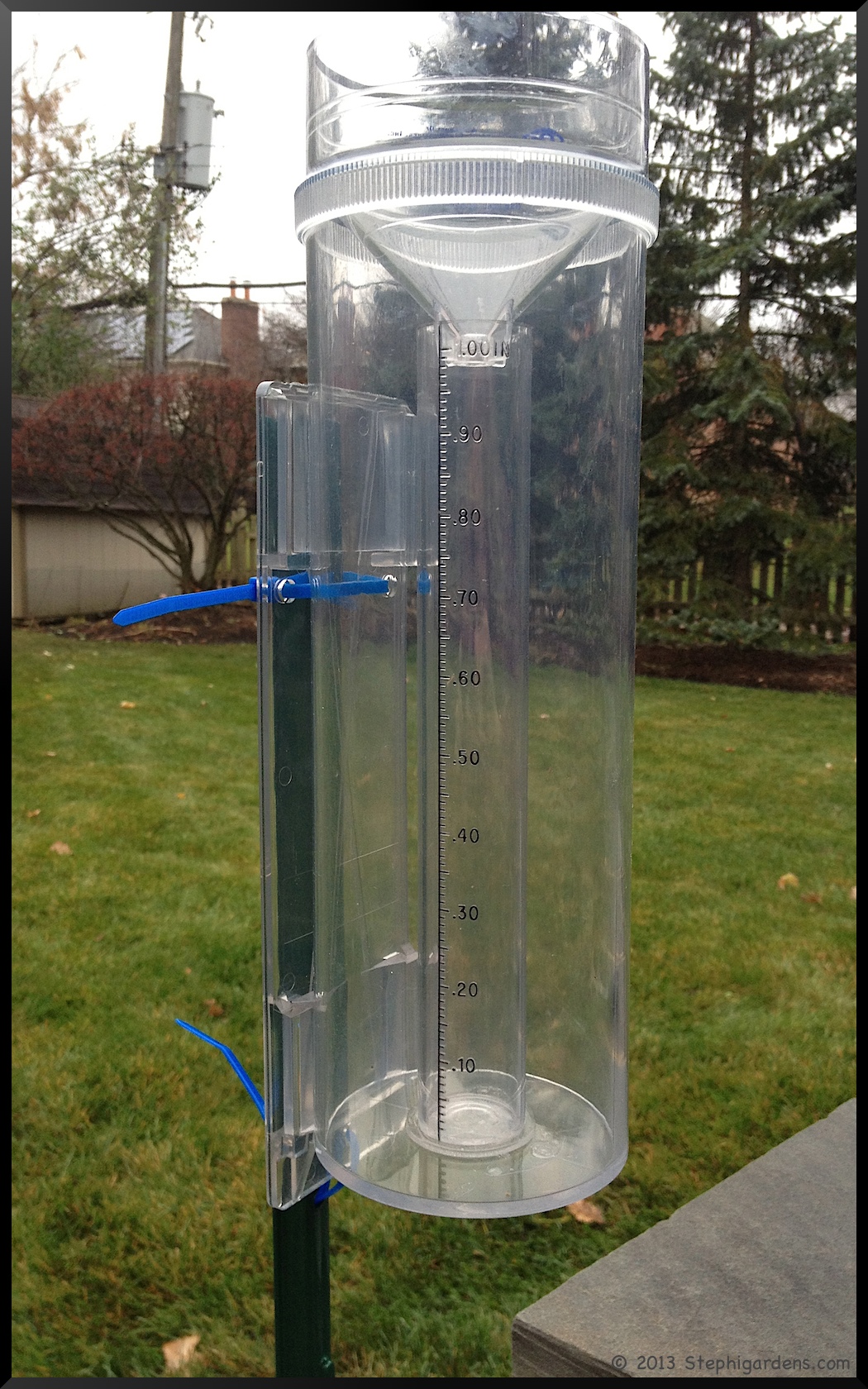
I am forever trying to figure out how much rain we got during a storm. I don’t know why, it’s just one of those things I want to know. And not in general, like somewhere in the greater Chicago area, or at one of the airports, but in my backyard. have discovered Weatherbug and Weather Underground, but it’s still not “my backyard”. So, I put a ridiculously over engineered Stratus rain gauge on my wish list and one day it showed up as a birthday gift (thanks Steve!).

Stratus rain gauge

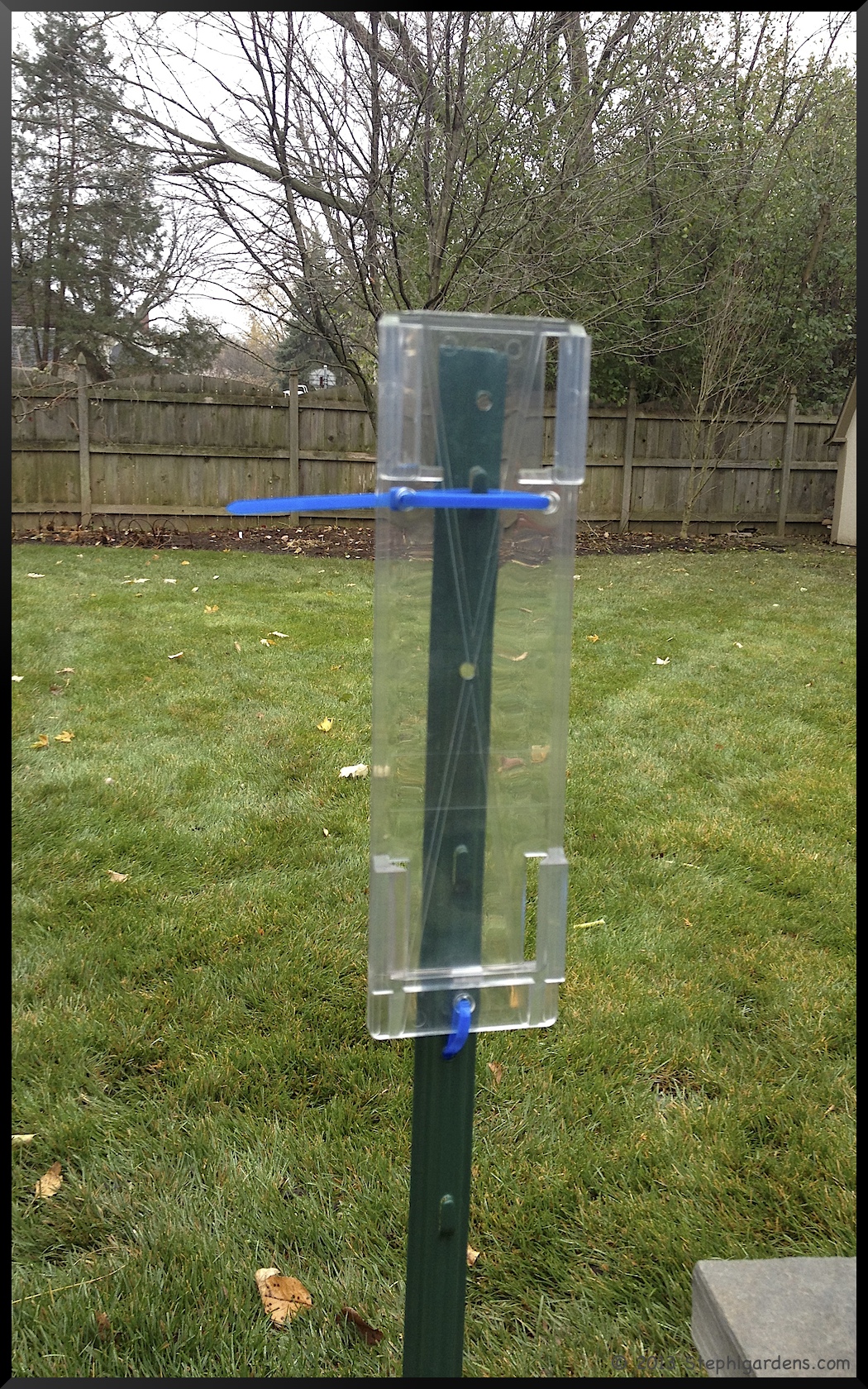
It sat in the box for a while, until I figured out where and how I was going to put it up. There’s lots of instructions as to how far away from houses, structures and trees it should be, and in a suburban backyard, that can be tricky. So I picked the best spot I could that was not too obtrusive, easy to get to, and sort of fulfilled all the location requirements. Then, I was supposed to attached it to a 4×4 post solidly planted in the ground, but until I was sure it was a good spot, I needed a different way to put it up. I decided trying one of those metal 36″ green fence posts and attached it using zip-ties. Not official, but so far it’s working beautifully.

stratus rain gauge

stratus rain gauge

The first weekend I put it in, it was really put to the test. It turned out to be the  really bad weather weekend that led to tornadoes south of here (see previous post, “Ominous Weather“). We got 1.07 inches of rain that day.

When my mom saw a picture of my new rain gauge, she reminded me that my dad had the same one, and had been a weather watcher for CoCoRaHS, the Community Collaborative Rain, Hail and Snow Network. This is a volunteer group that is a “unique, non-profit, community-based network of volunteers of all ages and backgrounds working together to measure and map precipitation (rain, hail and snow)”. There’s all kinds of great information on their website; well worth checking out. I don’t think I’m quite ready to sign up yet, but we’ll see in the spring. But, now I know where I got the “need to know” from.

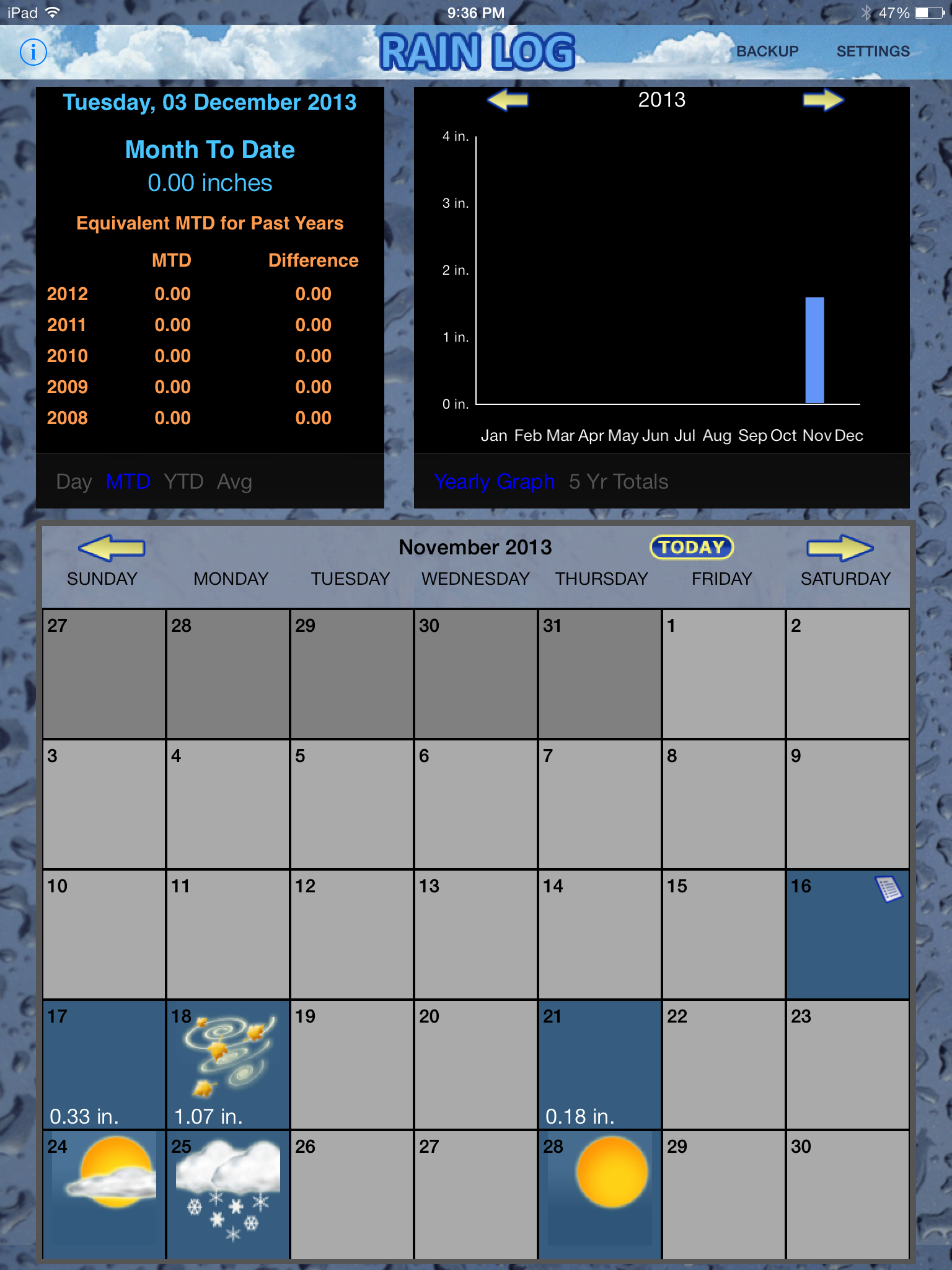
Once I got everything set up, I needed somewhere to log it. Of course, there is an app for that, Rain Log. I decided to record my 24 hr rainfall at 7:30 am, like CoCoRaHS suggests. So, every morning, Daisy and I traipse into the backyard  to see how much rain is in the rain gauge. Here’s what my reports look like so far.

rain log

rain log

I need to figure out what to do for the winter. There are ways to measure snow, but you need to be careful not to crack the inner measuring tube in freezing temperatures. I may need to just take it inside. Do you measure rainfall in your yard? 

New Bird Feeder

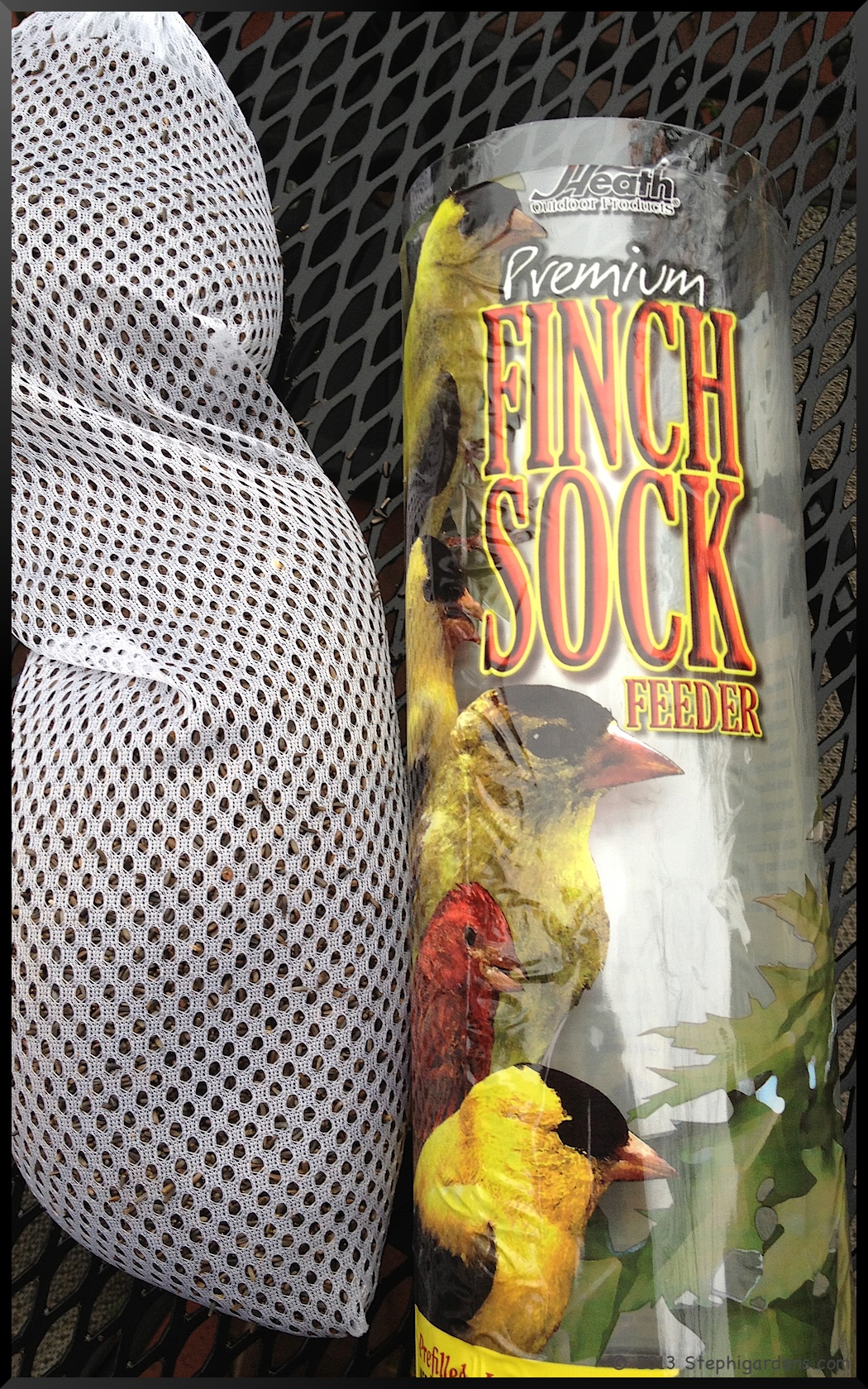
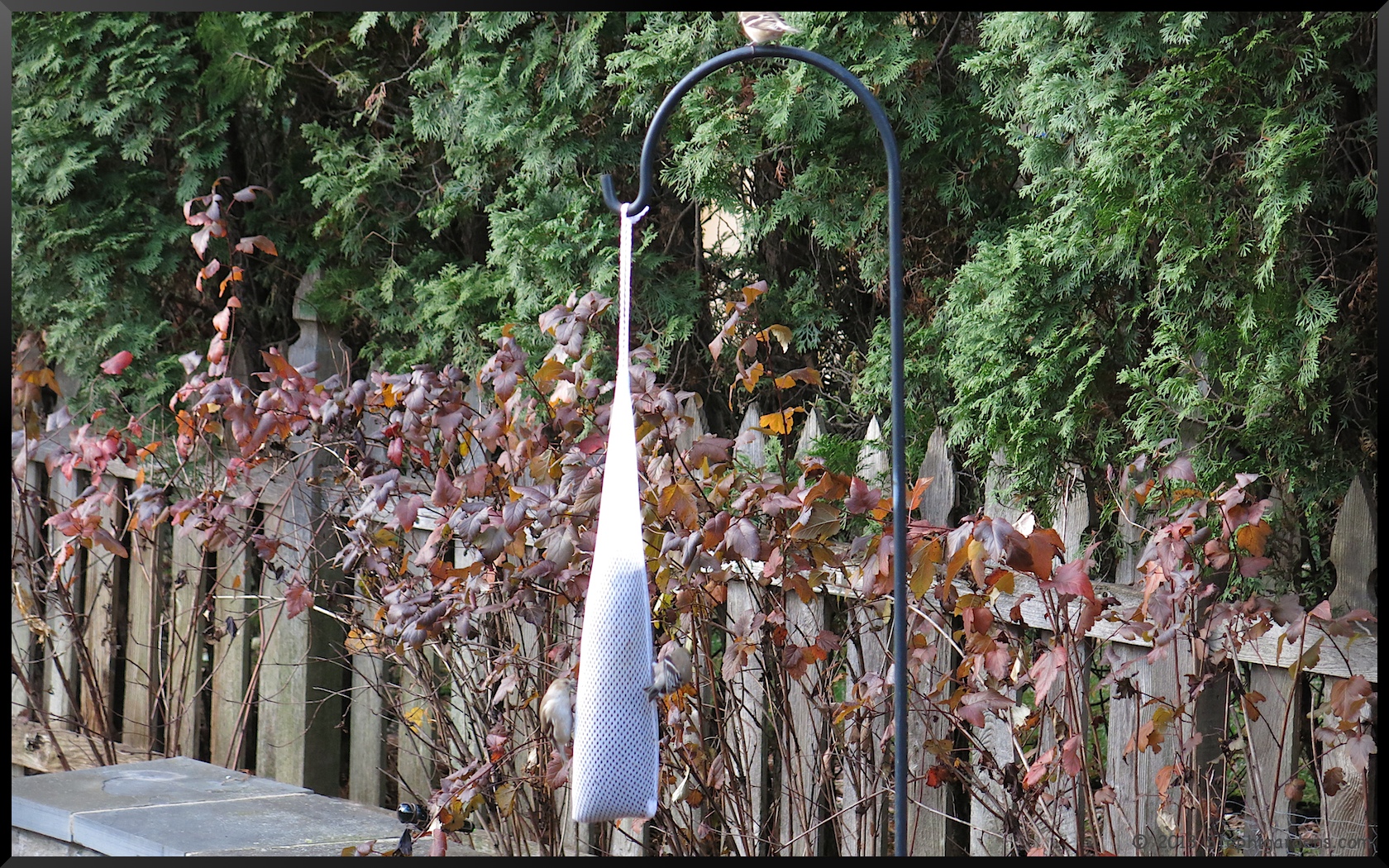
I was lucky enough to recently attend a program, “Amazing Birds“, by some local, passionate birders.  Among learning quite a few “amazing” bird facts, they briefly mentioned their favorite thistle (nyjer) feeder to attract goldfinches–a sock feeder.  I forgot about this little tidbit, until I was doing some other bird  shopping  and I came across this Nyjer Finch Sock and it was quickly added to my cart.

nyjer finch sock

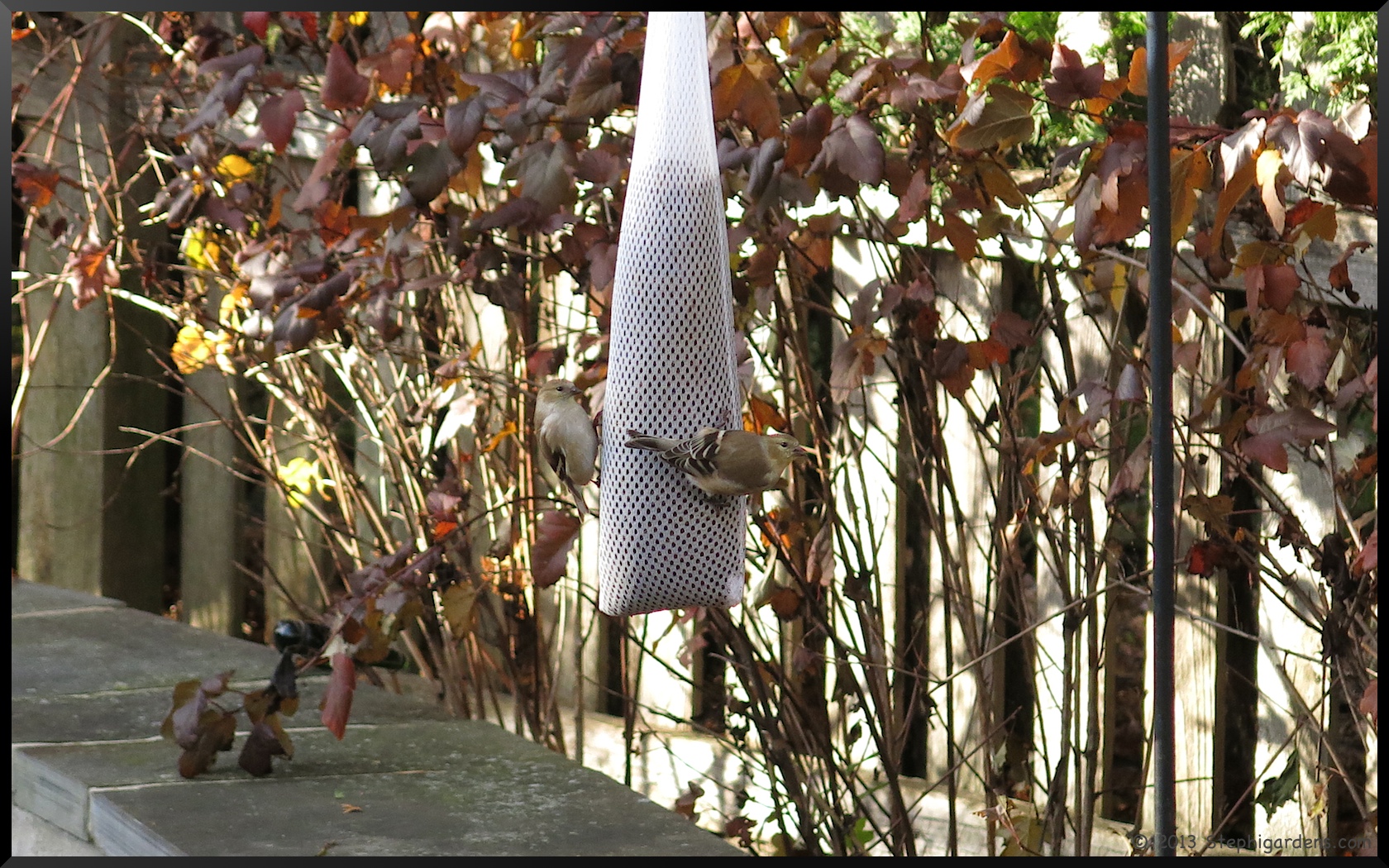
As soon as it came, I rounded up one my many shepherd’s crooks in the yard and found a spot for it closer to the house.  Ideally, it’d be near some brush or shrubs to offer protection for the birds I was attracting.   I found just the spot and almost immediately had goldfinches.  Not the pretty yellow males, but the motley looking fall males that are molting into their winter colors and the always drab, but still charming, females.   Despite their winter colors, I find these to be  cheerful little birds flitting about the yard.

nyjer finch sock
nyjer finch sock

As a bonus, the juncos are enjoying the dropped seeds.  All seem happy and I look forward to visitors all winter.  I’ll definitely be buying more.

SaveSave

SaveSave

SaveSave

An Unwelcome Visitor

While we were out there discussing the ideas for the new raised gardens yesterday, this is what we saw in the neighbor’s backyard behind me…a very healthy coyote!

IMG_3826

And while I know coyotes can jump a fence, I hope it acts as a deterent to keep him from coming in my yard!

IMG_0545 - Version 2

The coyote population has really risen the last few years.  As with many wild animals living in suburban areas, there is friction.  So, while it really helps to keep the rabbit and rodent population under control, we have had instances of them attacking family pets.  Even one incident in my neighborhood, which thankfully the little terrier survived!   So we keep just a little closer watch over Daisy, and hope the coyote is too lazy to jump over my fence.

I read a great book recently about humans and animals trying to coexist, The Beast in the Garden: A Modern Parable of Man and Nature by Dave Baron.  Here’s an overview from Barnes and Nobles:

“When residents of Boulder, Colorado, suddenly began to see mountain lions in their backyards, it became clear that the cats had returned after decades of bounty hunting had driven them far from human settlement. In a riveting environmental tale that has received huge national attention, journalist David Baron traces the history of the mountain lion and chronicles one town’s tragic effort to coexist with its new neighbors. As thought-provoking as it is harrowing,The Beast in the Garden is a tale of nature corrupted, the clash between civilization and wildness, and the artificiality of the modern American landscape. It is, ultimately, a book about the future of our nation, where suburban sprawl and wildlife-protection laws are pushing people and wild animals into uncomfortable, sometimes deadly proximity.”
9780393326345_p0_v1_s260x420


…and the Ugly, Not!

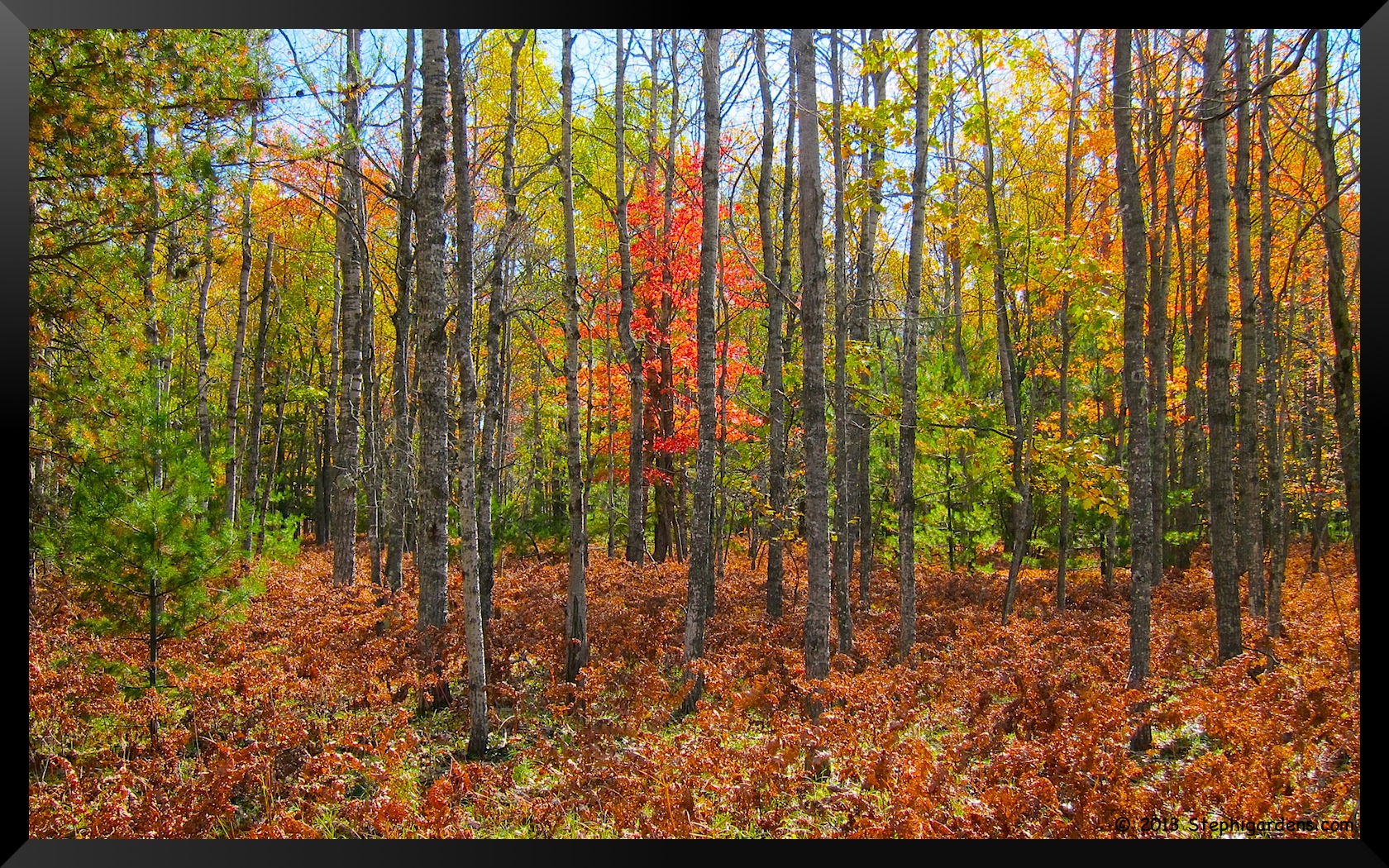
It was brought to my attention that following the good and the bad should be the ugly. But since I thought the bad was ugly enough, I thought I’d spare you the ugly! Instead, I thought I’d just continue to post some of the beautiful Michigan fall photos from Peggy.

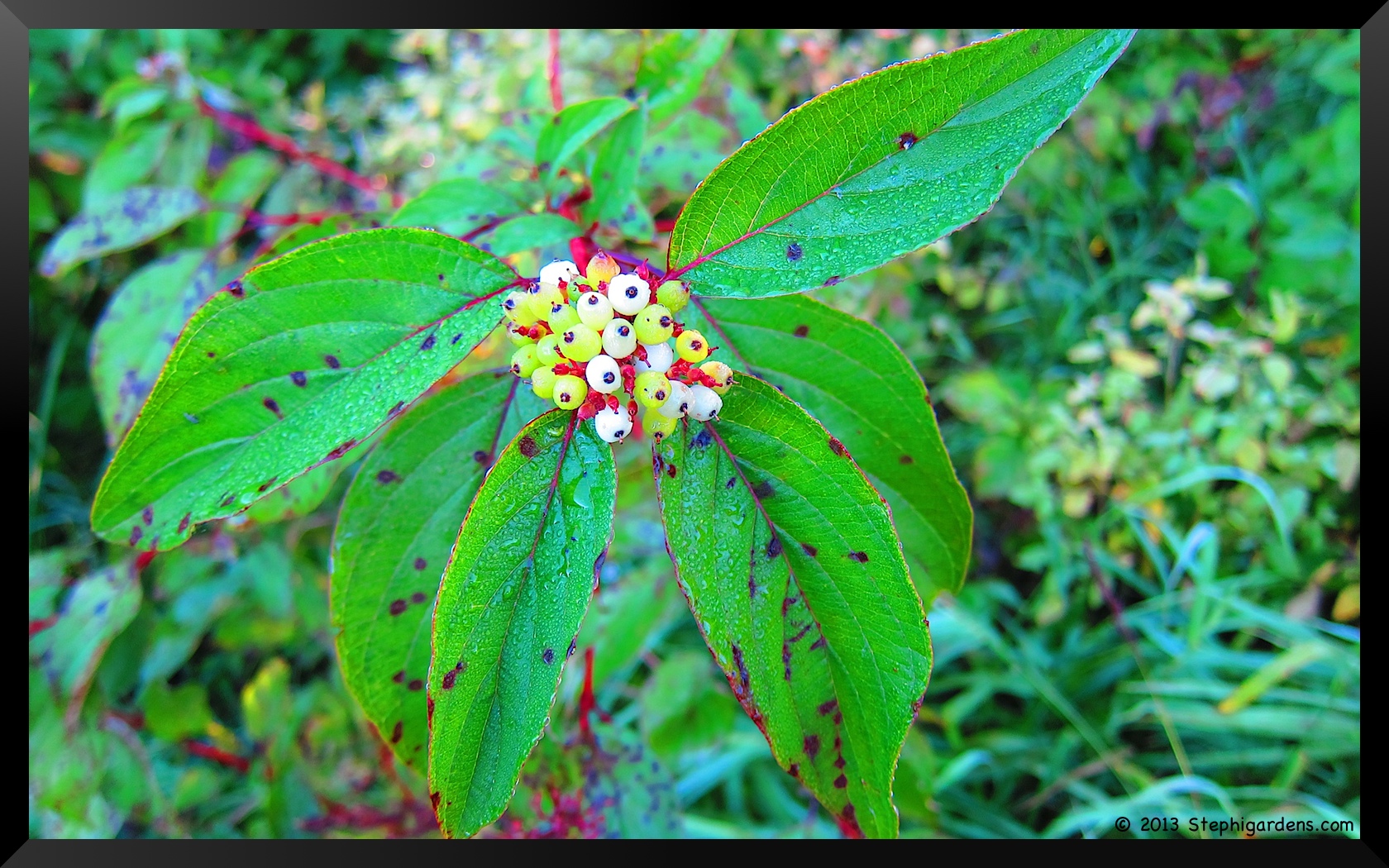
 Gray Dogwood

IMG_5568

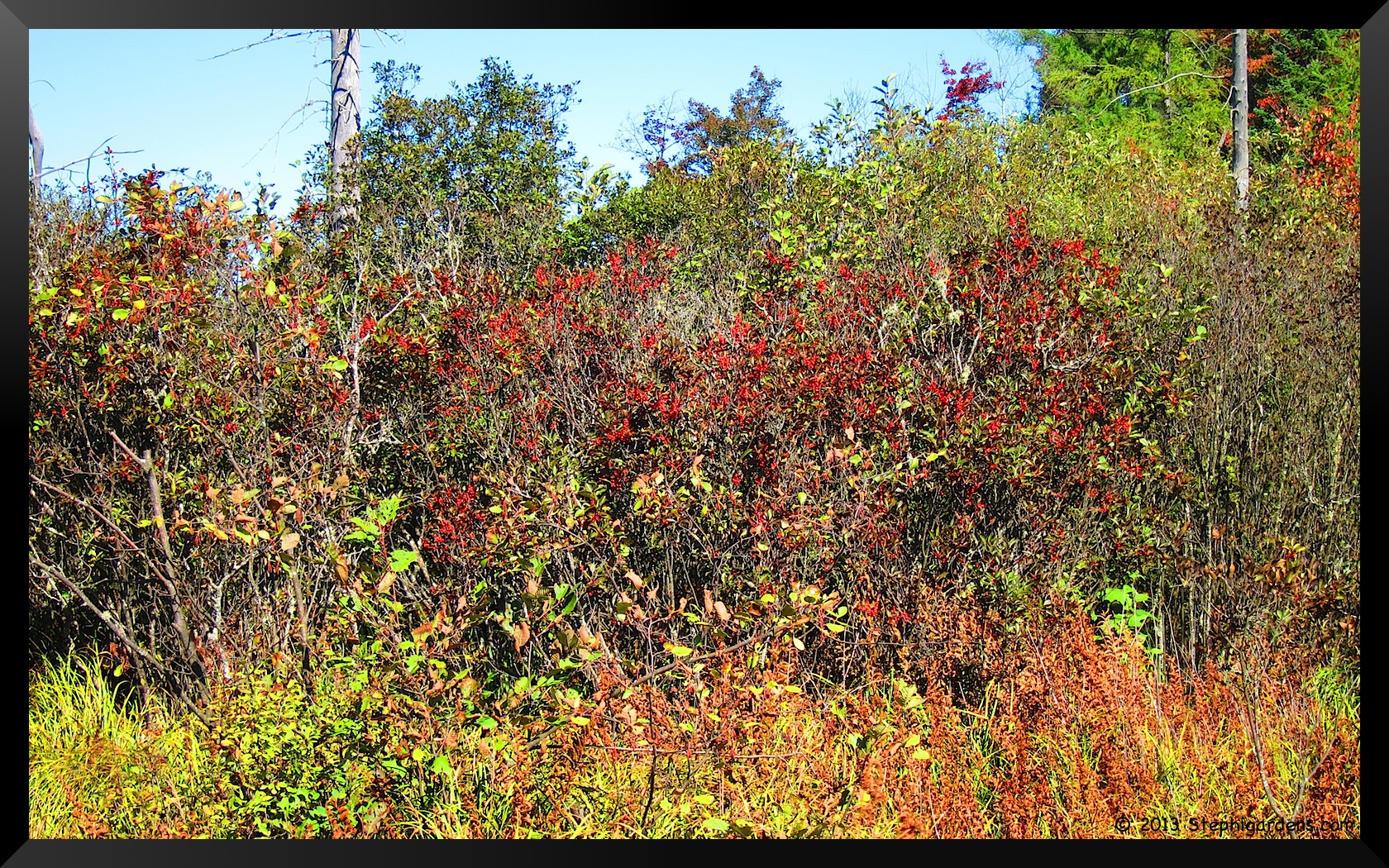
Winterberry or Michigan Holly

IMG_5575

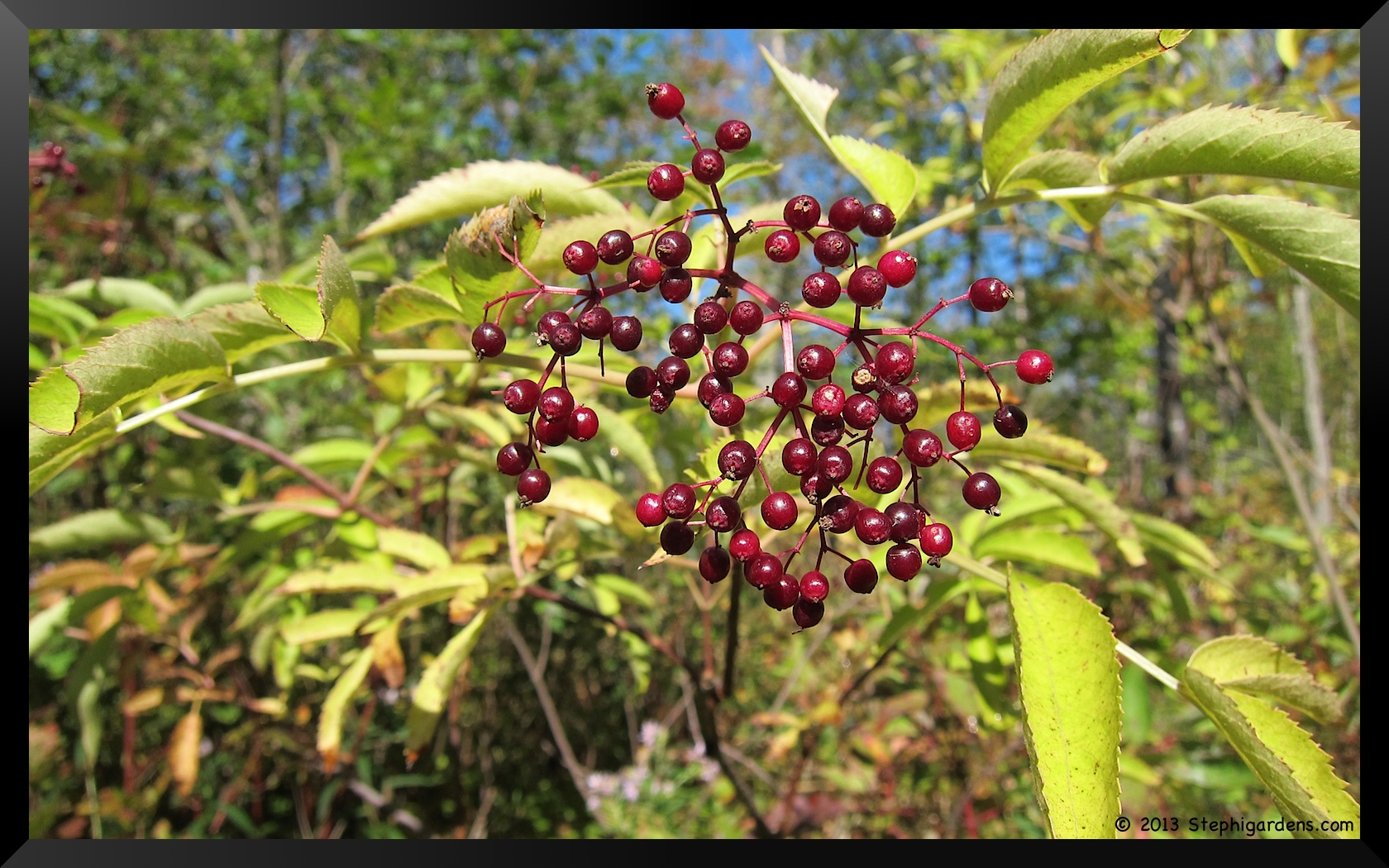
Elderberies

IMG_5584

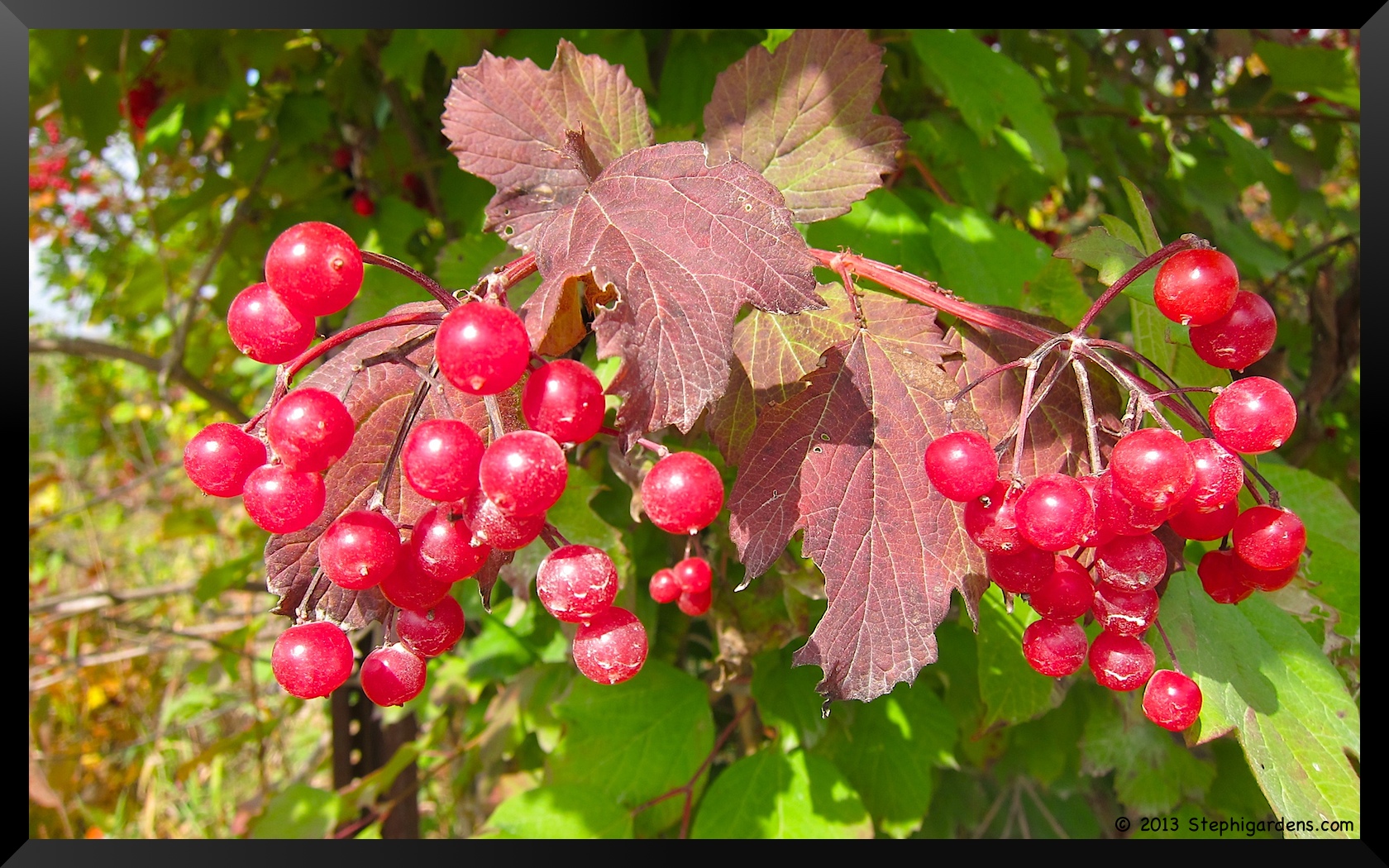
Viburnum trilobum

IMG_5712
IMG_5598

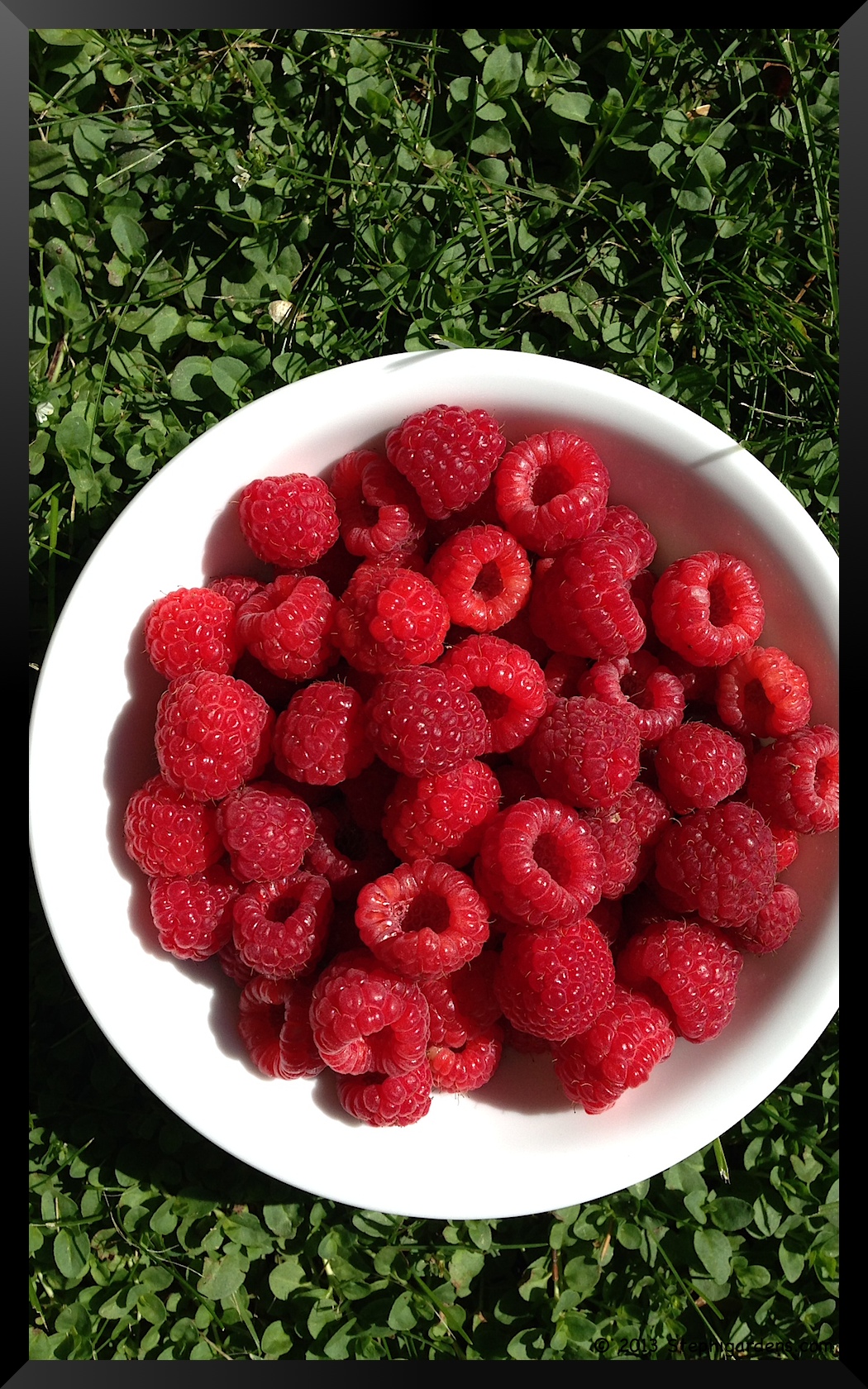
The birds and animals aren’t the only ones to have yummy berries to eat– The garden raspberries are still producing berries! 

IMG_0086

photos by Peggy

White Line Sphinx Moth

The other night I was outside helping grill around dusk. Right next to the grill, I have planters with geraniums, petunias and coleus.

image

Flitting around the petunias that night was this hummingbird-dragonfly-bug-like thing. Its wings were beating so fast, I really couldn’t get a handle on what it was. All I could really tell was that it was not a hummingbird, but was definitely getting nectar from the petunias, checking out the other flowers, distinctively patterned and very pretty. I meant to try to look it up, but I really didn’t know what I was looking for.

Then, oddly enough, the next morning my radio alarm comes on and there is an interview with a local garden specialists about the recent explosion of something called a White Line Sphinx Moth (Hyles lineata). That was it, made my ID pretty easy. For some reason that I haven’t been able to figure out, they’ve been spotted in higher numbers lately in the Midwest, including Chicago.

White Line Sphinx Moths, also known as Hawk Moths, are fairly large moths and behave much like a hummingbird, flitting about, hovering above flowers and using its very long tongue (or proboscis) to reach into the flower and drink the nectar. The caterpillar phase of this moth is also unusually large (3 inches or more) and has a distinct hornlike appendage. They look similar to the very destructive tomato hornworm, but are not as much of a garden pest.

I hope they stick around a bit, it was fun to watch.

Photo Credit: Larry Lamsa (Creative Commons licensing)