I know everything is relative, but boy have we had a lot of precipitation this past week. It started with a snowy April weekend, which I thankfully missed by being up north in Door County. Came home to spring plants that were no worse for the wear.
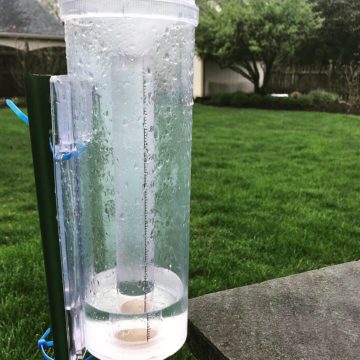
Then it kept raining, bringing the weeks total to 6.1 inches. My Stratus rain gauge isn’t usually this full from an overnight rain
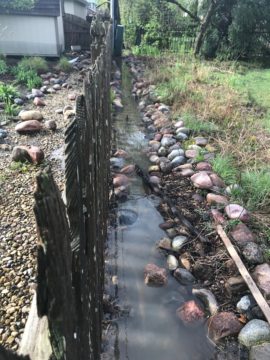
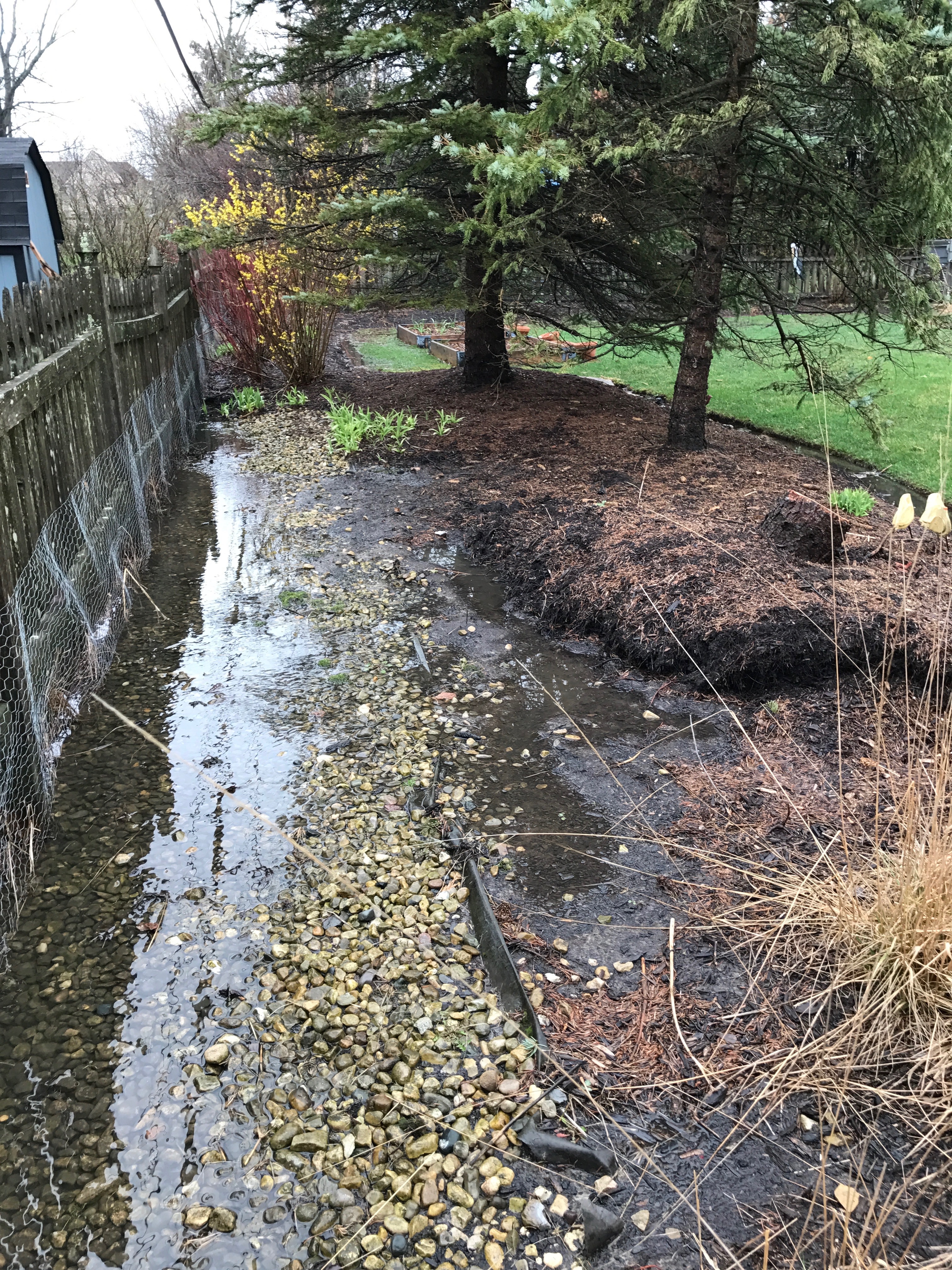
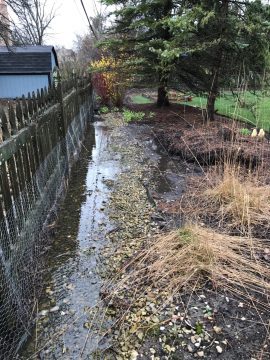
Streams are full, retention ponds are full, and apparently according to the news the storm sewers are full too. So is the swale that runs between our yards.
This swale, or “moon scape” as my husband calls it, obviously needs some explaining, since it looks nothing like it did a couple of years ago (It’s Been a Rainy Month). Watch for what happened in an upcoming post and how we’re fixing it.
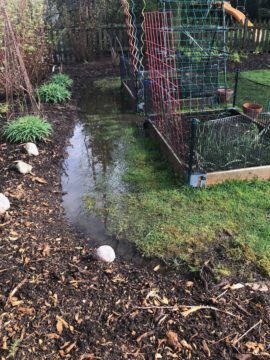
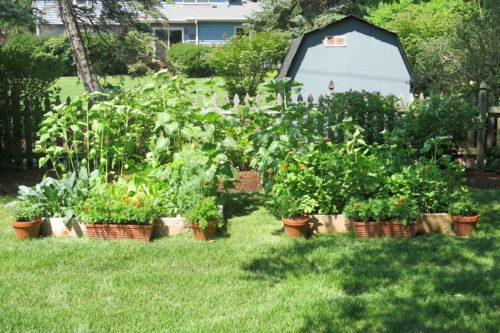
In general, the drainage of the whole yard needs some work. Over the years, enough has been altered or settled so that the water just doesn’t run off like it should and I get puddles like this. Luckily for the raised beds, they drain like they should even when sitting in a puddle.
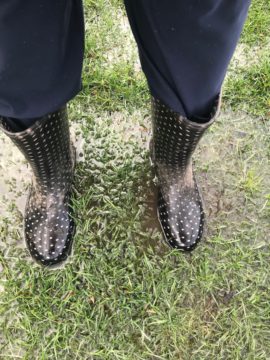
In the meantime, it’s a good day for my slogger rain boots to muck around the yard in.
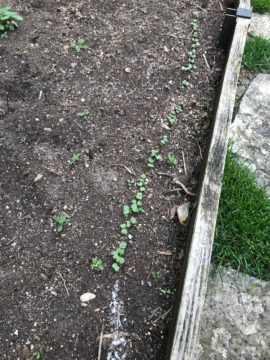
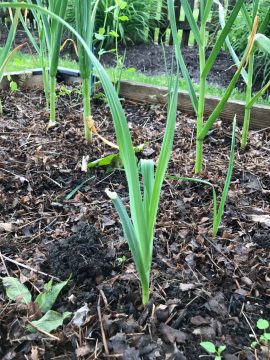
It’s been a bit cold, so the seeds we planted a couple of weeks ago are just now coming up. At least they weren’t washed away. The cool weather is definitely helping the radishes, which I never have much luck with. I know these radishes don’t look like much compared to the gardens from my southern friends, but up north this is pretty exciting. I’m going to plant a second row of the cold and cool weather veggies this week.
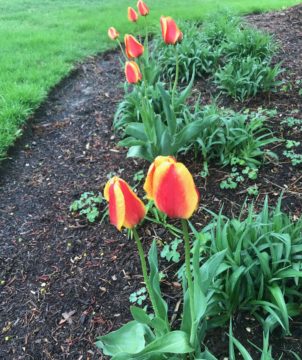
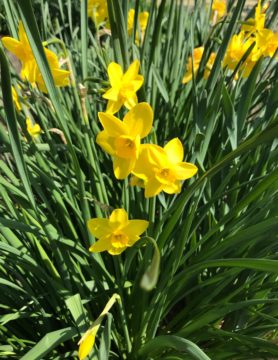
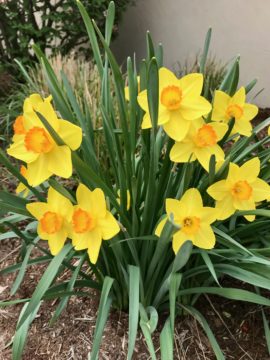
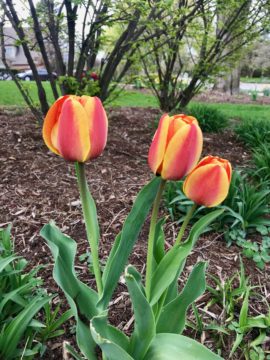
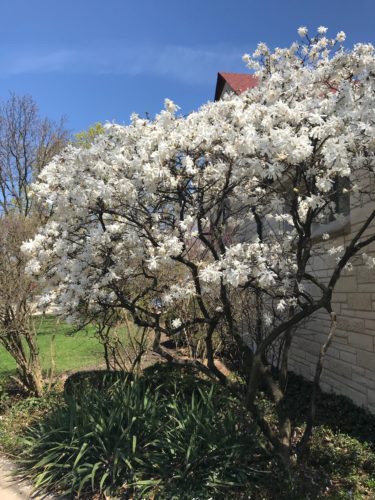
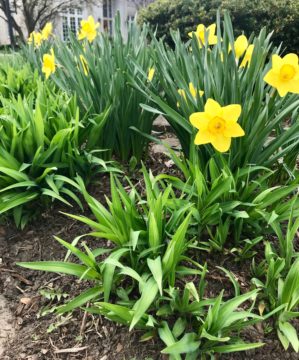
It’s finally starting to look like spring! The daffodils and tulips are blooming.
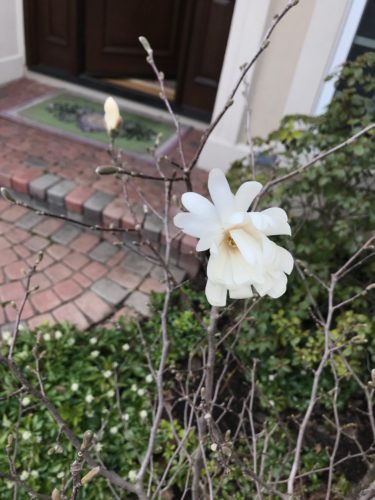
The Star Magnolia, focus of My Magnolia Saga, is showing signs of life and trying to bloom…
…although around town they are in full bloom.
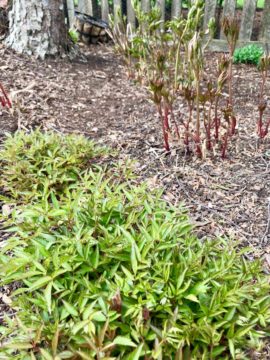
And the hostas, daylillies, astilbe and peonies are all bursting out from the ground.
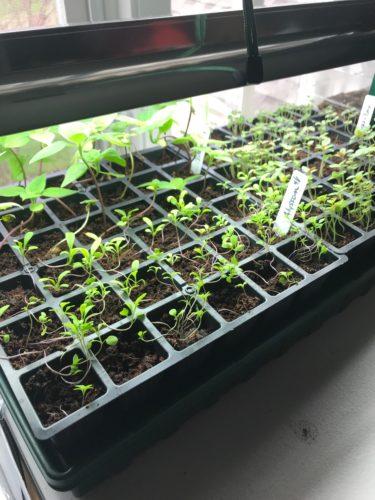
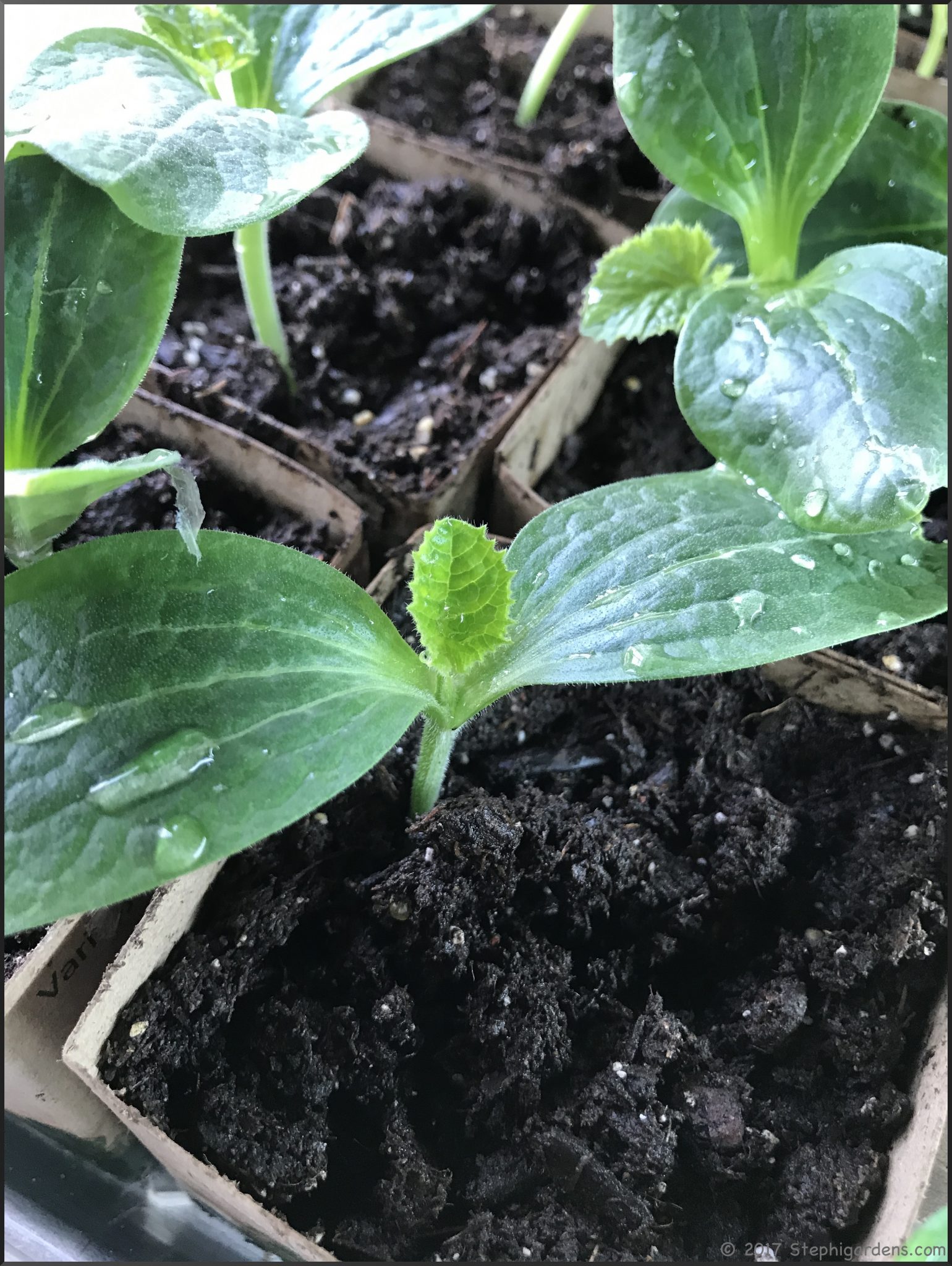
In the house, the seeds are sprouted and the next set are ready to be planted.
Why so many hands in the garden this year? It’s hard write this down, but I am currently not able to garden or do anything strenuous for about a month following recent surgery for breast cancer <<sigh>>. I went for my screening yearly mammogram back in February, and after lots of testing was ultimately diagnosed with a Stage 1 invasive breast cancer. Boy, was I not prepared for this and there’s definitely no good time to get a bad diagnosis. I’m still waiting to find out exactly what the next steps are after surgery (there’s a lot of waiting) and a little stressed out over what family events I may or may not have to miss. But every day, I am so thankful that this was caught early and my prognosis is excellent after treatment. I’m also thankful for my husband and kids, and all my family and friends who have reached out with support and to help in any way they can.
So while my hands may be out of the garden for a bit, I’ve also realized a garden can be a very healing place when going through a stressful life event. I can still plan and enjoy the beauty and smells of the spring blooms. I am also blessed by many who have offered to help make sure I get things growing and cared for in a timely fashion, and keep my life as normal as possible. This will be a village garden this year.
It may not be a great year for my garden, but that’s what this blog is all about. Real life experiences of a casual suburban gardener. And gardeners get sick sometimes.
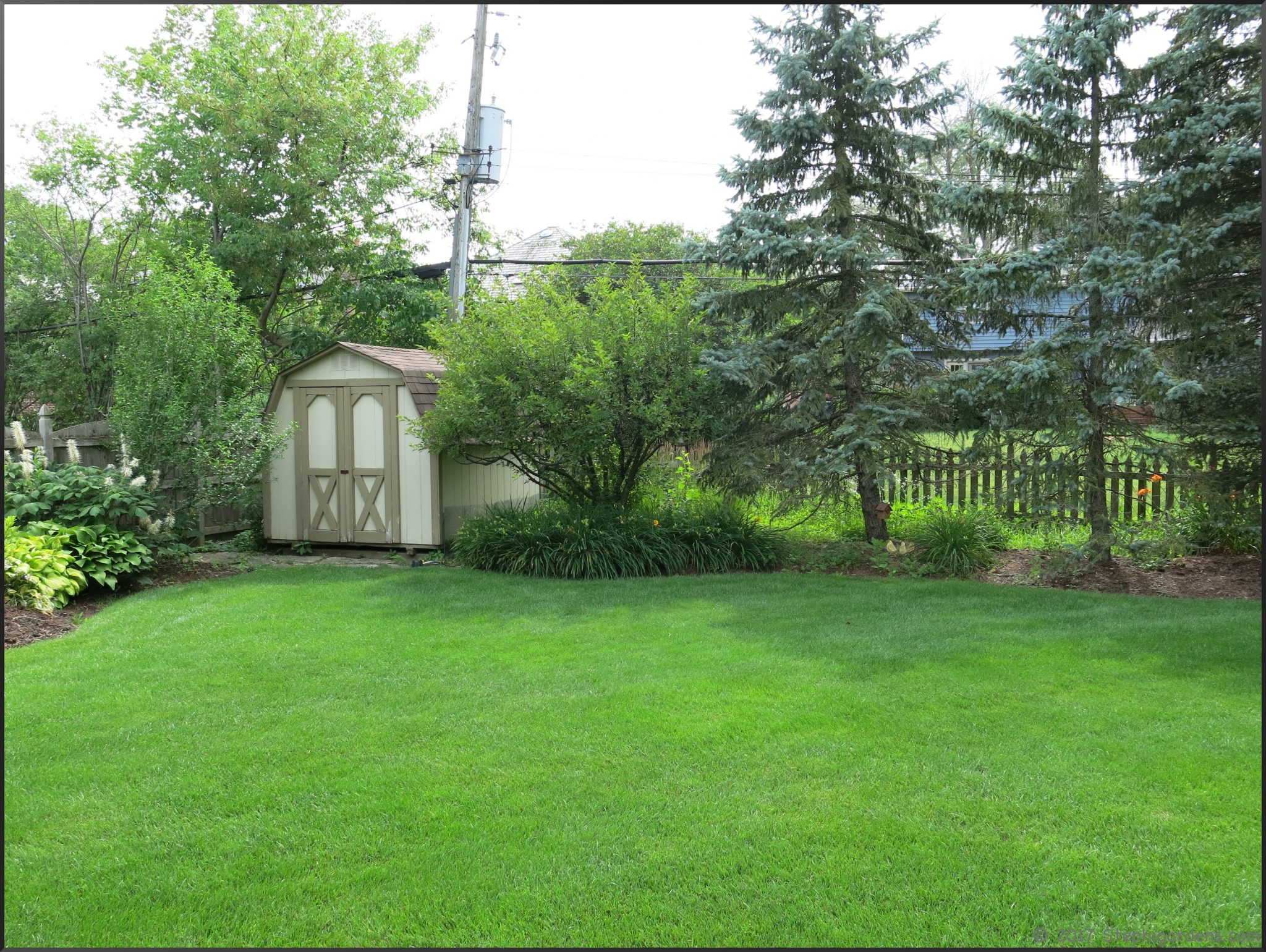
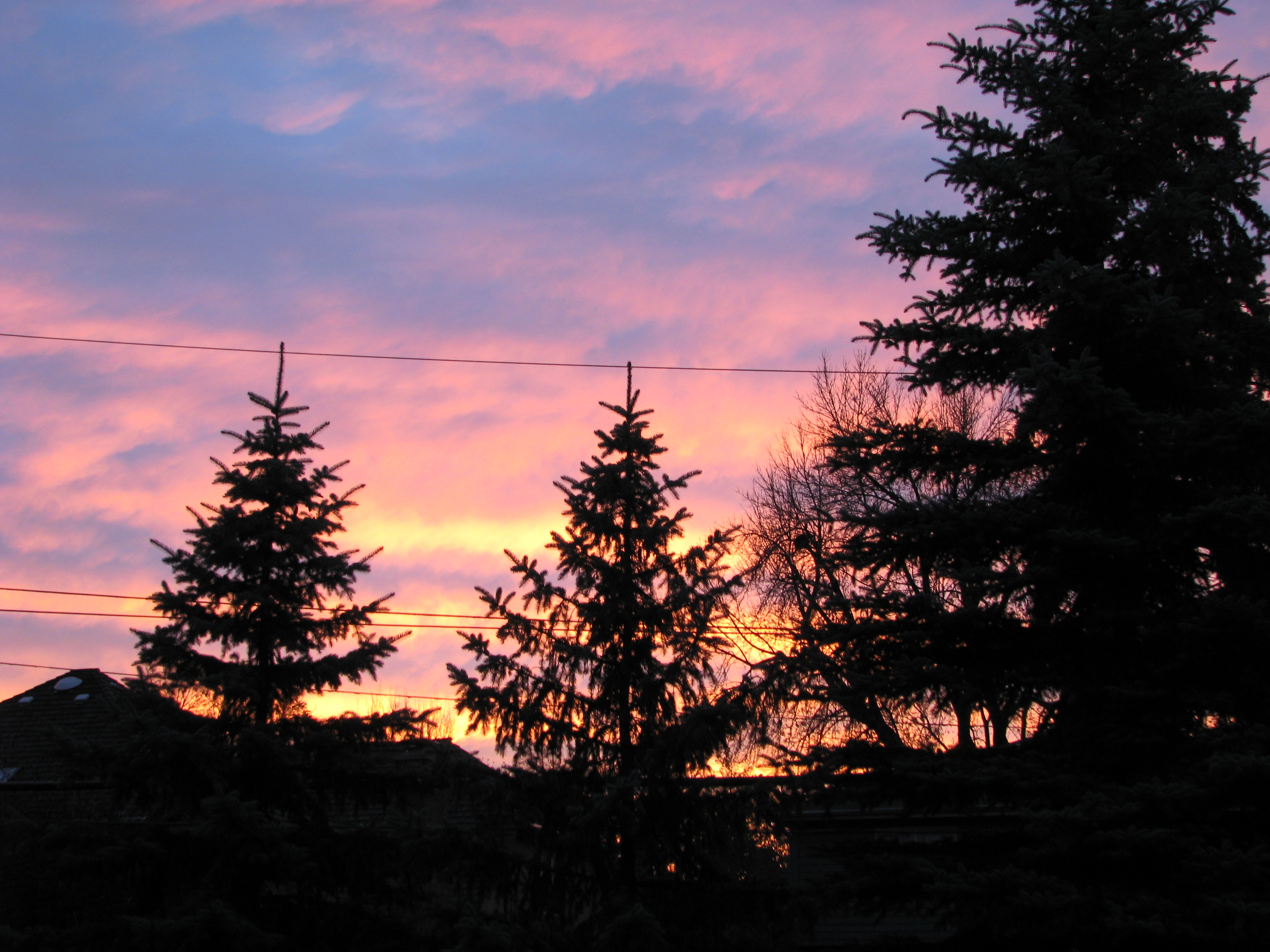
We had three spruce trees along the backyard fence line offering a sense of privacy from the neighbors.
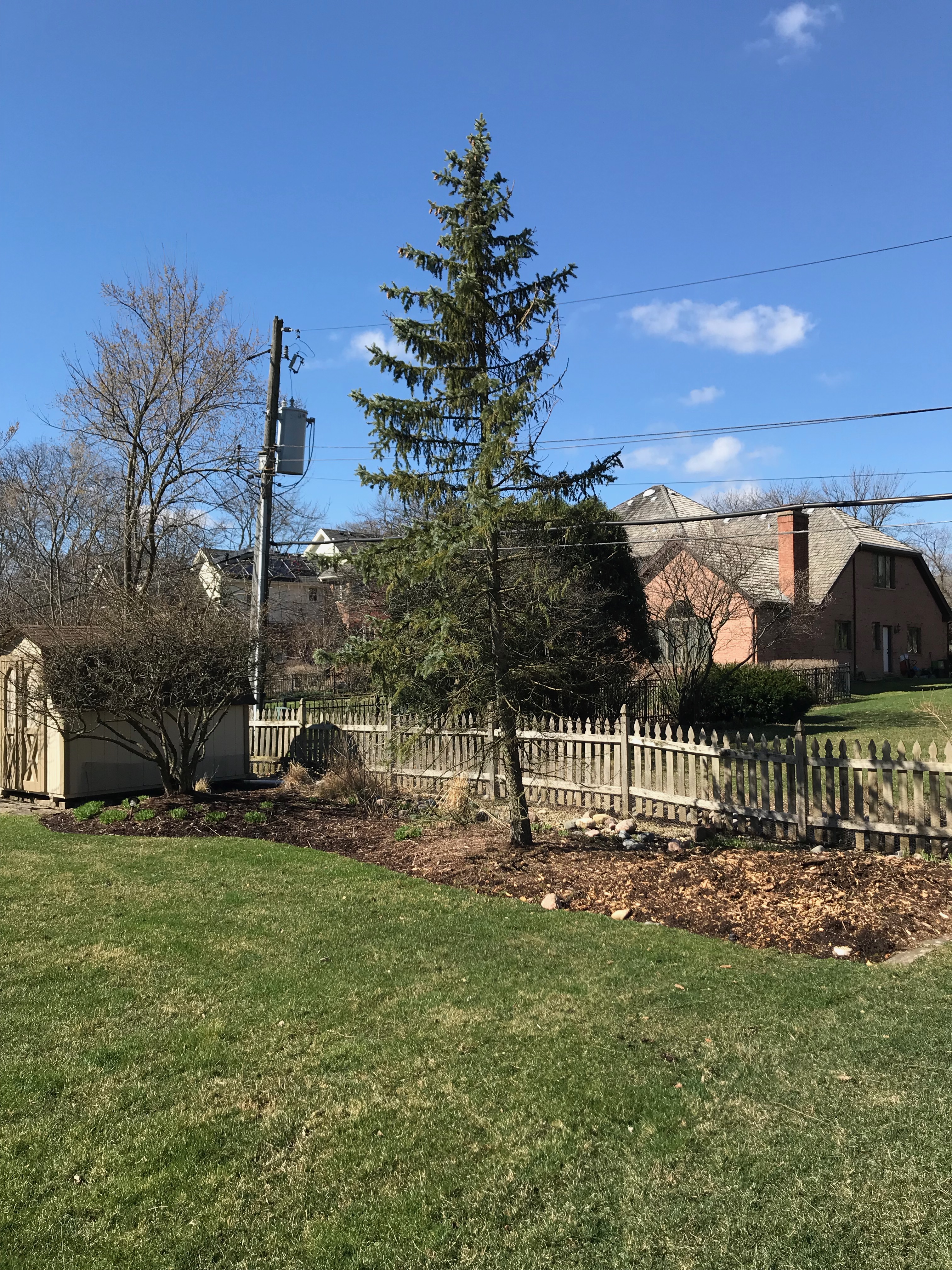
Then we had two… (Read more about that in Spruce Down 🙁 )
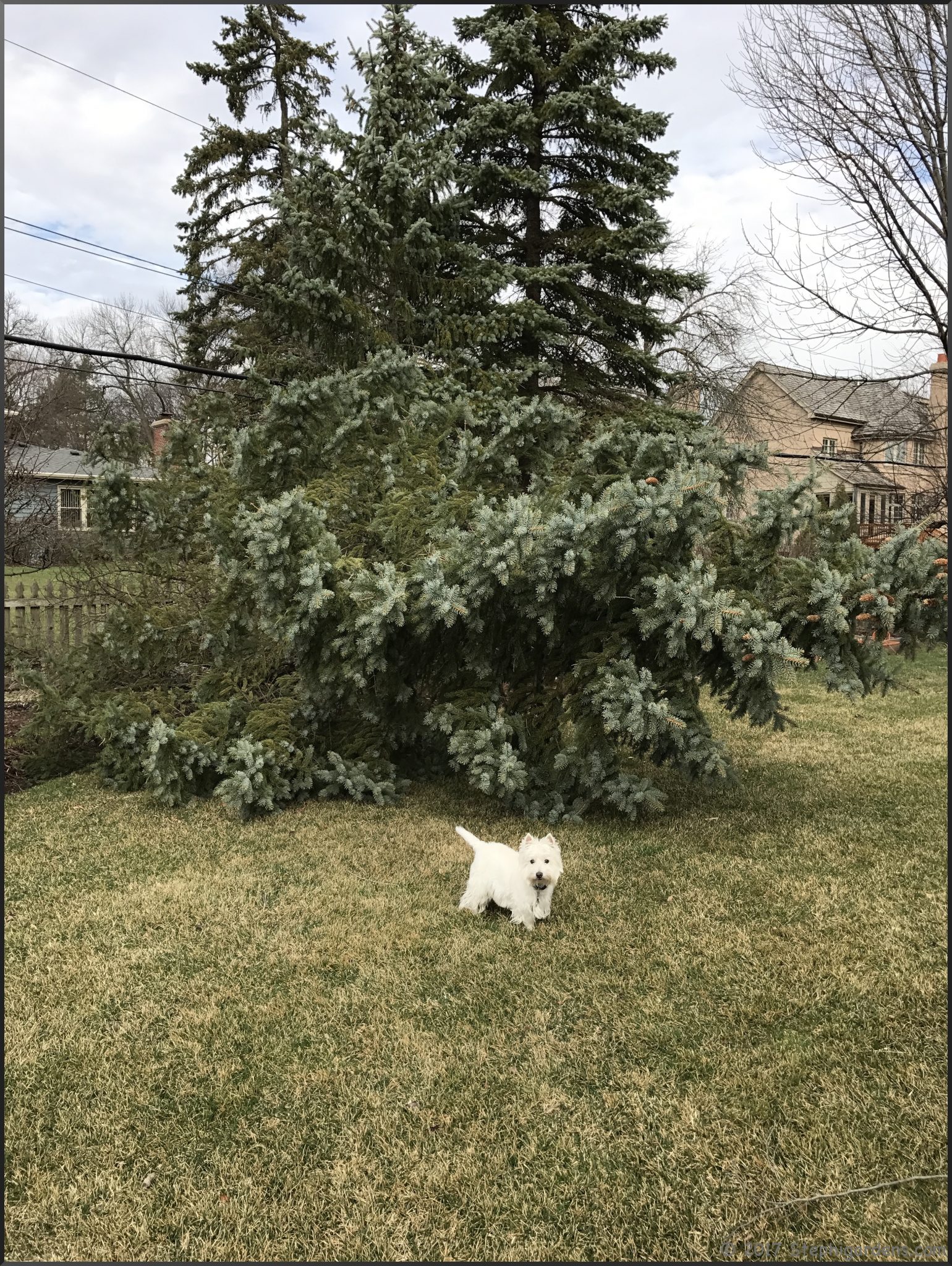
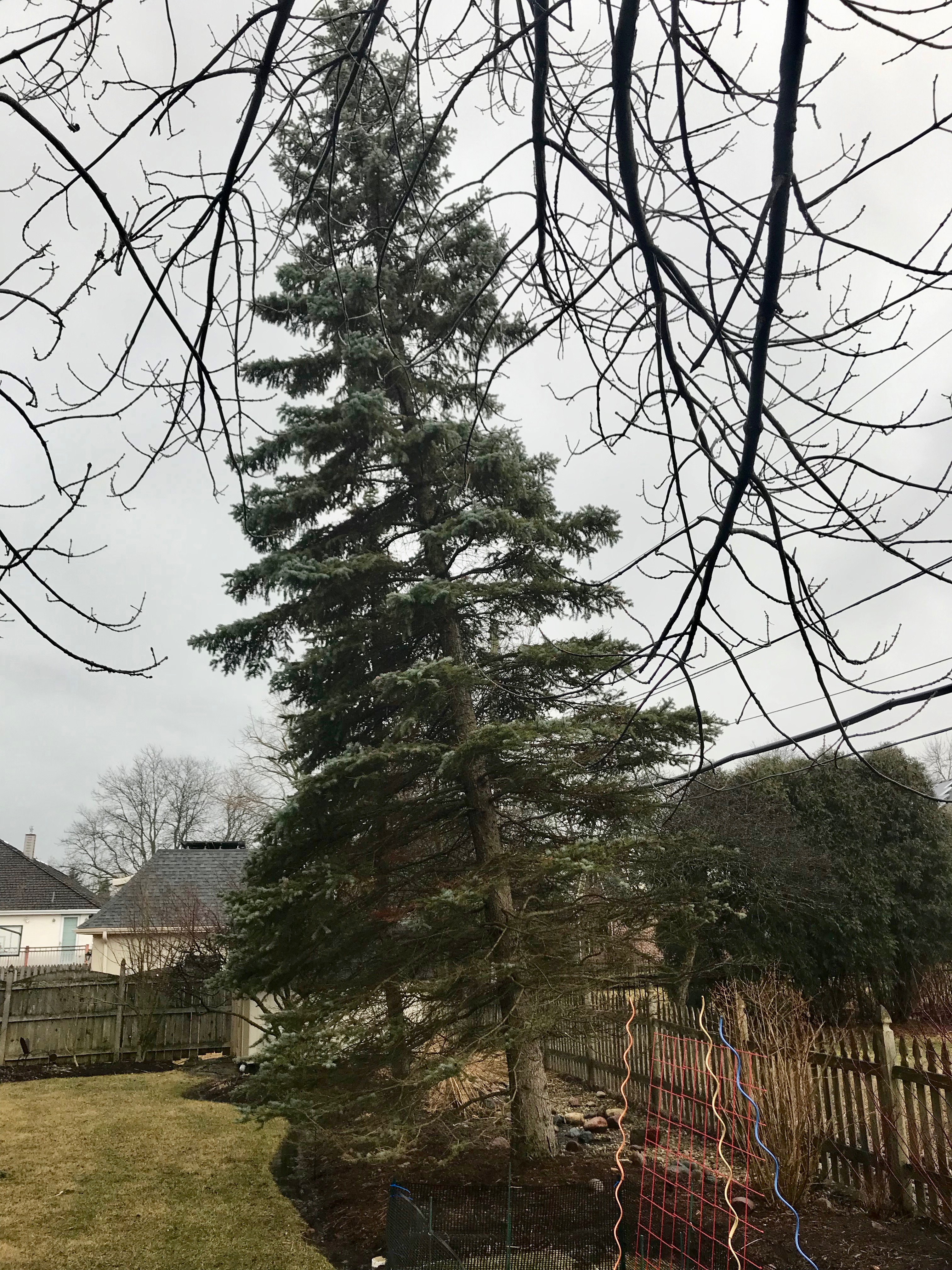
And then came this very wet and windy winter. We had been having recent trouble with the swale area and the water wasn’t flowing down the center of the channel as well as it had in the past, making the berm holding the spruces soggier and less defined than normal. That combined with full grown spruce trees and their shallow roots doesn’t make for a good mix in high winds.
The first storm caused the tree to start rocking and left the tree leaning a bit. My husband was none too happy I was out there.
The next windstorm caused it to lean a bit more and we were sure it was going to come down and take out something else with it.
When it didn’t, we were hopeful maybe we could get it staked and it could survive. But of course, we didn’t account for the power lines and the need to stake into the neighbors yard. In the face of a third powerful wind and rain storm, we called the tree guys to come and take it down before it did any damage. I usually like to be home when they do things like this, but it was an emergency and they came while I was gone. So no pictures.
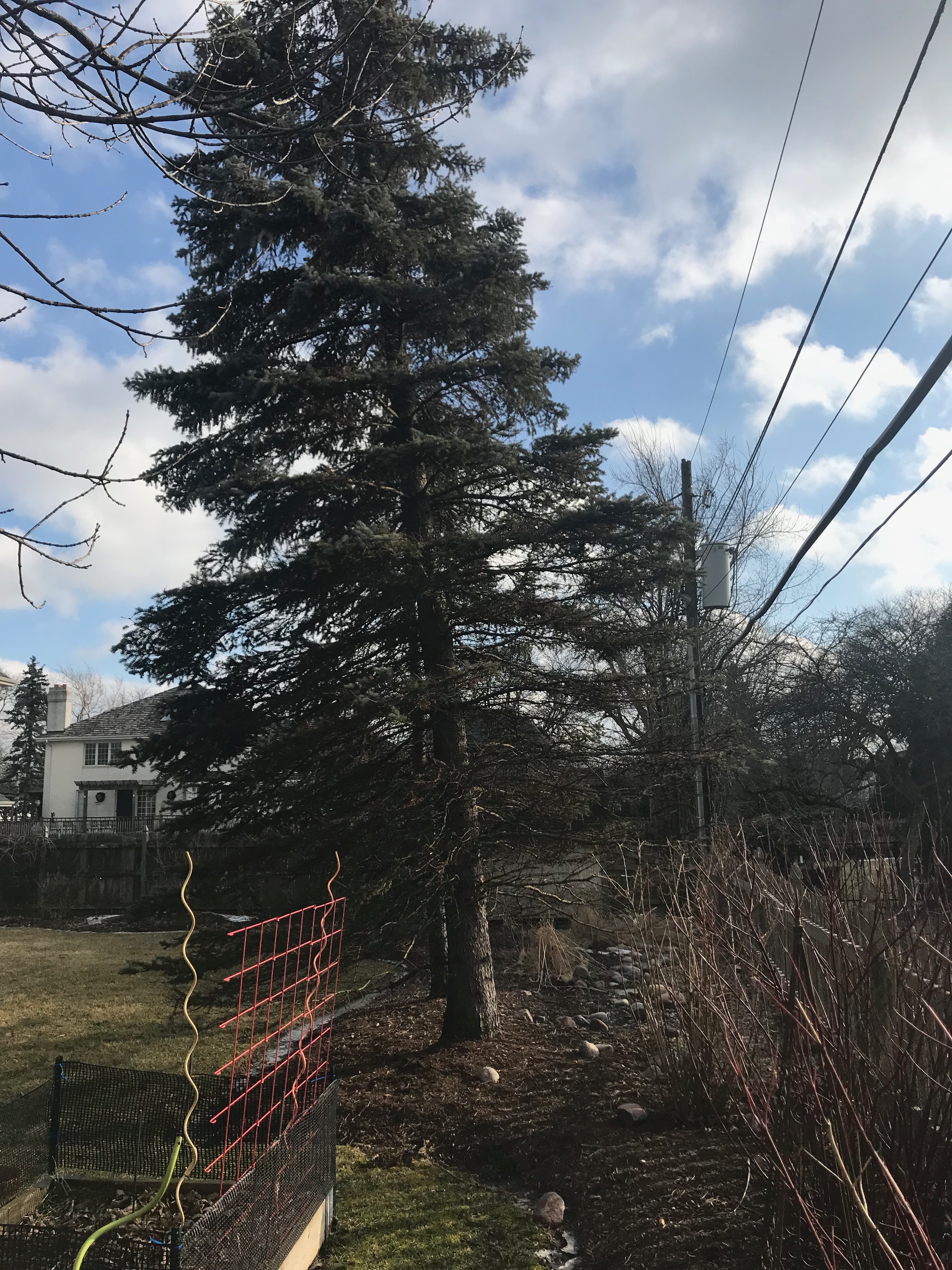
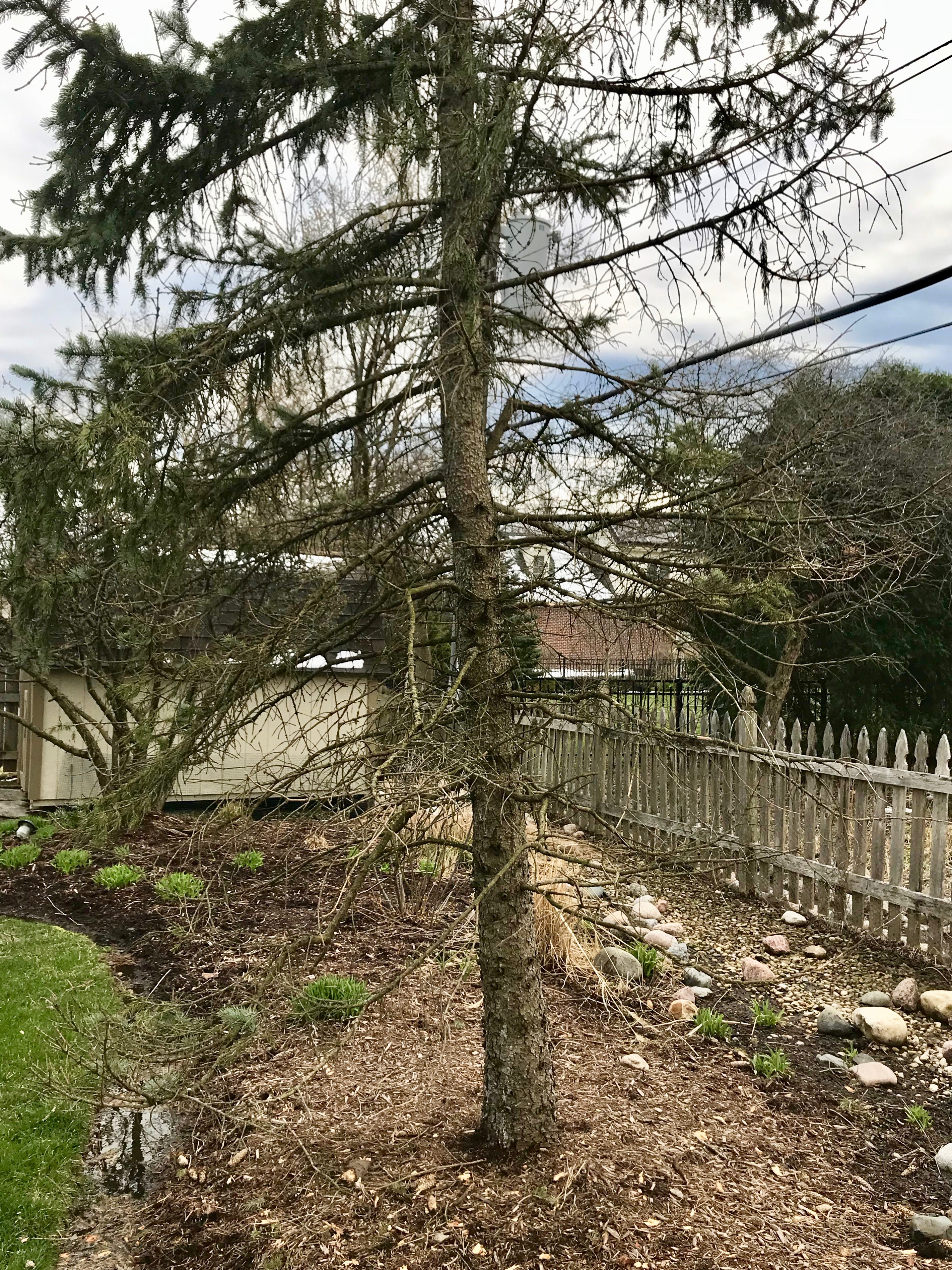
This is what we have now. A bit of the spooky tree look. The remaining spruce is also none too healthy from what is likely cytospora canker disease.
Cytospora canker is a disease of mature spruce trees. The damage usually starts on the lower branches and moves up the over many years. Spruces that are planted too close together (check) and under stress from drought (check), wet roots (check), insect damage, nutrient imbalance, and physical damage to branches, trunks, or roots are most susceptible.
There is no treatment, other than removing the dead branches, ultimately the tree, and not planting another spruce in the same area. I’ve seen many spruces being taken down around the neighborhood, and very few truly healthy looking specimens remaining. Add that to the list of tree diseases that have ravaged urban trees.
So what to do now? This is a great opportunity to fix things up in a neglected area and add some new plantings that will work better in the current conditions. The third tree will be coming down this week and I have some ideas in mind for the area. I’m actually excited for the the new look! I’ll let you know.
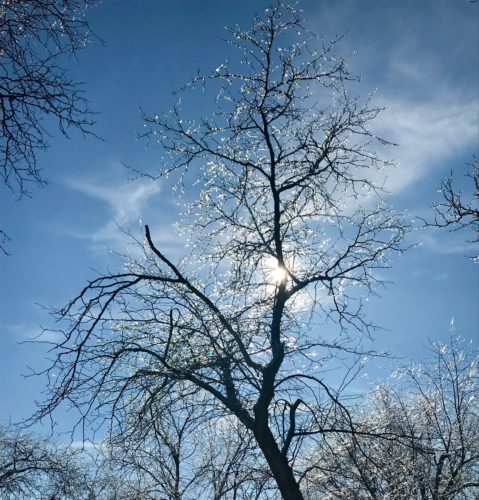
The winter of 2019 is definitely one for the books. We’ve been through snow, rain, crazy temperatures swings, a winter thunderstorm, the polar vortex…and now another ice storm has hit the Chicago area.
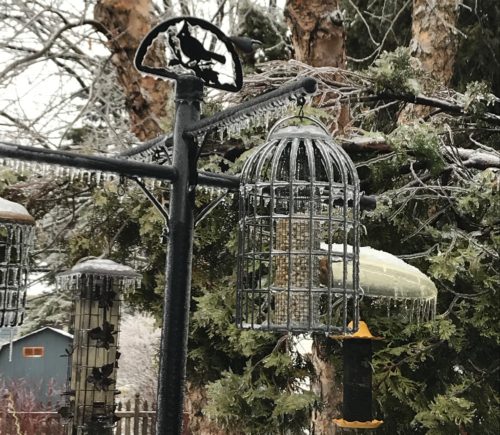
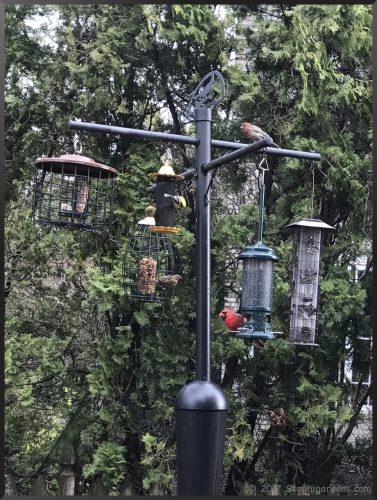
As temperatures hovered around freezing, the precipitation has rotated between rain, sleet, freezing rain and snow. Aside from the treacherous driving and walking, the ice made for beautiful scenery. Pretty much everything outside, like my feeder pole and feeders, were covered in ice and icicles. If you look closely at the icy peanut feeder, you can see one of the red-breasted nuthatches that is spending the winter in my yard on the peanut feeder.
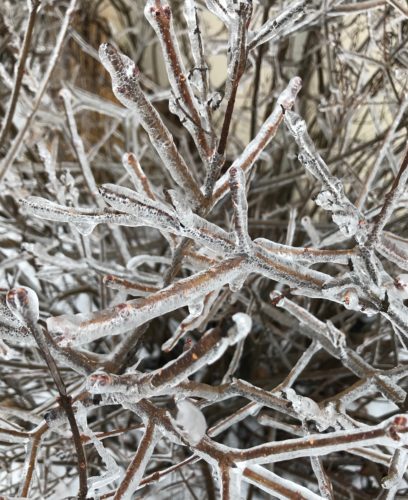
Looking around the yard everything, like this Dwarf Korean Lilac, was encased in a thick layer of ice.
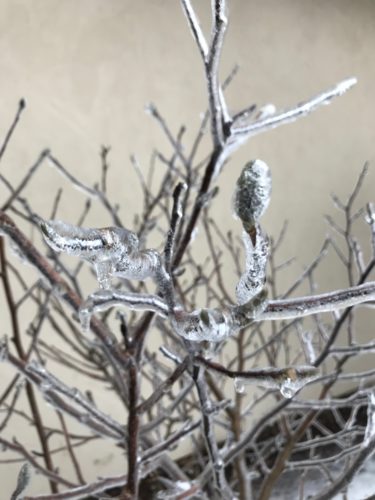
The buds on the star magnolia were similarly encased. The spring flower buds are actually protected by the layer of ice as long as I don’t try to knock the ice off.
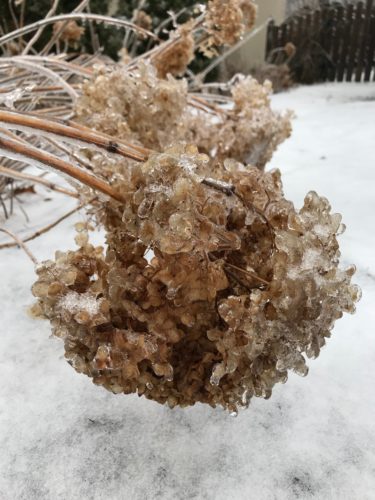
The annabelle hydrangeas are hanging heavy…
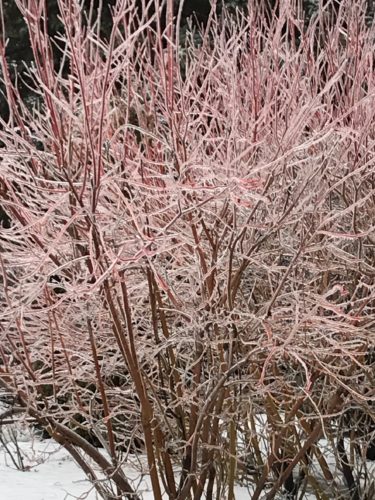
And the neighbors red-twig dogwoods are truly showing their winter colors.
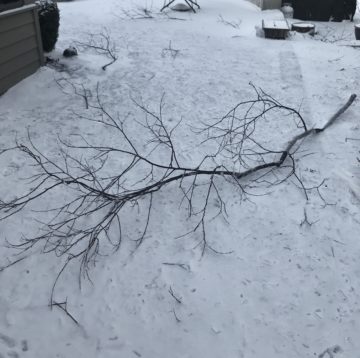
What do do about the ice? Not much you can do without inflicting more damage to weak branches and spring buds. Best to just wait and hope that it thaws soon. The wind has been howling tonight, which means probably even more breakage since the weight of the ice makes everything really heavy. The river birch has been dropping branches all over the patio.
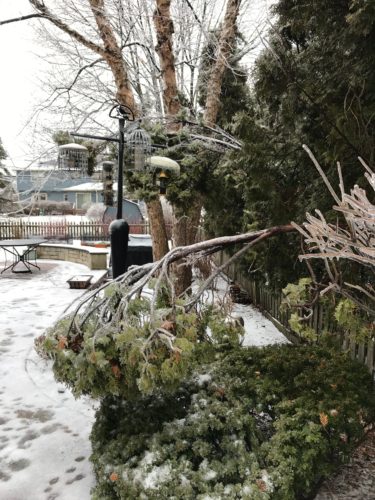
The arborvitaes are really having a rough winter between the heavy snow earlier this winter and now the ice. Only thing to do at this point is be patient. Multi-stemmed evergreens like arborvitae can be protected in the fall by tying up loosely with cloth, burlap or twine. But these are my neighbors shrubs, so all I can do is in the spring tie up the branches that have fallen on my side.
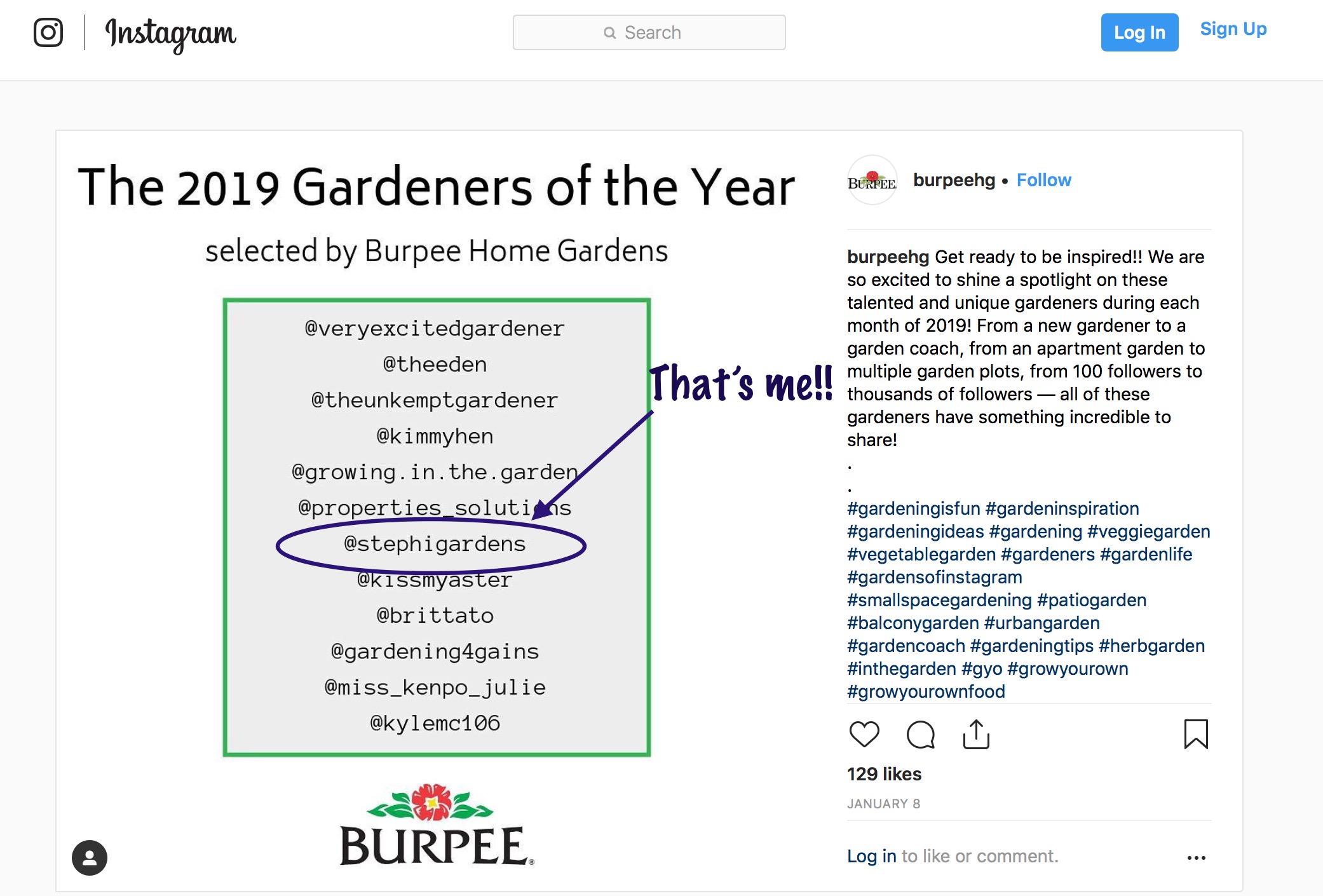
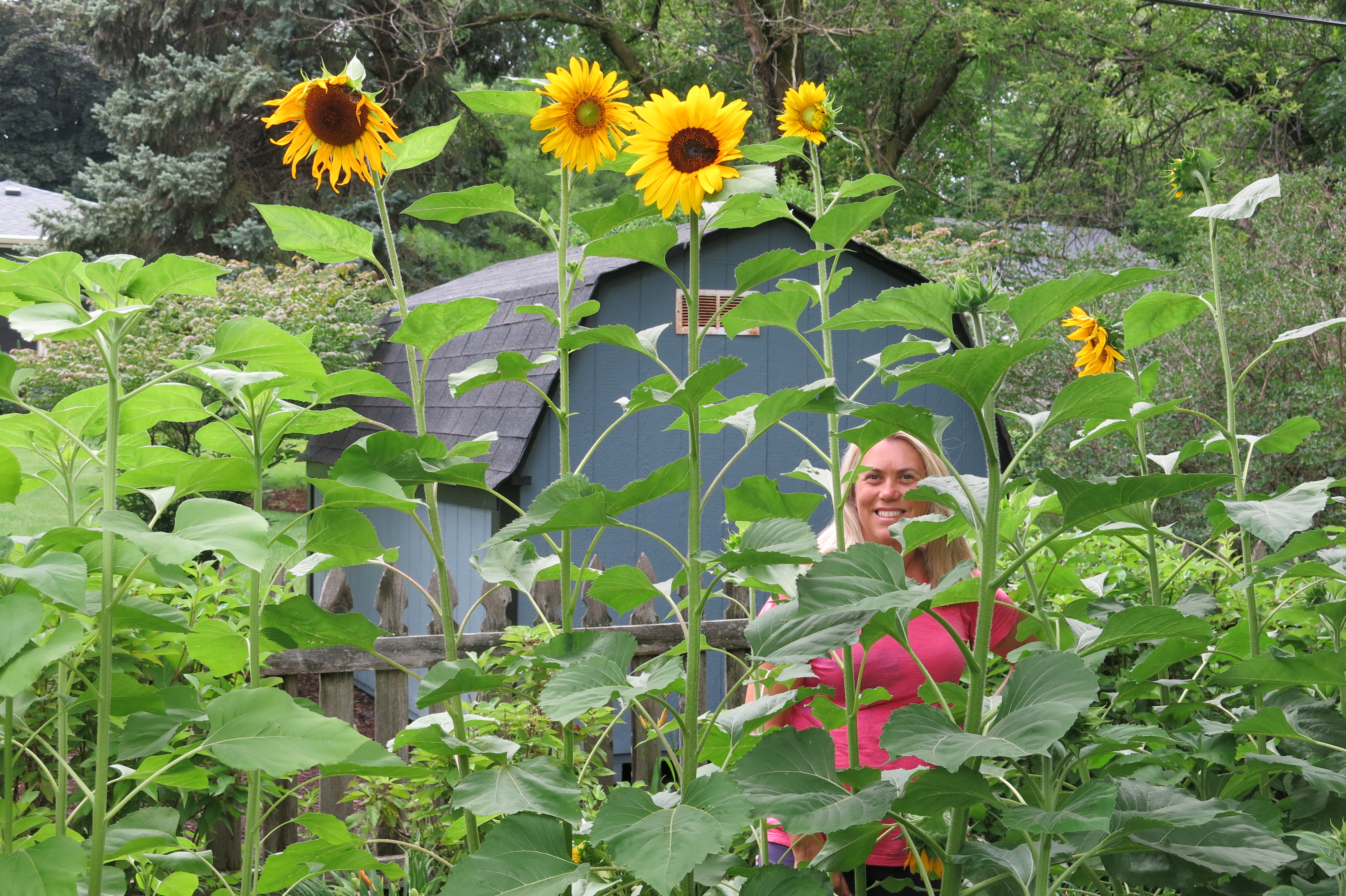
Yep, that’s me! Last fall on Instagram, Burpee Home Gardens asked gardeners to enter themselves or a friend to be one of BHG’s 2019 Gardeners of the Month. I shamelessly submitted my name with the following description:
“I would love to be one of your featured gardeners. I may not have the most perfect garden, but it’s immensely fun to see what’s going on out there in the yard, to see what has worked well this year, and think about what I might try next year. Check out my blog and see what’s going on in my suburban yard!”
I didn’t really think I’d get picked since there are so many exceptional, passionate gardeners out there. Then much to my surprise, or rather shock, I got the following message by to me Instagram inbox:
“We apologize for the delay, but we have good news! You’ve been selected as one of Burpee Home Gardens’ 2019 Gardeners of the Year! What does this mean? Either you submitted yourself or a friend submitted you to be featured on our account! We think you’re great and will feature you on the following month: July 2019. As a gift for being such an awesome gardener, we’d like to send you an exclusive plant sample box of our new varieties for 2020! Please reply with an address to which we can ship the box. (You won’t receive these until early summer, but we need to confirm you on our list now.) Congrats again, and we look forward to showing our followers how amazing you are! 🌱😁”
Wow, wow, wow!!! How exciting is this?
Announcement from the Burpeehg instagram site last week: “Get ready to be inspired!! We are so excited to shine a spotlight on these talented and unique gardeners during each month of 2019! From a new gardener to a garden coach, from an apartment garden to multiple garden plots, from 100 followers to thousands of followers — all of these gardeners have something incredible to share!”
Now the pressure is on. What am I going to grow this year? What new things do I want to try? How will I compare to the other gardeners? What unexpected things are going to happen this year? What, what what…
One thing I do know, is that people garden for all different kinds of reasons and no one really has a perfect garden. I grow what makes me happy and I love writing about it. The good and the bad. That’s real life. I hope some of what I experience encourages someone else to try their hand at growing something, or just getting outside to appreciate nature.
Can’t wait to follow Burpee and Burpee Home Gardens as they highlight all these gardeners this year. Watch for me in July on their Instagram site and blog. I’ll be sure to let you know when I’m featured 😉
Its always fun the end of the years to see what was the most interesting posts to my readers. Sometime it’s posts from previous years, sometimes this year. Here’s the top 10 most viewed posts in 2018:
10.Dead Man’s Fingers I have found these fungi off and on in my garden and still find them an odd curiosity. Xylaria polymorphs, or Dead Man’s Fingers, are very hard black knobs with a very tough white spore mass center. They tend to grow on hardwood stumps, decaying logs and even hardwood mulch. A common find in my garden, how about yours?
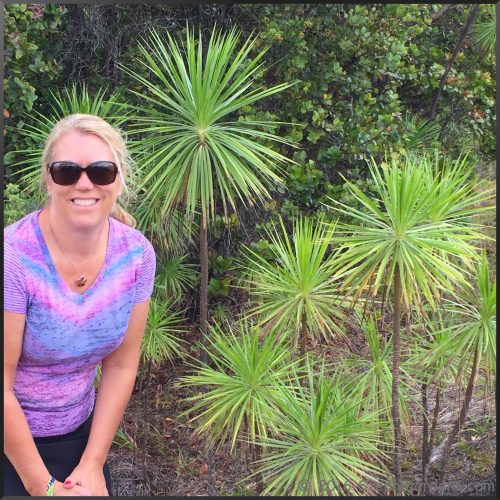
9. Interesting Plants Of Kauai For a special anniversary a couple of years ago, we traveled to Kauai for a beautiful week on this exotic island. So much beauty in such a relaxing locale (Except for the chickens)
8. 2018 Stephi Gardens Holiday Gift Ideas This was my first foray into making holiday gift suggestions and it was a hit. I hope your holidays were wonderful and everyone got what they were hoping for! Look for another list next holiday season.
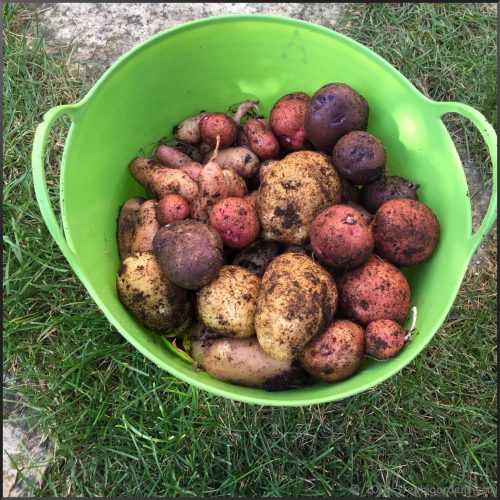
7. Potatoes Part 1: Preparation and Planting The last few years I’ve been growing potatoes and chronicling my efforts. I’ve definitely had some years that are better than others, but it is an easy, fun and tasty backyard garden project.
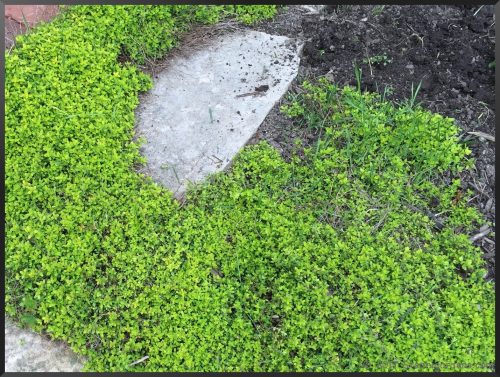
6. Creeping Thyme Update Based on the number of views I get on my creeping thyme posts every year, a lot of people must have problems with this ground cover. It is a great ground cover, but not maintenance free so does need a bit of attention every so often to stay healthy and lush.
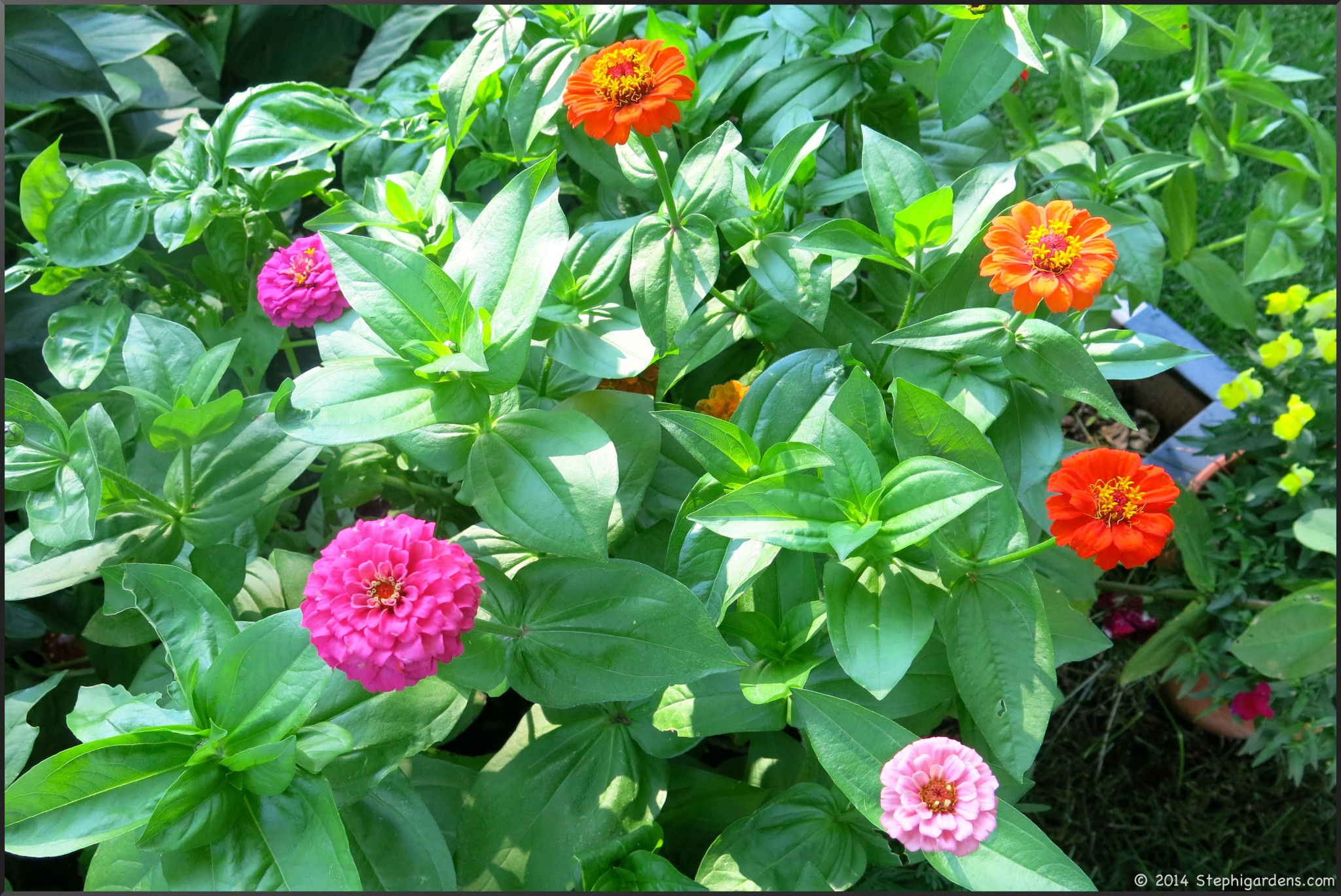
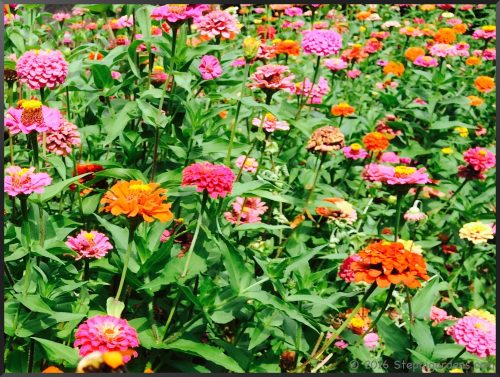
5. Fall Seed Gathering Means Beautiful Summer Zinnias Ever since my friend Susan told me how she gets a gorgeous hedgerow of zinnias year after year, I’ve been excited to get my own zinnia and marigold beds laid down. It’s been so easy and such a huge payoff for minimal effort. What could be better!
4. Pelicans in Illinois This post from September 2013 seems to always get a lot of traffic. I still read articles in the local papers about this mystery each fall. We’re used to pelicans in the south, but up north? Where are they going? Why has their migration route, back and forth from fresh water lakes in Canada and the North Central US to the southern US, Mexico and Central America, shifted east to the Illinois River? Not sure, but they’ve become a common site in the local rivers and lakes.
3. Freezer Slaw My friend Kathy told me a few years ago about this fabulous recipe that her family has made for generations with the extra garden cabbage heads left in the fall. I’ve been making it ever since when the cabbage, green peppers and carrots all come into season. We too get to enjoy it now all winter!
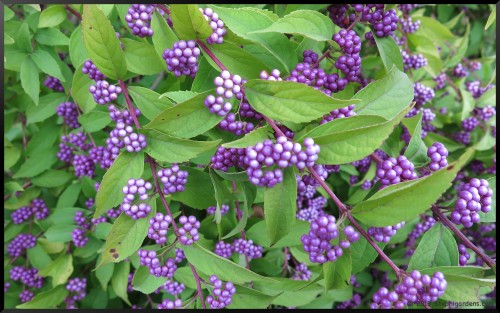
2. Beautyberry Bush: Did It Survive The Winter My Beautyberry bushes haven’t had a lot of success, but they are still alive. I don’t think my yard is quite the right environment compared to their locations at the Morton Arboretum. It still puzzles me, and others based on the number of visits to this page from October 2013, how they pop up late each spring when I think they are dead. I’ve come to not pay attention to them, and each year they’ve come back Patience is the word with Beautyberries in the northern climates.
1. Curled Leaves on the Bushes This post from August 2014 continues to be one the most visited posts I’ve written about. I still don’t know exactly what happened to my bushes, but it sure seems to be a common issue. Thankfully mine all survived, but I sure was worried.
Struggling with what to get that special someone for Christmas? Here’s some ideas from the things that I love!
Birding:
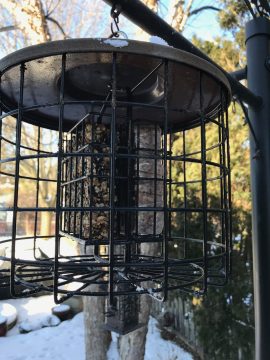
Do you enjoy feeding the birds, but dislike feeding the squirrels? I tested out a number of squirrel-proof feeders and can report that they actually all work as advertised. The squirrels don’t even waste their time anymore trying to get at the seeds. See my reviews at Who Won The Squirrels vs Feeder Contest? and New Squirrel Proof Bird Feeders.
Also always good are binoculars. Unfortunately mine by Eagle Optics are no longer available after the company went out of business after 30 years. So I don’t have a personal recommendation to offer, but there’s lots of good review sites to help you pick your perfect pair.
Gardening:
I love my plastic Tubtrubs. I’ve had mine for years and use them to use them to move things all over the yard. I’ve found the 7 gal (26 l) and 3.6 gal (14 l )particularly useful.
My Felco #8 Pruning Shears are pretty much with me all over the yard as well. Oftentimes in my Tubtrub, which is a safer place for them than setting them down in the grass. They may be a bit pricier than other shears, but these really will last you a lifetime. I have #8, which have an ergonometric handle, but I’d also recommend #11, same as the original #2 but with a replaceable blade, or #6 for smaller hands. I’d also recommend a leather holster to keep your investment safe and convenient to carry around with you.
A nice set of garden tools is always appreciated. There’s nothing worse than a cheap shovel that literally bends in your hand trying to transplant something in my awful midwestern clay soil. I’ve had a set of stainless tools for over 20 years, but I do like the cushioning on the Fiskars tools I’ve bought more recently. So far, I haven’t had any issues with breakage like some have reported in the reviews.
Growing seedlings indoors? The 2 ft Hydrofarm T5 Grow Light Systems have worked great for me. Spacious, energy efficient and adjustable. It’s made all the difference in growing healthy seedlings indoors.
What to wear in the garden? I think nothing is better than my Slogger garden shoes and rain boots. I have both styles and they are comfortable, easy to get on and waterproof!
One of my first pieces of Le Creuset enameled cast iron cookware was a 3.5 quart Chef’s Oven in flame. I love this pan for sauces, soups, risotto, sautéing, pretty much anything. I thought it such a perfect pan I got one for my daughter when she moved into her own apartment. It is on the smallish side but there are larger versions available (and other colors).
I also love kitchen gadgets. Probably have far too many single purpose things, but they are just so handy! What are some of the things I use all the time?
I love to read. Always have since I was a little girl taking out a stack of books from the library. I think books always make a great gift and you can follow what I’m reading by the list on the right side bar. Don’t worry, if I wouldn’t recommend a book I’ve read I won’t put it on the list!
Happy Shopping and Happy Holidays!
(Disclosure: This post contains affiliate links. I may receive a commission from purchases you make through the links in this post. All reviews are my own and are not influenced by any compensation I may receive.)
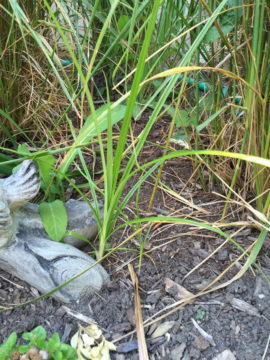
Just when I finally got the garden under control, I go on vacation and leave it to its own devices for a few days. I came home to an explosion of weeds. Where do they come from? I think I get the Preen down early enough, but that never seems to be the case. I don’t help matters by going and digging around after it’s down, messing up the protection it affords. So I pull and pull and pull. Among a long list, probably my most annoying weeds are Shepards Purse, Spotted/Prostate Spurge, Yellow Woodsorrel (Oxalis), Canadian Thistle and Three-seeded Mercury.
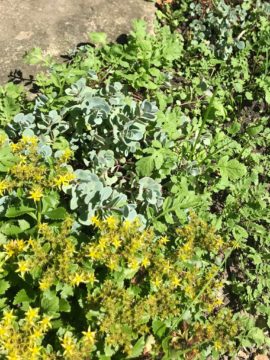
Shepards Purse (Capsella bursa-pastoris) has been a particularly stubborn issue for me since it blended into my succulent garden and was camouflaged by similar looking plants.
By the time I figured out it was actually a separate plant, it was everywhere. Because it’s so intertwined, the best I can do is just keep pulling it out whenever I can get to it. Between that and the grass, I finally just pulled up a whole section to tease the wanted plants from the unwanted. A lot of work, but so much better!
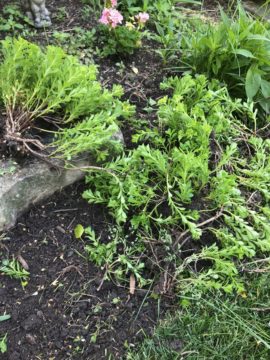
Spotted/Prostate Spurge (Euphorbia maculata/prostata) is another weed that seems to grow with abandonment in my yard, It’s a low growing, small leaved, poor-soil and sun-loving weed. It’s virtually impossible to distinguish the two species, so they are often considered to be one. It’s also hard to distinguish from prostate knotweed (Polygonum aviculare), but only the spurges produce a milky-white latex fluid when broken (similar to a dandelion).
Prostrate spurge will tolerate some shade but thrives in harsh full-sun baked sites. It especially loves to grow in the gaps between the bricks on my patio.
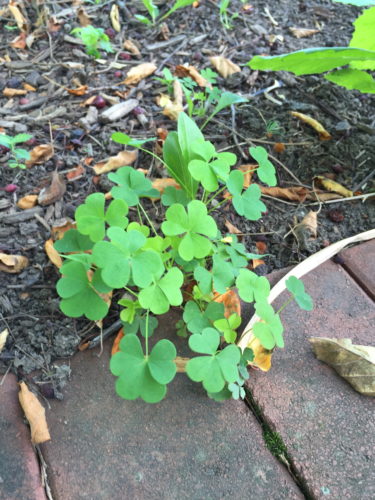
Yellow Woodsorrel (Oxalis) is a pretty yellow-flowered clover looking flower that I actually enjoy because it reminds me of native wood sorrels, until it starts to take over. If not controlled early, it’ll spread by both its stems and seeds and then it just looks messy and weedy in the garden.
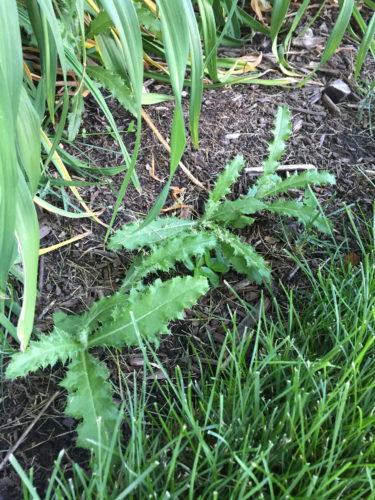
Canadian Thistle is a relatively new issue for me. Not sure where it came from, but it sure grows BIG and prickly. I was worried it came from the thistle I was feeding the goldfinches, but the “thistle” seeds are actually Nyjer ® seeds from the African yellow daisy (Guizotia abyssinica) and are sterilized to not germinate. Maybe since I’ve attracted goldfinches to the yard, they are somehow carrying the real thistle seeds as well. In any case, to get these out I need a thick pair of gloves and a hand weeder to pull it out or try a natural weedkiller if it’s just too big. As with most weeds, you can’t just cut them since they will regrow asap.
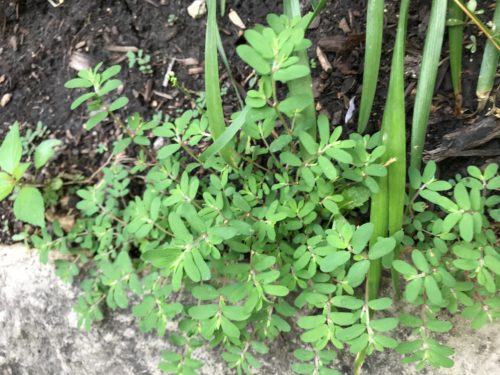
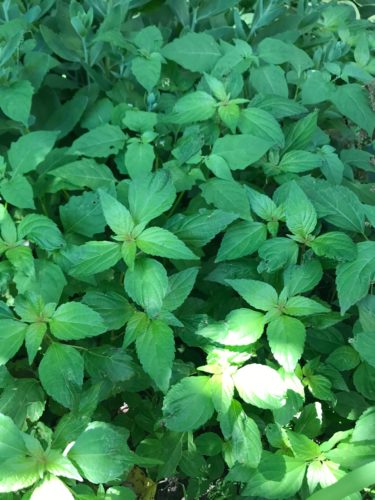
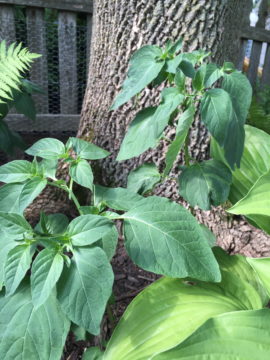
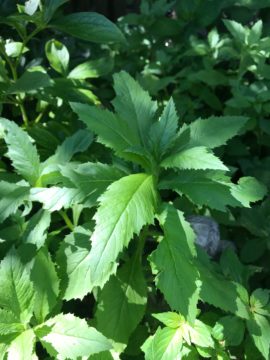
Three-seeded mercury (Acalypha rhomboidea) was a little more difficult to identify, but is actually quite widespread east of the Rockies. It’s a tall growing weed and belongs to the spurge (Euphorbia) family. It has a shallow tap root making it quite easy to pull out, which is about its only saving grace in my mind considering how widespread it is in my garden.
What else is growing like weeds in my garden?
Nightshade (Solanum nigrum)
Fireweed (Erechtites hieracifolia)
Nutsedge (Cyperus spp.)
Bindweed (Convolvulaceae arvensis)
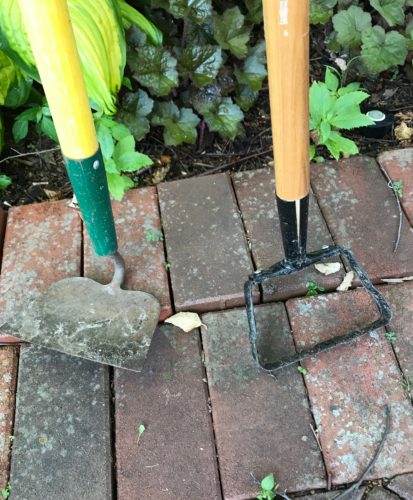
When I need a weed killer I use a natural mixture made from white vinegar and about a teaspoon of dish soap. Put the mixture in a sprayer and on a hot, sunny day, give the plant a good soaking. I have mixed results, but it helps often enough. I like this methods as safer alternative to Round-up, and since I’m just dousing the leaves it shouldn’t affect the pH of the soil. I also have some trusty tools I like, a good old-fashioned hoe and my more recent addition, a Hula-Ho Weeder Cultivator for larger areas.
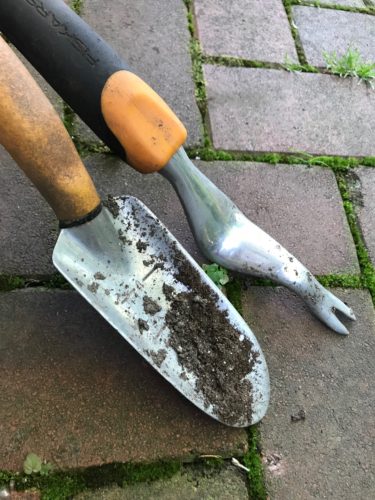
I also have a Fiskars hand weeder and Fiskars trowel for smaller areas or things with deeper roots. All the tools work better in most soil rather than dry. I try to weed after a rainfall or watering.
It is interesting that some of these weeds like Purslane and Lamb’s Quarters are edible and Shepards Purse is medicinal. I’m too much a of a chicken to trust my identification skills to try them though. Anyone try them?
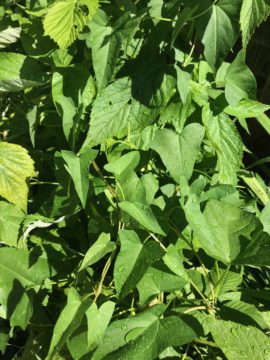
What’s the biggest nuisance in your garden? Had some recent conversations with friends about weeds and one has wild strawberries in her yard and the other has wild grapevines. Both sound bad!
Happy New Year! I hope this post finds you healthy and happy. I’ve been on a bit of a hiatus with my writing, but hopefully the new year will get me back on track. While I was still attentive to my garden all fall, I do most of my writing in the evenings and I got distracted the last few months watching all seven seasons of Game of Thrones with my husband. (In case you were thinking about watching, it was just as great as the kids said it is and the final season can’t come fast enough!)
But, that’s done and most shows don’t require that level of attention so I have my evenings back! We also did a fair amount of traveling to see visit the kids and out of town family and I’ll share some of the highlights of those trips in the next couple of months.
Lastly, I got a new laptop and the transition was pretty straightforward except for switching from Apple iPhoto to Photos. I procrastinated for a long time since I had everything organized so nicely in iPhoto for my blog, but it was time to convert. You’d think it would be as easy as say “Go”, but for a bunch of reasons, I couldn’t get it to transfer properly. Eventually I did it, but I’m still dealing with photos scattered about in a bit of a disorganized way. Does anyone use a photo manager to organize your photos? The edit features in Photos are fine, but I don’t love the organizational options.
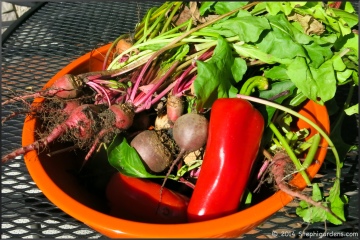
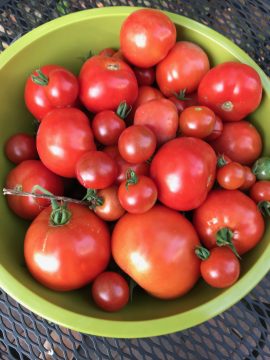
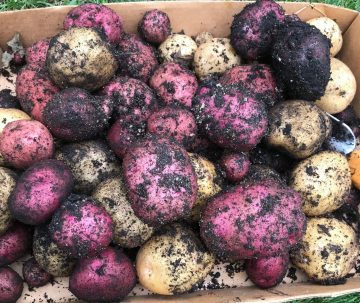
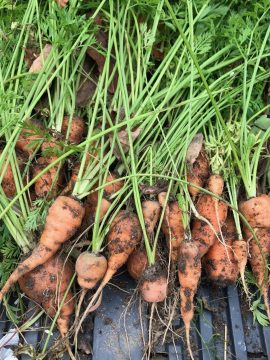
What have I been up to in the garden? Well, like many of you it was a very strange fall with warm temperatures well into November keeping things green and growing well past normal times. Great for the vegetable garden, but probably not so great for the trees and shrubs that really need to get ready for winter. Here’s some of what I was harvesting the end of October.
I spent a lot of time this fall watering to be sure the plants were ready for winter (First Too Much Water, Now Not Nearly Enough). But, with temperatures hovering around 0°F for some time now, I’m not sure how the plants will tolerate this winter no matter what I did.
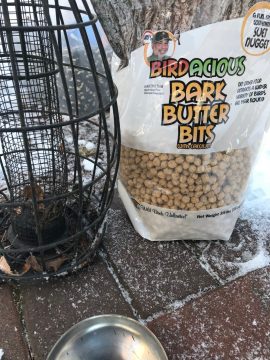
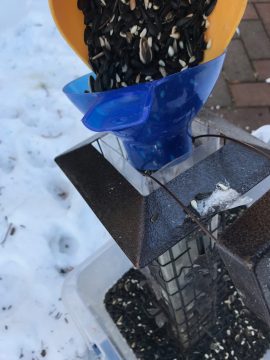
With all this cold weather, I’ve been going through a lot of bird seed trying to help the birds survive this extreme weather. Glad I bought lots of seed at the fall seed sale at my local Wild Bird Unlimited in Lisle, IL. By the way, they are currently having their January Feed sale, so if you live in the area it’s a great time to stock up. They even store it for you until you need it.
My new gardening adventure this year was planting leeks. Leeks are one of my favorite foods to cook with and growing them seemed intriguing. I’m already looking where to buy my starter plants this spring, so it definitely worked out well. A post with more details will be coming soon.
Right now, all snuggled warm in my house I’m enjoying all the teaser emails from the seed companies and the catalogs that are starting to come in. What new vegetables to grow? What new gadgets to buy? Check out my Vendors and Resources page to see where I like to order from. I’ve recycled all the Christmas catalogs to make room for them. I have a couple of areas that need attention so I need to find some time to research what will work best in these areas. One is the swale area that seems perpetually wet, then of course dries out mid summer.
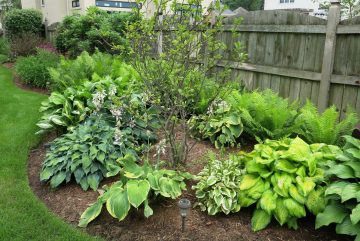
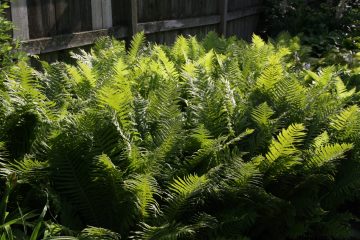
The other is under the new magnolia that replaced the Freeman maple tree that died a couple of years ago. The hostas are doing fine in the new found sun, but the ferns have gone crazy! Not sure the species, but in the shade they were kept in check, but they’ve proliferated out of control in the sun. And they are hard to pull out! Word to the wise, be careful where you plant ferns!
I look forward to sharing you more about what’s up in my garden and where I’ve been, but in the meantime I wish you all a Happy New Year and Go Bills!
While I live in Chicago, I grew up in Buffalo and will always be a Bills fan. This has been an exciting year for us!!