Homemade Suet Cakes

I was at my favorite local butcher shop (Prime-N-Tender Meats) the other day, and asked if they had any suet I could have to make homemade suet cakes for the birds.  They went in the freezer and came out with this bag containing a big bag of fatty glop.

Homemade Suet Cakes

I’m not really sure what I was expecting.  This was a bit of a last minute idea that I came up with while I was there.   I thought seemed like an quick, easy project.  Oops.  I really should have thought this through a little better.  But in the end, I did get some really nice looking suet cakes for the birds.  Would I do it again?  Yes 🙂

Making Homemade Suet Cakes

Ask your local butcher for suet.  You may need to ask around, as not all will carry it, and some may charge a nominal fee for it.  Cut it up into small, even chunks.  Put everything in, even the stuff that doesn’t look at all like anything would eat it.  The fat then needs to be rendered.  After trying a couple of different ways, (see below), I found that the best way was to use a crock pot over low heat.  I felt confident that I could safely leave it to cook all day without worries of starting a grease fire.  To get the rendering started, I added a 1/4 cup of water.

Homemade Suet Cakes

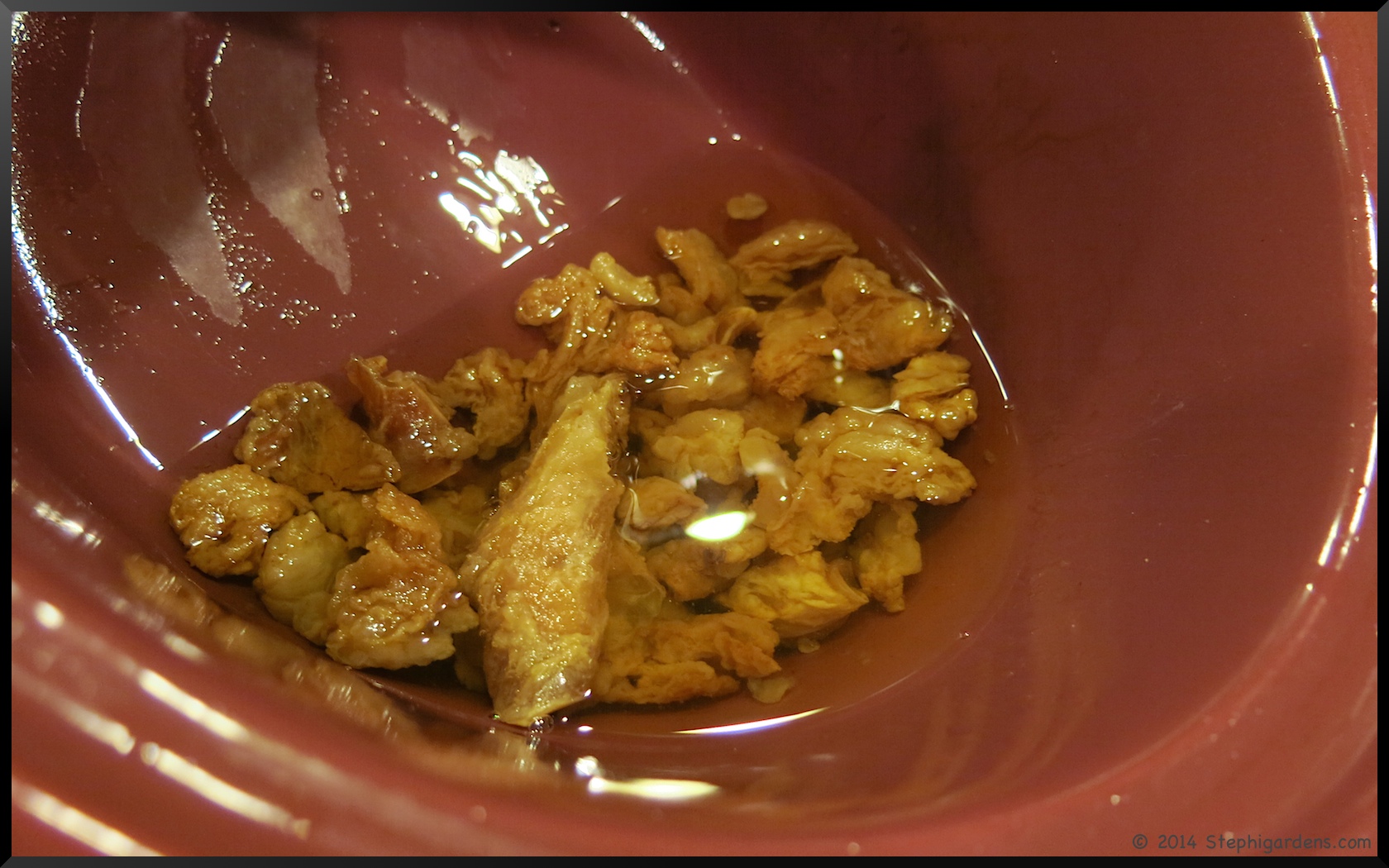
Then cover and let it cook all day until the the remaining fat is crunchy and there’s a good amount of liquid fat in the bottom.
Homemade Suet Cakes

Strain out the crunchy remains and place the liquified fat (and little crumbs) in a bowl.

Homemade Suet Cakes

Now it’s time to pull together the ingredients to make the suet cakes.  There’s lots of things to use that the birds will love.  This time I chose:

  • cornmeal
  • peanut butter
  • bird seed
  • sunflower seeds

Homemade Suet Cakes

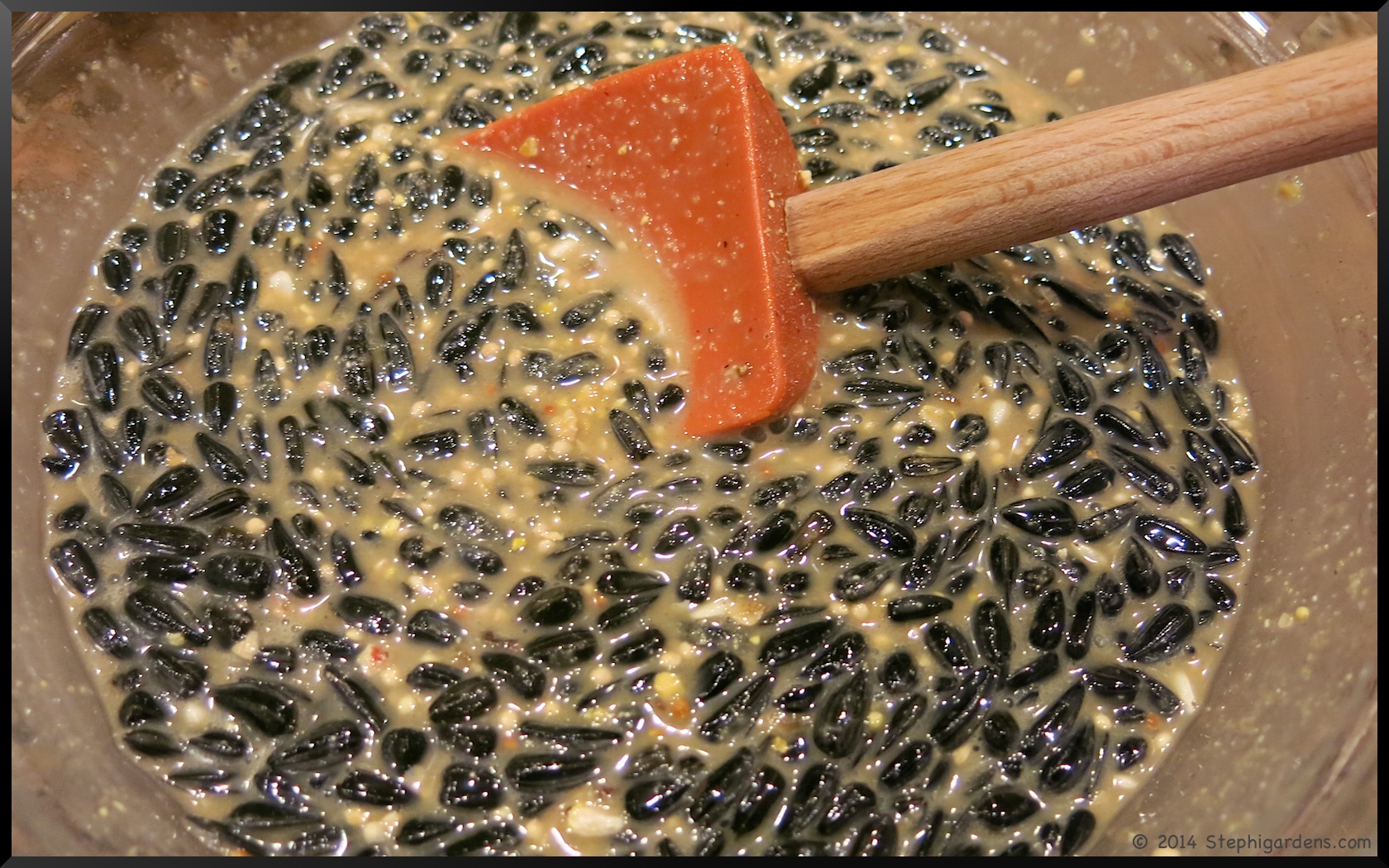
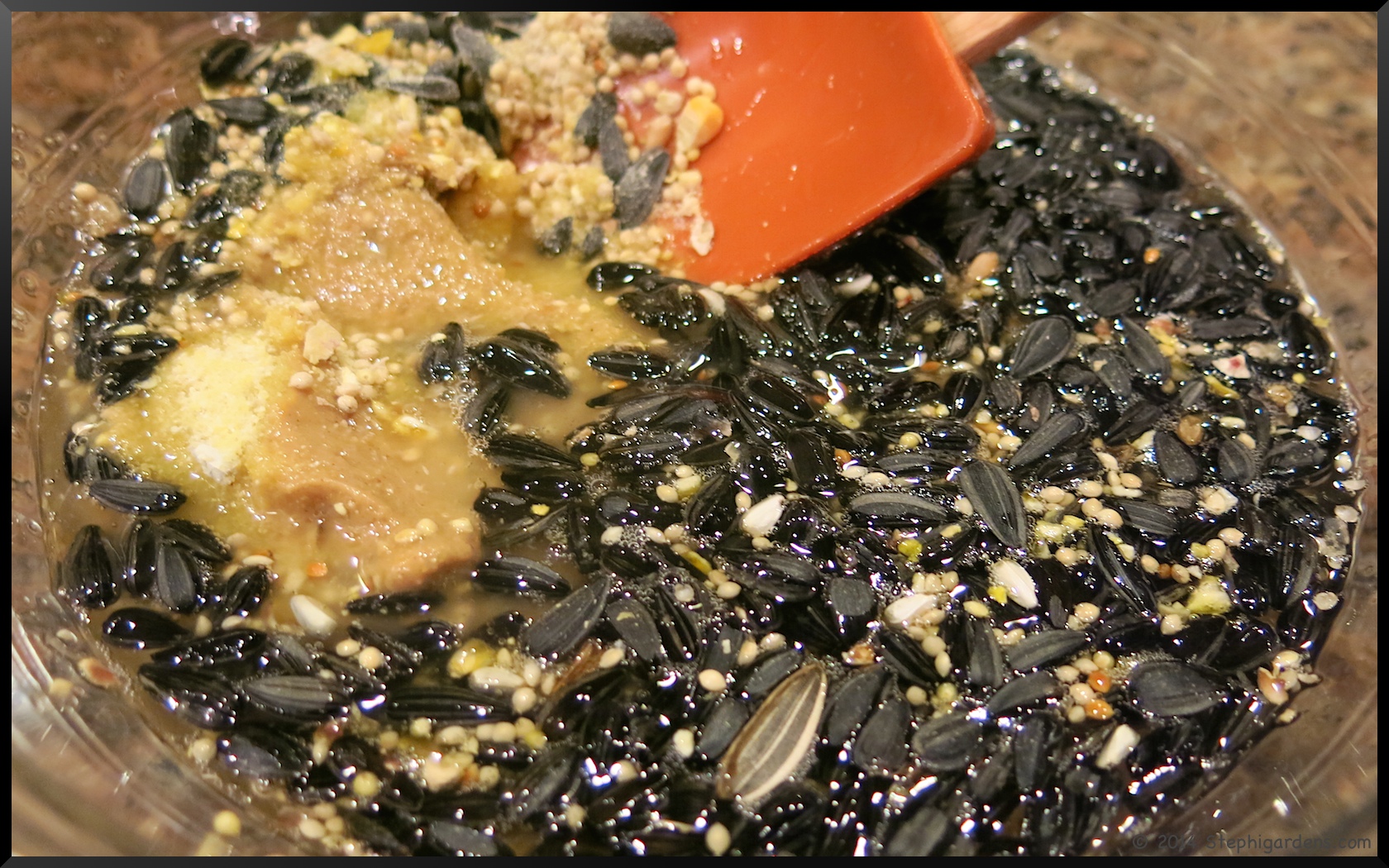
To the 1 c of liquified fat I ended up with, I added about 1/2 c cornmeal, 1/2 c peanut butter, 1 cup mixed seed and 1/2 c sunflower seeds.  It should be fairly thick.
Homemade Suet Cakes


Homemade Suet Cakes

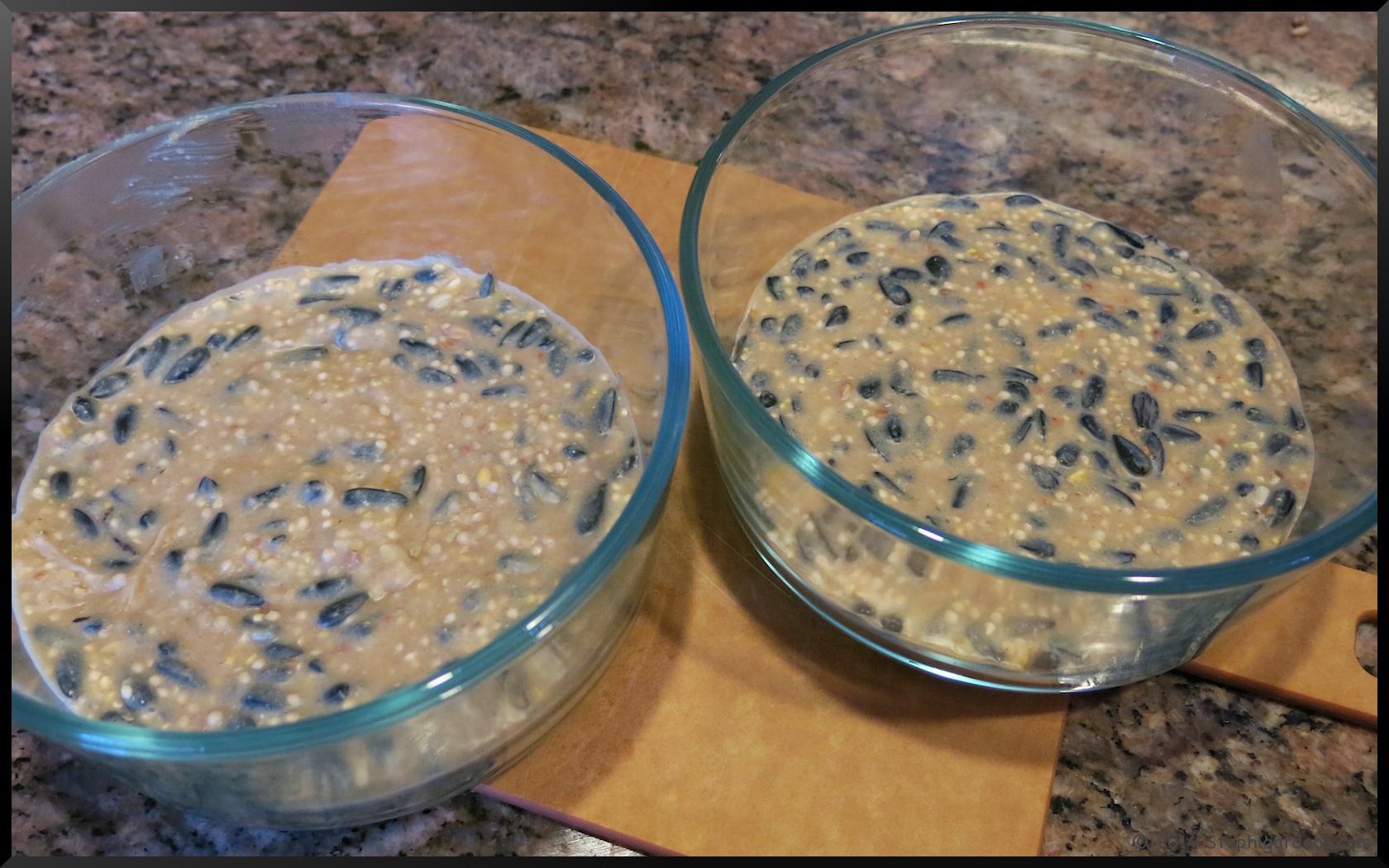
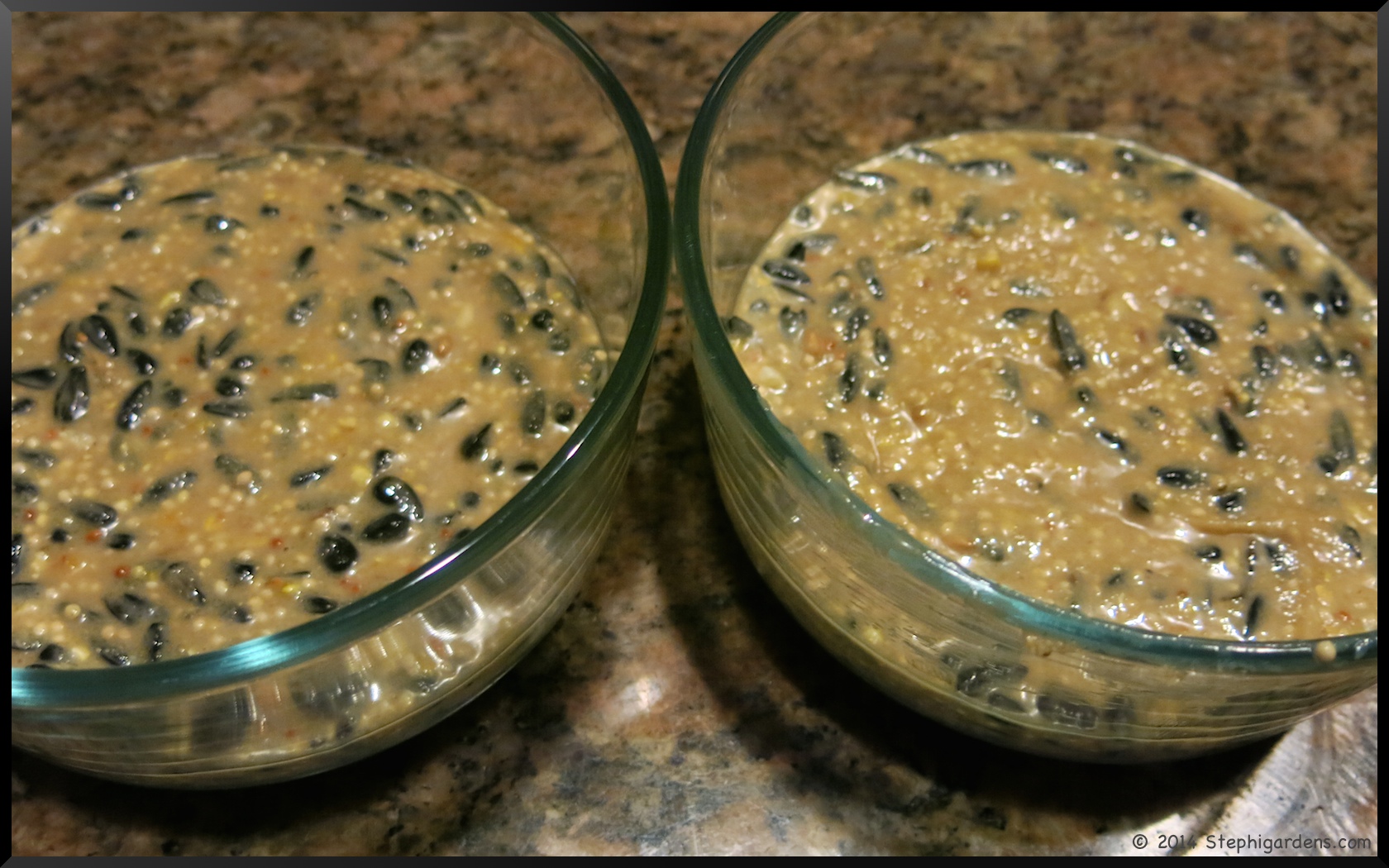
I then used 2 glass storage containers to make the cakes in.  I don’t have a lot of plastic containers around anymore, but you can use whatever you have in the cupboard–plastic storage containers, plastic tubs, paper cups, whatever you might have around that is the right size.
Homemade Suet Cakes

Place in the refrigerator to harden.

Homemade Suet Cakes

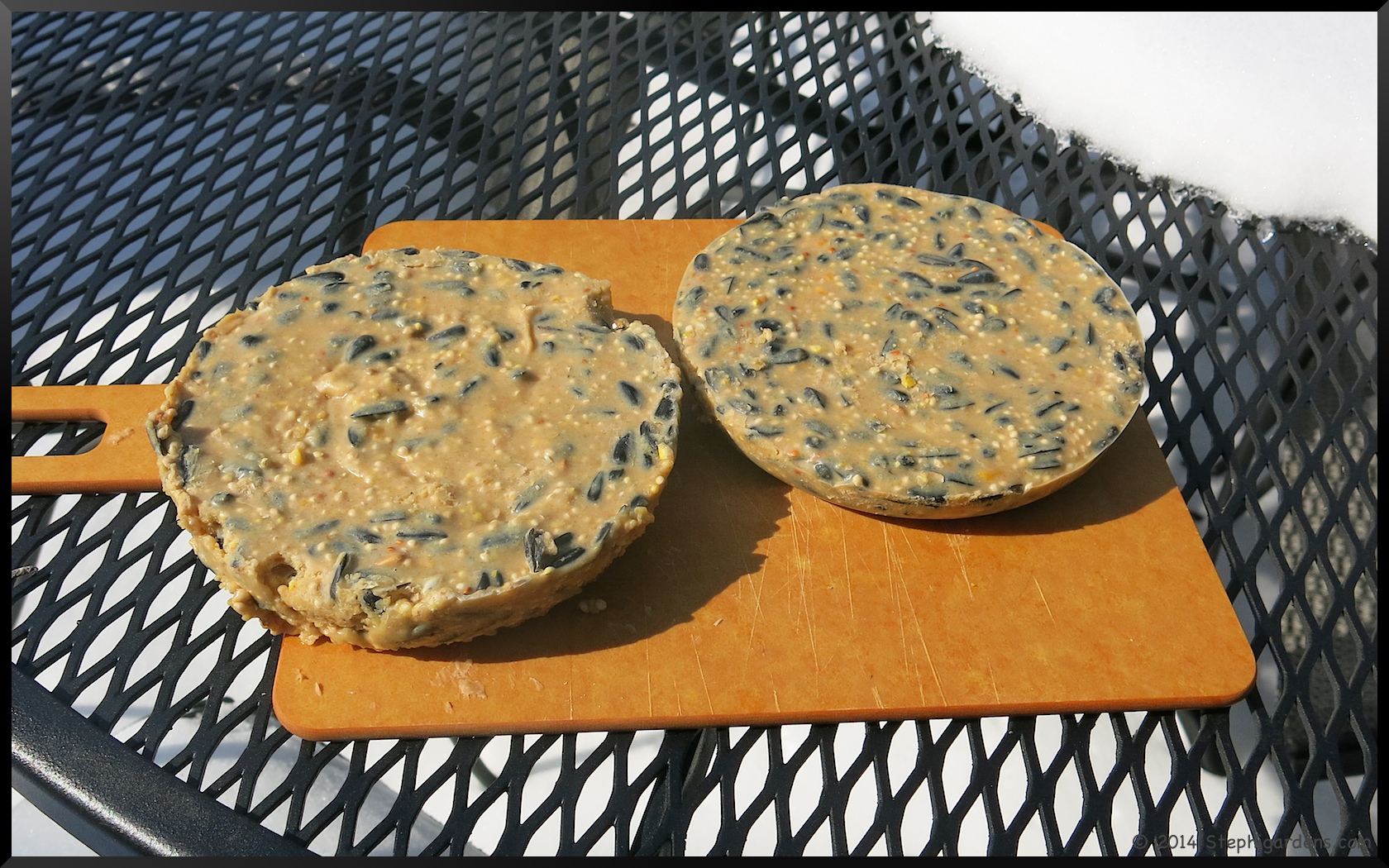
Remove from container and use immediately or store in freezer bags in the freezer.  I got them to release from the glass bowls by putting them in warm water for about 30 sec.  They may also needs a little coaxing with a knife.
Homemade Suet Cakes

Yum!  Now I have 2 very tasty smelling suet cakes ready to be put out for the birds.  Whatever you don’t use you can freeze for later use.
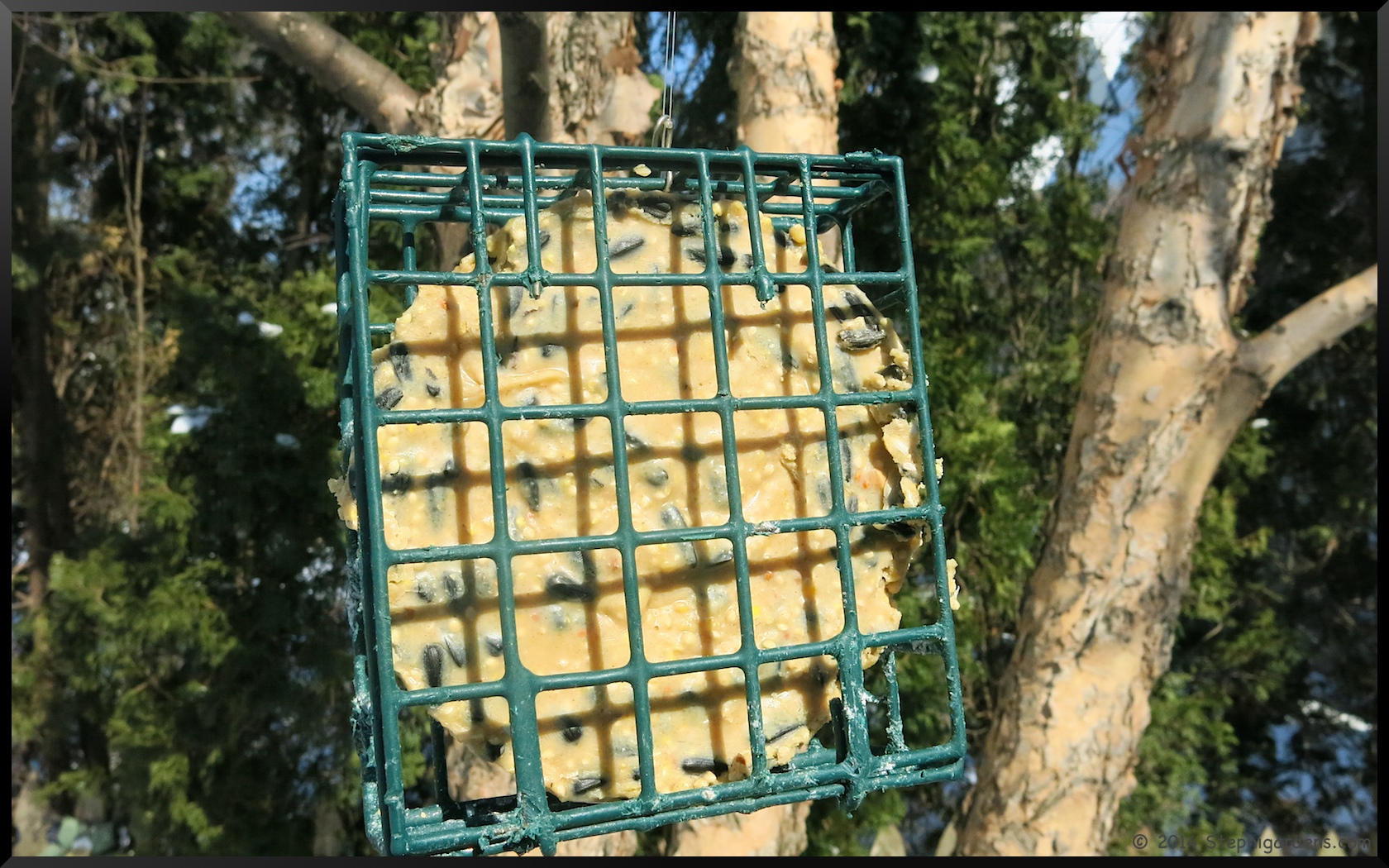
Homemade Suet Cakes

Notes:

**Everything I’ve read says it’s not a good idea to have suet out in the warmer weather.  It can melt, go rancid, start to smell bad or can simply damage birds wings or your patio.  All good reasons to store the leftover suet in the freezer until next fall.

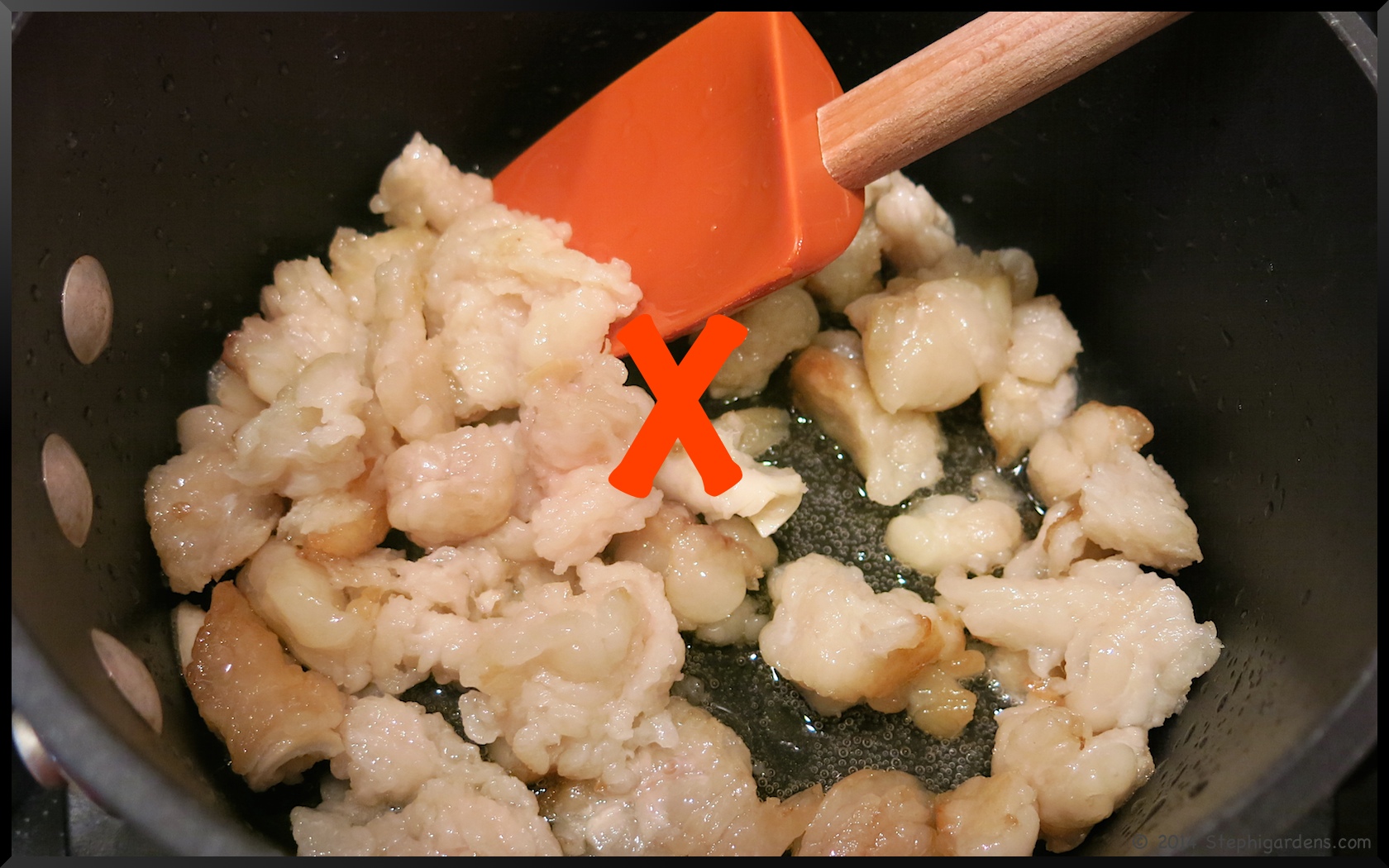
**When I first started to try and melt the suet, I tried the big chunks in a saucepan, and then cut up in the saucepan.  Both terrible ideas from a fire safety standpoint.  If you do want to use a saucepan, a double boiler would be a much better idea.
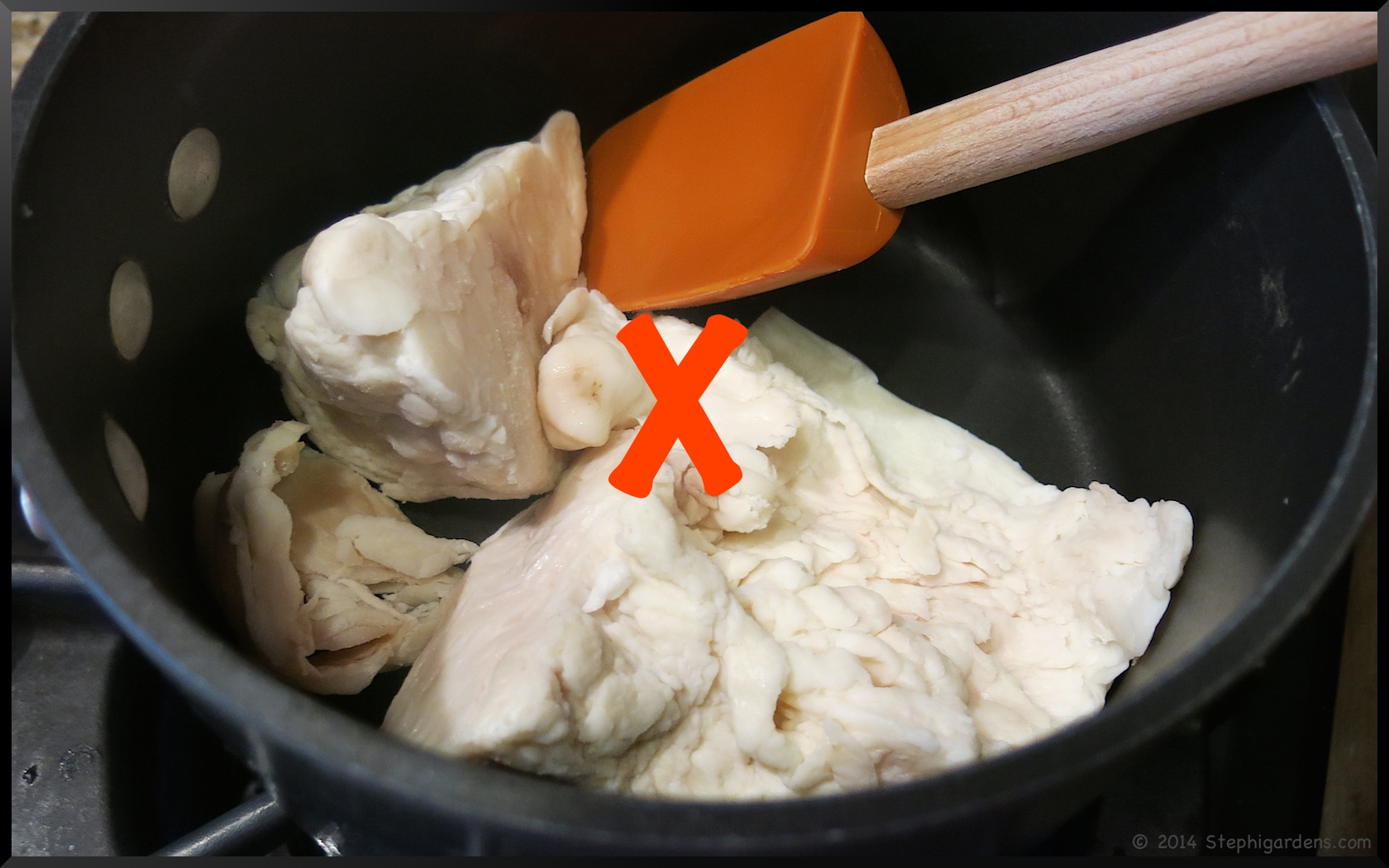
Homemade Suet CakesHomemade Suet Cakes

**My mom, Peggy, simplifies things even further by just putting the fat from the butcher in a net or cage and let the birds go at it.  They love that, too.
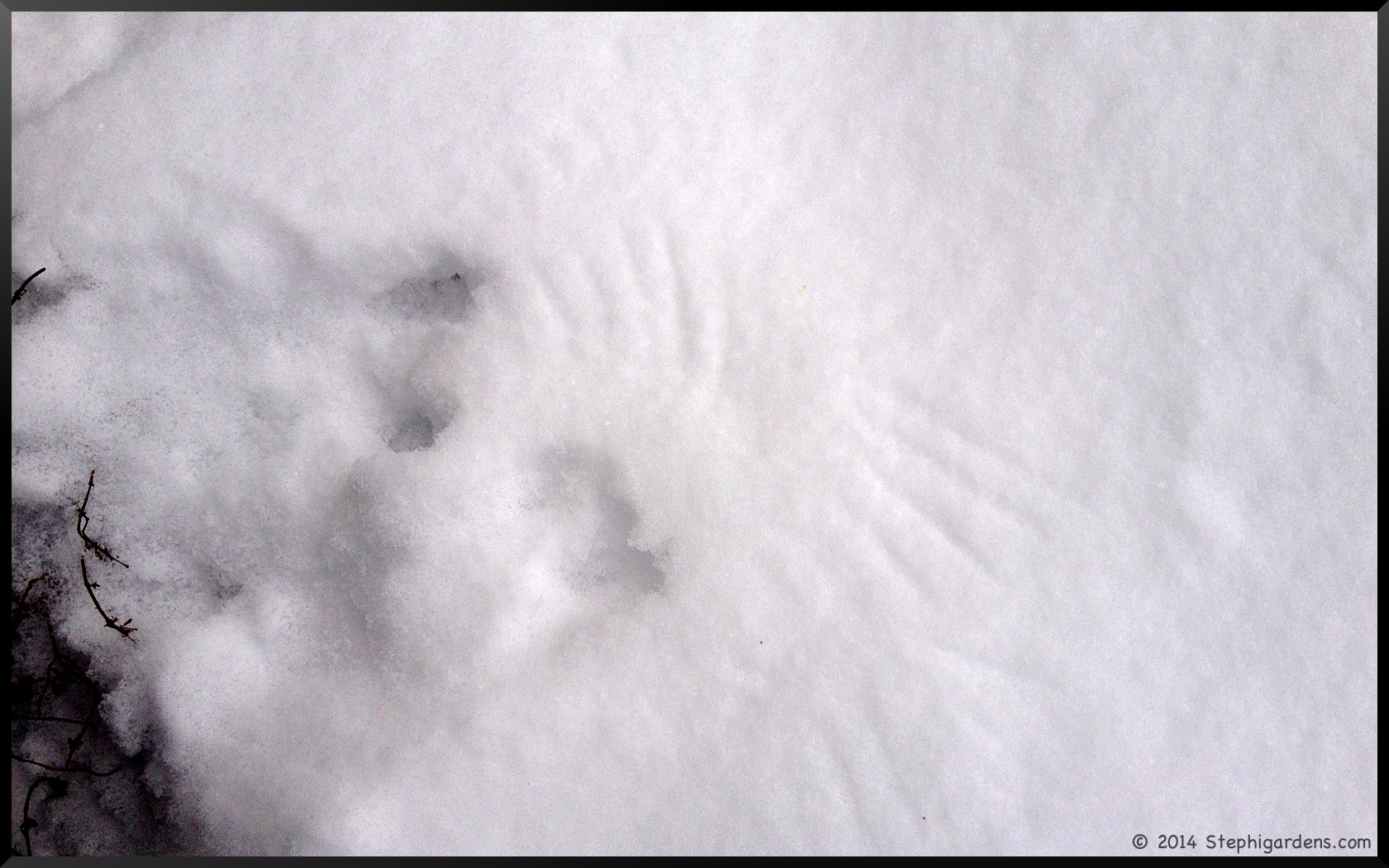


Angel Wings in the Snow

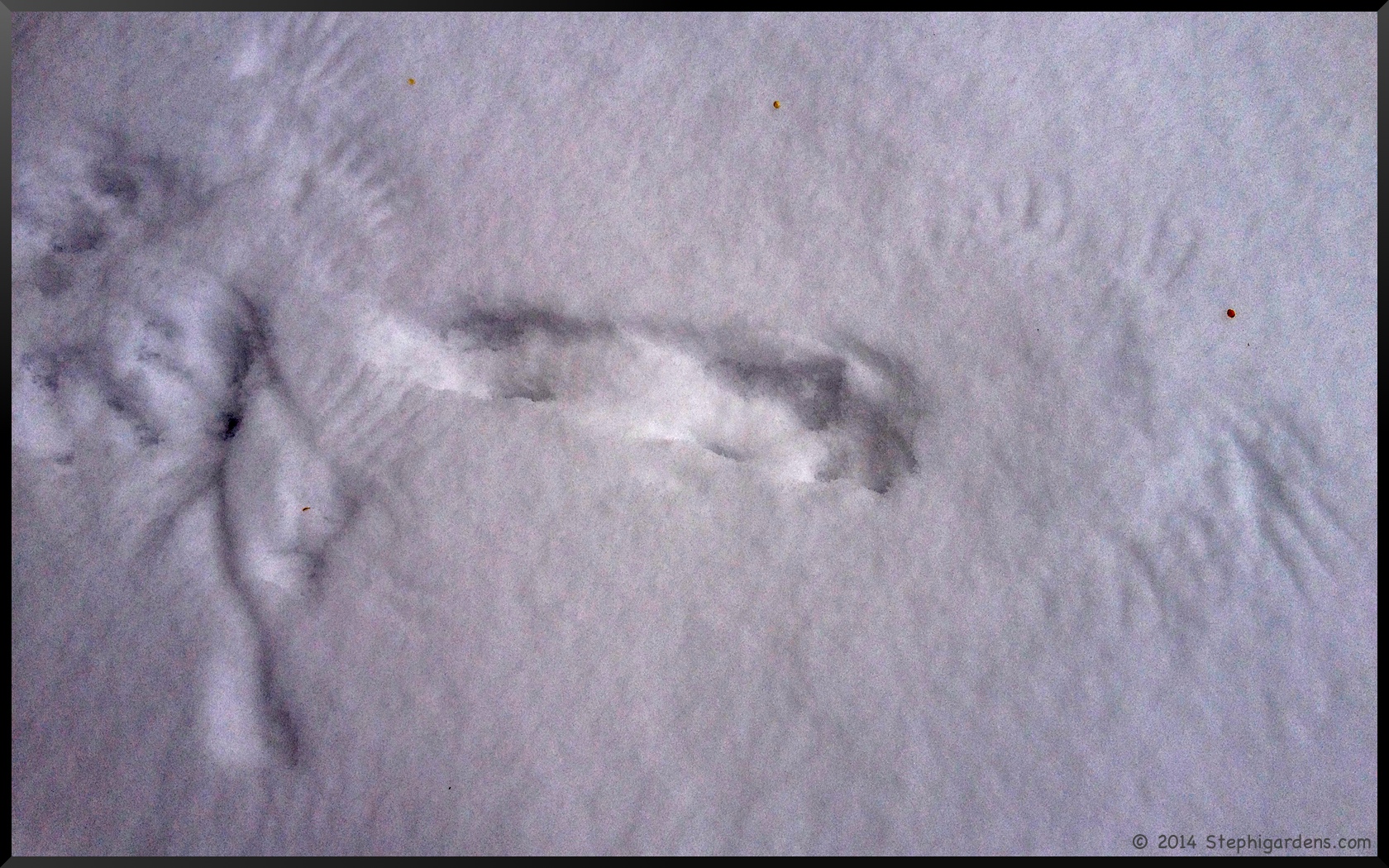
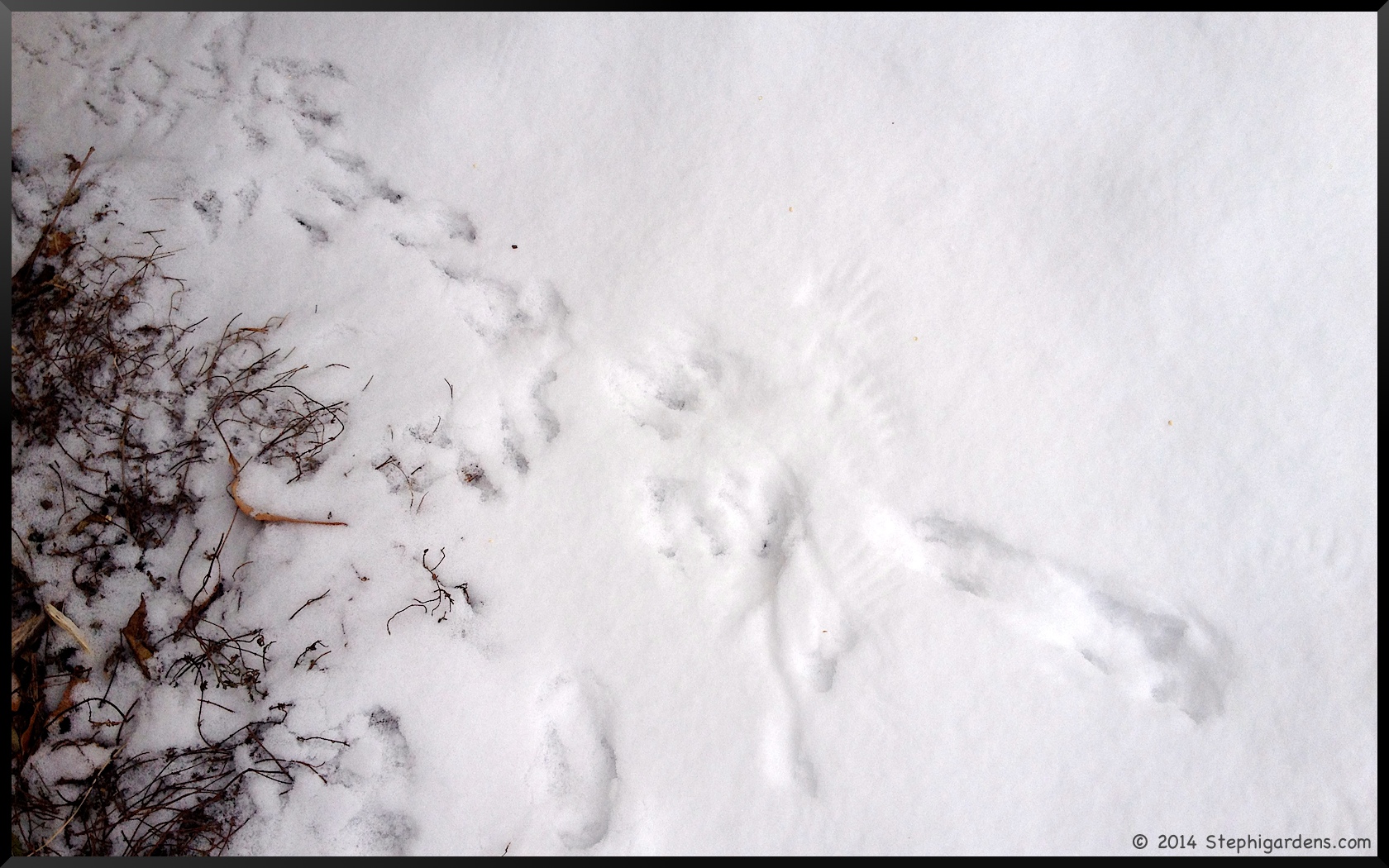
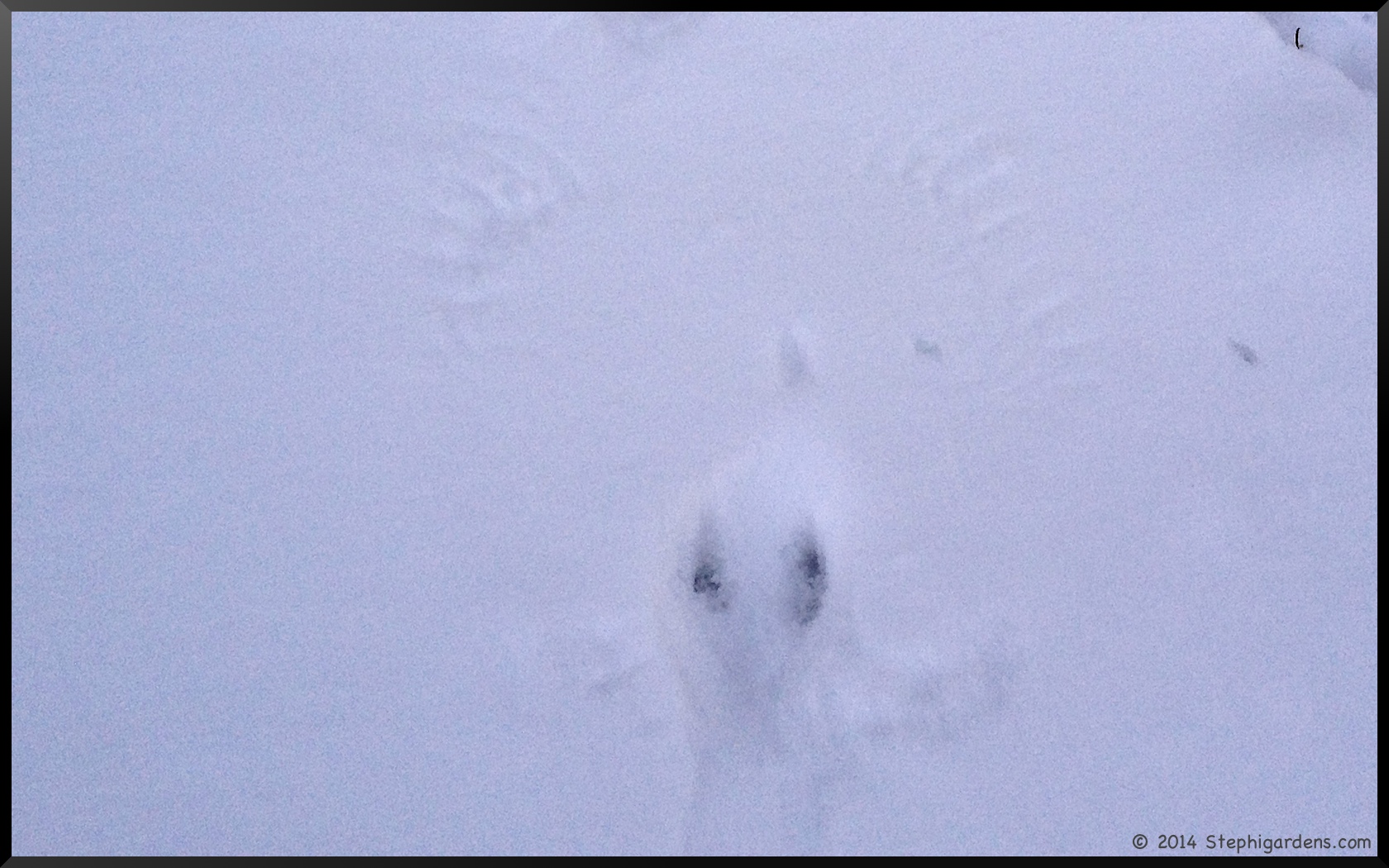
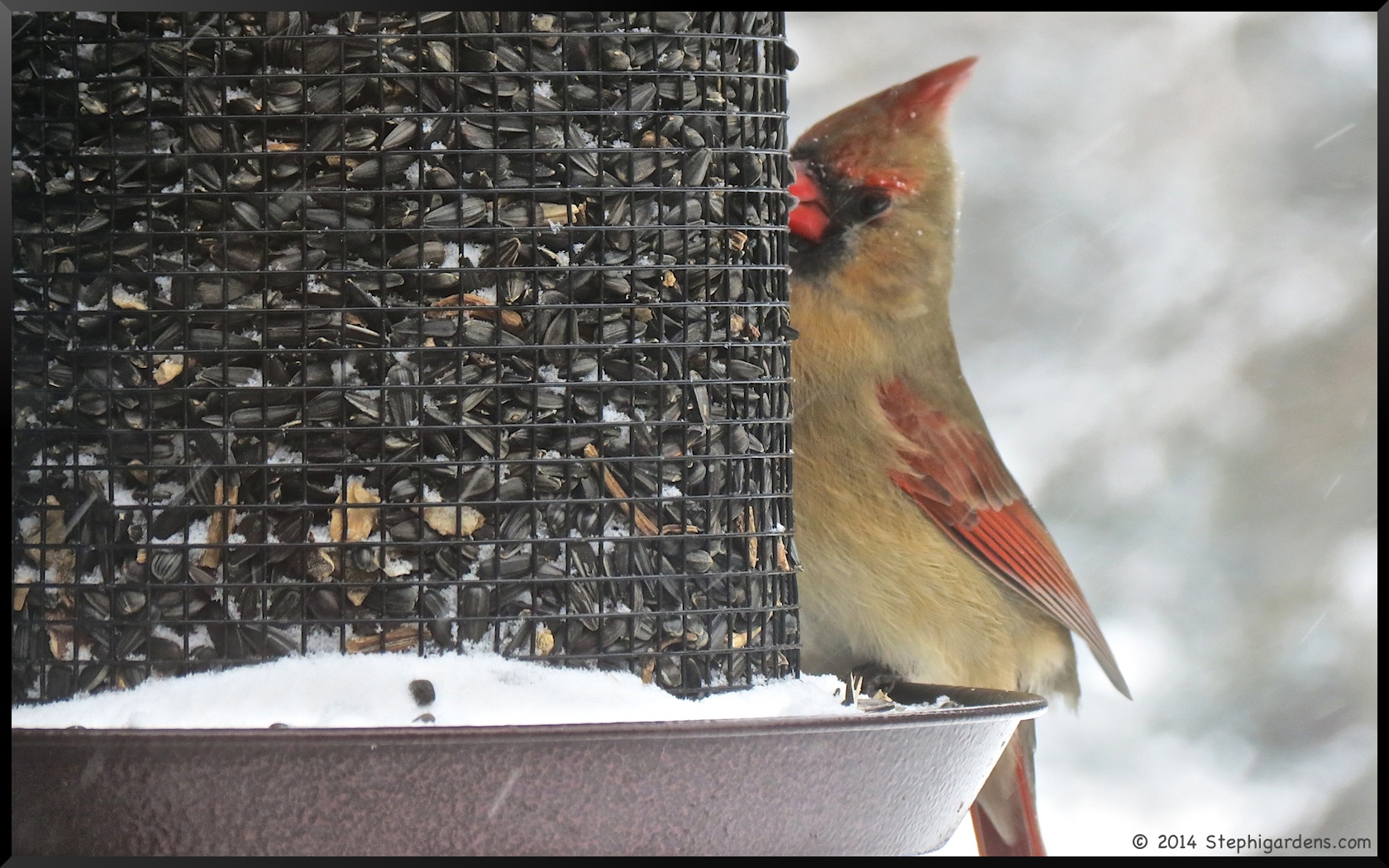
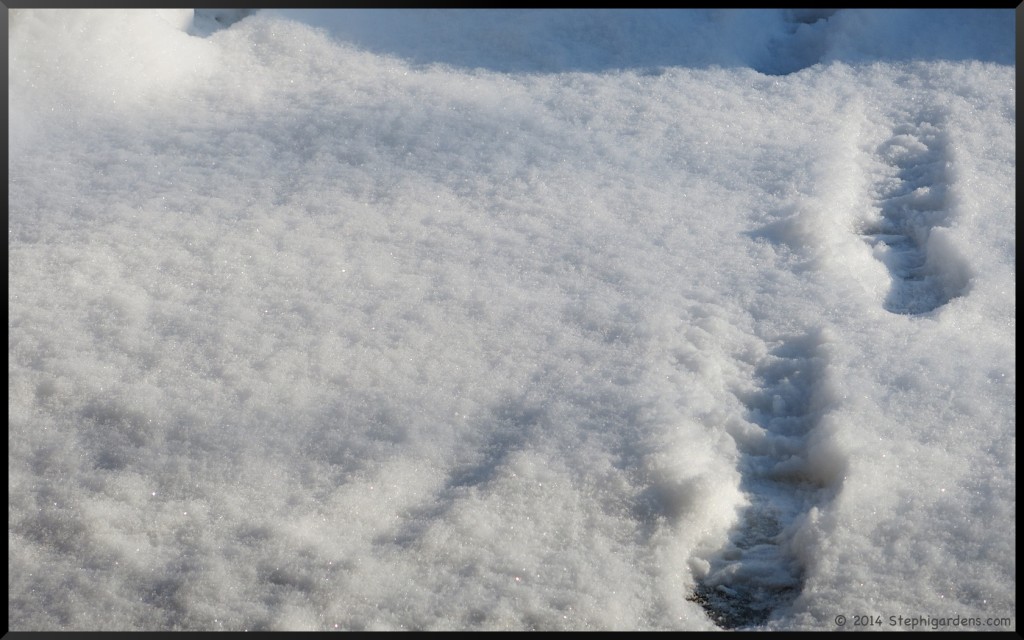
Of all the tracks in the snow this winter, I have been the most fascinated by the ones that look like angel wings.  Every so often in the newly fallen snow, I’ve found soft little wing-like brush marks.  Are they from birds dancing?  Showing off for a potential mate?  Or just stretching in the sun?  Whatever the reason, they leave the softest little flutter marks to be enjoyed by us.  I’m not positive, but I think these have been left by the Cardinals.

IMG_5288 (1)


IMG_5286


bird wings in snow


bird wings in snow


bird wings in snow

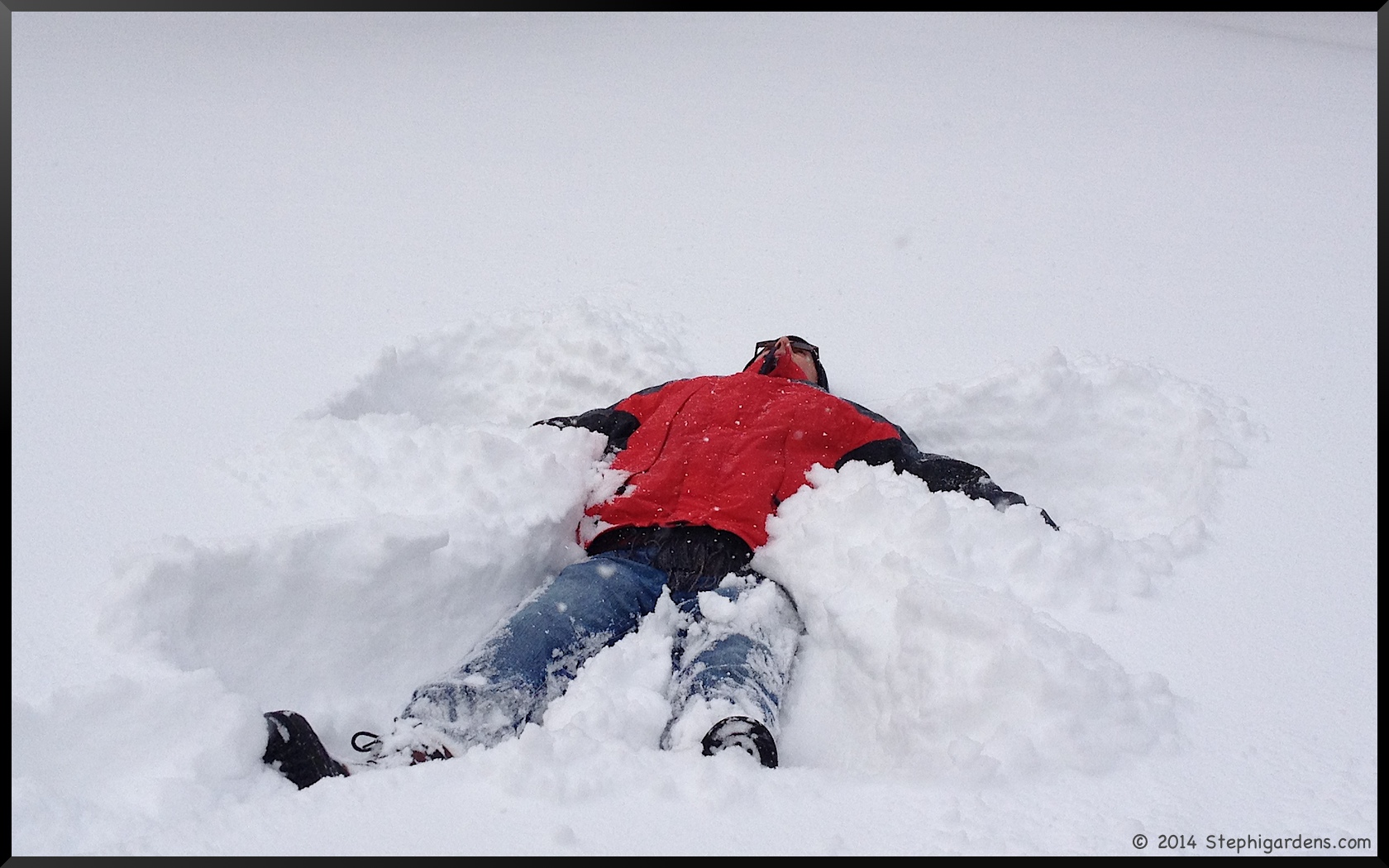
Or maybe they were just making snow angels that no one, including my husband Steve, can resist making in fresh, fluffy snow.

IMG_5081

Freezer Slaw

Back in the fall when I was preparing all the garden goodies for winter storage, my friend Kathy told me about a family favorite, Freezer Slaw. Her family has made this for generations with the extra garden cabbage heads left in the fall.  I was a little skeptical about not ending up with a pile of mush from the freezer, but to my pleasant surprise, we’ve been eating the most delicious, crunchy slaw all winter.  Here’s Kathy’s family recipe that has been passed down from her grandmother, to her mother, and now to her (and us). Thanks for sharing, Kathy!

**Freezer Slaw**

Here’s what you’ll need: 

1 lg. head cabbage, shredded
1 or 2 carrots, shredded
1 med green pepper, finely diced
2 cup sugar
1 cup apple cider vinegar
1/4 cup water
1 tsp celery seed
1 tsp mustard seed

Freezer Slaw

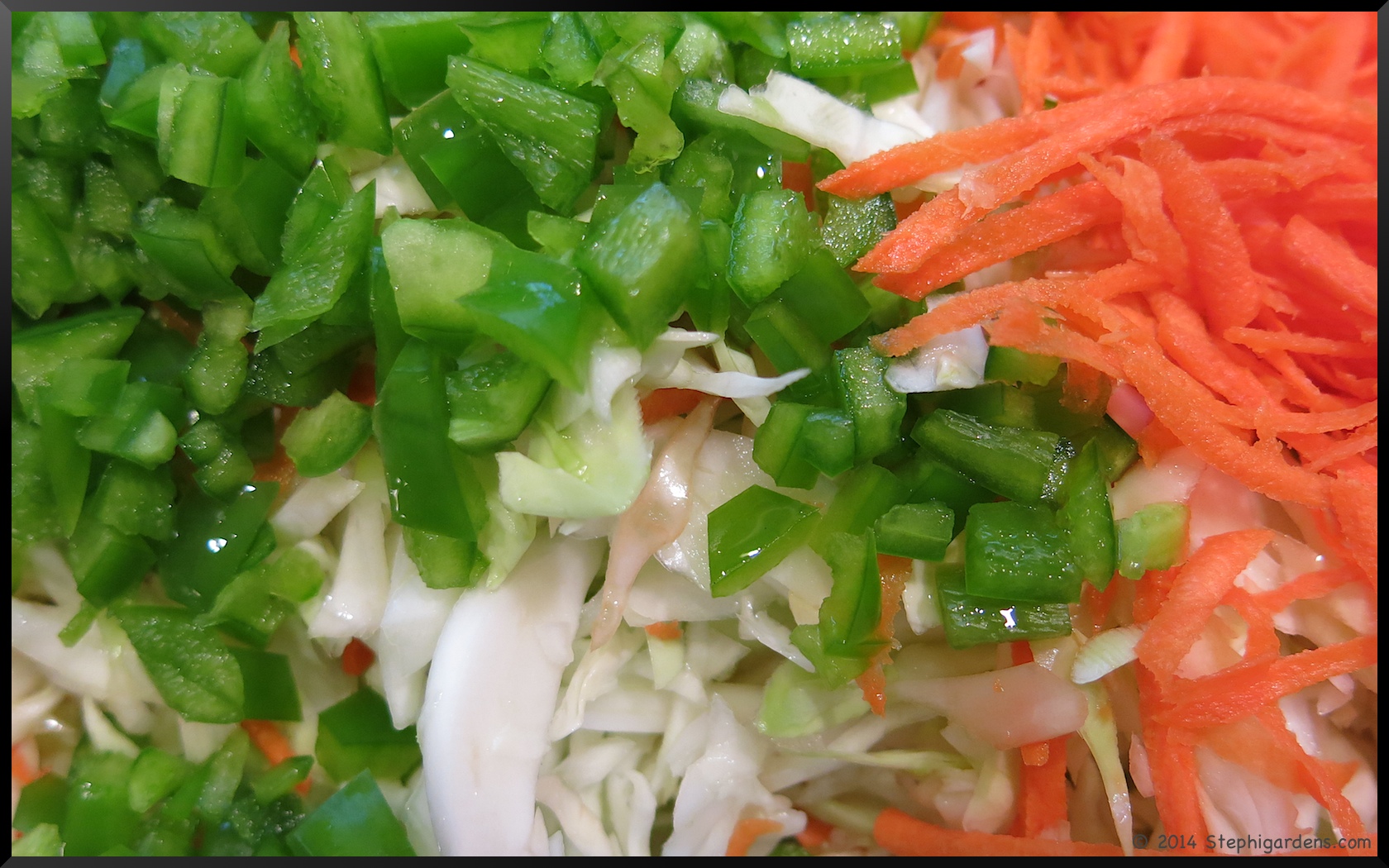
Shred and chop the vegetables.  Place in a colander to drain while you make the dressing.

Freezer Slaw
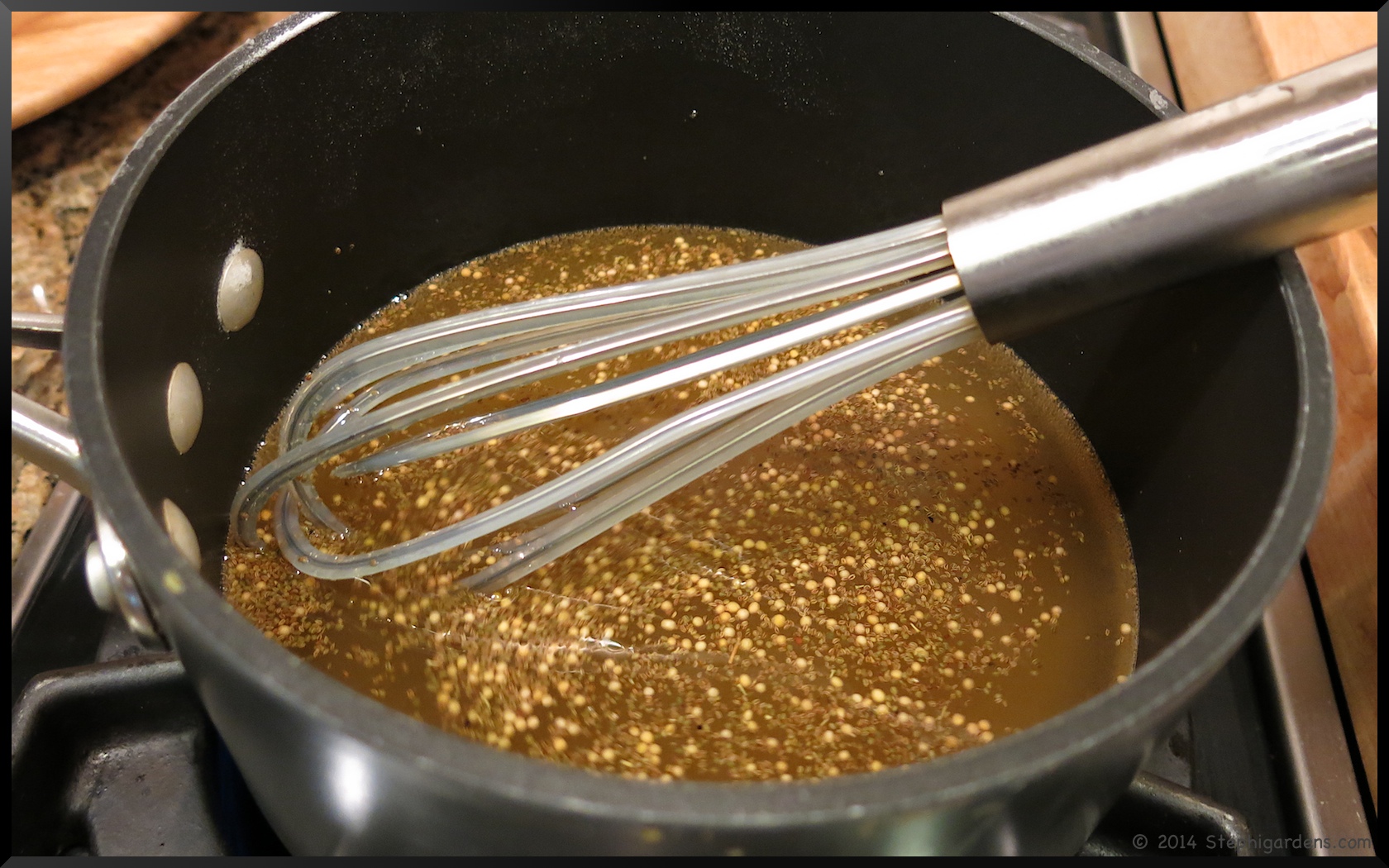
In a saucepan place remaining ingredients and boil for 5 minutes, Let cool.

Freezer Slaw
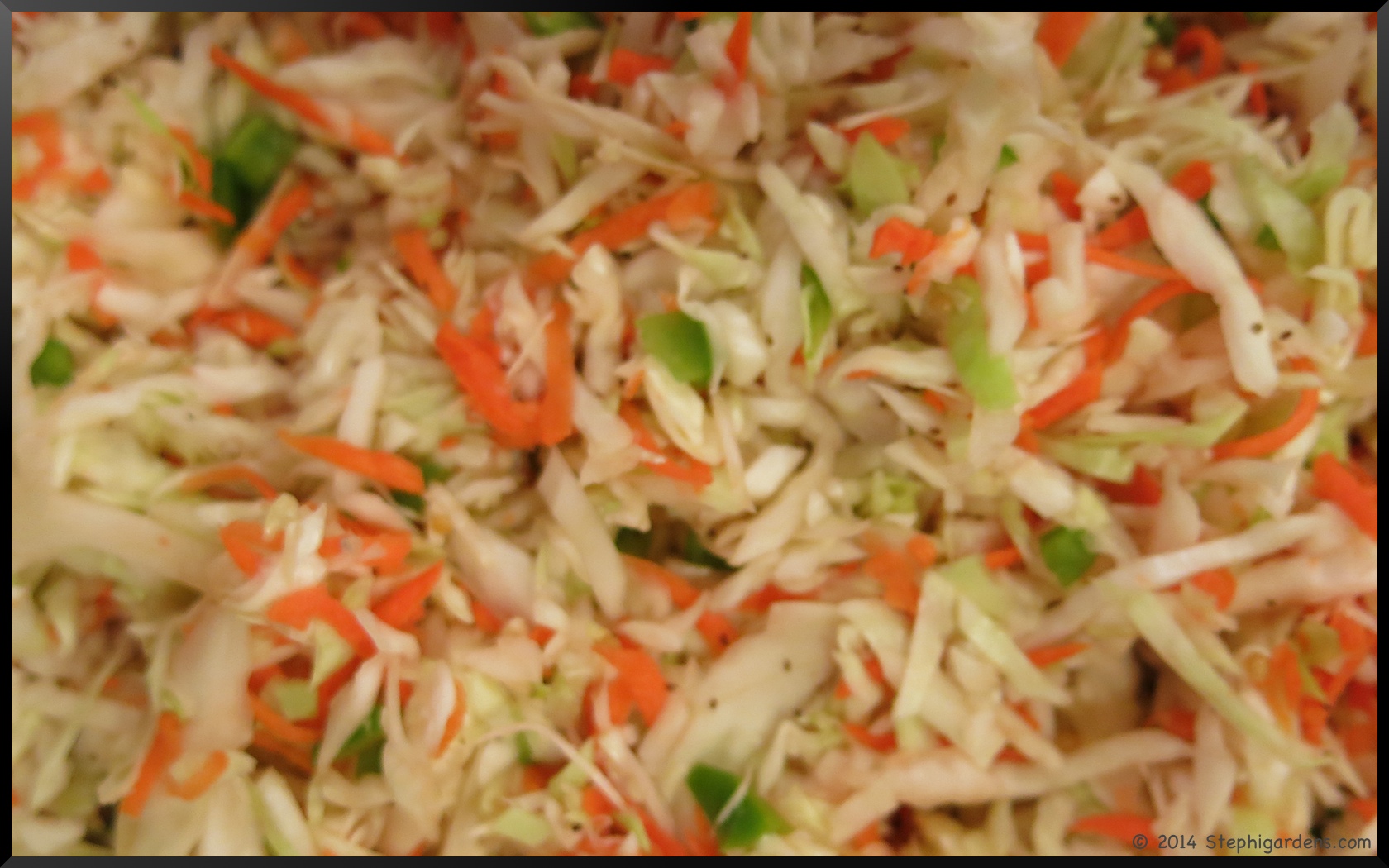
Squeeze out any excess water from cabbage mix and put in a large bowl.   Pour on the dressing and stir.

Freezer Slaw
Serve fresh or put in freezer containers for storage (I used quart sized freezer bags).  When ready, thaw. It will last a fews days in the fridge after thawing.

Freezer Slaw

We ate it cold from the fridge or warmed slightly after being thawed briefly in the microwave. Either way, Freezer Slaw is a tasty, crunchy and easy side dish from the freezer.  Kathy recommends it as a sandwich topping as well.

Enjoy garden fresh food all winter long!

Kathy's Family Freezer Slaw
Print
Recipe type: Salad
Author:
Delicious slaw that uses garden fresh vegetables and can be frozen for later use.
Ingredients
  • 1 lg. head cabbage, shredded
  • 1 or 2 carrots, shredded
  • 1 med green pepper, finely diced
  • 2 cup sugar
  • 1 cup apple cider vinegar
  • ¼ cup water
  • 1 tsp celery seed
  • 1 tsp mustard seed
Instructions
  1. Place all the shredded and diced vegetables in a colander to drain.
  2. In a saucepan, place remaining ingredients and boil for 5 minutes. Remove from heat and cool slightly.
  3. Squeeze out as much remaining water as you can from the cabbage mix and put in a large bowl.
  4. Pour sauce mixture over vegetables and stir.
  5. Serve, or put in freezer containers for storage (I used quart sized freezer bags).
  6. Thaw before serving. It will last a few days in the fridge after thawing.


Trips Down Memory Lane

One of the things I’ve really enjoyed while blogging is having my memory jogged by reading other blogs.  For example, reading about lichens and mushrooms on  another site brought back memories of when I was in high school and my family went to a huge Audubon gathering in the Allegheny State Park called the Allegheny Nature Pilgrimage.  Even though we went more than 30 years ago, I remember it being an amazing weekend gathering of nature enthusiasts.  Everyone got to choose from lots of interesting walks led by specialists in their areas and participate in scheduled group events.  I was really surprised to see that it is celebrating its 56th year.  If I lived closer, I would definately be going!

Turkey Tail Fungi

One walk that really stood out and stuck with me was one on mushrooms and ferns.  I really enjoyed learning about their biology and how to identify them in the field.  That afternoon was probably one of the reasons I sought out taking Botany as a biology elective in college.

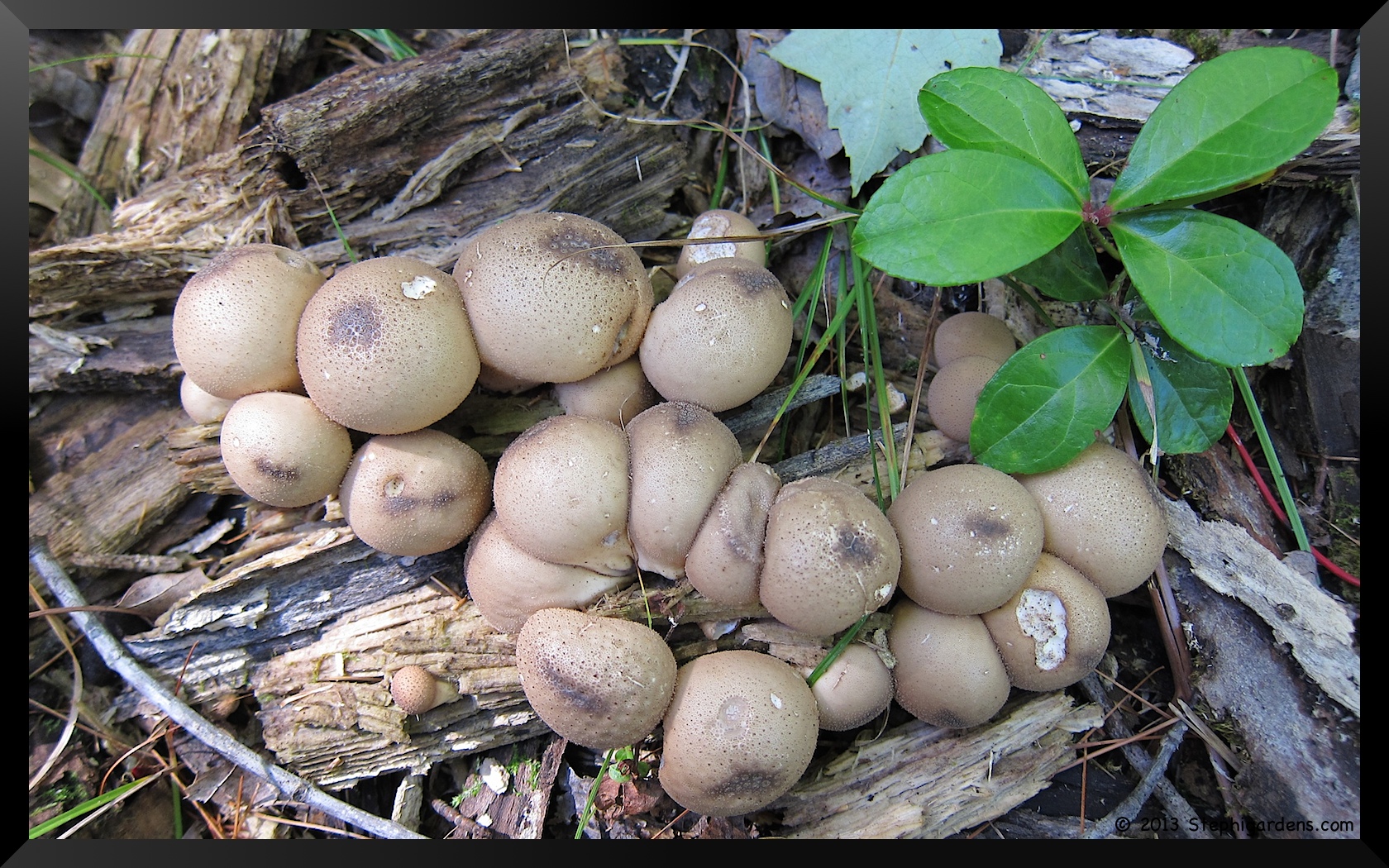
Puffballs

Then somewhere along the line that interest was forgotten.  I still have a bookshelf full of bird and flower books and always carry them along with me on hikes and trips.

IMG_2570

But the ferns and mushrooms, forgotten.  There on the bookshelf is also my fern book, bought in 1984 according to the date written on the inside cover, but barely touched.  I guess I never actually bought any of my own mushroom and lichen books either.  I must have just used my mom’s “library”.

IMG_2573

I think it’s time to open this untouched book and see what is inside.  I think it’s also time to take a trip to a local bookstore and see what local reference books they might have to offer.  I find that specialized bookstores, like the one at the Morton Arboretum or in a National Park, carry the best local flora and fauna books.  They tend to stock what their local experts recommend.  I’ll let you know what I find—


Great Backyard Bird Count

Great Backyard Bird Count
February 14-17, 2014

Cardinal

Since 1998, birders of all kinds have come together for a four day bird count in February. Counting birds at the same time every year provides a snapshot into the overall health of bird populations around the world.

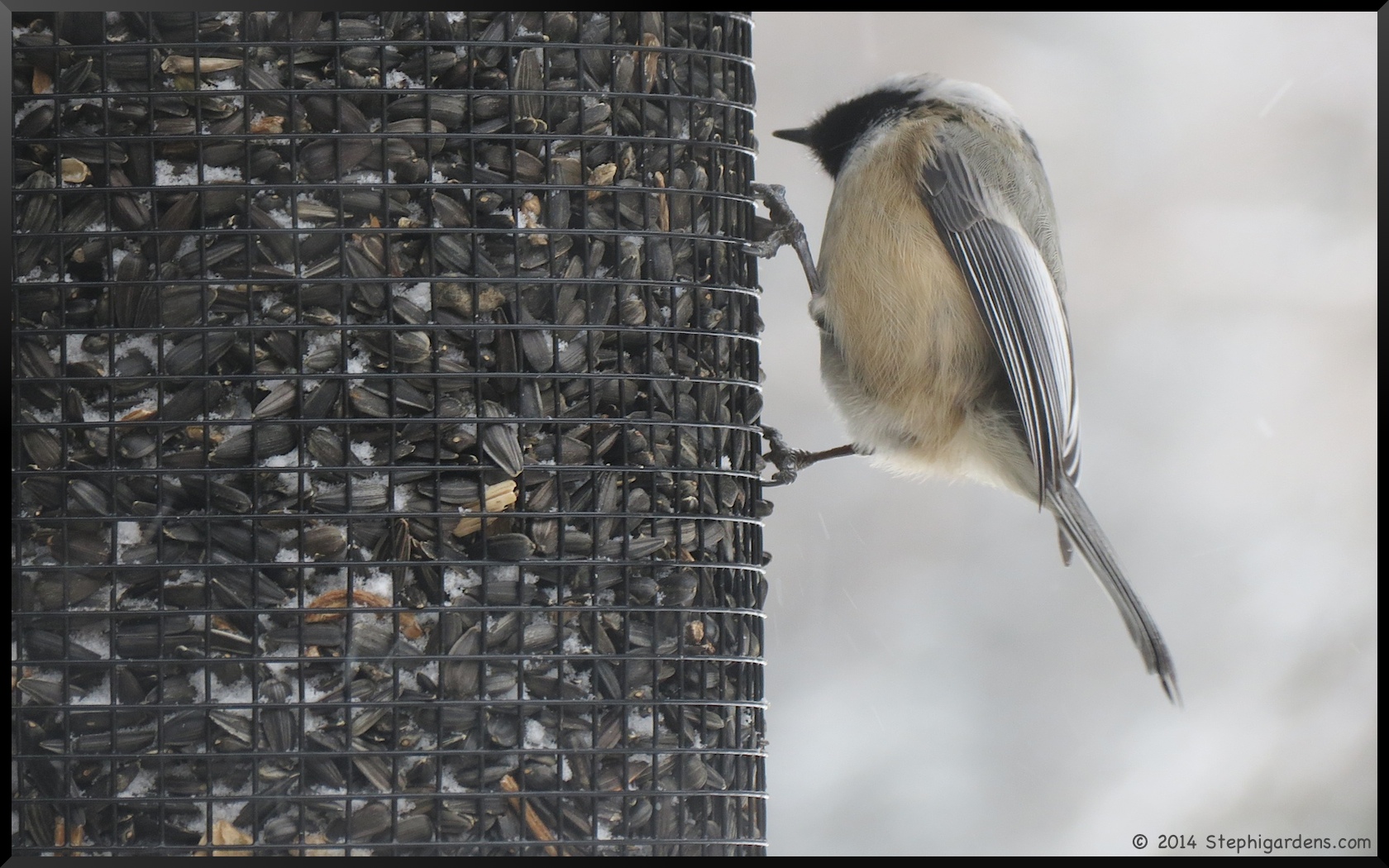
Chickadee

Years ago as a service project,  my Girl Scout Troop participated in this event.  It was really fun teaching the girls about what they were possibly going to see in their backyards, and introducing them to thinking a little more about their natural surroundings. The girls loved it!

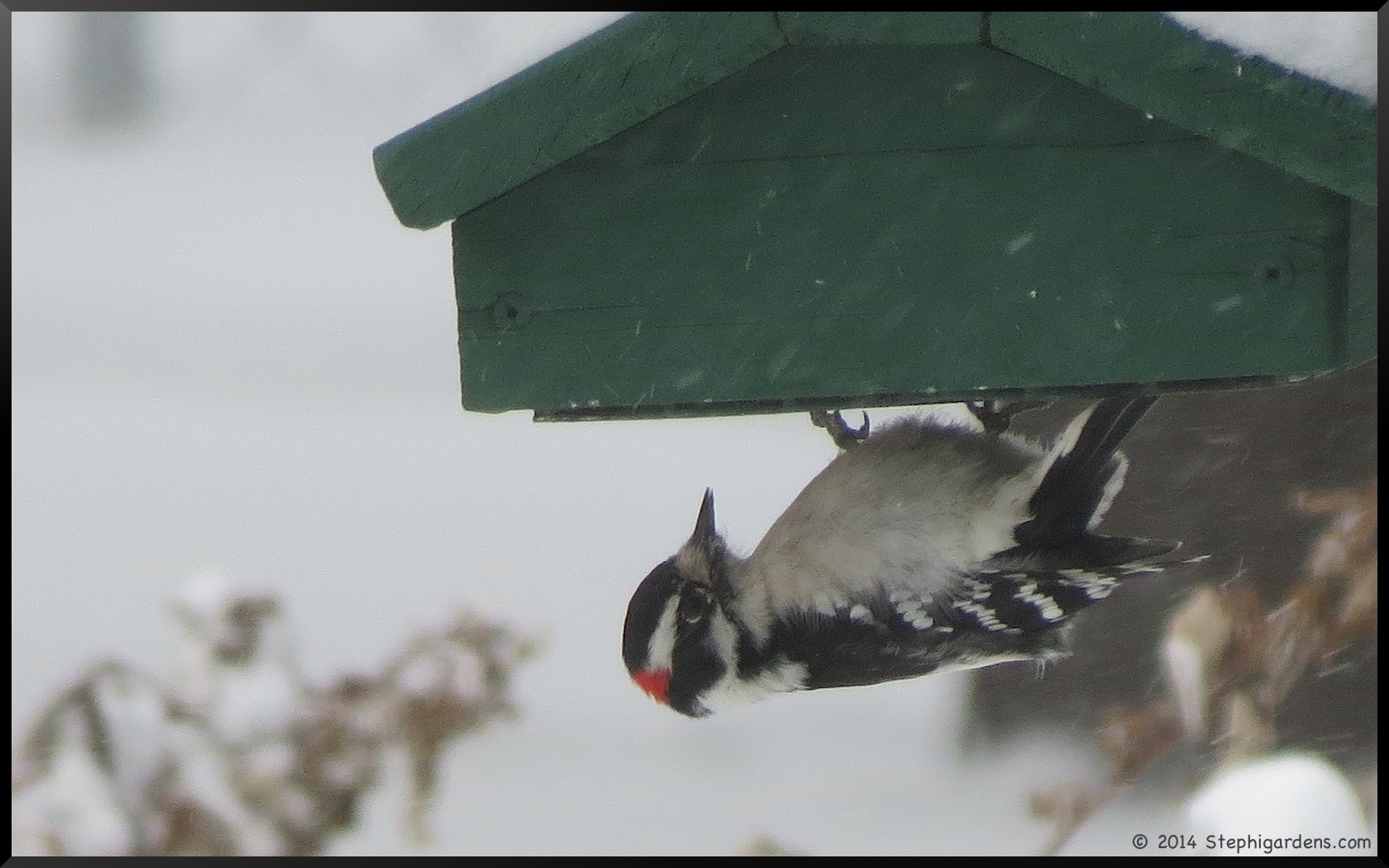
Downy Woodpecker

It’s super easy to participate. Simply tally the numbers and kinds of birds you see for at least 15 minutes on one or more days of the count, You can count from any location, any time of day, anywhere in the world.

To get more information and register your observations, go to the GBBC site.

GBBC

This project is a joint venture between the Audubon Society, The Cornell Lab,  and Bird Studies Canada.  It is also made possible by support by Wild Birds Unlimited and the National Science Foundation.

Are you participating? Did you see anything unusual?

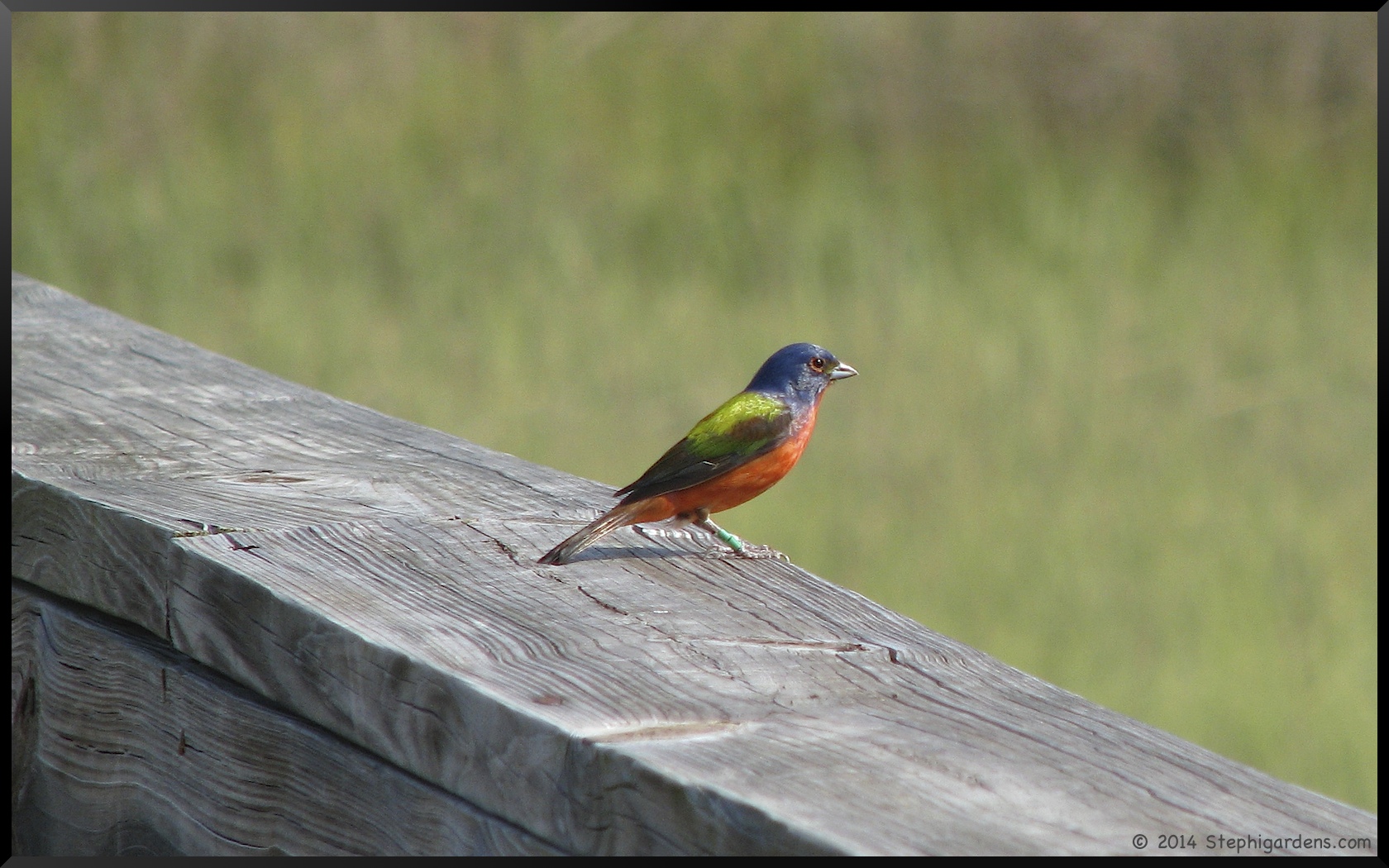
This Painted Bunting would be highly unusual to see in my backyard, but it was one of my most exciting sightings!

Painted Bunting

Photos by Peggy and Stephi

A Yard Full of Snow

Chicago snow

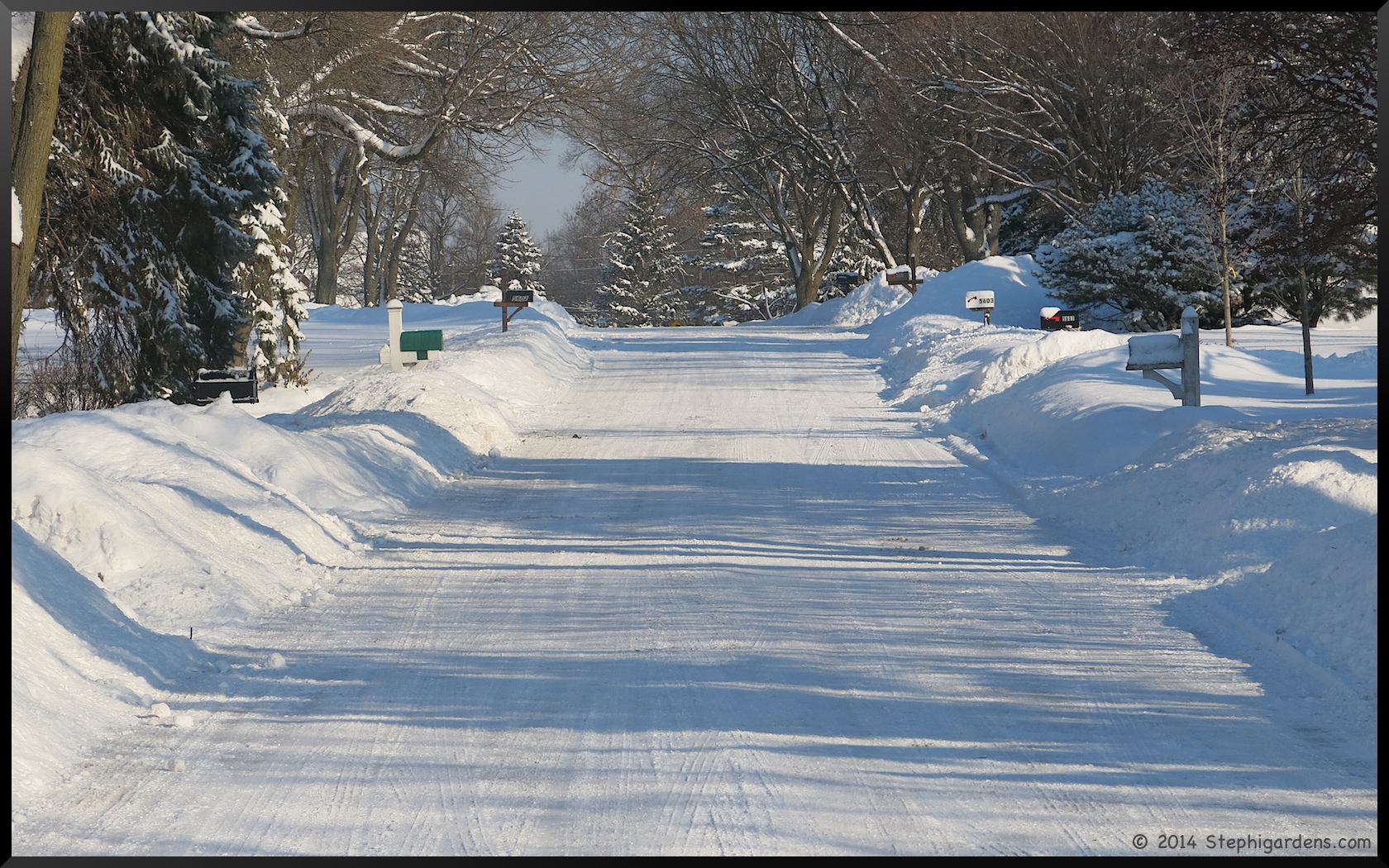
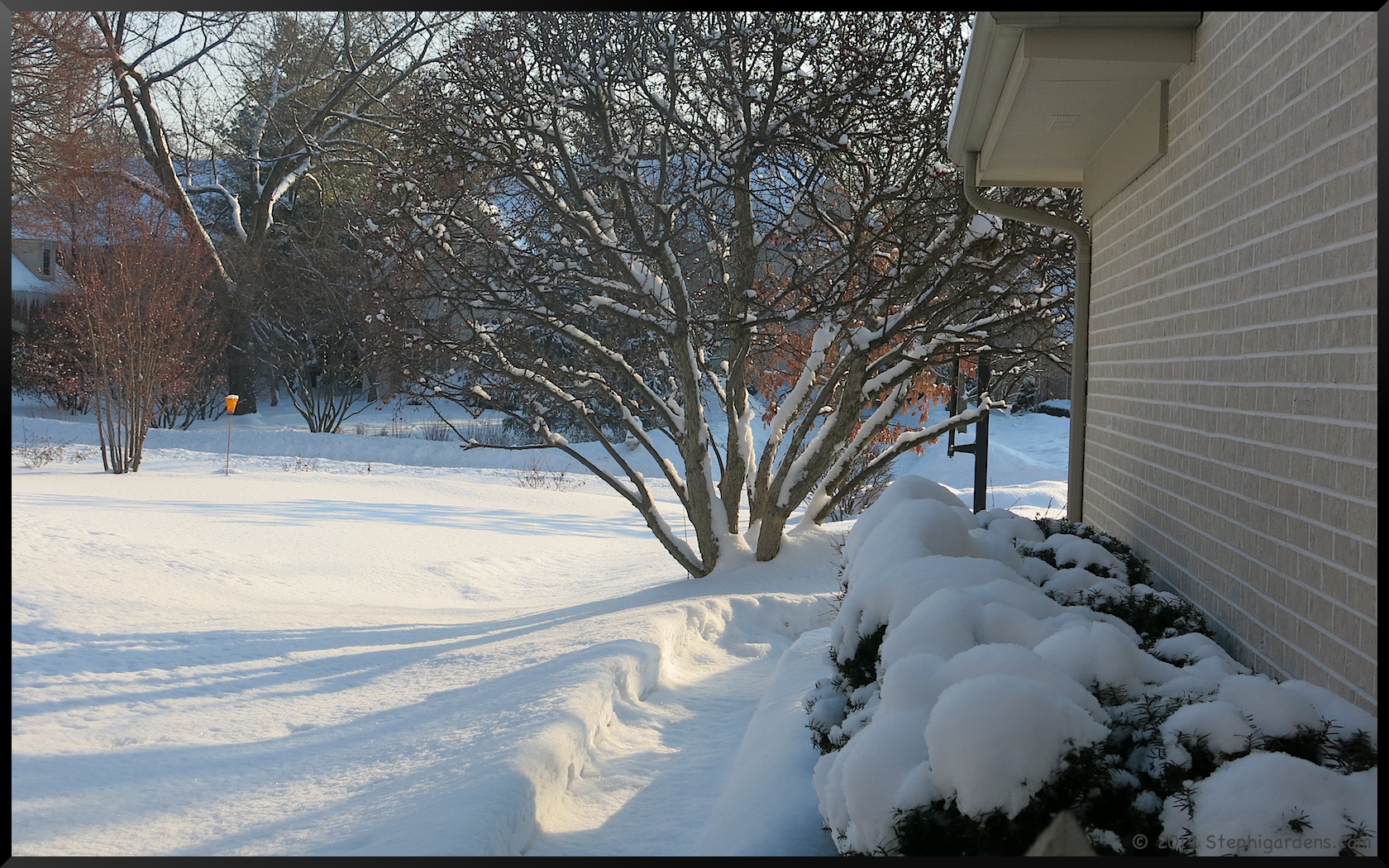
Since I moved to Chicago about 20 years ago, I can’t remember having this much snow on the ground for this long.  It would snow, be pretty for a few days, and then melt leaving everything covered in a layer of depressing gray and brown.  So for as much as this winter has been a struggle, I do find it much prettier and cheerful than a normal winter.  One caveat though; it would be easier to enjoy if it weren’t so constantly frigidly cold.

After the last snowfall earlier this week, we are now over 60 inches of snow this year so far, making it the 7th snowiest winter ever.  For the true weather nerds out there, by my measurements this is equivalent to 5.5 inches of rain since December 1, and has average around 7-8% water content.   That’s very fluffy snow–great for all of us snowblowing and shoveling, but not very good for snowmen.

Chicago snow

We have not seen our road since Christmas.  The main roads are clear, but we’re a little lower on the village plowing totem pole.  I’ve never used my 4 wheel drive as much as I have this year, and on the plus side, my two relatively new drivers have become great snow drivers.

Chicago snow

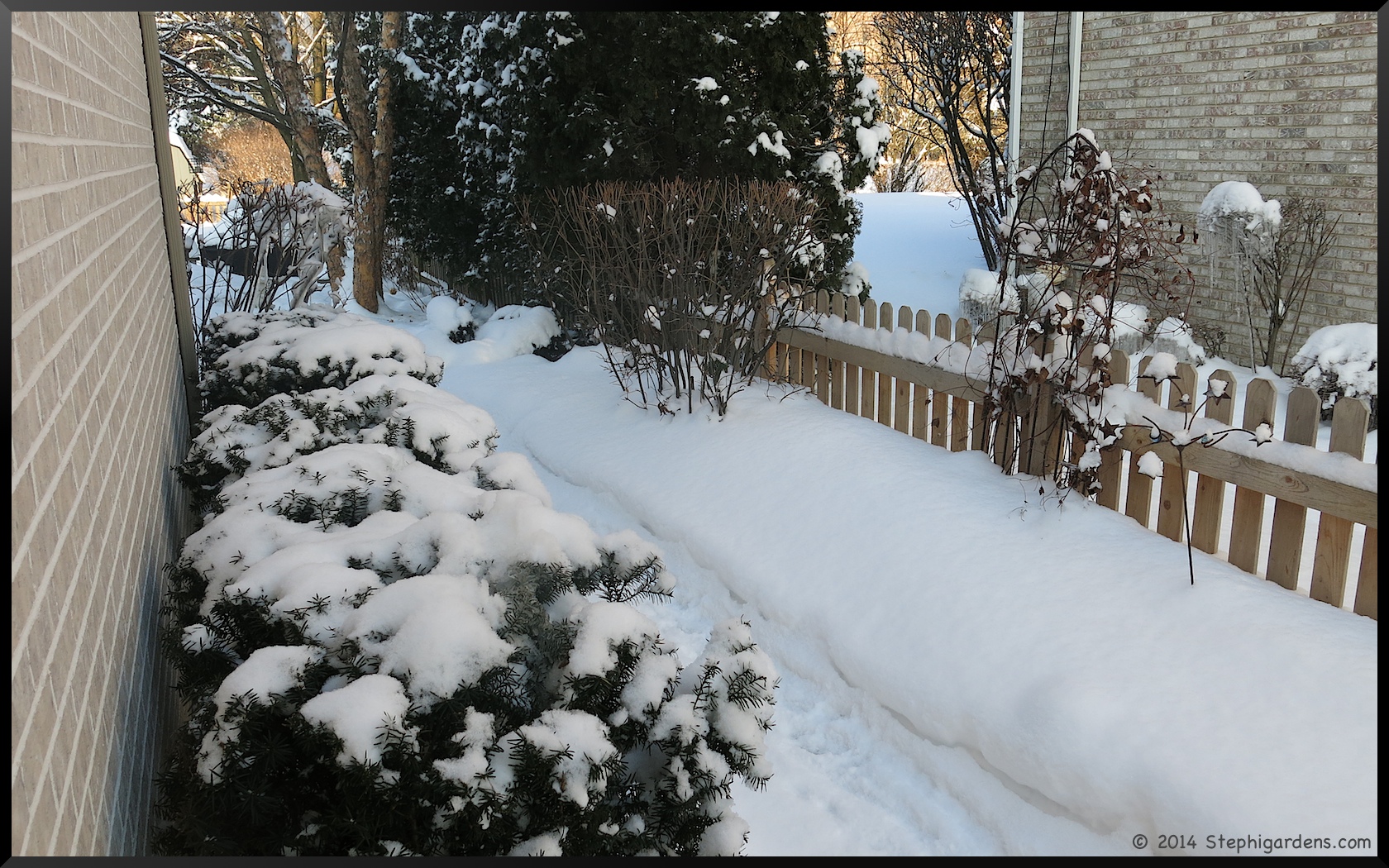
The plants and shrubs are hopefully surviving the snowpack.  I wasn’t really prepared for so much snow, so the evergreens are on their own to battle the weight of the snow.  The yews and boxwoods seem to be doing pretty well, but some of the Arborvitae are not fairing quite as well and pretty large branches are falling over.   We’ll have to do some more tying up of the branches in the spring.  I’d hate to lose the privacy screen they provide.

IMG_2486


Chicago snow

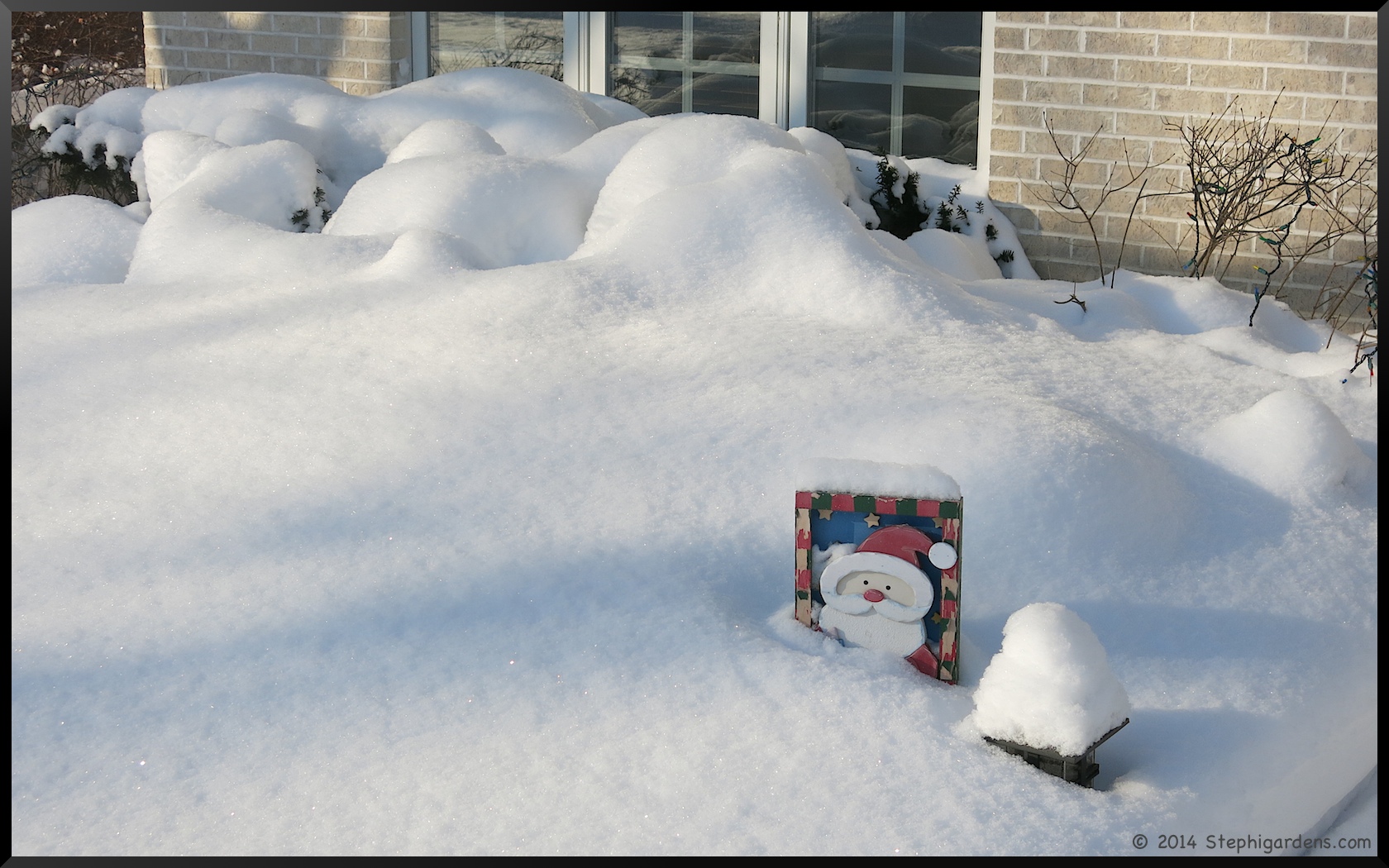
Another casualty of the snow is the Christmas decorations.  Santa is apparently still welcome at our house, and will be until he ground thaws.

Chicago snow

The lights are also going to be up for a while.  As much as I love Christmas lights, we have at least unplugged them so as to not annoy the neighbors.

snowy chicago

Our shed has been snowed in also since December.  And not just snowed in, but the frozen ground heaved the stones in front of the door and we haven’t been in since before Christmas.  Thankfully, the snowblower had already been brought up to the garage, but inside is still all the sleds, snowshoes and a few more bird feeders.  Bummer for such a snowy winter!

Chicago snow

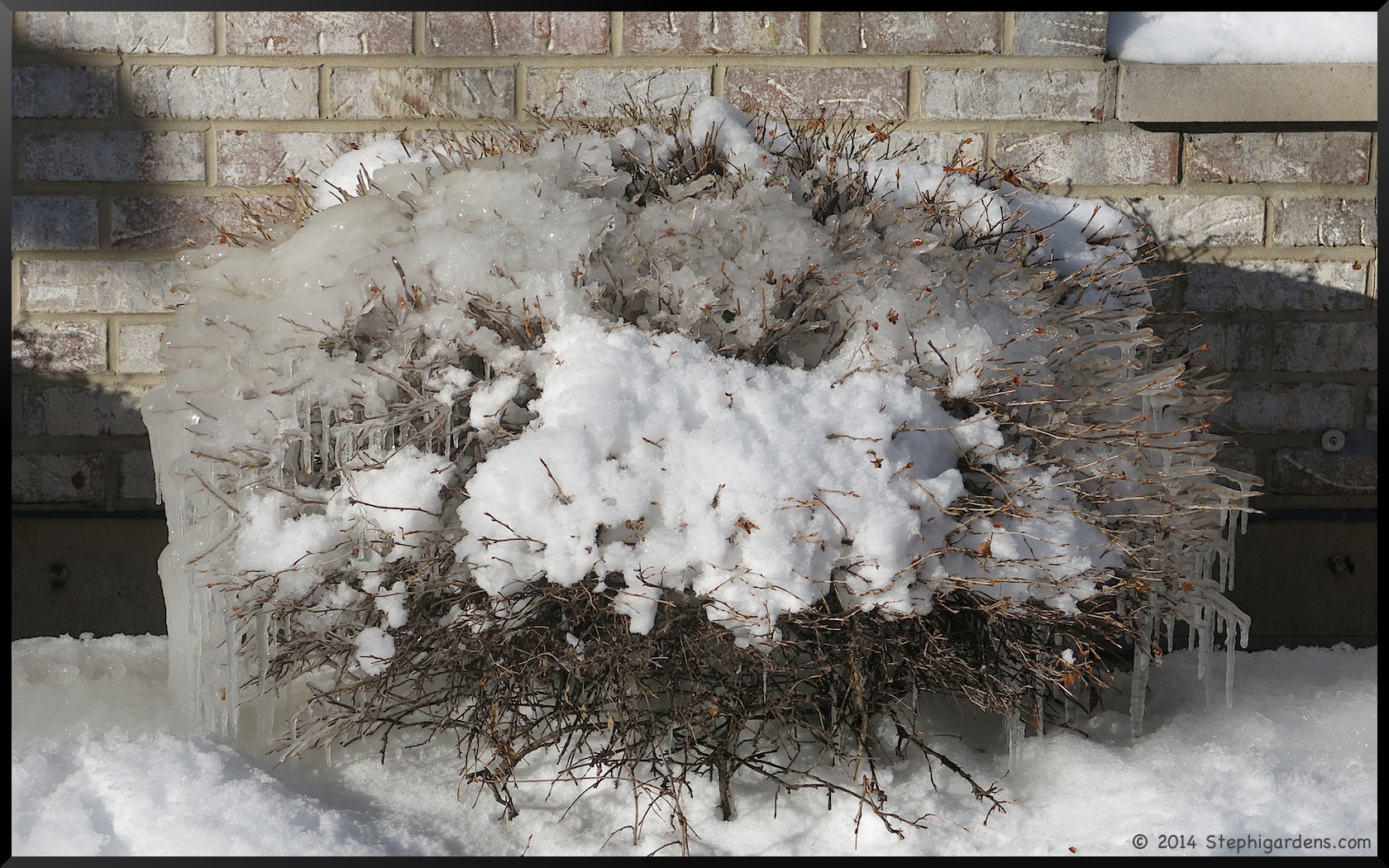
Then there’s the ice.  As the sun has become higher in the sky finally, the snow-covered roof is beginning to drip.  Many of the shrubs have become encased in ice.   This Alpine Currant reminded me of an icy jellyfish.

snow alpine currant

While the icy shrubs are one thing, icicles on the roof are much scarier.  There are inches of ice on the roof and in the gutter.  This is not going to be good as the temperatures begin to rise this week 🙁

eave icicles

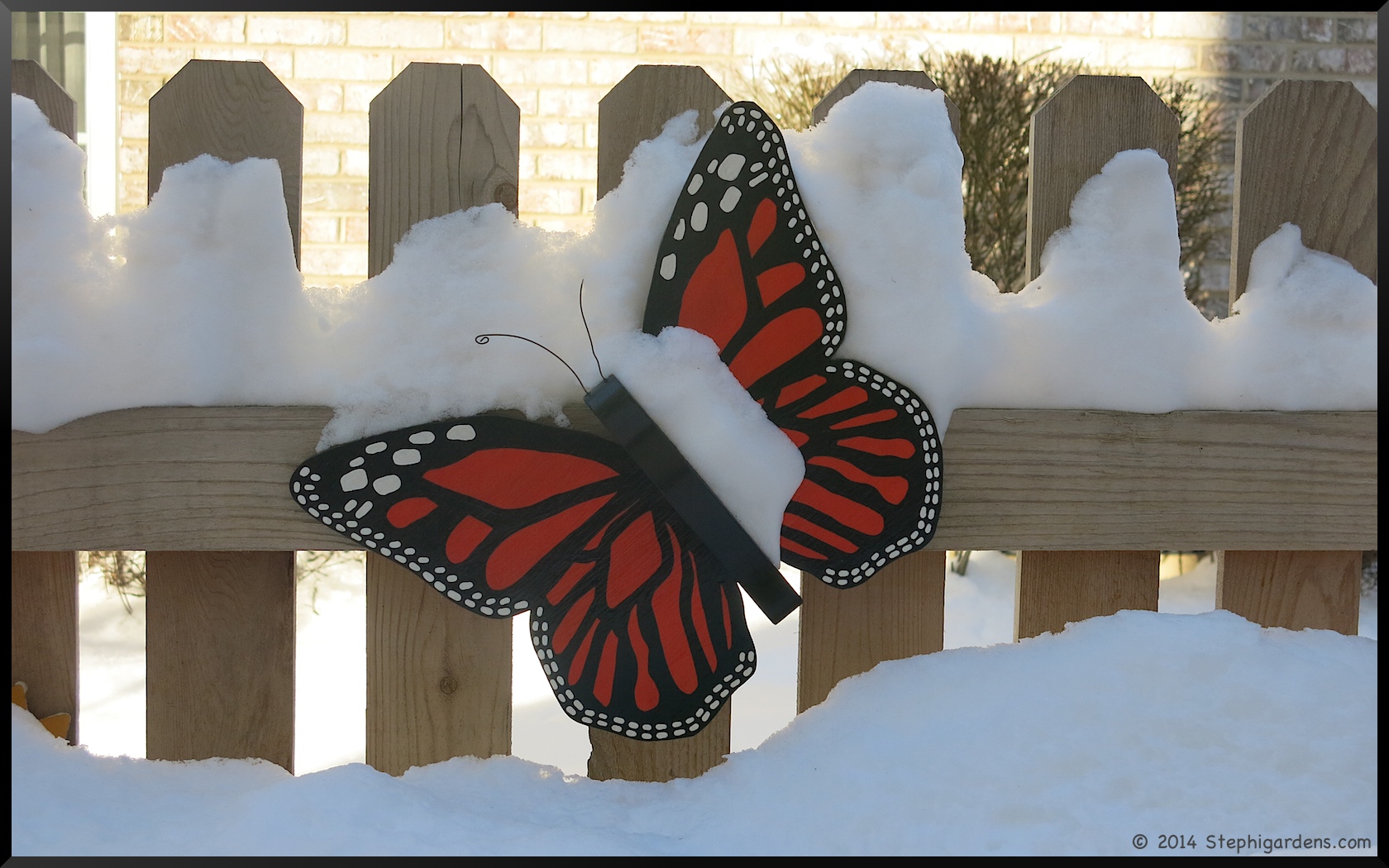
And I’m sure this pretty monarch wishes it had found a way to migrate south instead of spending the winter on my fence.  But, on the flip-side, it’s located right out the side door and reminds me that one day, the real butterflies will return

Chicago snow

Painting Rock Garden Markers

Rock Garden Markers

Every year I try to mark which plants are which in the vegetable garden and always end up with something missing or mislabeled.  While this might not solve my problem, it’ll jazz up things a bit for sure.  It’s also a fun project on a cold, wintry day.

Here’s how I made these cute garden markers.

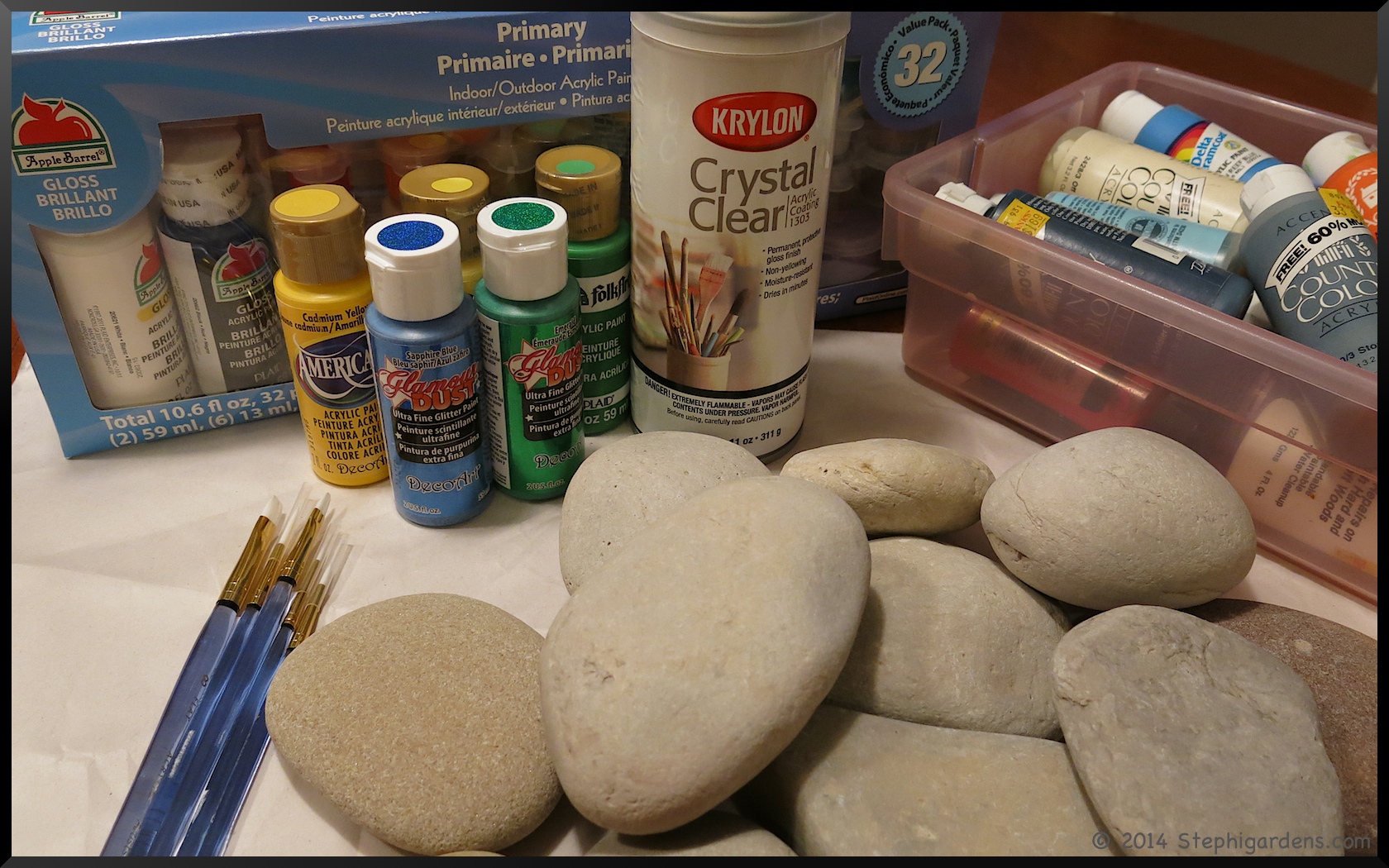
First gather the supplies:

  • smooth rocks
  • acrylic craft paint
  • set of good brushes; at least one thick brush for painting the background and a fine tip brush for painting letters
  • Krylon Crystal Clear Acrylic Coating Spray-#1303

Rock Garden Markers

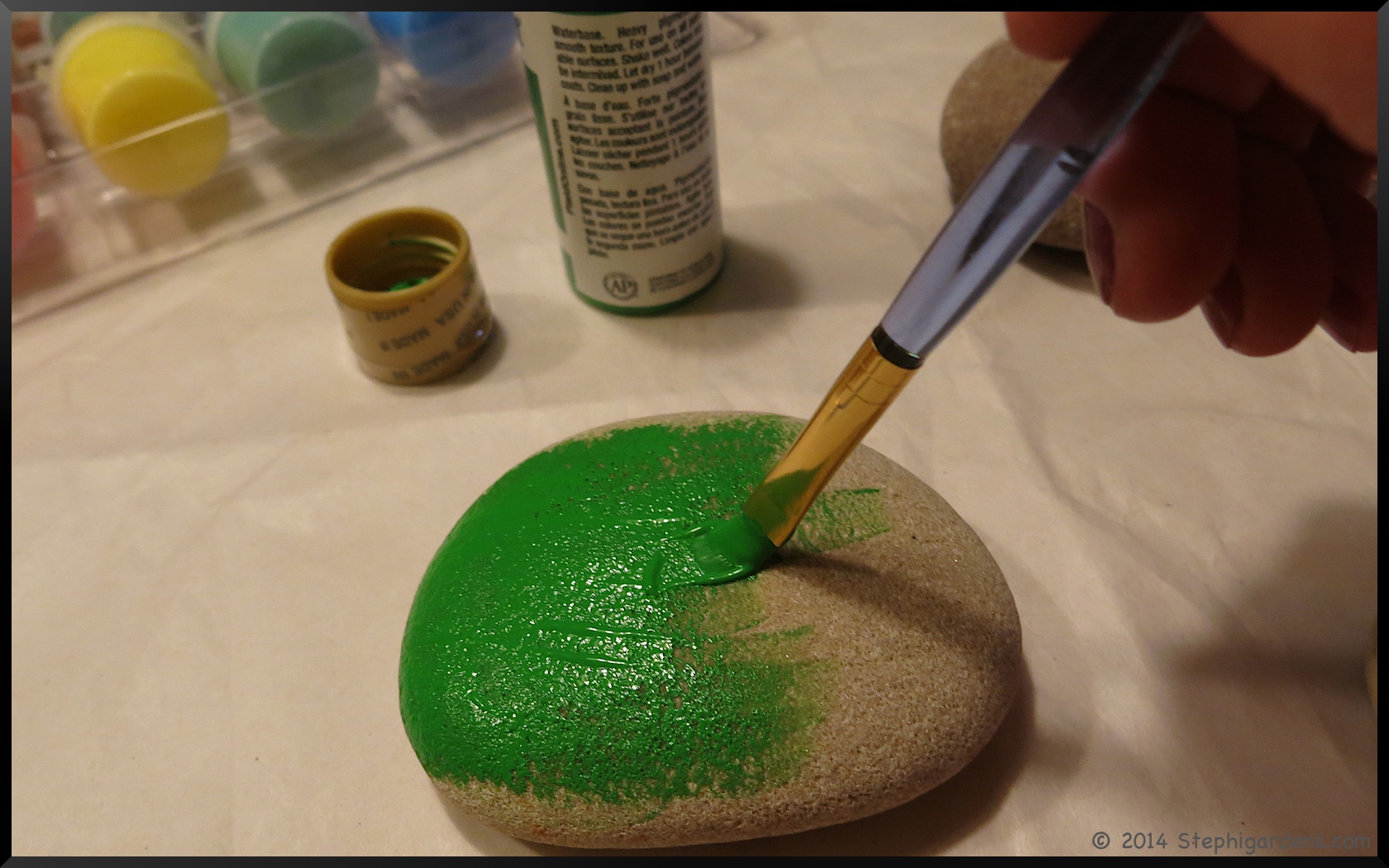
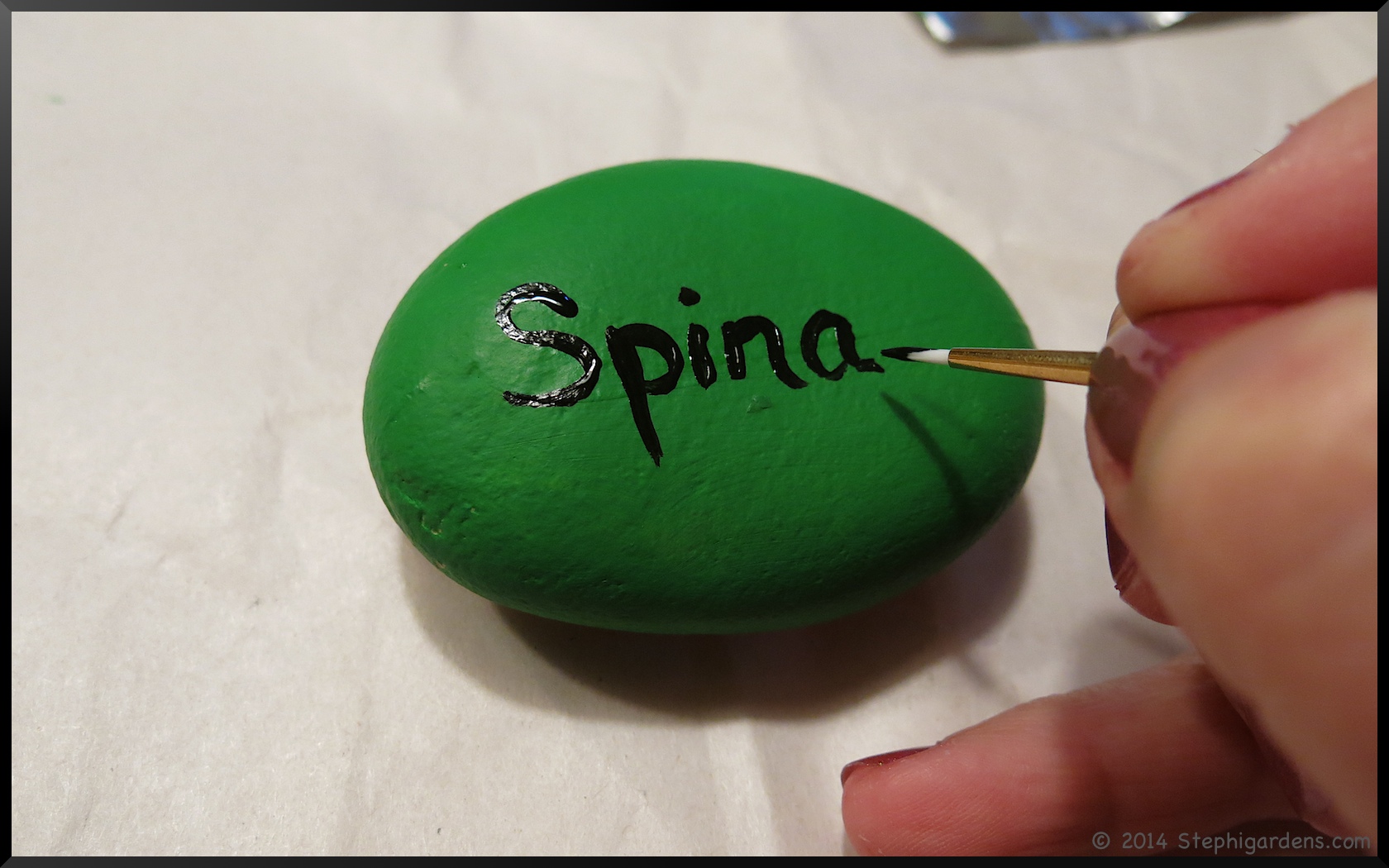
  • Paint your background color.  Usually takes 2 coats.  Dry thoroughly before turning over if you are painting the back.

Rock Garden Markers

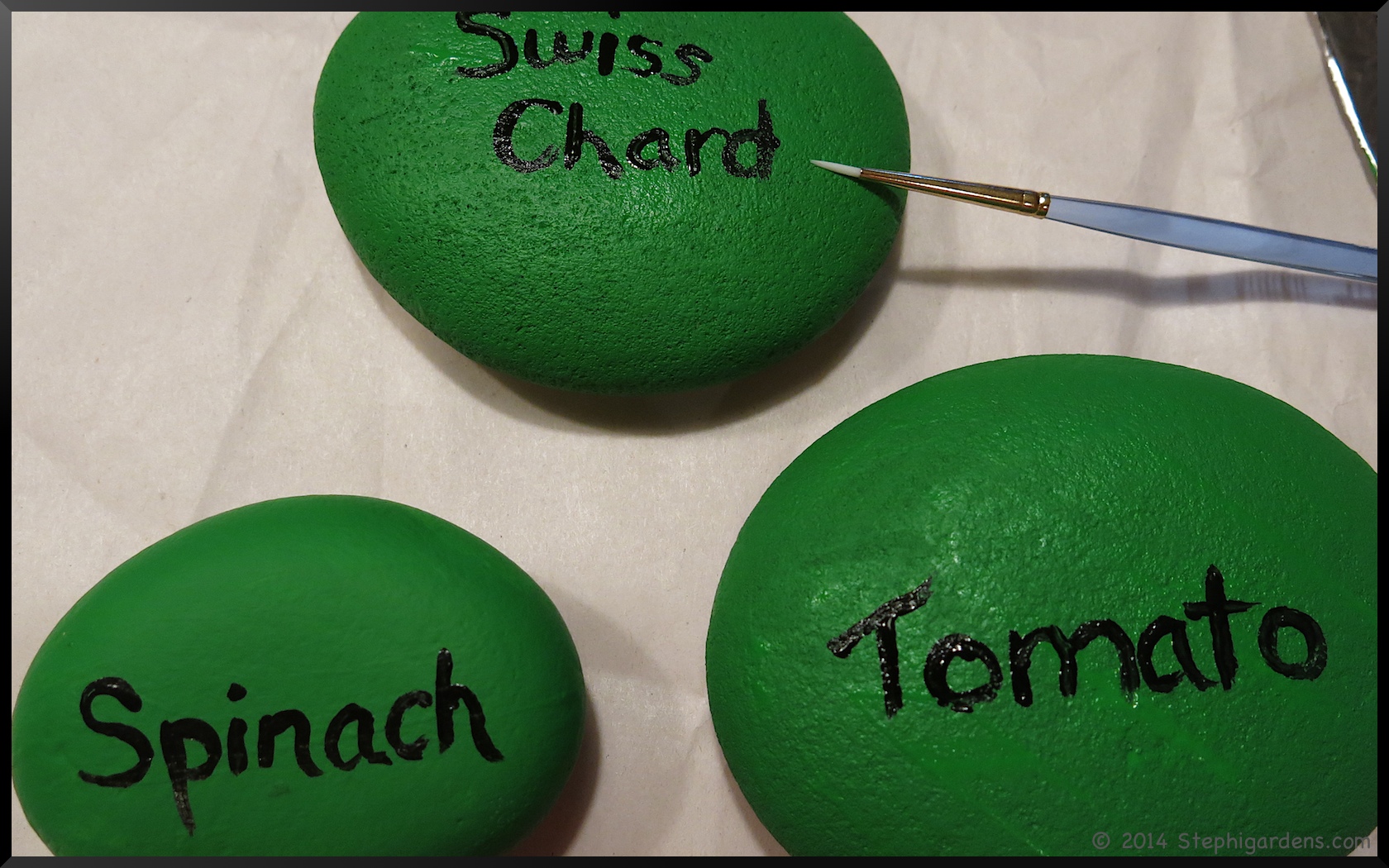
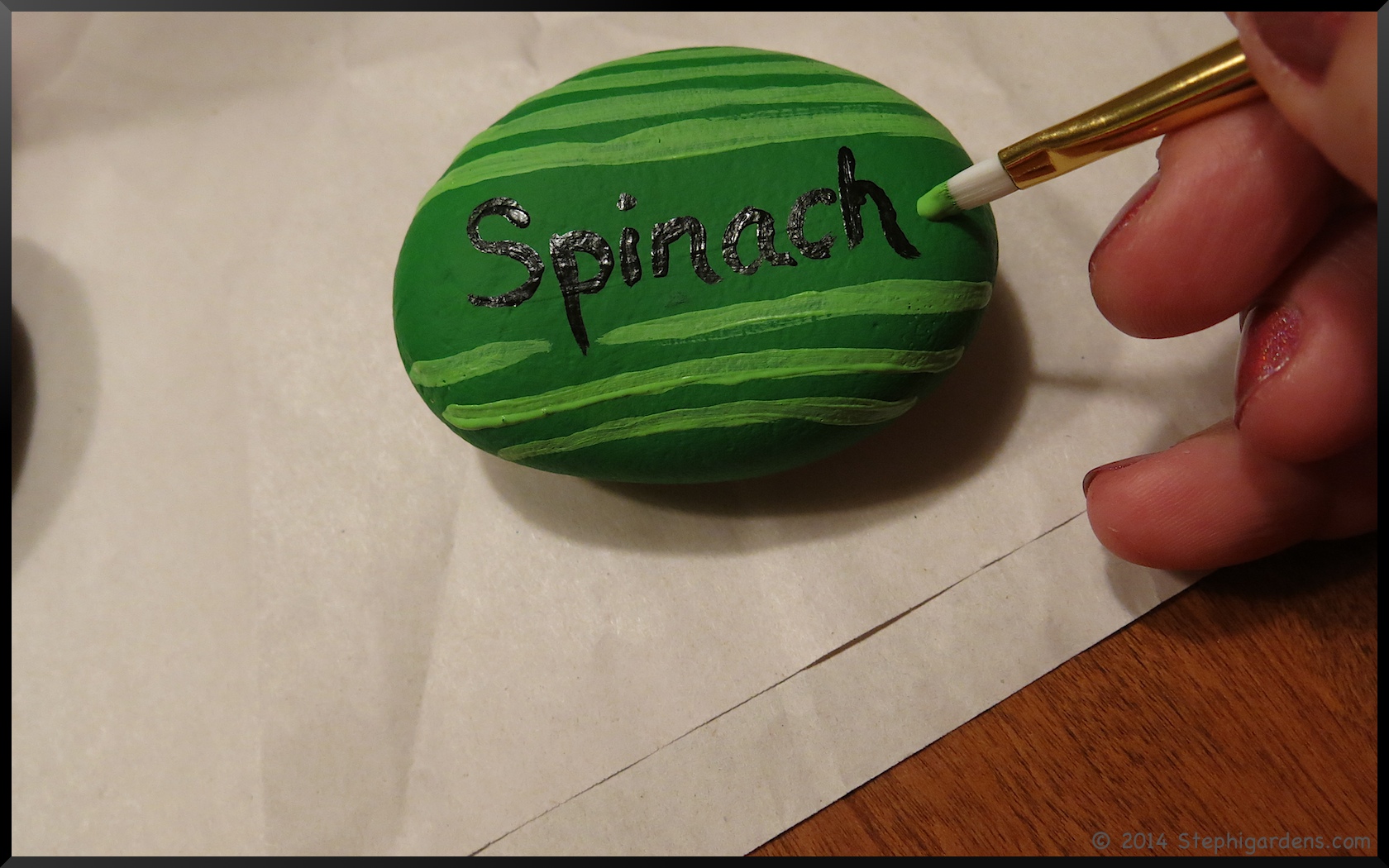
  • Once dry, use a fine tip brush to paint on the letters.   Hint: I investigated using a sharpie type pen, but have had mixed results when spraying with acrylic sealer.  It can run and ruin your design.  Safer to use the acrylic paint.  With practice it’s not too hard!

Rock Garden Markers


Rock Garden Markers

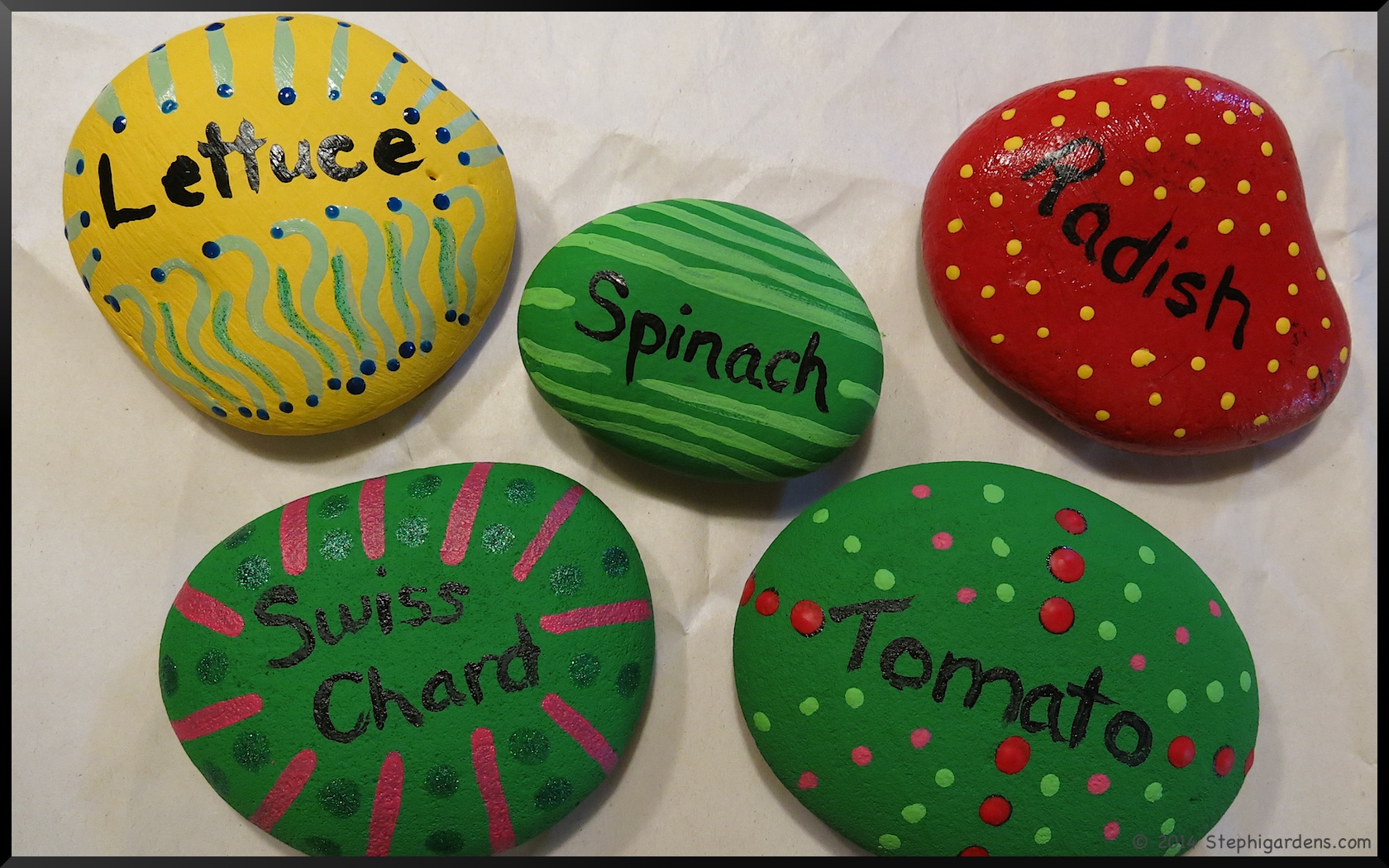
  • Now comes the fun part, decorating your stone.  Depending on your artistic talent, you can embellish the stones any way you want.  Me, I went with simple geometric designs.  I know my limits 🙂
  • You can use the back of the brush to paint dots, use different thicknesses of brushes to do lines, or just paint whatever your imagination can think up.

Rock Garden Markers


Rock Garden Markers


Rock Garden Markers


Rock Garden Markers

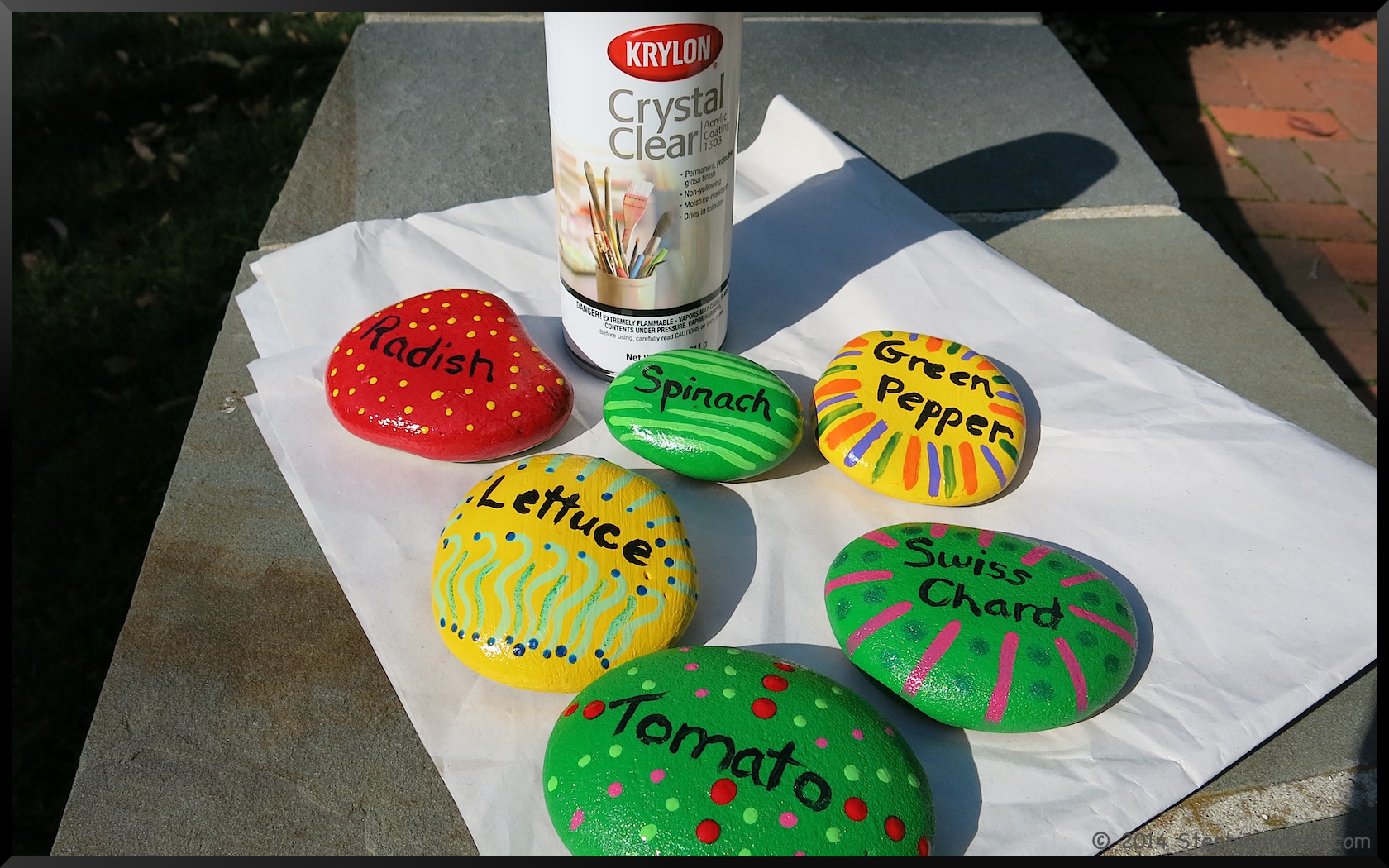
  •  When you are finished let them dry completely, preferably overnight.  Then spray them with an acrylic sealant (I used Krylon Crystal Clear #1303) outdoors, or in a well ventilated location.  Be sure to let it dry completely before turning over to spray the underside.

Rock Garden Markers

Ready for the garden!

Nest Cams

Over the winter, I have enjoyed watching birdfeeder cams (see previous post “Birdfeeder Cams“). Now that spring is around the corner somewhere, it’s time to start following some of the nest cams.

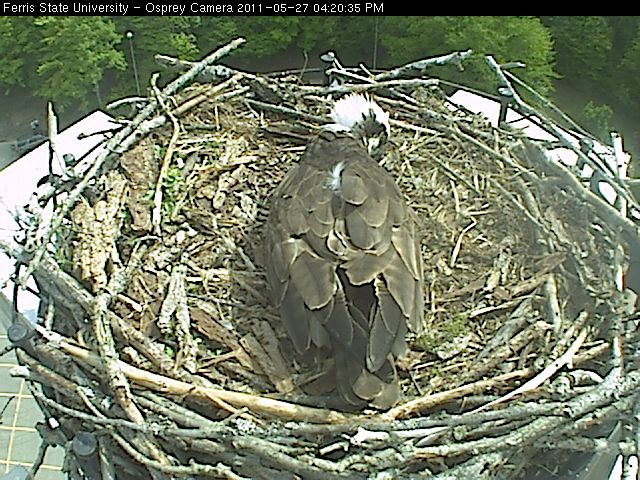
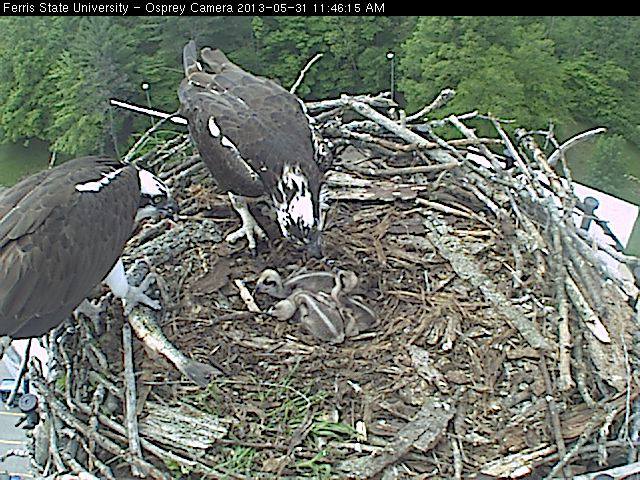
The first nest cam that I began following is the Ferris State University (MI) Osprey Cam.  They’ve been streaming video of a nesting pair of ospreys in their parking lot for five years.  It’s still a little early for the Ospreys to be back yet, so the cameras are not up and running.  They usually return the end of March/early April.  You can check their Facebook page for updates as to when things will get going again for the year.

Here’s a shot from last year.  See the car in the left corner?  That’s me!!

Ferris State Osprey Cam

Here’s another shot from the cam last year w of the whole family.

Ferris State Osprey Cam

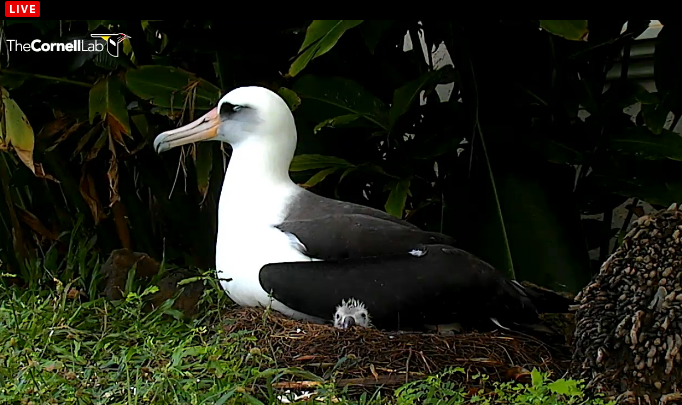
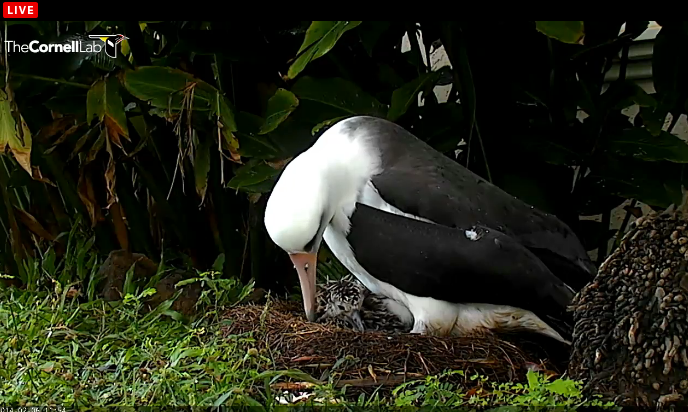
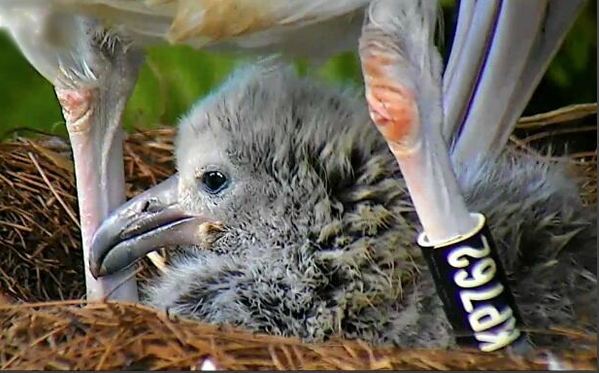
Until the Ospreys are back, I’ve been watching some other nests.  In Hawaii, a pair of Laysan Albatrosses recently laid one egg, which hatched successfully about 2 months later on January 27th.  This nest is in the yard of a personal residence near a bluff overlooking the Pacific Ocean.   The chick will take 5-6 months to grow to adult size and take flight.  During that time, it may spend up to 17 days alone, as the parents go on long foraging trips out into the ocean.  Once the fledgling takes flight, it will leave the nest and not return to land for the next 3-5 years.

With the weather the way it is here, how can you not enjoy watching this family?

Laysan Albatrosses Nest Cam

Laysan Albatrosses Nest Cam

Laysan Albatrosses Nest Cam

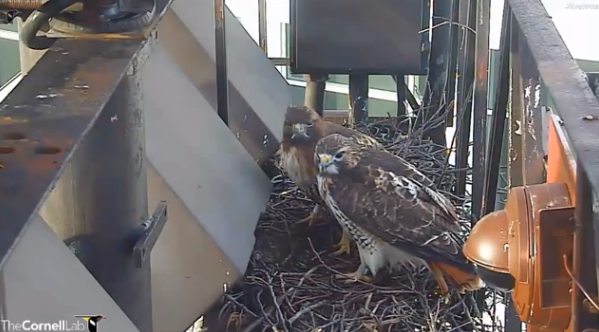
Also on the Cornell Lab site, high above the athletic fields you can watch a pair of Red-Tailed Hawks that have been nesting at Cornell University for the last four years.  Big Red, and her mate Ezra, have just arrived back and have begun to rebuild their nest again.This will be the third year these bird’s nest activity has been streamed.  To learn more about Big Red and Ezra, be sure to check out their FAQ page.

Interesting place to build a nest, but they seem to like it.

Cornell Red-Tailed Hawk Nest Cam

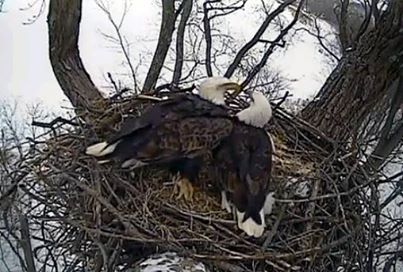
The Decorah Eagles site in Decorah, IA, follows a breeding pair of Bald Eagles that have been together since the winter of  2007-08.  Since 2008, they have hatched and fledged 14 eaglets.  They expect this year’s first egg to be laid around February 17th.   So far, the pair has been busy setting up their nest and getting ready.  I’m always so surprised how early Eagles will lay their eggs in such cold climates.  I’ve seen them sit there, covered in snow with the wind howling, keeping those eggs safe and warm.  This nest cam is part of the non-profit Raptor Resource Project which specializes in the preservation of birds of prey.

Decorah Eagles

This is just a few of the nest cams that are out there.  As more come back on-line for the season, I’ll mention them.  If you have a favorite bird, I’m pretty sure someone has a nest cam on it.  Nest cams have really multiplied the last few years and for the most part, people are respectful of the birds.  It’s a great way to follow the trials and tribulations that these birds go through, from predators, to finding food, to fighting the elements.  It’s really exciting to finally see the babies take flight and then one day take off, never to come back.  Then it’s time to cross your fingers and wait and see if mom and dad come back again next year.

An Icy Chicago River

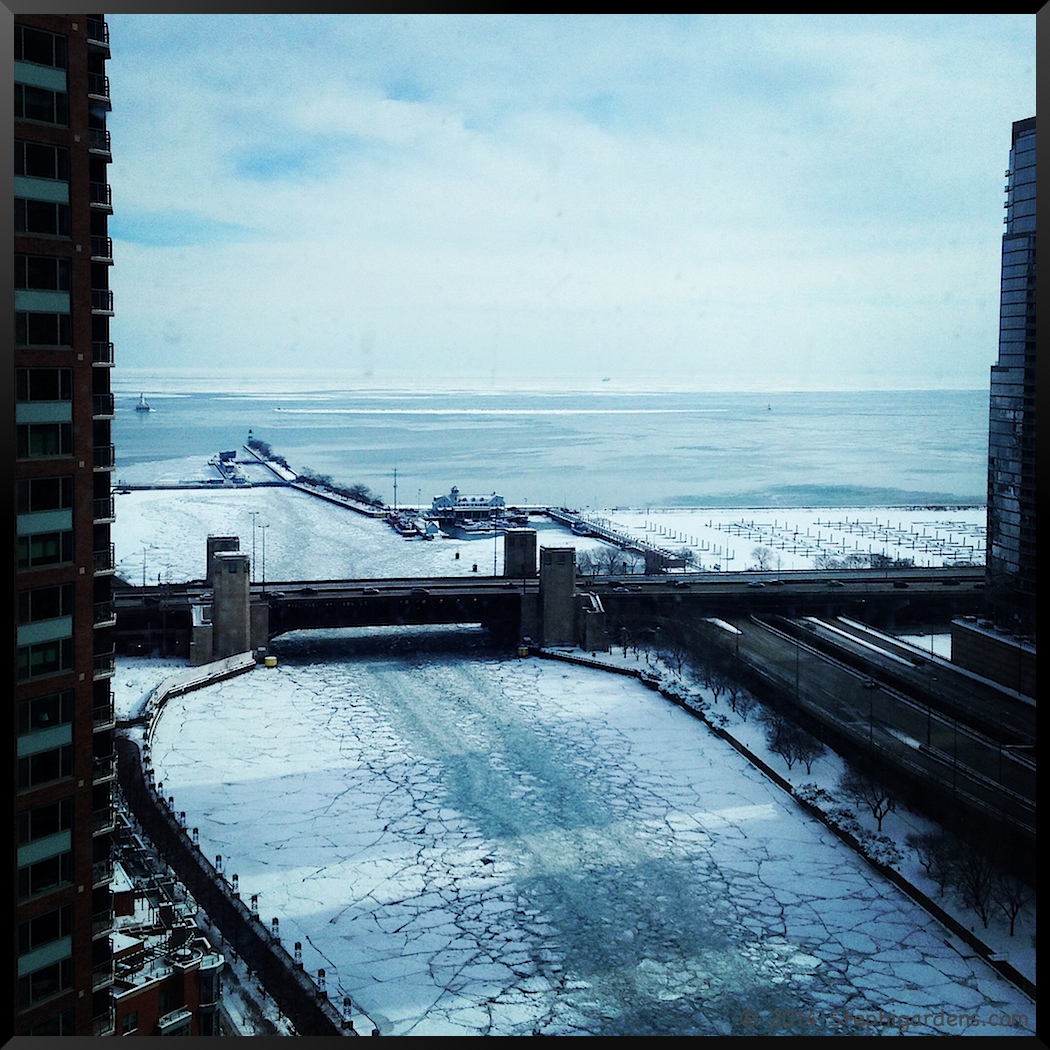
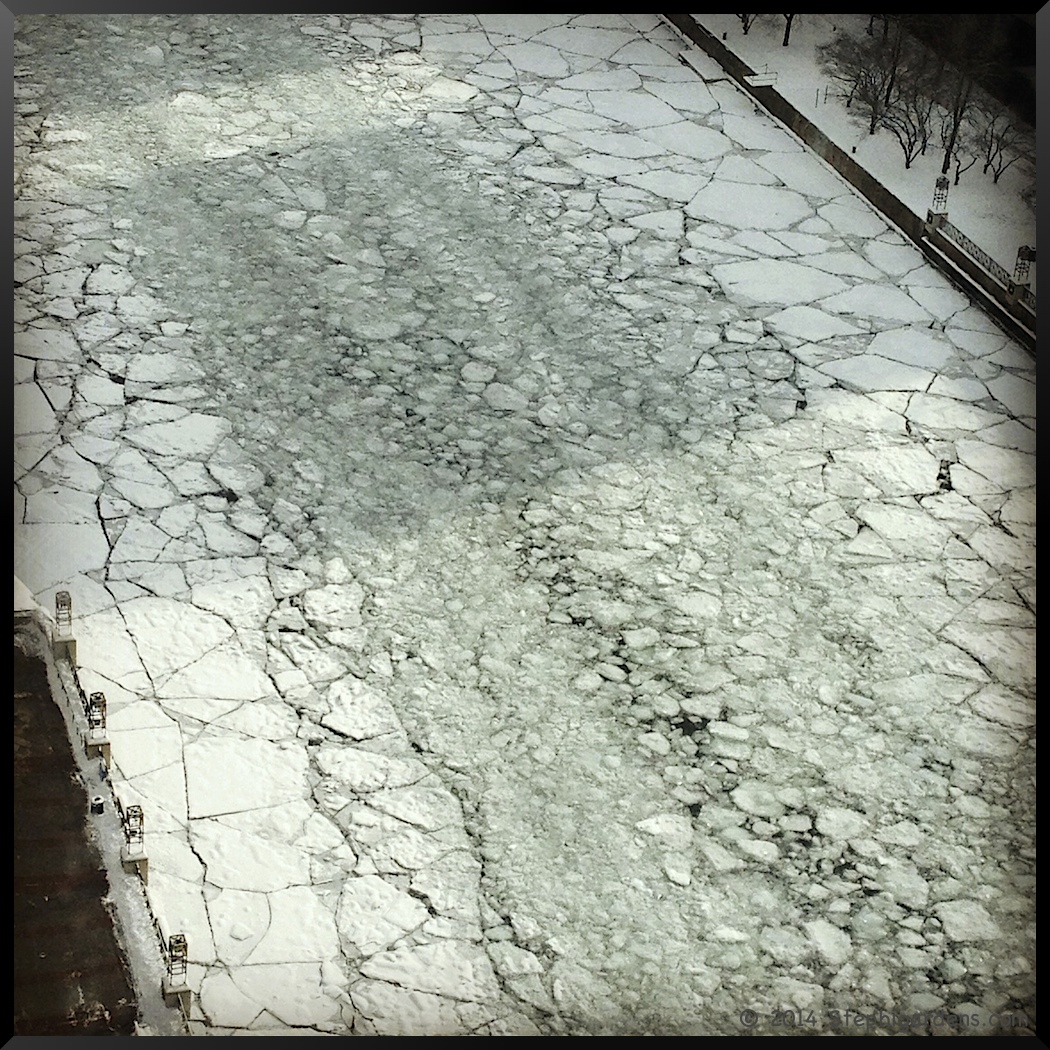
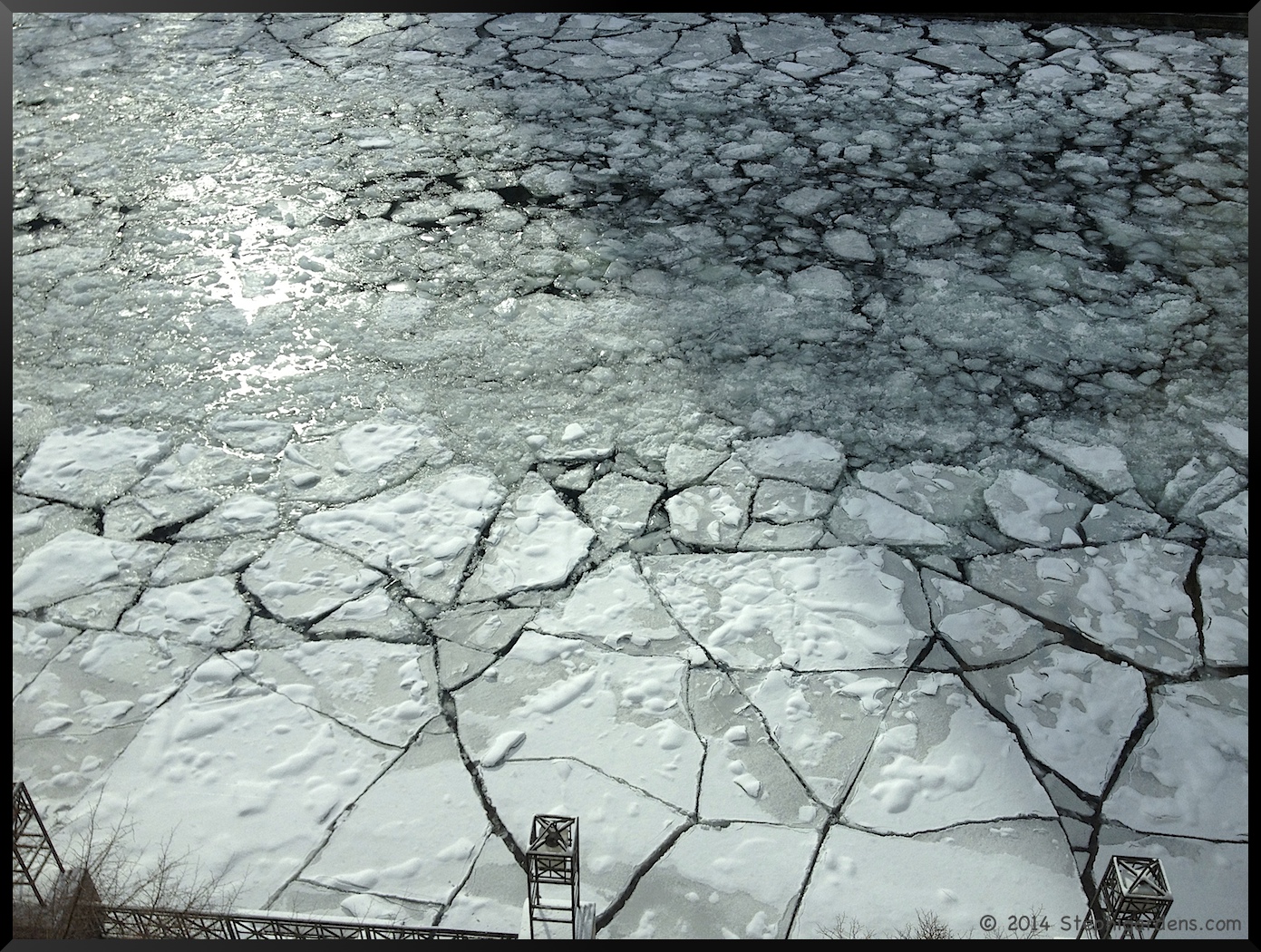
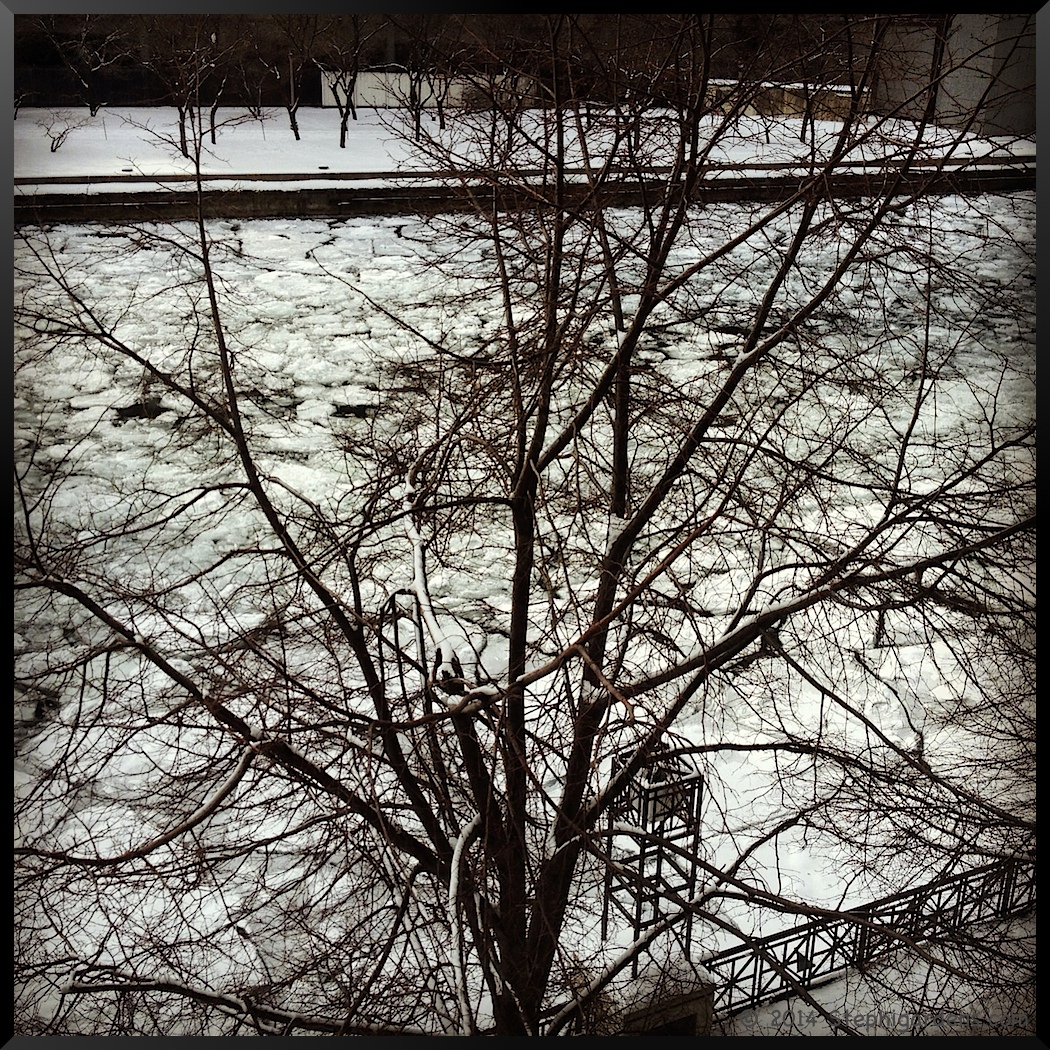
This past weekend we were downtown and had a great view of the Chicago River that runs right through the heart of Chicago. With a winter like this, it’s no wonder it’s covered with ice. Even Lake Michigan has the most ice cover to date in 20 years. The ice in the river did make for some interesting photos…
Icy Chicago River


Icy Chicago River


Icy Chicago River


Icy Chicago River


Icy Chicago River

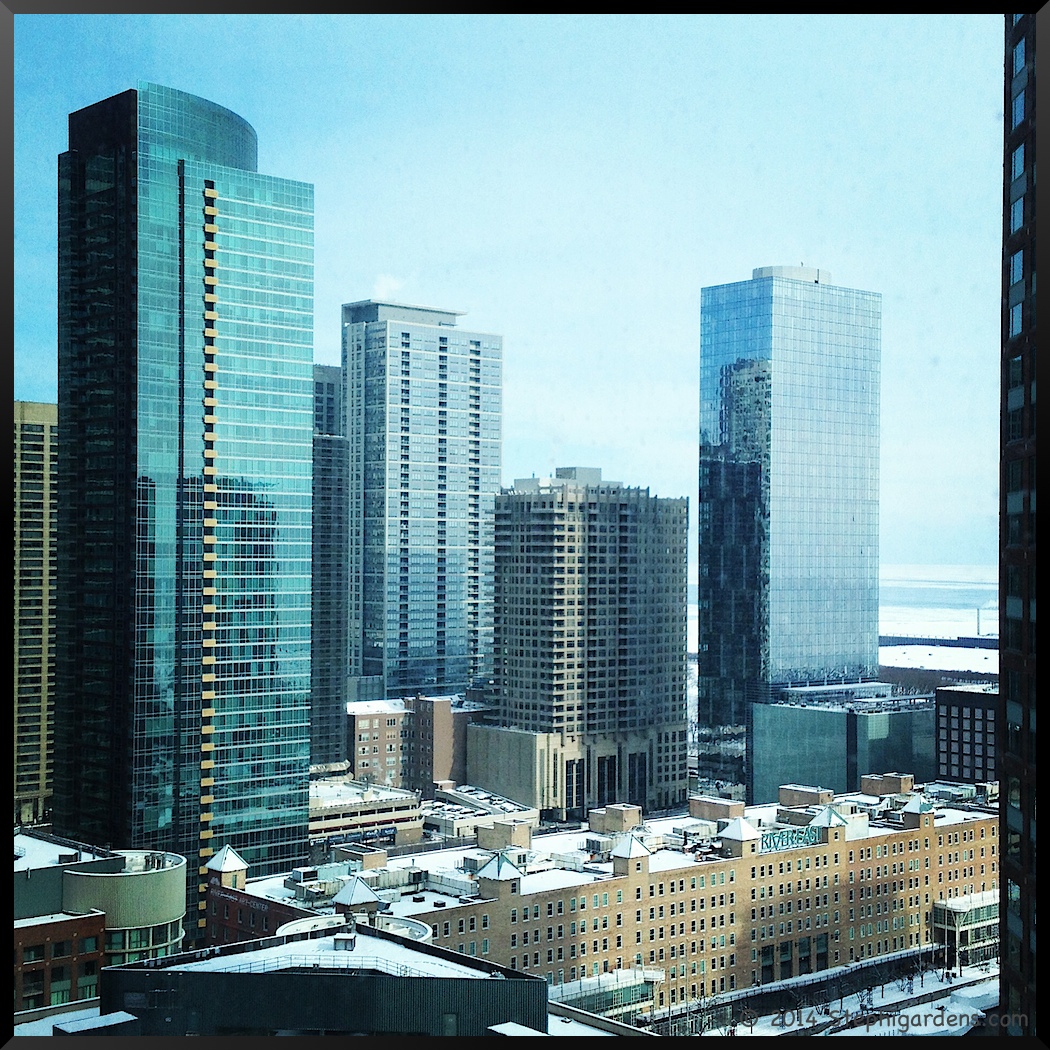
Of course, no pictures of Chicago are complete without a skyline view.

Chicago Skyline

(Some photos by Steve)