Bird Count Time

It’s that time of year again! The 22nd Annual Great Backyard Bird Count is this weekend, Friday, February 15, through Monday, February 18, 2019.
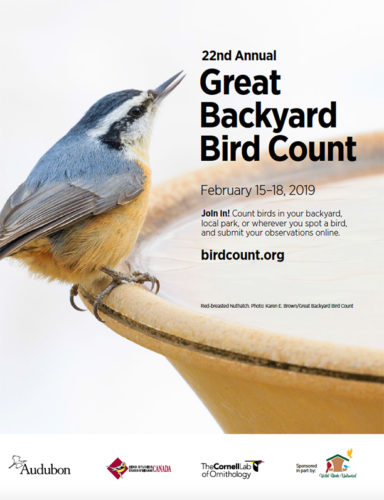
This is a wonderful citizen science project that helps researchers at the Cornell Lab of Ornithology and the National Audubon Society learn more about how birds are doing, and how to protect them and the environment we share.
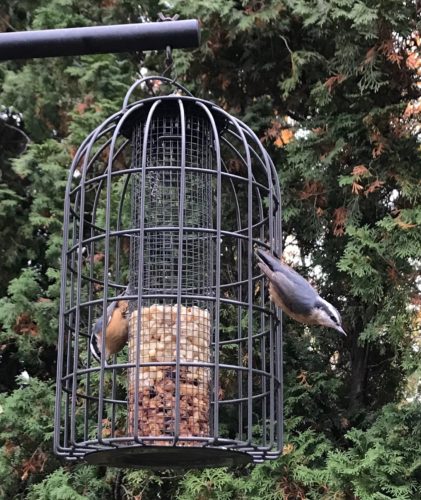
peanut feeder

It can be as simple as looking out your window for as little as 15 min, or go out to your favorite birding spot and report on what you see. Every report is important to create a worldwide snapshot of where all the birds are at one moment. Scientists use this information to investigate how weather and climate change influence bird populations, why some birds like winter finches appear in large numbers during some years but not others, how the timing of birds’ migrations compare with past years, how are bird diseases, such as West Nile virus, affecting birds in different regions and have there been changes in bird diversity in cities versus suburban, rural, and natural areas?

Once you’ve counted your birds, you can log your sightings online at birdcount.org. This morning I counted 2 red-breasted nuthatches, 1 downy woodpecker, 4 house finches, 6 house sparrows and 1 female cardinal. I’ll report again tomorrow morning and hopefully one of my unusual visitors like the Red-bellied Woodpecker or Coopers Hawk decides to visit.

Need help identifying what you see? Check out these mobile apps, these online resources, or order my favorite bird book for beginner to intermediate birders, Birds of North America: A Guide to Field Identification.

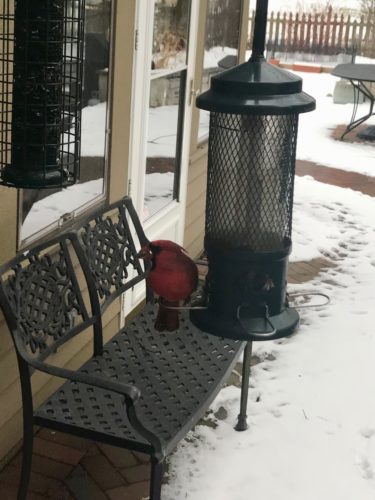
This is a male cardinal from a few days ago. He was just frozen there at the feeder with the striped sunflowers in his beak. Not sure what he was doing, but he sat like this probably for a minute or so.
In the past, I generally didn’t have red-breasted nuthatches this time of year. They’d come through on migration for a couple of weeks and then move on elsewhere. This is exactly the type of data they are looking for.
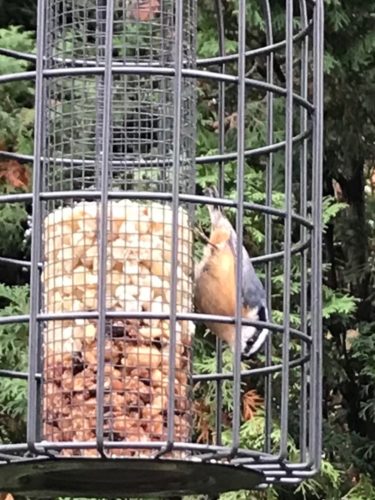
squirrel proof peanut bird feeder

Interested in what everyone else is seeing? On the GBBC website you can explore real-time maps and charts that show what others are reporting.  Be sure to check out the Explore a Region tool to see what everyone else is seeing in your area. Want to have your own checklist specific to your area? Check this tool out.

Want to help count birds all year round? You can keep counting throughout the year with eBird, which uses the same system as the Great Backyard Bird Count to collect, store, and display data any time, all the time. I love this tool to see what birds others are seeing (and where) when I’m out and about.

I did my part 😊
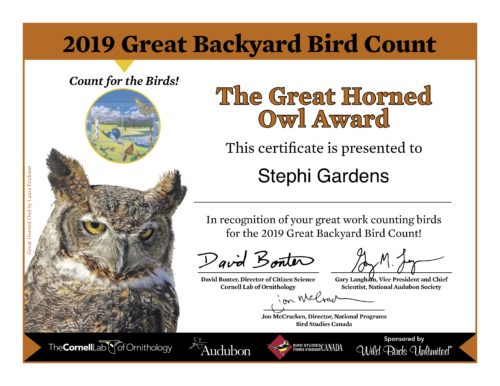
You can get your own certificate, just follow this link.

Happy Birding! Hope you see something interesting, but even if you don’t, know you’ve made a difference for science.
This Crazy Winter

The winter of 2019 is definitely one for the books. We’ve been through snow, rain, crazy temperatures swings, a winter thunderstorm, the polar vortex…and now another ice storm has hit the Chicago area.

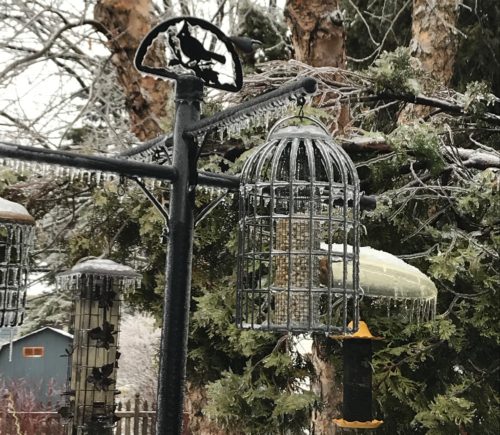
As temperatures hovered around freezing, the precipitation has rotated between rain, sleet, freezing rain and snow. Aside from the treacherous driving and walking, the ice made for beautiful scenery. Pretty much everything outside, like my feeder pole and feeders, were covered in ice and icicles. If you look closely at the icy peanut feeder, you can see one of the red-breasted nuthatches that is spending the winter in my yard on the peanut feeder.

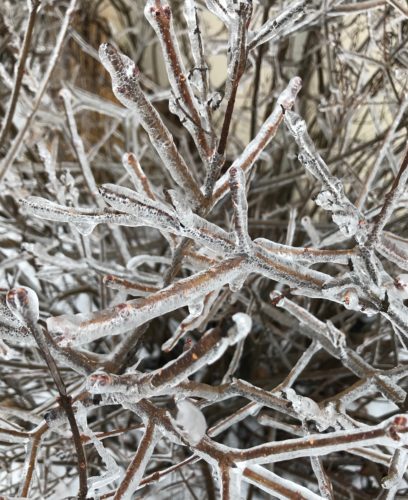
Looking around the yard everything, like this Dwarf Korean Lilac, was encased in a thick layer of ice.

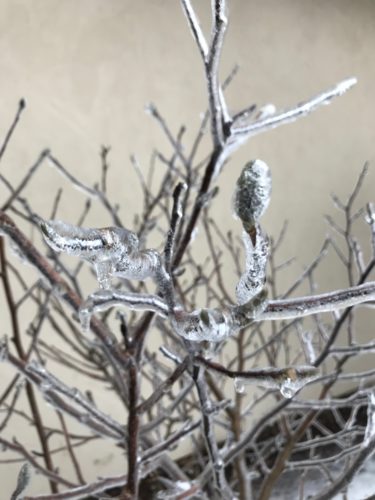
The buds on the star magnolia were similarly encased. The spring flower buds are actually protected by the layer of ice as long as I don’t try to knock the ice off.

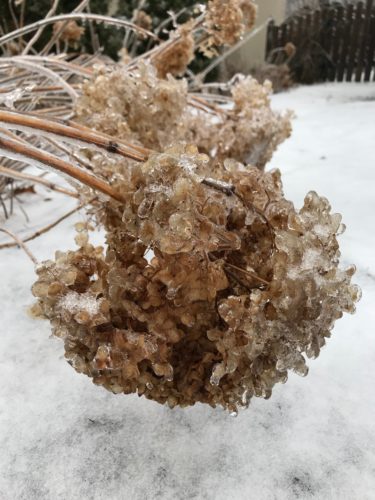
The annabelle hydrangeas are hanging heavy…

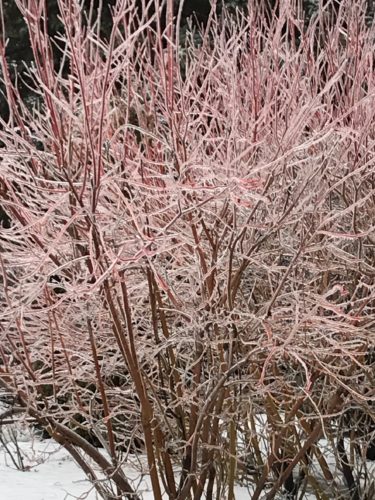
And the neighbors red-twig dogwoods are truly showing their winter colors.

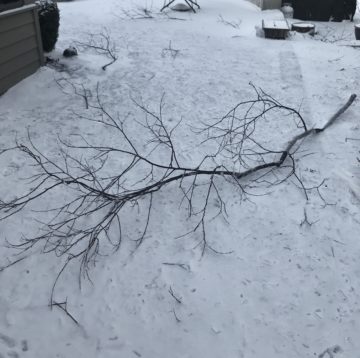
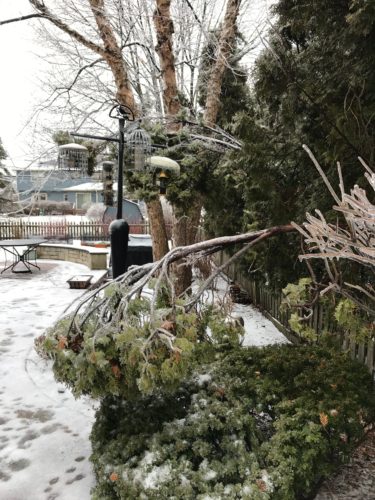
What do do about the ice? Not much you can do without inflicting more damage to weak branches and spring buds. Best to just wait and hope that it thaws soon. The wind has been howling tonight, which means probably even more breakage since the weight of the ice makes everything really heavy. The river birch has been dropping branches all over the patio.

The arborvitaes are really having a rough winter between the heavy snow earlier this winter and now the ice. Only thing to do at this point is be patient. Multi-stemmed evergreens like arborvitae can be protected in the fall by tying up loosely with cloth, burlap or twine. But these are my neighbors shrubs, so all I can do is in the spring tie up the branches that have fallen on my side.

The Morton Arboretum has a great article on Winter Injury to Shrubs and Plants.

How are your plants fairing this winter?

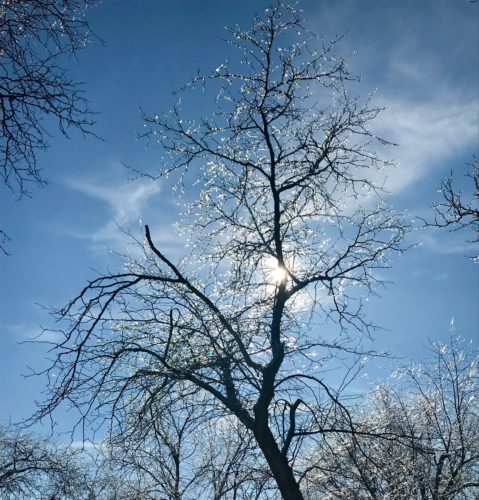
Bonus photo: The sun came out today and made everything super sparkly!


New Squirrel Proof Bird Feeders

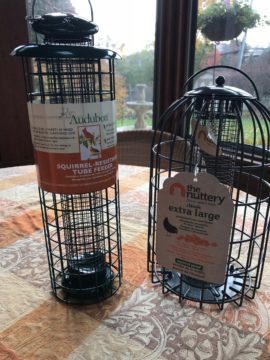
I had such success with my squirrel proof feeders (Who Won The Squirrels vs Feeder Contest?) that when I needed to replace my peanut feeder, I searched again for a squirrel proof version. I found two options that seemed like they would work and ended up ordering them both!

squirrel proof peanut bird feeder

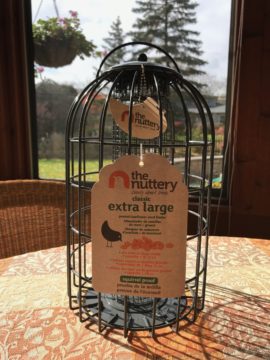
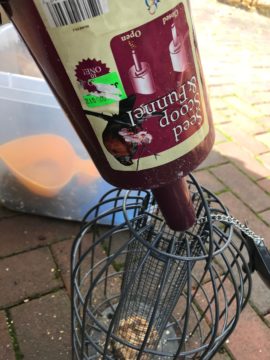
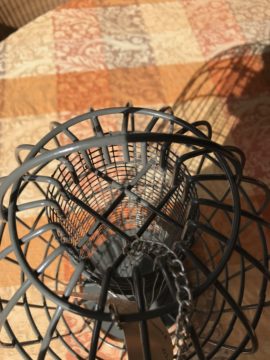
The first was the The Nuttery Classic X-large Peanut/Sunflower Seed Feeder (NT066). It seems to have a heavy duty outside cage to keep squirrels from chewing through the mesh. One complaint that I saw in the reviews was that its hard to fill. Using a handy seed funnel scoop I didn’t really have a problem.

I really liked that if the squirrels were able to get the top off, there’s a strong grate preventing them from emptying the feeder! A nice touch and definite plus. 

squirrel proof peanut bird feeder

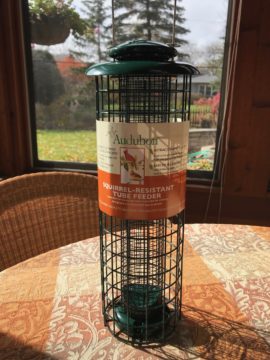
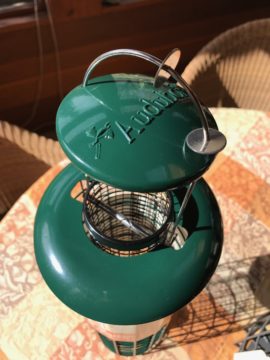
The second one was an Audubon Squirrel-Resistant Caged Screen Feeder (Model NACAGE).  Again, people’s biggest complaint was filling it. 

squirrel proof peanut bird feeder

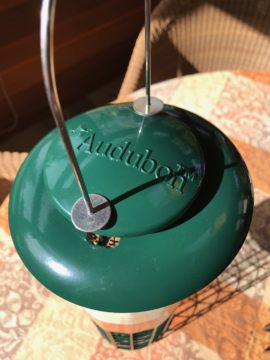
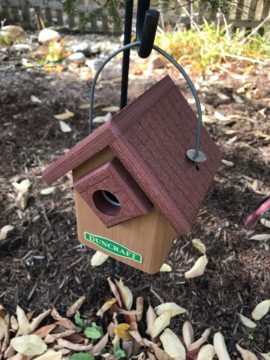
I think since I already was used to the disc method of locking down the top from my Duncraft Eco songbird house that the House Wrens love, lifting the lid isn’t a problem. Very effective against a squirrel getting it open. But, I do think it would have been nice if the wire loop would tilt out of the way when the top is up. It does get in the way of filling the feeder, but again using the funnel scoop or my Perky Pet Seed scoop, I was able to fill it ok.

Now I waited for the birds! Why did I want a peanut feeder so badly?  For the nuthatches of course! Especially the Red-breasted Nuthatch. Apparently it’s an irruptive year for them and I have a couple that have been visiting my backyard with the White Breasted Nuthatch for a few weeks now.

peanut feeder

squirrel proof peanut bird feeder

They are the cutest, friendliest bird around.

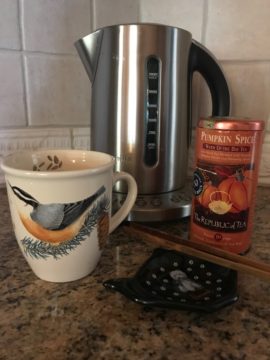
Definitely one of my favorites, as you can tell by my morning tea mug that I bought at my local Wild Bird Unlimited store. Of course this time of year my go to tea is Pumpkin Spice from Republic of Tea, and with water heated up in my electric Breville variable temperature kettle.

red breasted nuthatch coffee mug

I would point out that I wouldn’t need any of these squirrel  proof feeders if I had just placed my Squirrel Stopper Feeder Pole the required distance from a tree (check out these previous posts for more on the pole system and other feeders: This Birthday Was For The BirdsThe Feeders Are Ready for Winter).  But then I couldn’t see the feeder as well from the kitchen window. I would say though, I have never seen squirrels climb up the pole so I would still whole-heartedly recommend it!

FYI, after my local feed store closed, I was having trouble finding shelled peanuts for my feeders so I ended up ordering them from Amazon.  The birds couldn’t tell the difference and were happy for the treats.

So happy to finally not have the squirrels be a problem, now if I could say the same for the house sparrows and house finches.