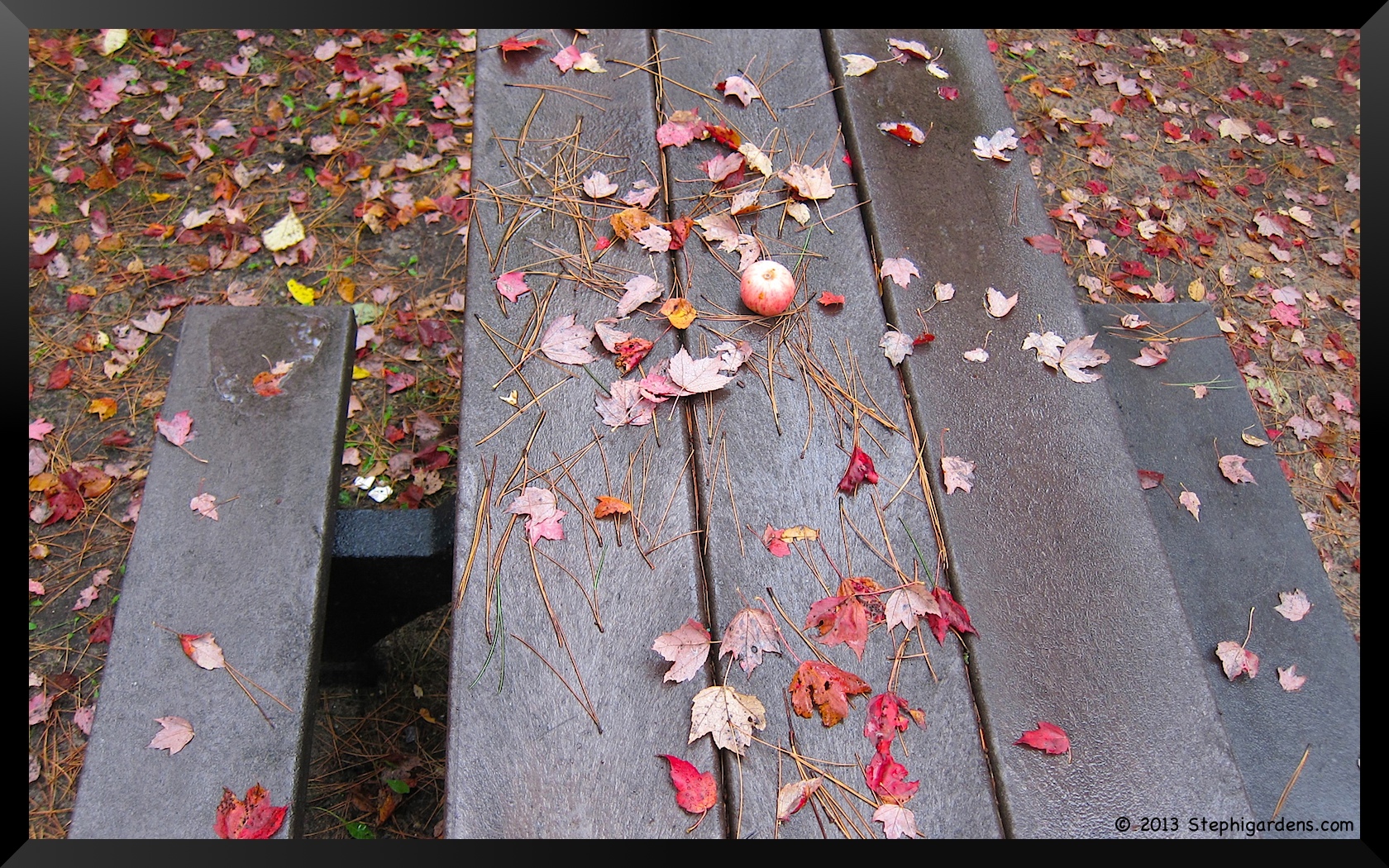
Here’s some more scenes from fall in Michigan…
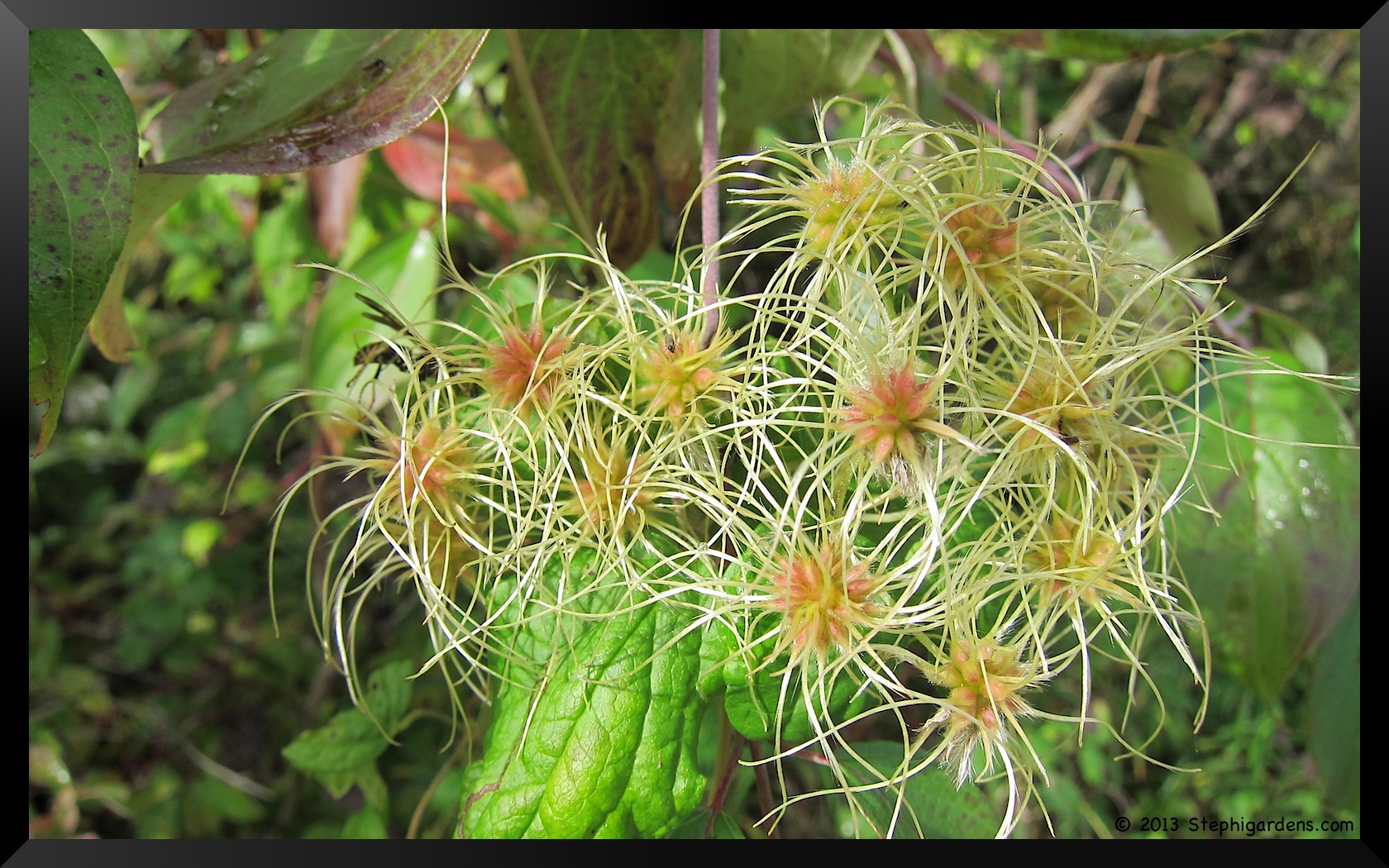
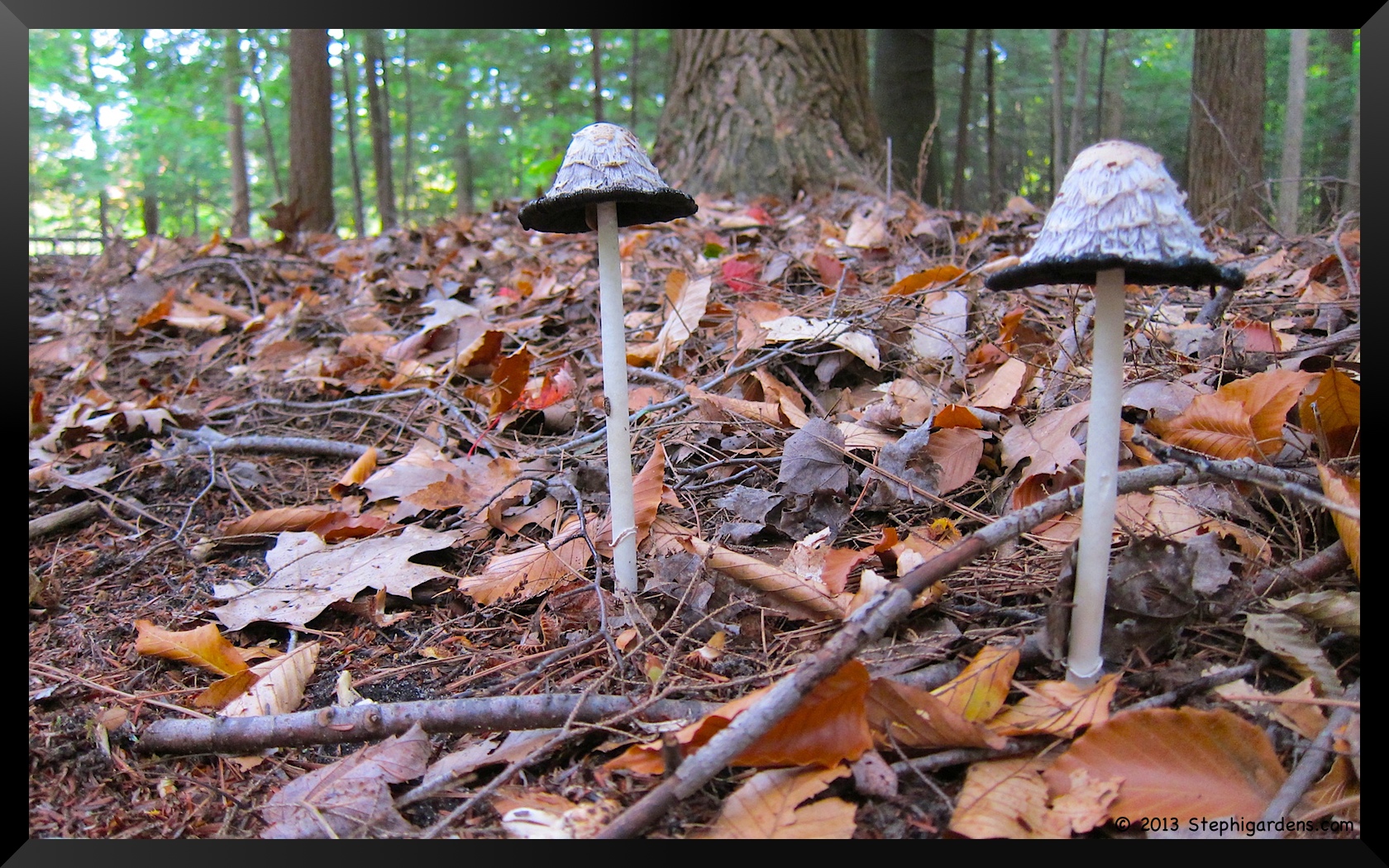
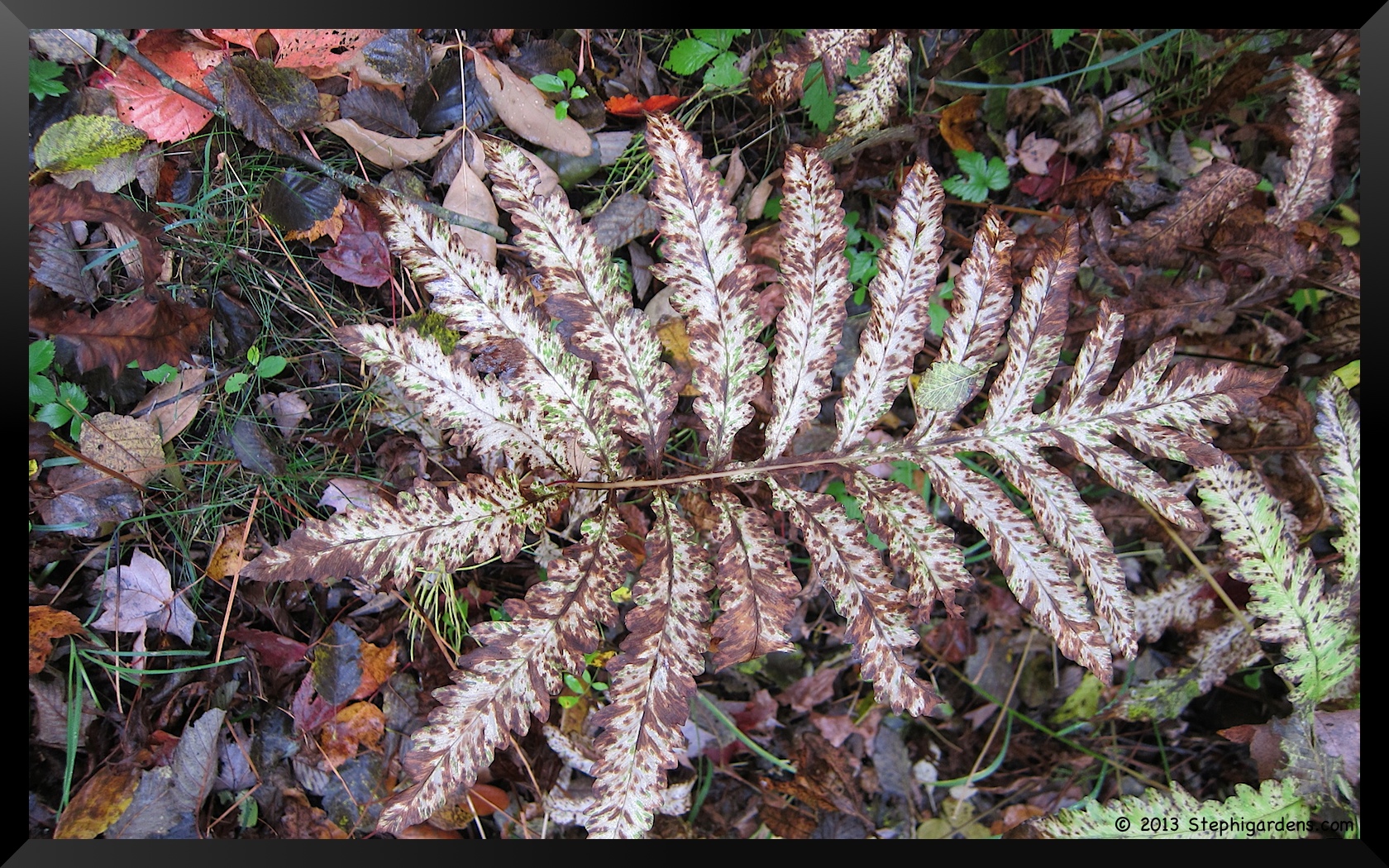
Turkey Tail Fungi (Trametes versicolor)
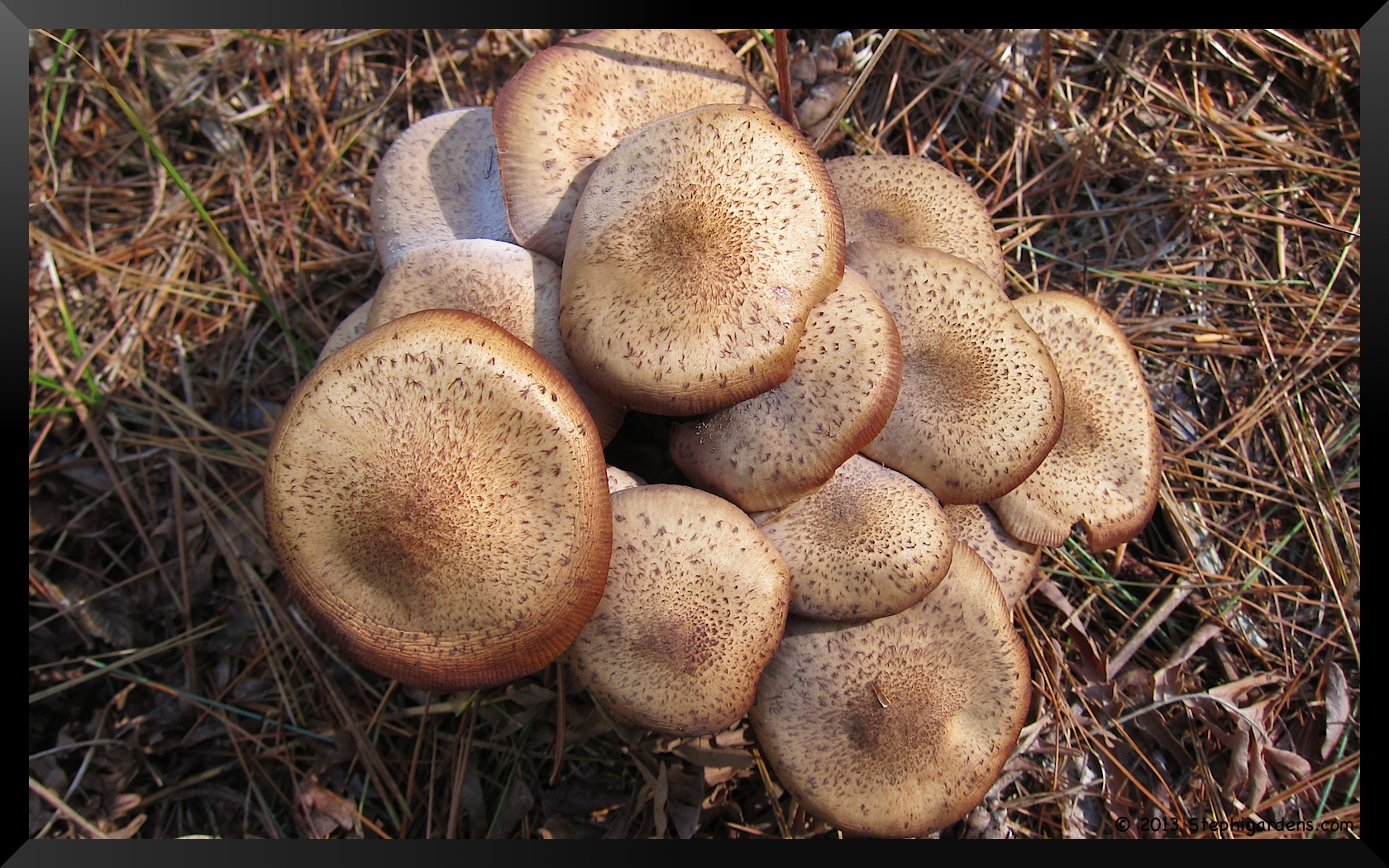
Wooly Bear-mild or harsh winter?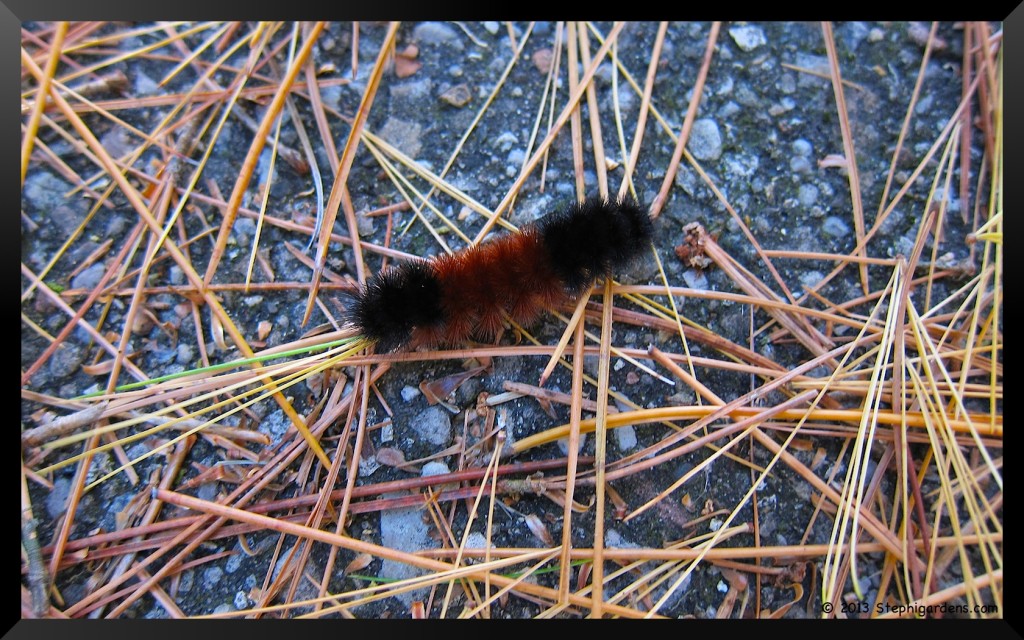
Meadowhawk Dragonflies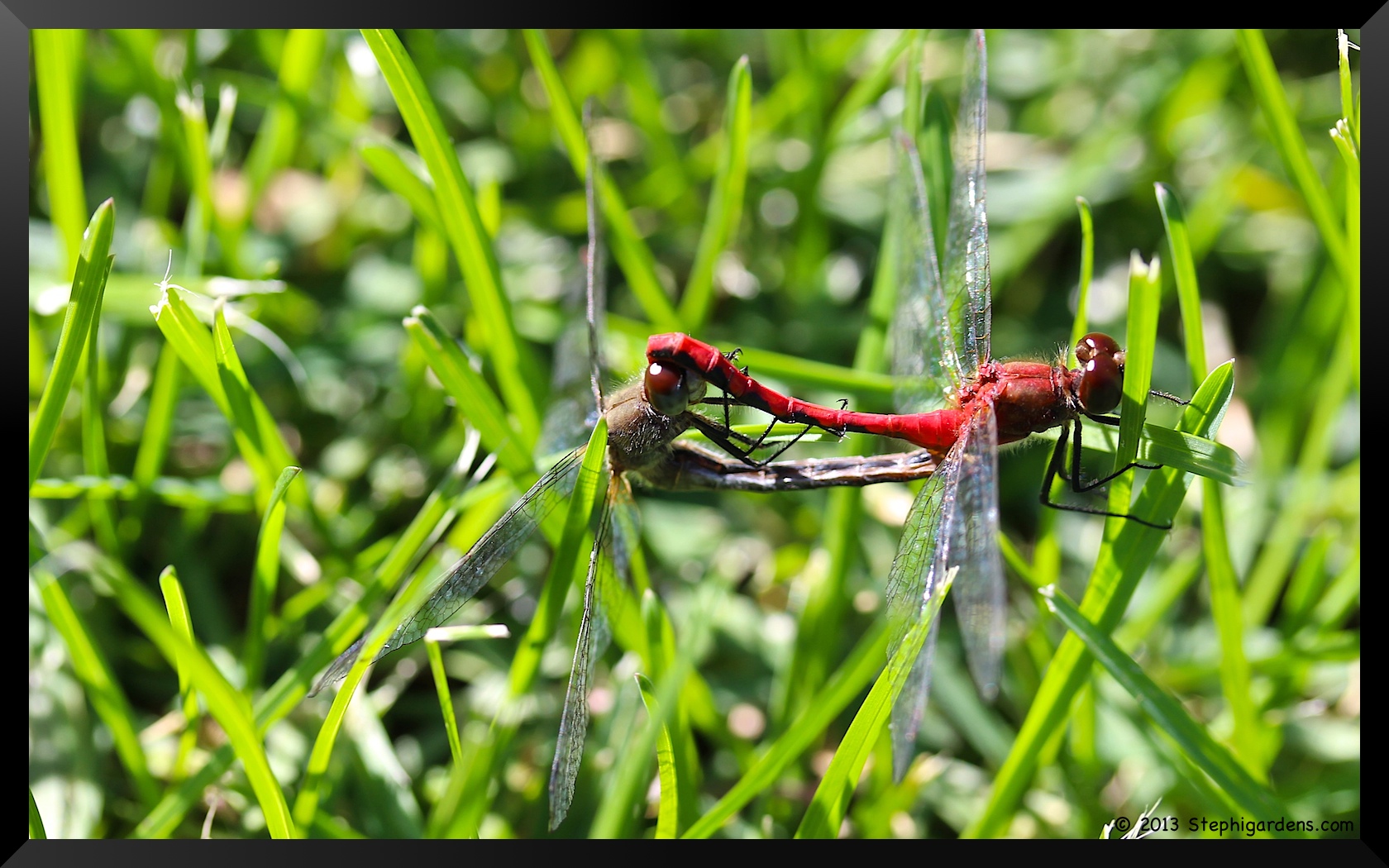
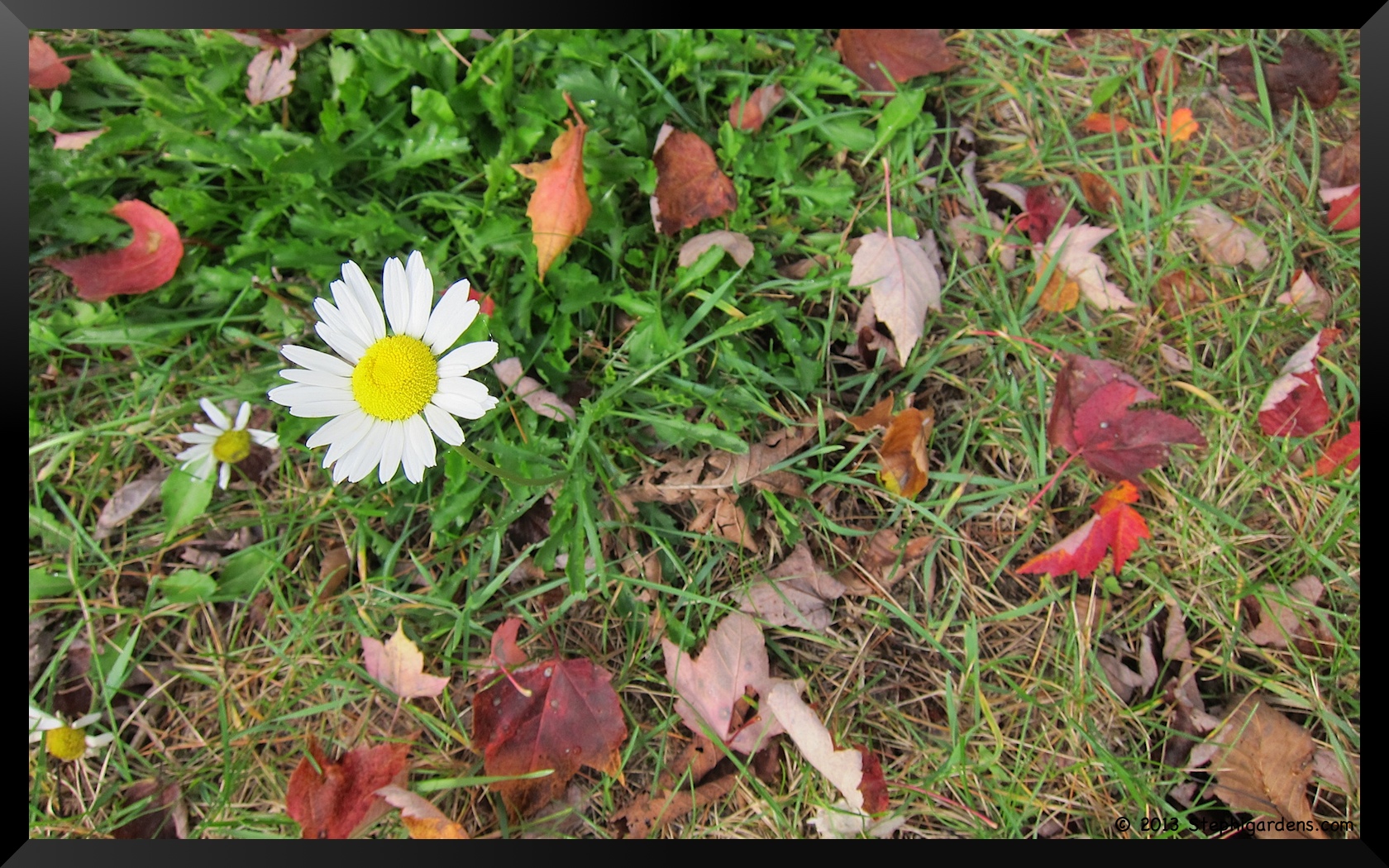
Black-Eyed Susan

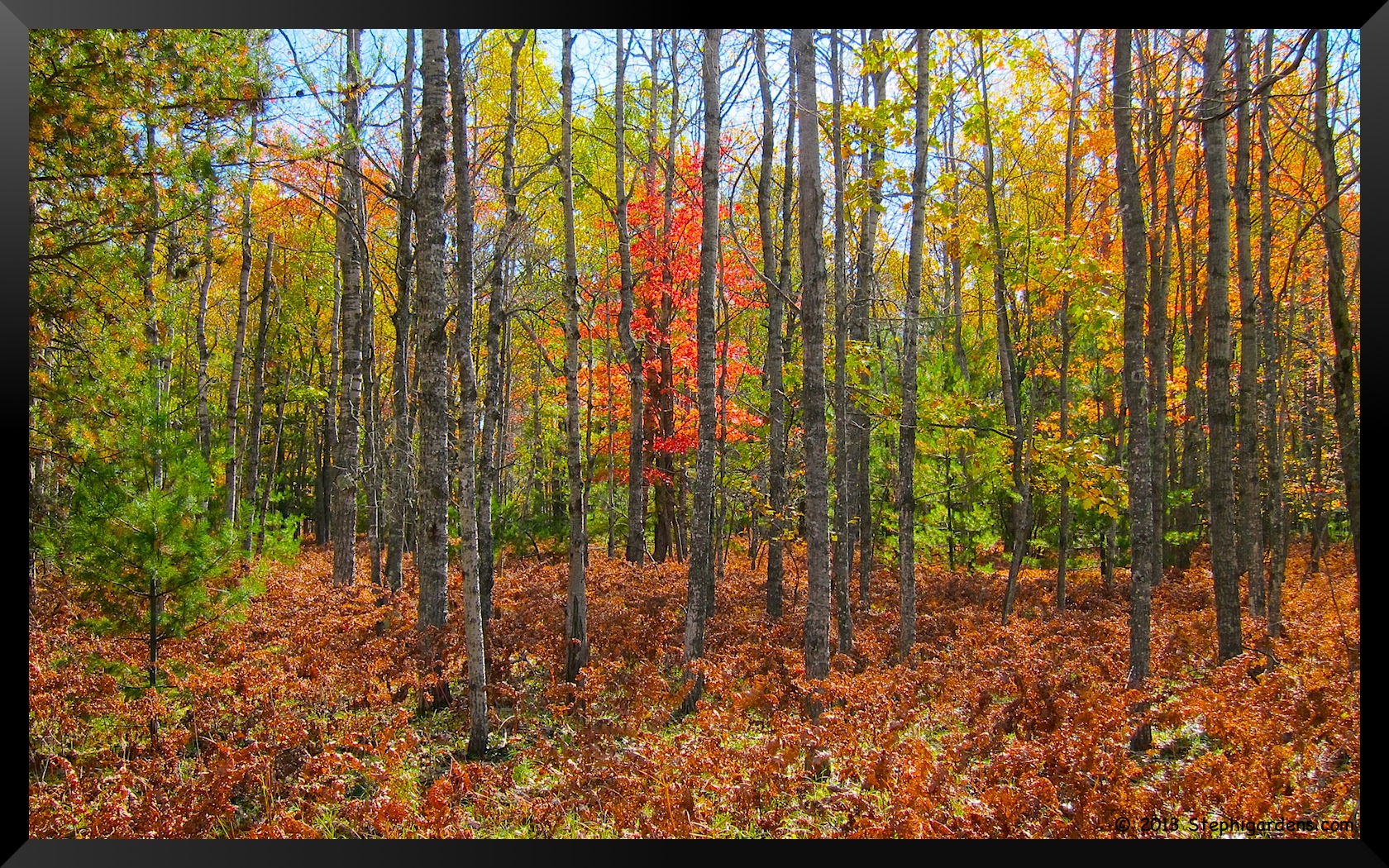
photos by Peggy
Casual Gardening and Living in the Suburbs

Here’s some more scenes from fall in Michigan…
Turkey Tail Fungi (Trametes versicolor)
Wooly Bear-mild or harsh winter?
Meadowhawk Dragonflies
Black-Eyed Susan
photos by Peggy
While we were out there discussing the ideas for the new raised gardens yesterday, this is what we saw in the neighbor’s backyard behind me…a very healthy coyote!

And while I know coyotes can jump a fence, I hope it acts as a deterent to keep him from coming in my yard!
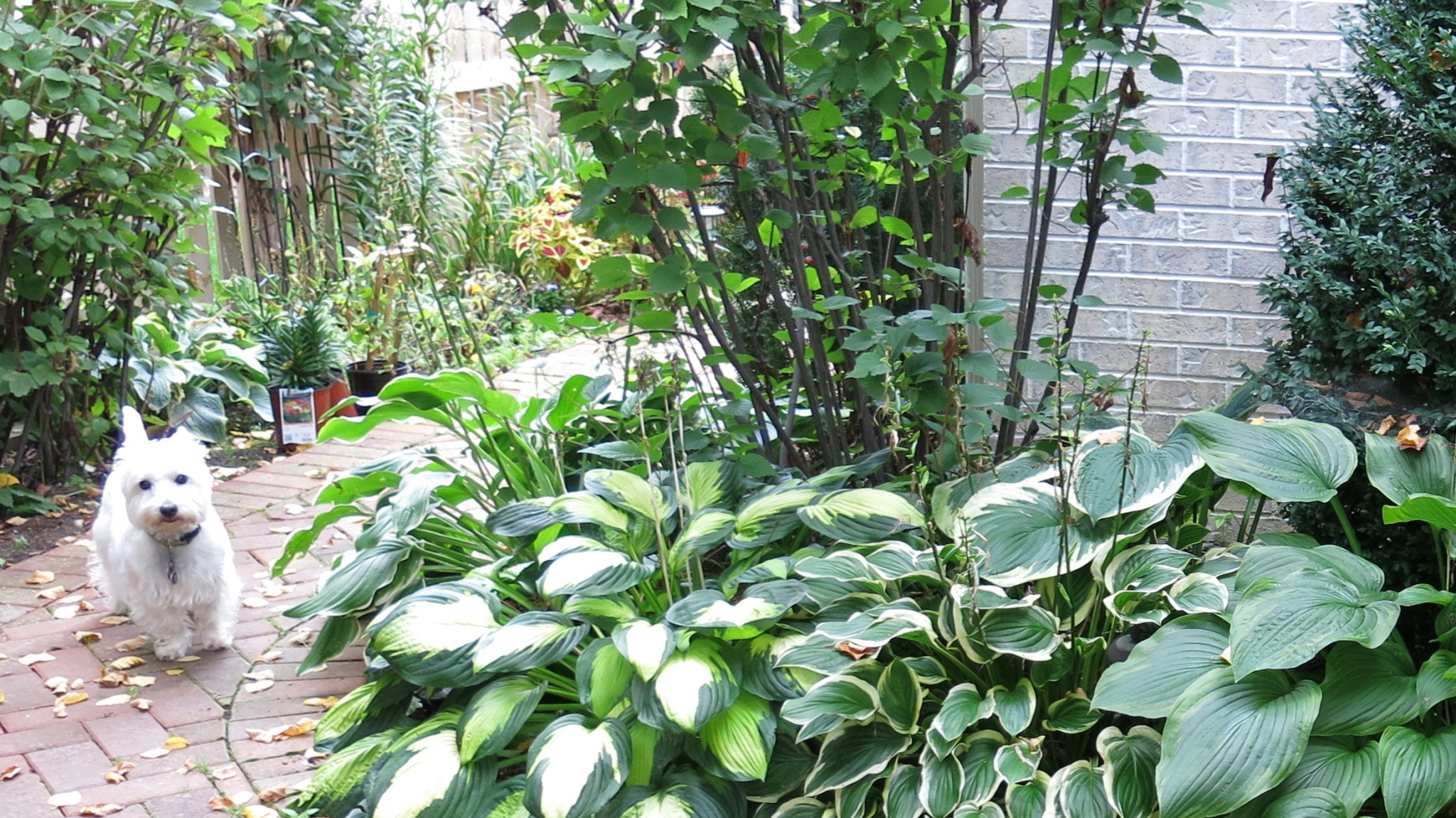
The coyote population has really risen the last few years. As with many wild animals living in suburban areas, there is friction. So, while it really helps to keep the rabbit and rodent population under control, we have had instances of them attacking family pets. Even one incident in my neighborhood, which thankfully the little terrier survived! So we keep just a little closer watch over Daisy, and hope the coyote is too lazy to jump over my fence.
I read a great book recently about humans and animals trying to coexist, The Beast in the Garden: A Modern Parable of Man and Nature by Dave Baron. Here’s an overview from Barnes and Nobles:

I am really in need of a new area for vegetables. For years, I’ve struggled with too many plants in a too small of a place. But, I also don’t have a good spot for adding more vegetable gardens, either due to too much shade or existing plants in the way. So I am contemplating putting 2 new raised beds off the back of the patio in a space that used to house the kids swing set.
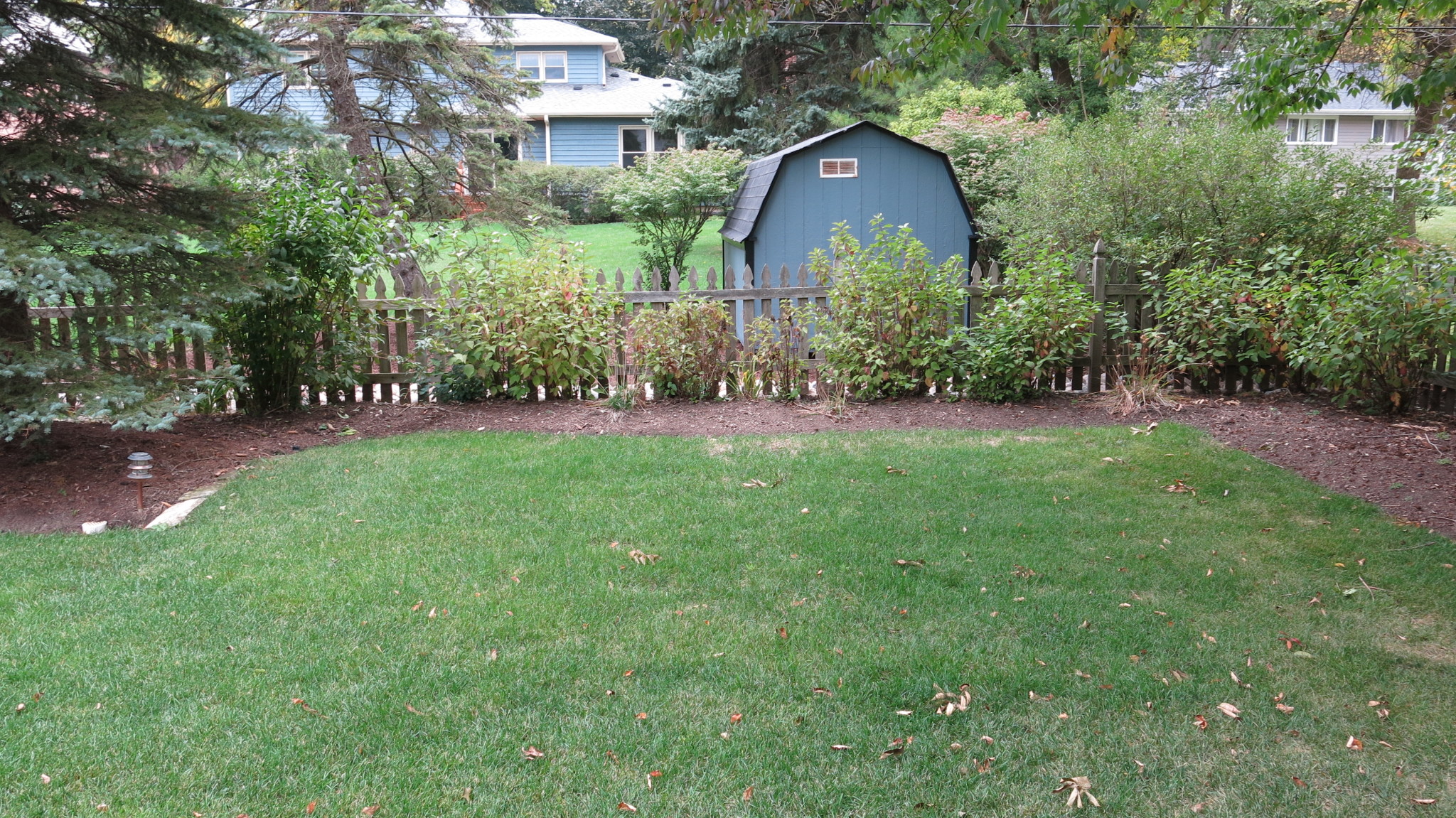
Right now, this looks out onto half dead red-twig dogwoods that are unfortunately succumbing to some kind of canker. To try and help the dogwoods, we’ve tried to cut back all the old wood, clean up the leaves and last spring did some rejuvenation pruning removing about a third of the branches. No more have died and I’ll do another rejuvenation pruning in the late winter. We’ll see how much longer they last.
But, back to the vegetables. I have been following the sun pattern for most of the summer, and I think this spot will work out. It’s not full sun, but gets good morning and mid-day sun, which is the best I can hope for. I am trying to decide if I should add some trellis work in front to shield it, but in talking to my landscaper, he confirmed my fears that while it will look nice, it will make the area quite shady. Maybe some other kind of less dense fence will work?
So now the question is, can I make this look pretty by adding some flowers, grasses or other interesting features to the area, or will it just turn into another messy vegetable garden? What have you done to “hide” the vegetable garden or do you think they are pretty? I think what my mom has done with her gardens is pretty.

It was brought to my attention that following the good and the bad should be the ugly. But since I thought the bad was ugly enough, I thought I’d spare you the ugly! Instead, I thought I’d just continue to post some of the beautiful Michigan fall photos from Peggy.
Gray Dogwood
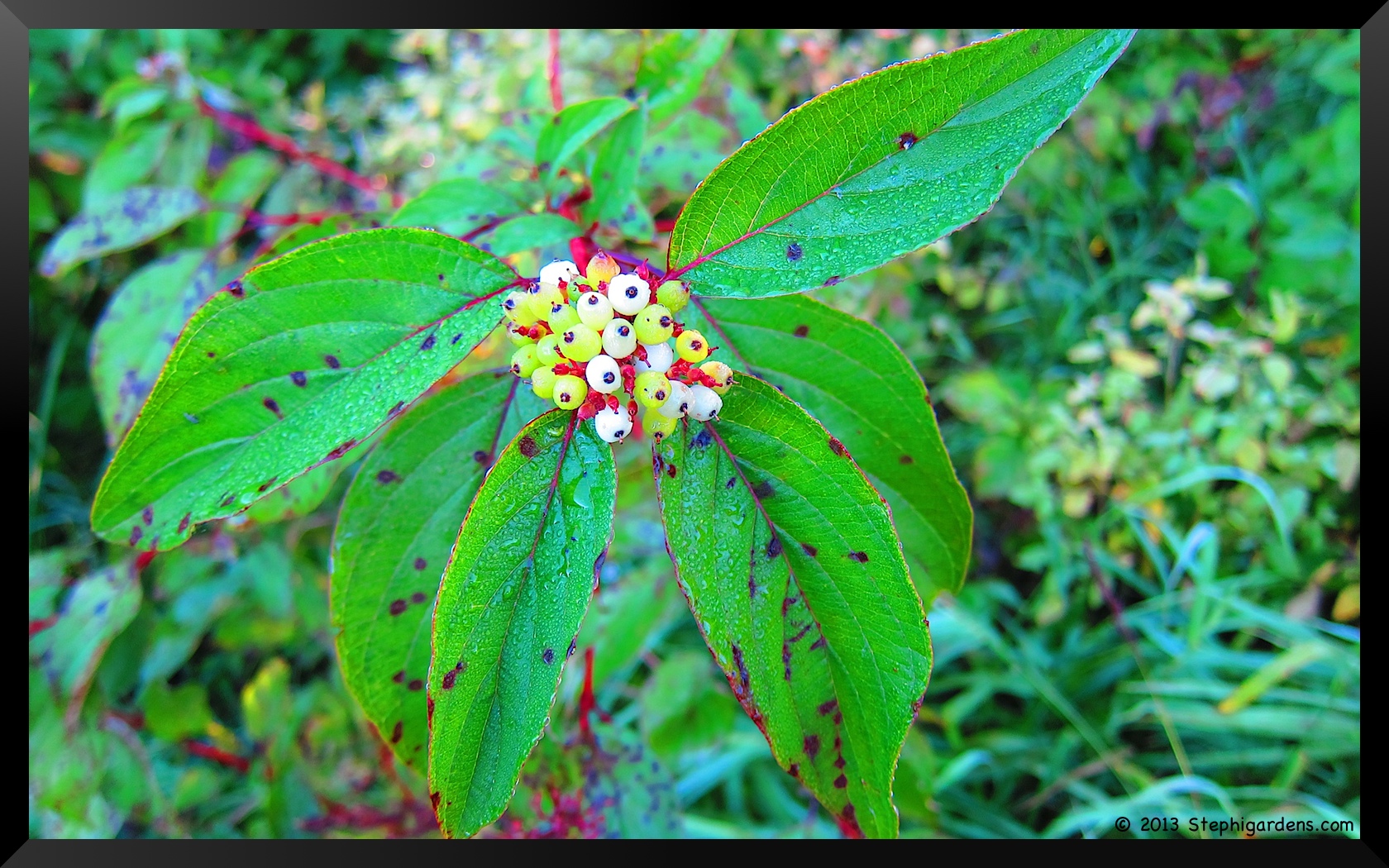
Winterberry or Michigan Holly

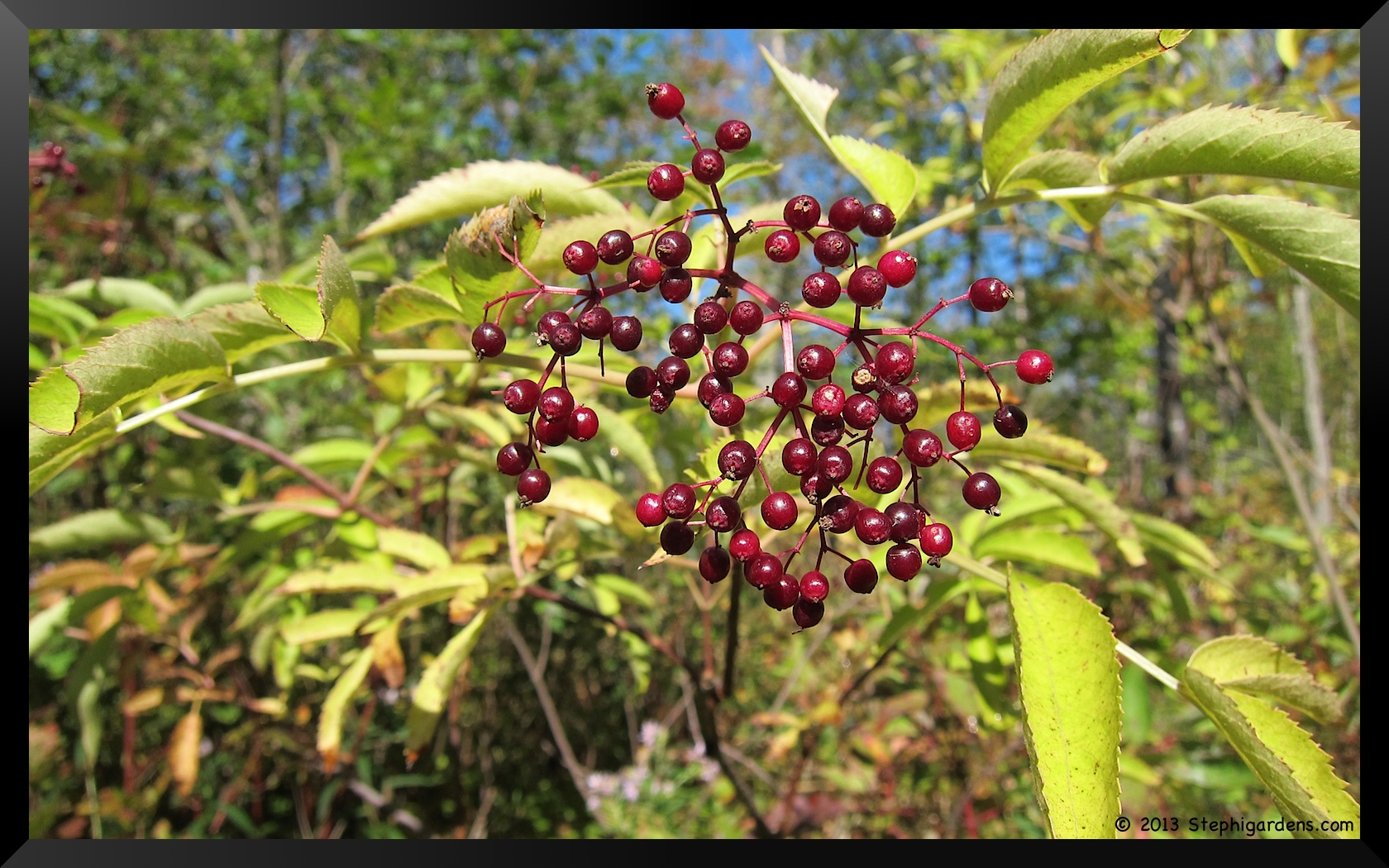
Elderberies
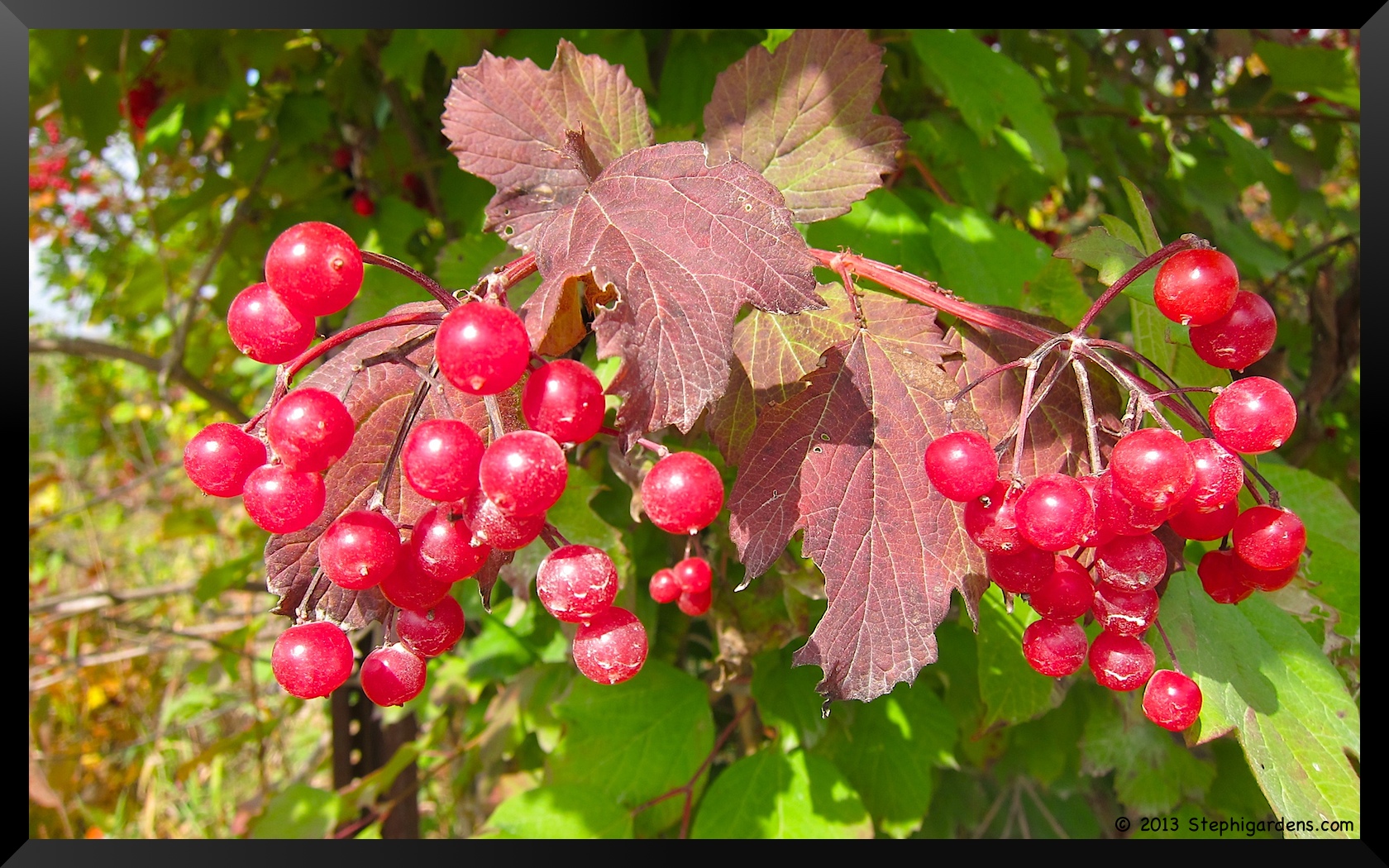
Viburnum trilobum
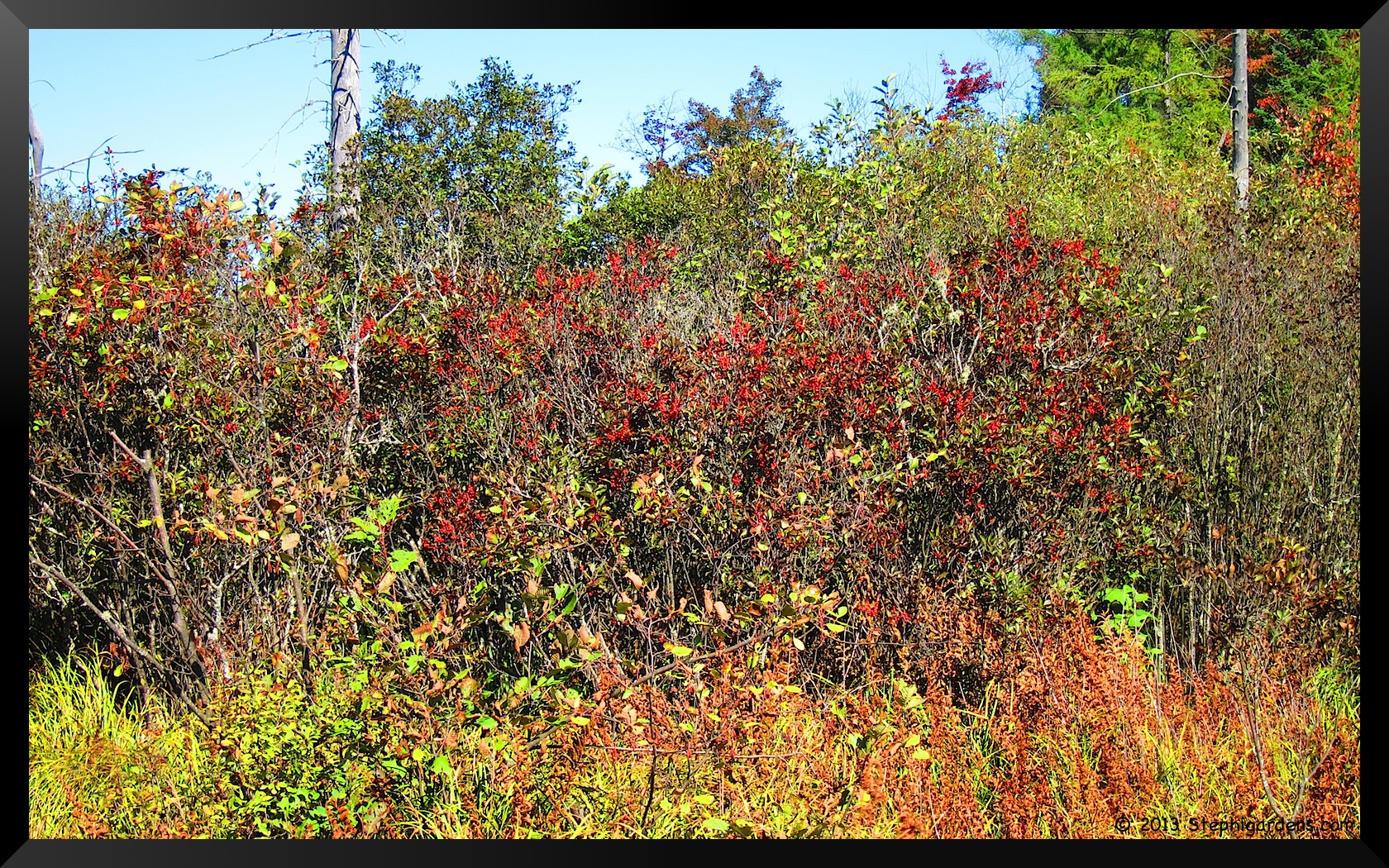
The birds and animals aren’t the only ones to have yummy berries to eat– The garden raspberries are still producing berries!

photos by Peggy
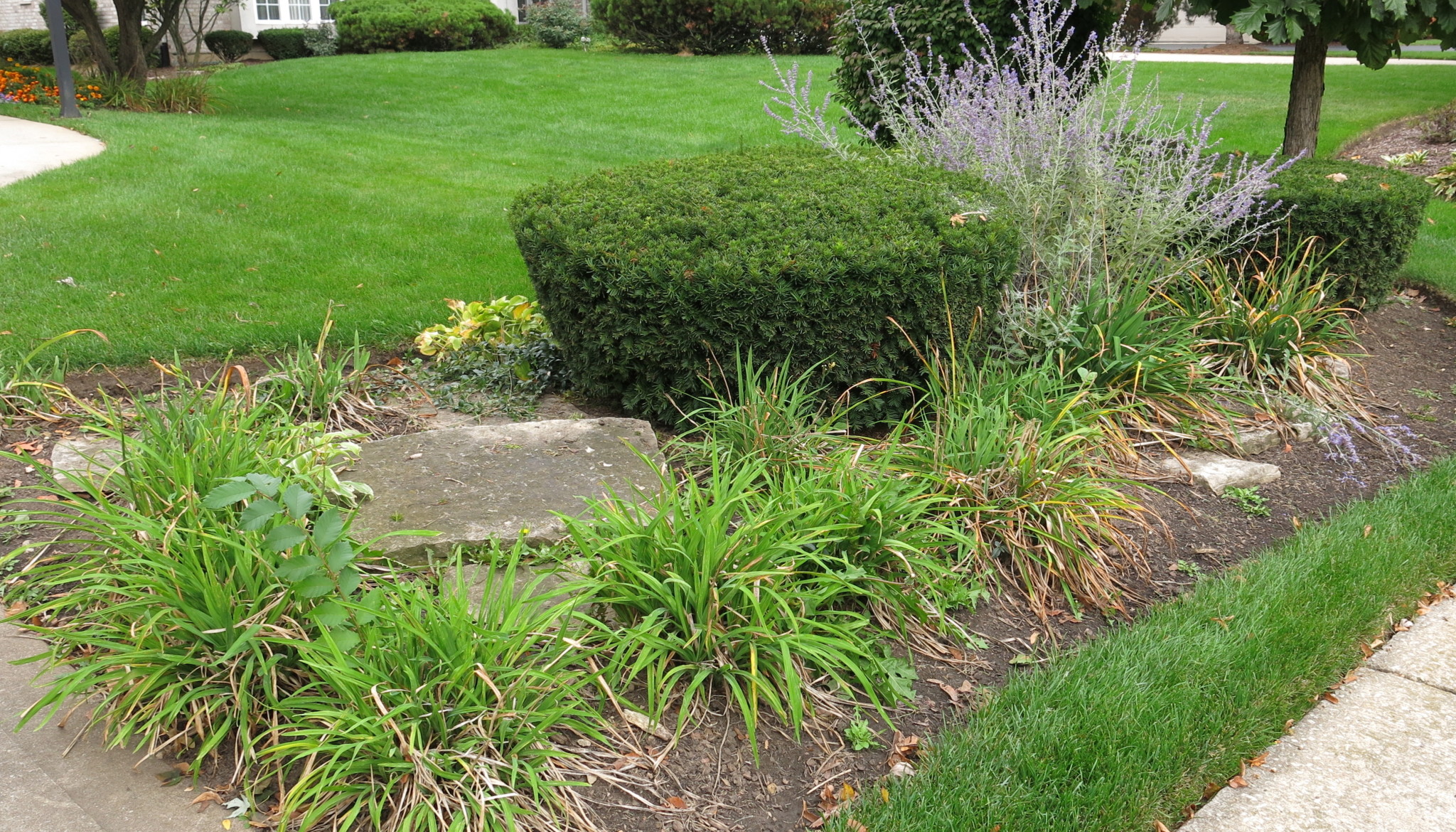
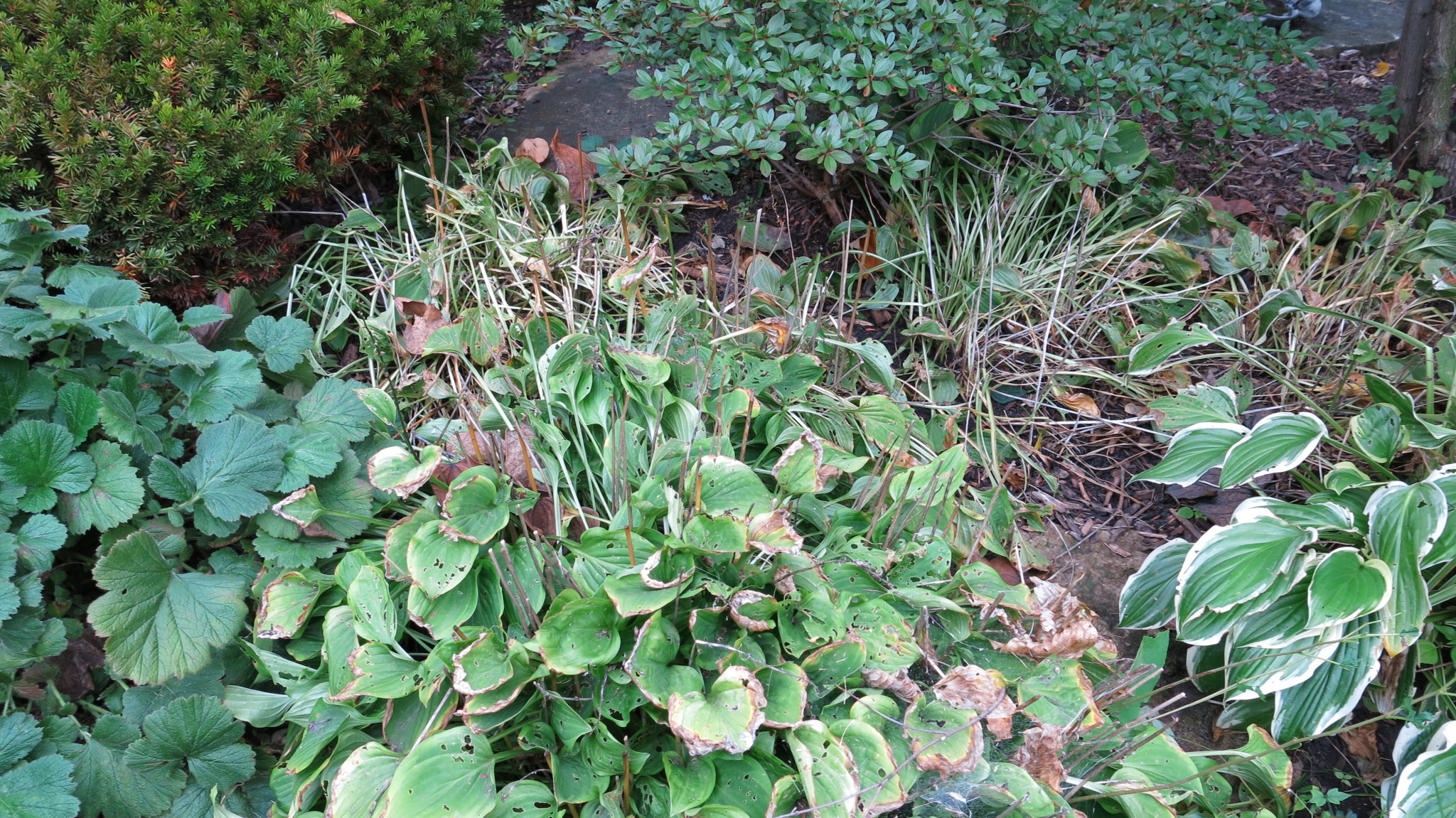
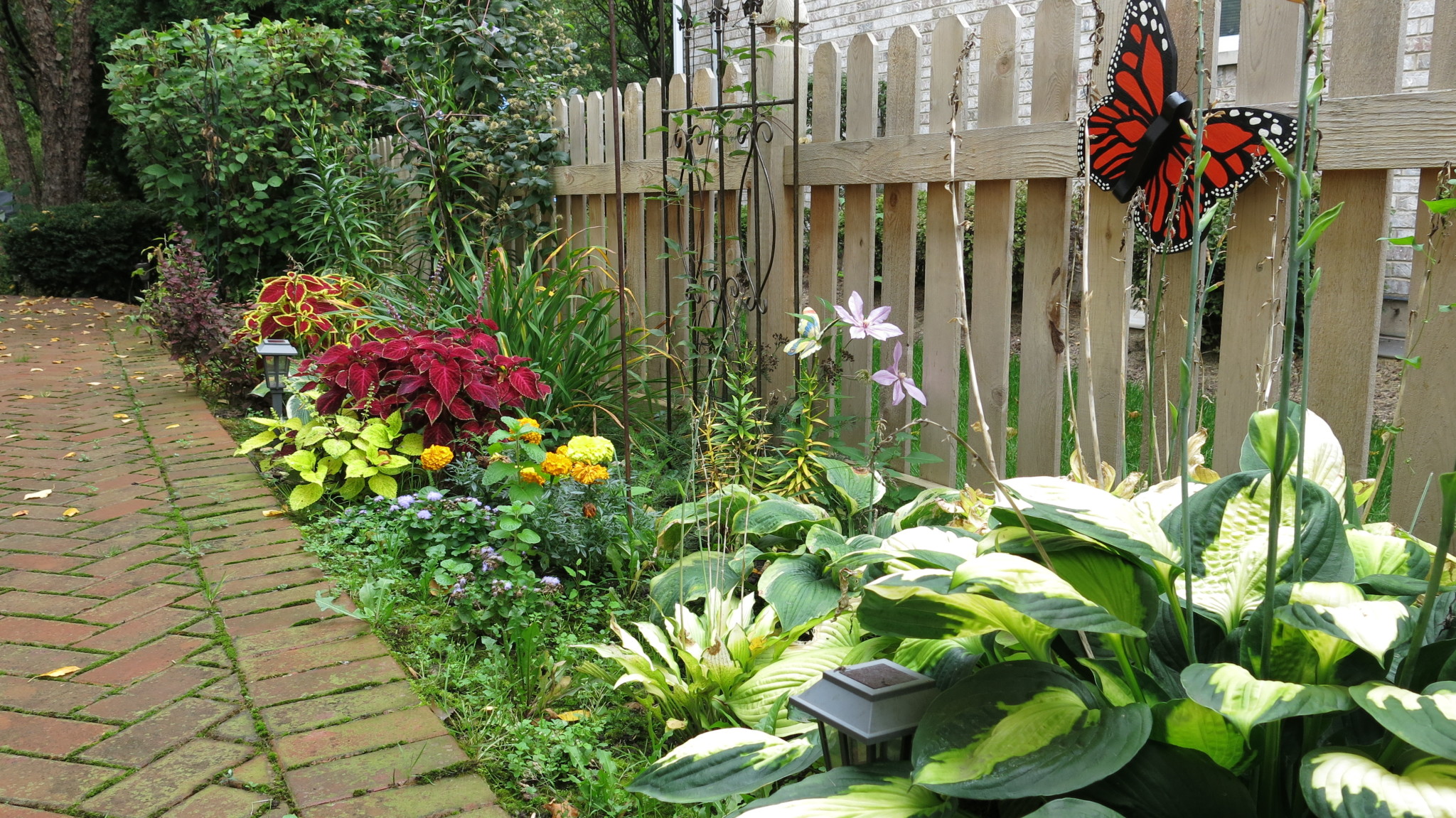
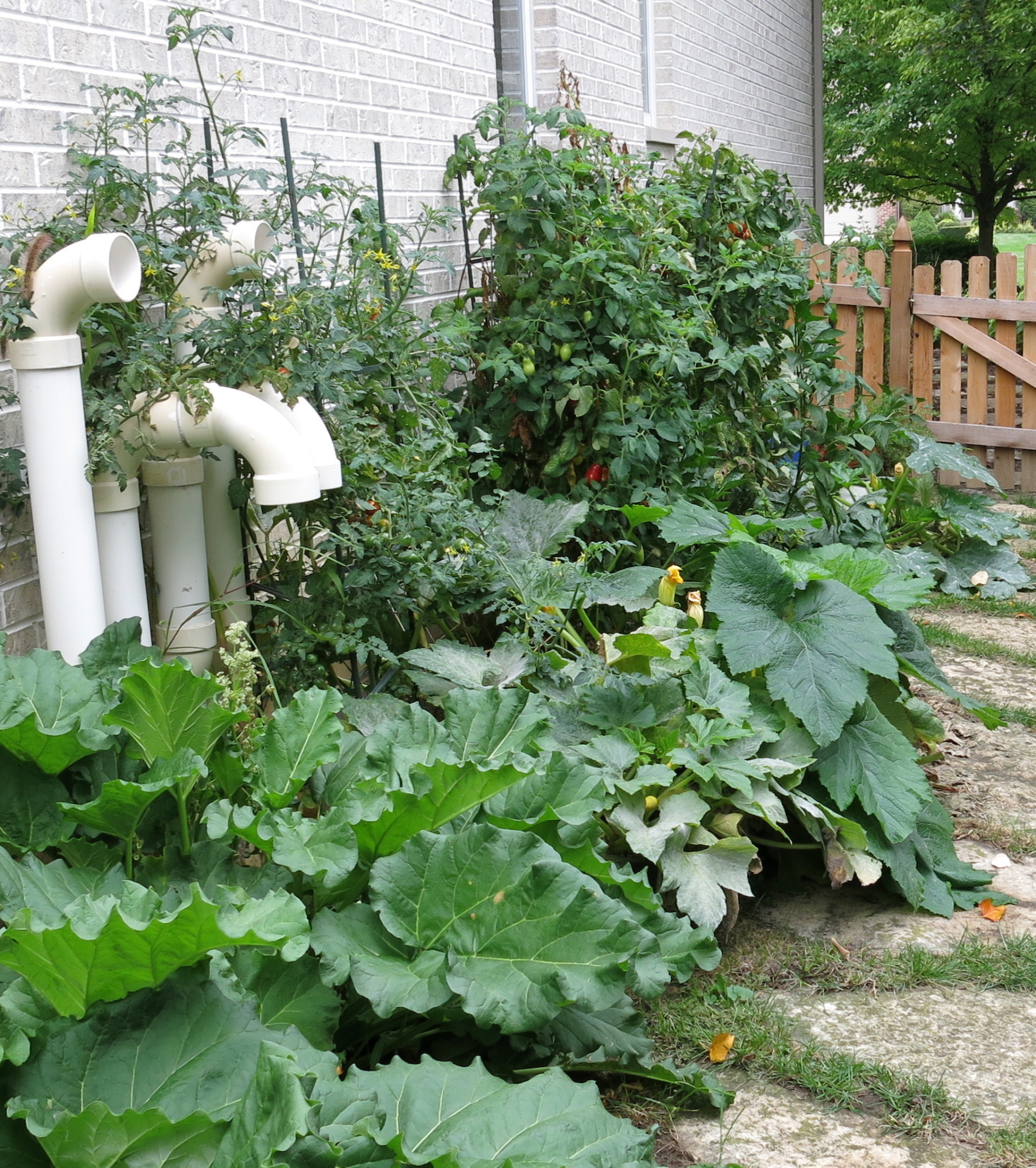
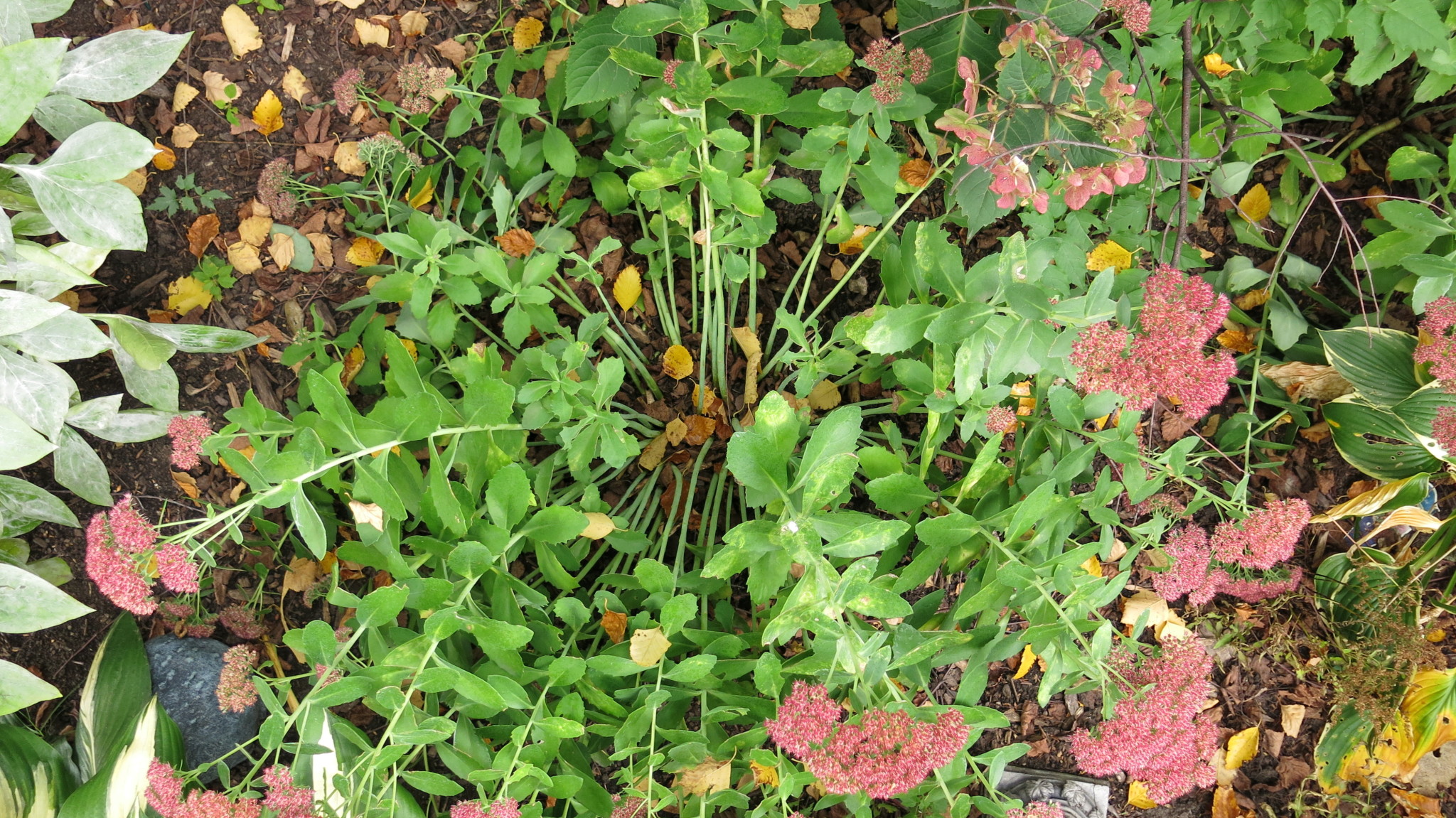
It’s the beginning of October and the days are getting shorter, the nights growing colder. While yesterday I posted about the good things in the fall garden, there are also a lot of plants and beds that are really past their prime. Whether it’s overgrown, or the plants need to be trimmed back, or just haven’t aged well, they really detract from the pretty parts of the yard. Here’s some of the plants and spaces that don’t make me smile.

Fall is coming to Michigan. Enjoy the colors!
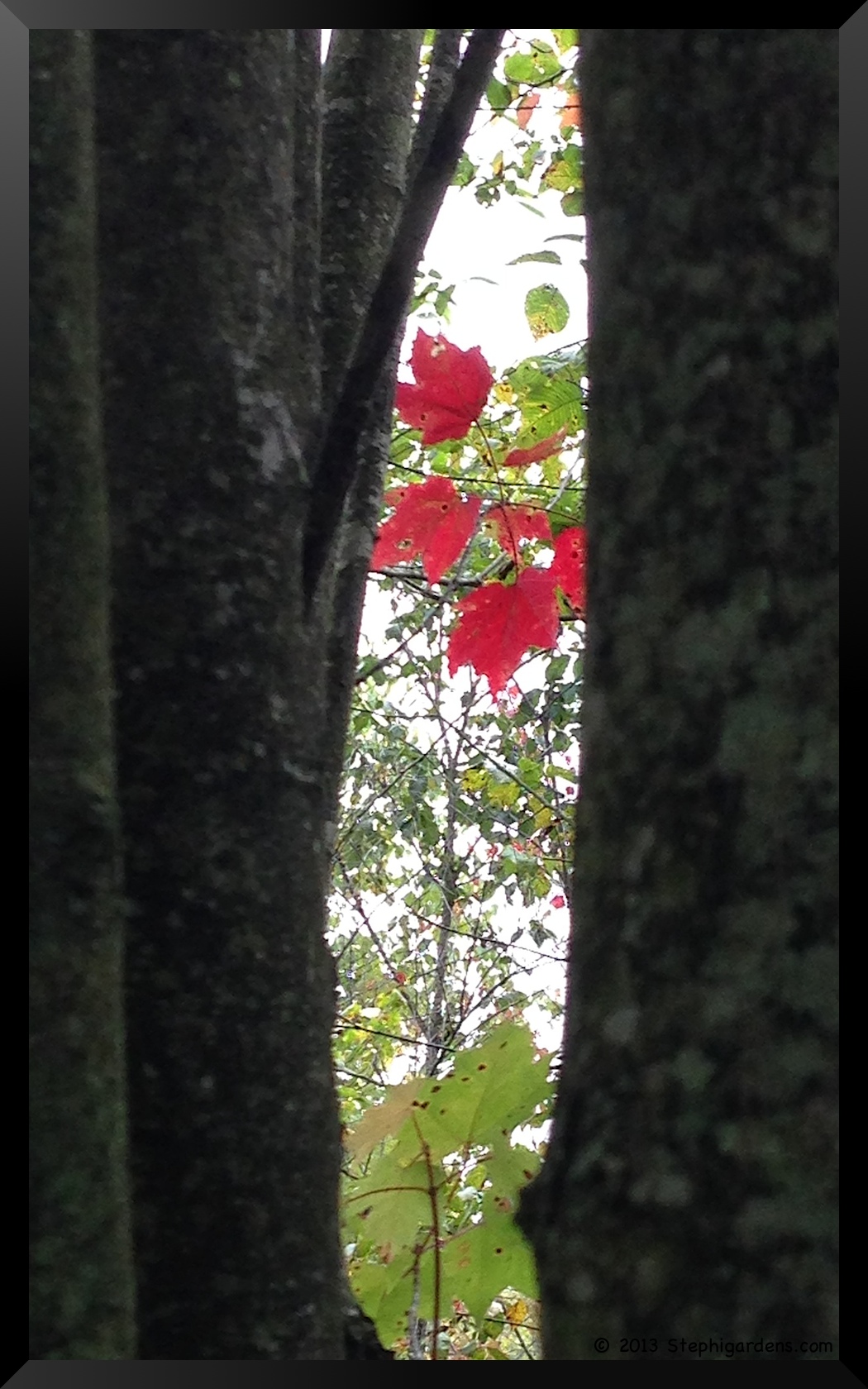
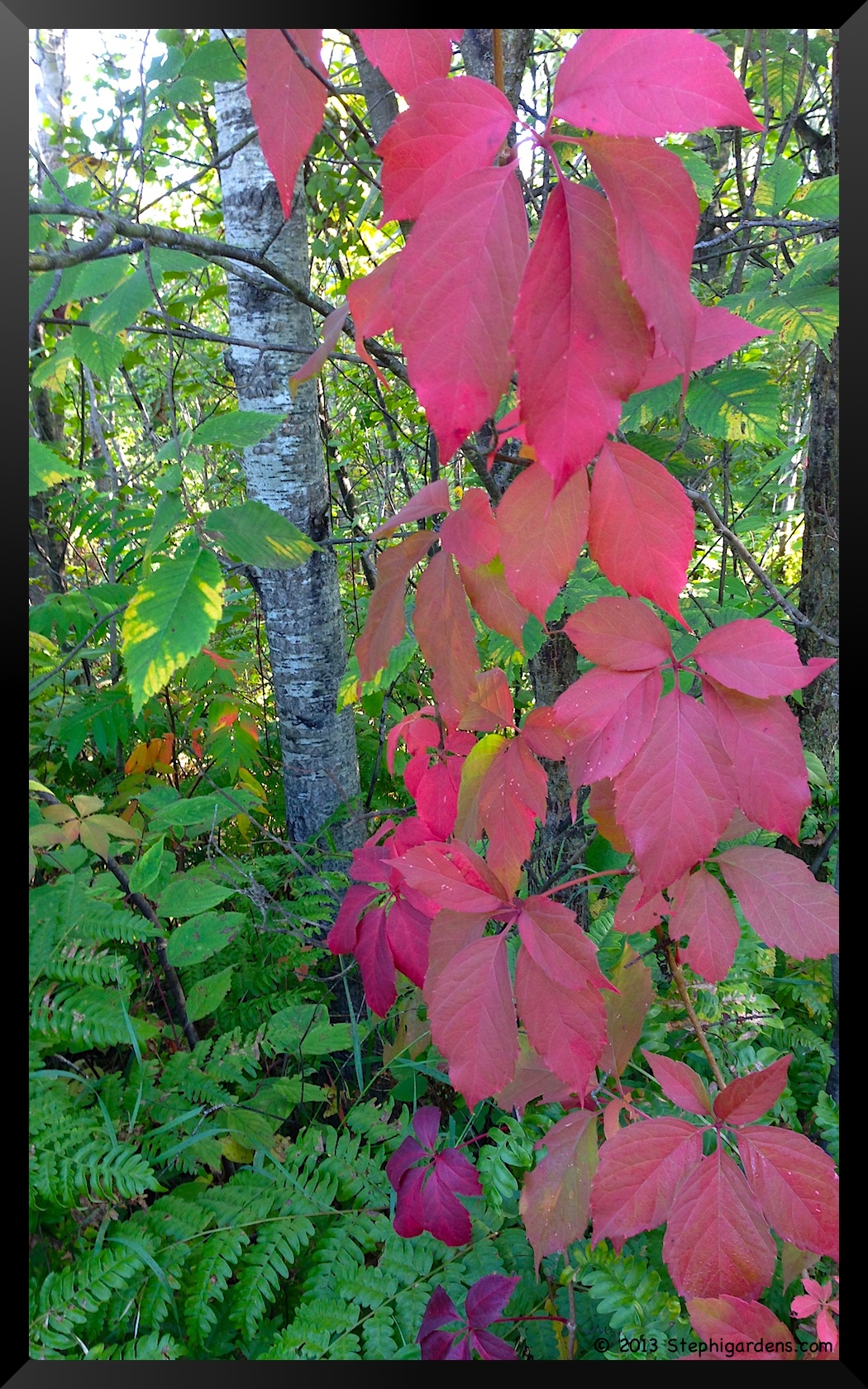
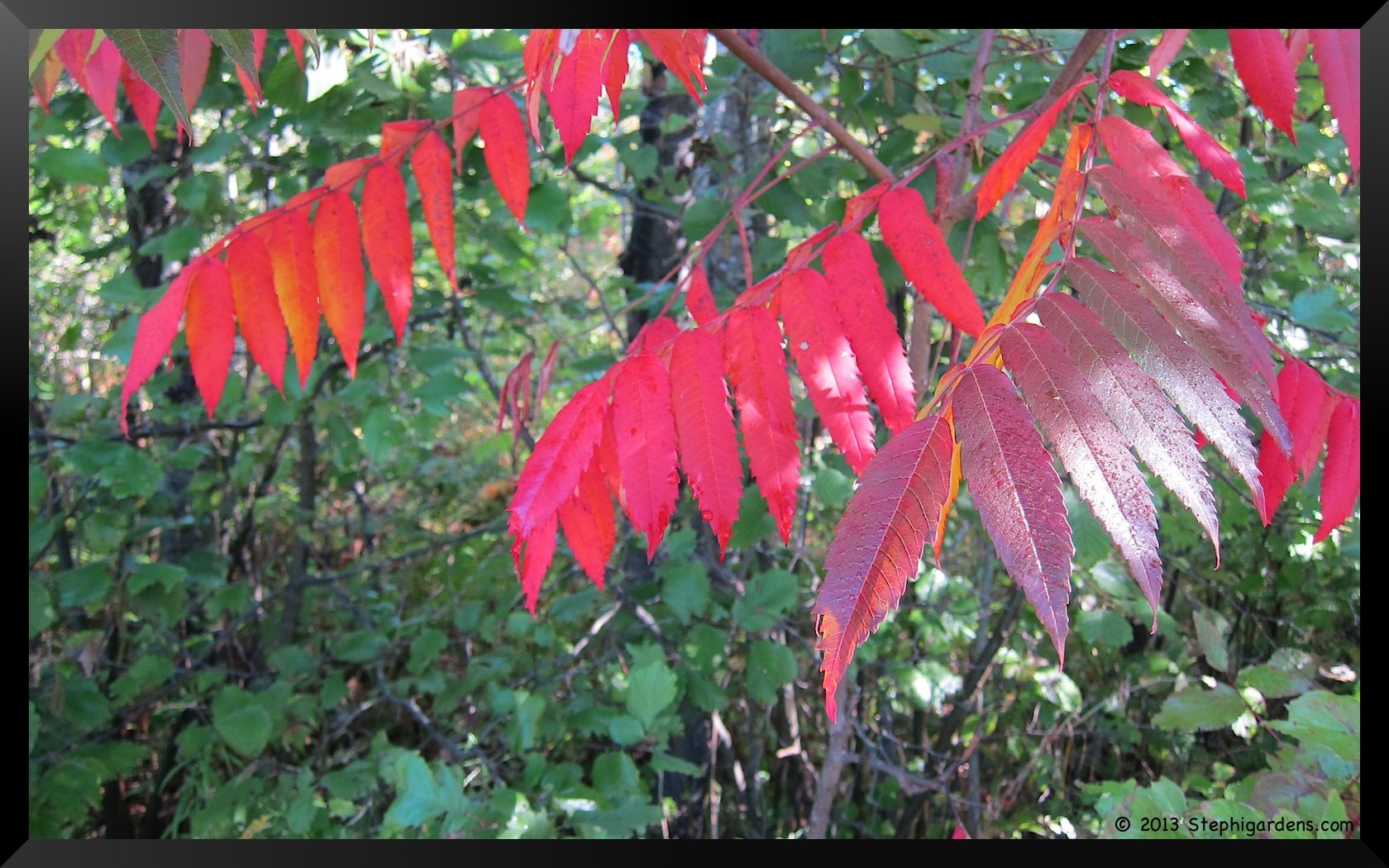
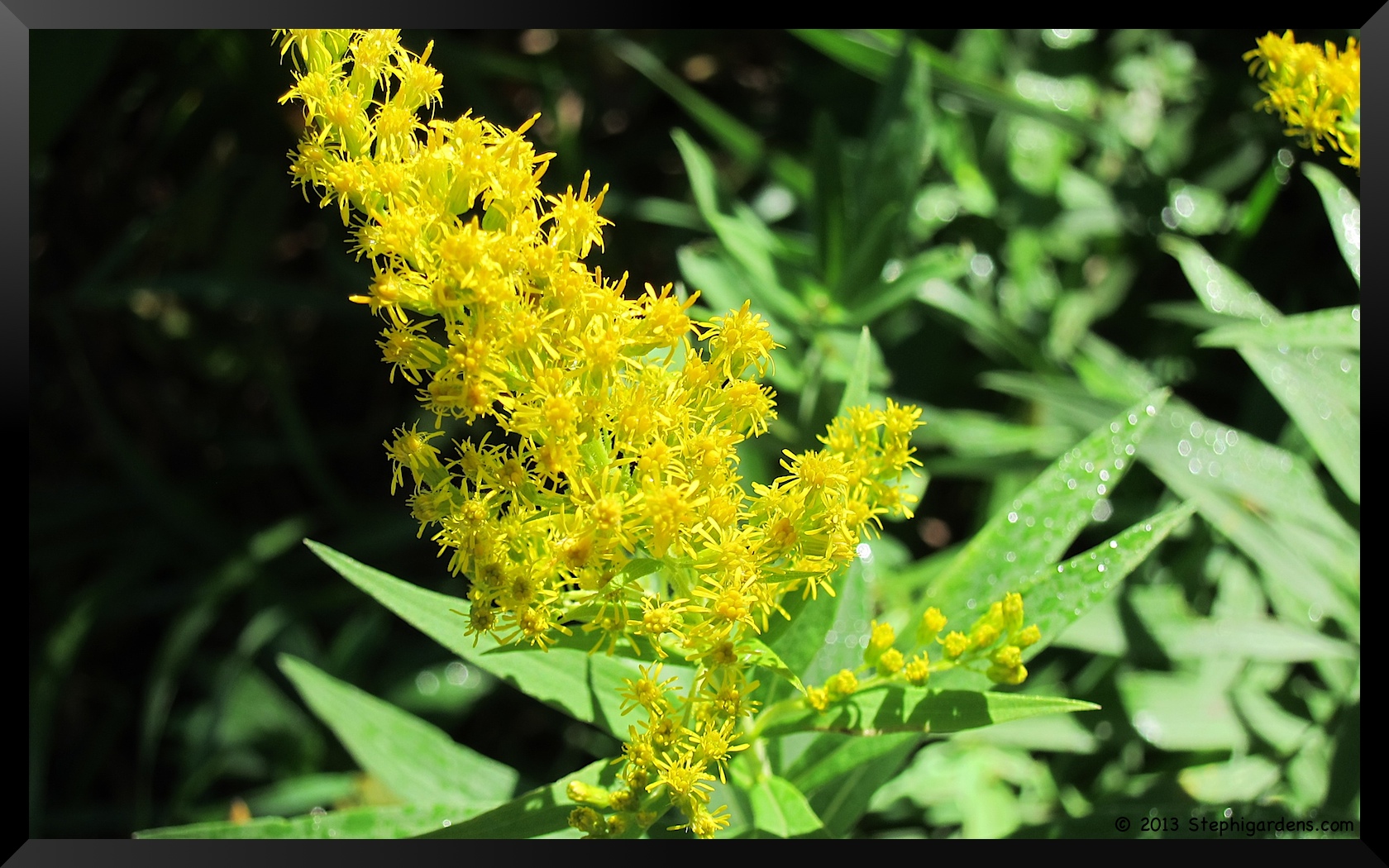
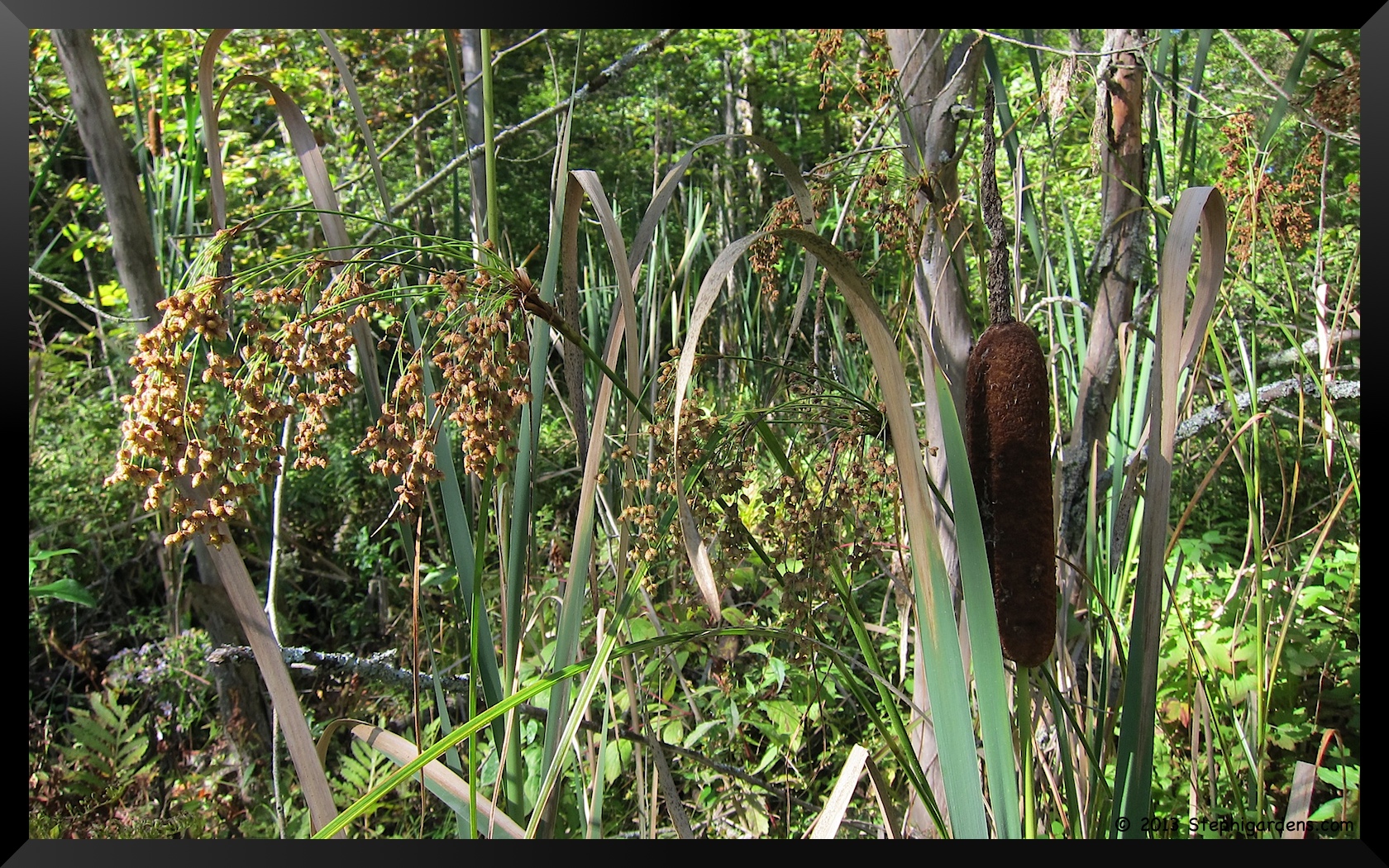
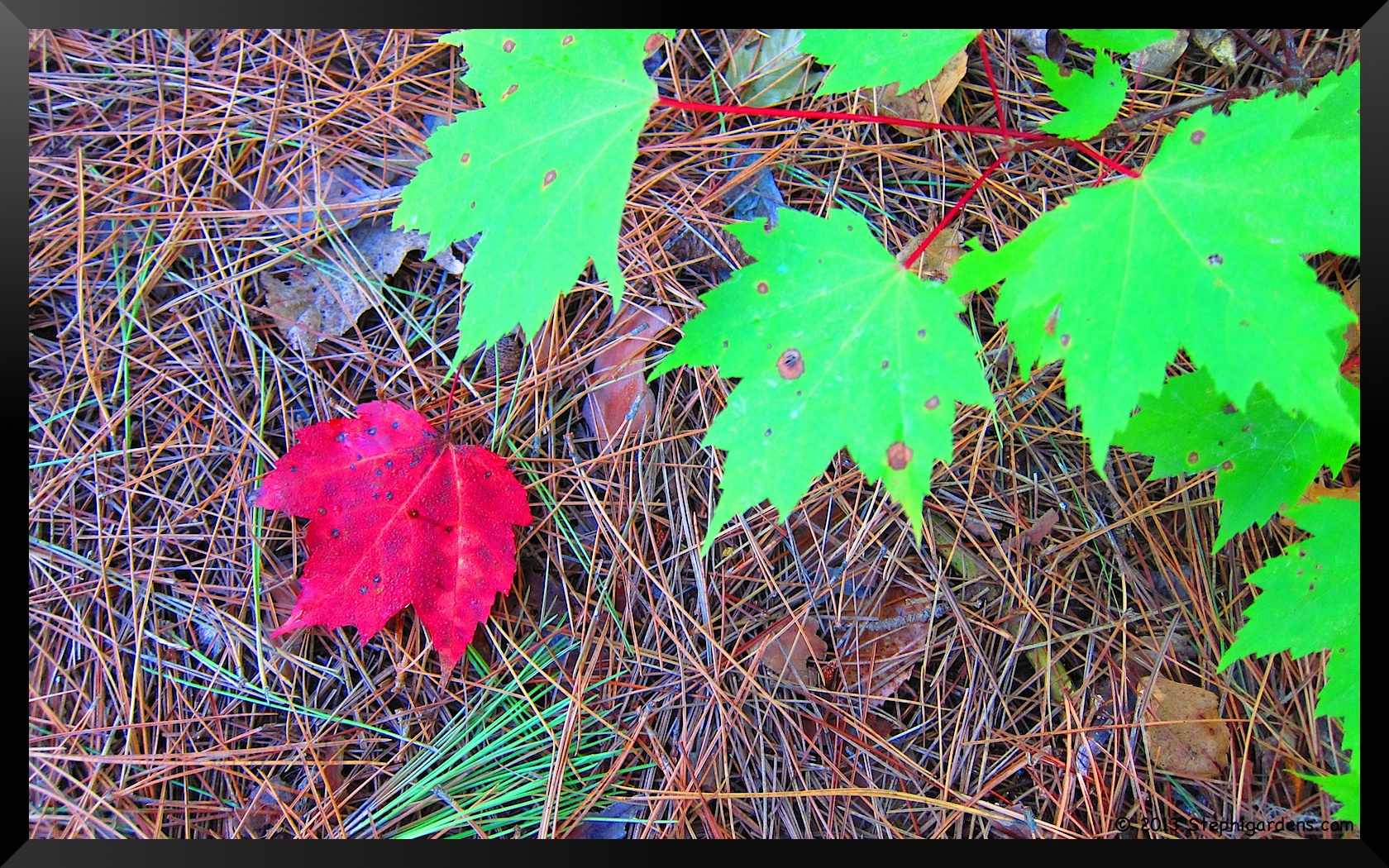
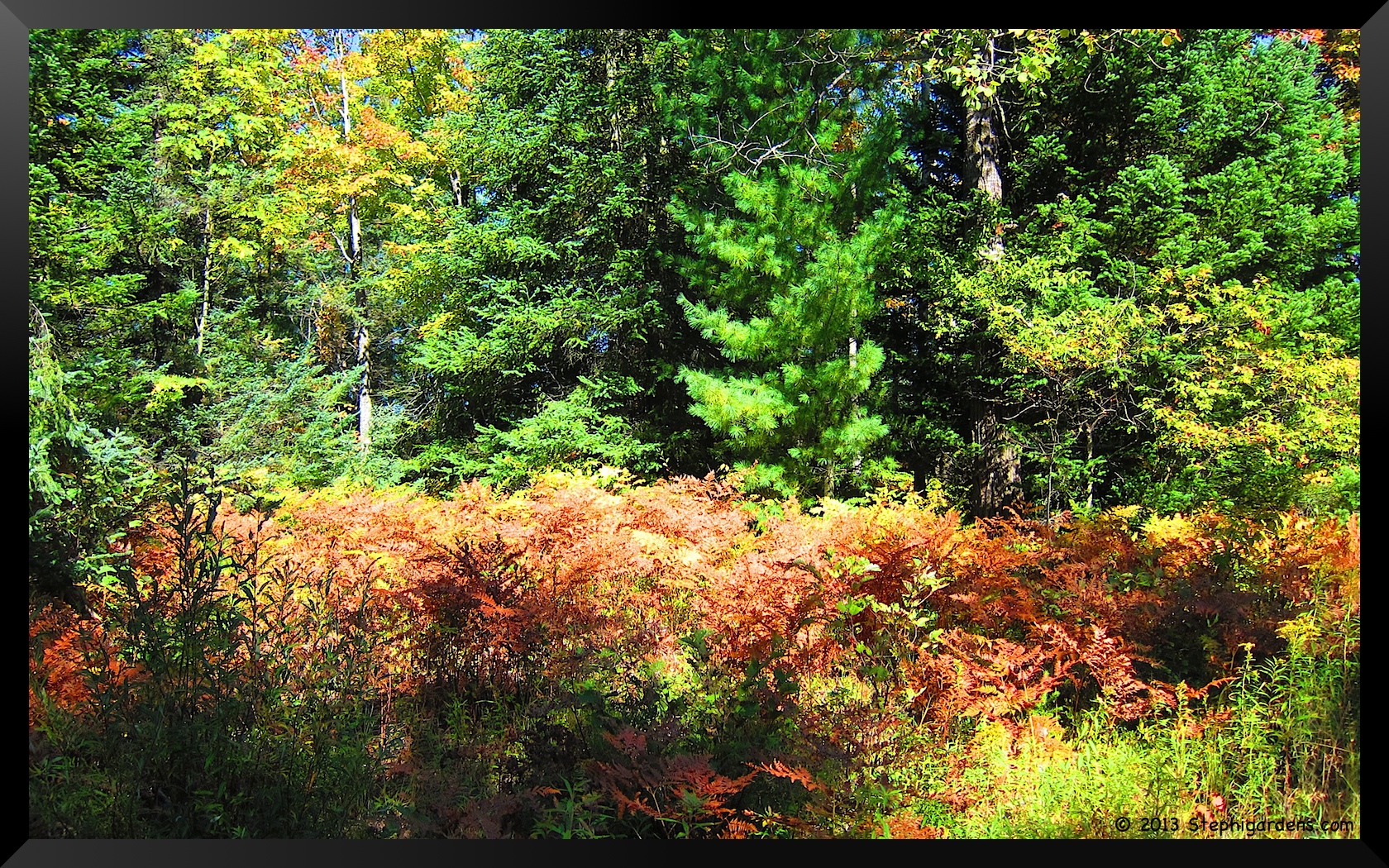
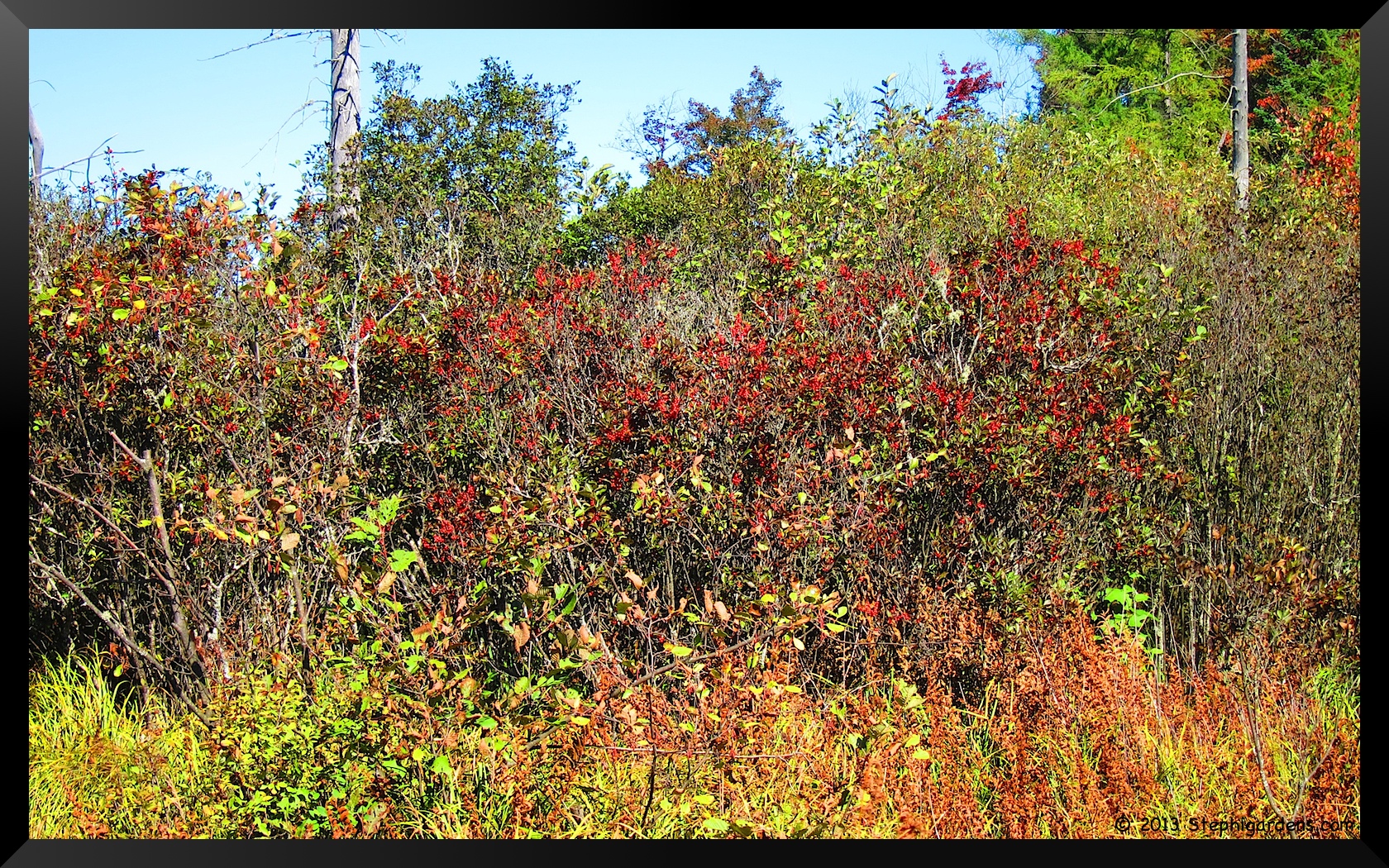
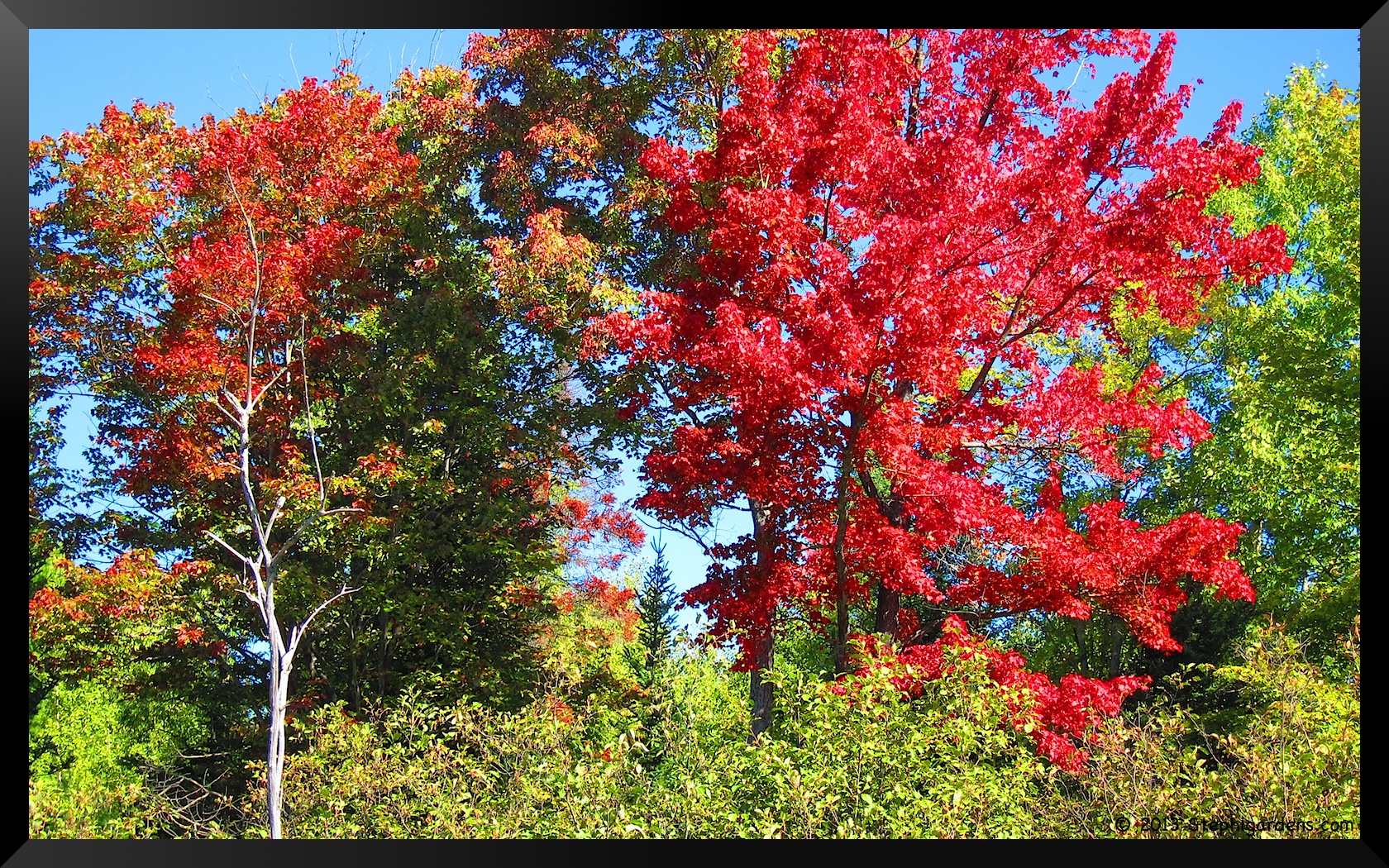
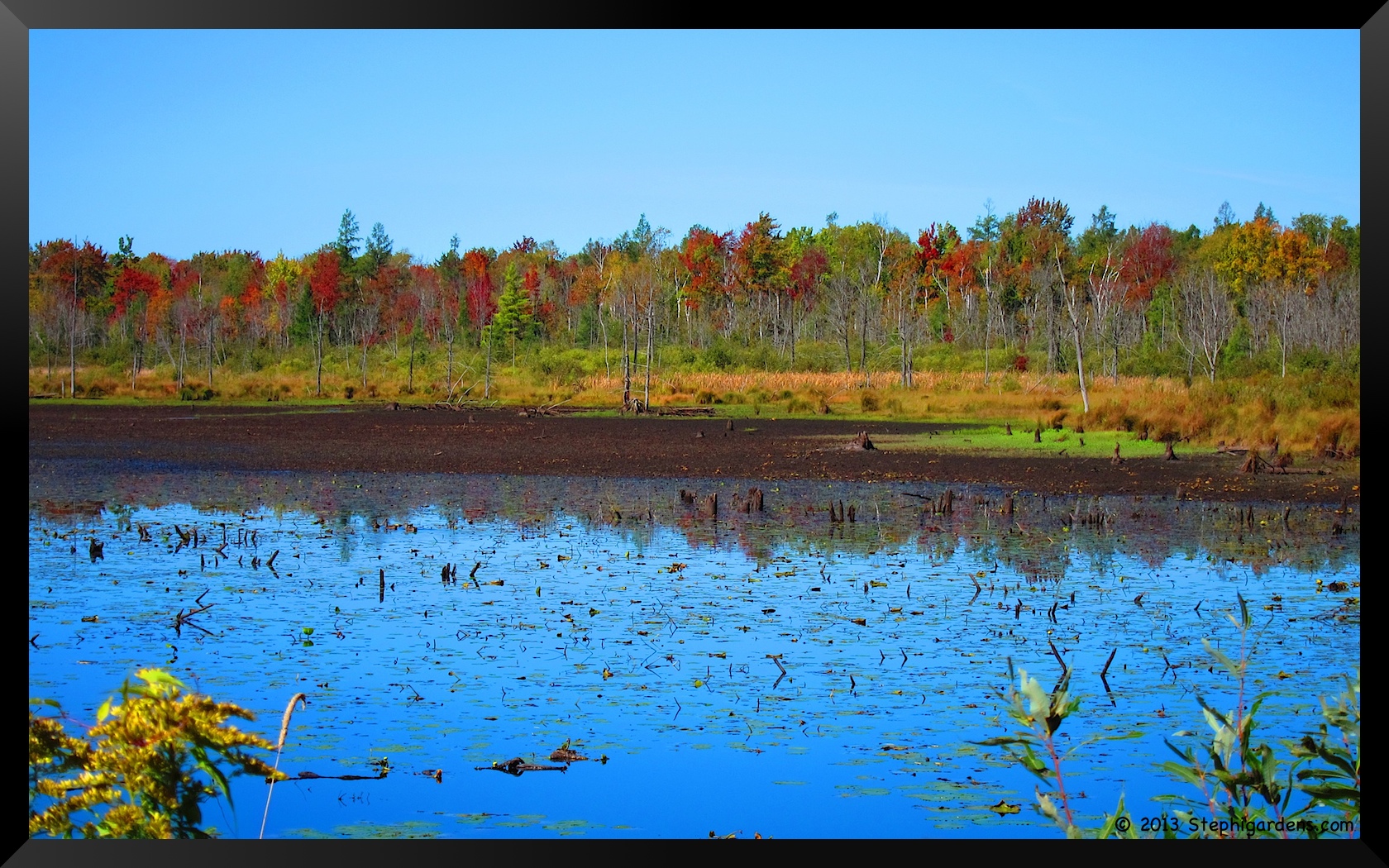
photos by Peggy
After I saw the very cool White Lined Sphinx Moth last week in my backyard, I heard from my mom and other family members that they too were seeing similar Hummingbird Moths in Michigan. My mom was able to get a picture of this Hummingbird Clearwing Moth (Hemaris thysbe) feeding in her backyard.
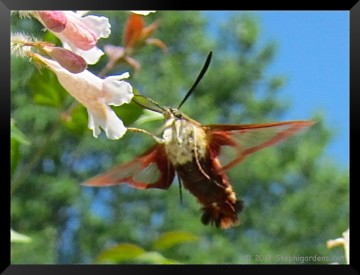
I am just fascinated by these great pollinators and I’m amazed I have never seen one before. Or at least I don’t think I’ve seen any of these before. Maybe I was seeing them and just though it was a hummingbird, or a giant bumblebee if it was another type of Hummingbird Moth (Snowberry clearwing (Hemaris diffinis)). I will definitely be keeping my eyes open because these guys are really worth finding and watching.
Have you been seeing them in your garden? Which ones?
photos by Peggy
The other night I was outside helping grill around dusk. Right next to the grill, I have planters with geraniums, petunias and coleus.

Flitting around the petunias that night was this hummingbird-dragonfly-bug-like thing. Its wings were beating so fast, I really couldn’t get a handle on what it was. All I could really tell was that it was not a hummingbird, but was definitely getting nectar from the petunias, checking out the other flowers, distinctively patterned and very pretty. I meant to try to look it up, but I really didn’t know what I was looking for.
Then, oddly enough, the next morning my radio alarm comes on and there is an interview with a local garden specialists about the recent explosion of something called a White Line Sphinx Moth (Hyles lineata). That was it, made my ID pretty easy. For some reason that I haven’t been able to figure out, they’ve been spotted in higher numbers lately in the Midwest, including Chicago.
White Line Sphinx Moths, also known as Hawk Moths, are fairly large moths and behave much like a hummingbird, flitting about, hovering above flowers and using its very long tongue (or proboscis) to reach into the flower and drink the nectar. The caterpillar phase of this moth is also unusually large (3 inches or more) and has a distinct hornlike appendage. They look similar to the very destructive tomato hornworm, but are not as much of a garden pest.
I hope they stick around a bit, it was fun to watch.

We were down at Detweiller Park in Peoria, IL this weekend to watch a huge high school cross country meet. As we were standing around after watching our team race, we noticed a huge flock of birds up in the clear blue sky.
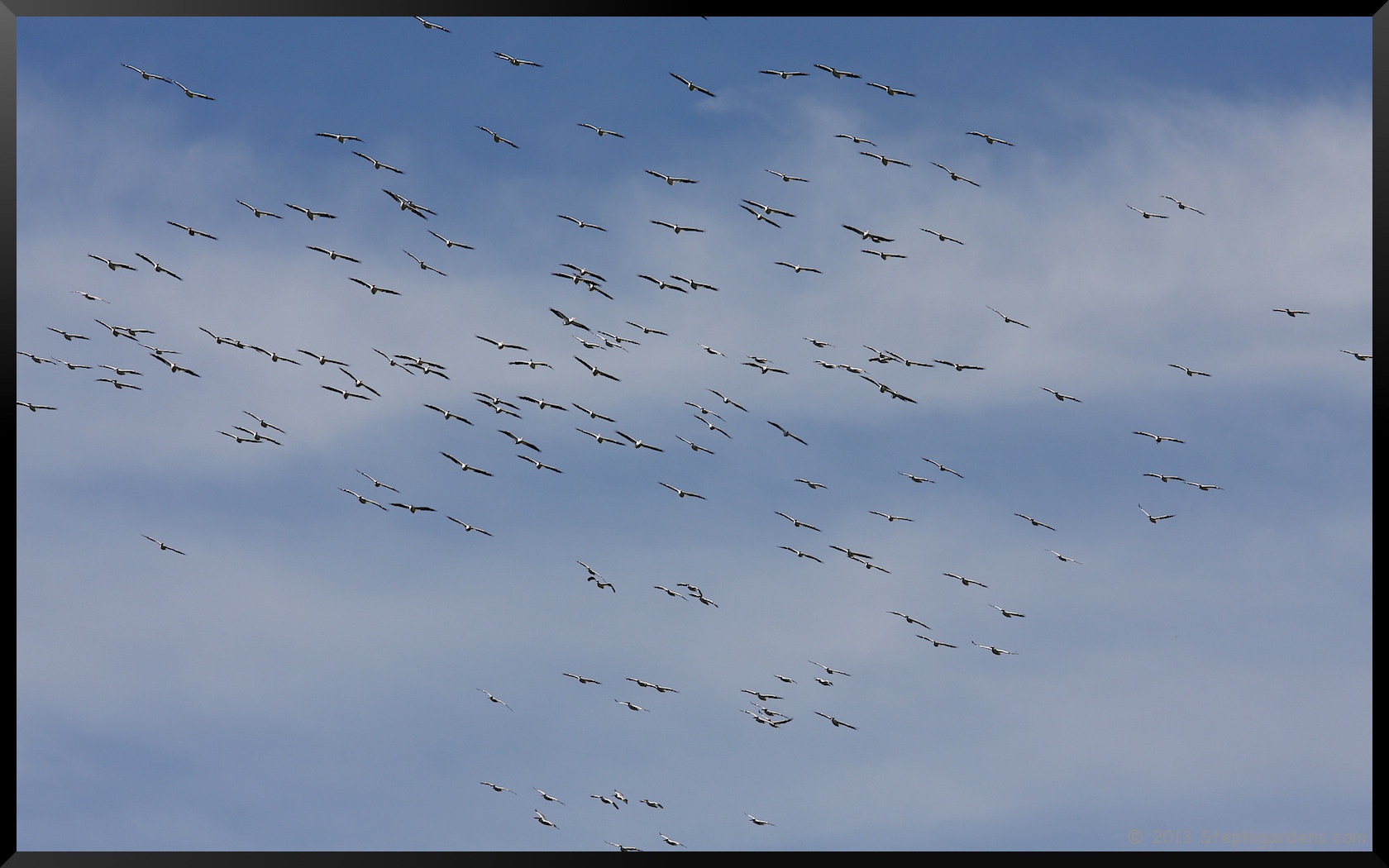
First thoughts that were tossed out by people were Sandhill Cranes, Canadian Geese, ducks? Just didn’t look right for any of those. They were flying too low and quietly for Sandhill Cranes and size and flight pattern didn’t fit with geese or ducks. Luckily, I had my binoculars with me and I was able to take a good look. I could have sworn they were pelicans, but we’re in IL and we don’t have White Pelicans here. Looked some more to get a good look at identifying marks. Quickly got out my iPhone iBird Plus App (Mitch Waite Group) and they were definitely White Pelicans. Still puzzled though, since according to the range maps on this app and the Audubon Bird App they were not supposed to be found in this part of IL, even when migrating. But, there was no mistaking the identification.
After some investigating, it turns out that over the last 10 years or so, a few of these pelicans began migrating up and down the Illinois River. Until then, the furthest east they were known to migrate was via a Mississippi River route. Over the years, it’s become a regular event and their numbers have grown. Why their migration route, back and forth from fresh water lakes in Canada and the North Central US to the southern US, Mexico and Central America, has shifted east to the Illinois River is unknown. One theory is that a storm threw them off track. Since migration is a learned event, they learned the wrong route one year and then kept following it. Whatever the cause, it sure was exciting to see these huge, magnificent birds flying overhead on their way south for the winter. I’ll be writing this sighting on my lifetime list.
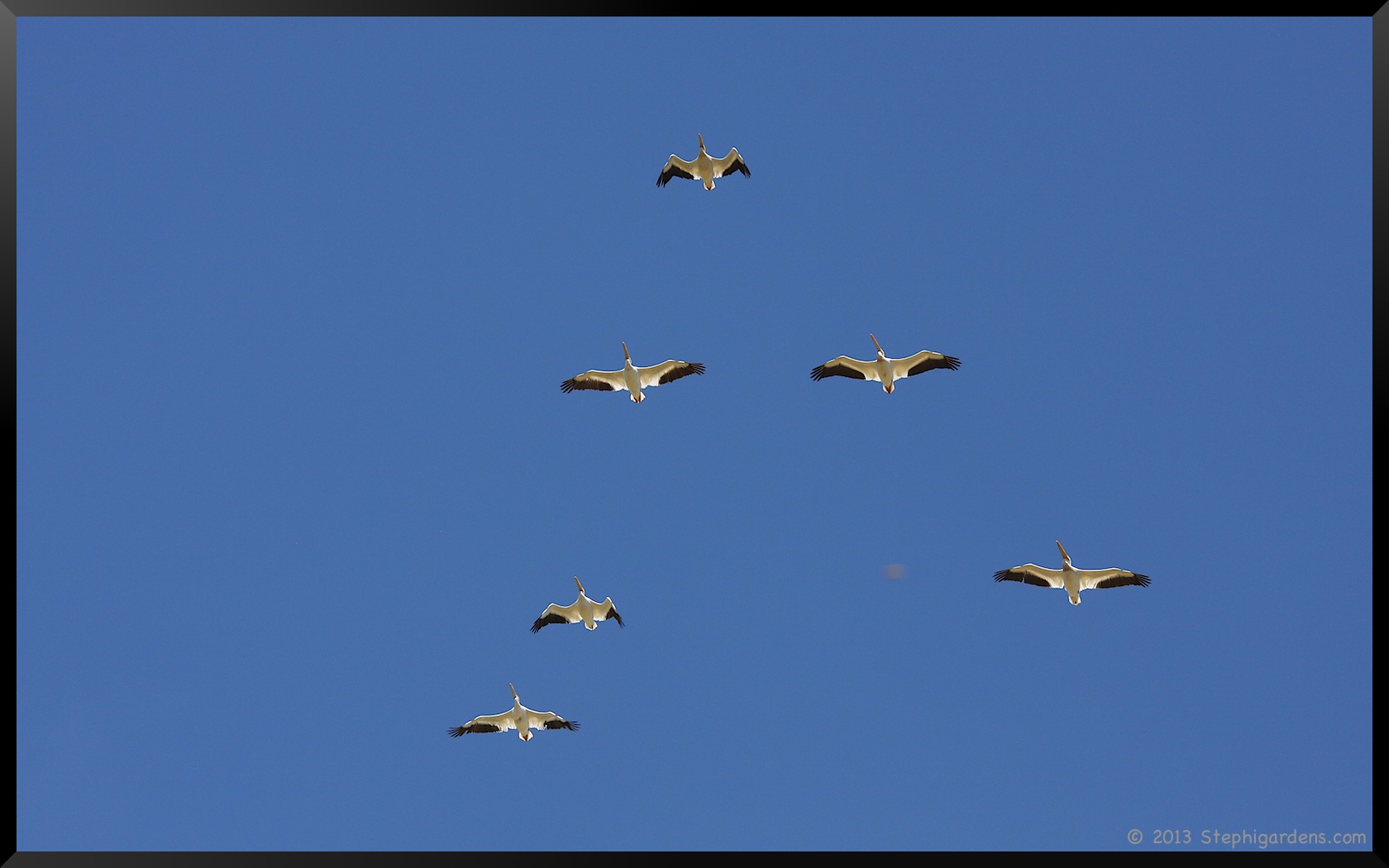
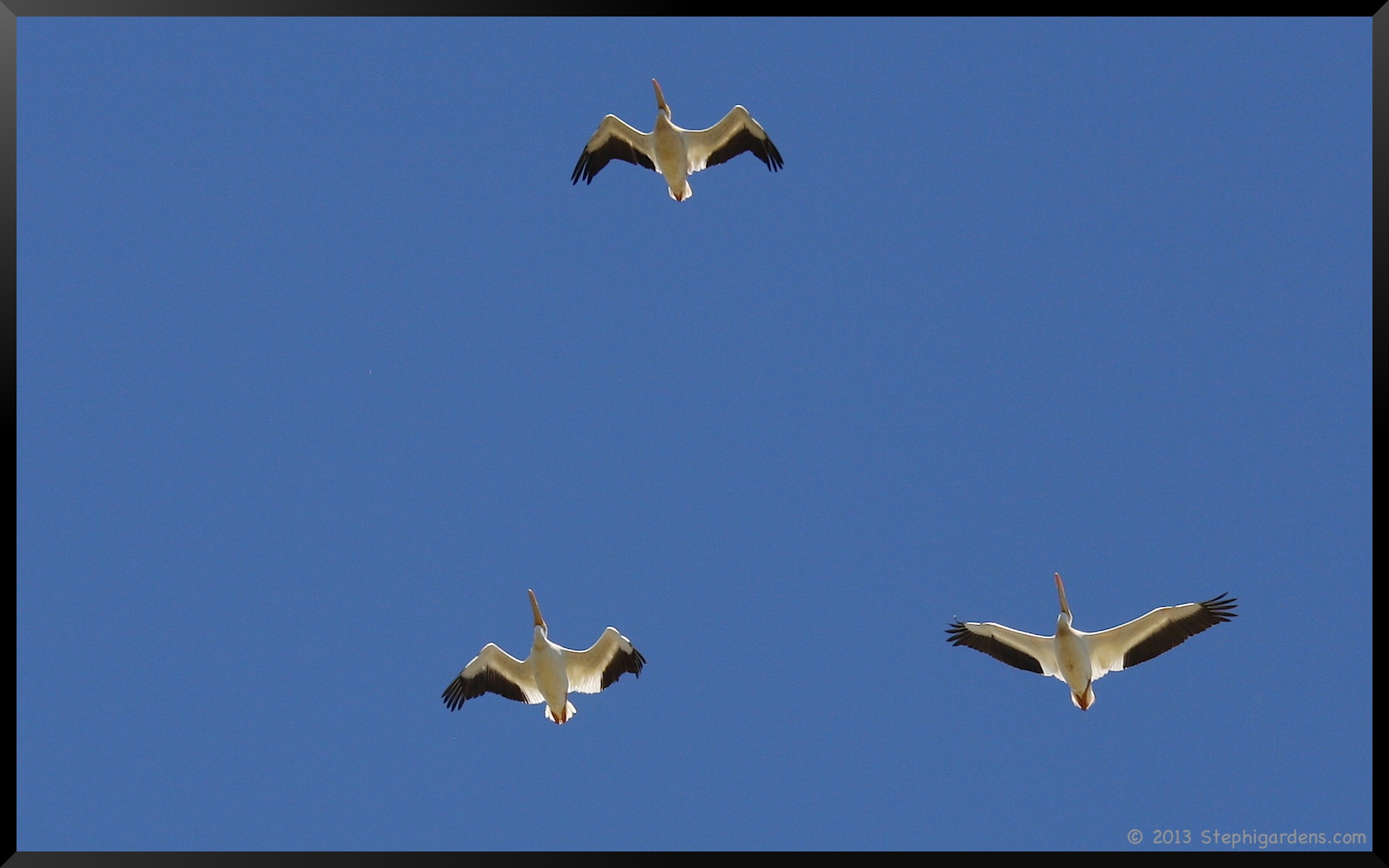
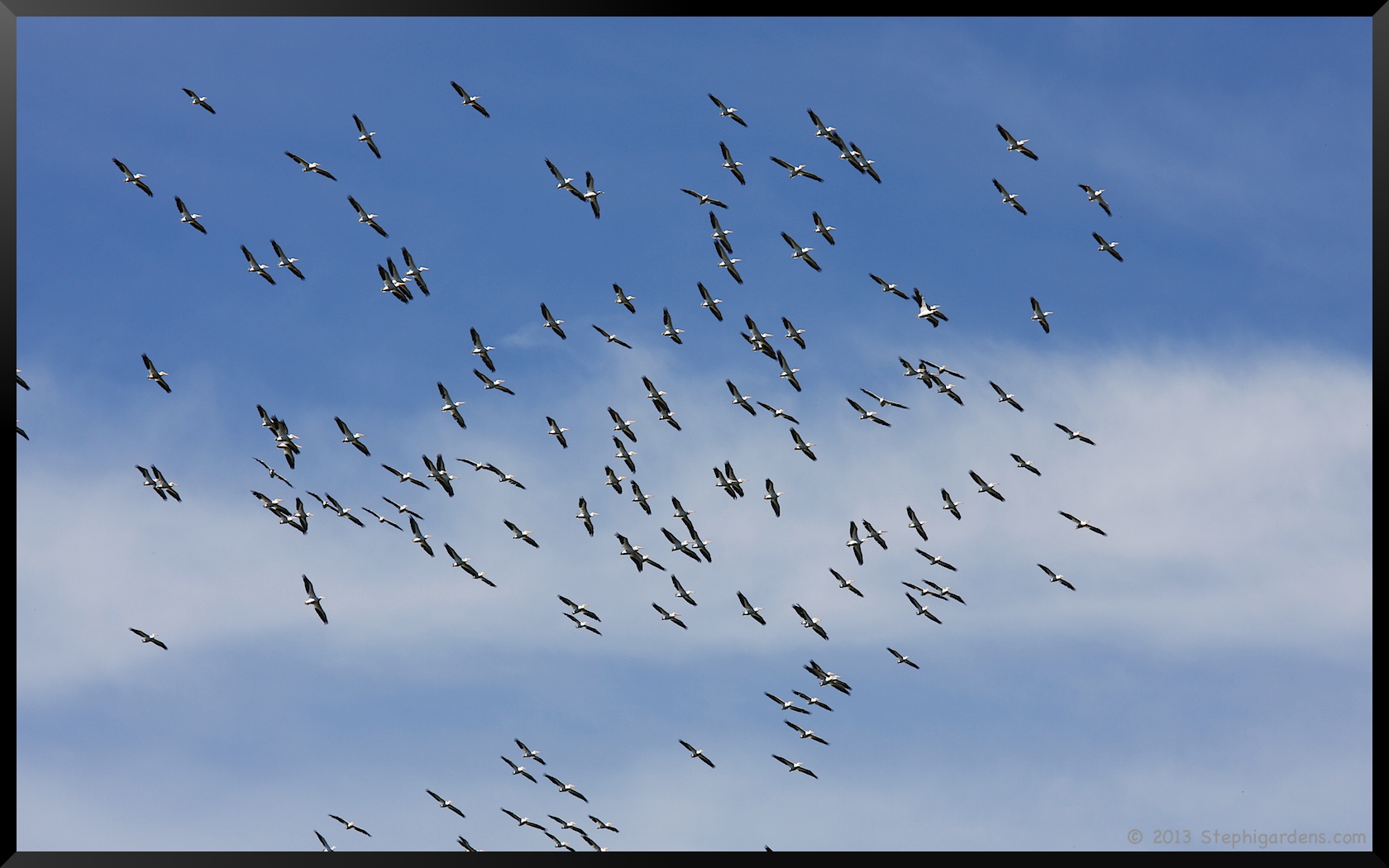
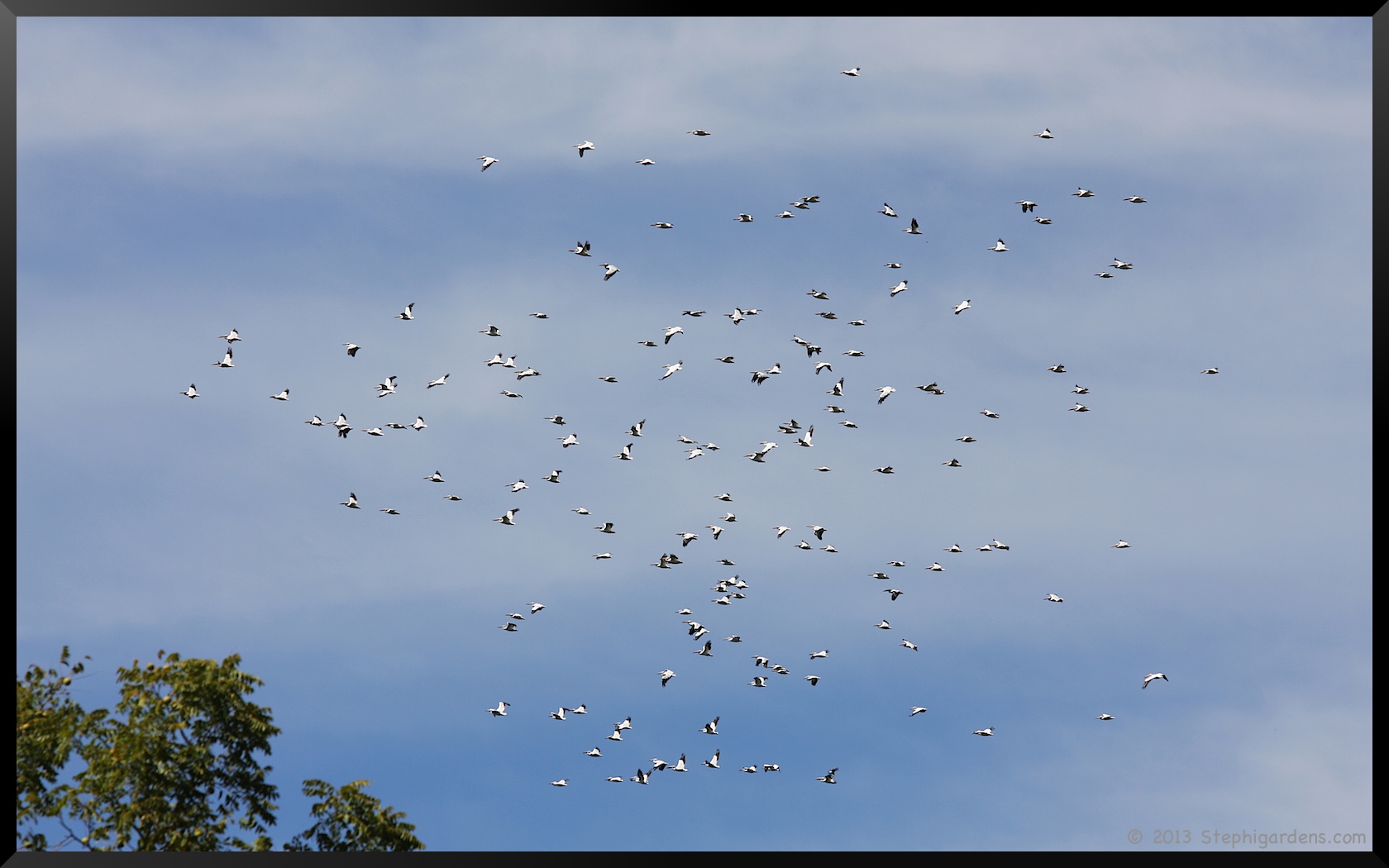
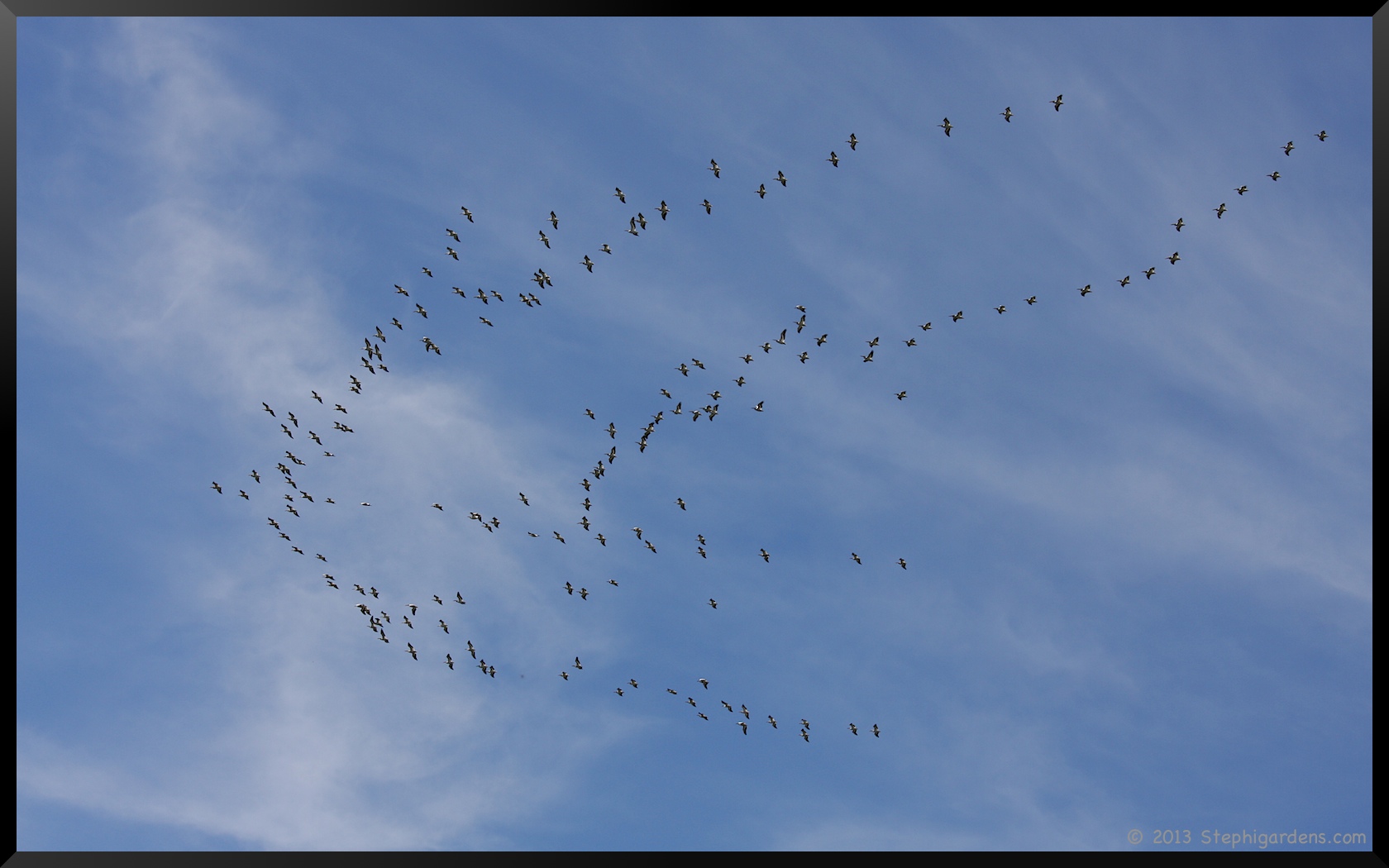
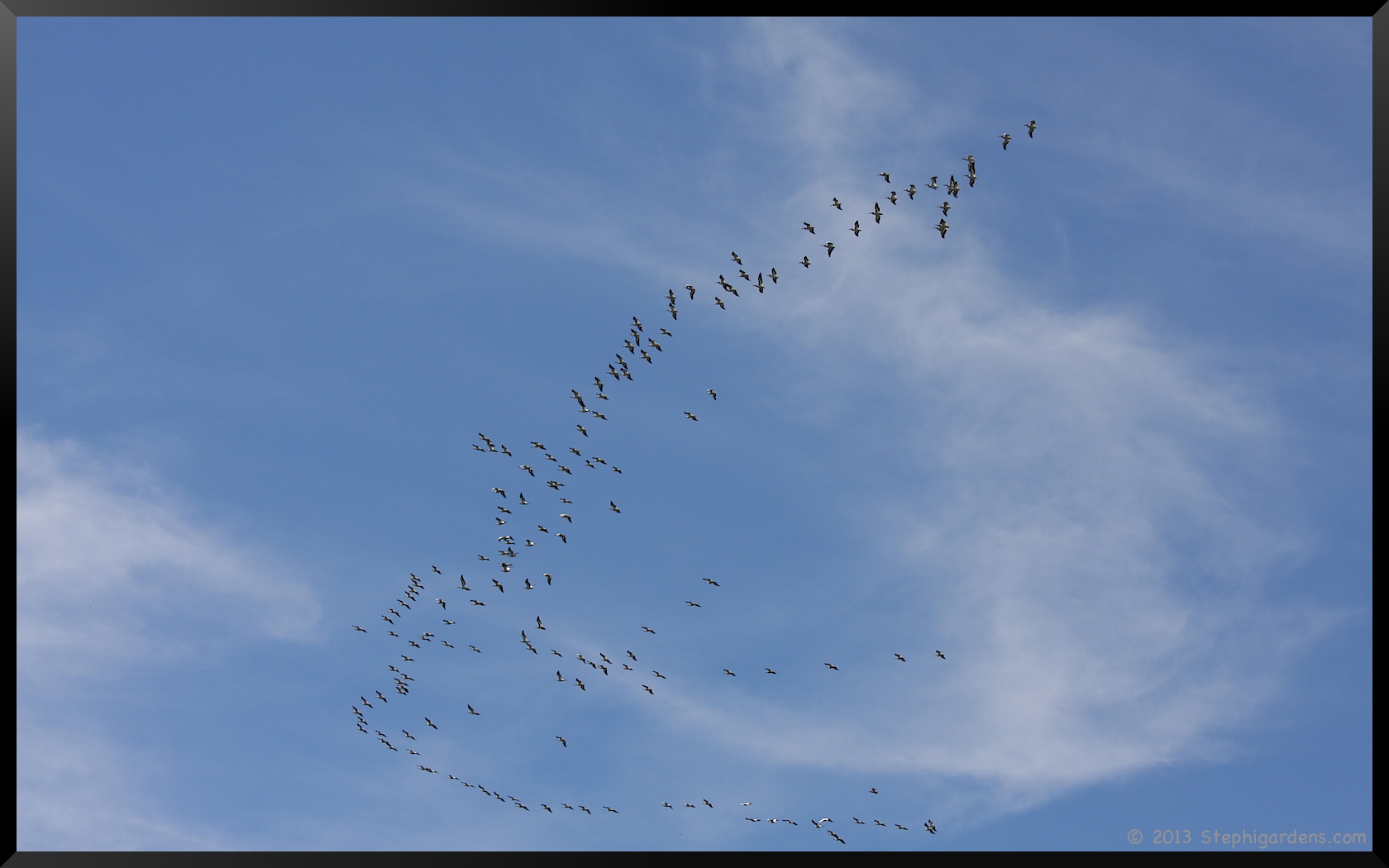
Photos by Steve
Now for a little fun. If you’re still reading, we’ve discovered the best “off the beaten trail” places to grab a bite to eat on our way back home. Heading about 15 minutes north on Rt 29 from the park, Castaways Bar and Grill in Chillicothe, IL is my recomendation for grabbing a delicious bite to eat. Looks can be deceiving, but it is a family friendly place with an extensive menu and friendly staff. We’ve enjoyed their burgers, green bean french fries and an assortment of sandwiches. We’ve not tried one of their famous “O” burgers, maybe next time. And maybe we’ll see you there after the next XC meet in Peoria.
I was out riding my bike earlier this week at the Morton Arboretum in Lisle, IL, when I came across a few plants and trees with paper bags on them.
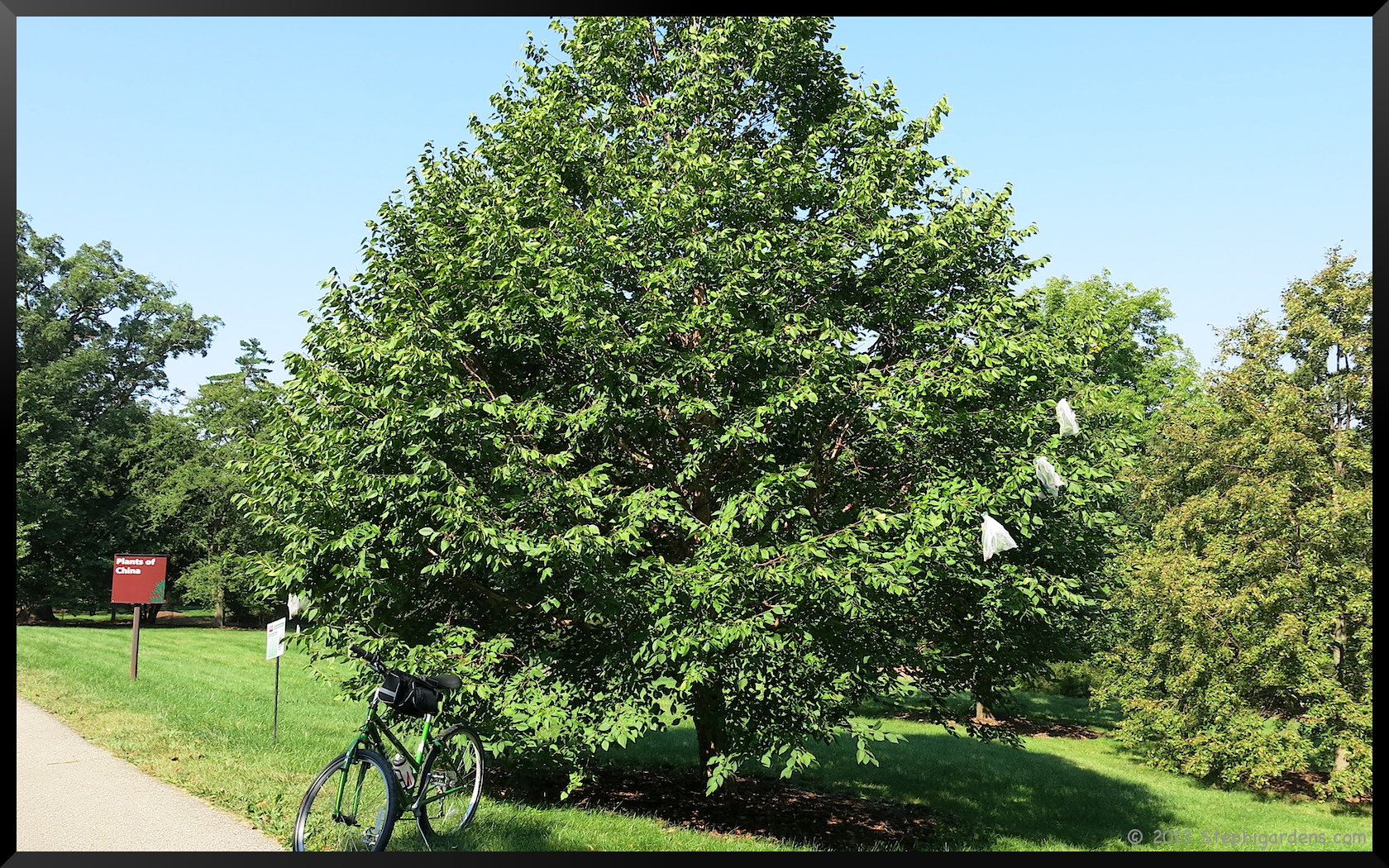 Paperbark Hazelnut
Corylus fargesii
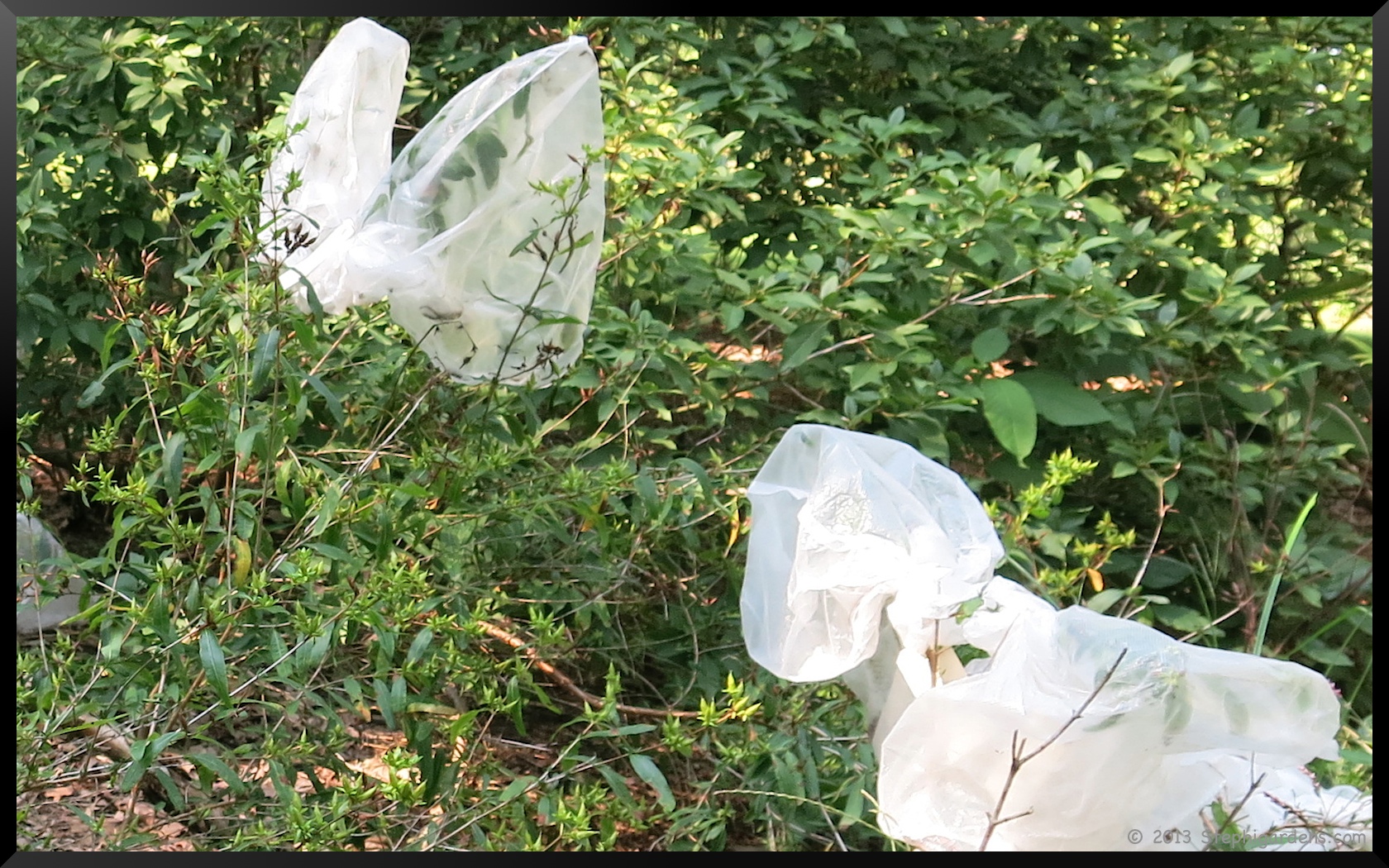 Shrubby St. Johnswort
Hypernicum prolificum
I assumed they were either doing pest control or trapping. But, because the Arboretum is great about explaining everything, there were signs that I finally stopped to read.
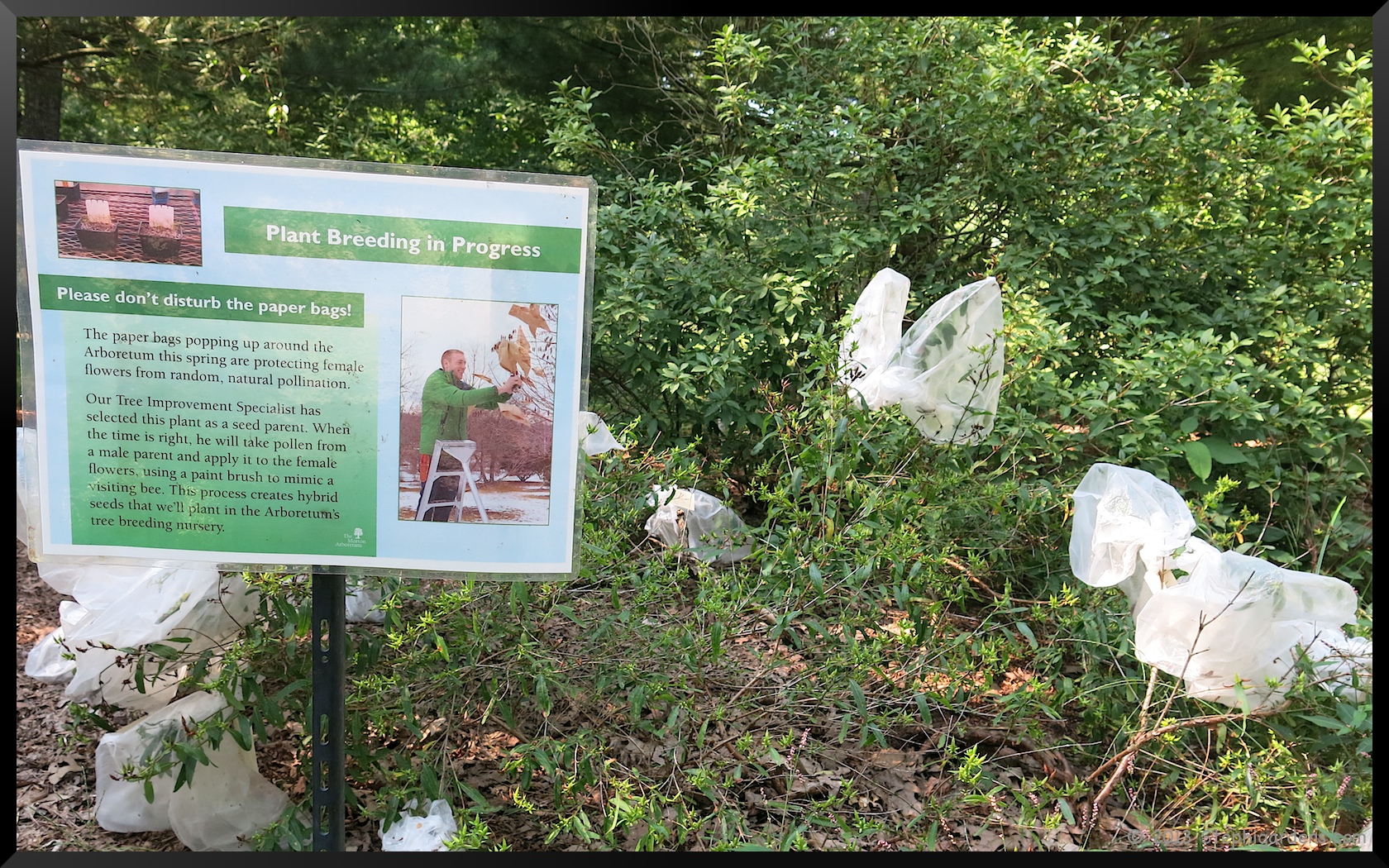
The bags were actually placed on the female flowers of a selected plant that is to become part of the Arboretum’s own tree and plant hybridization breeding program, or as part of the Chicagoland Grows consortium plant introduction program. The other partners in that program are the Chicago Botanic Garden and the Ornamental Growers Association of Northern Illinois (OGA). These programs aim to produce new hybrids that are better suited to the local midwest growing conditions, or that are more resistant to newly introduced pests. The plants then become available commercially and offer homeowners and landscapers dependable plants. The profits are put back into the program to continue this important work. You can find these cultivars at these retail nurseries.
So in the future, if you see a Shrubby St. Johnswort or Paperbark Hazelnut (which by the way is a really nice looking tree) being sold under the name “Chicagoland Grows”, this plant and tree I saw this week might have been part of the genetic mix that produced it. In the meantime, I am definitely going to check out the cultivars that have already been introduced at my local nursery.