Superbowl Snowstorm

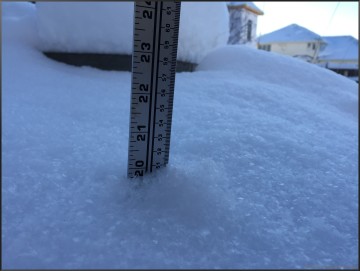
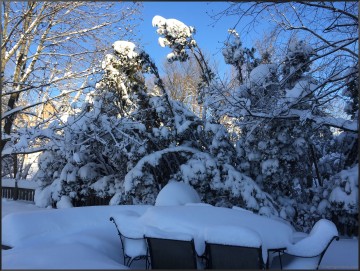
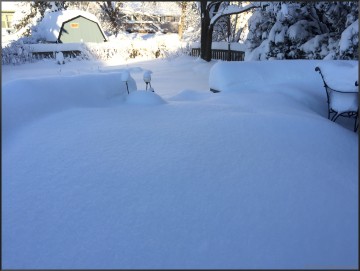
Much of the country has been having their share of big winter snowstorms and we here in Chicago got ours this past weekend. The snow started Saturday late afternoon, and didn’t end until the lake effect finale finally moved on around 6 am Monday morning.  All total, this end up the as the 5th biggest single snowfall. At my house, I measured 19.75 in of snow.

Stephi Gardens

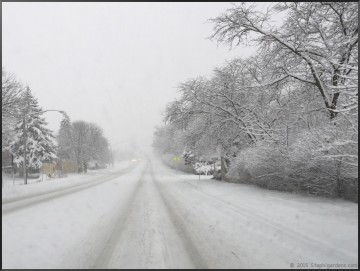
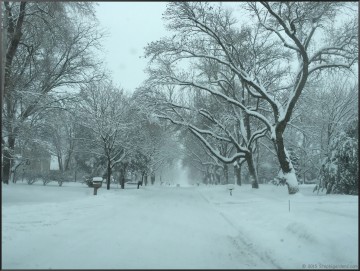
The plows had a lot of trouble keeping up.   But I have to admit, it was one of those really pretty snows, at least until the wind picked up and the bushes started collapsing under the weight of the snow.

Stephi Gardens

Stephi Gardens

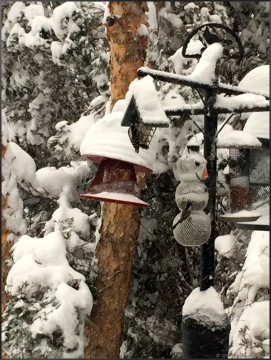
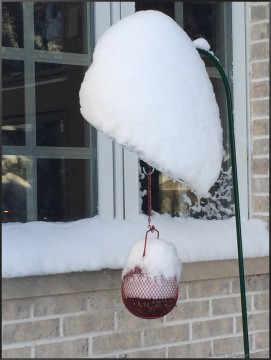
The birds were really thankful for the feeders, even if they were covered in snow! The goldfinches, chickadees, cardinals, juncoes, red-breasted and white-breasted nuthatches, downy woodpeckers, purple finches, and house sparrows all ventured out in the snow to visit the feeders.

No squirrels around all weekend, they must be hunkered down in their nests.

Stephi Gardens

The snow in the NoNo sunflower ball didn’t bother the chickadees and goldfinches.  They were visiting all day, except of course, when I was out there shooting the picture.

Stephi Gardens

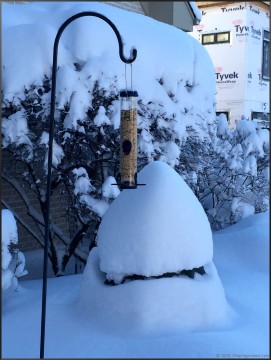
This tube feeder is my “sparrow’ feeder.

Stephi Gardens

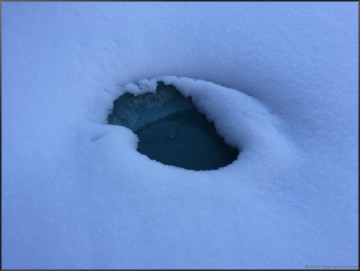
The heated birdbath kept the water thawed pretty well during the storm.  This is the first winter I’ve had one out.  I was lucky enough to get it as a hand-me-down when my mom got a new one.  They’re not here now, but in the winter the birds like a place to get an easy drink.

Stephi Gardens

The arborvitaes are not faring very well with all this snow.  Hopefully they literally bounce back once the snow melts.

winter arborvitae

Daisy and I are not going out there!

Stephi Gardens

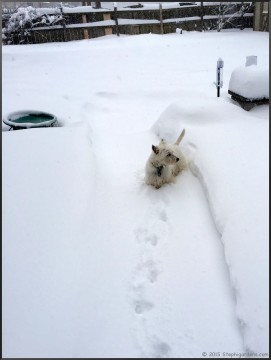
So instead we made a path for Daisy to get around.  Those little legs are not made for deep snow!   I also have to thank my boys for shoveling paths to all the bird feeders when they were snowblowing and shoveling on their snow day off of school.   This snow was too deep for me as well.  This is much better!

Westie

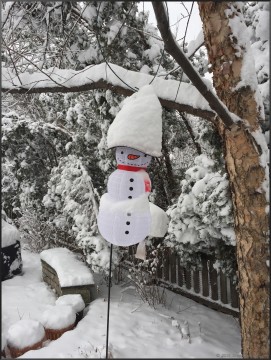
But, my snowman  didn’t mind at all!

Stephi Gardens

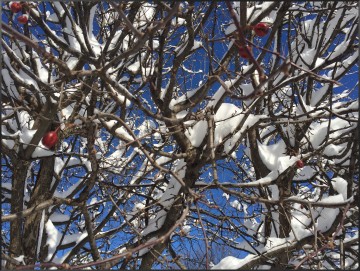
When the sun came out after the storm was done, the sky was a beautiful sapphire blue.

Stephi Gardens


Taming my Tomatoes with a Florida Weave

I keep searching for just the right way to tame my tomatoes.  I’ve tried different trellising methods, but they just seem to grow crazy and become totally unwieldy by late summer.  That’s also why they are banished out of view to the side garden.  Of course it would help if I pruned them like I should, but I am the casual gardener and things happen.

In my experience, my least favorite way of containing tomatoes is the metal cone cages.  I’ve never found one tall enough or wide enough to hold up a mature plant in the garden.  Maybe they’d work for a small patio tomato, but not for a garden tomato.

My current favorite for supporting tomatoes is the Blue Ribbon ® Ultomato Tomato Plant Cage.

Blue Ribbon ® Ultomato Tomato Plant Cage

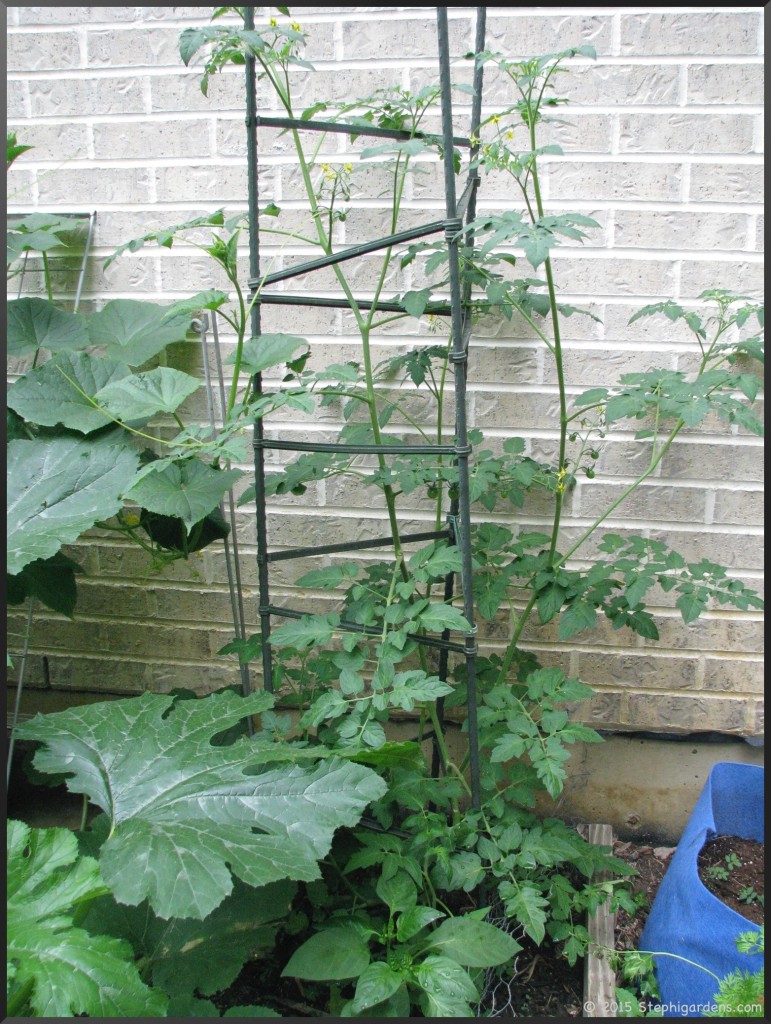
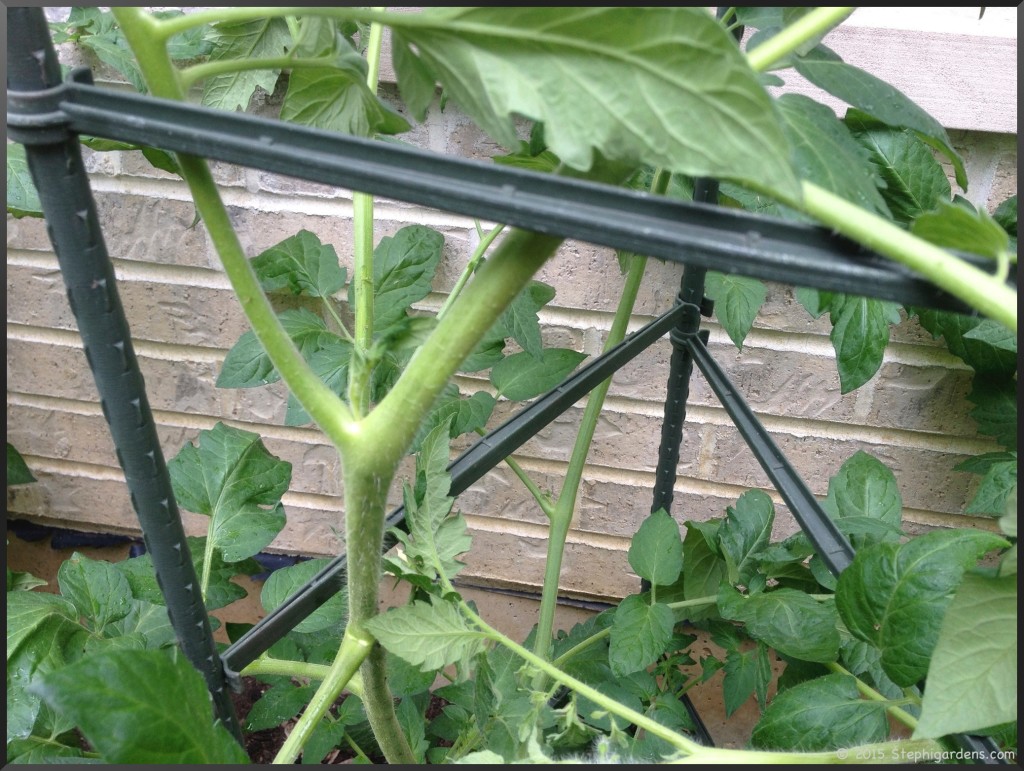
It’s 5′ tall, made of heavy-duty Sturdy Stakes (strong steel core stakes with a tough, thick plastic coating) and has nine fully-adjustable support clips.   I’ve had mine for years.   The extra nice thing is that if I’m a little late staking the tomatoes, it’s super easy to get the plant contained without damaging anything.

Blue Ribbon ® Ultomato Tomato Plant Cage

I found them on clearance one year at Home Depot, but I’ve seen them at Amazon and other garden shops as well.

Last year, I came across a post on Garden Betty describing a different way of trellising tomatoes using a Florida Weave.  Despite the somewhat comical name, it sounded like a handy, low cost, easy way to prevent the crazy sprawl I usually experience.   I was generally happy with how it turned out in my garden, but I definitely made some mistakes that I would need to fix next time.

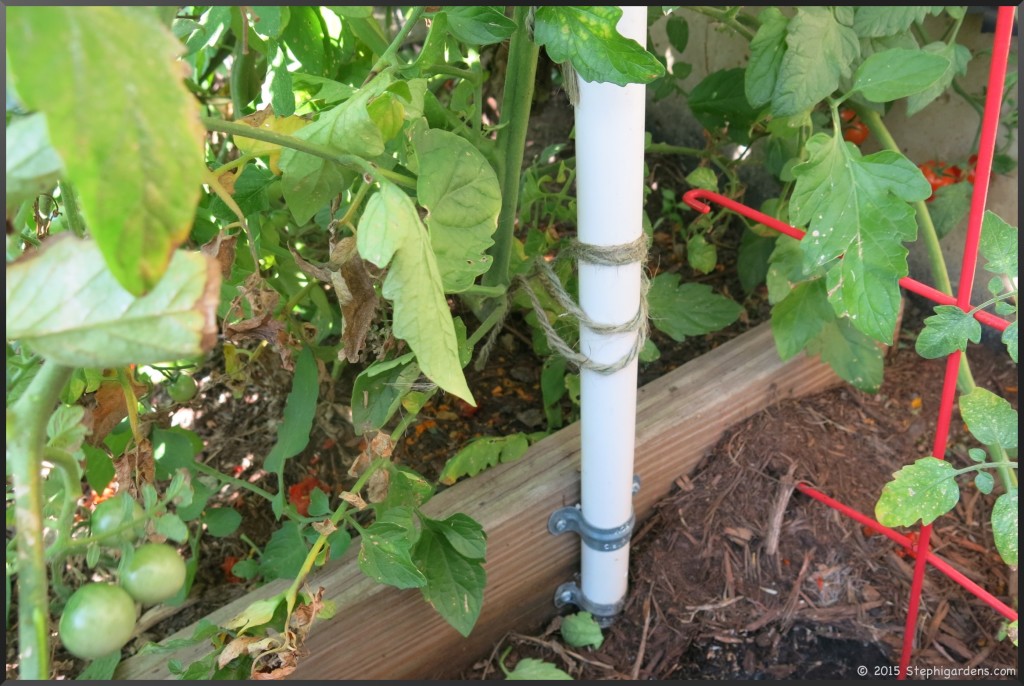
I was planning on planting 2 cherry tomato plants, 2 plum tomatoes and 2 beefsteak types in a 16×3 ft raised bed (Problem #1-trying to weave more than one variety of plant in the same row).  First, I attached some strong 5′ PVC poles I had around the house to the wood sides of my raised bed to act as anchors.

Tomato Florida Weave

(Problem #2–not enough stakes)

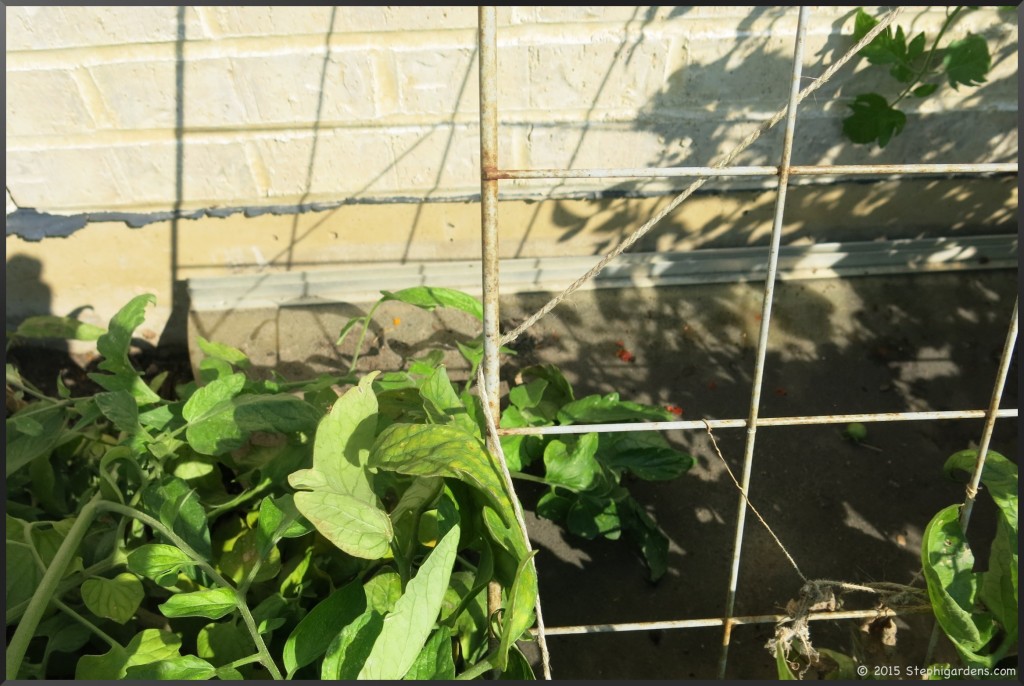
I took garden twine, and following the weaving method that Garden Betty described, wove the first row of twine.  By the time I did the second and third rows, I realized hadn’t followed the directions she provided very well and my supports were way to far apart. I was trying to weave across too far of a distance and everything just started to get tangled. The twine also sagged a lot in the middle and didn’t support the growing plant very well.

To shorten some of the distance between supports, I first ended up using the metal cucumber trellises as an in-between anchor.

Tomato Florida Weave

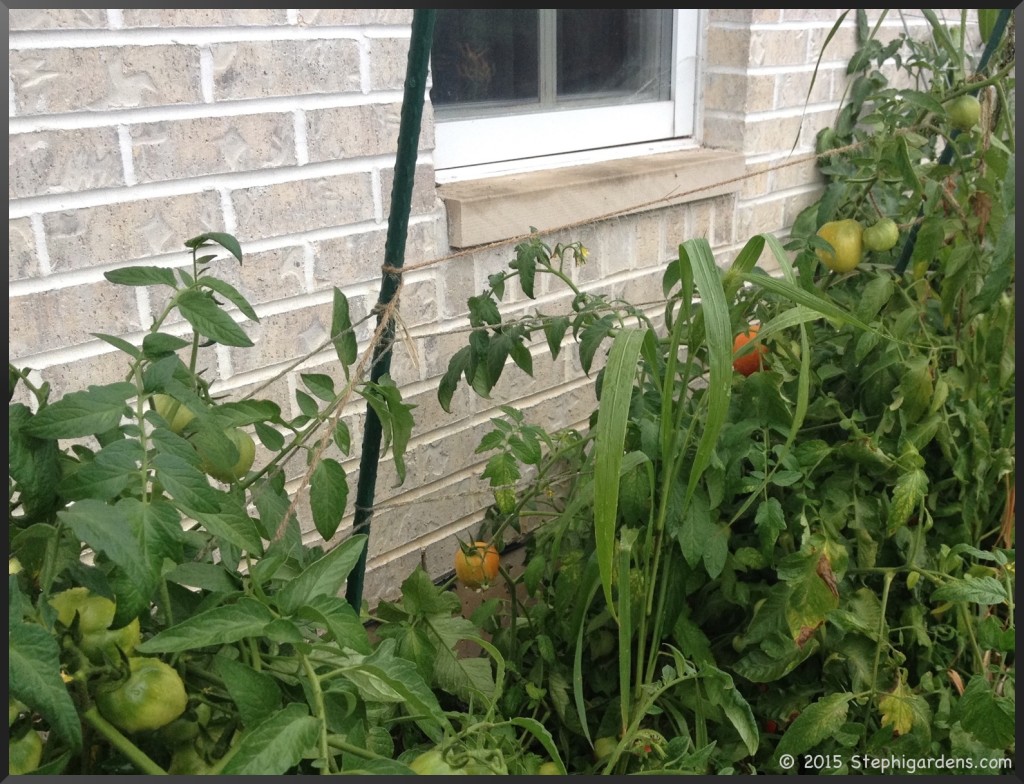
Then, by mid-summer as the plants grew bigger, I added a couple more not very strong stakes in a last ditch effort to salvage the weave and keep the plants from completely tipping over.

Tomato Florida Weave

(Problem #3-really not enough stakes)
(Problem #4-really should keep up with the weeding better, but that’s unrelated to the Florida weave )

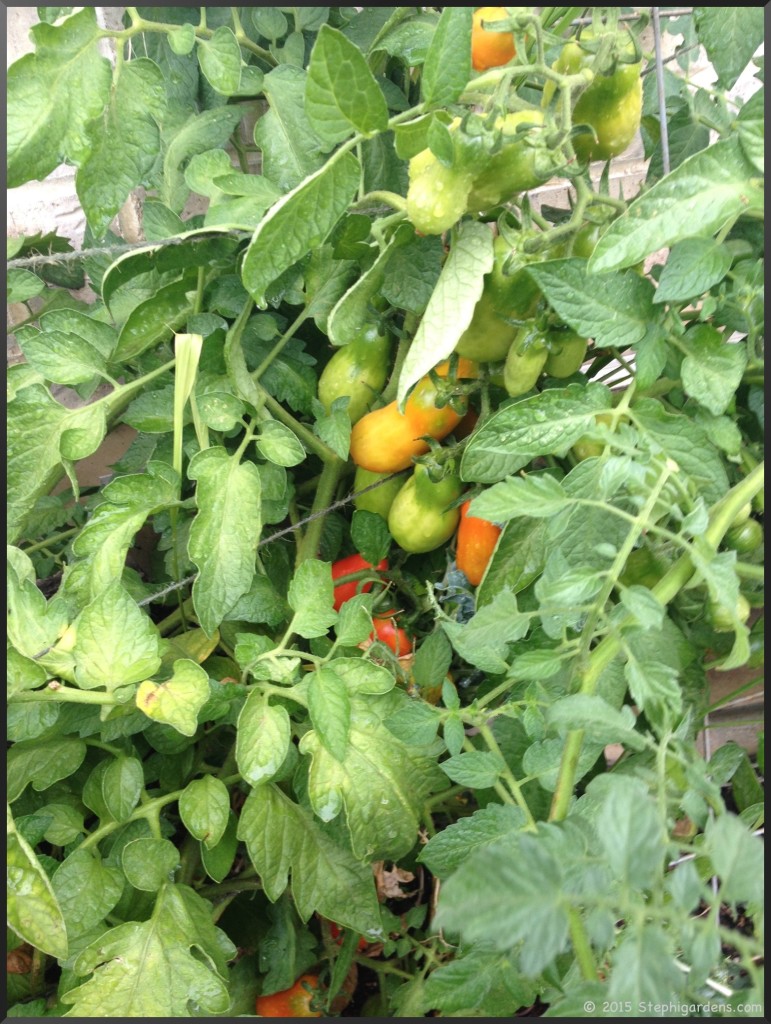
So what was my overall impression?  For the beefsteak and Roma tomatoes I really liked the Florida Weave technique, even if I had issues with how my first time version turned out.  I’m going to use it again for them, but before I get the plants planted I’ll have enough strong stakes in place to offer appropriate support.  I also noticed that weaving like varieties would probably work better.  They grow at the same speed and in similar shapes.  Trying to corral a variety of plants didn’t work so well.

But even with the problems I had, the plants grew great.  I thought there was more air circulation making for healthier plants, more naturally placed and stronger supports for sprawling branches and it was easier to get into the plant to harvest the tomatoes.  As a bonus, in the fall it was really easy to pull out all the plants.  Just cut the twine and down everything comes.

Tomato Florida Weave

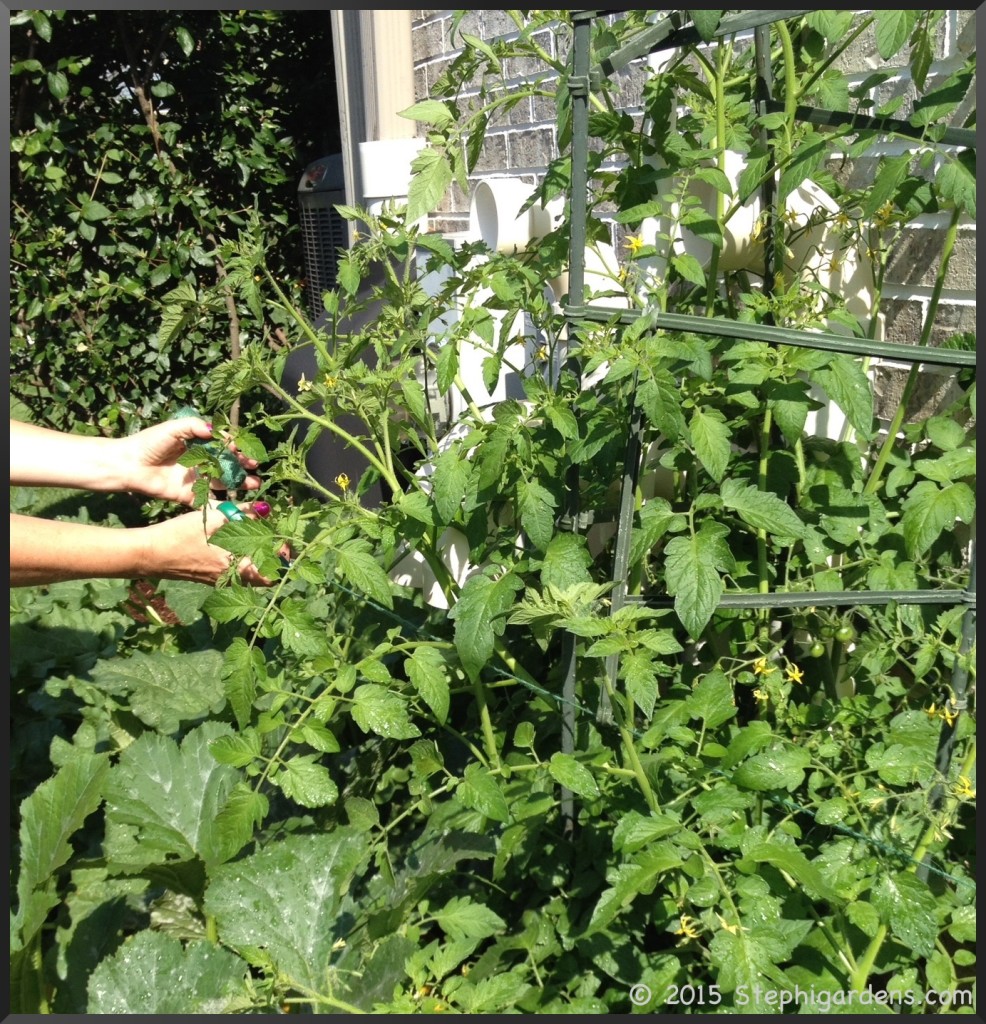
For the cherry tomatoes, I am going to go back to using my Blue Ribbon ® Ultomato Tomato Plant Cage.  About midway through the summer, I actually got the cages back out and put them around the cherry tomato plants as extra support.  It also helped to take some of the weight off the weave since things were beginning to topple.

Blue Ribbon ® Ultomato Tomato Plant Cage

I’m looking forward to trying again this summer and having it work out better.  At least I learn from my mistakes, usually.  What’s your favorite way to support tomatoes?

So Long Beautiful Maple Tree

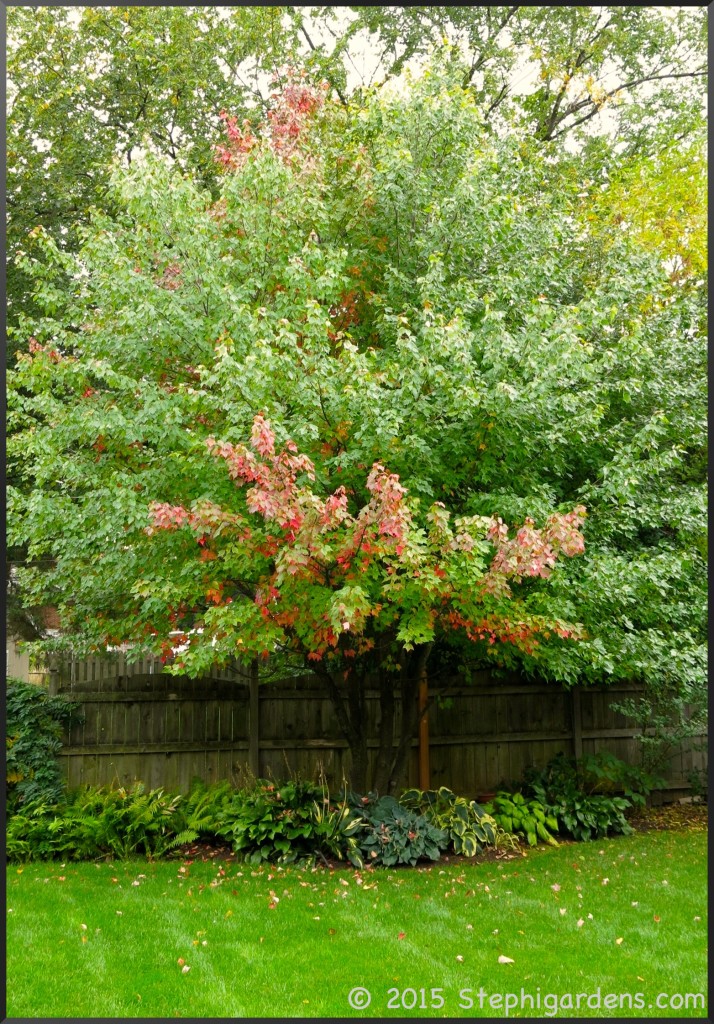
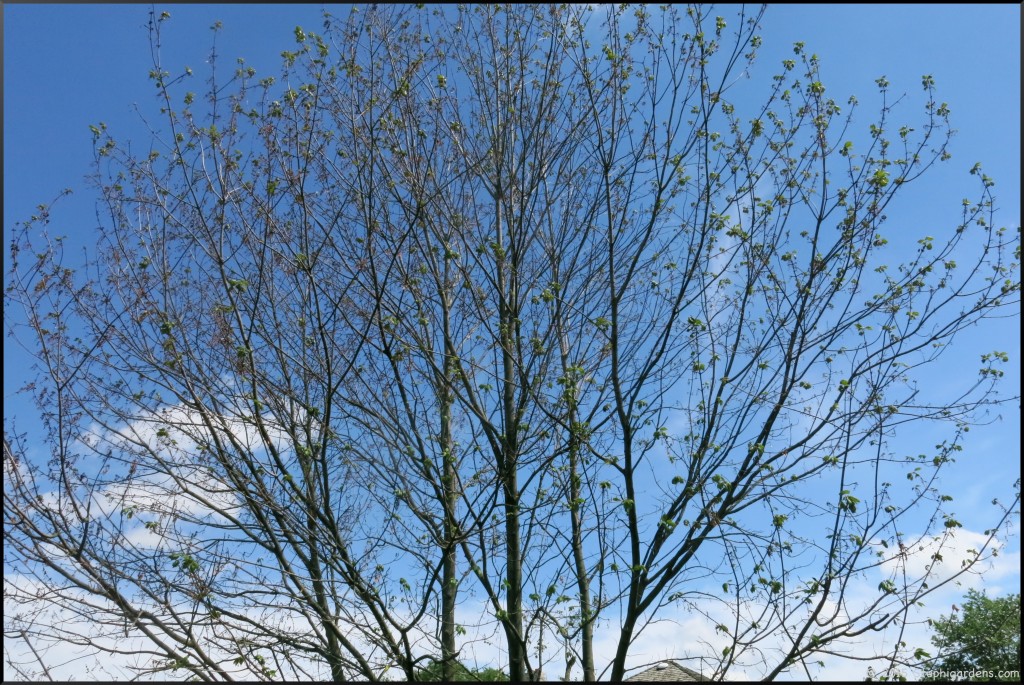
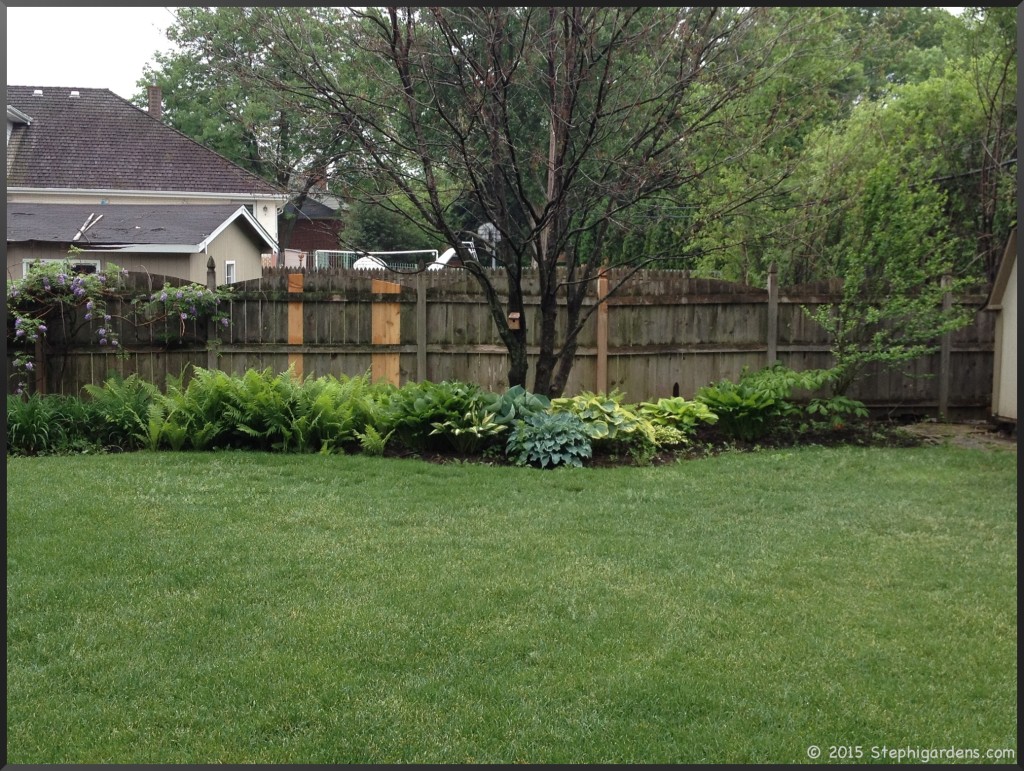
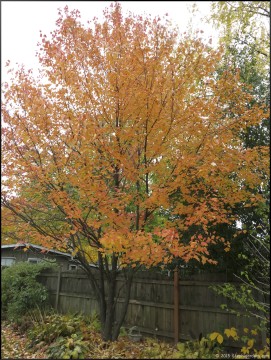
One of the major casualties in my garden this year was an 18 year old branched Freeman Maple that was one of the anchors of the backyard.

Multi stemmed Freeman Maple Autumn Blaze

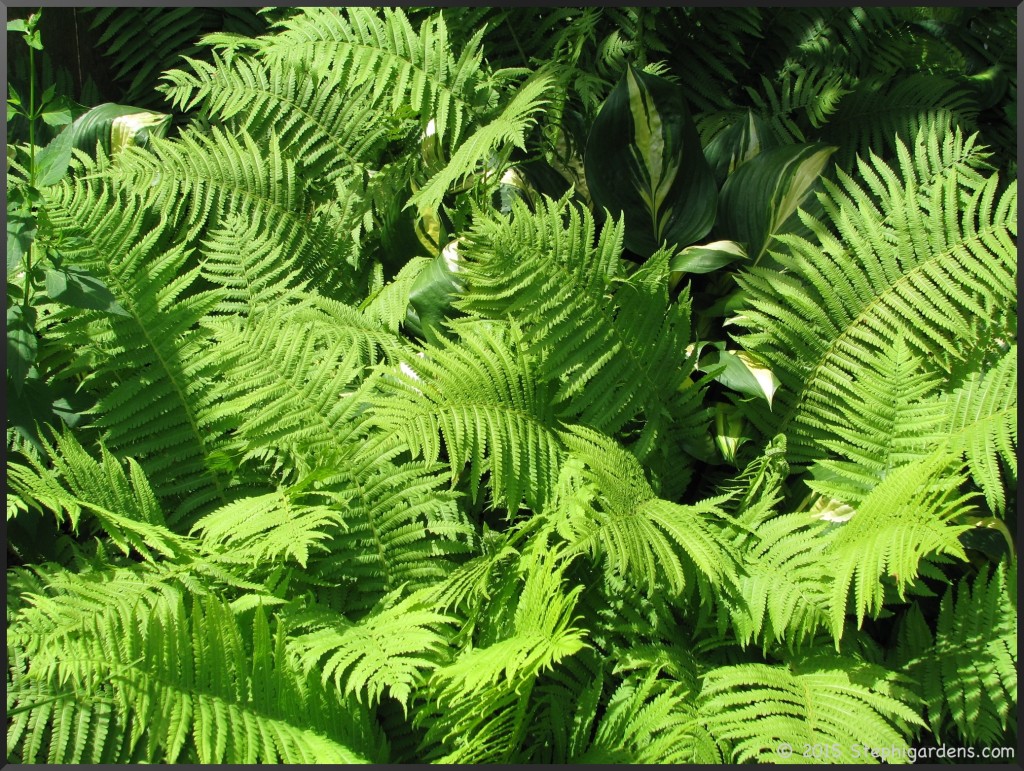
When we moved in about 20 years ago, along the side property line was a row of very scraggly Siberian Elms that were nearing the end of their life spans and dangerously dropping large branches in every wind storm.  We decided to remove those and put in a specimen tree.  The maple provided great shade and was surrounded by a hosta and fern garden.

ferns

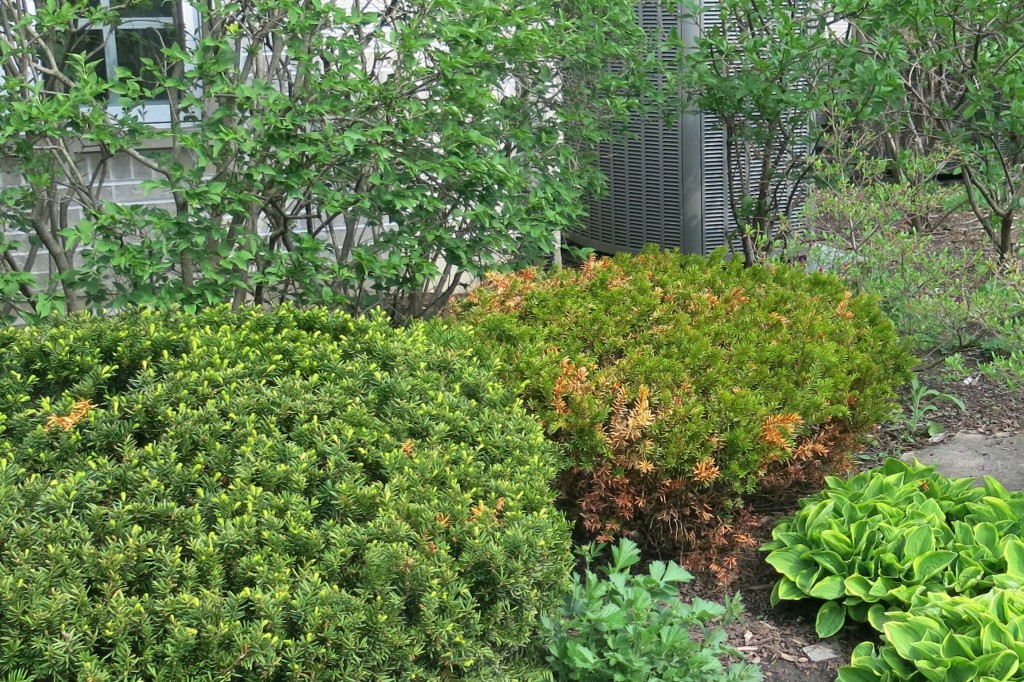
Last winter/spring, we had a couple of things happen on that side of the yard that likely contributed to the demise of this beautiful tree.  First was the unusually cold winter we had.  There were a lot of garden casualties reported in the Chicago blogging world and I had a few also, including some yews and grasses.

Yew

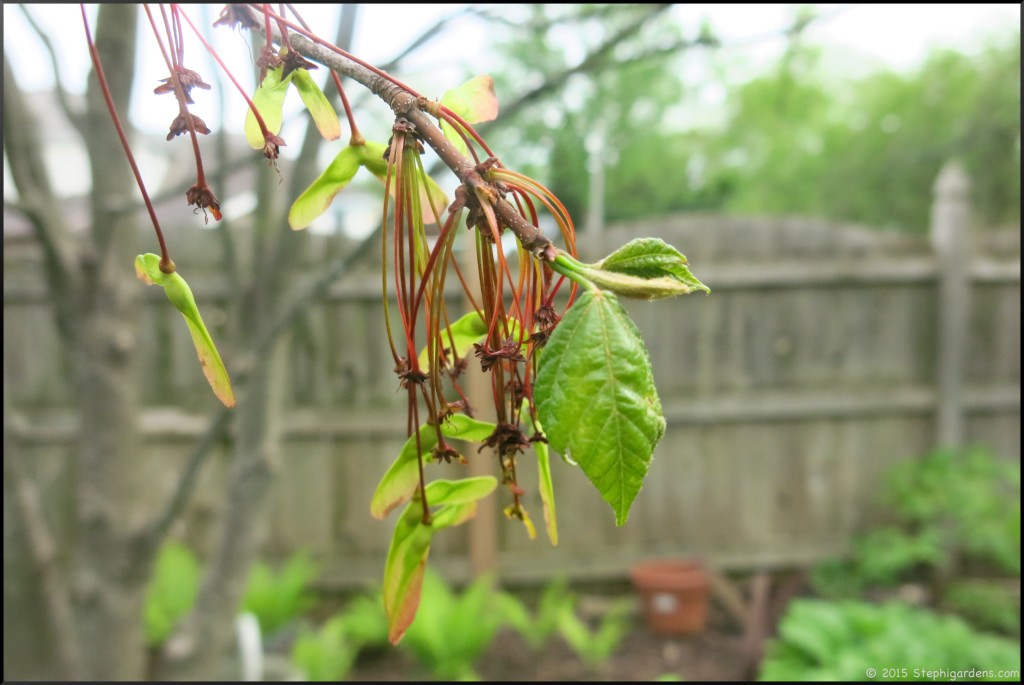
But, the maple looked fine as spring came, sending out buds, leaves and seeds.

Multi stemmed Freeman Maple Autumn Blaze


Multi stemmed Freeman Maple Autumn Blaze

It was also so established that it really should have survived just fine and no other maples in the area looked as though they were struggling.

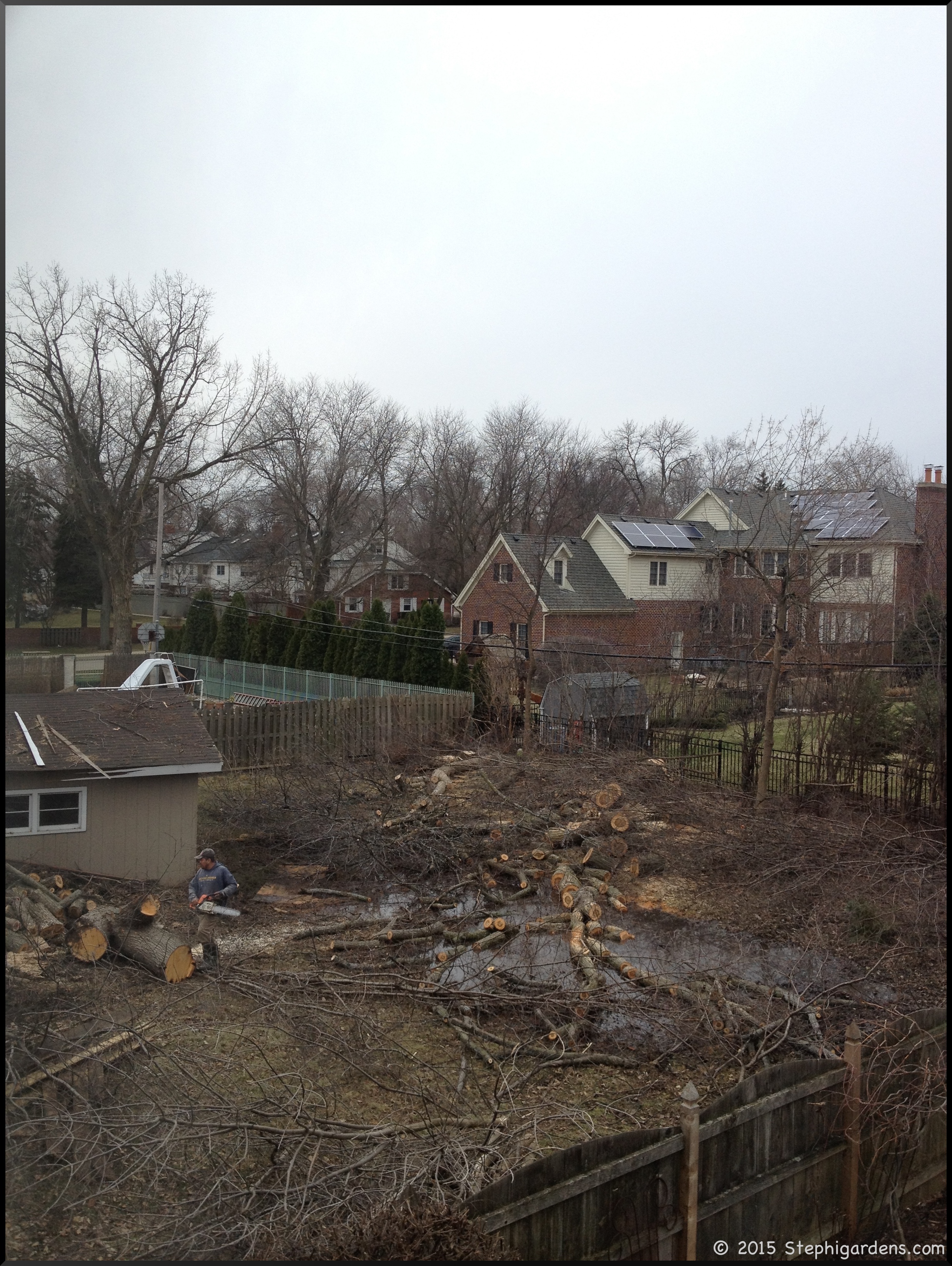
Then in early April, in preparation for the house next door being torn down for new construction, all the trees were removed leaving a barren and swampy lot for weeks.  It was really a mess.

stephi gardens

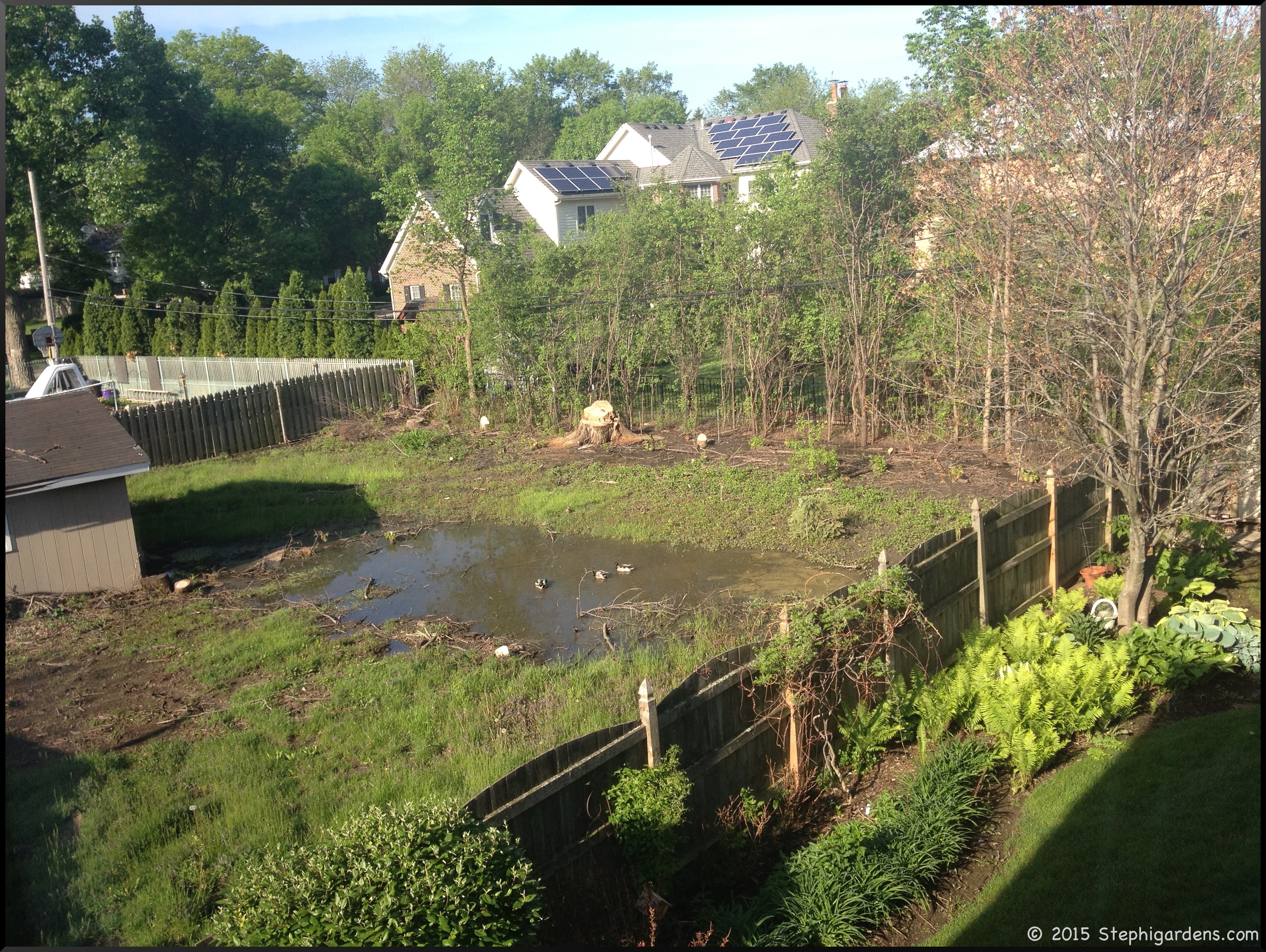
Because of the heavy equipment, the poor soil was compressed further and the natural neighborhood water drainage was disturbed.  Then came the spring rains on top of already saturated soil.

stephi gardens

stephi gardens
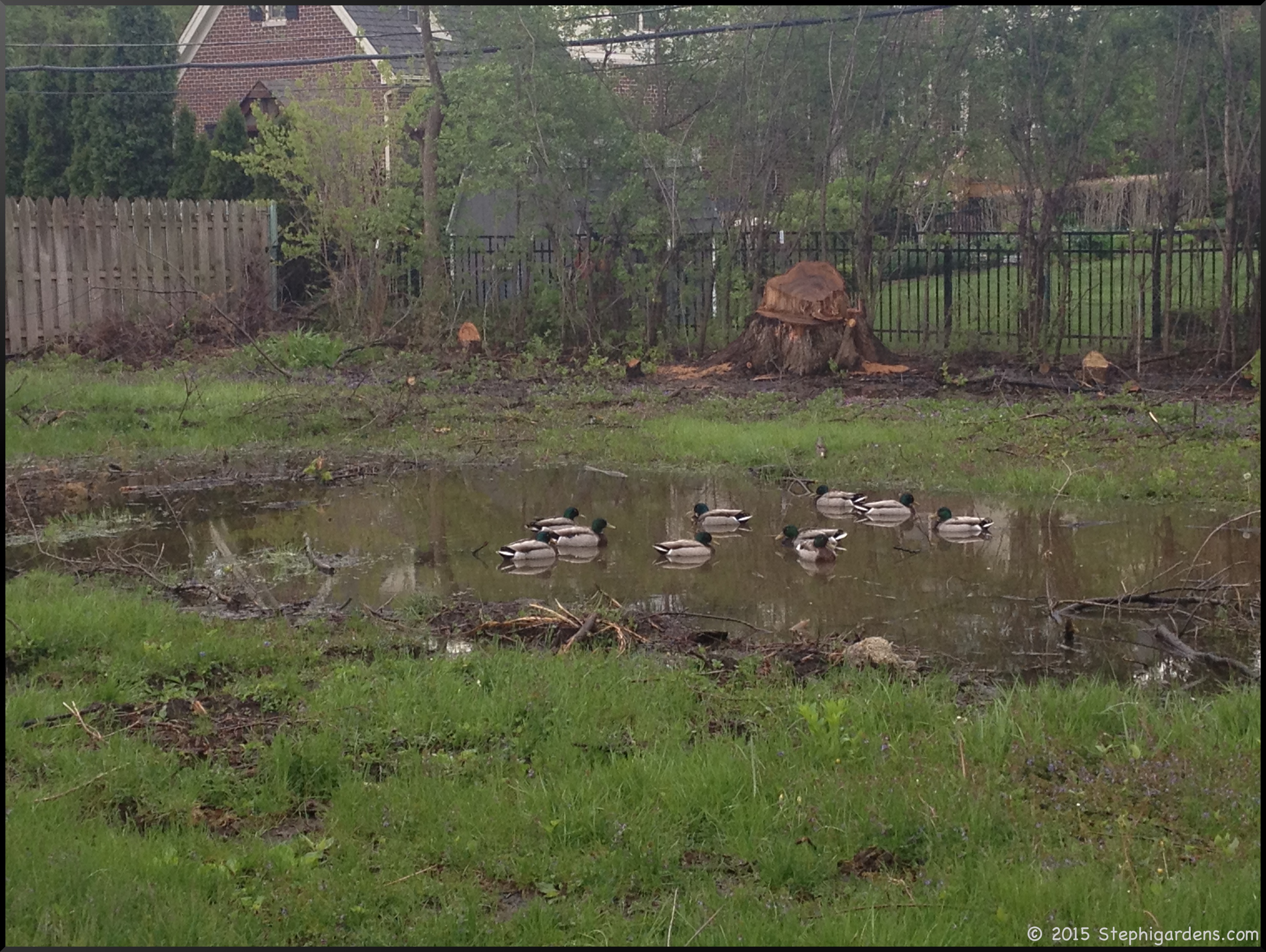
The Mallard Ducks don’t mind the situation at all. Neither did the breeding toads who hummed loudly all spring.


Stephi Gardens

Unfortunately for our tree, it was right next to the property line and probably suffered the consequences of root damage.  So adding together the stress of the winter and the stress of the standing water, it led to the death of the tree by mid summer.  It never put out any more leaves and just looked frozen in time.

Multi stemmed Freeman Maple Autumn Blaze

We finally had to have it taken down, and now need to decide what to do in the area.   The hostas and ferns were a bit sunburned by the new situation, but they’ll be fine.  We’re reluctant to replace it yet, not knowing what the new neighbors might plan for their landscaping.  So in the meantime, we’re in a bit of a holding pattern trying to make the best of it.

The good news is that as part of the construction, they have fixed and enhanced the drainage in the area, so further flooding shouldn’t be an issue going forward, and should actually be markedly improved.  Maybe I won’t be needing to be wearing my rain boots to trudge around the yard so often anymore (see “My New Rain Boots“)

We have worked so hard to protect our ash tree (Attack of the Emerald Ash Borer: Part 1 and Part 2).  Who would have thought the maple would be the one to die first???

So much has changed for us with the construction next door.  Some we’ve prepared for, some will be a work in progress.  It’ll be a while until it’s all sorted out. I’ll be writing about some of it in the weeks ahead.  Have you had events in your yard that completely change the landscaping?

Multi stemmed Freeman Maple Autumn Blaze
I’ll miss the great fall color!


SaveSave

Making My Own Pumpkin at the Pumpkin Patch

glass pumpkin

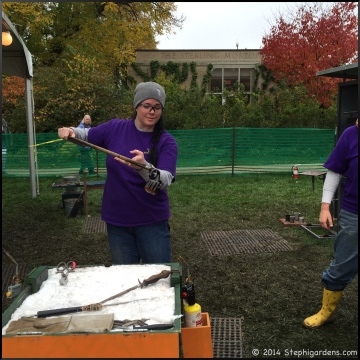
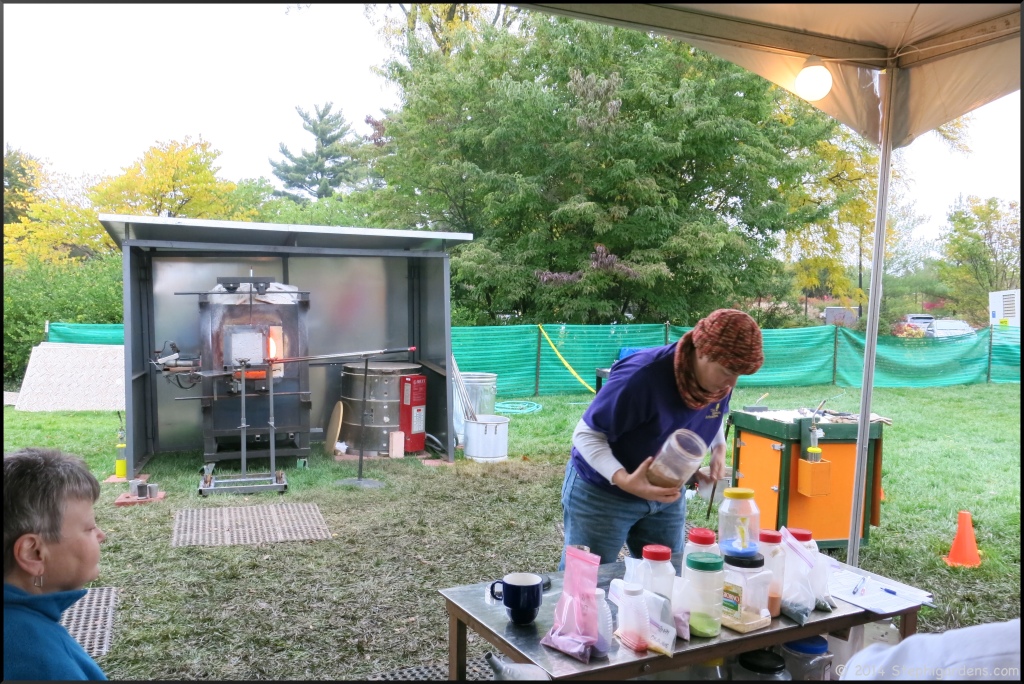
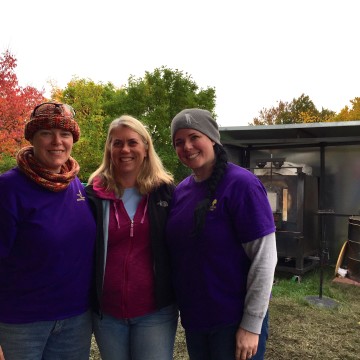
During the Morton Arboretum Pumpkin Patch this year, my friend Susan and I signed up for a Glass Pumpkin Workshop where we would learn to make our own pumpkin paperweight.   So on a drizzly, cold October morning, six of us gathered by the demonstration tent to learn how to work with molten glass to create our own glass pumpkin paperweights.  Our great instructors, Sandy and Hillary from the Girl Glass Studio in Sacramento, CA, first demonstrated how we were going to make our pumpkins, then helped each of us make our own creations.  It was far more complicated than I though it would be, but they expertly led each of us through the steps.

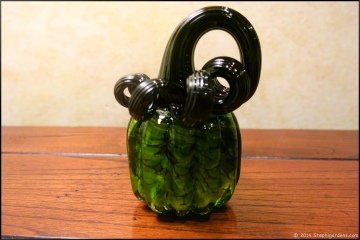
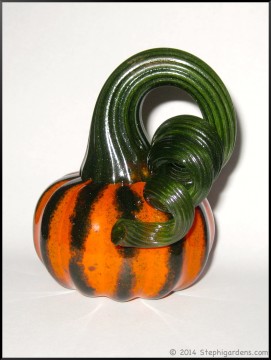
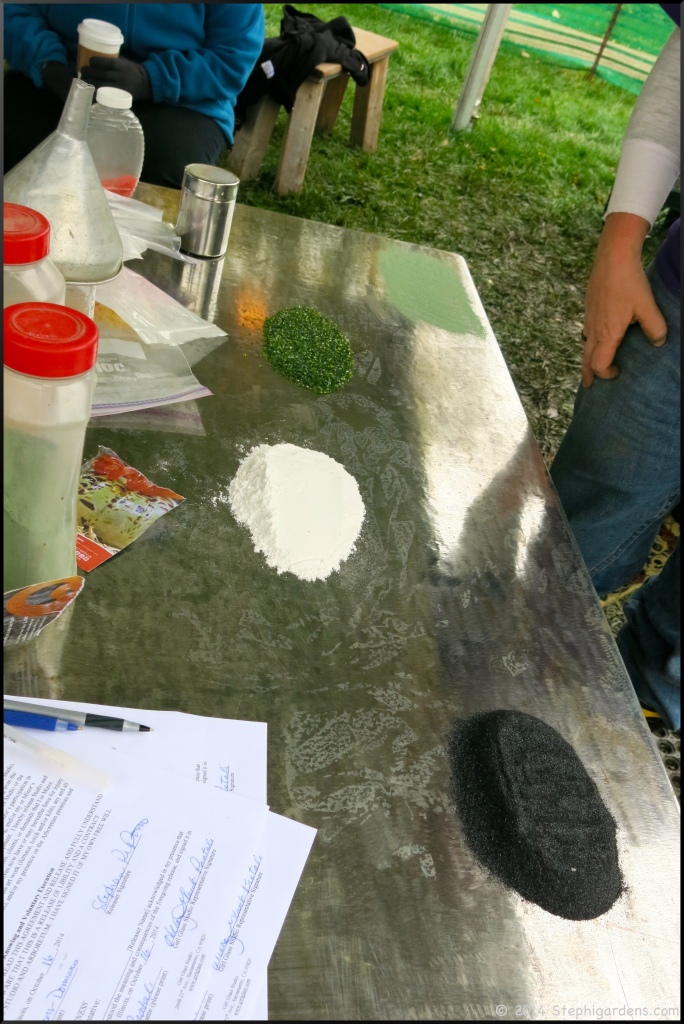
The first thing we all had to decide was what color(s) we wanted our pumpkin to be.  I wanted one to compliment the others I had, and settled on something similar to one of Sandy’s own designs that was a beautiful combination of green and yellow.  Susan was just starting her collection and went with a more traditional orange pumpkin.  The others ranged from choosing her favorite color, to another who wanted to match the beautiful fall red color of a nearby tree.
glass pumpkin

glass pumpkin

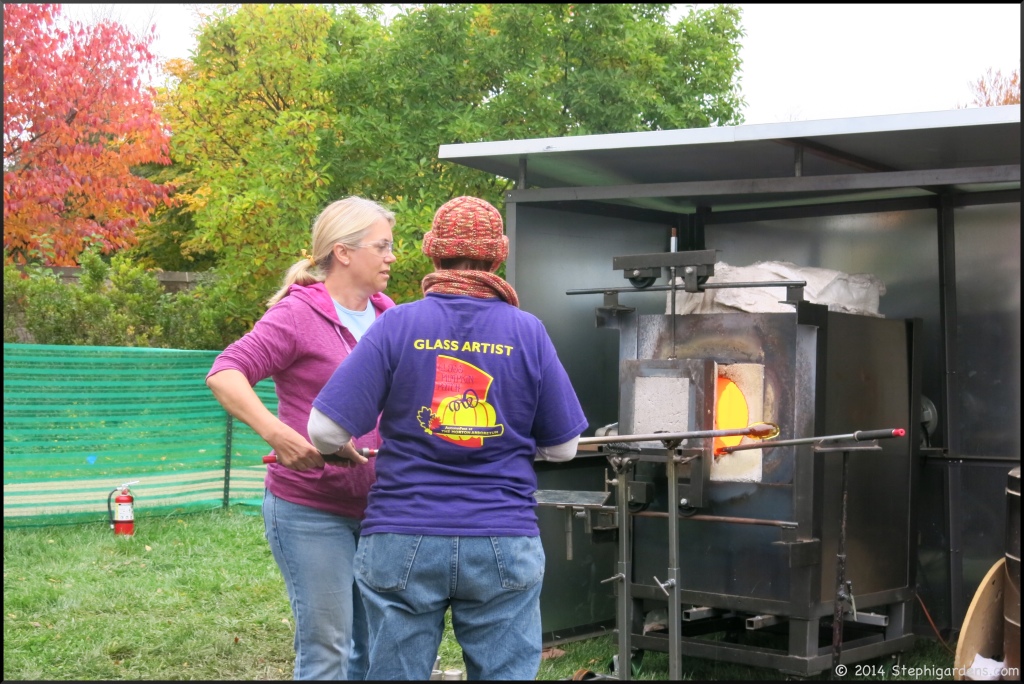
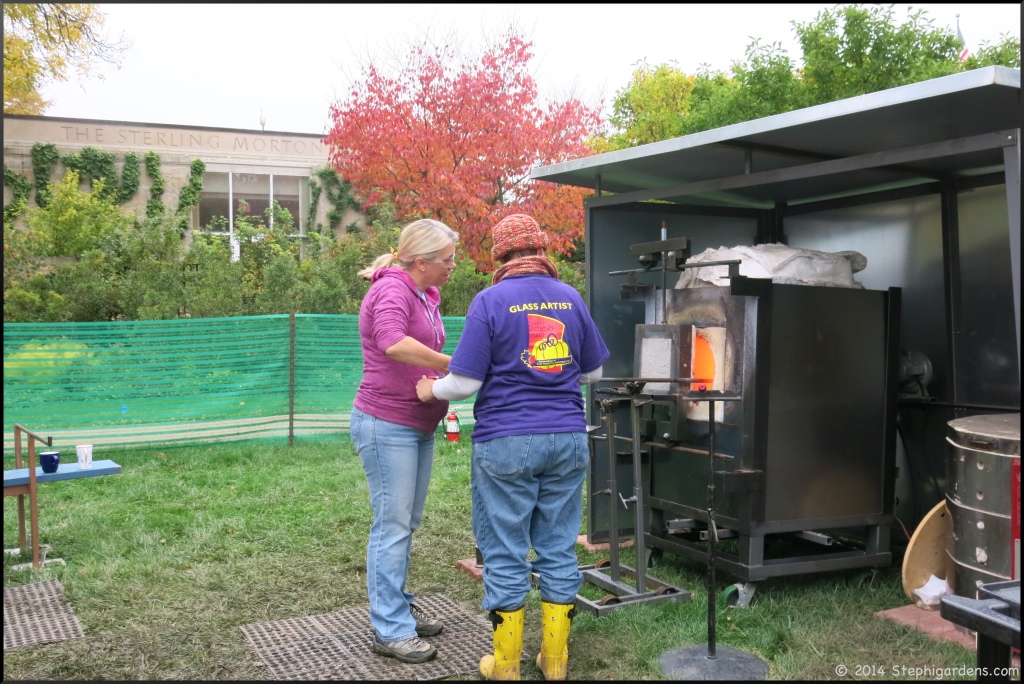
Then it was time to begin.  Using a pipe, it was time to do the first gather of glass. In the furnace was clear glass, molten at a temperature of 2000° F.
glass pumpkin

glass pumpkin

Constantly rolling the pipe (and keeping it level), we walked the pipe over to the marveling table.  There we rolled the glass into a cylinder, while also letting it cool slightly.
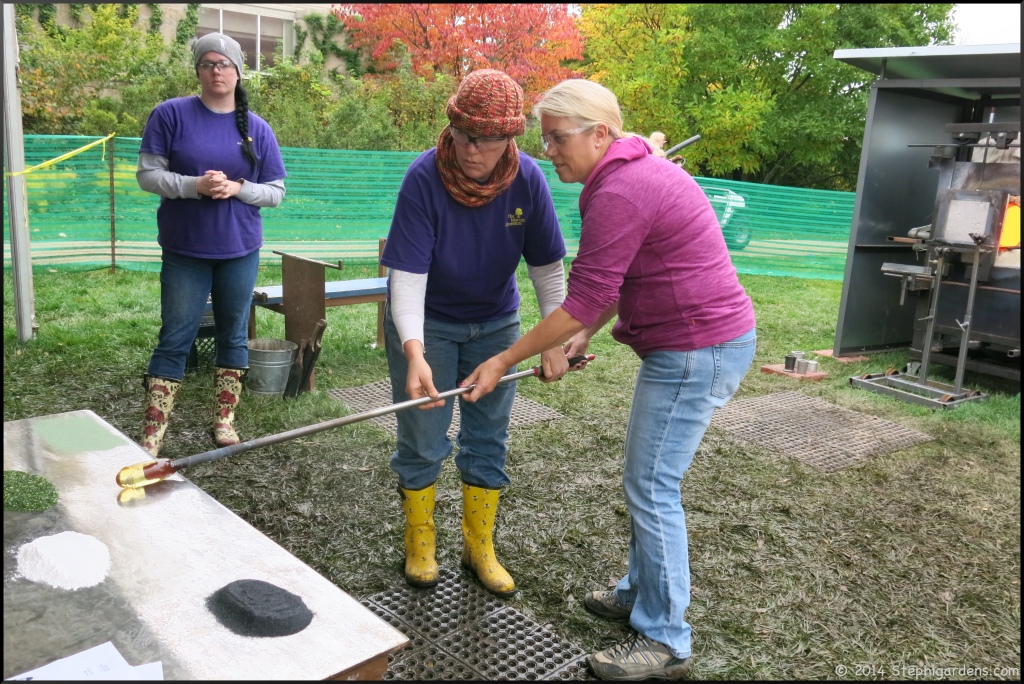
glass pumpkin

glass pumpkin

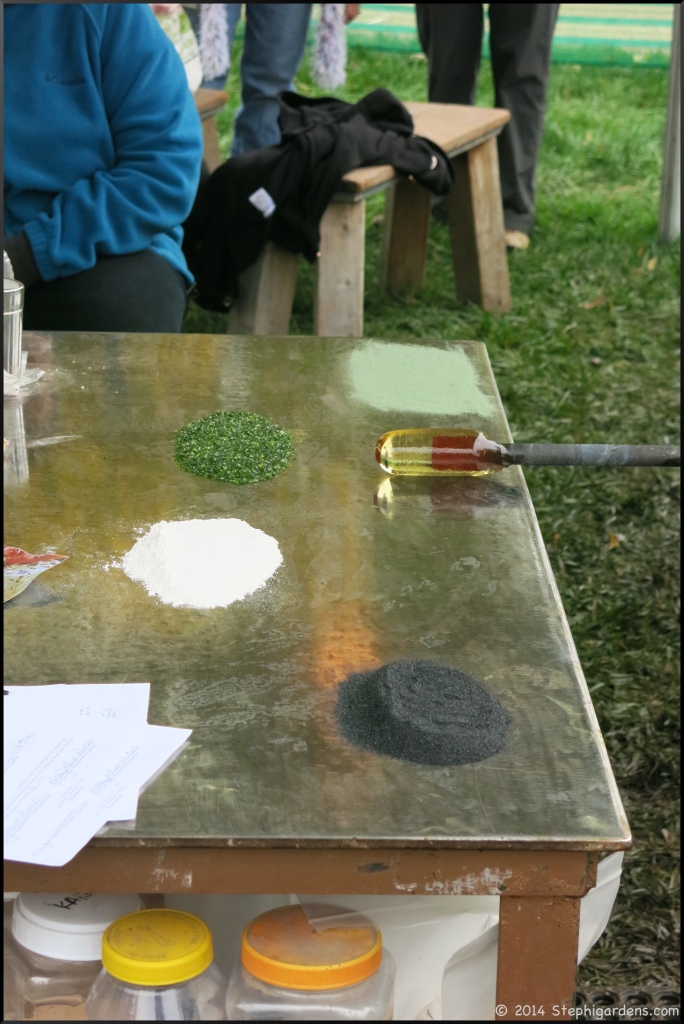
We repeated this to make the gathered glass the size and shape that was desired.  After the final gather, we rolled the glass in the first “frit” or color.
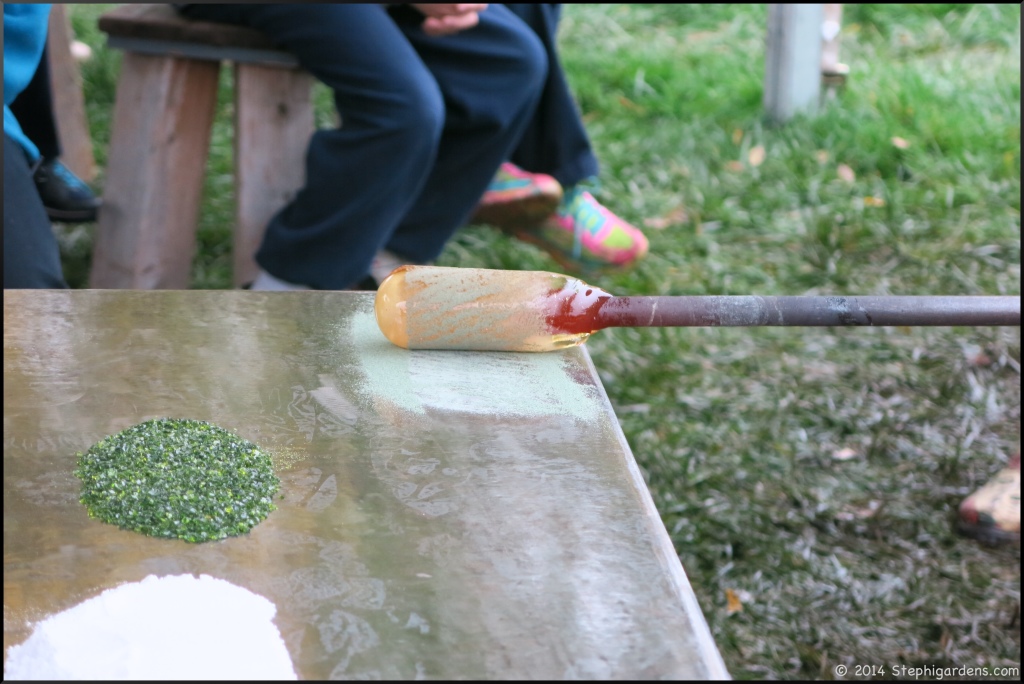
glass pumpkin

Then is was back to the furnace to reheat the now color coated glass.  Once the glass is colored, it is reheated in the reheating chamber that is in the front of the furnace.  It’s used during reheating so someone doesn’t contaminate the clear molten glass in the furnace accidentally with colored glass.  You don’t want to be that person!

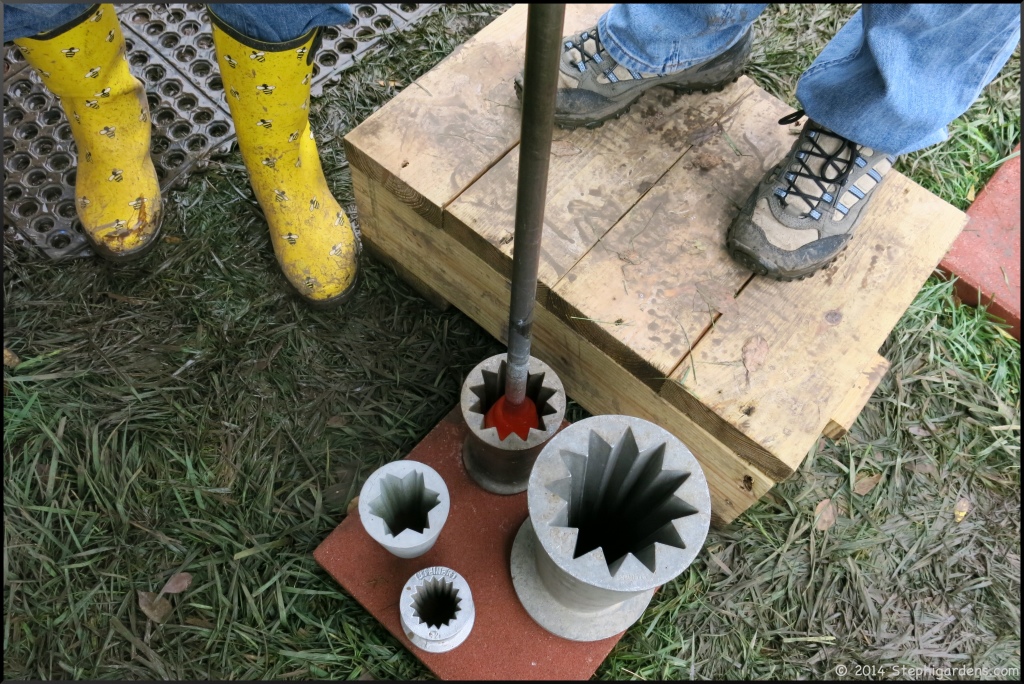
After reheating, its time to shape the glass in a mold.
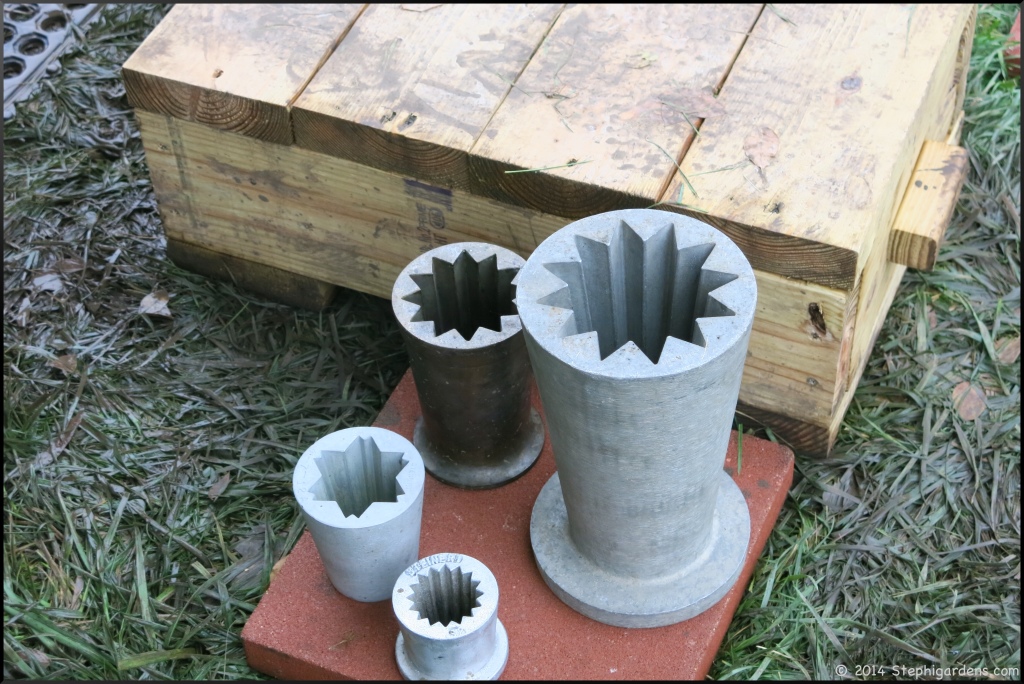
glass pumpkin

glass pumpkin

Then the glass is rolled again in frit to add a contrasting color to the points.
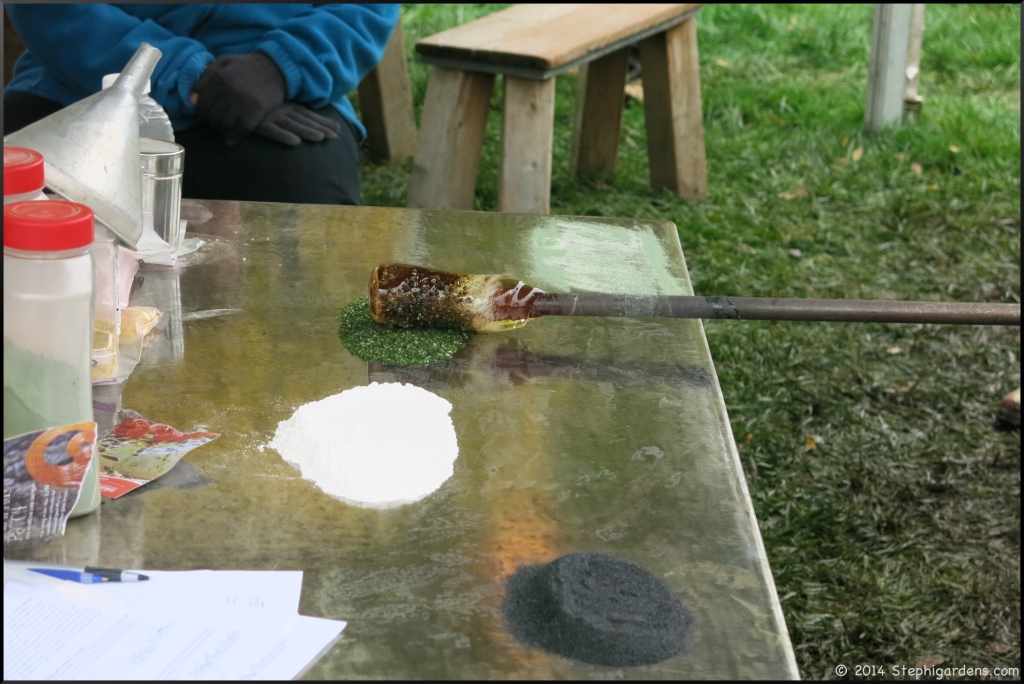
glass pumpkin

Back to the furnace one last time and then to the bench for final shaping.  This is where things speed up.  The glass can’t be allowed to cool very much or we run the risk of it shattering.
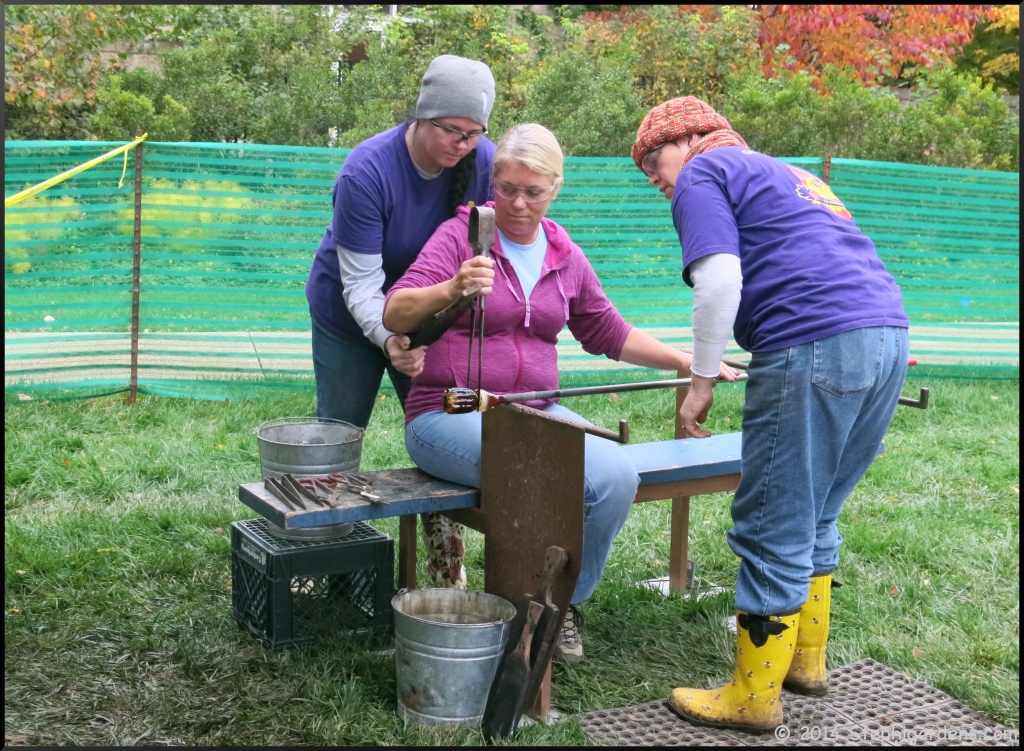
glass pumpkin

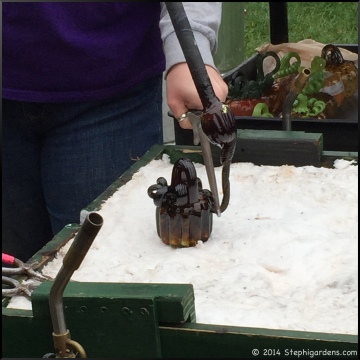
First rule was we had to sit on our left hand until Sandy was ready to guide our hand to a safe position.  It is deceivingly tempting to grab the pipe placed in front of us, but it’s hard for us to know visually where it is cool and where it is crazy hot, so to keep us safe we sit on our hand.  Using jacks, the pumpkin is shaped and the top prepared for breaking off the pipe.

It’s hard to see, but Hillary is holding a board under my arm to help keep the heat from the glass off my skin.  Throughout the process I was amazed at the heat that was pouring out of the furnace and off the glass and rod.  It didn’t necessarily always look hot, but we could feel it.  That is also why we needed to have our hair tied back and wear only natural fiber clothing.  Finding something to wear was actually harder than it sounds 🙂
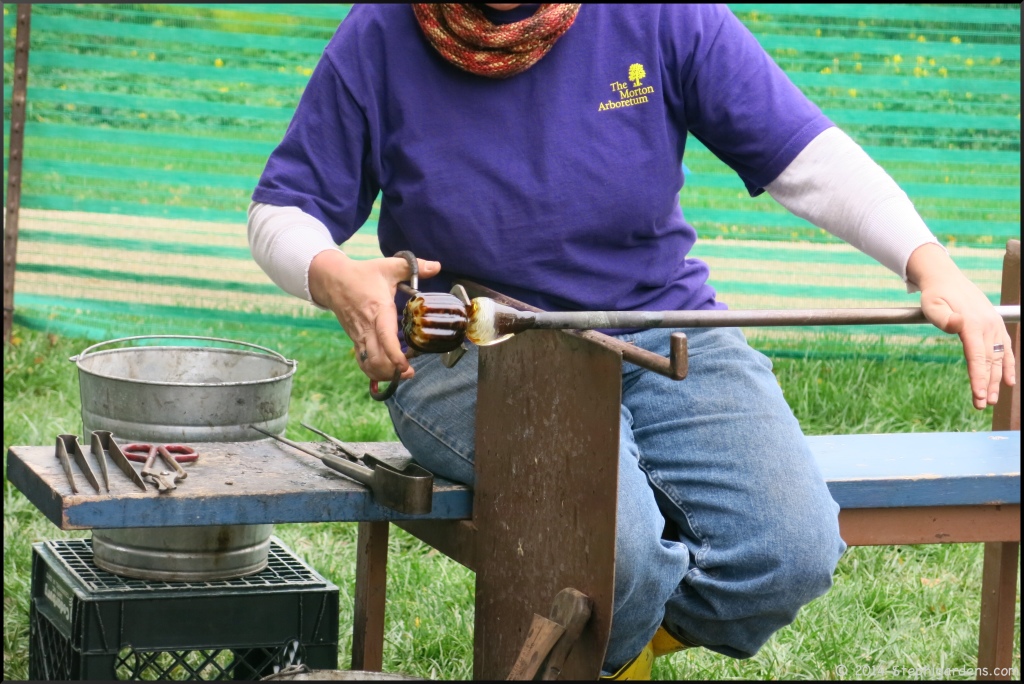
glass pumpkin

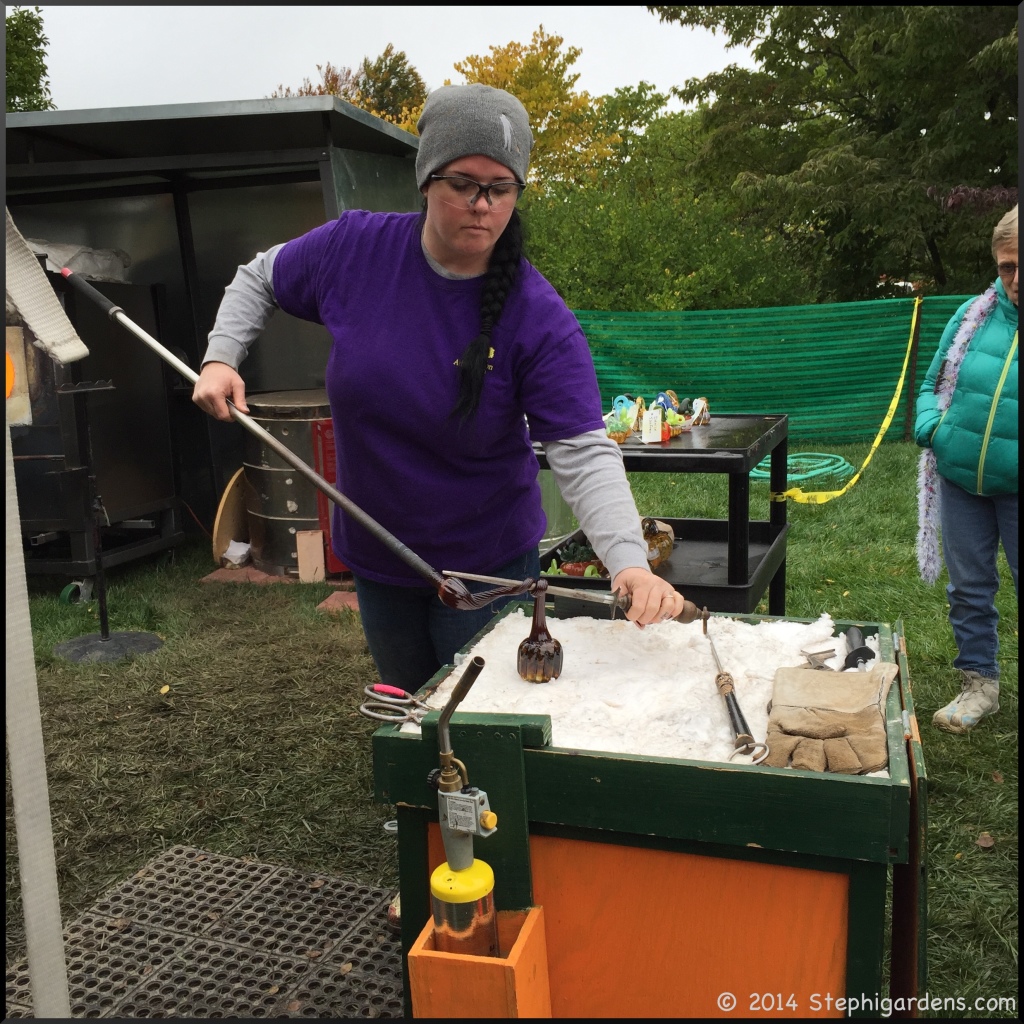
At this point, Sandy and Hillary took over since every minute the pumpkin is cooling, shattering becomes a bigger reality.  Hillary brought the pipe with the now shaped pumpkin to a heating table where Sandy was ready to help heat up the pumpkin with blow torches.  A few taps and the pumpkin was broken free from the pipe and it was time to prepare the stem.
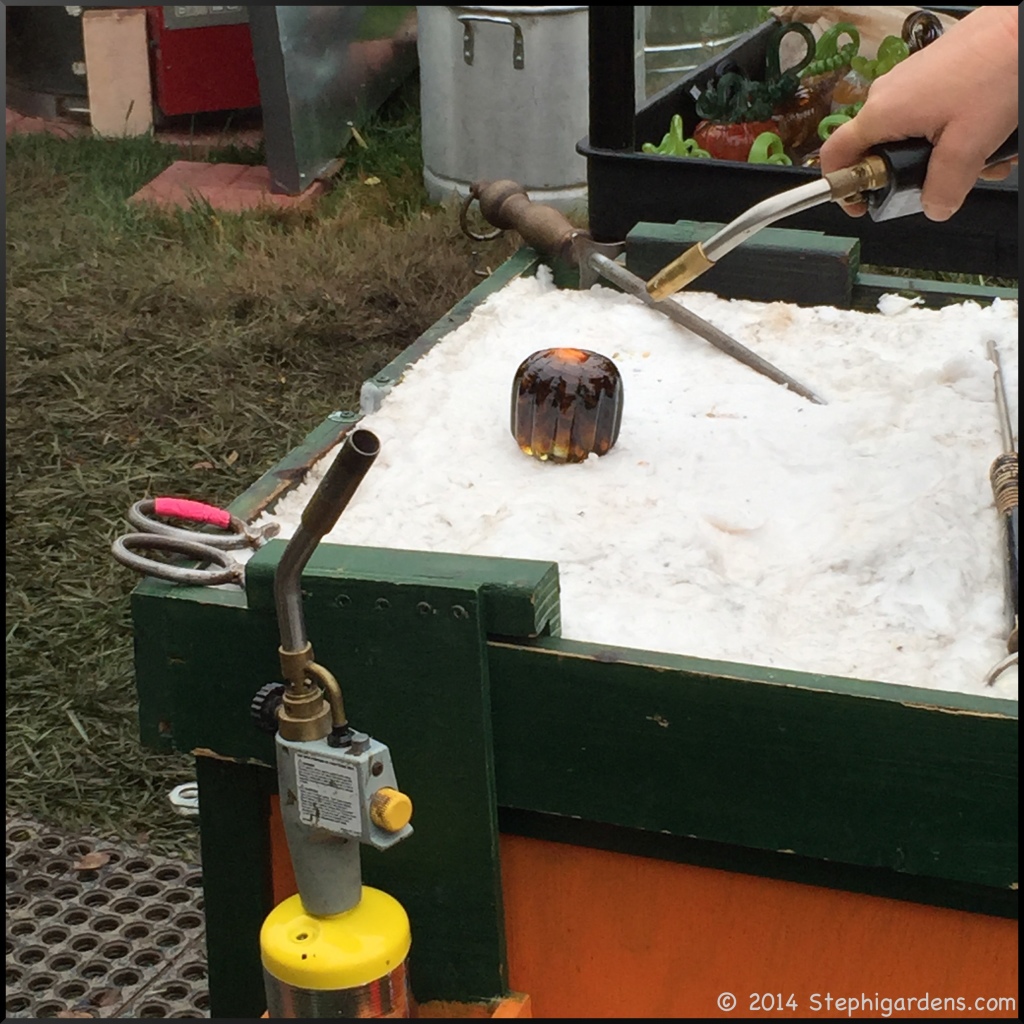
glass pumpkin

Glass is gathered, colored frit is layered on and the stem is shaped in a mold.  The stem glass was pushed onto the pumpkin and then drawn and twirled, making a beautiful unique twisted stem.
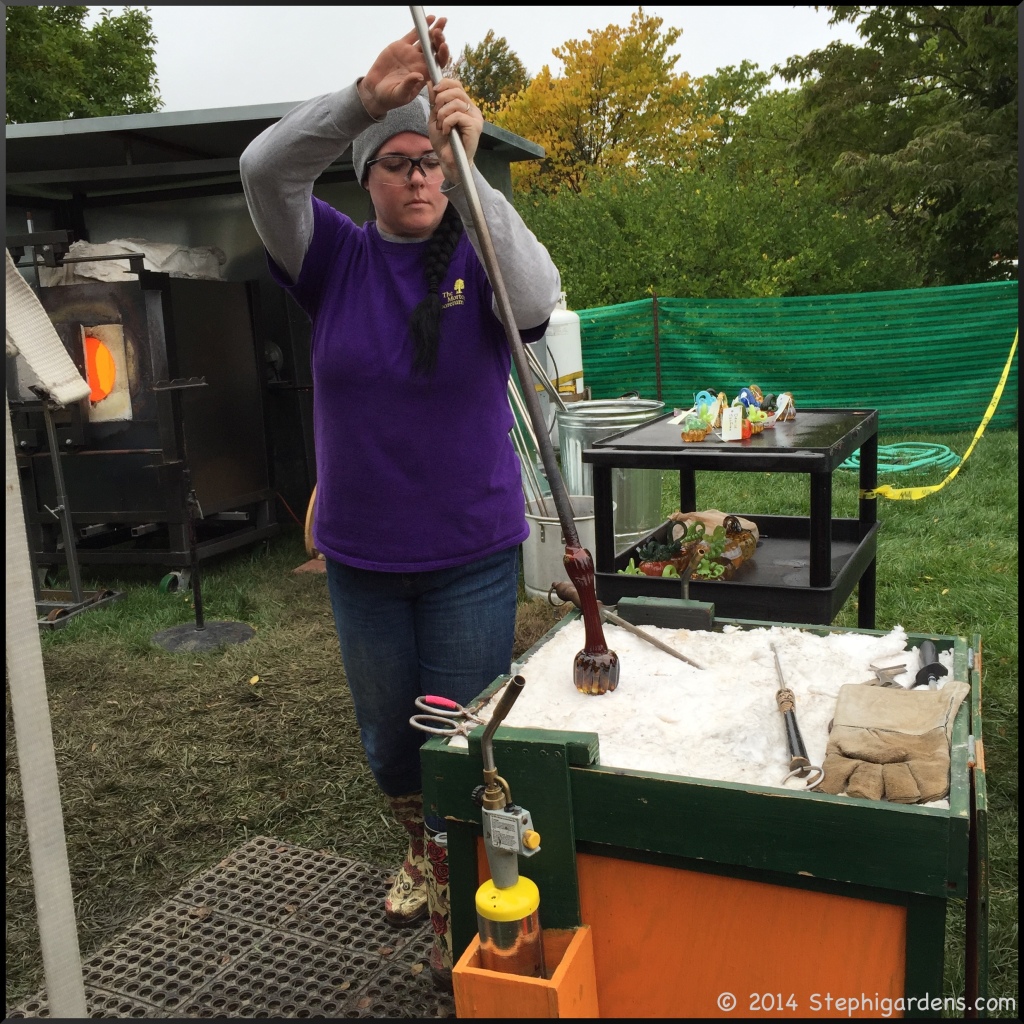
glass pumpkin

glass pumpkin

glass pumpkin

glass pumpkin

The pumpkin was then whisked away to anneal in a kiln overnight. The temperature controlled kiln was set to 920° and overnight the temperature dropped slowly, about 60° an hour, until the pumpkins were cooled and hardened.  Now they’re ready to go home.

Here’s all our creations…
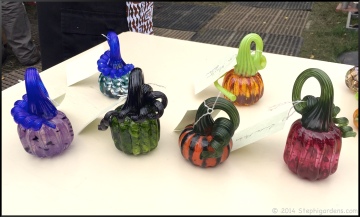
glass pumpkin

glass pumpkin

pumpkin 067

I wish I could do it again, but the class is so popular they have a one time rule.  If you’re in the Sacramento area, check out the Girl Glass Studio classes.  Based on my experience here, I’m sure it’d be fun and you’ll learn a lot.  I’m going to try and  look for something near me.  It was also fun use my new-found knowledge of glass blowing techniques to understand a little better the different styles and techniques the artists used to make their own pumpkins.

Thanks Sandy and Hillary!
IMG_7971


Happy New Year!

Happy New Year and best wishes for 2015!  As many of you have noticed, I had to take a little break this fall.  Sometimes, life just gets busy and something needs to give.  I’ve been taking lots of pictures and notes, so I’m looking forward to catching up over the next few weeks.  In the meantime, here’s a look back at some of my most popular posts of 2014!

Painted Rock Garden Labels

1.  Painting Garden Rock Garden Markers:  A fun project to jazz up the garden.


Biltmore Estate

2. Girls Weekend in Asheville:  A wonderful weekend away in a great city!



IMG_5288 (1)3.  Angel Wings in the Snow:  Fascinating tracks in the snow.


Creeping Thyme4.  Creeping Thyme Problems:  Trying to salvage a mess in the garden.


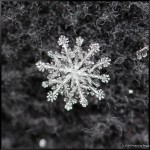
snowflakes5.  Peggy’s Snowflakes:  Every snowflake is truly different.


stephi gardens6.  Gardening:  All in the Family:  From grandparents to great-granchildren, gardening is a family tradition.


Homemade Suet Cakes7.  Homemade Suet Cakes:  Giving homemade suet a try.  The birds loved it!


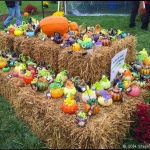
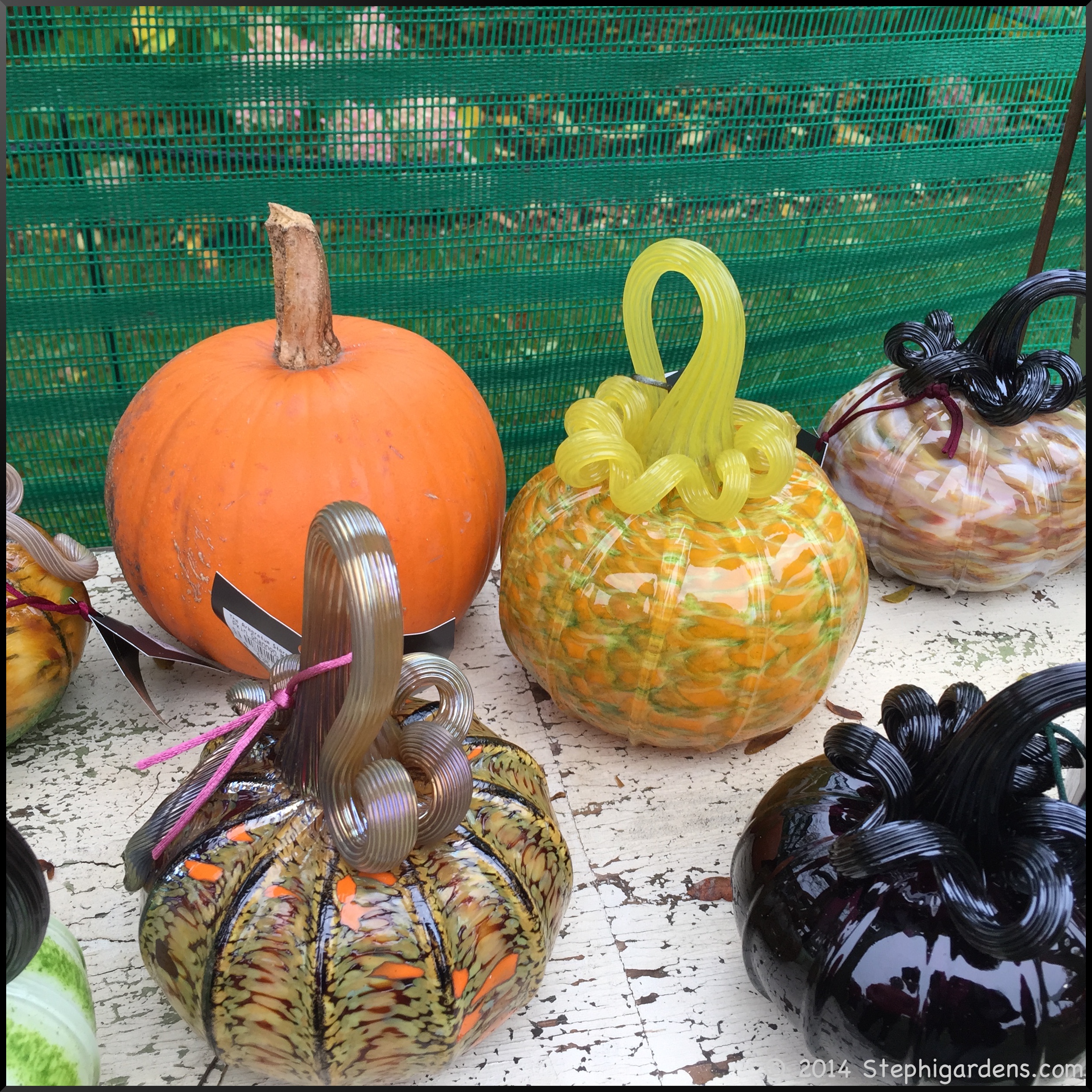
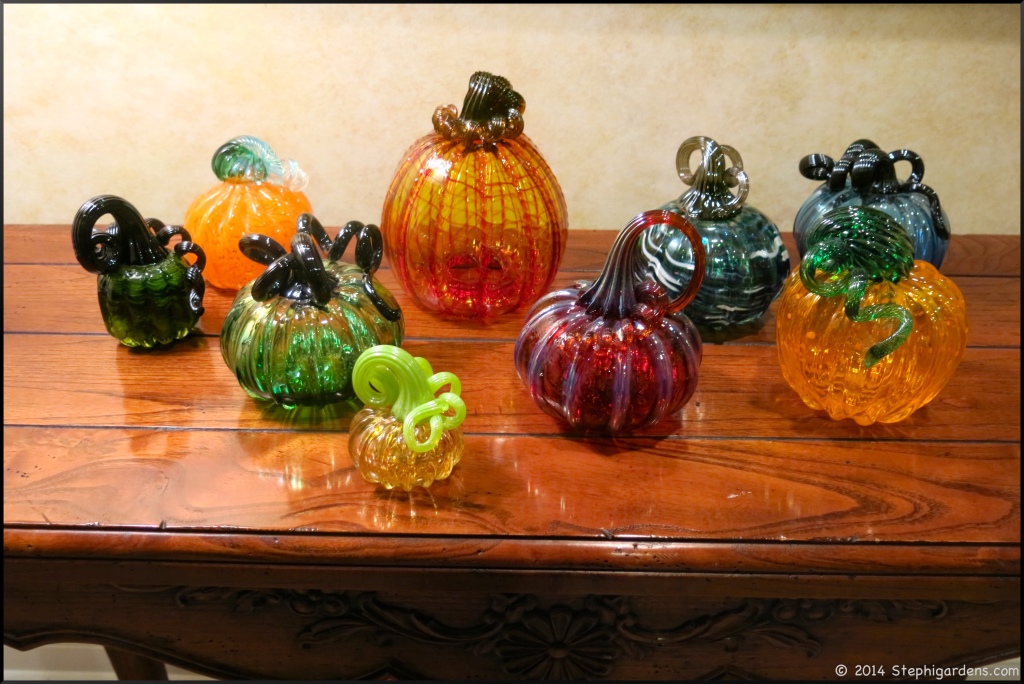
glass pumpkin8.  Visiting the Glass Pumpkin Patch 2014:  I love seeing all the different creations the artists bring every year.  


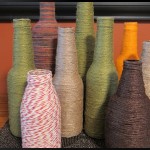
Yarn wrapped bottles9.  Yarn Wrapped Bottles:  A fun and easy craft project to decorate for the holidays, a party, a wedding, or for whatever you have that needs some color.


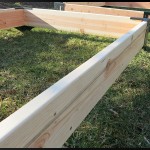
Raised vegetable bed10.  My New Raised Bed: Construction:  I needed more garden space so we built two new raised bed gardens.


Visiting the Pumpkin Patch 2014

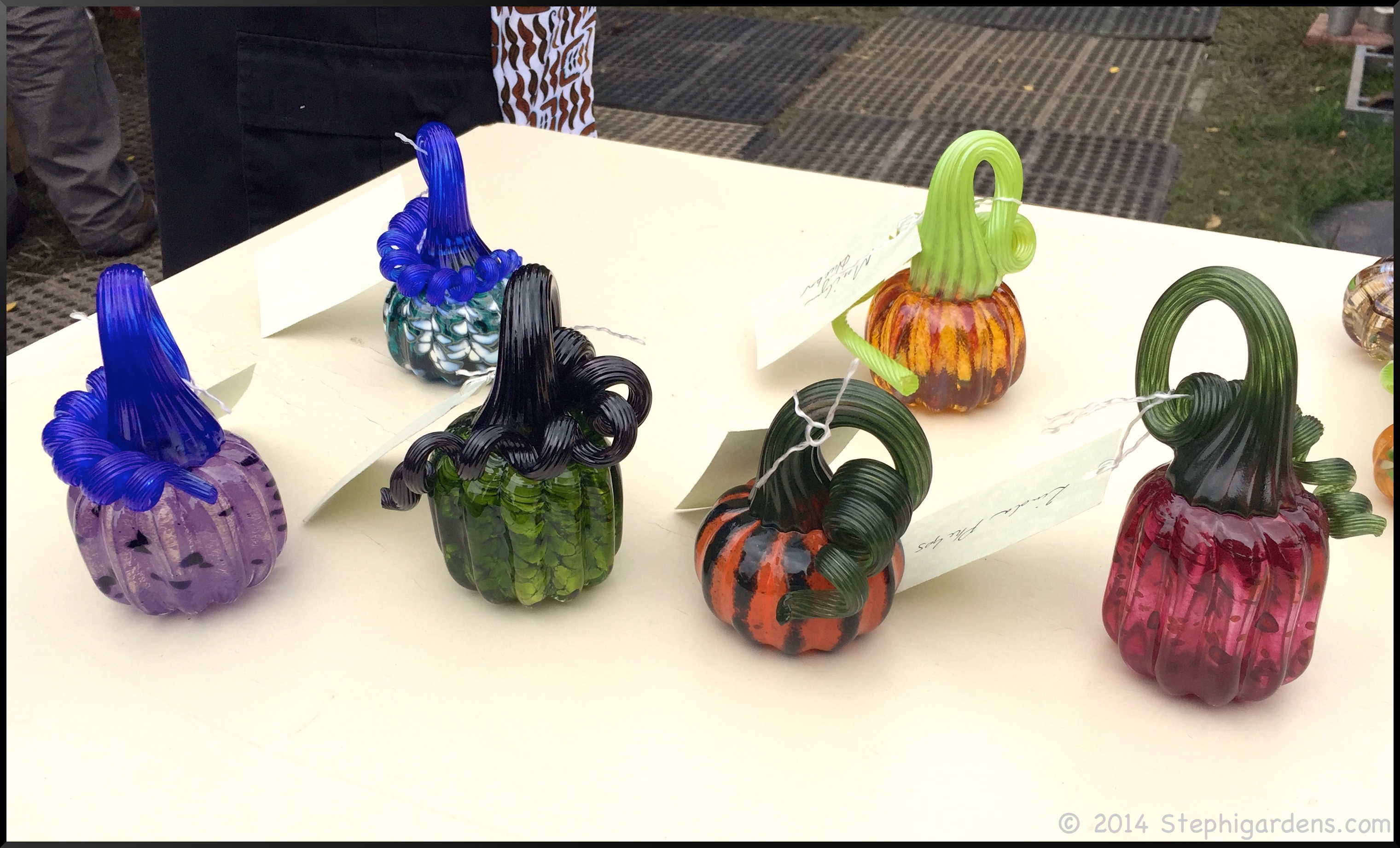
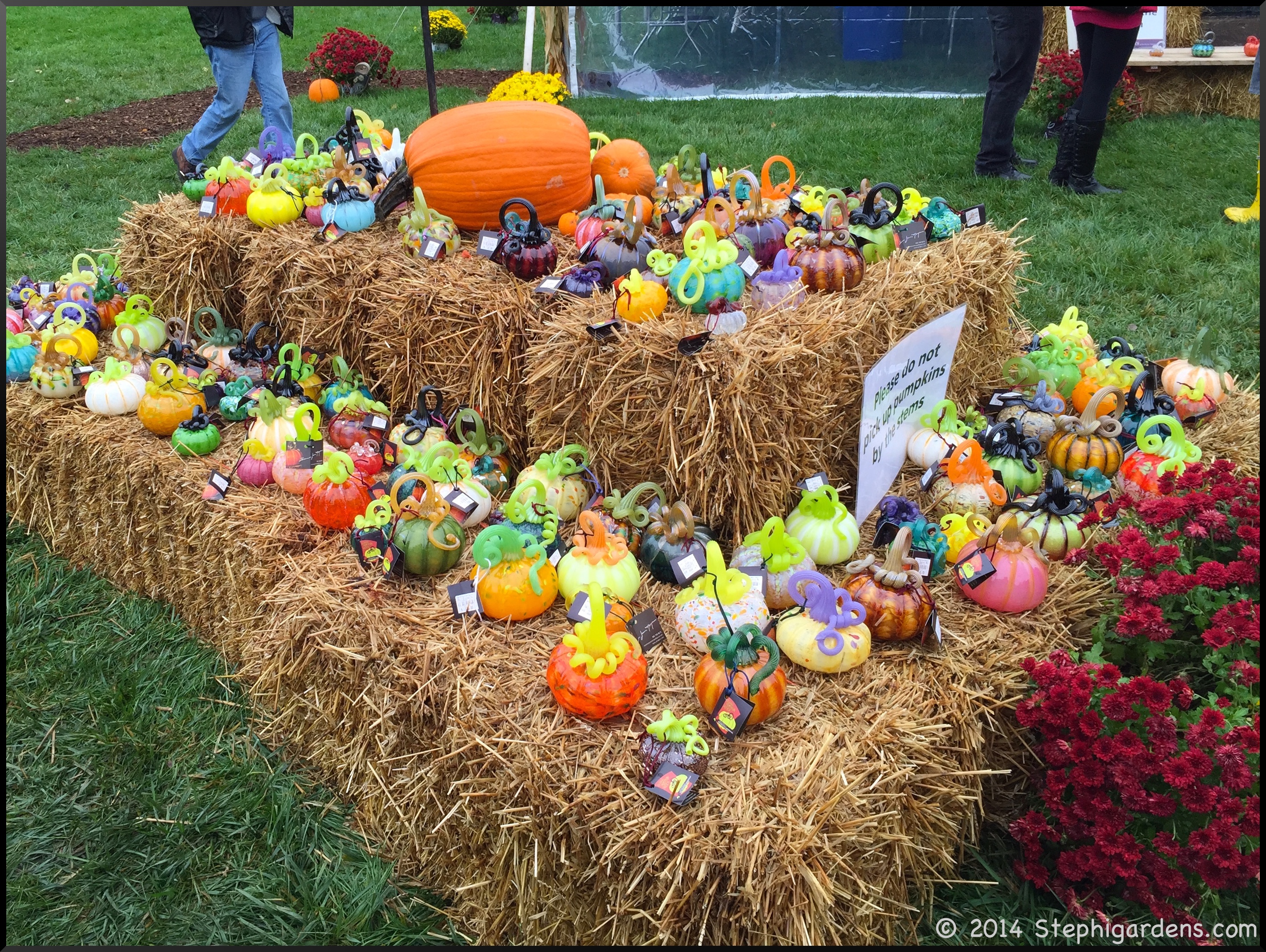
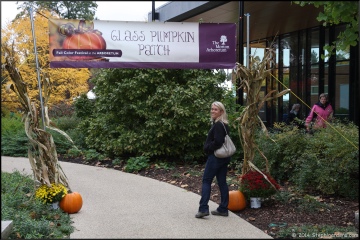
A couple of weeks ago, it was time to visit the Glass Pumpkin Patch at the Morton Arboretum again.

glass pumpkin

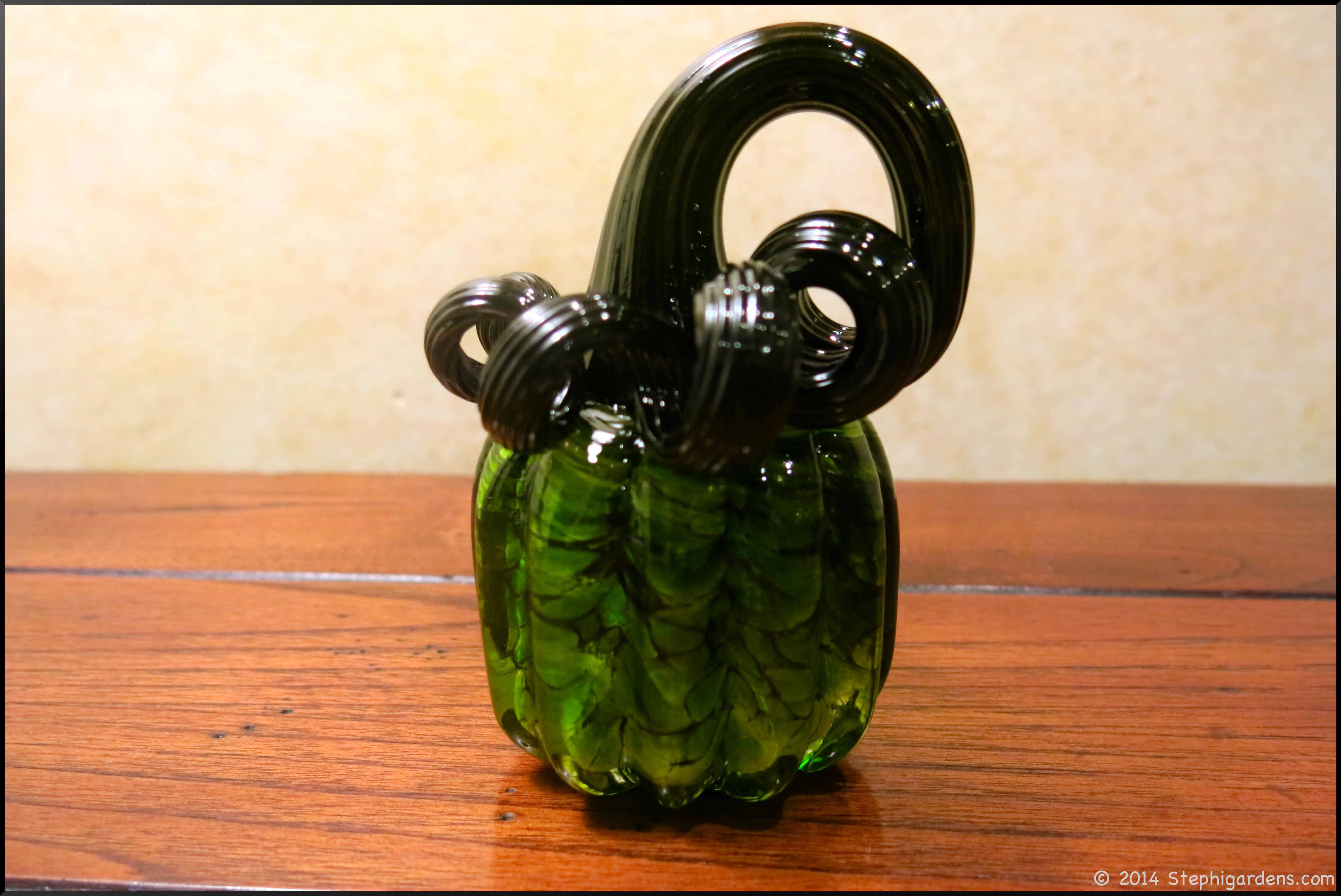
This has become one of my favorite fall things to do.  The weather wasn’t great, but at least on the day I went it wasn’t raining.  I also had the chance to make my own glass pumpkin paperweight in a class earlier in the week.  I’ll describe that super fun experience in the next post.  But as a teaser, here’s the pumpkins my friend and I made, along with everyone’s in the class.  Mine is the green one, hers is the orange.

So many different pumpkins!  We each got to pick our own colors, and each turned out beautiful and unique.

glass pumpkin

glass pumpkin

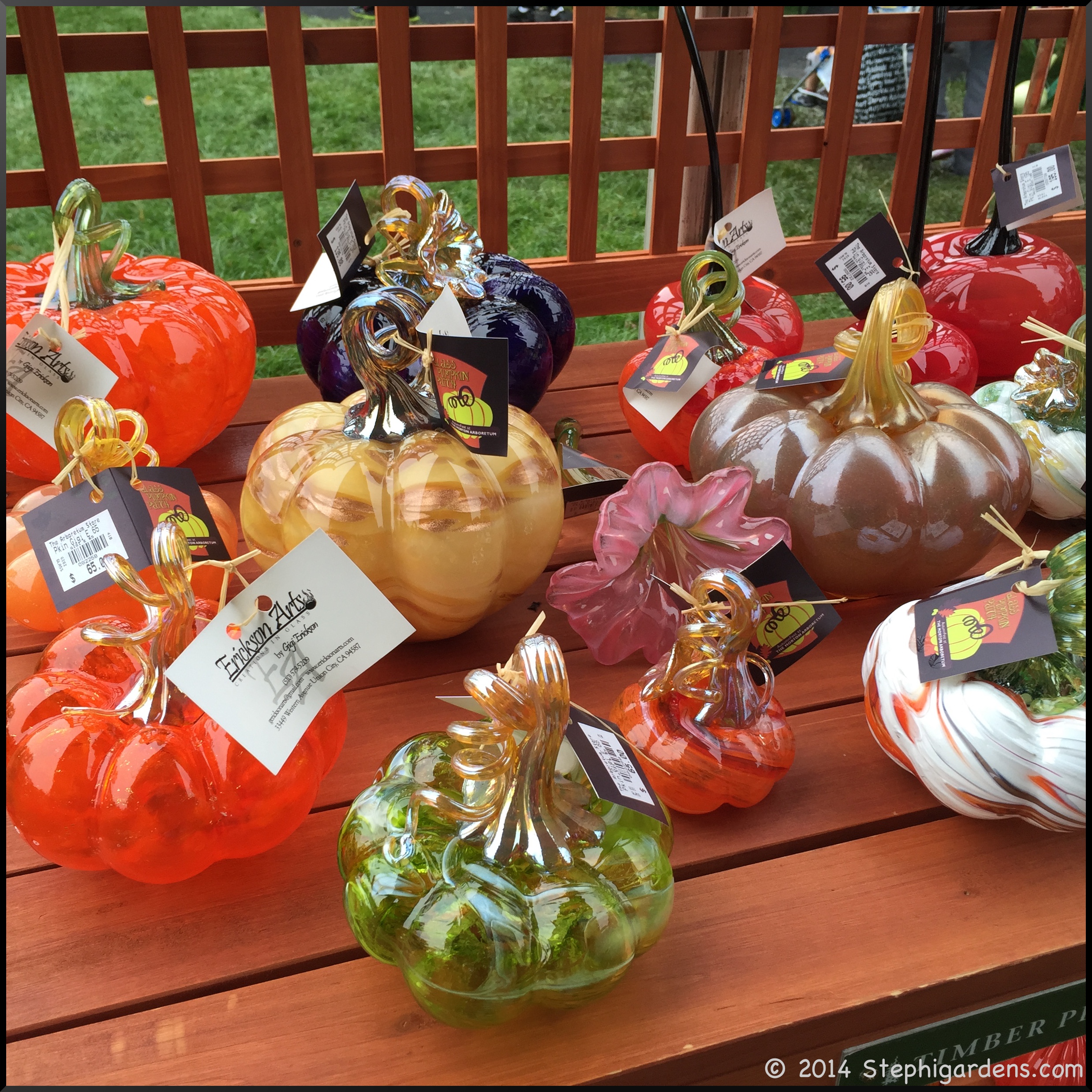
As always, there are so many to choose from in the patch.  Each artist has their own style and unique methods of making the pumpkins their own.  After taking the class and learning some basic techniques, it was fun to talk to the artists about how they make theirs.  Some of the artists are local, but many travel from the Girl Glass Studios run by Shannon Jane Morgan in Sacramento.  They travel from California with their pumpkins, and a furnace, kiln and all their equipment to run classes and glass blowing demonstrations.

glass pumpkin

glass pumpkin

glass pumpkin

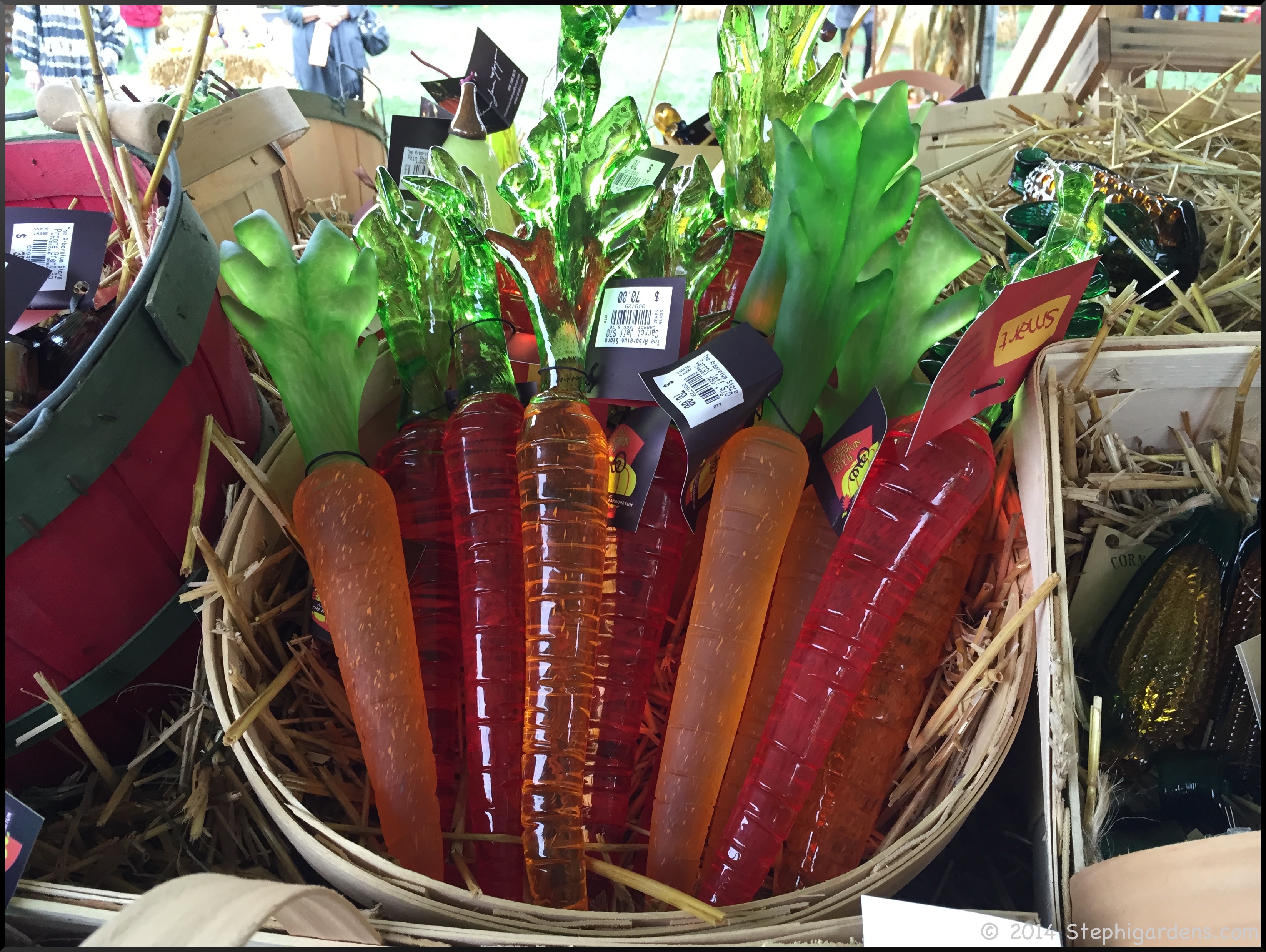
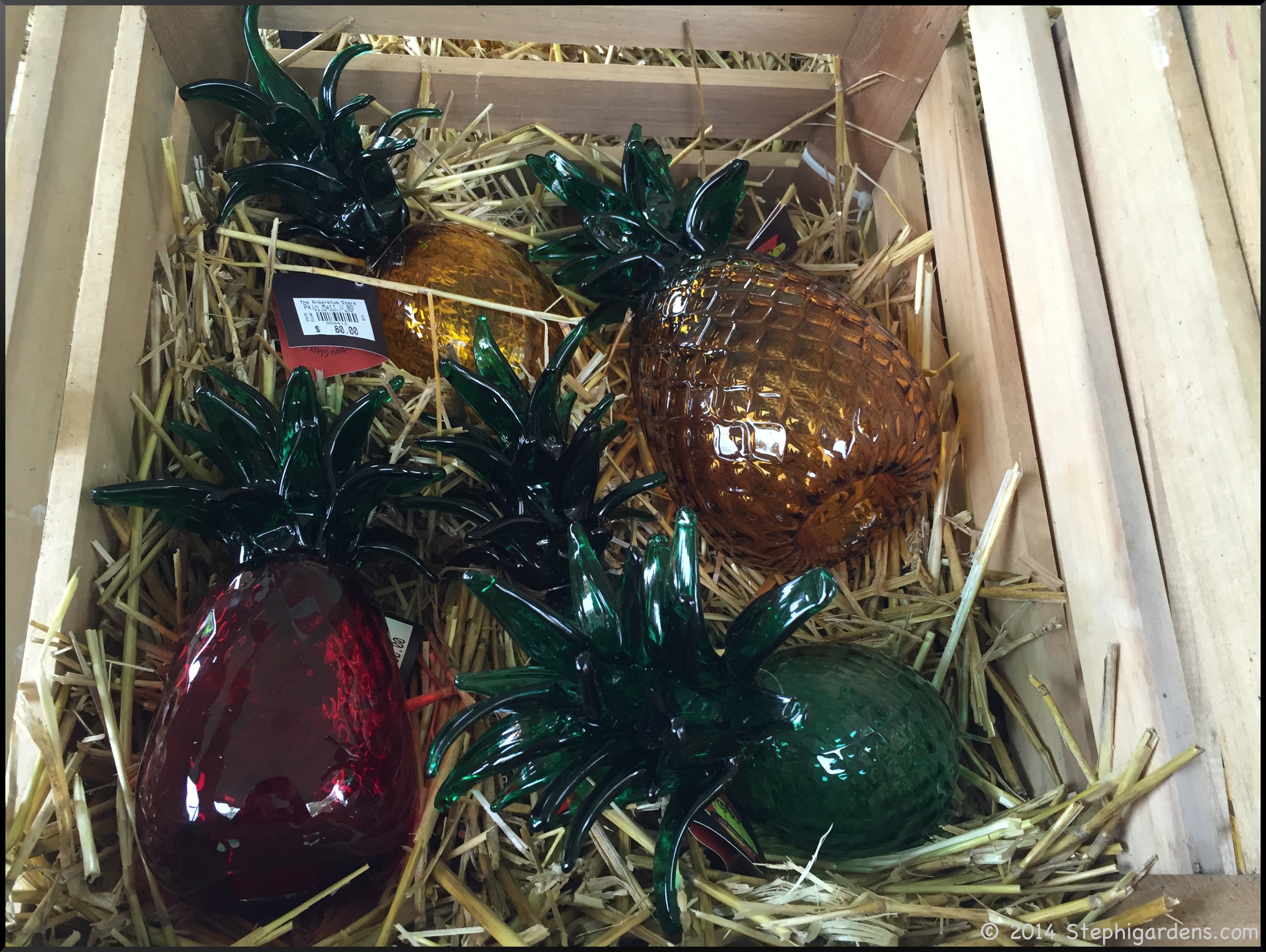
There was even a “vegetable garden” this year.

glass pumpkin

glass pumpkin

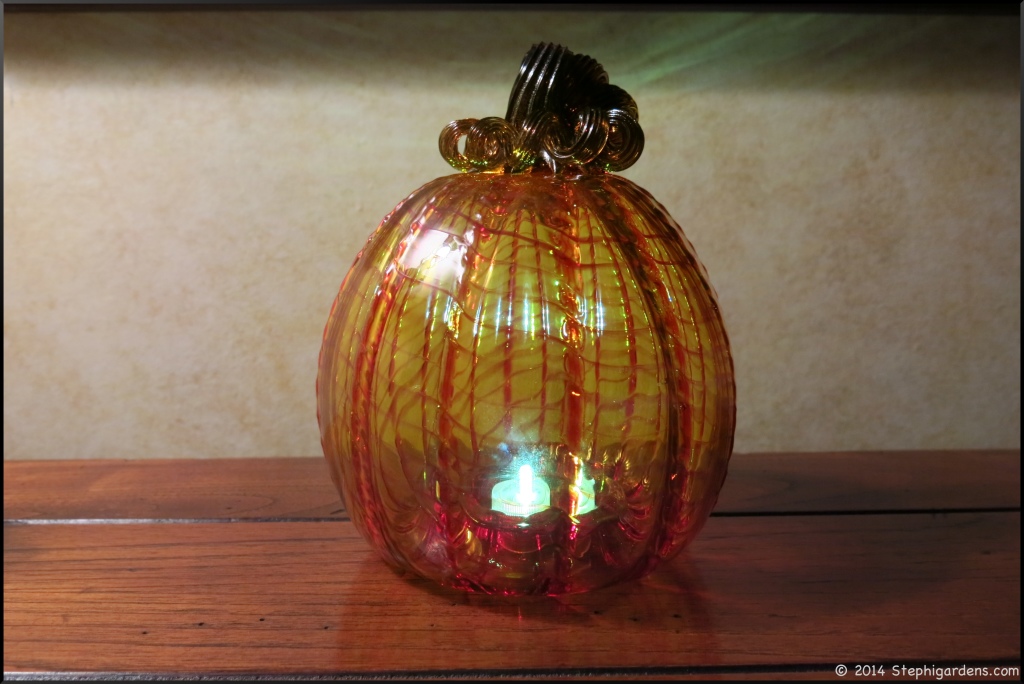
Of course, I added to my collection. This year I chose a pumpkin by  Matthew Urban of Furnace Urbini that can be lit up and glows a beautiful golden bronze.  I love the twisting of the spines and spiderweb appearance of this pumpkin.

glass pumpkin

Here’s my collection…

glass pumpkin

Final Harvest

It’s getting to be that time of year when the vegetable garden is waning.  I’ve pulled some things already (beans, roma tomatoes, sunflowers, summer squash, cucumbers), but others are still producing.  We’ve been lucky to not have had a hard freeze yet.  So even though I thought I had picked my last harvest last week before a potential overnight frost, I still have a few things still growing.

Here’s some photos of what’s still growing, and my final (??) harvest.

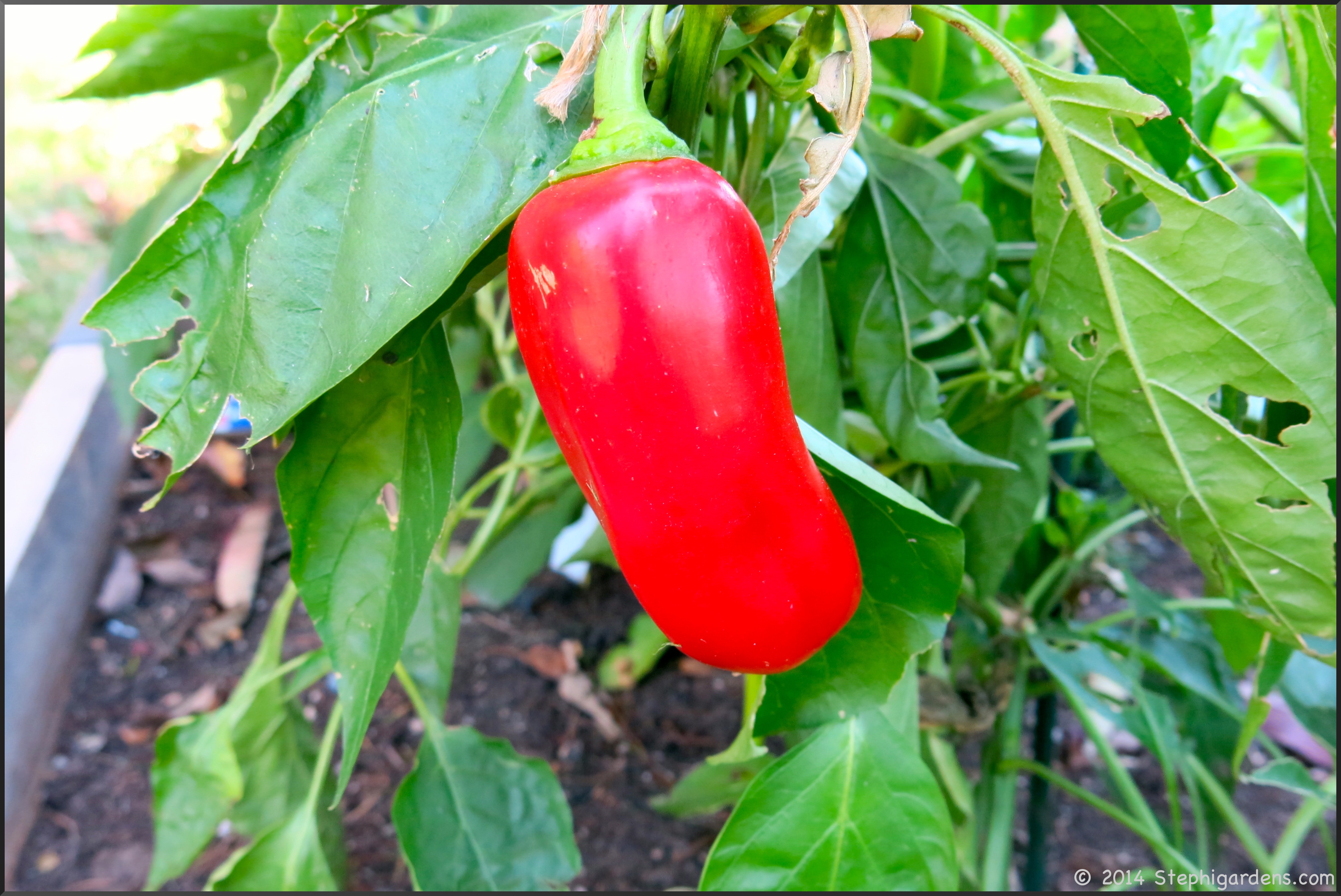
Sweet Red Peppers

Sweet red pepper

Swiss Chard

Swiss Chard

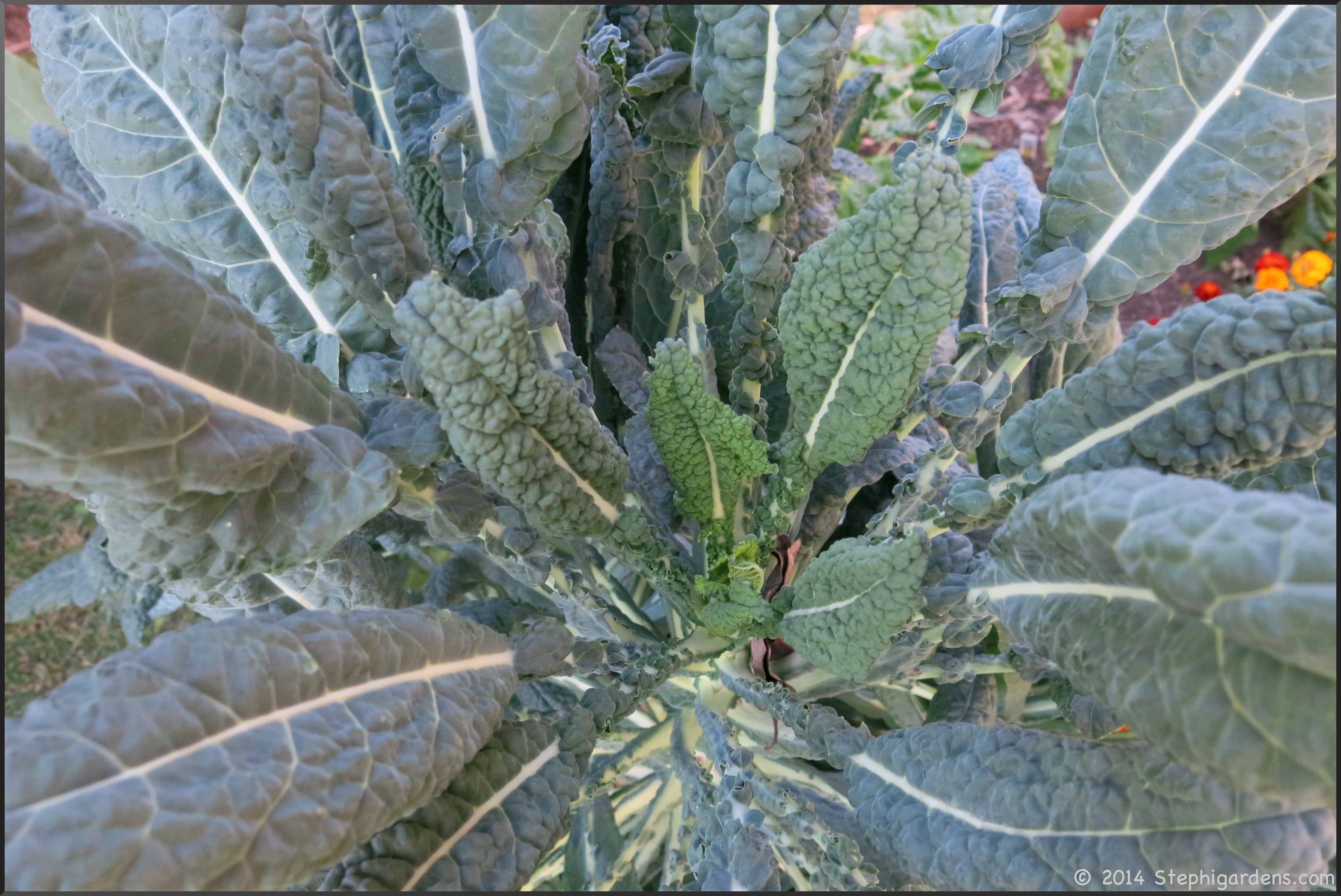
Kale

Kale

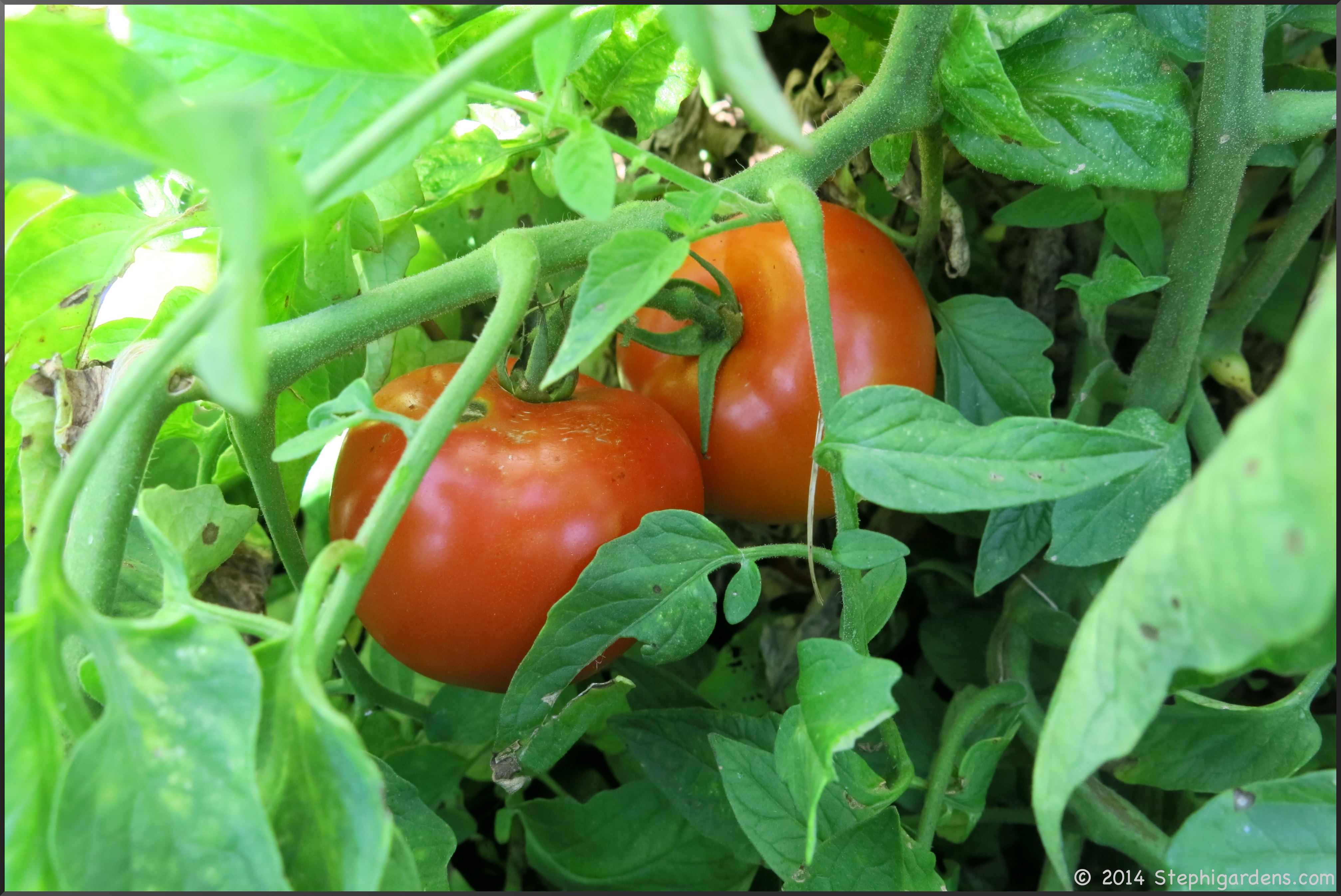
Early Girl Tomatoes

Burpee Early Girl tomato

Green Peppers

Stephi Gardens

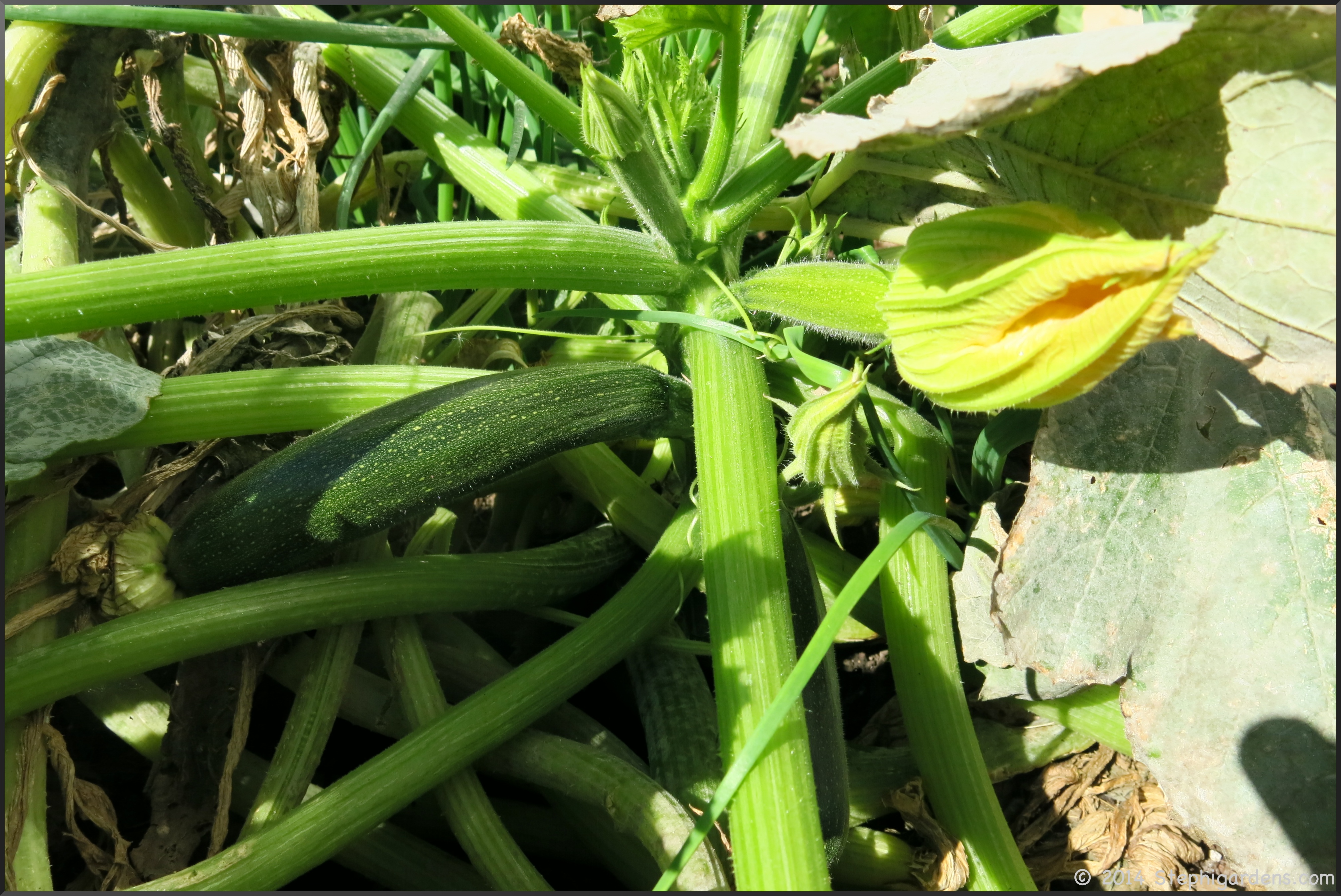
Zucchini

Stephi Gardens

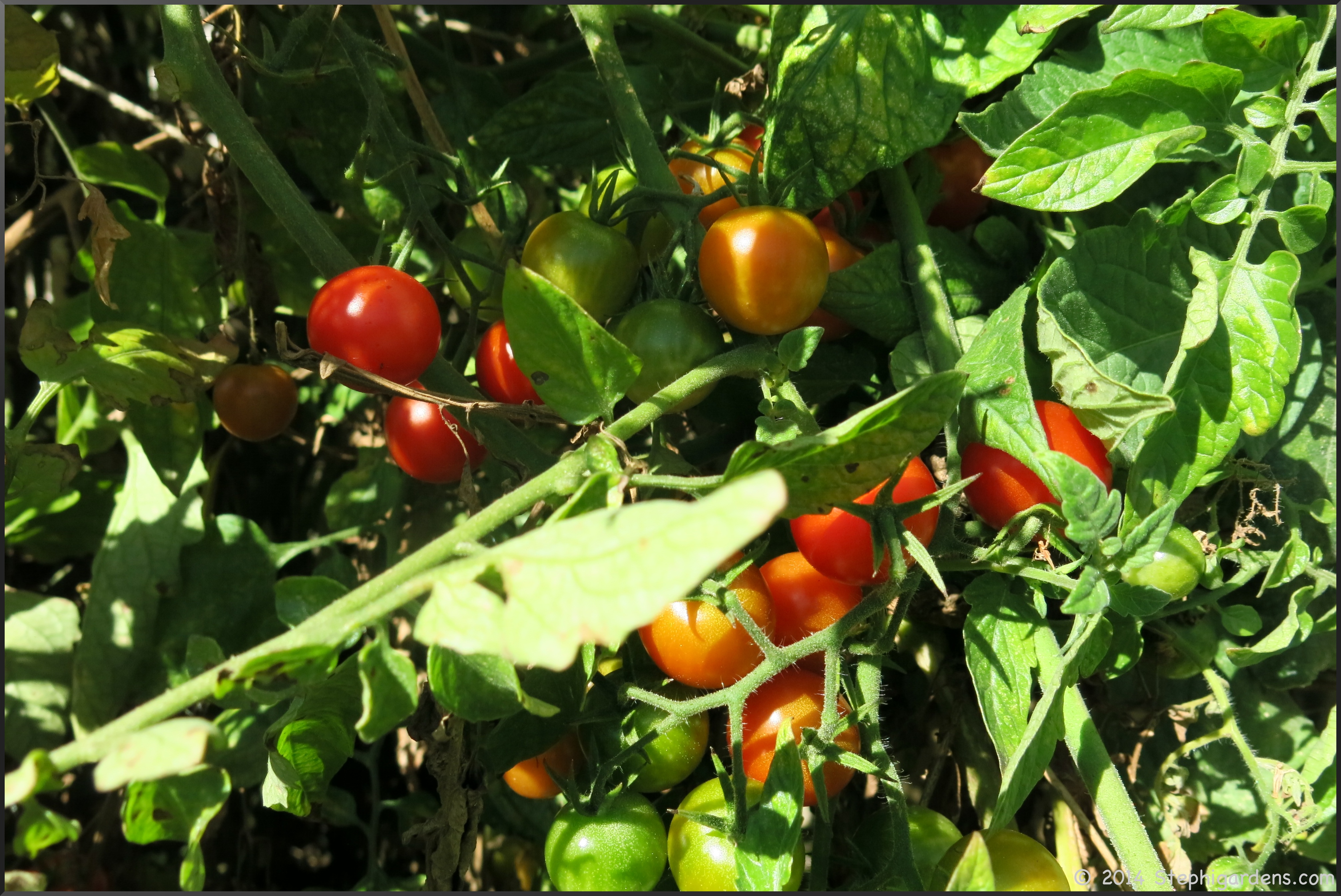
Sweet 100’s Tomatoes

Sweet 100's

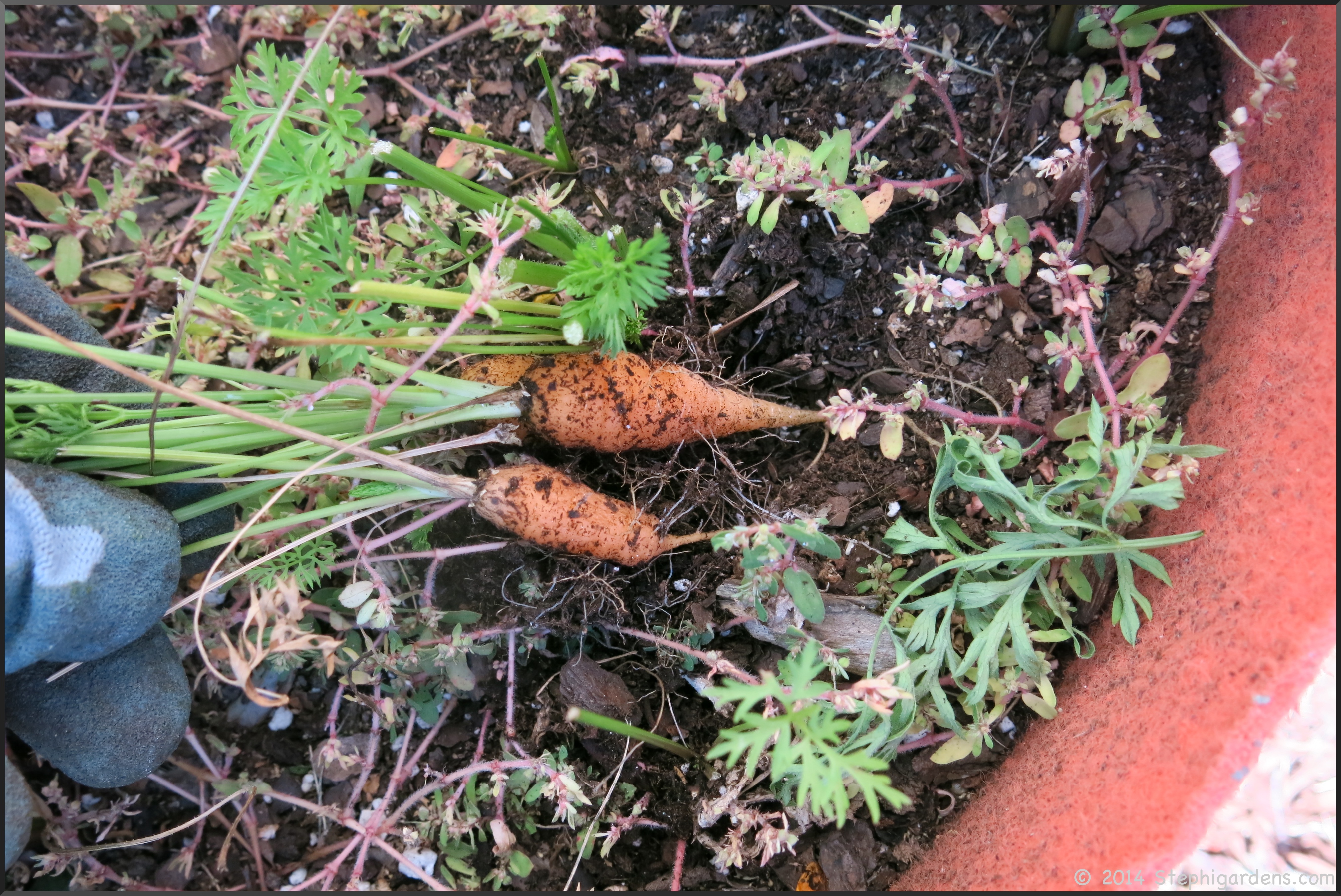
Some very tiny carrots

carrot

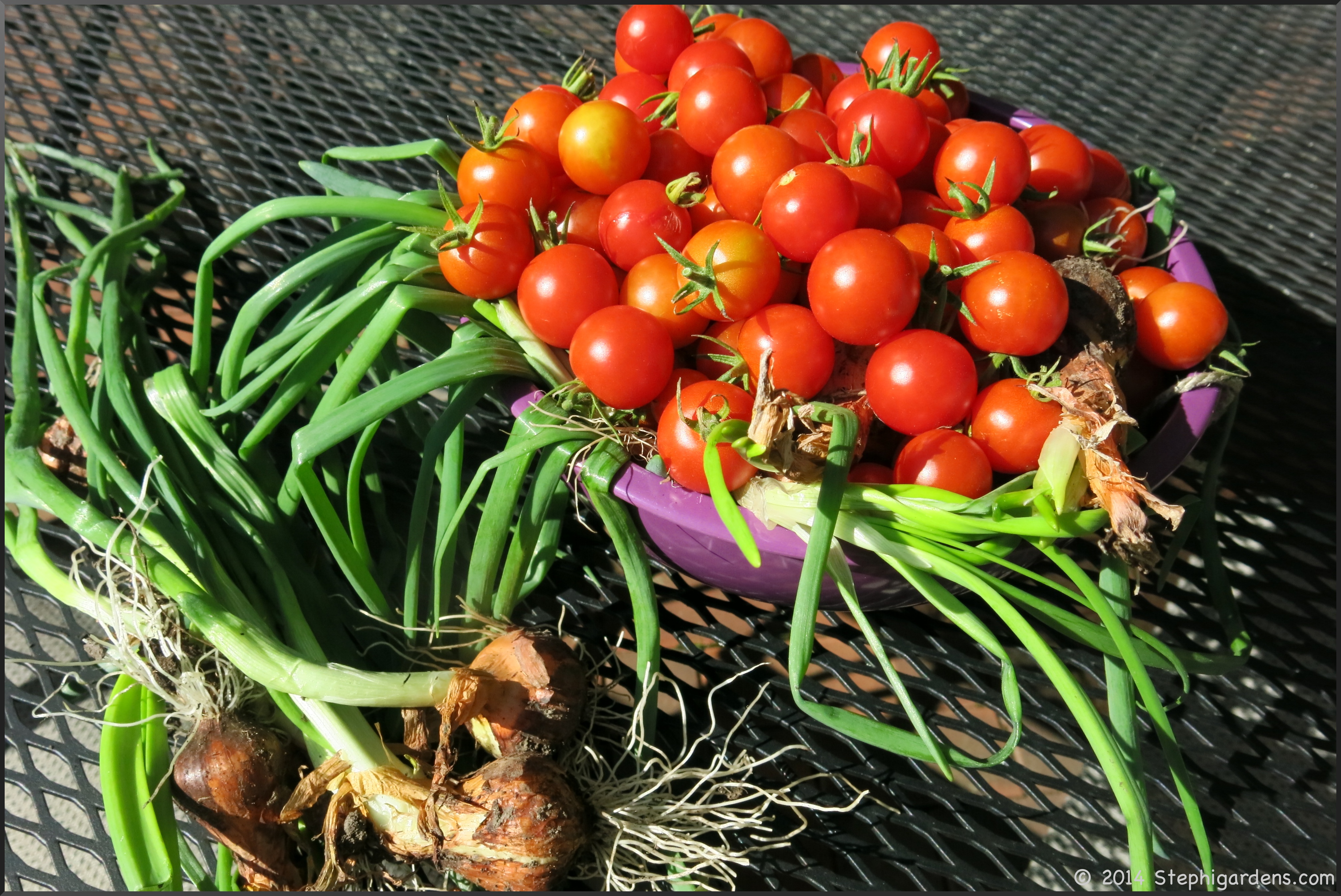
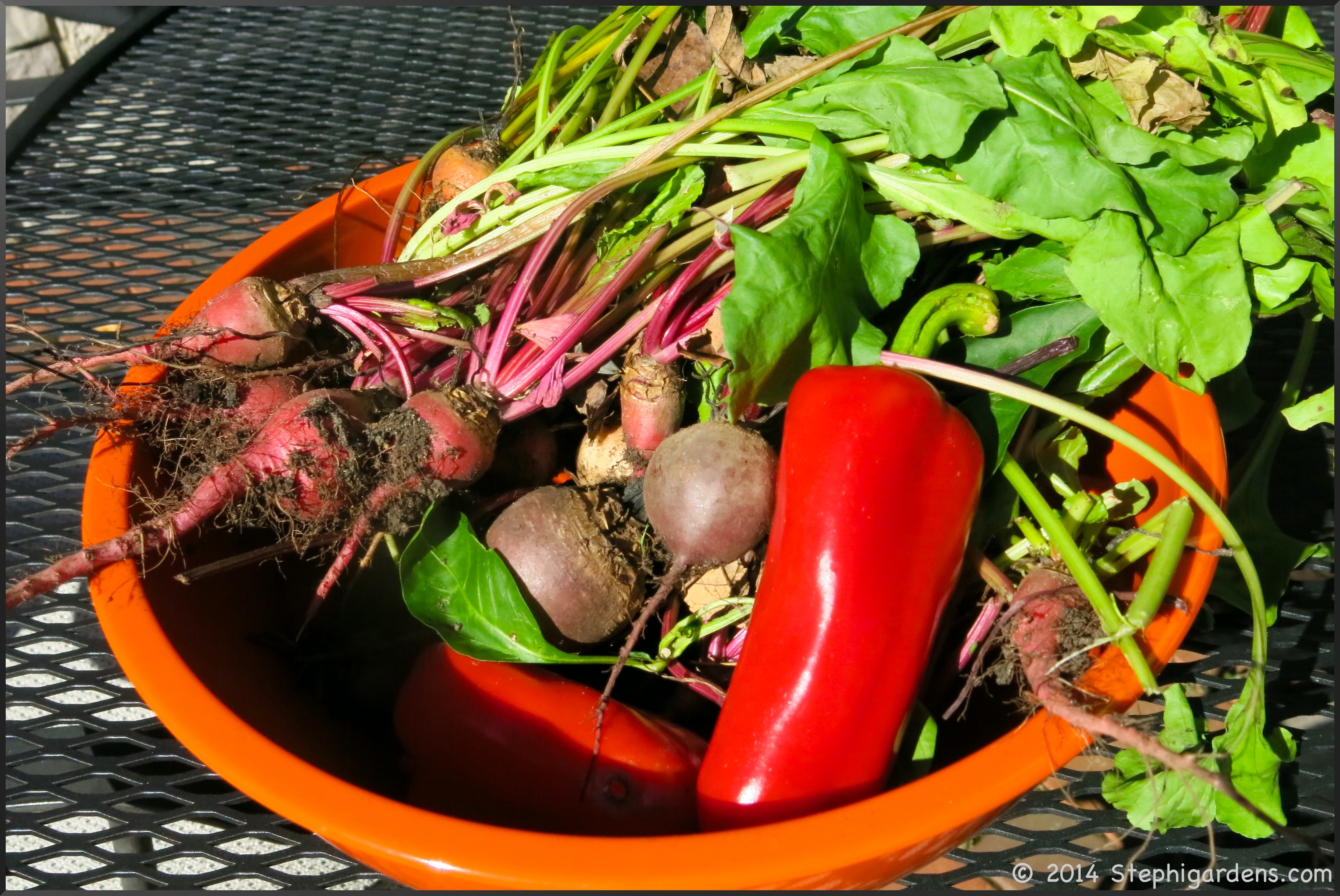
This weekend’s harvest-what a treat to still be having garden fresh vegetables in late October.

vegetables

Stephi Gardens

I forgot I planted beets, and when I was pulling out the “swiss chard”, out came these beets instead.  What a funny surprise.  I really need to mark my plants better!

Are you still getting vegetables from your garden?

This Birthday Was For The Birds

Every year, my husband asks me what I want for my birthday.  I’m usually not very helpful, but this year I knew just what I wanted!

Last fall, I decided a little late I was going to get back in the bird feeding business. It had been a while, as evidenced by one of my old feeders currently working only as home to a wasp’s nest.  Soon after I got the poles and feeders sort of set out, the ground froze and my temporary locations became permanent.

IMG_4762

Needless to say, the birds, and the squirrels, were happy with my feeders and locations.  I am glad that I kept at it.  With the winter as harsh as it was, the birds needed all the help they could get.  Plus it added some fun to the never-ending winter.

This year, my plan was to be a lot more prepared.  I needed to plan a little better where I was going to put the feeders, and get some better squirrel proof feeders.  I’m not nearly as handy around power tools as my mom is, so I wasn’t going to build anything myself.  Shopping around, the better pole systems were a bit pricey, which is where my birthday comes in.  For my birthday I got a fabulous pole system and a couple of new feeders.

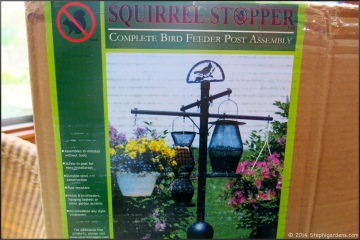
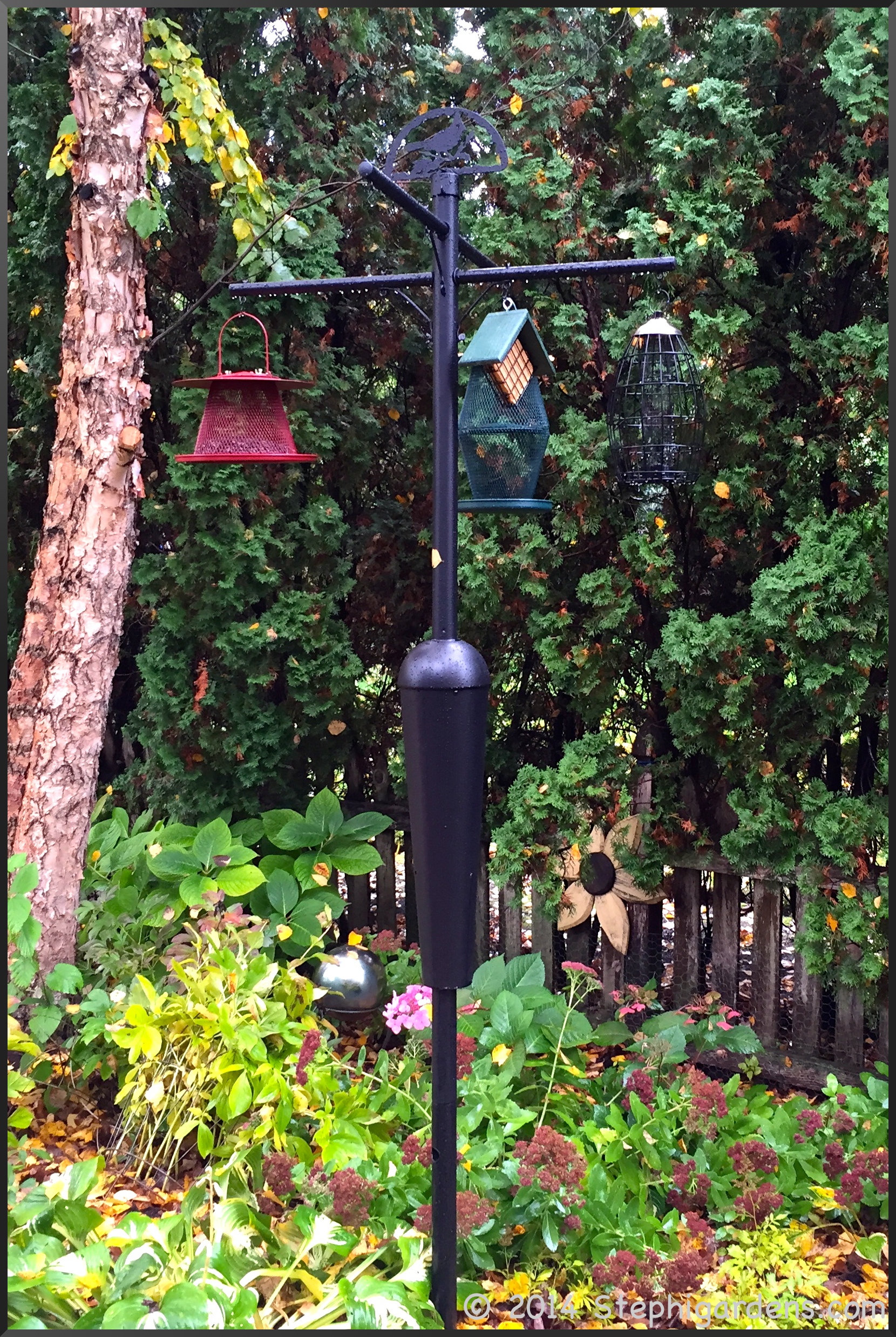
I decided on the Squirrel Stopper Pole Set.

Stephi Gardens

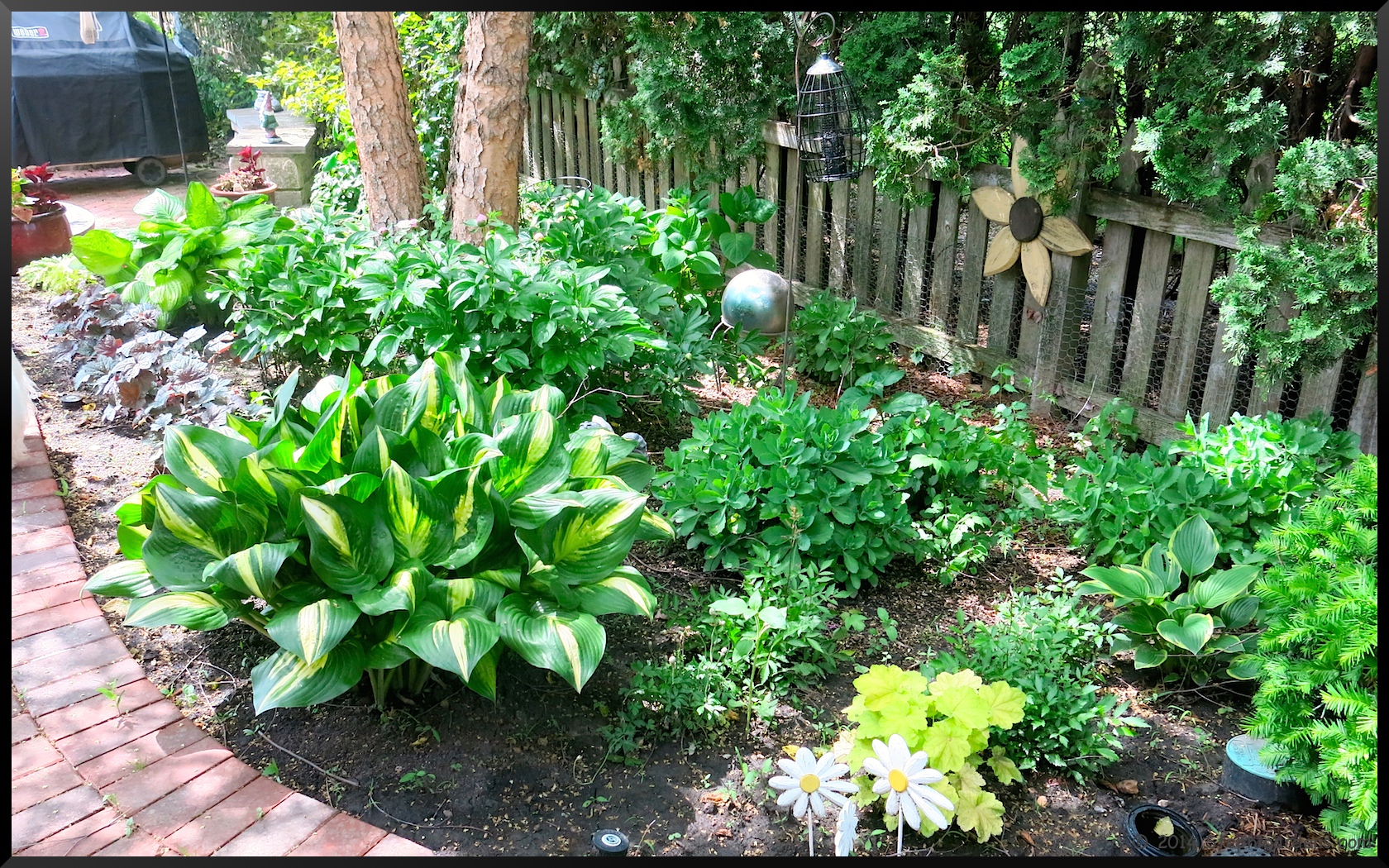
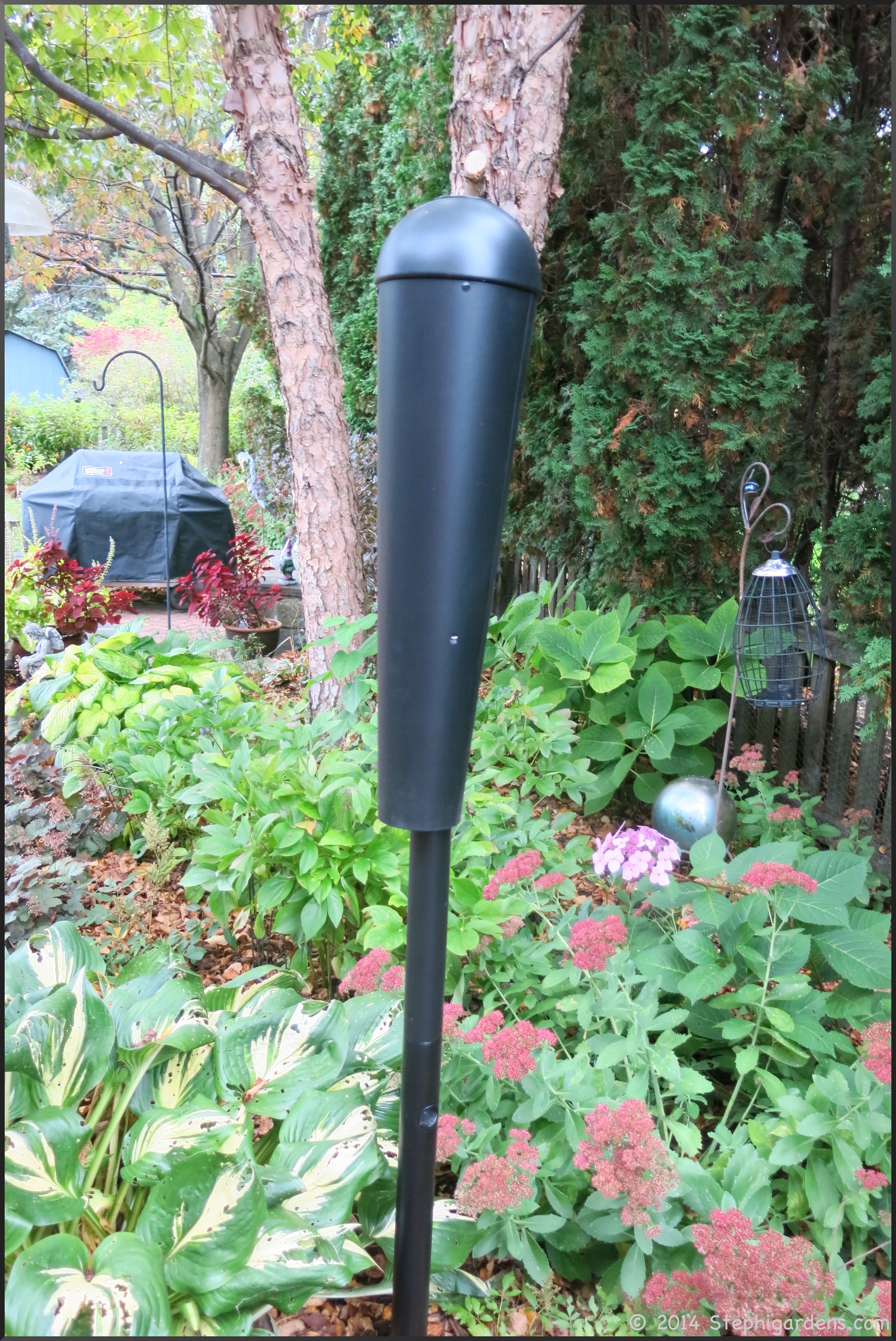
It seemed really sturdy and almost universally squirrel-proof according to the reviewers. Next decision was where to put it.  I wanted it to be where I could see the visitors easily from the house, but not attractive to jumping squirrels.  While this feeder seems quite effective in stopping climbing squirrels, it won’t protect from the jumpers.  While my mom was here visiting, we scoped out a spot that hopefully is far enough away from the river birch and arborvitae, and a perfect view from the kitchen window.   It’s going to be right behind the big hosta, about 10 ft from the tree trunk and 6 ft from the arborvitae.  I’m hoping they can’t get a good jump off the floppy arborvitae branches.

Stephi Gardens

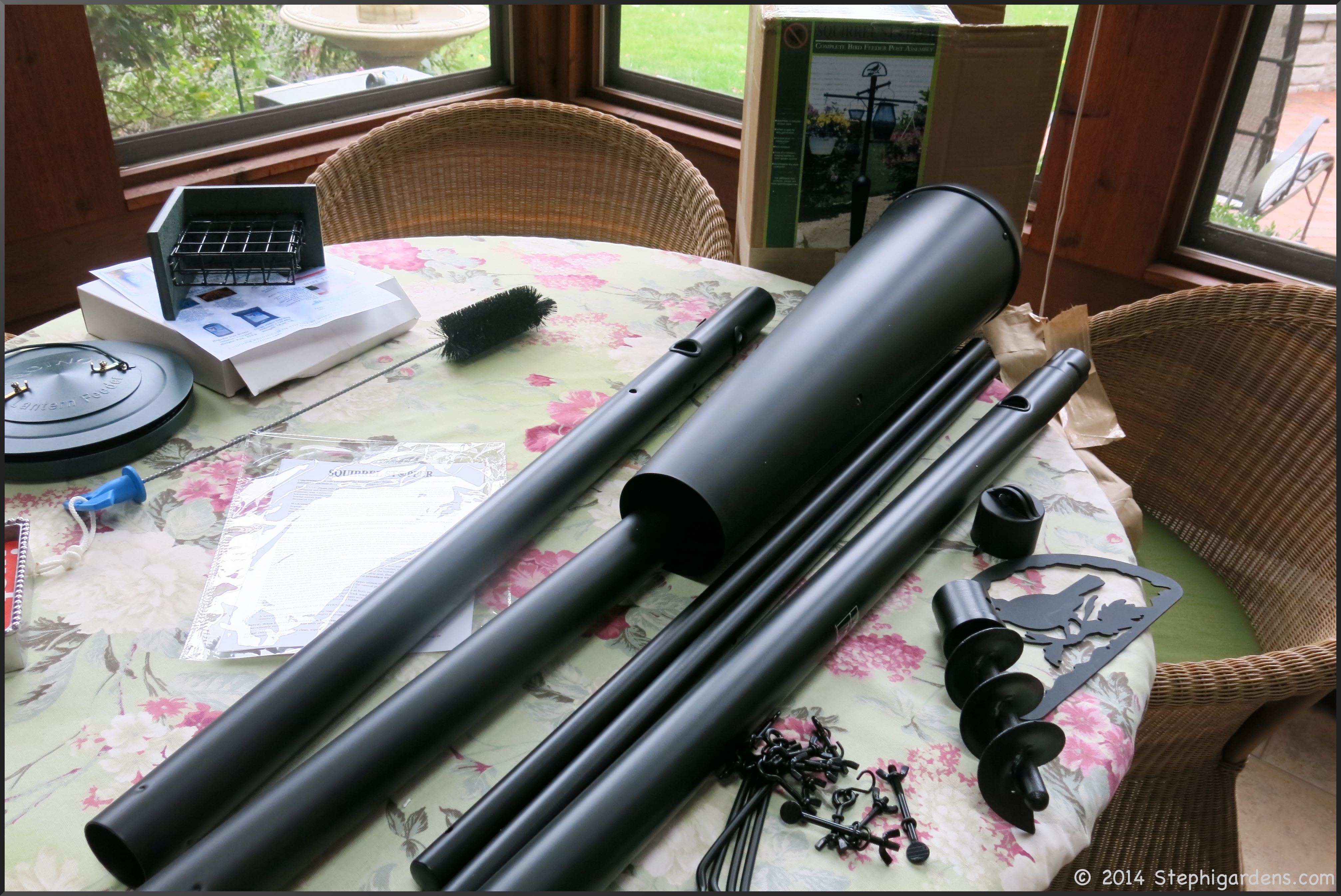
Setting up the feeder—

Stephi Gardens
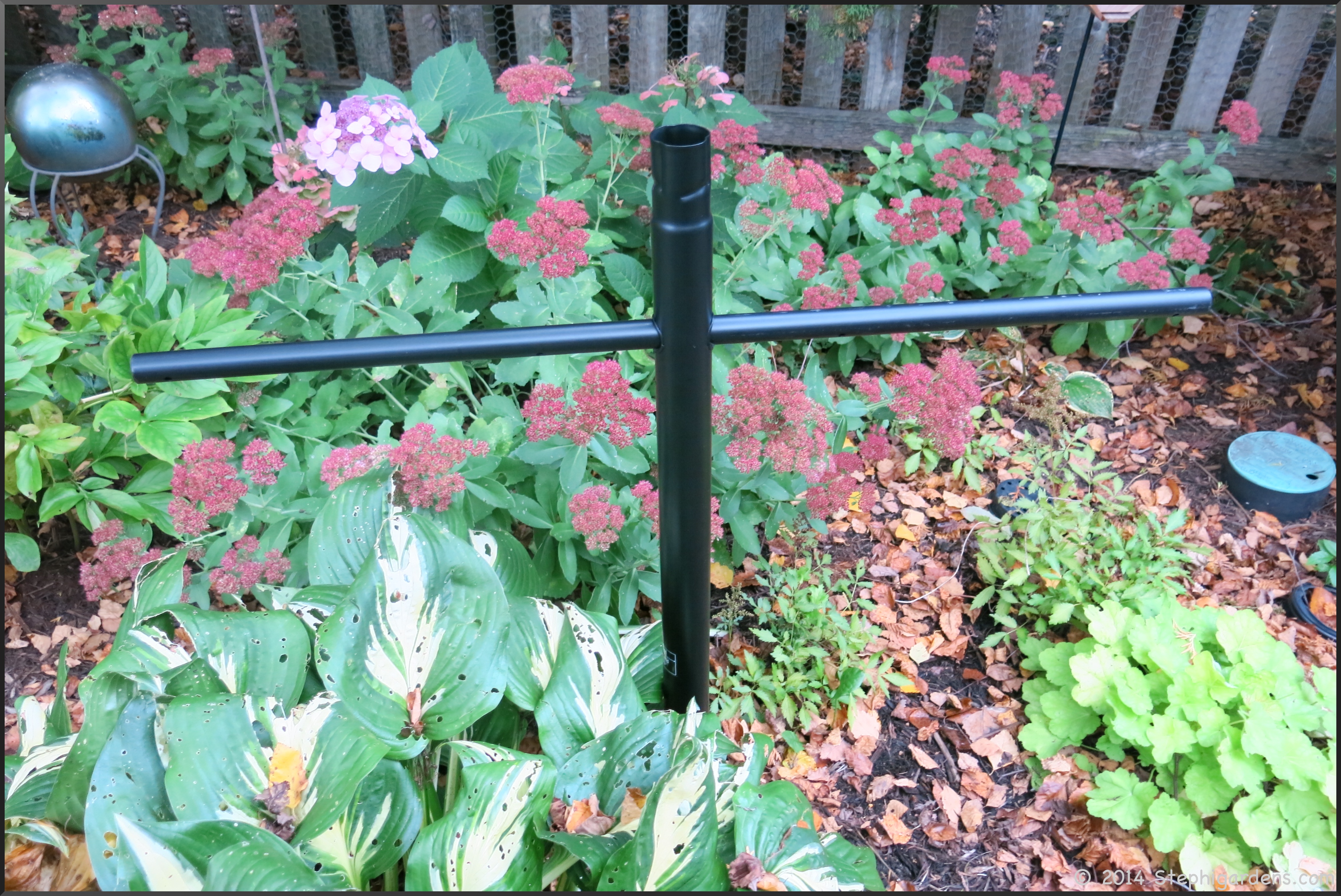
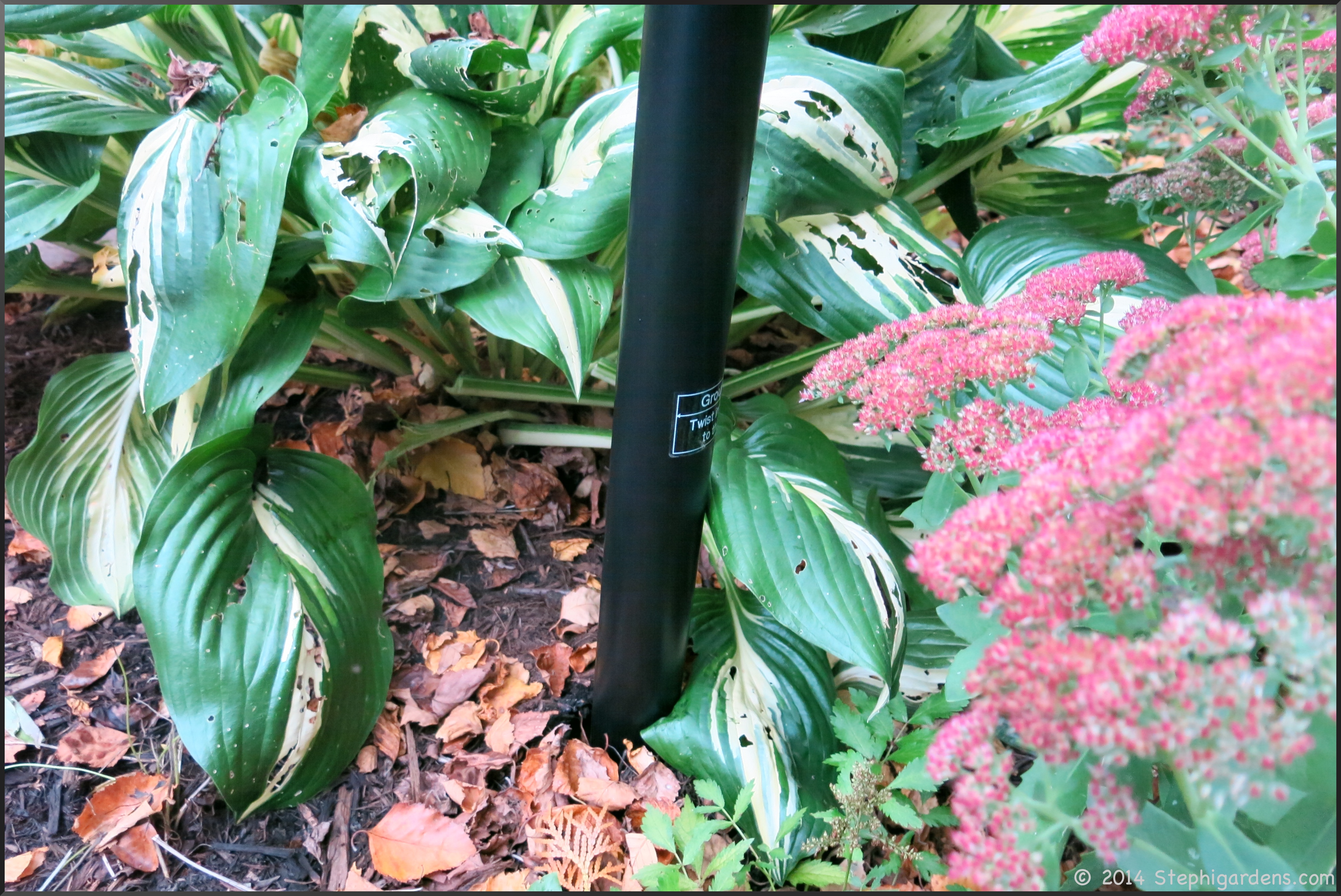
I was really impressed with the thickness and sturdiness of the poles.
Stephi Gardens
Time to start putting it in the ground. You use one of the upper cross beams as the leverage to twist in the auger. It was a little tough to insert the pole throughout the hole, but using water as the lubricant, I got it in finally.  Then it took two of us to twist it into the wonderful midwest ground.  Somehow we picked the only spot free of tree roots and got it in the first time!
Stephi Gardens
You do need to get it in the ground all the way to the line, otherwise it’s too tall and it’s tough to reach the feeder hooks.  Hint:  Do it right the first time.  No way was I going to disassemble it to finish twisting it into the ground.  We ended up using one of my metal shepherd’s crooks to finish twisting.  Nothing else was strong enough to take the pressure.
Stephi Gardens
The rest of the pieces slipped together easily.
Stephi Gardens
Finished!

I got a couple of new feeders to go with the pole set.  The red one is a No-No Cardinal Feeder.  I never had a real cardinal feeder out last winter, and instead went out every day and tossed some sunflower seeds on the snowman statue’s head until it fell over and cracked from the cold.  Kind of a wasteful way to put it out, but it worked in a pinch and the squirrels and juncos didn’t complain.  I also got a new suet feeder, mostly because it looked nice.

On my way tomorrow to pick up new seed for the season.  Are you ready for the birds this winter?

Planting Garlic

I decided to try something new in the garden this fall–garlic.I’ve been reading about how to grow it, and it seems pretty straightforward.  Hope so! It should be planted in the fall, 6-8 weeks before a hard frost is likely. Unfortunately, that means I’m probably a couple of weeks late when I looked the date up on this useful frost/freeze/hard freeze table on Dave’s Garden.

I think the hardest part of growing the garlic was finding a place to plant it. I needed a spot now, that will stay free until mid July when it can be harvested.  (That’s part of why I needed to wait until now to plant it.)  I chose 2 locations, one in each of my raised beds where I could pull out existing plants that were pretty much done for the season.  I’m not sure how it will do in either of these locations, but I figure at least one should  be good.

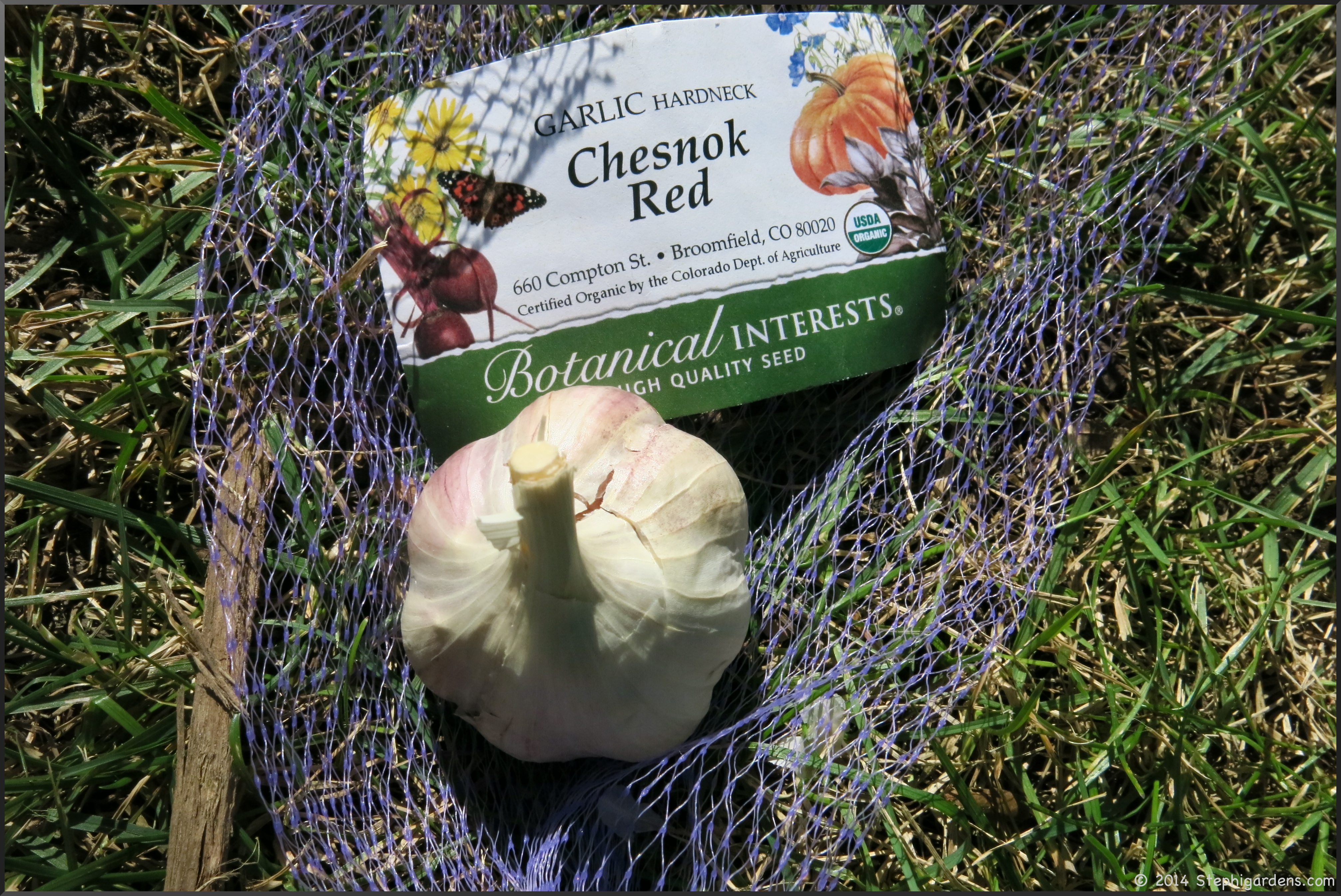
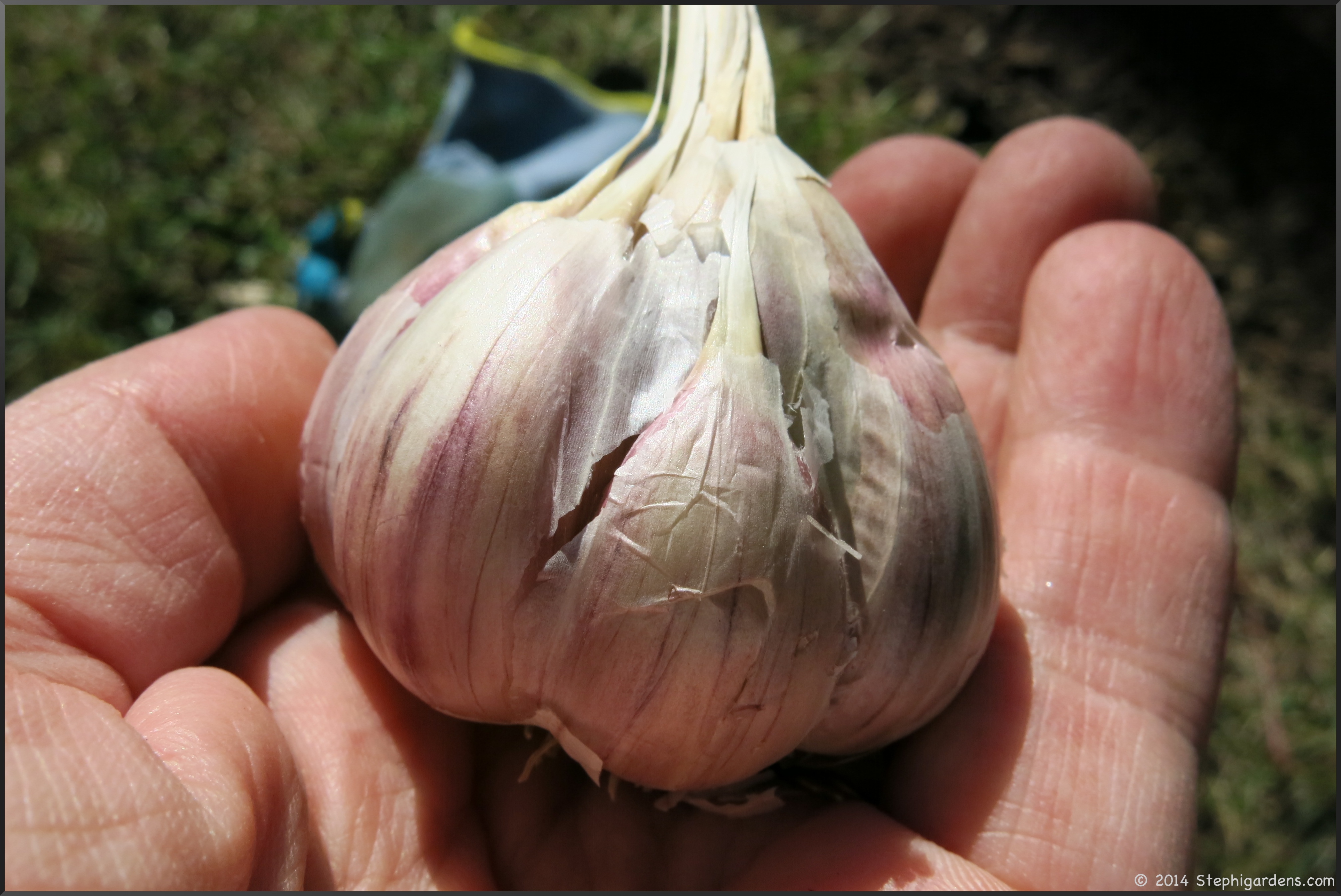
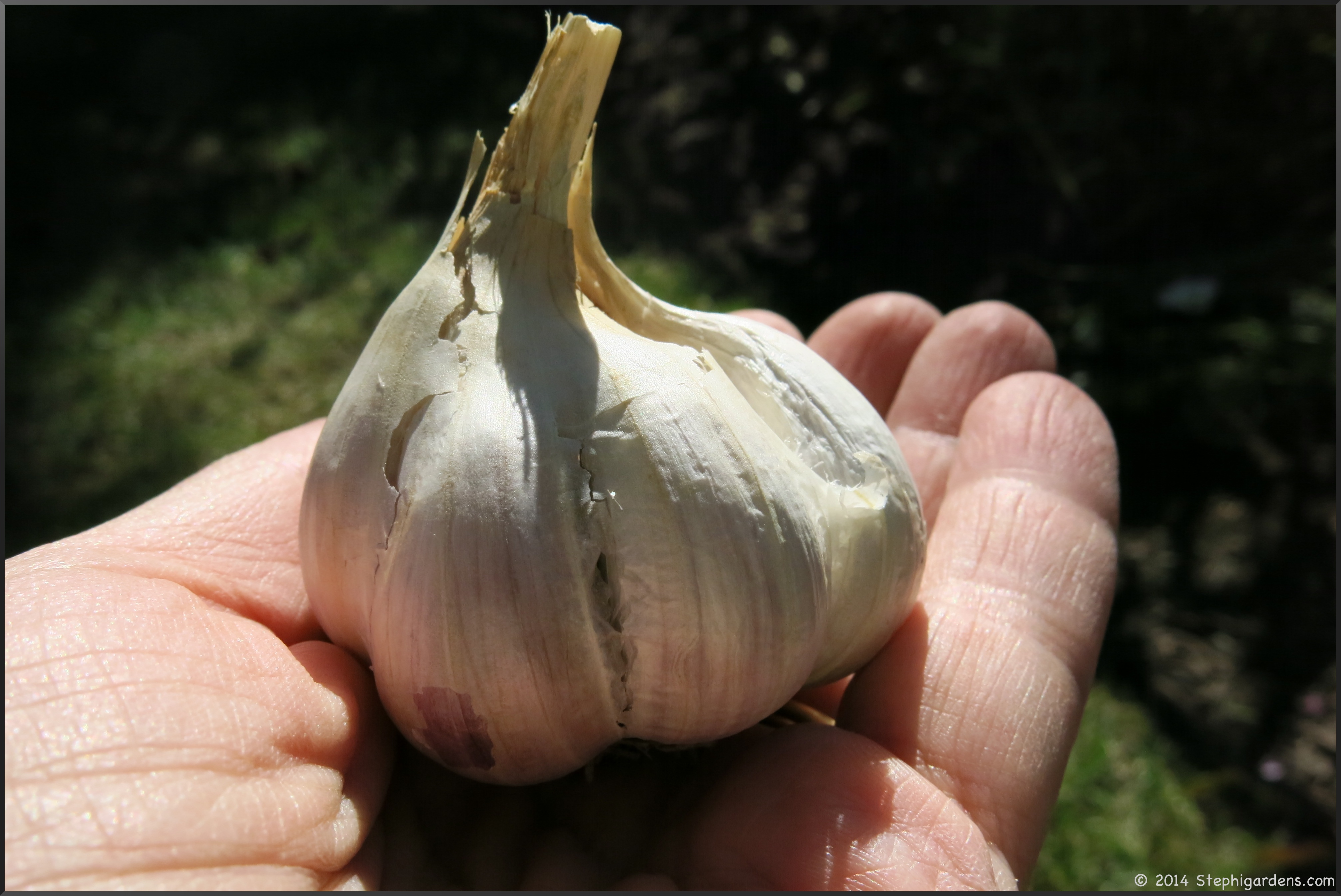
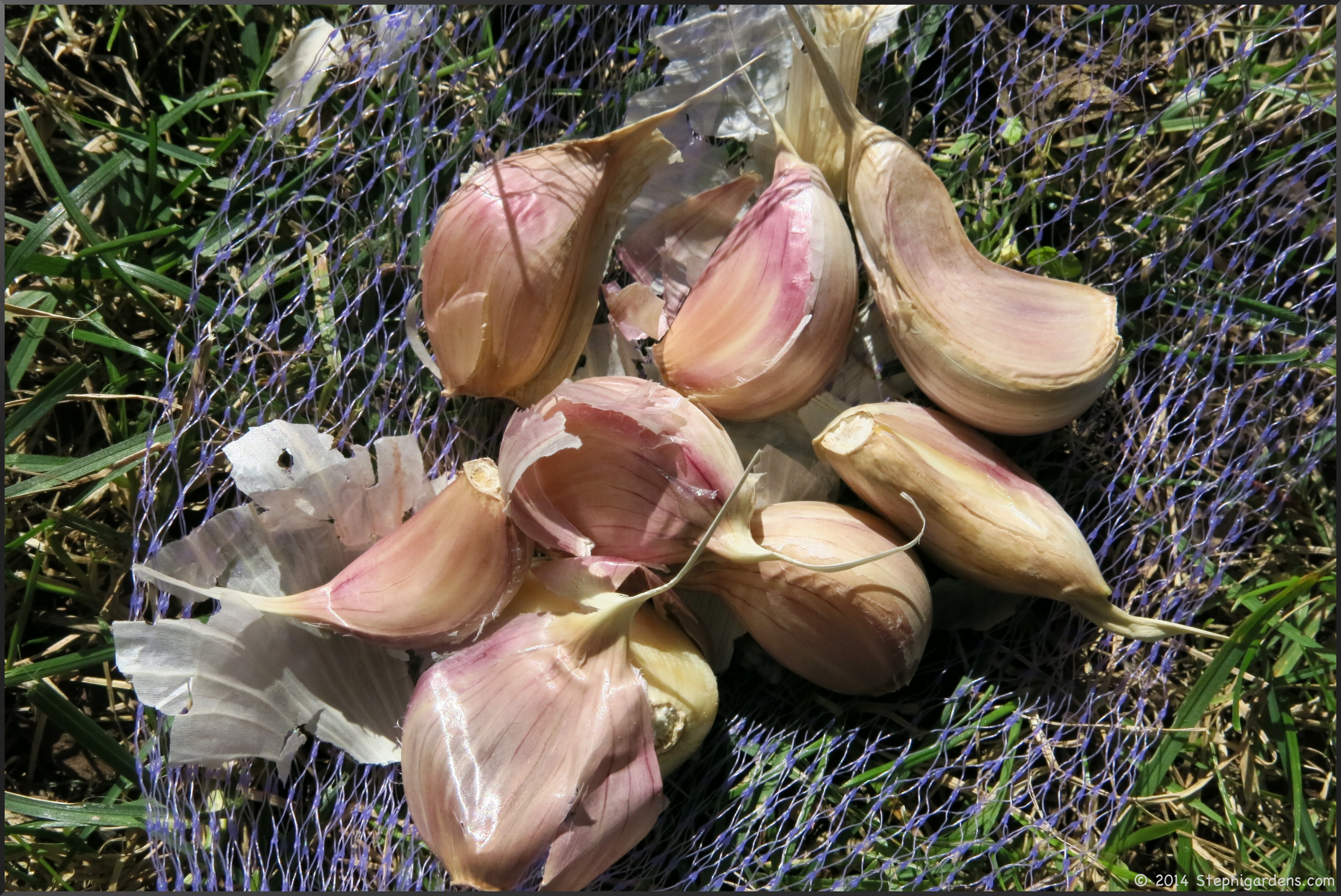
I chose 3 different varieties, 2 hardneck (Chesnok Red and Purple Glazer) and 1 soft neck (California Early) from Botanical Interests.

chesnok red garlic
Chesnok Red Garlic
chesnok red garlic
Chesnok Red Garlic (hardneck)
Early California Garlic
California Early Garlic (softneck)
Purple Glazer
Purple Glazer Garlic (hardneck)

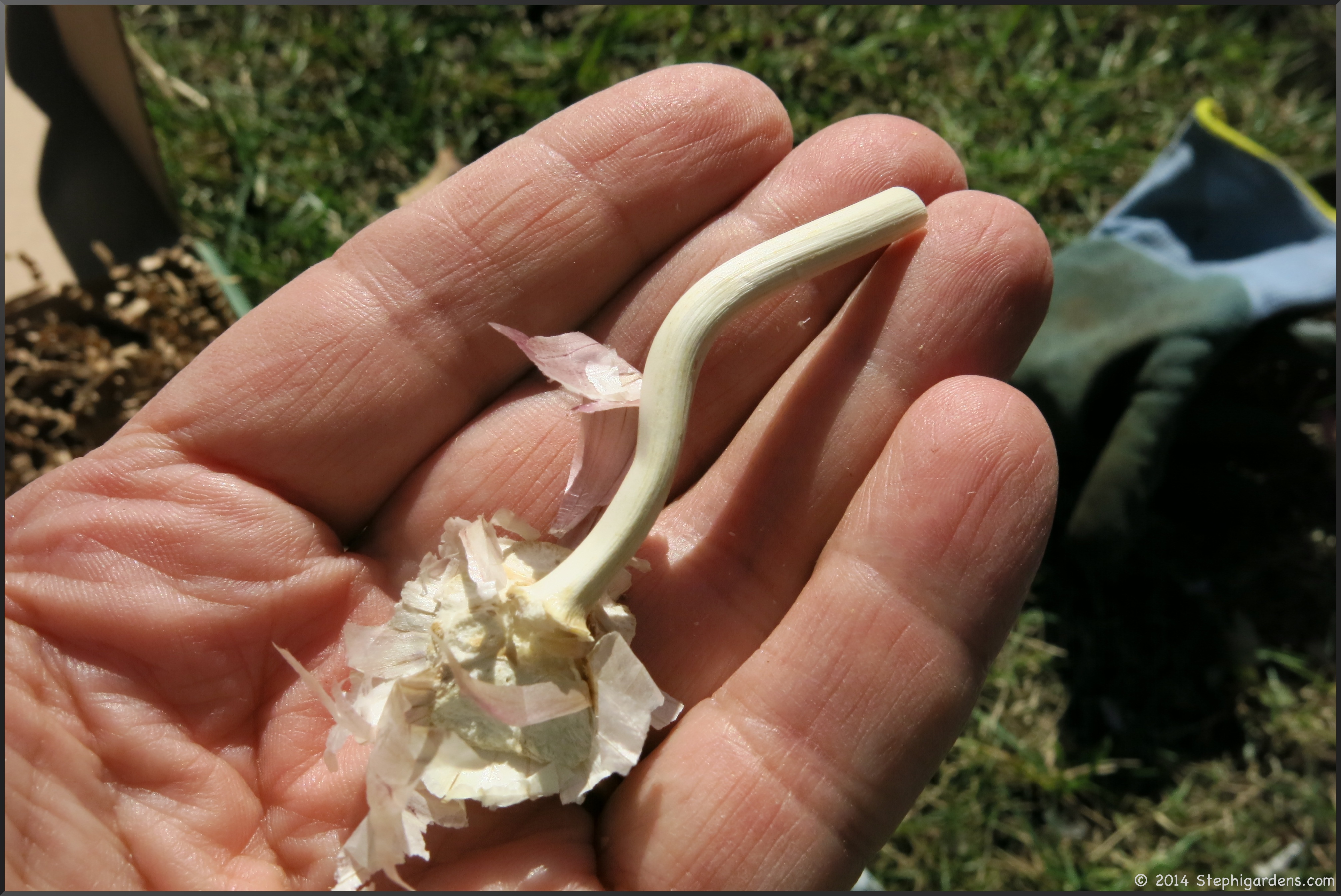
Softneck varieties tend to grow in a wider variety of climates and can be grown in warmer areas, last longer in storage and are good for braiding.  They also tend to be a little milder in taste.  Hardneck varieties require some time in frozen ground, so are not recommended for warmer climates.   In the spring, they produce a tall edible stem called a “scape”  that should be cut and can be used as a mild garlic seasoning.  The hard neck varieties are also generally known for their stronger taste.

hardneck garlic
Garlic hardneck “stem”

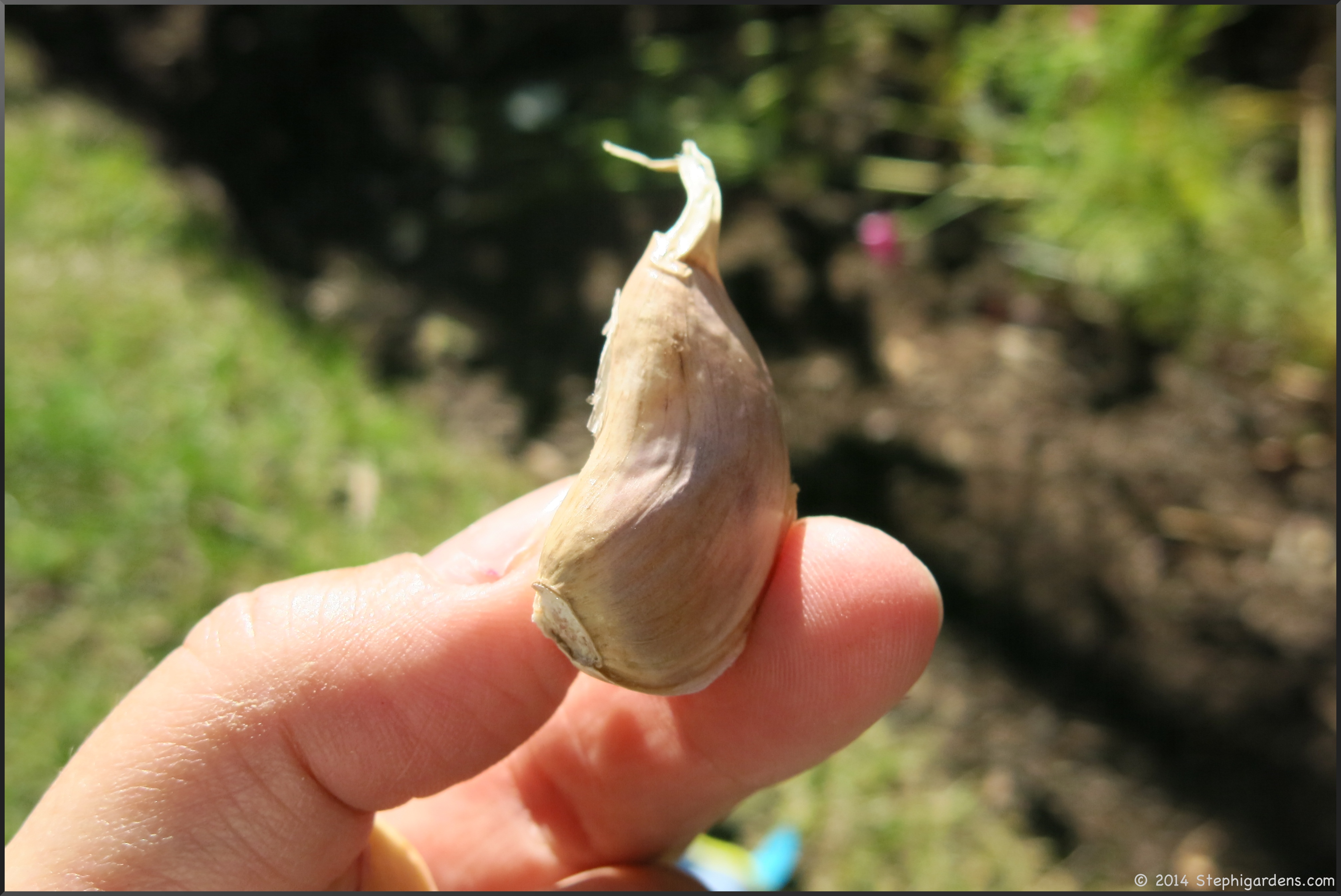
To plant the garlic, separate into individual cloves, but leave the peel on.

chesnok red garlic

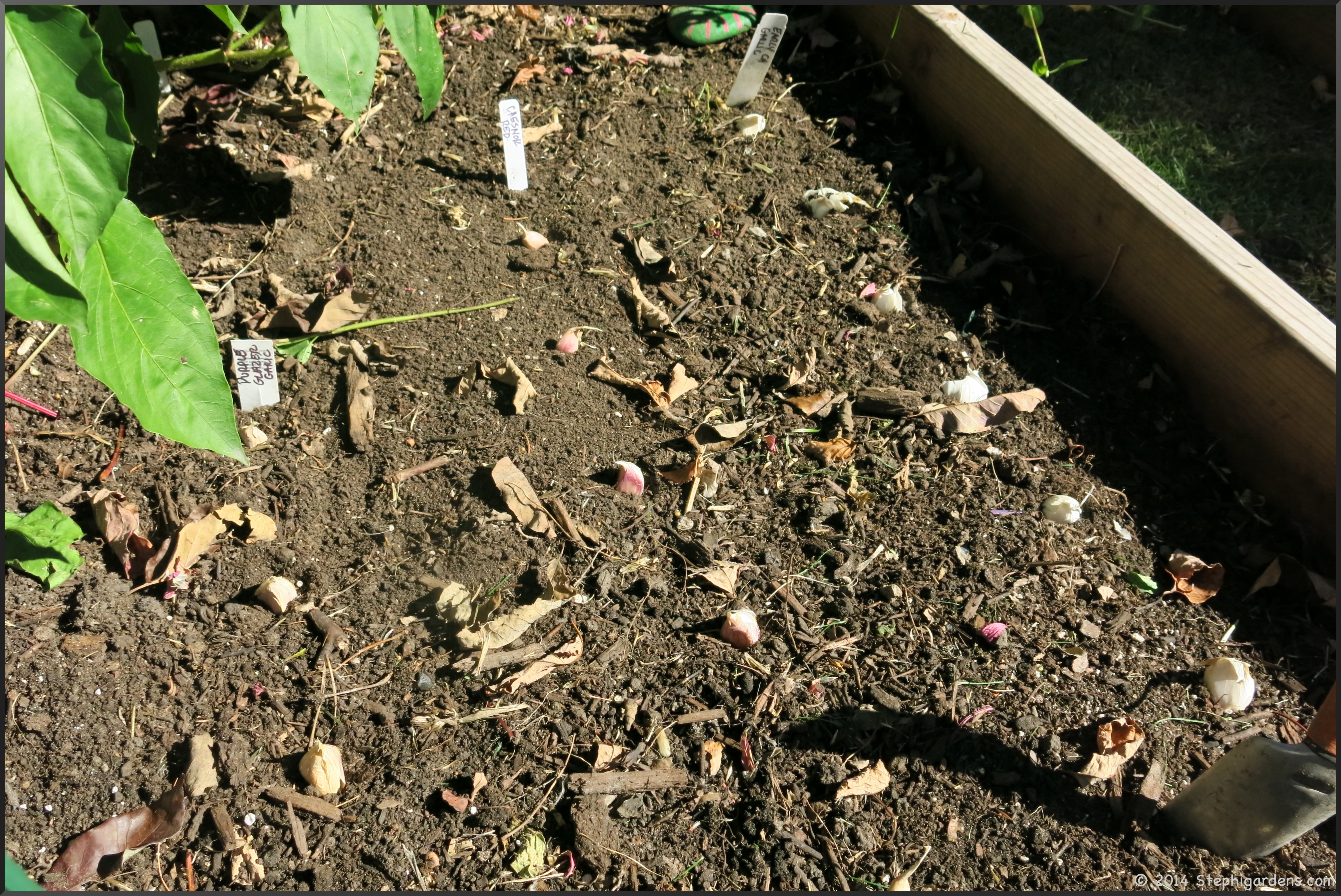
In a spot that will get full sun to part-shade, plant the cloves with the pointy end up and the “root” end down, at a depth of 2-4 inches.  Space the cloves 4-6 inches apart and rows 12 inches apart.  Cover with 2-4 inches of mulch to preserve moisture and insulate against the cold.

chesnok red garlic

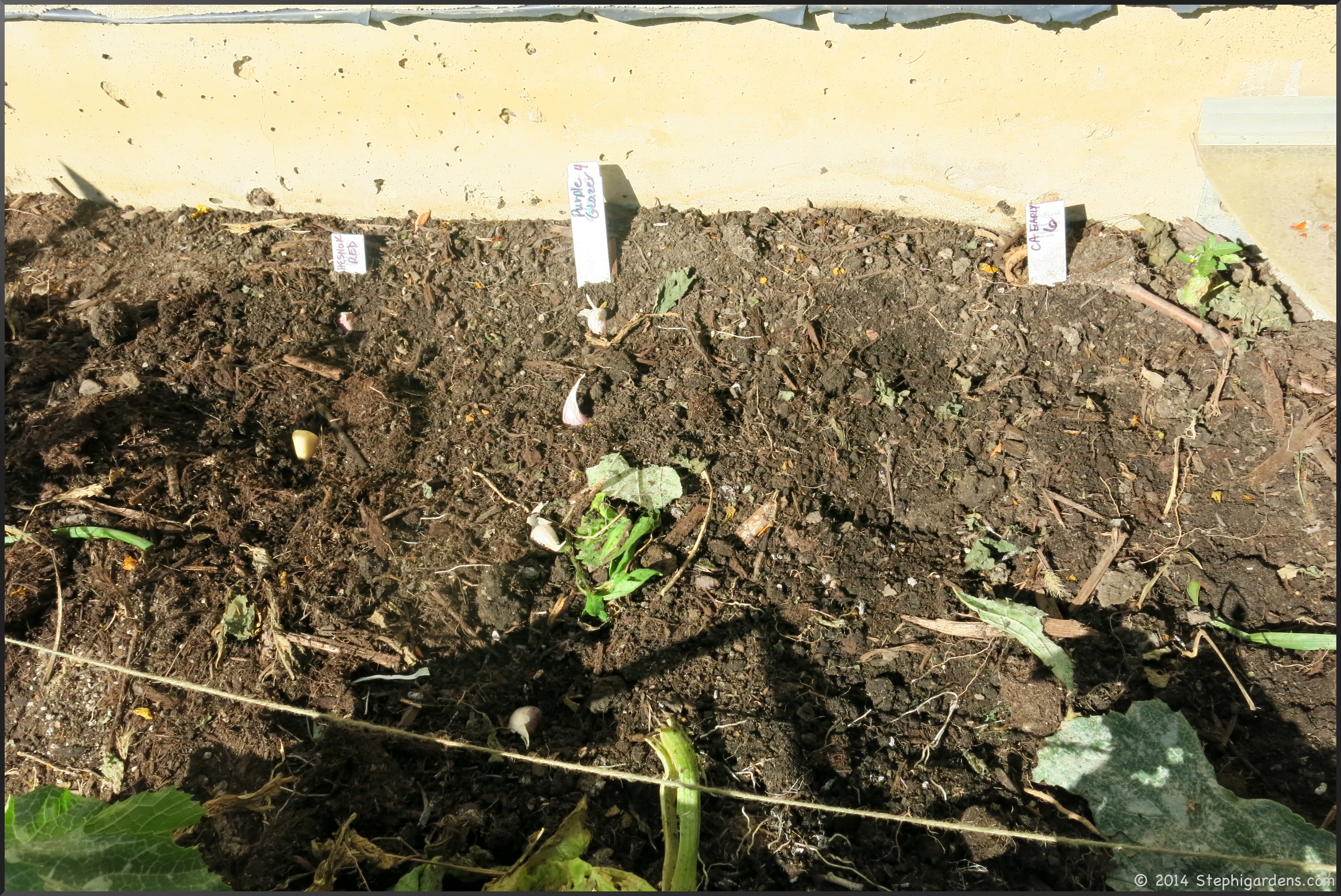
Here’s the 2 locations I selected.  Since they need to overwinter, I was extra careful to mark where the cloves are since I know I tend to lose plant markers, and to mark off the whole area to be sure I don’t dig in it in the spring.

growing garlic

growing garlic

I’m looking forward to seeing it come up in the spring.   Have you ever grown garlic?

Save

Seniors, School Boards and Sunflowers

Well that title certainly should catch your attention.  What could they possibly have to do with one another?  Nothing much except the first two has been needing my attention a lot lately, keeping me out of the garden.

The “seniors” refer to my twin boys who are seniors in high school this year.  With that comes the college adventure; trips, research and then applications.  We’ve been all around looking at schools for them this summer and fall.

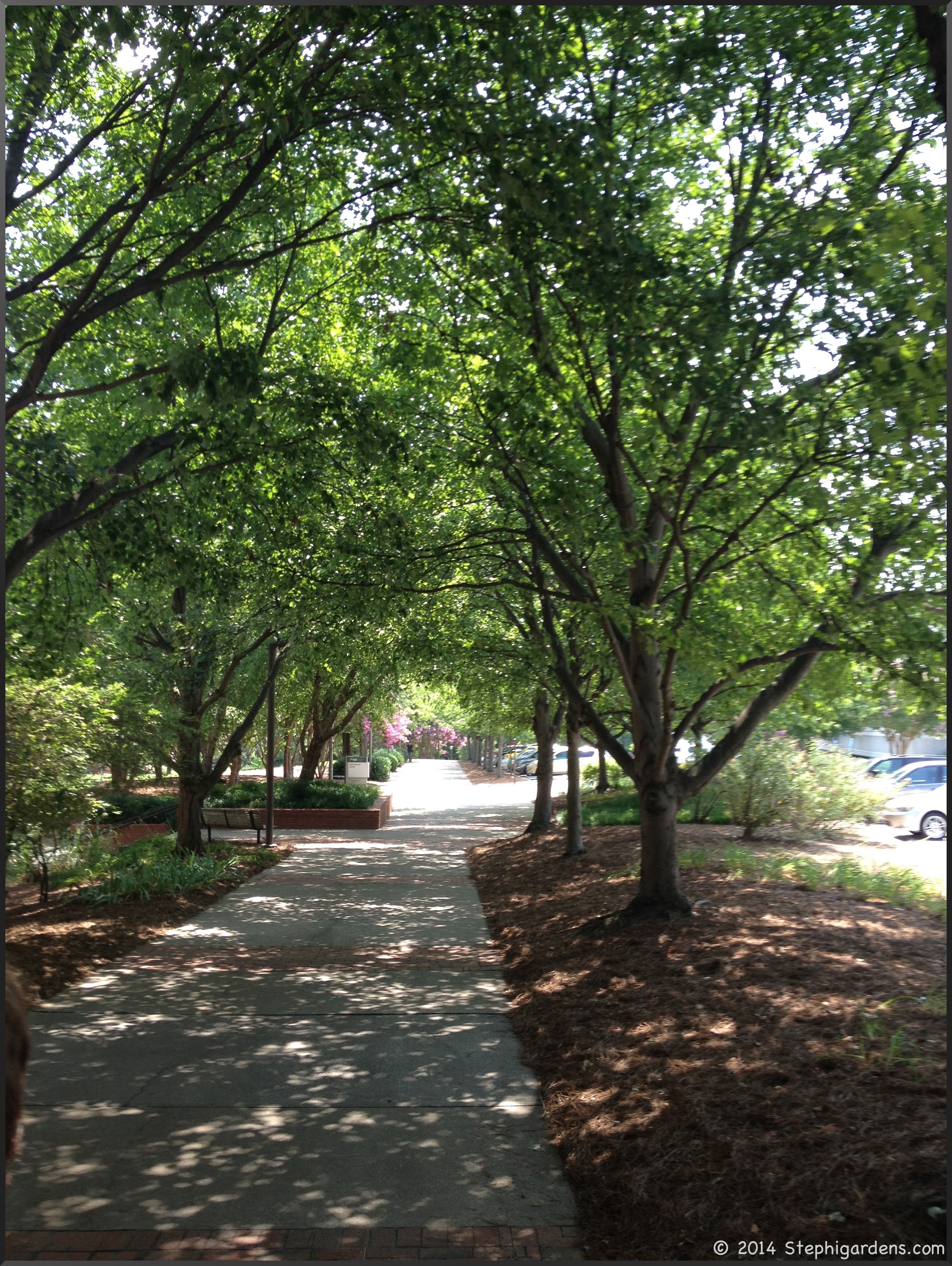
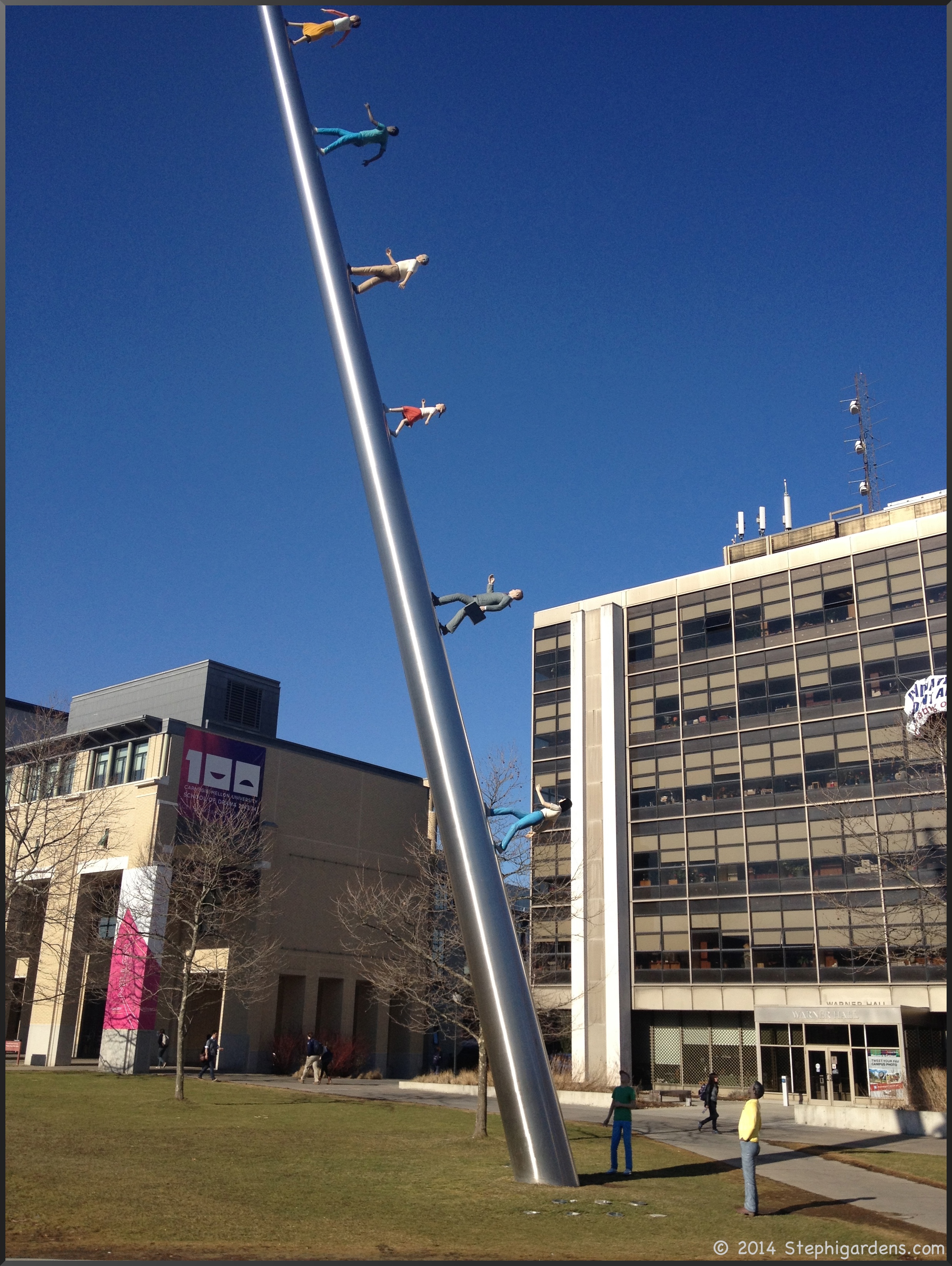
Georgia Tech Walking to the Sky

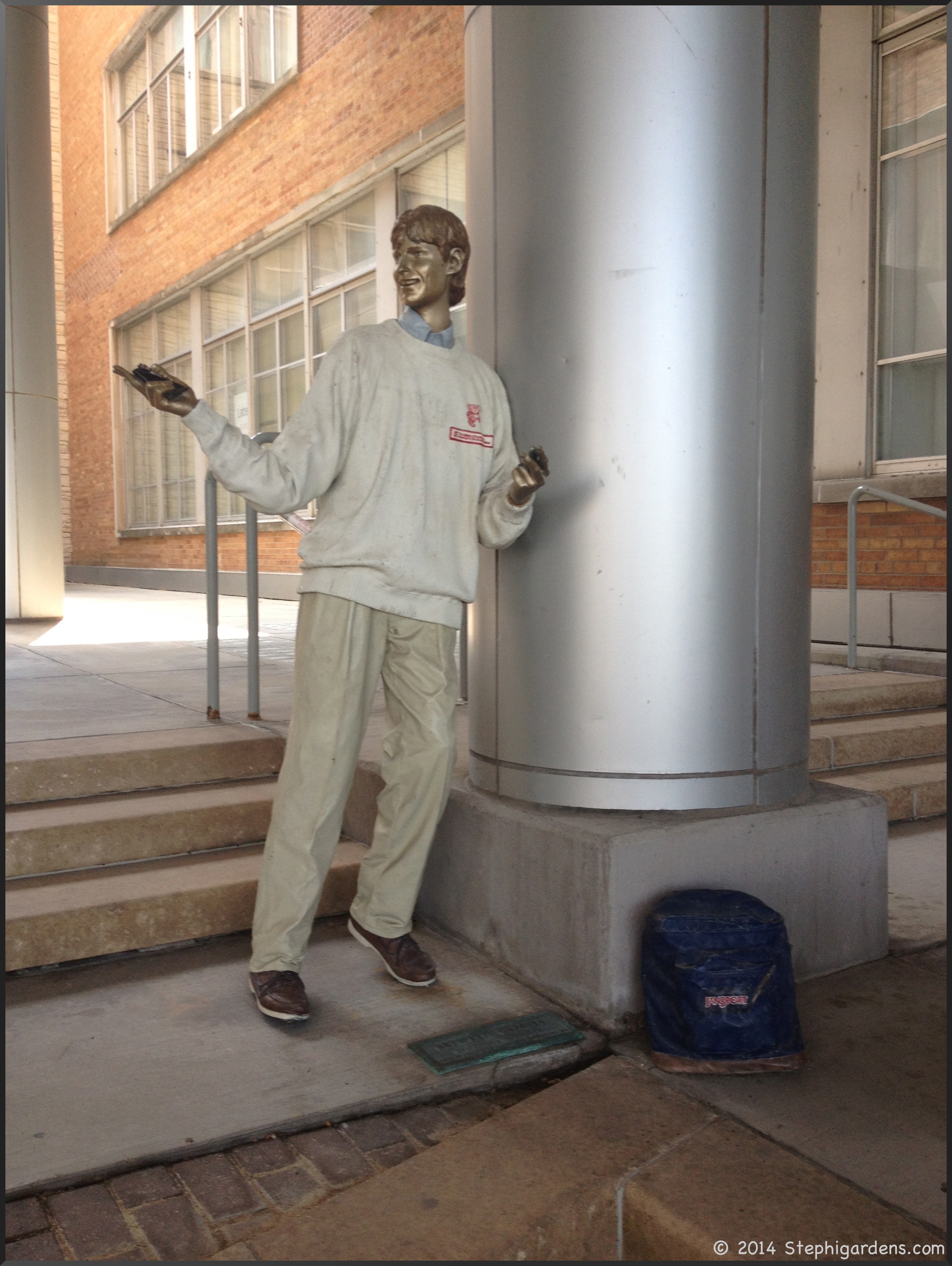
UW Madison University Maryland College Park


Read everything under the sun to hopefully find just the right matches, and now it’s time to buckle down and get those applications out.

“School Board” refers to what happens when you get a low turn out for a local election during a teacher contract year.  Long story short, there was a lot of friction between the board and teachers, leading to a potential teacher strike threatening to derail my kids’ senior year, college application process and XC running season.  Needless to say, I have spent a lot of time writing emails and attending school board meetings.  Looks like we have a solution, still crossing my fingers unit the contracts are signed.

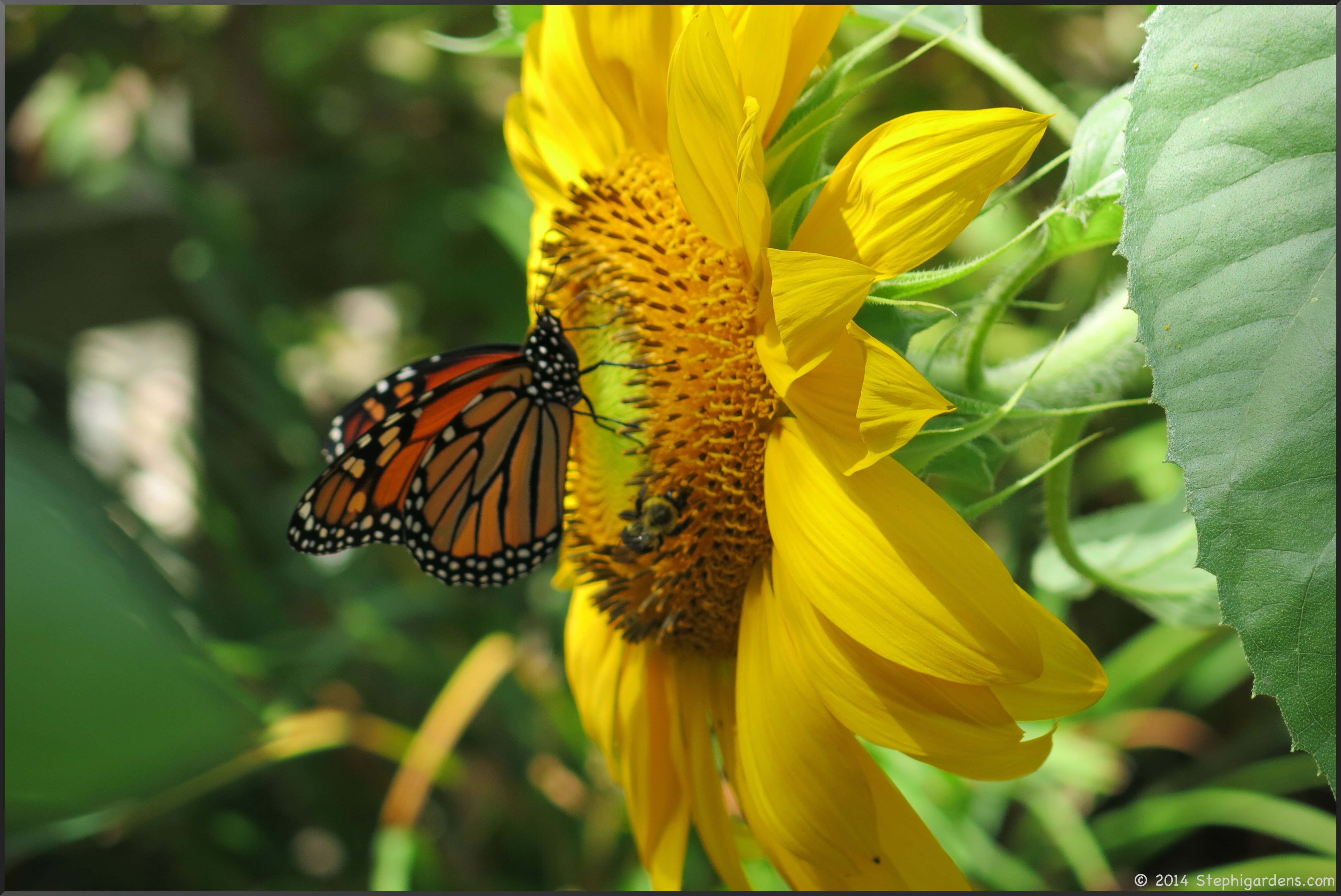
Sunflowers, well, they just make me happy and they’ve been a fun addition to my garden this year.

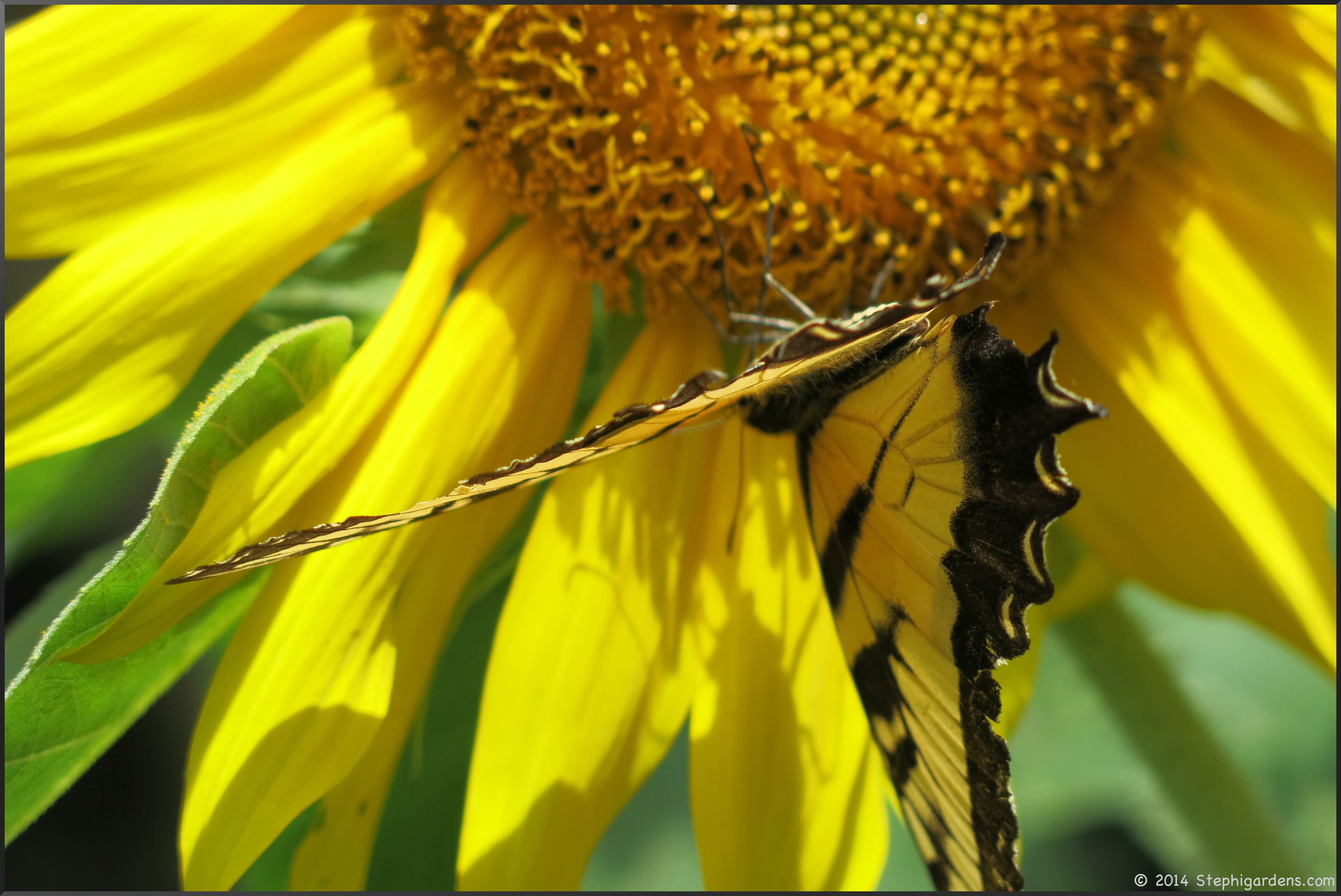
I thought I was going to be able to save some heads for some winter bird treats after the bees and butterflies were done with them.

Sunflowers


Tiger Swallowtail


Tiger Swallowtail

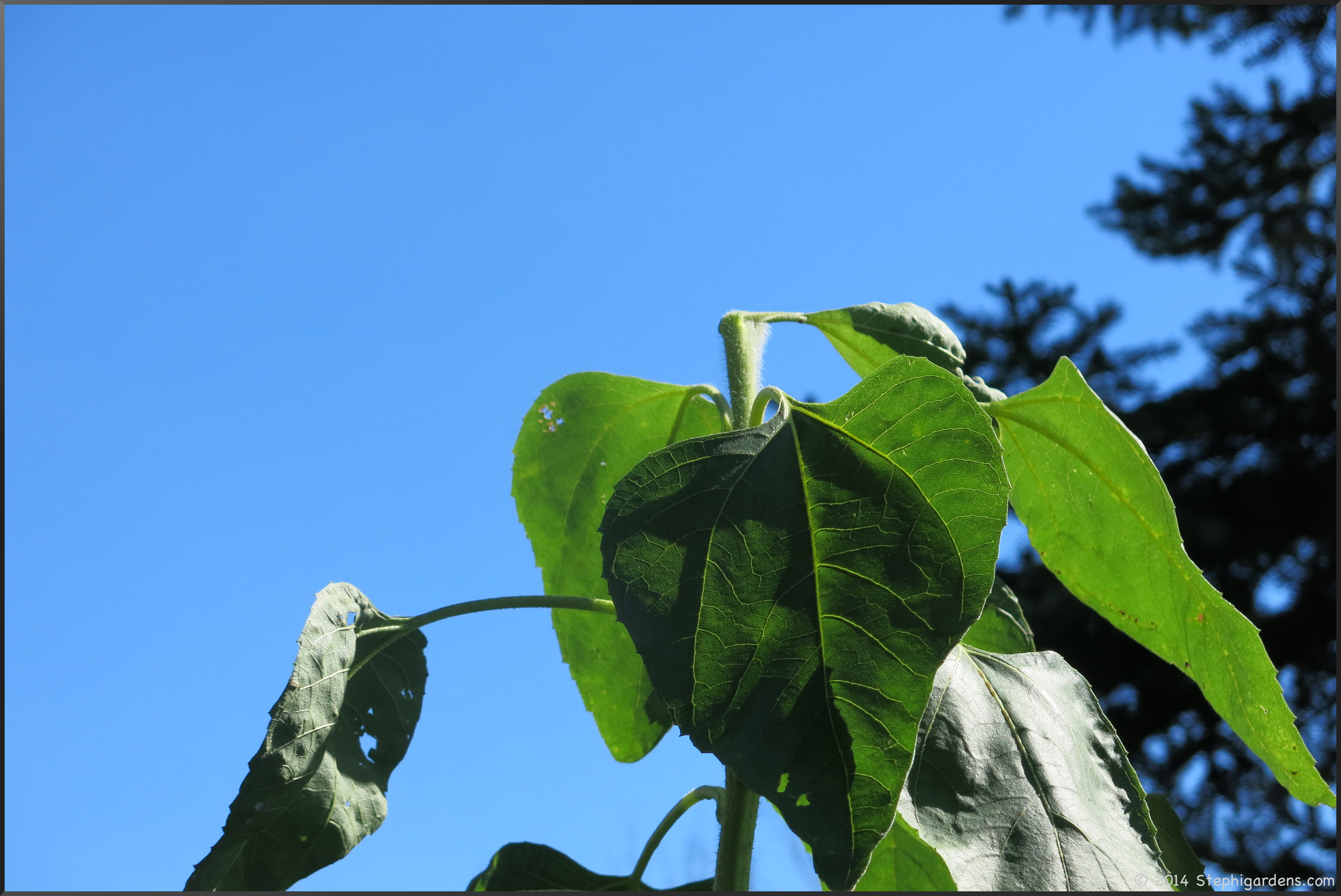
But a couple of weeks ago, the seed-heavy heads just started disappearing.

Sunflowers

In only a few days they were all gone.  Cleanly cut as though they’d been harvested with shears.  I would love to know where they went, since earlier in the summer if one was taken down, whatever the critter was tended to set it next to the garden and shred it to pieces.  These were hauled away for winter storage no doubt.

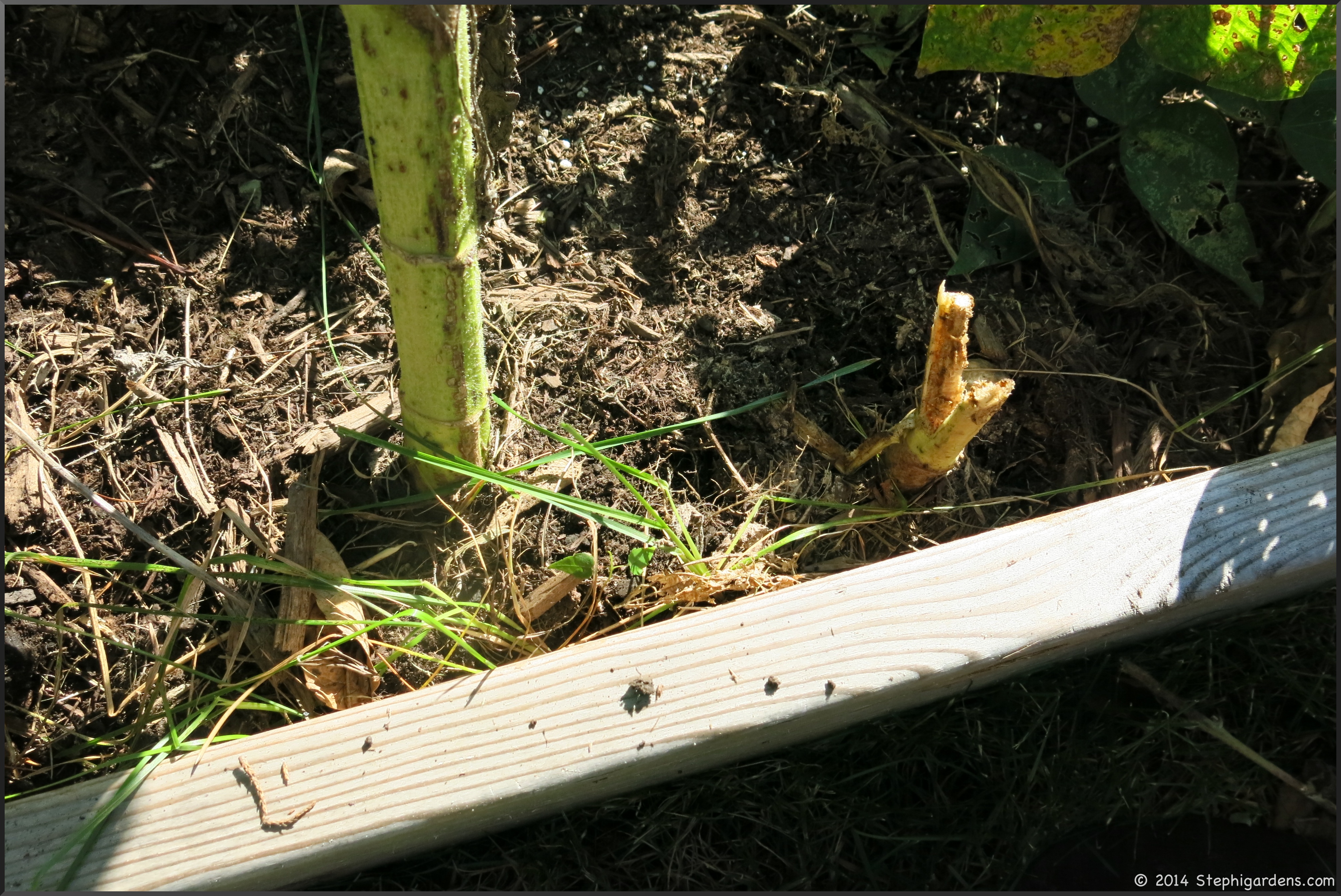
So, after looking at the headless stalks for far too long (see reasons above), I figured I’d better cut them down.  I hadn’t realized how thick giant sunflower stems are.  I needed to head to the shed to get some bigger clippers.

Sunflowers

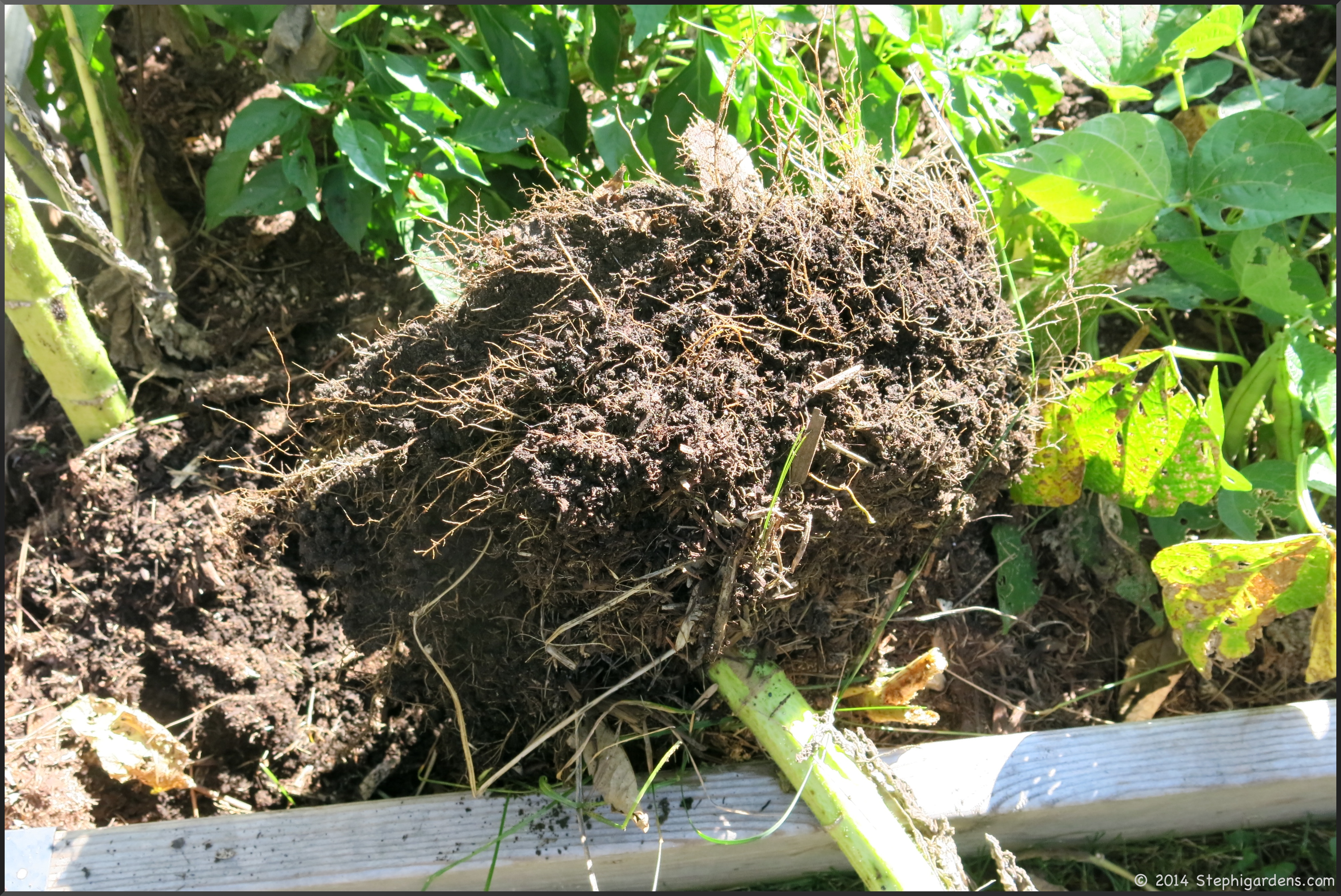
And a bigger shovel.

Sunflowers

The sunflowers are done for the year.  I’m looking forward to them again next year.  Are you starting to remove things from the garden yet?