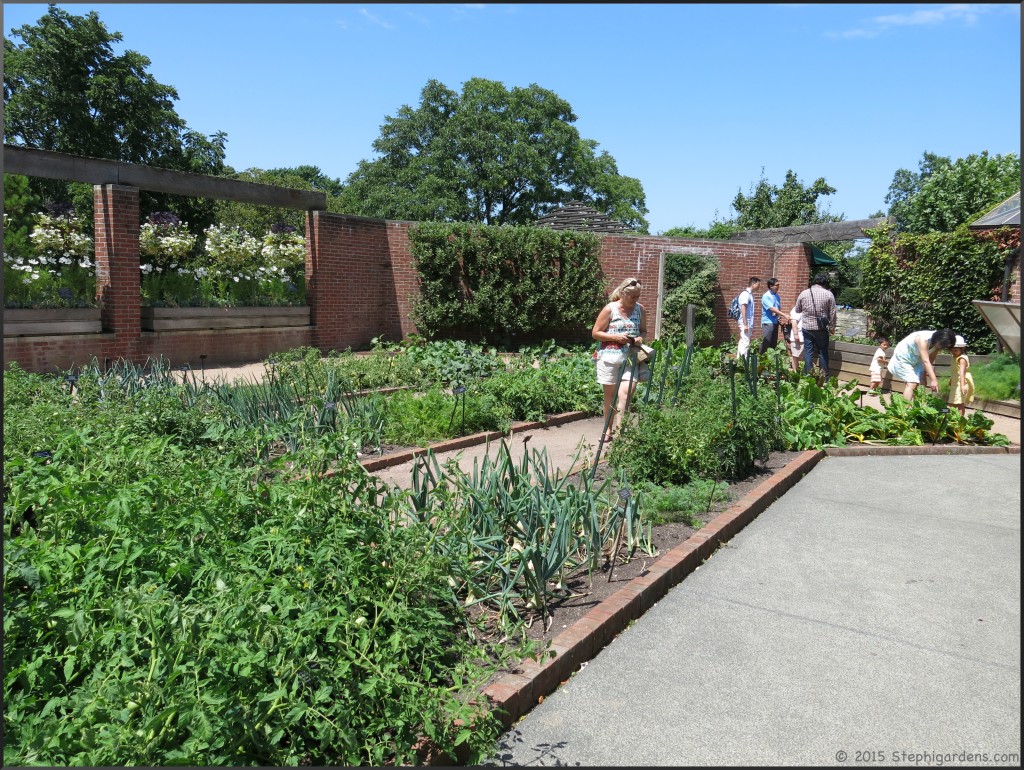
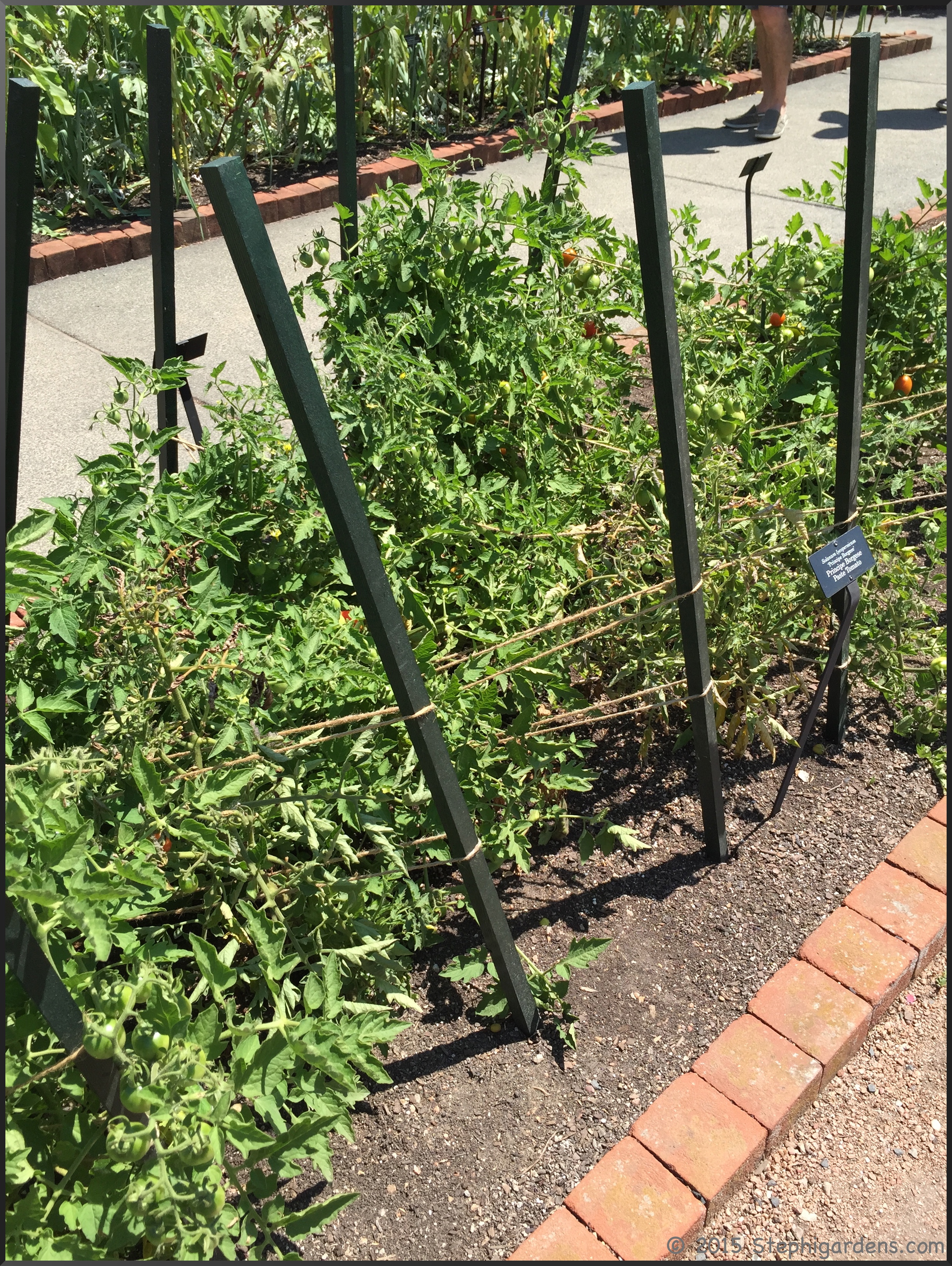
I keep searching for just the right way to tame my tomatoes. I’ve tried different trellising methods, but they just seem to grow crazy and become totally unwieldy by late summer. That’s also why they are banished out of view to the side garden. Of course it would help if I pruned them like I should, but I am the casual gardener and things happen.
In my experience, my least favorite way of containing tomatoes is the metal cone cages. I’ve never found one tall enough or wide enough to hold up a mature plant in the garden. Maybe they’d work for a small patio tomato, but not for a garden tomato.
My current favorite for supporting tomatoes is the Blue Ribbon ® Ultomato Tomato Plant Cage.
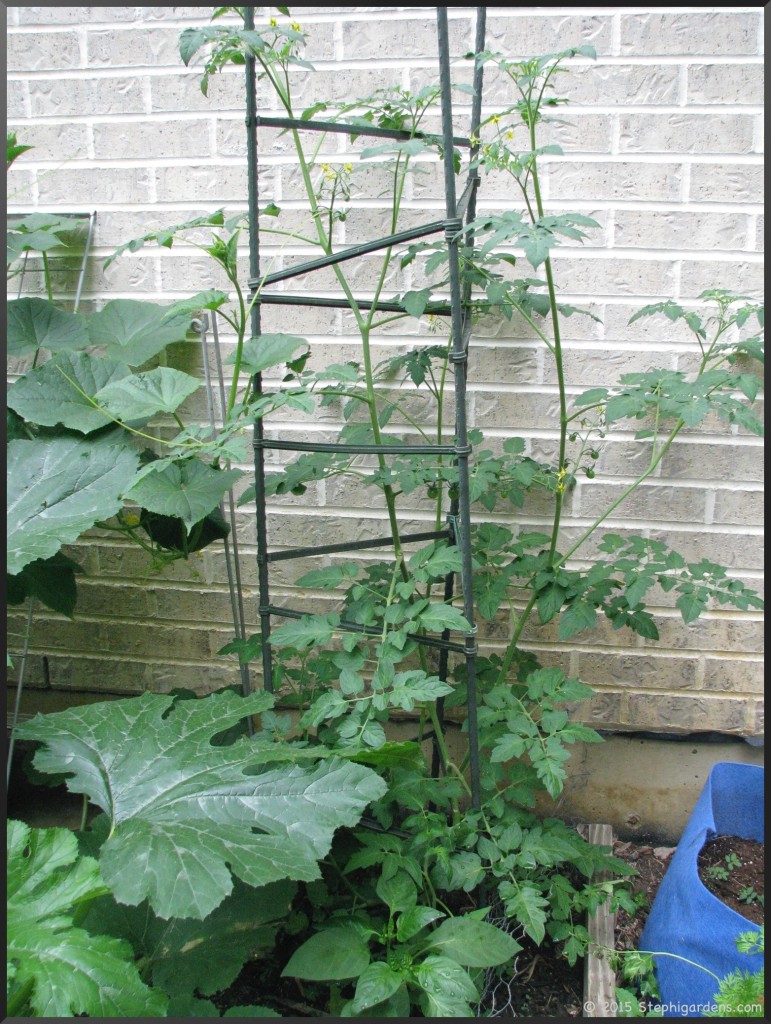
It’s 5′ tall, made of heavy-duty Sturdy Stakes (strong steel core stakes with a tough, thick plastic coating) and has nine fully-adjustable support clips. I’ve had mine for years. The extra nice thing is that if I’m a little late staking the tomatoes, it’s super easy to get the plant contained without damaging anything.
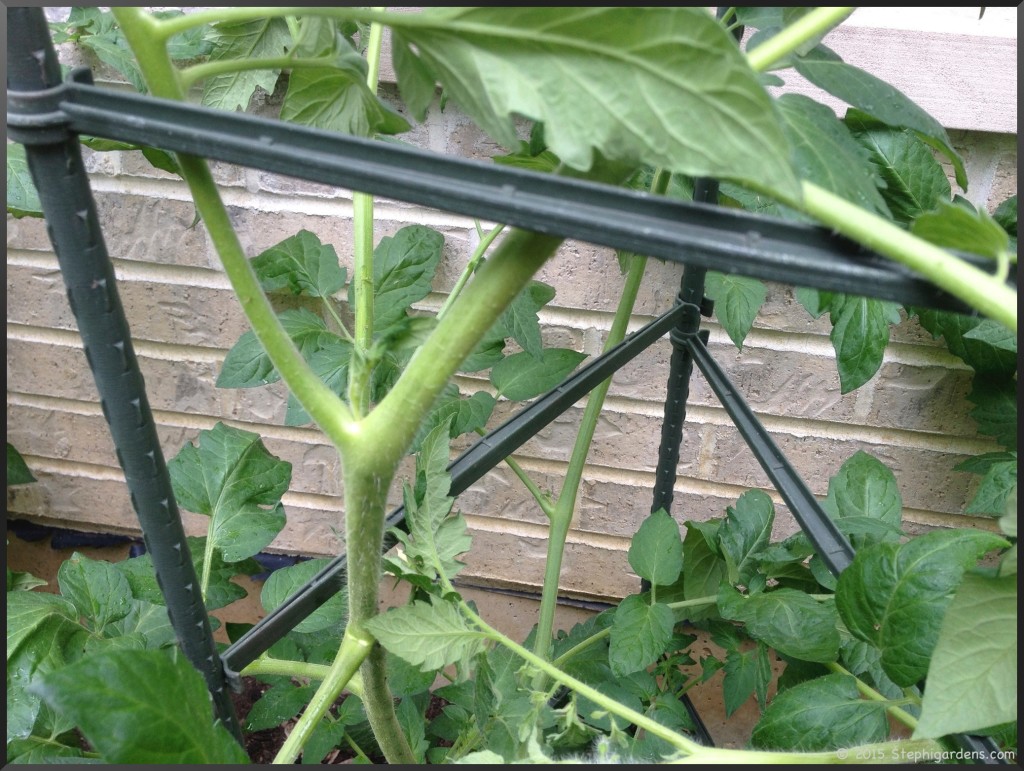
I found them on clearance one year at Home Depot, but I’ve seen them at Amazon and other garden shops as well.
Last year, I came across a post on Garden Betty describing a different way of trellising tomatoes using a Florida Weave. Despite the somewhat comical name, it sounded like a handy, low cost, easy way to prevent the crazy sprawl I usually experience. I was generally happy with how it turned out in my garden, but I definitely made some mistakes that I would need to fix next time.
I was planning on planting 2 cherry tomato plants, 2 plum tomatoes and 2 beefsteak types in a 16×3 ft raised bed (Problem #1-trying to weave more than one variety of plant in the same row). First, I attached some strong 5′ PVC poles I had around the house to the wood sides of my raised bed to act as anchors.
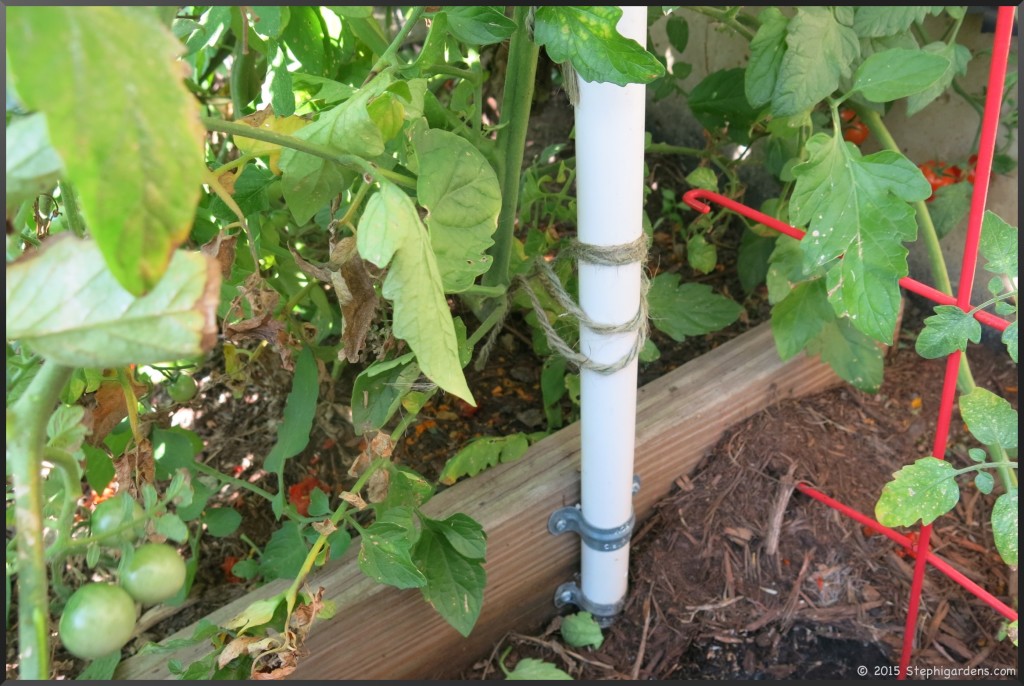
(Problem #2–not enough stakes)
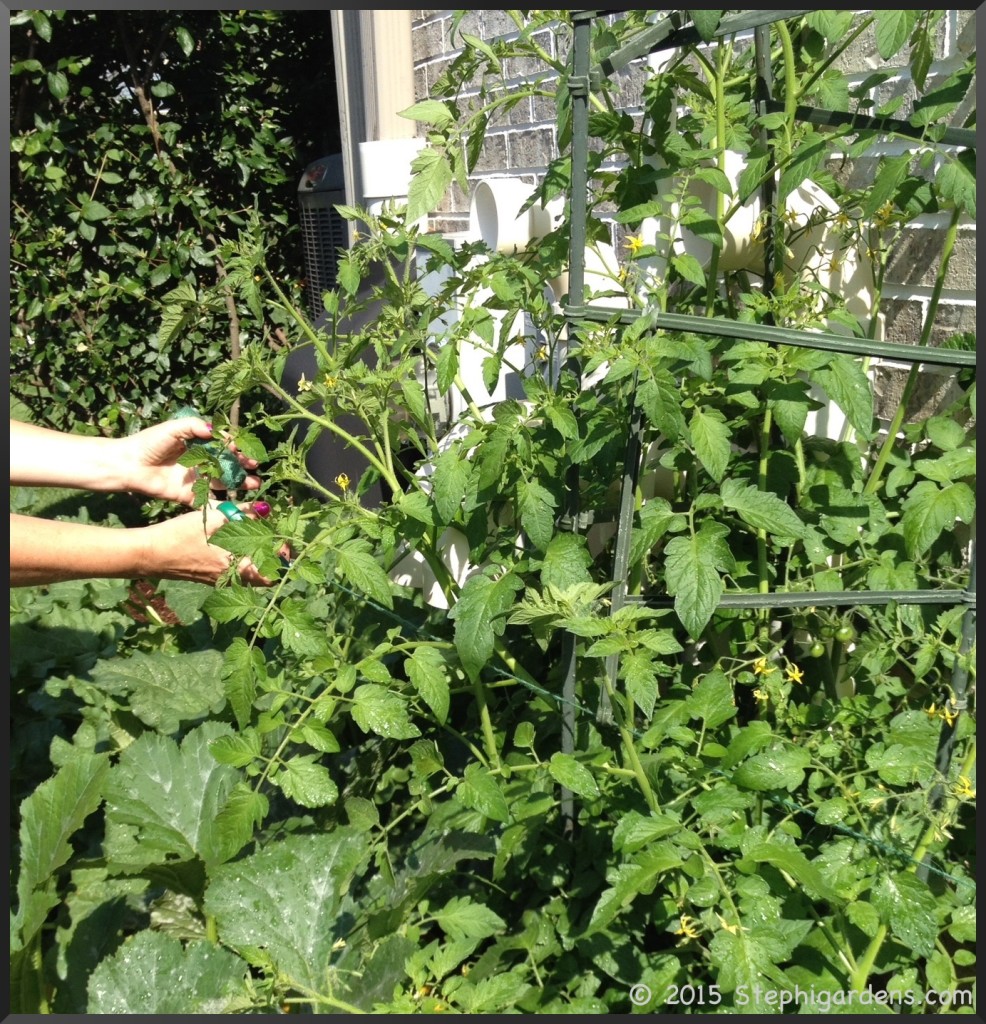
I took garden twine, and following the weaving method that Garden Betty described, wove the first row of twine. By the time I did the second and third rows, I realized hadn’t followed the directions she provided very well and my supports were way to far apart. I was trying to weave across too far of a distance and everything just started to get tangled. The twine also sagged a lot in the middle and didn’t support the growing plant very well.
To shorten some of the distance between supports, I first ended up using the metal cucumber trellises as an in-between anchor.
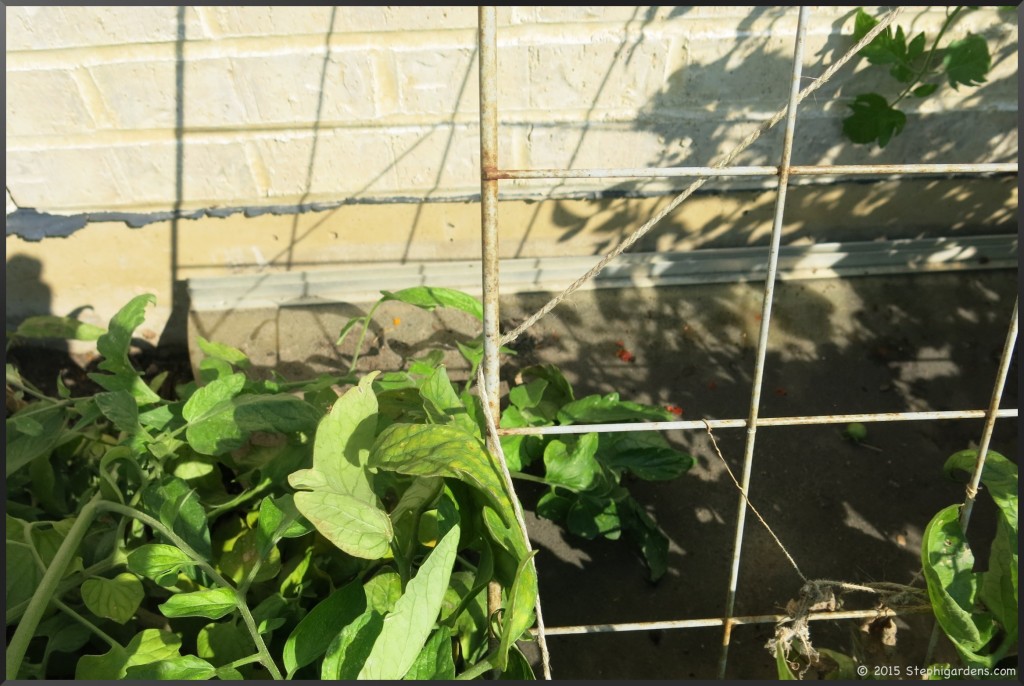
Then, by mid-summer as the plants grew bigger, I added a couple more not very strong stakes in a last ditch effort to salvage the weave and keep the plants from completely tipping over.
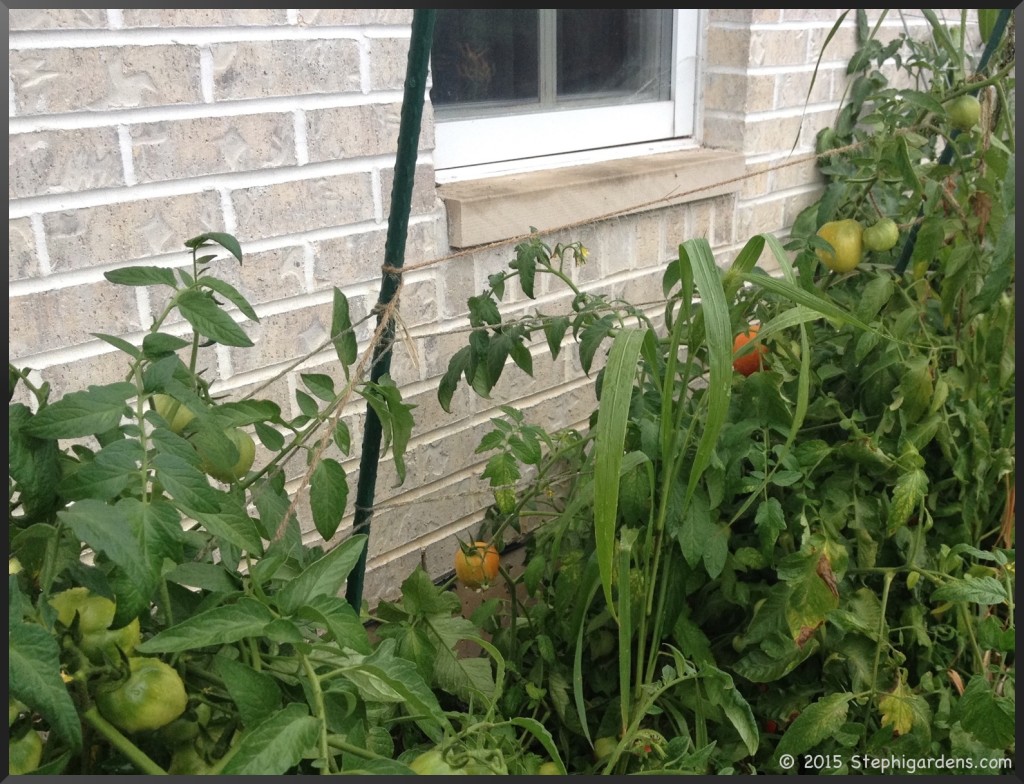
(Problem #3-really not enough stakes)
(Problem #4-really should keep up with the weeding better, but that’s unrelated to the Florida weave )
So what was my overall impression? For the beefsteak and Roma tomatoes I really liked the Florida Weave technique, even if I had issues with how my first time version turned out. I’m going to use it again for them, but before I get the plants planted I’ll have enough strong stakes in place to offer appropriate support. I also noticed that weaving like varieties would probably work better. They grow at the same speed and in similar shapes. Trying to corral a variety of plants didn’t work so well.
But even with the problems I had, the plants grew great. I thought there was more air circulation making for healthier plants, more naturally placed and stronger supports for sprawling branches and it was easier to get into the plant to harvest the tomatoes. As a bonus, in the fall it was really easy to pull out all the plants. Just cut the twine and down everything comes.
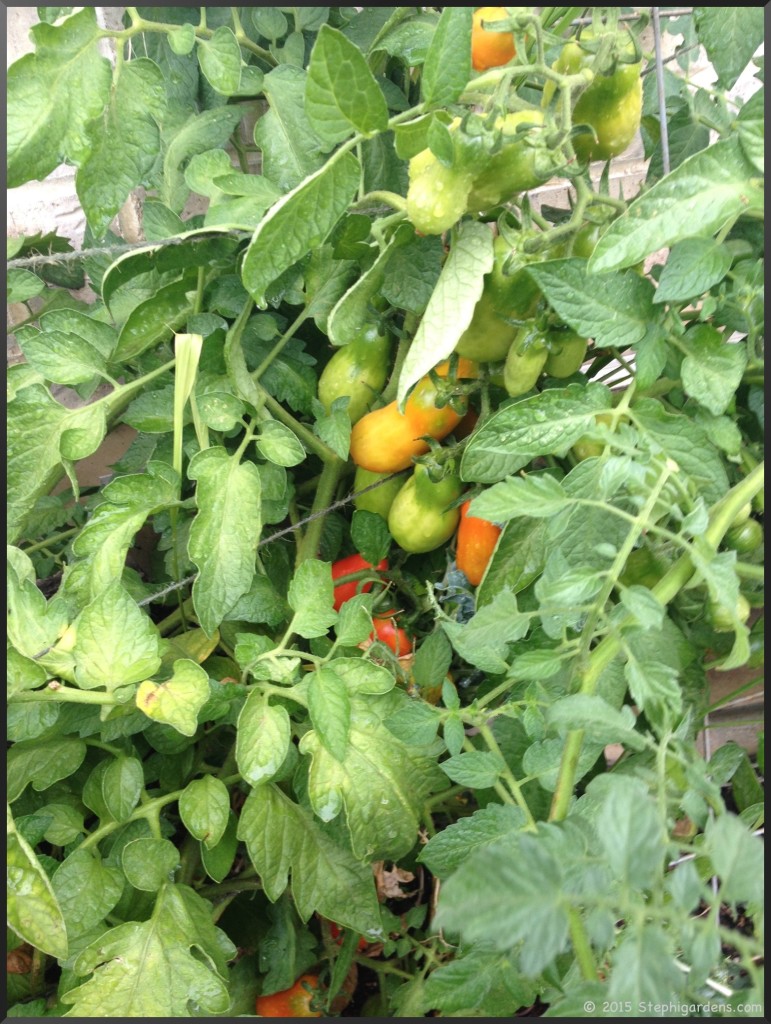
For the cherry tomatoes, I am going to go back to using my Blue Ribbon ® Ultomato Tomato Plant Cage. About midway through the summer, I actually got the cages back out and put them around the cherry tomato plants as extra support. It also helped to take some of the weight off the weave since things were beginning to topple.
I’m looking forward to trying again this summer and having it work out better. At least I learn from my mistakes, usually. What’s your favorite way to support tomatoes?