It’s Going to Be Cold Tonight!

May freeze warning, what to do??

It’s almost Mother’s Day and if you’re somewhere in the Midwest, mid-Atlantic or Northeast, you’re in for an unpleasant weather event the next couple of days. Brrr. Have we not dealt with enough this spring?
Hopefully, you’ve learned from past mistakes and haven’t planted those wonderful tender annuals and vegetables that all the garden centers already have out for purchase.
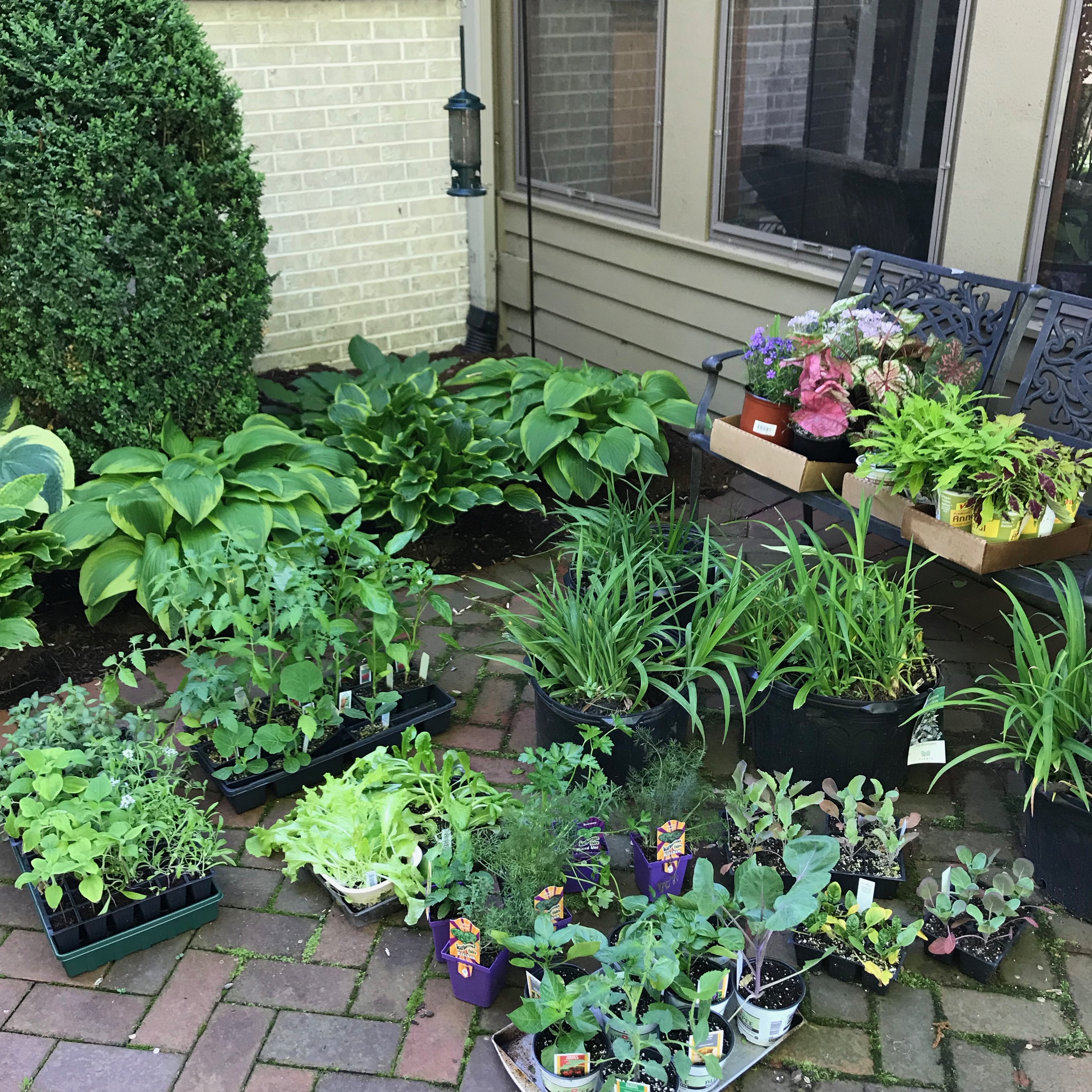
It’s always a good idea to know your growing zone, both your plant hardiness zone, based on the lowest expected winter temperatures, and your first and last frost dates. The spring frost date is what we are dealing with now. In my suburban Chicago location, based on Dave’s Garden’s info:

  • Almost certainly, you will receive frost from October 20 through April 17.
  • You are almost guaranteed that you will not get frost from May 24 through September 26.
  • Your frost-free growing season is around 155 days.

Right now we are in that in between time from mid April-Late May. I’ve learned that none of my seedlings leave the house for hardening off until close to Mother’s Day, about the middle of the in-between time.
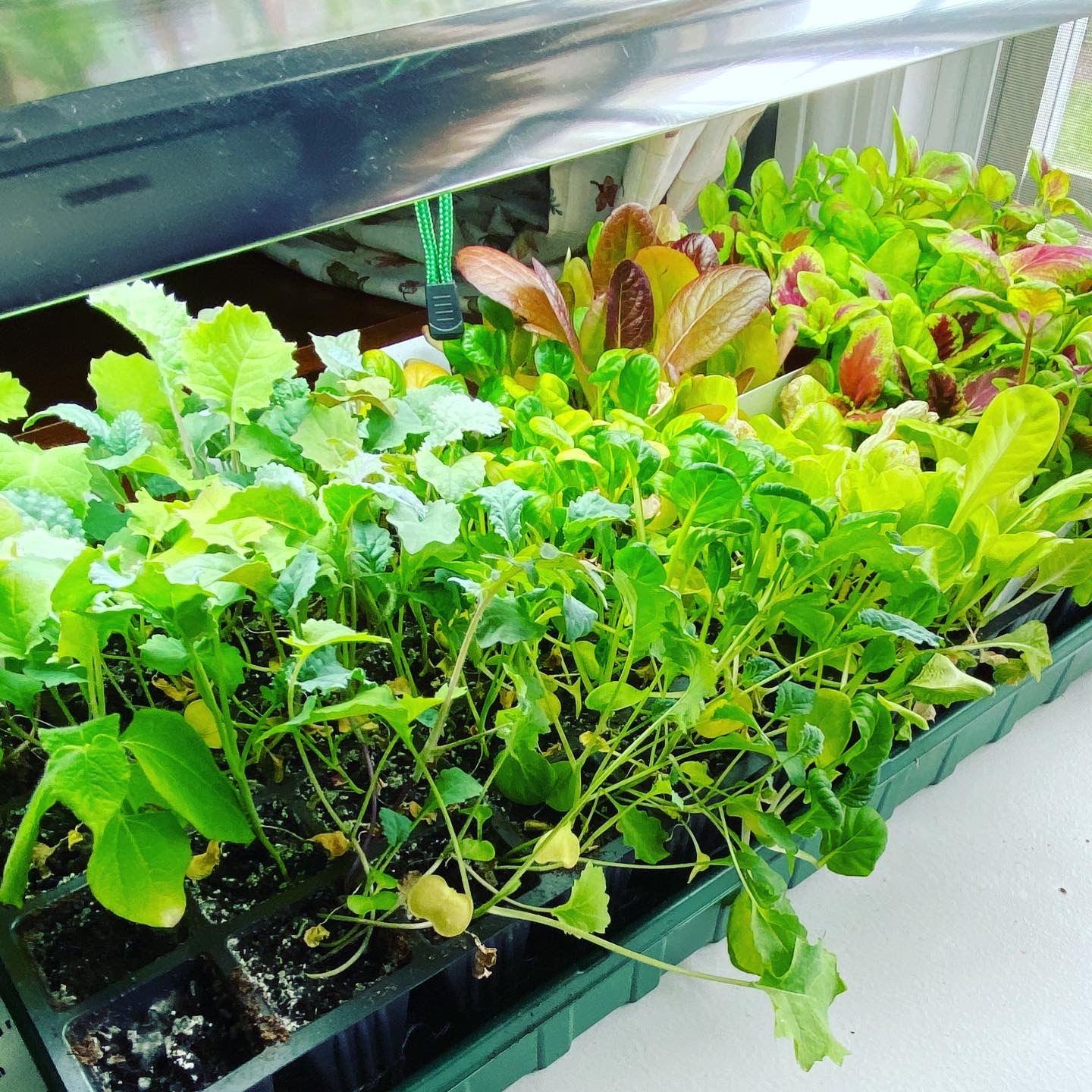
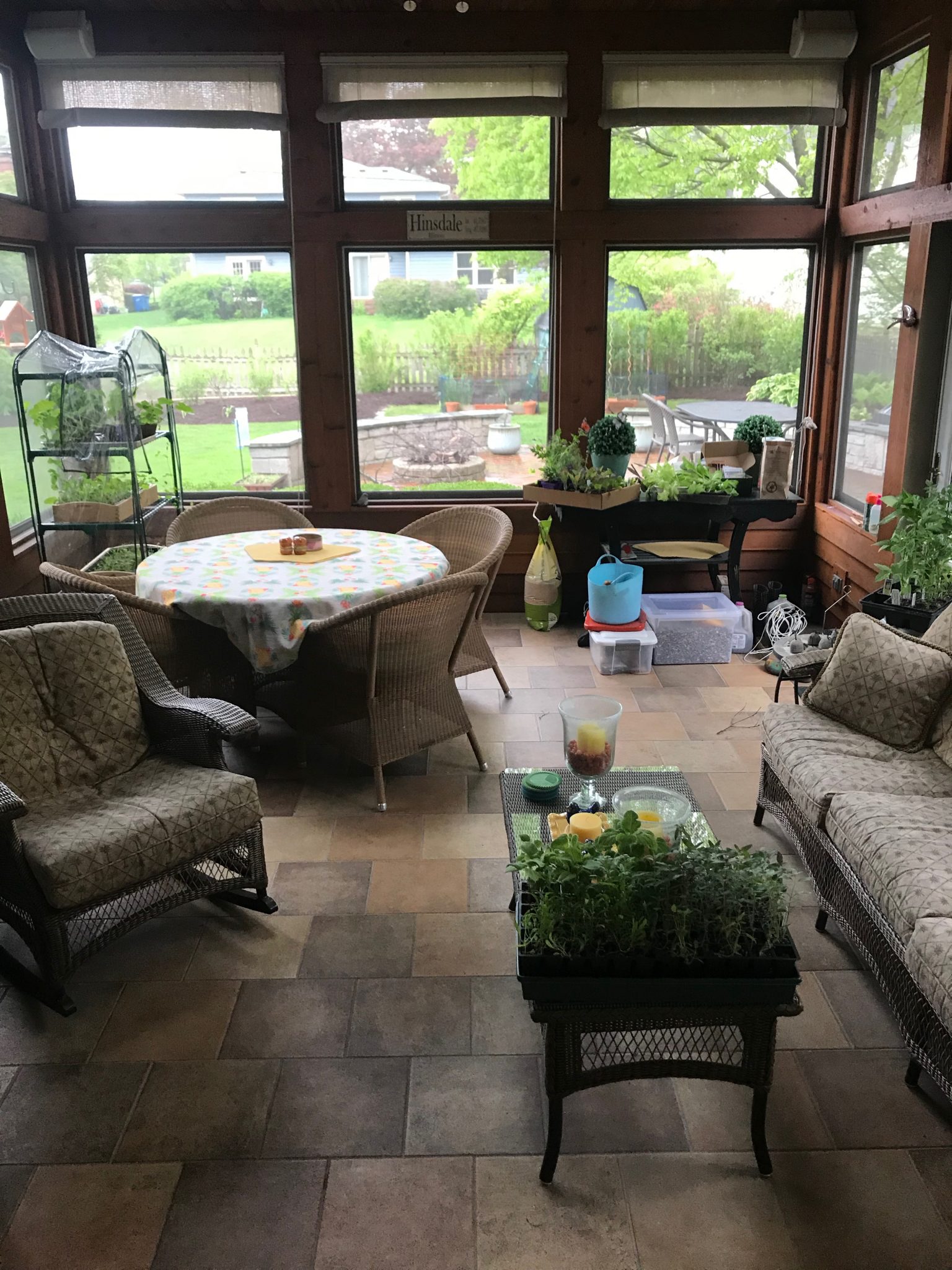
If it does get too cold, plants that are outside and waiting to be planted can spend time in the winterized three-season porch. For the most tender plants they can go in the mini-greenhouse on the porch, or even in the house, if they need even more protection.
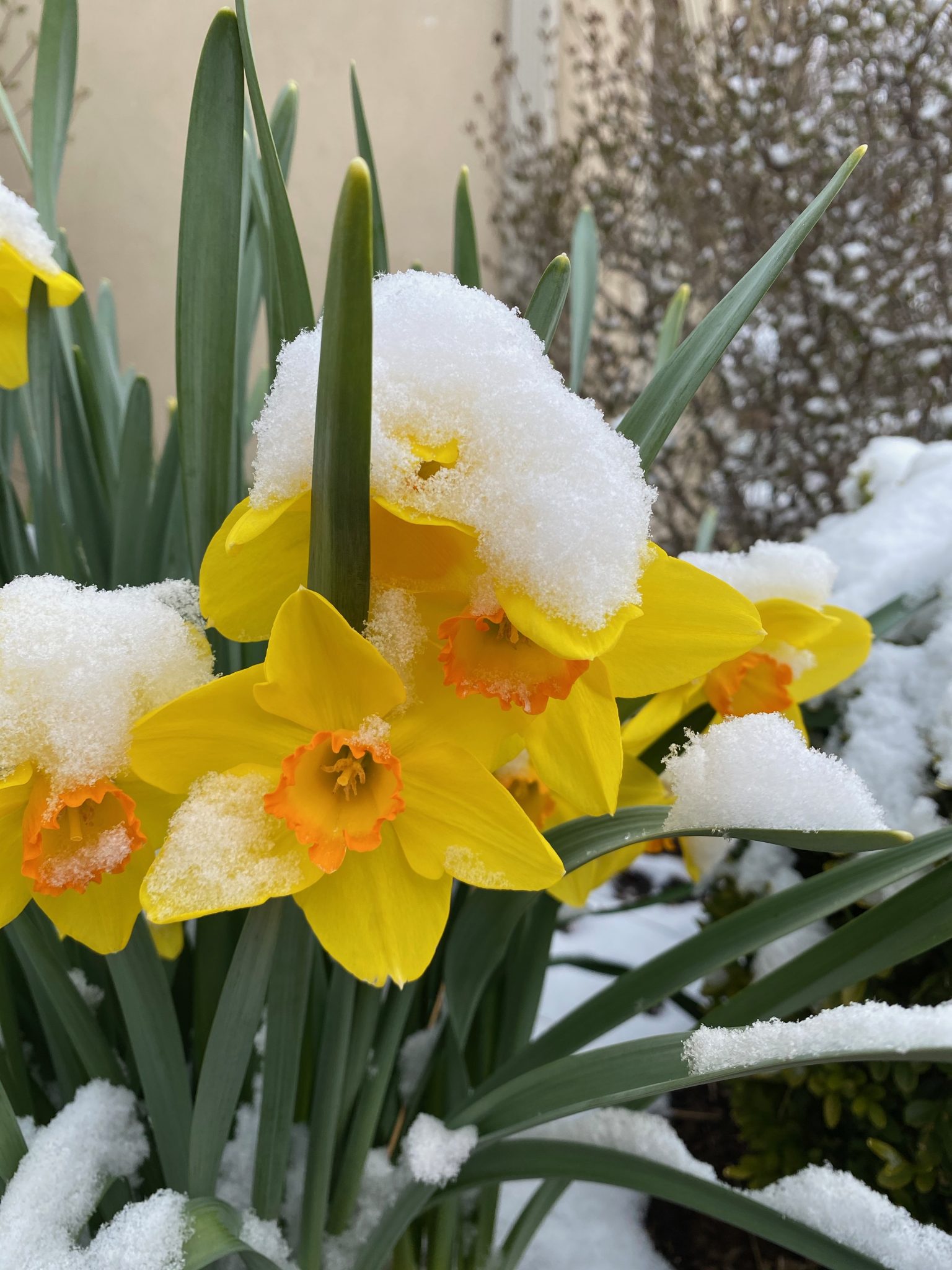
But what about all the perennials already leafing out and shrubs budding? Most spring plants will be ok. But if temperatures are predicted to be below 32ºF your more tender plants like geraniums, begonias, impatiens, peppers, and tomatoes need protecting!  A moderate freeze in the mid 20’s can be devastating to even more of your plants.

In my yard, I’m most worried about the hostas and early perennials that are pretty leafed out already, and flowering shrubs like the azaleas that haven’t flowered yet.
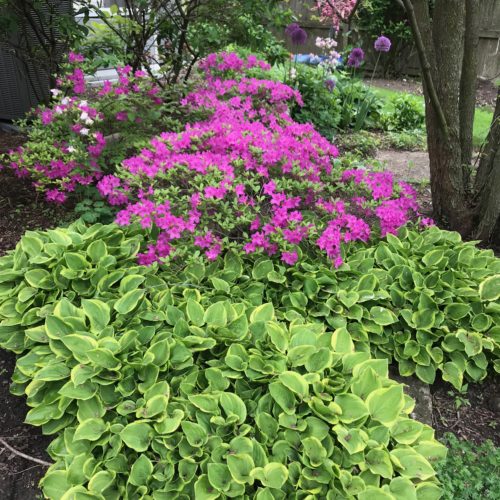
The magnolias and redbud are already in flower or done, so not so worried about them. But many others around the yard are just now coming into bloom.

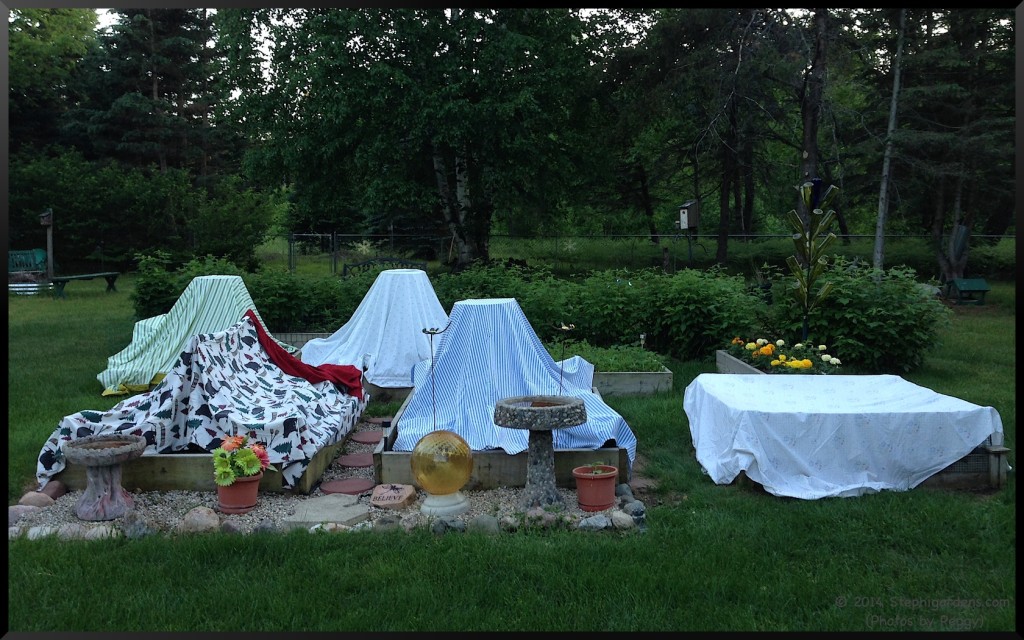
If you know that the plants are likely to be damaged by an overnight frost, you need to cover them with a sheet, blanket, a frost blanket or even an overturned bucket.
garden frost
This is my mom Peggy’s yard in Northern Michigan when she got hit with a late freeze a few years ago.

By tenting the sheets or frost blanket over the garden, it creates a warm air pocket around the plants from the warmed soil. If it’s thought to be colder than a light frost, you can add a layer of plastic over the blanket to trap even more warm air (but never put plastic right on the plants).  Be sure to remove the coverings first thing in the morning before condensation starts to form on the inside.  If still cold enough, the moisture could freeze on the plants and cause additional harm.  An actual hard freeze (below 28 º) requires even more elaborate weather protection, or you may just need to sigh and start over.

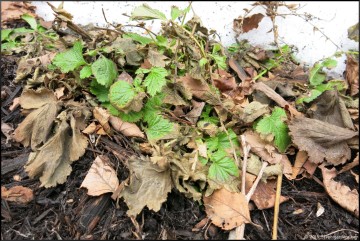
Plants like hostas will survive the frost or freeze, but will cause frost “cracks” or even cause portions of the leaves turn white and wilt. Damaged leaves will not come back, so trim them off and new leaves will continue to fill in throughout the summer. If a lot of the plant is damaged, the plant should survive, it’ll just be smaller than normal.
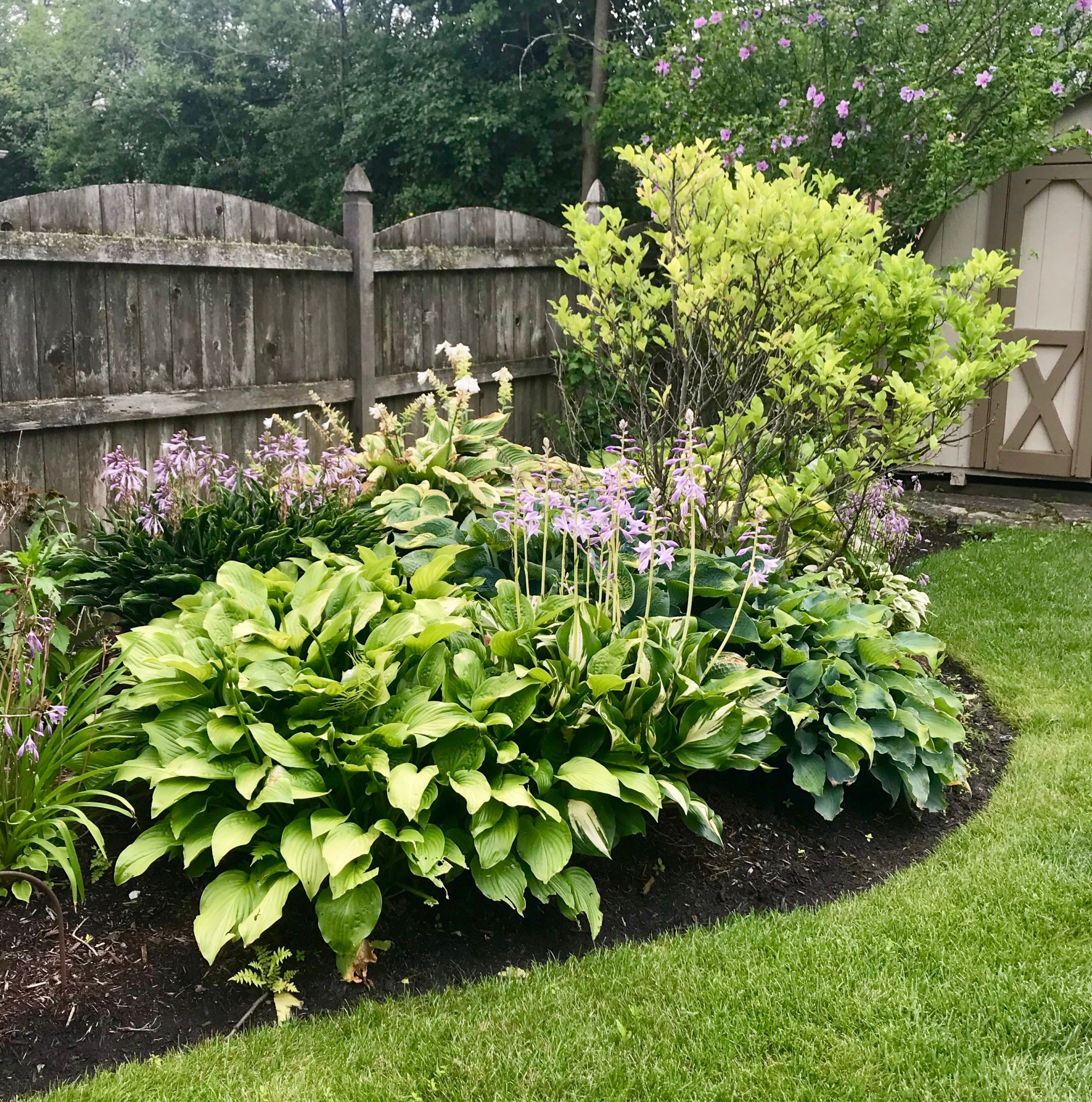
Most perennial flowers can take a light frost with temps between 32-35º degrees. A hard freeze with temps of 28º or lower will most likely kill the flowers, but not the plants. If you have beautiful spring flowers in your garden and you hear a hard freeze below 28º is in the forecast, maybe it’s time to bring spring inside by cutting those flowers and making a beautiful spring bouquet..

Two more thoughts for tonight:

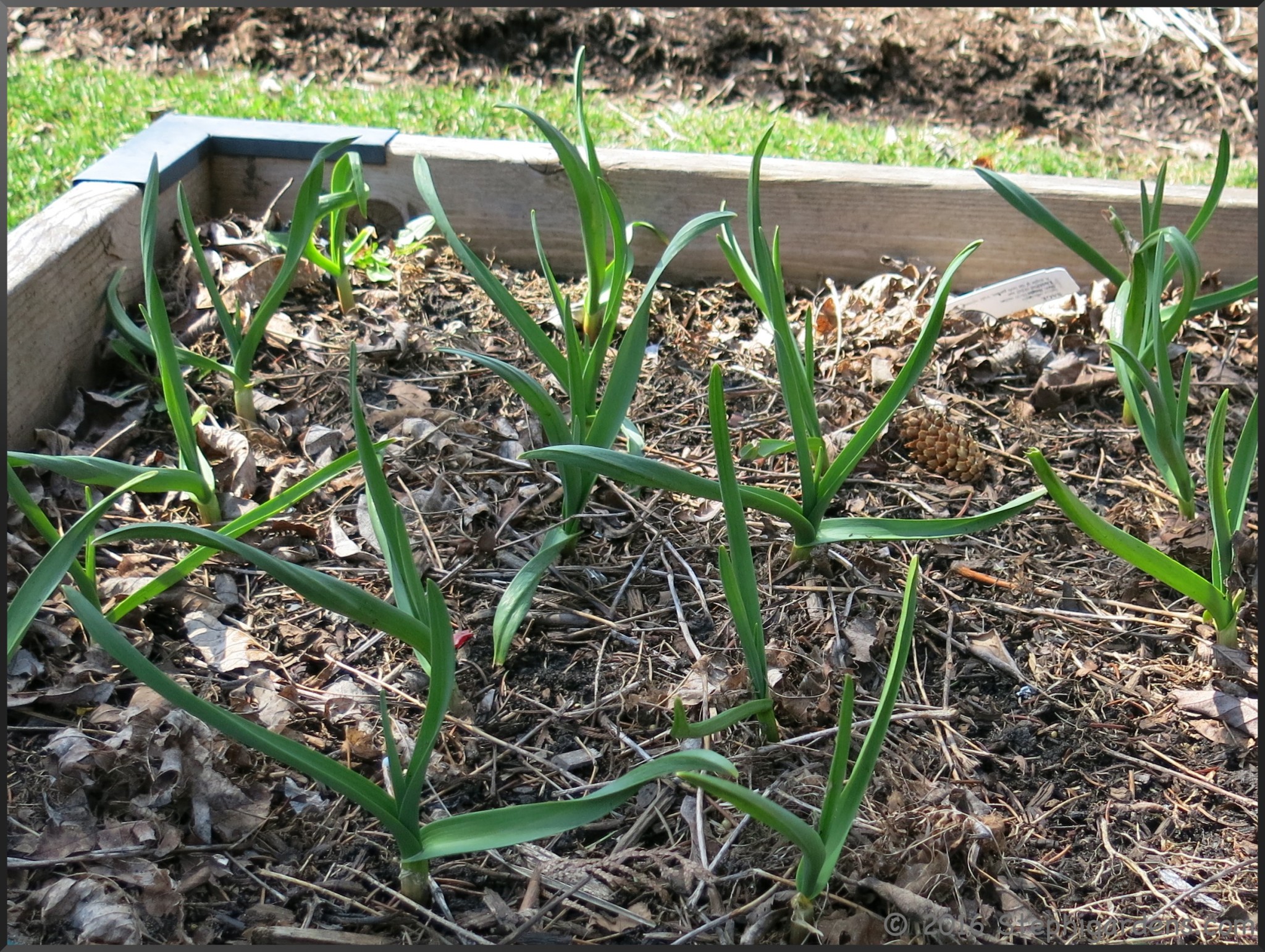
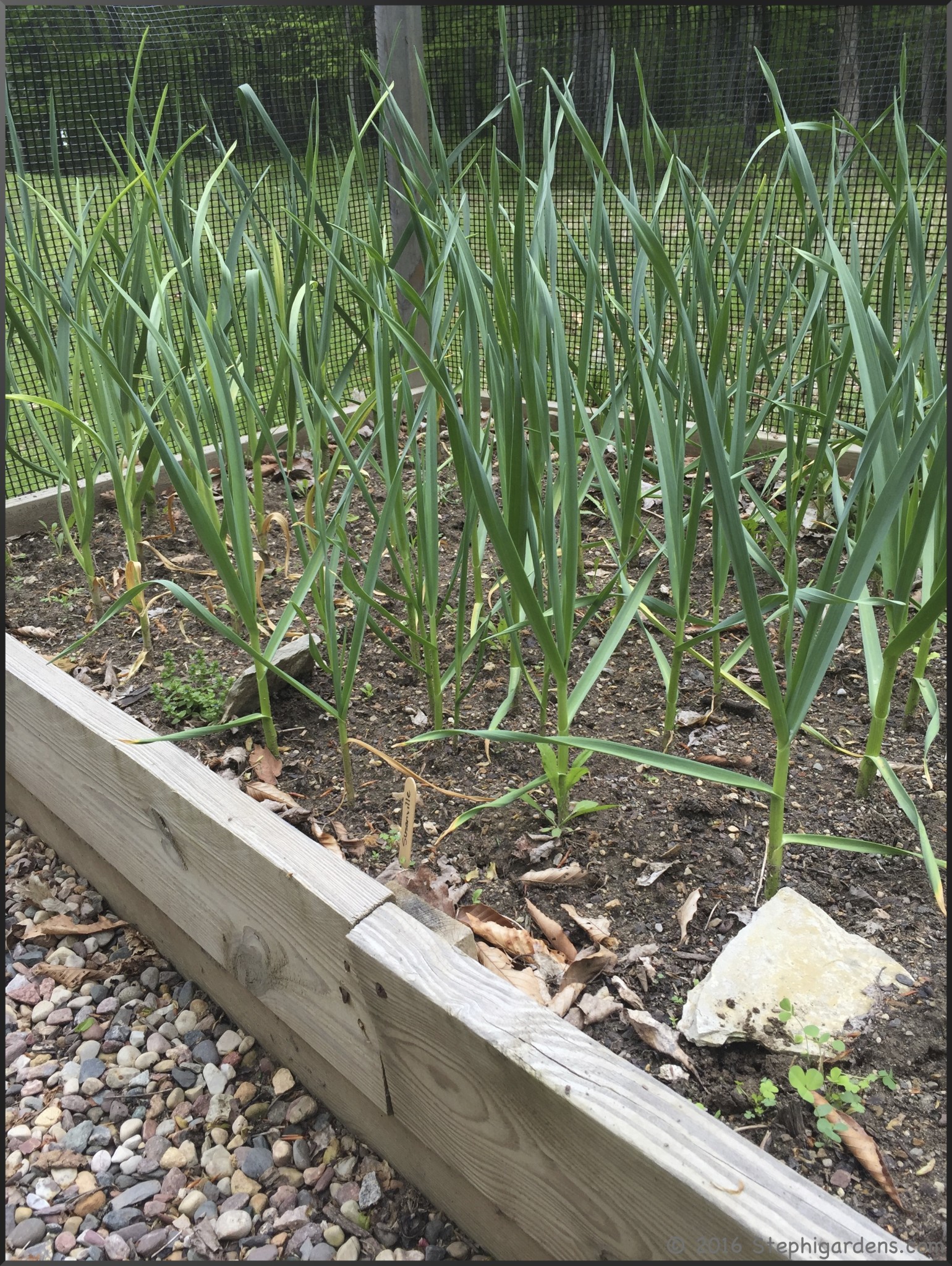
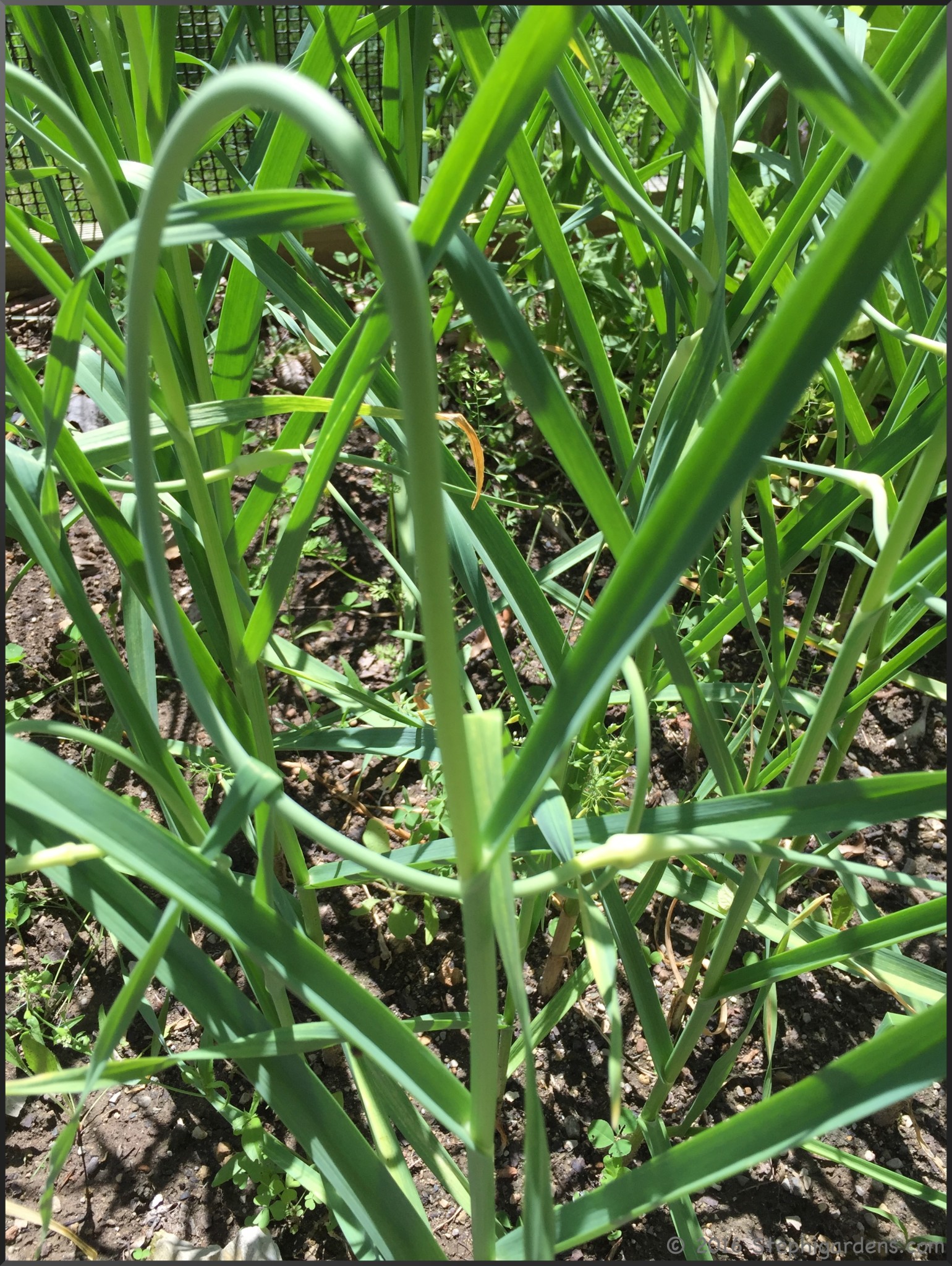
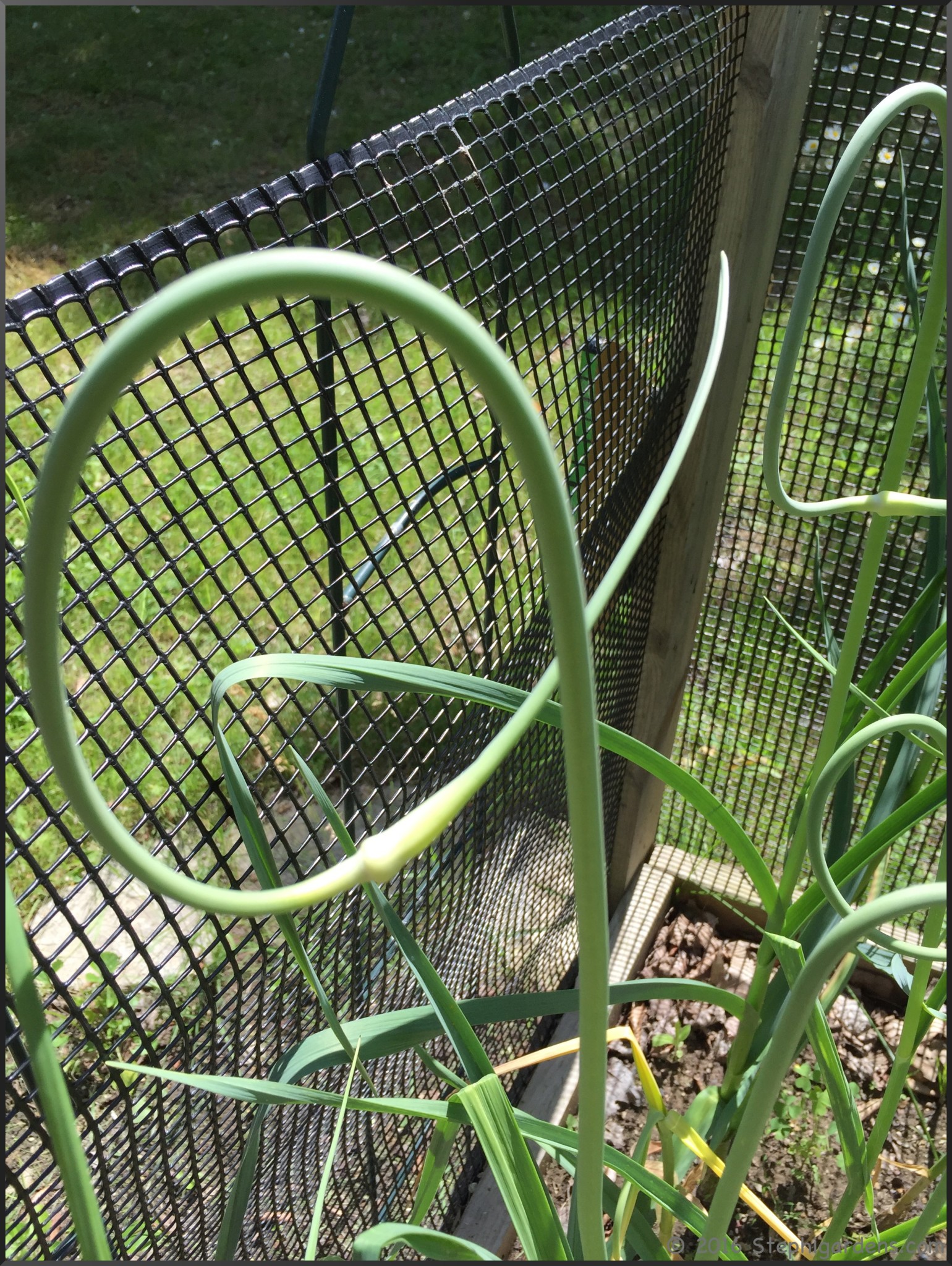
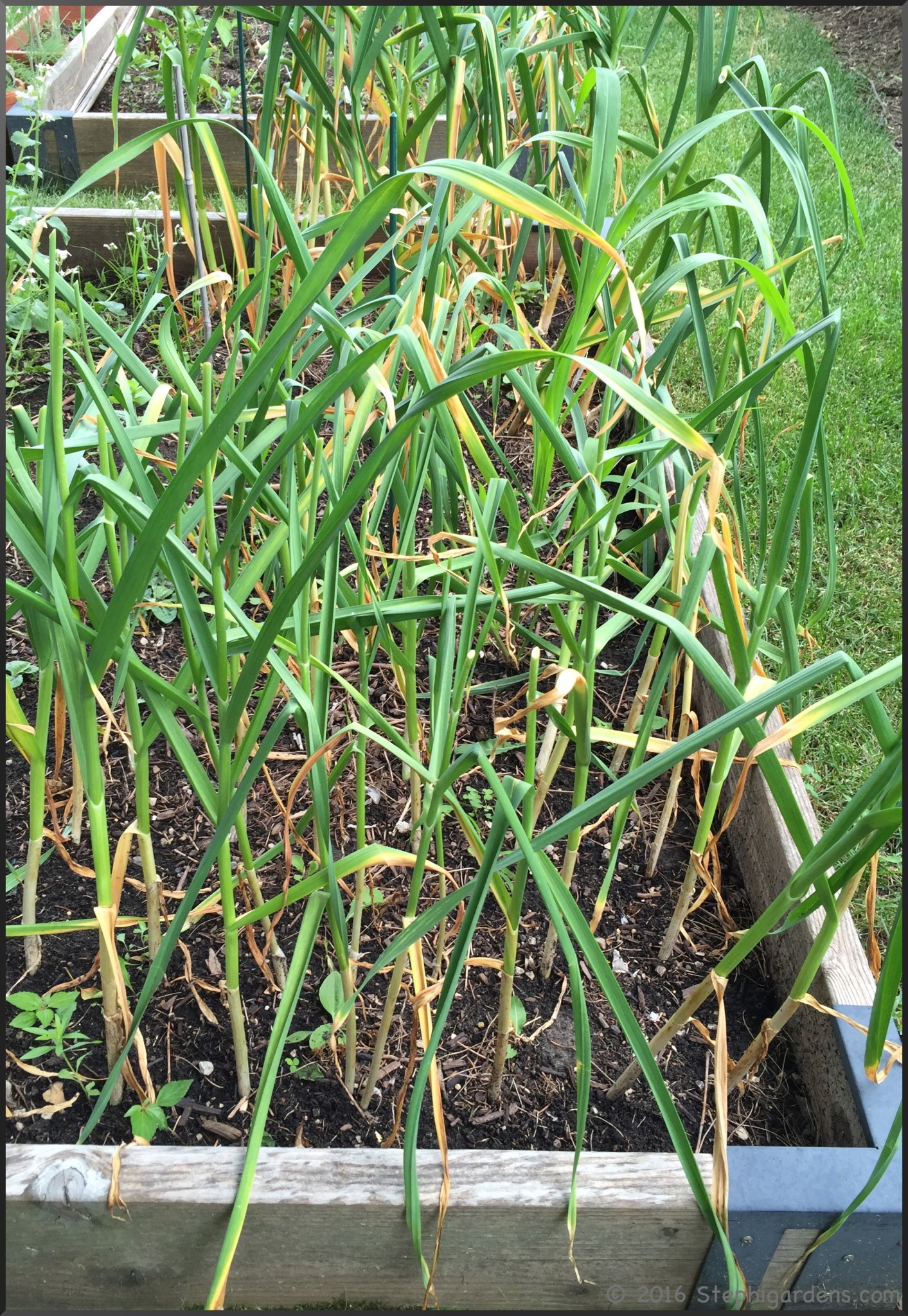
Garlic and Shallots–Garlic and shallots will be fine at these temperatures. The leaves may turn a little yellow, but the growing bulbs will be fine.

Rhubarb–Rhubarb will be fine, but you can cover if desired. Some of the stems and leaves may get frozen and turn mushy as they thaw. Just cut those unwanted leaves and/or stems away. First year, no more harvesting or cutting, second year and later, be gentle in your harvest this year if a lot of the plant was damaged.

Wishing you all good luck tonight 🤞🤞. What are you doing to protect your plants?

Photo credits: Stephi Gardens, Photos by Peggy and Photos by Steve
It’s Garlic Time!

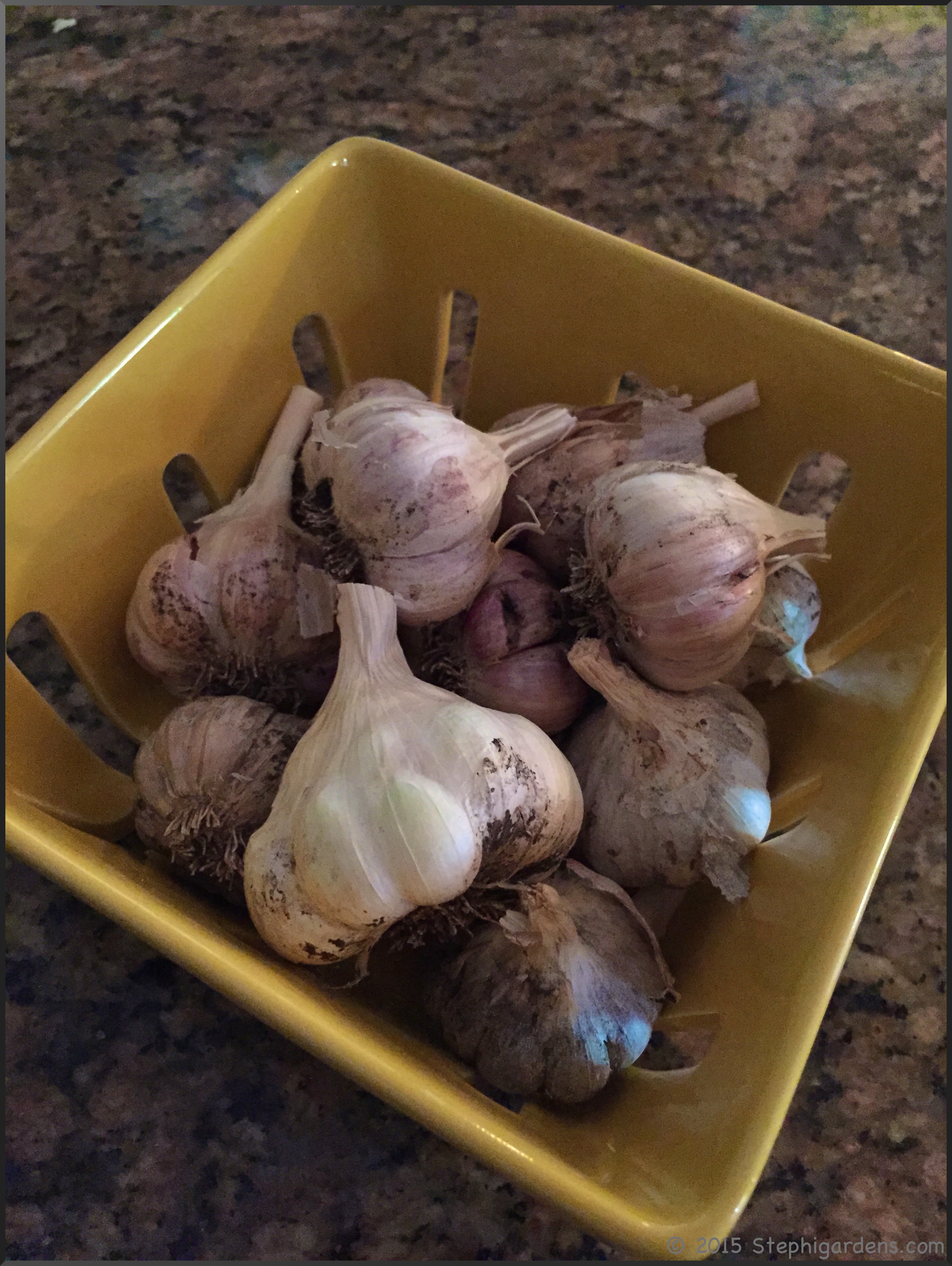
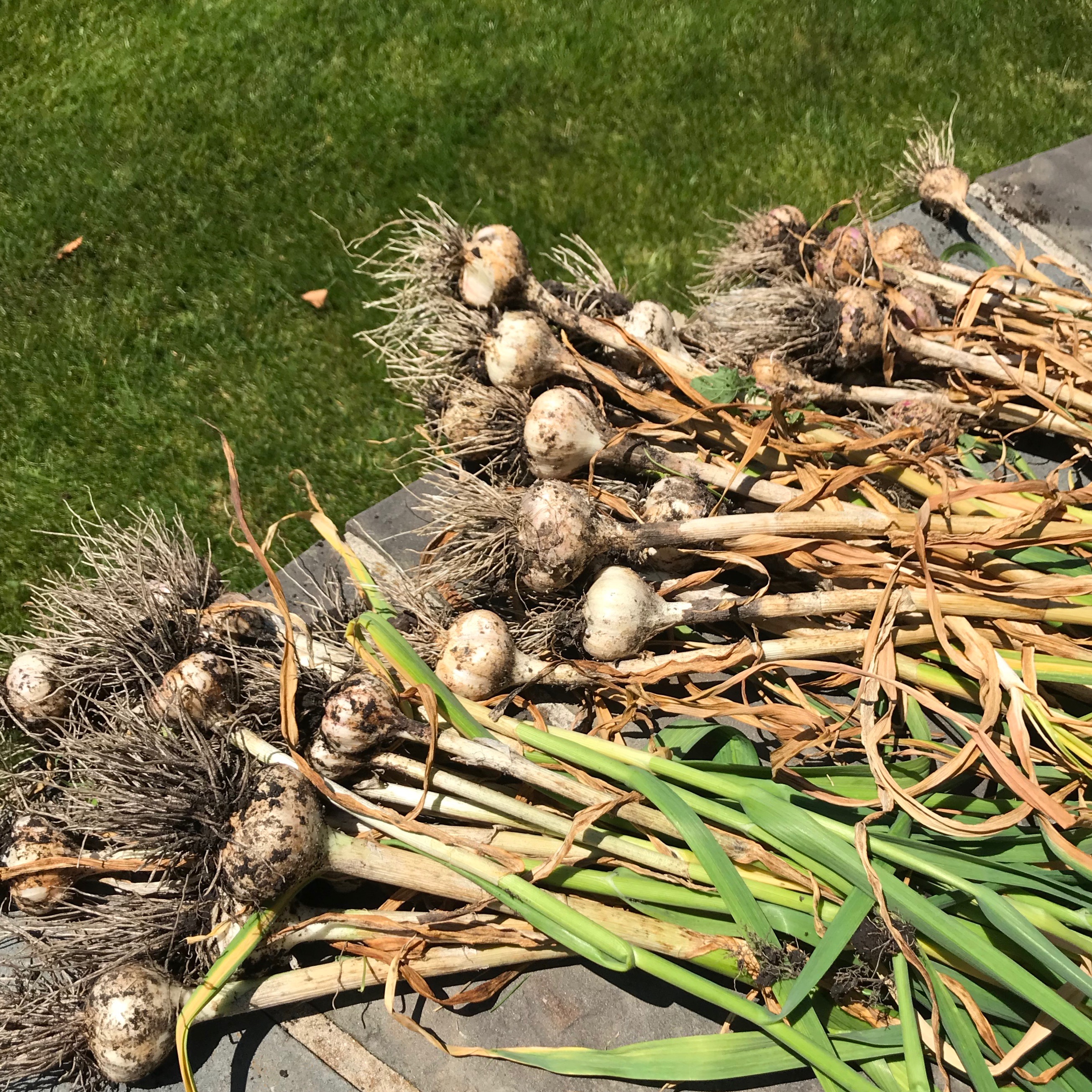
If you’ve followed my blog at all, you know I love to grow garlic. I recently harvested this season’s crop and right now is the perfect time to order your garlic bulbs for fall planting.

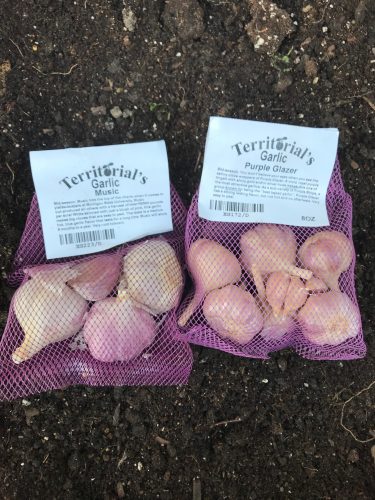
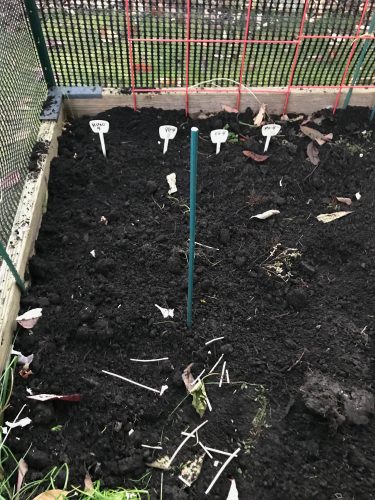
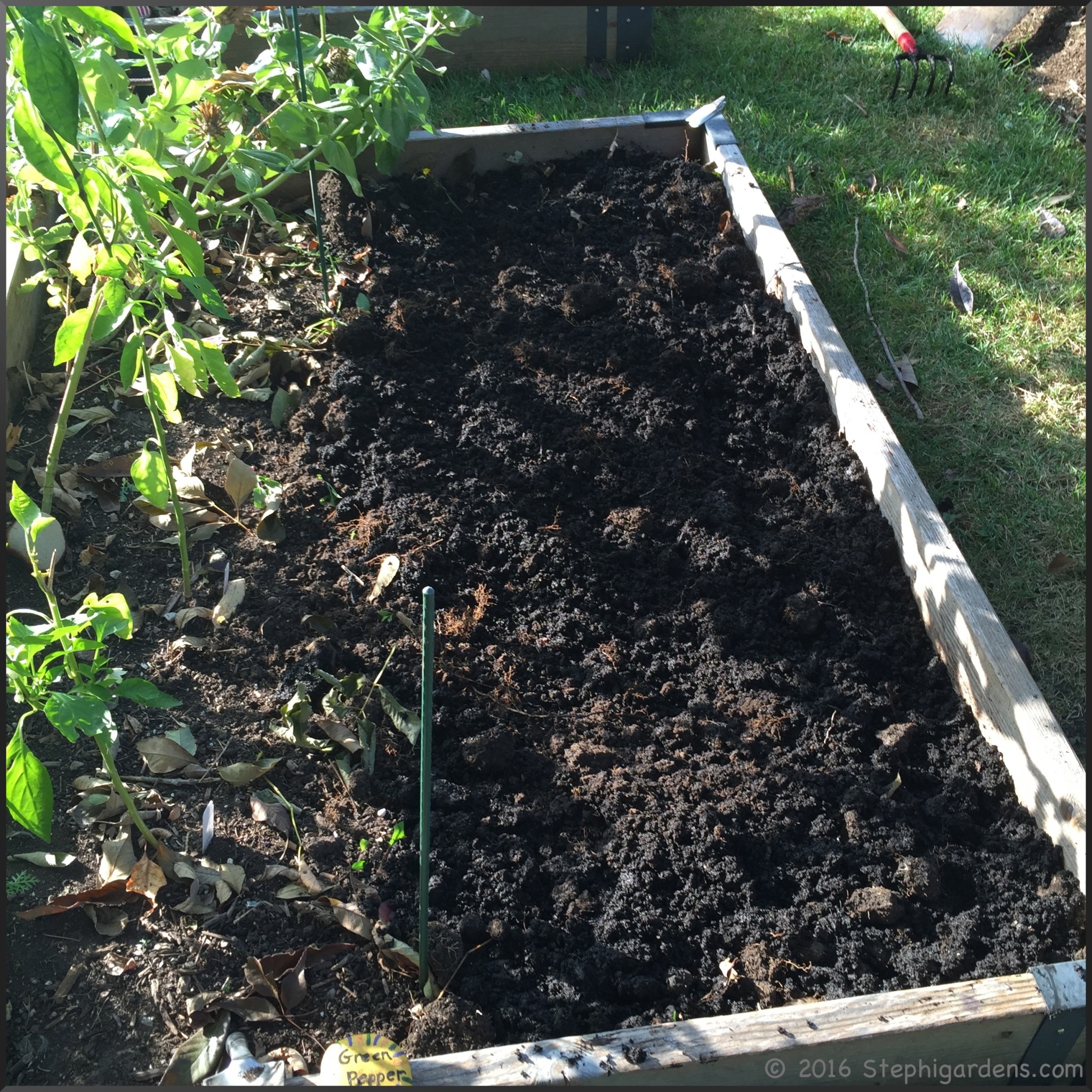
While a lot of things in the garden didn’t do well this year, it was a banner year for garlic in my home garden, but unfortunately not so much in the Wisconsin garden. I grew two hardneck varieties this year, Purple Glazer and Music, both from Territorial Seeds. Before planting, I replenished the soil with some new garden soil and compost. After a while, soil in raised beds sink and new soil and nutrients need to be added.

Garlic comes in two types, hardneck and softneck. Hardneck varieties require some time in frozen ground, so are not recommended for warmer climates. In the spring, they produce a tall edible stem called a “scape” and are generally known for their stronger taste. Softneck varieties tend to grow in a wider variety of climates, last longer in storage and are good for braiding. They also tend to be a little milder in taste. For whatever reason, I’ve had much better luck with hardneck varieties in my northern Zone 5b garden.

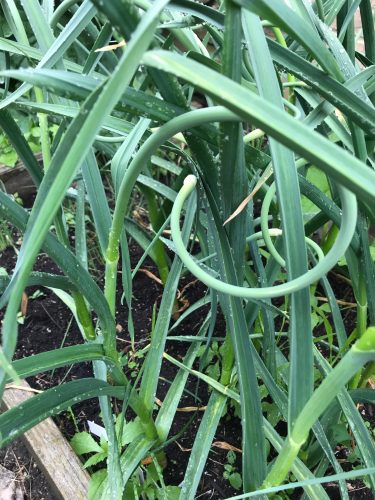
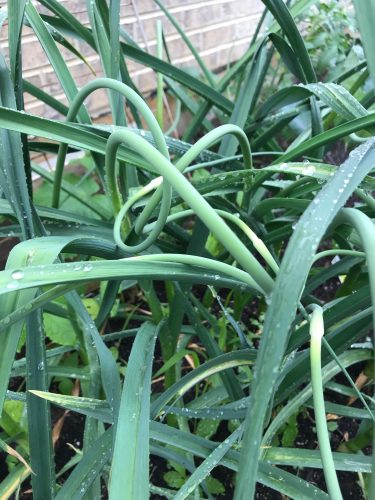
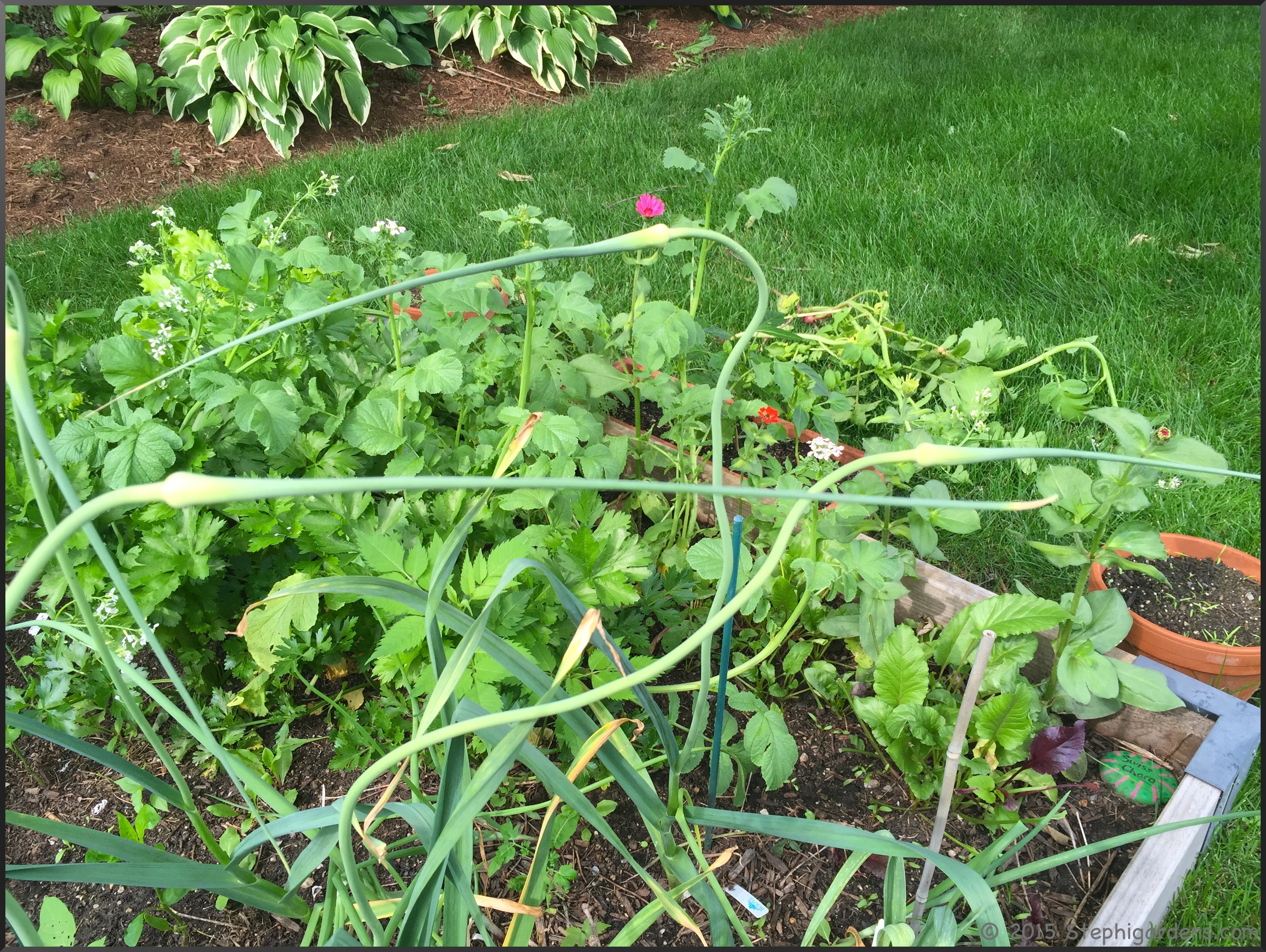
Late spring, the garlic scapes appeared.

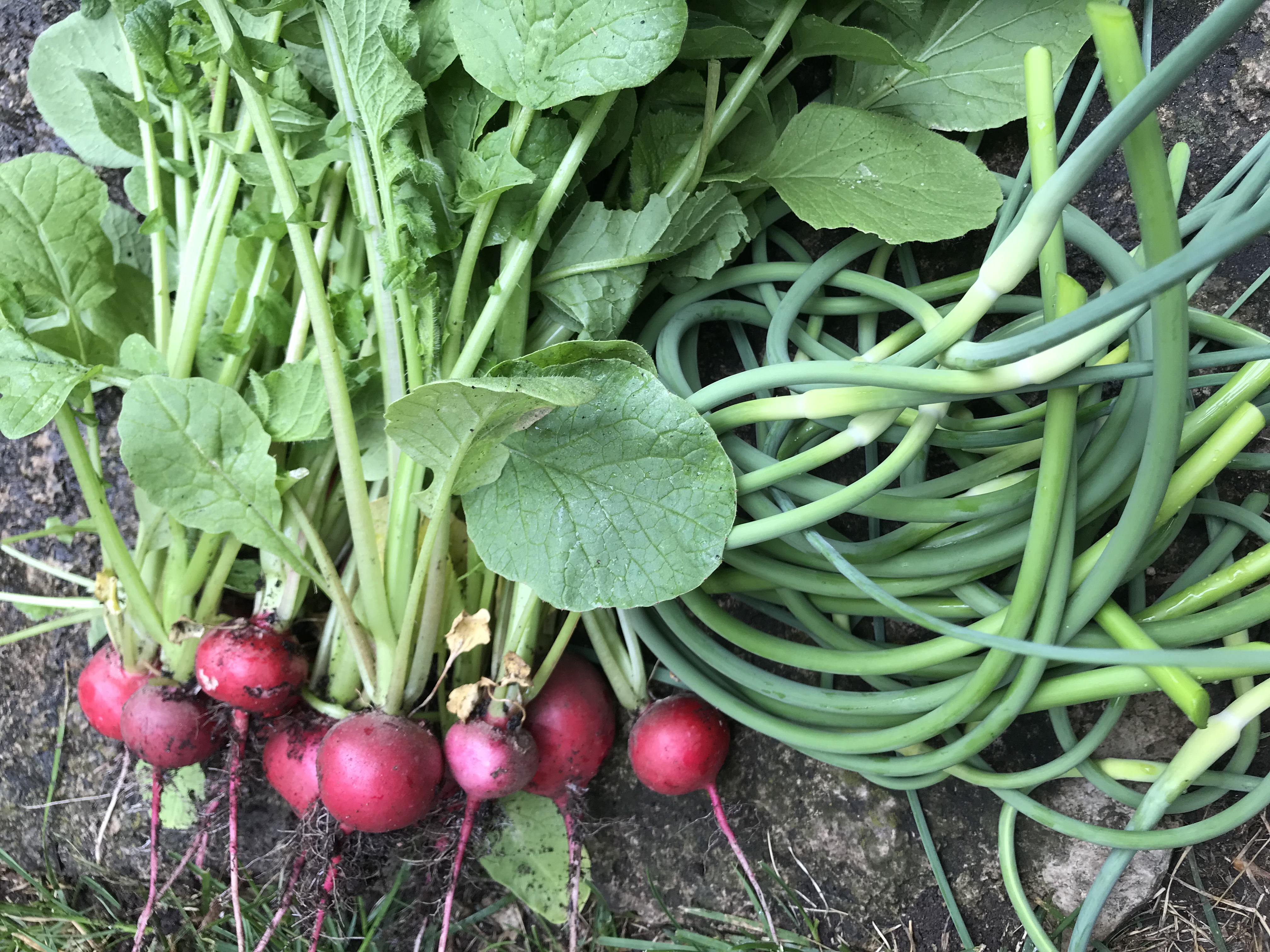
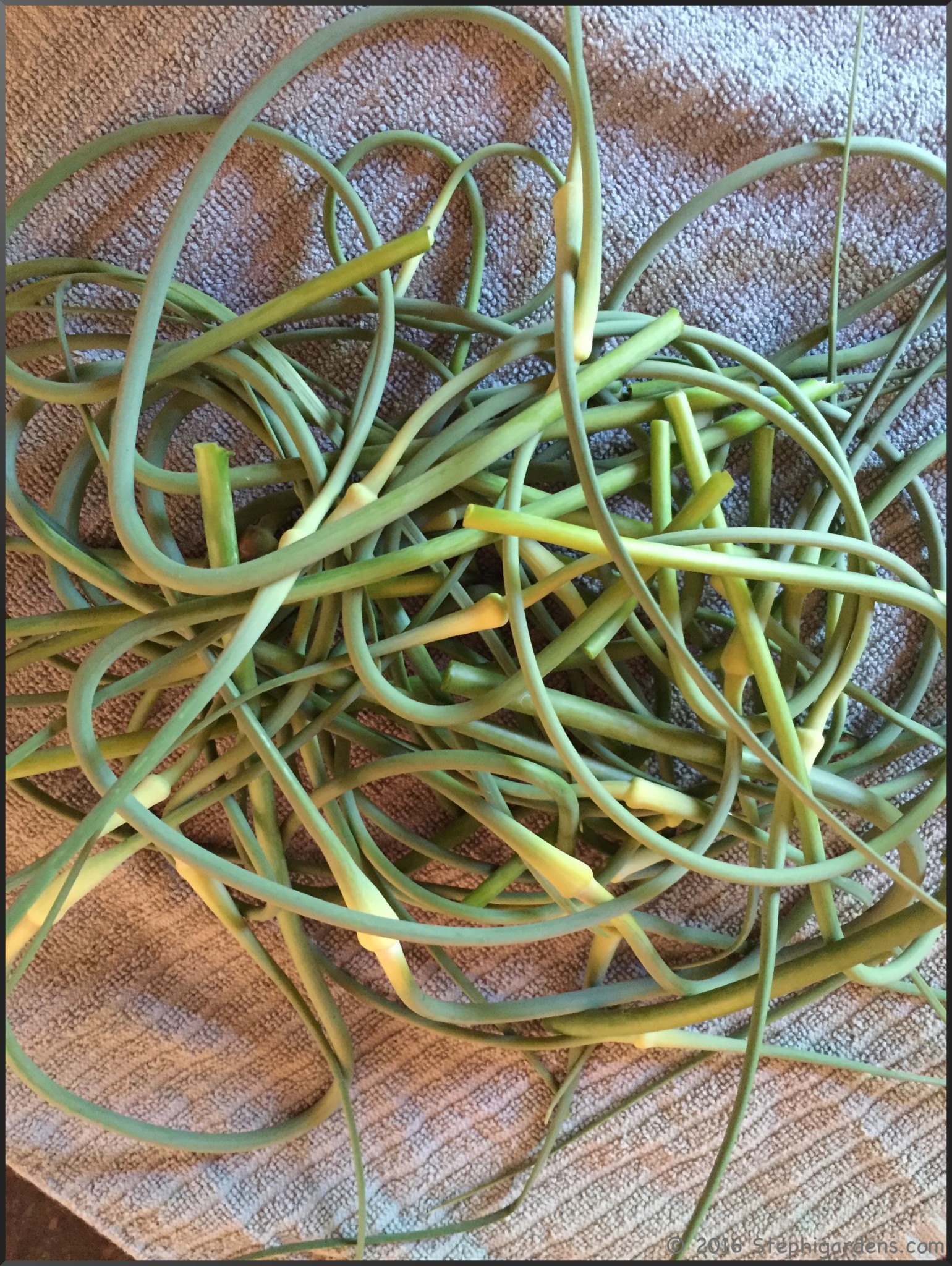
Garlic scapes are the garlic flower stalks that twist and turn when young, and end with a terminal pod containing garlic bulbils. It’s these young, tender, twisting and turning scapes that are a delicacy to eat. Removing them also tells the garlic to put its energy into making the garlic bulb and not producing new seeds.

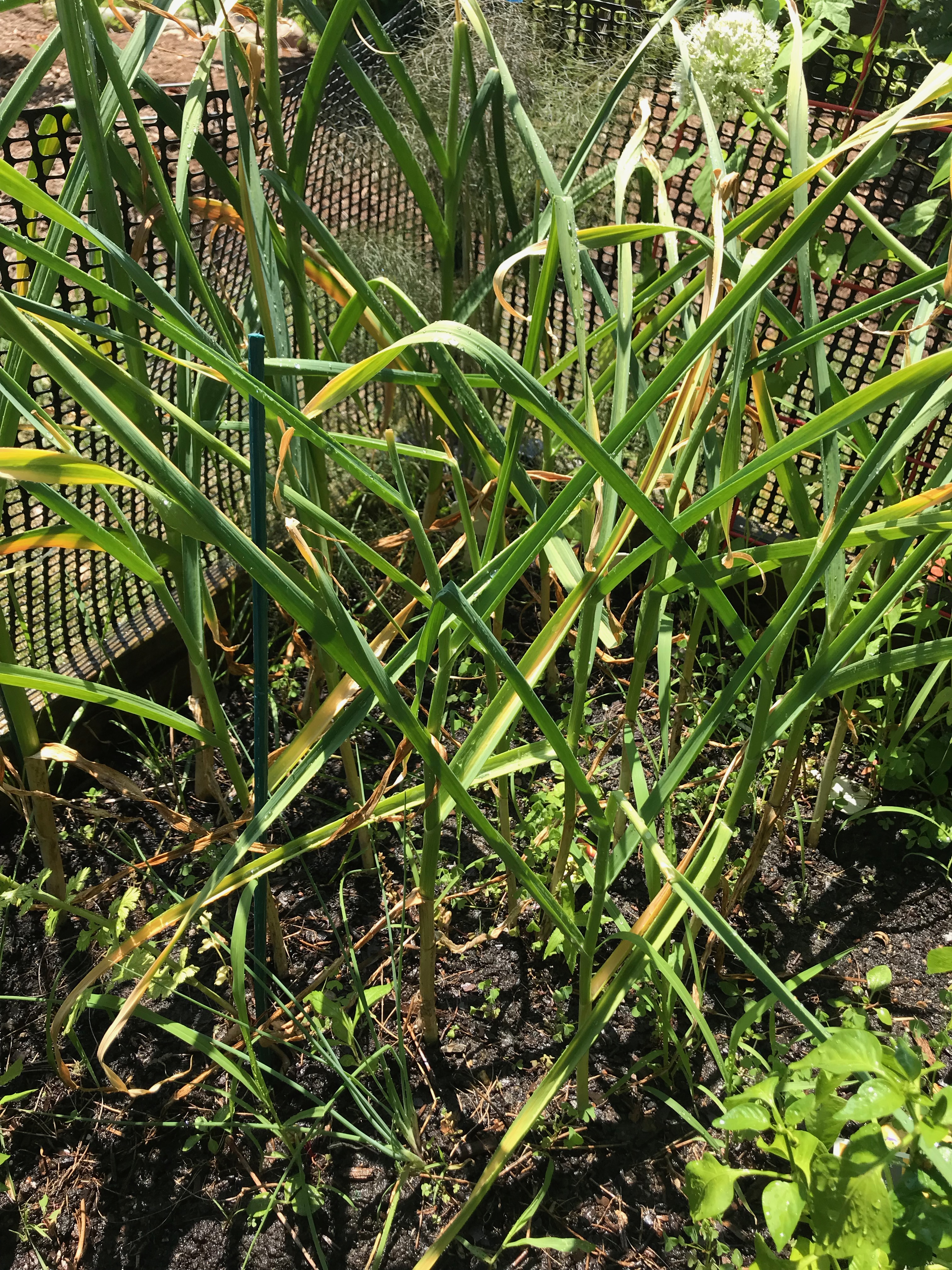
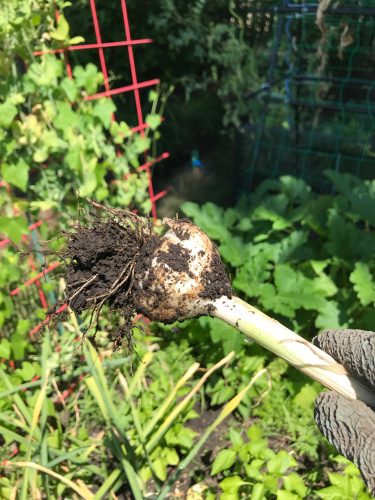
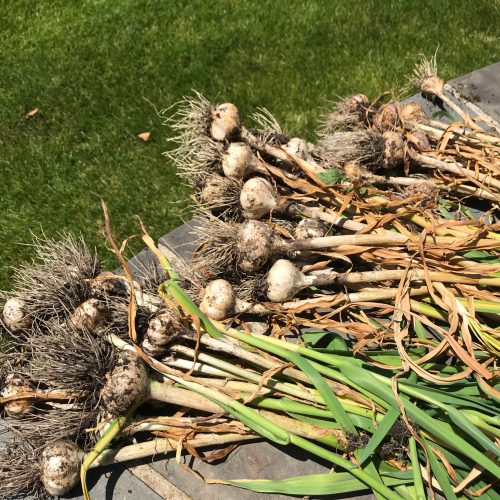
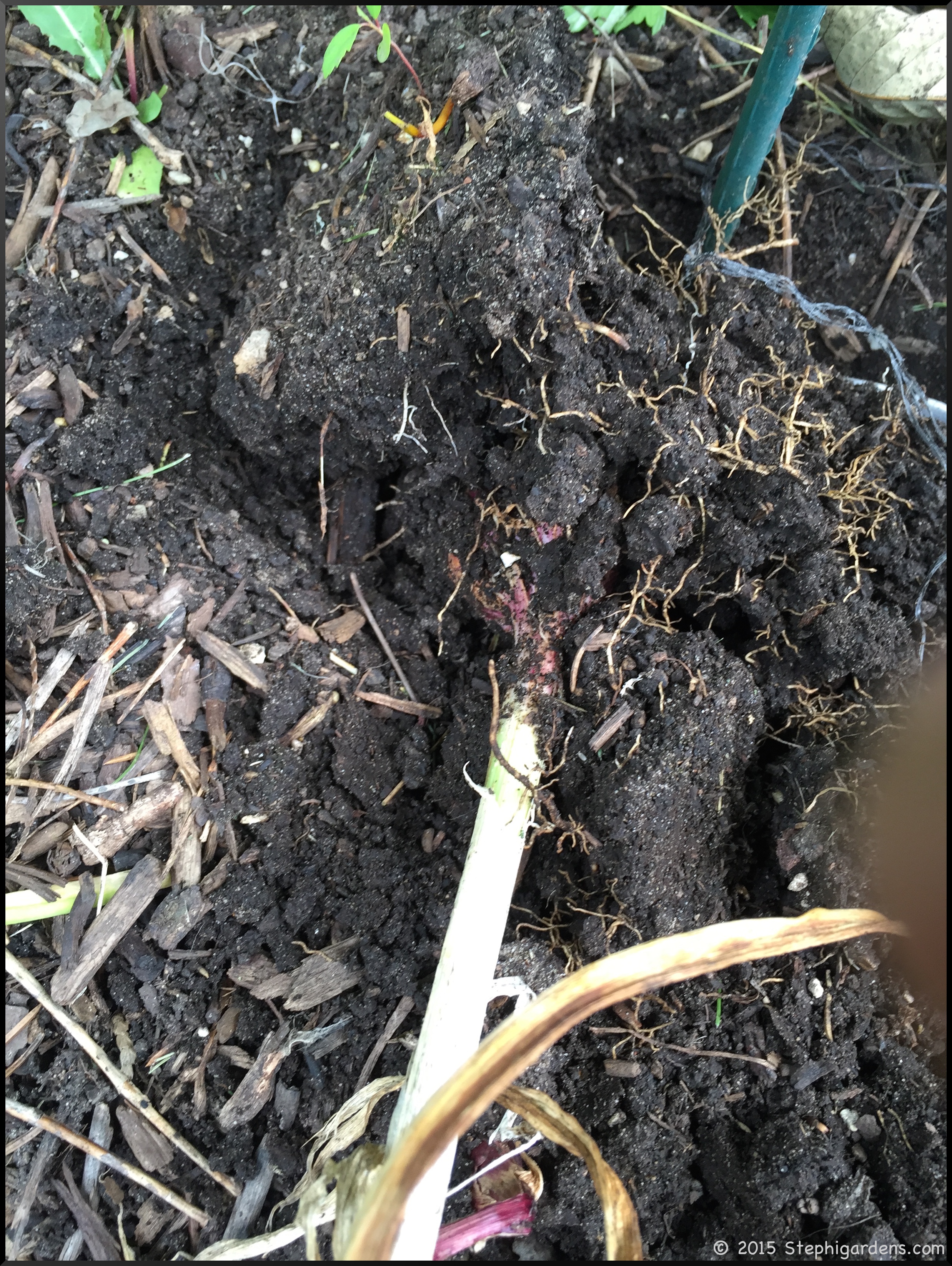
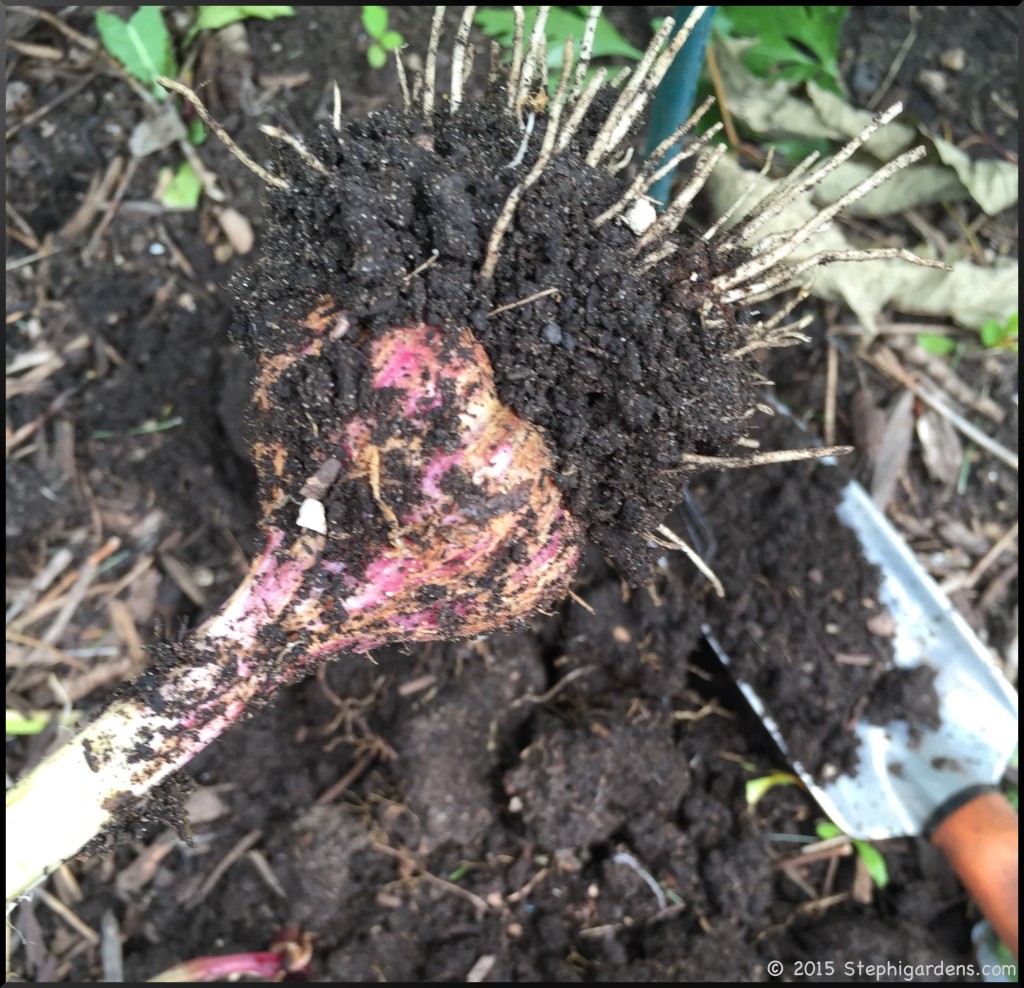
Mid summer, when the lower leaves are starting to turn brown, but the upper level are still green, the garlic is ready to harvest. Harvesting the garlic is easy, but you need to be gentle.  Unlike onions, you can’t just yank it out of the ground.  Too easy to damage the head or accidentally tear off the leaves.  Garlic also cures better when the leaves are still on.

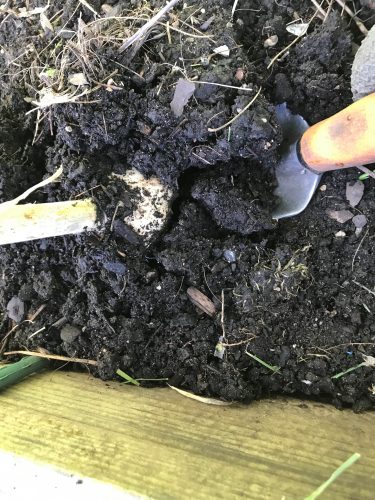
So grab a trowel and dig gently around the bulbs to loosen the soil.  Be careful not to hit the heads and damage the tight cluster of cloves.

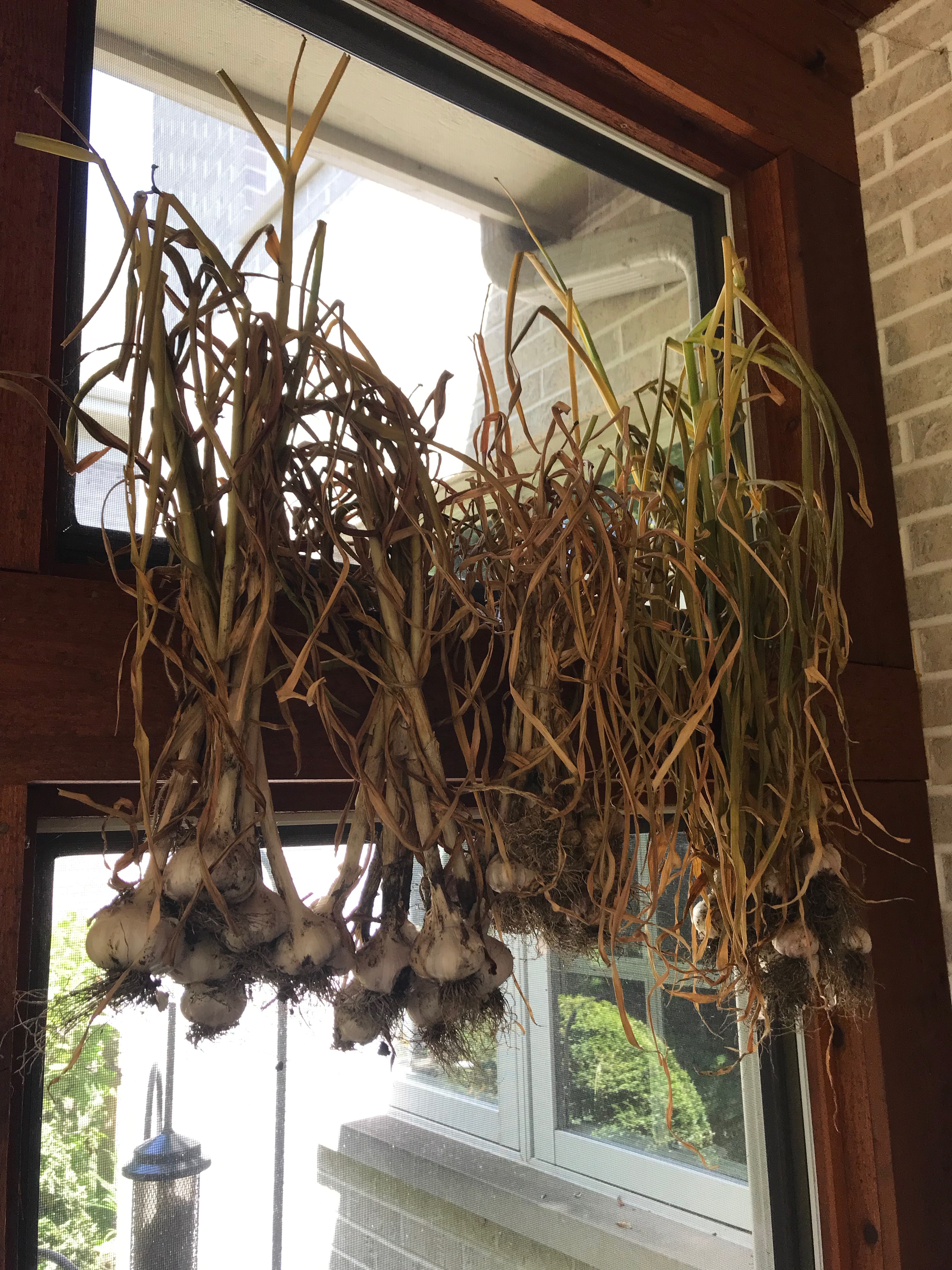
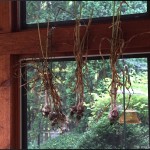
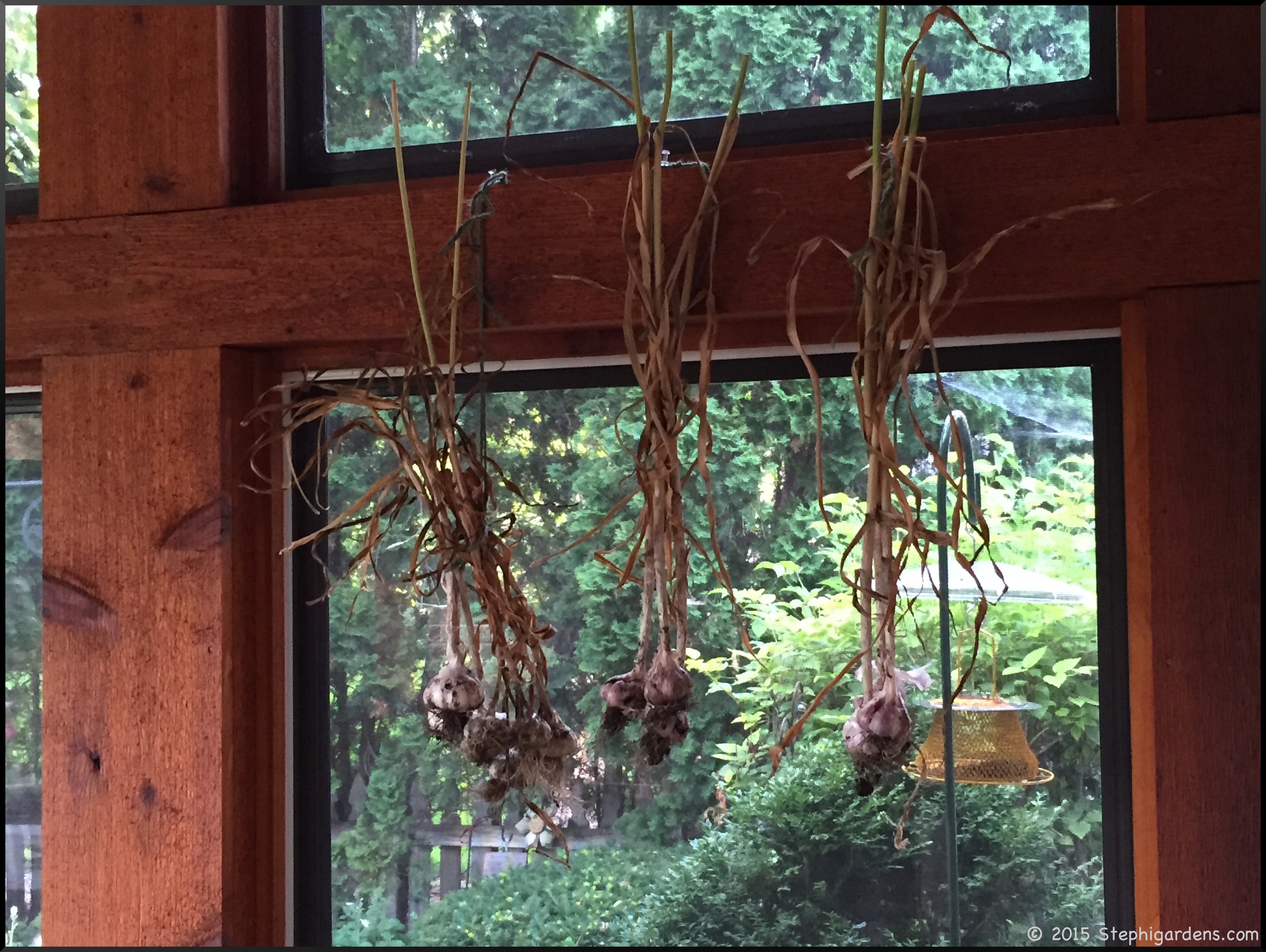
Then it’s time to find a spot to cure the garlic so that it’ll be ready to store for the winter.  Garlic should be cured in a protected area, like a garage or porch, out of direct sunlight and where there is reasonable air circulation.  It should be hung with the leaves and roots still attached. Even some dirt is fine.  I hung mine in the screen porch.  On particularly hot days, I turn on the overhead fan to keep the air circulating. After 3-4 weeks, I’ll trim the leaves and roots, and gently clean off the remaining dirt. Then I’ll store it in a cool, dry spot to use all winter.

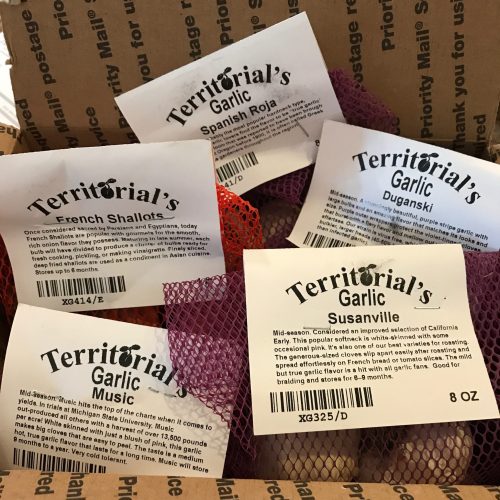
Now that I’ve harvested this year’s crop, time to plan for next year. I’ve already placed my order for Music and Duganski garlic from Territorial Seeds.

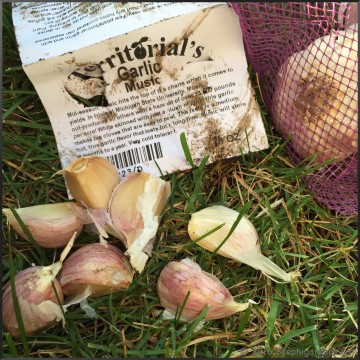
I’ve had really good luck with Music, which is a mid-season porcelain type. It’s one of the larger garlics I’ve grown, has creamy white cloves, a medium hot, true garlic flavor and has a long shelf life. Duganski is similar to the Purple Glazer I grew this year, both being mid-season purple stripe types, but is a bit stronger flavored. I love the beautiful purple cloves that purple stripe types have, but thought I’d try something little different this year.

Garlic doesn’t ship until late September or early October depending on your location, so I have a little bit to wait until they arrive. Good thing because its spot is currently growing a second season of beets and swiss chard.

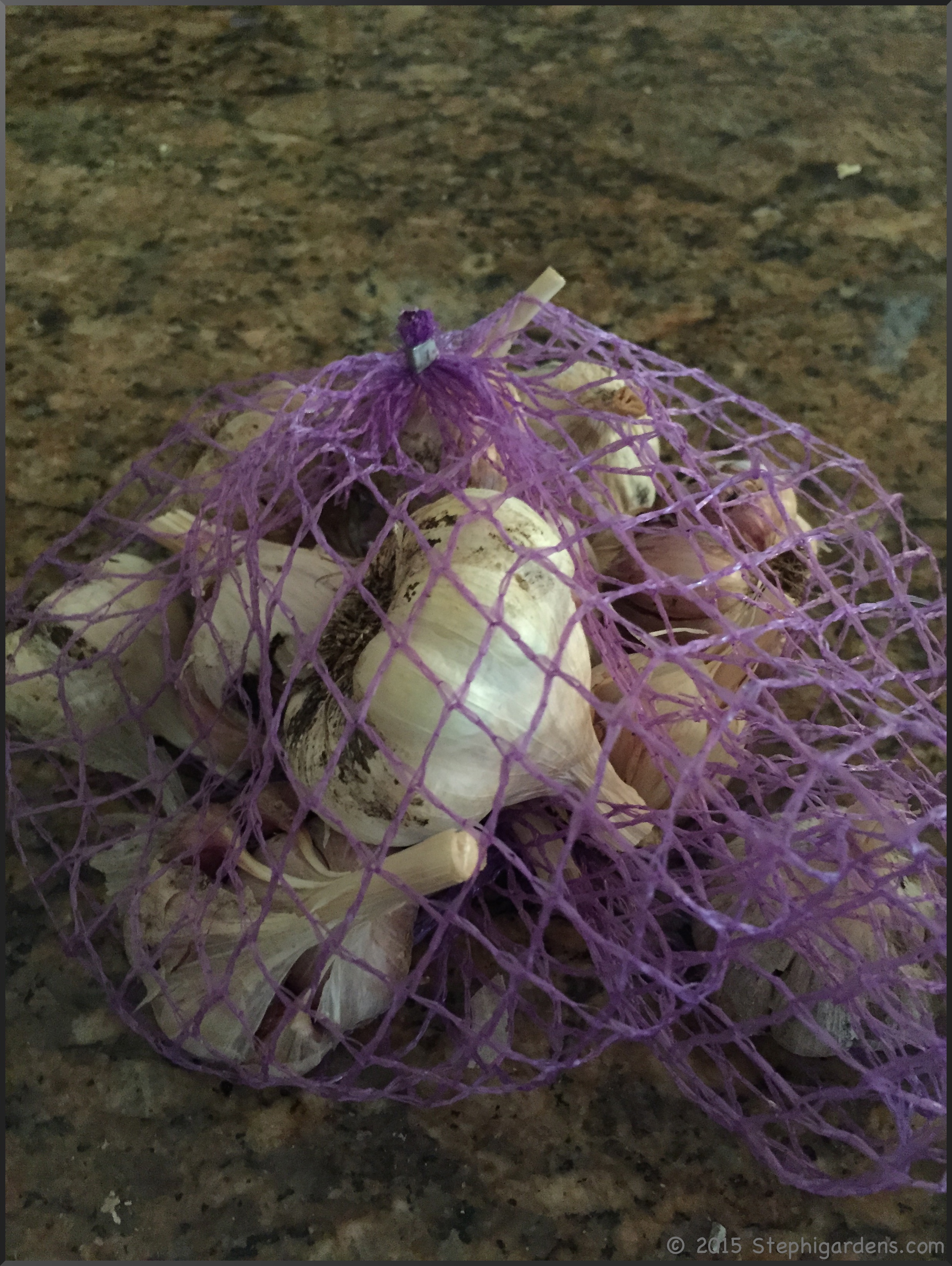
Want to grow garlic this year? I’d recommend ordering soon for best selection. I’ve had good experiences with garlic from Territorial Seeds, Botanical Interests, and Burpee. Just don’t plant the garlic you buy in the grocery store!

Want more information in growing garlic? Check out some of my other garlic posts or get tips from:

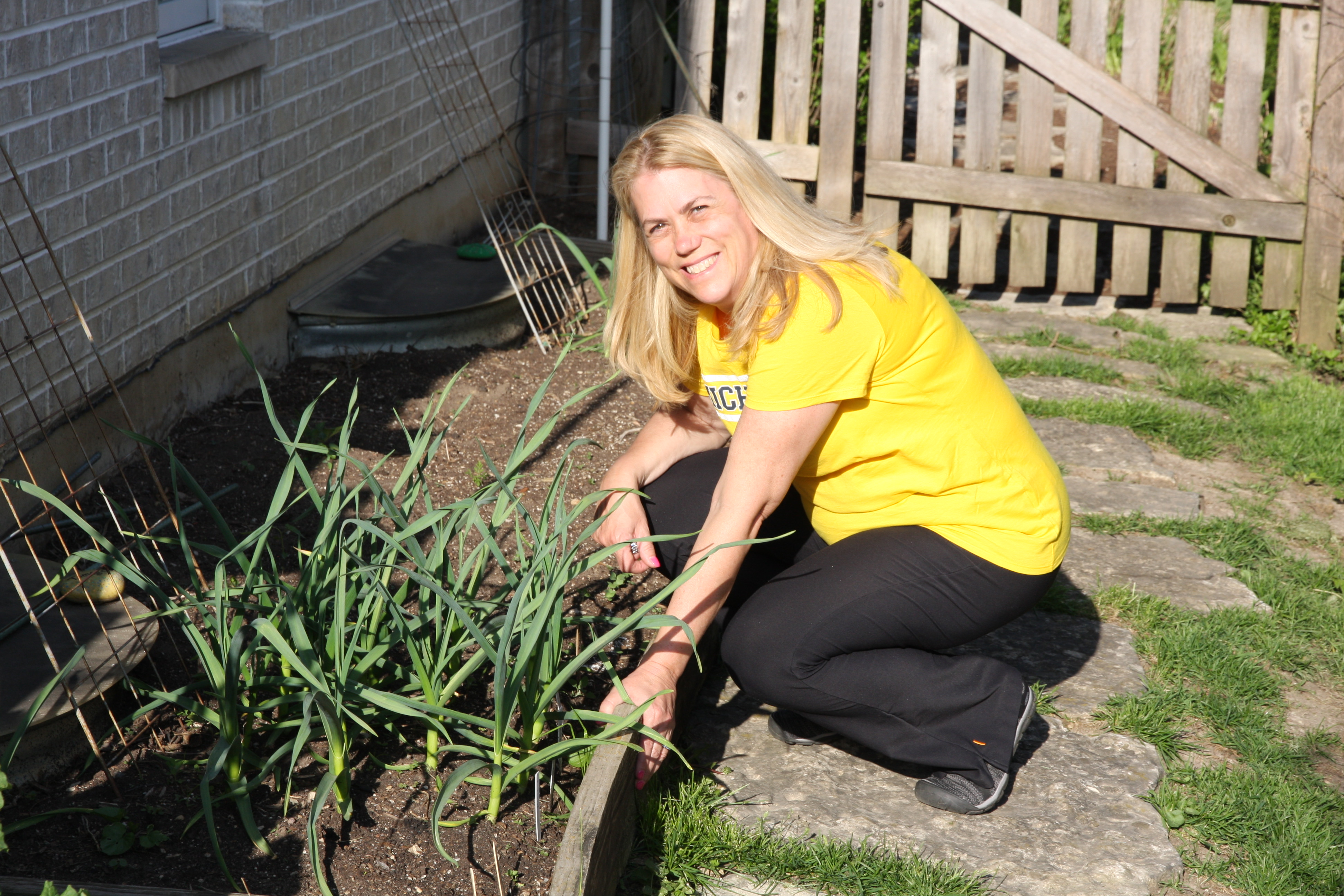
Me checking out the early garlic!

So Much Planting to Do!

When I looked at the pile of fall bulbs and garlic waiting to be planted, I had to wonder what I was thinking when I ordered it all.

This year I decided to plant a little more garlic, mostly because I wanted to try a couple of new varieties.  I’ve been planting garlic the last few years and love the different varieties. No matter what you grow, it’s always better than the store bought kind.

Then there’s the bulbs I ordered. I hadn’t planted many new bulbs in a long while and it was starting to show in my gardens. I became inspired last year to add some alliums and daffodils, both at home at at the cabin in WI.

It was so pretty this spring, I decided to add more this fall and Groupon obliged by offering some great deals back in August. I’ve actually had pretty good luck with bulbs from Groupon, but I can’t vouch for all their garden offerings. If you have a special plant, bulbs or seeds in mind, I would still go to my tried and true plant and seed companies.

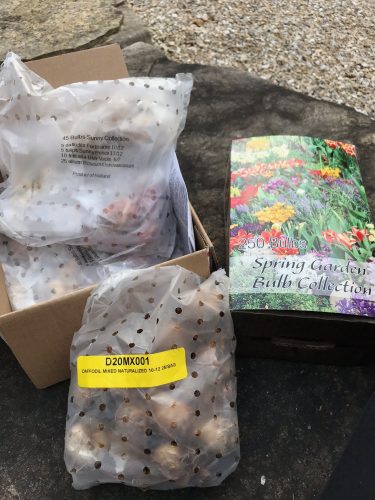
As it happens sometimes when I order on-line, I lose track of what I bought and then the boxes start to arrive. And then more come… Here’s just some of the hundreds of bulbs that came!

For some people that’s not an issue, but planting bulbs isn’t my favorite thing to do and I’m a terrible procrastinator.

After sitting in the house for a couple of weeks (or maybe a few) while it was weirdly hot for September, I finally got all the garlic in the ground last week. This year I planted two varieties that grew well for me before; Music, a hardneck porcelain type, and Susanville, softneck artichoke type. I also planted two new hardneck varieties, a rocambole Spanish Roja and a purple stripe Duganski, all from Territorial Seeds.

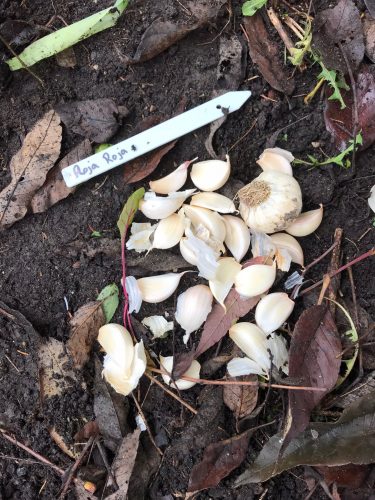
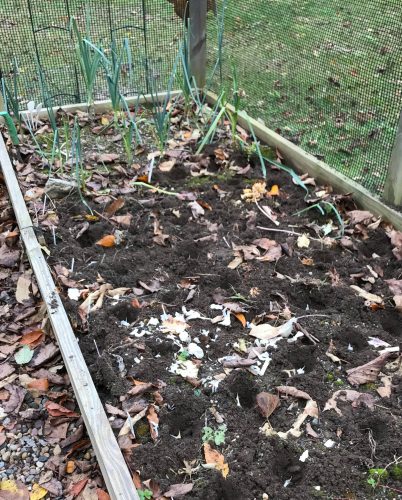
The garlic cloves are in their holes ready to be covered up for the winter and that’s my leeks looking awesome in the background!

I was careful this year to mark every row. I have a bad habit of planting and forgetting. This way if the garlic doesn’t come up, I know something should have been in that row, plus I’ll know what I’ve harvested. I often have to guess.

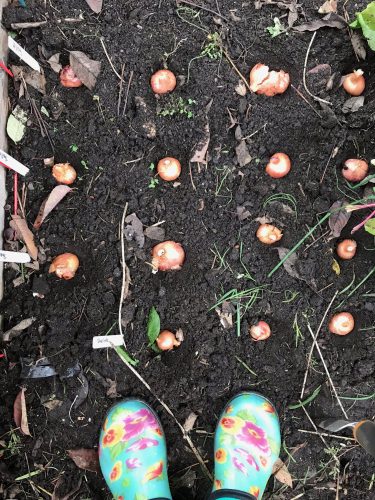
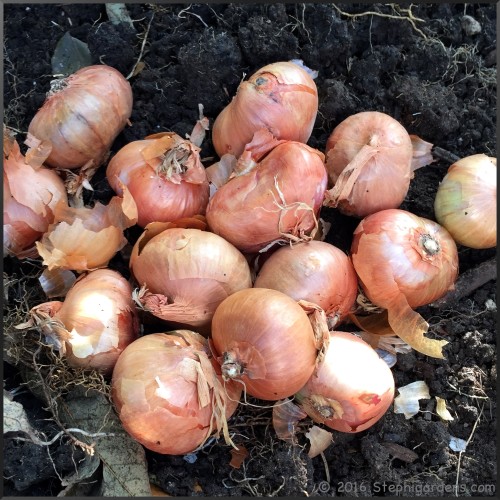
While I was at it, I got the french shallots planted as well. They’re one of my favorites to cook with!  Here they are all ready to be covered with about an inch of soil. My Sloggers garden clogs are perfect for this kind of muddy work.

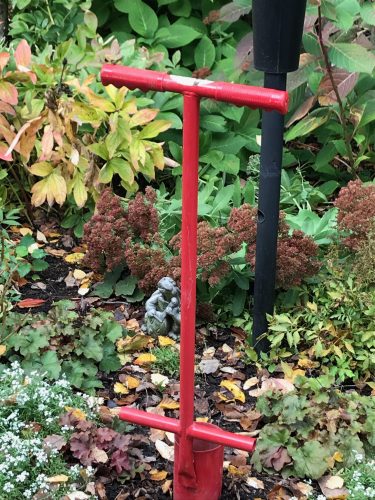
Once that was done, the bulbs started calling my name to get them in the ground. I do love my bulb digger for planting bulbs in our hard clay soil. Using it speeds things up, ensures that I’ve dug my holes deep enough and saves my back. Still need to get the smaller bulbs in and for those I’ll use a trowel or dibber (I just ordered this one, so I’ll let you know if I like it).

Did you add any bulbs for spring this year?

Harvesting Garlic Scapes

Last year I ventured into the world of growing garlic for the first time (Planting Garlic and Warding Off the Vampires).  It was great having homegrown garlic all winter, and even into early spring.

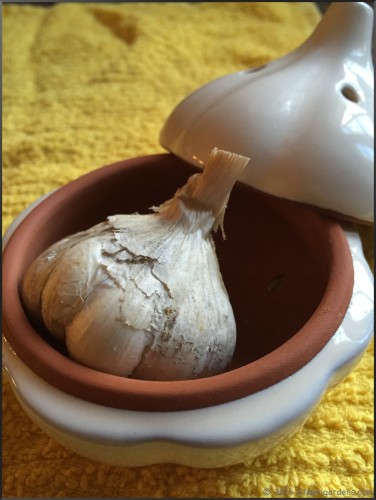
terra cotta garlic keeper

I am totally sold on how much better homegrown is than the store bought variety, and it couldn’t be easier to grow.  This past fall, I planted another crop of garlic, this time planting Music and Purple Glazer hardneck garlic varieties and Susanville softneck garlic (Another Fall Crop In the Ground).  I doubled the amount I grew last year since I had space both here at home and in my Door County, WI garden.

Last fall brought the early green shoots that sprout before winter sets in.

garlic

This spring, it became obvious that none of the Susanville survived in either location and I’m not sure why.  Maybe it was too cold late in the late winter/spring.

But that serves as a good reminder to plant more than one variety when testing something new in your vegetable garden.  Spring also came a little later to Door County, so those plants have been a couple of weeks behind the ones at home.

garlic

And that turned out be a good thing for harvesting scapes this year.

garlic scapes

Scapes are the garlic flower stalks that twist and turn when young, and end with a terminal pod containing garlic bulbils.  It’s these young, tender, twisting and turning scapes that are a delicacy to eat.  Removing them also tells the garlic to put its energy into making the garlic bulb and not producing new seeds.

Last year, I totally missed the season and the scapes grew straight and woody.  I also didn’t really know what to do with them, so ended up cutting them off and throwing them in the compost pile.

This year I was ready, but went on vacation and came back to straight, tall, woody scapes! Ugh!!

garlic scapes

I had missed it again!  But I did have another opportunity.  I was hoping that since the WI garden was a couple of weeks behind, I might have better timing.

garlic scapes

Success!!

garlic scapes

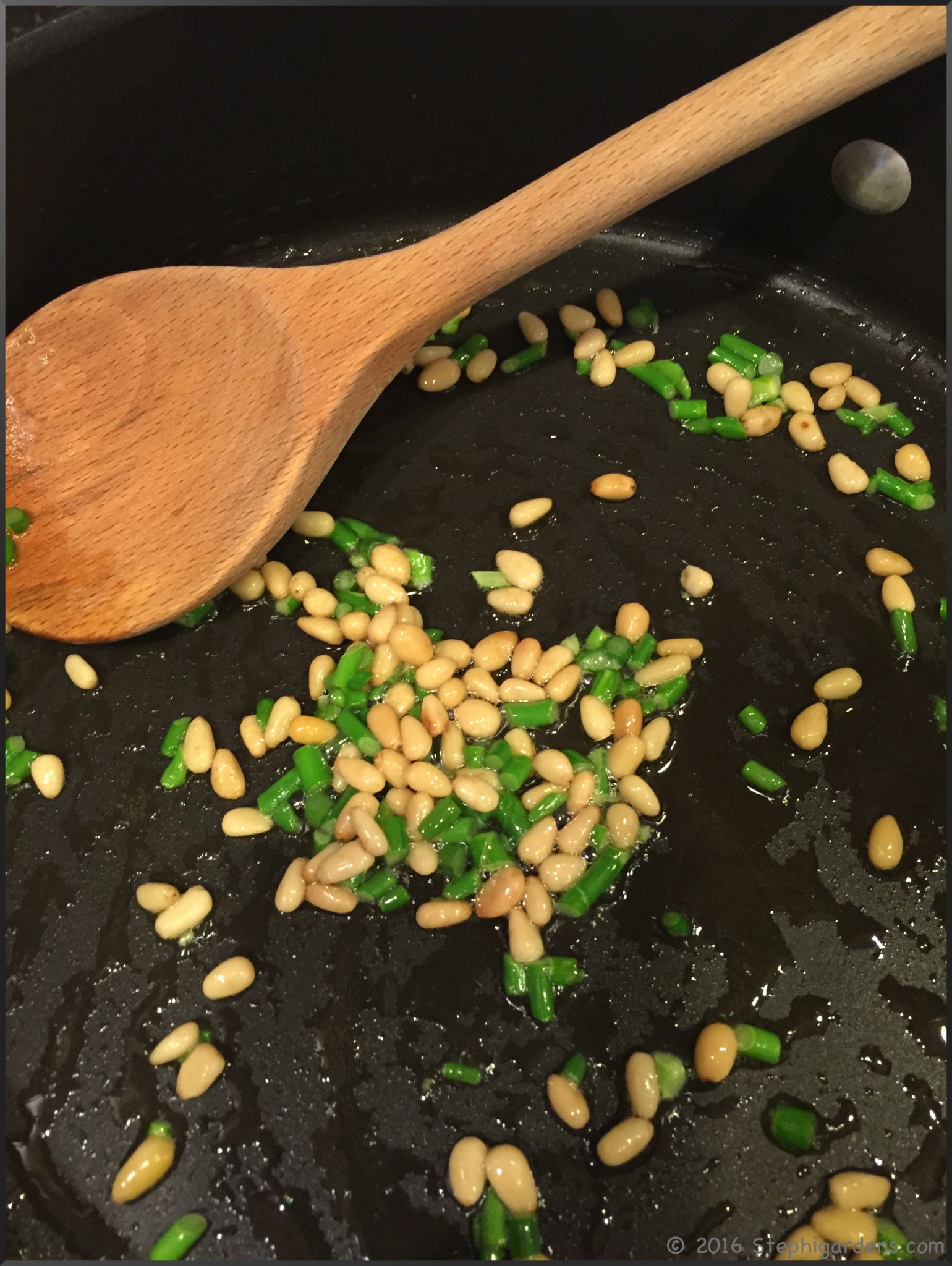
I harvested them by snapping the scapes off at the base near the first set of leaves.  Then removed the swollen tip, and the rest is ready to use.  I used the first small batch to season some sauteed spinach with pine nuts.

garlic scapes

I usually find that garlic overpowers the spinach, but the scapes were perfect.  Just a delicate hint of garlic to jazz up the spinach.  For more recipe ideas, check out my Pinterest page.

The rest I’m going to coarsely chop, blanch for 20 seconds in boiling water and freeze to use later.

garlic scapes

The production of scapes also means that garlic is almost ready to harvest.

garlic

Ideally, garlic should be harvested when there are 5-6 green leaves remaining and the rest brown.  Fewer green leaves mean fewer wrappers keeping the bulbs tight and ultimately healthier for storage.  I’m anxious to again have garlic hanging on the porch to cure (Warding Off The Vampires).  But in the meantime, I’m enjoying the little tease of garlic that the scapes are giving me.


Save

Another Fall Garlic Crop In The Ground

Last year, I successfully planted my first crop of garlic.

garlic

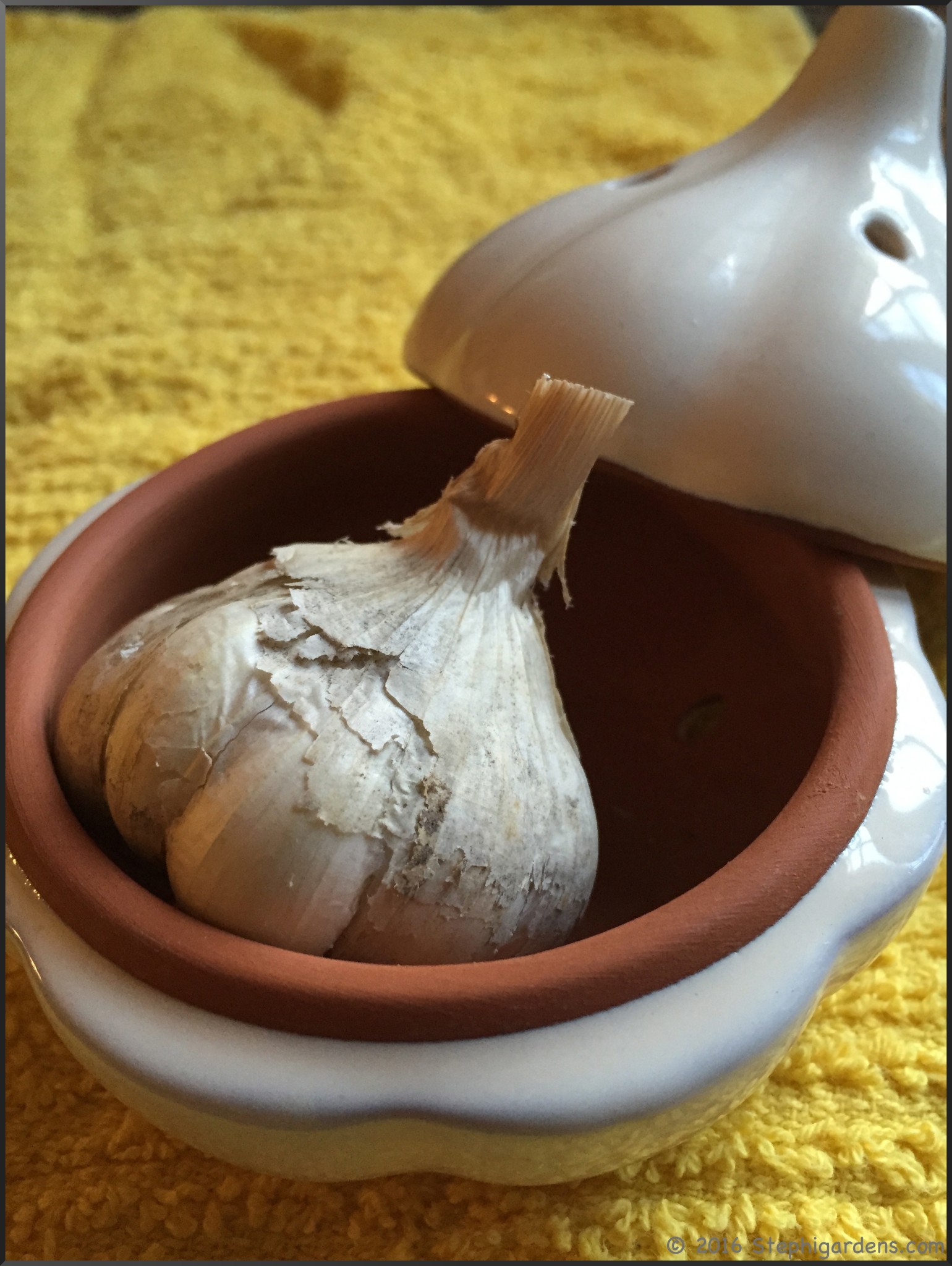
You can read about it in “Planting Garlic” and “Warding Off The Vampires“.  I love reaching in the cupboard and pulling out some home-grown, delicious tasting garlic.  I even have a little terra cotta garlic keeper handy right next to the stove.

terra cotta garlic keeper

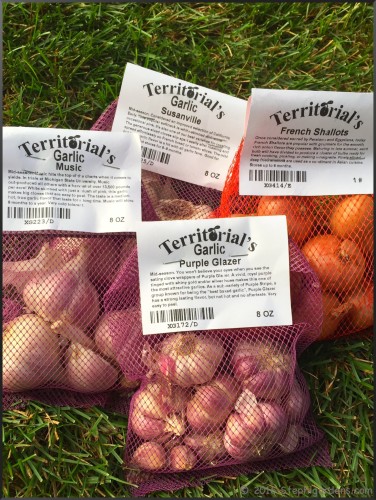
This past fall I planted another, bigger, crop.  I was a little late in ordering, but was able to get Music, Purple Glazer and Susanville garlic from Territorial Seed Company, as well as French Shallots.

Territorial seed garlic

Next to garlic, I love cooking with shallots!  I’m still using some of last year’s harvest and looking forward to more.

growing shallots

Music and Purple Glazer are hard-necked varieties and Susanville a soft-necked variety.

Planting season is 6-8 weeks before the likely hard frost date for your area, so I planted mine in mid-October, although this winter that was too early.  Can’t plan for crazy weather though.

Last year, I planted in two different locations in the yard, and one was definitely more successful than the other.  Not sure why the difference, but this year I stuck to the raised beds in the backyard where I had success last year.

IMG_3036

I also planted a bunch more in our new property in Door County, WI.  Lucky me–it came with a great raised bed all ready for planting!  I’ll talk more about that another time, but I’m excited to have another place to garden and explore.

stephi gardens

Before the cold and snow came, I was not surprised that I had green shoots coming up from the softneck Susanville garlic.

fall sprouting garlic

Not too worried, the same thing happened last year after planting.   I just covered them with a nice layer of mulch and they should be fine.

Can’t wait for the early spring garlic scapes to appear from the hard-necked varieties.

garlic

I wasn’t sure what to do with them last year, so they went to waste.  Not this year, I’m going have fun experimenting 🙂  In the meantime, I’ll just keep enjoying my harvest from last year.  So far, all the stored garlic is just fine!

Are you still using any of your stored garlic?  Or trying to grow it for the first time?

Save

Happy New Year 2016

Happy New Year and Best Wishes for 2016!  I truly appreciate all who have visited my blog this year.  Here’s a look back at some of my most popular posts of 2015!  

Tomato Florida Weave

1.   Taming My Tomatoes With A Florida Weave:  My tomatoes were a mess, so I tried something new to try and keep things in order.


Blue Jay

2.    The Blue Jays are Back (and That’s Not a Good Thing):  What to do when you have nuisance birds at your feeder?


Garlic3.  Warding Off The Vampires:  This was my first try at growing garlic.  Easier than I thought and definitely worth the effort.


Multi stemmed Freeman Maple Autumn Blaze4.  So Long Beautiful Maple Tree:  Sometimes things go terribly wrong with plant.  In this case, construction and cold brought about the demise of our beautiful Freeman Maple


IMG_38415.  November in Chicago:  This fall was quite an unusual one.  Here in Chicago, the plants were quite confused as to the time of year and it made for an interesting fall.


clematis wilt6.  Something’s Wrong With the Clematis and Clematis Stem Wilt: An Update to Something’s Wrong With The Clematis:  The wet spring affected a lot of plants.  Many of us saw some terrible die back of our clematis due to Clematis Stem Wilt.  Hopefully next spring everything will rebound.


westie7.  Little White Pepper Thief:  Apparently Westies love peppers.  I didn’t get any sweet or hot peppers from my garden this year because of my little thief 🙁


rabbit nest8.  Spring Surprises:  Even when you think you know everything in your garden, you get surprised!


Callicarpa9.  Beautyberry Bushes:  Did They Survive the Winter?  After a winter like we had, I thought I had lost my new bushes.  But, they are one of the last to leaf out in the spring, so I’m glad I was patient.  


IMG_349510.  Fall in Northern Michigan/Stumbling Upon Club-Mosses:  This was one of my favorite posts of the year.  Not only was fall in Northern Michigan stunning, my mom and I stumbled onto a forest area full of a club mosses.   Very cool to see and explore.


..and a few of my all-time most popular posts:

Curled Leaves On The Bushes (August 2014)

Creeping Thyme Problems (April 2014) and an update in August, Oops, September Garden Update 

Painting Rock Garden Markers (February 2014)

Pelicans In Illinois (September 2013)

Our Family Christmas Tree (December 2013)

Hope you keep visiting, I have all kinds of ideas to keep everyone in the gardening mood all winter.  

Remember, you can also find Stephi Gardens on Facebook, Instagram, Pinterest and  Twitter.


Warding off the Vampires|Harvesting Garlic

Well not really, but that’s what I think of when I see the garlic curing in the screen room.

Garlic

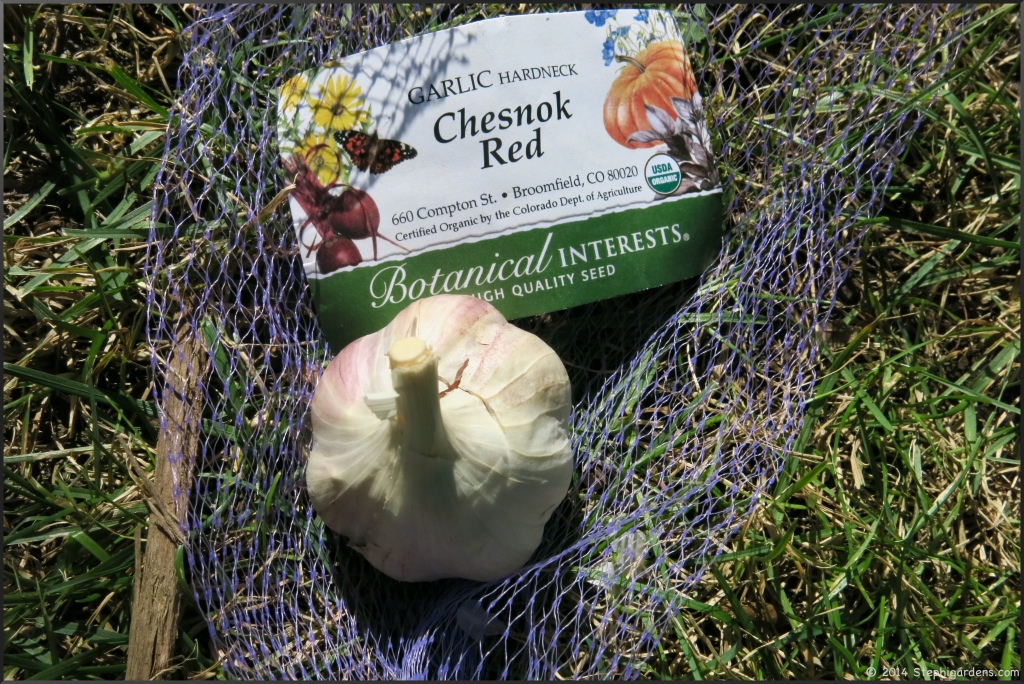
Last fall I planted garlic for the first time (see “Planting Garlic”) and I can happily say I probably have enough harvested this summer to carry me through the winter.  I planted 3 different varieties, 2 hardneck (Chesnok Red and Purple Glazer) and 1 soft neck (California Early) from Botanical Interests.

chesnok red garlic

Softneck varieties tend to grow in a wider variety of climates and can be grown in warmer areas, last longer in storage and are good for braiding.  They also tend to be a little milder in taste.  Hardneck varieties require some time in frozen ground, so are not recommended for warmer climates.   In the spring, they produce a tall edible stem called a “scape”  that should be cut and can be used as a mild garlic seasoning.  The hard neck varieties are also generally known for their stronger taste.

I planted the cloves in 2 different locations and one location definitely did better than the other.  Within a couple of weeks of planting, green sprouts could be see popping up as expected.  Then winter settled in and the garlic just had to hibernate and do its thing. I tried to mark it clearly, but as usual by spring I only sort of knew where it was planted and which variety was which.  Typical 🙁

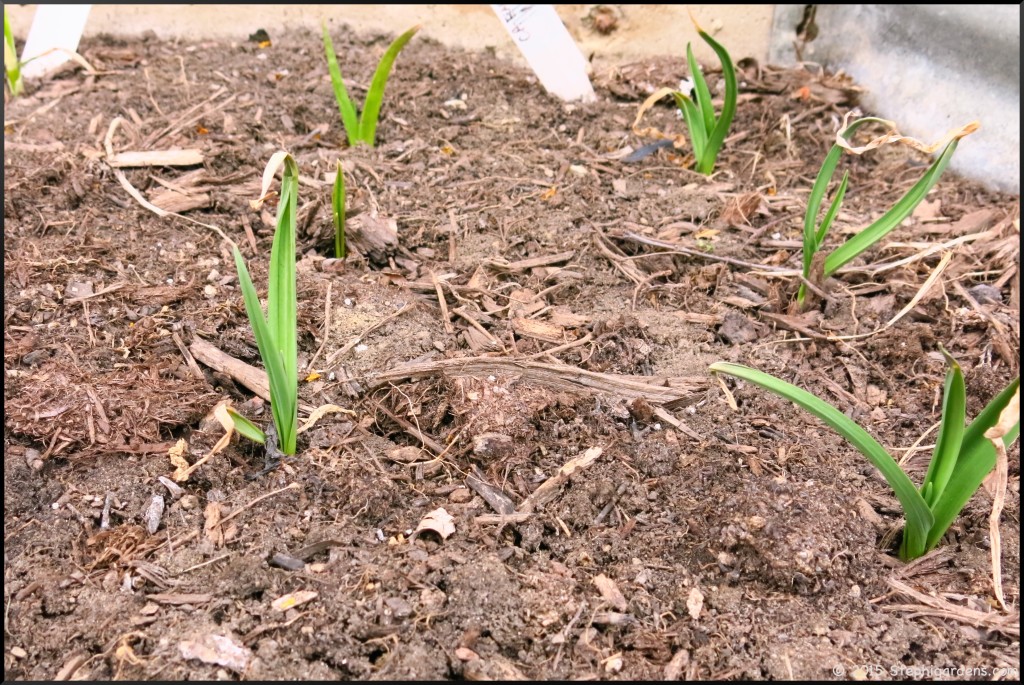
By early spring, the garlic was sprouting.

garlic

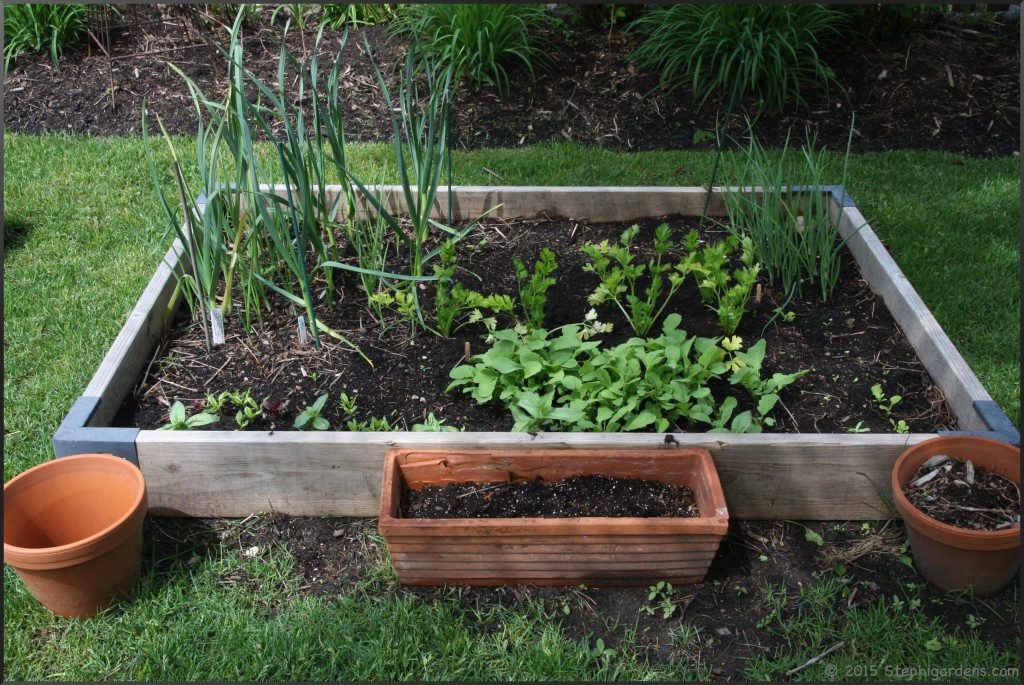
By late spring the hardneck varieties were sending up scapes.  I trimmed them to send the plant’s energy into producing healthy garlic heads, but unfortunately didn’t get around to using them in any recipes.  Next time for sure.

garlic

garlic

By July, the garlic was ready for harvest.  How do you know when to harvest?  It can be a little tricky, but usually you want to wait until several lower leaves turn brown, but the top leaves are still green.  Harvesting the garlic is easy, but you need to be gentle.  Unlike onions, you can’t just yank it out of the ground.  Too easy to damage the head or accidentally tear off the leaves.  Garlic also cures better when the leaves are still on.

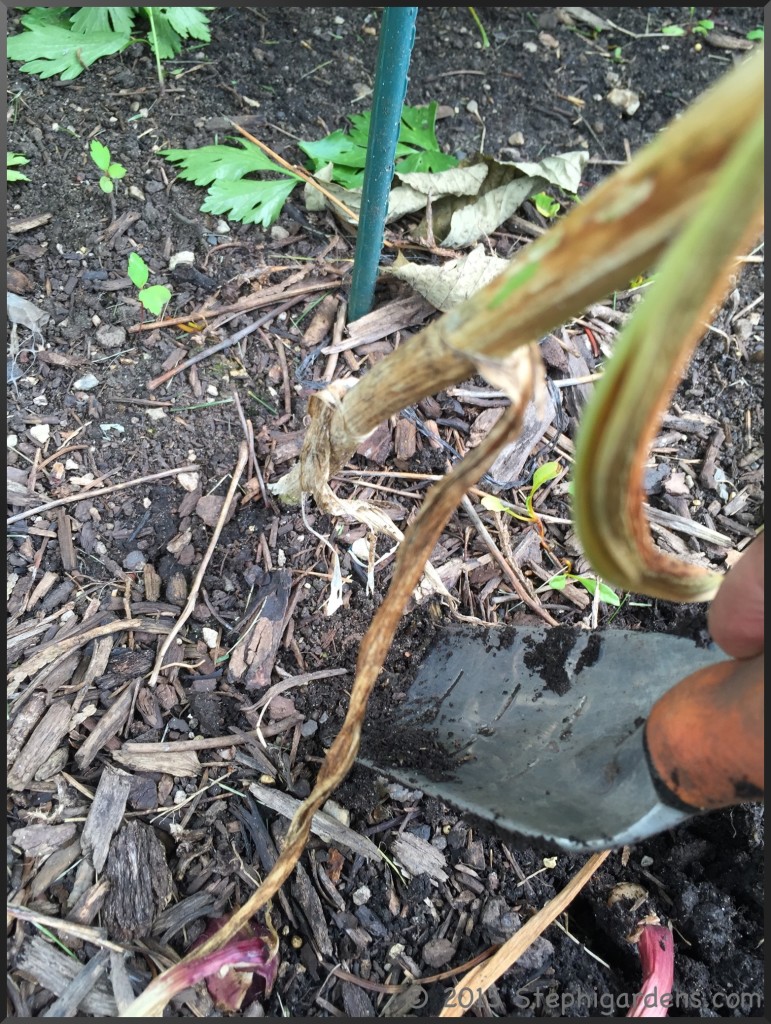
So grab a trowel and dig gently around the bulbs to loosen the soil.  Be careful not to hit the heads and damage the tight cluster of cloves.

garlic
Gently pull to release the garlic from the soil.

Garlic

Gently shake off the dirt, without disturbing the head.  It’s fine to leave some dirt on the head and roots, it’ll come off easier when it’s dry.

Garlic

Now it’s time to find a spot to cure the garlic so that it’ll be ready to store for the winter.  Garlic should be cured in a protected area, like a garage or porch, out of direct sunlight and where there is reasonable air circulation.  It should be hung with the leaves  and roots still attached.  I hung mine in the screen porch.  On particularly hot days, I turned on the overhead fan to keep the air circulating.

Garlic

Curing can take three to eight weeks and you know it’s done when the roots are dry and shriveled, the leaves completely brown and dried, and the skin feels dry and papery.  This step should not be skipped or the garlic will not last properly through the winter.

Once done, the leaves and roots are trimmed off, and the remaining dirt gently brushed off.  Be careful not to expose any of the cloves.  The garlic is now ready for storage.   Garlic can be stored in any type of breathable, dry container such as mesh bags, paper bags, cardboard boxes or ceramic pots with holes.  Under perfect home storage conditions, the garlic should keep for 6-8 months.  Ideally to achieve that, the garlic should be stored in a cool, dark room with good air circulation.  Not always easy to do, but just do the best you can.  I am going to store some in an unfinished part of my basement and the rest in an open container in the coolest cupboard in the kitchen.  Kind of a test to see what works better.
garlic

garlic

No matter what you do to store the garlic, never put it in the refrigerator or store in a sealed container.  That will lead to early sprouting and the garlic will quickly become bitter, soft and moldy.  Time to toss it if it starts to sprout, it’s spoiling at this point.  Most importantly, NEVER  store raw garlic in oil at room temperature.  This can lead to botulism and death!

As a last resort if your garlic seems like it’s not going to last as long as you’d like, it can be safely frozen.  It will change the flavor and texture to freeze raw, so to help preserve the flavor the peeled cloves can be put in oil and stored in the freezer (but again, not in oil at room temperature).  Other ways to store garlic include drying, dehydrating or even turning it into garlic butter.
I’ve already ordered more garlic for next year.  I was a little late ordering, so this year I ordered Music, Purple Glazer and Susanville garlic from Territorial Seed Company.   Can’t wait to get it in the ground.  It’s not too late to order yours, but act quickly.  Lots of varieties have already sold out so you may need to check around a few sites.   Planting season is 6-8 weeks before the likely hard frost date for your area, so it is quickly coming upon us here in zone 5.  Some reputable places to try are Botanical Interests,  Territorial Seed Company and Burpee Seeds.  Do you have a favorite place to order from?

Wherever you decide to order it from, don’t try to use the garlic you buy from the grocery store.  Much of that garlic, unless locally grown, has been treated to prolong its life during storage and transportation.  Some may sprout, but anything you get to grow from them will be of undesirable quality.

Happy Planting!

Save

Spring Snuck Up On Me

Just when we were feeling like spring would never come, the weather turned and the snow melted.  Always interesting to see what’s been going on under the snow after all those months.  When we see those early signs of life it gives us hope that the garden will once again be bursting forth in beauty in no time.

Here’s some of what I saw on a recent walk around the yard.

The daffodils are sprouting…

daffodils

The azaleas and Judd viburnum are budding…

snowdrop

IMG_4690

judd viburnum

The Geum “Flames of Passion” I planted last fall greened up almost instantly when the snow started melting away…

Geum ‘Flames of Passion’

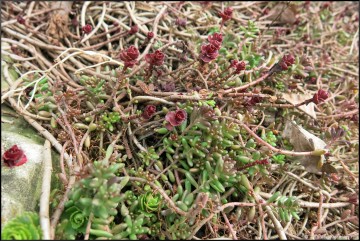
The sedums have survived the winter…  Here’s Sedum spurium ‘Blaze’…

sedum

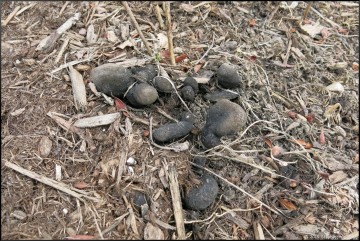
The Dead Man’s Fingers I had in the yard last year have returned in a new spot.  Still looking as odd as ever…

dead man's fingers

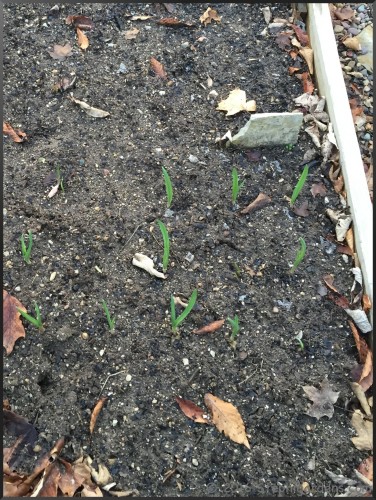
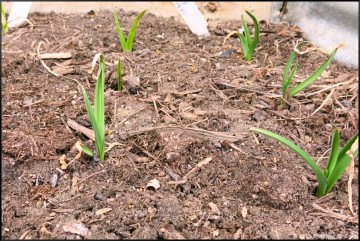
The garlic I planted last fall has already been sprouting.  So exciting!

garlic

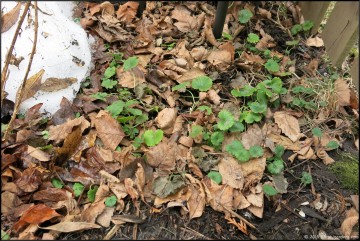
The ever present Creeping Charlie is already creeping :(…

creeping charlie

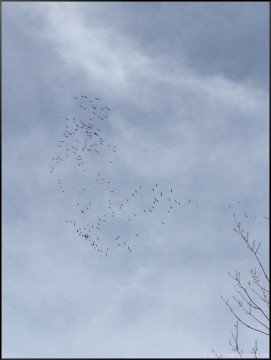
The high flying, but very noisy, Sandhill Cranes are on the move back home…

sandhill cranes

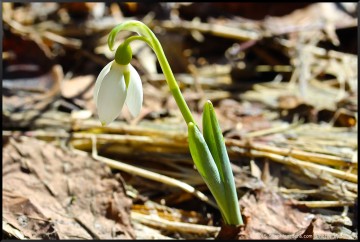
And lastly, Peggy saw this beautiful snowdrop in her Michigan yard. Definitely a special harbinger of spring. 

snowdrop

I had better get moving on my indoor seed planting.  I was lulled into thinking spring wasn’t coming!

Have you had signs of spring in your yard?