This Crazy Winter

The winter of 2019 is definitely one for the books. We’ve been through snow, rain, crazy temperatures swings, a winter thunderstorm, the polar vortex…and now another ice storm has hit the Chicago area.

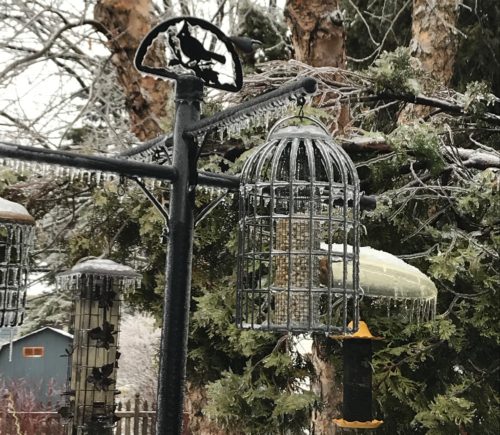
As temperatures hovered around freezing, the precipitation has rotated between rain, sleet, freezing rain and snow. Aside from the treacherous driving and walking, the ice made for beautiful scenery. Pretty much everything outside, like my feeder pole and feeders, were covered in ice and icicles. If you look closely at the icy peanut feeder, you can see one of the red-breasted nuthatches that is spending the winter in my yard on the peanut feeder.
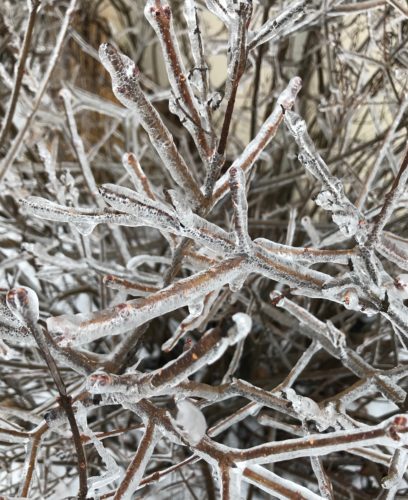
Looking around the yard everything, like this Dwarf Korean Lilac, was encased in a thick layer of ice.
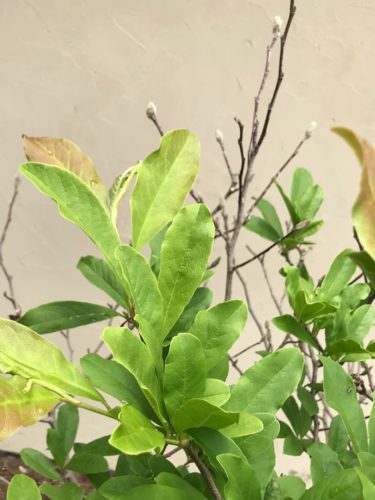
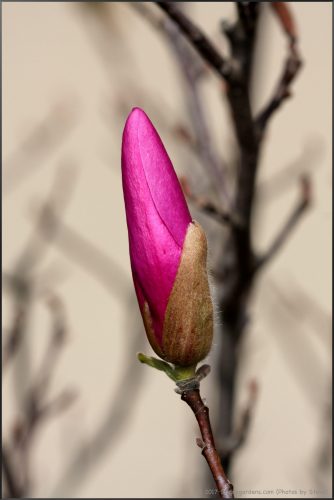
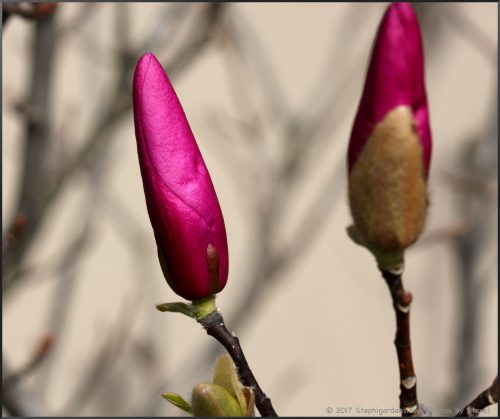
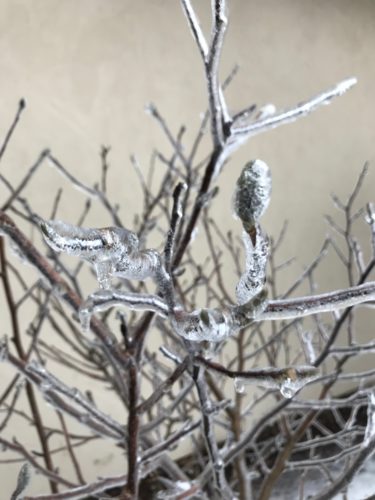
The buds on the star magnolia were similarly encased. The spring flower buds are actually protected by the layer of ice as long as I don’t try to knock the ice off.
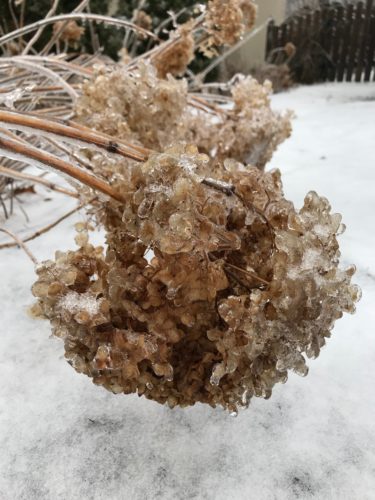
The annabelle hydrangeas are hanging heavy…
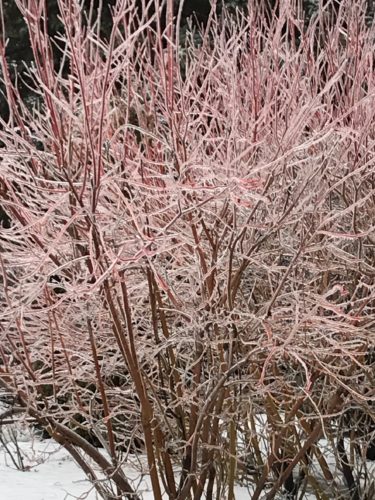
And the neighbors red-twig dogwoods are truly showing their winter colors.
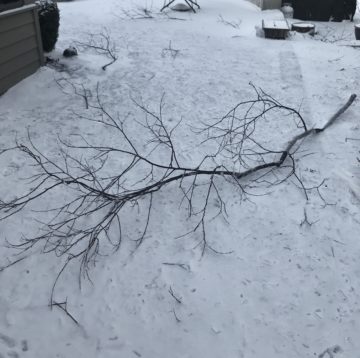
What do do about the ice? Not much you can do without inflicting more damage to weak branches and spring buds. Best to just wait and hope that it thaws soon. The wind has been howling tonight, which means probably even more breakage since the weight of the ice makes everything really heavy. The river birch has been dropping branches all over the patio.
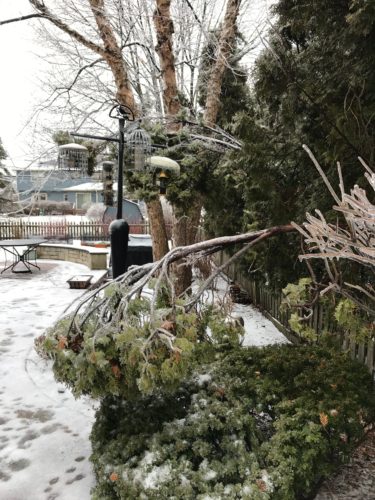
The arborvitaes are really having a rough winter between the heavy snow earlier this winter and now the ice. Only thing to do at this point is be patient. Multi-stemmed evergreens like arborvitae can be protected in the fall by tying up loosely with cloth, burlap or twine. But these are my neighbors shrubs, so all I can do is in the spring tie up the branches that have fallen on my side.
The Morton Arboretum has a great article on Winter Injury to Shrubs and Plants.

How are your plants fairing this winter?

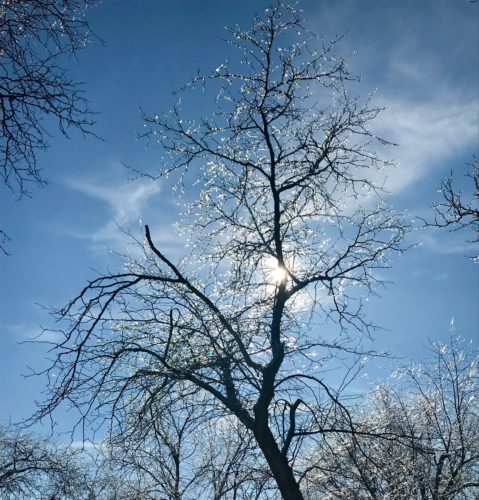
Bonus photo: The sun came out today and made everything super sparkly!
 

Winter Has Arrived ❄️❄️

My husband had a running weather joke all summer, “Enjoy it now, it’ll be snowing in 3 months”. We’d all roll our eyes.

Well, he really wasn’t all that far off. We had the 5th biggest November snowfall last night, and it was a very messy storm.

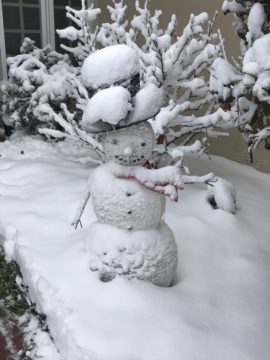
Thankfully, my college kids had left Saturday to head back to school before the weather turned. We fared a bit better than many parts of Chicago, but we still got 3.9 inches of heavy, wet snow that knocked out our power for a few hours this morning.

That’s the kind that’s really tough to move around and really damaging to the trees and power lines. Luckily, we didn’t have too much damage and fared better than some of my friends.

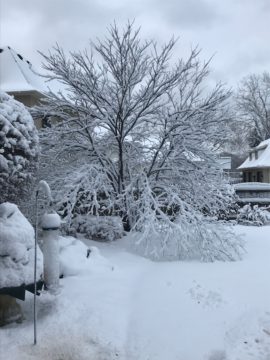
The backyard redbud was heavy with icy snow, practically touching the ground. No branches seem broken so it should be fine. I’m leaving it alone so I don’t make things worse for it.

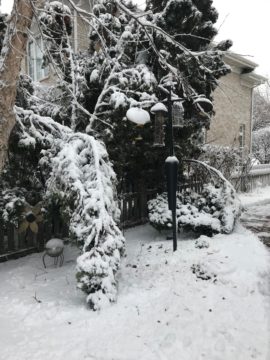
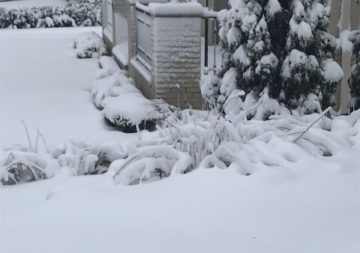
The arborvitae and other evergreens were all really sagging under the weight of the snow. Hopefully everything will bounce back once the snow melts. If they’re really bad like these, you can try and gently brush the heavy snow off the shrubs or trees with your hands or a broom as soon as it stops snowing, or even while it is snowing. But be careful to not be too rough and cause even more damage. Definitely don’t beat on the branches to break off ice.

Once the snow melts, if the branches aren’t popping back up you can try tying up the sagging branches to reshape the shrub. If you use ropes, be sure to loosen them every year so you don’t girdle the stem and kill it. Seems like during every storm my neighbor’s arborvitaes along the property line fall my way, so we have quite a system of woven ropes tying them up. Arborvitea make a great privacy fence, but the winter is really tough on them.

The yews and boxwoods are similarly drooping. I’ve had good luck with them bouncing back in the past so I tend to leave them alone.


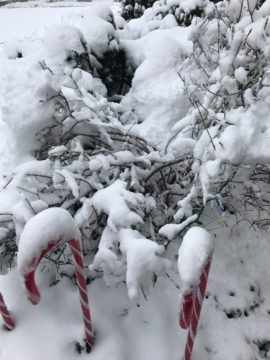
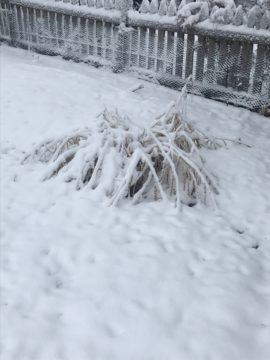
During the fall clean up, I always leave the grasses and hydrangeas for winter interest and bird habitat. Not sure what they’re going to look like after this snowfall though. It won’t affect their next year’s growth, but they may look crushed the rest of the winter. I’ll have to decide whether to cut them back or leave them once this snowfall melts.

Annabelle hydrangeas (seen above) bloom on new wood so late fall or winter pruning won’t affect next summer’s blossoms. Be sure before you do any winter pruning you know what kind of hydrangeas you have. Many have different pruning requirements depending on when they bloom and if it’s on new or old stems.

Ornamental grasses can be pruned back to the ground anytime after late fall. I like to leave mine and prune in the early spring. If you don’t think they look good, trim them to the ground in the fall or winter. If you do leave them, be sure to cut them back to a couple of inches in early spring before new growth starts. I’m guessing these will not look good this winter.

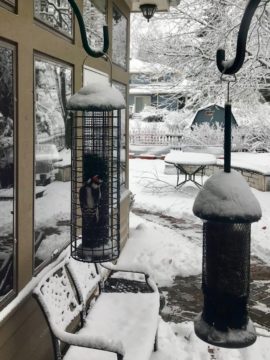
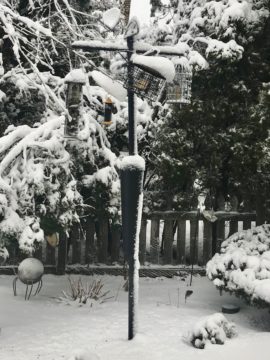
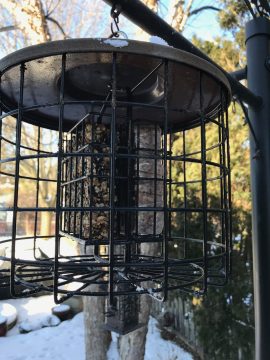
The snow made the bird feeders a bit cock-eyed. But the birds didn’t mind and seemed thrilled to have food available. The squirrels and juncoes kept the snow cleaned of any spills. I even had a red-bellied woodpecker visit the suet feeder this morning. No camera nearby, but trust me, he was beautiful!

How did your yard fare with this storm?


My Magnolia Saga

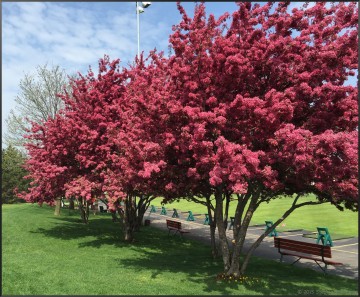
In my neighborhood, one of the things that truly announces that spring has arrived is the beautiful blooms of the Magnolias, Redbuds and flowering Crabapples.

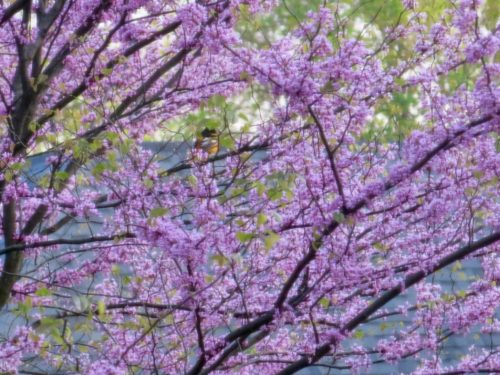
We already had pink crabapple, so when one of our River Birch trees died about 10 years ago, we replanted nearby with a Redbud. It has grown beautifully and puts on quite a spring show. This year it was a favorite of my first-ever Northern Oriole in the backyard!

We sadly had a Freeman Maple die a few years back (So Long Beautiful Maple Tree), and three years ago decided it was time to add some more flowering trees. We picked a Jane Magnolia (Magnolia “Jane”) to add to our garden collection in this now very bare spot.

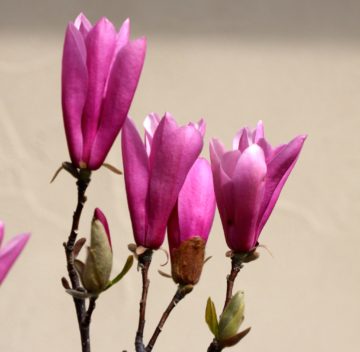
I had done a bit of research and was really hoping to add a yellow magnolia, but that year it was just too late to find one.  I ultimately decided on Jane Magnolia, one of the “The Little Girl Series,”  and is a hybrid between a lily magnolia ‘Nigra’  (Magnolia liliflora) and star magnolia ‘Rosea’(M. stellata).  The “Little Girl Series,” was named because each hybrid plant was given a girl’s name. I chose the hybrid Jane because it was the right color (reddish-purple outside and white inside), size (10 to 15 feet tall and wide) and with the late spring bloom time it is less likely to suffer frost damage in spring.

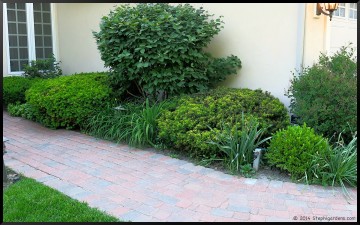
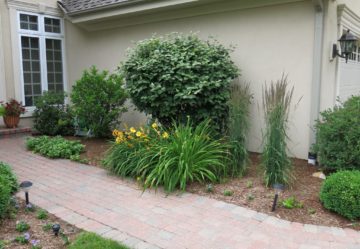
Since we were already doing some replanting, we also decided to remove a couple of unwieldy yews in the front bed and put in another magnolia and some grasses.

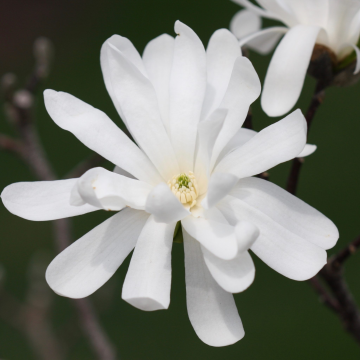
Where the yew closer to the front door was, we decided on a Star magnolia (Magnolia stellata).  This magnolia is more shrublike than most magnolias so it was more amenable to a smaller area like a front bed. In the other spot we planted three Karl Foerster Feather Reed Grasses (Calamagrostis acutiflora ‘Karl Foerster’) to add year round interest.

In they went and I couldn’t wait for the next spring.  But in the meantime, we had a very dry summer and a very tough spring. Despite my attentive care, neither transplant survived 😔.

Because I had them planted from a local nursery, both were covered by a warranty, so they were able to be replaced.  All seemed well until they bloomed….

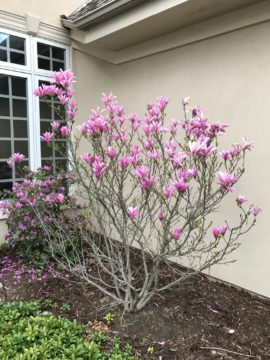
Uh oh, I had white blooms in the backyard and pink blooms in the front yard! No doubt that this is wrong! Somehow the specimens had been mixed up and now my replanted plants needed to be replanted again😔  Magnolias are pretty hardy plants once they get going, but they can be a little finicky about being transplanted. Pretty sad to make the call to my landscaper to have them switched, but there’s no way I can have a Jane magnolia in the small bed by the front door.

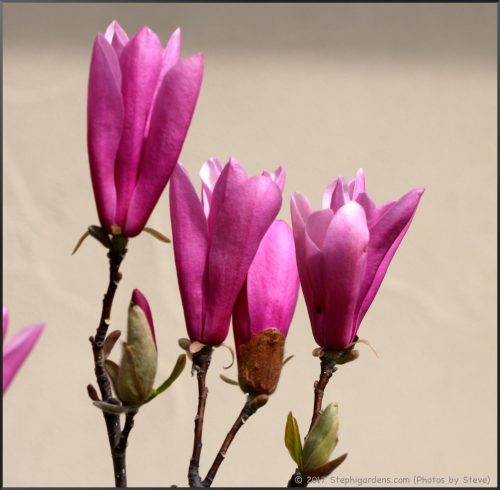
Fast forward to this spring. The Jane magnolia in the back looks great, had plenty of nice pink blooms and and is starting to shoot up lots of new growth. I think it’ll be ok!

The front yard Star magnolia, however didn’t fare as well.  It had plenty of buds, but many didn’t bloom and many branches were dead.  But enough stayed alive that I think it’ll eventually it’ll be ok.  It also looks like it recently started sending up new sprouts near the base. Wish it had done better, but it’s been through a lot and I only get one replacement.  We’ll see how it looks next year.

Do you have magnolias? Any problems getting them to take off?


Happy New Year 2018!

Happy New Year! I hope this post finds you healthy and happy. I’ve been on a bit of a hiatus with my writing, but hopefully the new year will get me back on track. While I was still attentive to my garden all fall, I do most of my writing in the evenings and I got distracted the last few months watching all seven seasons of Game of Thrones with my husband. (In case you were thinking about watching, it was just as great as the kids said it is and the final season can’t come fast enough!)

But, that’s done and most shows don’t require that level of attention so I have my evenings back! We also did a fair amount of traveling to see visit the kids and out of town family and I’ll share some of the highlights of those trips in the next couple of months.

Lastly, I got a new laptop and the transition was pretty straightforward except for switching from Apple iPhoto to Photos. I procrastinated for a long time since I had everything organized so nicely in iPhoto for my blog, but it was time to convert. You’d think it would be as easy as say “Go”, but for a bunch of reasons, I couldn’t get it to transfer properly. Eventually I did it, but I’m still dealing with photos scattered about in a bit of a disorganized way. Does anyone use a photo manager to organize your photos? The edit features in Photos are fine, but I don’t love the organizational options.

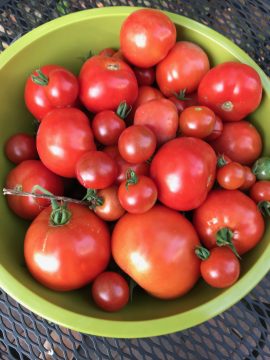
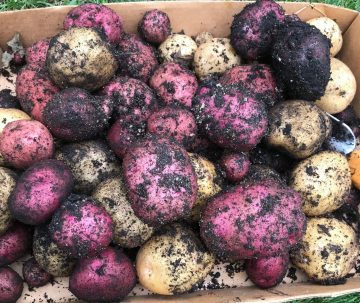
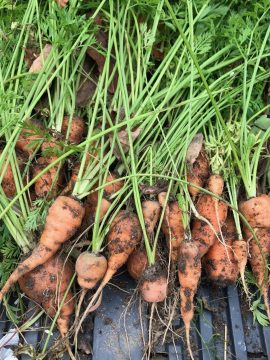
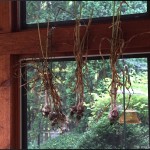
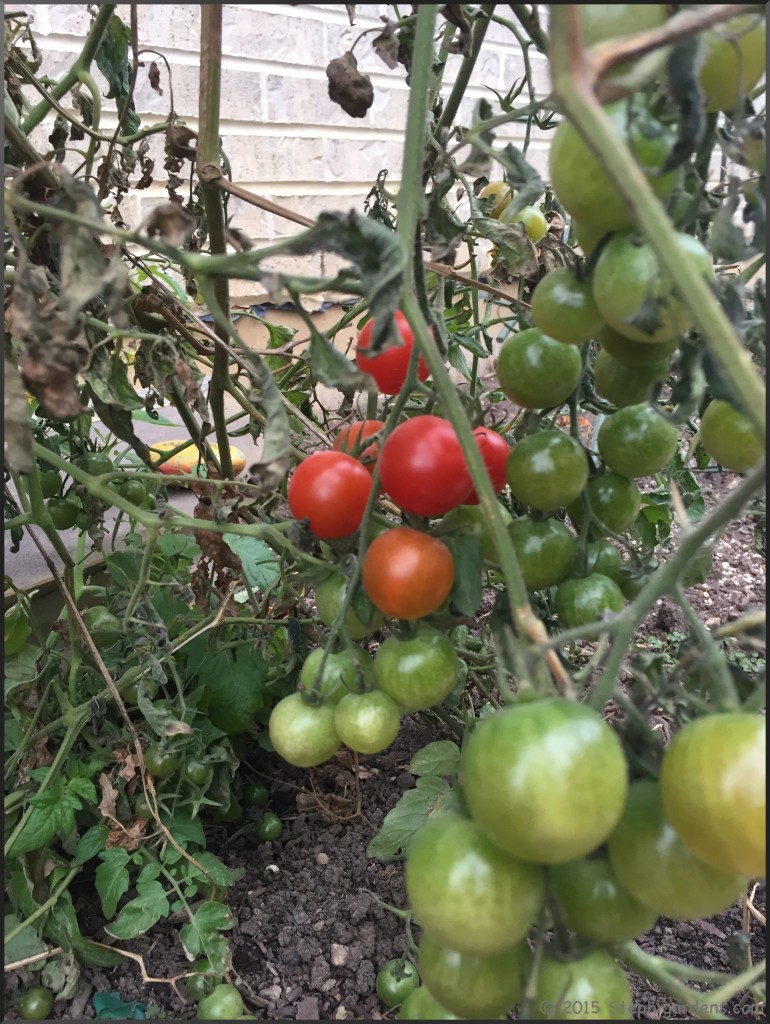
What have I been up to in the garden? Well, like many of you it was a very strange fall with warm temperatures well into November keeping things green and growing well past normal times. Great for the vegetable garden, but probably not so great for the trees and shrubs that really need to get ready for winter. Here’s some of what I was harvesting the end of October.

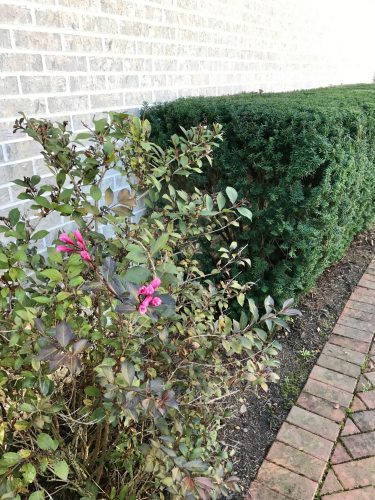
I spent a lot of time this fall watering to be sure the plants were ready for winter (First Too Much Water, Now Not Nearly Enough). But, with temperatures hovering around 0°F for some time now, I’m not sure how the plants will tolerate this winter no matter what I did.

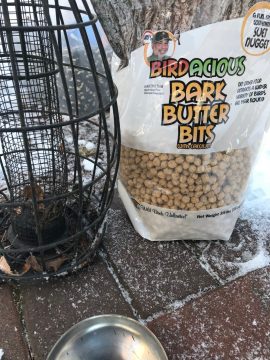
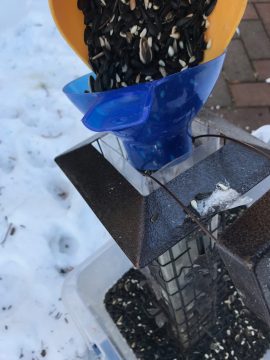
With all this cold weather, I’ve been going through a lot of bird seed trying to help the birds survive this extreme weather. Glad I bought lots of seed at the fall seed sale at my local Wild Bird Unlimited in Lisle, IL. By the way, they are currently having their January Feed sale, so if you live in the area it’s a great time to stock up. They even store it for you until you need it.

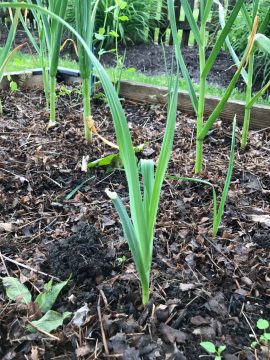
My new gardening adventure this year was planting leeks. Leeks are one of my favorite foods to cook with and growing them seemed intriguing. I’m already looking where to buy my starter plants this spring, so it definitely worked out well.  A post with more details will be coming soon.

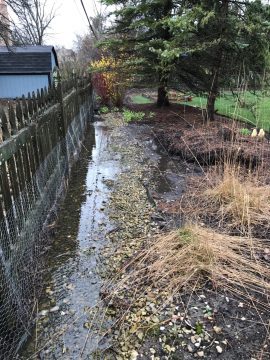
Right now, all snuggled warm in my house I’m enjoying all the teaser emails from the seed companies and the catalogs that are starting to come in. What new vegetables to grow? What new gadgets to buy? Check out my Vendors and Resources page to see where I like to order from. I’ve recycled all the Christmas catalogs to make room for them. I have a couple of areas that need attention so I need to find some time to research what will work best in these areas. One is the swale area that seems perpetually wet, then of course dries out mid summer.

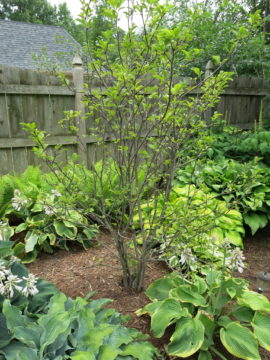
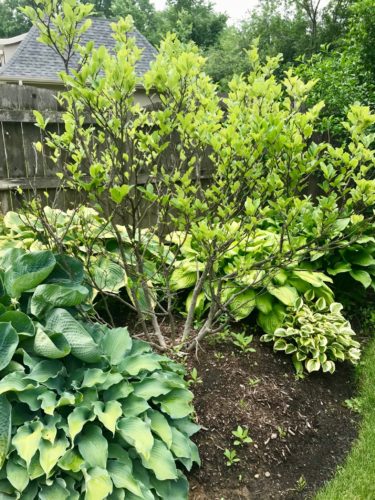
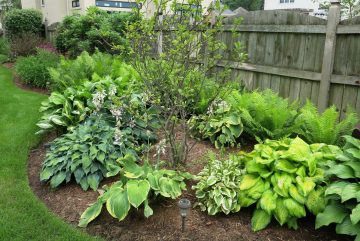
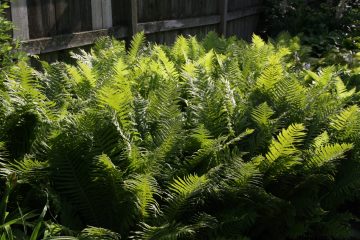
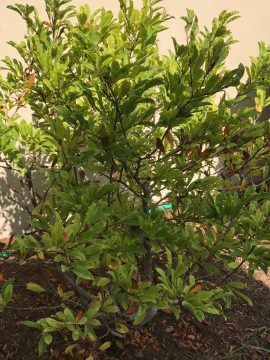
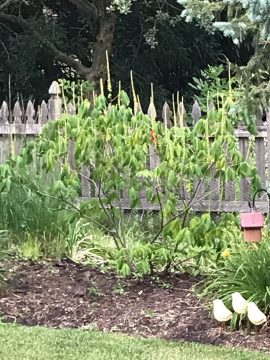
The other is under the new magnolia that replaced the Freeman maple tree that died a couple of years ago. The hostas are doing fine in the new found sun, but the ferns have gone crazy! Not sure the species, but in the shade they were kept in check, but they’ve proliferated out of control in the sun. And they are hard to pull out! Word to the wise, be careful where you plant ferns!
I look forward to sharing you more about what’s up in my garden and where I’ve been, but in the meantime I wish you all a Happy New Year and Go Bills!

While I live in Chicago, I grew up in Buffalo and will always be a Bills fan.  This has been an exciting year for us!!

First Too Much Water, Now Not Nearly Enough

First we had an unusually wet spring, and now we’re in a drought situation here in Chicago and many other locations. What does that mean going into the winter? Nothing good, that’s for sure. So what to do? Keep watering each week as long as possible until your plants go dormant.

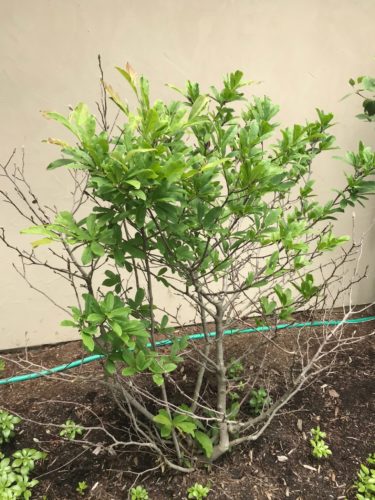
Ideally, all trees, shrubs and perennials should be getting about an inch a week in order to go into the winter healthy and strong.  Any new transplants, like this Star Magnolia and Bottle-brush Buckeye, should be especially cared for during a time of drought.

Evergreens, like boxwoods, yews and arborvitae, despite their lack of noticeable stress under drought can be especially susceptible to winter kill. I have a row of yews along the north side of the house that don’t always get rain to fall on them.

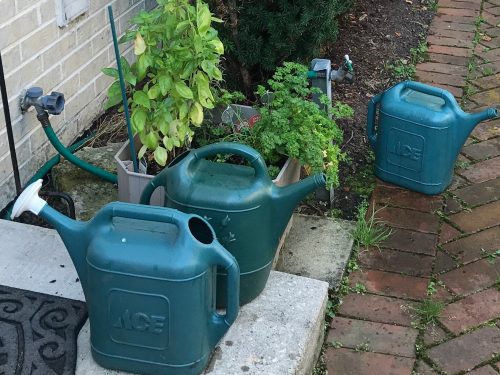
I tend to periodically “dump” water down the center of each plant from a watering can to ensure their root balls get enough water. Seems faster and more consistent than standing with a hose.


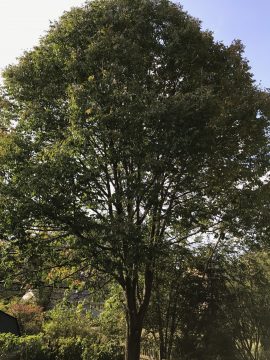
Plants susceptible to disease are also another group of plants to be sure to tend to. Our Purple Ash, while seemingly healthy because we’ve been treating it for Emerald Ash Borer, is a good example of a tree to keep a careful watch on.

Others in my yard that are less than healthy and need more watching during drought periods are Red twig dogwoods that have twig blight, and a River Birch that is prone to chlorosis.


How best to water? Check the soil for moisture by seeing if a trowel or finger can get into the soil. Very dry soil will compact and resist penetration. This compacted soil reduces the ability of the water gathering tree roots near the surface to absorb moisture. Light, frequent watering should be avoided, instead water the trees and shrubs within the drip line (distance of the trunk to the ends of the branches) about once a week with 1-2 inches of water. It’s good to have a rain gauge or check out Weather Underground to find a weather station nearby to know really how much precipition actually falls in your yard.  Helps decide if you need to water our not. Many times I find rain is in the area, but maybe not at my house, or it’s less than I think it is.

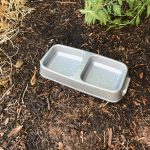
I sometimes will set out a container to see just how much water I’ve sprinkled. I also set a timer so I don’t forget and flood the area! Today all I could find was a dog dish 🙂


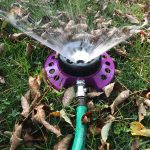
What’s my favorite sprinkler? This Dramm ColorStorm Turret Sprinkler. I often sprinkle only in one direction, like against the house or fence, and these are easy to adjust to water only what I need and built to last. If I’m doing a bigger patch, I’ll get out my Dramm ColorStorm Premium Oscillating Sprinkler.


So, time to go out and water!

(Are you in a drought? check this map from the University of Nebraska-Lincoln to see where your area stands)


Spring Colors Are Everywhere!

Spring in Chicago has been on and off again the last couple of months. We were teased with early warm weather and everything started popping out, but then winter seemed to come back and bring everything to a halt. But now, everything has just exploded in color.

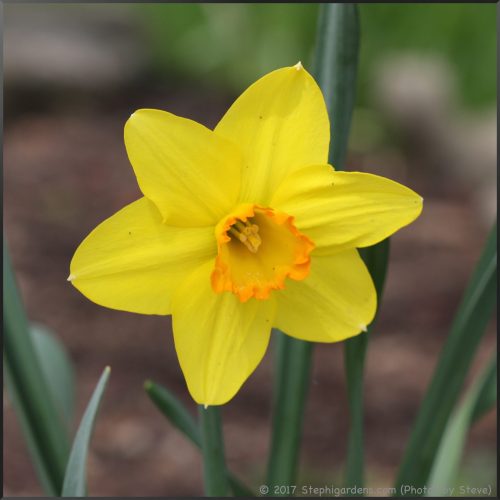
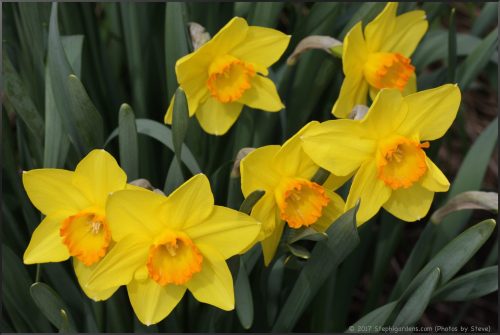
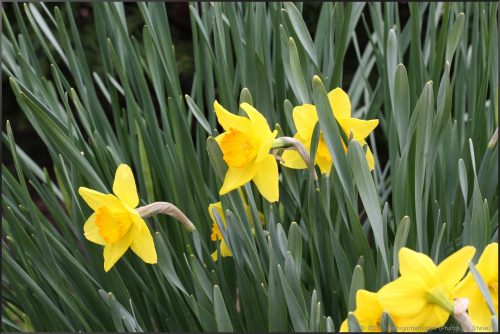
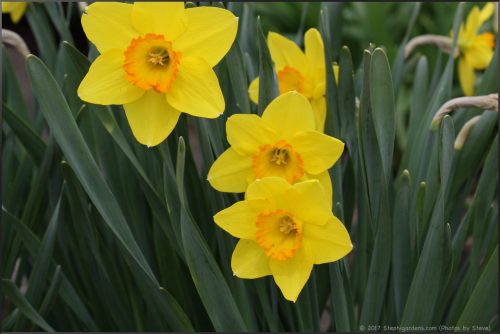
Of all the wonderful spring blooms, my favorite is the daffodil.

After 20 years, last fall I added more daffodil bulbs to the ever dwindling display and I was not disappointed at my efforts.


We have two new magnolias that have done really well this year.  Unfortunately, unbeknownst to me they were reversed when planted last spring. I’ll have to have them replanted once they finish blooming and we’ll be back to square one with needing to baby them all summer again 🙁

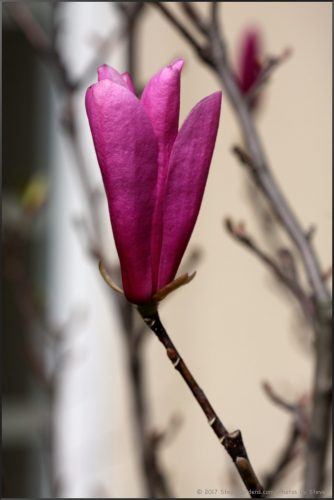
The Jane Magnolia (Magnolia x ‘Jane) is one of the “Little Girl” Magnolias. It’s considered a late blooming magnolia and its blooms are a spectacular deep pink.

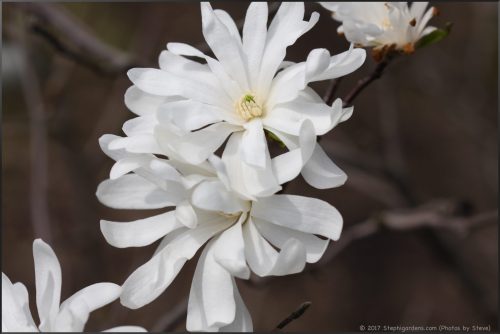
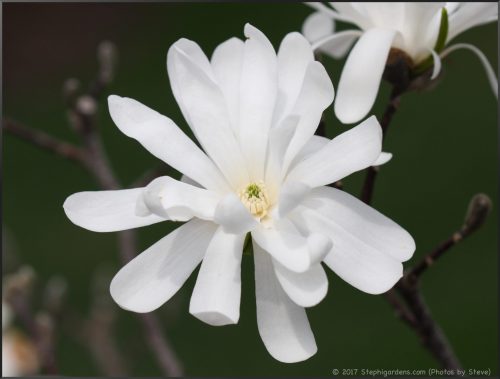
The other magnolia we planted is a Star Magnolia (Magnolia stellata ‘Royal Star’) which has large, fragrant, white double flowers. 

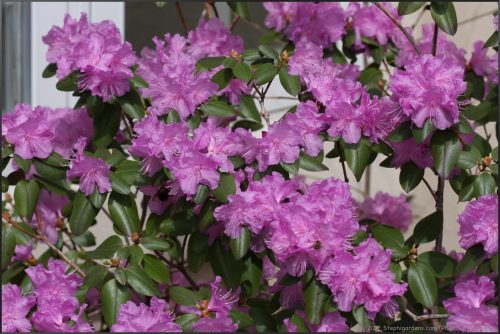
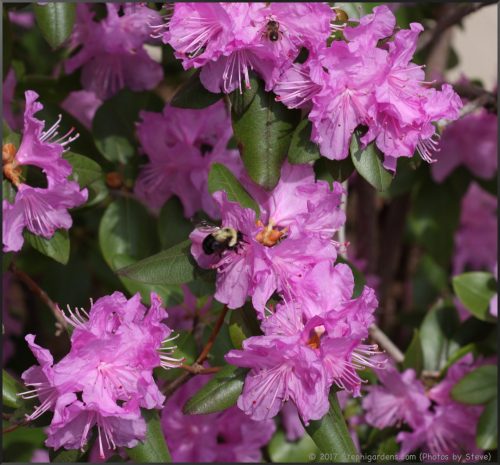
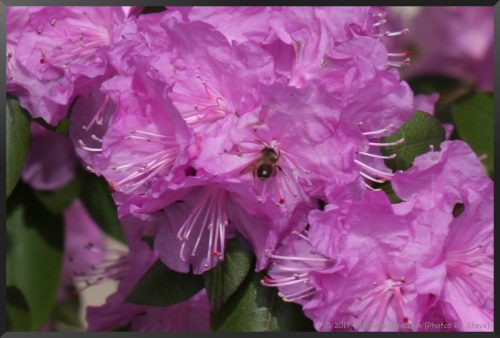
Even the bumblebees enjoyed this spring day on the rhododendron!

I love this time of year. Everything is so fresh, green and bright!

PS Photo credit goes to my husband Steve!


Spruce Down :(

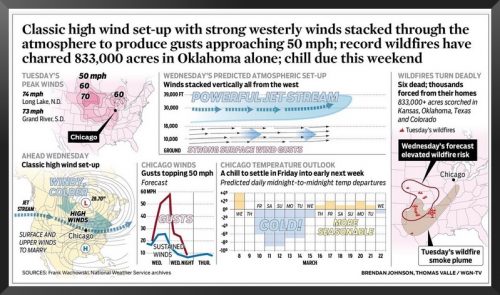
Like many across the Midwest and Northeast, we had an extremely windy week last week.

On Wednesday at O’Hare airport, they measured gusts of 58 mph which was the highest since 1991, coincidentally the year we moved to Chicago. In my neighborhood, gusts of 62 mph were observed and the average sustained wind speed was close to 30 mph. That, coupled with an extremely wet past couple of months led to this…

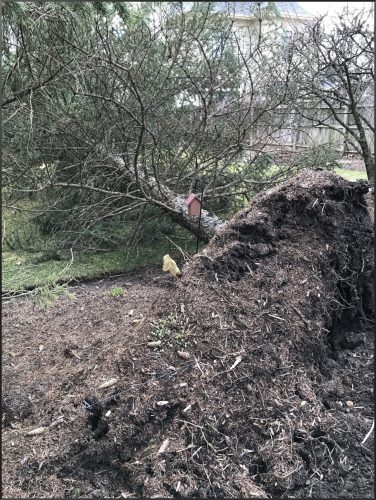
Down came a 20+yr old Colorado Blue Spruce that was just not able to handle the soggy soil and high sustained winds. Usually a spruce is able to adapt to most soil conditions, including a moderate tolerance to flooding. They also withstand wind better than most other spruces because of a moderately deep root system and they make good privacy shields because of their density.

We knew this was a wet area in the yard because of its proximity to the swale and raised it up when planting to help with drainage.  For over 20 years it did just fine. But, water soaked soil is definitely not as strong as dry, and it was no match for sustained high winds.  The same thing happened to our neighbor’s tree in an area that was also frequently wet.

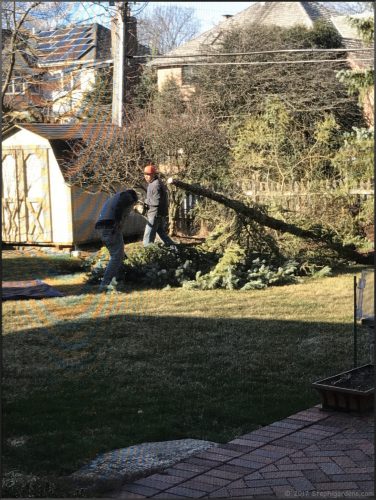
We had the guys with chain saws come out to remove it.

And now part of our privacy shield has a gaping hole in a pretty ugly part of the yard.

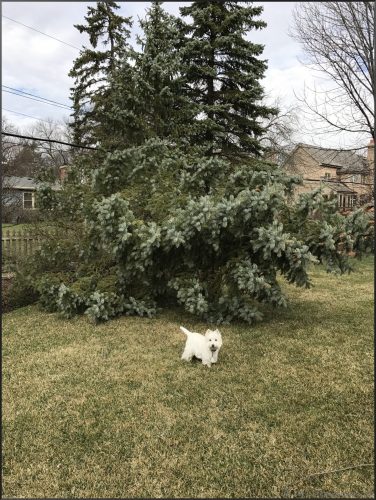
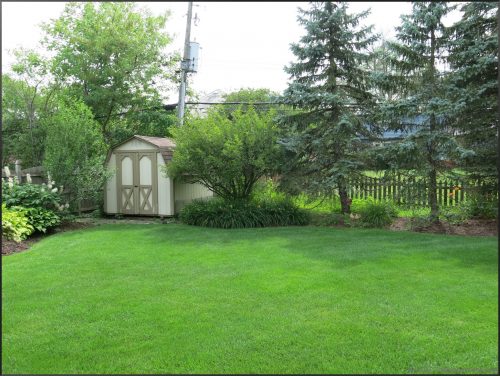
Before:

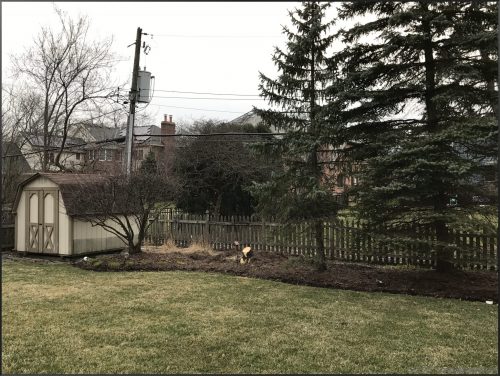
After:

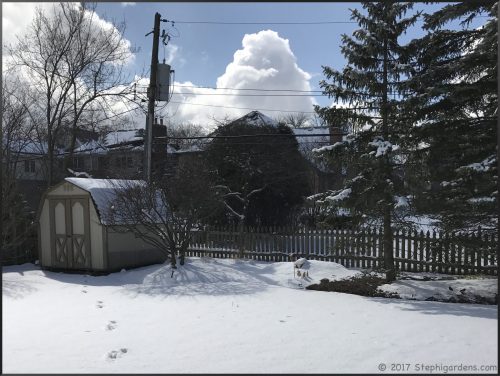
and the next day when winter reappeared for a last gasp in March.  Not nearly as bad as the East coast, but still an unwelcome last gasp.

Yikes!  These pictures remind me a bit of before and after weight loss ads. Not really fair because of the different seasons, but you get the idea. I need to think on this for a little bit about what to put in.  I don’t usually think it’s a good idea to replace a lost garden planting with the same item since there’s a reason it didn’t work out. It also a really disappointing loss since to the left of the shed is where we lost a 20+ year Freeman Maple tree a couple of years ago (read about it here).

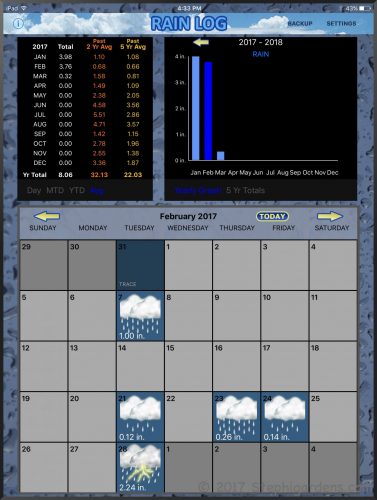
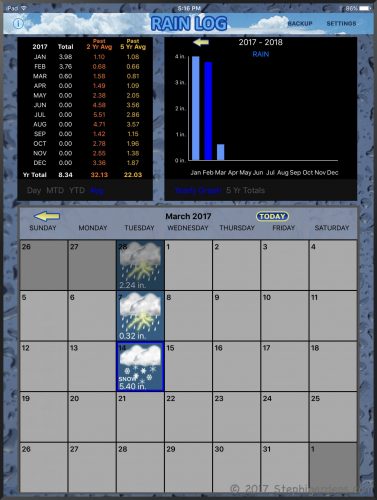
So how much rain have I received this year so far?  Since I like knowing the amount of rain in my yard, not just the very large general Chicago area, in a previous post How Much Rain Did We Get? I described measuring rain with best rain gauge around, a Stratus Rain Gauge.  I keep track of the rain and snow in a great app “Rain Log” and this is my data for February and March.

We are way ahead of average for the year!  Normally we would get about 5 inches to date and we’ve already had over 8 inches of rain, in a few very soaking rain events.

Want to track the weather close to your own house?  Check out my favorite local weather sites that gather information from thousands of citizen scientists who report their weather every day at WeatherUnderground and CoCoRaHS.


Anticipation (and a Stray Migrating Dragonfly)

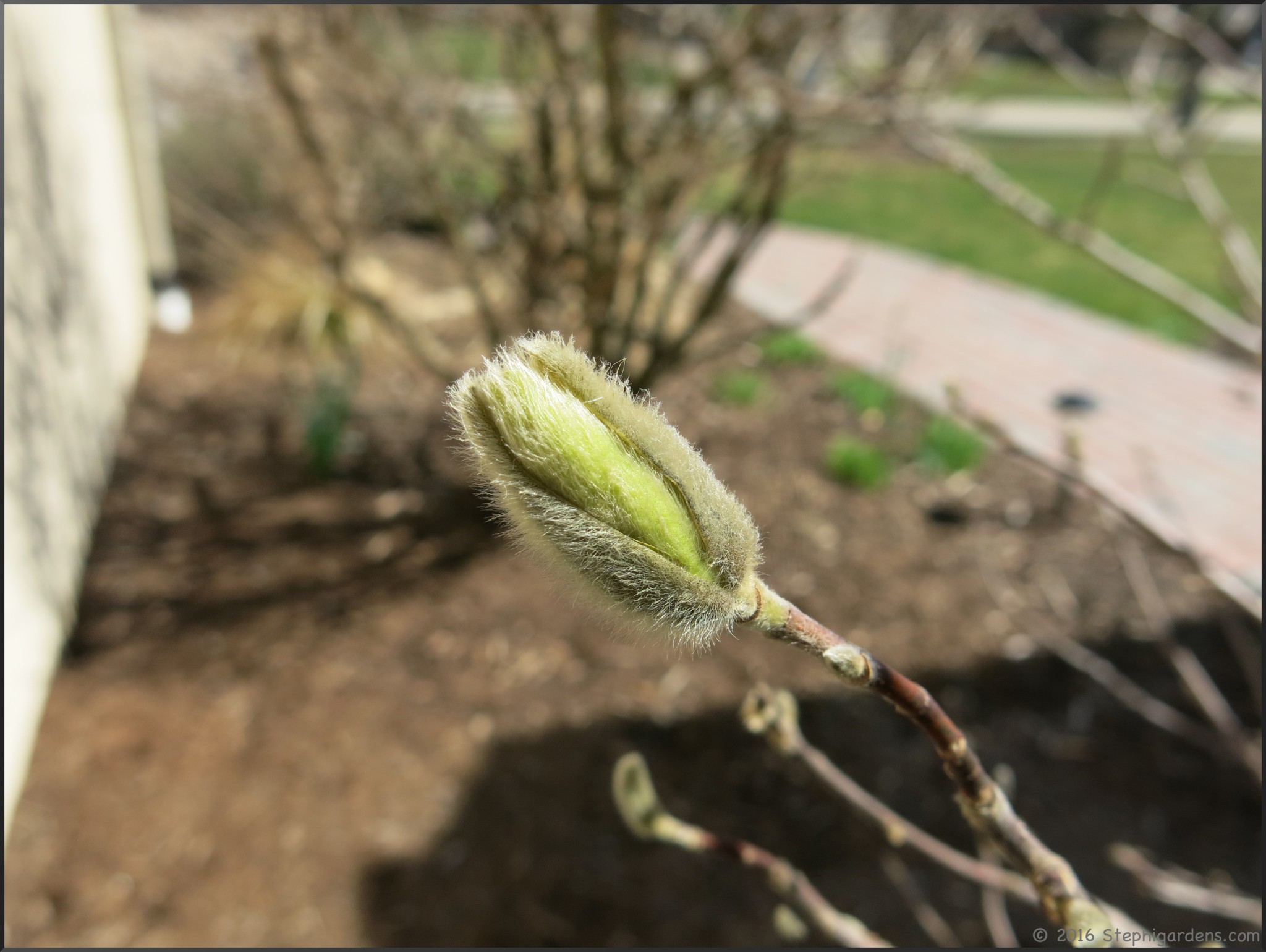
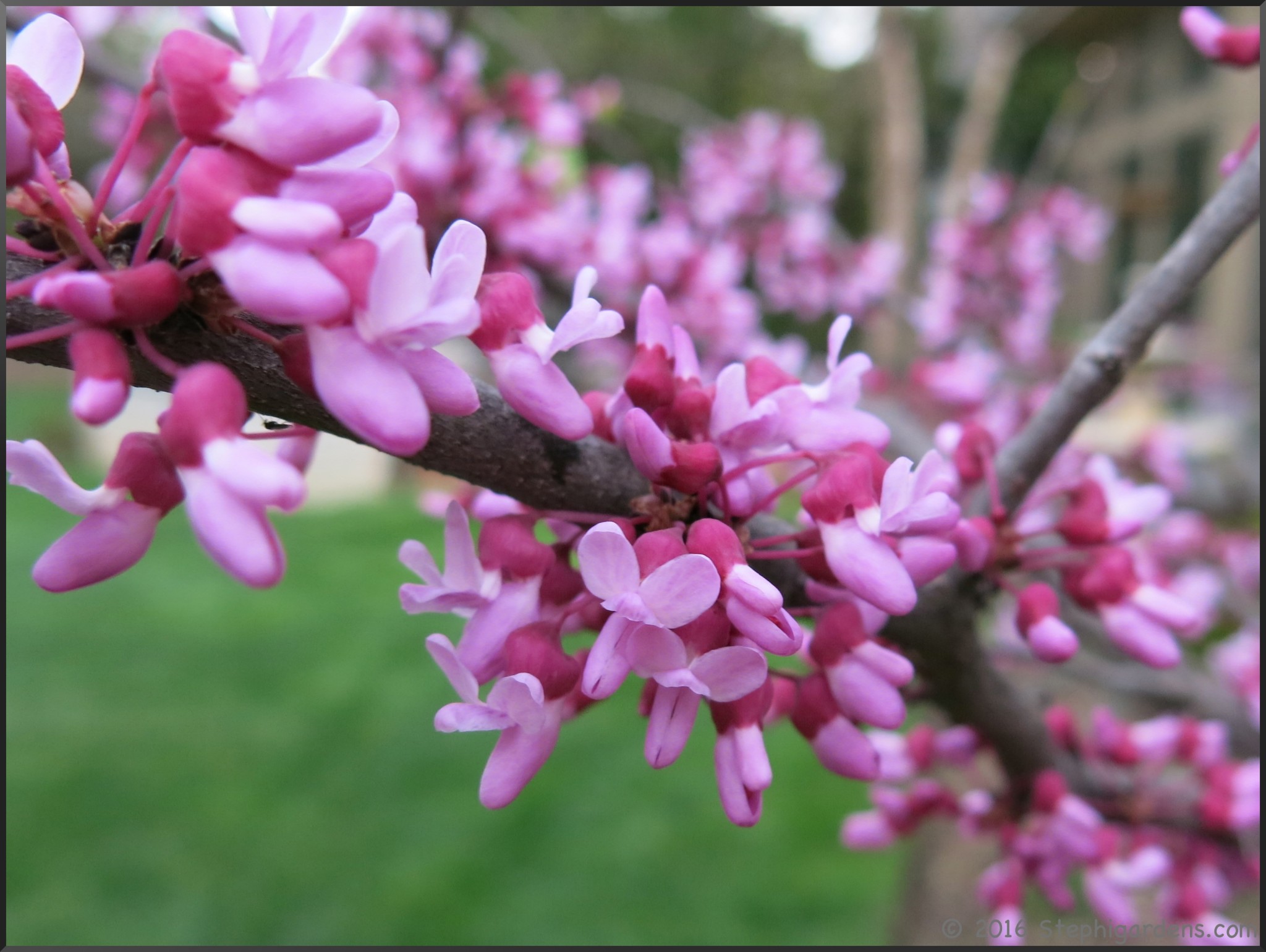
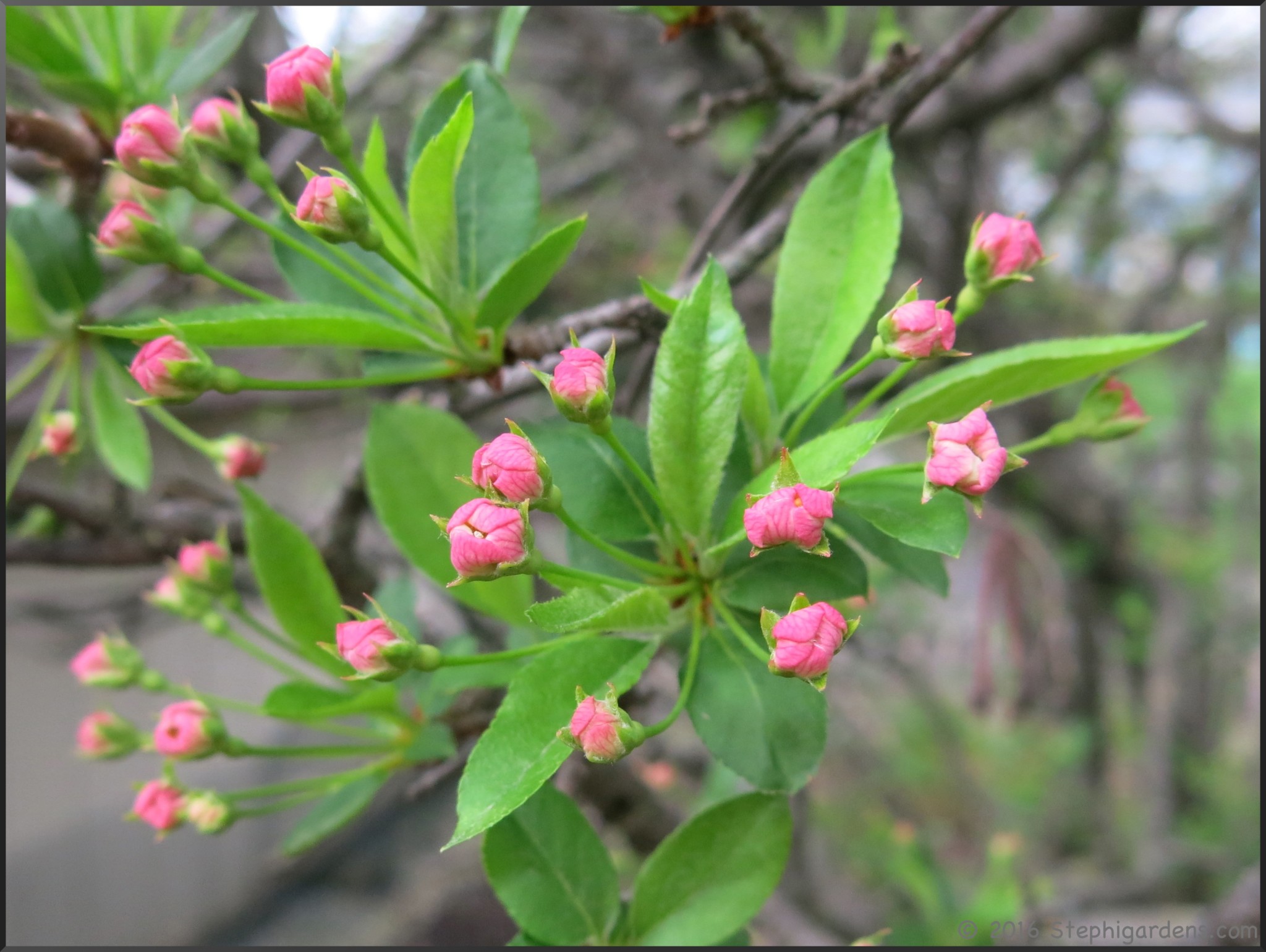
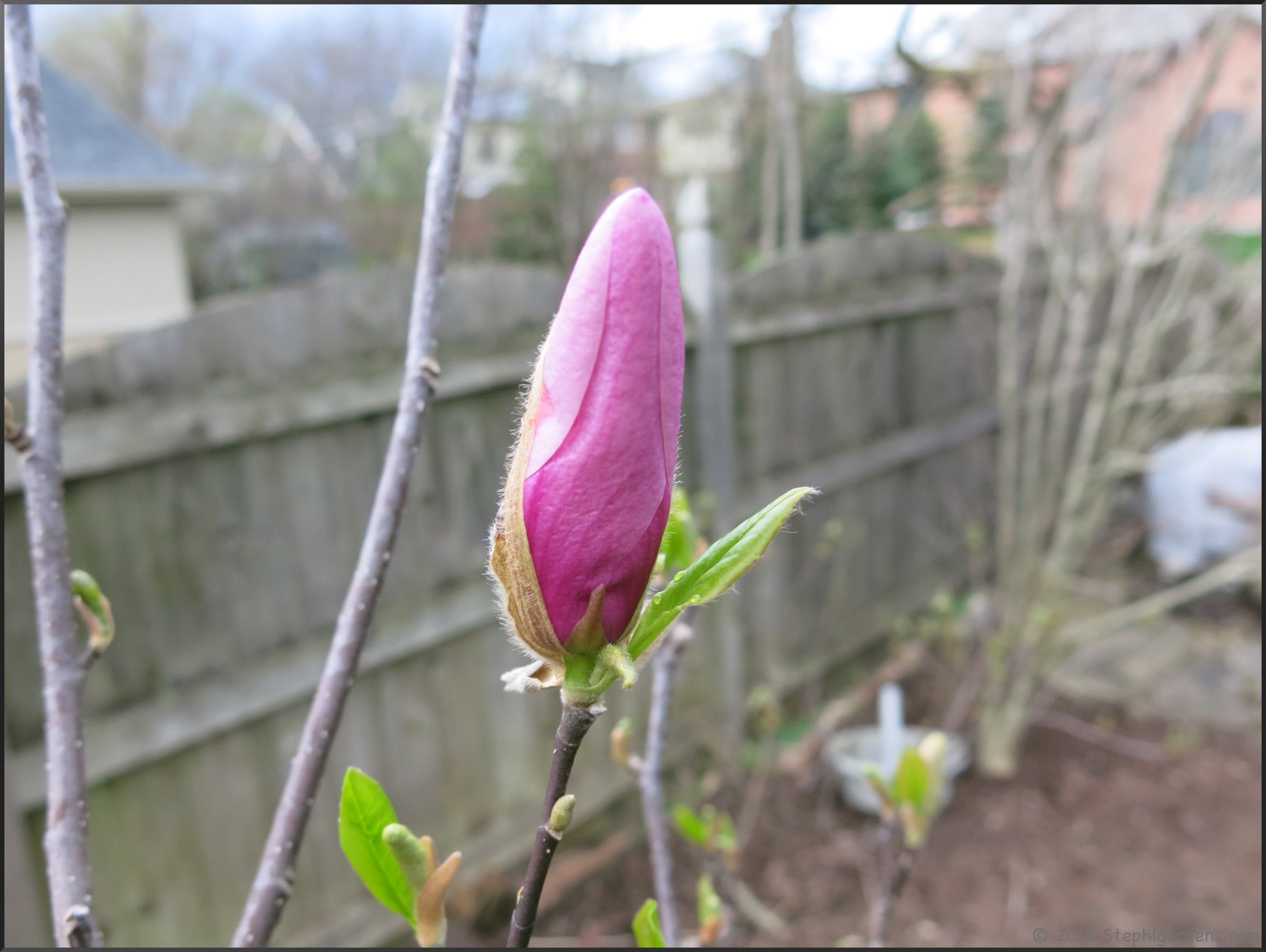
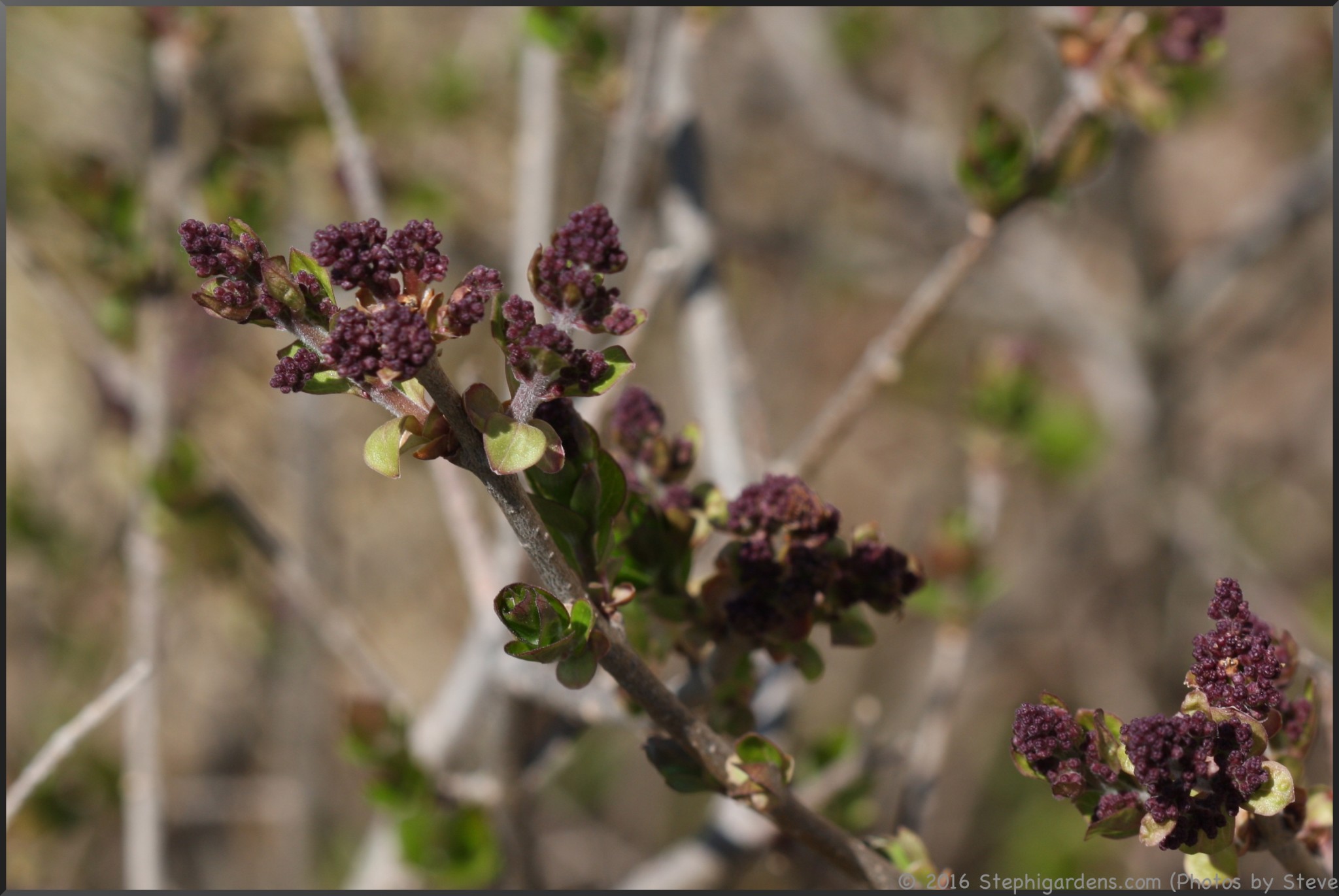
Spring is such an interesting time of year in the garden.  What survived the winter?  When will the spring blooms begin?  It seems every year is different in how and when the growing season unfolds.  I thought it was going to be an early spring, and then we had quite a cold snap and slowed everything down.  Or maybe just made it more normal, but its hard to know what normal is anymore.  In any case, as I was walking the yard I was noticing how pretty and interesting the shrub flower buds were.  I was so focused on waiting for the blooms, I hadn’t been noticing the beauty in the buds getting ready to explode in color.

Star Magnolia

IMG_5572 (2)

Redbud

IMG_5653

Sargent Crab

sargent

Jane Magnolia

IMG_5656

Dwarf Korean Lilac

IMG_0516

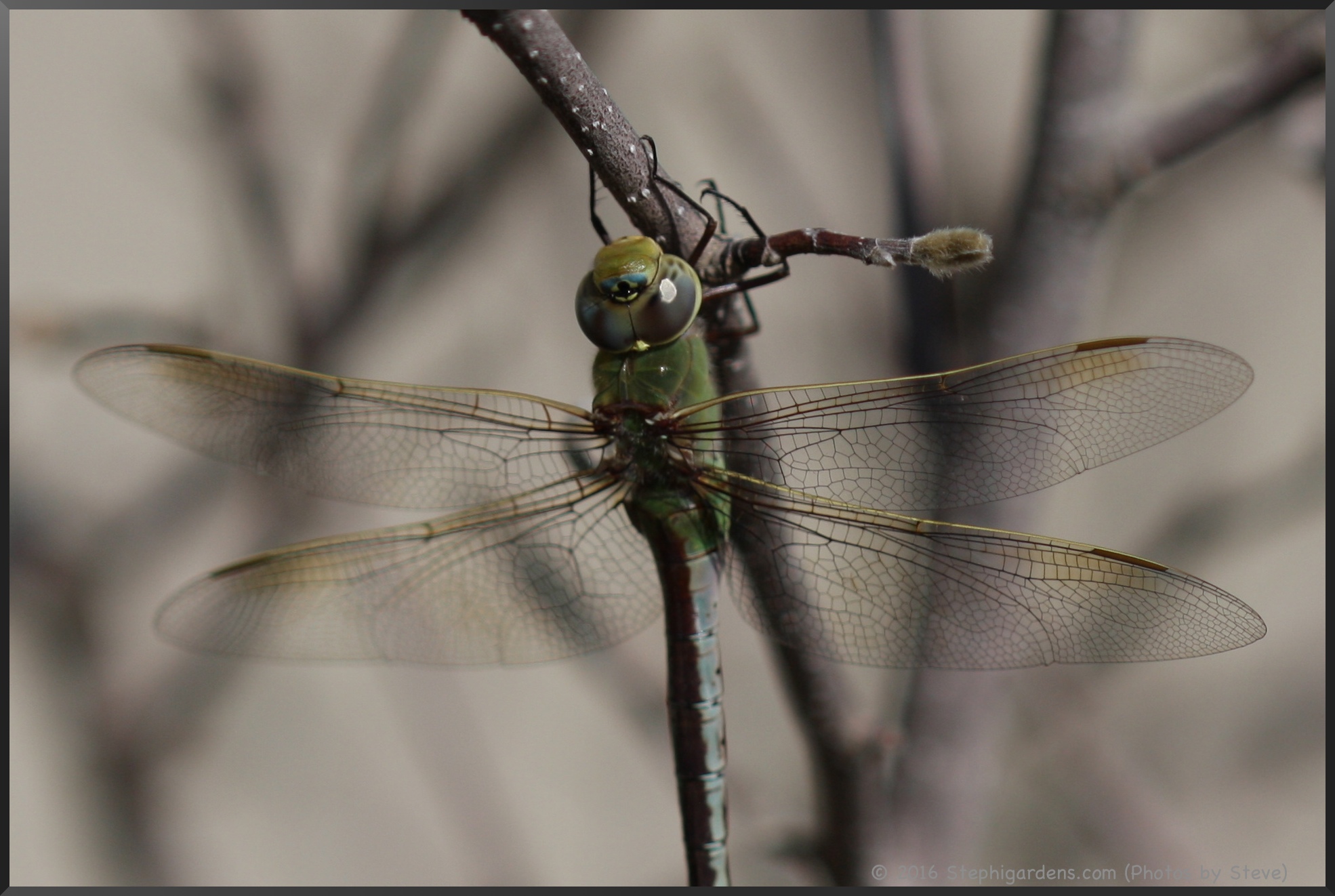
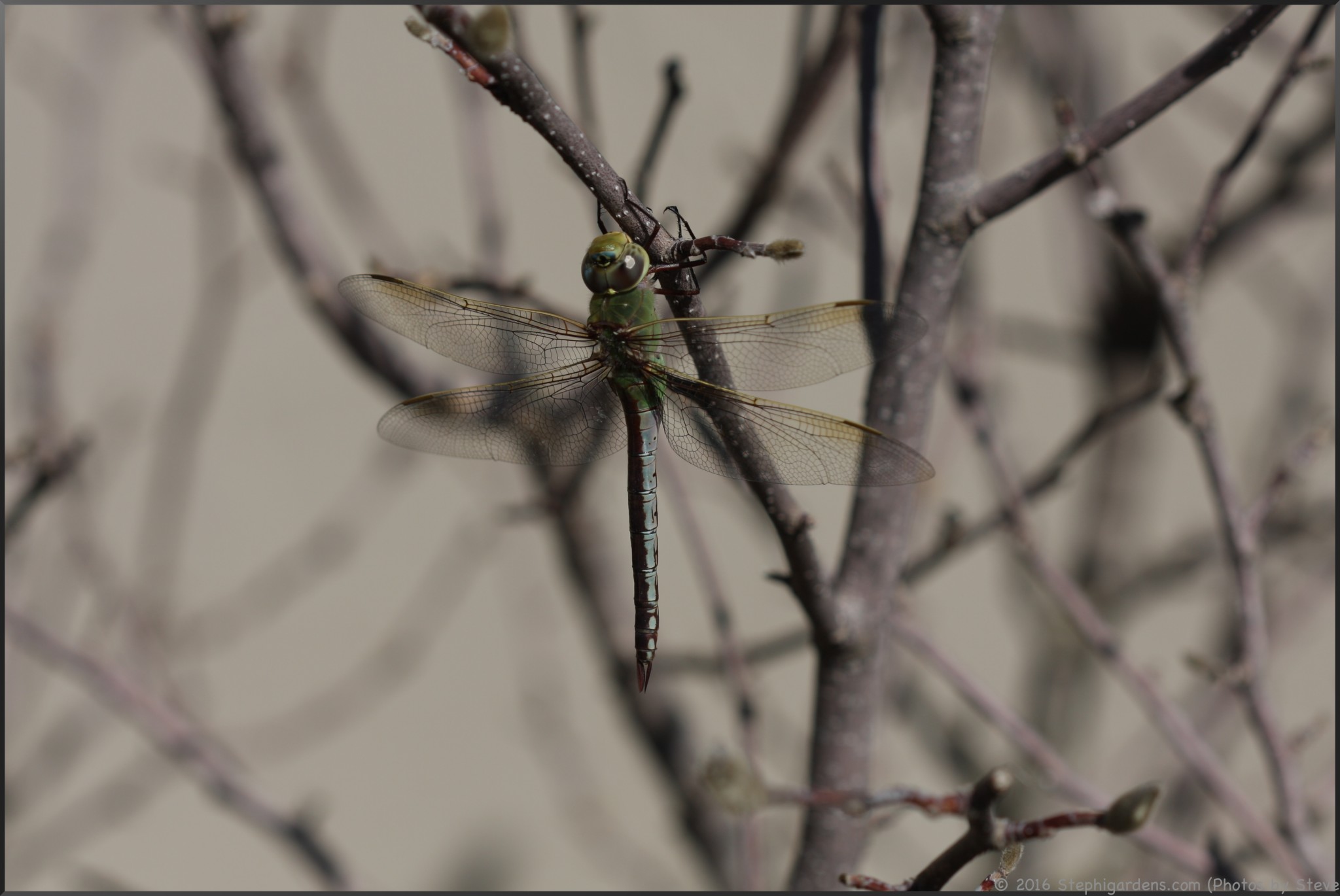
While we were out looking closely at the shrubs, we had quite a surprise when we saw this guy hanging out on the Star Magnolia.

Green Darner

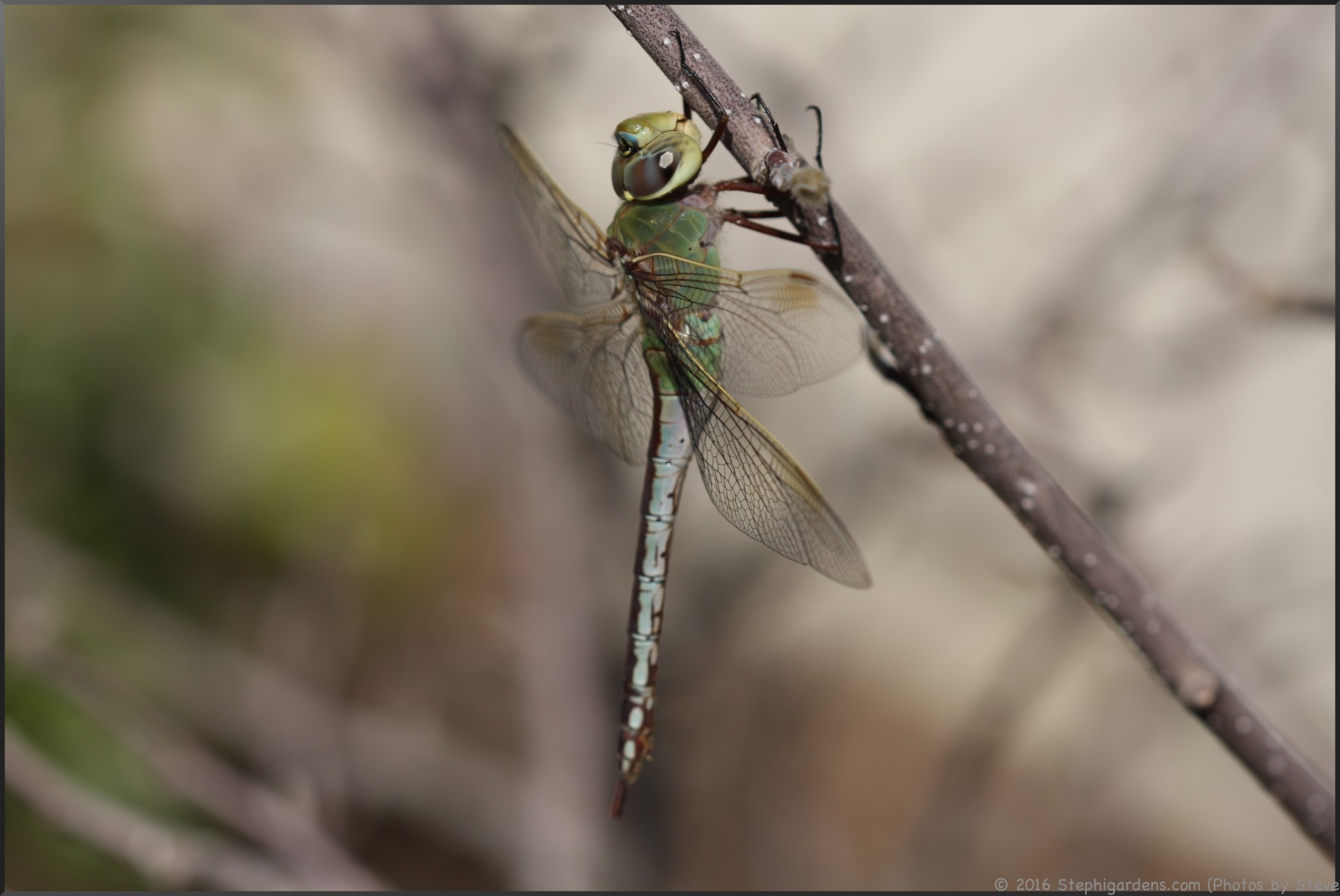
After consulting with my mom Peggy, who is my dragonfly expert, she identified it as a Green Darner.  It’s a fairly common, very large dragonfly and can be identified most easily by the very distinct “bull’s eye” on its forehead.

Green Darner

But why is this guy in my yard and not near any water?  Green Darners are one of the few migratory dragonflies.  There are two separate populations, one resident and one migratory, and to see an adult this early in the spring suggests that it may be part of the migratory group and he stopped off for a rest.  What a treat!

IMG_0498

IMG_0501

Want to read more?

Biokids: Anux junius

Wildscreen Arkive: Green Darner

Migratory Dragonfly Partnership

Happy New Year 2016

Happy New Year and Best Wishes for 2016!  I truly appreciate all who have visited my blog this year.  Here’s a look back at some of my most popular posts of 2015!  

Tomato Florida Weave

1.   Taming My Tomatoes With A Florida Weave:  My tomatoes were a mess, so I tried something new to try and keep things in order.


Blue Jay

2.    The Blue Jays are Back (and That’s Not a Good Thing):  What to do when you have nuisance birds at your feeder?


Garlic3.  Warding Off The Vampires:  This was my first try at growing garlic.  Easier than I thought and definitely worth the effort.


Multi stemmed Freeman Maple Autumn Blaze4.  So Long Beautiful Maple Tree:  Sometimes things go terribly wrong with plant.  In this case, construction and cold brought about the demise of our beautiful Freeman Maple


IMG_38415.  November in Chicago:  This fall was quite an unusual one.  Here in Chicago, the plants were quite confused as to the time of year and it made for an interesting fall.


clematis wilt6.  Something’s Wrong With the Clematis and Clematis Stem Wilt: An Update to Something’s Wrong With The Clematis:  The wet spring affected a lot of plants.  Many of us saw some terrible die back of our clematis due to Clematis Stem Wilt.  Hopefully next spring everything will rebound.


westie7.  Little White Pepper Thief:  Apparently Westies love peppers.  I didn’t get any sweet or hot peppers from my garden this year because of my little thief 🙁


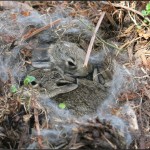
rabbit nest8.  Spring Surprises:  Even when you think you know everything in your garden, you get surprised!


Callicarpa9.  Beautyberry Bushes:  Did They Survive the Winter?  After a winter like we had, I thought I had lost my new bushes.  But, they are one of the last to leaf out in the spring, so I’m glad I was patient.  


IMG_349510.  Fall in Northern Michigan/Stumbling Upon Club-Mosses:  This was one of my favorite posts of the year.  Not only was fall in Northern Michigan stunning, my mom and I stumbled onto a forest area full of a club mosses.   Very cool to see and explore.


..and a few of my all-time most popular posts:

Curled Leaves On The Bushes (August 2014)

Creeping Thyme Problems (April 2014) and an update in August, Oops, September Garden Update 

Painting Rock Garden Markers (February 2014)

Pelicans In Illinois (September 2013)

Our Family Christmas Tree (December 2013)

Hope you keep visiting, I have all kinds of ideas to keep everyone in the gardening mood all winter.  

Remember, you can also find Stephi Gardens on Facebook, Instagram, Pinterest and  Twitter.


November in Chicago

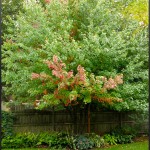
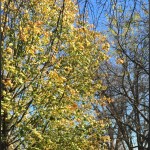
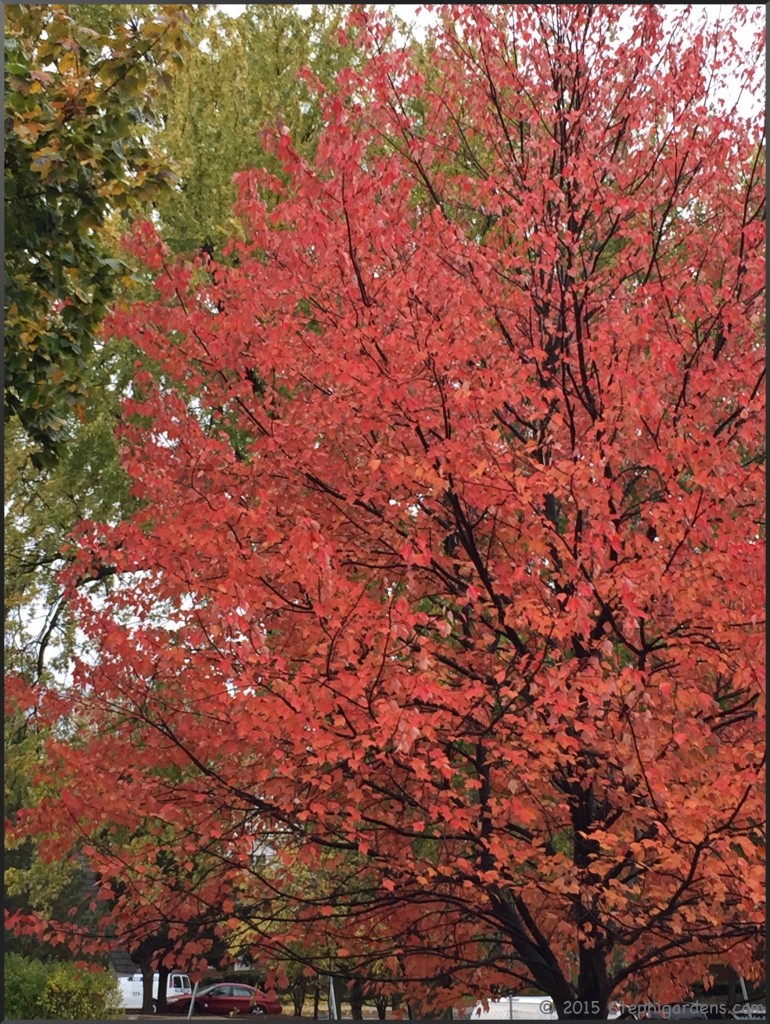
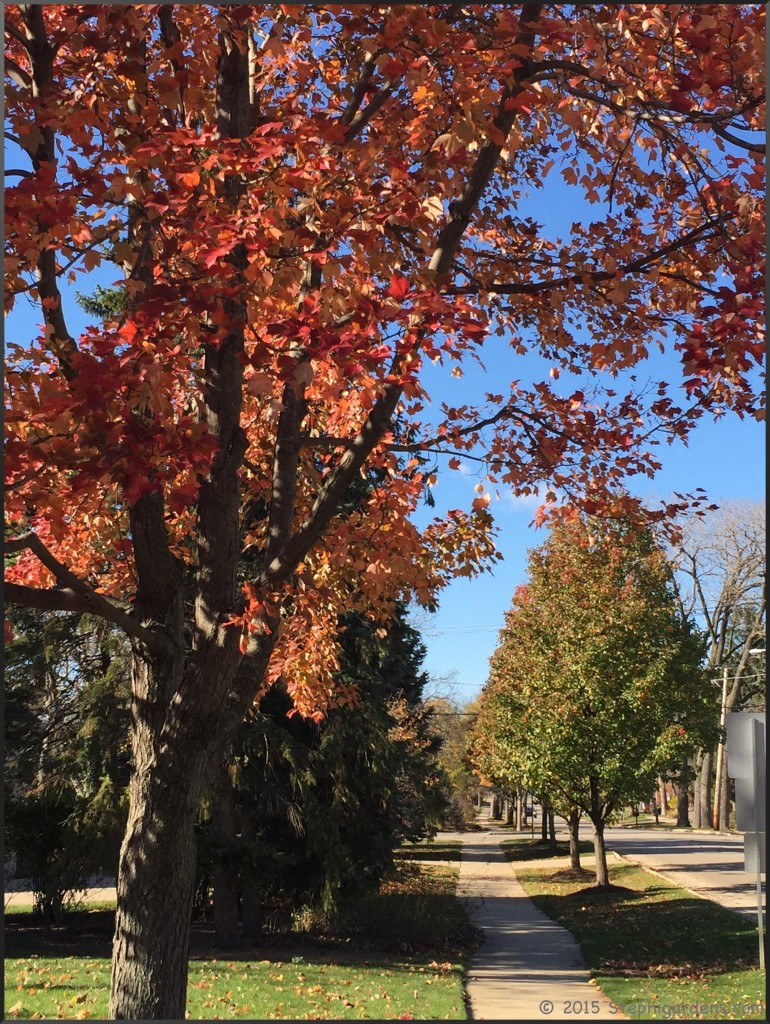
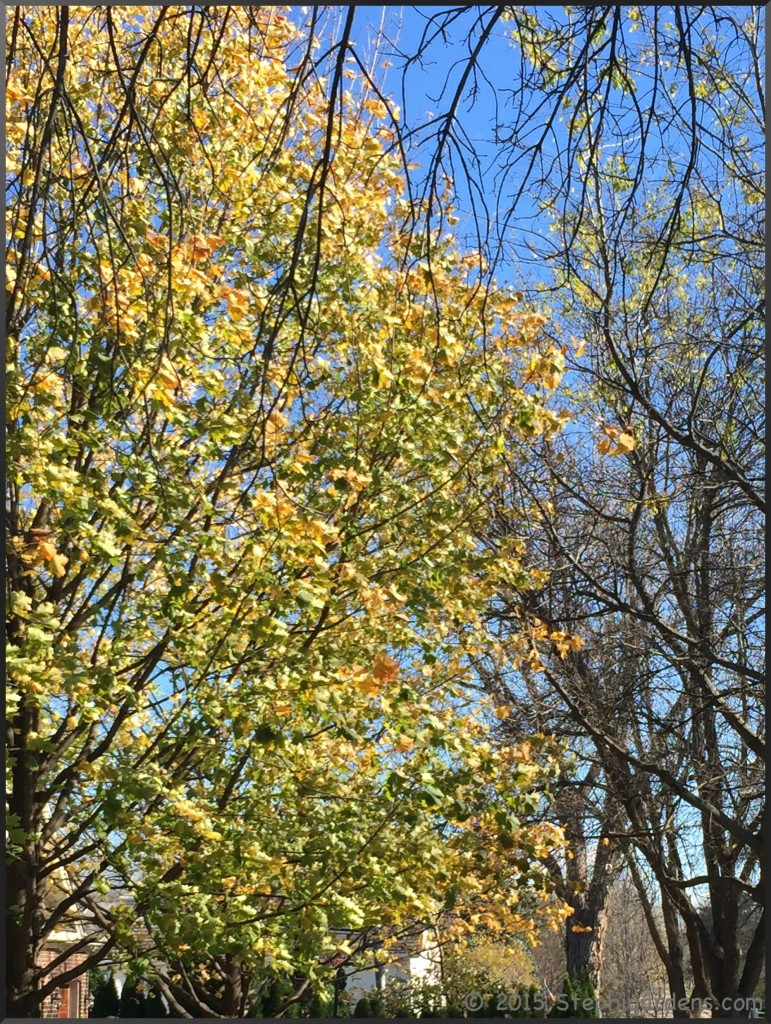
Watching fall unfold here in suburban Chicago has been an odd event this year.  There have been spectacular tree colors, but it’s been happening over the course of about 6 weeks instead of one glorious event.  So instead of enjoying a panorama of color like in Wisconsin and Michigan, I’ve been admiring individual trees for weeks.

autumn blaze maple

IMG_3836

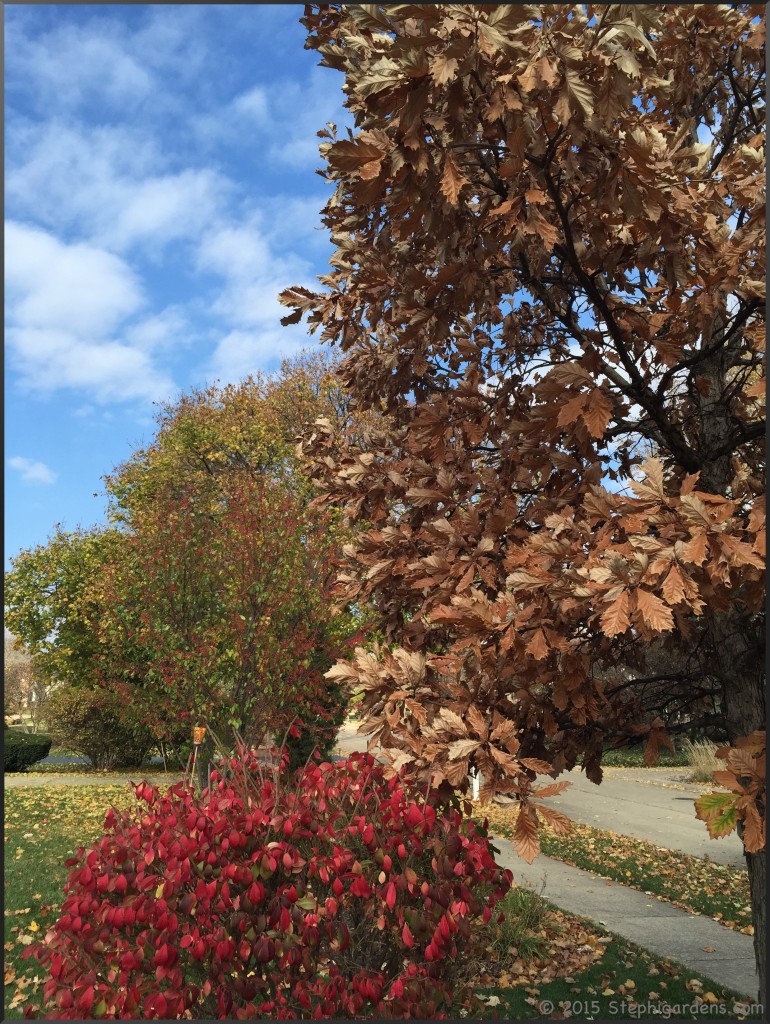
Even at this late November date, there are trees that are still showing green or color dappled leaves, right next to a tree that has already dropped all its leaves.

IMG_3841

Now if it was just a particular type of tree, like an oak, that’d be understandable since they always hold their brown leaves well into winter (and sometimes spring).  But it’s random maples, viburnums, burning bushes and others.

IMG_3794

I’ve never seen this serviceberry have so much fruit!

serviceberry fruit

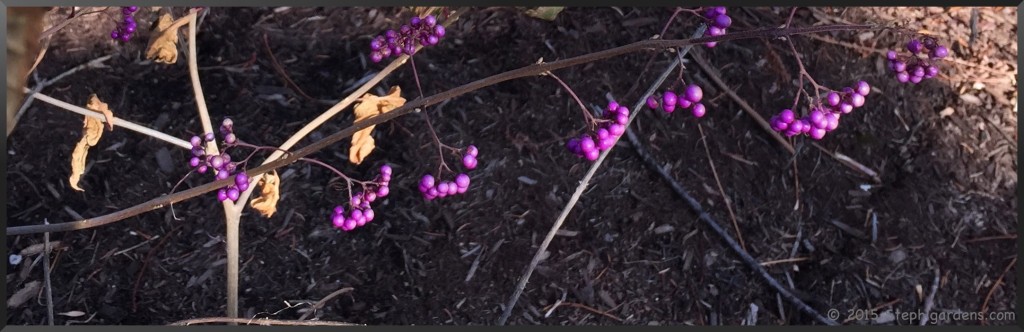
The Purple Pearls Beautyberry Bushes (Callicarpa x NCCX1), after a very slow start had a great fall display of purple berries to liven up the yard.  (Beautyberry Bushes, Did They Survive the Winter?)

beautyberry bush

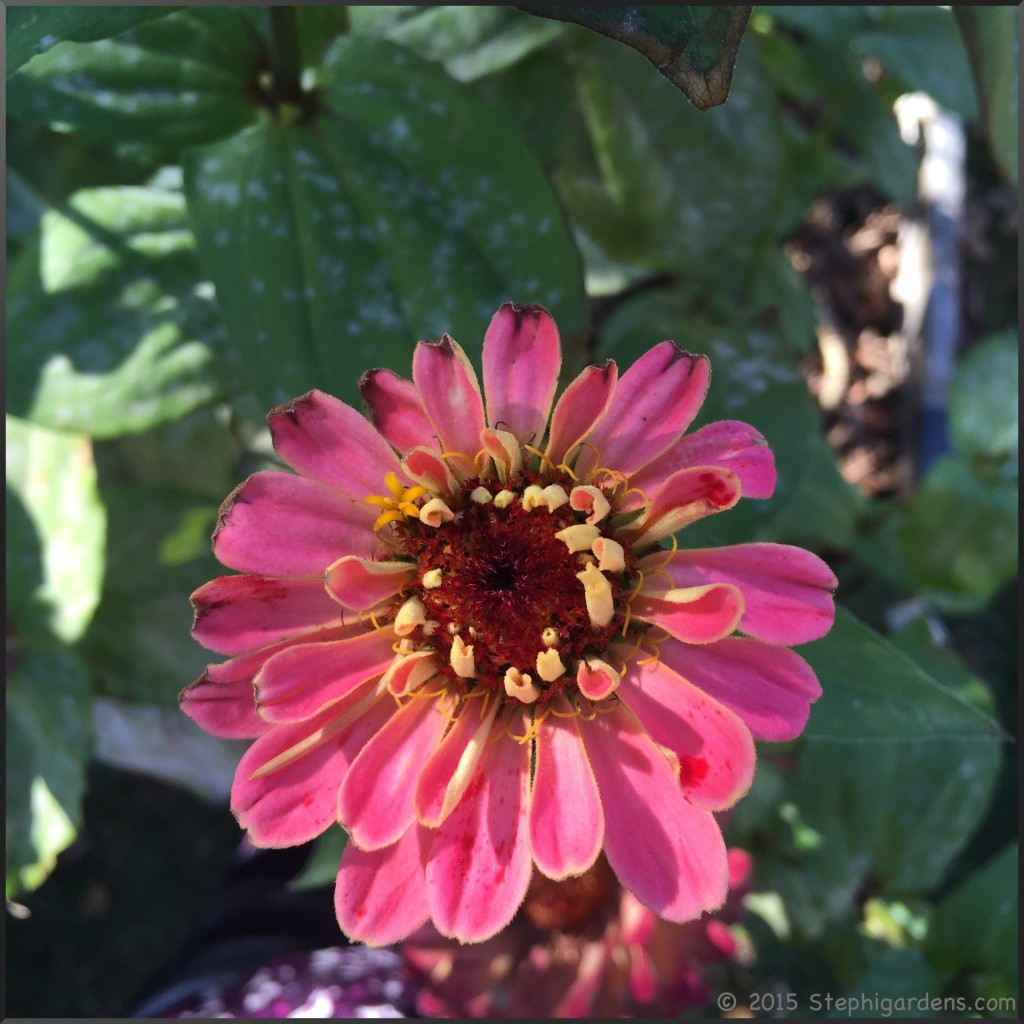
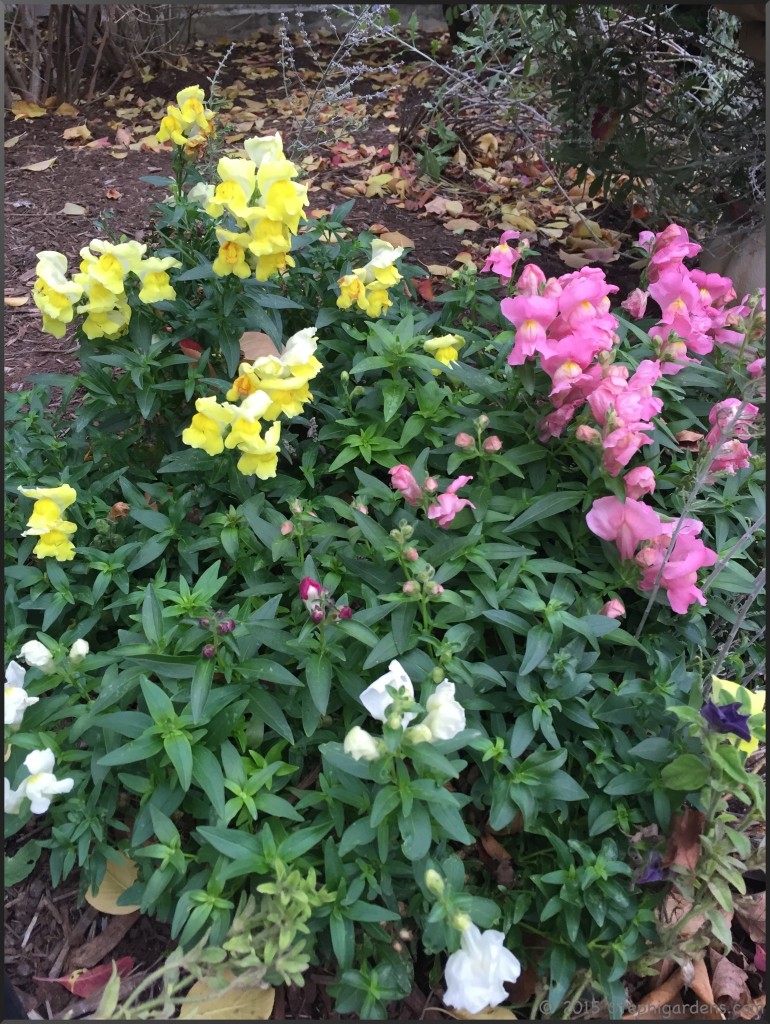
Some flowers and vegetables haven’t minded the mild fall.

IMG_3700

IMG_3810

IMG_3814

sweet hundreds tomatoes

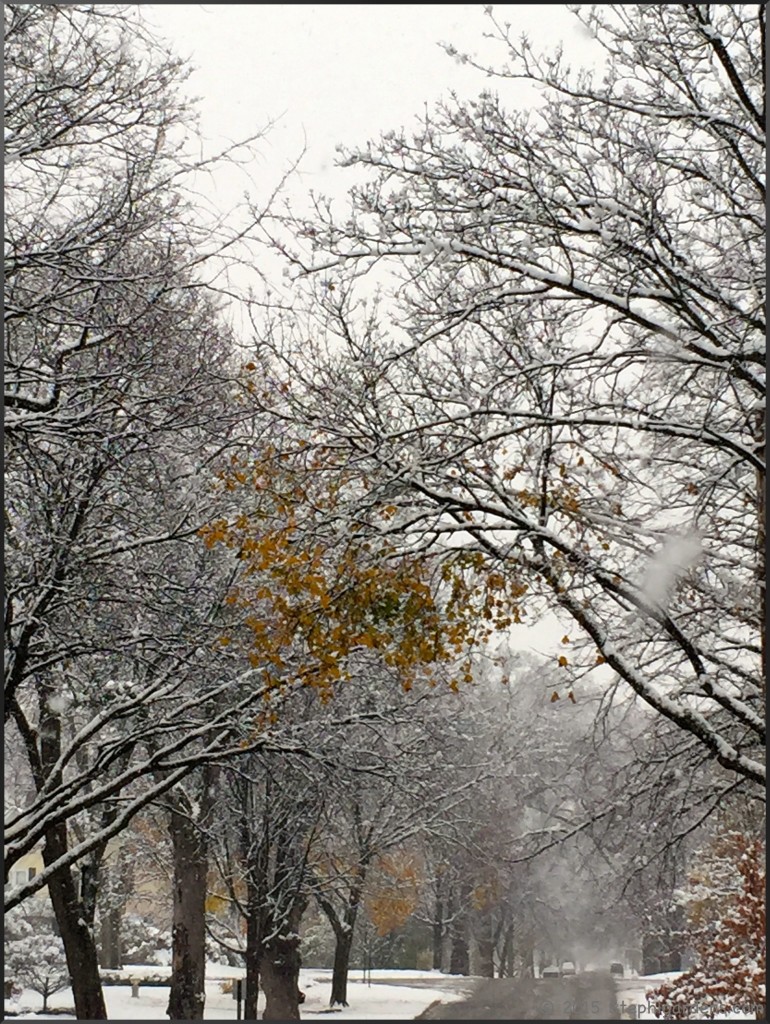
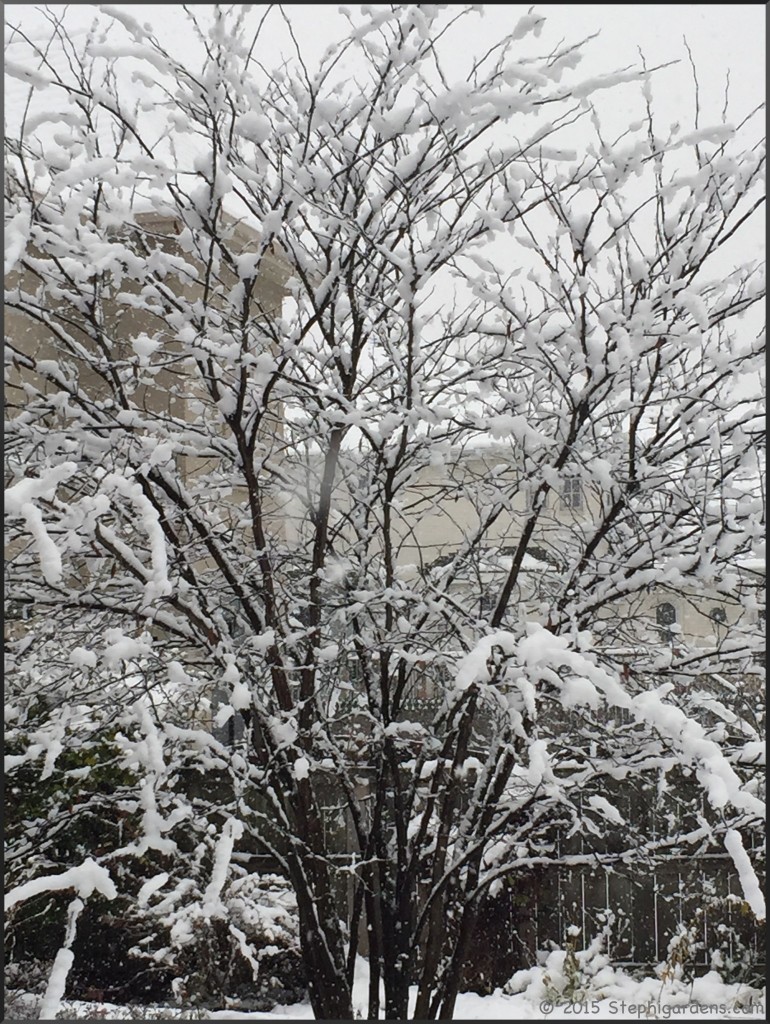
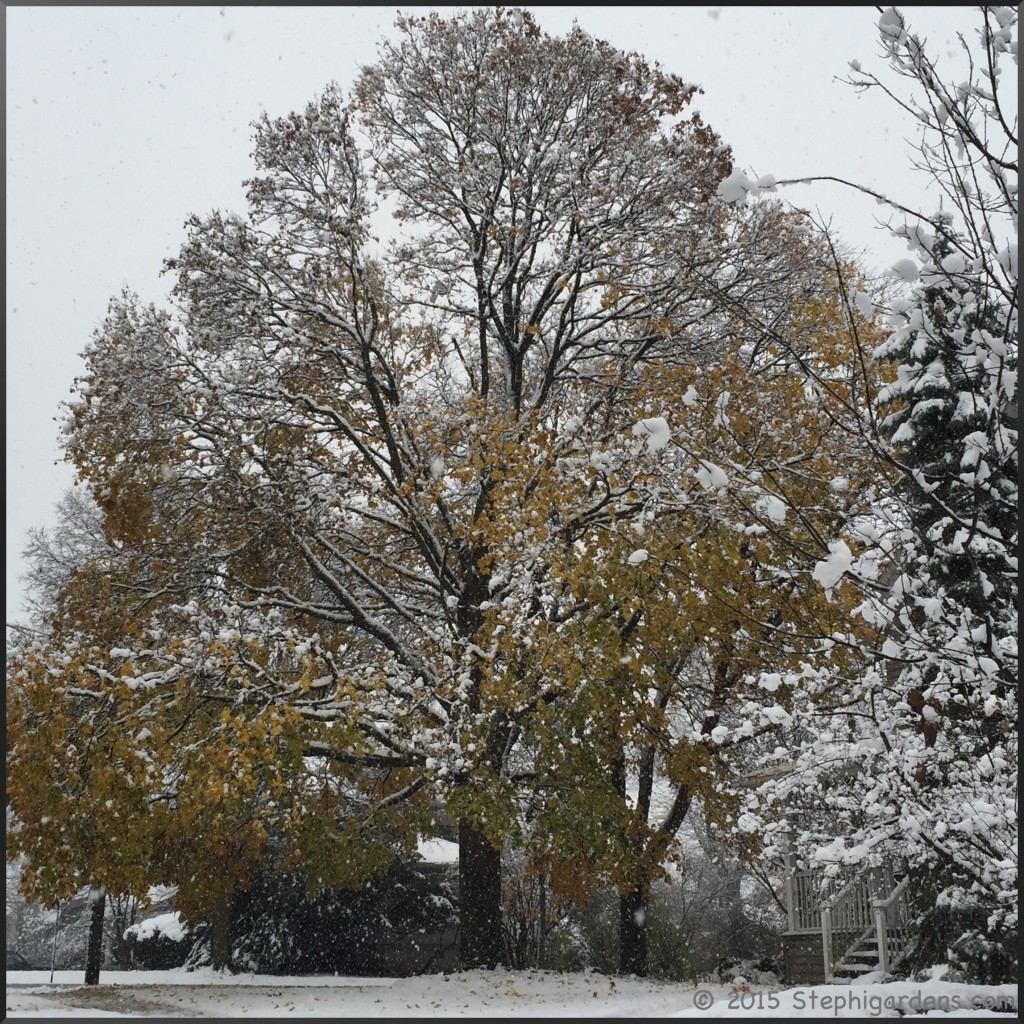
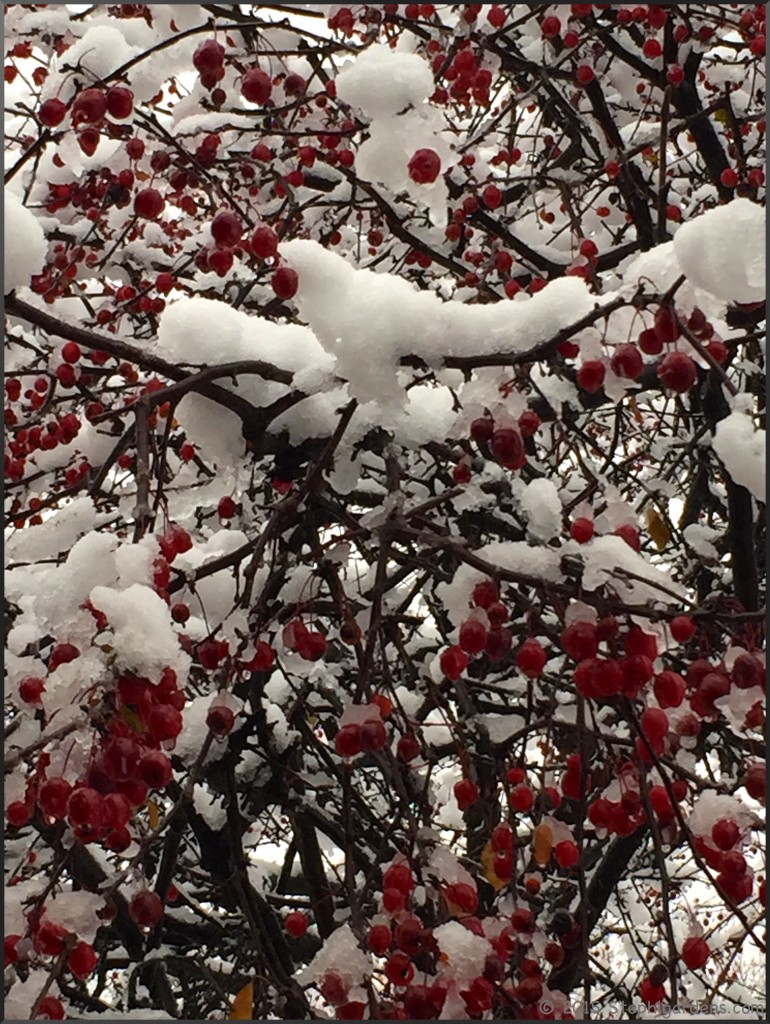
And then, even with leaves in the trees the week of thanksgiving the snow has arrived! Lots of heavy, wet snow.  The kind that looks really pretty, but is tough on the trees and shrubs. And the back!

IMG_3918

redbud in winter

IMG_3921

The Common Witch hazel was blooming prolifically this fall after having some changes to the surrounding bushes giving it more space and sun.

witch hazel flowers

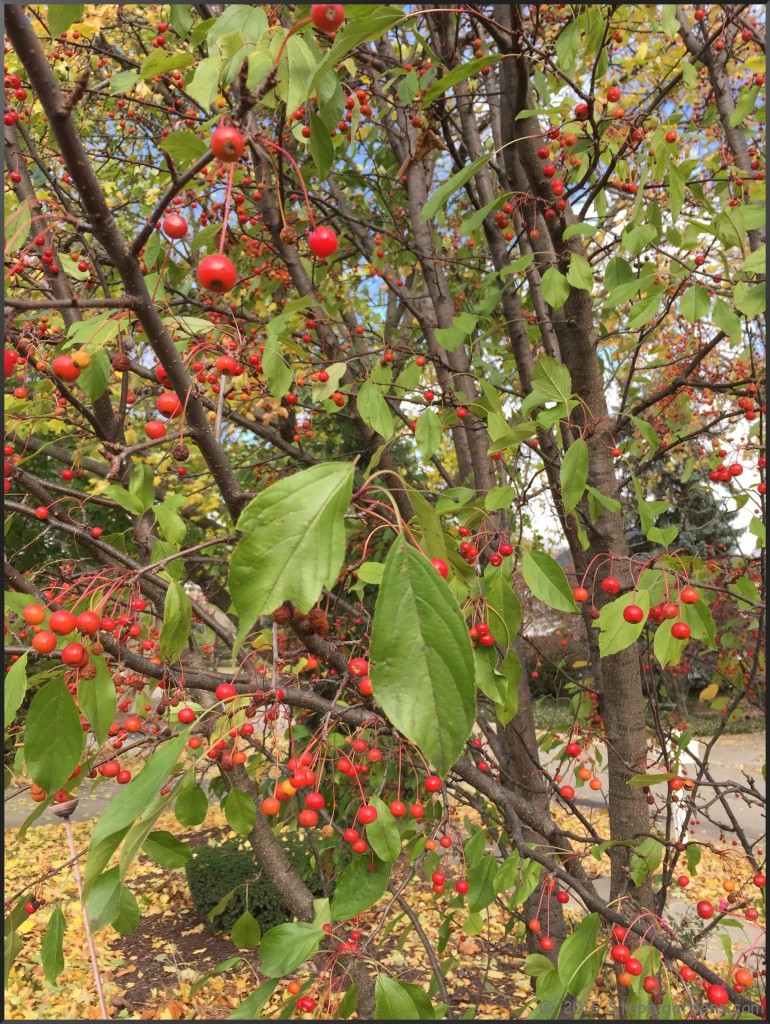
crabtree fruit

 How was your fall?