Spring 2020: Garden Roundup-Veggies

I’ve had a lot of time during this pandemic to plan and tend to this year’s garden. I can’t say I’ve minded this part, I’ve actually really enjoyed the time to get back to basics in the garden.
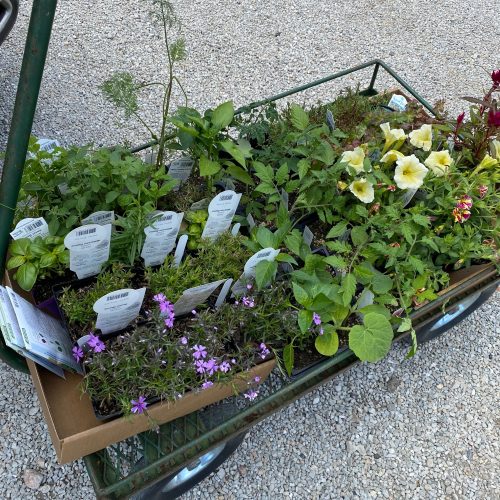
Like usual, I started a number of vegetables in the house from seeds and shopped for the rest at the local nursery (shout out to Vern Goers Greenhouse that was thankfully open, with appropriate restrictions of course).
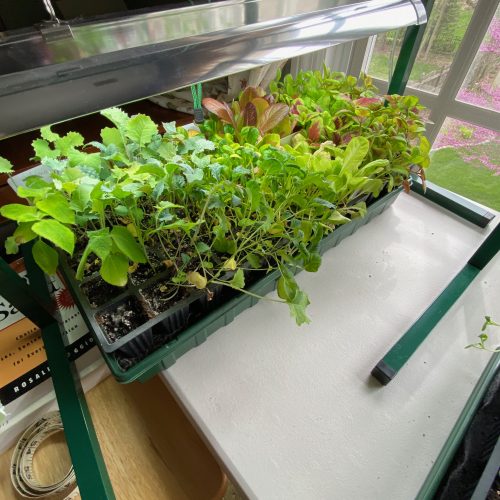
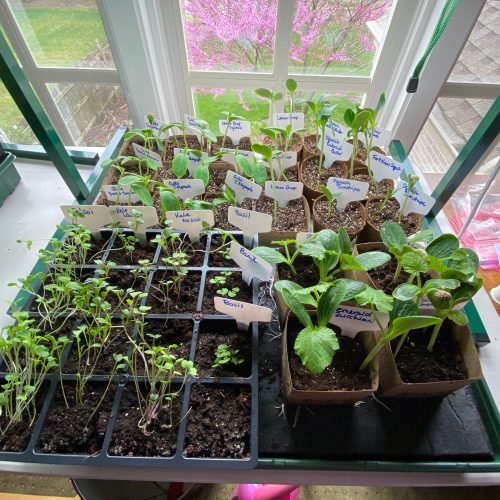
We had a bad cold snap in early May, so I kept everything nice and cozy under grow-lights in the house and in the mini greenhouse on the porch.
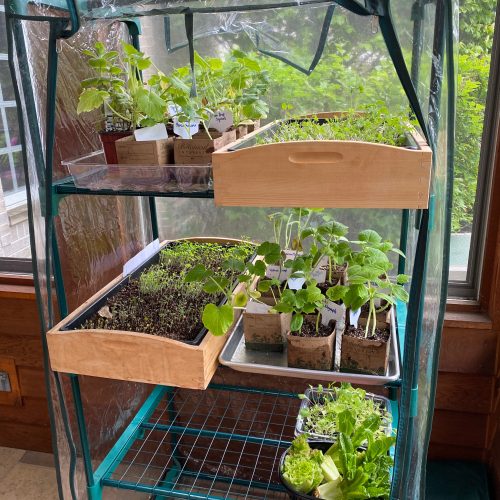
I am so looking forward to a summer of fresh vegetables straight from the garden.

What did I grow this year from seeds in the house?

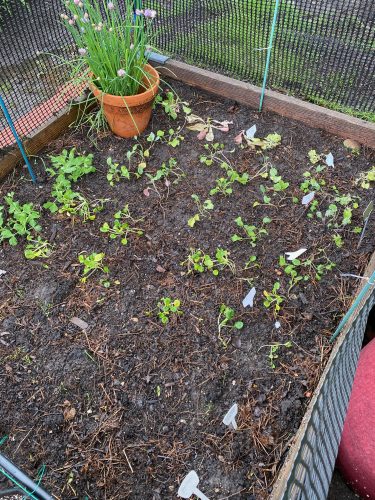
What seeds am I starting outside?

What plants did I buy?

  • Redarling Brussel Sprouts
  • Sun Gold Tomato
  • Early Girl Bush Tomato
  • Juliet Tomato
  • Sweet Million Cherry Tomato
  • San Marzano Tomato
  • California Wonder Sweet Pepper
  • North Star Sweet Pepper
  • Habanero Peppers
  • Kohlrabi

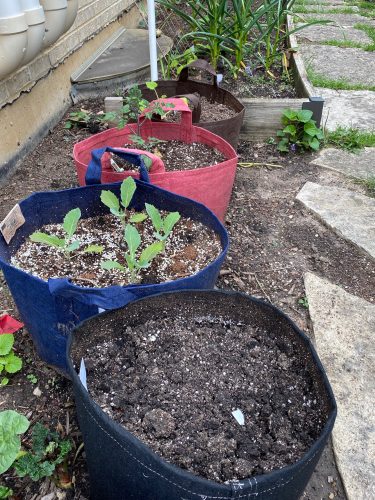
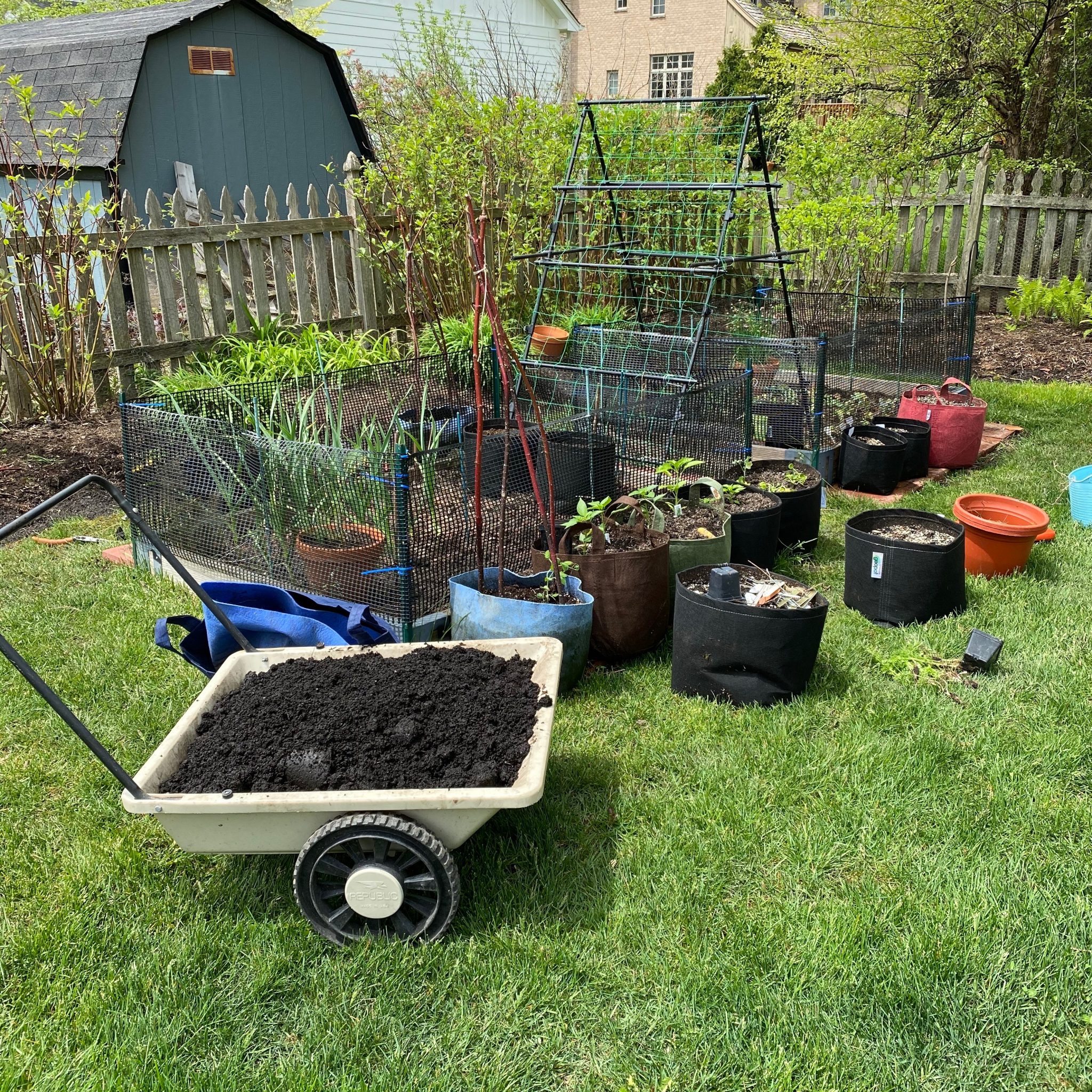
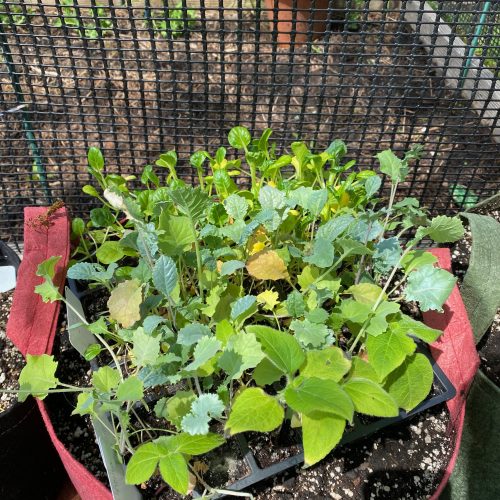
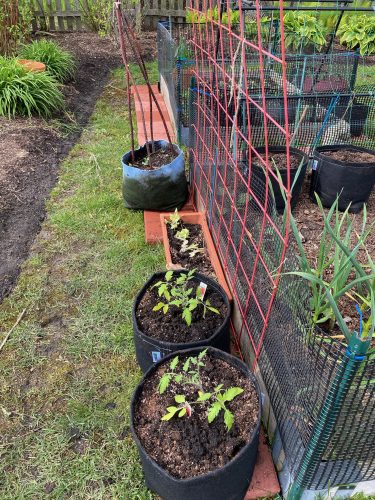
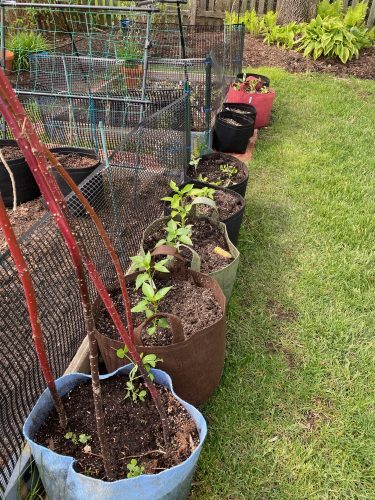
Here’s some of the seedlings I grew in the house, all ready to plant. Some I planted in one of the raised beds, others in my new fabric root bags.
What did I try new this year?
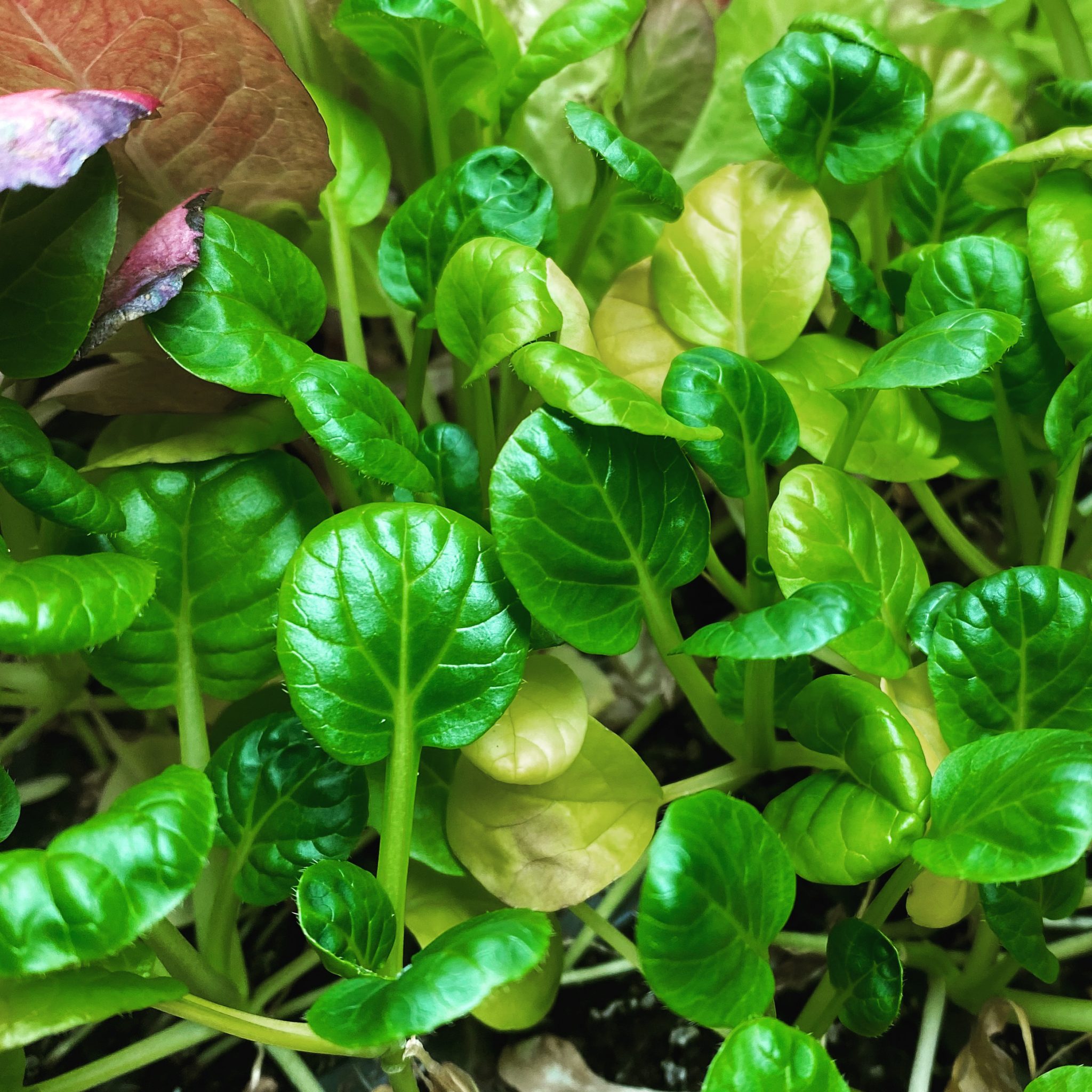
Tatsoi! I didn’t even know this was a thing until it popped up on an Instagram post by Baker Creek Heirloom Seeds. We’ve had to change up our diet a bit to eliminate high oxalate foods like rhubarb, spinach and swiss chard because of kidney stones. 🥺 So out of the garden they went. Instead, I am growing an abundance of kale (which I’m not a huge fan of but learning to like it), lettuce, microgreens, sprouts, brussel sprouts and this new tatsoi green.

According to Baker Creek Heirloom Seeds, “Tatsoi is nicknamed Vitamin Green, and rightfully so. This gourmet green is known as one of the richest sources of vitamin C and it is replete with other incredible vitamins, minerals, and health-promoting compounds! It’s super sweet and easy to love, with a mild and refreshing flavor. The low-growing rosettes are comprised of tiny, glossy spoon-shaped leaves that boast crisp and juicy mouth-feel.” As a bonus for us, it’s related to cabbage/mustard, so low in oxalates! I can’t wait to try it out.

What else is new?

Lots more fabric grow bags! I couldn’t really expand my gardens very easily, so went in a different direction. I bought a variety of sized bags from A.M. Leonard and GeoPot and a LOT of potting soil/compost/peat. Watch for a future post on this adventure. I have so much more garden space, I’m making another trip to the nursery!
One more thing…

My herb garden has always been on the north side of the house. right outside the side door. Very convenient. The herbs grew “fine”, but they really could have used more sun. I finally decided to move them since I had the time to think where they should go.
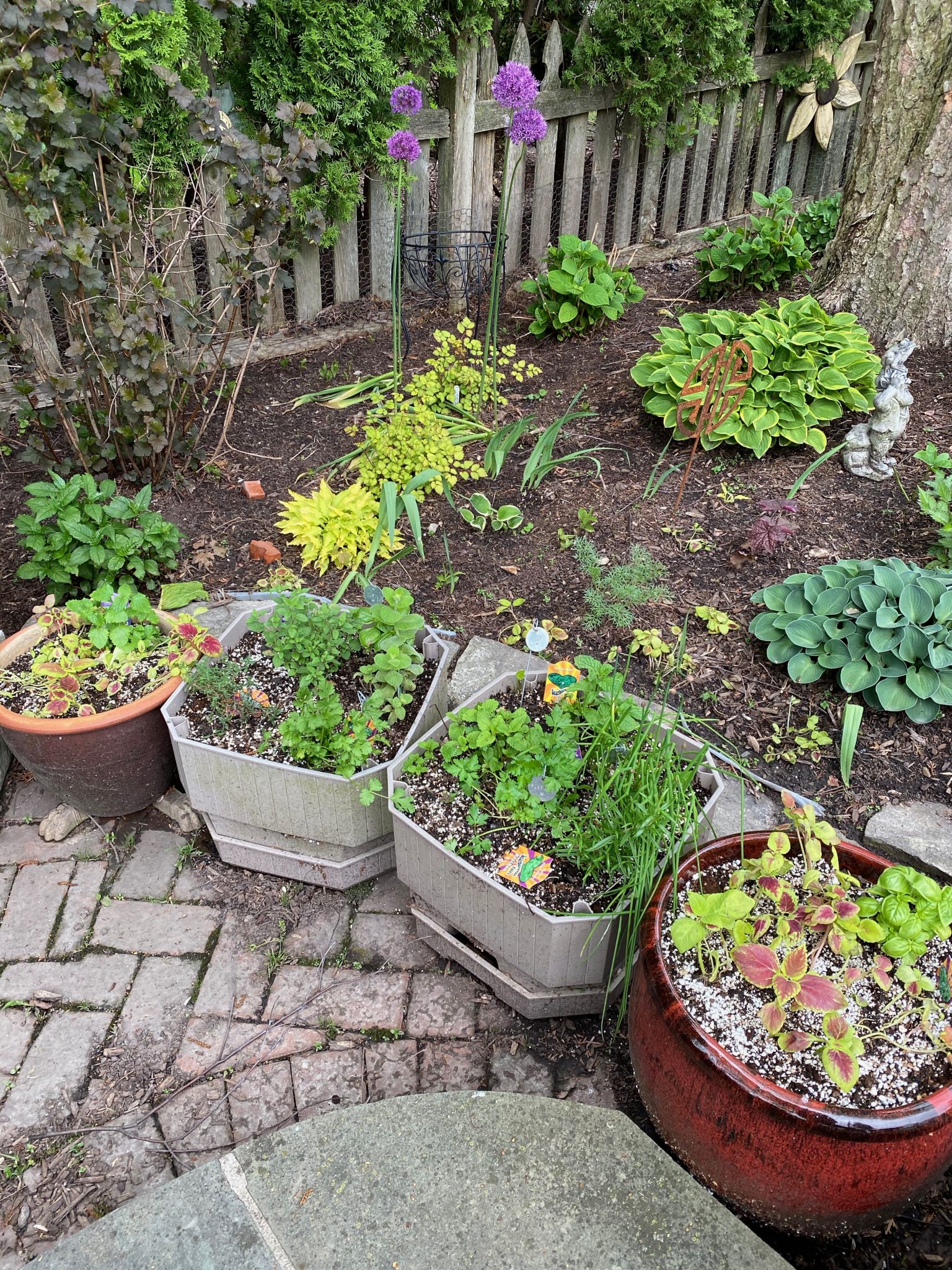
They are a little further away near the grill, but still convenient. Definitely will get a lot more sun. On either side are the coleus pots I plant every year. They add some pretty interest to the area and attract pollinators. I started then from seeds inside this year instead of buying them. Much less expensive and easier under the circumstances. But I think I should have started them earlier. They’re a little small right now, but with some sun and heat, they’ll take off.

How is your vegetable garden this year?
2018 Garden Recap: Vegetables (Part 1) (aka Attack of the Squash Vine Borer)

In my last post, I wrote about how my flower gardens fared this year. Next up is the vegetable gardens.

In a word, this year the vegetables gardens were a disaster. Not for any one reason, just a lot off bad things conspired to really take a toll and make it one of the worst years I’ve ever had gardening. Makes me long for the days when I gardened in New Jersey and everything just grew lush and beautifully. Except for the year I had hornworms on the tomatoes. Those were disgusting.

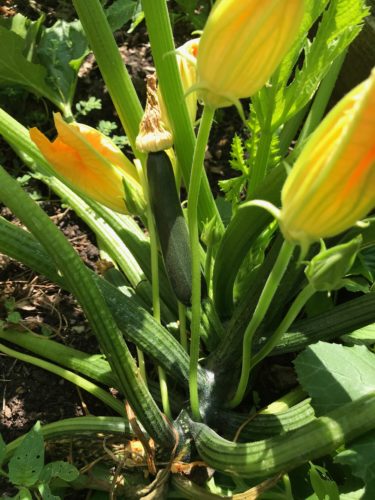
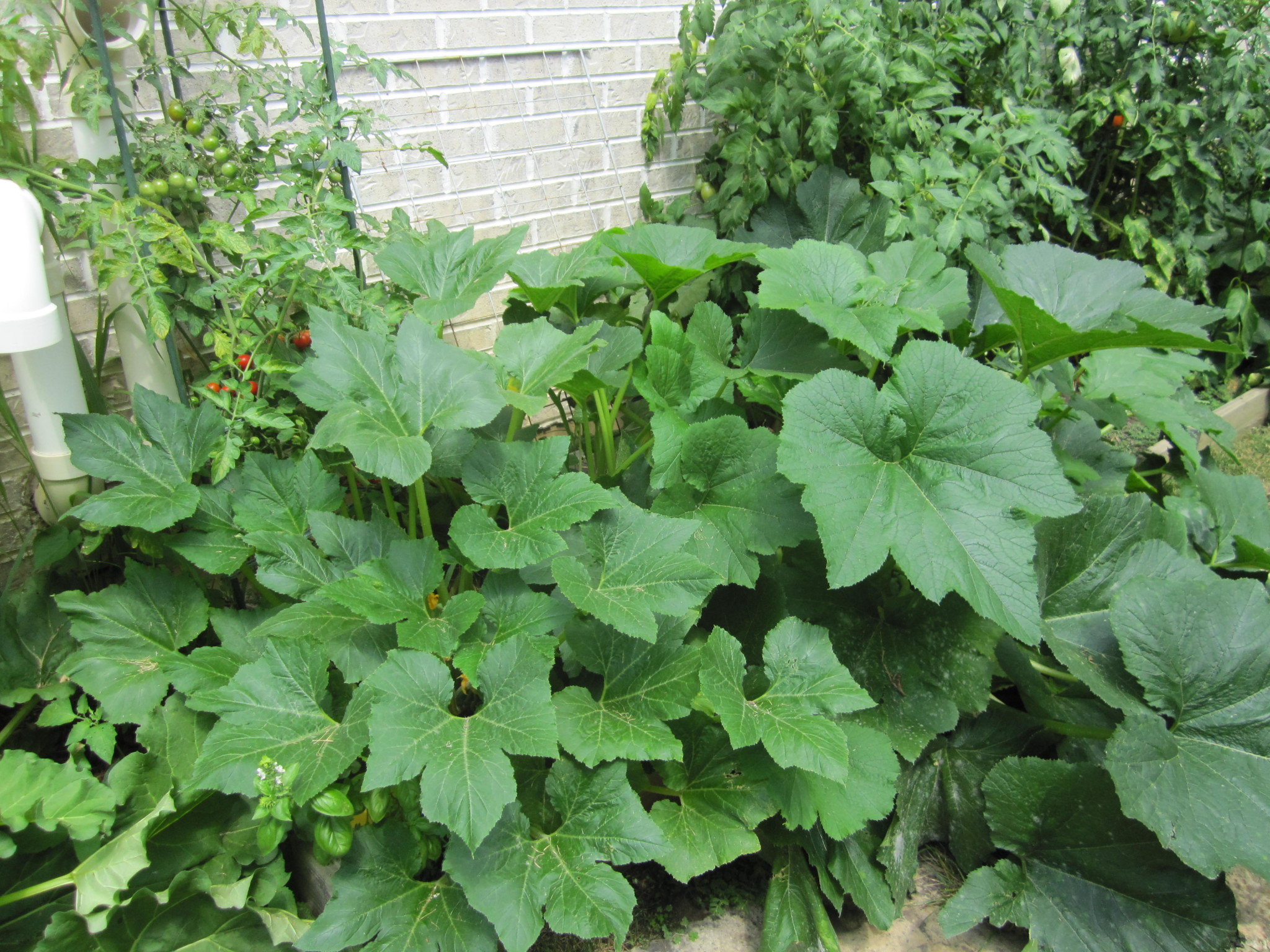
Back in the spring, I was so hopeful for a summer of fresh vegetables. But that was not to be. The squash and zucchini was looking great through early July. I was getting tasty Emerald Delight Zucchini (Botanical Interests) and Gold Hybrid Gourmet Gold (Burpee), and the vines were covered in flowers.

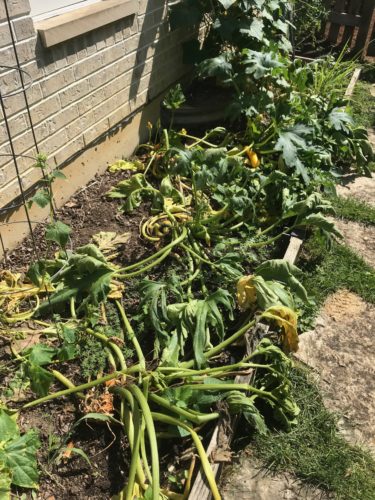
Then over about a week in early July, they just up and died.

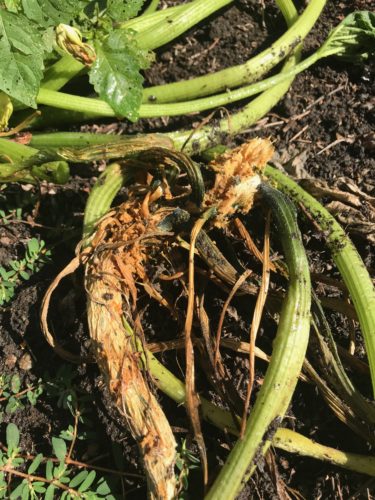
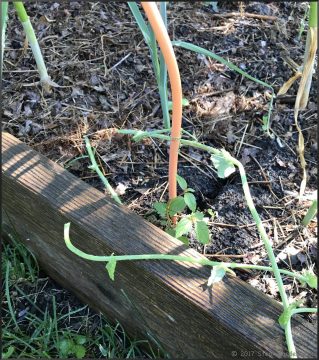
I thought it was powdery mildew, but it was so dramatic. I’ve had plenty of powdery mildew and it didn’t really look like it. I pulled it all out and threw it into a garden waste bag (you don’t want diseased plants hanging around your yard). Didn’t think much of until I was writing this post and wondered what had really happened. As soon as I started doing some investigating, it quickly it became quite obvious from the pictures that mine had been attacked by squash vine borers, not powdery mildew.

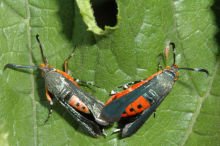
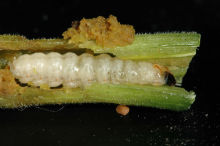
All that orange mess around the base of the plant is a moist orange sawdust-like material called frass, or insect droppings. It was everywhere. Yuck. That is a sign that the squash vine borer larvae is eating away at the material inside the stems of the plants. I never looked close enough to see them, but the evidence was pretty overwhelming. Here’s photos of the adult and larvae (Photo credit to the UMN Extension)

So what to do now? Obviously I totally lost this year’s crops, but how do I prevent this from happening again?

First off, I need to be better about practicing crop rotation. I pretty much never rotate crops to different garden areas, but obviously I need to be better about that. Squash vine borers spend the winter in the soil near their recently infected host plants, so I need to have next years plants as far away as possible.

Then, according to the UMN Extension, I will need to check for adult squash vine borers starting the end of June. I’m not sure if I’ve ever seen them, but I will be on the lookout after this. You can also try to use some kind of container filled with water with yellow food coloring added to attract and trap them.  Check each day to see if you’ve trapped any.

If you do find the squash vine borers in the area you’ll need to change things up a bit. Easiest is to practice crop rotation. You can also try planting other crops that aren’t as susceptible like butternut squash, cucumbers, melons and watermelons. Although none of them are really substitutes for summer squash and zucchini.

Try planting a second planting in early July after any adult borers have finished laying eggs on the mature plants. But, this is tough in the northern climates that already have a short growing season.

Try using a physical barrier.  Wrap a collar of aluminum foil around lower stems to prevent egg-laying. Alternatively, secure floating light fabric row covers over your squash until they start to flower. Don’t use row covers if the infected squash plants were planted in the same area as the previous year. This is because squash vine borers spend the winter in the soil near their host plants. When the adults emerge the following summer, they may be trapped under the row cover instead of being kept out.

Hopefully this was a one time event and I can go back to having way too much squash and zucchini for one family to eat. Whenever something like this happens, it really makes me appreciate the organic farmers who grow on a large scale and how precarious each year’s crop is. At least I can just pack it in for the year and go to my local farmer’s market.

There’s a lot more good information on how to deal with these pests at these sites:

I would like give a shout to the land-grant University Extensions and their educational and problem-solving assistance they provide to the public. These community outreach programs provide invaluable scientific knowledge and expertise on a variety of topics. I’ve watched a number of webinars on gardening topics from the University of Illinois Extension and have found them to be really interesting, useful and free!

Have you ever had a whole crop wiped out like this?

Next post will look at the rest of the vegetable garden–stay tuned!

July Vegetables

My spring vegetables really took a beating from the rabbits and the weather. Even though I had shored up the rabbit fence around the yard, all it took was a couple of holes and I had a nice happy family of rabbits devouring almost everything I planted. Radishes, swiss chard, spinach, lettuce, kale, beets and carrots were all gone. The last straw was when my bean plants were each bitten cleanly off at the base.

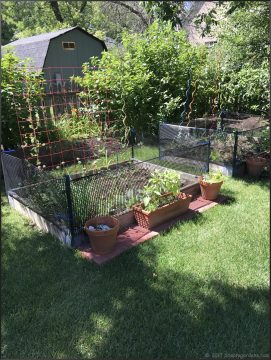
Since this spring was a loss, I put up a rabbit fence around these two beds to protect what was left.

By now the weather has turned too warm to replant any cool weather seeds, so I’ll have to put my focus into what’s remaining and plan for some fall planting.

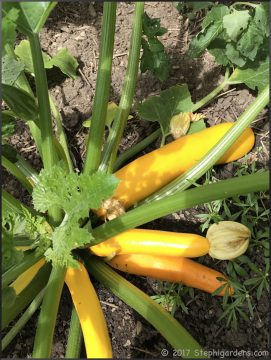
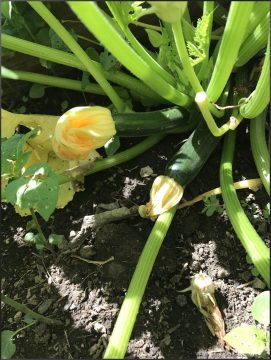
The Gourmet Gold Hybrid Summer Squash (Burpee) is truly a beautiful bright yellow summer squash and seems to be an early and heavy producer. A great addition when trying to eat a “rainbow of colors”. The Emerald Delight Zucchini has just started producing and so far I’m liking what I’m harvesting. Both are wonderful on a fresh veggie platter!

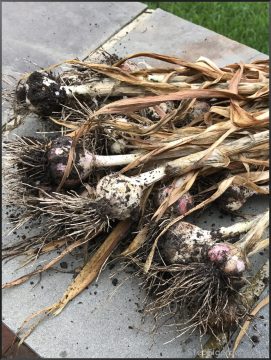
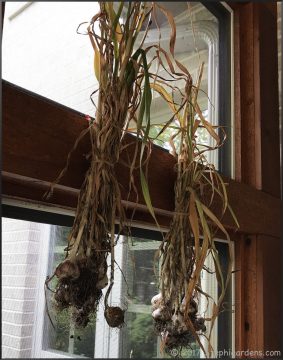
The garlic was ready to harvest last week and it’s now curing on the porch! I’m so spoiled by the amazing taste of homegrown garlic, that come late spring I dread having to buy garlic.

I planted the hardneck varieties Music and Purple Glazer, and the softneck Early California from Botanical Interests this year. My WI garlic is a little bit behind and probably won’t be ready for a couple more weeks. Want to know more about growing and harvesting garlic? Check out my previous garlic posts or search for the tag “growing garlic” on the right sidebar.

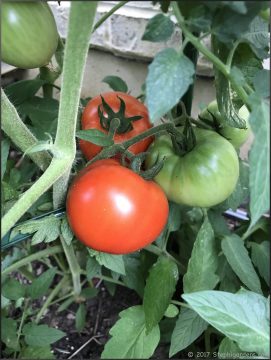
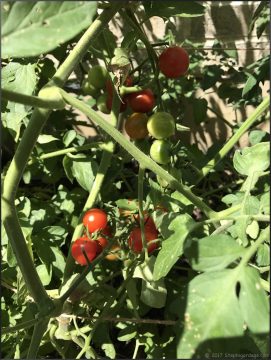
The Early Girl tomatoes have lived up to their name and already been producing tasty tomatoes perfect for salads and sandwiches, and the Better Boys aren’t too far behind. The Super Sweet 100’s cherry tomatoes are just starting to ripen as well. Tomato season is here!

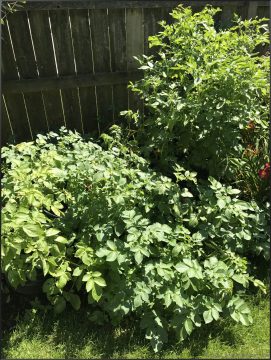
Last but not least are my potatoes. I planted a lot of Yukon Gold and Dark Red Norland potatoes. Even had to buy more potato bags to plant them all. They look really healthy this year since they’ve had plenty of rain. Want to grow your own next year? It’s really easy to do and fun to find all those potatoes in the fall. Check out my how-to’s on planting, growing and harvesting potatoes.
How are your vegetables doing? Have weather or creatures been a problem for you?
Maybe since it’s been cooler in WI, and the garden fenced in better, I’ll have better luck with the mid-summer harvests of my spring planted seeds that I planted there. I’ll be checking on that soon.


Save

Save

Save

Save

Save

My New Raised Beds-Construction

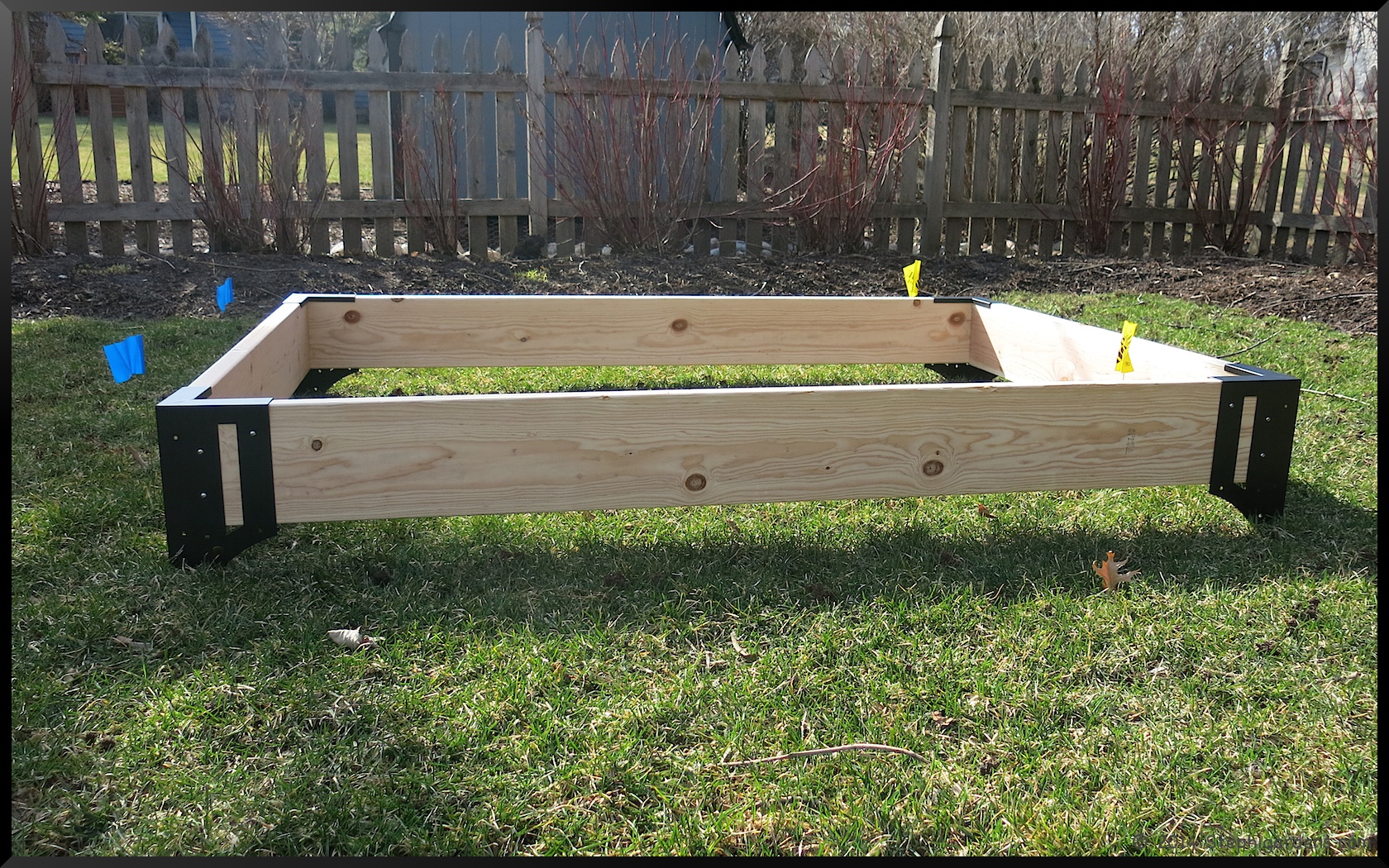
It took a couple of weeks because of the weather and finding the time, but the new raised vegetable beds are finally finished!  We had scoped out a site last fall that got a reasonable amount of sun and wouldn’t interfere too much with existing beds, drainage, play space for the kids, etc.  Getting full sun on my yard is a bit tricky, but most of the beds will be in full sun mid-summer, and the parts that aren’t, I’ll plant accordingly.  After measuring it out, we decided two 4’x6’x8″ beds were the ideal size for the space.  Anything more than 4′ wide is too difficult to garden in physically.

Raised vegetable bed

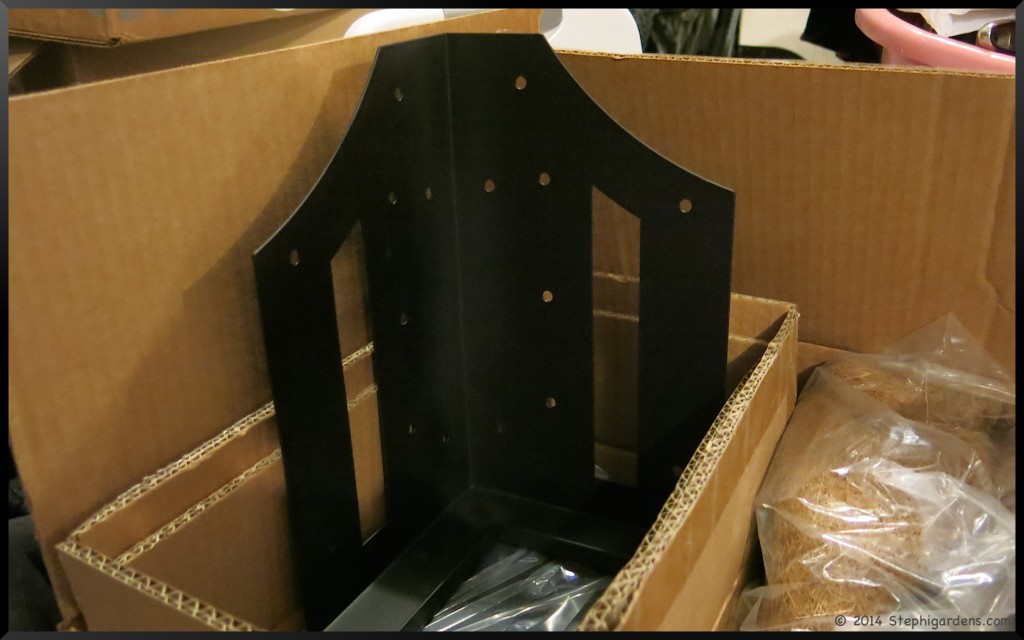
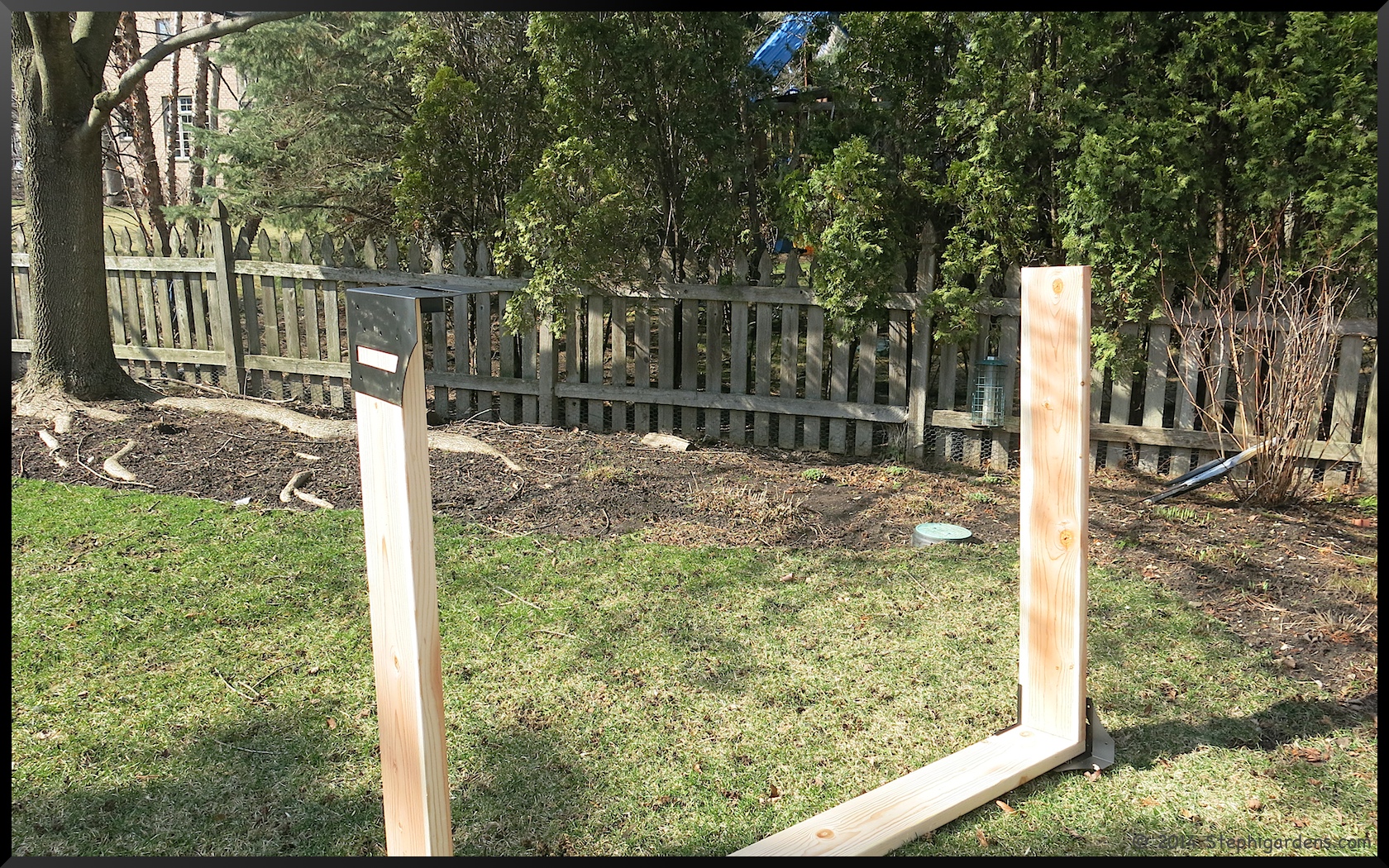
 I bought corner brackets from Plow and Hearth to simplify the construction of the beds.

raised beds

Then we went to Home Depot to get lumber.  We had planned to use cedar, but they only came in 6″ heights.  That just seems too short and doubling was too high and expensive.  We researched our options and finally decided on regular pine.  While they are not pressure treated, we used them on the other beds and after 3-4 years, they are weathered, but fine.  The possibility of eventual rot outweighed the potential toxins in pressure treated wood. To make the job a bit easier, we had Home Depot cut the boards for us for free.

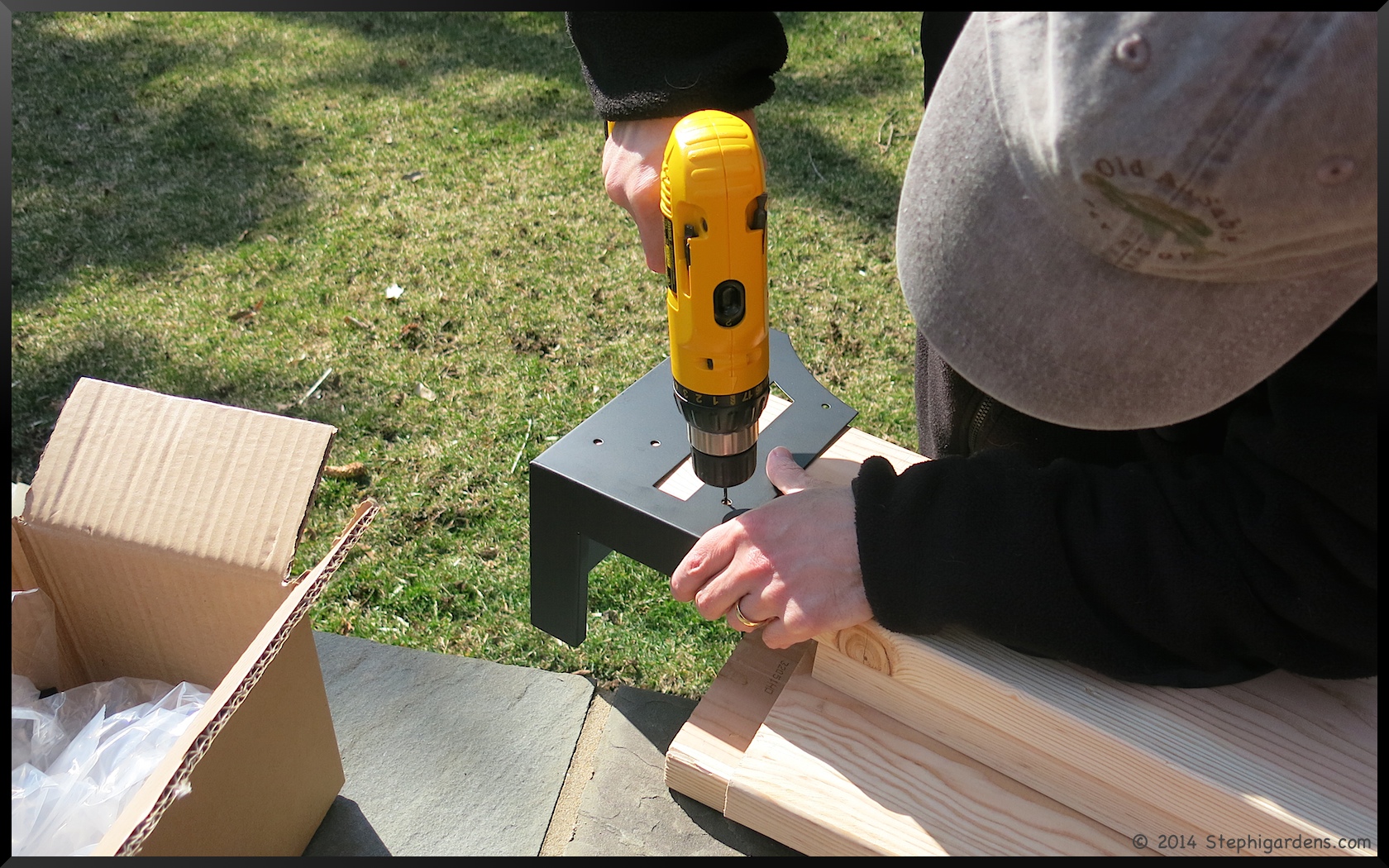
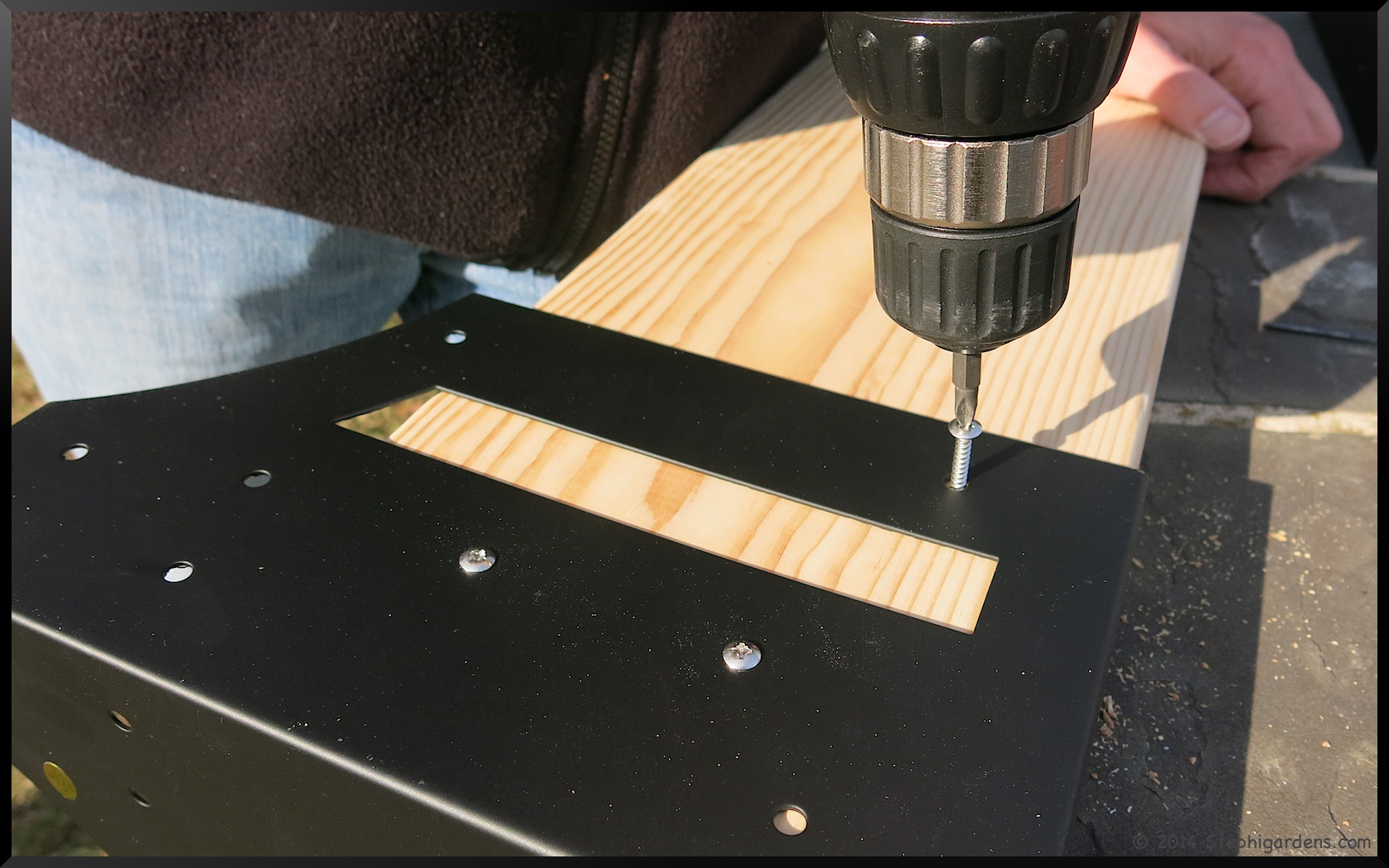
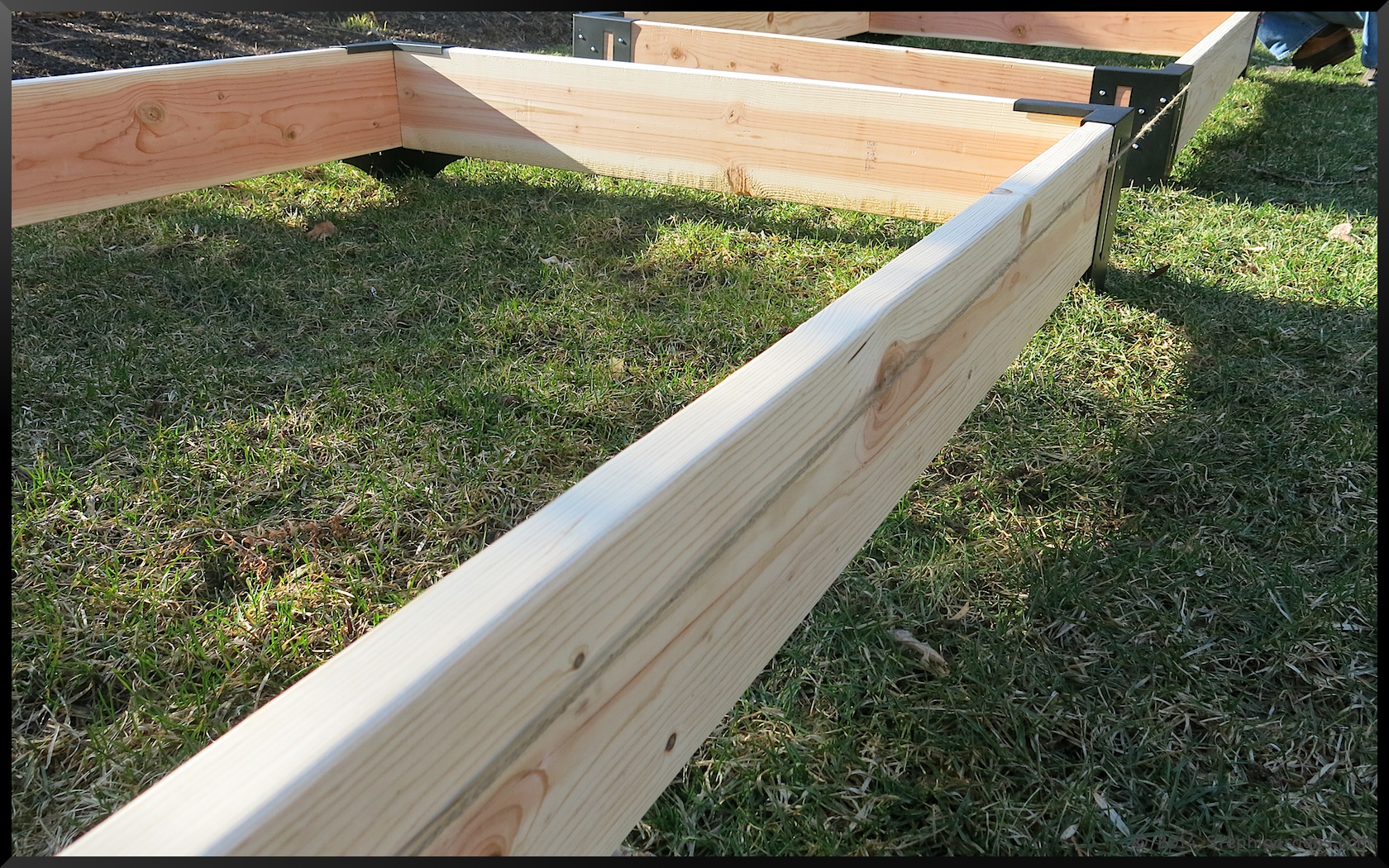
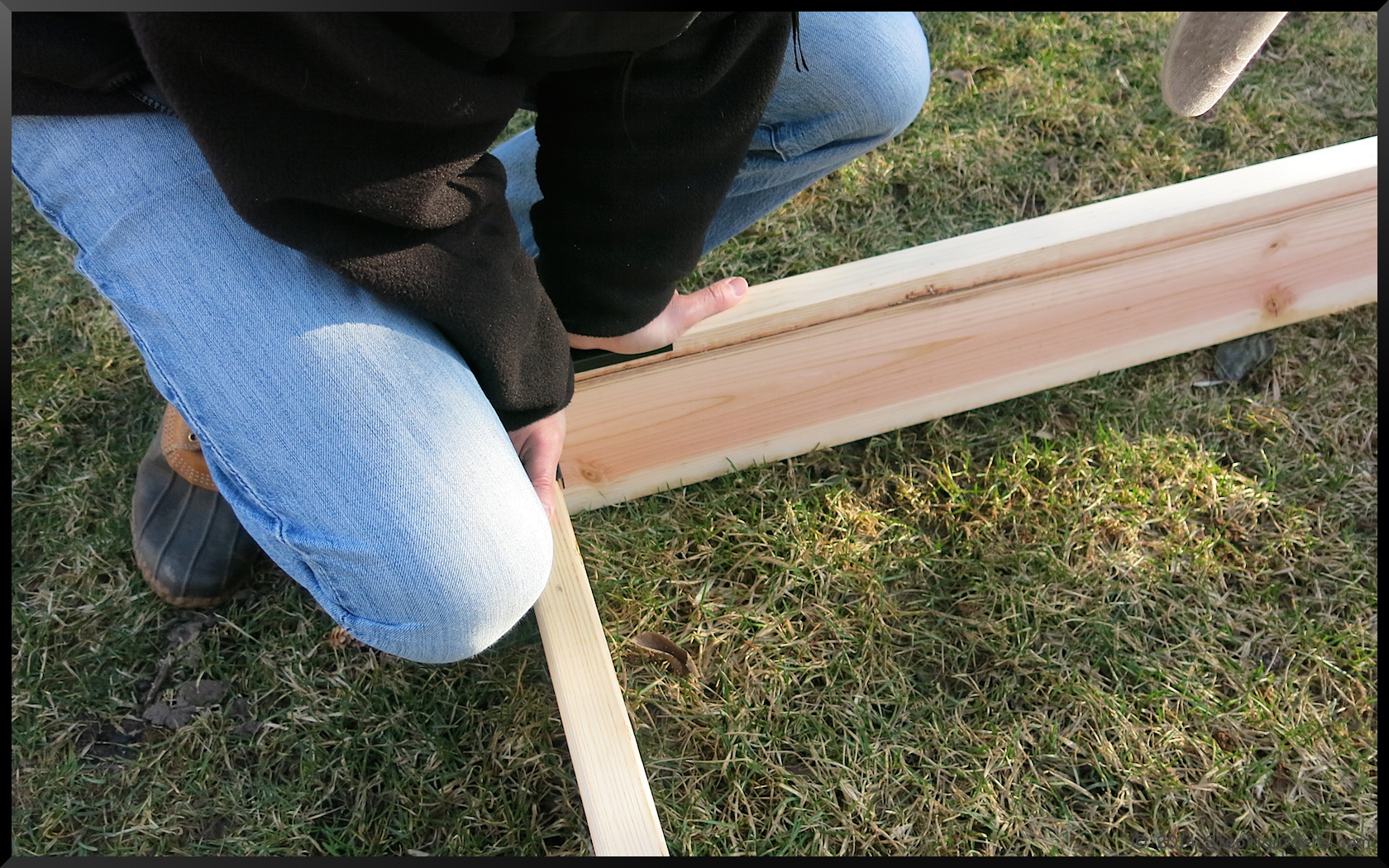
Now the construction began.  All the hardware was included in the corner kit, we just had to supply the drill for drilling pilot holes and screwing in all the screw.

Raised vegetable bed

raised vegetable garden

Raised vegetable bed

Raised vegetable bed

One was done!  

Raised vegetable bed

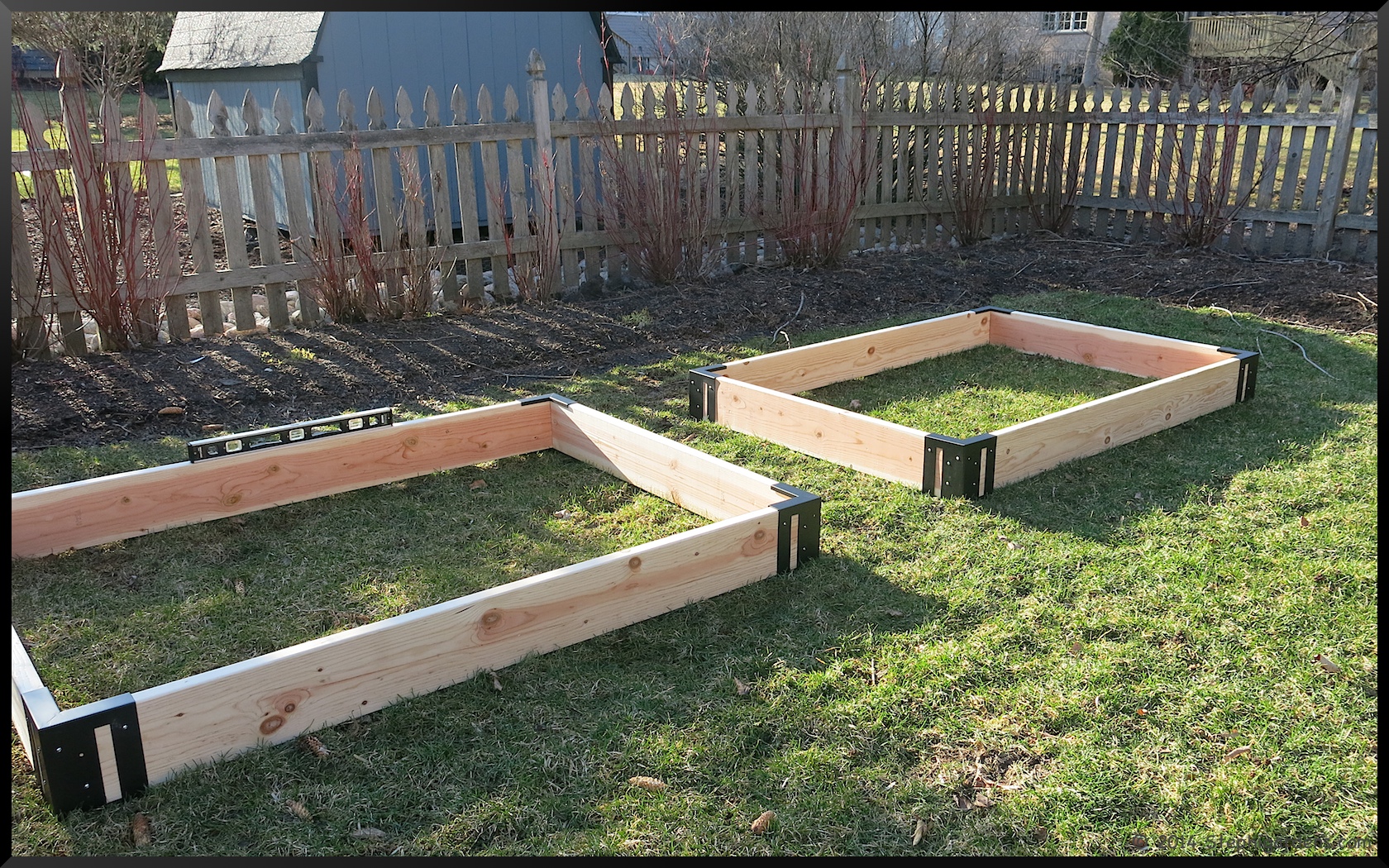
Only took a couple of hours to build both, and they couldn’t be easier.  We lined them up, leveled them and then pushed them into the ground.

Raised vegetable bed

Raised vegetable bed

raised vegetable garden

Tomorrow–filling the beds.

To Add More Gardens or Not???

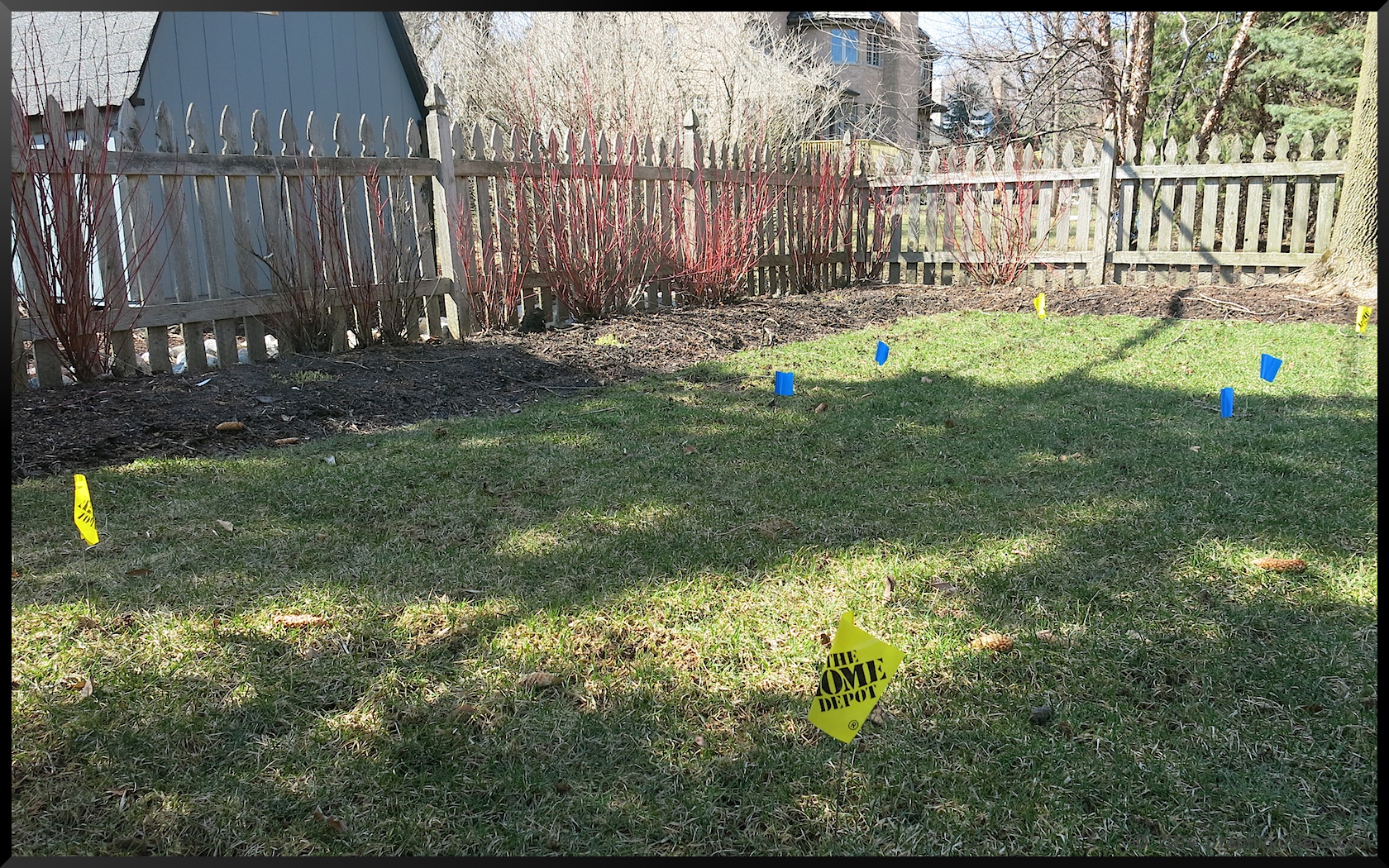
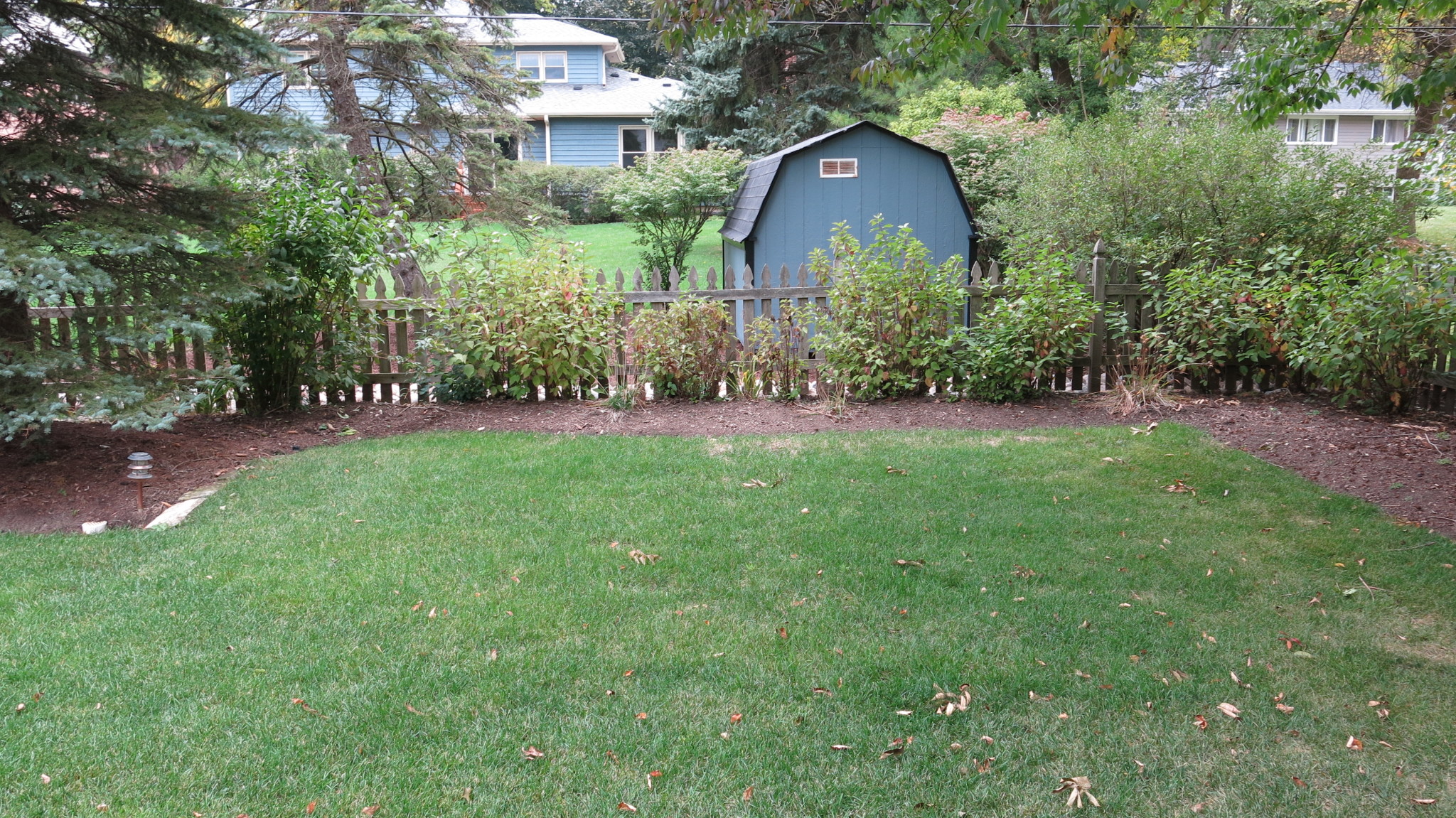
I am really in need of a new area for vegetables. For years, I’ve struggled with too many plants in a too small of a place. But, I also don’t have a good spot for adding more vegetable gardens, either due to too much shade or existing plants in the way. So I am contemplating putting 2 new raised beds off the back of the patio in a space that used to house the kids swing set.

View from my patio looking straight out

IMG_0591


Right now, this looks out onto half dead red-twig dogwoods that are unfortunately succumbing to some kind of canker. To try and help the dogwoods, we’ve tried to cut back all the old wood, clean up the leaves and last spring did some rejuvenation pruning removing about a third of the branches. No more have died and I’ll do another rejuvenation pruning in the late winter. We’ll see how much longer they last.

But, back to the vegetables. I have been following the sun pattern for most of the summer, and I think this spot will work out. It’s not full sun, but gets good morning and mid-day sun, which is the best I can hope for. I am trying to decide if I should add some trellis work in front to shield it, but in talking to my landscaper, he confirmed my fears that while it will look nice, it will make the area quite shady.  Maybe some other kind of less dense fence will work?

So now the question is, can I make this look pretty by adding some flowers, grasses or other interesting features to the area, or will it just turn into another messy vegetable garden? What have you done to “hide” the vegetable garden or do you think they are pretty?  I think what my mom has done with her gardens is pretty.

IMG_0021_2


The Garden in Fall: The Bad

It’s the beginning of October and the days are getting shorter, the nights growing colder. While yesterday I posted about the good things in the fall garden, there are also a lot of plants and beds that are really past their prime.  Whether it’s overgrown, or the plants need to be trimmed back, or just haven’t aged well, they really detract from the pretty parts of the yard. Here’s some of the plants and spaces that don’t make me smile.

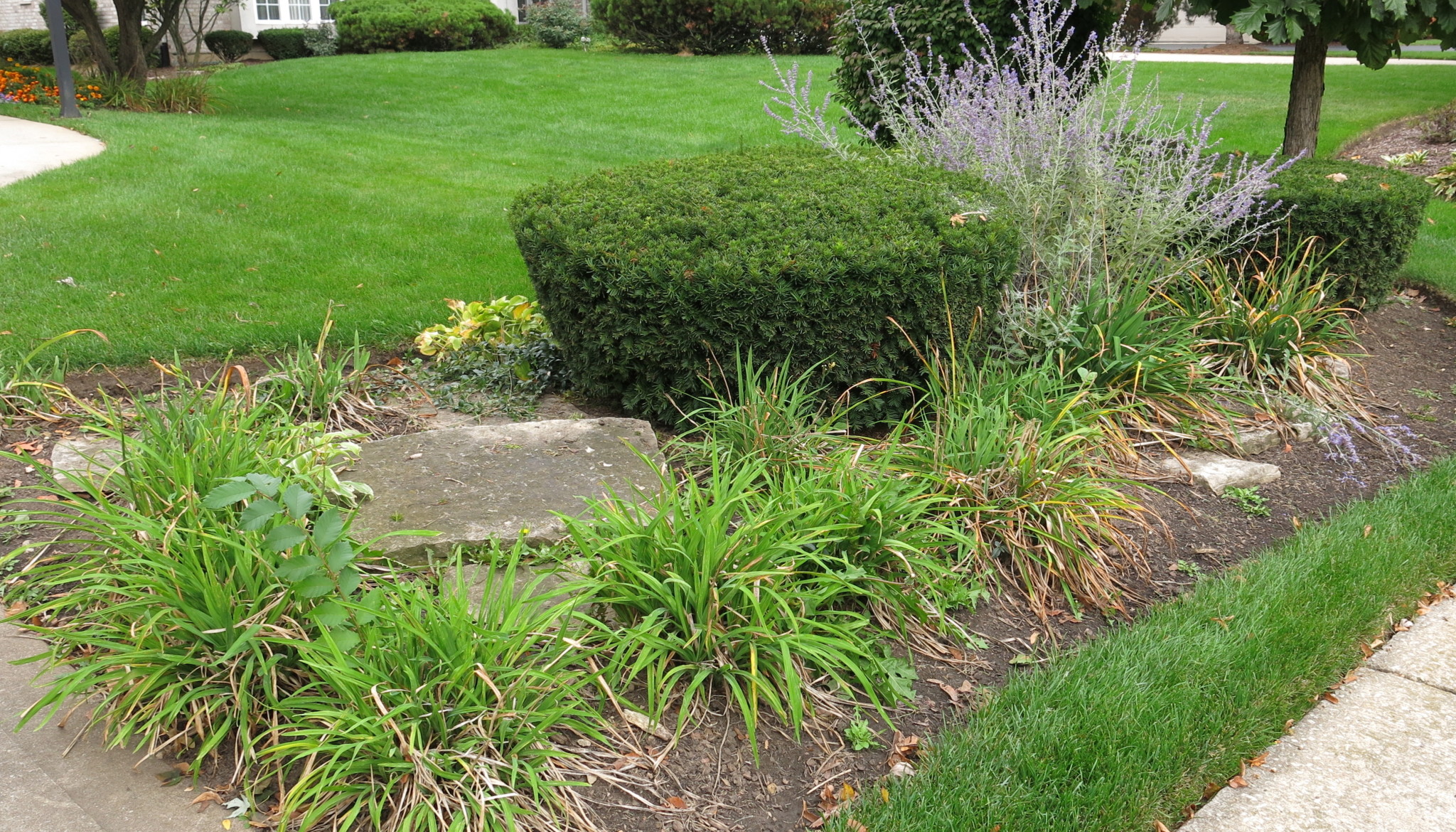
Those beautiful daylilys are really past their prime!

IMG_0523
IMG_0524

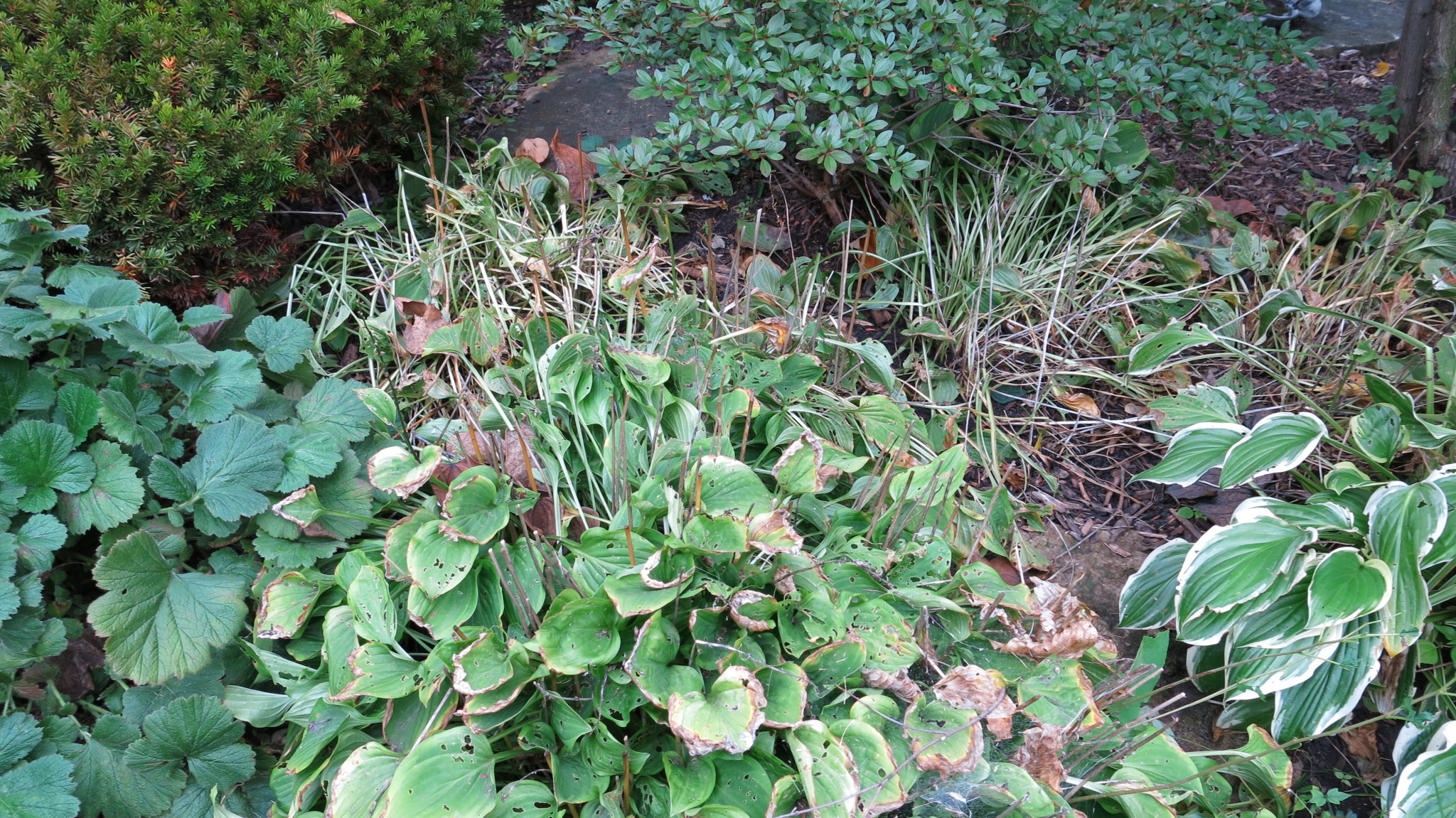
I’m not even sure what happened to these hostas???  Slugs, rabbits, too much sun, water???

IMG_0560

Some beds are just not right and need plants moved/and or added.  Will be doing that soon!

IMG_0540

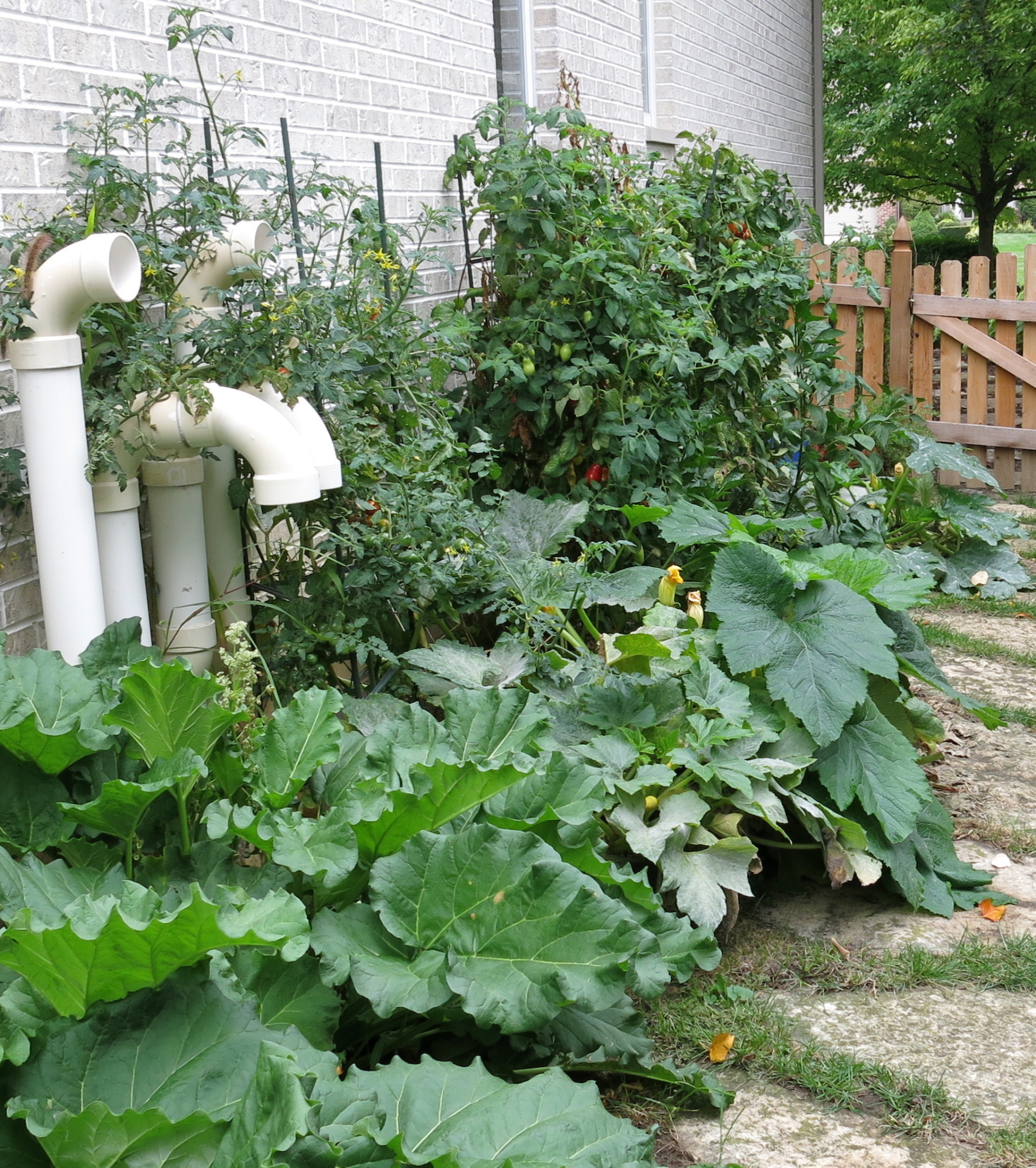
My vegetable garden is just too small and becomes overgrown every year.  But, I think I finally have a plan to expand the garden!

IMG_0569

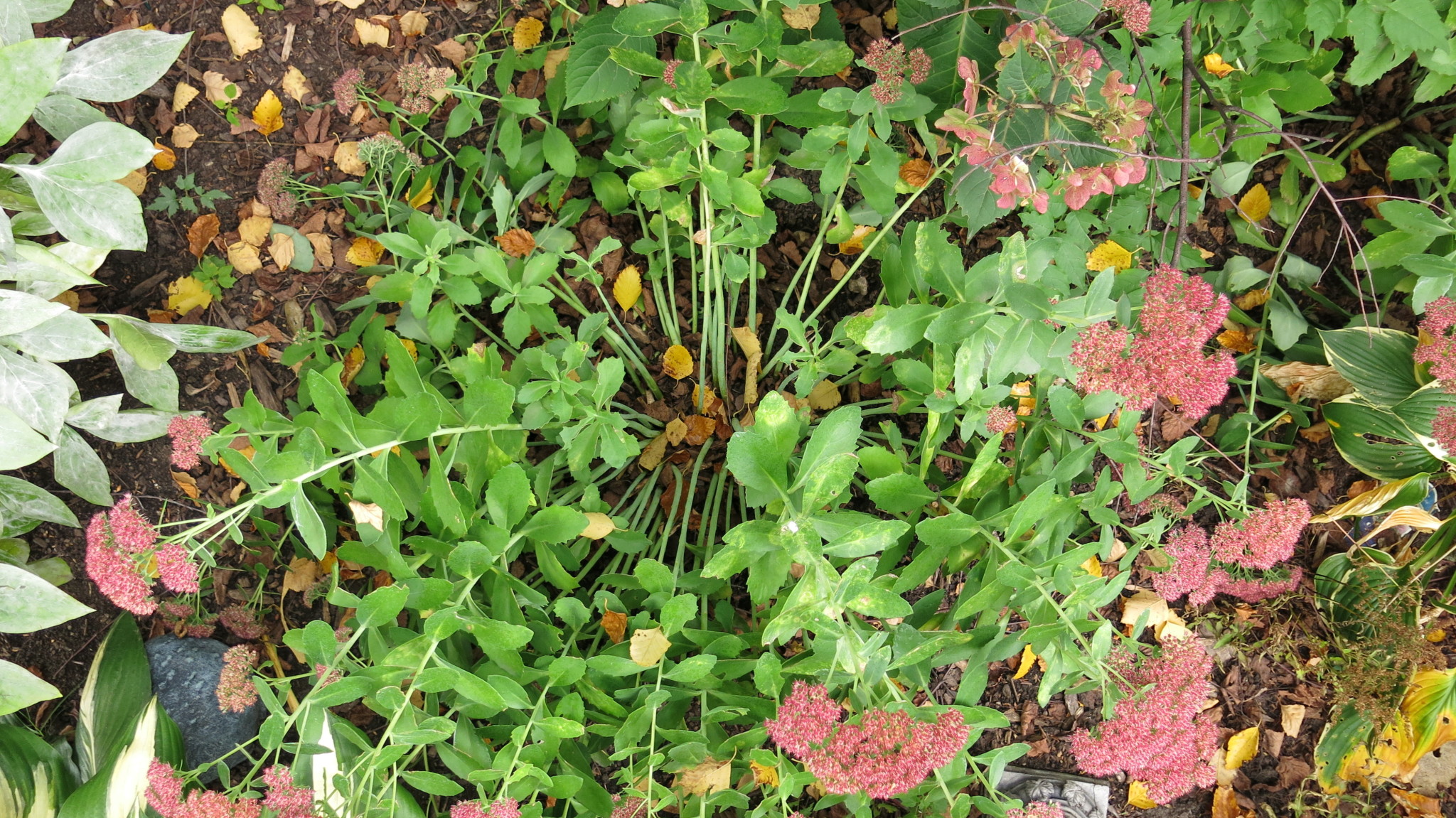
Plants need to be split.  Need to get on that, too! 

IMG_0549

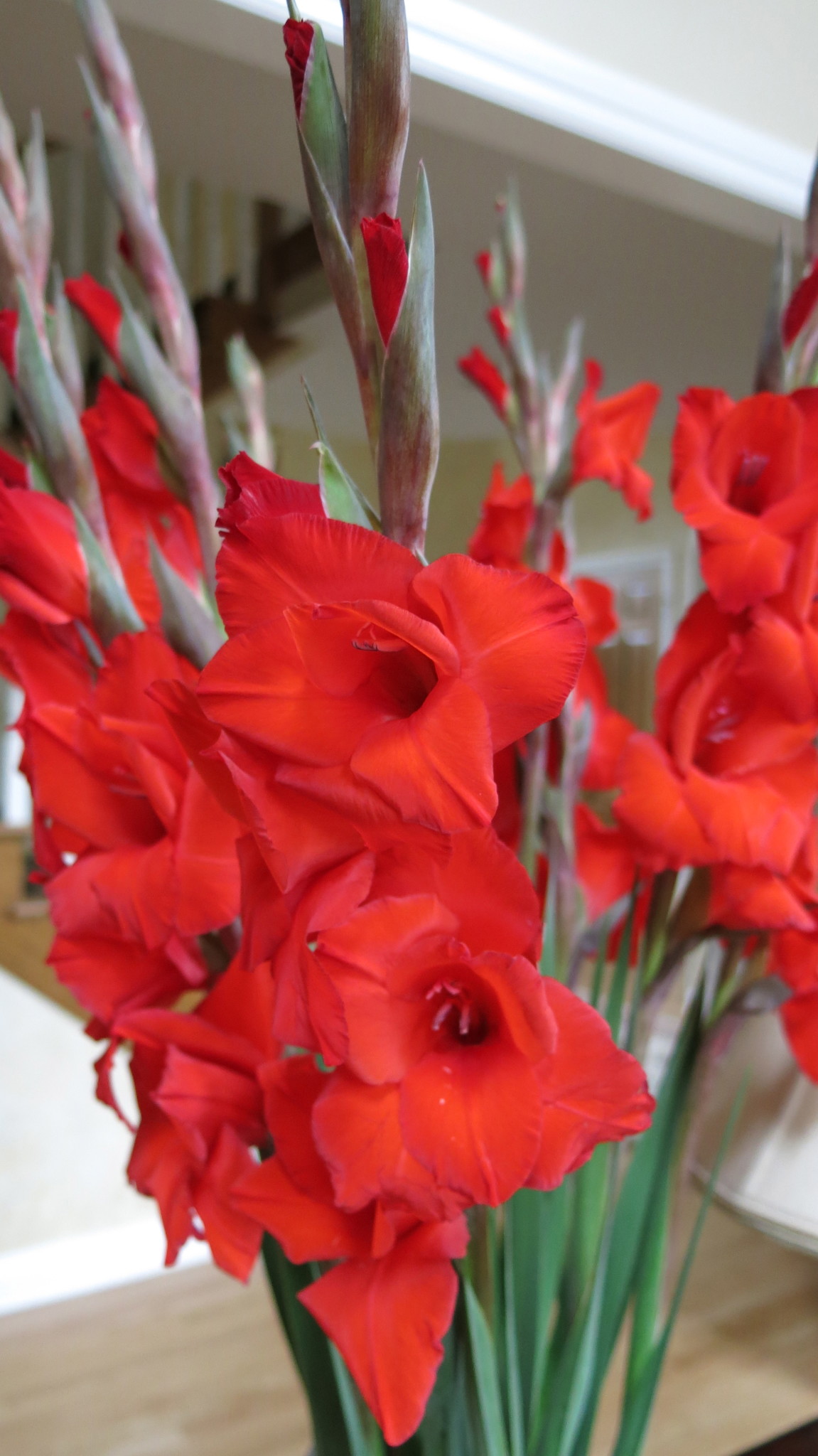
After looking at all this mess, I went to the farmers market and pick up a lovely bunch of gladiolas!

IMG_0598


Whoops-Giant Zucchini

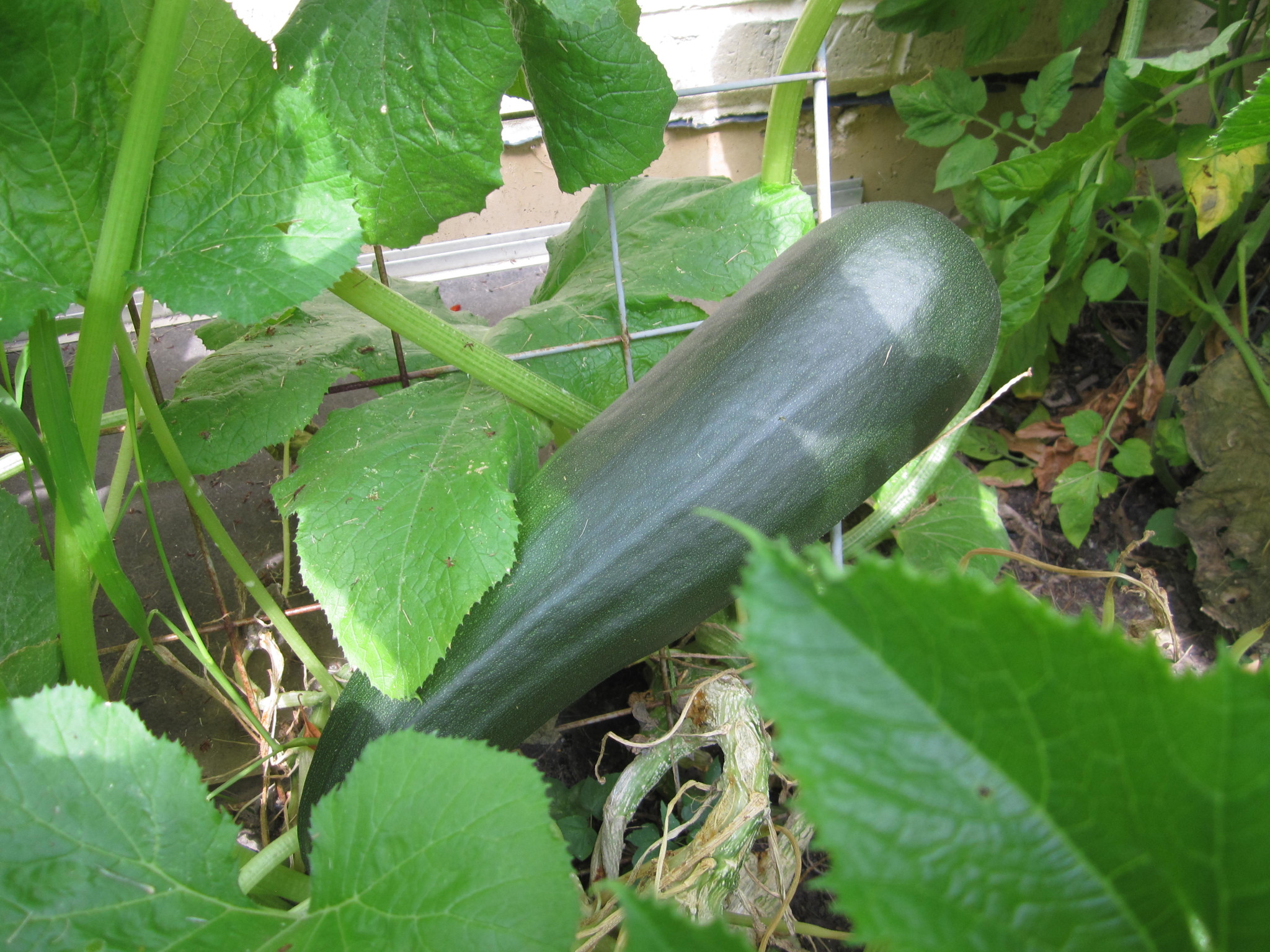
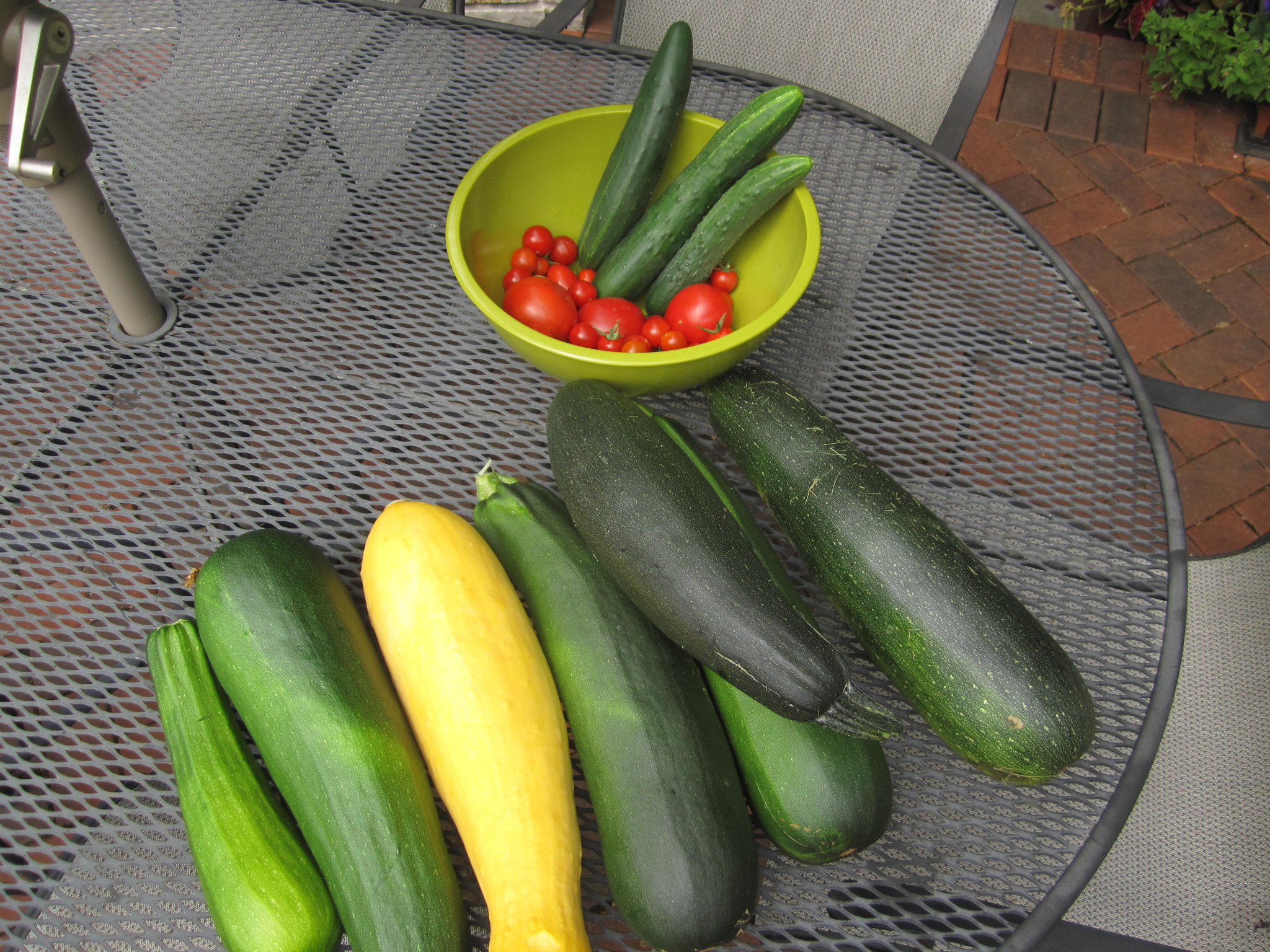
I go on vacation for a week, then got busy and forgot to check the status of the vegetable garden.  Not a good idea this time of the year.  I have HUGE zucchinis and summer squash.  They are the size of kiddie baseball bats and each weigh about 4 lbs.  This is not good!

IMG_5537
IMG_5539
IMG_5540
IMG_5557

When squash get this big, they get tough and develop very big seeds. I’ve tried to cook them before and they just don’t work well for summer recipes. Especially the summer squash. Letting them get this big also saps the plant from any desire to make new squash since it’s real purpose is to produce seeds. And those big ones are just full of them, making the plant content to just continue make them even bigger.

So what to do?????

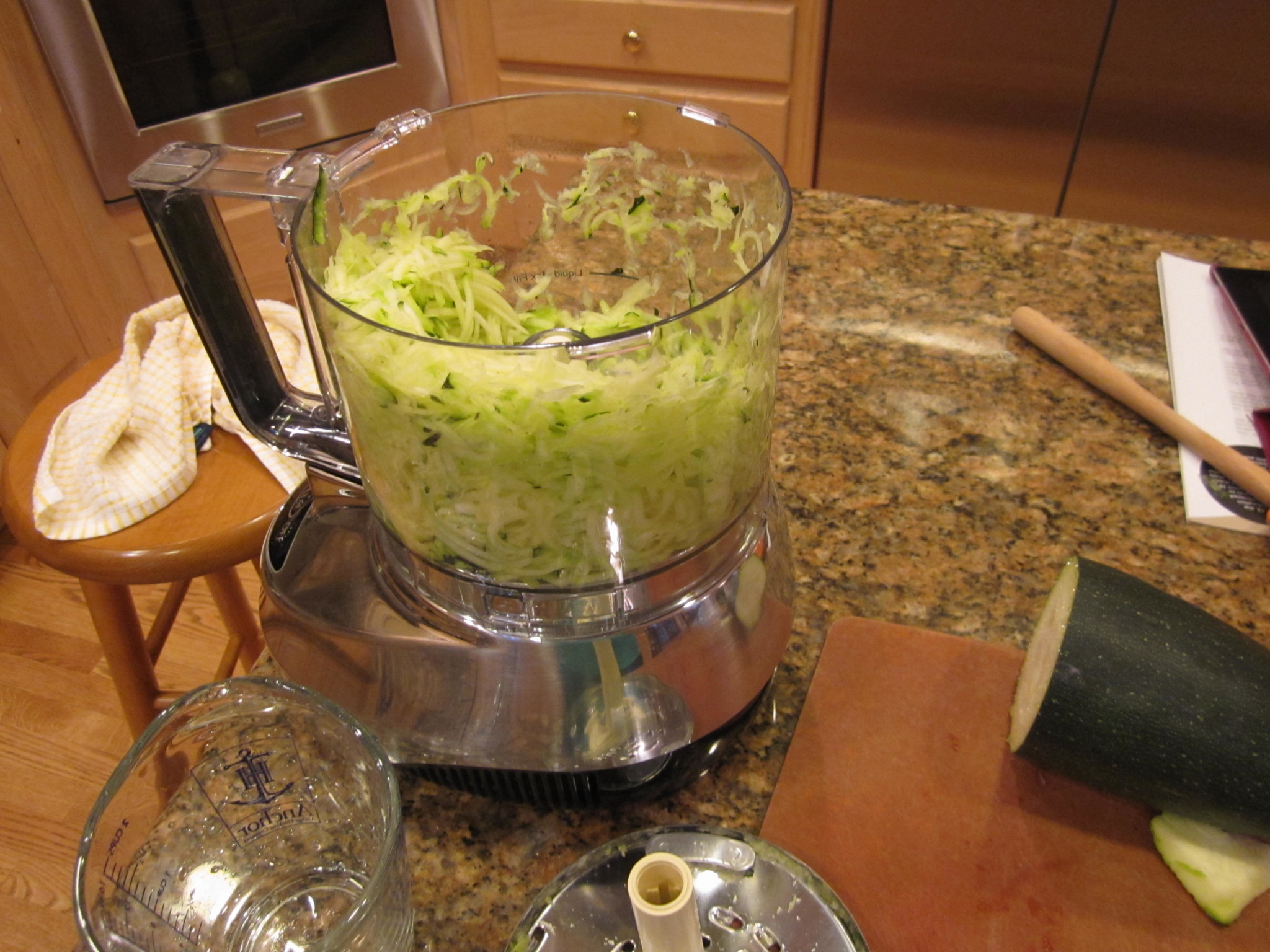
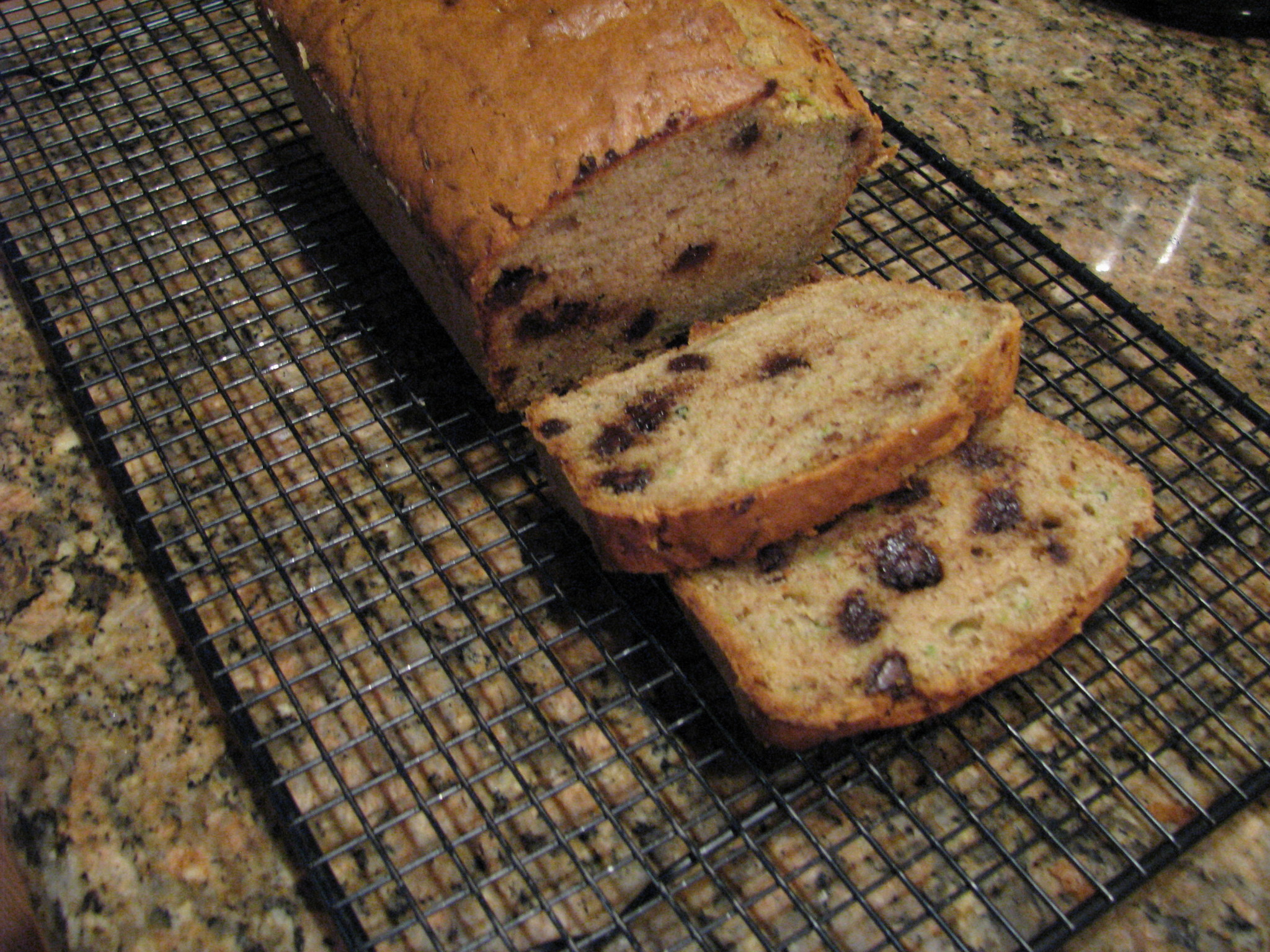
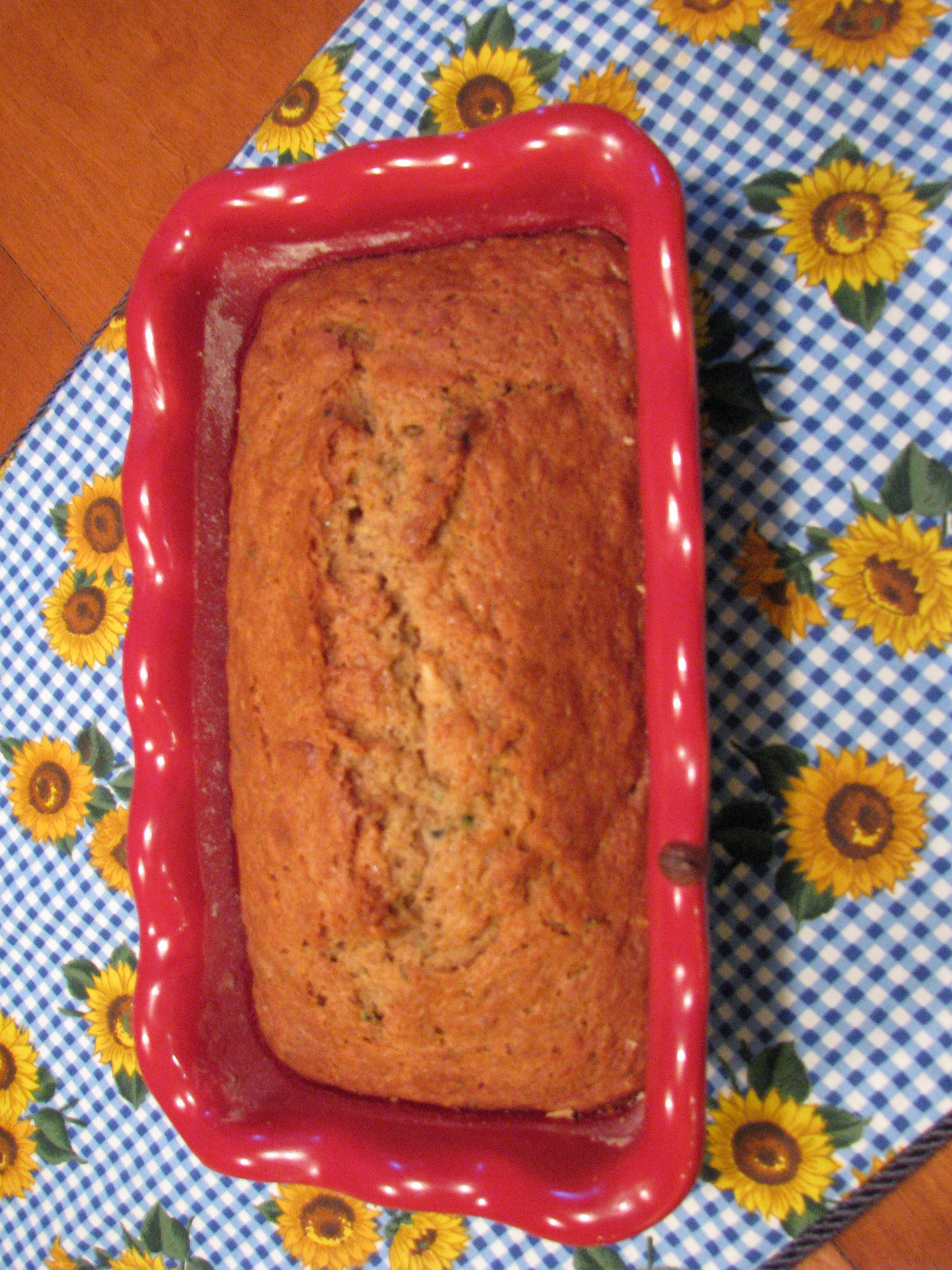
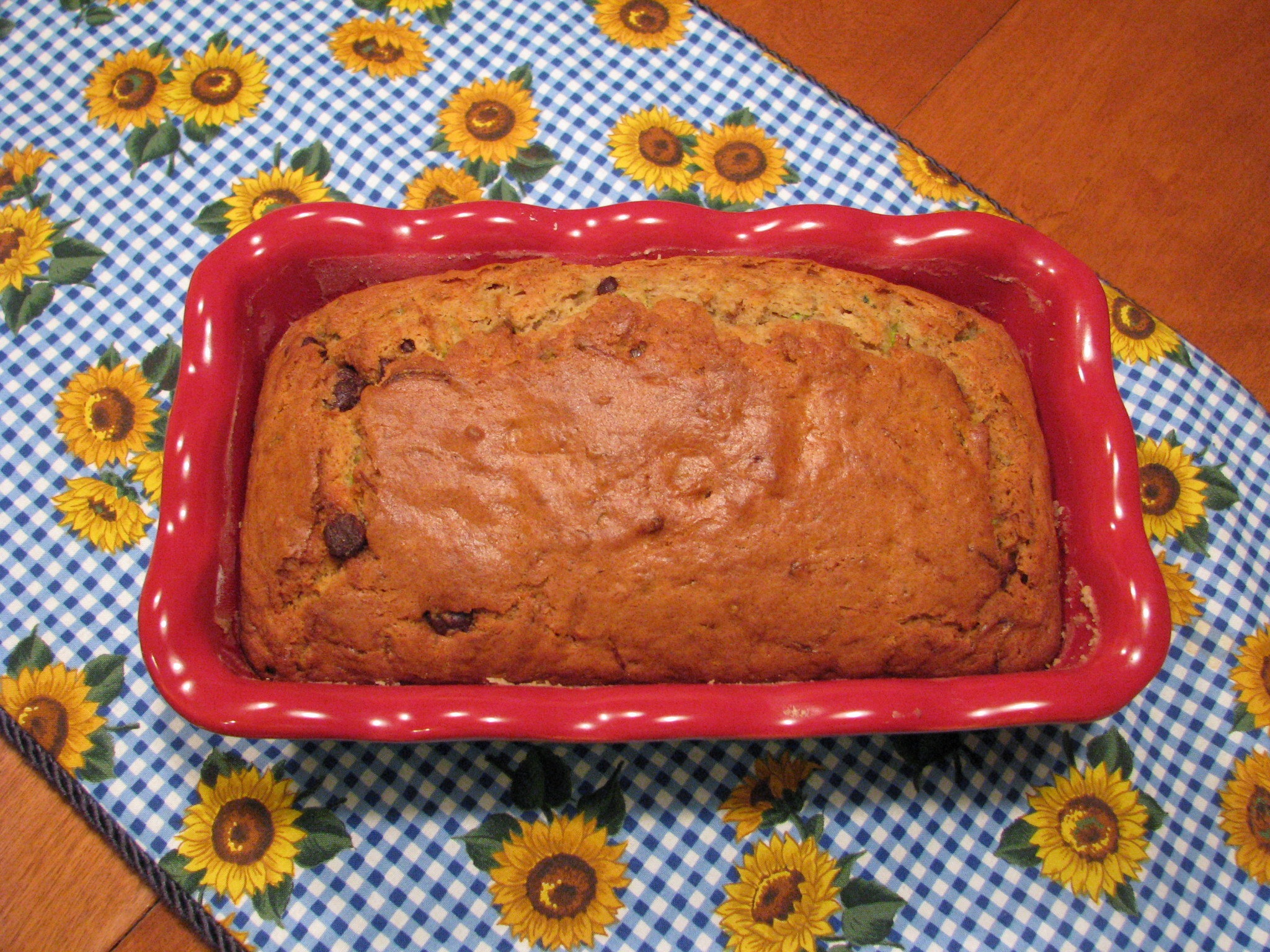
After some exploring on the web, I decided all was not lost. Looks like my best bets are zucchini bread and freezing for soups and winter dishes. So, my kitchen has been a flurry of baking and cutting trying to use these monsters up. I’ve never made zucchini bread, so again explored the web and came up with what I hoped was two delicious sounding recipes from Fine Cooking and Real Simple. First, I made Chocolate-Nut Zucchini bread from Fine Cooking with a couple of changes. First, I decided that 3/4 lbs of zucchini was about 3 cups shredded, I used whole chocolate chips instead of the bittersweet chocolate and vanilla yogurt instead of plain because that’s what I had on hand, and I then I just simply forgot to put the nuts in.

Because of the very big seeds and pithy center, I cut the zucchini in half and scooped out the center with a spoon before I grated it.  The skin didn’t seem too tough, so I left that on. If you can’t scratch it with your fingernail, it was suggested that it should be peeled then.

IMG_5562
IMG_0873

IMG_0880

This recipe got thumbs up from the family, so I will be making another loaf (or 2) for freezing.

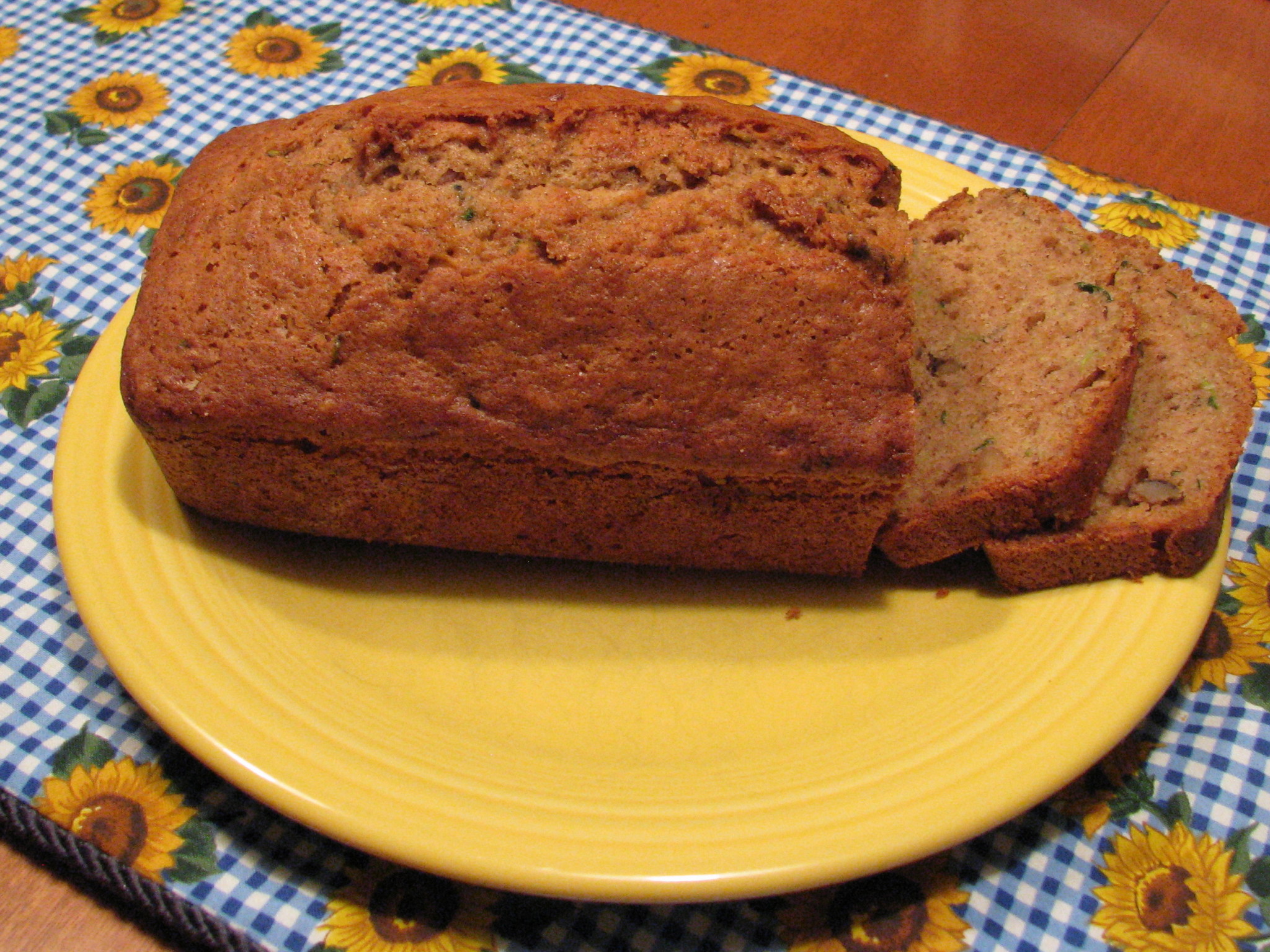
Next, I made Zucchini Spice Bread from Real Simple.   I like the method of getting some of the water wrung out of the grated zucchini from the previous days’ recipe so I did that again here.  Briefly, put the grated zucchini into a colander, sprinkle with 1-2 Tbsp sugar to draw out some of the liquid, let sit for 15-20 minutes.  Then hand squeeze the water out before putting into the bread batter.  The only change I made to this recipe was that I added 1/2 cup of chopped walnuts.

IMG_0890

IMG_0899_2

Again, thumbs up!  Two good recipes.  If you have another you like, I have plenty more zucchini to make into bread.

Lastly, I cut up another zucchini for freezing.

  • I again scooped out the pithy, seedy center, then it cut into about 1 inch chunks.
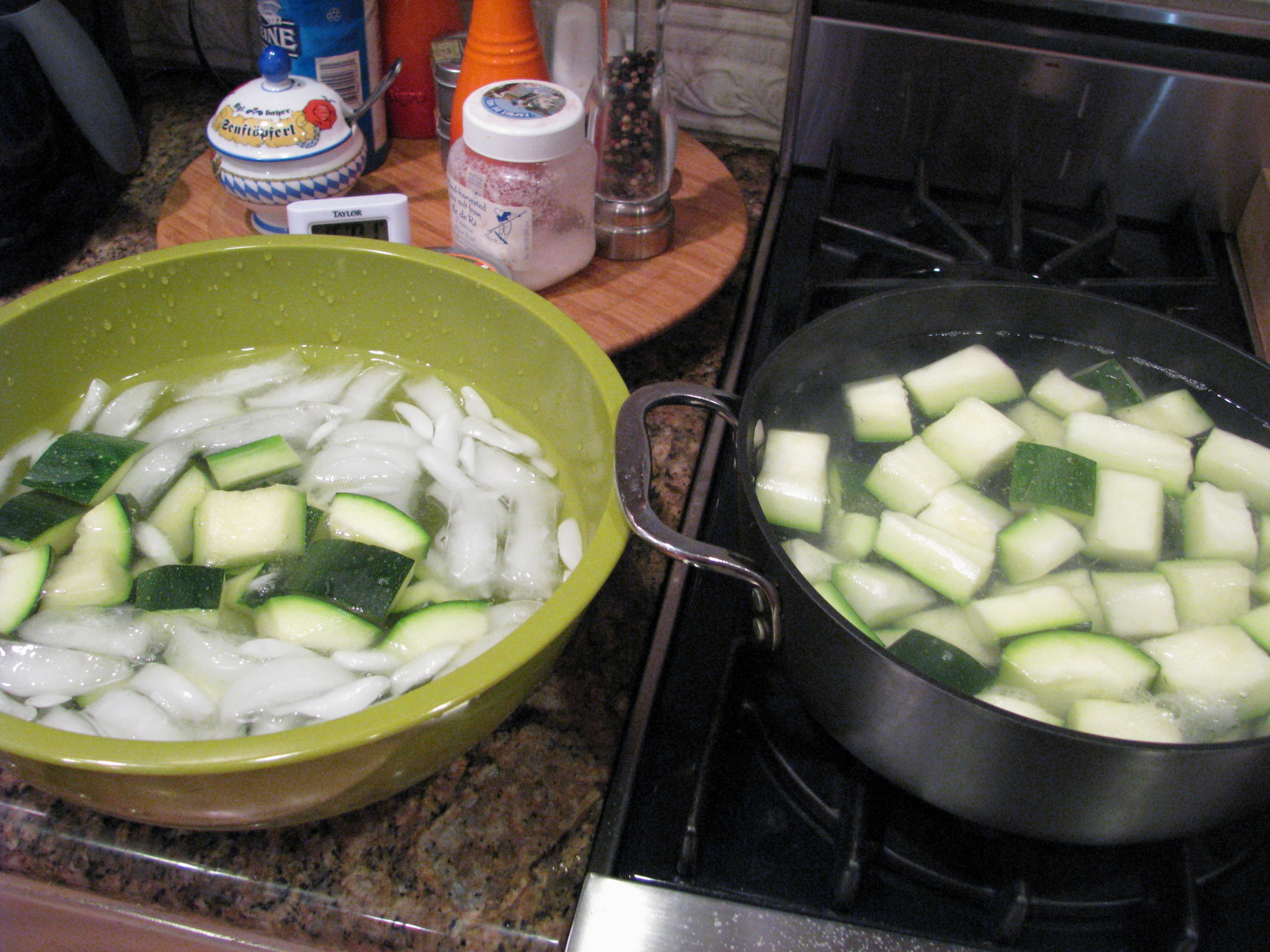
  • I then blanched them in boiling water for about 3-4 minutes, followed by plunging them into an ice bath to stop the cooking process.  I just want to blanche the chunks, not cook.
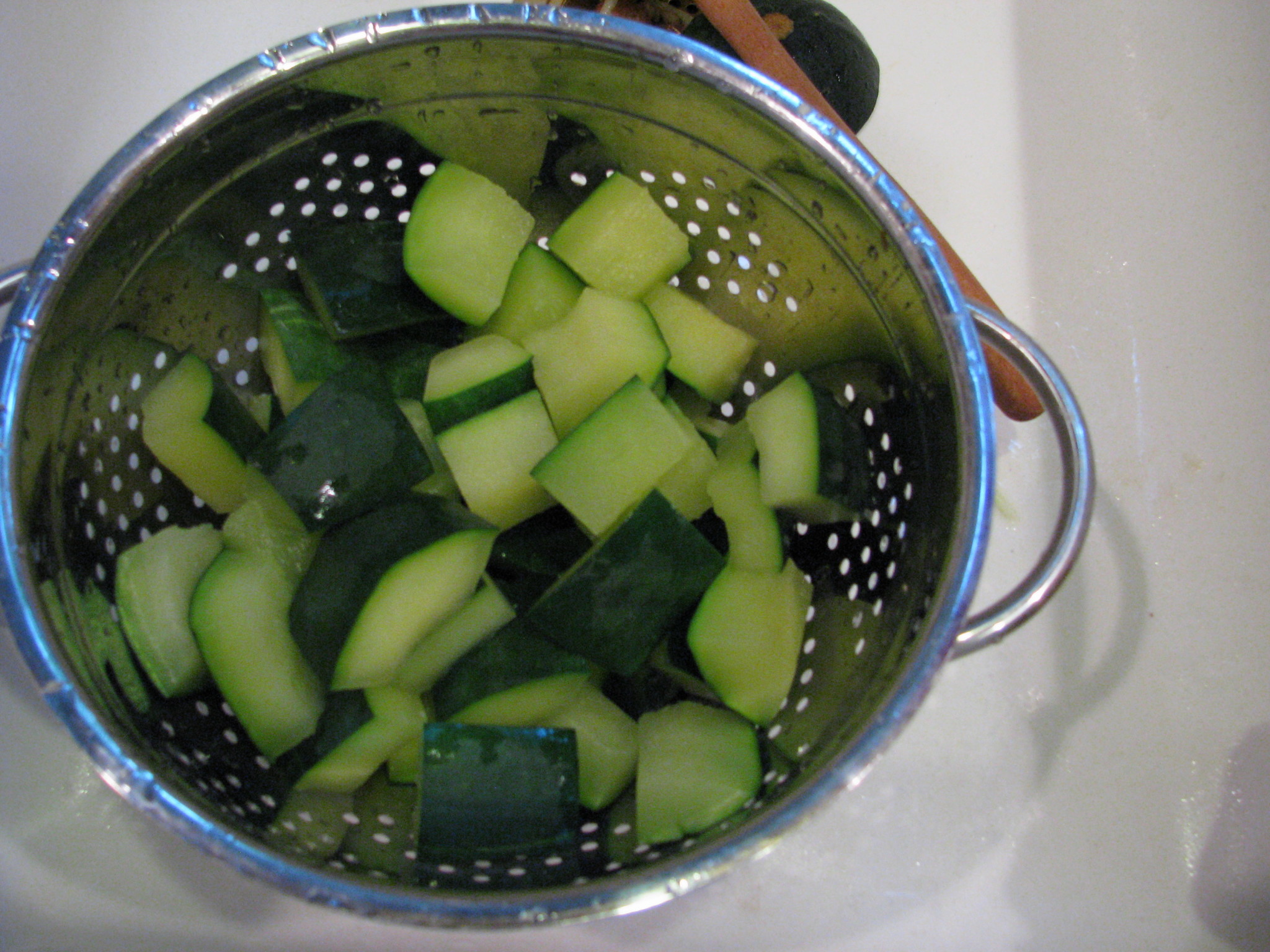
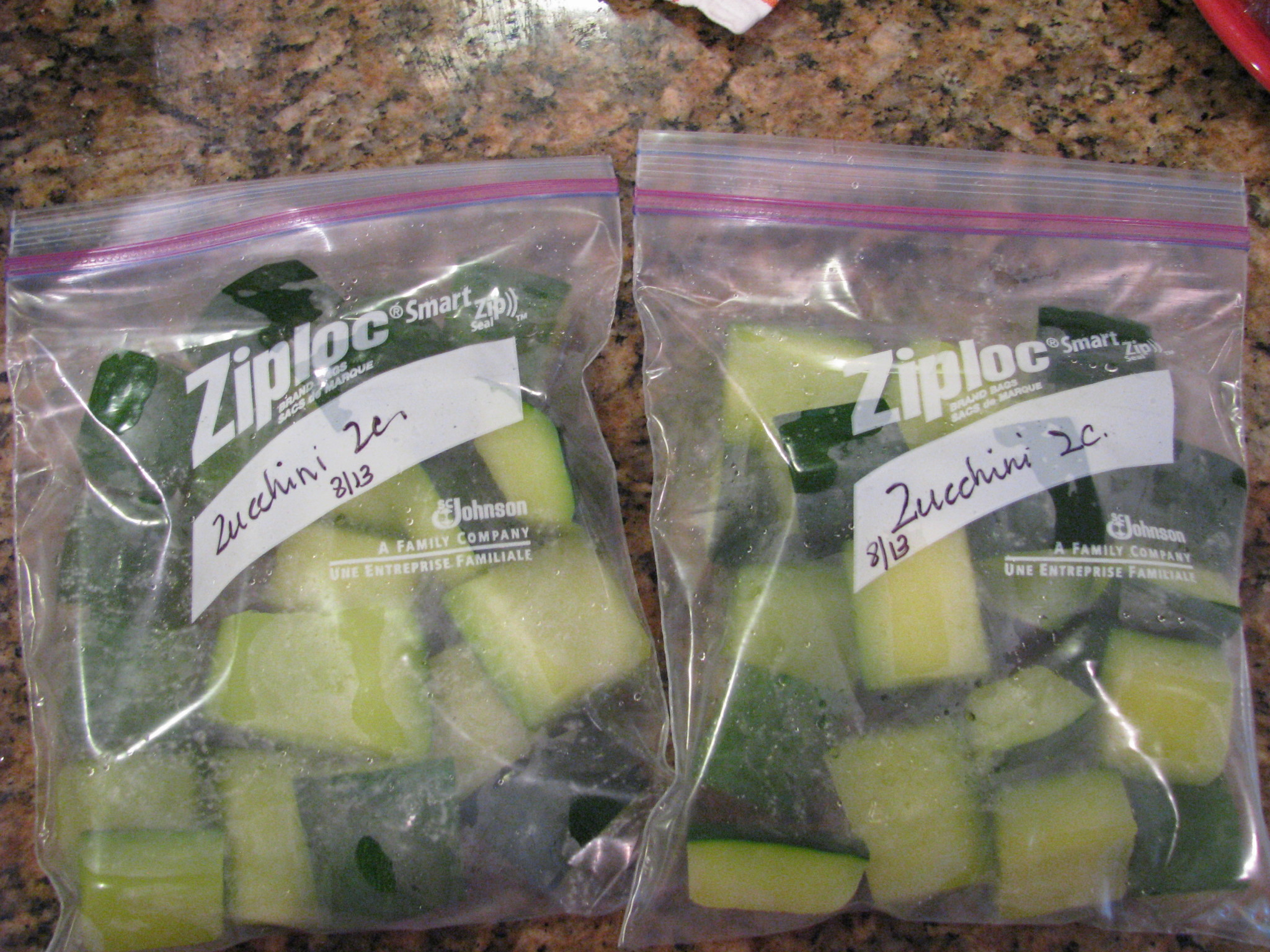
  • Then drained in a colander for a few minutes and packed them in 2 cup portions in freezer bags.

IMG_0883
IMG_0886
IMG_0888

Ready for use this winter in some kind of soup or stews. Does anyone have any favorites?  Hopefully now I will be able to pick some nice tender ones to use in my favorite summer side dish and salad recipes.

By the way, I did toss the one giant summer squash.  It was just not salvageable.  That’s where a composter would come in handy.