A Macro Look at the July Garden

IMG_8570

My husband (and mom and daughter) are much better photographers than I am, so I’m always excited when one of them wants to shoot some photos of my gardens.  Here’s some of what my husband saw the last couple of days through his macro lens.

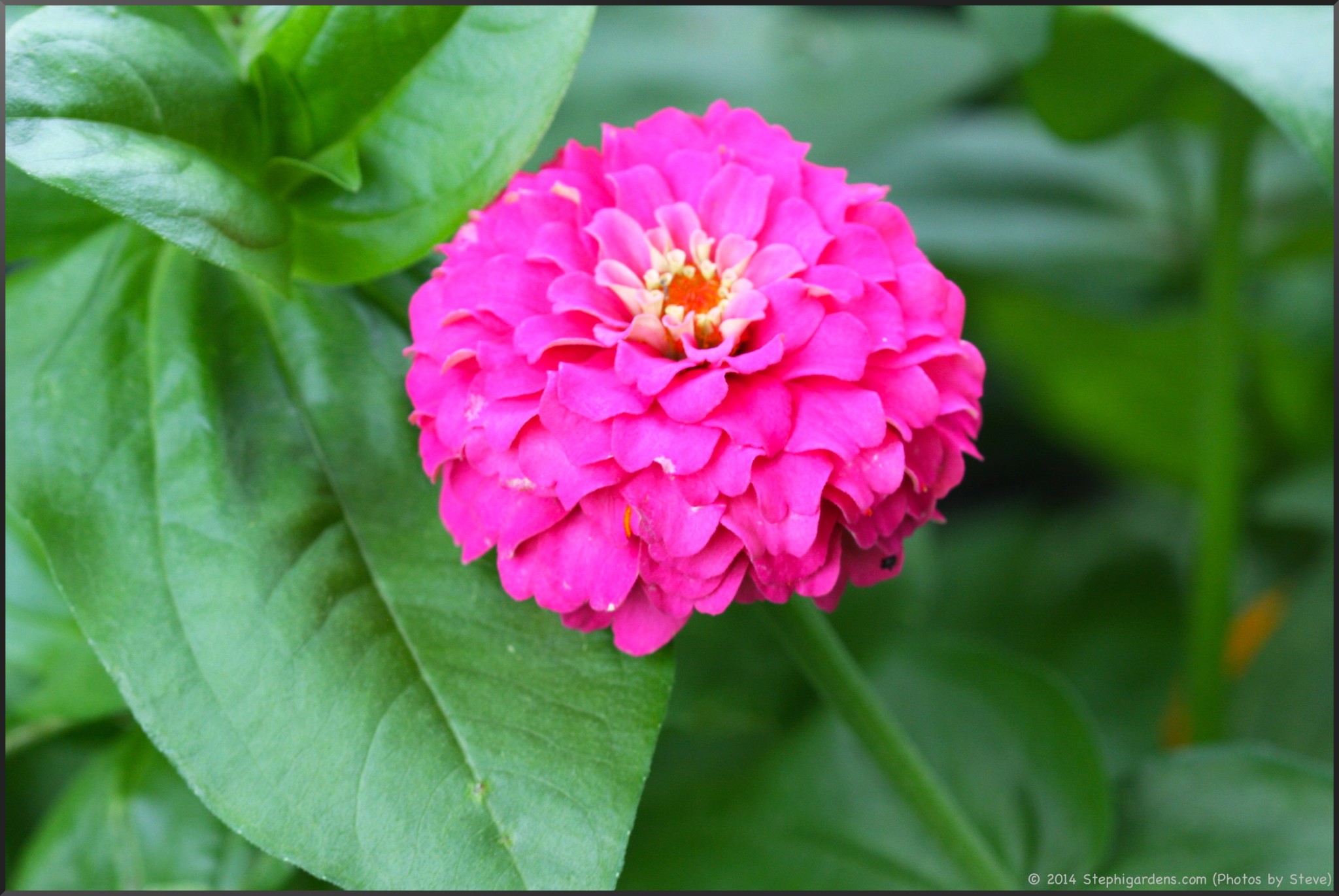
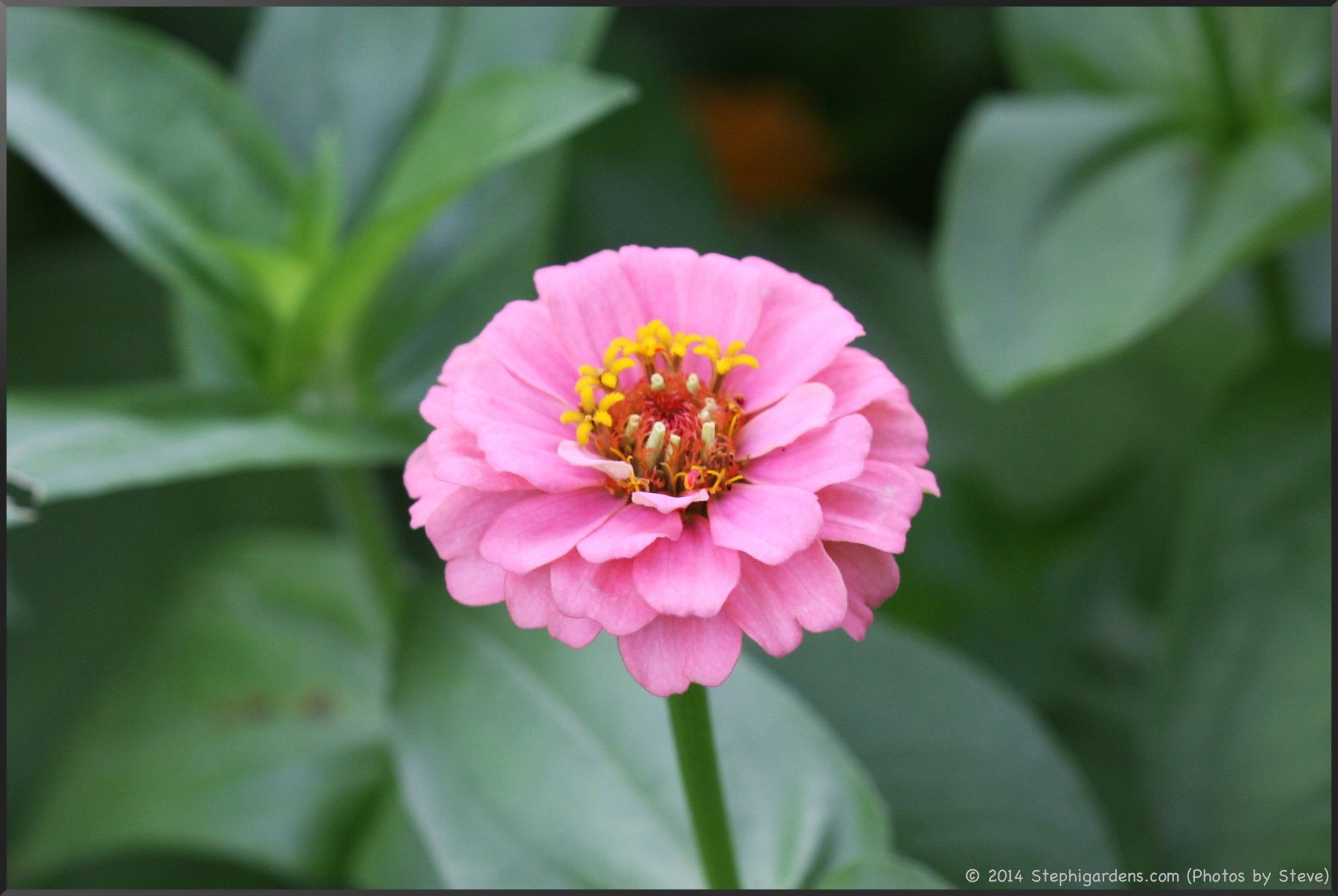
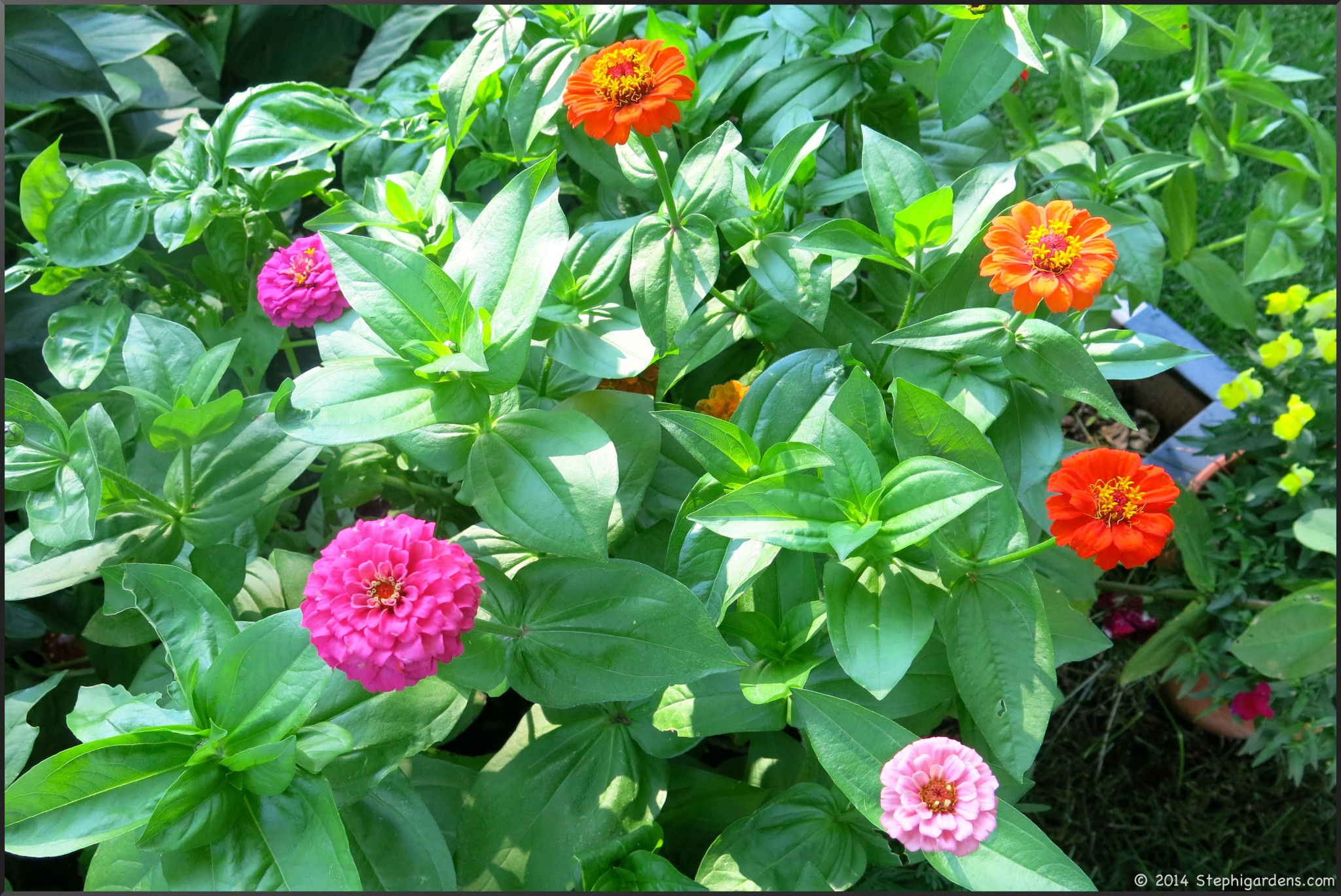
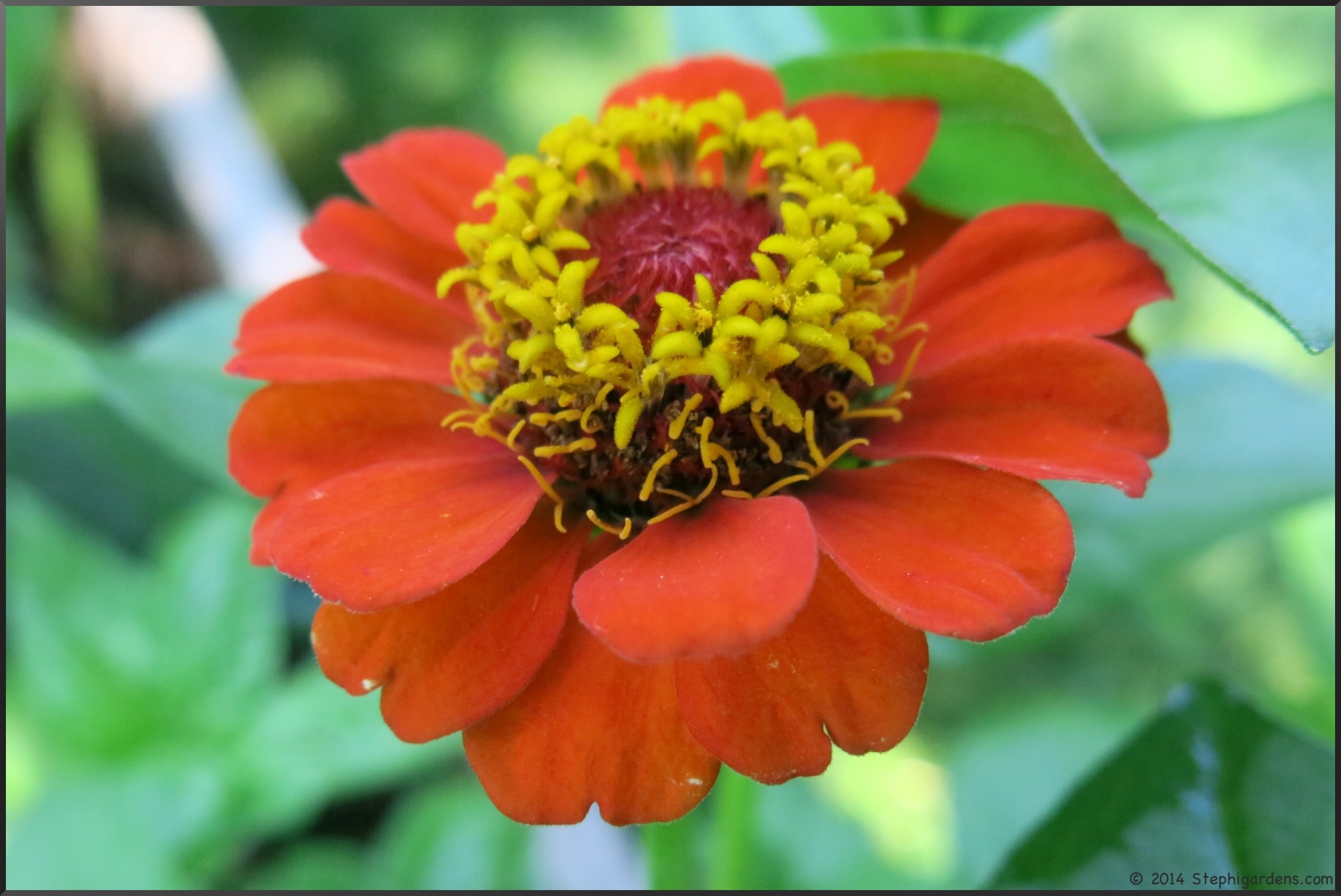
Brilliant Zinnias

cut and come again zinnia


cut and come again zinnia


zinnia

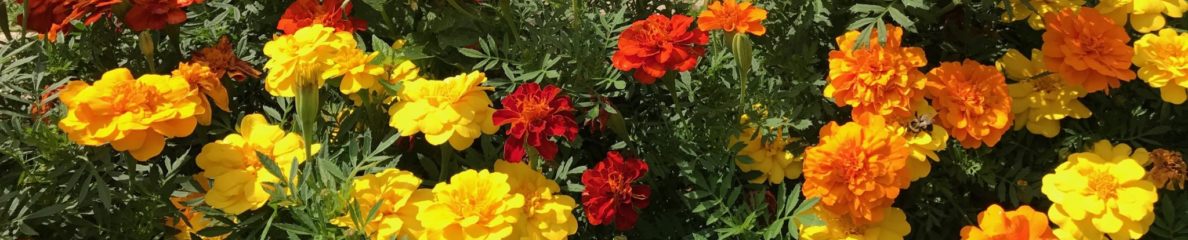
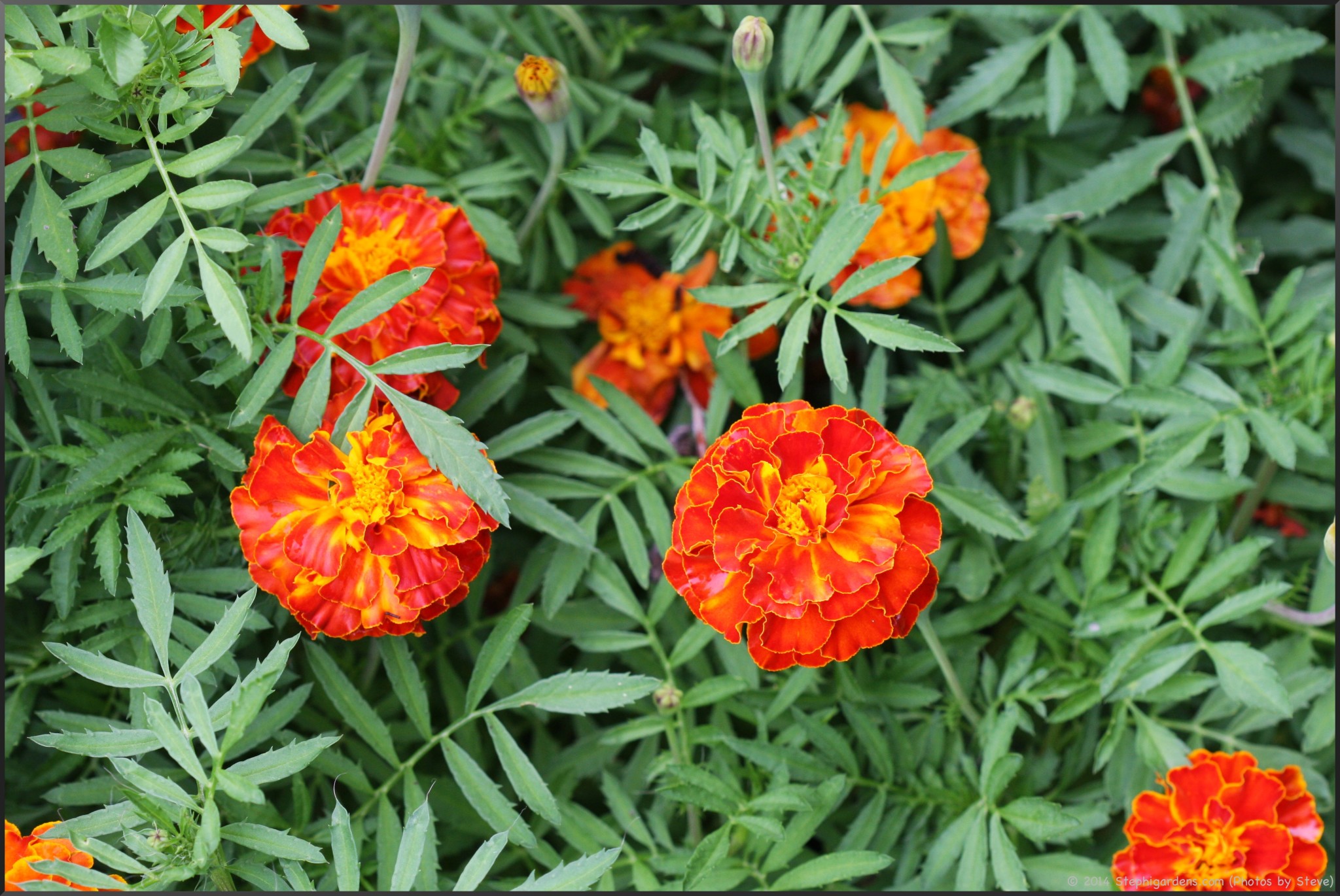
One of my favorite annuals–Marigolds

marigold

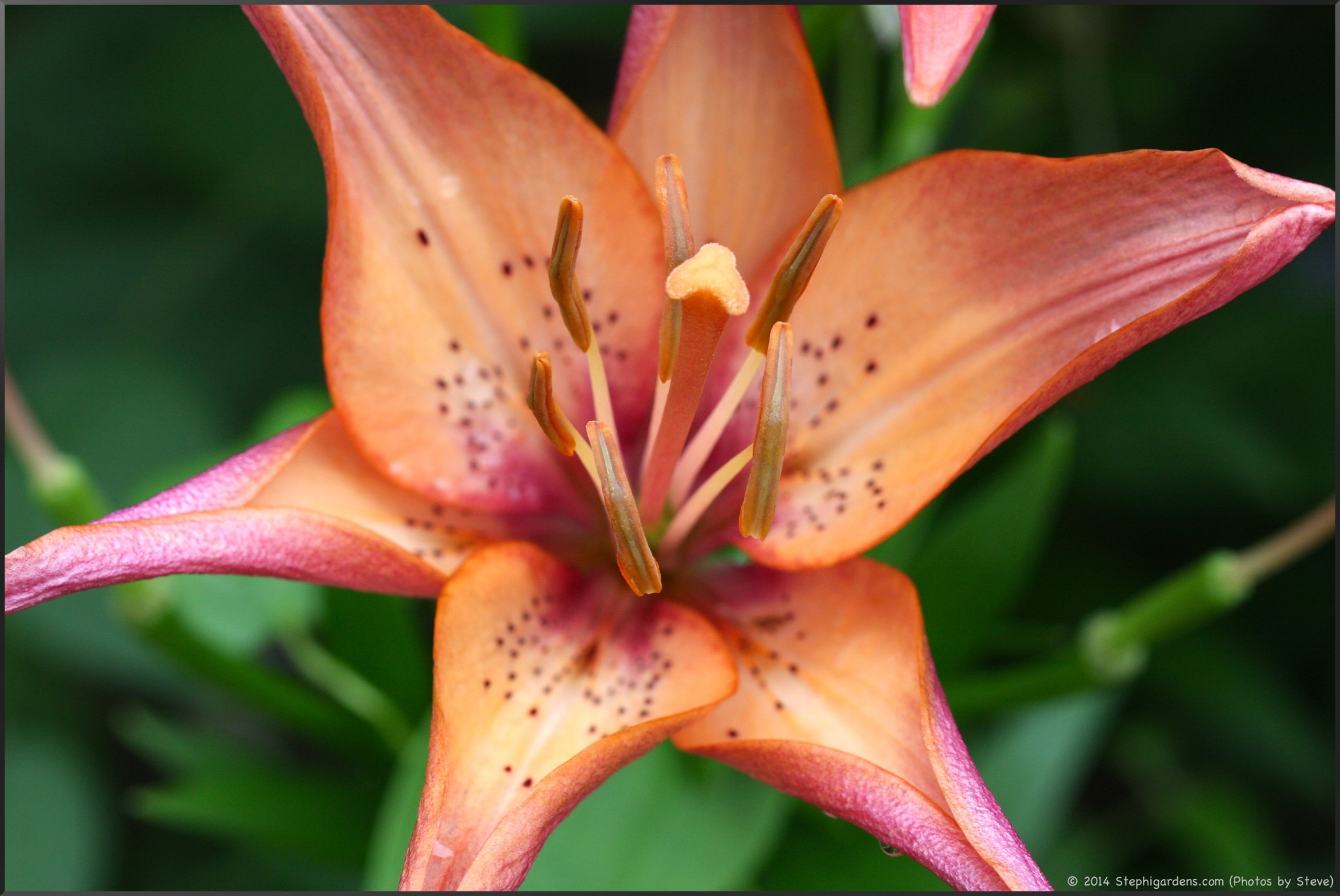
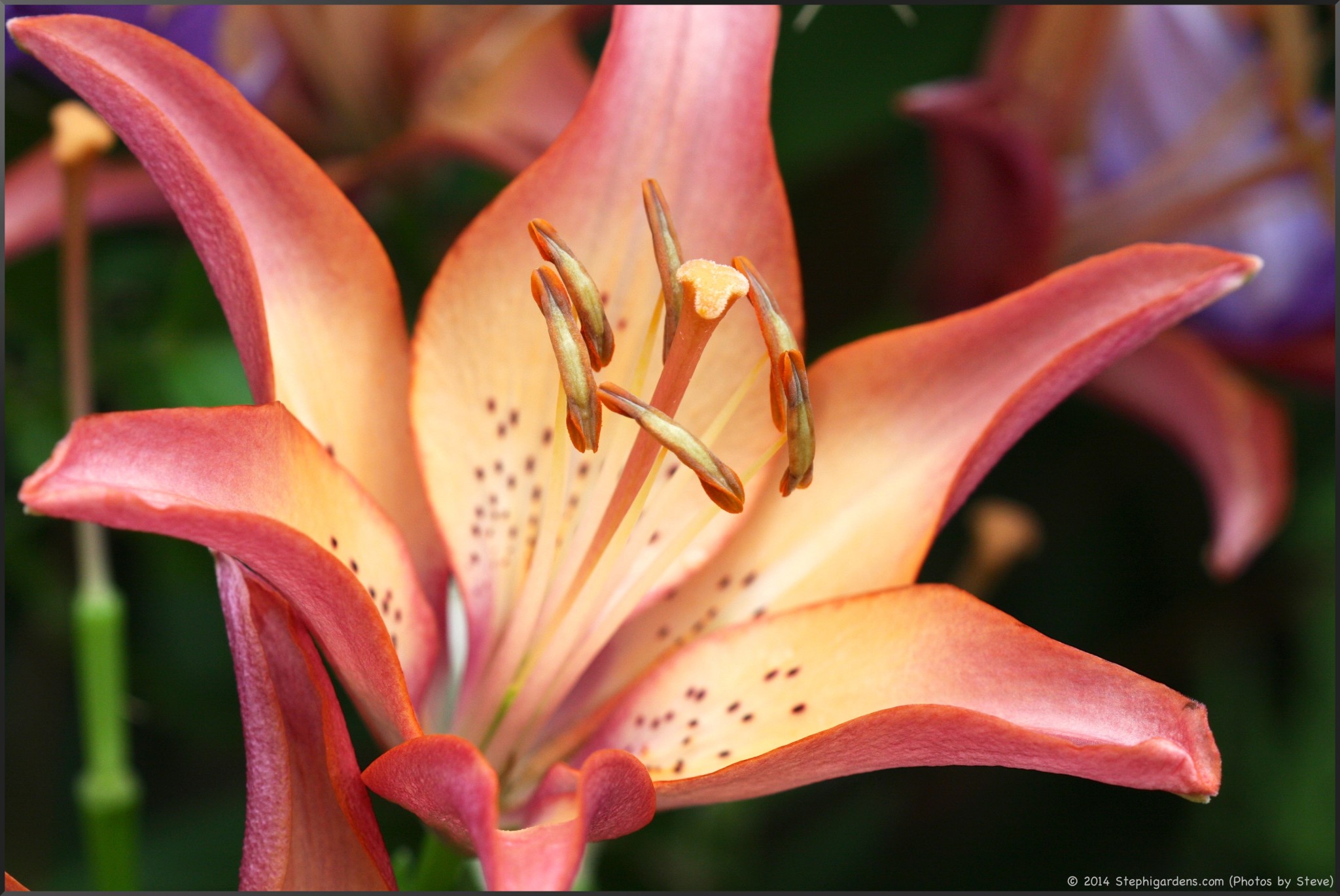
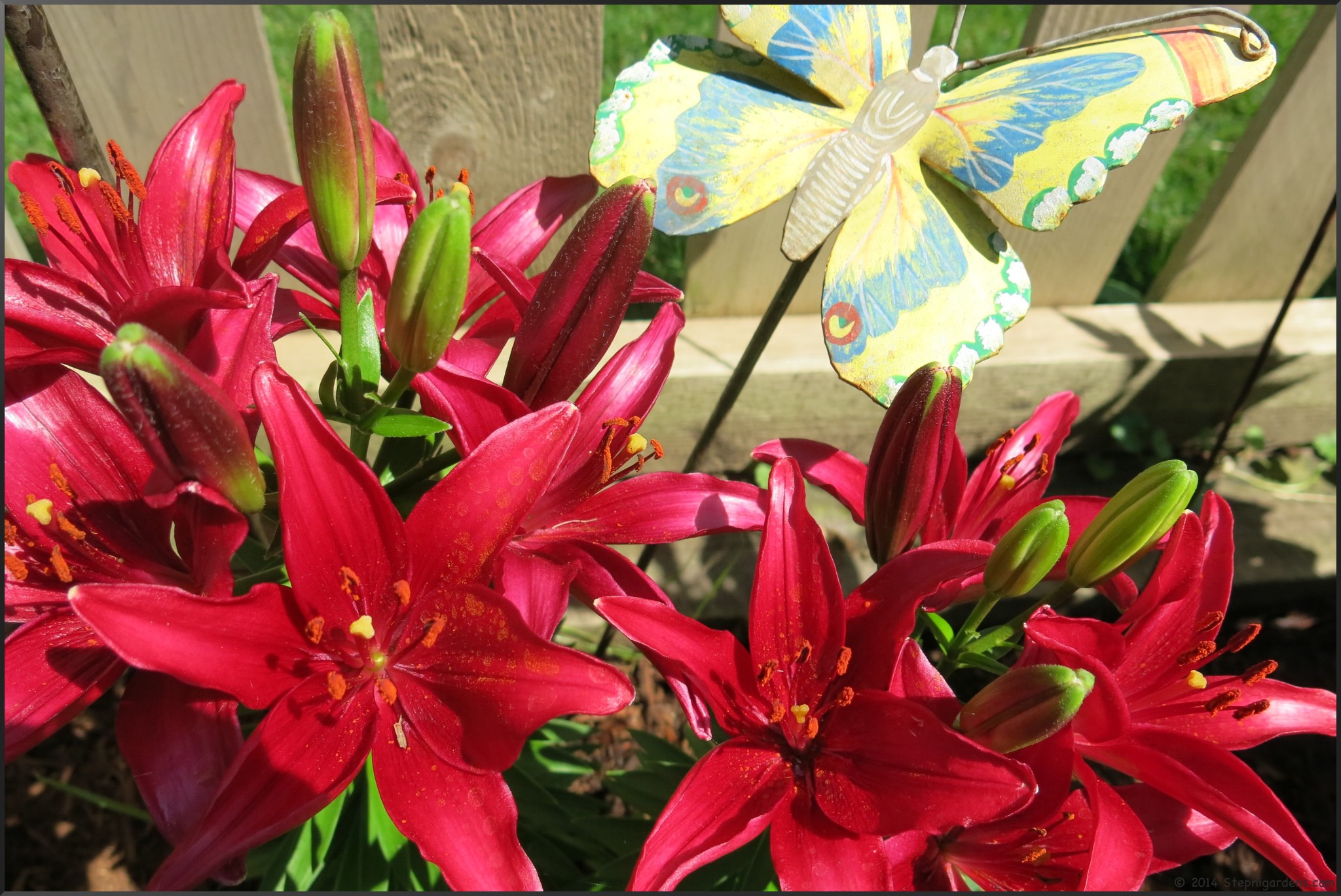
More asiatic lilies are blooming.  I didn’t miss them all.

asiatic lily


IMG_8541

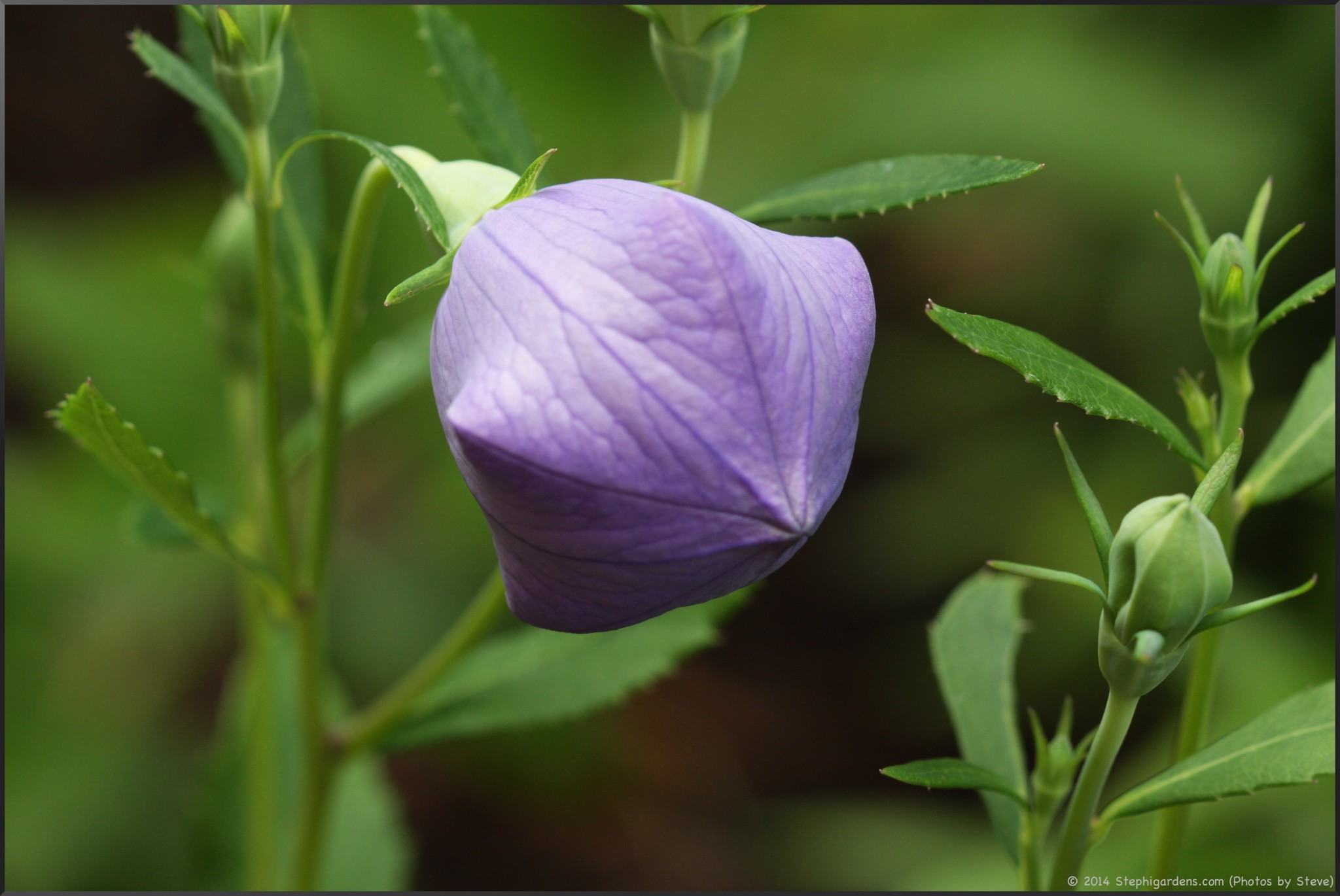
The Ballon Flowers are getting ready to bloom (Platycodon grandiflora).

Platycodon grandiflorus Ballon flower

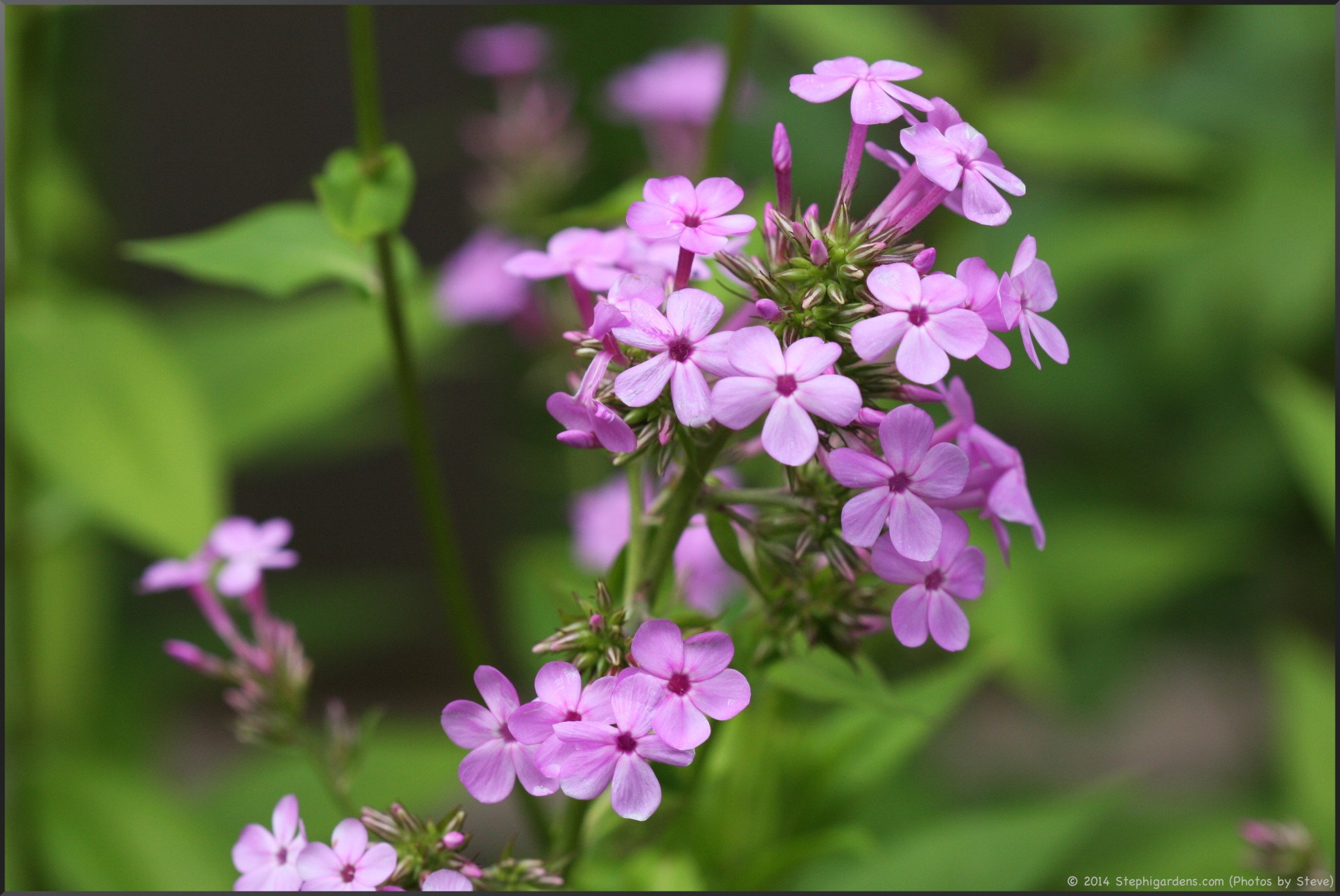
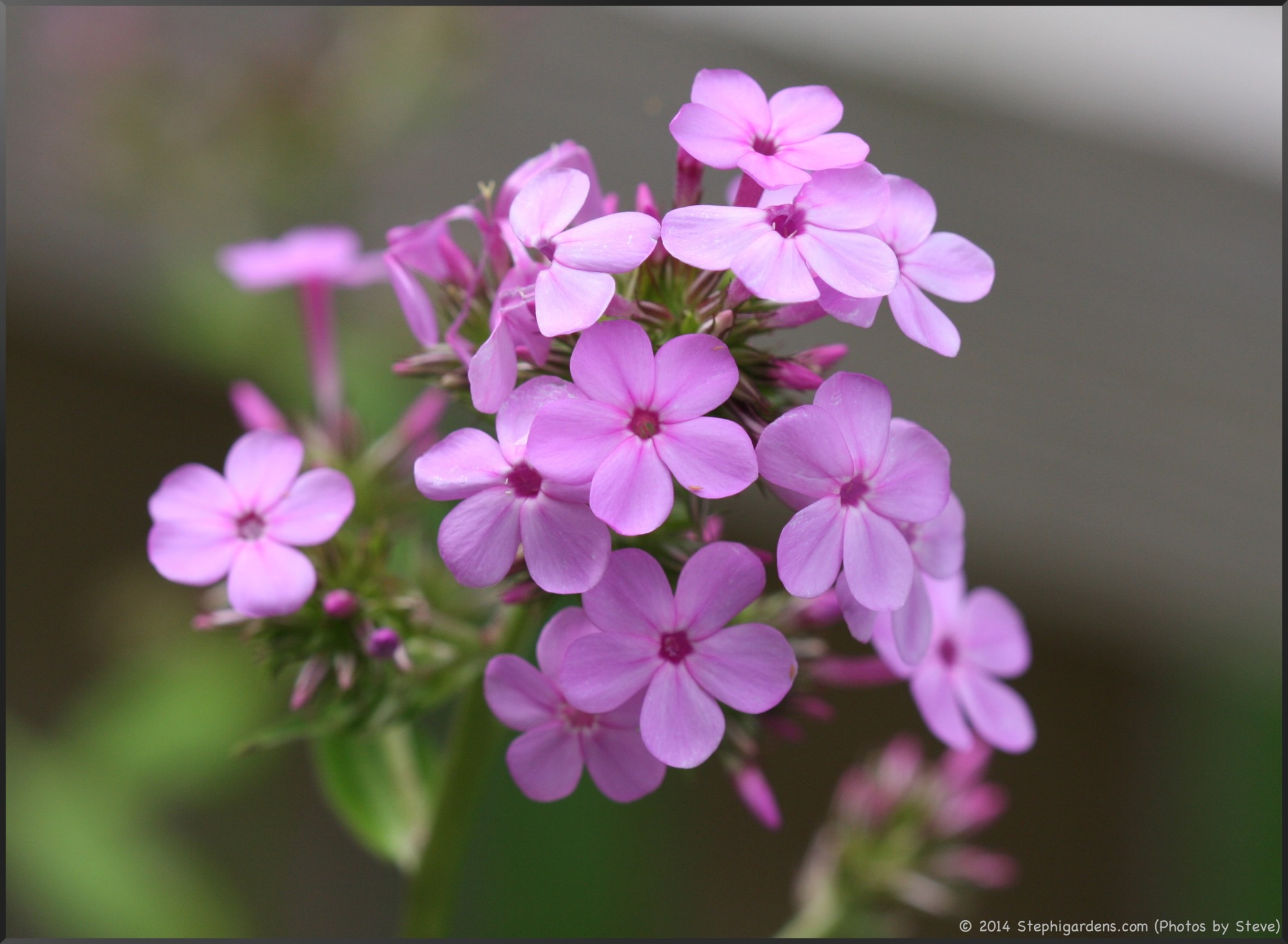
Jeana Garden Phlox 

Jeana Garden Phlox


Jeana Garden Phlox

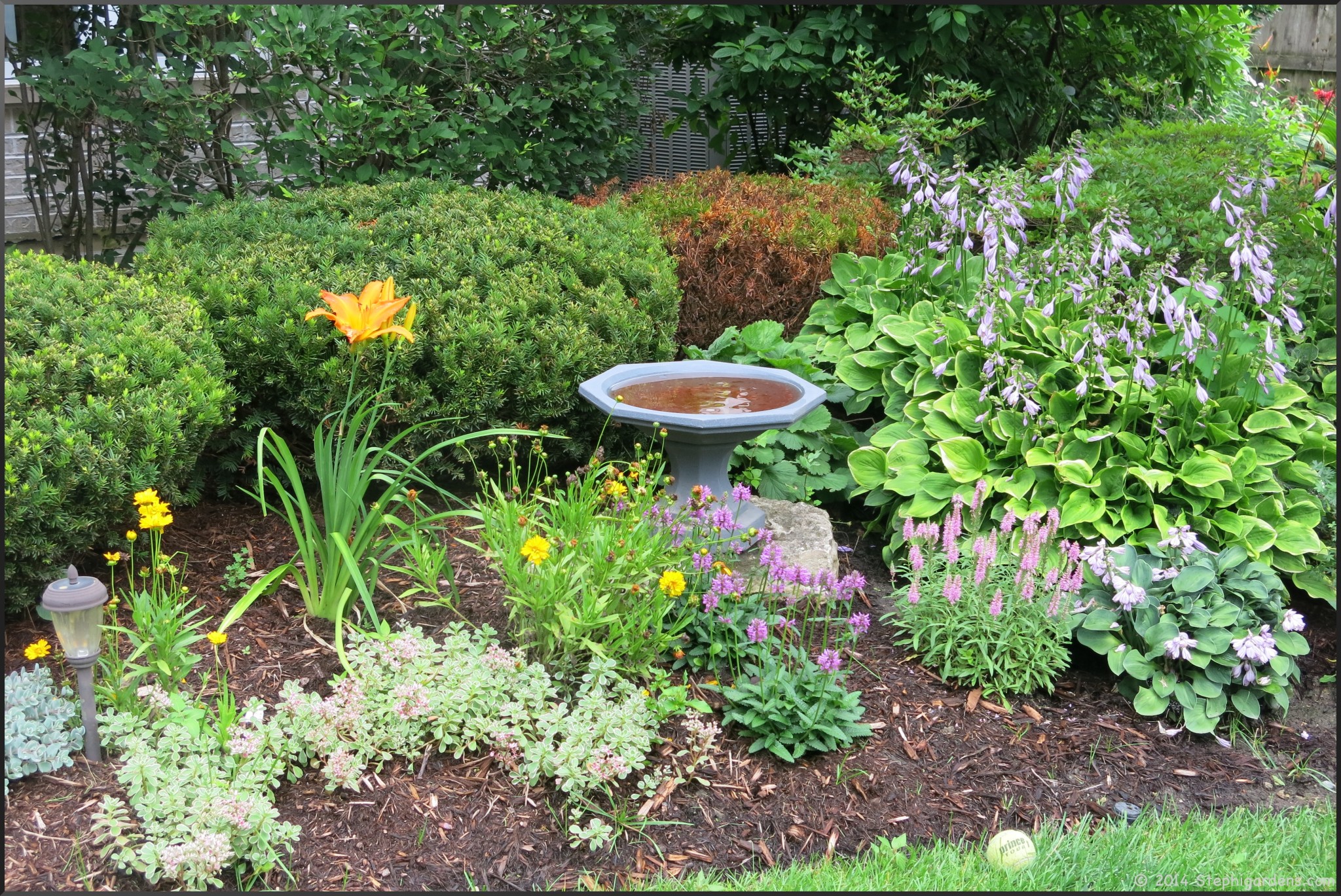
Hostas are in bloom.  Maybe they’ll attract the hummingbirds or sphinx moths.

The huge, stunning Primal Scream Daylily.

Primal Scream Daylily


IMG_8570

After Vacation

Stephi Gardens

After a wonderful beach vacation and some college tours, we’re finally back home. As expected, the weather has been crazy while we were gone. The temperatures were just about average, but rainfall was almost double the normal amount. Included in this total was a single storm that dumped almost 2 inches of rain in under 2 hours and knocked out our power for almost 15 hours. Nothing like being on vacation and getting the call that the basement is flooded. Thank goodness for friends who went above and beyond to help.

So how did the garden fare? Quite well actually. With the fairly constant rain and average temperatures (and in some cases even a bit below average), I came home to a bit of a jungle. The last few years, by July we’ve been struggling with hot/dry conditions and the plants begin struggling. Not this year! I think I’ve had the sprinklers on once and that was just to test the system. Here’s some after vacation shots…

Many of the flowers are in full bloom and flourishing with the moderate temperatures and plenty of rain.  Although, I did miss most of the asiatic lily’s blooms.  They are mostly finished for the season.

zinnia

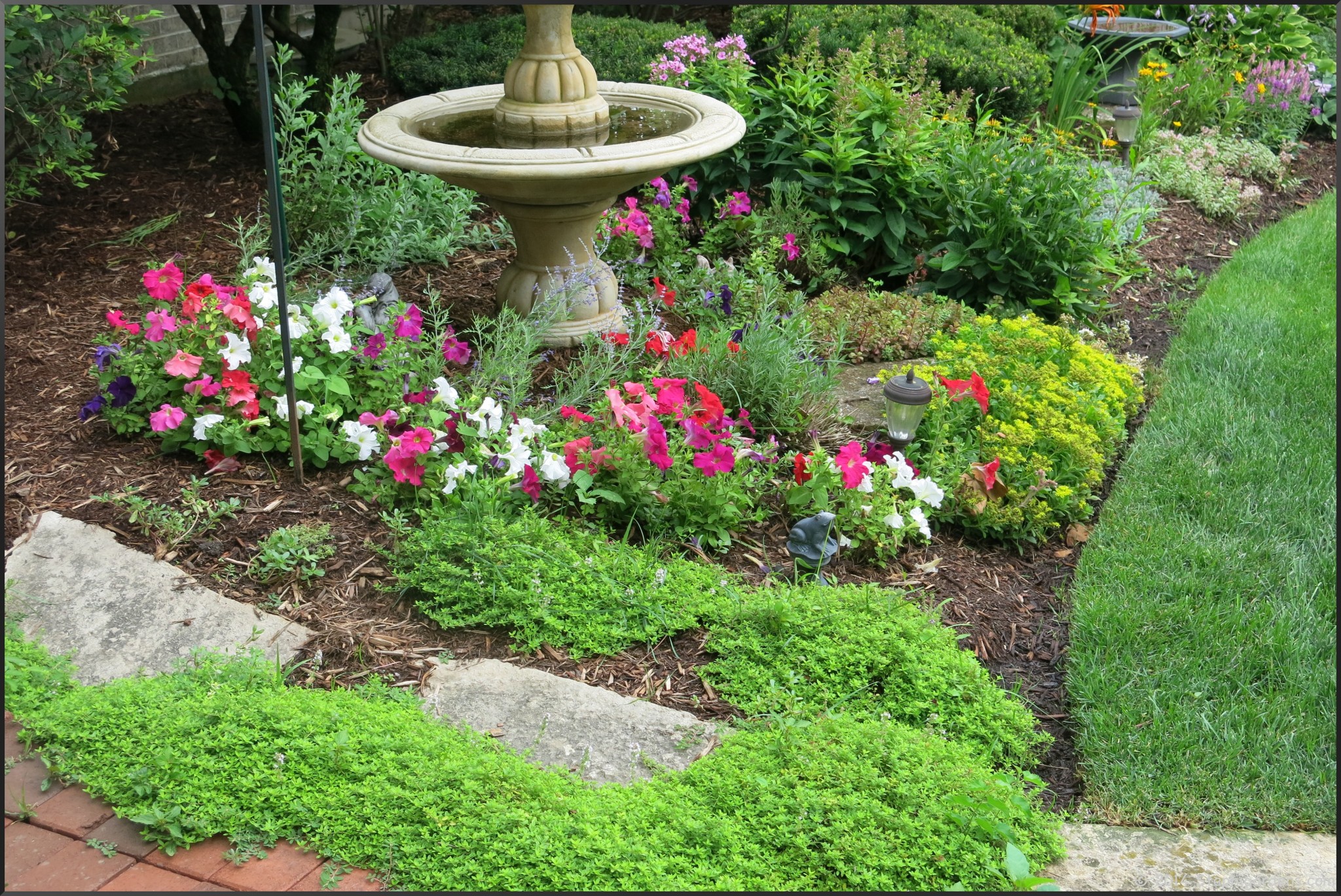
Notice how beautiful the creeping thyme looks (Problems with Creeping Thyme).  Still waiting for the hummingbirds to find my flowers and feeder.

Stephi Gardens

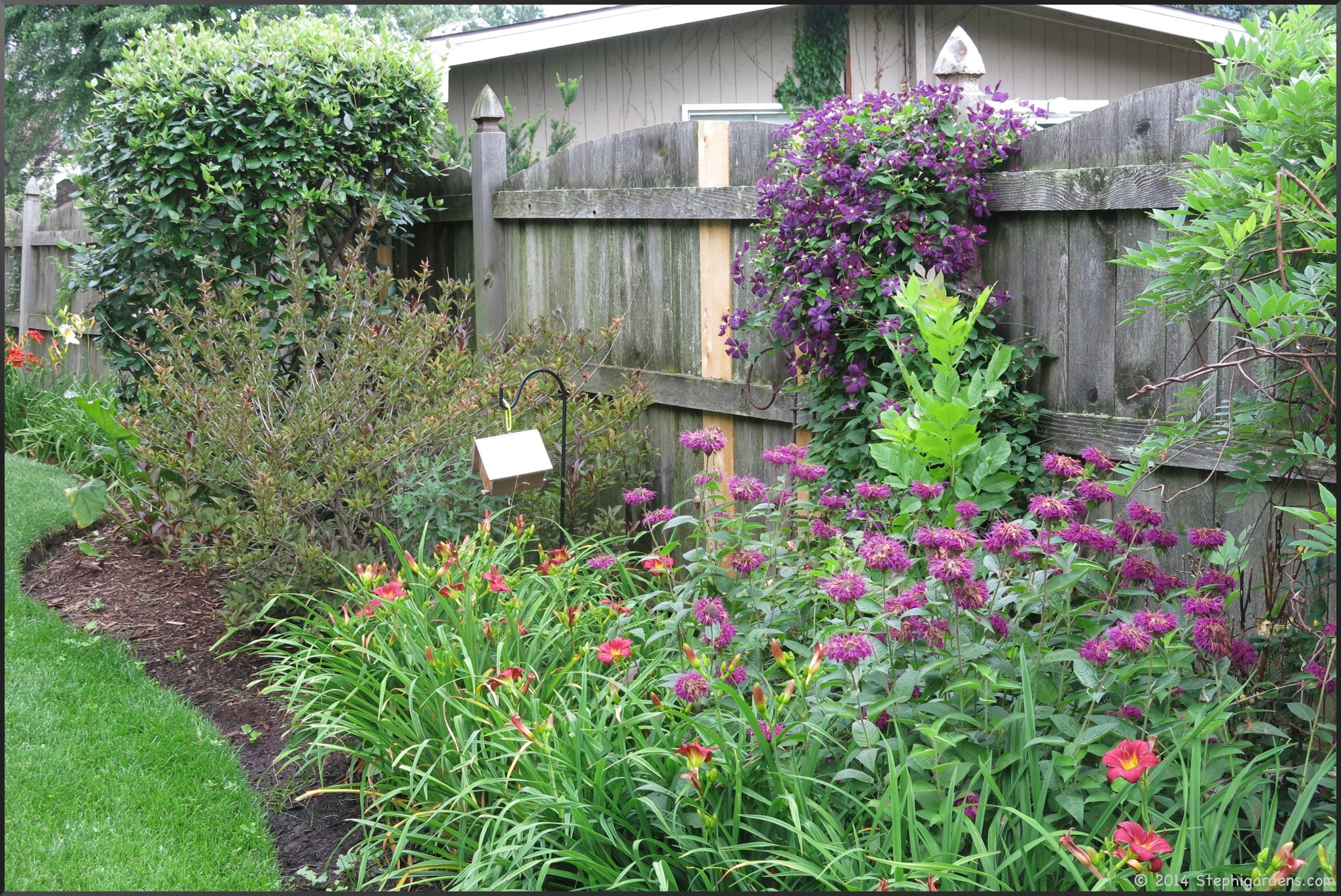
The Purple Rooster Bee Balm is still blooming and attracting bees.   But now the accompanying Jackmanii Clematis and Pardon Me daylilies are also blooming.

Stephi Gardens


Stephi Gardens


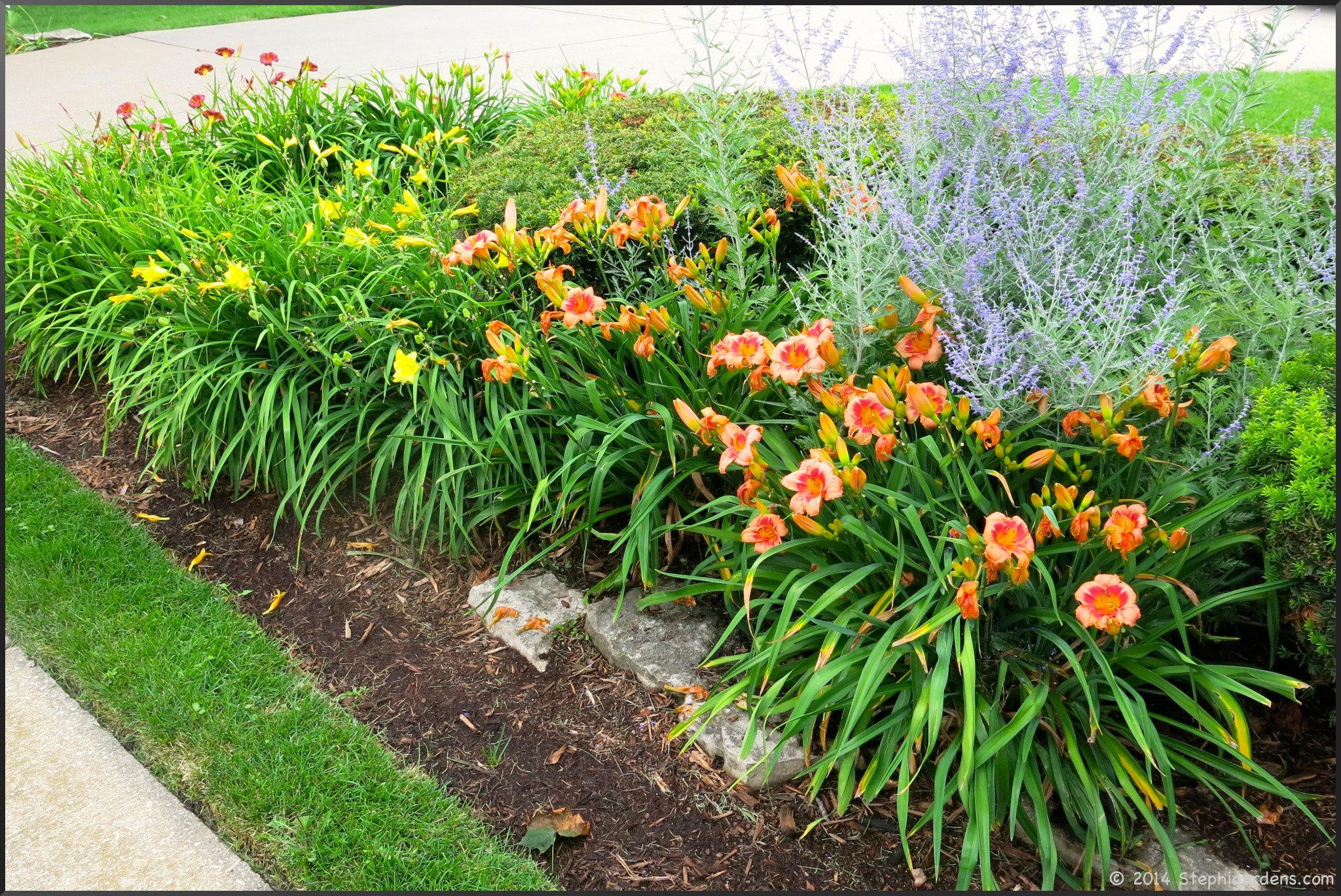
daylilies and Russian sage

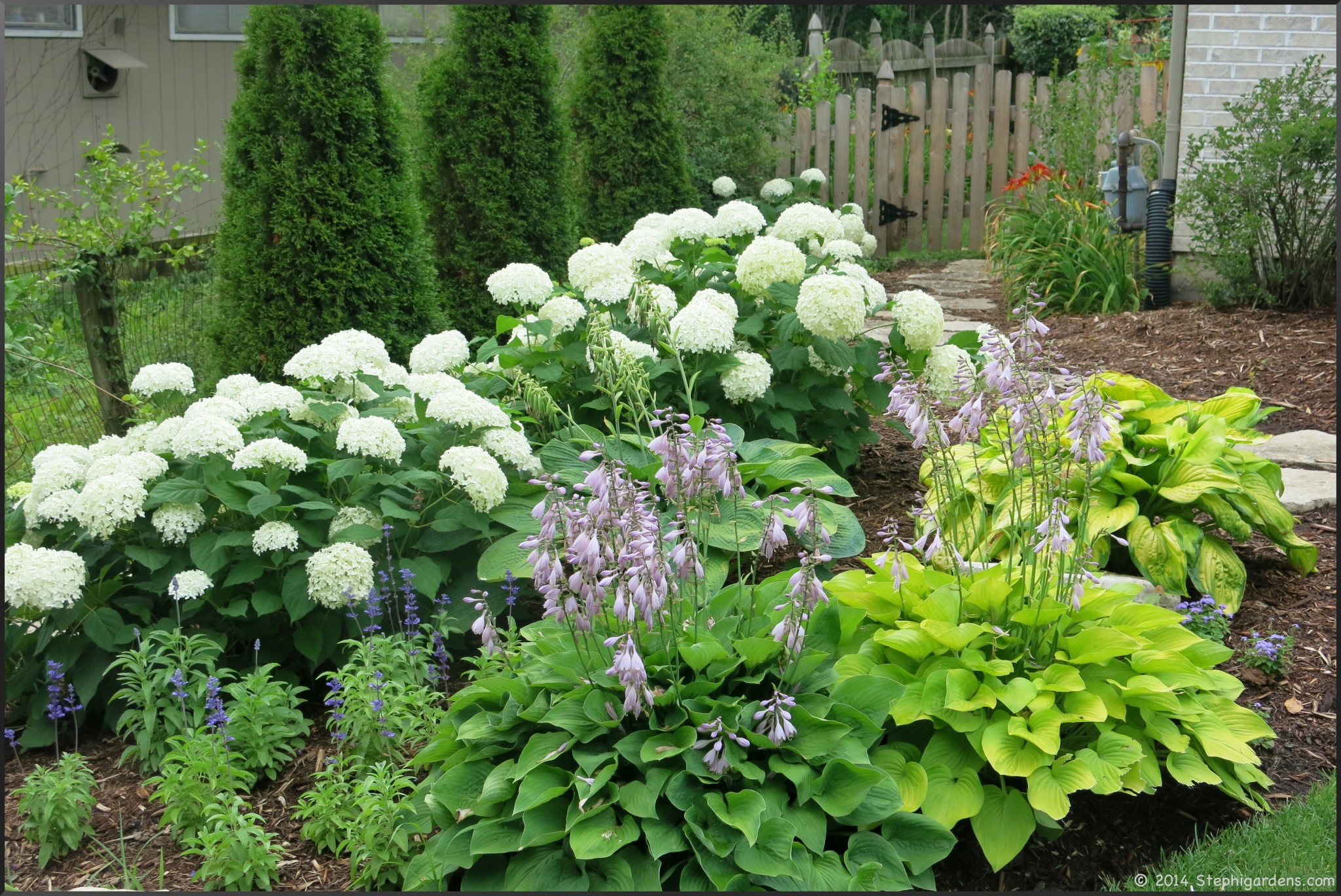
With all the rain , this garden is doing well despite the change from full shade to full sun.

annabelle hydrangea

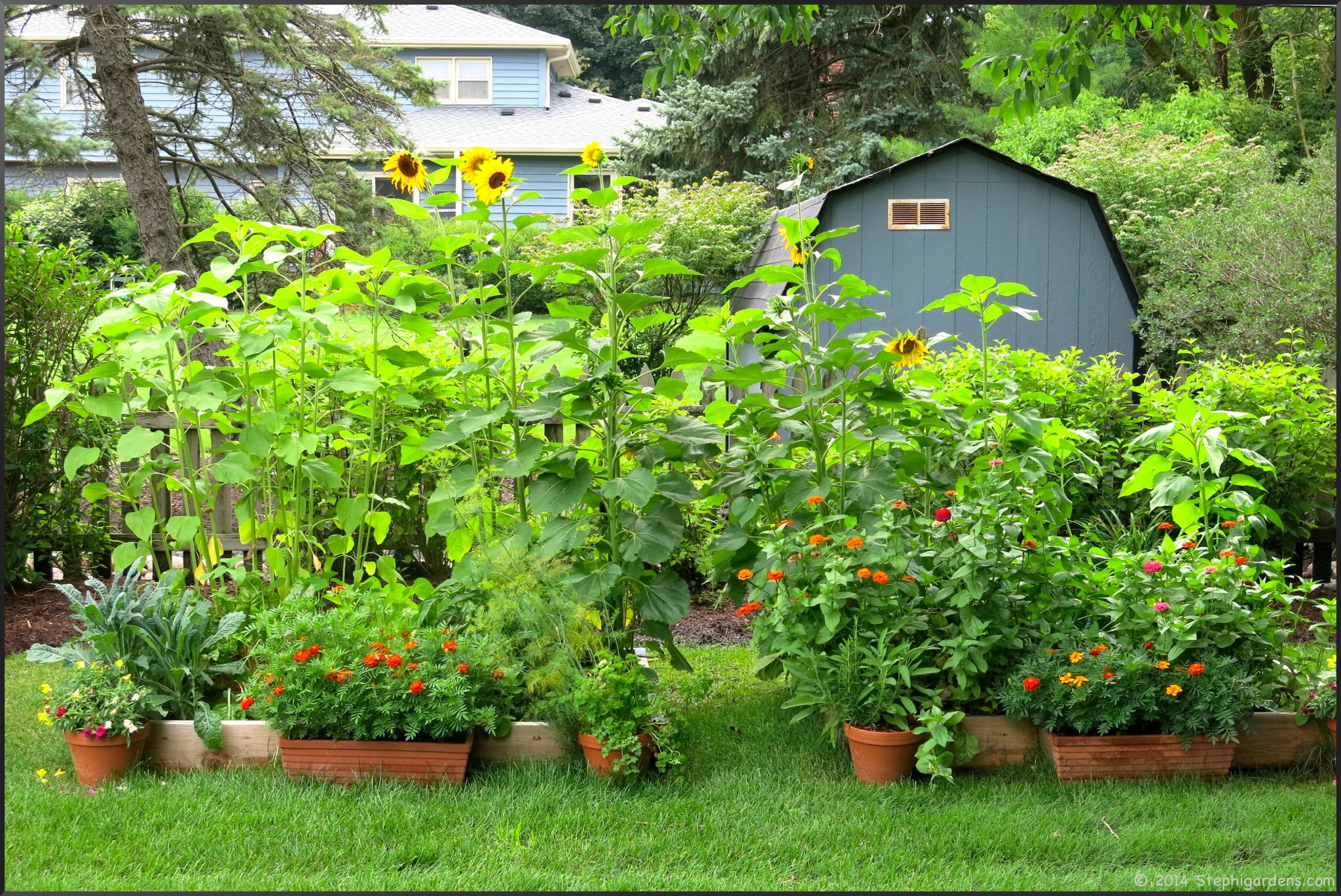
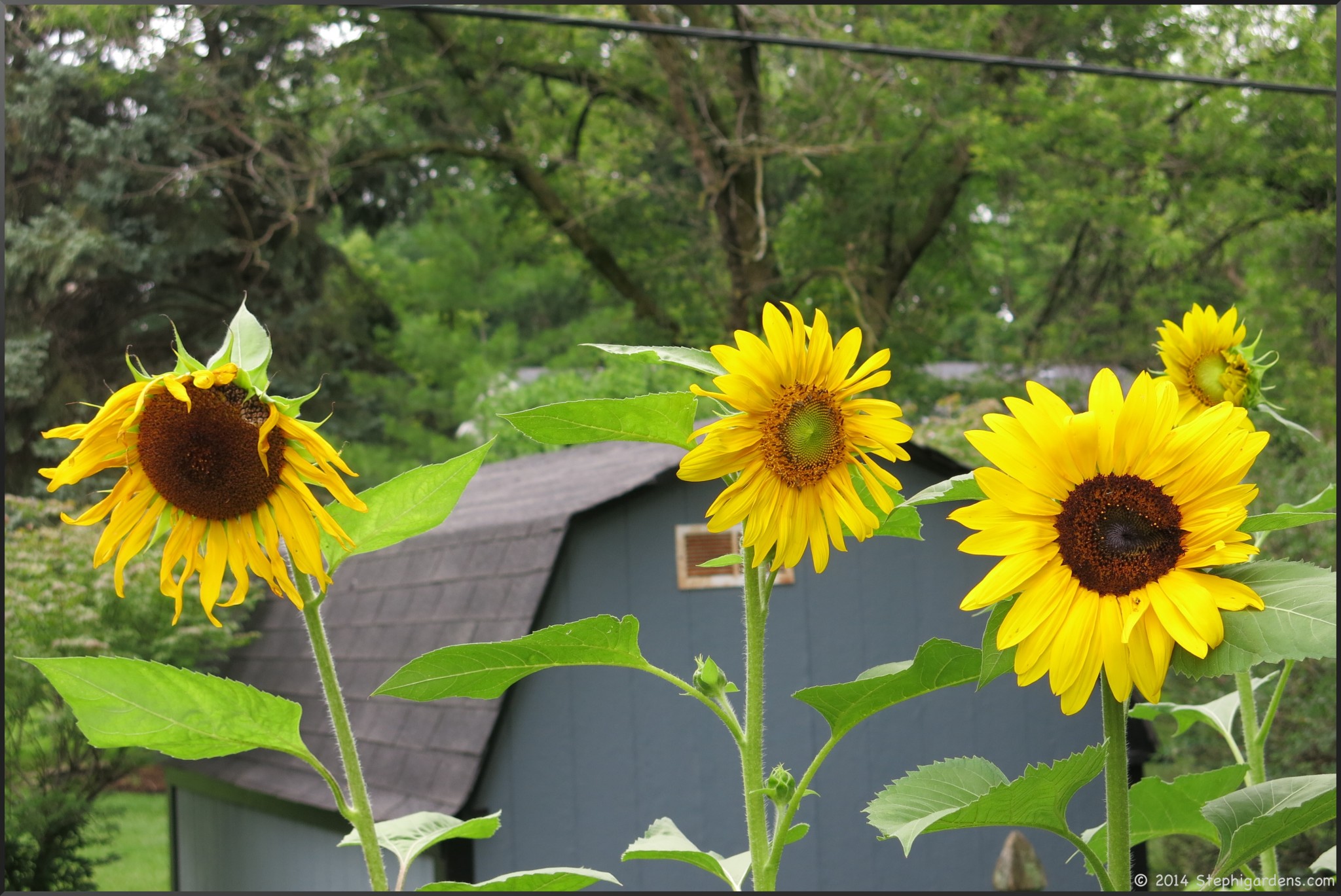
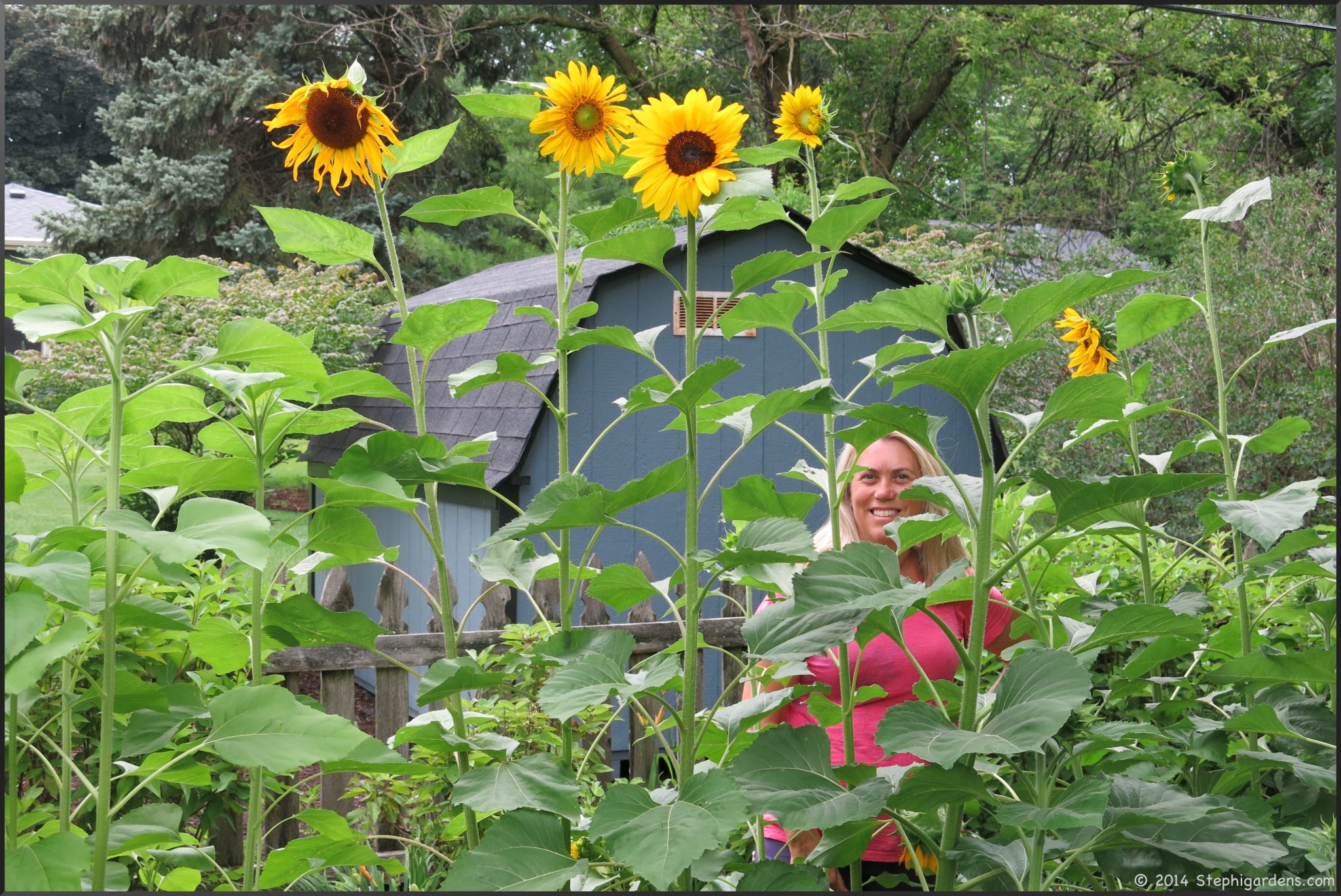
The sunflowers have become gigantic!  Before we left they were probably only about 4 ft tall (see Before Vacation), now they are easily 7 ft-8 ft and attracting lots of bees.

sunflowers

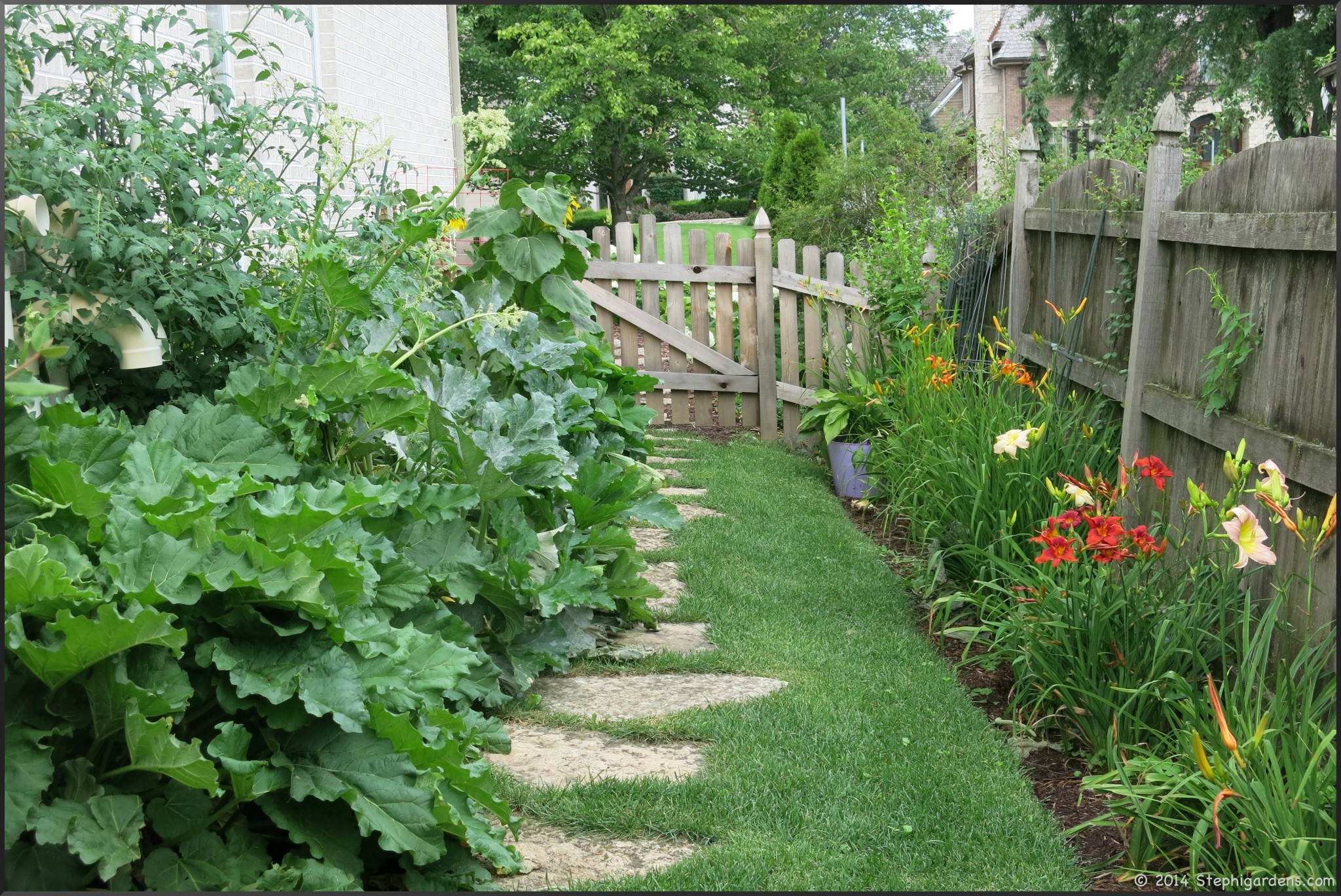
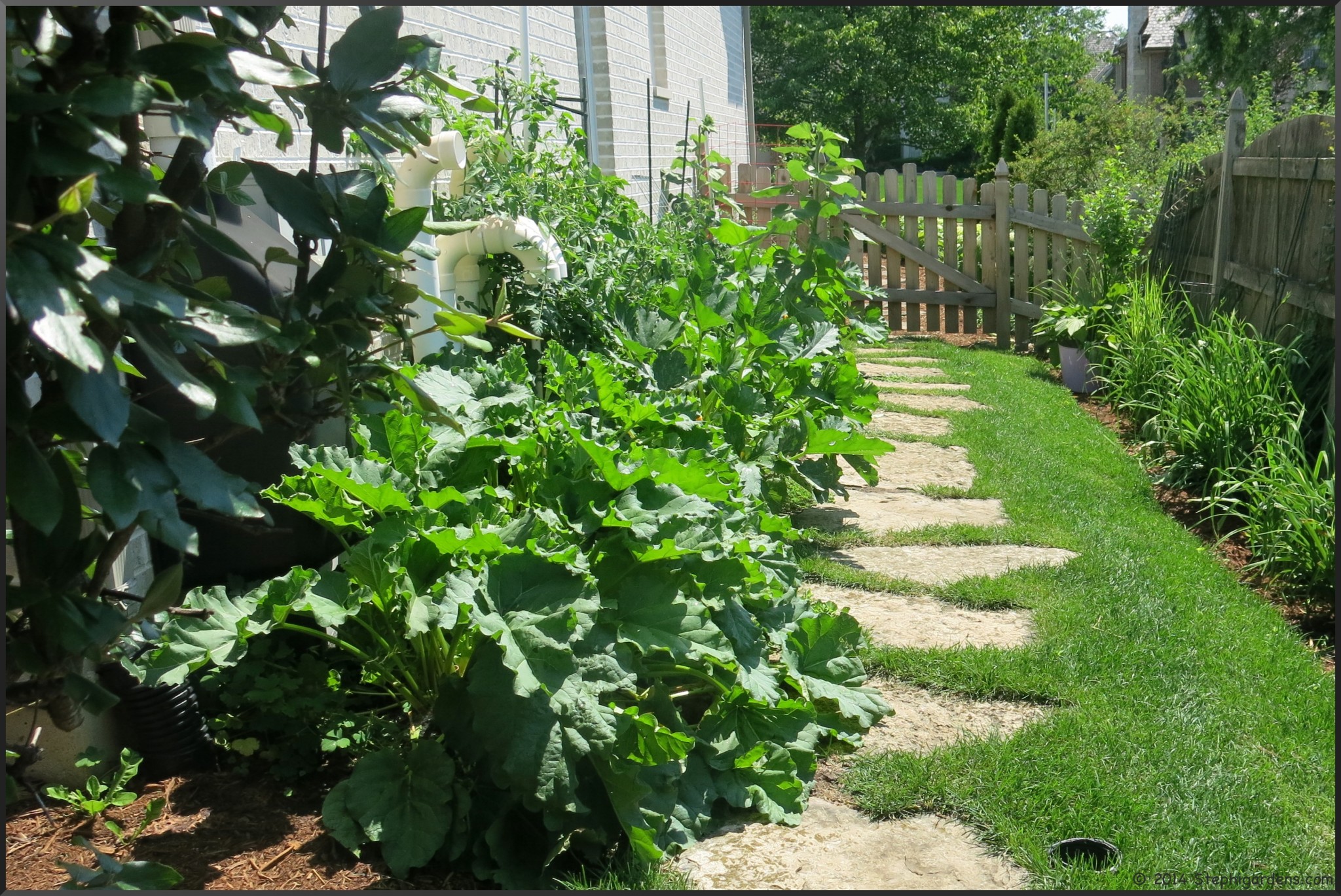
The vegetable gardens are flourishing, but need some attention to prune back some of the wildness.

Stephi Gardens


Stephi Gardens

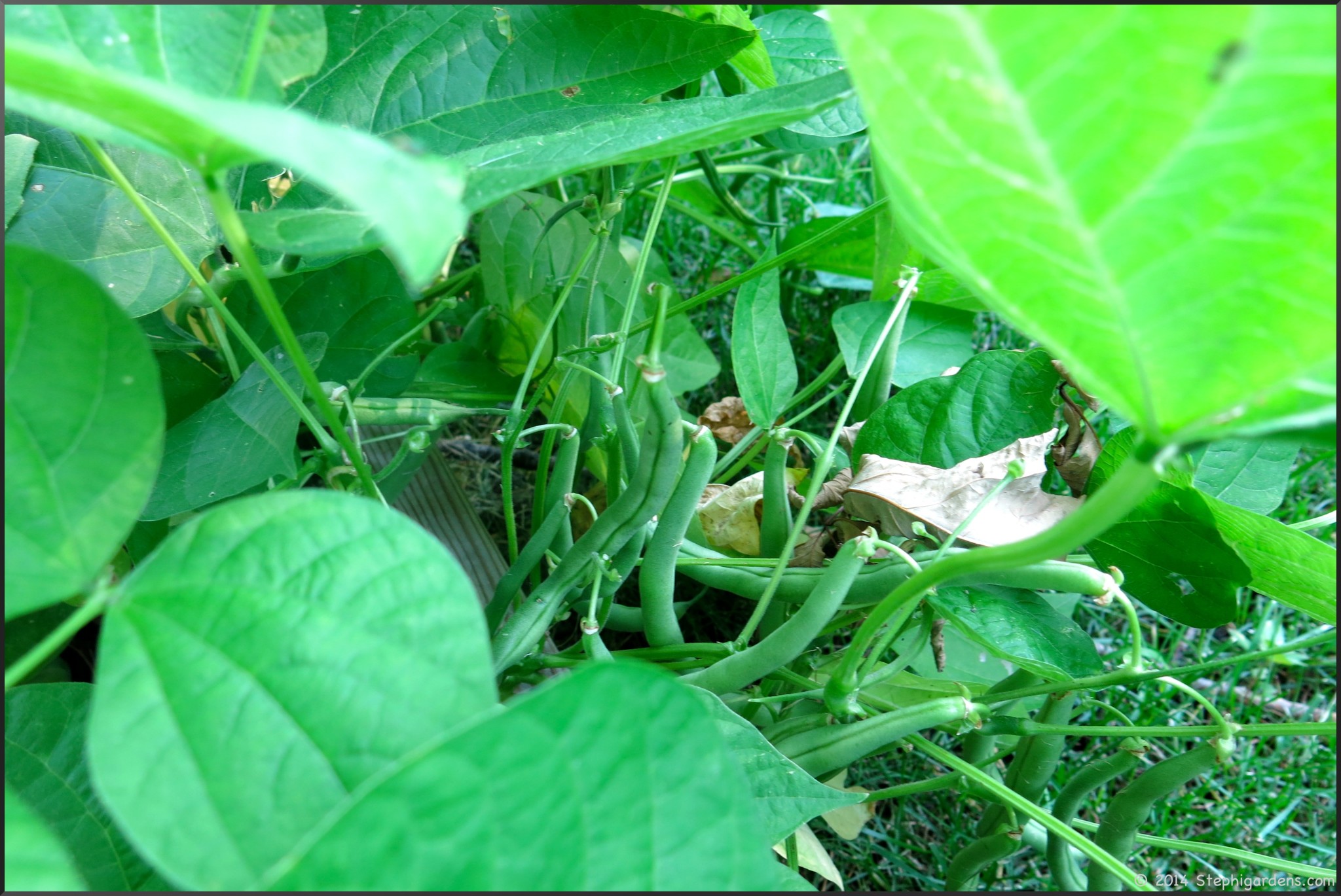
I have a nice bunch of bush beans to harvest.

bush beans

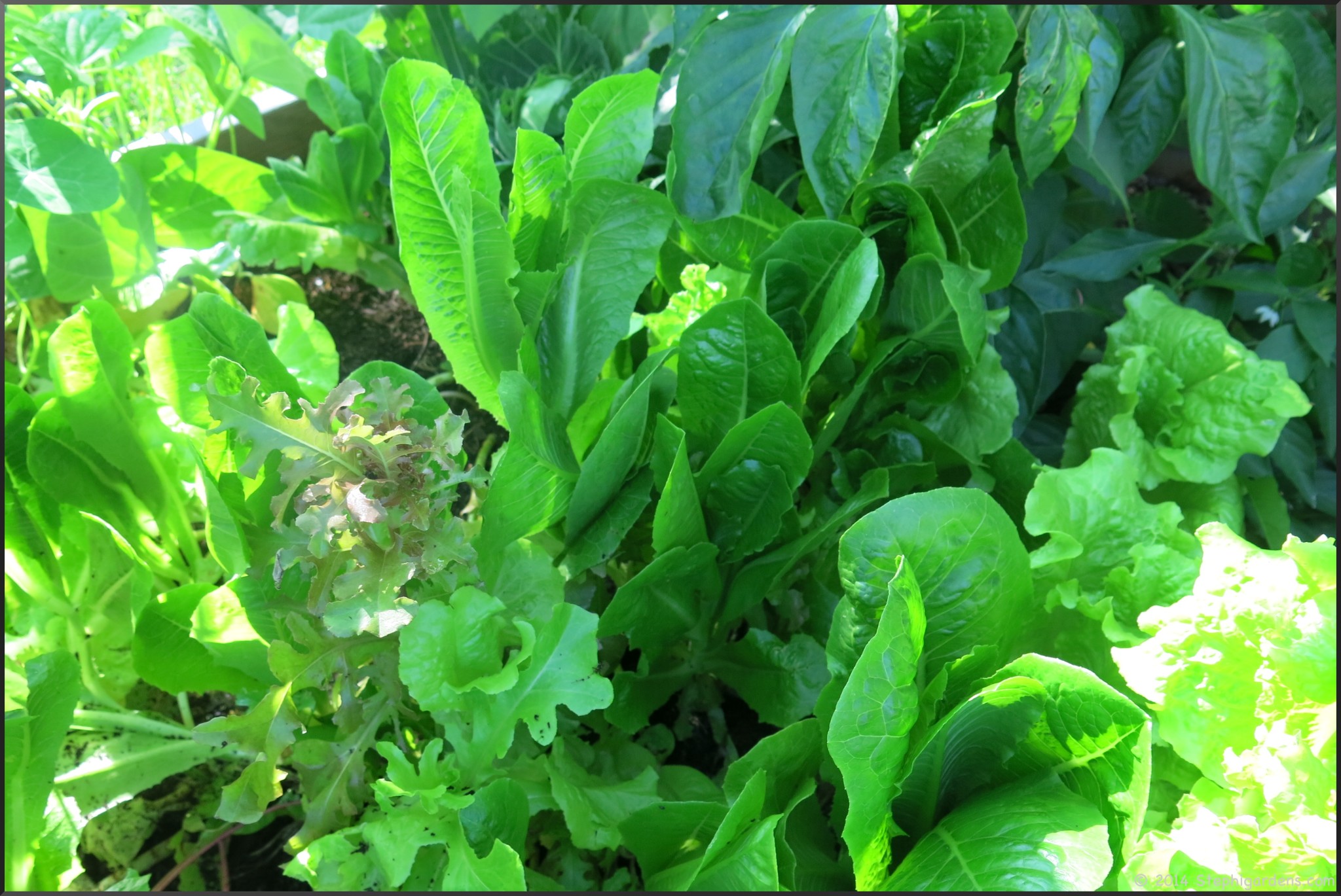
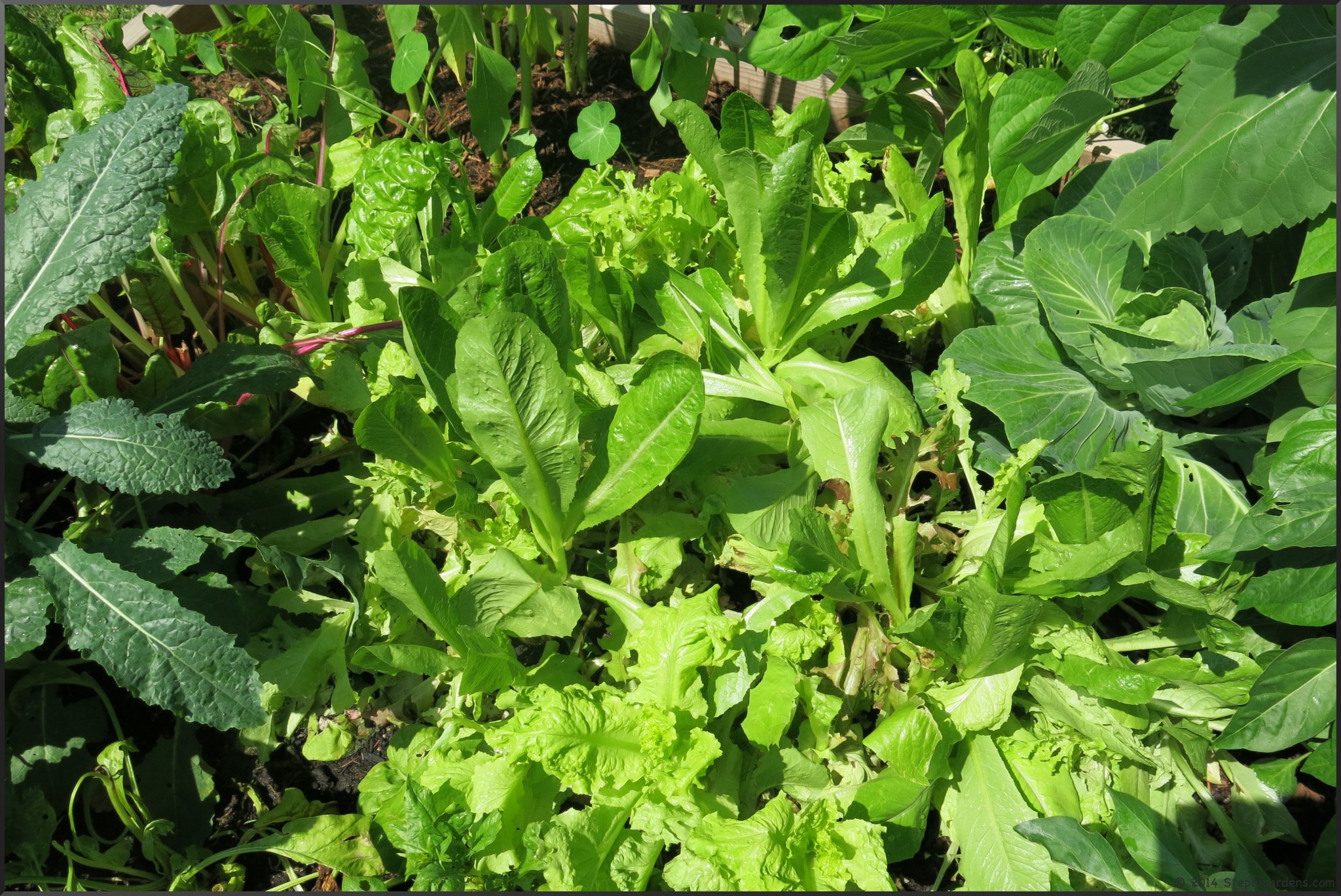
The lettuce is still hanging in there. My idea to plant them in the partly shady corner of the garden has paid off.

lettuce

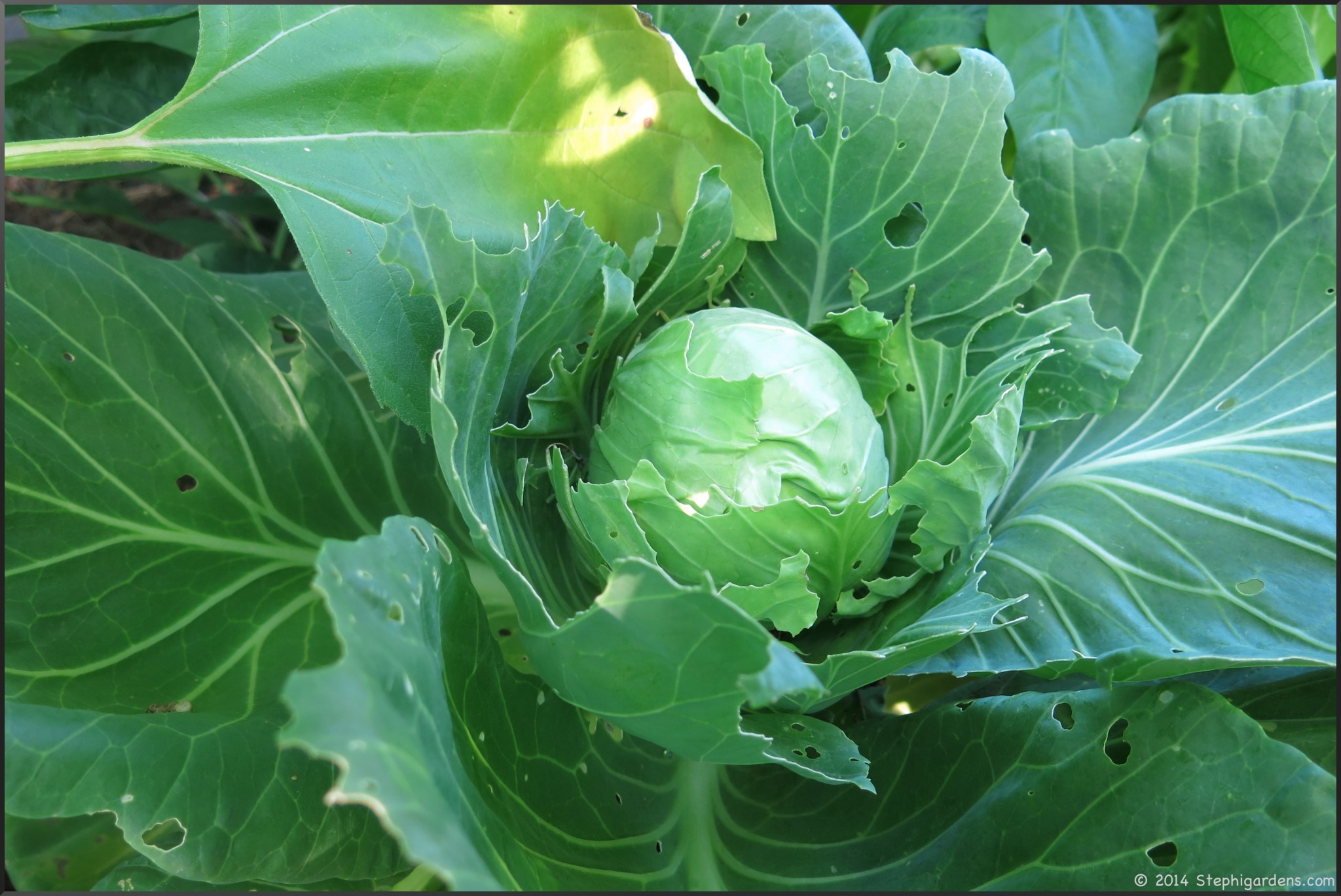
First time for cabbage and they’re looking great.

cabbage

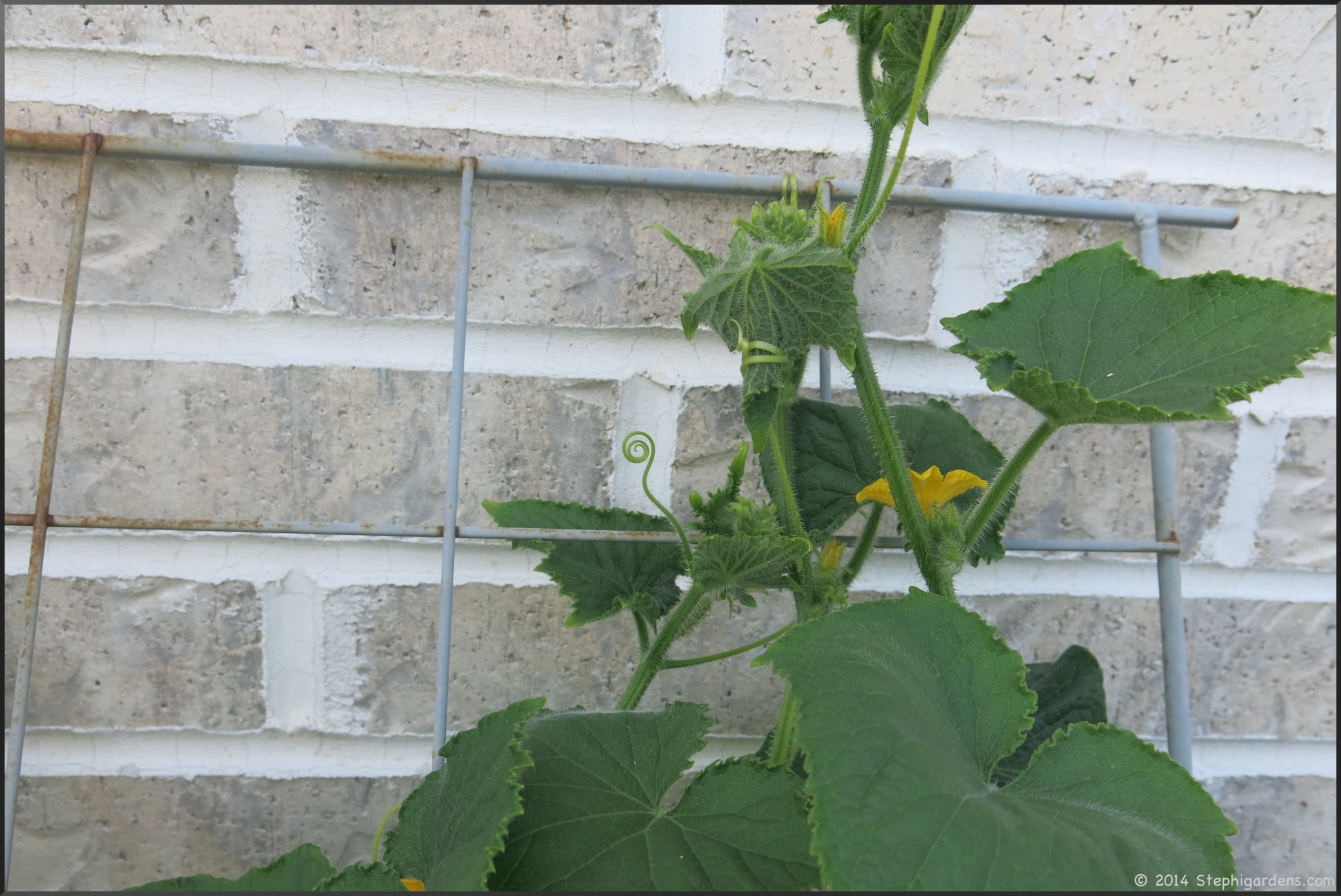
Cucumbers were slow to get going, but I’ll have plenty soon enough.

cucumber

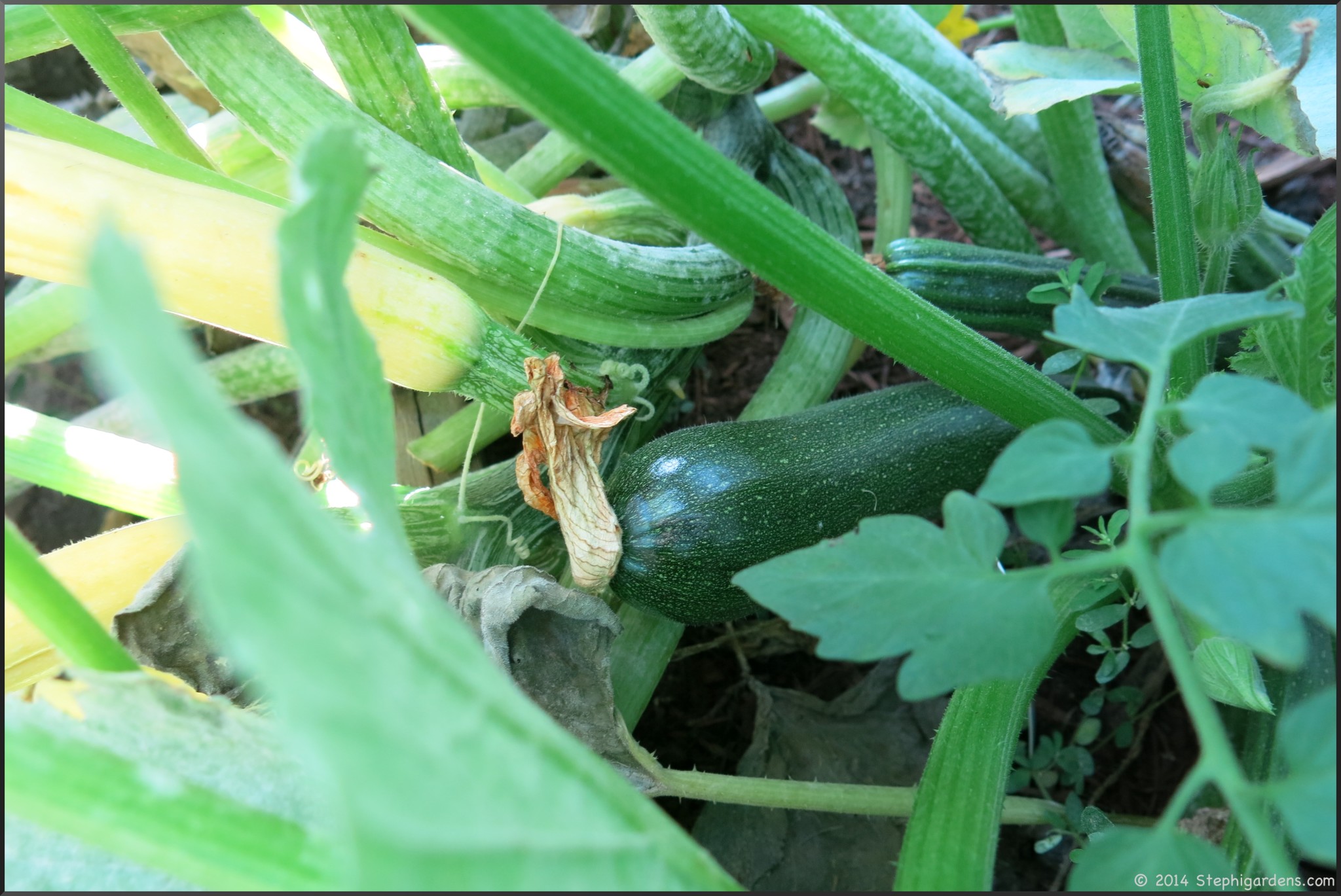
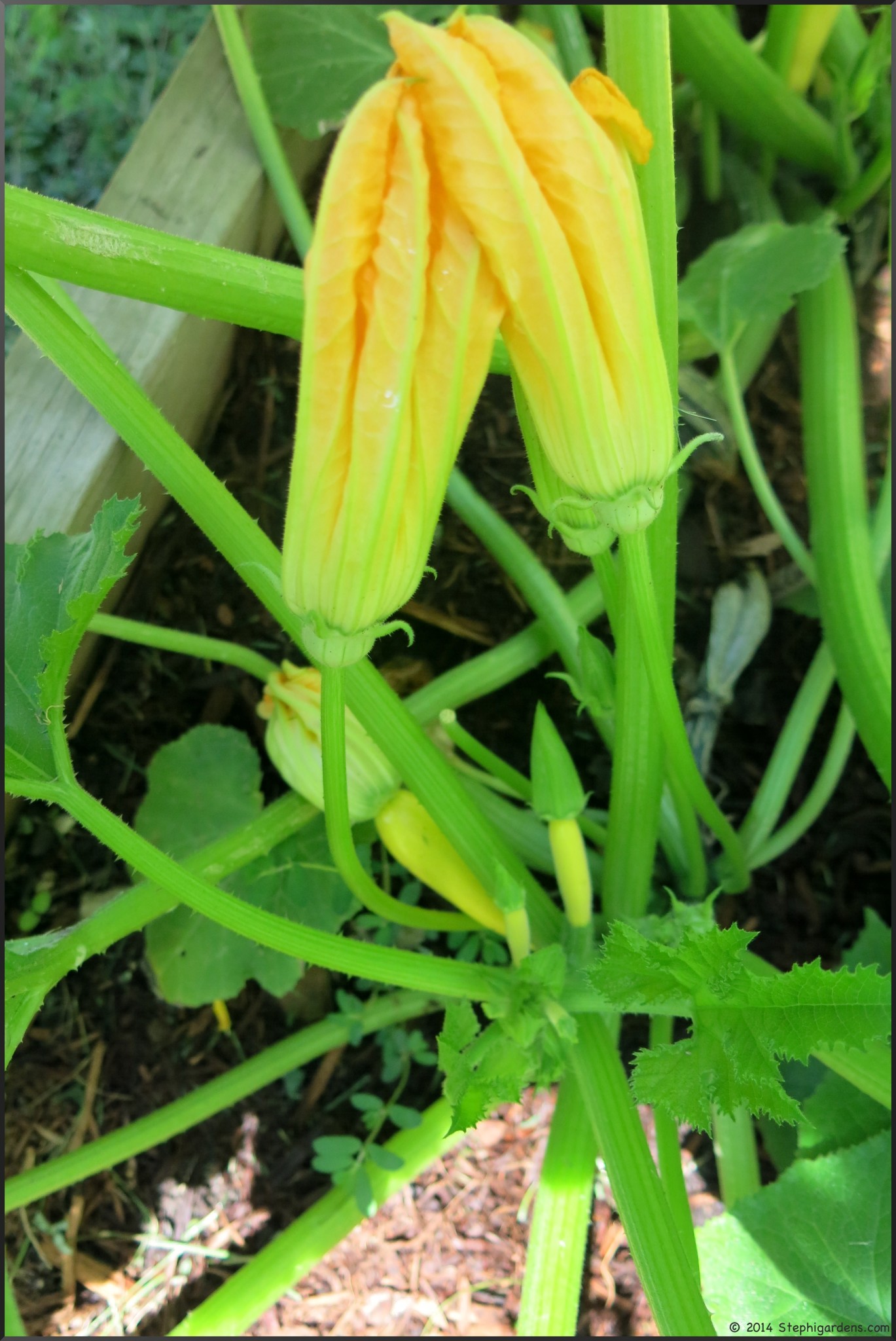
Zucchini and summer squash are plentiful.  Hoping to get some small tender ones harvested before they turn into baseball bats (see Giant Zucchini).  Somehow I’ve lost the garden markers labelling the squash varieties, so it’s a bit of a mystery what all the different squashes are.

zucchini

So, overall, I’d say everything fared pretty well this year (definitely better than the basement).   Looking forward to the continued blooms and vegetable harvests!

Me and my giant sunflowers!

sunflowers

Before Vacation

It’s always tough to go leave the garden and go on vacation.  It seems like something (or everything) is ready to just burst out in color or ripen just in time to go away. Or the weather can you throw you a curve ball and get crazy hot/cold or dry/wet. Very unpredictable. I assumed this year was no different, so right before we left I had my daughter Emily take some pictures to do a little before and after.

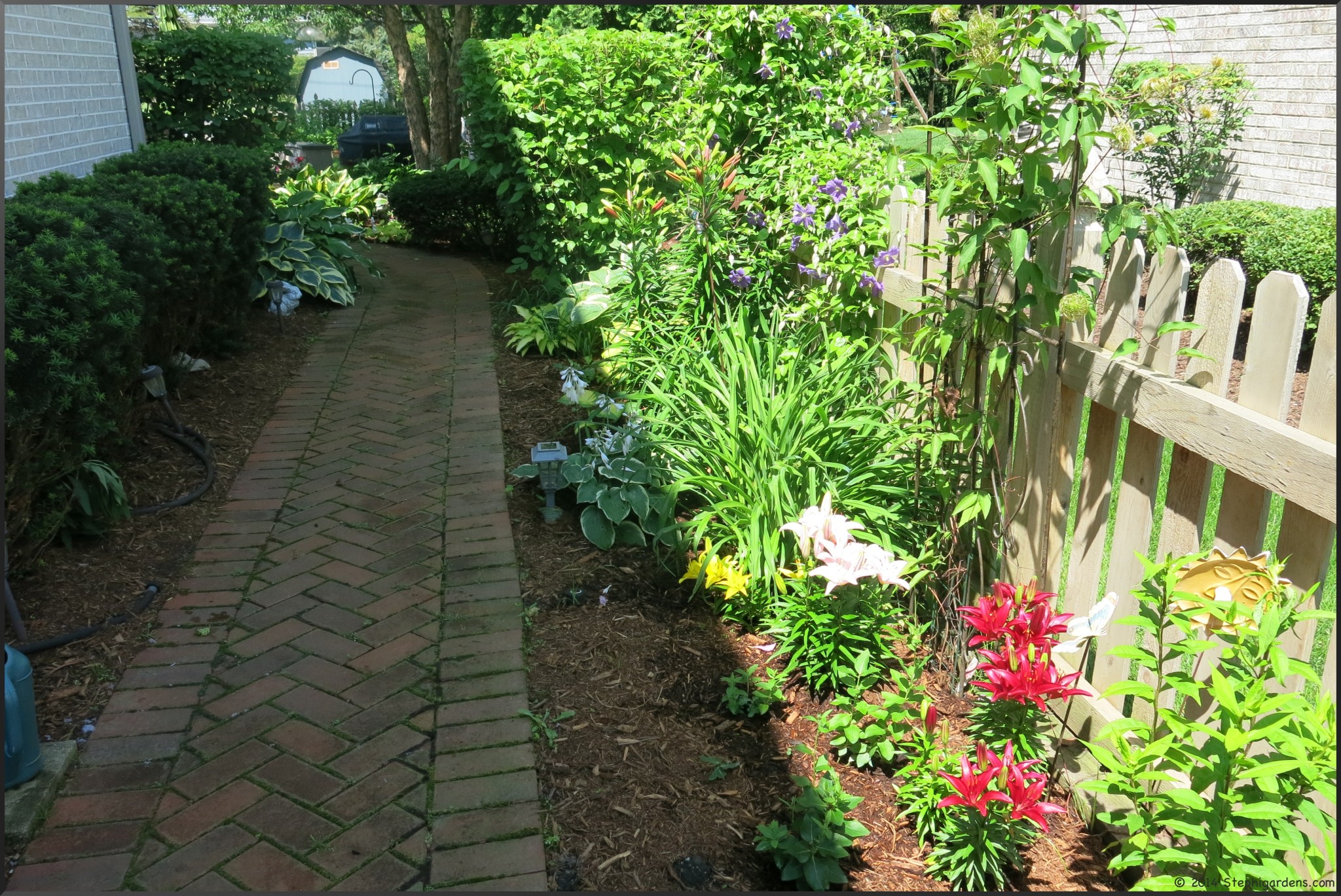
Some of the flowers were already in full bloom and likely will be past peak before we get back…

asian lily


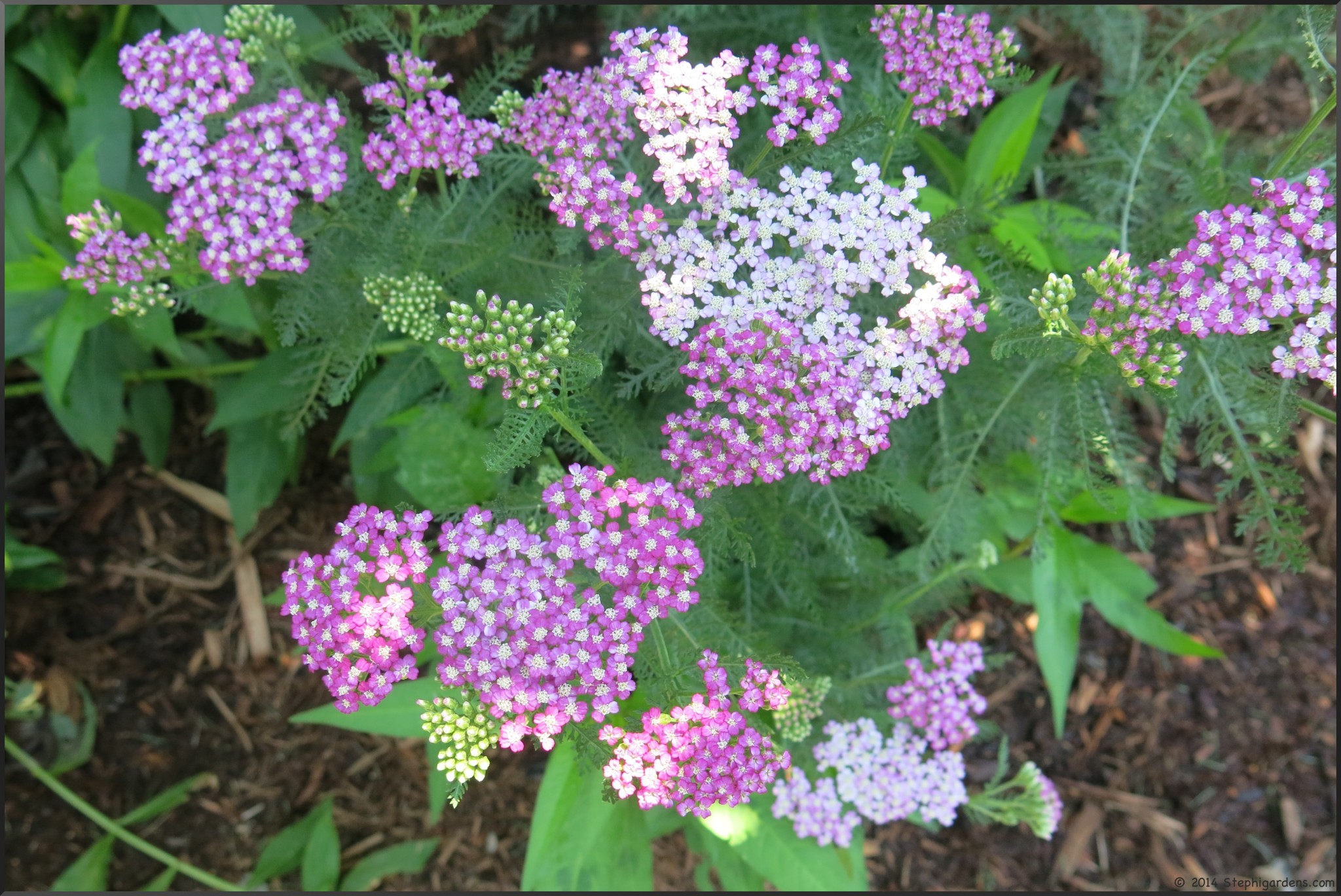
yarrow


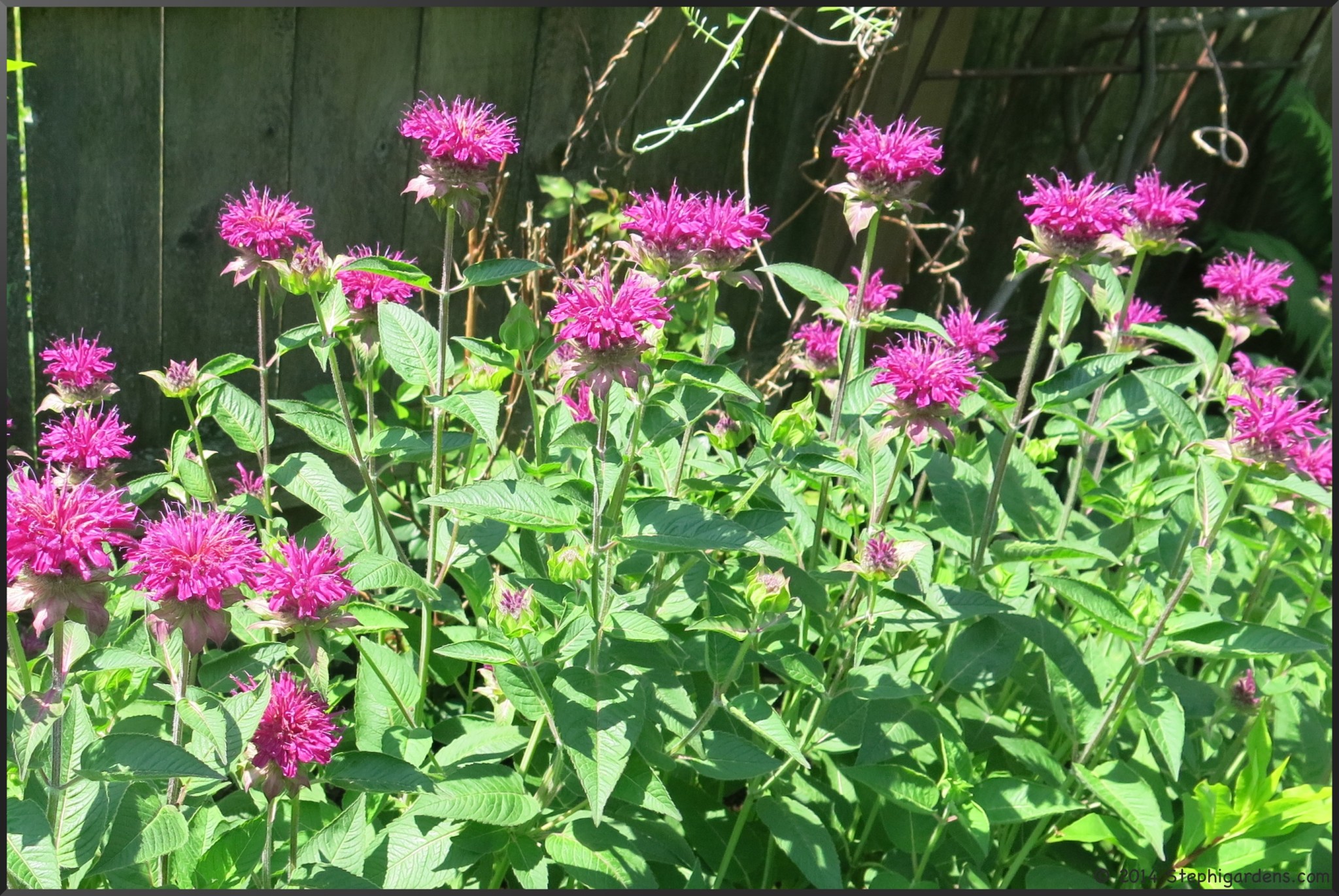
Bee balm


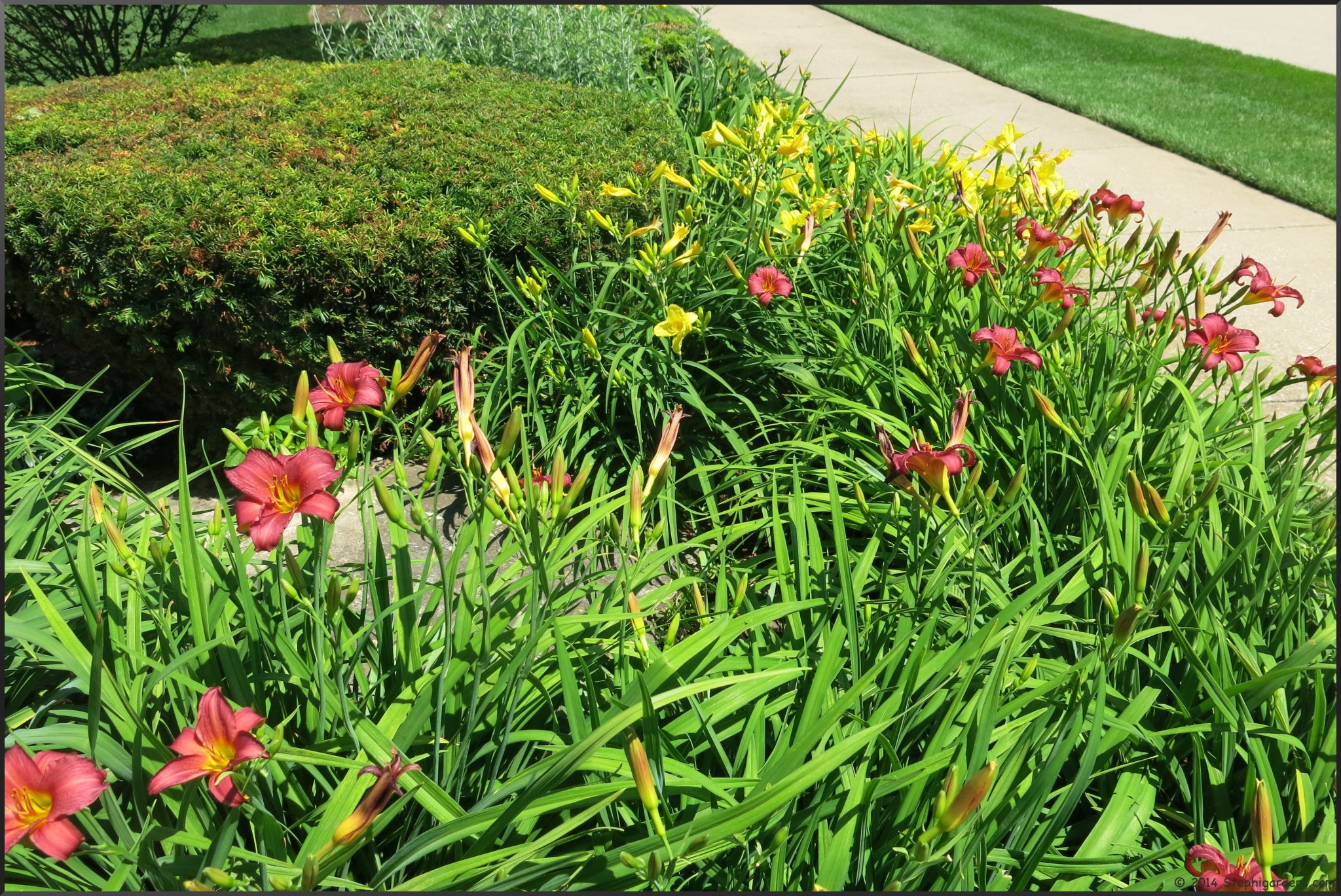
daylilies

Some were ready to bloom and I can only hope I don’t miss the show…

Stephi Gardens


Stephi Gardens


marigolds


Jackmanii clematus

The vegetables were flourishing.  The cooler weather vegetables were starting to show signs of stress and looking ready to bolt, but still fine to harvest for a little while longer.  Peppers, squash and beans were almost ready, so my friend who is helping with dog sitting and plant watering should get some treats.  I’d hate for them to go to waste and there’ll be plenty more.  Tomatoes are growing like gang-busters, but not expecting any ripe ones quite yet.

Stephi Gardens


lettuce


summer squash


Stephi Gardens

Vacations are always a little tricky to be sure everything stays healthy in the garden.  Right before we left for almost 2 weeks, I gave everything a watering with Miracle-Gro fertilizer and dead-headed everything that would benefit from it.  I set the sprinkler to try and optimize waterings, and had a friend also check on things and keep the pots watered.  I also tried to be sure the plants that needed staking were supported so things wouldn’t be too out of hand when I got back.

How do your gardens fare when you go on vacation?

Not the Marigolds!

Photos by Peggy

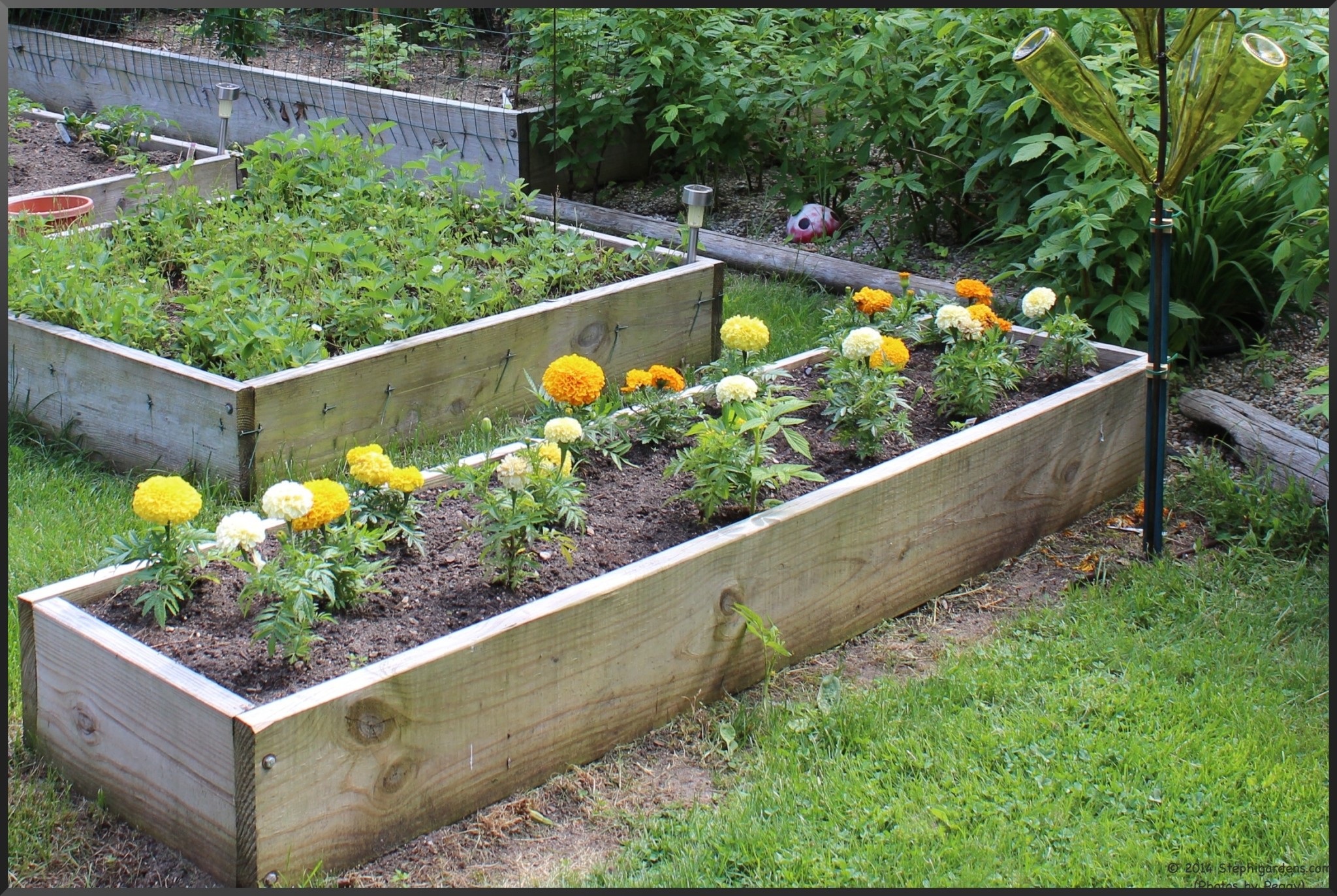
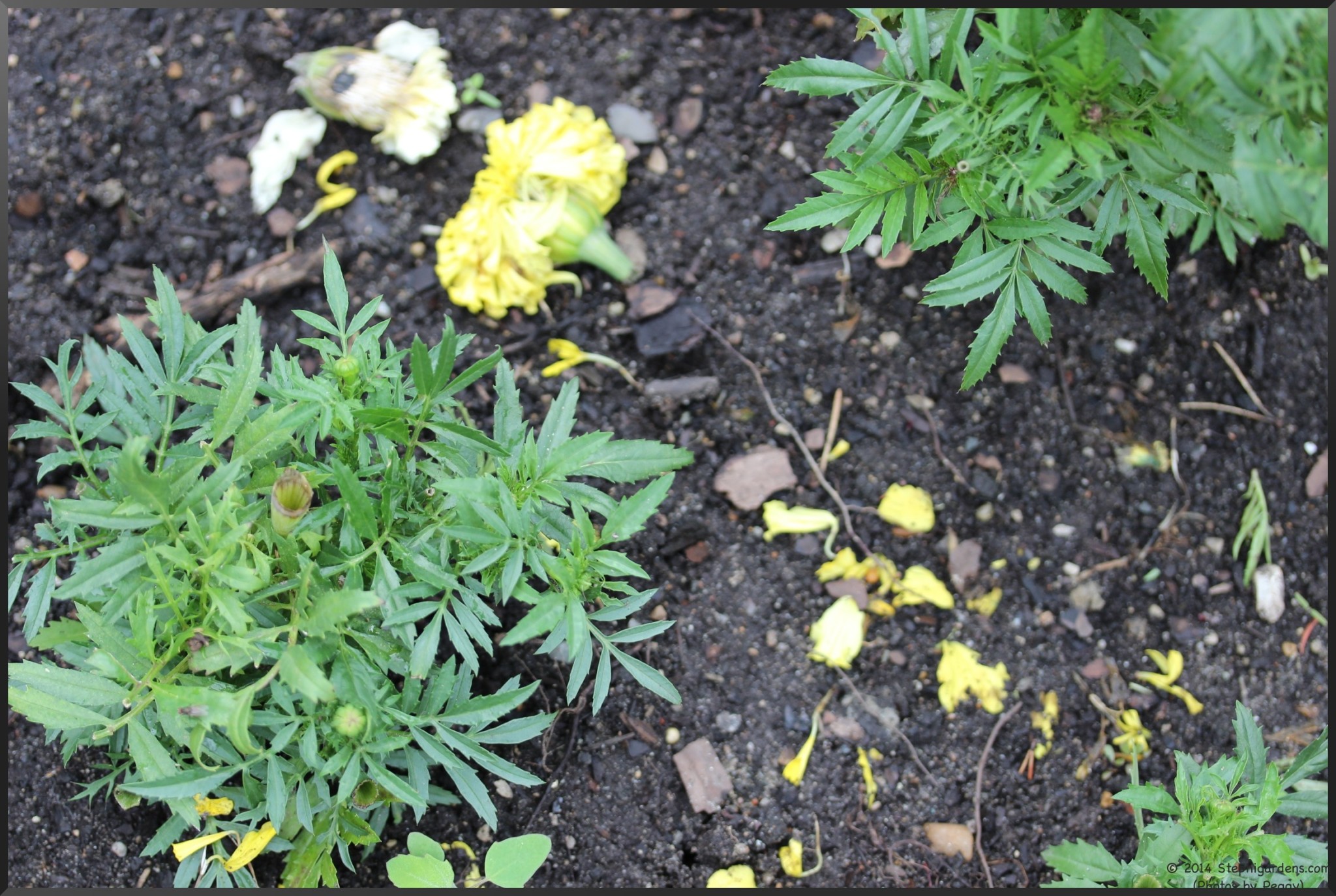
In one of my mom Peggy’s raised beds she had the beginnings of a beautiful bed of huge African Marigolds (Tagetes erecta).  If you love marigolds like I do, I couldn’t wait to see how this was going to look in the next few weeks.  Then, one morning she woke up to this…

Photos by Peggy

…and I got a frantic text outlining what had happened.  Many of the flowers had been cleanly nipped off and petals strewn everywhere.  We were puzzled as to how this happened.  Weren’t marigolds supposed to repel most garden varmints?Apparently not, after some research and this first hand experience.  This could have been the work of rabbits, chipmunks, squirrels, deer and even birds.  Based on critter observations and the bed being a little high for rabbits to get in, our best guess is the chipmunks.

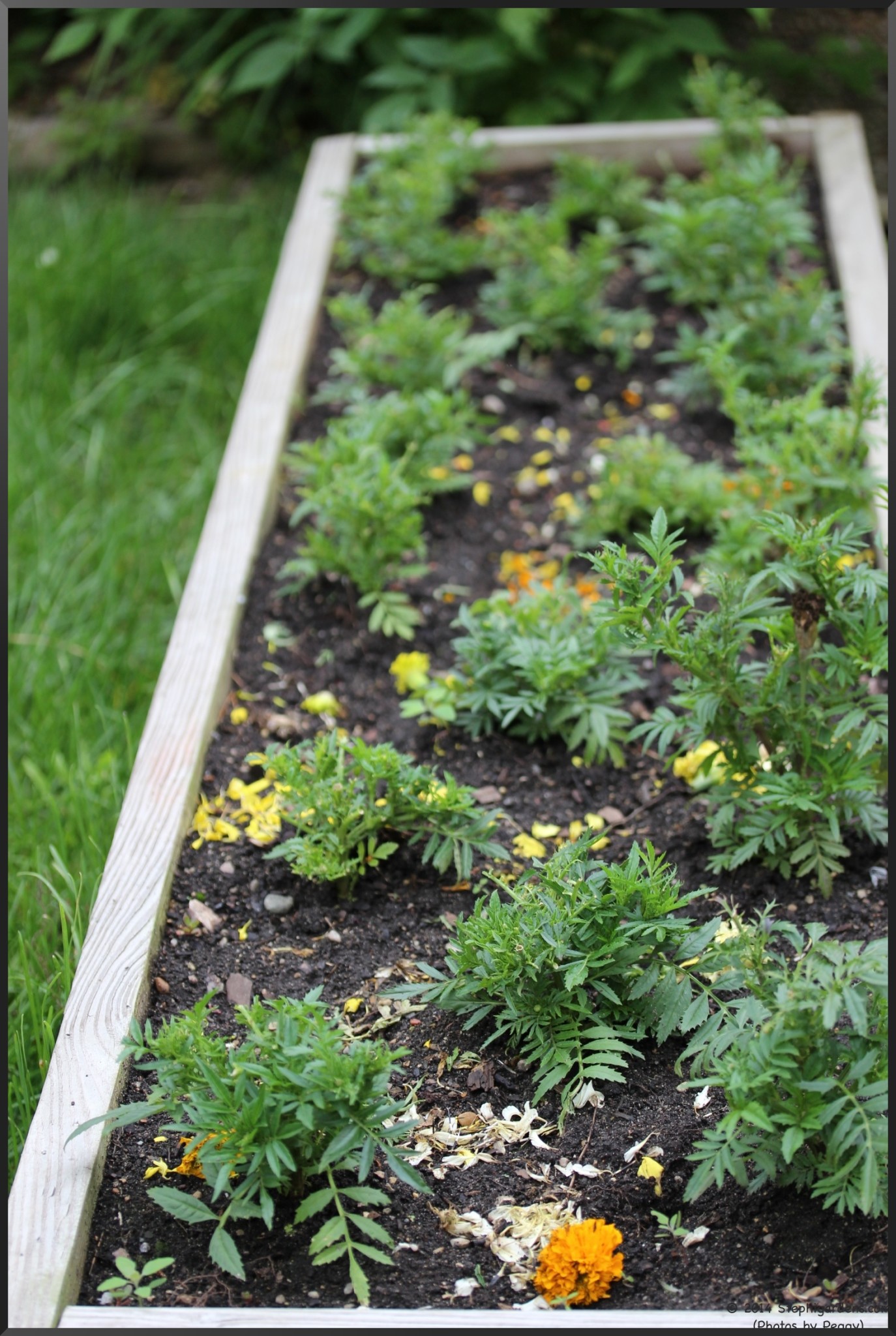
We were hoping this was a one night event and the critters would move on, but no such luck.  This was the bed the next day.

photos by peggy

All the flowers cleanly cut off and many shredded.  Very disappointing and frustrating.  Might be time to put a fence around the bed like some of the others that attract rabbits.   But, if it is chipmunks, a fence is not going to help.  She’ll need to be even more creative to keep them out, or throw in the towel on the marigolds.

While I haven’t had the same problems with my marigolds, through the years I’ve had more issues with slugs and earwigs.  They go more for the foliage, and can really do a lot of damage to the leaves.  Best way to diagnose these pests is to go out at night with a flashlight and see what’s going on.   When I had smaller gardens I had good luck with a pie plate of beer put out at night.  It is a bit gross in the morning, but it does work.  These days I have more issues with my hostas being attacked by slugs than I do my marigolds.  Because of the larger garden size, I now I use the organic Sluggo slug bait instead when things get bad.

Earwigs (which I just hate probably only second to palmetto bugs) can be beneficial in small numbers but a pest in larger numbers.  I’ve had luck trapping them in the beer filled tins with the slugs, or by placing rolled up damp newspapers in the garden at night.  In the morning, grab the newspapers and dunk them in a pail of water.  Some others have reported that using small tuna sized cans with about a 1/4 inch of cooking oil in it as traps works well too.

Have you ever woken up to find one of your gardens destroyed overnight?

Save

Geranium and Petunia Planter: Summer Maintenance

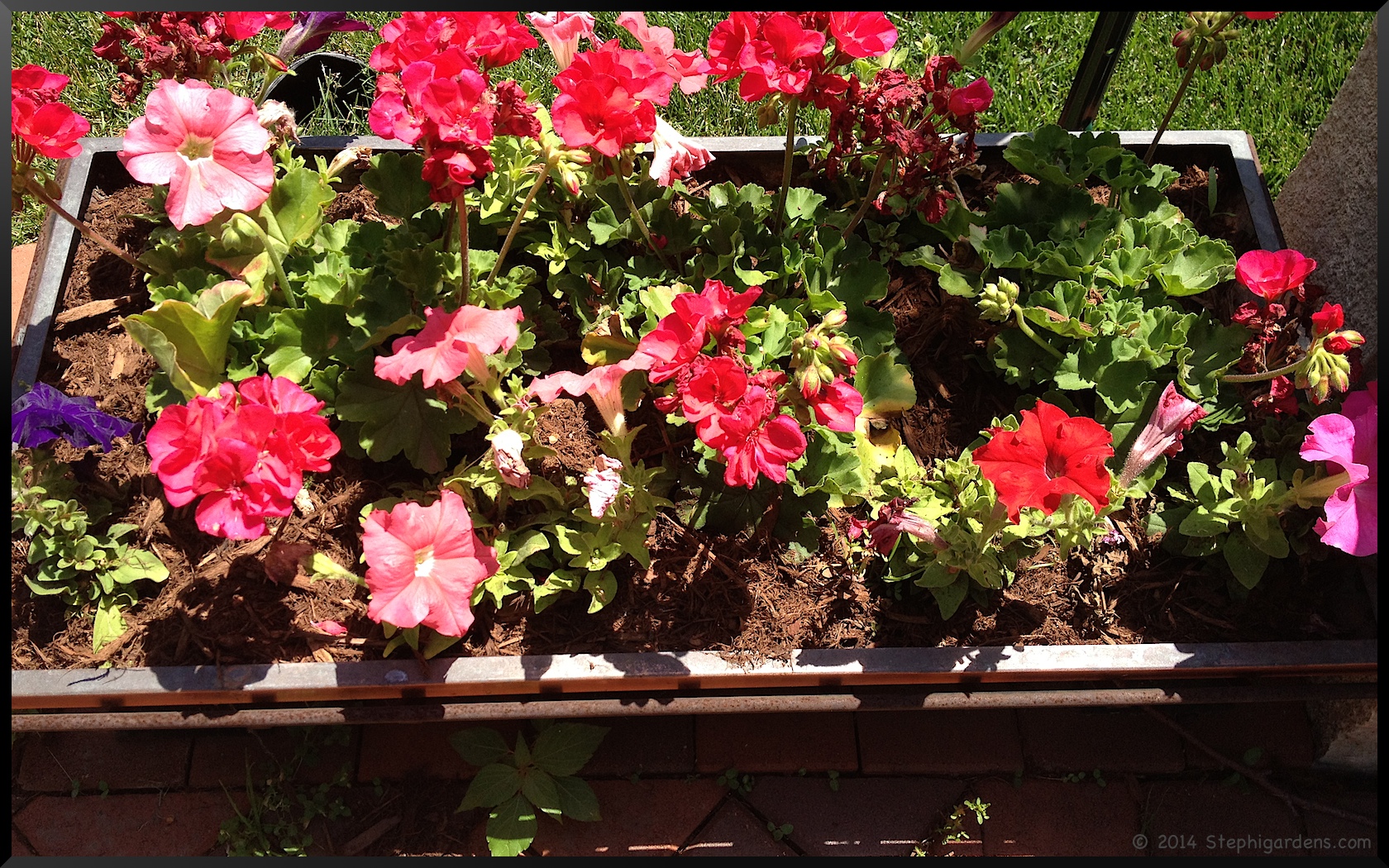
In my last post, I showed you how I planted my geranium and petunia planter (Geranium and Petunia Planter).  Aside from watering and fertilizing as needed, there’s a little bit more maintenance to do to keep the plants bushy and pretty. Basically you need to pinch off the dying flowers before they turn to seed.  This keeps the plant putting its effort into making more flowers instead of focussing on going to seed.

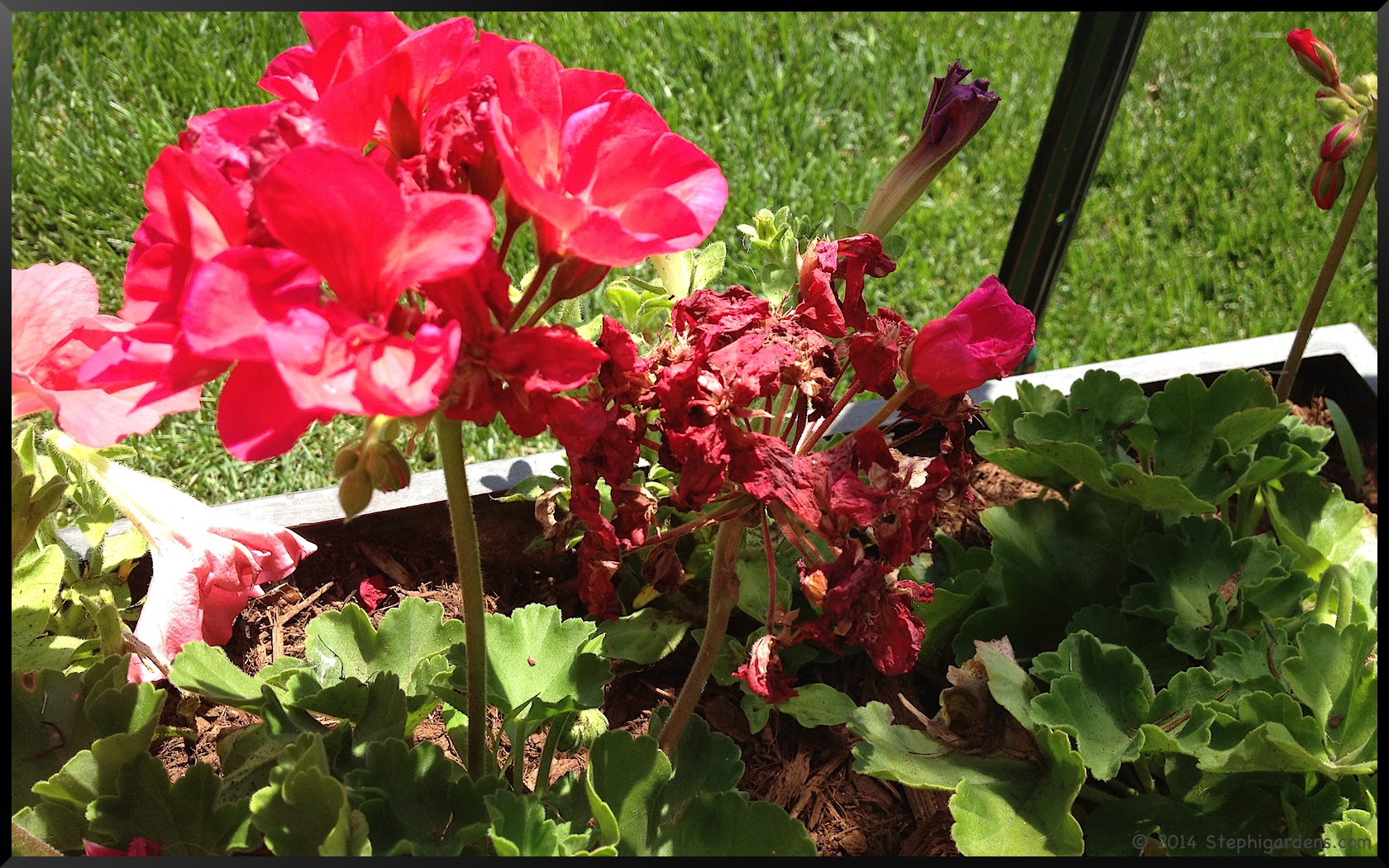
Every few days, check and look for dead or dying flower stalks.

 geranium

Not only are they ugly, they are sucking plant energy into finishing seed production rather than into flower production.  

geranium

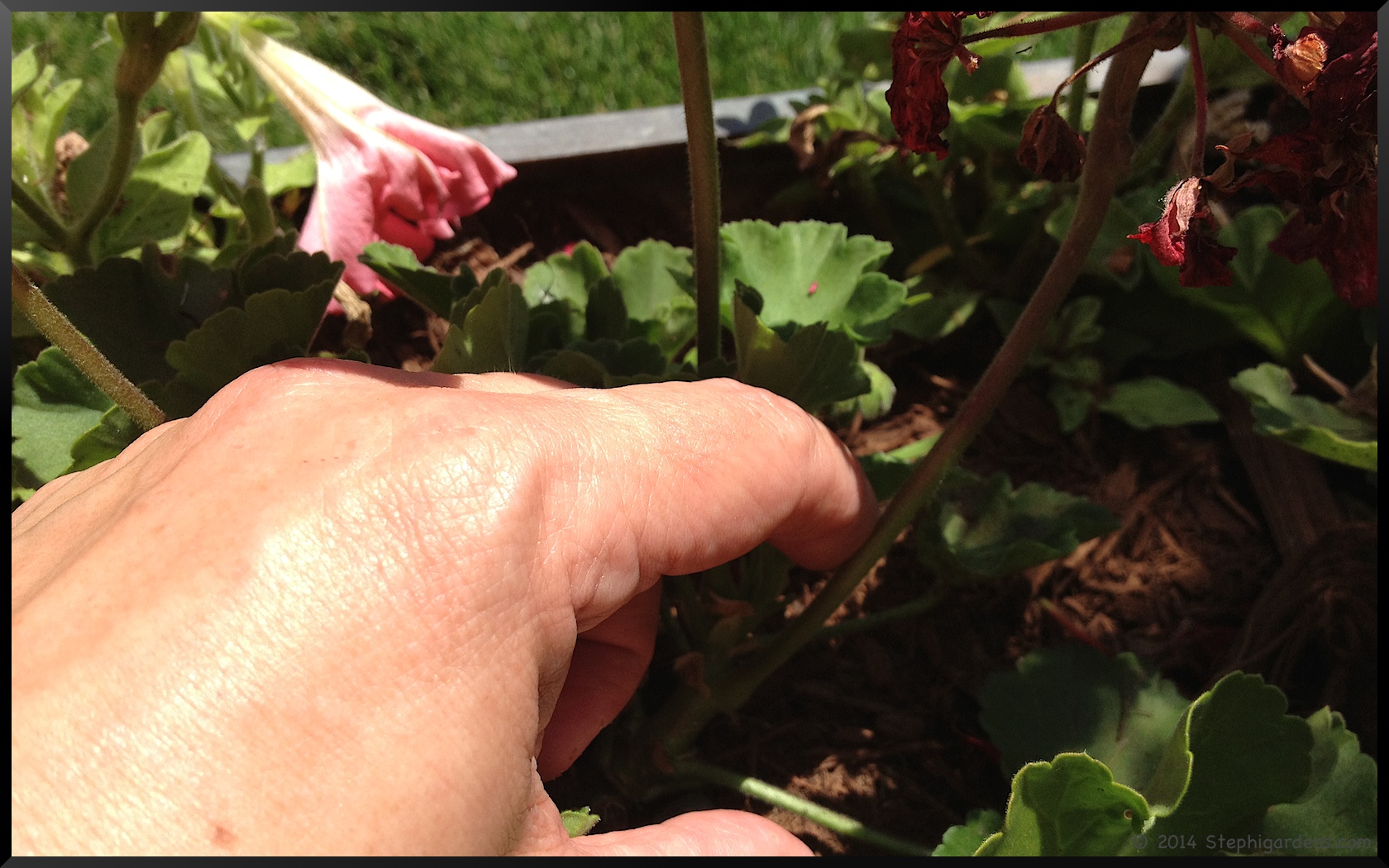
Pinch down low, where the stem meets the plant and pull downward.  The flower stalk will break right off.  If this seems tricky, or you’re not getting a clean break, you can use clippers. 

geranium

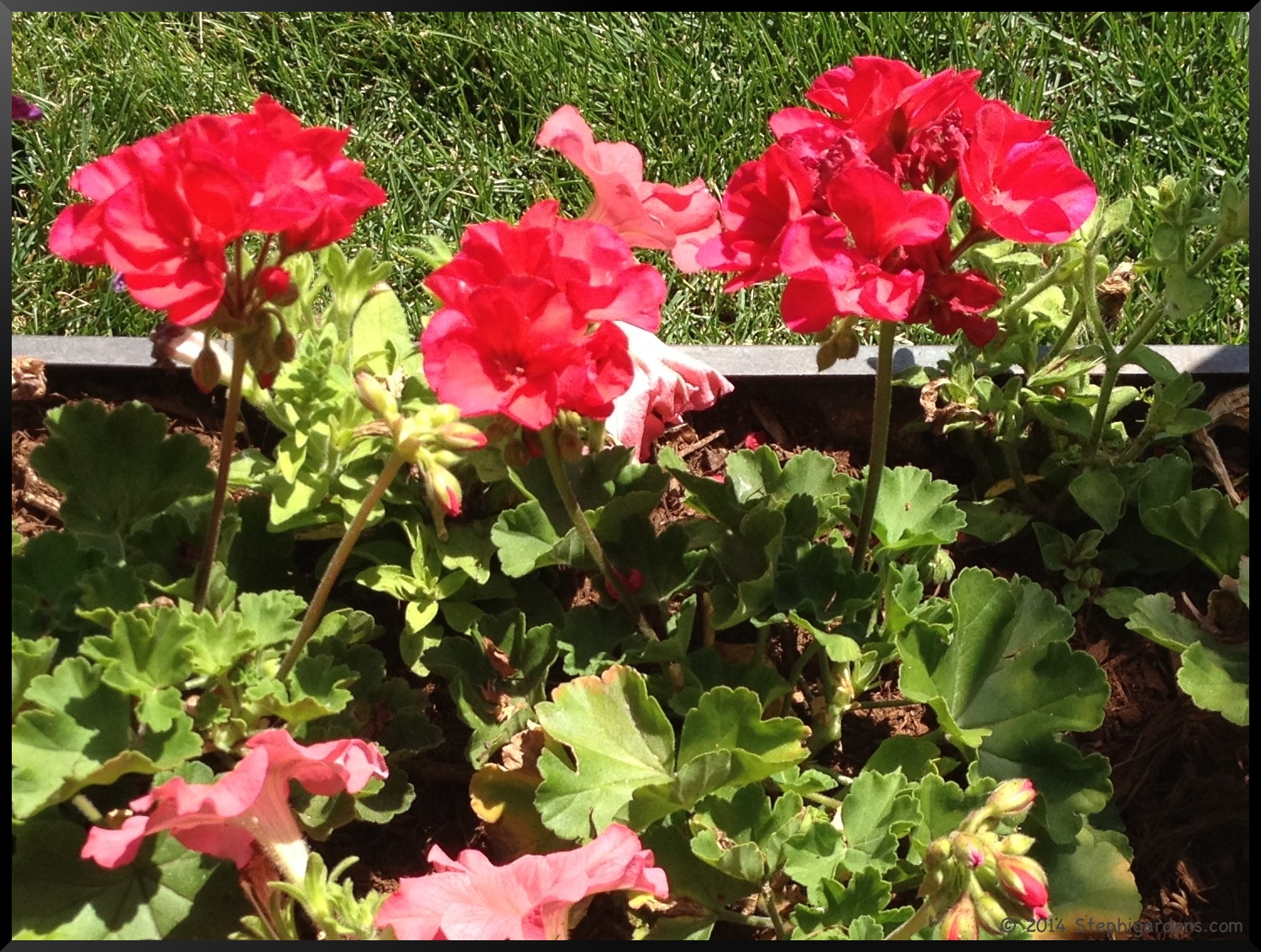
Now it looks prettier and there’s lots of new buds ready to burst forth.  

geranium and petunia planter

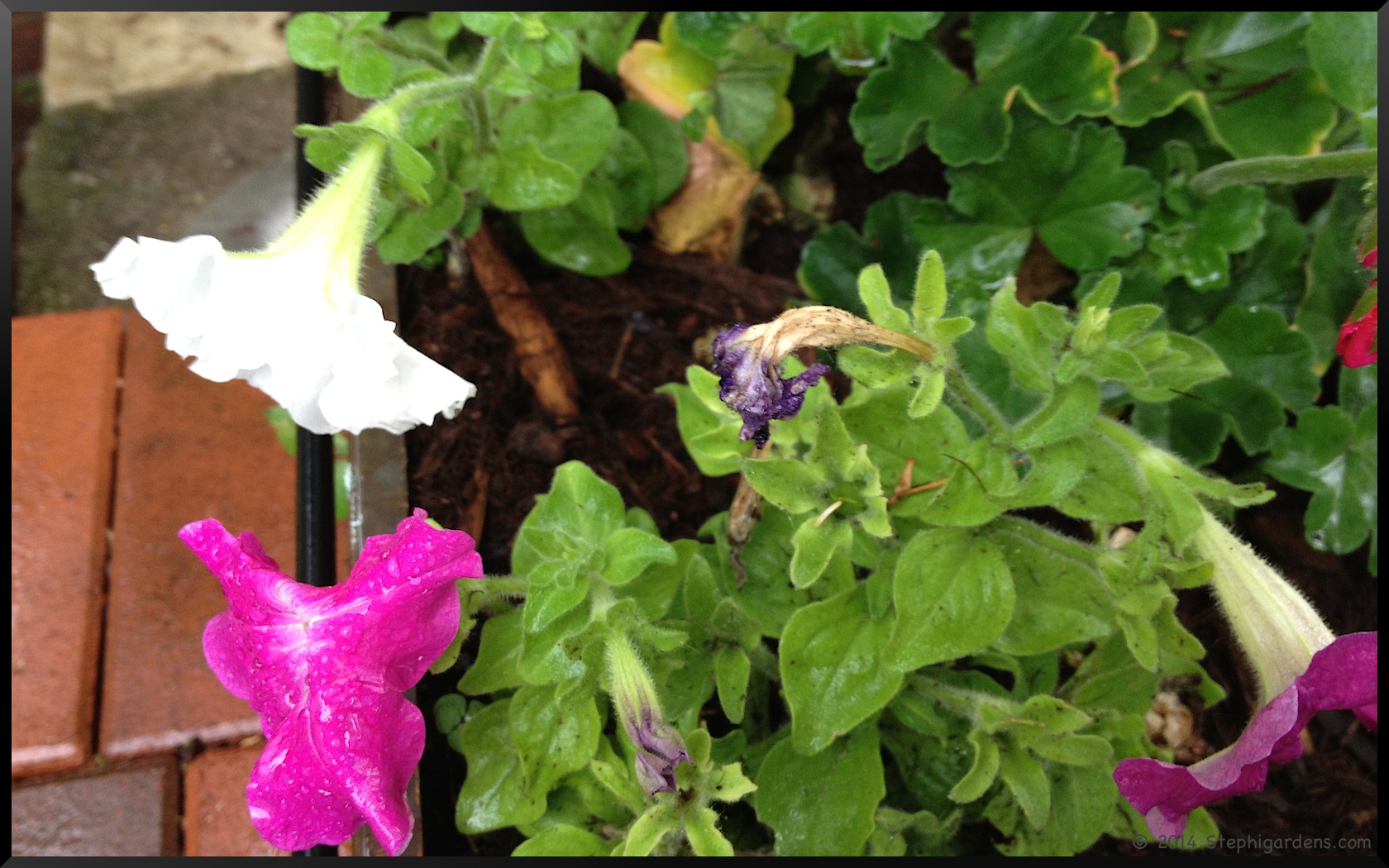
Now for the petunias… These are the old fashioned types, so you need to pull off all the dead and dying flowers to keep the flowers blooming all season.  Be sure to not just remove the petals, but pinch back to the base of the flower, or to just above the first leaf below the flower.  Otherwise, you’ve left the seed pod to mature.

Some of the new hybrids either don’t need dead heading at all, or the dead flowers just drop off with a breeze or a shake.  Very convenient!

petunia

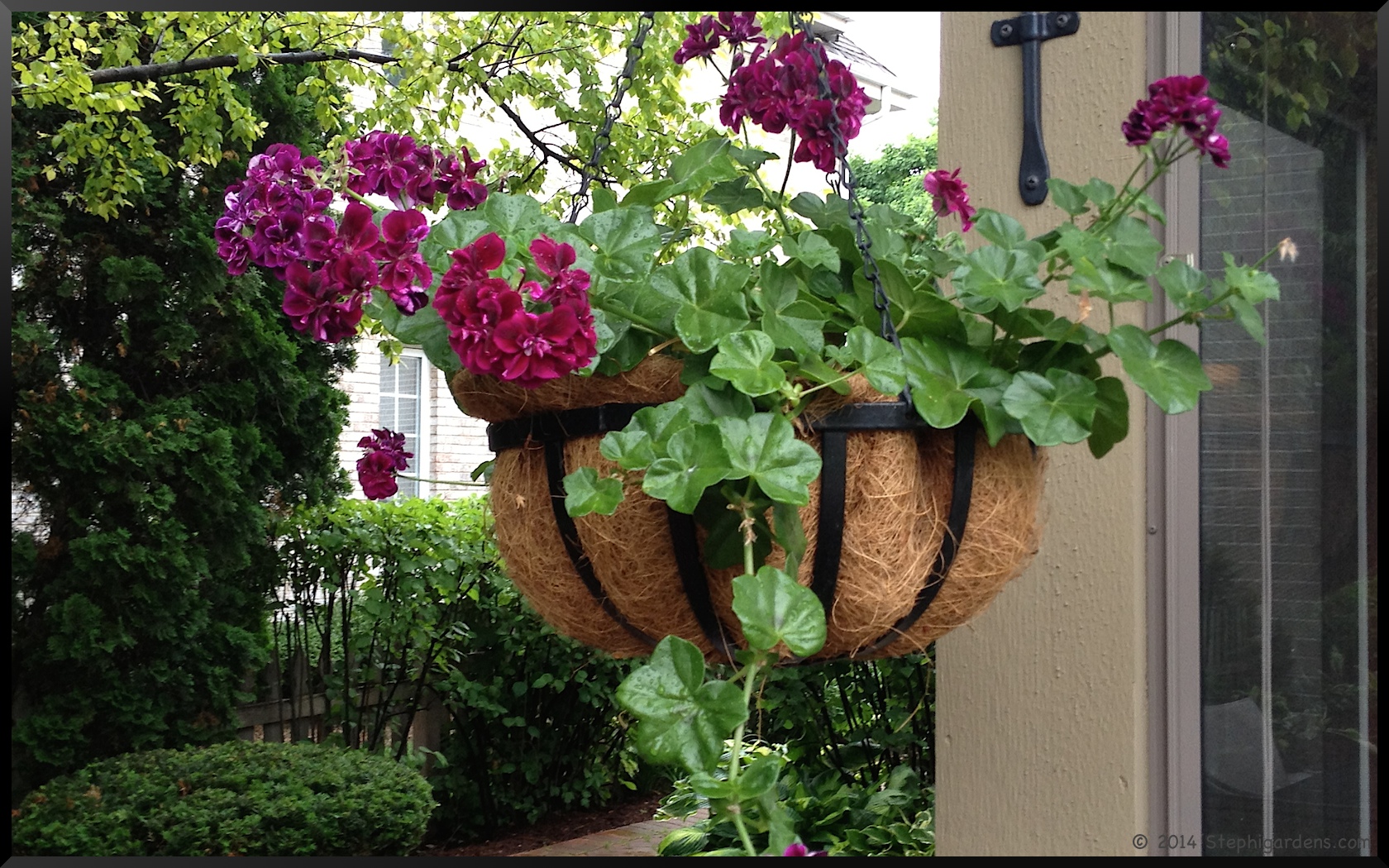
Don’t forget your hanging geraniums either!  They need the same attention.

hanging geranium


Geranium and Petunia Planter

geraniums and petunia planter

In my experience, to have a successful planter or pot, there’s a few tricks you’ll want to use.

  • First, be sure your planter has a drain hole.  If not, try to drill some if the planter material allows
  • Add a layer of something to keep the soil from washing out (and can cut down on the amount of soil needed if the planter is large).  Depending on the size of the pot (therefore weight), you can use stones, styrofoam peanuts, a layer of newspaper, etc.  I’ve even used pinecones in some.
  • Only use potting soil!!  It’s specially blended to avoid soil compaction and retain moisture.  I usually use Miracle Gro Potting Mix.  If it’s the first year of using the soil, fertilization isn’t usually needed, after that be sure to fertilize on a regular basis.
  • What kind of plants you add is up to you.  There’s lots of resources to come up with interesting combinations.  Use what you like!

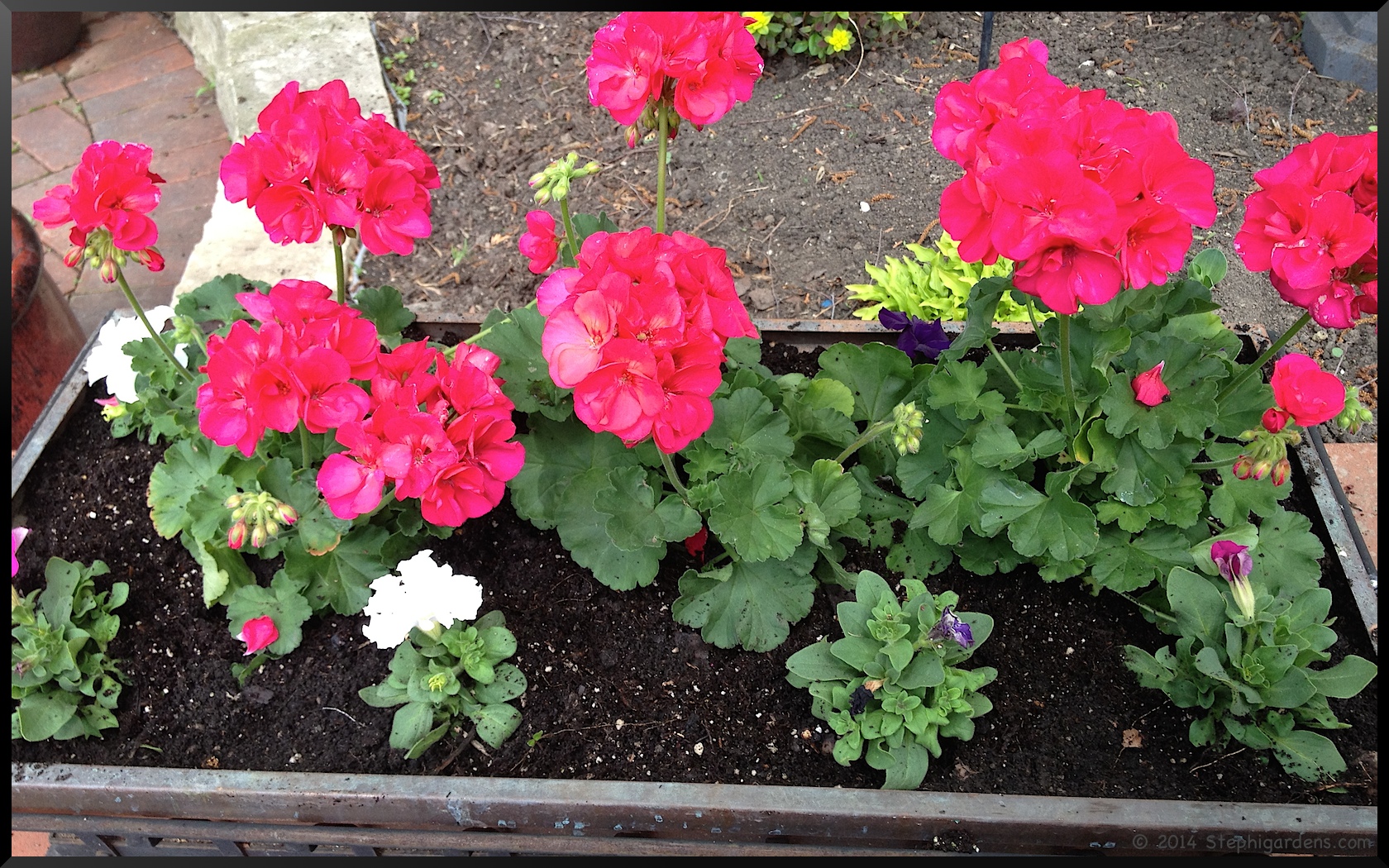
On to planting… Geraniums and petunias are one of my favorite combos.  It’s simple, but gives a great splash of color in this low rectangular pot that sits on my patio.

First, decide how the plants will be arranged.

geraniums

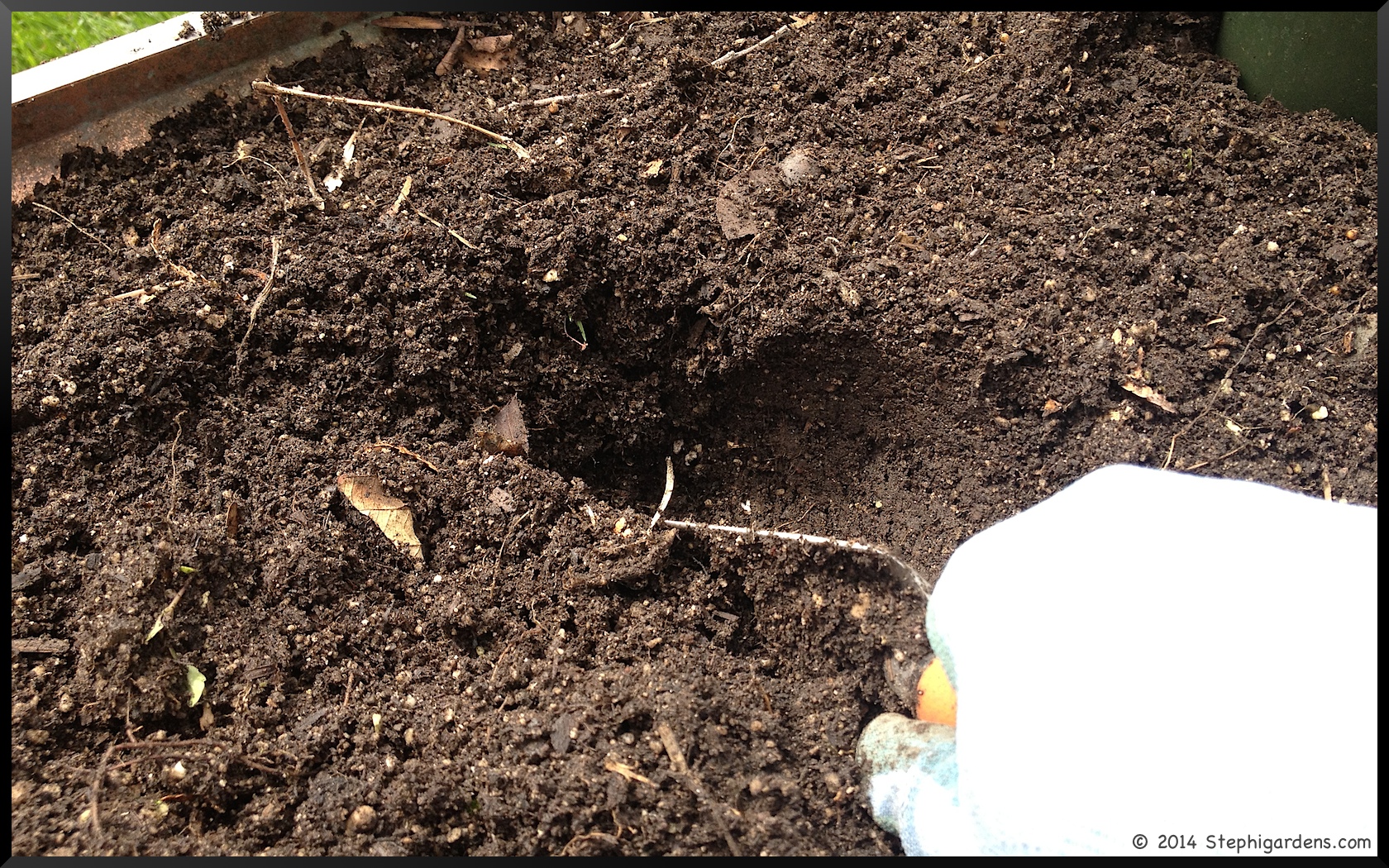
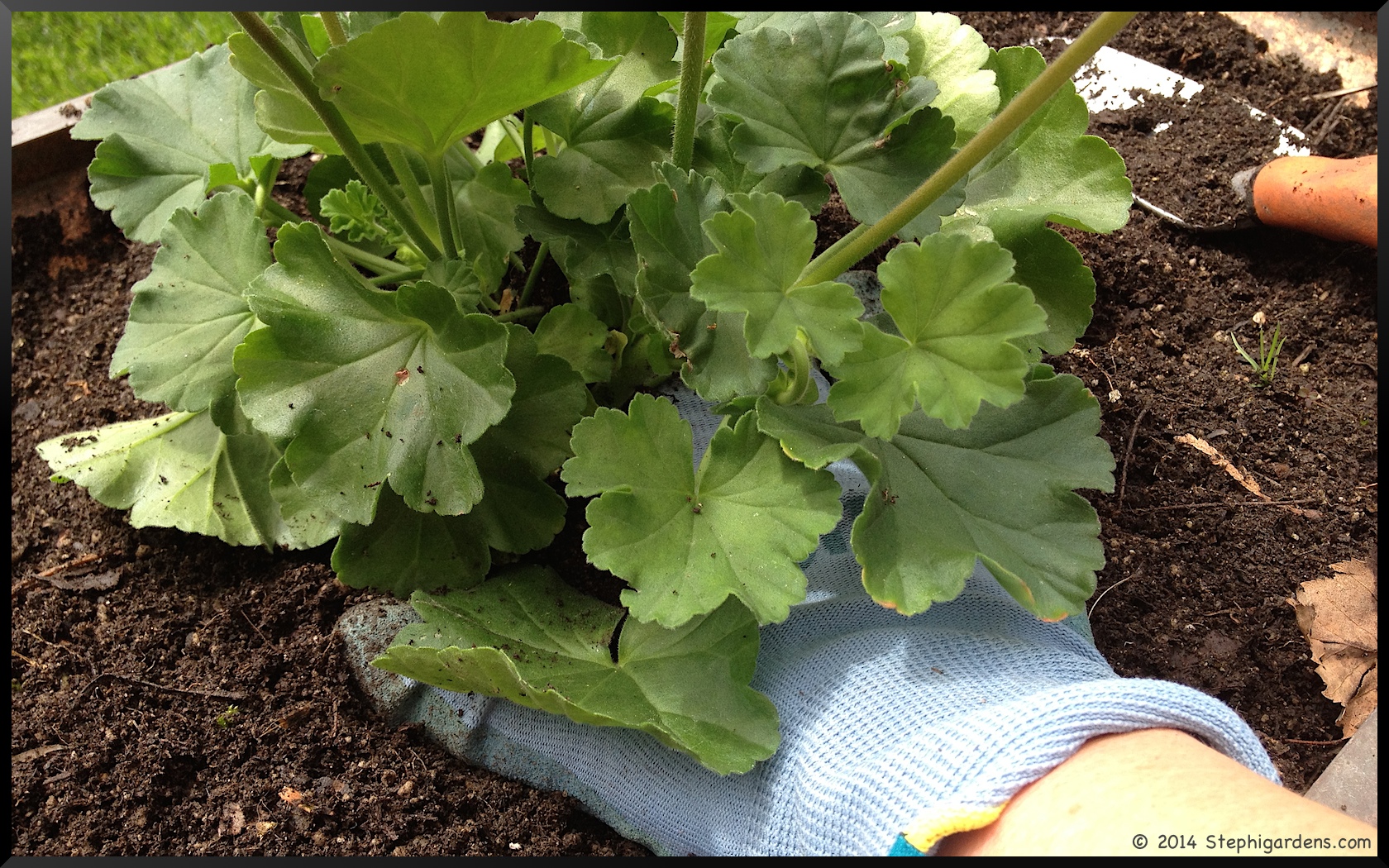
It’s easiest to remove some of the soil first.  Set the plants in, the pack the soil back in the plants.

IMG_5870

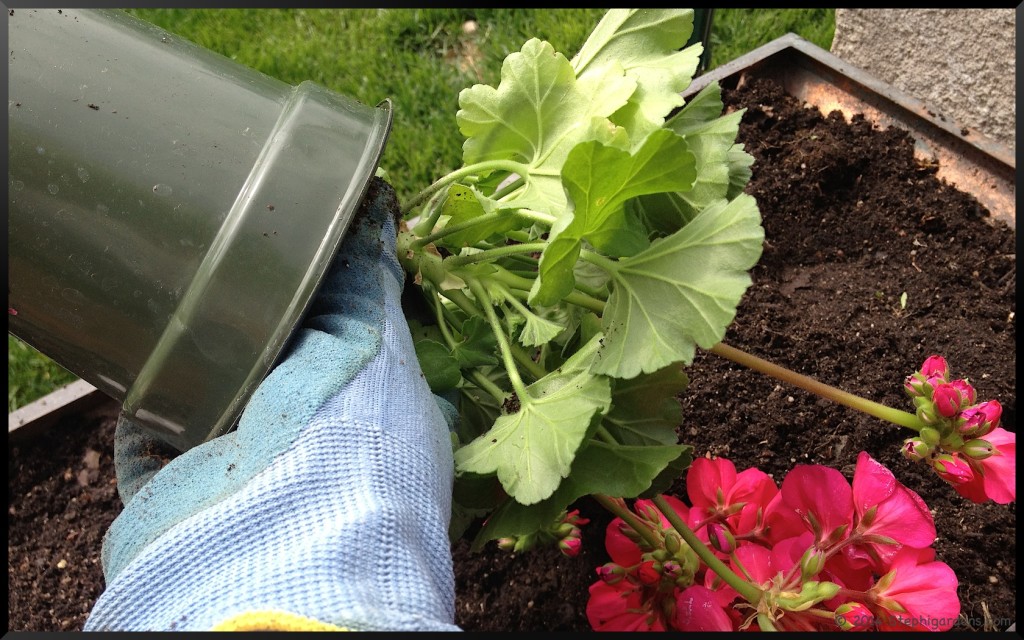
Remove the plant from the pot.  This is easiest done by grabbing the stem down low next to the soil and turning the plant over.  Tap, twist or squeeze the container and pull gently.  Be careful to get the dirt with the roots.

geraniums

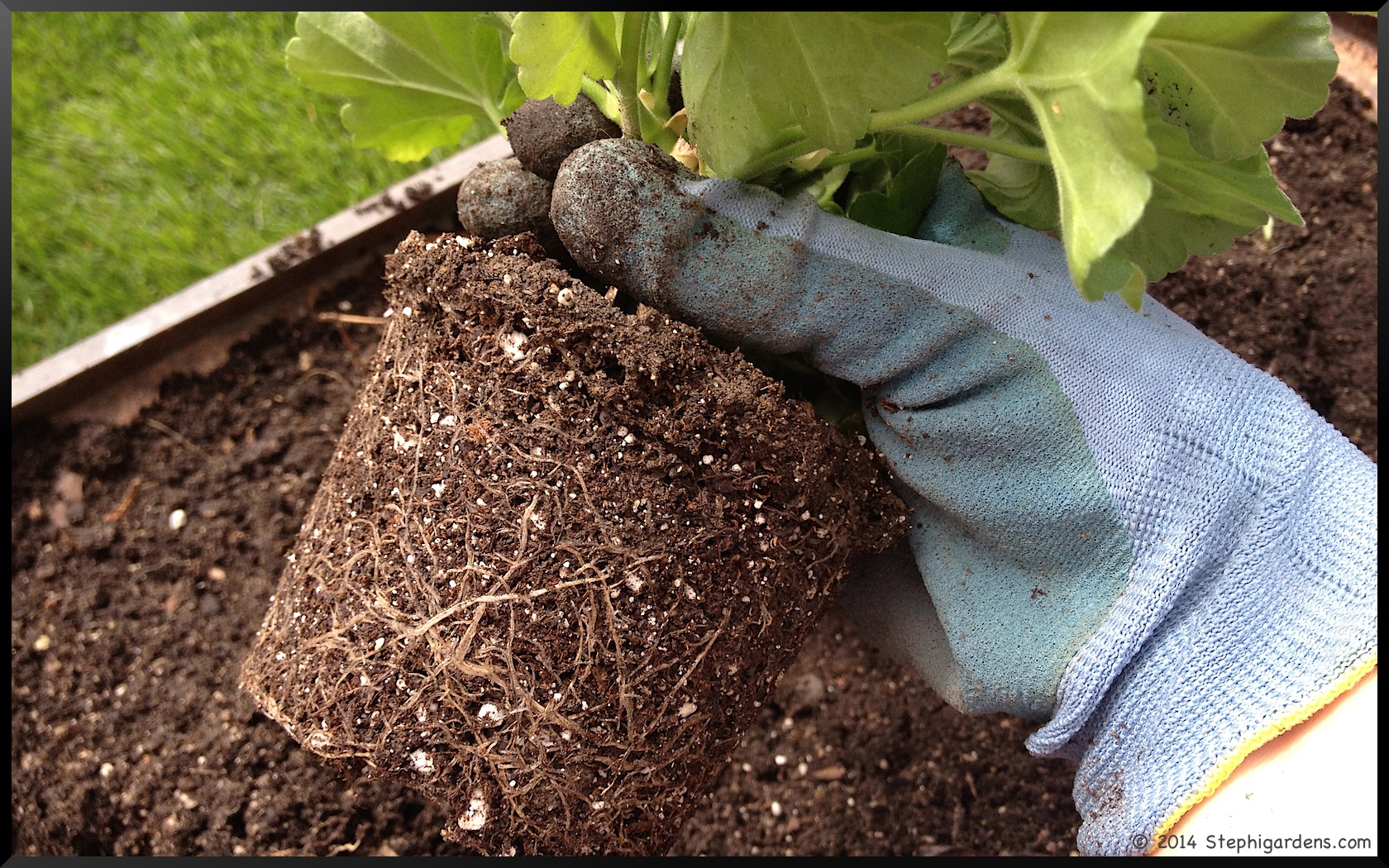
If the roots are root bound, squeeze the root gently to allow some of the roots to separate out.  This allows the roots to come in contact with the new dirt and grow.  If really root bound, physically pull the root ball apart at the bottom  to get root growth started again.

IMG_5872

Plant the root ball level with the surface of the soil.  Pack the soil back in around the root ball.  Be sure to get as many roots in contact with the potting soil to grow for a healthy plant.  Water generously to soak the roots and push out any air spaces that will block soil and root contact.

geraniums

Now time to add the petunias.

petunia

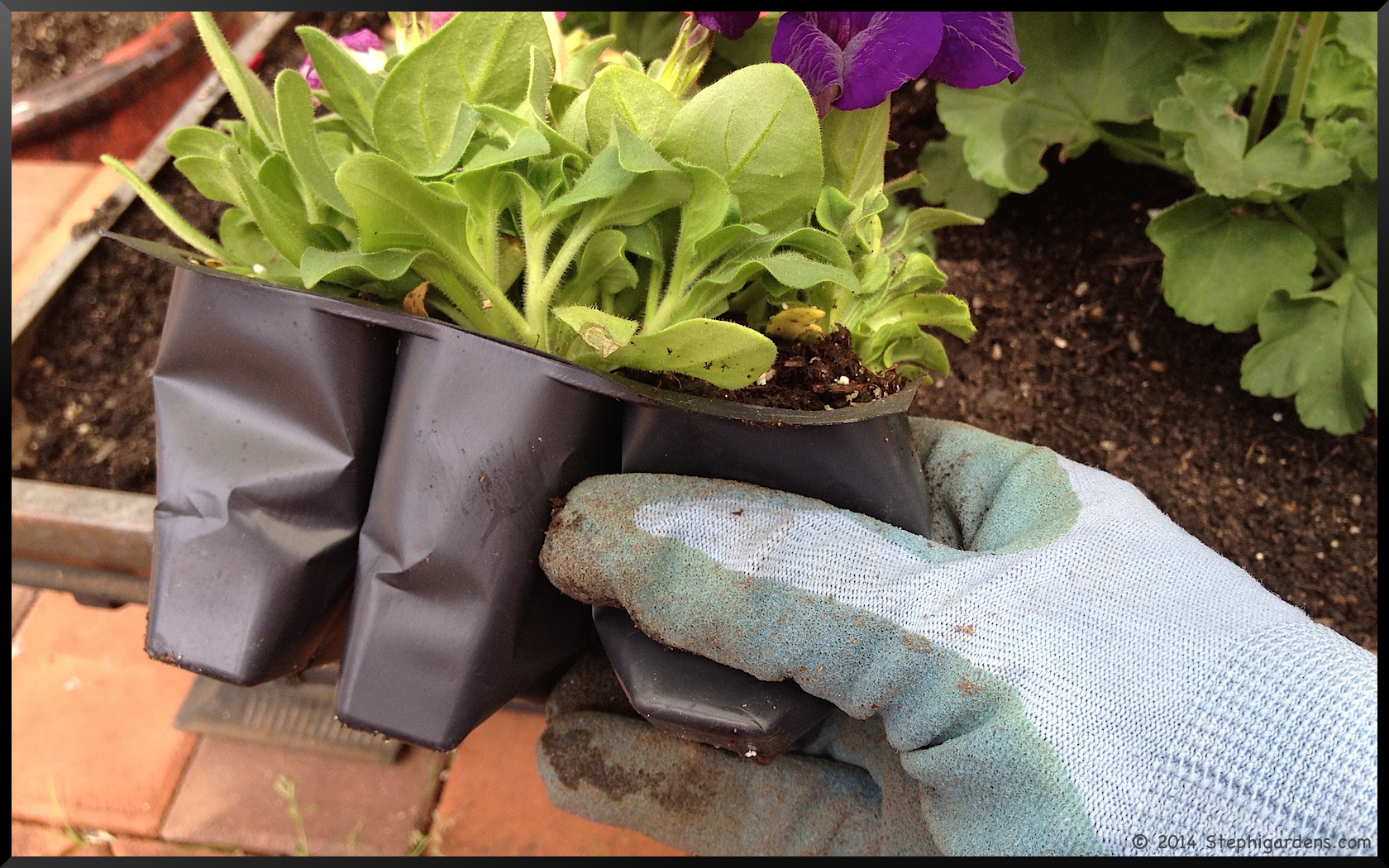
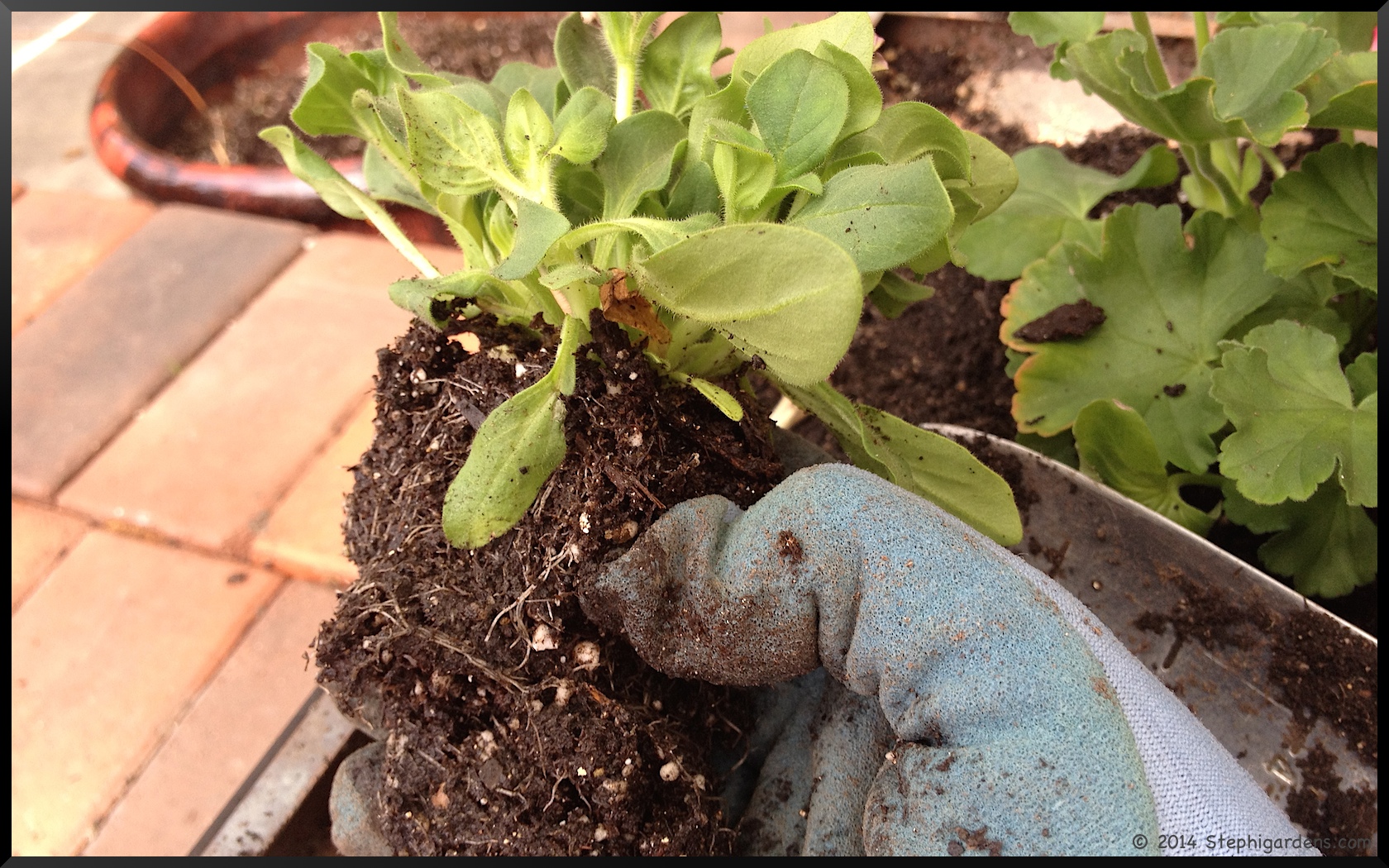
Be especially careful removing the plants.  Grab low and push from the bottom.  Plants in these small 6 packs can easily be pulled right out of the soil if you’re not careful.

petunia

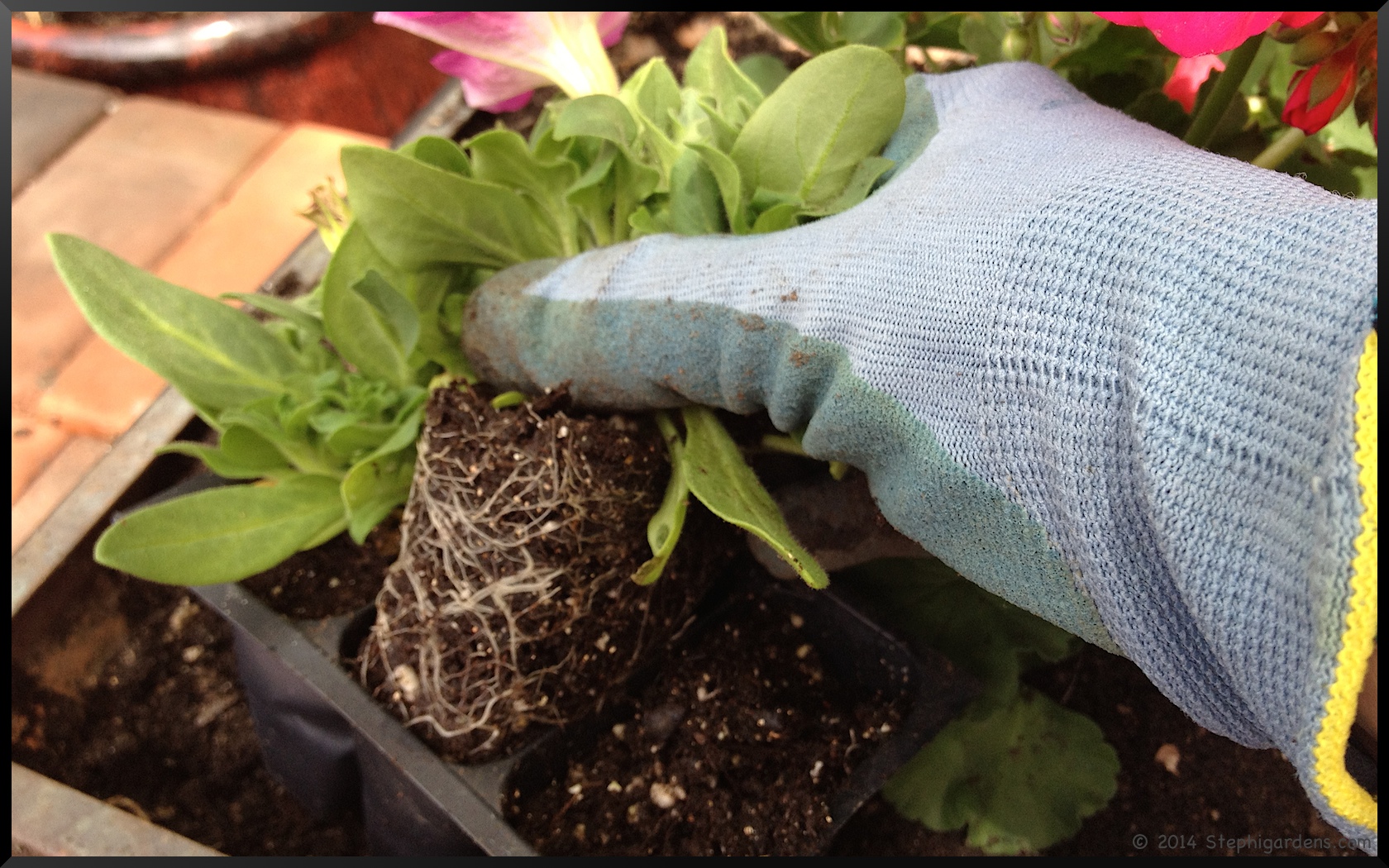
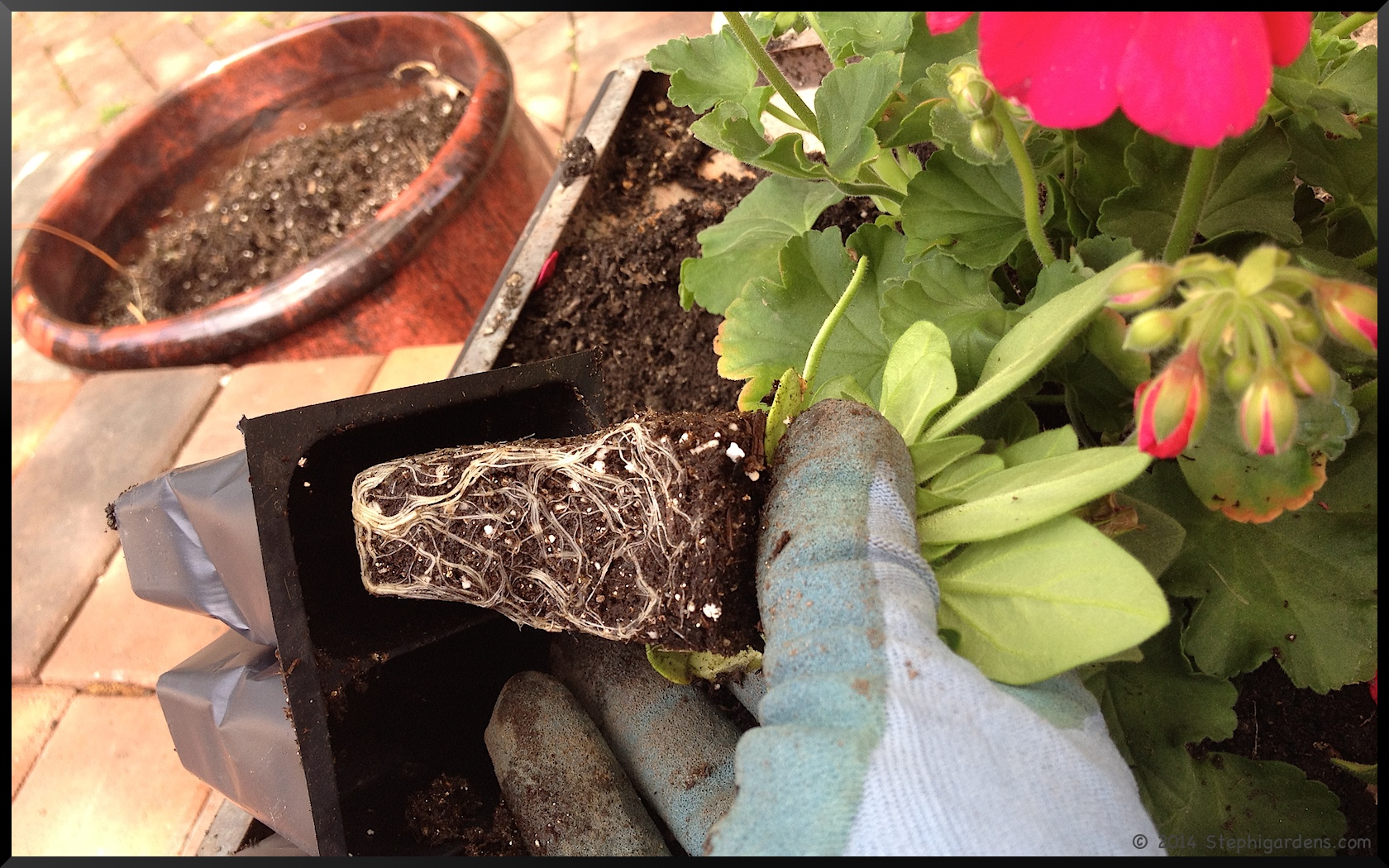
Plants in cell packs are often quite root bound.

petunia

Give them a squeeze to open the roots up.

petunia

Finished product!

geraniums and petunia planter

Do you have a favorite simple plant combo you keep coming back to?

Uh Oh, Frost in MI Last Night

Last night the temperature at my mom Peggy’s house was predicted to get down to the low 30’s.  That means frost was a real possibility. If you saw her gardens in my post a couple of days ago (Gardening: All in the Family), you know her plants are well underway and many not able to survive a first.  So what to do?

Every plant has its own tolerance to cold.  Zinnias, Impatiens, Petunias?  Forget it, they like it warm.  Cold weather vegetables, strawberries, perennials?  Maybe leaves and flowers damaged initially, but they’ll be just fine.  The seed packet or container tag will give you some insight into what they can tolerate.  When in doubt, cover them.

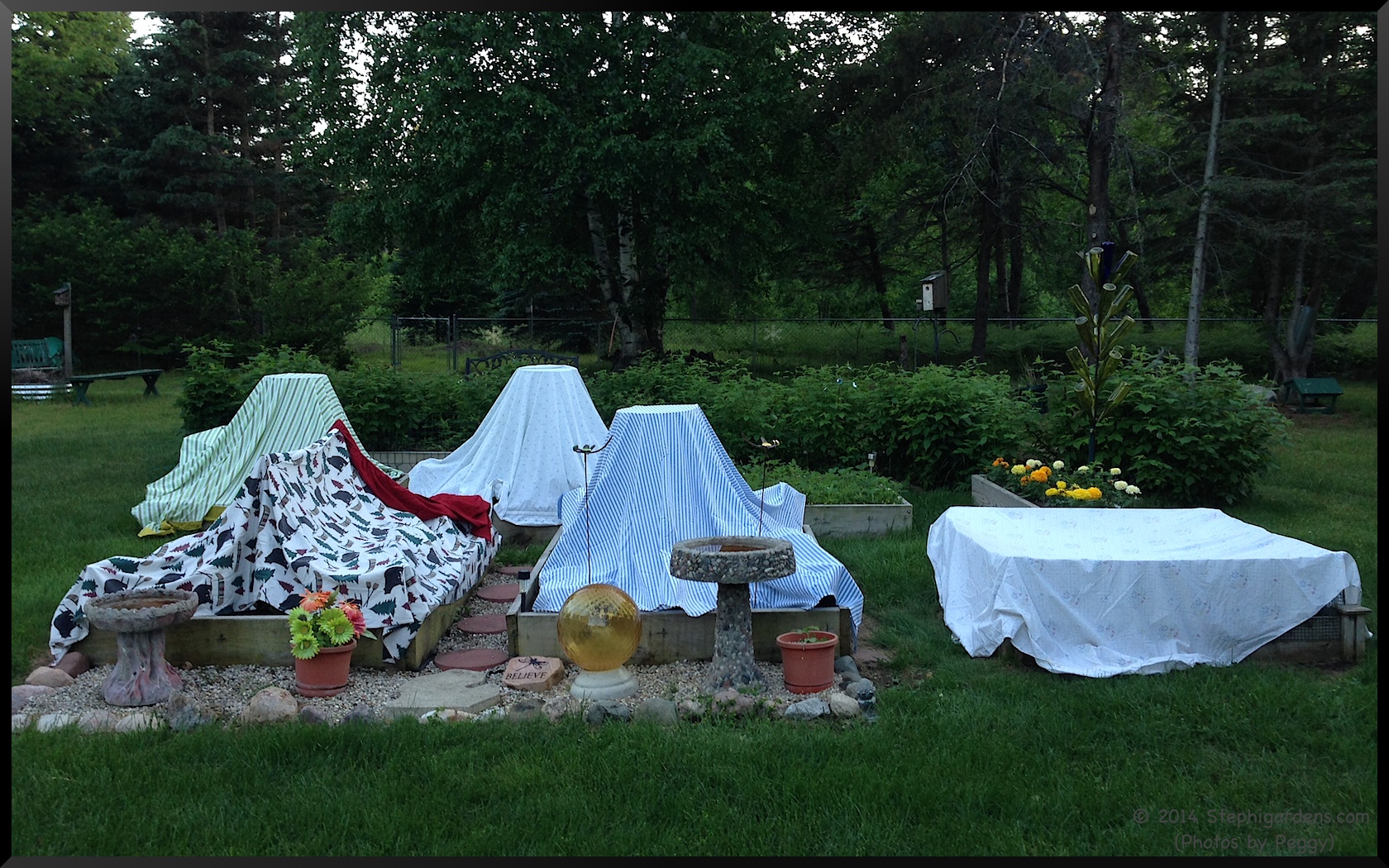
garden frost

If you know that the plants are likely to be damaged by an overnight frost, you need to cover them with a sheet or blanket.  My mom has a whole collections of sheets just for this purpose.  By tenting the sheets over the garden, it creates a warm air pocket around the plants.  If it’s thought to be colder than a light frost, you can add a a layer of plastic over the blanket to trap even more warm air (never right on the plants).  Be sure to remove the coverings first thing in the morning before condensation starts to form on the inside.  If still cold enough, the moisture could freeze on the plants and cause harm as well.  An actual freeze requires even more elaborate weather protection, or you may just need to sigh and start over.

Then say a little prayer and hope for the best.  Peggy’s plants looked good this morning.  It did get down to 31°, but warmed up quickly once the sun came up.  Hopefully that’s it for the cold weather.

Gardening: All in the Family

For as long as I can remember my mom had vegetable and flower gardens, sometimes big, sometimes small.  So did my grandparents.  All this interest in growing things rubbed off on me and hopefully I’ll pass it on to my kids.  With that in mind, I had my mom and daughter take us on a tour of their June gardens.  First my mom, Peggy, in northern Michigan.

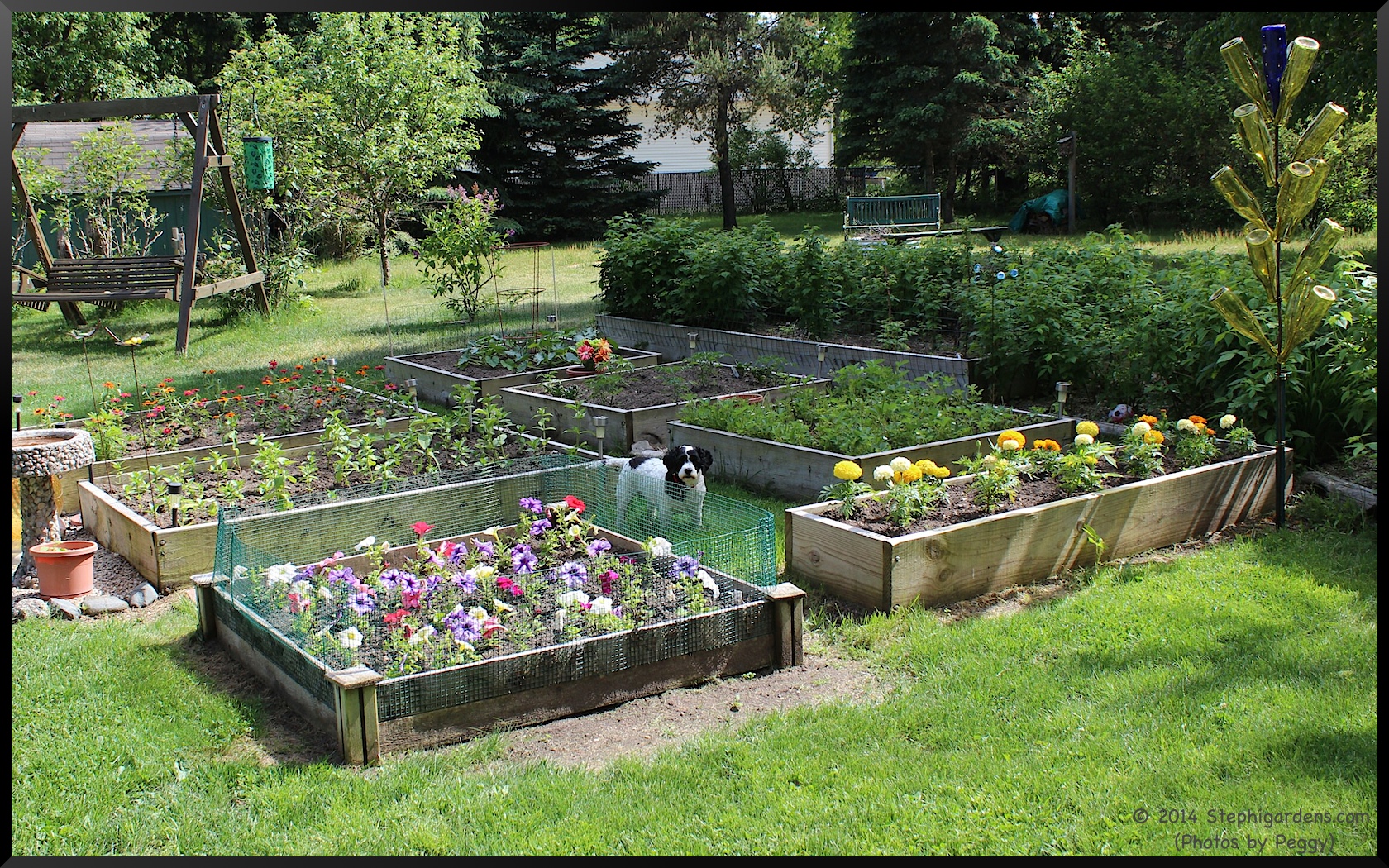
So lucky to have the space of all these raised beds (check out all the raspberries in the back!).

photos by peggy

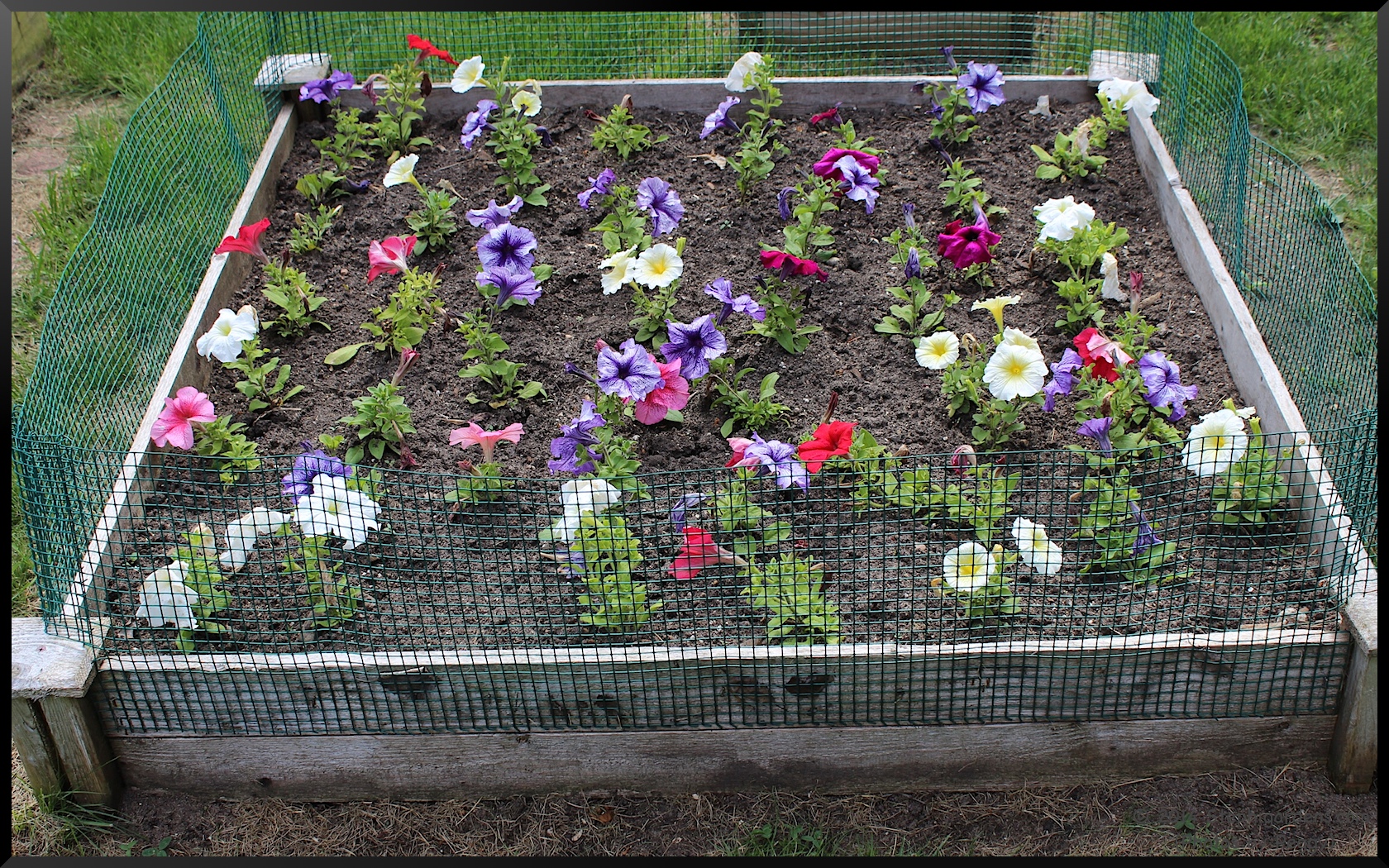
 Petunia garden protected from the rabbits

photos by peggy/stephi gardens

Zinnias!

photos by peggy/stephi gardens

Hummingbirds are enjoying the flowers right now.  Soon they’ll be looking for some extra food.

photos by peggy/stephi gardens

A more natural garden.

photos by peggy/stephi gardens


photos by peggy/stephi gardens

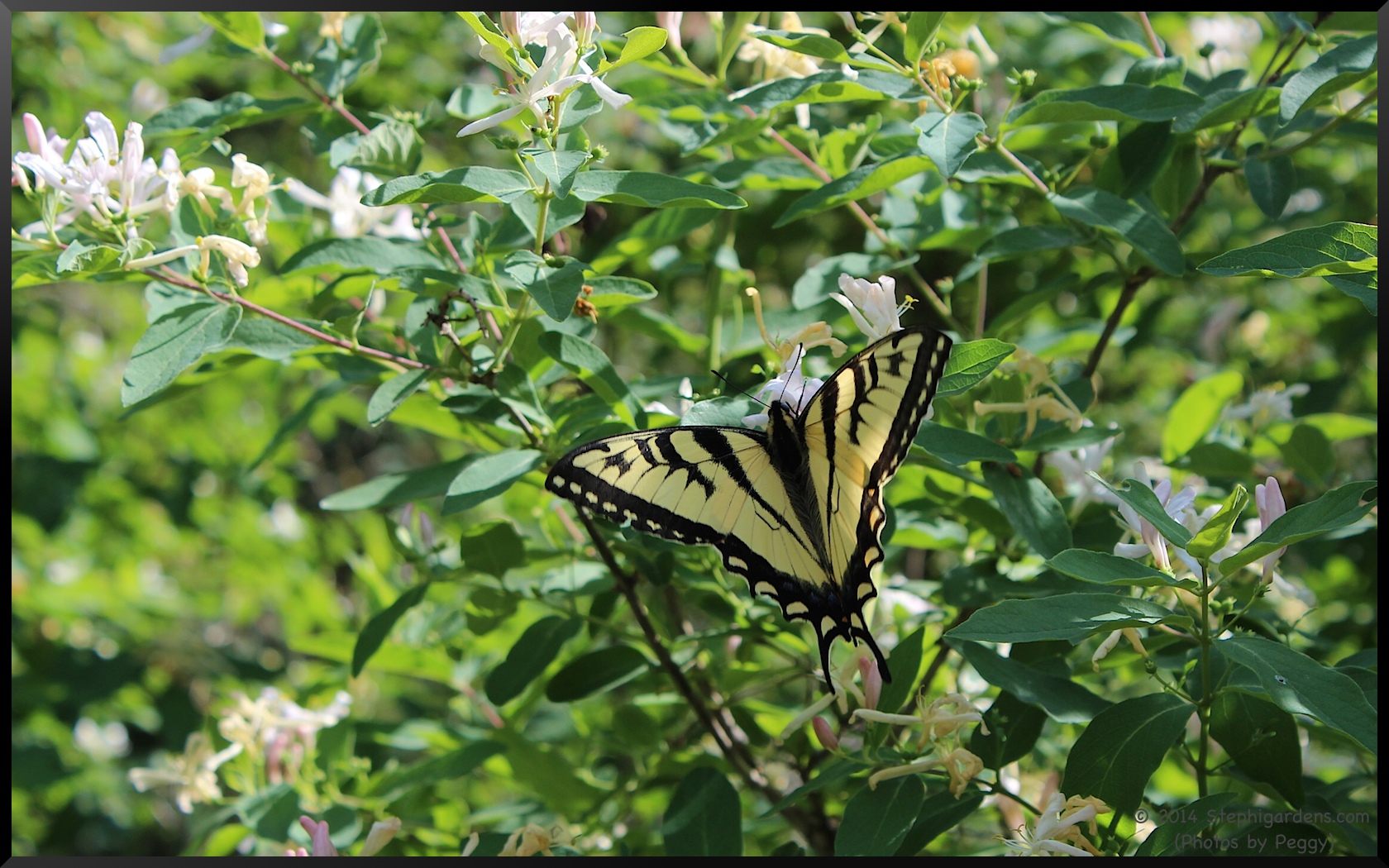
A lovely visitor–Tiger Swallowtail

photos by peggy/stephi gardens

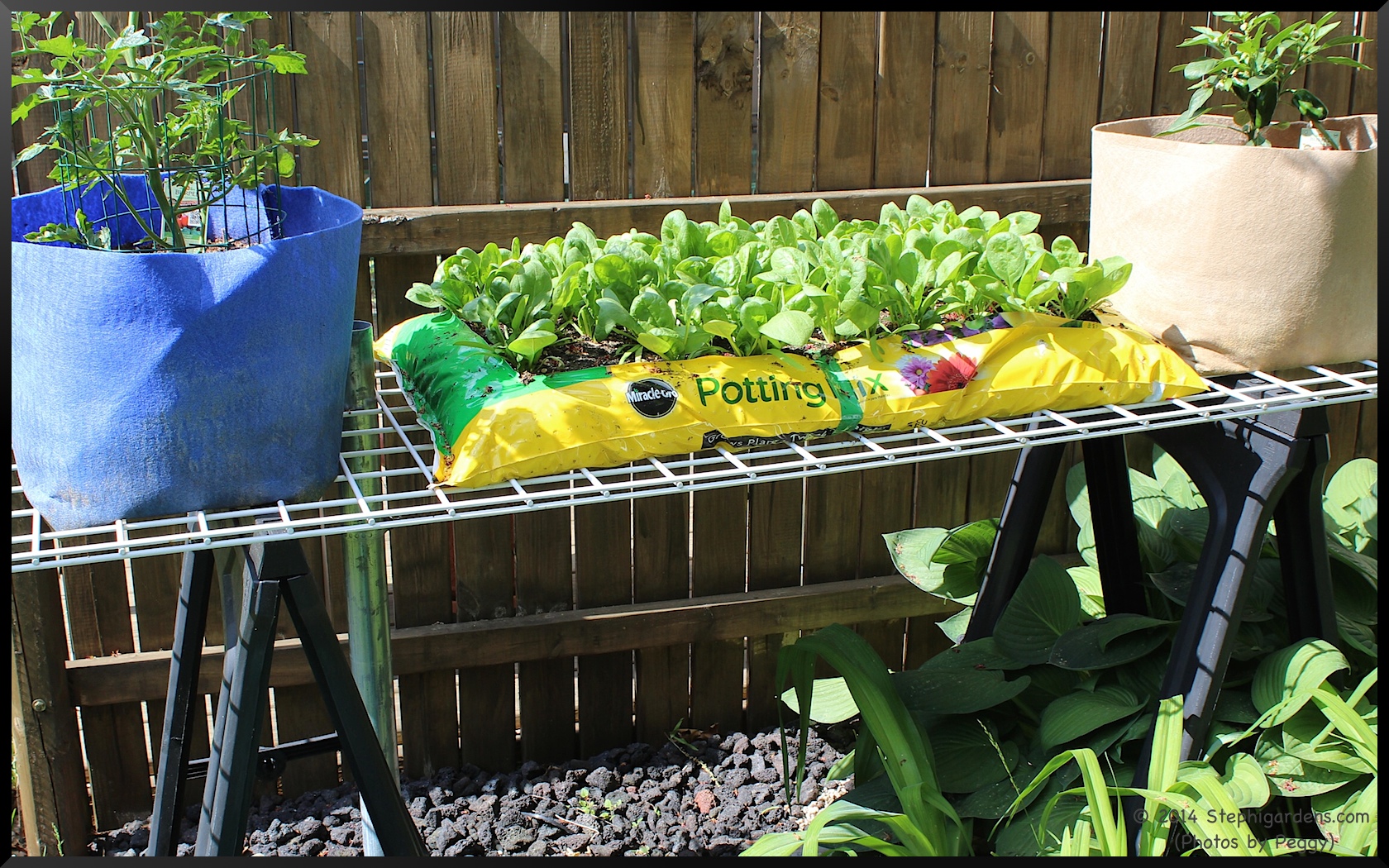
Salad in a bag!

photos by peggy/stephi gardens

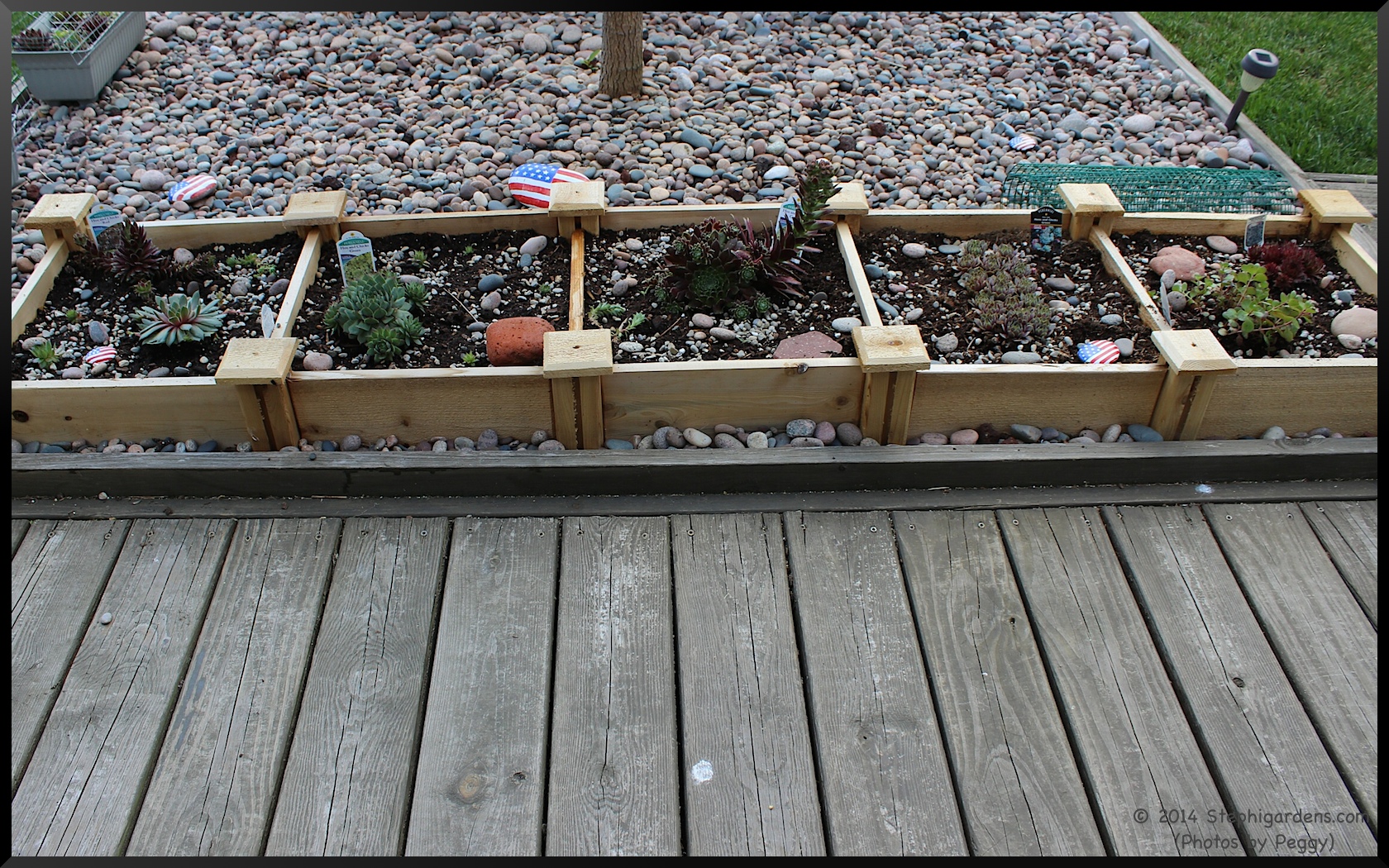
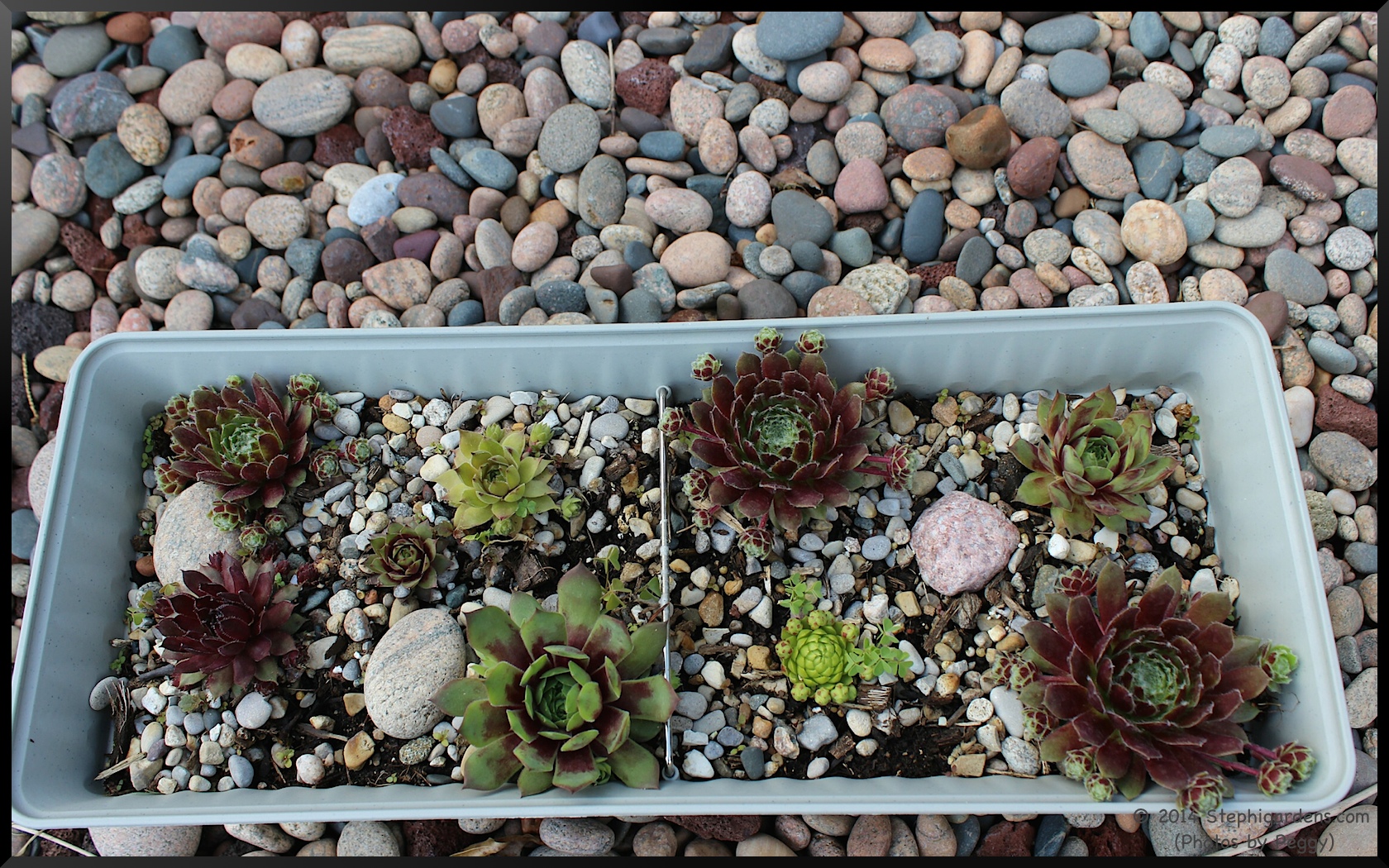
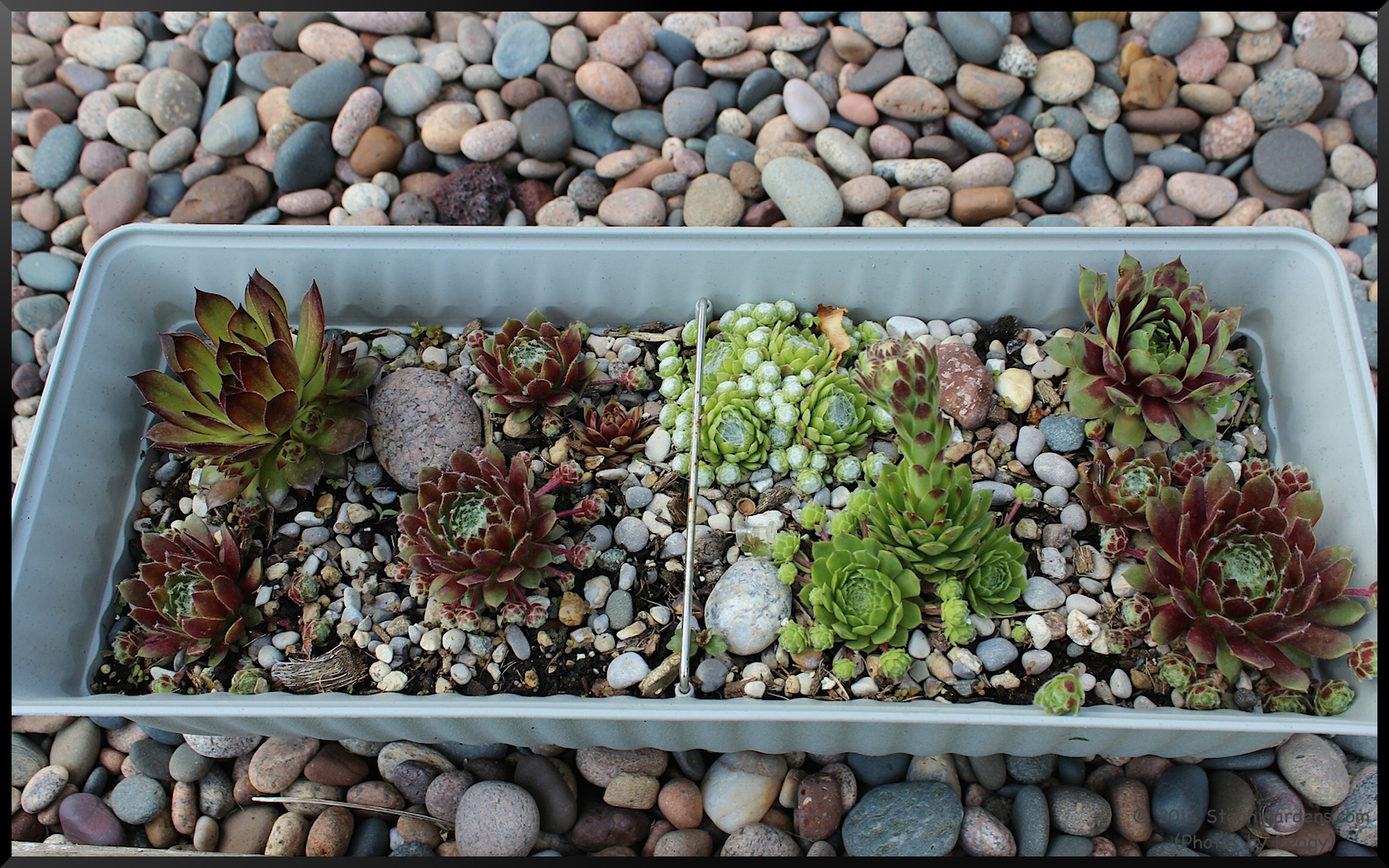
 Succulents!  This is a creative work in progress. I can’t wait to see what she does with this.  I know she’s got some great ideas.

photos by peggy/stephi gardens


photos by peggy/stephi gardens


photos by peggy/stephi gardens

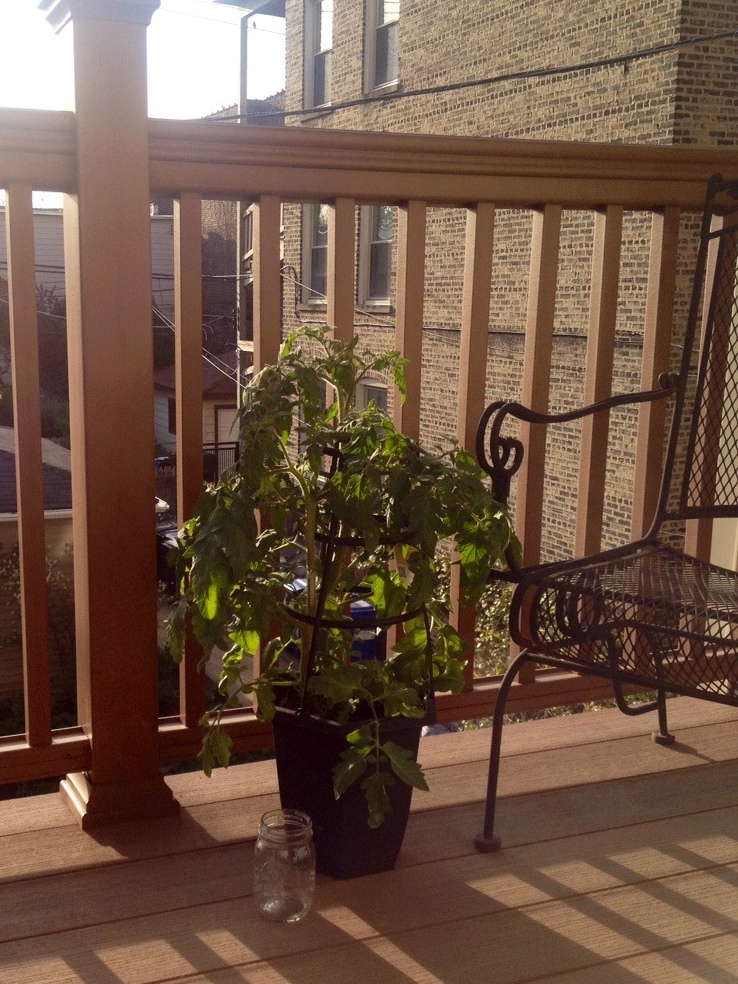
My daughter Emily lives in an apartment with some friends downtown.  When we were talking earlier in the spring, she was complaining about the price of tomatoes.  Soon after that, I happened to see a great looking potted patio tomato plant that would fit on her porch.

stephi gardens

She couldn’t have been more excited and has taken lovingly care of this plant.  It gets a hello and a glass of water from the mason jar every morning.  Recently I got a text that read “Mom!  2 of my tomatoes hatched!”  I hope they grow big, red and juicy for her.  I think she’ll be hooked then.

Do you have someone who inspired you, or have you inspired anyone else to garden? 

A View of the June Garden-Front yard

Yesterday, the backyard, now on to the front yard…

This is the area of biggest change.  In preparation for new construction, all the trees next door were taken down in early April.  We knew this was likely at some point (see Problem Areas) and had tried to plan ahead.  This garden contains arborvitae, annabelle hydrangeas, hostas and some annuals.  It went from almost full shade to full sun.  So far so good.  

Stephi Gardens

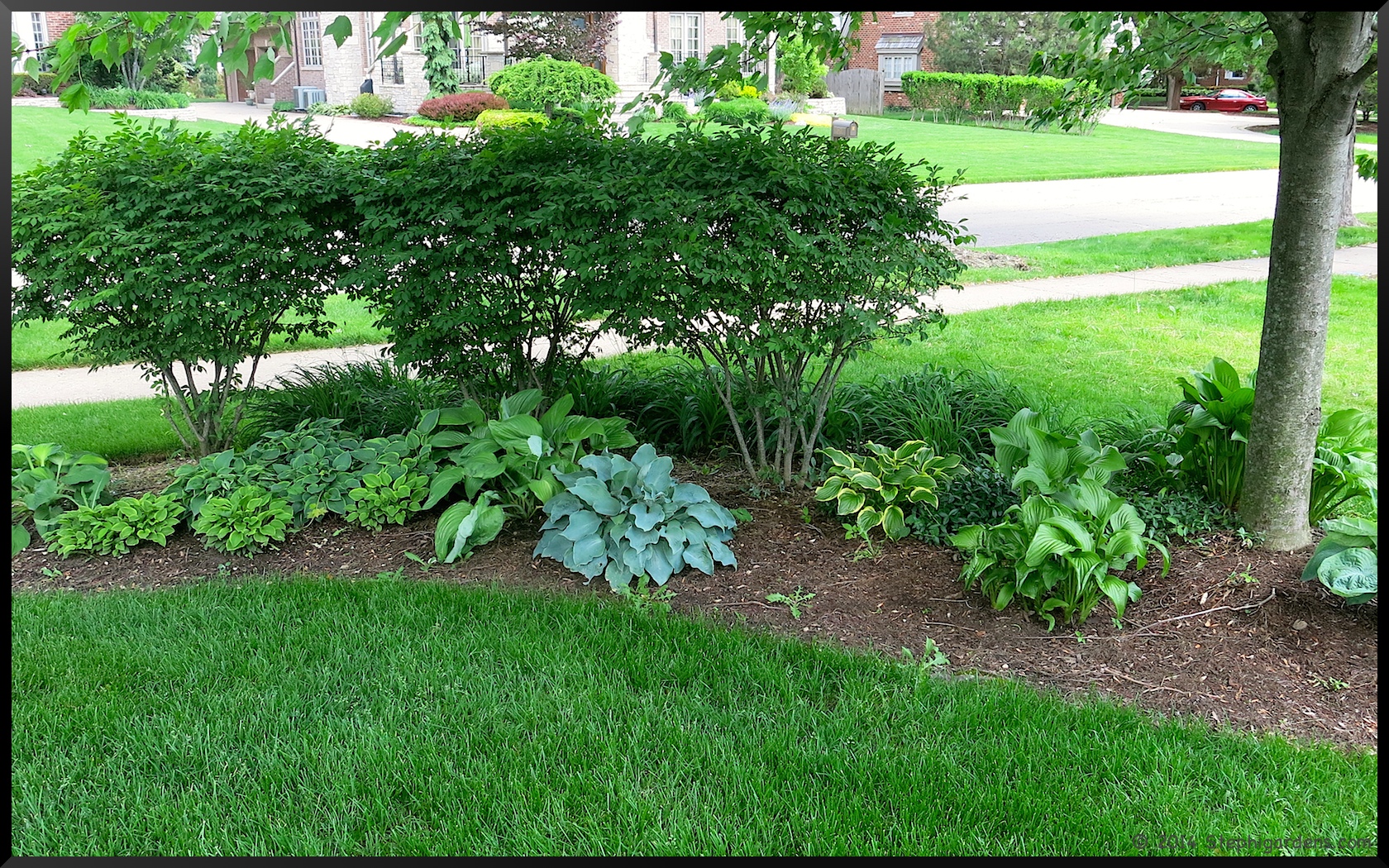
Under an Autumn Blaze Maple, we have some burning bushes, hostas, and daylilies.   

Stephi Gardens

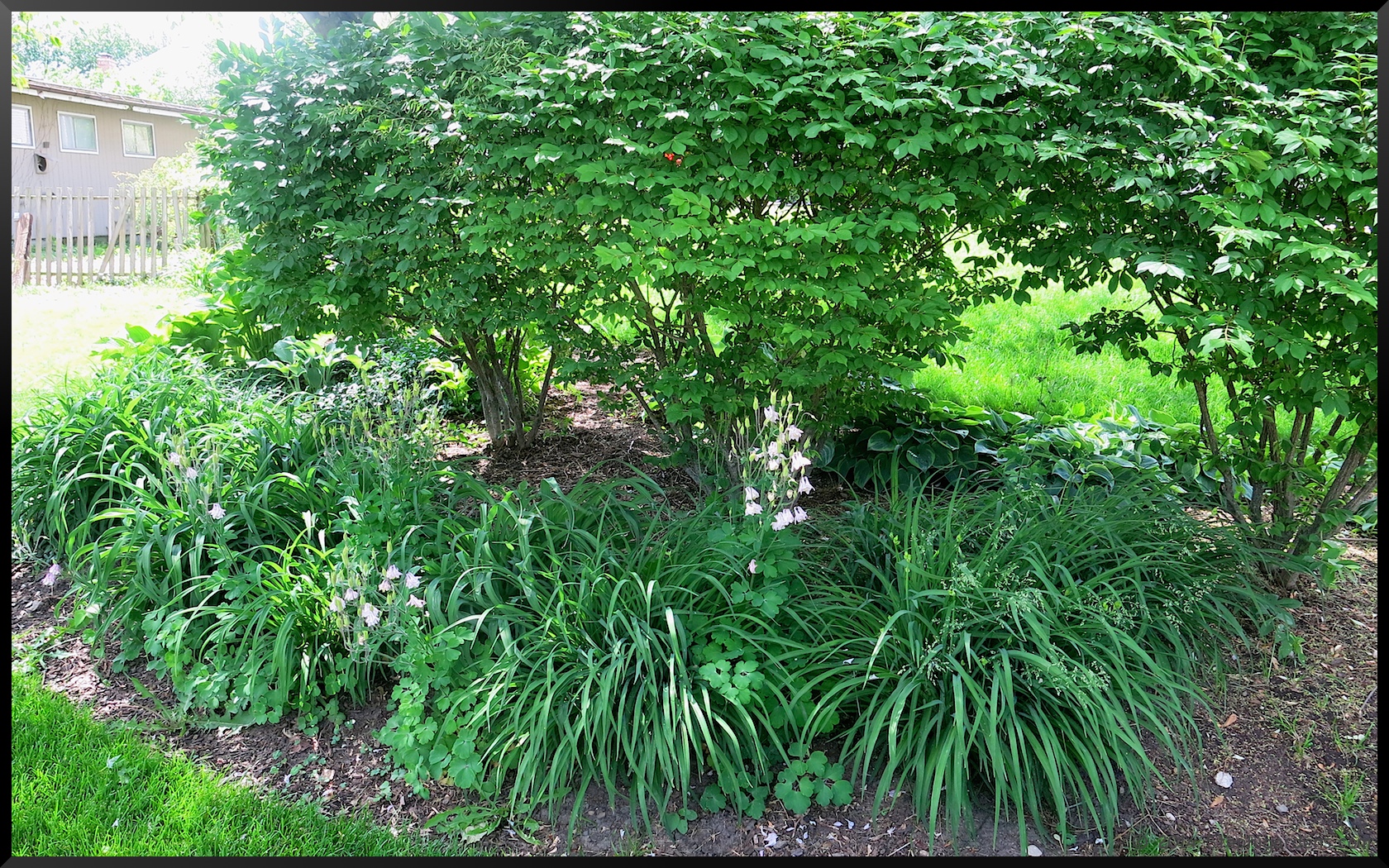
Also some Columbines that have travelled from the backyard.

Stephi Gardens

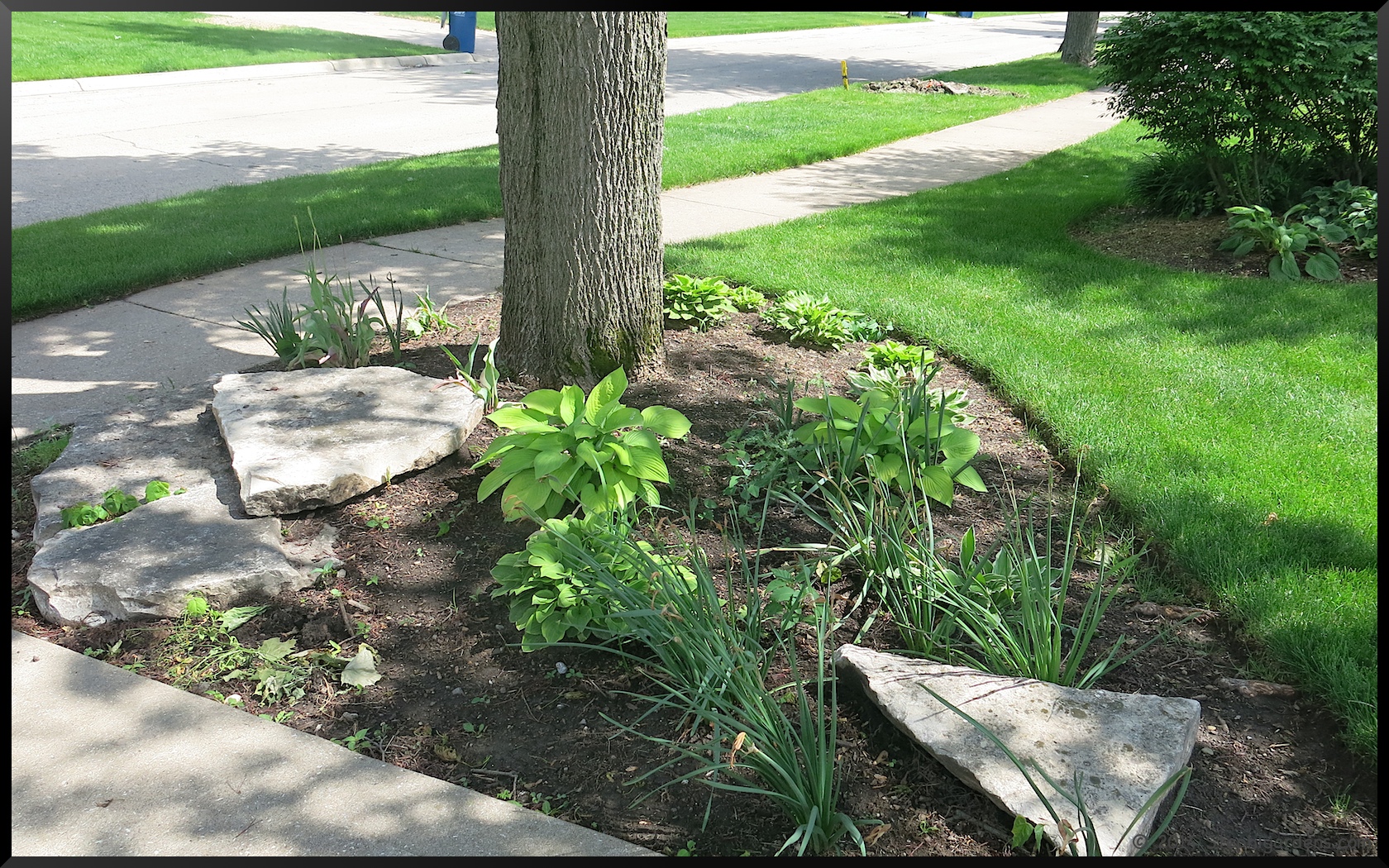
This was another problem area where nothing seemed to grow under a mature maple.  I was happy to see the hostas I planted last year came back nicely.  When I split some more, I’ll add them to continue to fill in the space.  We are a little worried about the health of this parkway maple. It’s pretty old and showing a lot of signs of being unhealthy.  But it’s still standing, for now.

Stephi Gardens

On the other side of the driveway, a few years ago a rather large maple fell down in a wind storm.  We replaced it with this Swamp White Oak (Quercus bicolor) that has finally seemed to take off after it’s brush with cicadas its second year.   Underneath are more densi yews, Russian Sage, daylilies and a burning bush.

Stephi Gardens

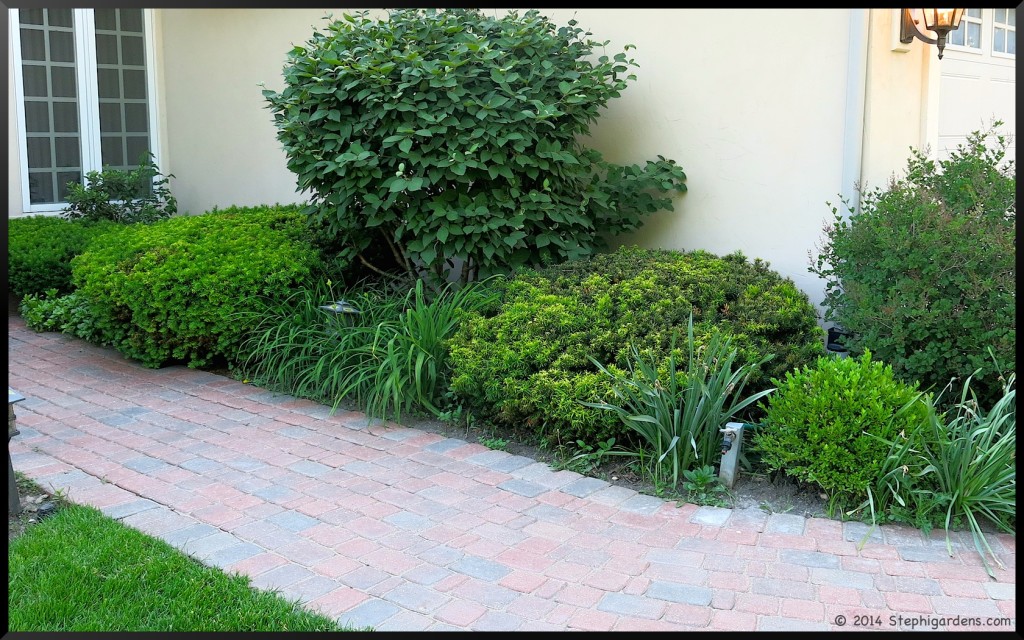
Back up to the house, there’s an awful lot of green since the Korean Lilac and Judd Viburnum have finished blooming.  The yews are a bit overgrown and the Rhododendron in the corner a bit spindly.  This may become the next area to fix up.

Stephi Gardens

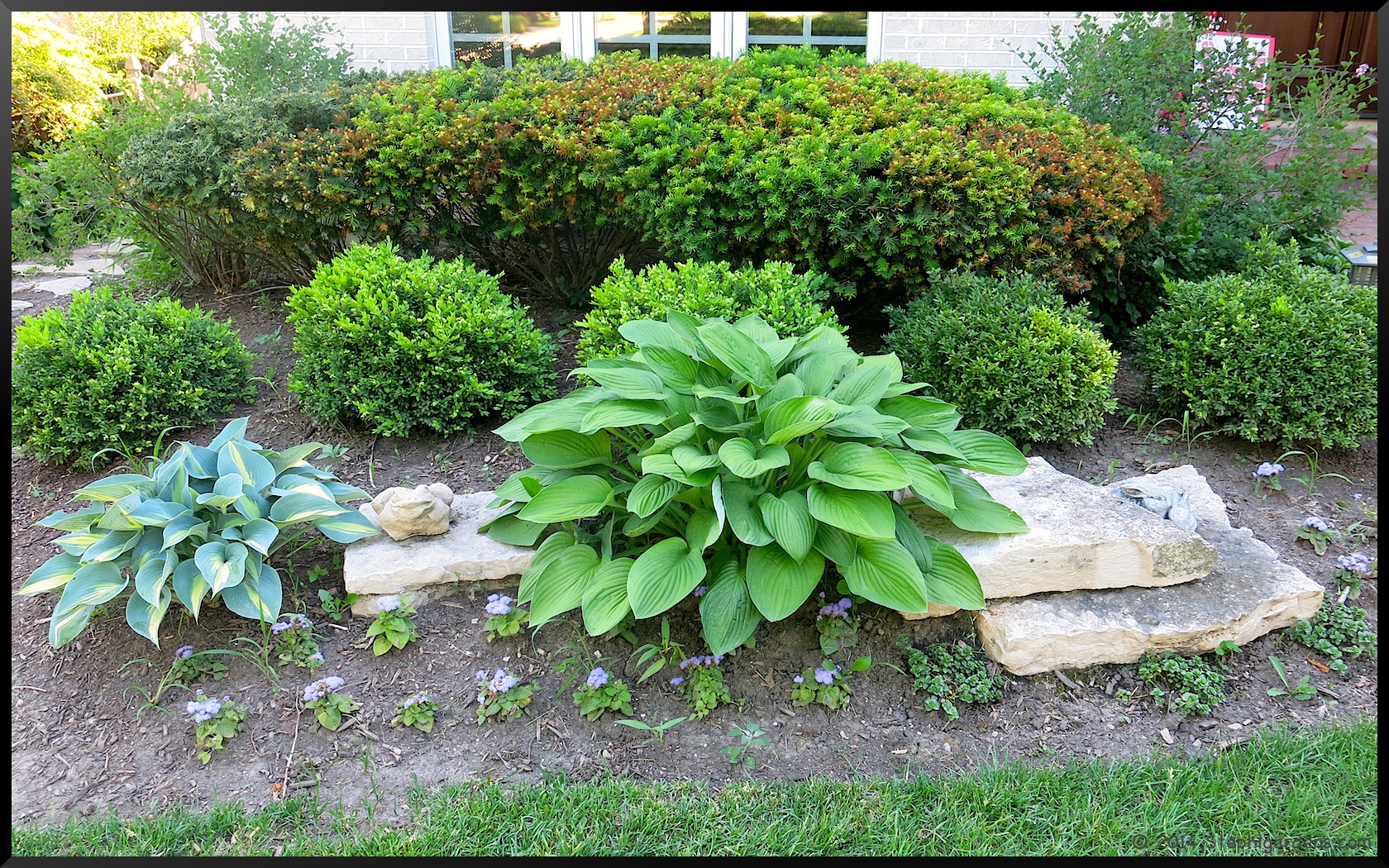
The yews took a bit of a beating this winter and will look fine after a trim.  The boxwoods and hostas are new last year and make a nice addition to the area (although the one hosta looks a little big for the space).  A little sprucing up and mulch and this area will be good to go.
Stephi Gardens

That’s most of the garden spaces that I write about and toil in.  Hopefully this summer will bring perfect garden weather.


SaveSave

A View of the June Garden-Backyard

I took a tour of my yard today to see how everything was looking. Other than a little late, most things were looking quite healthy. It seems I’m often focussed on the “little picture”, so it was nice to just step back and look at the “big picture”.

Starting in the back…

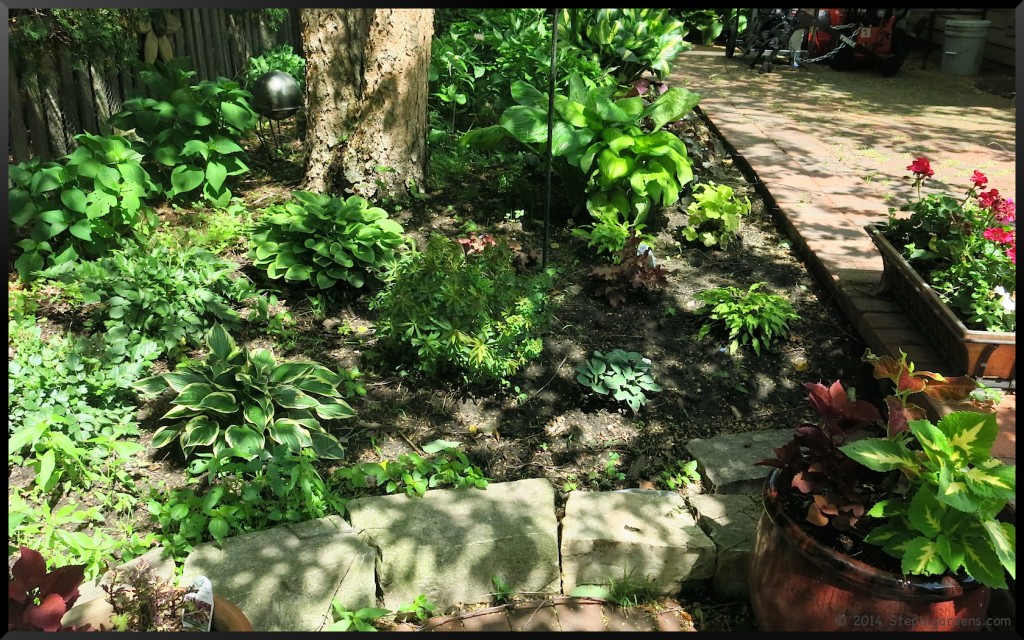
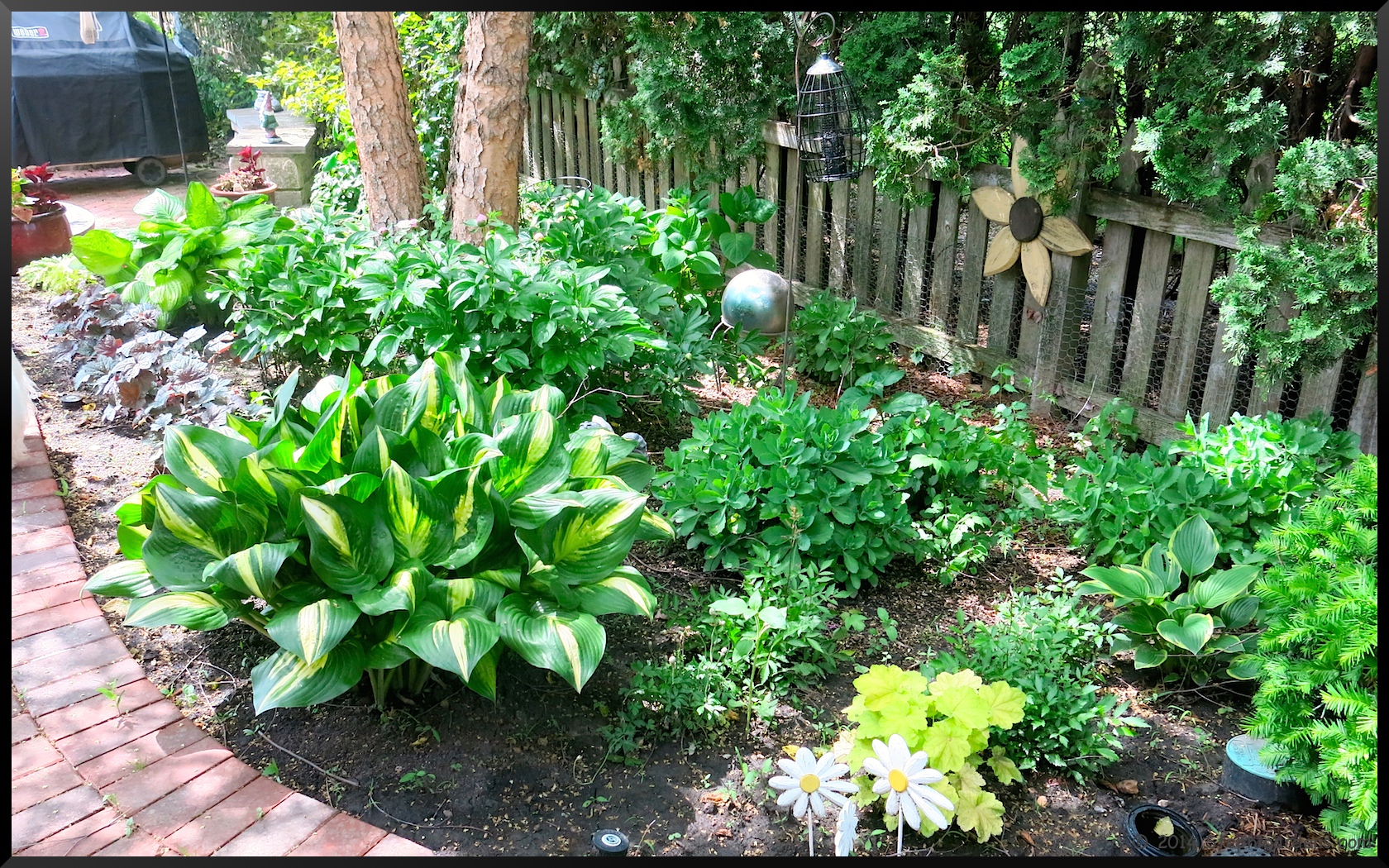
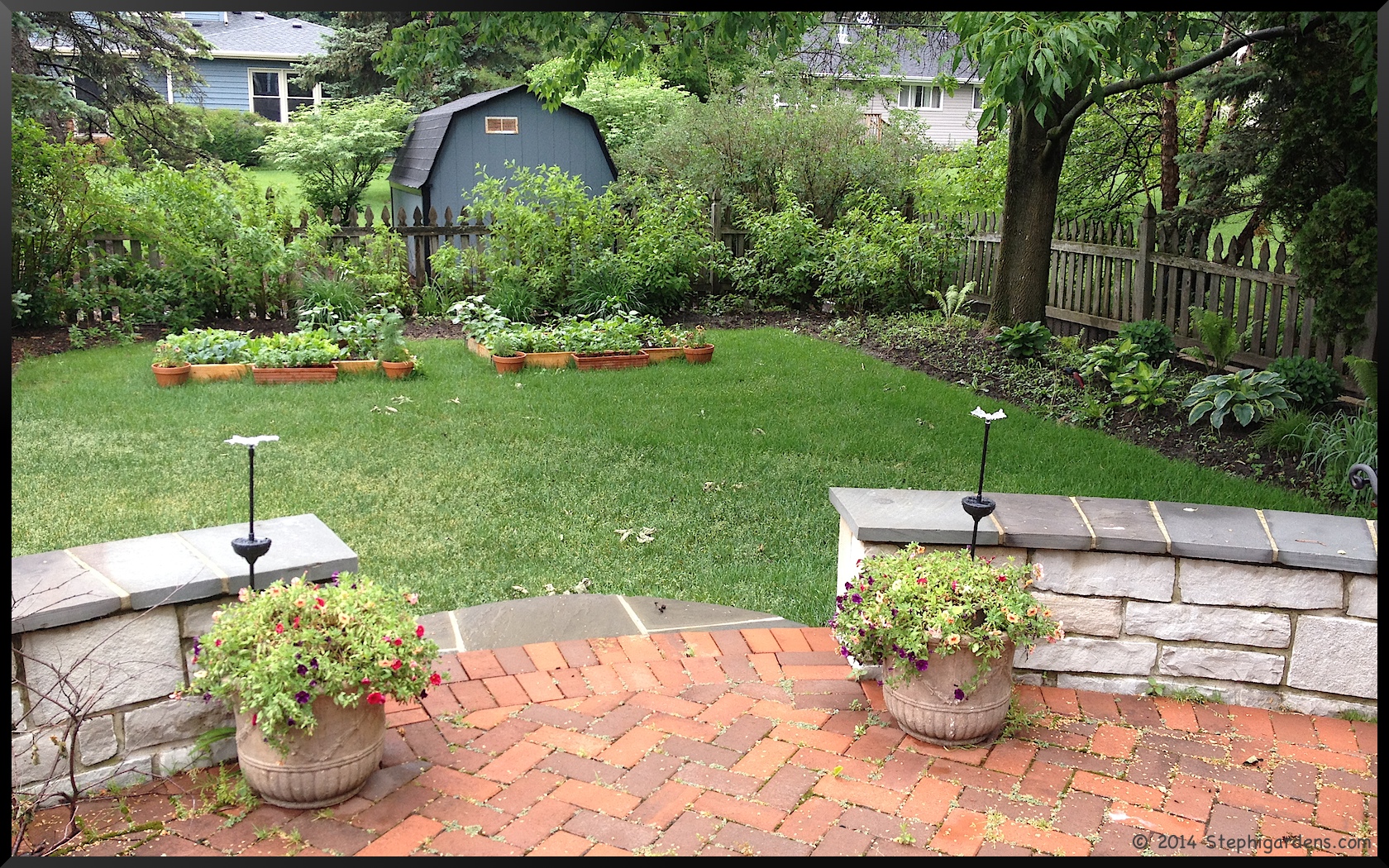
Hostas, sedum, peonies, windflowers, astilbe, heuchera, hydrangea, spurge and a River Birch fill this part shade bed that borders the patio. 
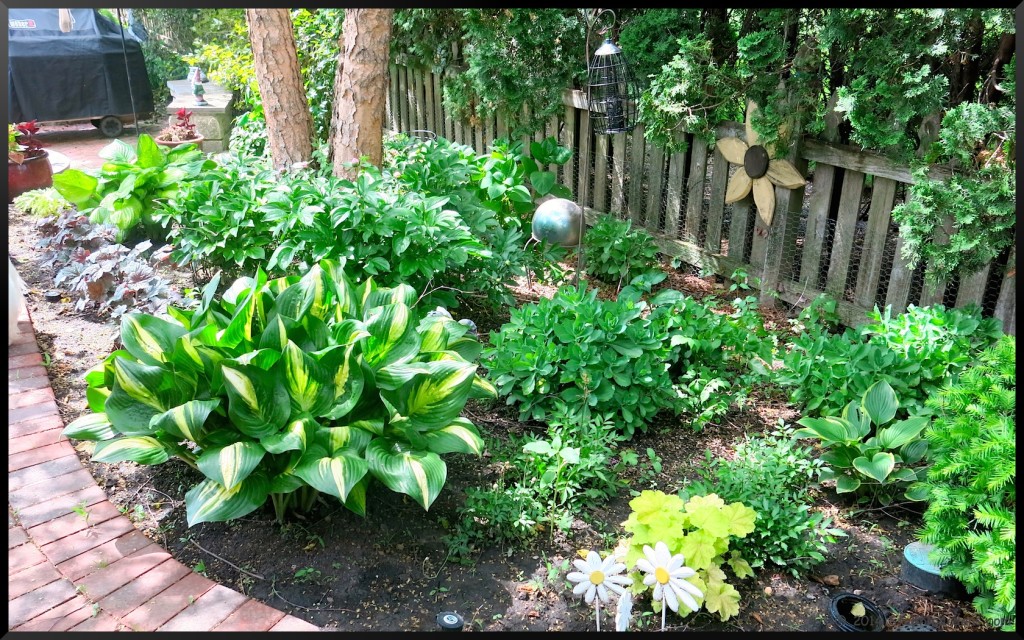
Stephi Gardens

Stephi Gardens

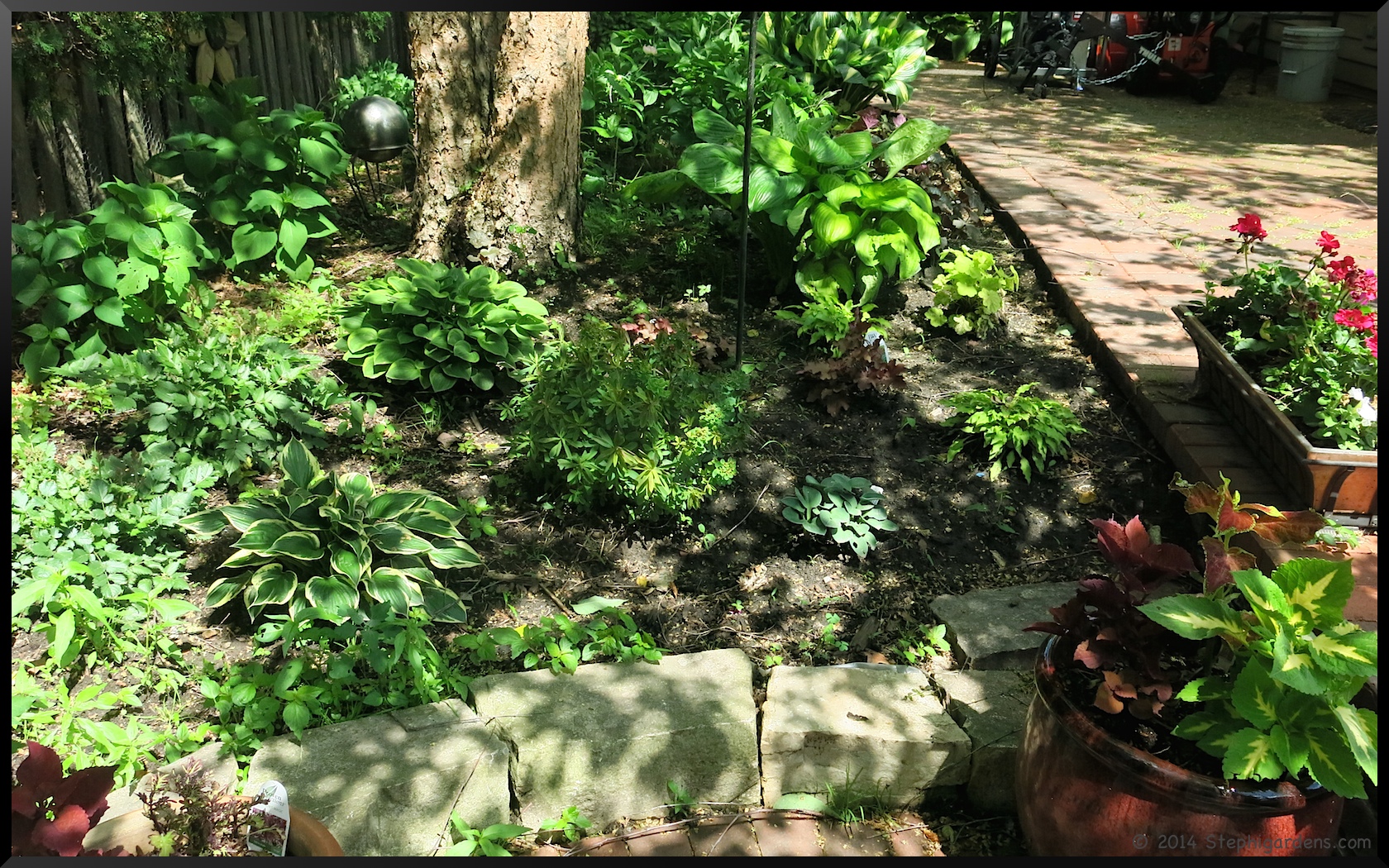
Off the back of the patio is the Purple Ash that looks quite healthy this year after it’s treatment for Emerald Ash Borer last year  (Attack of the Emerald Ash Borer: Part 1 and Part 2).   I recently split and transplanted some hostas,  ferns and sedum underneath it to make it look more like a garden rather than a dirt pile   I also added 3 Purple Beautyberry Bushes in the corner to join some raggedy looking Red Twig Dogwoods.  This also where my 2 new raised vegetable beds are located.   
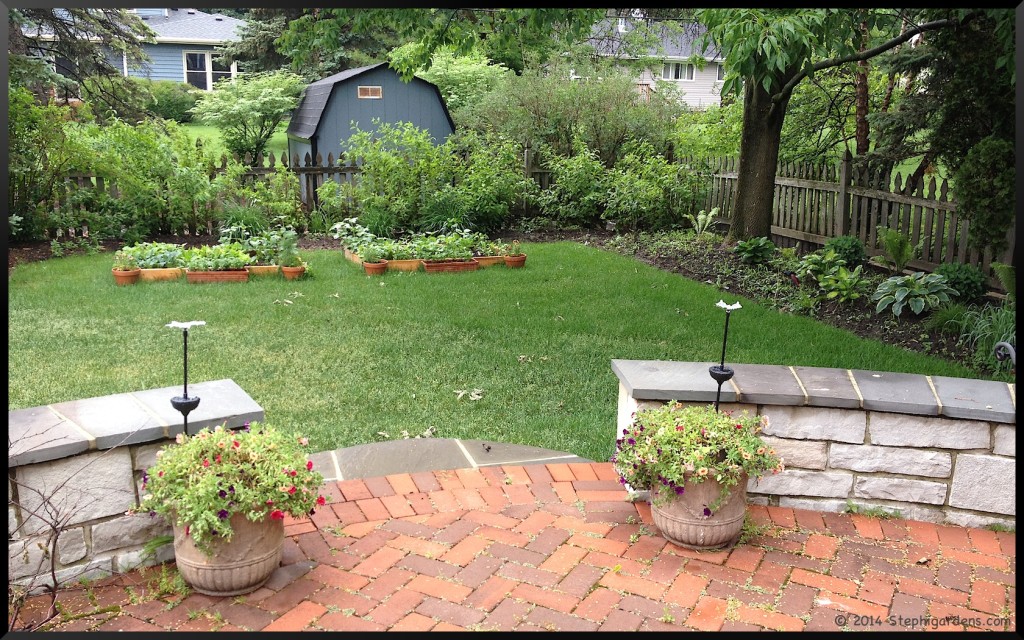
Stephi Gardens

Finally, my Siberian Irises are blooming.  Only 2 blooms, but better than nothing!
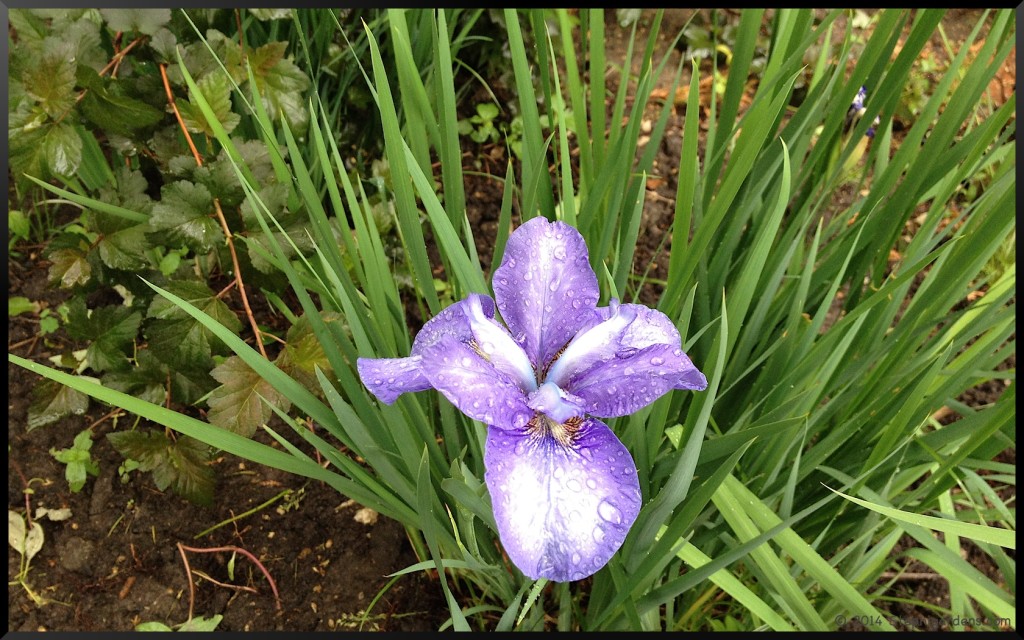
Siberian Iris

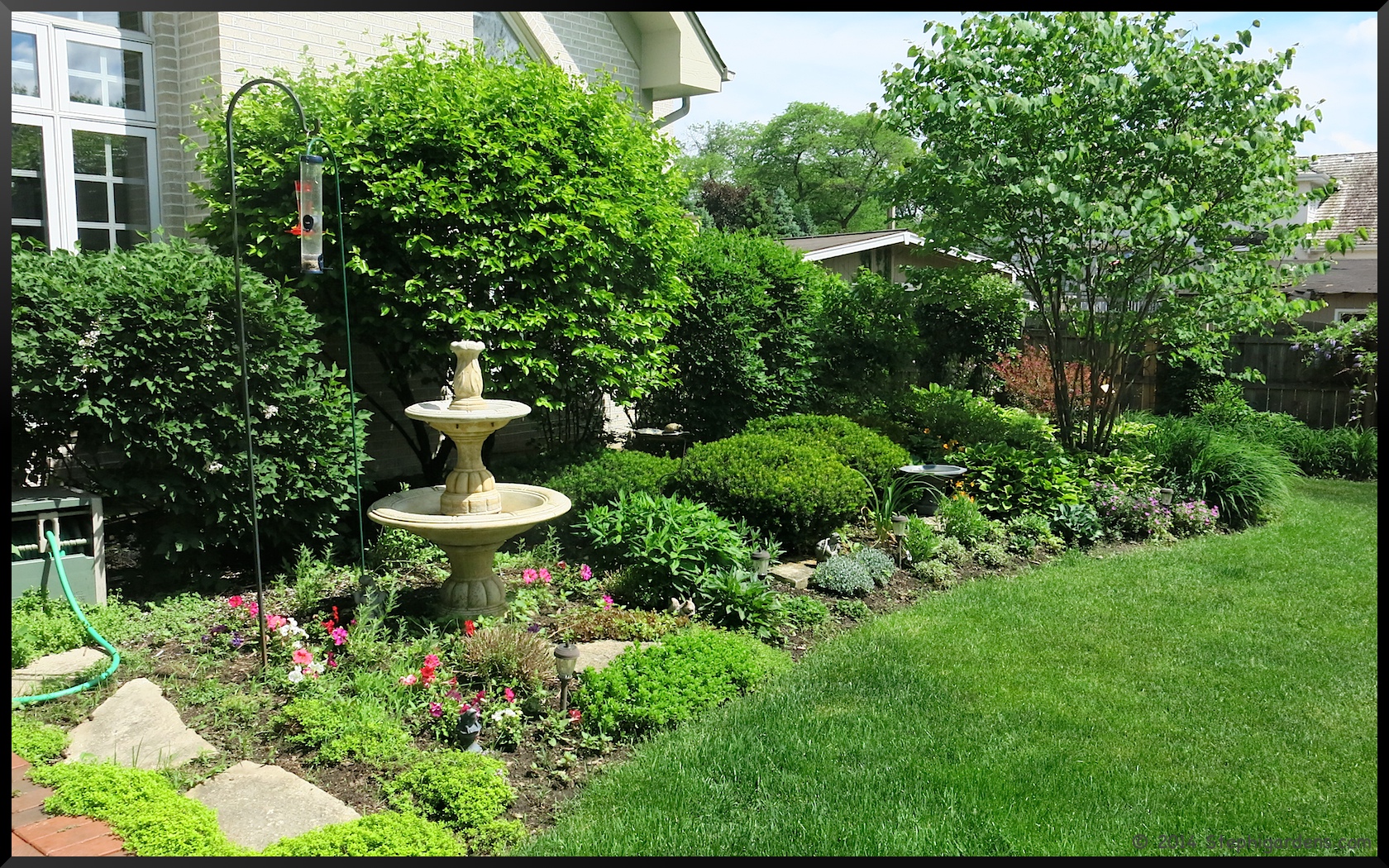
The back of the house is planted with Miss Kim lilacs, a Blackhaw viburnum, a Redbud, densi yews, an assortment of creeping sedums, creeping thyme, Russian sage, a few other perennial specimens,  hostas, daylilies and petunias.  
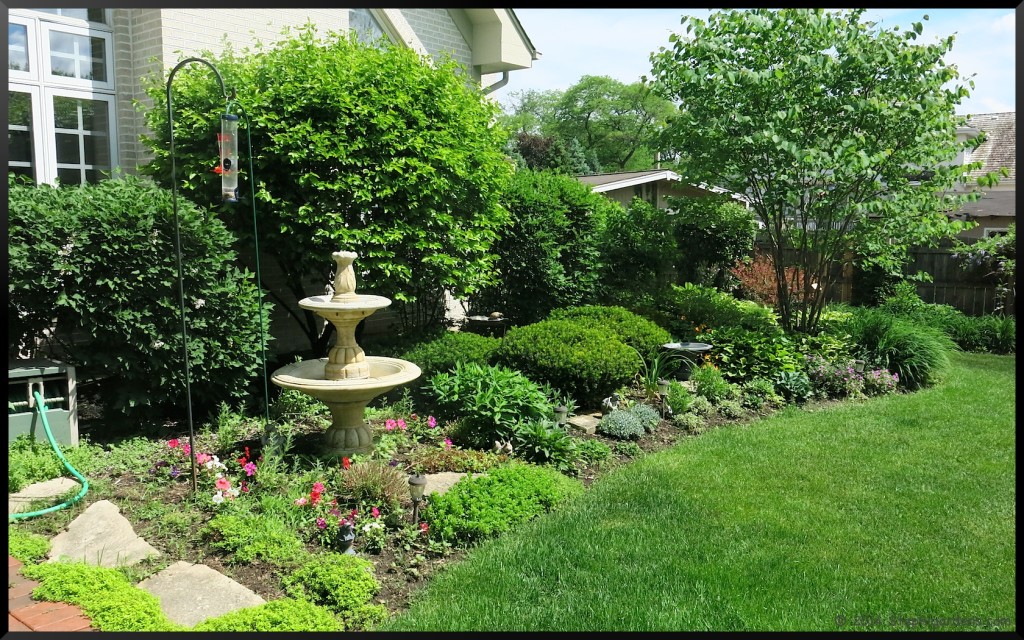
Stephi Gardens

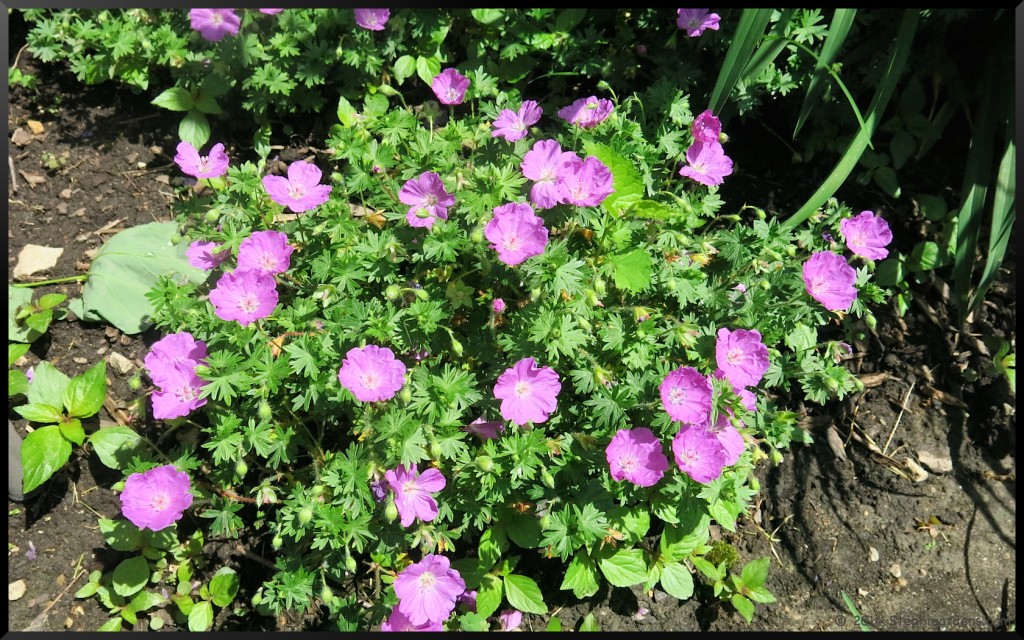
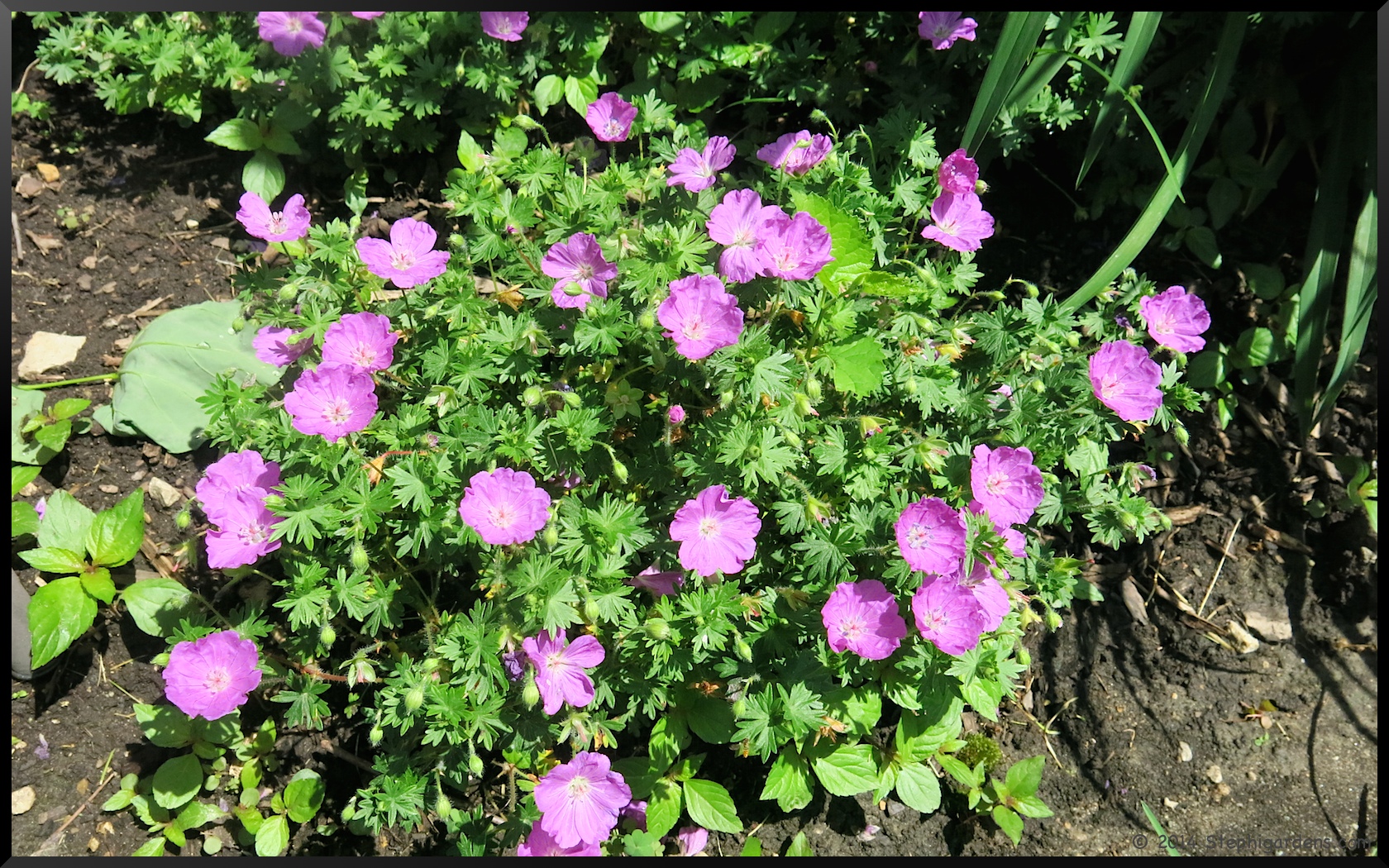
Johnson Blue Geranium

Johnson Blue Geranium

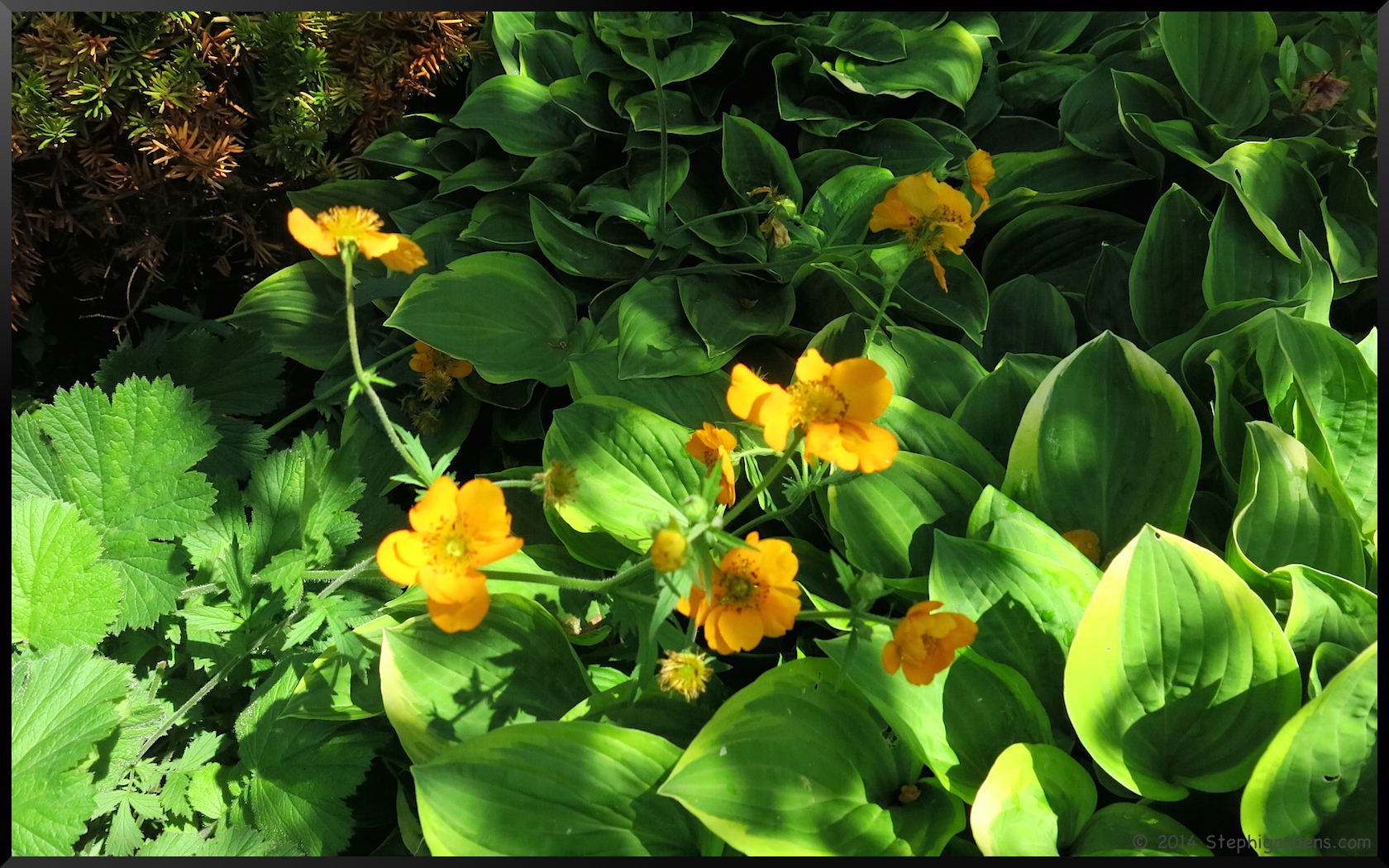
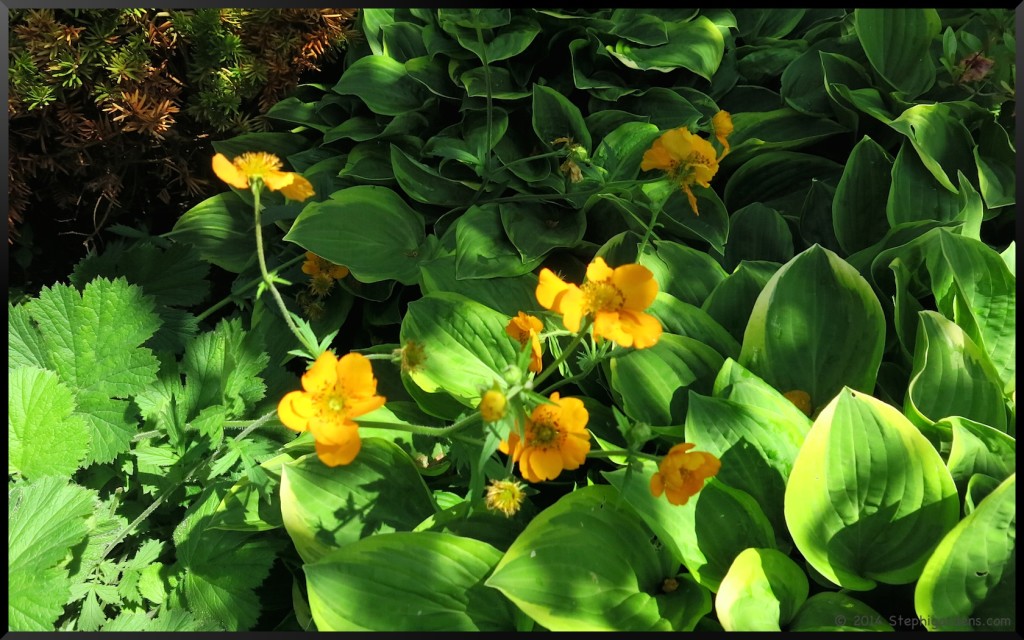
Tangerine Avens–my best guess is that it is Geum “Totally Tangerine”.
IMG_3357

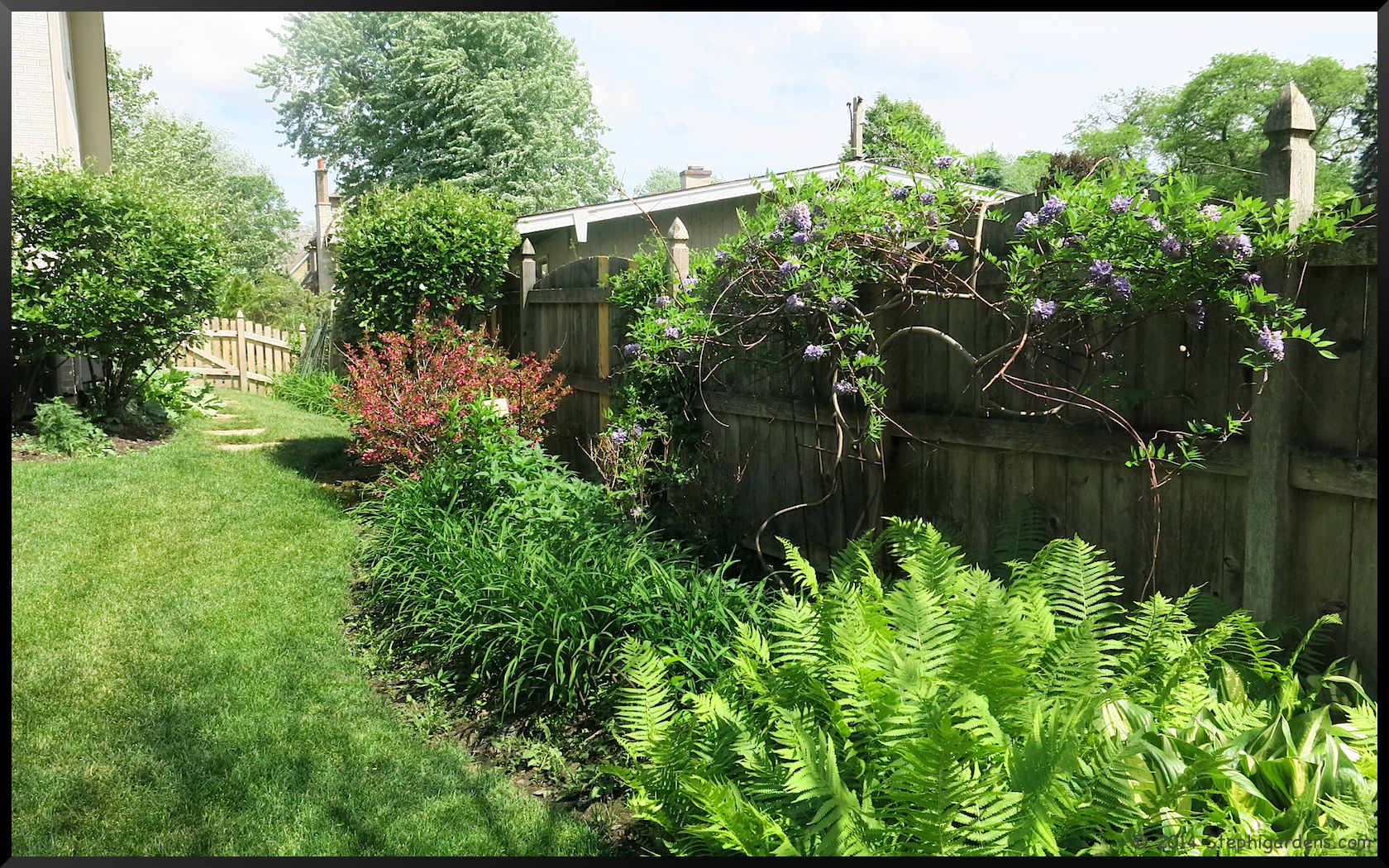
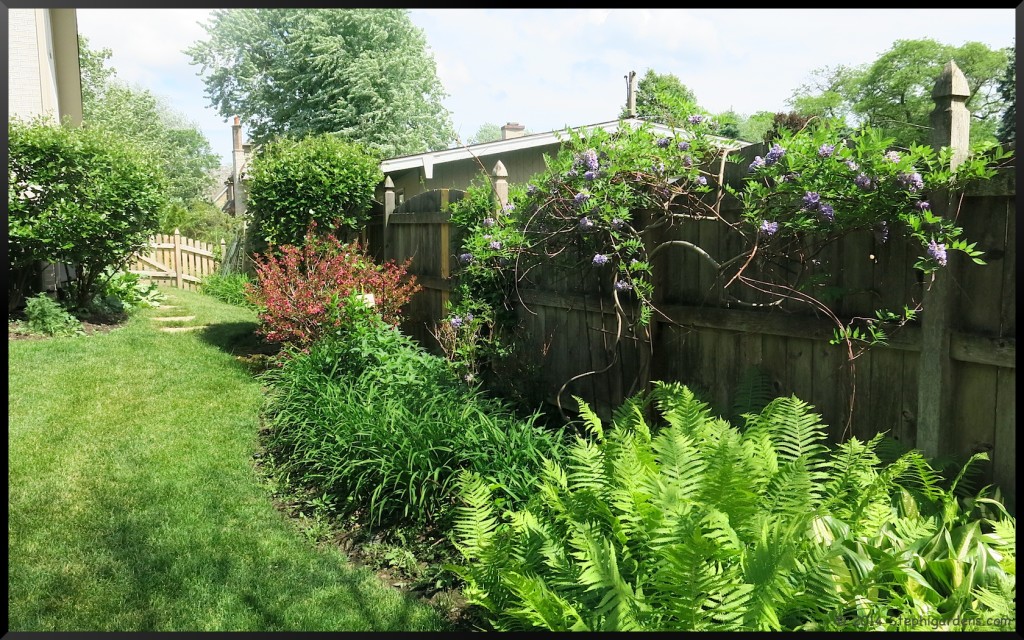
The side yard is undergoing some transition as the house next door is undergoing construction.  What used to be sun/part shade, is now full sun.  Along here are  ferns, hostas, phlox, bee balm, wisteria, knock-out roses, daylilies, weigeila and honeysuckle.  There is also a 15 yr old multi-stemmed Freeman’s Maple just outside the shot, but I’ll leave that for another day.  But here’s a hint, it’s June and it’s casting almost no shadow…
Stephi Gardens

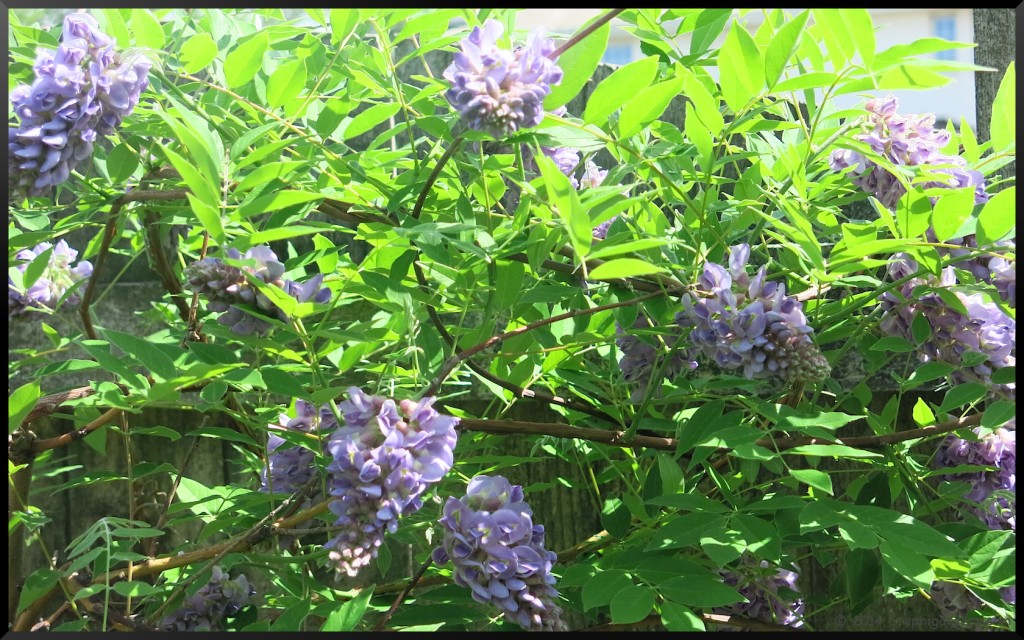
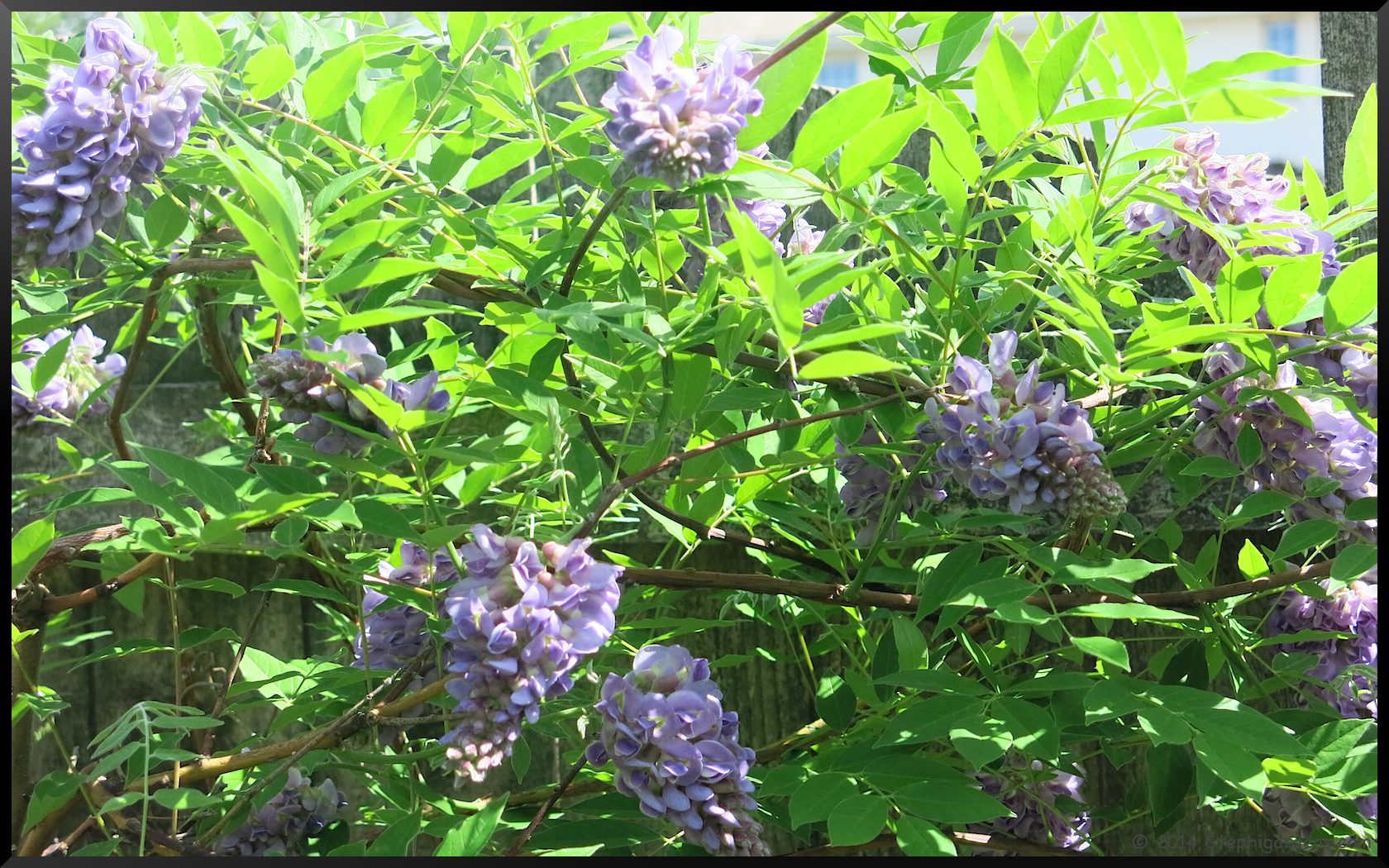
Wisteria is starting to bloom.

IMG_3360

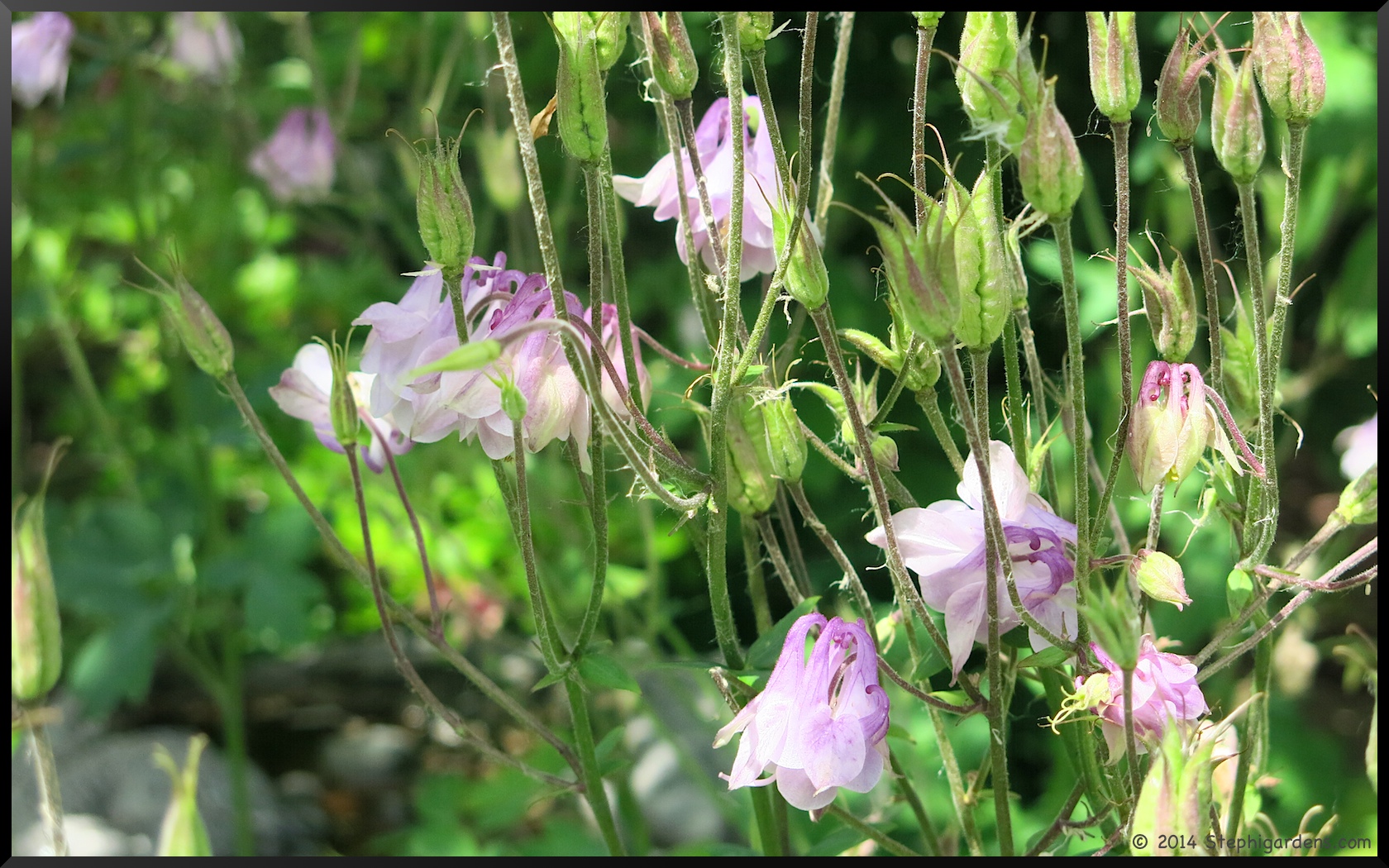
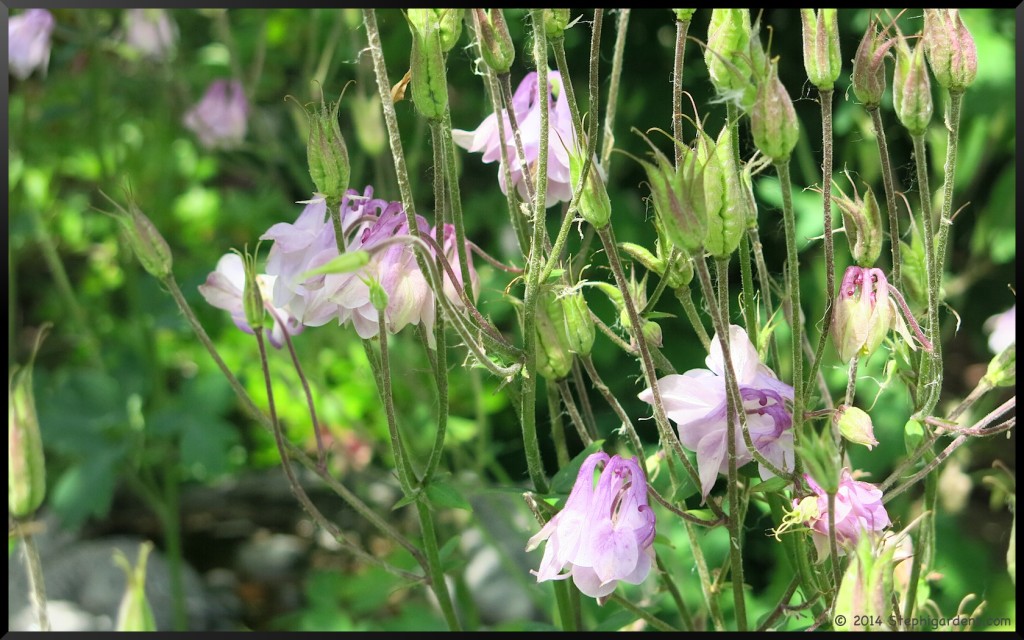
 All around the yard are these Columbines.  They just pop up unexpectedly and provide some pretty spring colors.  They’re a spreading plant that I don’t mind having out of place.  These all came from a gift of one plant soon after we moved in.  
IMG_3363

Tomorrow… Continuing around to the front yard…