2018 Garden Recap: Vegetables (Part 2)

Now that we’ve mostly recovered from a record breaking, bone-chilling winter, it looks like spring may finally be coming. I thought it was time to get back to one final review of last year’s gardens before the spring growing season is fully upon me. I checked in on the flowers, 2018 Garden Recap: Flowers and started reviewing the veggies here, 2018 Garden Recap: Vegetables (Part 1). Time to finish the veggies!

As I wrote back in December, my vegetable garden was not very successful for a bunch of reasons. In Veggies Part 1, I described the attack on my squash by the very devastating squash vine borers. But that was only one of the things that hindered my garden this year.

So what else happened? First there were the chipmunks who have a taste for ripe tomatoes. I planted my tomatoes in bags this year to free up space in the main raised bed.
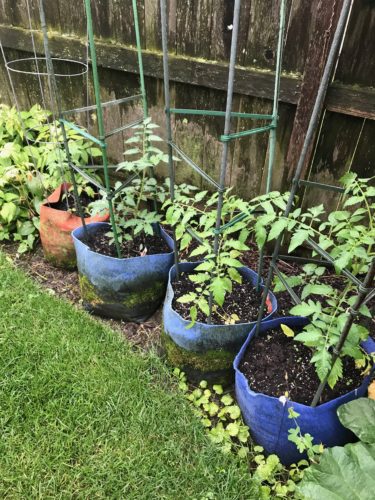
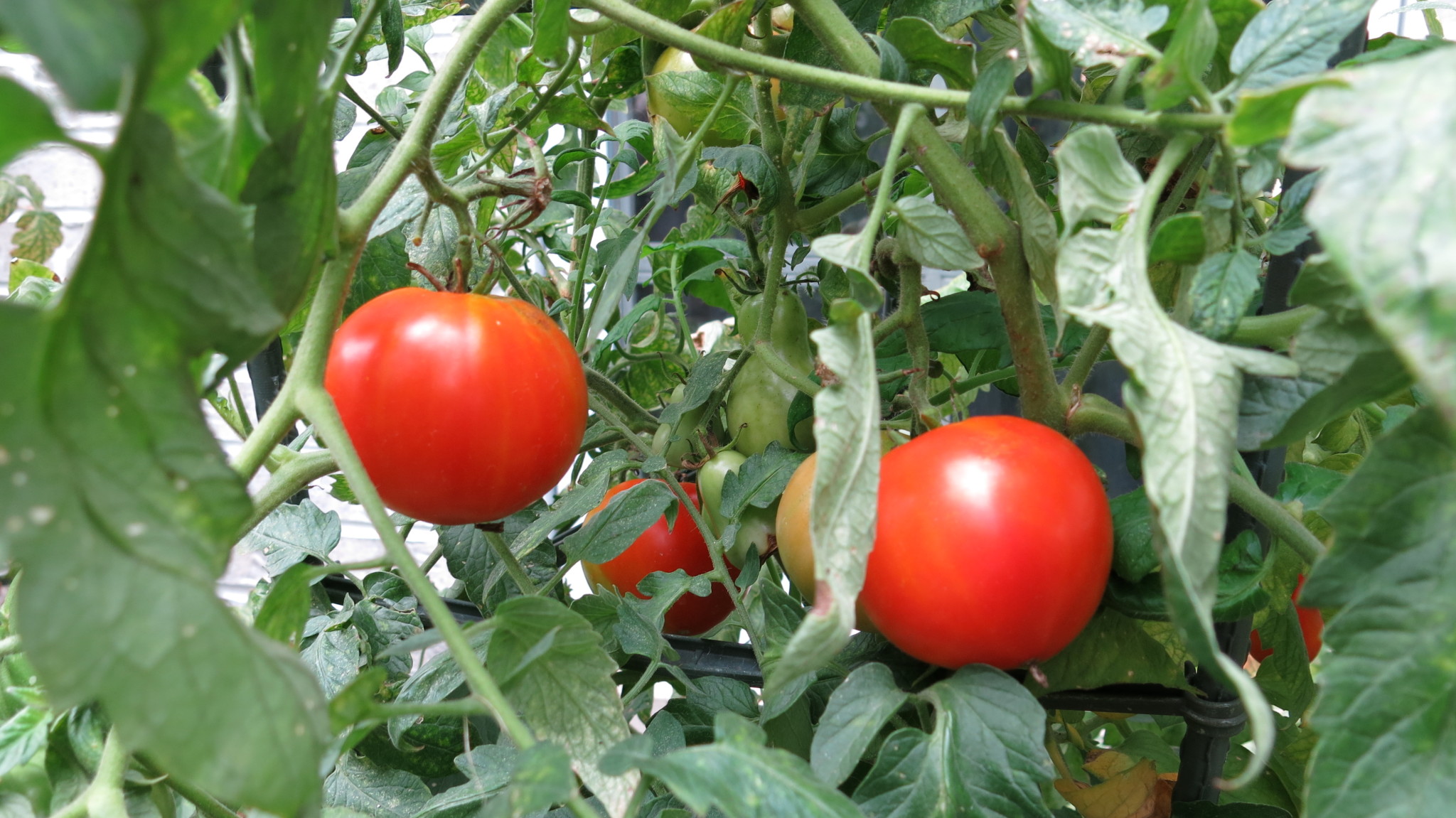
They grew fine in the bags, but the cold spring got them off to a slow start. Just as I finally started to get red, ripe tomatoes, the chipmunks helped themselves and took a nice big bit out of each one. 😡 They did it to so many I actually entertained the idea of just cutting off the bit side and eating the other. Decided not to…

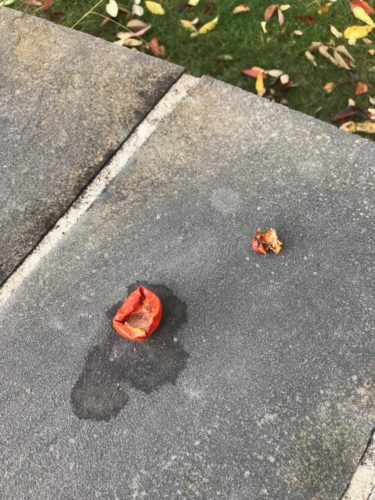
One chipmunk truly had a sinister sense of humor and dragged a ripe tomato across the yard to taunt me by leaving the remnants on the back patio.
I had trouble with the garlic and leeks this year as well. A lot didn’t come up in the spring and what did grow was small.

The previous winter and spring were tough, so that may have had an impact. But more importantly, I hadn’t realized how shady that this particular raised garden had become from the thriving ash tree nearby. When I put the gardens in, the ash was suffering pretty badly from an Emerald Ash Borer infestation and was pretty thin. We had been treating it for years, but a few years ago switched to a trunk injection treatment. I’m thrilled the ash is doing so well, but I need to rethink what I plant in that particular bed going forward. Need to leave autopilot and do some planning.

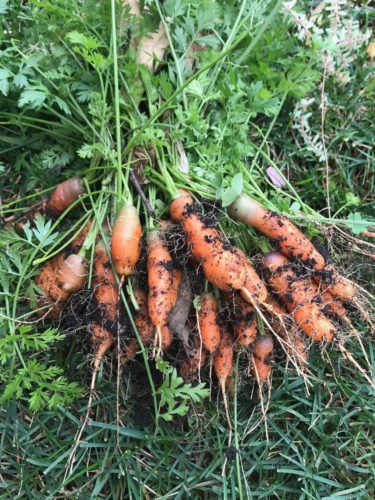
What was successful? Carrots! I had one of my best carrot harvests this year. I switched varieties this year from Danvers to Little Finger Baby Carrots from Botanical Interests, so that may have helped. I also changed out the dirt in the carrot bag so maybe some fresh soil and nutrients was also needed.
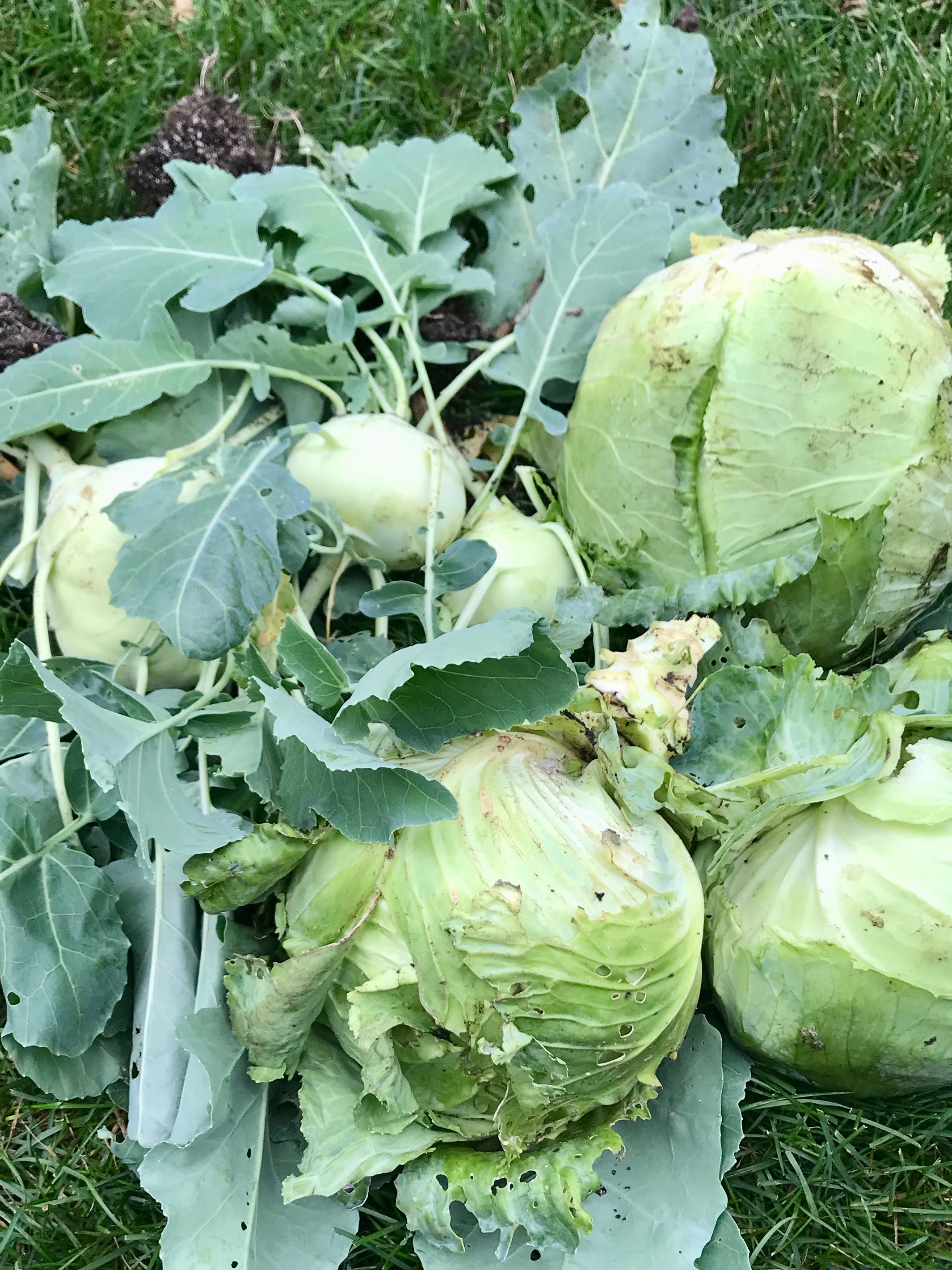
Cabbage and kohlrabi grew unusually well this year. I got the plants from a local nursery and the weather must have been just right for them to grow huge. That was a lot for the two of us, but luckily they store really well.
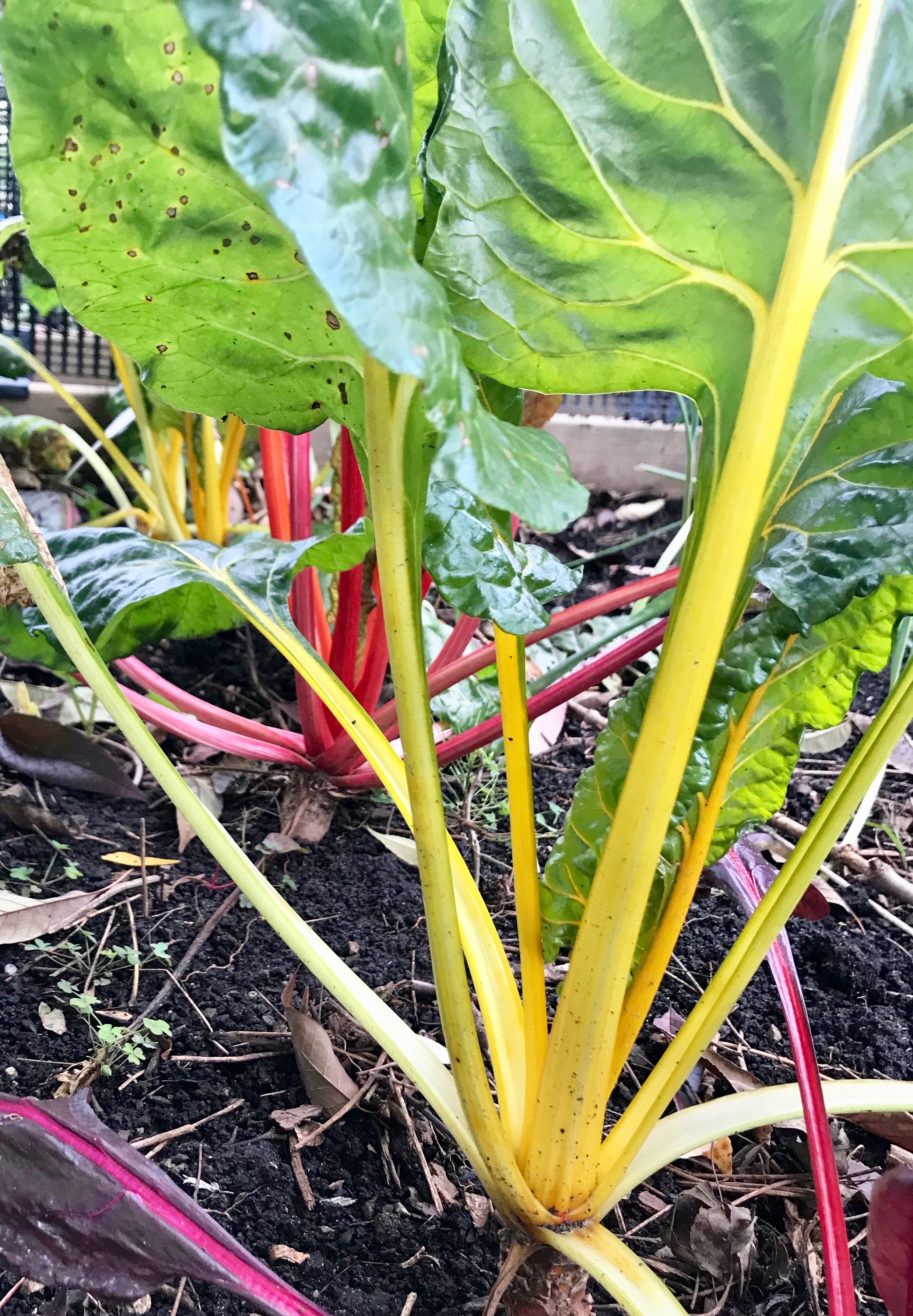
Rainbow swiss chard (Burpee) was also a great grower late into the fall, especially in the shady raised garden bed.
What to do with all that swiss chard? I’ve decided that I am not a huge fan of kale (even though it is probably the vegetable of the decade) so I pretty much use swiss chard in place of kale in recipes. I use a lot of swiss chard in stir fries and love this recipe for Creamy Polenta with Sausage and Chard from Real Simple.

I’ve done some seed shopping for next year already, and have been thinking of a bunch of garden projects to tackle first thing when the weather cooperates! Starting to think that spring might actually come. Just need to get through March.
Making Sauce on a Sunny Day

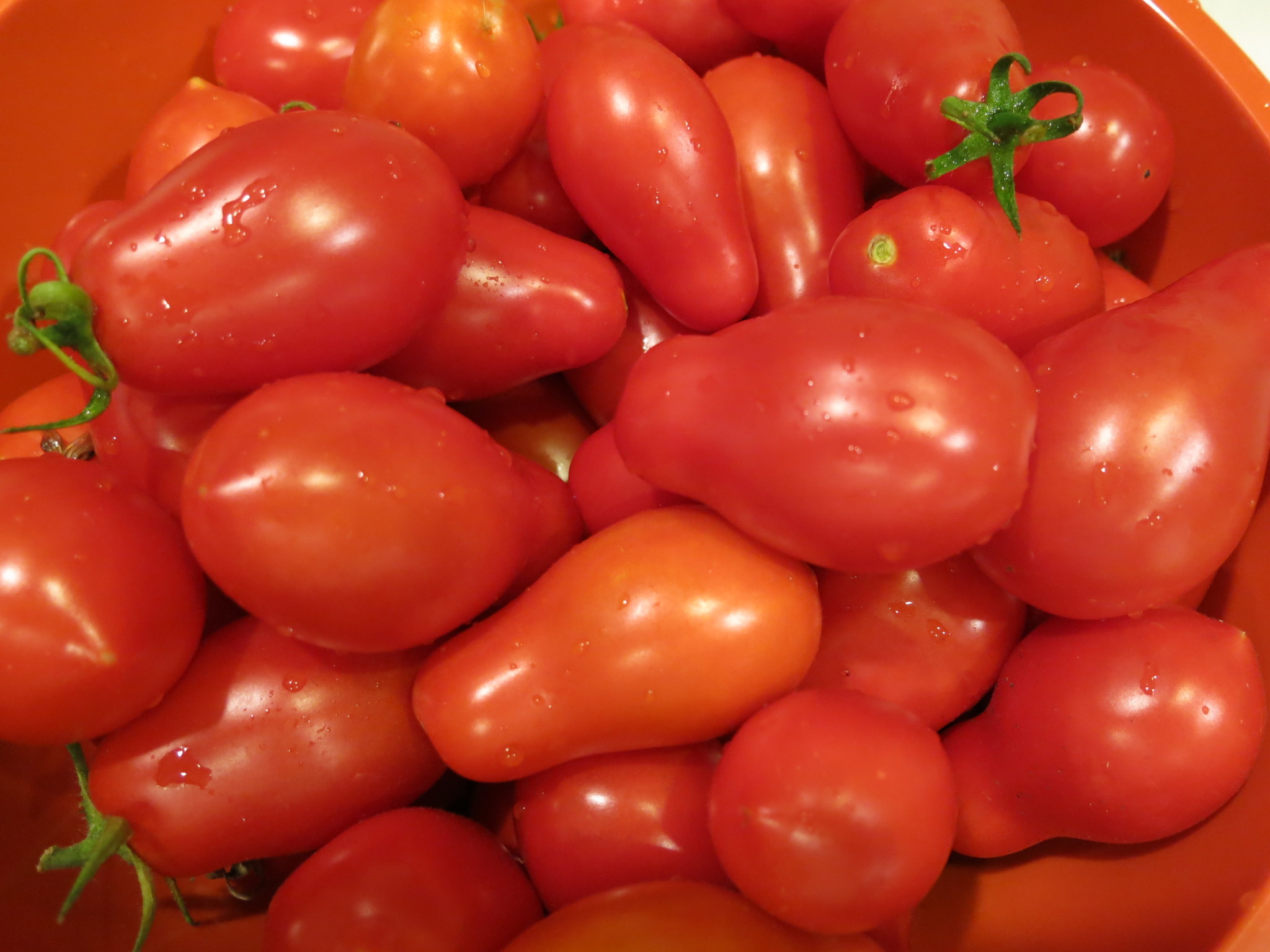
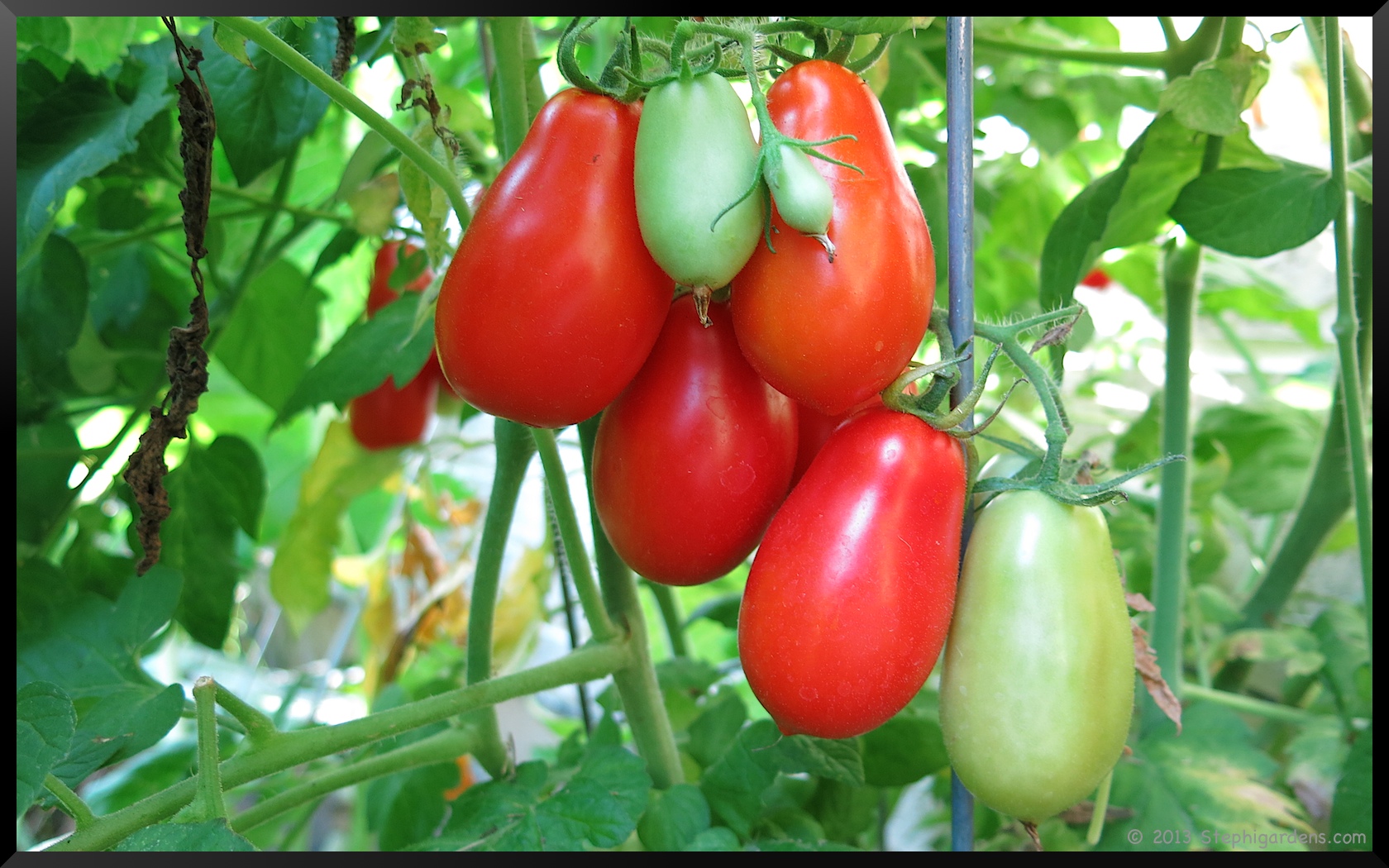
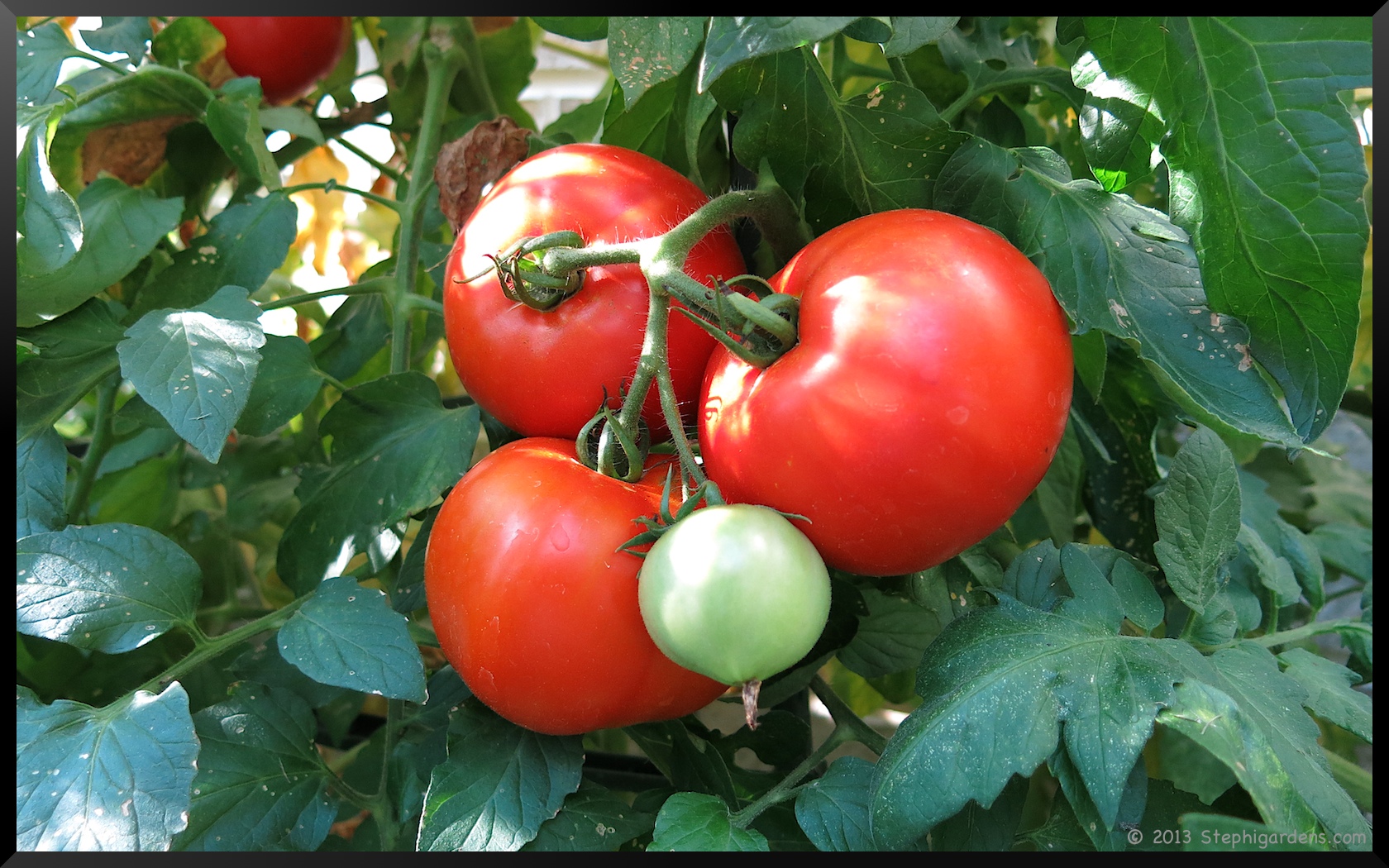
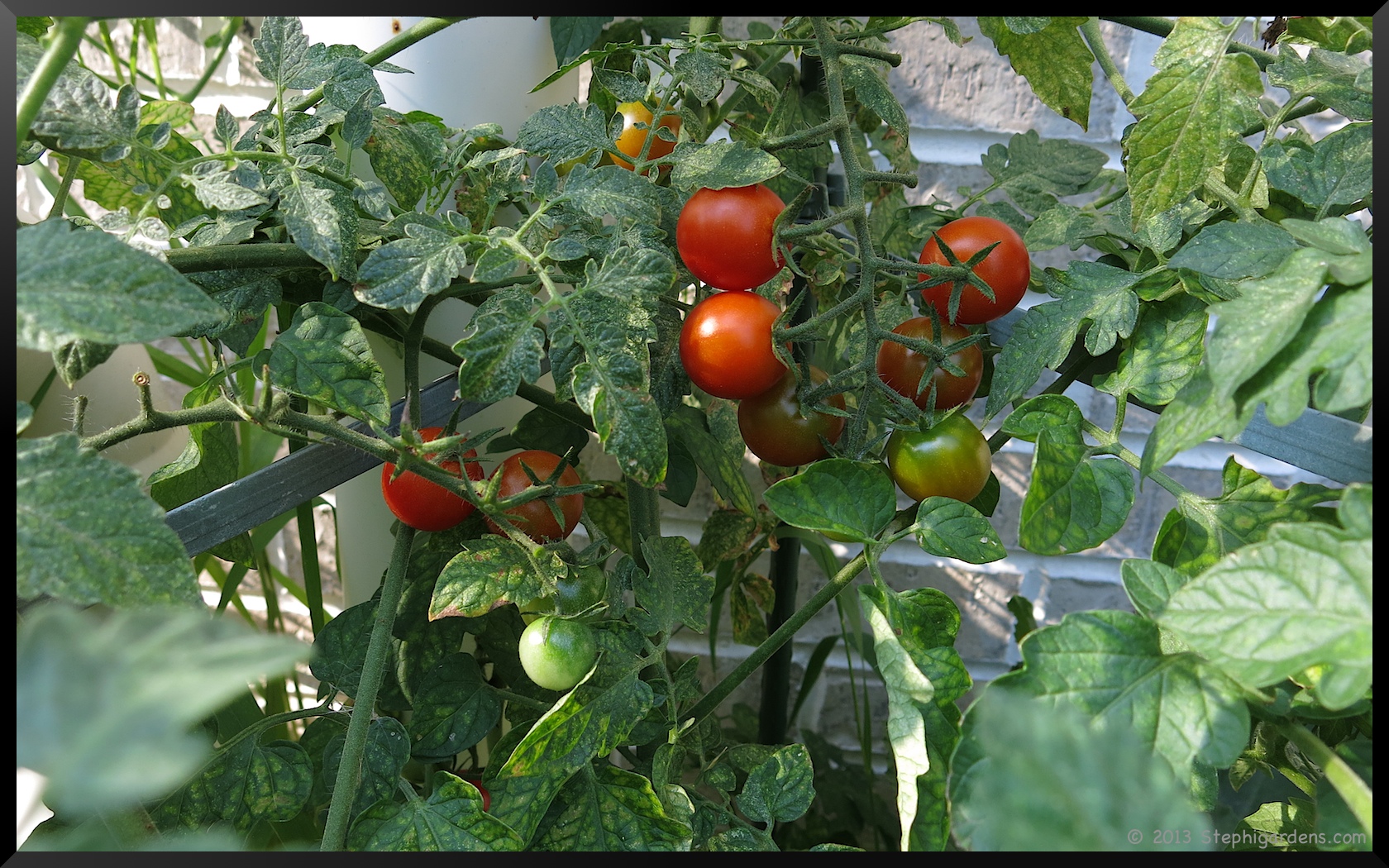
Now that it’s finally warm, it’s the perfect time to make some tomato sauce with the beautiful garden tomatoes. Well not really, but this has been a great year for my tomatoes and I need to get them harvested. I have lots of tasty San Marzano Roma, Early Girl slicing tomatoes and tons of Super Sweet 100 cherry tomatoes.

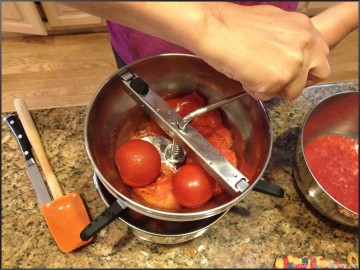
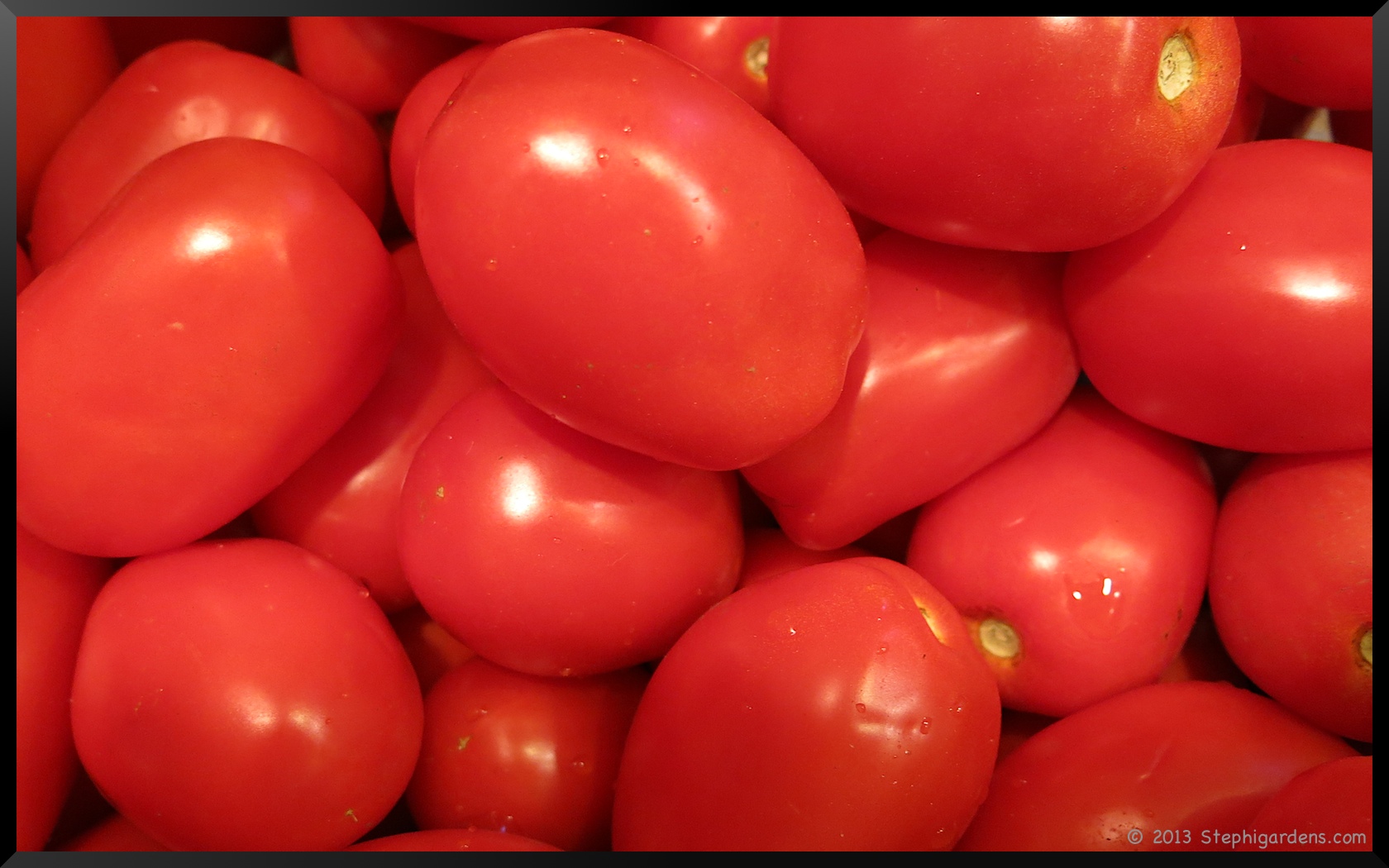
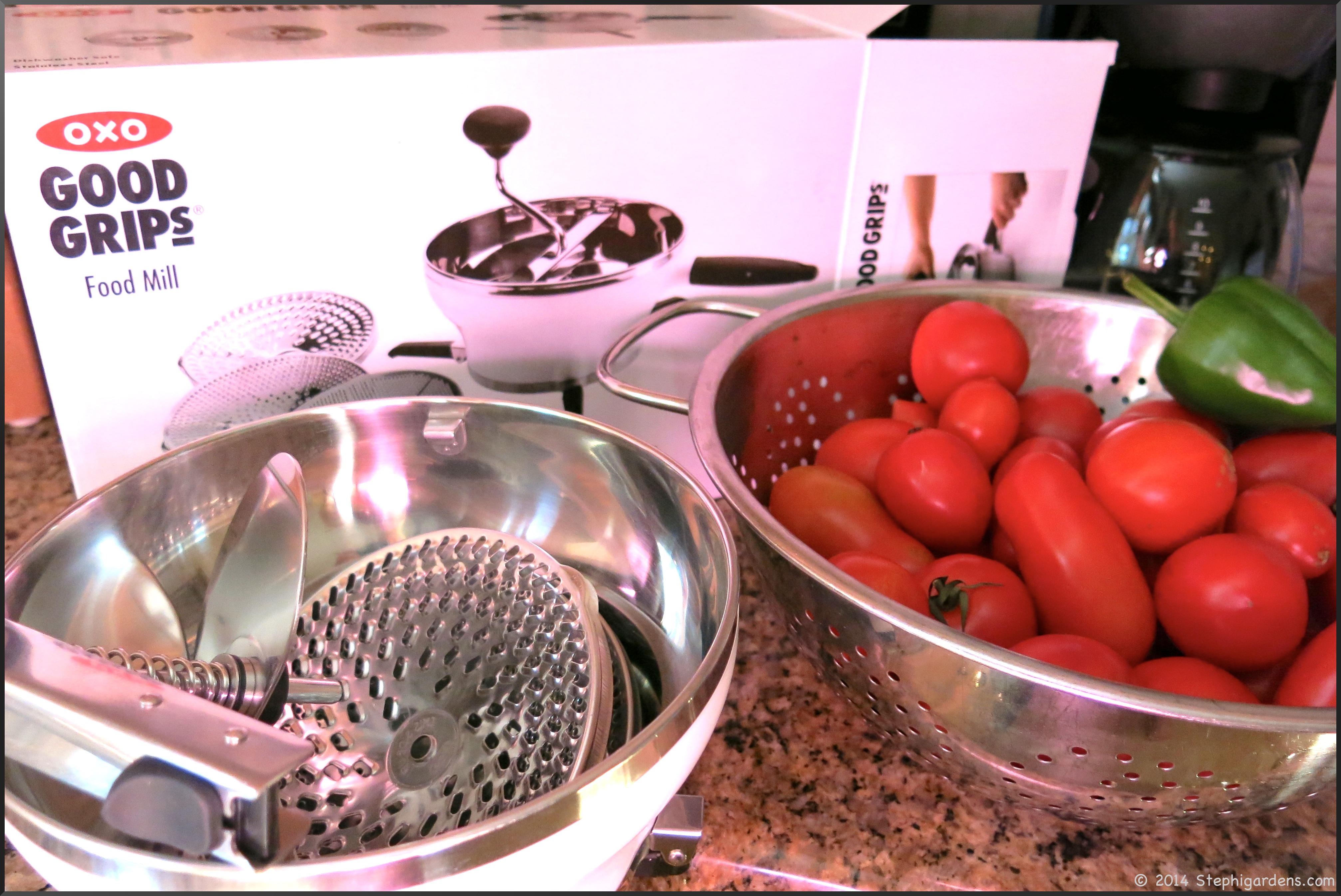
I picked about 5 lbs of San Marzano and Early Girl tomatoes and processed them with my new toy, an Oxo Food Mill.

food mill

Last year to prepare the tomatoes, I par-boiled them, removed the peels and seeds, and then processed them in the food processor to puree them for sauce (see 35 Pounds of Tomatoes for directions).

I kept reading about food mills as a better way to prepare tomatoes (and apparently mashed potatoes), so I thought I’d give it a try this year.  It’s actually pretty easy to use and makes perfect puree.  I also think it’s even more efficient at making puree than the way I prepared the tomatoes last year, since it seems like I ended up with a lot more sauce than before (and fewer seeds).

Here’s some tips I learned:

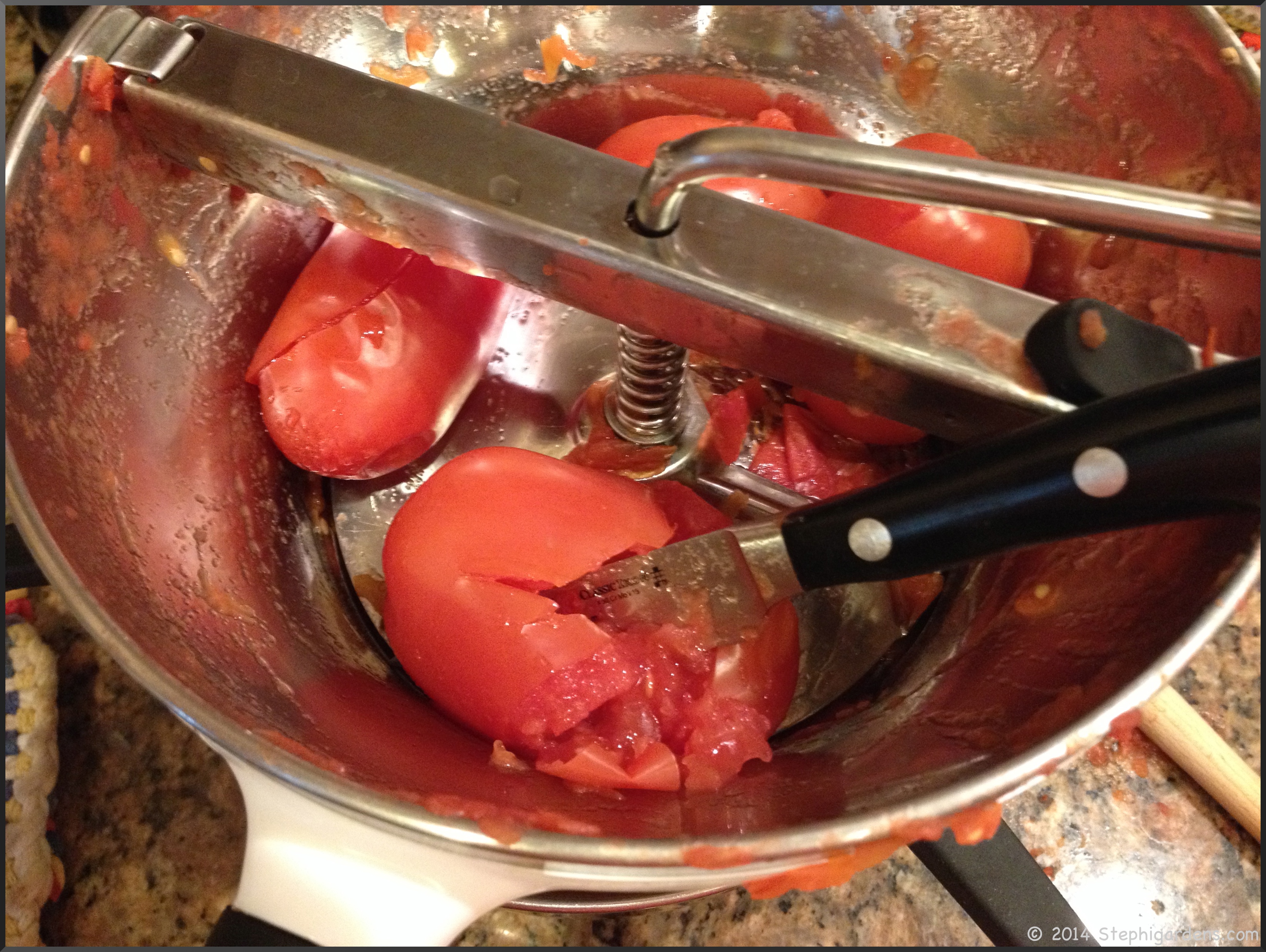
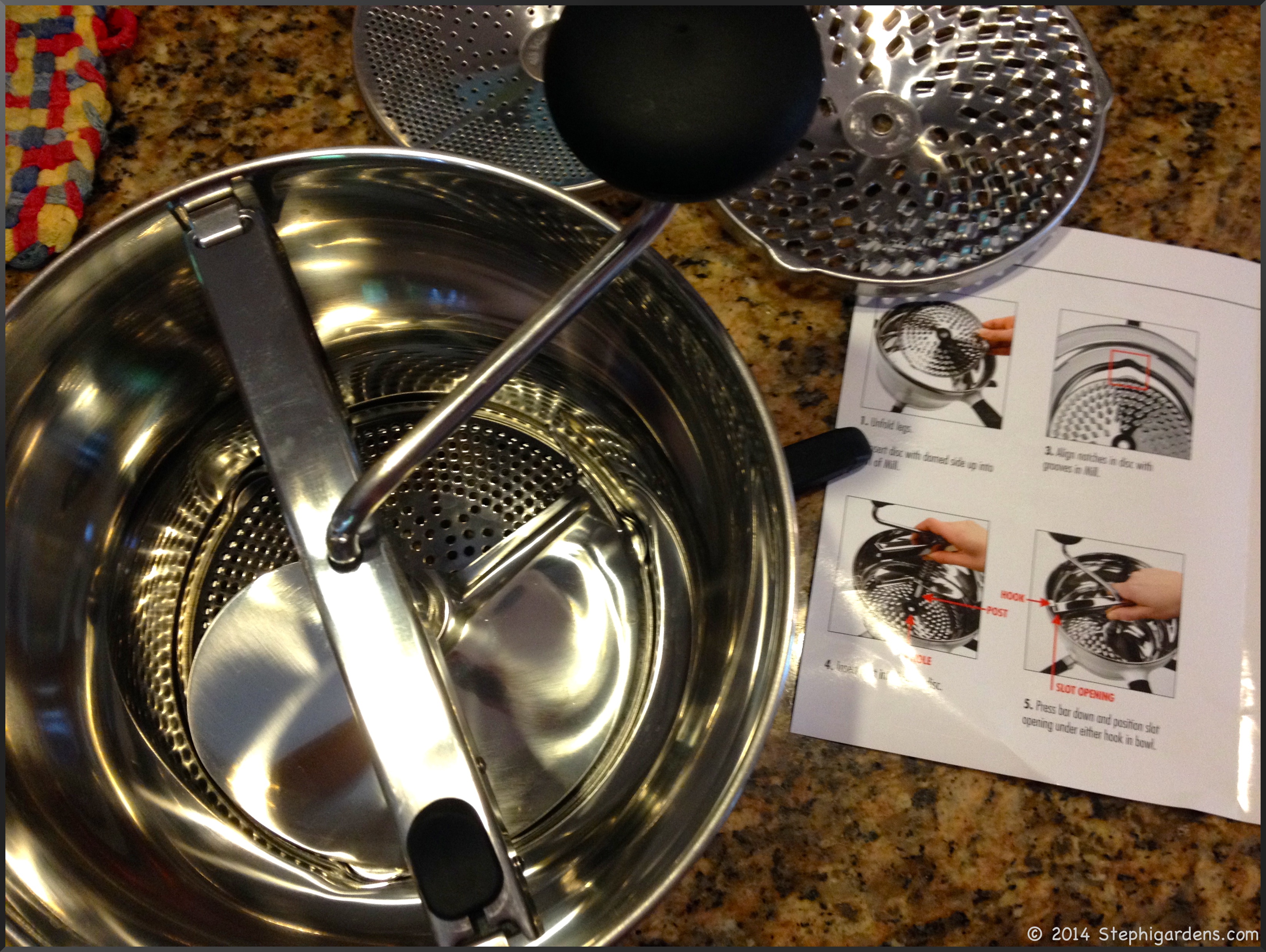
  • The medium grate was just the right size to get a thick puree without seeds.

oxo food mill

  • I found it was faster if I par-boil the tomatoes for about 1 minute.  Then put tomatoes right into the mill.  About 5-6 fit in at a time.

food mill

  • I made a slice in each tomato once in the food mill to make the process even a little easier.

food mill

  • Be sure to go both forwards and backwards.  You need to clear it periodically to get the chunks mixed up and under the press.
  • It’s done when you are only spinning skins under the press.  Be patient, it’ll happen.
  • Scrape out the peels with a fork and put another batch of tomatoes in.
  • It doesn’t really take any strength to use this.  It’s really just spinning the handle.  I was worried with a bit of a bum shoulder this would be hard.  Not at all.

Now I was ready to make my sauce.  Last winter, I used my frozen tomatoes and played around with recipes.  This was ultimately my favorite.  The longer it cooks the better it tastes.

For 8 cups of tomato puree (about 3 lbs of tomatoes):

2 medium onions, grated
2 tablespoons butter
2 tablespoons olive oil
4 teaspoons Penzys Italian Herb Mix
4 garlic cloves, minced
8 cups fresh tomato puree
4 tablespoons fresh basil, chopped
salt and pepper to taste

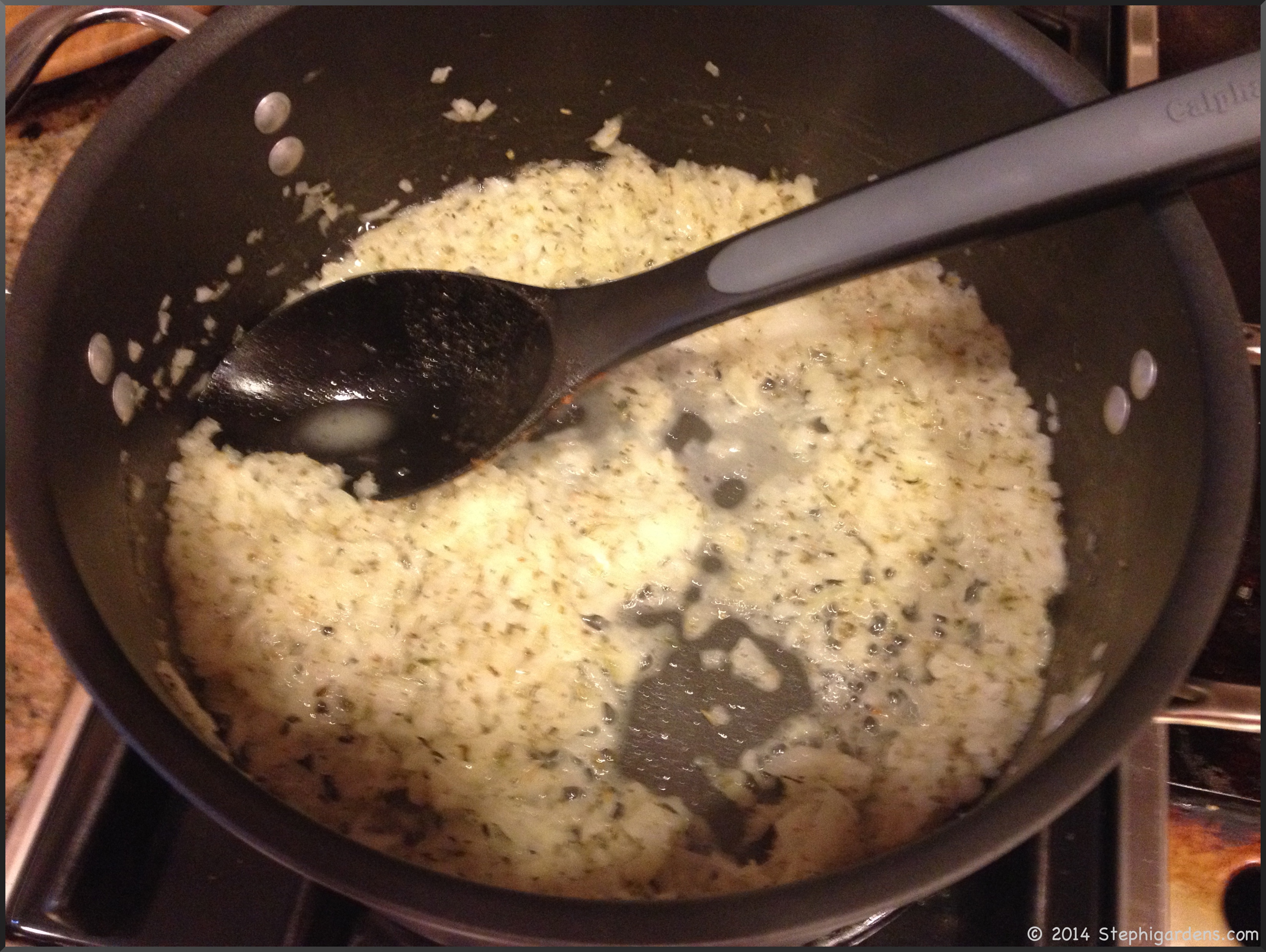
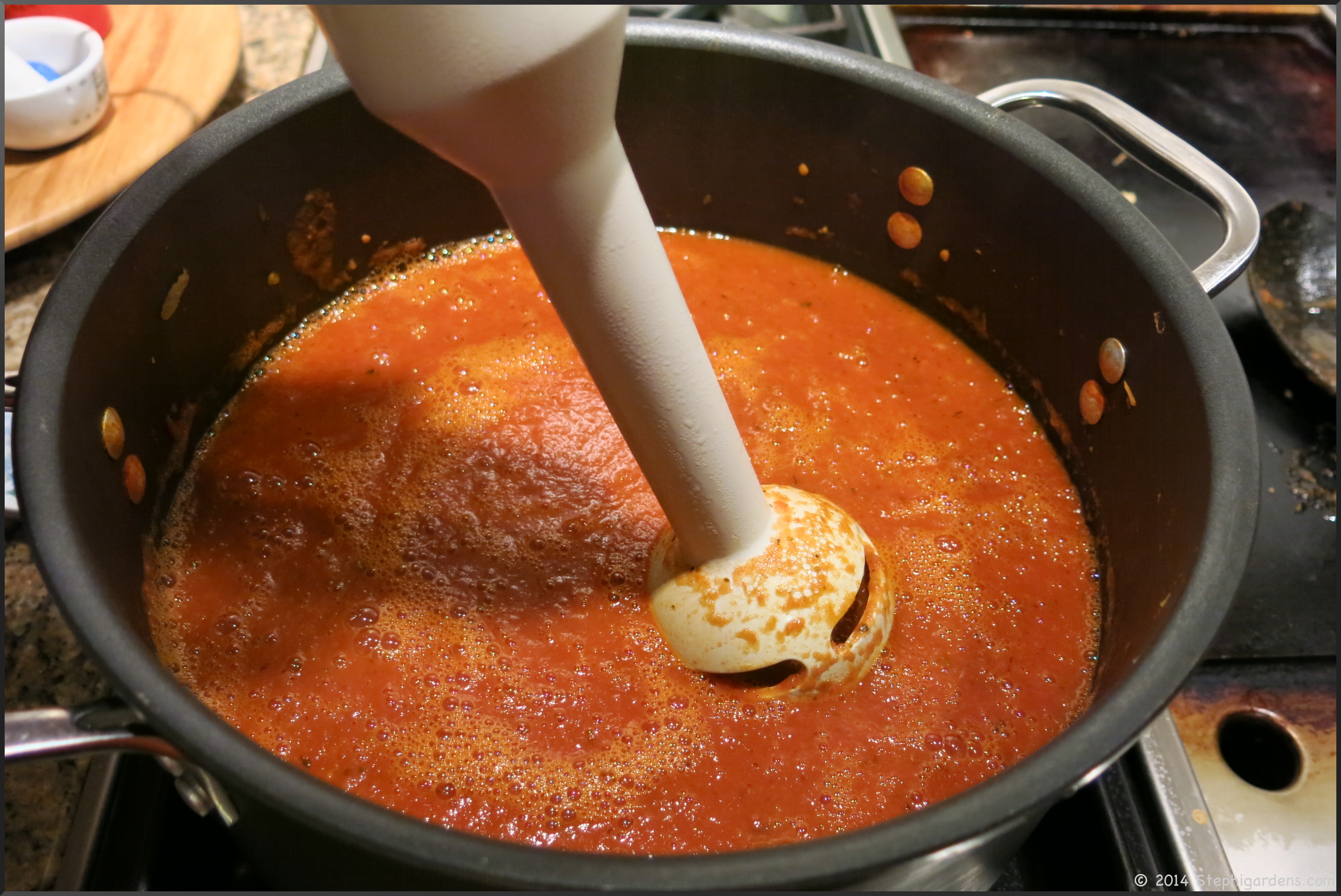
Melt butter and heat oil in a large stockpot over medium heat. Add grated onion and Italian Herb Mix. Sautee 7-8 minutes over medium heat, until onions are soft and golden minutes. Add minced garlic and cook 30 seconds or so until fragrant. Add tomatoes. Bring to a boil, then cover and simmer on low heat for at least 1 hour. Longer for a richer taste.  Before serving, stir in fresh basil, season with salt and pepper to taste. Serve over pasta.

**If you like a smoother sauce, use a hand blender to blend the sauce when finished cooking.
**If freezing the sauce, leave out basil. Add fresh when warming thawed sauce.
**We eat a fairly low sodium diet. This is flavorful without salt, but if you prefer your sauce with salt, add desired amount to taste with the pureed tomatoes.

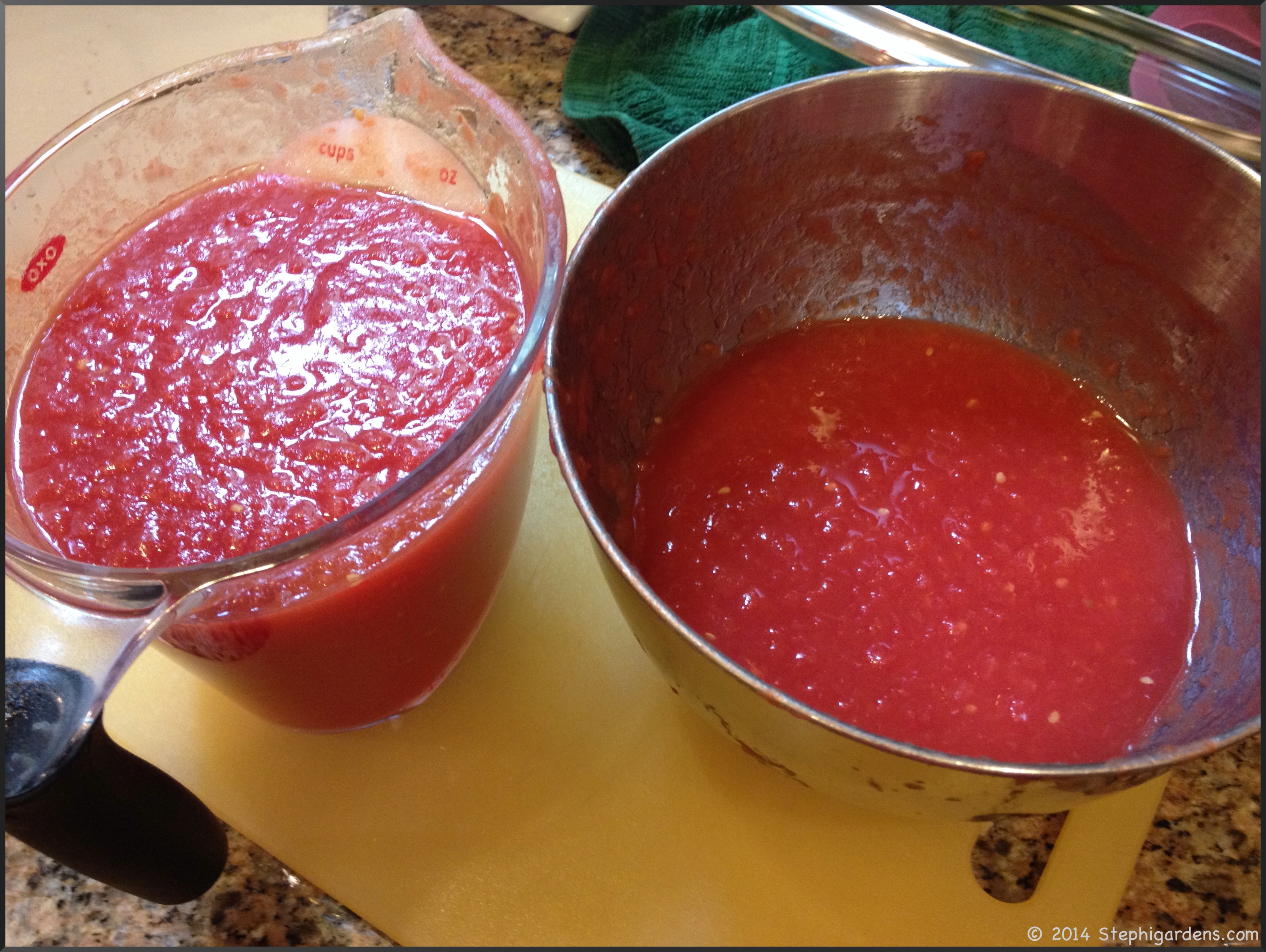
tomato puree
Puree is ready to add
Onions and spices are cooking beautifully.  Kitchen smells great!
Braun Stick Blender
Use a hand bender for a smoother sauce

Now that I’ve cooked up all the garden tomatoes, I’ve moved on to the 10 lb box of Roma tomatoes from the farmers market.  Getting ready for winter already 🙁

Fresh Tomato Pasta Sauce
Print
Author:
Ingredients
  • 2 medium onions, grated
  • 2 tablespoons butter
  • 2 tablespoons olive oil
  • 4 teaspoons Penzys Italian Herb Mix
  • 4 garlic cloves, crushed
  • 8 cups fresh tomato puree
  • 4 tablespoons fresh basil, chopped
  • salt and pepper to taste
Instructions
  1. Melt butter and heat oil in a large stockpot over medium heat.
  2. Add grated onion and Italian Herb Mix. Sautee 7-8 minutes over medium heat, until onions are soft and golden minutes.
  3. Add minced garlic and cook 30 seconds or so until fragrant.
  4. Add tomatoes. Bring to a boil, then cover and simmer on low heat for at least 1 hour. Longer for a richer taste.
  5. Before serving, stir in fresh basil, season with salt and pepper to taste. Serve over pasta.
Notes
**If you like a smoother sauce, use a hand blender to blend the sauce when finished cooking.
**If freezing the sauce, leave out basil. Add fresh when warming thawed sauce.
**We eat a fairly low sodium diet. This is flavorful without salt, but if you prefer your sauce with salt, add desired amount to taste with the pureed tomatoes.


The Garden in Fall: The Good

It’s the beginning of October and the days are getting shorter, the nights growing colder. These are the last gasps for the garden before it settles into the winter hibernation. In some ways, fall gardens can be very pretty. I’m always surprised at the plants that continue to bloom well in to fall, some even looking their best. And of course, there are the things that take all summer to finally show their colors. Here’s some of the plants and areas of my garden that make me smile.

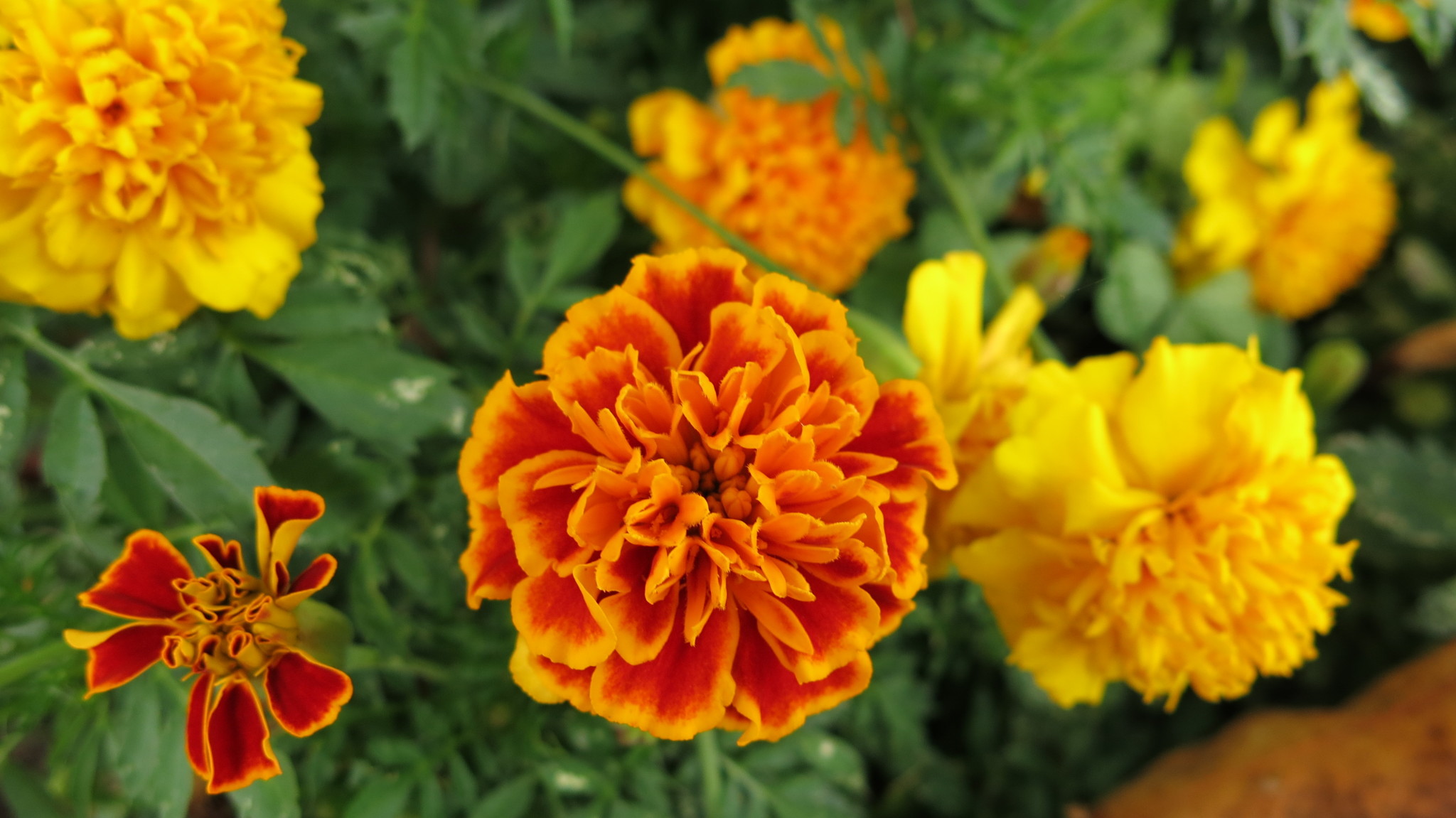
Marigolds

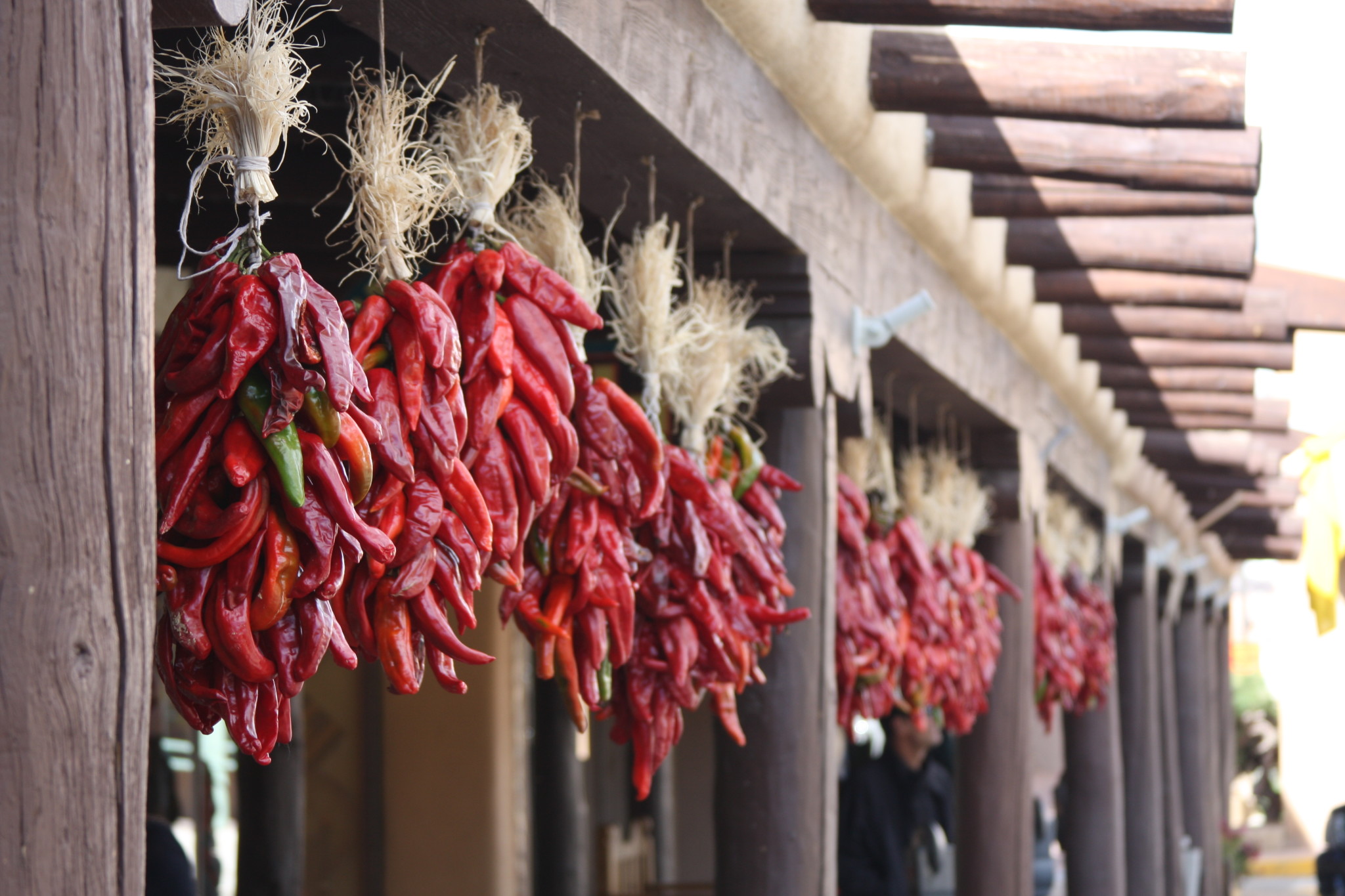
One of my favorite flowers is the marigold. I love the smell (although I might be the only one) and the colors. They always seems to just come alive in the fall and it has always had a place of prominence in my garden. I’m also reminded of a trip to Taos, NM, where I saw the prettiest marigold chains.  One year when an early frost was going to wipe out the flowers prematurely, I made one myself that hung beautifully in the kitchen.

boy o boy marigold

IMG_0570.JPGIMG_0578

(There were also  lots of bundles of hot peppers that just looked pretty hanging there)


There’s lots of color in the garden...

IMG_0541
IMG_0564
IMG_0563
IMG_0594

IMG_0558

And interest…

IMG_0554

IMG_0544
IMG_0528
IMG_0526

And vegetables are still coming, as long as we don’t have a frost!

IMG_0577
Early girl tomato
IMG_0581


35 Pounds of Tomatoes

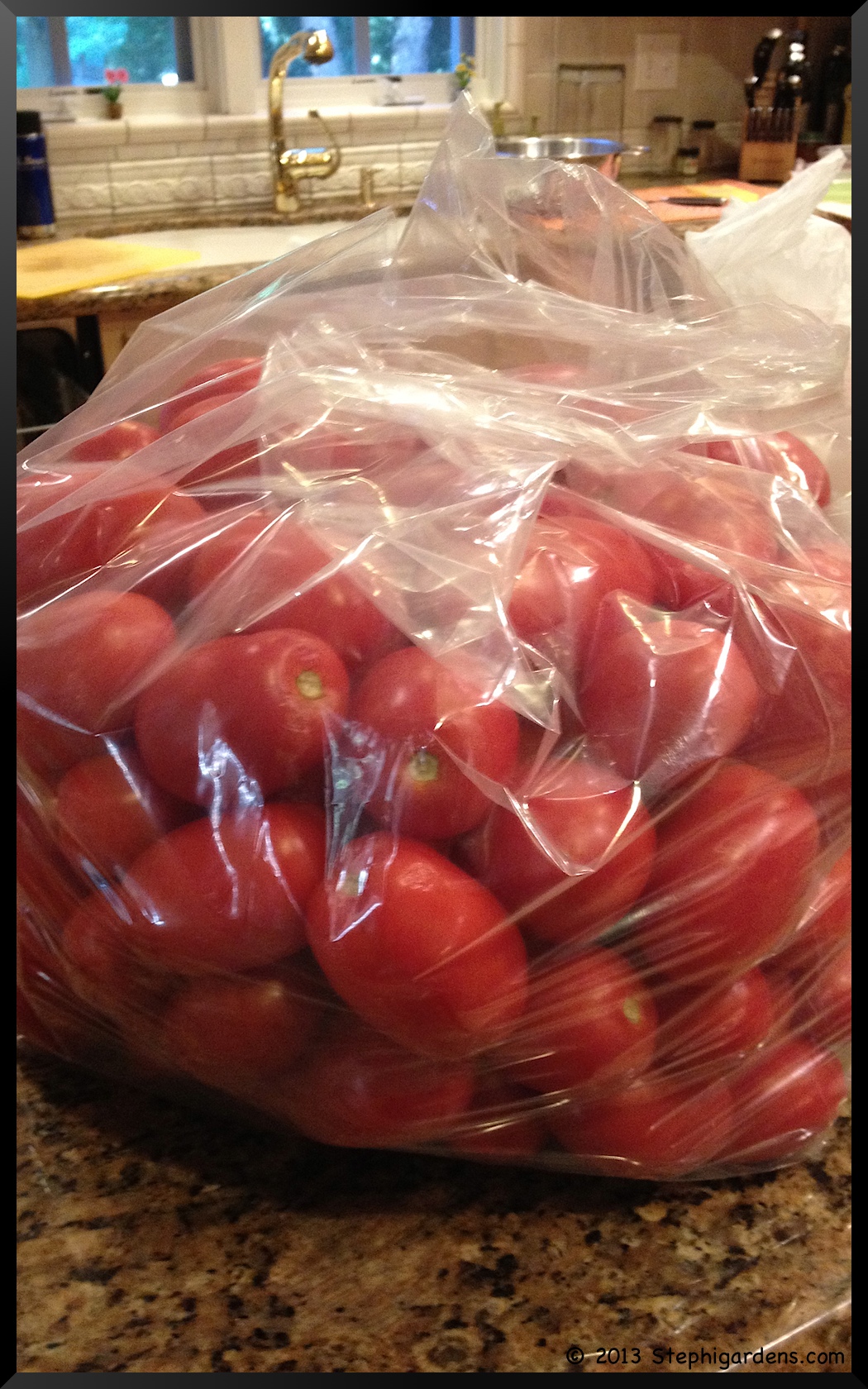
No, I didn’t grow that many in my garden.   I got a decent harvest this year to keep us in fresh tomatoes for the summer and early fall, but for stocking up for winter, I went to the local Farmers Market.   I bought the large, 10 lb box last week and processed those for the freezer, then decided I needed more.  Being the savvy consumer that I am, I realized I could get 2.5x as many tomatoes in the half bushel as in the large box for only 25% more.  That’s a screaming deal in my book,  and they were beautiful red, perfectly ripe roma tomatoes.  My first hint of how much work was ahead of me was when I picked up the bag they were in to carry them to the car.  A half bushel of tomatoes is really heavy-apparently about 25 lbs.

IMG_3617

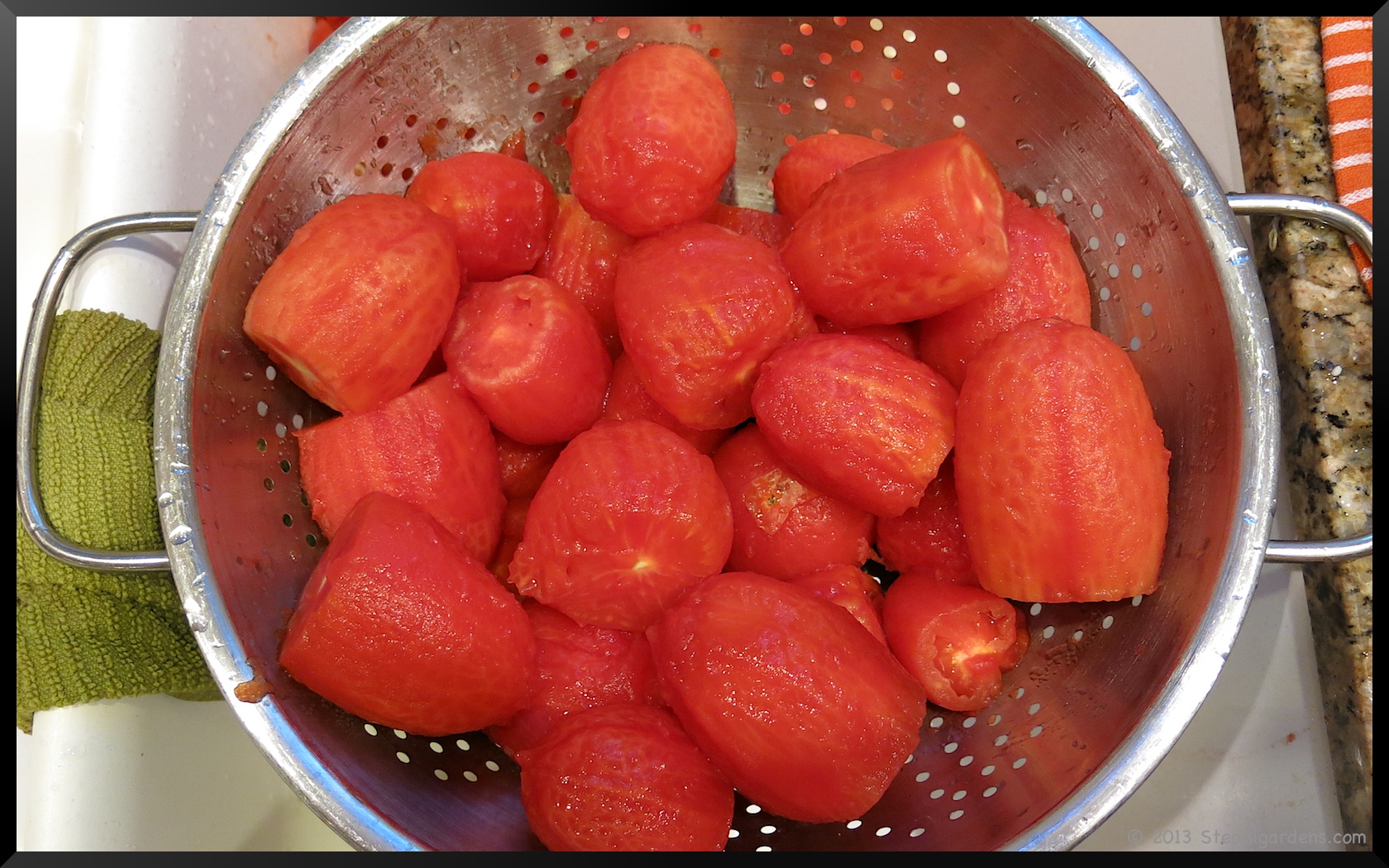
Over two nights, I made 2 double batches of pasta sauce using America’s Test Kitchen’s (recipe here).  Instead of the canned crushed tomatoes, I used 3 cups of lightly pureed, peeled tomatoes.  I also found that the texture of the tomatoes was better when pureed in my food processor than in my blender.  As I’ve described before, peeling tomatoes is pretty easy, and I think necessary to have a more pleasing sauce texture.  (Just personal preference, but I’m not a fan of tough skins floating in my sauce, soups or stews.)

IMG_0445IMG_0441

IMG_0443
IMG_0444


While the tomatoes looked beautiful, my kitchen was a mess!

    IMG_0452 (1) IMG_0452

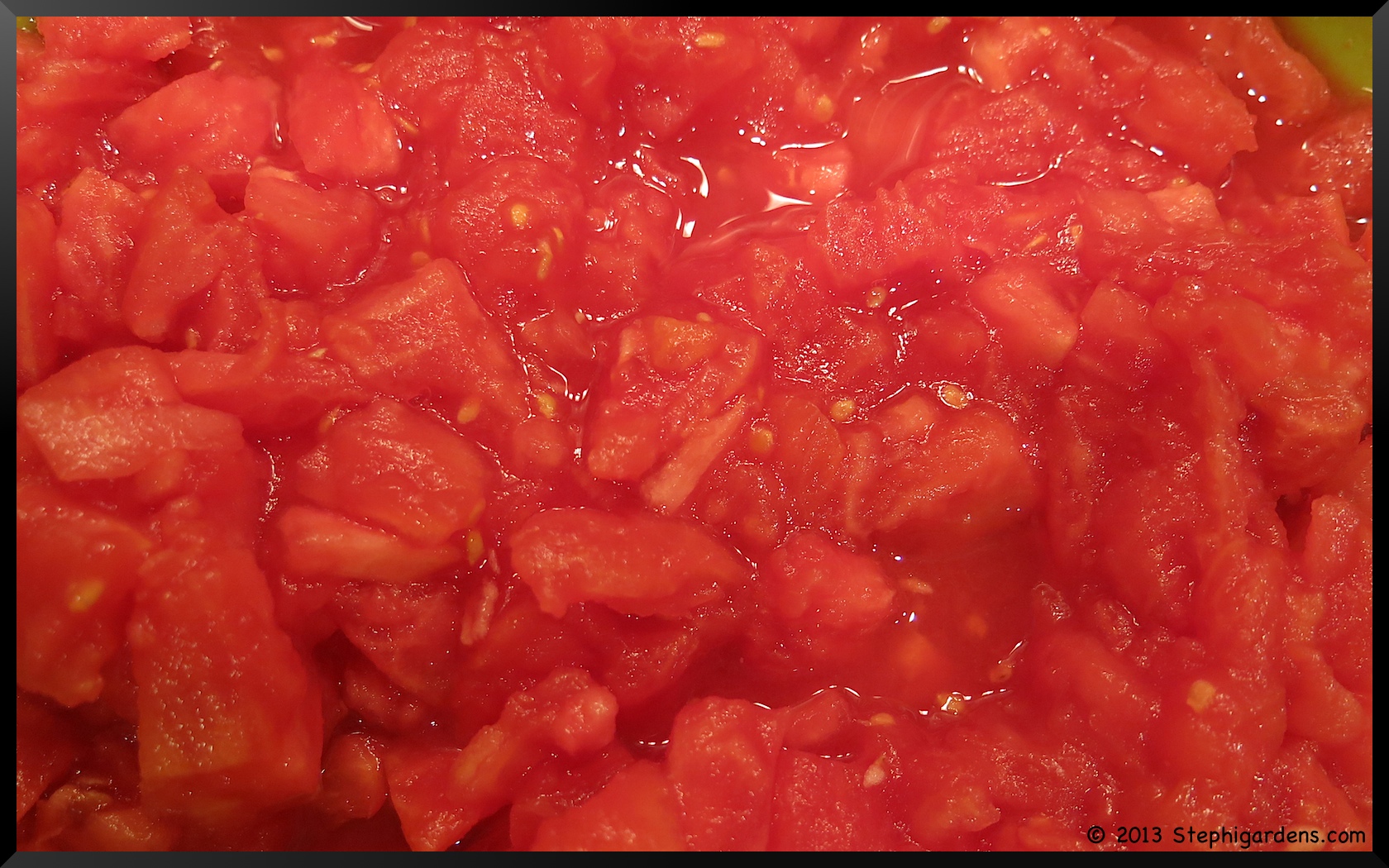
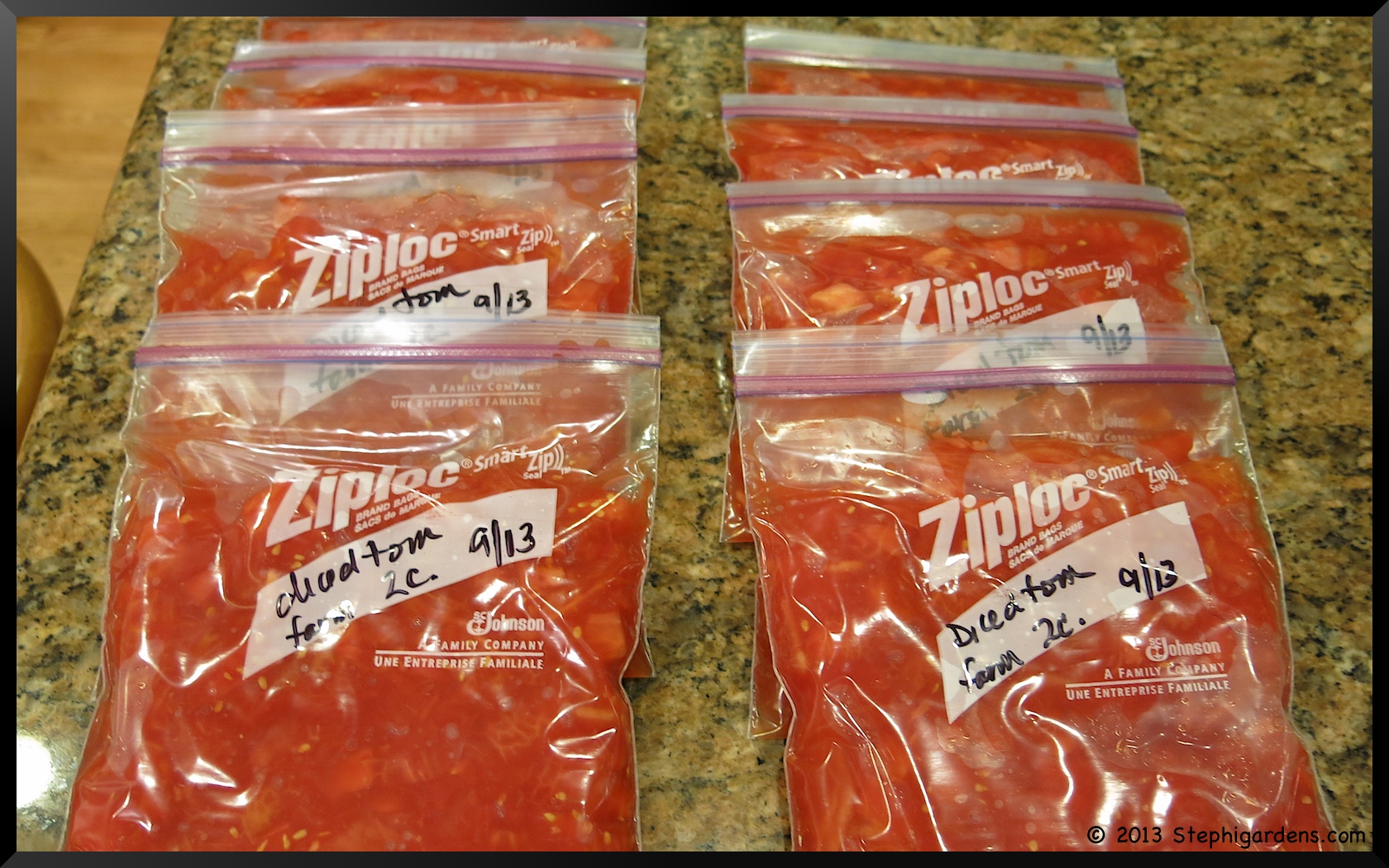
Once I had the tomatoes peeled, I was ready to make the sauce and chop up the rest for a variety of uses.  I left most only roughly chopped to allow for more versatility.  I can further chop or puree the frozen tomatoes depending on what I need them for.

I’m pleased with the final number of bags, it didn’t seem like a lot at first, but I think this will last me quite a while.  The large bag of while tomatoes was turned into 4 more bags of pasta sauce the next evening.  I ran out of garlic so had to have time to run to the store.

IMG_0458

And what are tomatoes without some basil?

IMG_0447

So in the end, did it save me money over buying canned diced tomatoes and jarred pasta sauce?  Maybe, maybe not, but my tomatoes and sauce will definitely have a better, fresher taste, with only those ingredients in them I want.  I’m actually looking forward to winter cooking (but maybe not the weather).

What’s Going in My Freezer?

I have been very busy freezing whatever I can fresh from the Farmer’s Market for the winter. I seem to have a lot more freezer space than cupboard space, so I decided to forego the canning of the things I can freeze. Here’s just some of what I have so far:

Strawberries, Raspberries and Blueberries

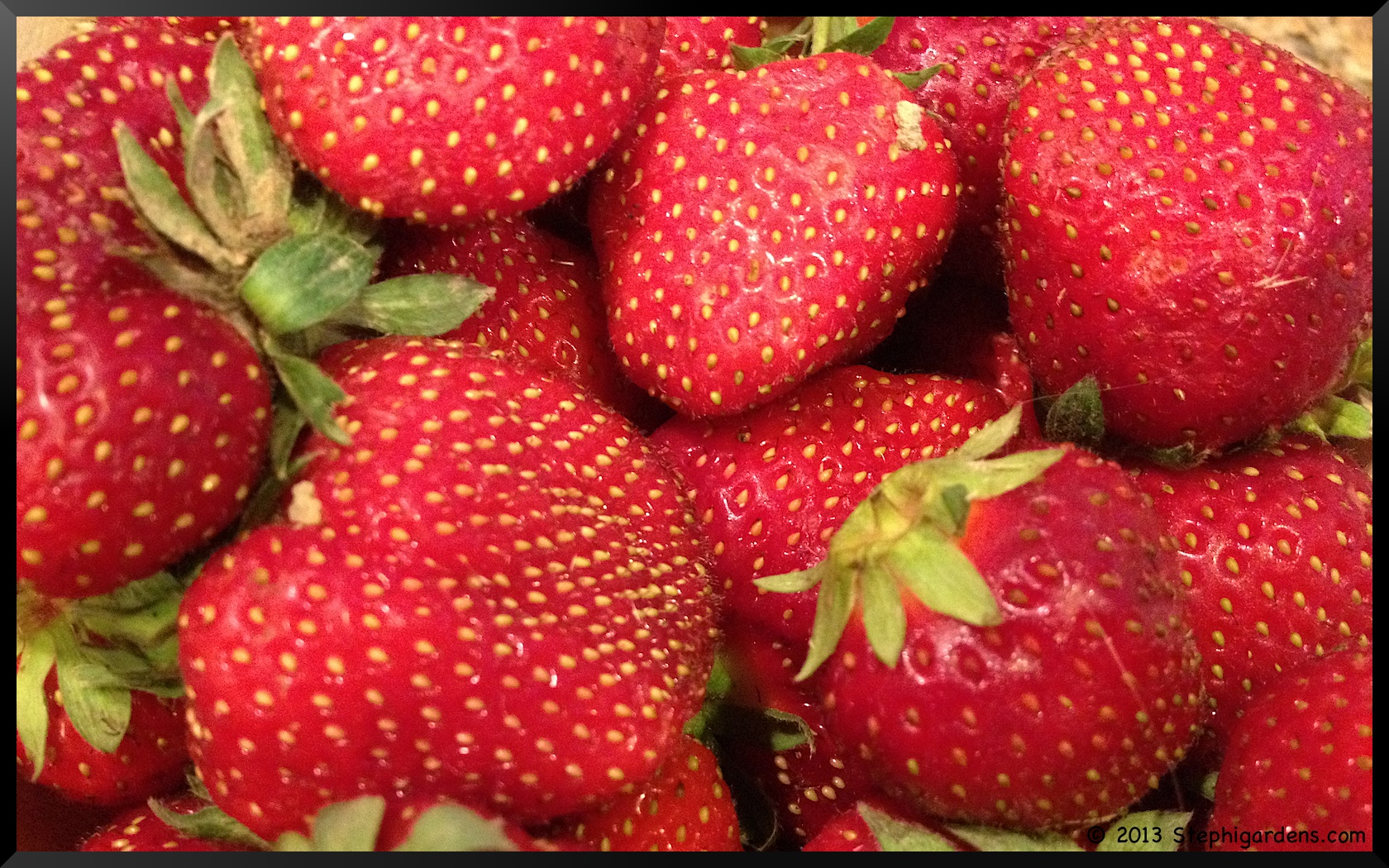
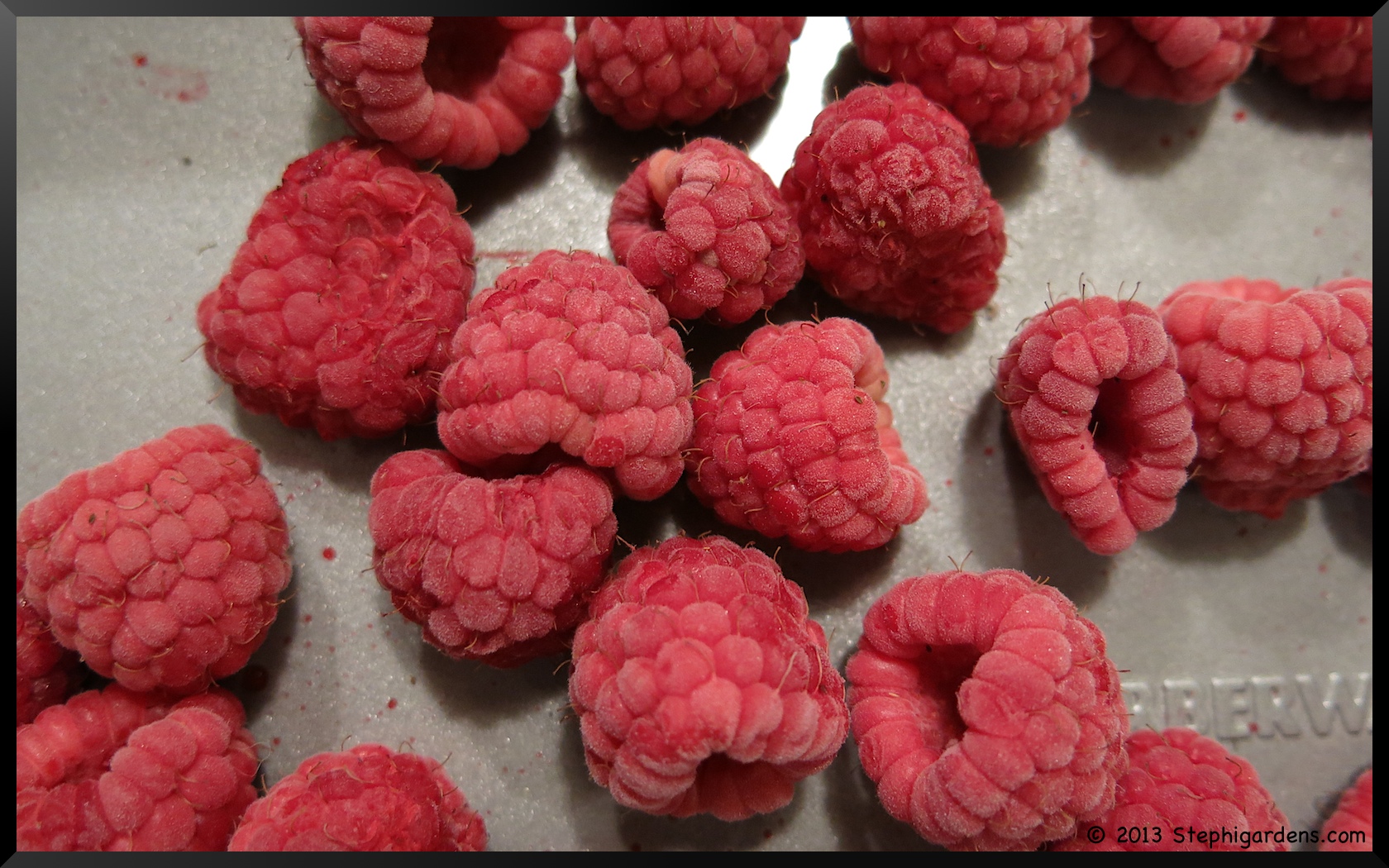
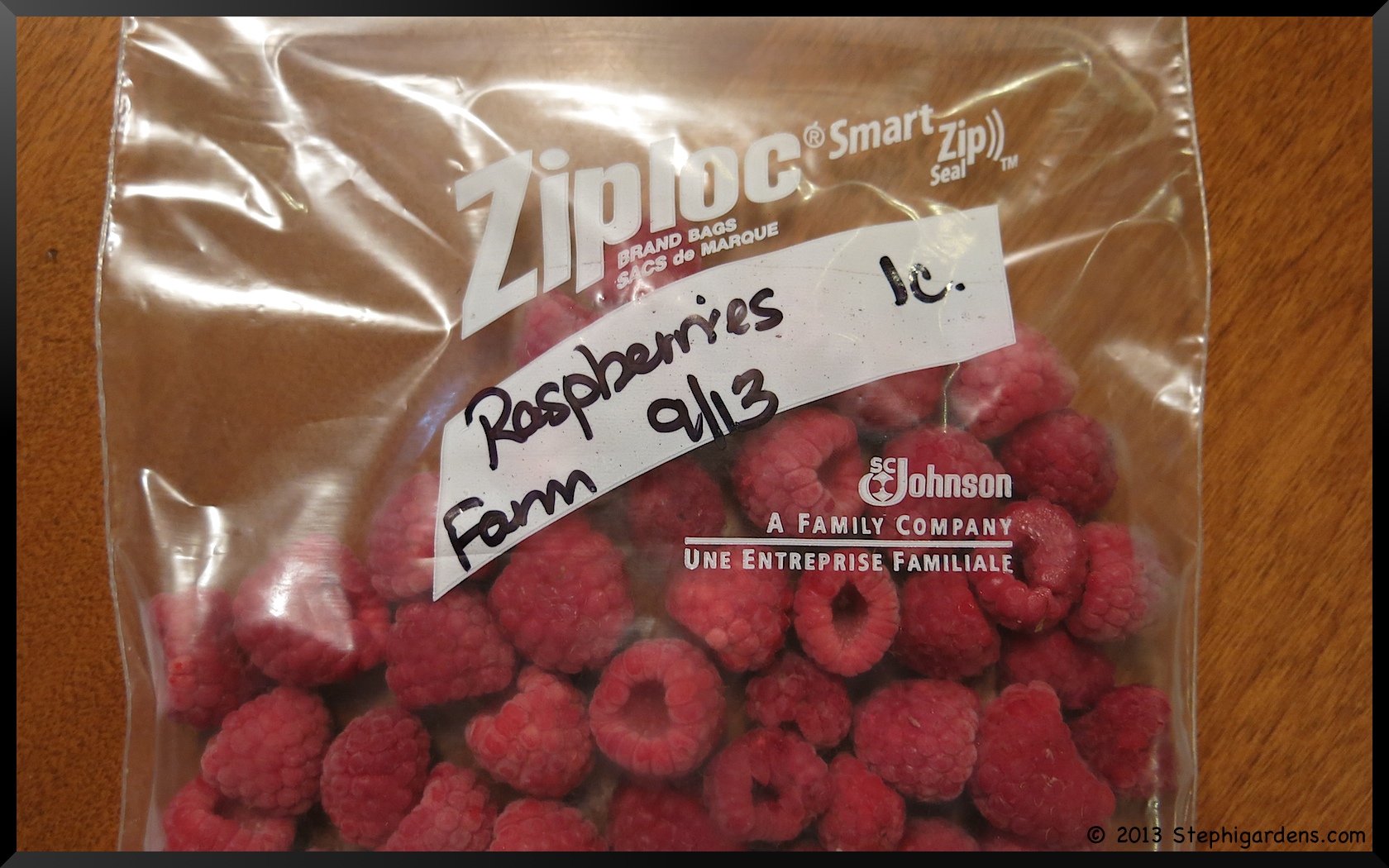
Strawberries, raspberries and blueberries should be fresh, unwashed and checked over for damaged or generally yucky ones.   Then they are spread in a single layer on a pan, placed in the freezer until frozen and then put into freezer bags.  They can be used frozen or thawed, but need to be rinsed since you didn’t wash them before freezing.  I like to keep a bag of blueberries in the freezer, take out a few in the evening, rinse them, put them in my cereal bowl and put the bowl in the fridge overnight.  Fresh blueberries are all ready for my cereal in the morning.  Or you can thaw them quickly by putting what you want into one of those handy little berry colanders and rinsing with running lukewarm water.  Washed and thawed all in one!
IMG_2554
IMG_0346
IMG_0348
IMG_0362

ZUCCHINI

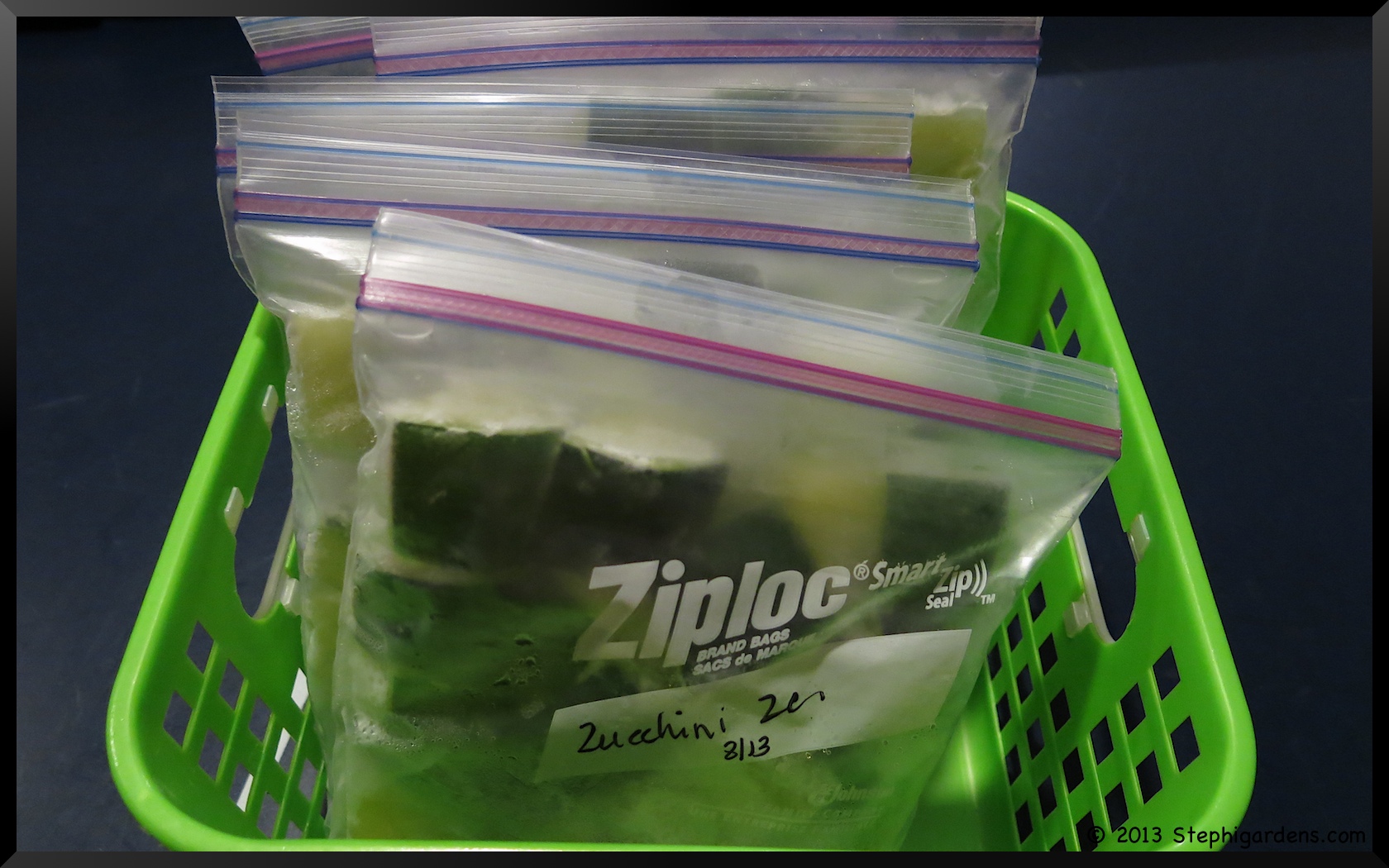
In a previous post I talked about how to freeze zucchini, either shredded or in chunks.  I’ve got a whole winters worth of zucchini stored away!

IMG_0361

Tomatoes

I’ve used what I grew in the garden, then bought lots more (about 30 lbs worth–I got a great deal!) at the Farmer’s Market.  I now have many bags of whole cherry tomatoes (not blanched, treated like the berries), chopped and diced tomatoes,  tomatoes crushed for sauce, and ready to go sauce.  It was like a little factory in my kitchen!  I’ll talk more about all that in a later post, but you can see how to generally prepare tomatoes for freezing here.

IMG_0018

IMG_0355
IMG_0356
IMG_3617
IMG_0458

Green and Red Peppers

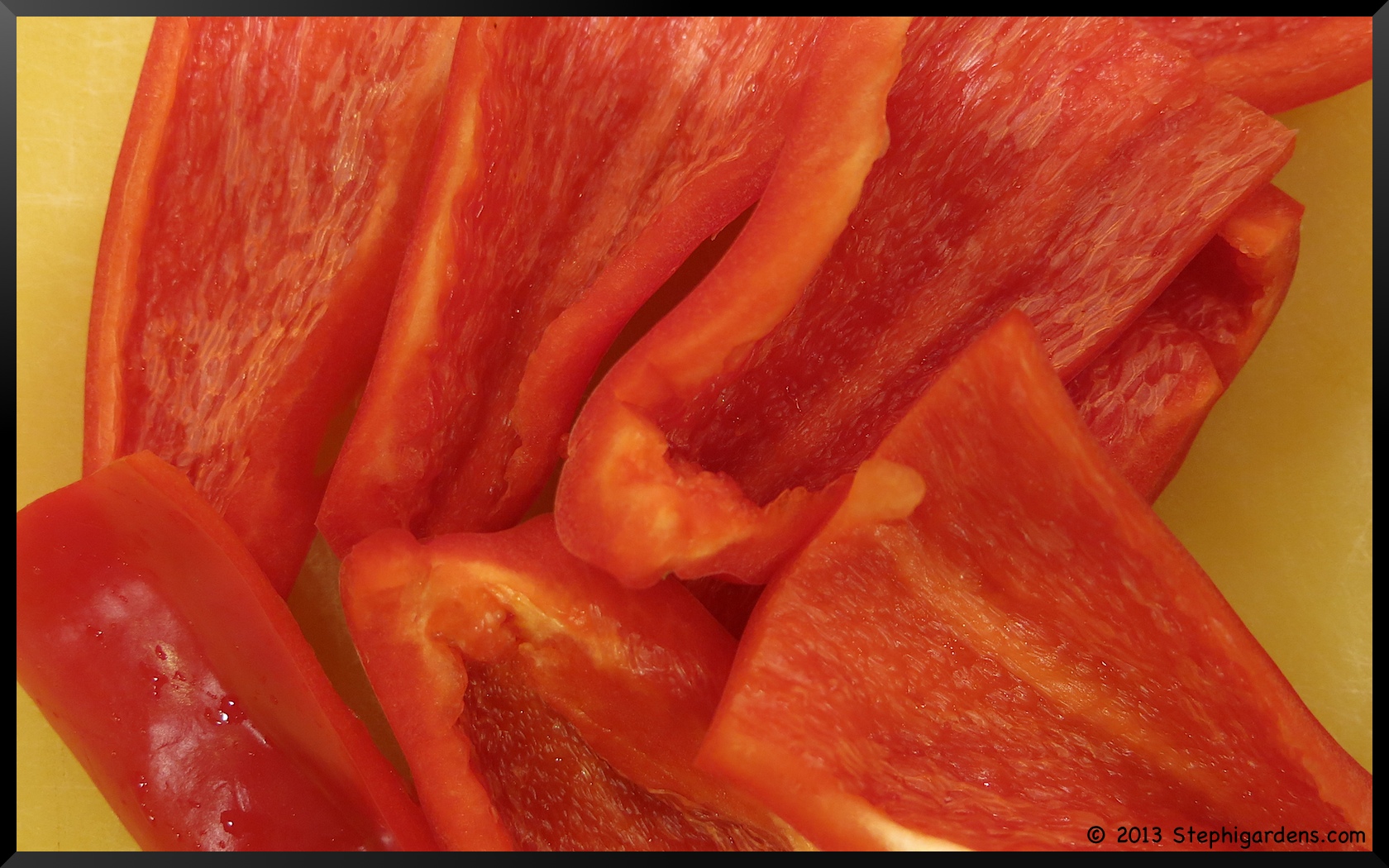
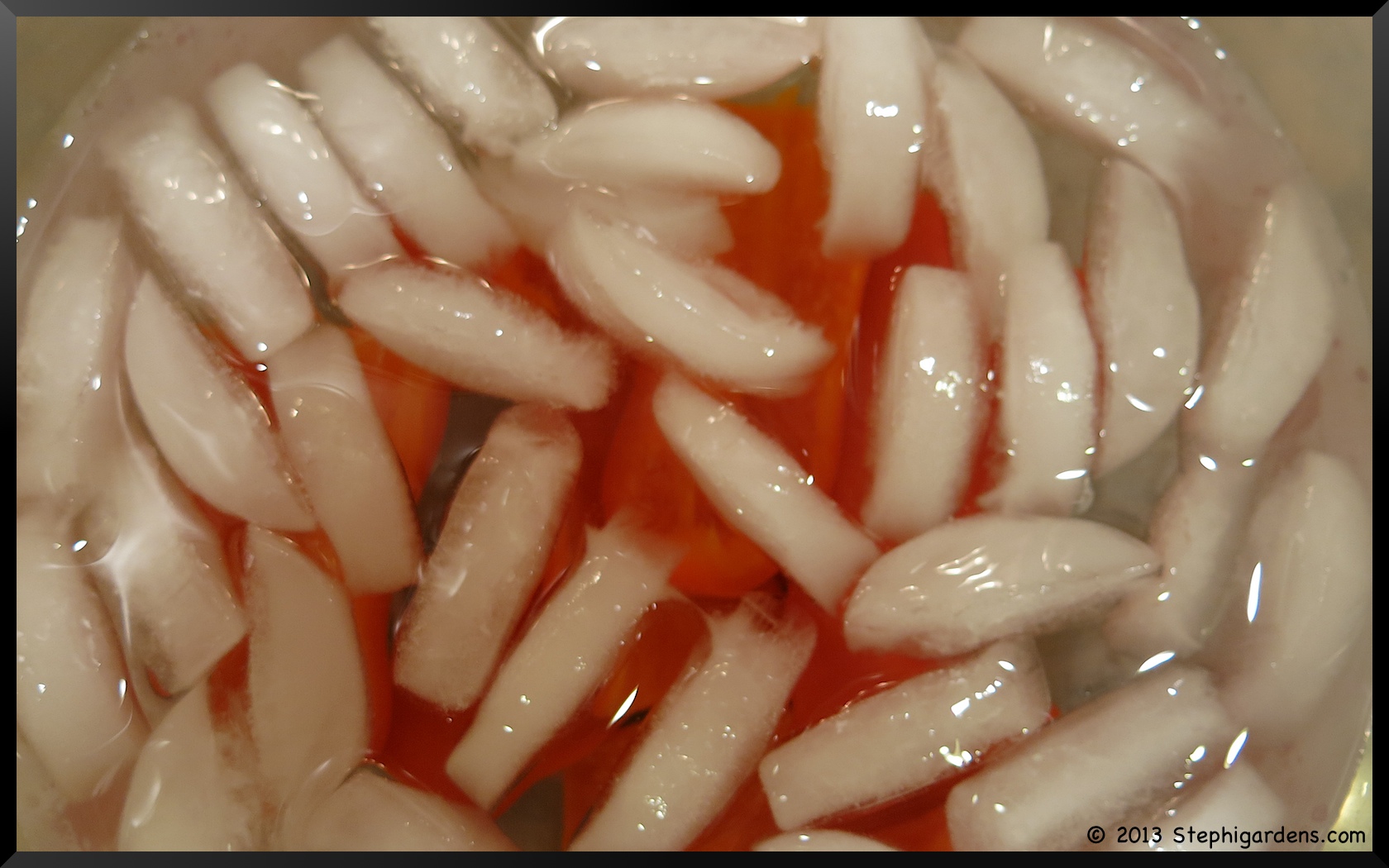
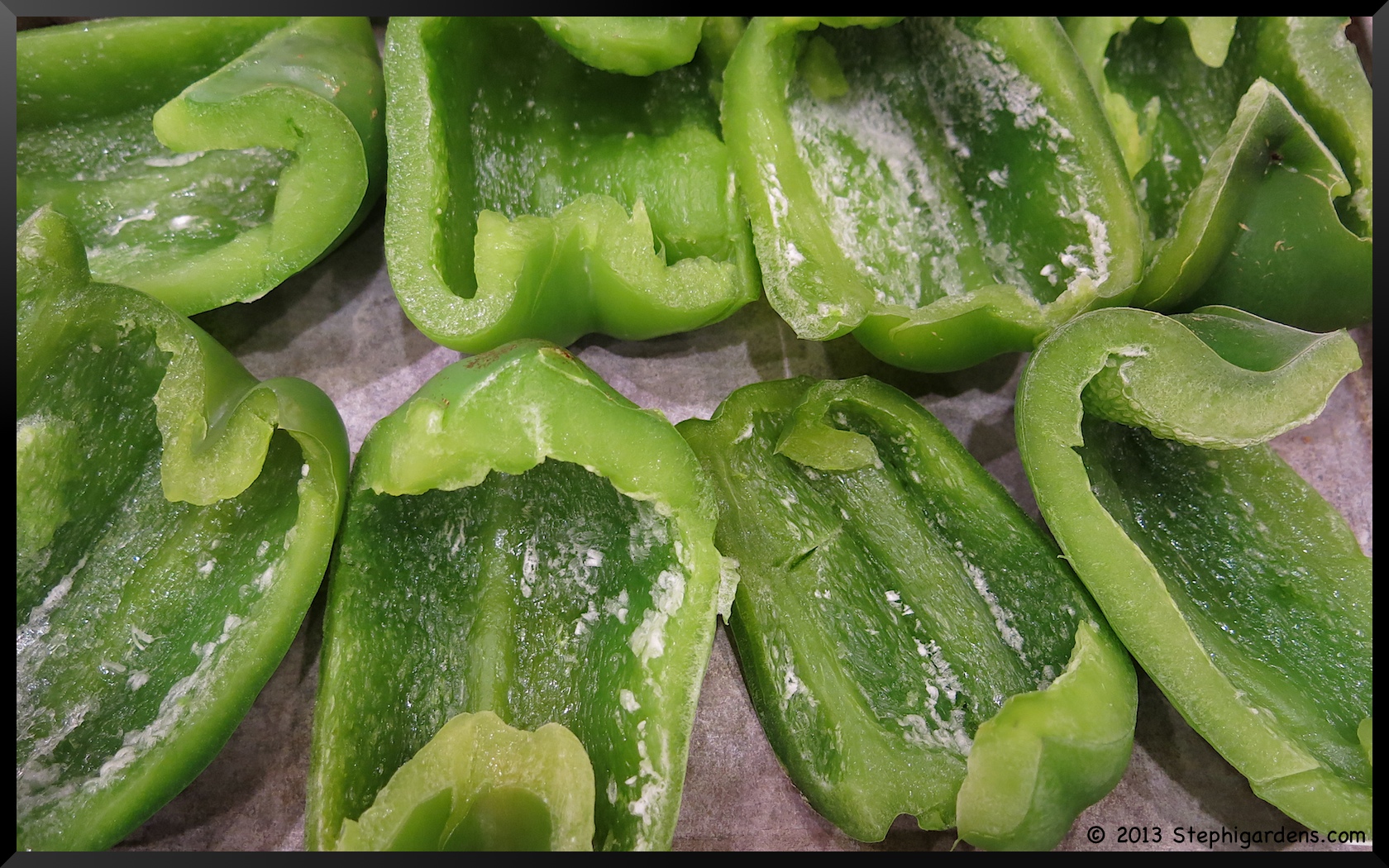
I didn’t have much luck with green peppers this year, but they looked great at the Farmer’s Market.  I’ve been buying a few at a time for freezing.  Like most other vegetables, you need to wash them, look and remove any blemished areas, blanch in boiling water for 2-3 minutes then plunge into ice water to stop any further cooking.  I left mine in pretty big chunks so I can use them as needed for a recipe, but in the past I’ve frozen them diced or sliced.  I freeze them in a layer on a pan in the freezer and then put into a freezer bag so they don’t freeze as one giant clump together in the bag.

IMG_0350 IMG_0352 IMG_0353 IMG_0359

And more…

I also have a few bags of diced and sliced spring onions.  I’m thinking about freezing some corn if I can get some really fresh, otherwise it’s no better than the store bags.  I bought a head of cabbage today to make some “freezer slaw” from a family recipe from a friend.  Can’t wait to try that!  So, what’s in your freezer this year?

Garden Swag

The other day I decided it was time to get the first of the ripe roma tomatoes packed up for winter.  One of my boys came out with me to help, and needless to say he was impressed with the haul we got. So, in teen-age terms, we had some “garden swag”. It was fun watching him search around for the ripe tomatoes, stumble upon a giant zucchini bat, and then realize that there was a whole pile of cucumbers hidden in the vines and tangled in the tomato plants.

IMG_0126

I didn’t really have enough roma tomatoes to bother getting my canning equipment out, so I decided to freeze them.  It’s really pretty simple and, as with most things, it’s best used for cooking since some of the texture will be lost during the freeze thaw process.  I looked around for instructions and settled on some great information from the UNL Extension and fellow blogger,  Tomato Dirt.

Here’s what I did…

Pick nice ripe tomatoes that are blemish-free.  Wash under running water and trim off the stem end.  I also made a small cut in the bottom to help later with peeling.  I had decided to freeze them peeled since the skins are just too tough in soups, etc.

IMG_0129

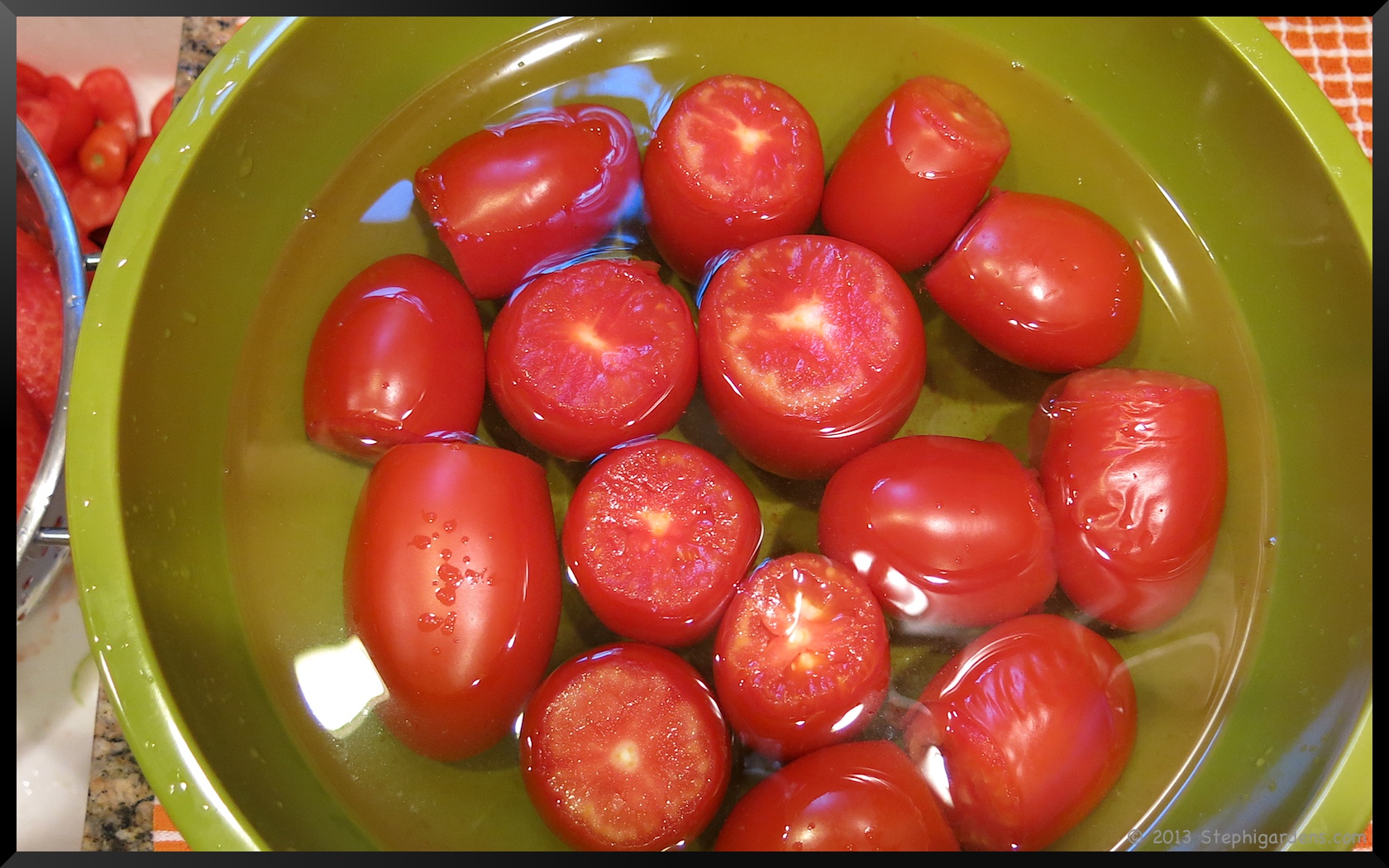
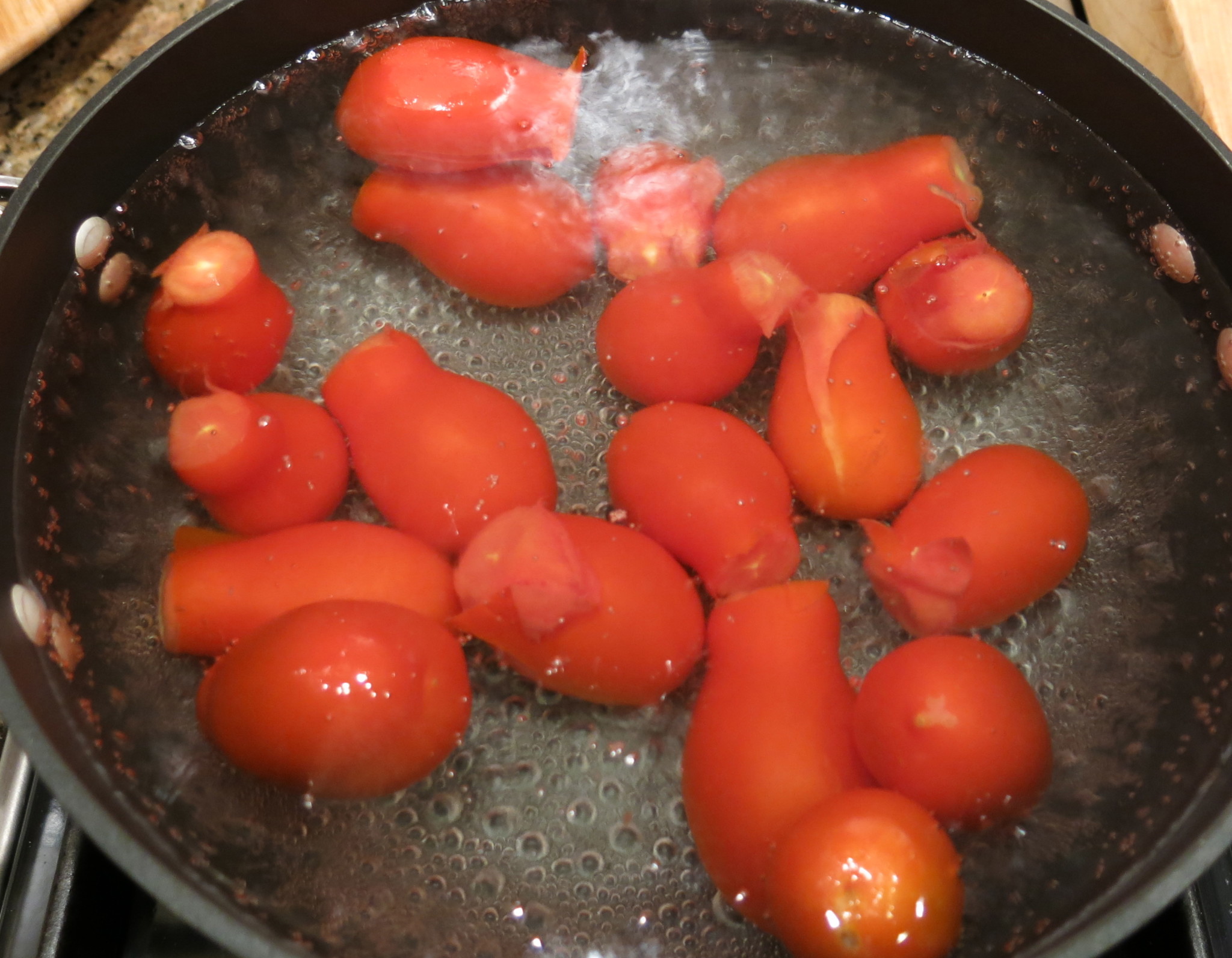
 To  easily peel tomatoes, place the washed, prepared tomatoes into boiling water for about 1 minute.  You’ll notice that the peels start to split.

IMG_0133

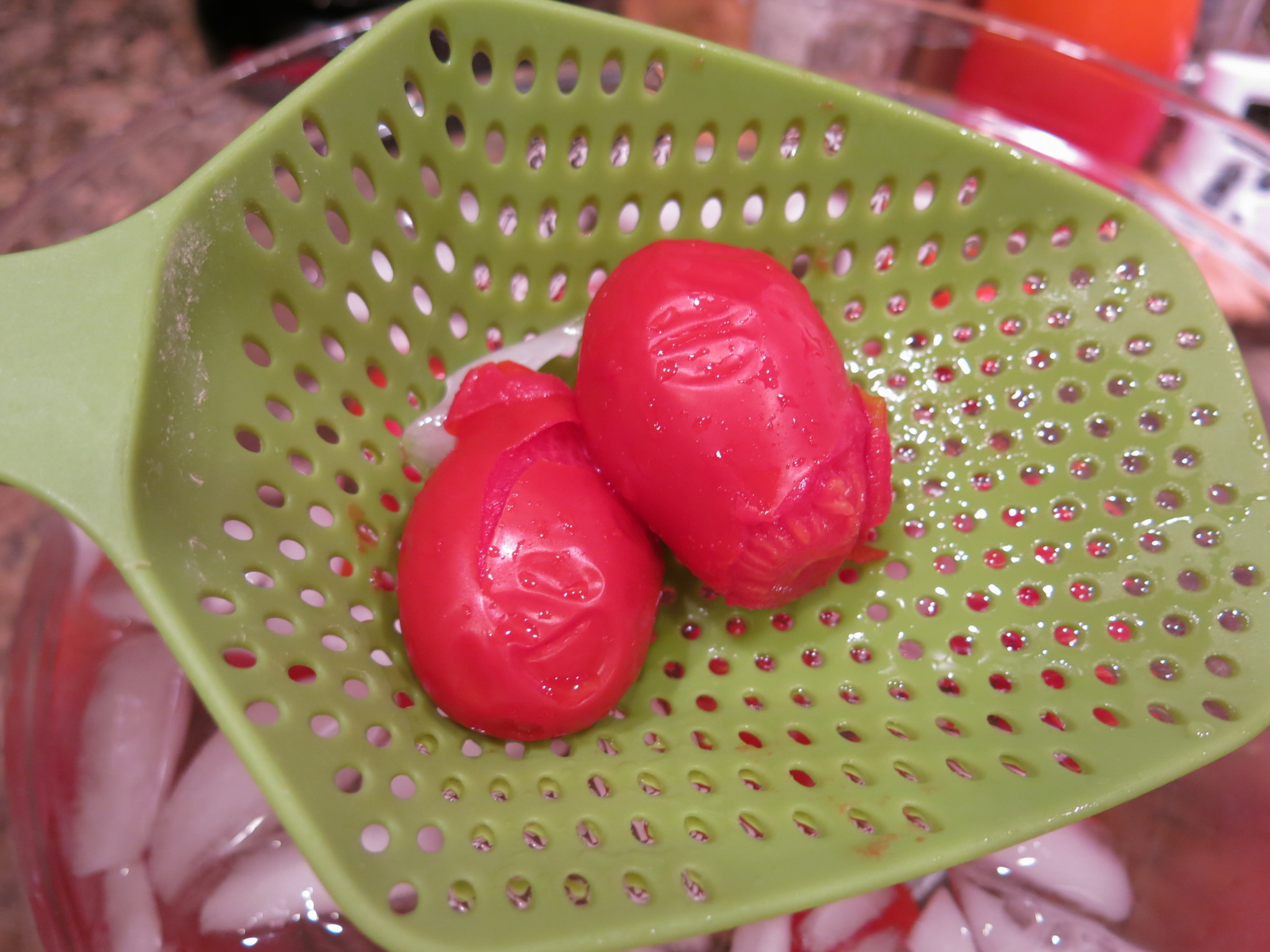
Remove the tomatoes with a slotted spoon.

IMG_0137

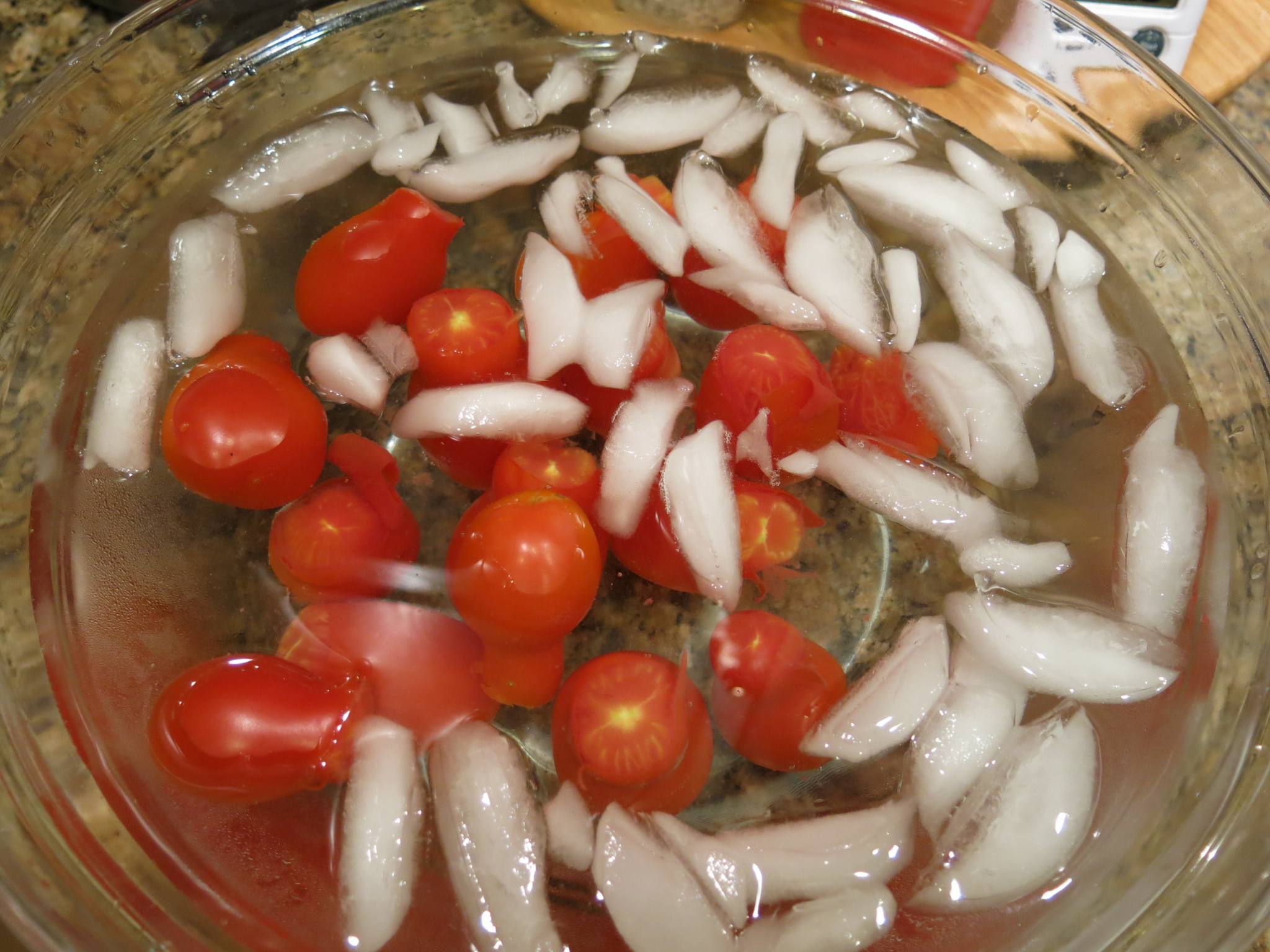
And plunge immediately into an ice-water bath for about a minute or so.  The skins will then pop right off. 

IMG_0135

Then, you can freeze them whole, or chop coarsely.  I chose to chop them.  In the process, I also took out many of the seeds, since it’s really the tomato “meat” that I want for winter cooking.  I packed the chopped tomatoes into freezer ziplock backs, squeezing as much air out of the bag as I can.  If you have a vacuum sealer, that’d be even better.  Off to the freezer they go.  They’ll be fine to use anytime this winter.  

IMG_0147

What are canning or freezing this year?

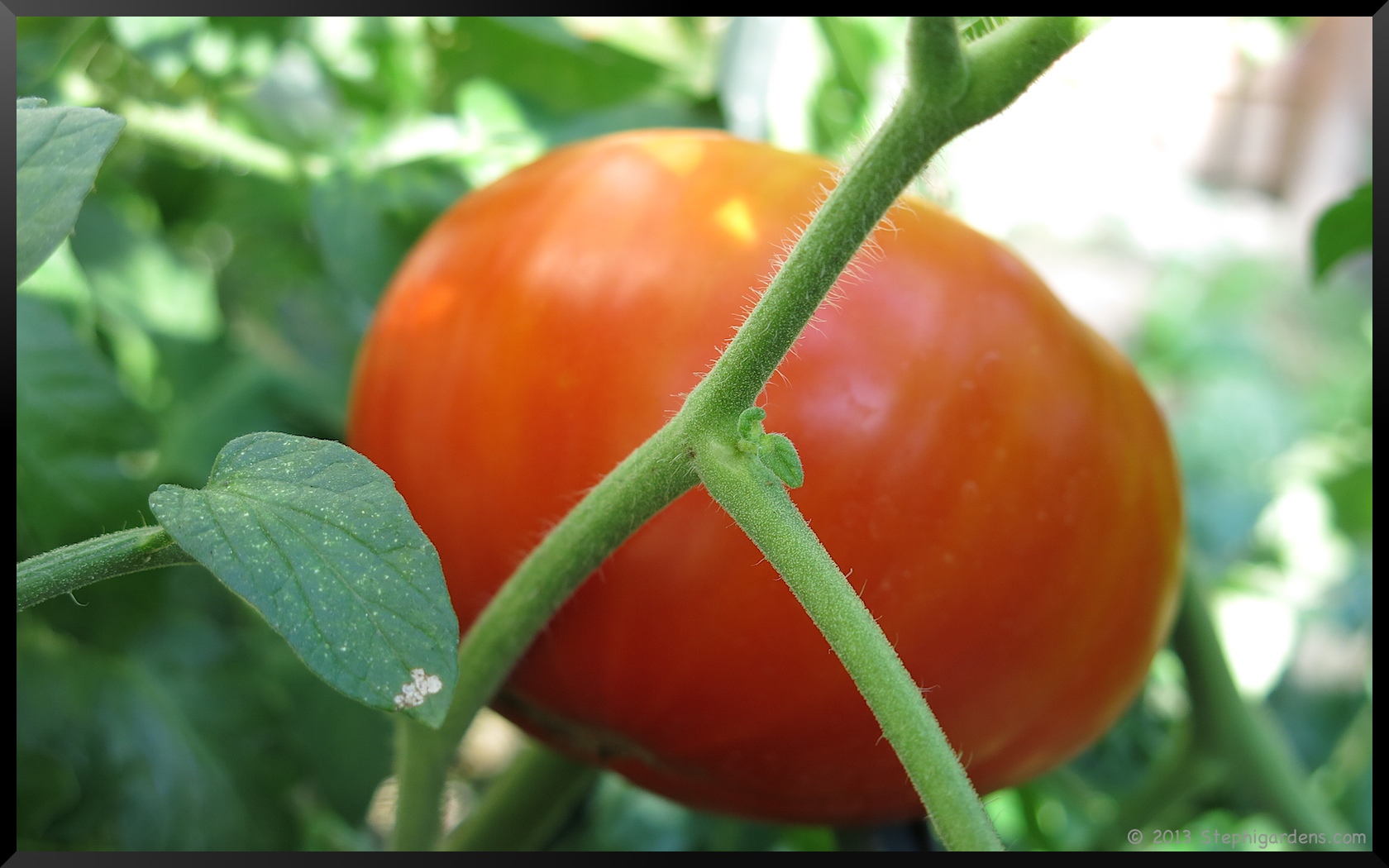
Glowing Tomatoes

The tomatoes are ready for picking in bulk this weekend.  I been picking as needed for eating; BLT’s, tomato mozzarella salad, grilled burgers, greek salads, tomatoes au gratin, and the list goes on. Do you have a favorite fresh tomato recipe?
But this weekend, I have the time to harvest them for winter storage.  In the meantime, the sun was just perfect a few days ago for a few shots with my new camera, a Canon Powershot G15.

IMG_0018

IMG_0014
IMG_0011
IMG_0010
IMG_0009 (1)
IMG_0007

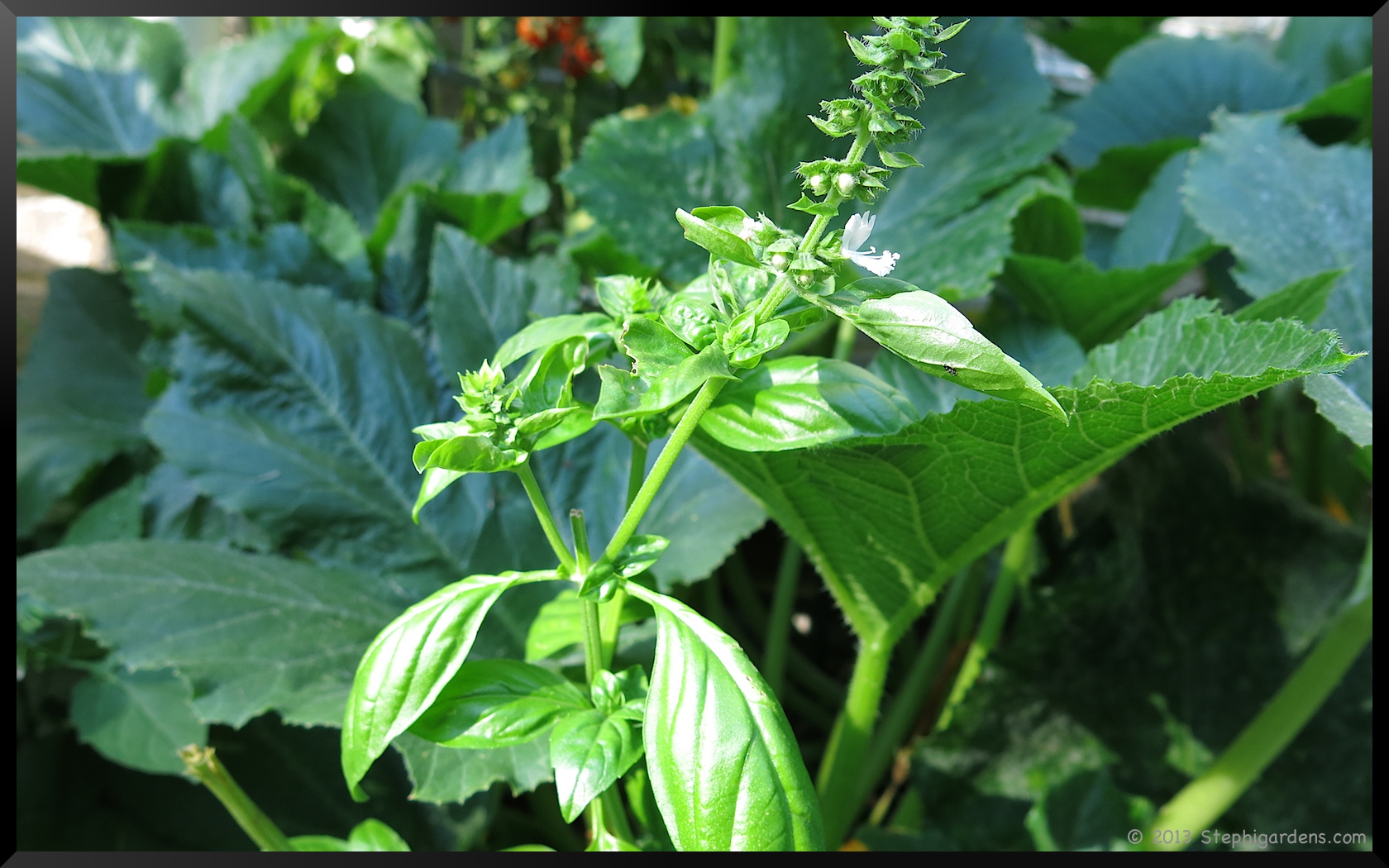
…and what are tomatoes without a little basil?
IMG_0006
(BTW, as soon as I finished taking these pictures, I promptly pinched off the basil flower stalk to keep the plant from bolting)

Tomatoes, Mid-Summer

Like the squash and zucchini, the tomatoes are all doing great, just a bit crowded like everything in my garden.  I planted 2 Park Seed Co. Sweet Million Cherry tomatoes, 1 Burpee Roma, 1 Burpee Big Boy, 1 Burpee Better Boy.  The cherry tomatoes I grew from seed, the others I bought as plants from a local garden shop.  Here’s some company descriptions of each plant:

Burpee Big Boy:  “When we bred and introduced Big Boy hybrid tomato in 1949, its incredible productivity and gorgeous, perfect, large red fruit made it an instant hit. What’s kept Big Boy tomato a best-selling tomato all these years is the wonderful aroma and rich flavor. The fruits weigh in 10 oz. with many reaching 1 lb. or more. Healthy, indeterminate vines produce all summer long. The bountiful harvest begins about 78 days after setting plants in the garden.  Fruit Bearing: Indeterminate Days to Maturity: 78  days”

Burpee Better Boy:  “Huge, tasty, red tomatoes, many 1 lb. each.  Large, delicious, bright red, high yielding fruits are borne in abundance starting midseason and continuing to frost. Good foliage protection prevents sun scald. Better Boy is highly adaptable and thrives in most climates and has very good disease resistance.  Fruit Bearing: Indeterminate  Days to Maturity: 72  days”

Burpee Roma VF:  “The classic sauce and paste tomato.  Compact plants produce paste-type tomatoes resistant to Verticillium and Fusarium wilts. Meaty interiors and few seeds. GARDEN HINTS: Fertilize when first fruits form to increase yield. Water deeply once a week during very dry weather.  Fruit Bearing:  Determinate Days to Maturity: 76  days”

Park Seed Co. Sweet Million Cherry Tomatoes:   “Large clusters of smooth, bright, miniature fruit arise all summer long on this classic variety. A garden treasure that always turns out big harvests of sweet tomatoes, Sweet Million Hybrid has earned its Park High Performer status from the testimonials of hundreds of customers as well as our own garden trials!  Fruit Bearing: Indeterminate  Days to Maturity: 65 days”

A couple tomato terms that are good to know:

  • Indeterminate vs Determinate:  Indeterminate plants are vining type plants that continue to grow until killed by frost.  The plant will continue to bloom, set and mature fruit throughout the season.  They require staking because they get so big and should be pruned and suckered to encourage healthy growth.  Determinate plants are bushy types and will bloom, set and mature all their fruit close to the same time.  The shouldn’t be pruned or suckered to allow for the most fruit development.
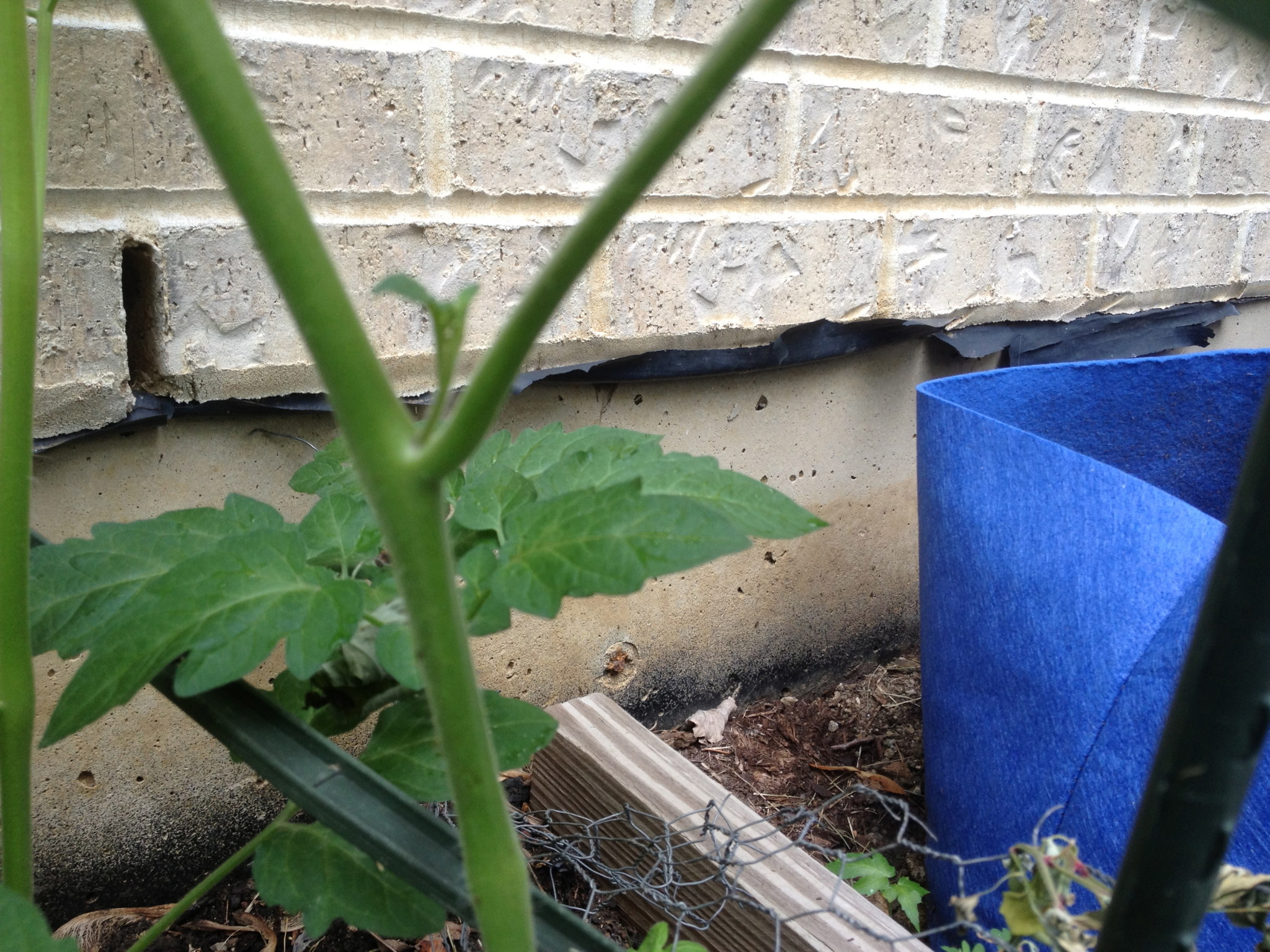
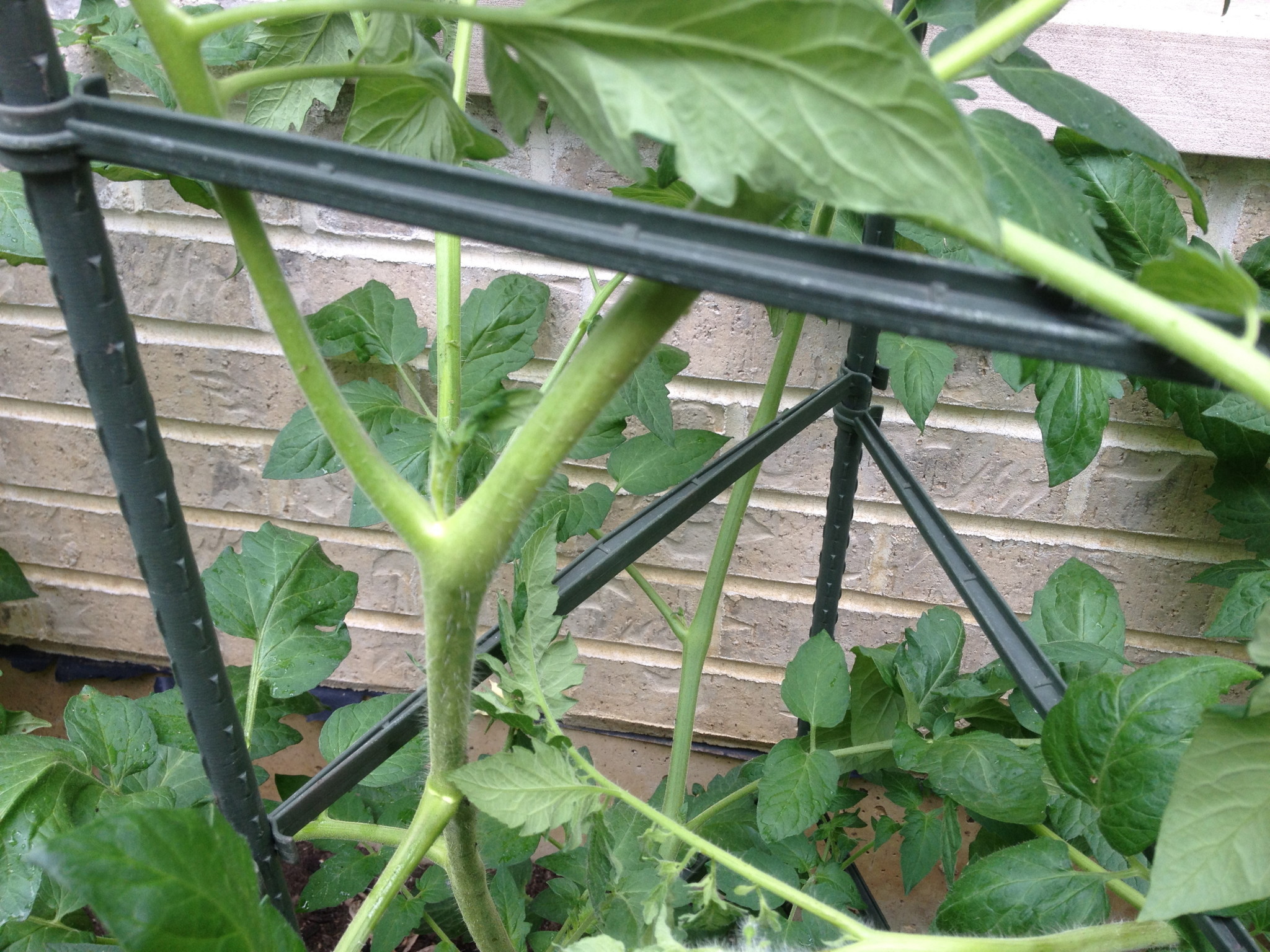
  • Suckering:  Tomato suckers  are the new growth that appears in the crotch between the stem and a branch.  I didn’t always pinch these off and I would get terribly huge gangly plants.  Now I try to pinch those off to put more of the plants energy into the main fruit producing stems.  I’ll even pinch pretty big suckers if they haven’t produced any blossoms yet.

IMG_2565 IMG_2568

I haven’t fertilized the plants yet. I usually wait until I start to see flowers, which I have this week.  I use the Miracle Grow All Purpose Plant Food, either as the powder I mix into the watering can or the ready to use liquid garden hose system.

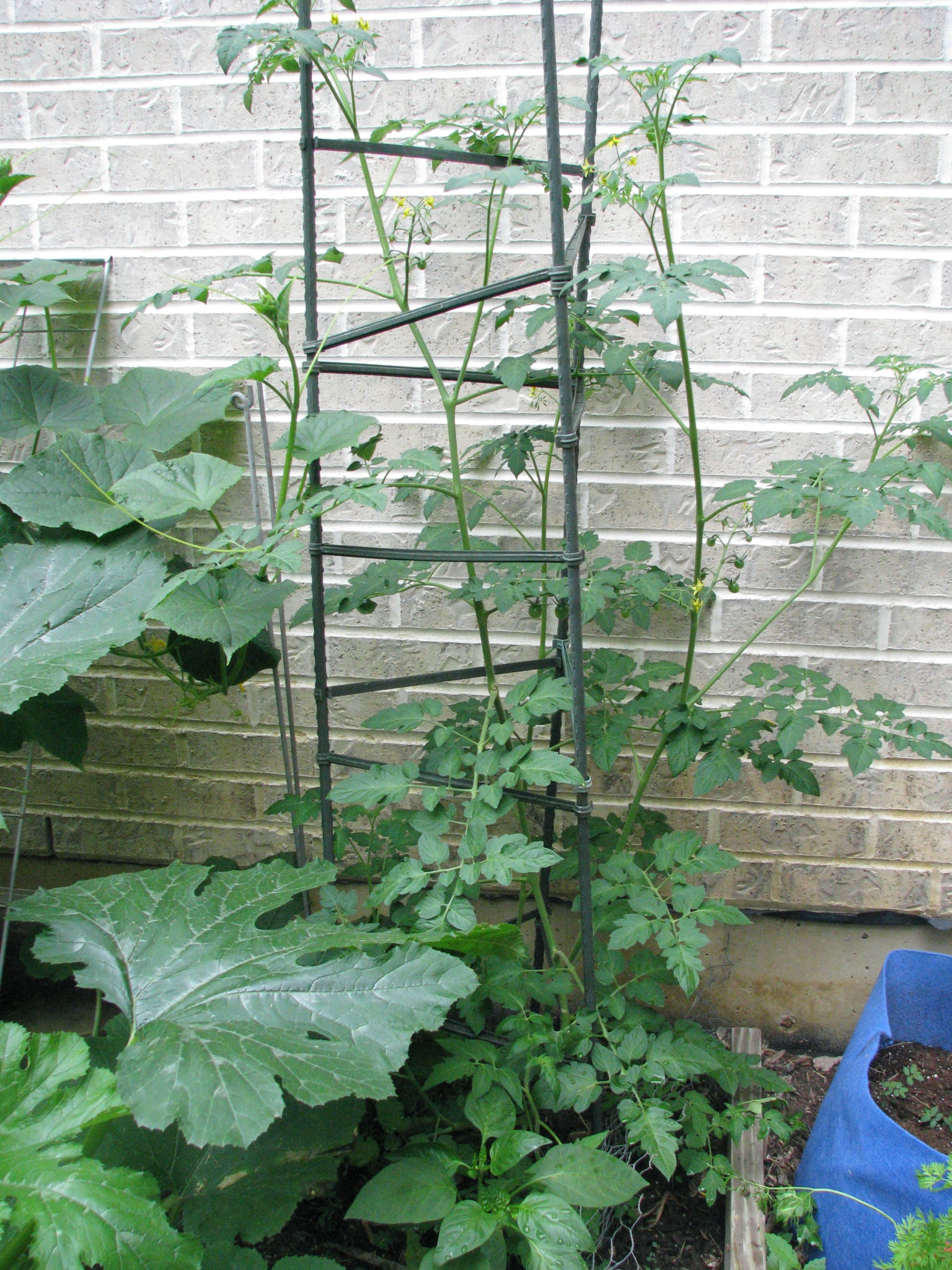
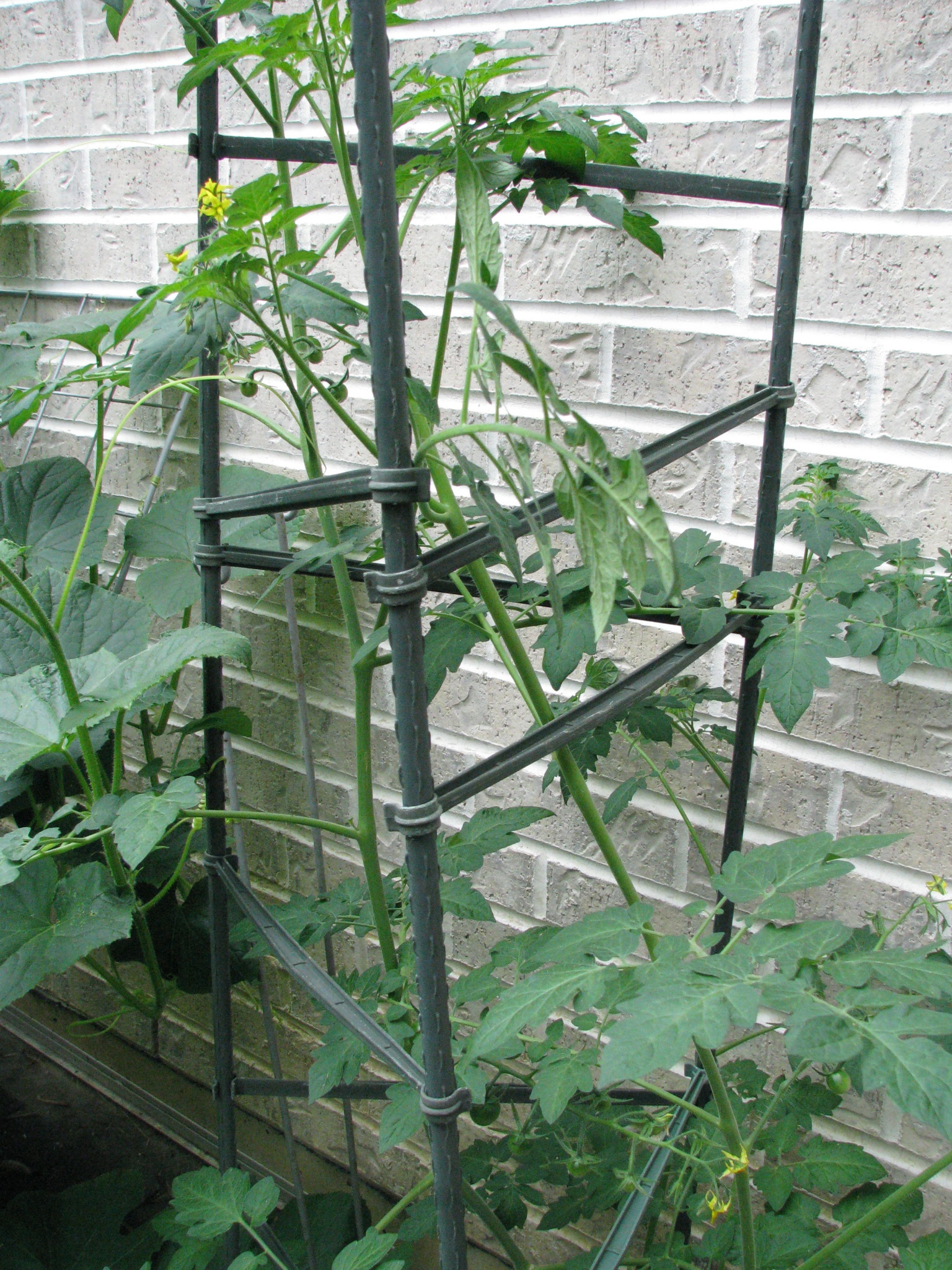
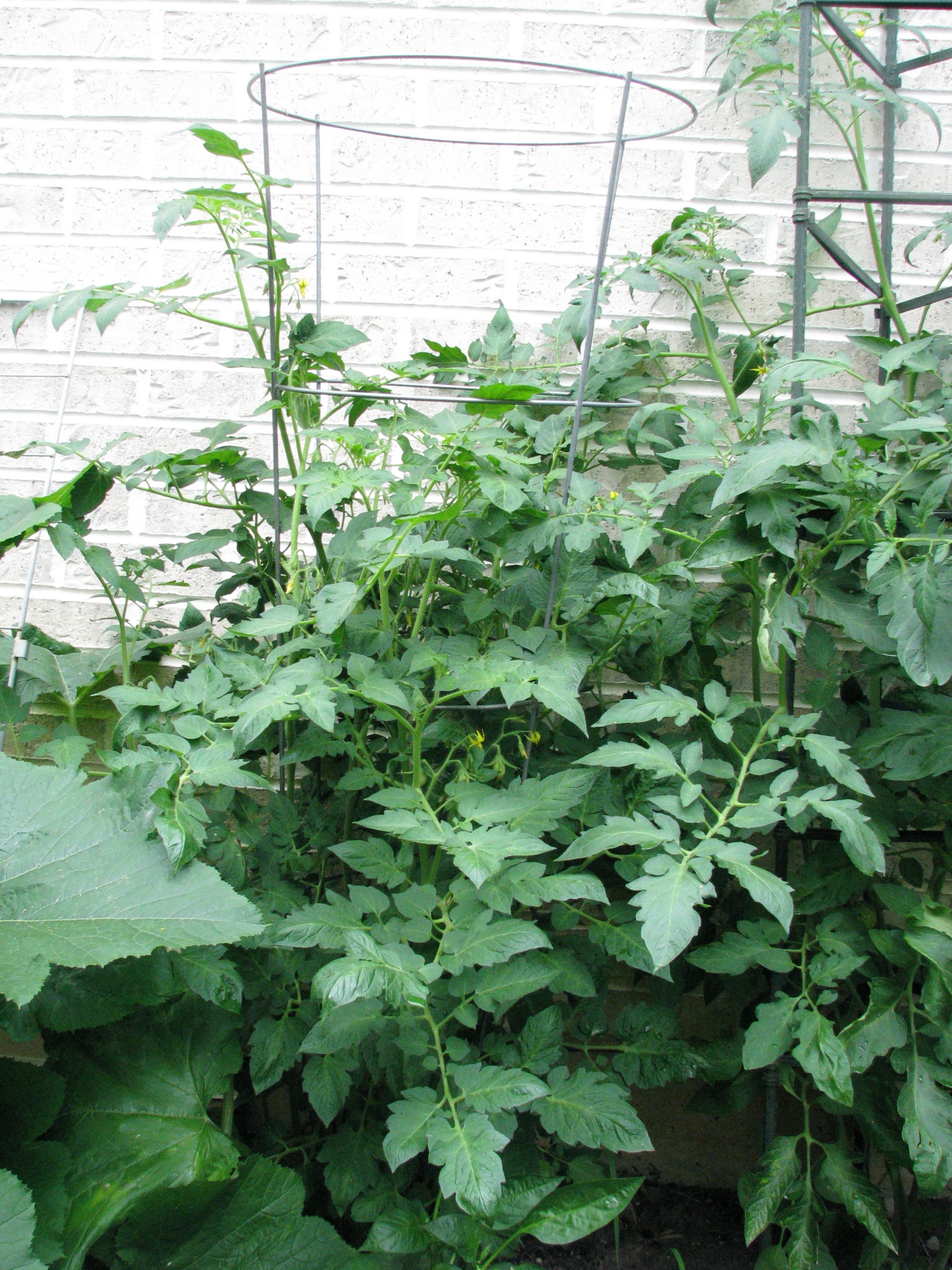
I  have the plants staked with 2 different types of cages.  I’ve had the cages with detachable supports for a while and they started finally breaking, so I bought a couple of wire cages to try.  First problem was that I didn’t really think about what plant I was putting in each type.  The wire cages are much smaller than my old ones and are much better for the bushy type of tomatoes, rather than the bigger plants I have.  Secondly, the wire type is much less forgiving if I lose track of the plant and a stalk starts to grow out of the support.    I’ve broken quite a few stems trying to feed it back into the cage rather than letting it grow all over the other plants.

IMG_0777 IMG_0778 IMG_0779