Yay! My Burpee Home Garden Plants Have Arrived

One of the perks of being named one of Burpee Home Gardens 2019 Gardener’s of the Year is that I was going to receive a box containing some of their 2020 New Varieties. I have been anxiously awaiting its delivery, but glad it didn’t come any sooner than this week. For many of us, spring was really late and they’d be sitting in the house or my mini greenhouse waiting to be planteed.

But yesterday they arrived! I couldn’t have been more excited opening the door to this box of goodies. It’s like Christmas for gardeners 🙂
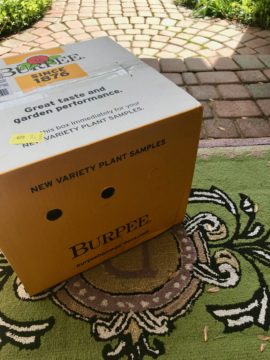
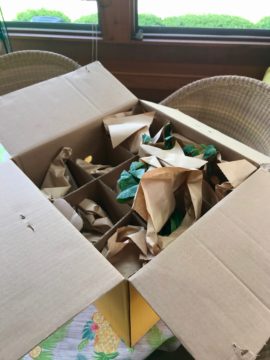
I’ve never ordered “plant” plants before, so I was curious how they’d arrive. I’ve ordered bare root perennials, but not actual potted plants. They were just fine, healthy and no worse for the wear. Inside the box were 9 plants, each wrapped in their own safe packaging. Again, like Christmas.
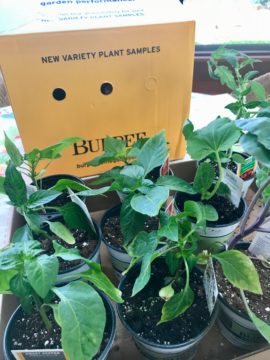
My box contained:

These are all some of my favorite vegetables, so very excited and honestly a little nervous, to be gifted this amazing vegetable care package. Can I get them to grow well? What is going to be the year’s garden pest? Can I keep the rabbits and my pup who loves peppers away from the plants (Little White Pepper Thief)? Who knows, that’s the fun!

I put them outside with the rest of the plants last night to get hardened off since for once it wasn’t going to be unseasonably cold overnight. Sooner they’re in the ground, sooner I’ll have my first harvest!
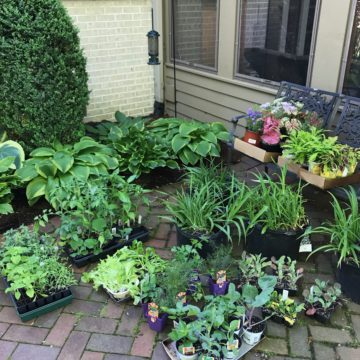
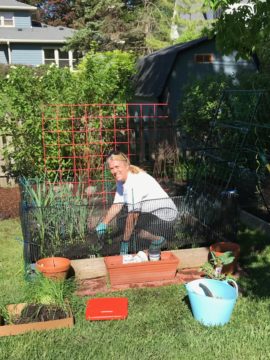
I already had my spots picked out for them and in the ground they went today with my other recent purchases from the local nursery. I actually think it’s going to be the perfect temperature the next few days to allow the plants to get established.
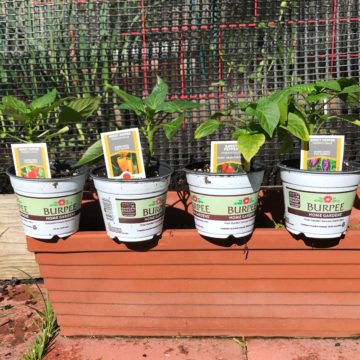
It’s going to be a pepper party in the garden with these colorful Mardi Gras Snack Peppers!
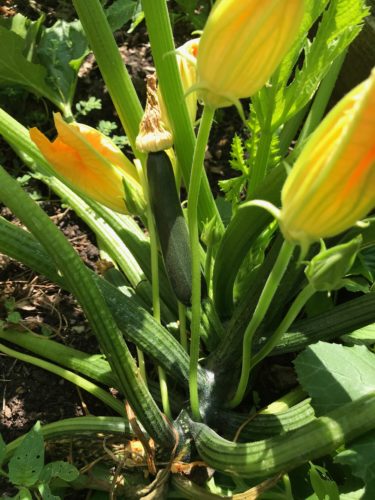
I’m still trying to decide if I need to protect the Lemon Drop Squash from the squash vine borer.
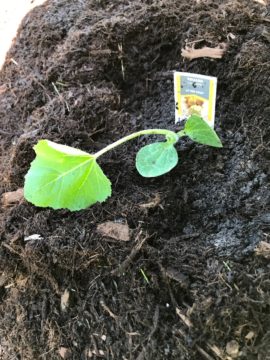
It’s not in the same bed that had the squash vine borer attack last year, but it is kind of close. I have a couple of weeks to think about it, but I think I’ll put some traps out and then use the aluminum foil approach to protect the stem just in case. I have netting, but  squash vine borers spend the winter in the soil near their recently infected plants and that just would trap any adults inside the netting instead of out. I am going to net the squash in the other raised bed where I have the rest of the squash and zucchini plants growing on a trellis.

I’ll keep you posted on the plants progress throughout the summer!

btw, the University of Minnesota Extension is a great resource for SVB infection.

Looking for these plants in your neighborhood? Check out this retailer list from Burpee Home Gardens 

Are you trying anything new this year?


(Note: While I received these plants as a gift from Burpee Home Garden, all opinions and reviews are a reflection of my own unbiased experience)
2018 Garden Recap: Vegetables (Part 1) (aka Attack of the Squash Vine Borer)

In my last post, I wrote about how my flower gardens fared this year. Next up is the vegetable gardens.

In a word, this year the vegetables gardens were a disaster. Not for any one reason, just a lot off bad things conspired to really take a toll and make it one of the worst years I’ve ever had gardening. Makes me long for the days when I gardened in New Jersey and everything just grew lush and beautifully. Except for the year I had hornworms on the tomatoes. Those were disgusting.

Back in the spring, I was so hopeful for a summer of fresh vegetables. But that was not to be. The squash and zucchini was looking great through early July. I was getting tasty Emerald Delight Zucchini (Botanical Interests) and Gold Hybrid Gourmet Gold (Burpee), and the vines were covered in flowers.

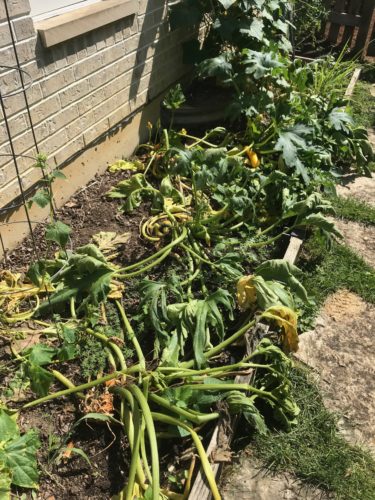
Then over about a week in early July, they just up and died.

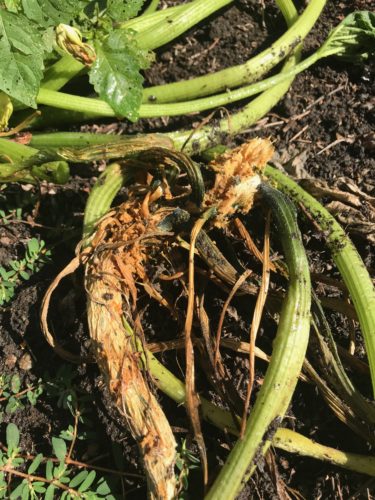
I thought it was powdery mildew, but it was so dramatic. I’ve had plenty of powdery mildew and it didn’t really look like it. I pulled it all out and threw it into a garden waste bag (you don’t want diseased plants hanging around your yard). Didn’t think much of until I was writing this post and wondered what had really happened. As soon as I started doing some investigating, it quickly it became quite obvious from the pictures that mine had been attacked by squash vine borers, not powdery mildew.

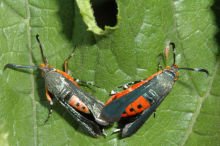
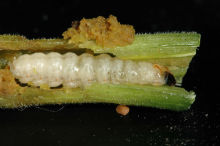
All that orange mess around the base of the plant is a moist orange sawdust-like material called frass, or insect droppings. It was everywhere. Yuck. That is a sign that the squash vine borer larvae is eating away at the material inside the stems of the plants. I never looked close enough to see them, but the evidence was pretty overwhelming. Here’s photos of the adult and larvae (Photo credit to the UMN Extension)

So what to do now? Obviously I totally lost this year’s crops, but how do I prevent this from happening again?

First off, I need to be better about practicing crop rotation. I pretty much never rotate crops to different garden areas, but obviously I need to be better about that. Squash vine borers spend the winter in the soil near their recently infected host plants, so I need to have next years plants as far away as possible.

Then, according to the UMN Extension, I will need to check for adult squash vine borers starting the end of June. I’m not sure if I’ve ever seen them, but I will be on the lookout after this. You can also try to use some kind of container filled with water with yellow food coloring added to attract and trap them.  Check each day to see if you’ve trapped any.

If you do find the squash vine borers in the area you’ll need to change things up a bit. Easiest is to practice crop rotation. You can also try planting other crops that aren’t as susceptible like butternut squash, cucumbers, melons and watermelons. Although none of them are really substitutes for summer squash and zucchini.

Try planting a second planting in early July after any adult borers have finished laying eggs on the mature plants. But, this is tough in the northern climates that already have a short growing season.

Try using a physical barrier.  Wrap a collar of aluminum foil around lower stems to prevent egg-laying. Alternatively, secure floating light fabric row covers over your squash until they start to flower. Don’t use row covers if the infected squash plants were planted in the same area as the previous year. This is because squash vine borers spend the winter in the soil near their host plants. When the adults emerge the following summer, they may be trapped under the row cover instead of being kept out.

Hopefully this was a one time event and I can go back to having way too much squash and zucchini for one family to eat. Whenever something like this happens, it really makes me appreciate the organic farmers who grow on a large scale and how precarious each year’s crop is. At least I can just pack it in for the year and go to my local farmer’s market.

There’s a lot more good information on how to deal with these pests at these sites:

I would like give a shout to the land-grant University Extensions and their educational and problem-solving assistance they provide to the public. These community outreach programs provide invaluable scientific knowledge and expertise on a variety of topics. I’ve watched a number of webinars on gardening topics from the University of Illinois Extension and have found them to be really interesting, useful and free!

Have you ever had a whole crop wiped out like this?

Next post will look at the rest of the vegetable garden–stay tuned!