I Love Raspberry Season! (and yes, you need to prune them)

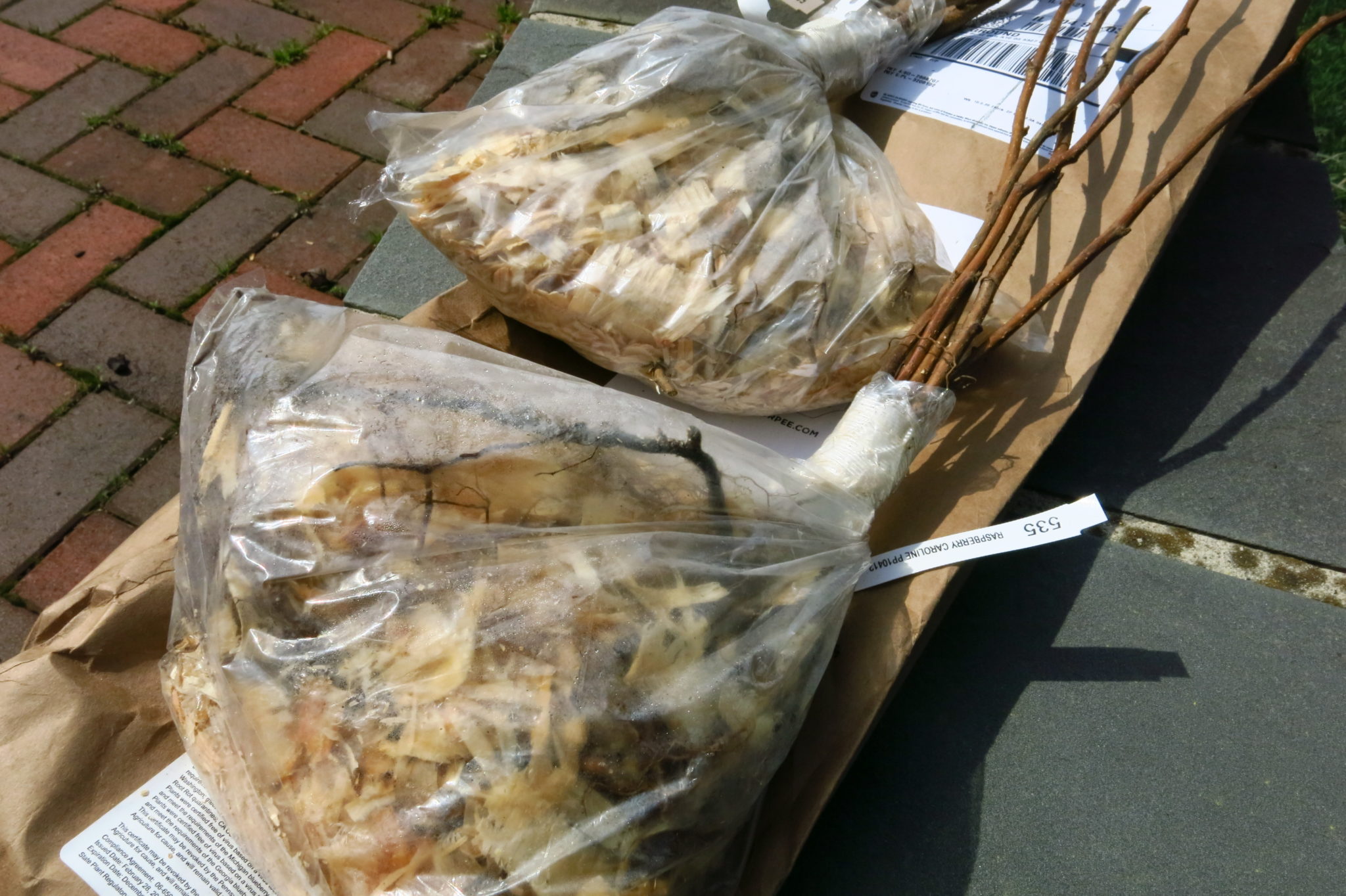
About five years ago, I planted two varieties of raspberries, Heritage and Caroline, both everbearing types from Burpee. (My Raspberry and Strawberry Plants are Here!)
Standard Disclosure: This post contains affiliate links. I may receive a commission from purchases you make through the links in this post

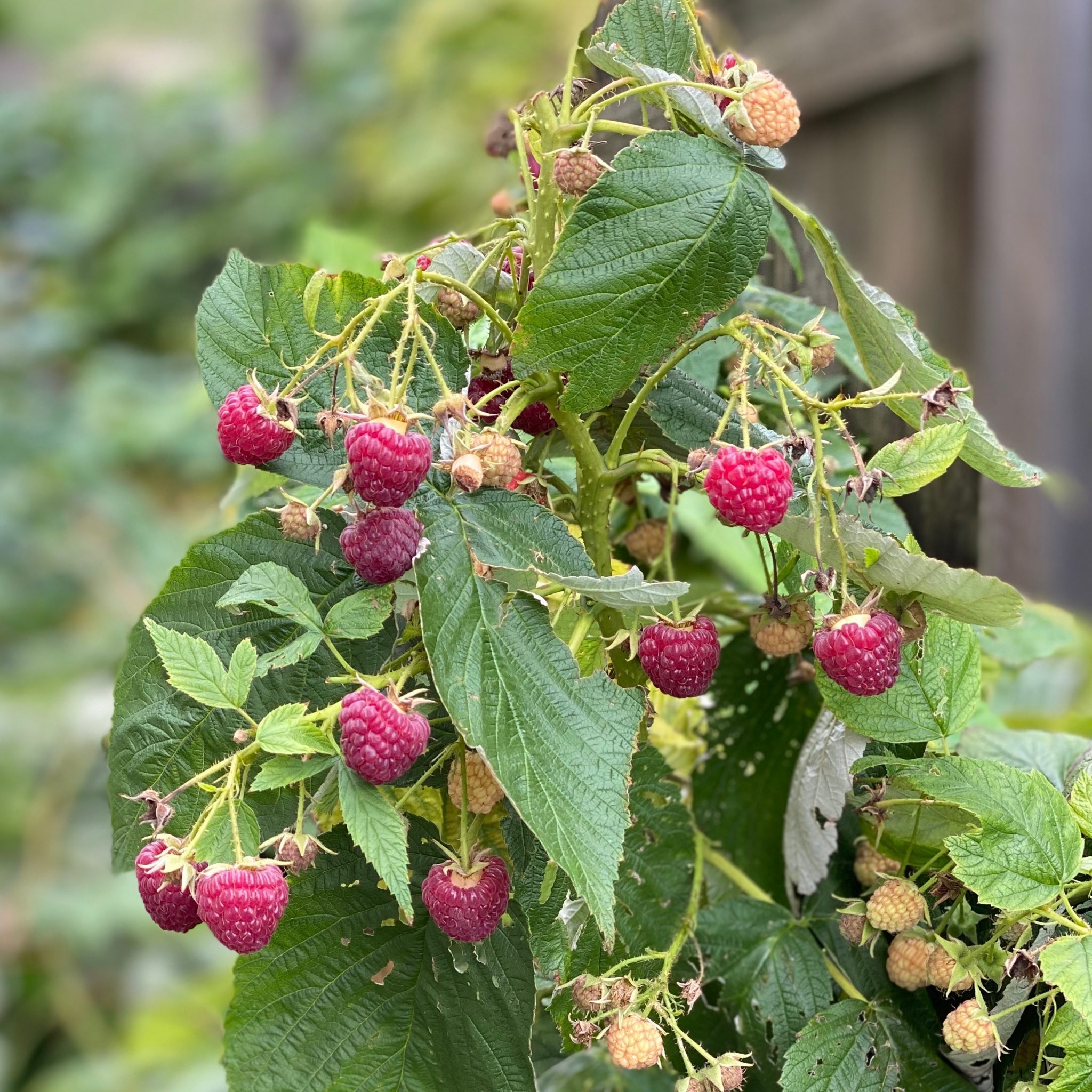
Not knowing how they spread, I now have some combo of them both, or even possibly just one that was hardier. Who knows? In any case, they have finally matured and have been producing an abundance of delicious raspberries.
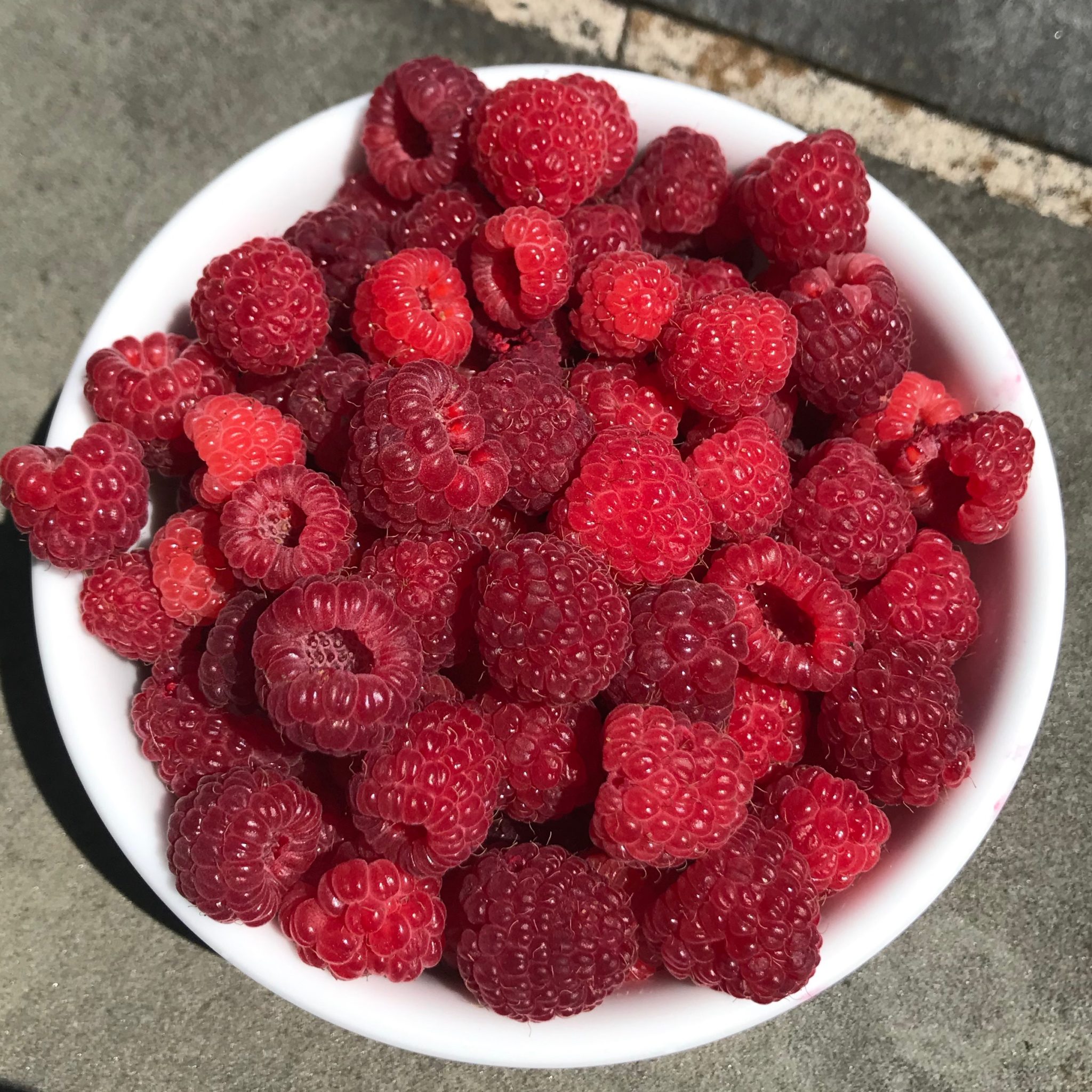
I’ve been very nervous to prune the plants for fear of killing them. Unfortunately that’s been known to happen to anyone who has grown raspberries, especially in northern gardens. But they’ve become quite unruly, and there’s a lot of dead canes.

Everbearing varieties produce fruit once in early fall on the tips of the one-year-old canes (primocanes) and the following summer on the lower part of the now second year canes (floricanes). I need to prune out the second year floricanes either after they produce fruit in late summer, or in March or early April. These plants are done and will produce no more fruit. New canes grow every year, so any healthy raspberry planting has a combination of both one- and two-year-old canes.

Sounds easy enough, but I’m always nervous pruning new plants.

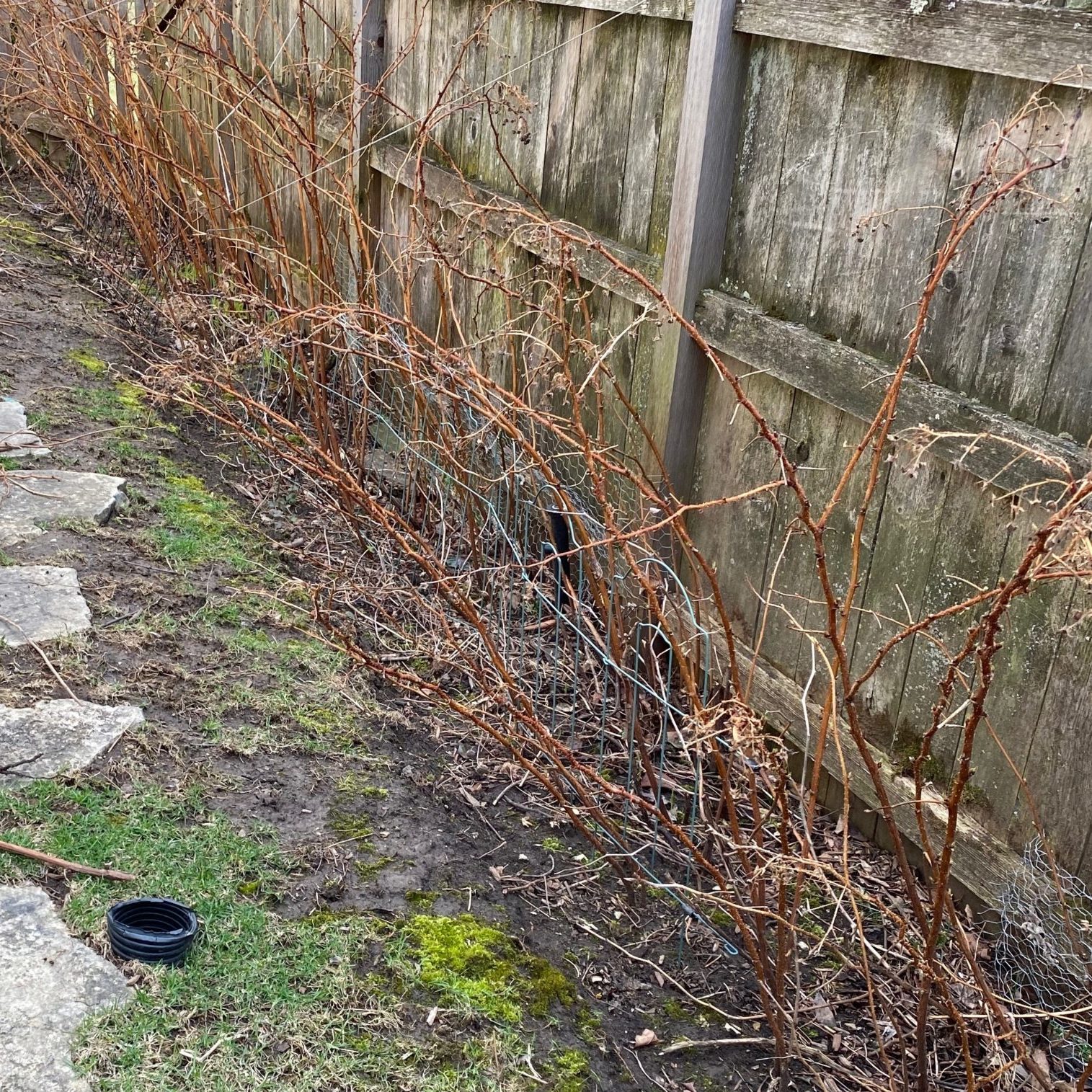
Here’s a before picture. Truly a tangled mess of thorny canes.
In order to do the job, I need the right tools:

  • Garden pruners, I love my Felco F8 pruners,
  • A good pair of garden gloves. I started with my regular garden gloves and then went and got a good pair of thick work gloves. Too many thorns!

First I started by taking out any dead, broken, or diseased canes, as well as any canes that sprout up outside the row footprint.

Raspberries grow best in a 2-3 ft row, so prune away the suckers to keep them in their space.
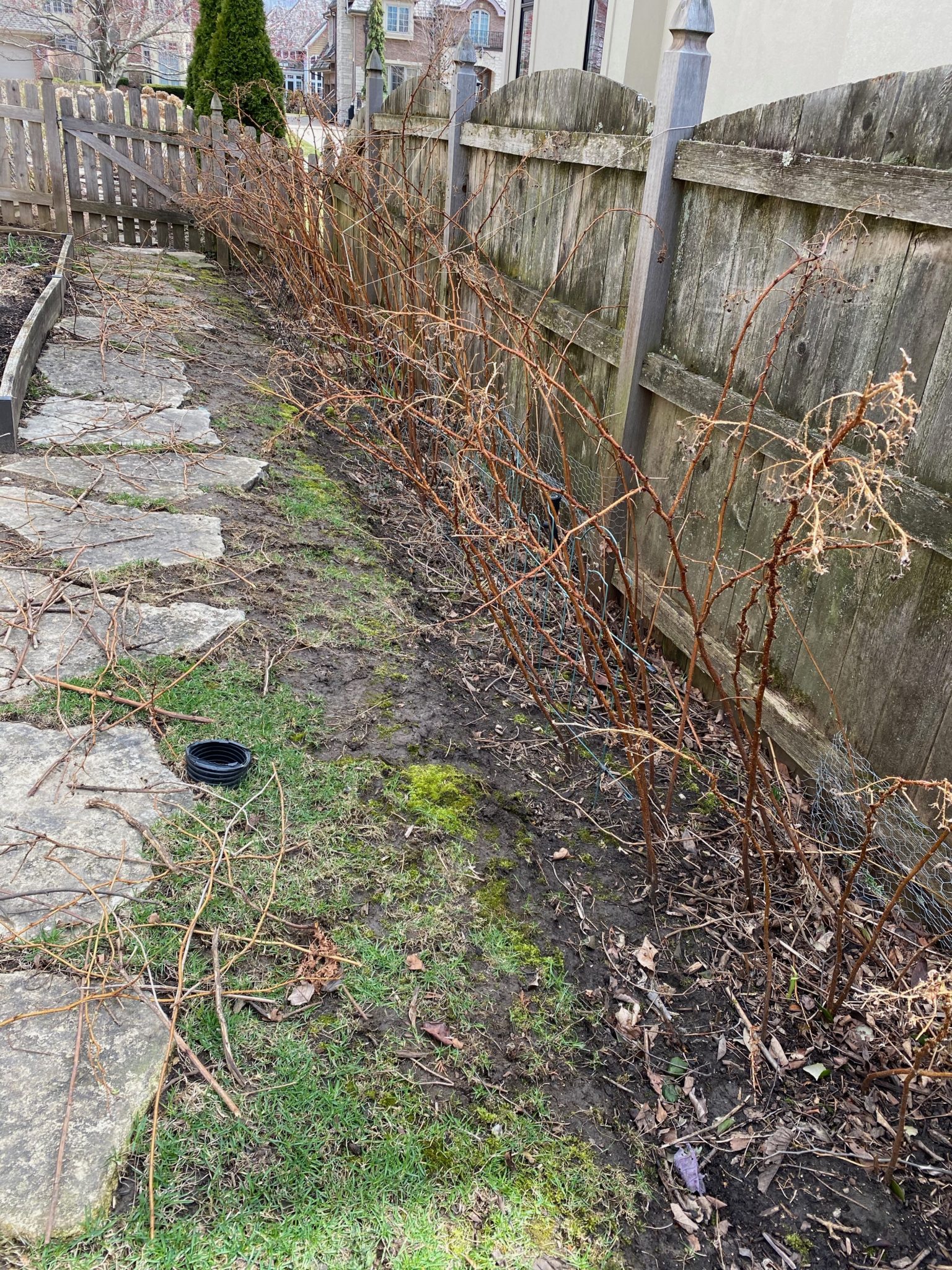
Then look for anything that seems to have brown, peeling scaly bark and cut those to the ground.
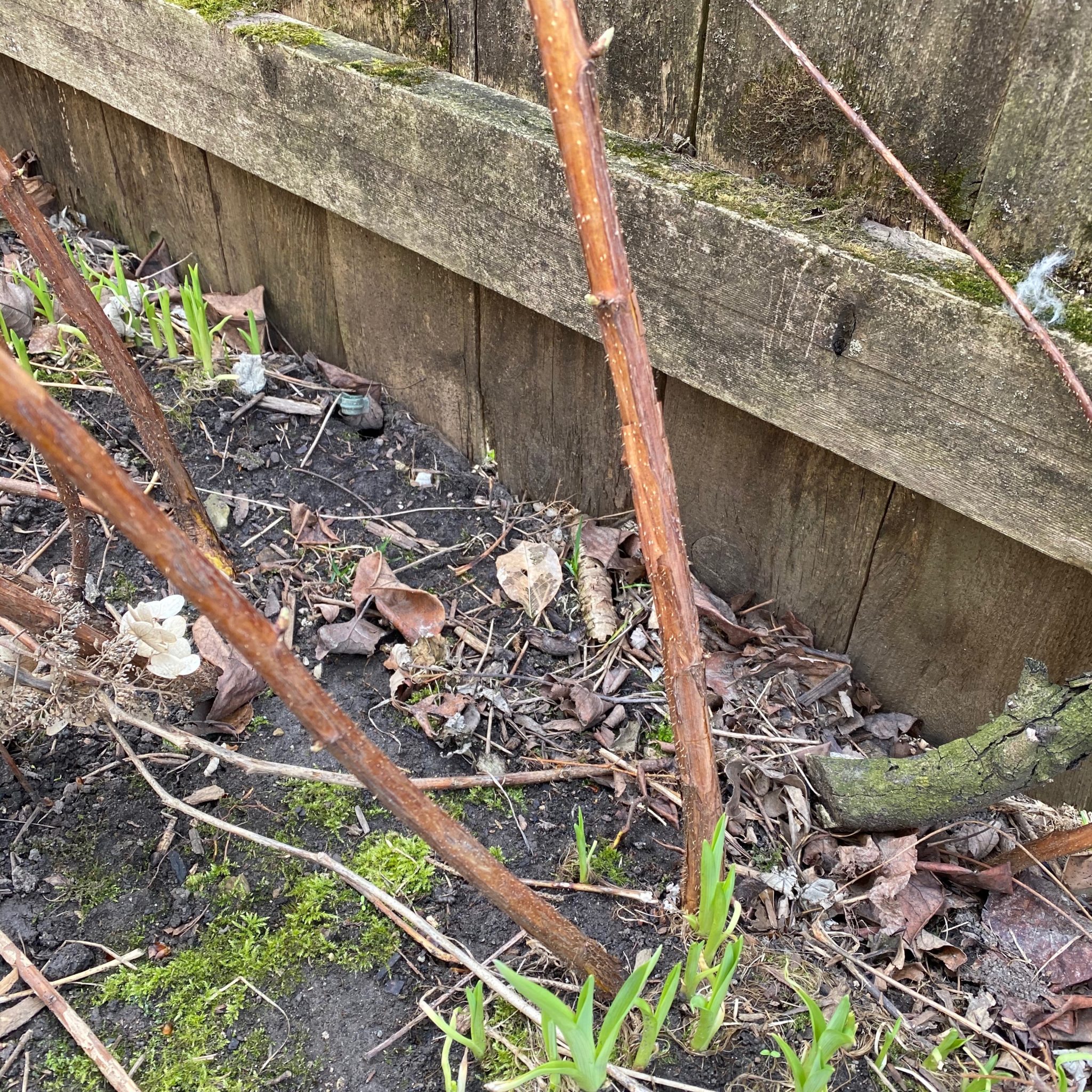
Now how to decide from what is left what is a floricane and what is a primocane?

Floricanes will be brown or grayish in color, harder and more brittle in texture, and may have fruit remnants low on the canes. The floricanes should be pruned to the ground and removed. No need to leave any stubs, they are done.

Primocanes will look fresher and possibly green. The primocanes may also have remnants of fruit at their tips. Primocanes can either be left alone, or trimmed. I trimmed mine by pruning off the top 1/4 or so, to bring their height back to a manageable size. I also trimmed off any fruiting remains to clean them up.
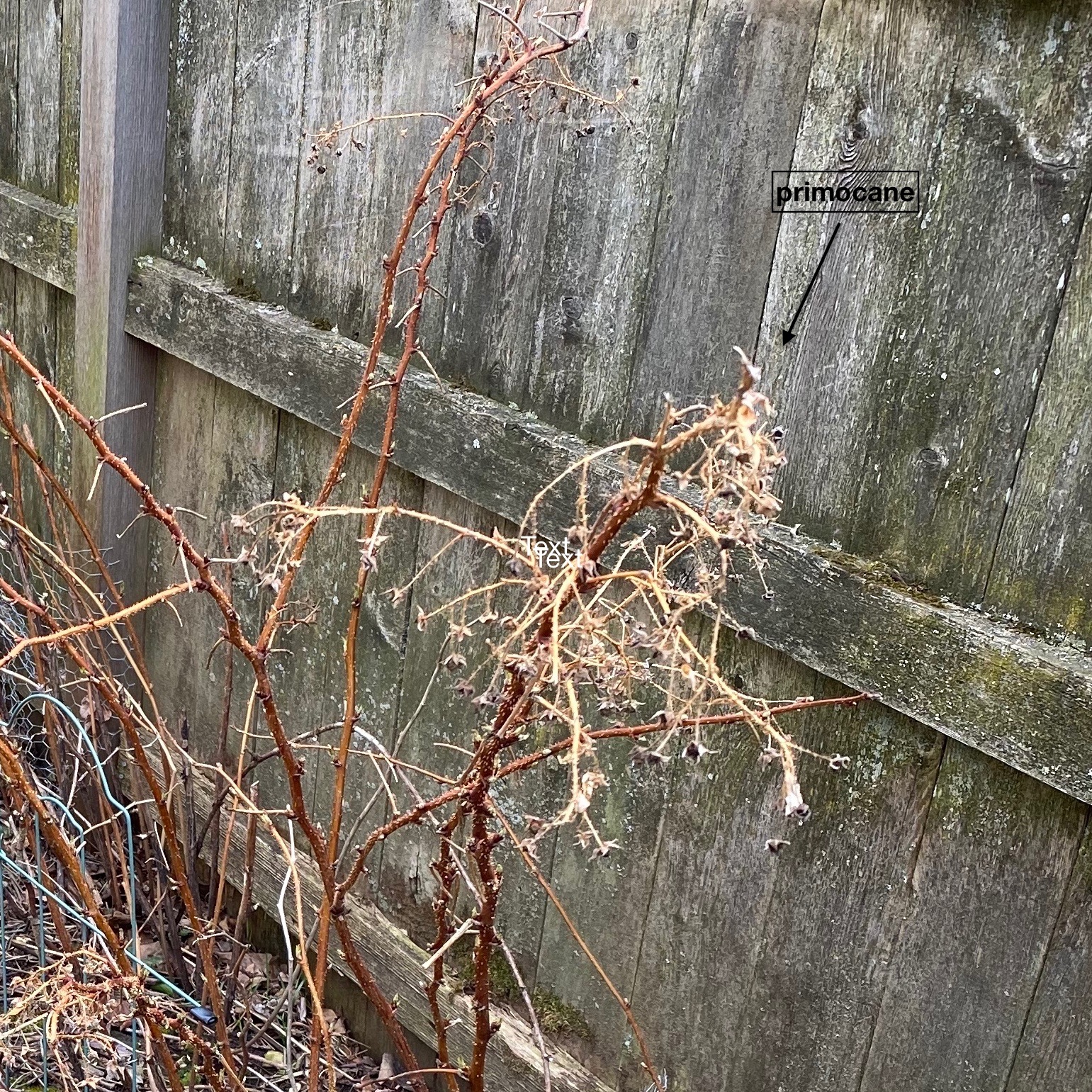
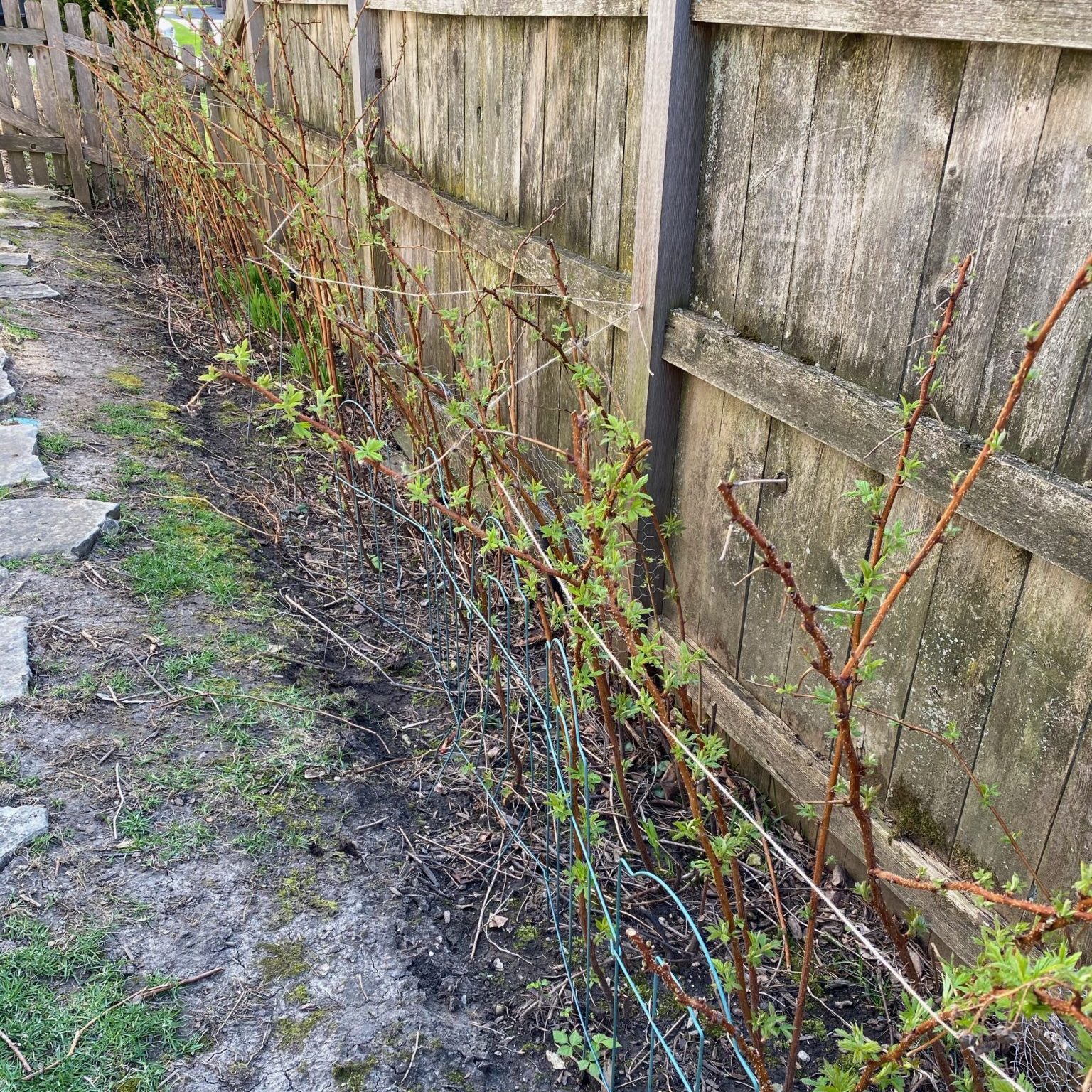
Done! What a difference!
Now that we are in fall, and the fall harvest is huge, I can really see the “fruits of my labor” (sorry, couldn’t resist)
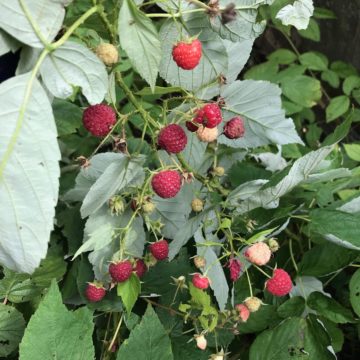
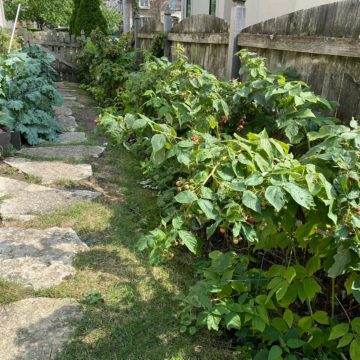
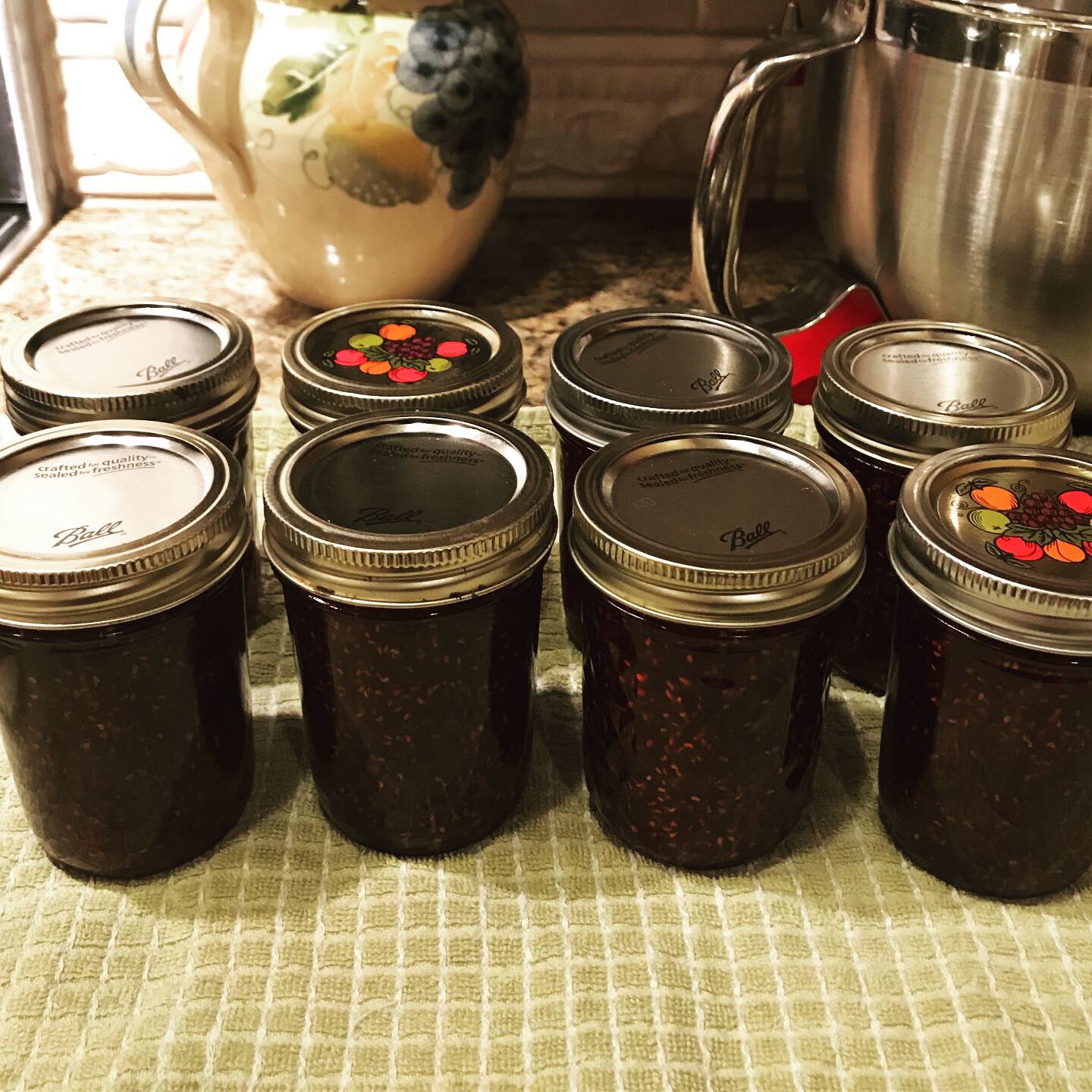
Time for some raspberry jam!!!
Some other raspberry tips:

For new raspberry plants, prune back the canes to 4 to 5 feet tall in late winter during the first couple of years after planting. This will ensure that the bush gets plenty of light, which is essential for fruit production and creating a healthy bush. It’s not recommended to cut all canes back to the ground in northern gardens with short growing seasons and early fall frosts. There’s just not enough time for the plants to put energy into both growing healthy canes and fruit.

Need to tie back your raspberry canes? I’ve found strips of torn sheets to work better than garden twine. After a short time, the twine breaks from rubbing against the thorns and needs to be replaced frequently.

One-crop summer-bearing type of raspberries can be pruned right after the summer harvest. Cut to the ground any canes that have fruited. These kinds of raspberries produce fruit on the second year canes, so once fruited they are done.
2018 Stephi Gardens Holiday Gift Ideas

Struggling with what to get that special someone for Christmas? Here’s some ideas from the things that I love!

Birding:

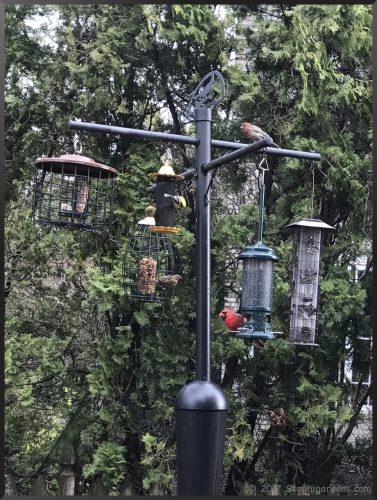
Do you enjoy feeding the birds, but dislike feeding the squirrels? I tested out a number of squirrel-proof feeders and can report that they actually all work as advertised. The squirrels don’t even waste their time anymore trying to get at the seeds. See my reviews at Who Won The Squirrels vs Feeder Contest? and New Squirrel Proof Bird Feeders.

Here’s some of my favorites:

If you want to know what you are seeing at your feeders, my favorite ID guides are:

Gardening:

I love my plastic Tubtrubs. I’ve had mine for years and use them to use them to move things all over the yard. I’ve found the 7 gal (26 l) and 3.6 gal (14 l )particularly useful.clematis wilt

My Felco #8 Pruning Shears are pretty much with me all over the yard as well. Oftentimes in my Tubtrub, which is a safer place for them than setting them down in the grass. They may be a bit pricier than other shears, but these really will last you a lifetime. I have #8, which have an ergonometric handle, but I’d also recommend #11, same as the original #2 but with a replaceable blade, or #6 for smaller hands.  I’d also recommend a leather holster to keep your investment safe and convenient to carry around with you.

A nice set of garden tools is always appreciated. There’s nothing worse than a cheap shovel that literally bends in your hand trying to transplant something in my awful midwestern clay soil. I’ve had a set of stainless tools for over 20 years, but I do like the cushioning on the Fiskars tools I’ve bought more recently. So far, I haven’t had any issues with breakage like some have reported in the reviews.

Growing seedlings indoors? The 2 ft Hydrofarm T5 Grow Light Systems have worked great for me. Spacious, energy efficient and adjustable. It’s made all the difference in growing healthy seedlings indoors.

What to wear in the garden? I think nothing is better than my Slogger garden shoes and rain boots.  I have both styles and they are comfortable, easy to get on and waterproof!

Garden cocktail cookbooks are a fun (and tasty) gift. Two favorites on my bookshelf are The Cocktail Garden and Summer Cocktails.

Not sure what they might already have? A gift certificate to a local garden shop would always be appreciated!

Cooking

I have a couple of go-to pans that I just love:

My Calphalon hard-anodized 13″ stir fry pan is excellent for sautéing my garden fresh vegetables as a side- or main dish.

One of my first pieces of Le Creuset enameled cast iron cookware was a 3.5 quart Chef’s Oven in flame. I love this pan for sauces, soups, risotto, sautéing, pretty much anything. I thought it such a perfect pan I got one for my daughter when she moved into her own apartment. It is on the smallish side but there are larger versions available (and other colors).

I invested in a spiralizer and love spiralizing all kinds of vegetables. The spirals can be used as a base for a sauce, part of a stir-fry or just as a sautéed side dish. So many options for a starch alternative! I wrote about my experience with the Paderno World Cuisine Spiralizer Pro in “A Fun Garden to Table Kitchen Gadget-A Countertop Spiralizer”.

I also love kitchen gadgets. Probably have far too many single purpose things, but they are just so handy! What are some of the things I use all the time?

Reading

I love to read. Always have since I was a little girl taking out a stack of books from the library. I think books always make a great gift and you can follow what I’m reading by the list on the right side bar. Don’t worry, if I wouldn’t recommend a book I’ve read I won’t put it on the list!

Happy Shopping and Happy Holidays!

Christmas Tree

(Disclosure: This post contains affiliate links. I may receive a commission from purchases you make through the links in this post. All reviews are my own and are not influenced by any compensation I may receive.)