Over the winter, I have enjoyed watching birdfeeder cams (see previous post “Birdfeeder Cams“). Now that spring is around the corner somewhere, it’s time to start following some of the nest cams.
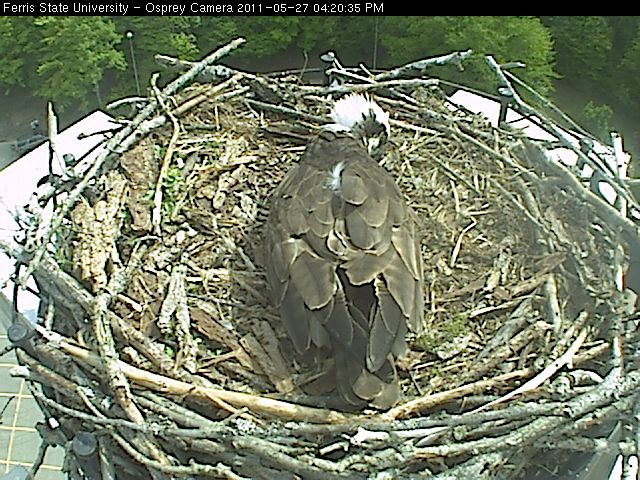
The first nest cam that I began following is the Ferris State University (MI) Osprey Cam. They’ve been streaming video of a nesting pair of ospreys in their parking lot for five years. It’s still a little early for the Ospreys to be back yet, so the cameras are not up and running. They usually return the end of March/early April. You can check their Facebook page for updates as to when things will get going again for the year.
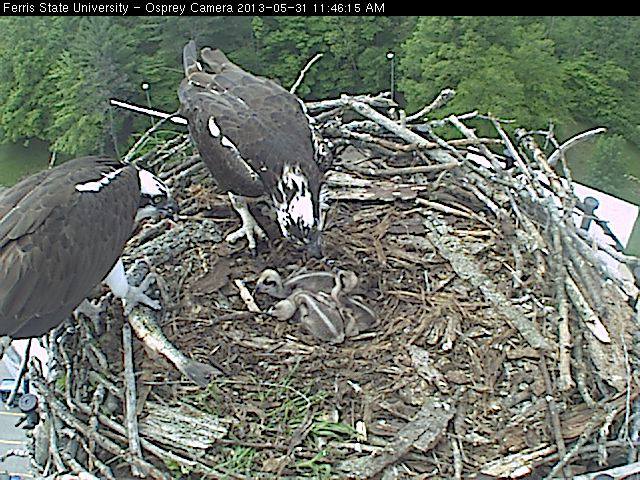
Here’s a shot from last year. See the car in the left corner? That’s me!!
Here’s another shot from the cam last year w of the whole family.
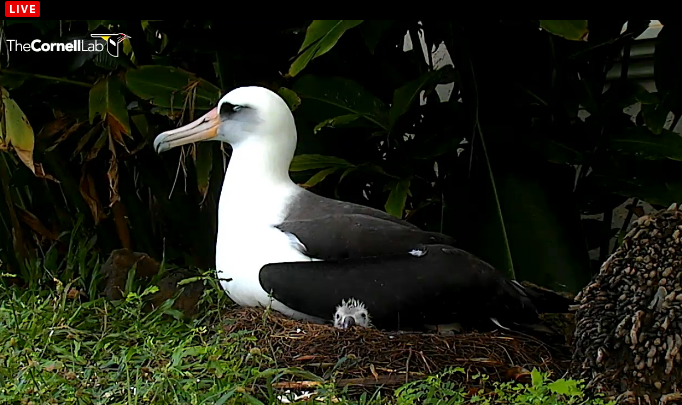
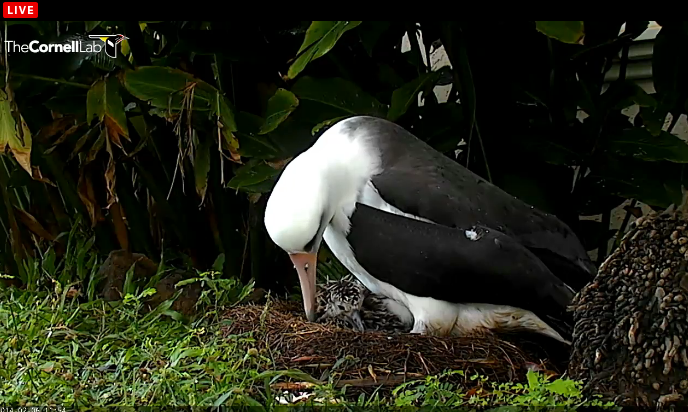
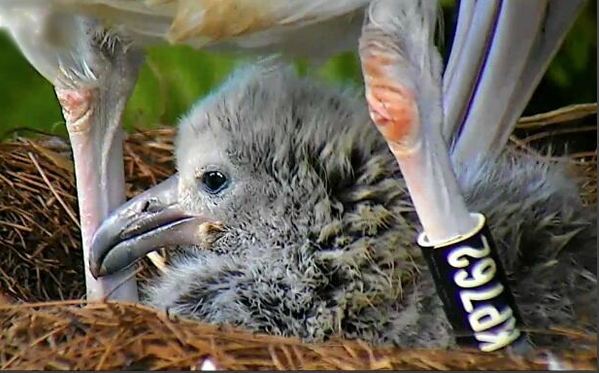
Until the Ospreys are back, I’ve been watching some other nests. In Hawaii, a pair of Laysan Albatrosses recently laid one egg, which hatched successfully about 2 months later on January 27th. This nest is in the yard of a personal residence near a bluff overlooking the Pacific Ocean. The chick will take 5-6 months to grow to adult size and take flight. During that time, it may spend up to 17 days alone, as the parents go on long foraging trips out into the ocean. Once the fledgling takes flight, it will leave the nest and not return to land for the next 3-5 years.
With the weather the way it is here, how can you not enjoy watching this family?
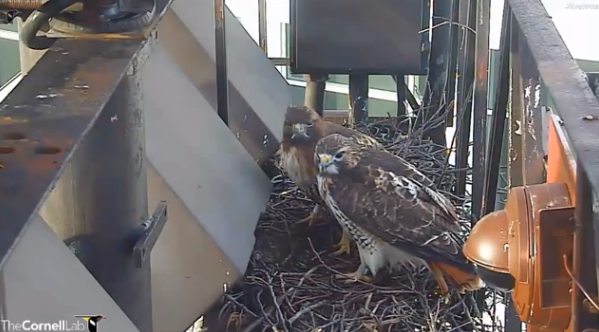
Also on the Cornell Lab site, high above the athletic fields you can watch a pair of Red-Tailed Hawks that have been nesting at Cornell University for the last four years. Big Red, and her mate Ezra, have just arrived back and have begun to rebuild their nest again.This will be the third year these bird’s nest activity has been streamed. To learn more about Big Red and Ezra, be sure to check out their FAQ page.
Interesting place to build a nest, but they seem to like it.
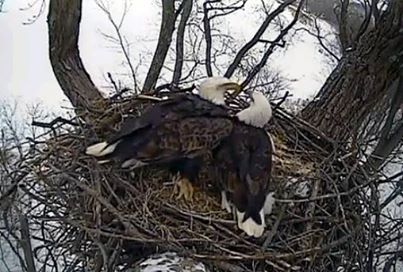
The Decorah Eagles site in Decorah, IA, follows a breeding pair of Bald Eagles that have been together since the winter of 2007-08. Since 2008, they have hatched and fledged 14 eaglets. They expect this year’s first egg to be laid around February 17th. So far, the pair has been busy setting up their nest and getting ready. I’m always so surprised how early Eagles will lay their eggs in such cold climates. I’ve seen them sit there, covered in snow with the wind howling, keeping those eggs safe and warm. This nest cam is part of the non-profit Raptor Resource Project which specializes in the preservation of birds of prey.
This is just a few of the nest cams that are out there. As more come back on-line for the season, I’ll mention them. If you have a favorite bird, I’m pretty sure someone has a nest cam on it. Nest cams have really multiplied the last few years and for the most part, people are respectful of the birds. It’s a great way to follow the trials and tribulations that these birds go through, from predators, to finding food, to fighting the elements. It’s really exciting to finally see the babies take flight and then one day take off, never to come back. Then it’s time to cross your fingers and wait and see if mom and dad come back again next year.