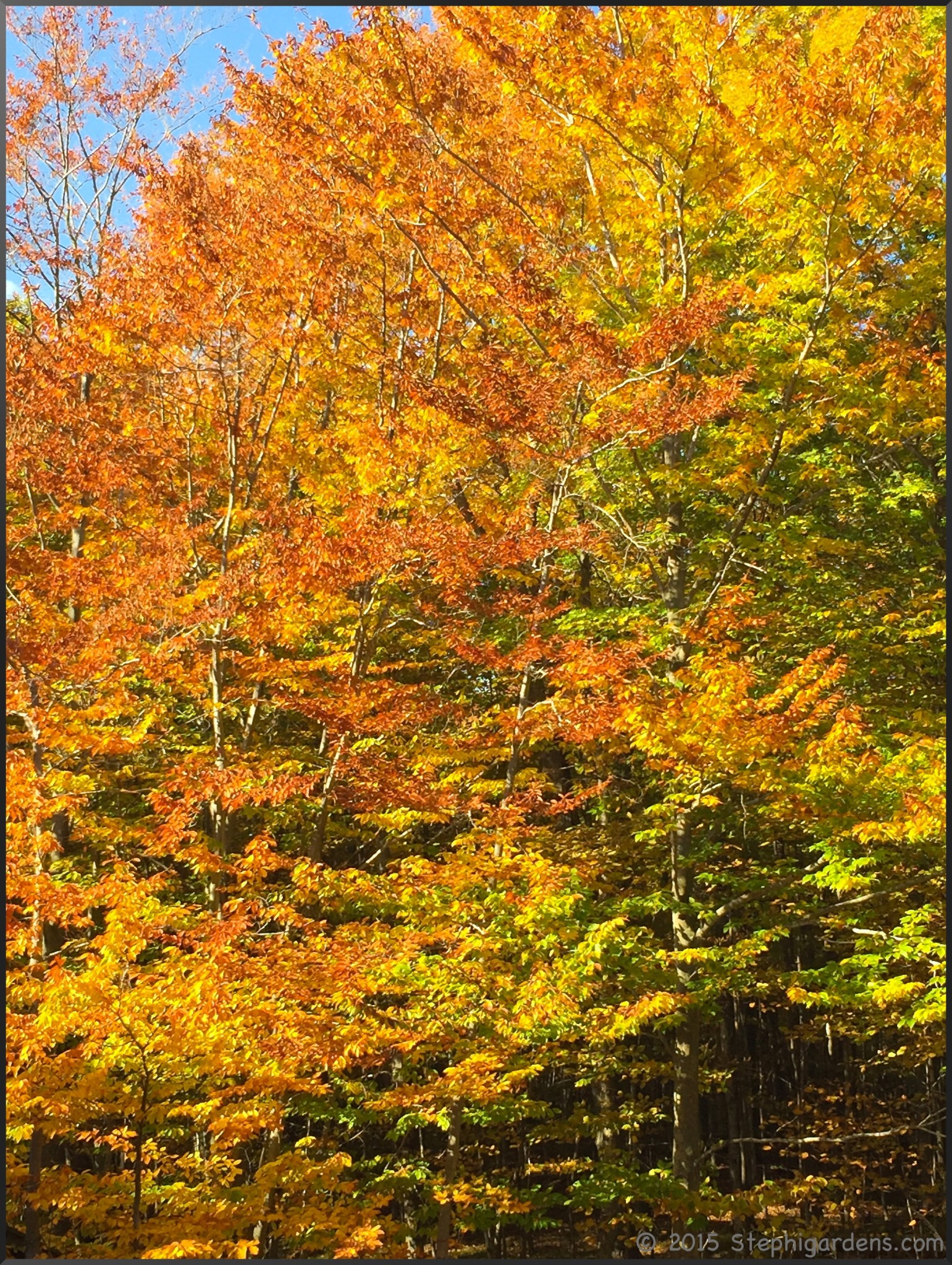
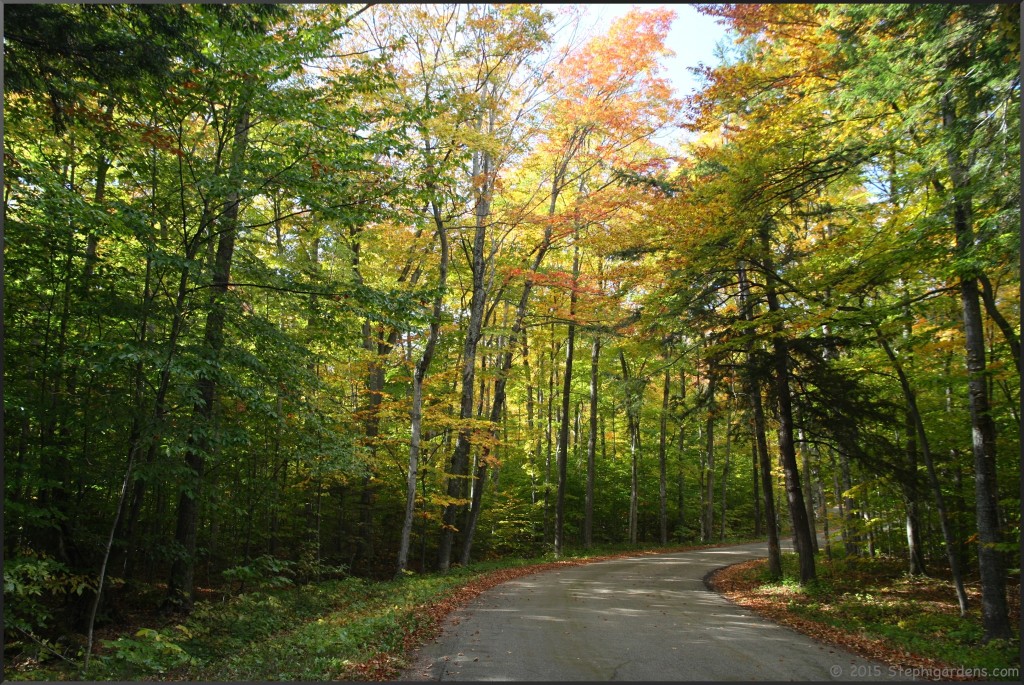
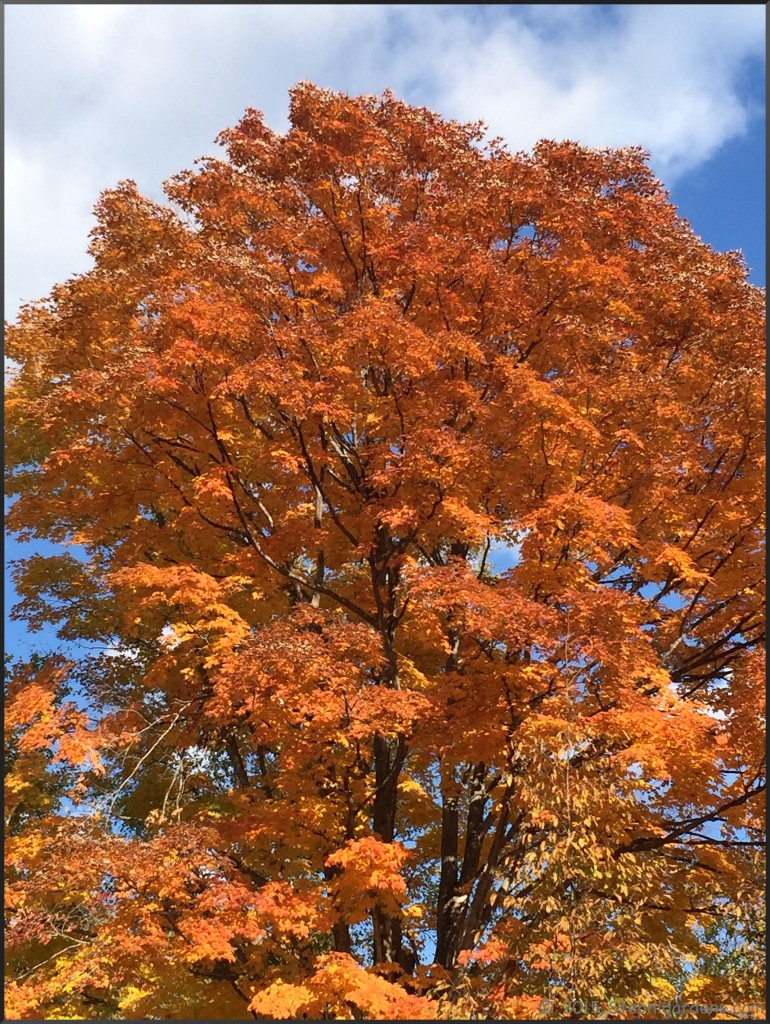
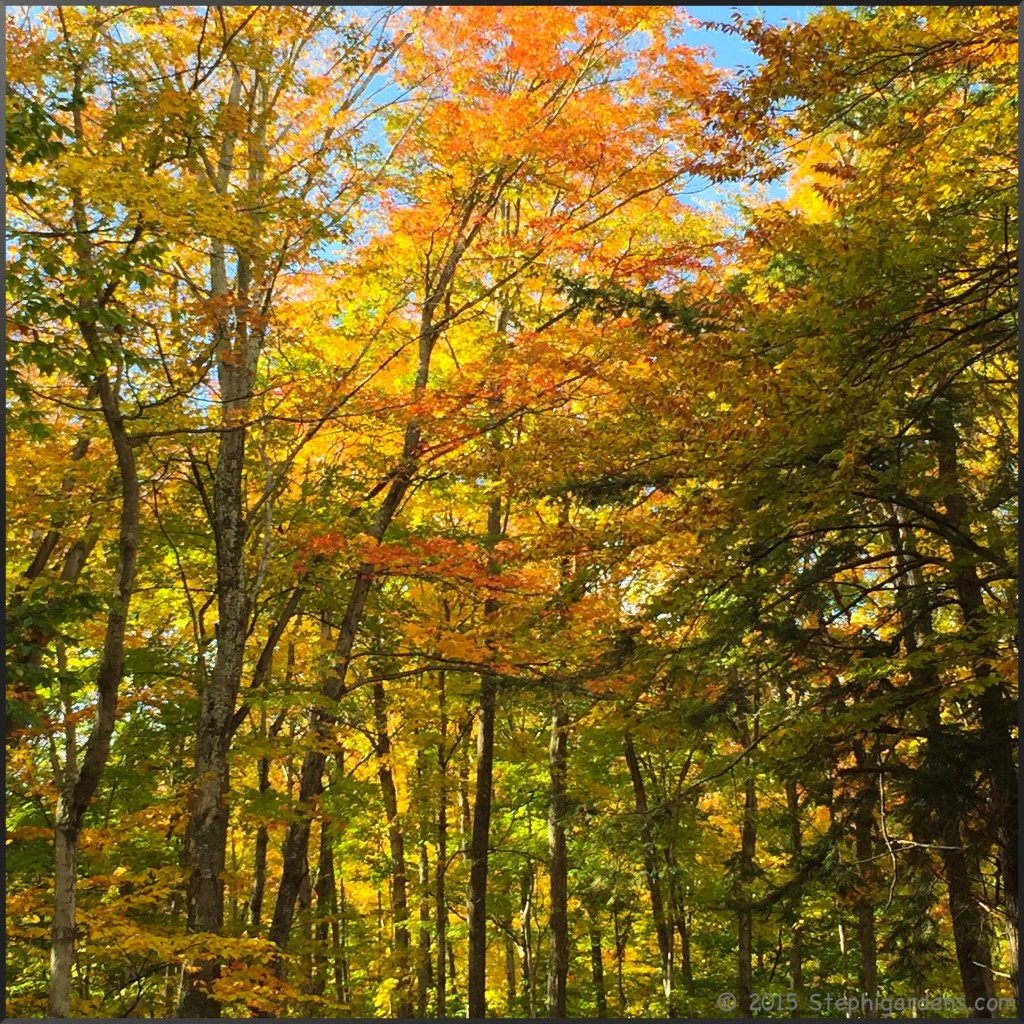
In addition to going to Northern Michigan for the weekend (Fall in Northern Michigan/Stumbling Upon Club-Mosses), Steve and I made a trip up to Door County, Wisconsin the third week of October. It was definitely peak colors that week and it was spectacular.
The day started like this! Sunrise over Lake Michigan.
After breakfast, we started to explore…
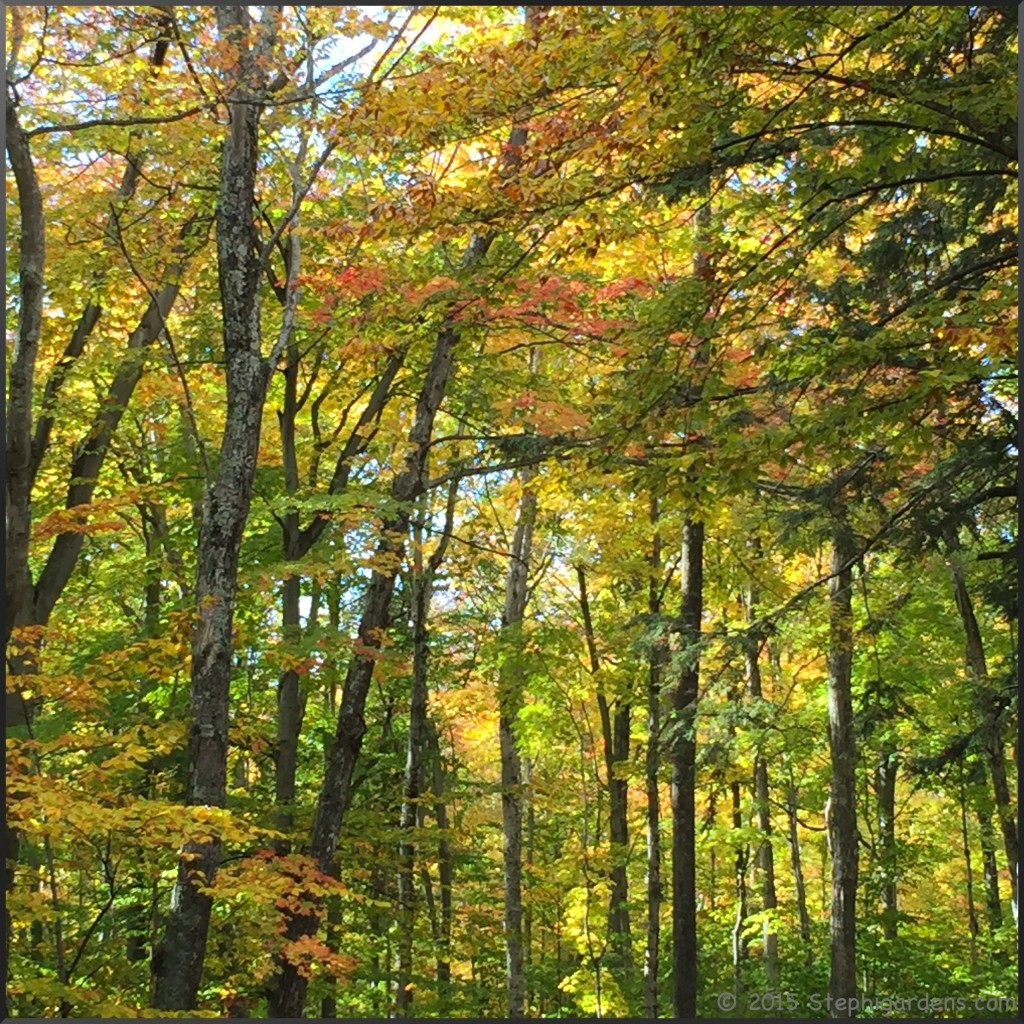
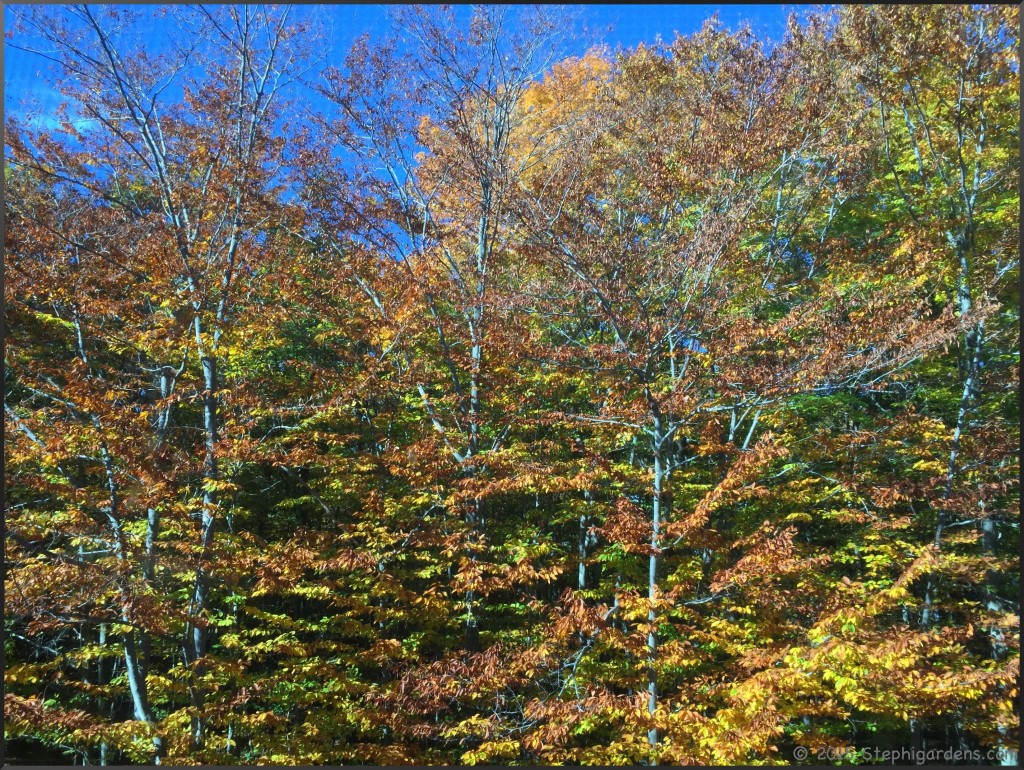
The forests of Door County are full of hardwoods like Sugar Maple, Beech, Ash, Red Oak, White Oak and Paper Birch.
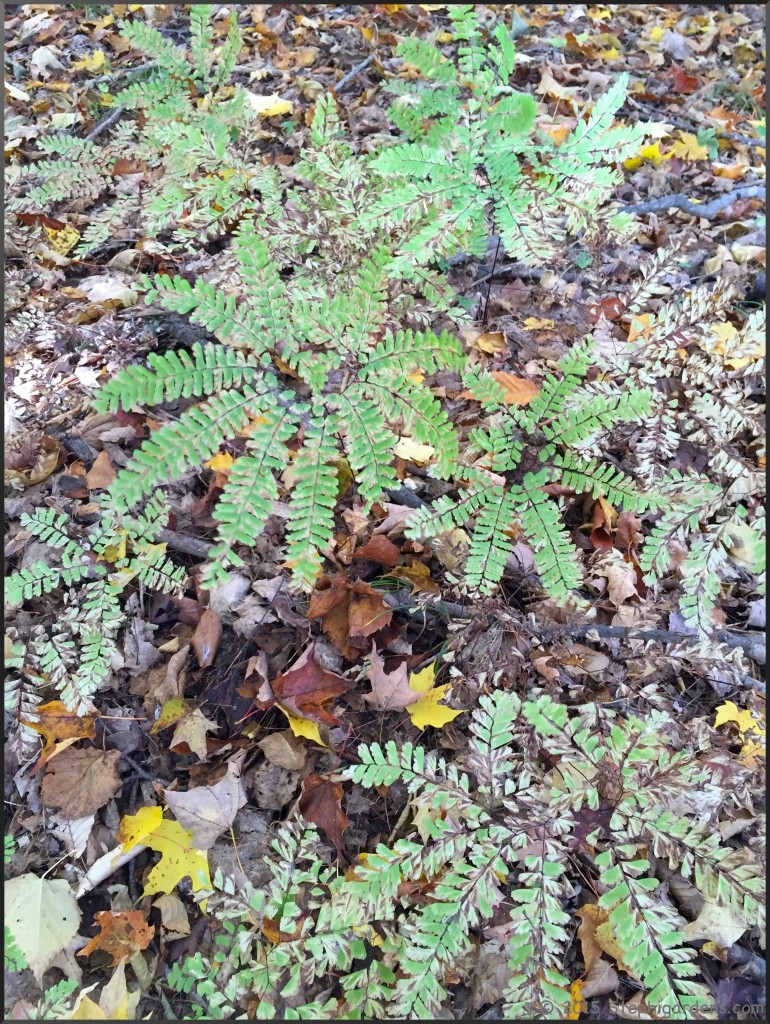
Looking down we were surprised to see these Maidenhair Ferns (Adiantum pedatum). Always a fun find!
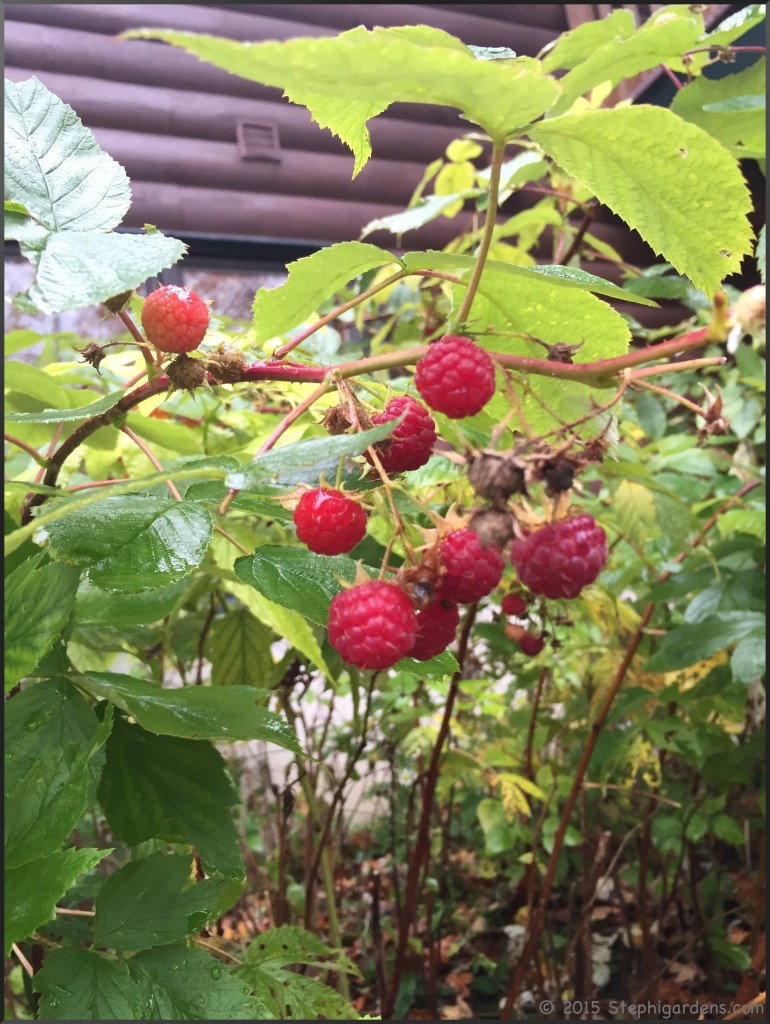
Even this late, the raspberry garden is still full of juicy raspberries.
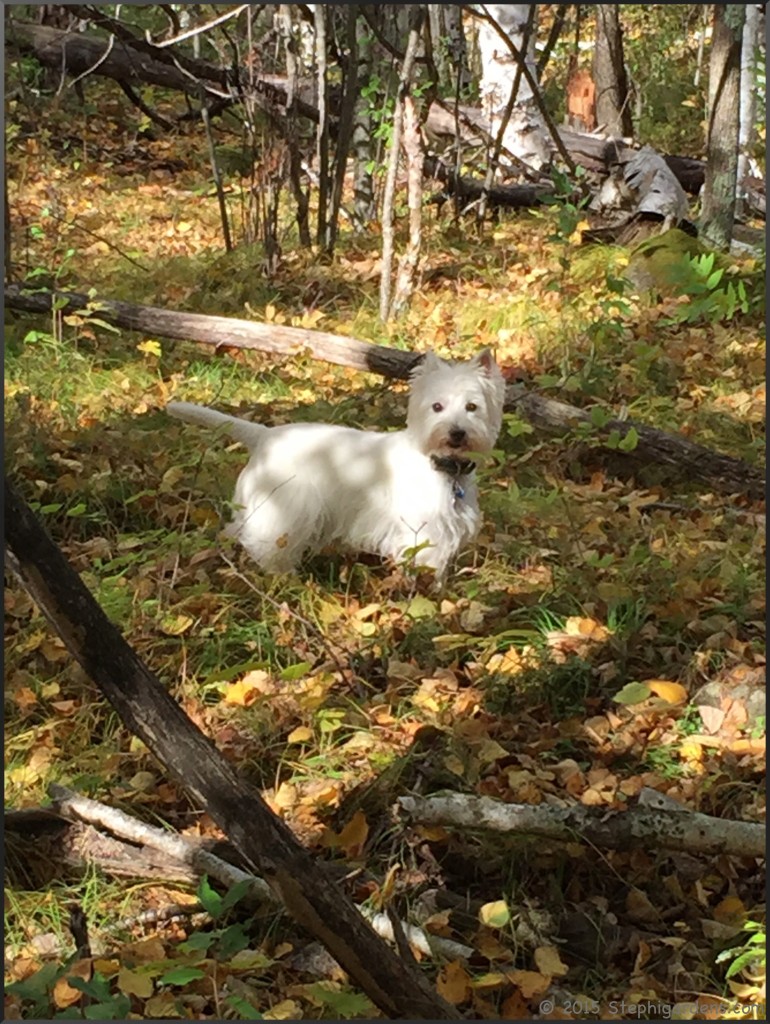
Of course, Daisy is enjoying the fall woods as well!
Over the last couple of weeks I’ve been lucky enough to travel around the upper Midwest and see an amazing explosion of fall color.
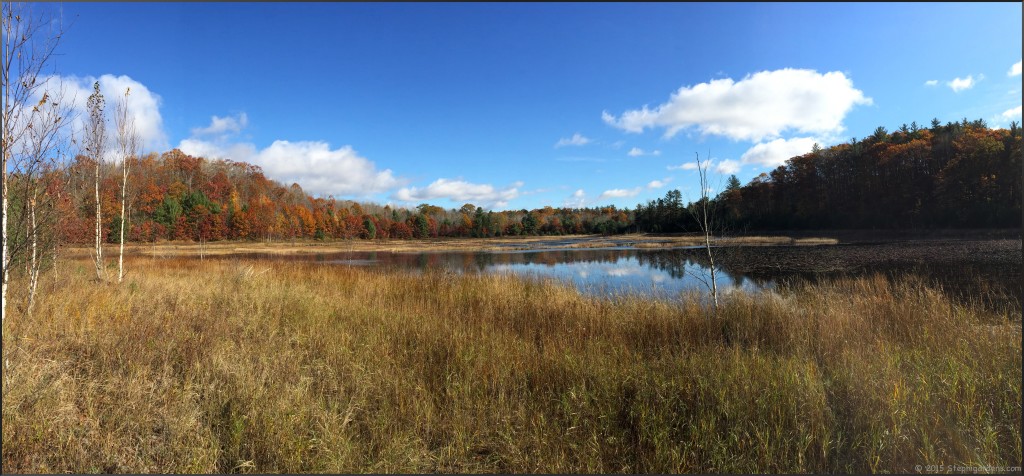
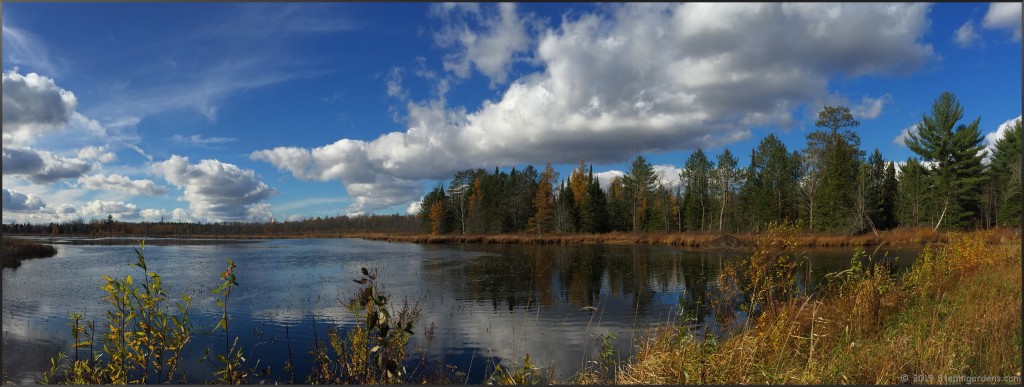
I spent one of those weekends visiting my mom Peggy in Northern Michigan. Once the rain finished, we went out to the woods to have a look at some of the beautiful places Peggy likes to visit. Even though it may not have been peak color time, the textures and colors of the Northern Michigan forests that weekend were still stunning.
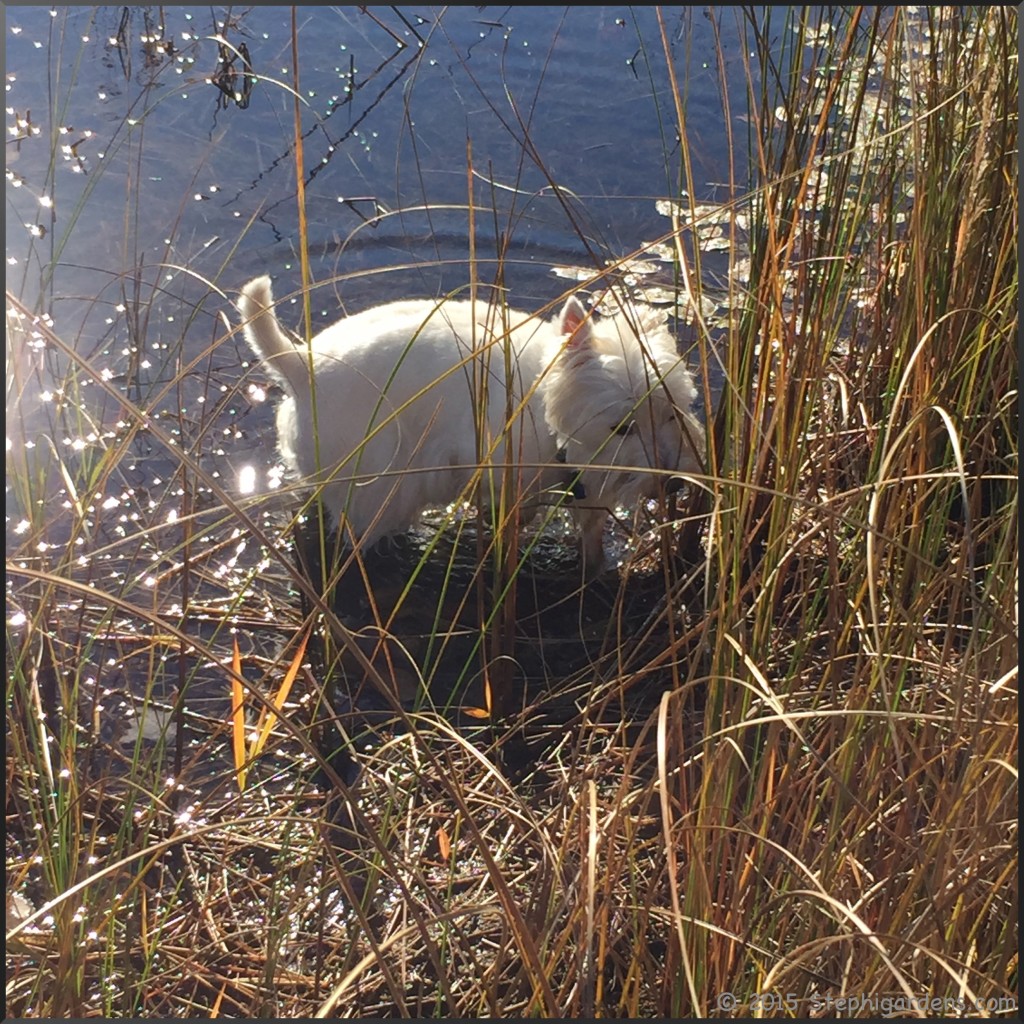
Daisy decided it was warm enough to go in the water. She’s become much more daring in her old age.
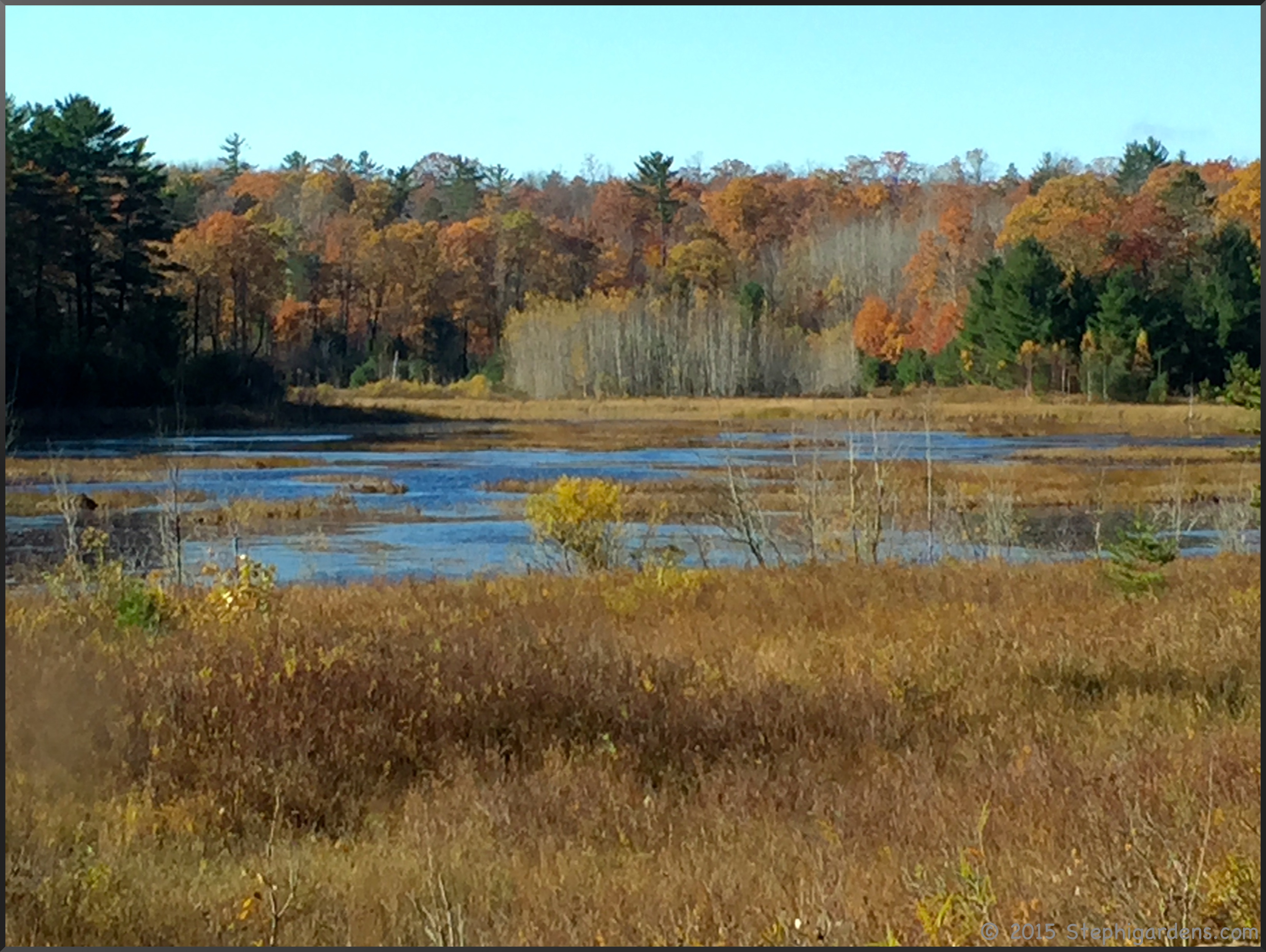
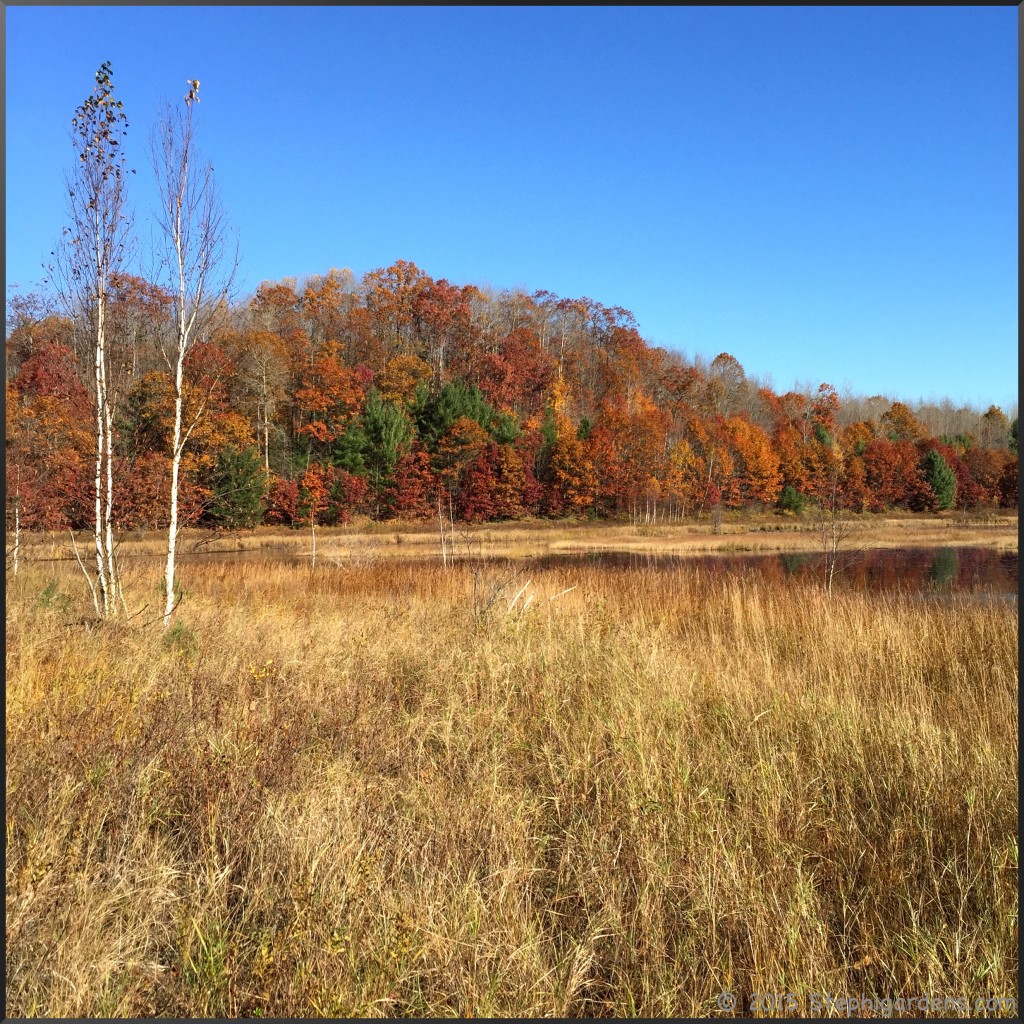
We had some fun taking panoramic pictures.
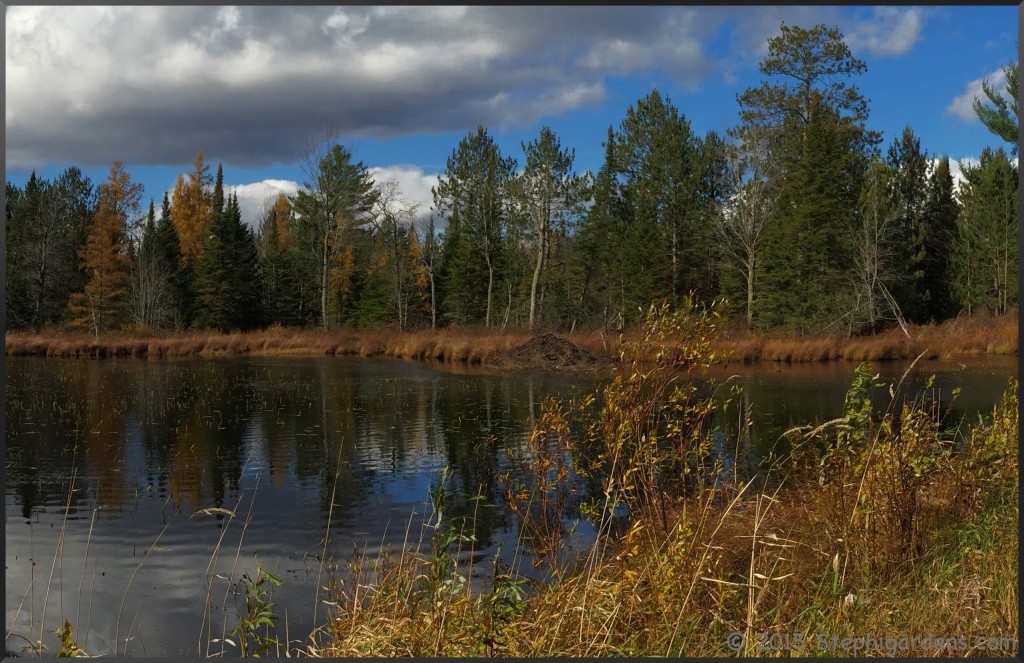
After lunch, we headed to a new spot to check out a beaver house.
We didn’t see any beavers, but saw some very active muskrats enjoying the warm fall day.
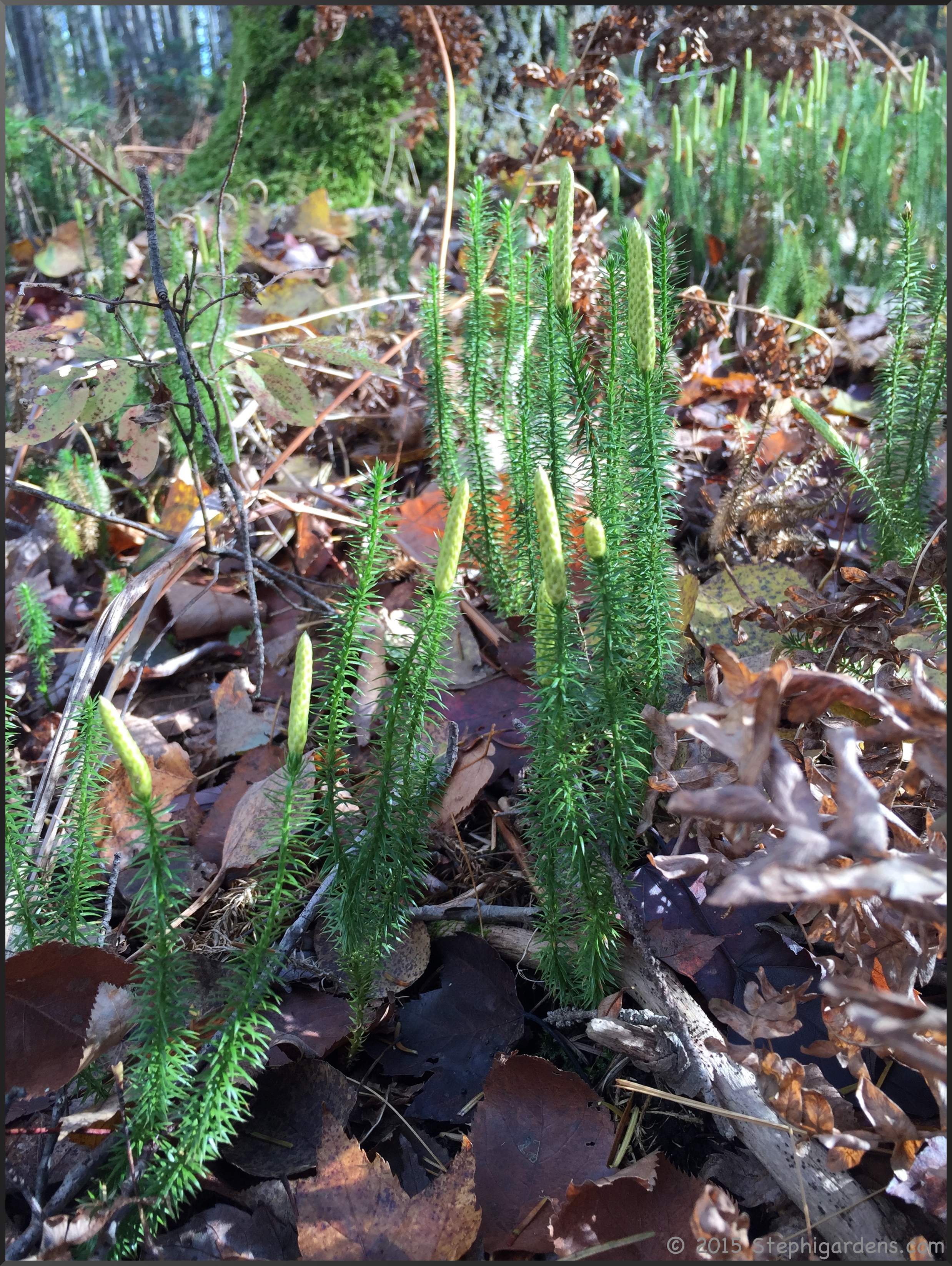
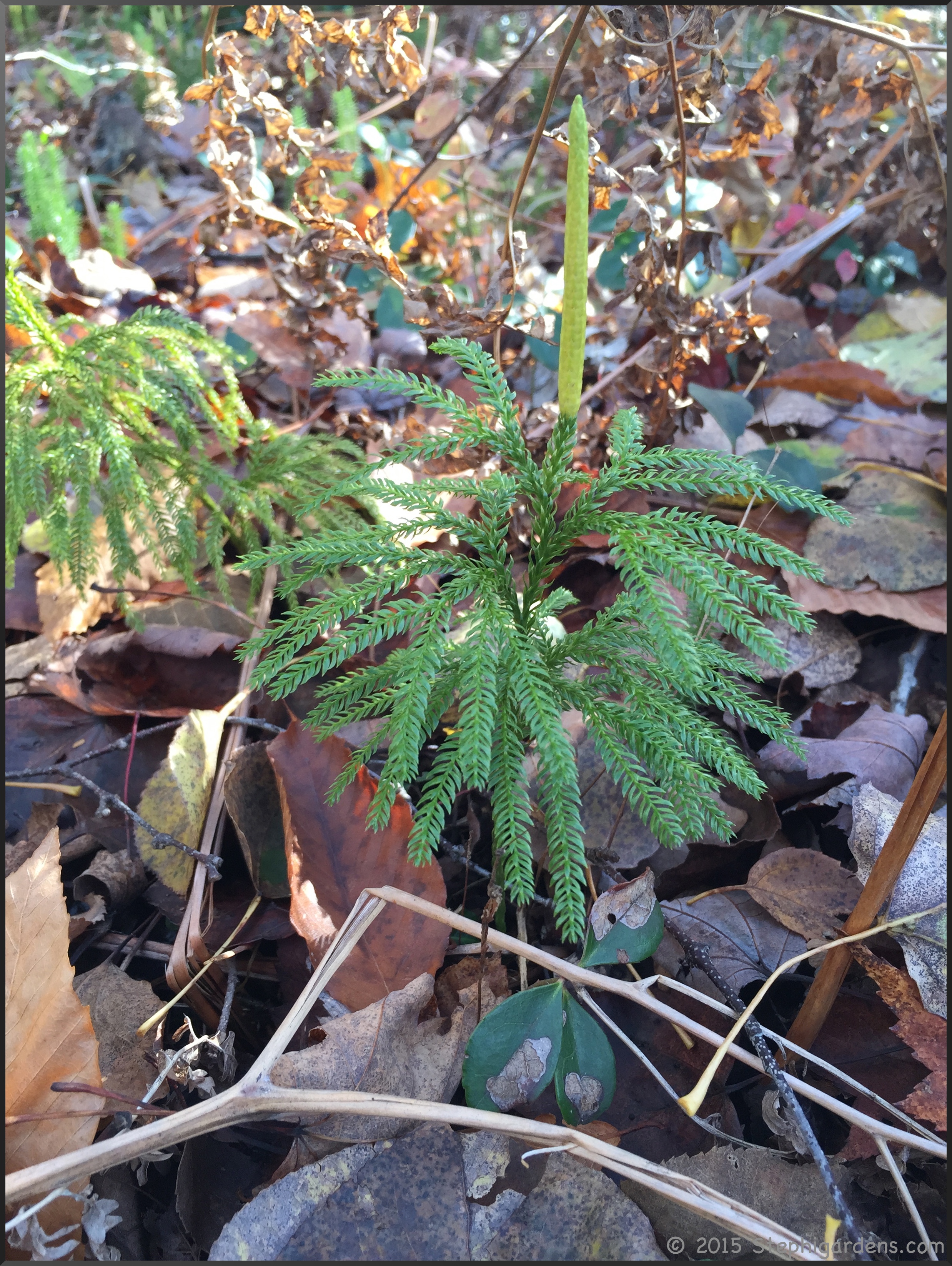
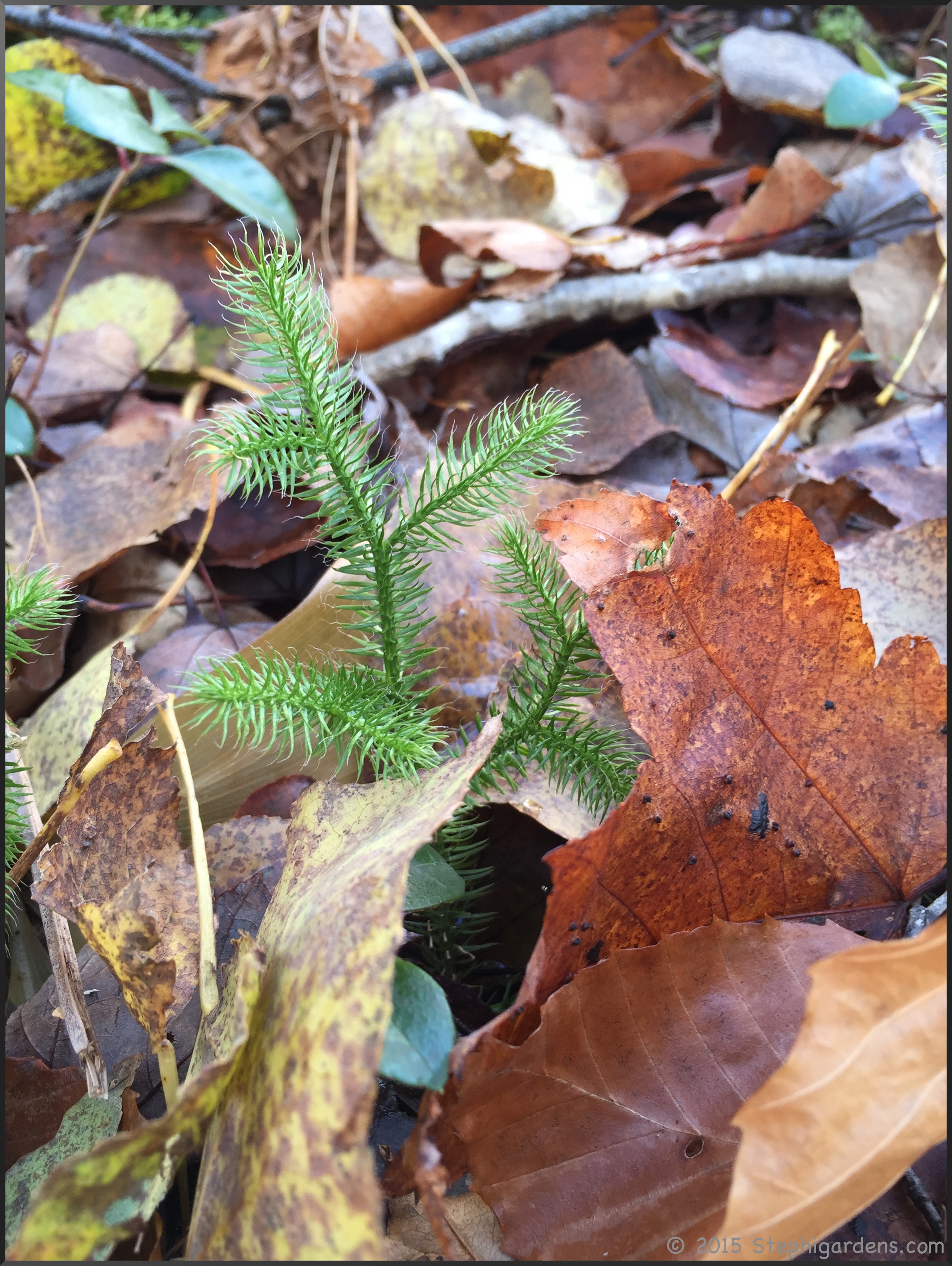
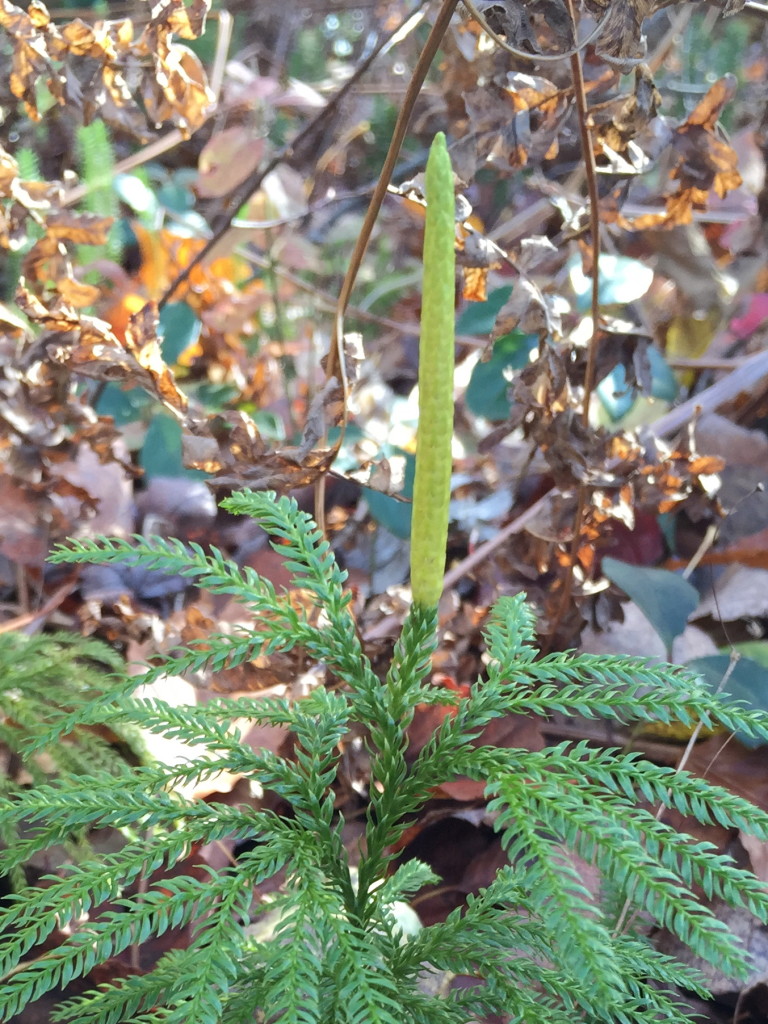
On the walk back to the car, we were poking around in the woods. I was particularly intrigued by the club-mosses that were so easy to spot this time of year. I shot some pictures of my find, and then noticed my mom was also taking pictures. She had seen the same thing in another spot and they had captured her interest as well!
Spinulum annotinum (Stiff Club-moss)
While we were looking at the Spinulum annotinum, we realized that there were a number of other species of club-mosses in the area.
Club-mosses are perennial, evergreen plants related to ferns and horsetails. They spread by runners, either above or below ground (rhizomes) and get their name from the club-like, spore producing strobili found on top of many club-moss species.
Club-mosses were often collected for Christmas decorations, but these are very slow growing plants and are now protected in most states.
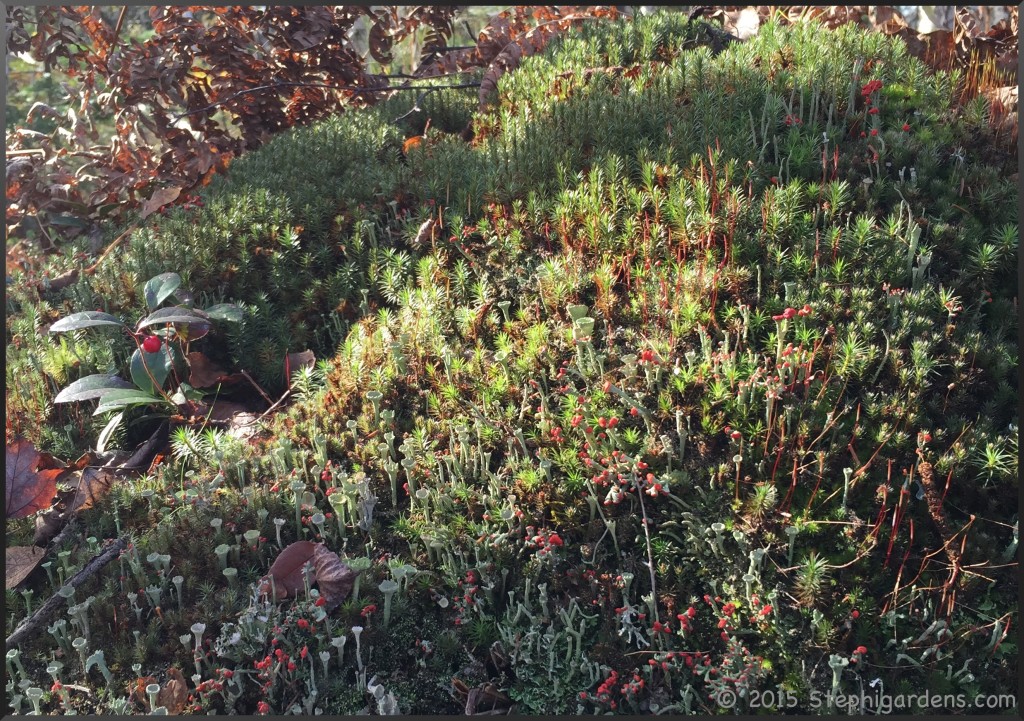
As a bonus, there were lots of British Soldiers (Cladonia cristatella), Pixie Cups (Cladonia chlorophaea complex) and Wintergreen (Gaultheria procumbens) in the area.
I’m always amazed at the fascinating things you can find just a few feet off the beaten trail.
Interesting Club-Moss Resources:
Club-Mosses of Wisconsin-great keys to identify the club-moss species from the Herbarium at U-W Green Bay
Michigan Flora On-Line-great resource for Michigan plant identification from the University of Michigan
For years our outdoor faucets have leaked. Sometimes it’s the hose connection, or the faucet dripping when it’s open at certain positions, or sometimes just all the time when they are open. If it’s the hose connection, that’s easily solved with a new washer. But, when we’ve tried to have the faucets fixed any improvements were short lived so we just do the best we can to minimize the waste. Then this happened…
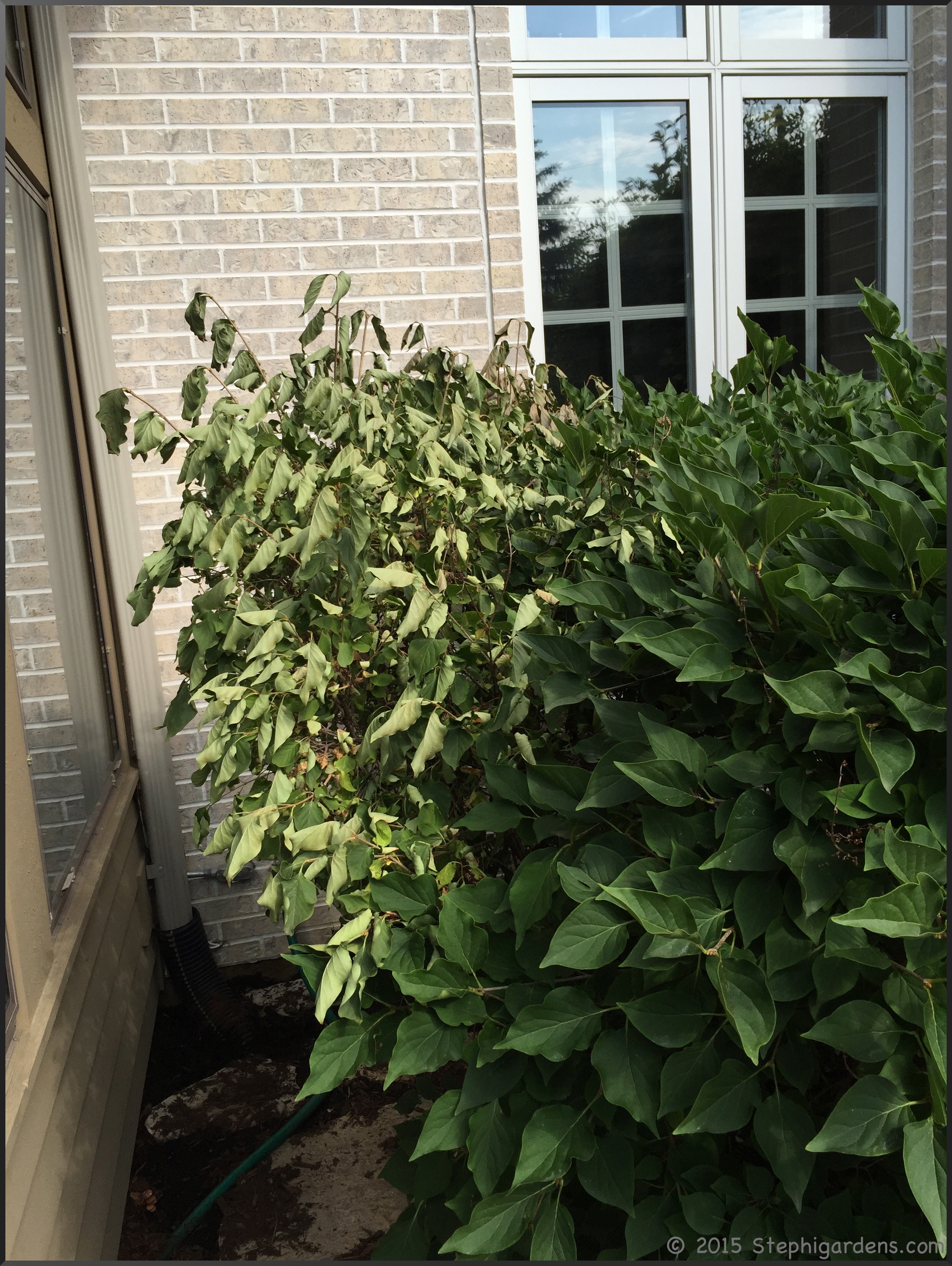
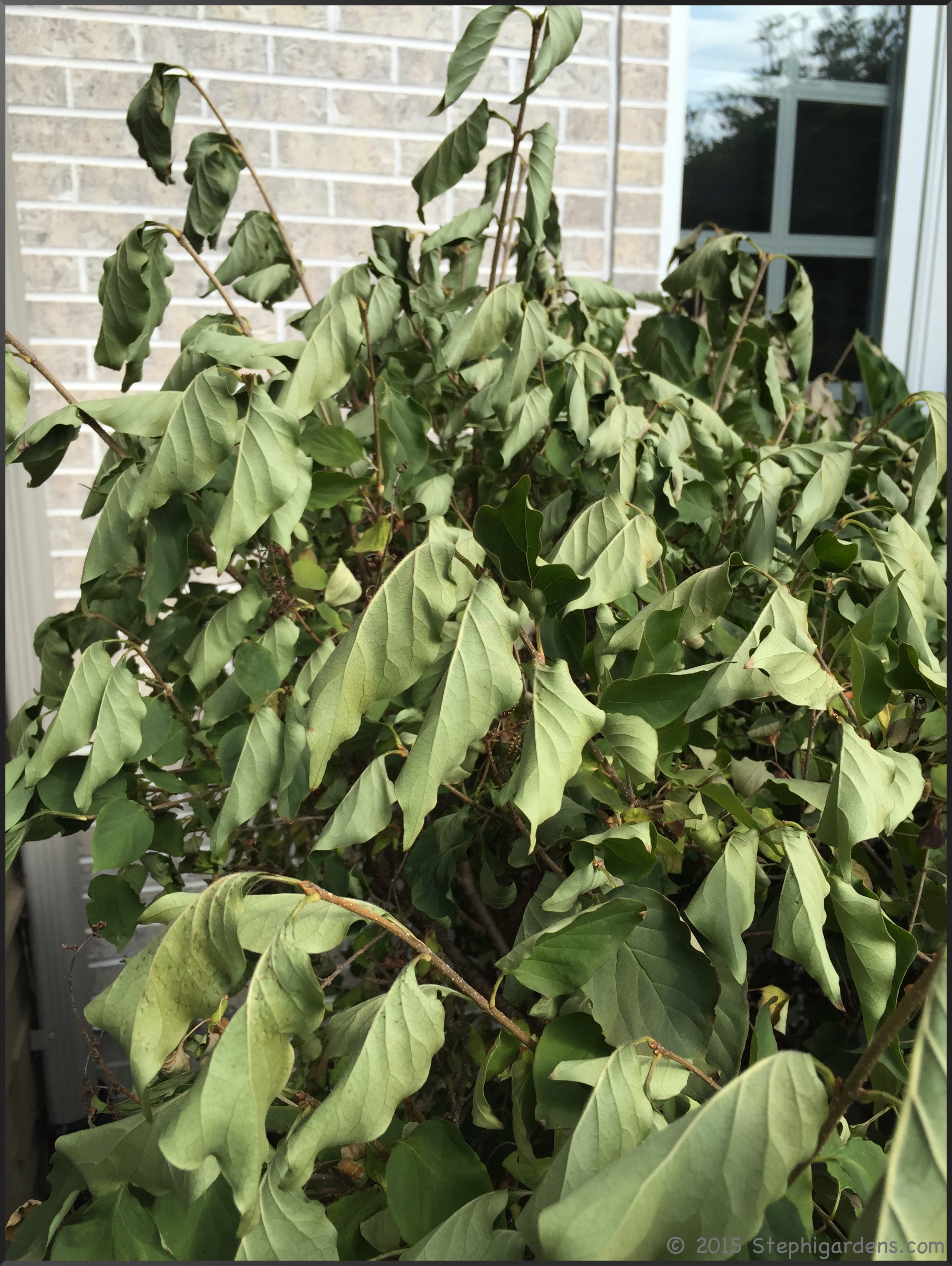
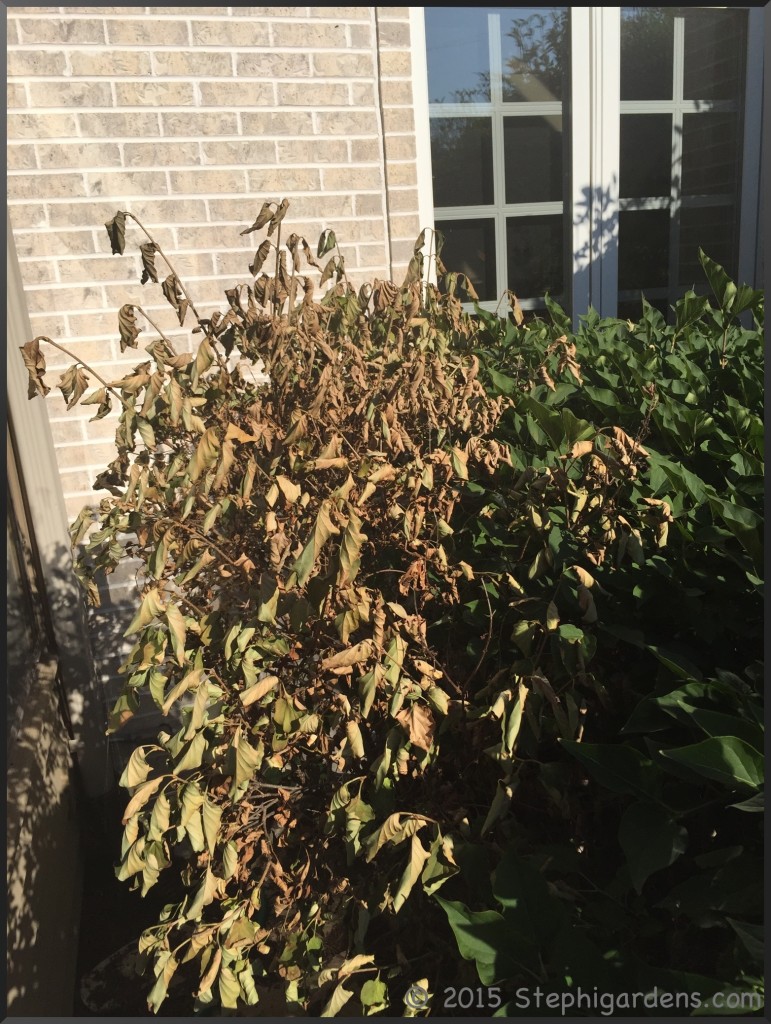
The 20 yr old Korean Lilac in the back suddenly started showing signs of severe stress for what I thought was no logical reason.
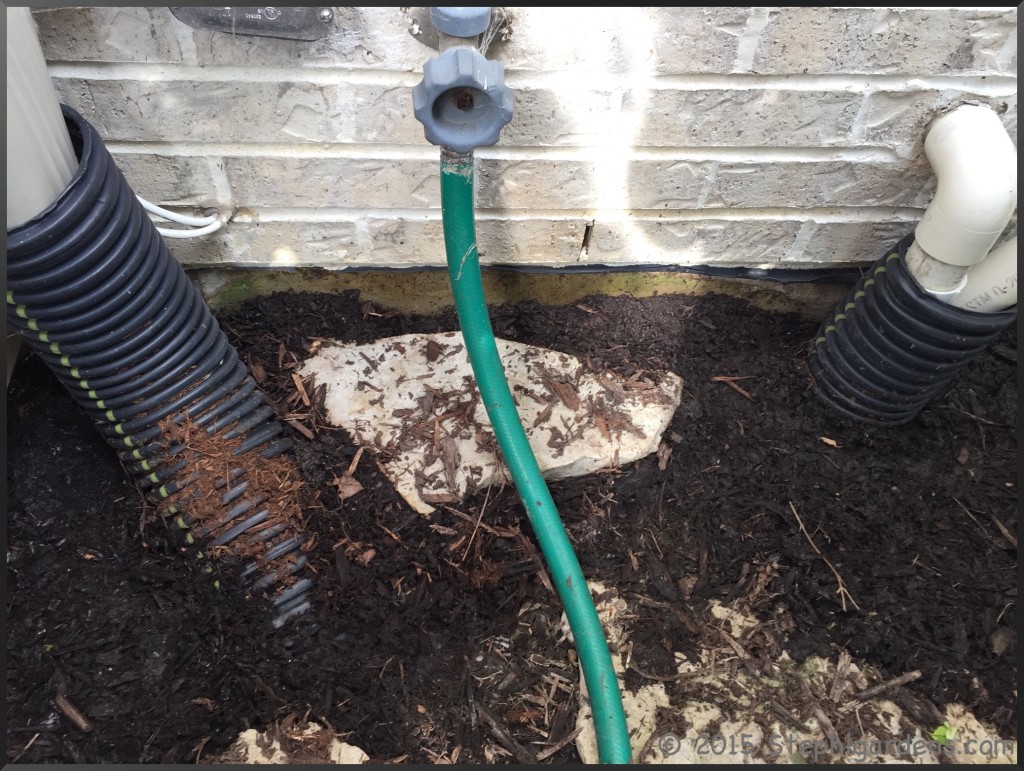
As I walked back to inspect, I quickly realized the entire area was sopping wet. Usually in the past that meant an issue with the drainage system, but not this time. It was the faucet dripping!
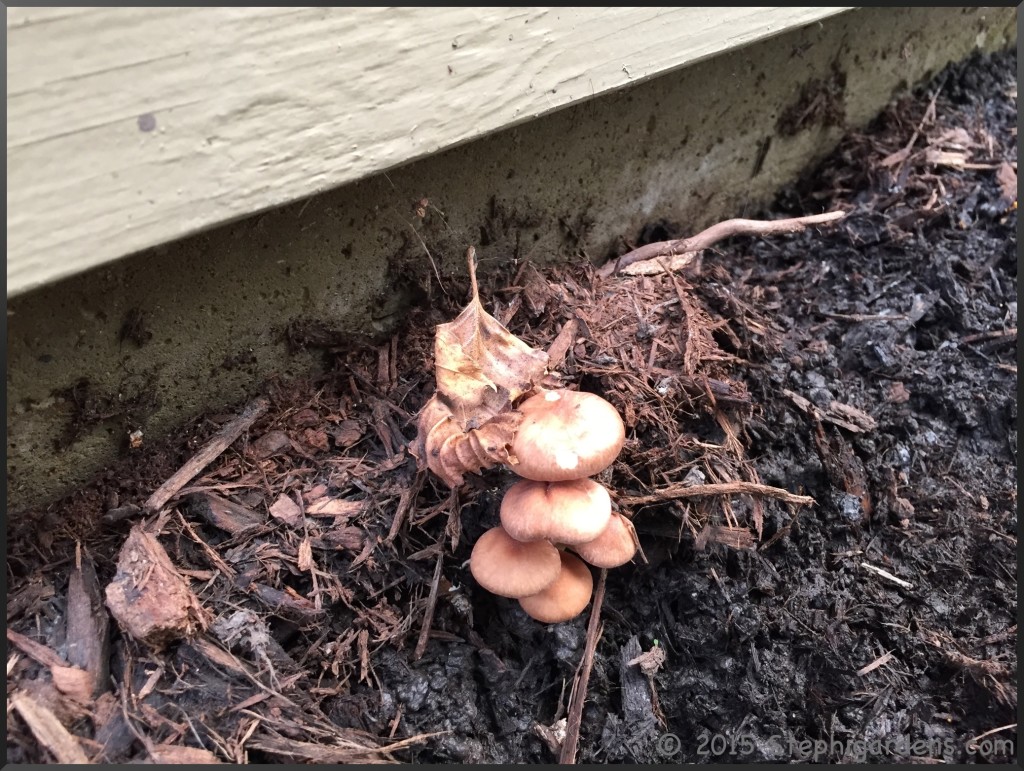
We usually leave the faucet on and control the water with a hose extender that is easier to access. I’m not one for crawling around in the bushes every time I want to water the plants or use the hose. What I didn’t realize was that the faucet had starting dripping quite severely. The mushrooms in the area should have been my first clue, but again, I don’t go back there very often.
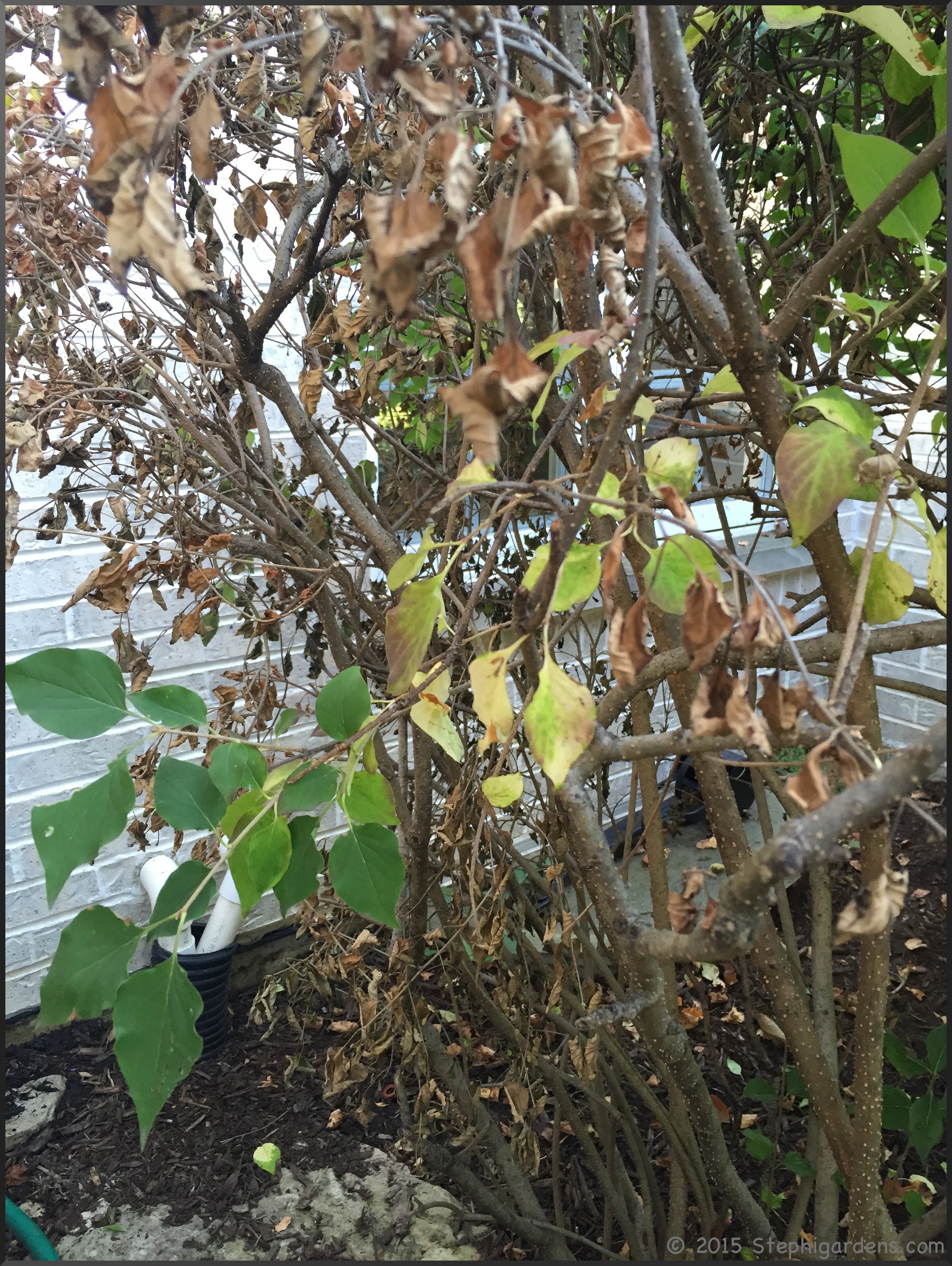
I got the water turned off and hoped for the best. A week later and looking worse.
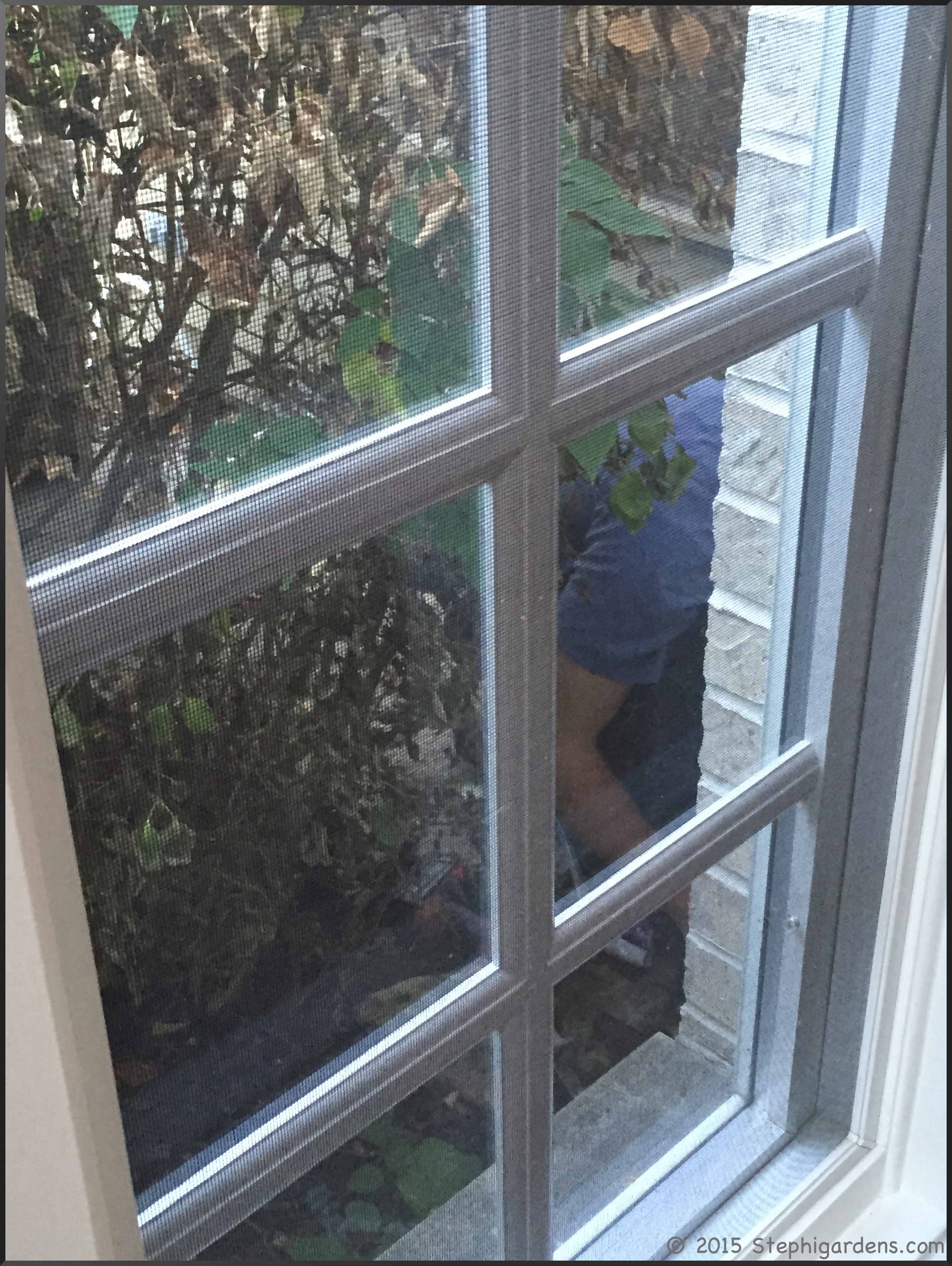
It was time to finally deal with the leackey faucets so I don’t waste any more water and damage any more plants. This is actually not a simple job, so we had to call a plumber in. I am not going to do any soldering of copper pipes in the house (or outside for that matter).
Yay! My new faucet. We had the front one done too while were at it. No more leaky faucets, wasted water or damaged plants!
While it pretty much looks terrible, there’s still a few green branches on the lilac. Maybe there’s hope. We’ll just have to wait until spring.
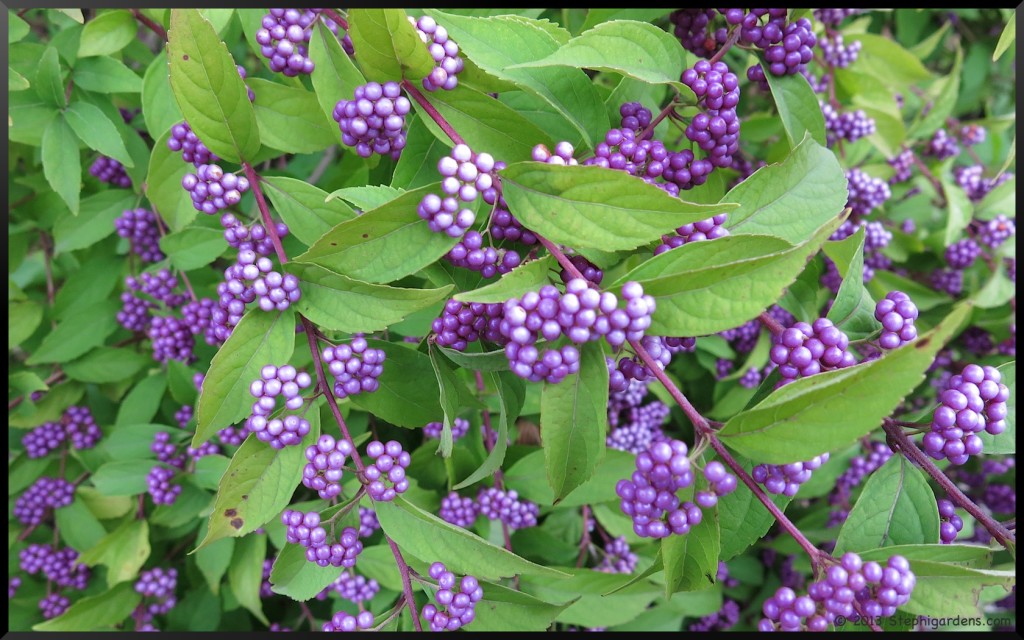
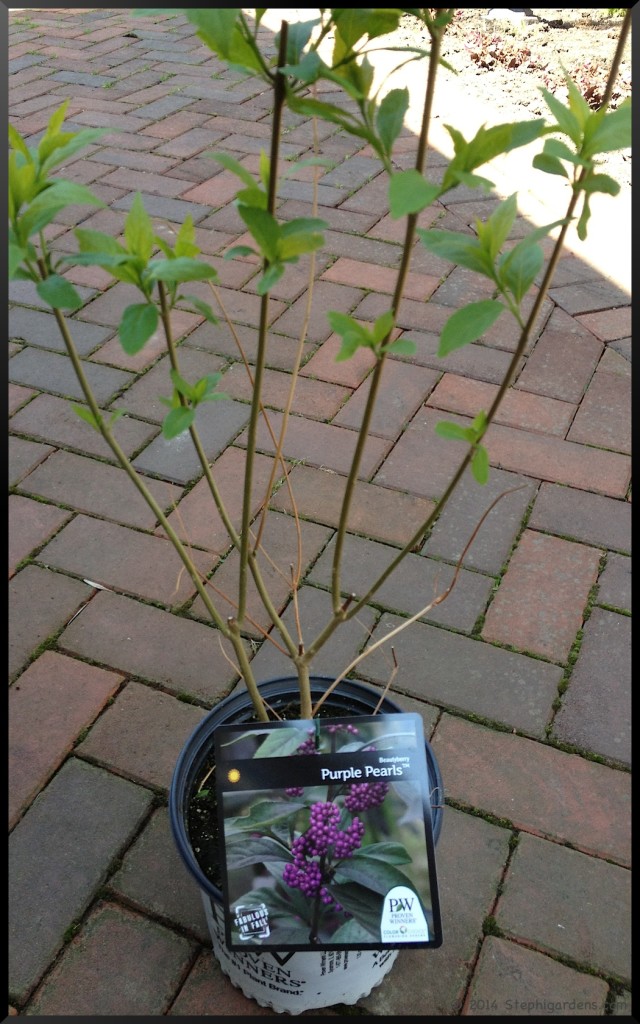
Last year, I wrote about buying three Purple Pearls Beautyberry Bushes(Callicarpa x NCCX1) at the Morton Arboretum Plant Sale. I had seen them the fall before in the parking lot there and thought they were just stunning with all those amazing, unusual purple berries (seePurple Beautyberry Bush). I had to plant them in my yard!
For a first year plant, they looked fine last fall and I was looking forward to even healthier, bigger shrubs this year. Like many of us around the country, this was a tough winter and of course I worried about what would survive and what wouldn’t. So as everything awakened from winter, I was mostly happy to see things leafing out and looking healthy.
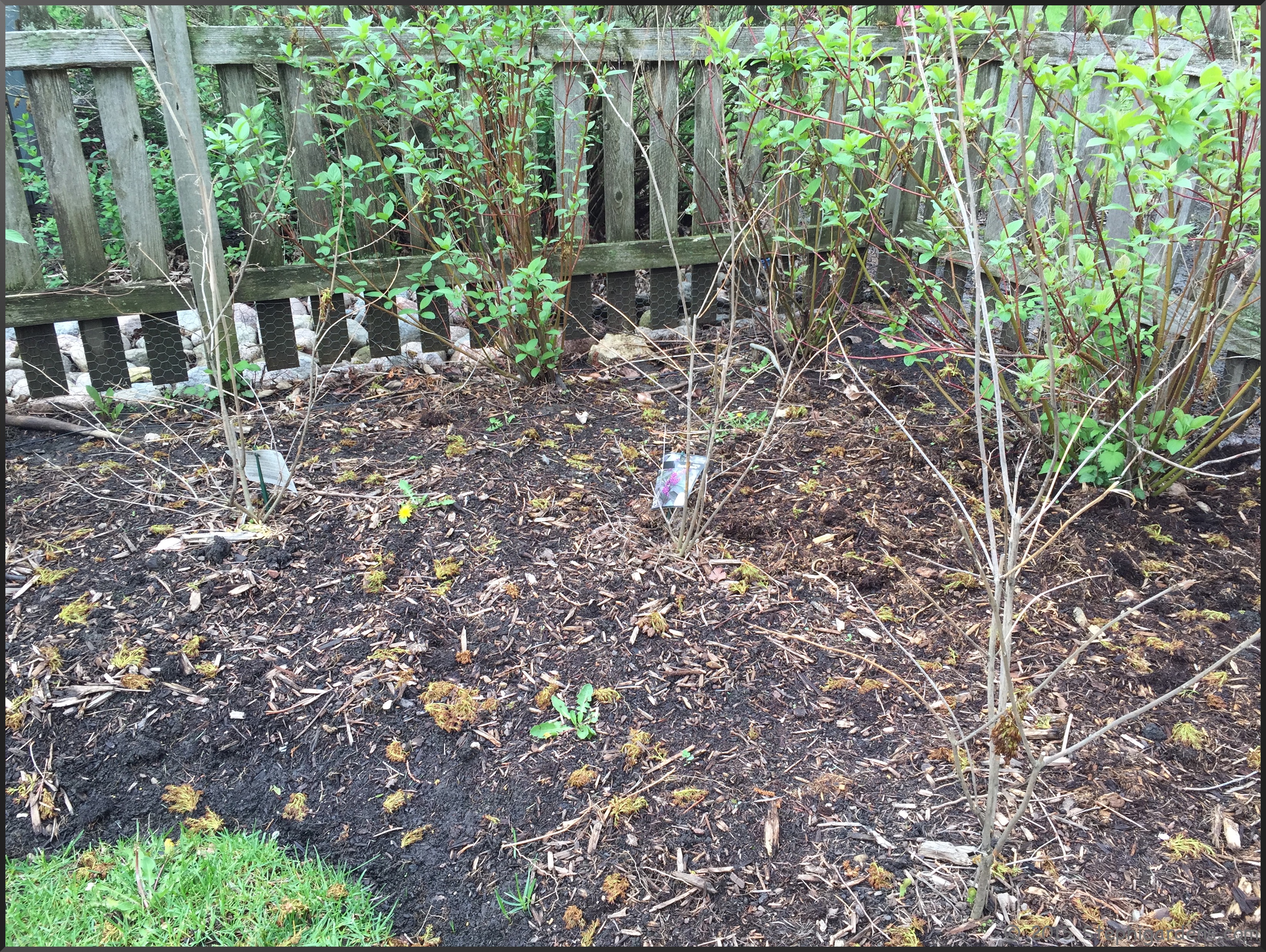
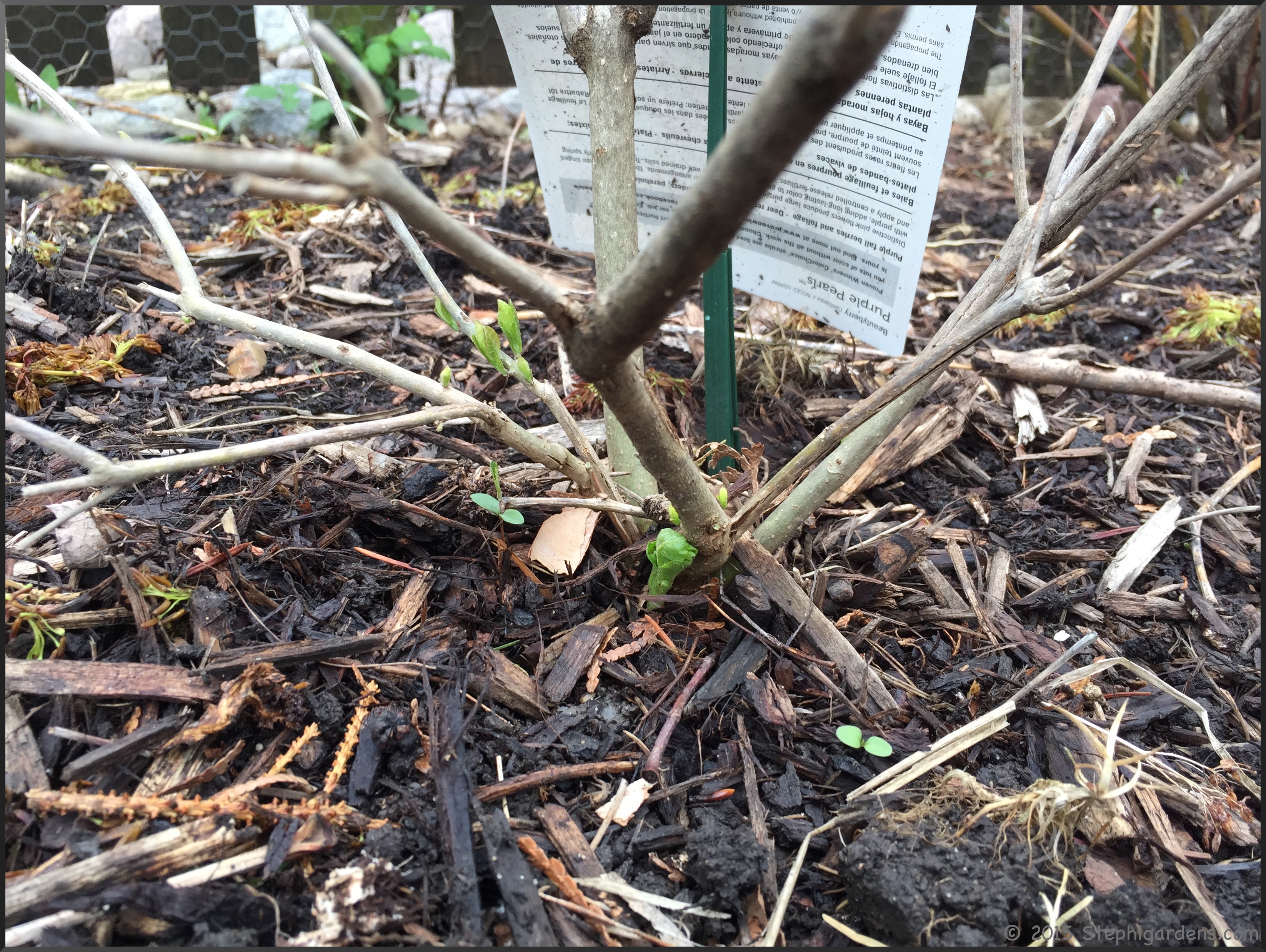
But not the Beautyberry Bushes. By late April, they looked like nothing more than 3 dead sticks when everything else was already leafing out.
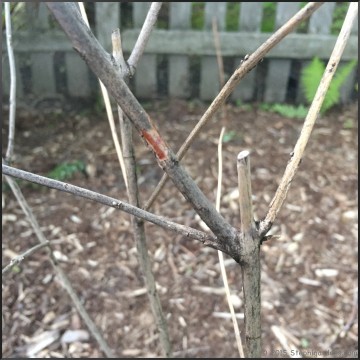
But, it just didn’t seem like they were dead. The branches had some spring to them and if I scraped a small piece of bark it seemed fleshly underneath.
But they really looked dead. I was worried, but not ready to yank them out yet.
One of the great services that the Morton Arboretum provides is a free plant clinic where you can call or bring in a specimen and they can try to help you. I finally got around to calling and spoke with the nicest women who happened to have them in her yard too. She said hers looked just like mine and that they tend to leaf out a lot later than most shrubs. The also regrow mostly from the base. so I should be patient.
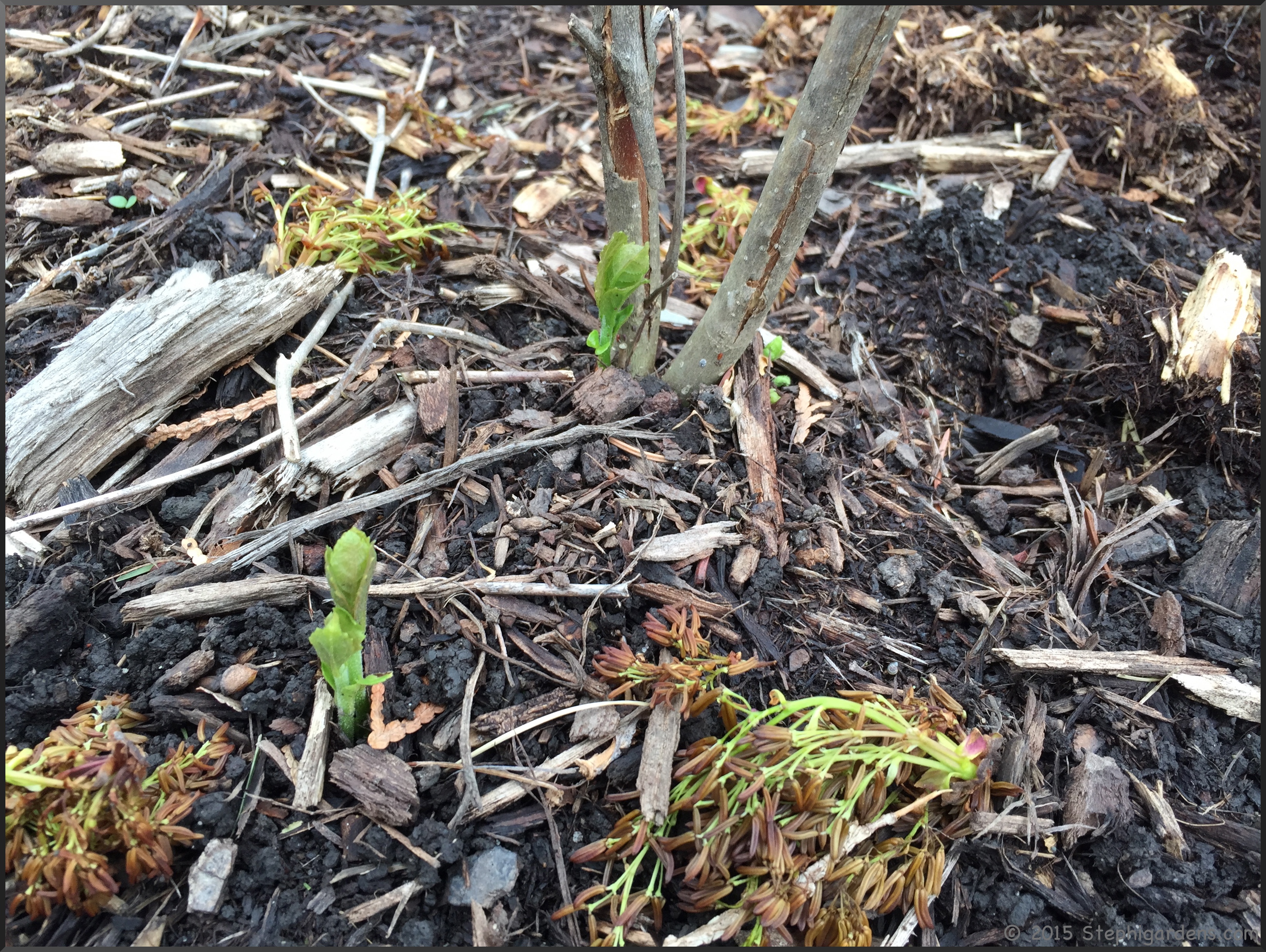
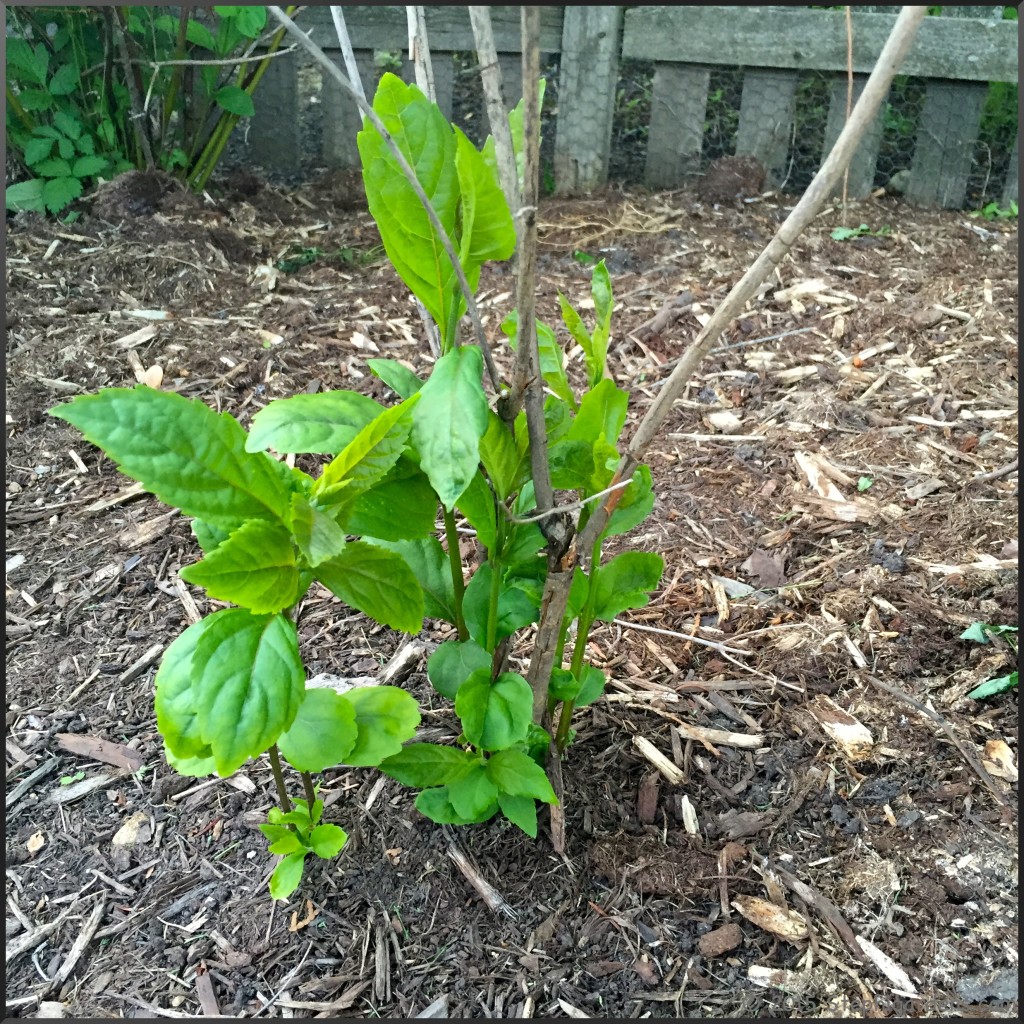
It had been a couple of days since I had looked at them, so now I was curious. Lo and behold, little sprouts of green had just emerged!
They were alive! Even now, 3 weeks later they are still way behind many of the other shrubs, but I can be patient. At least they survived!
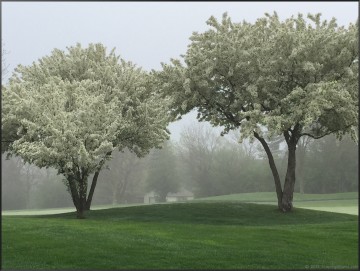
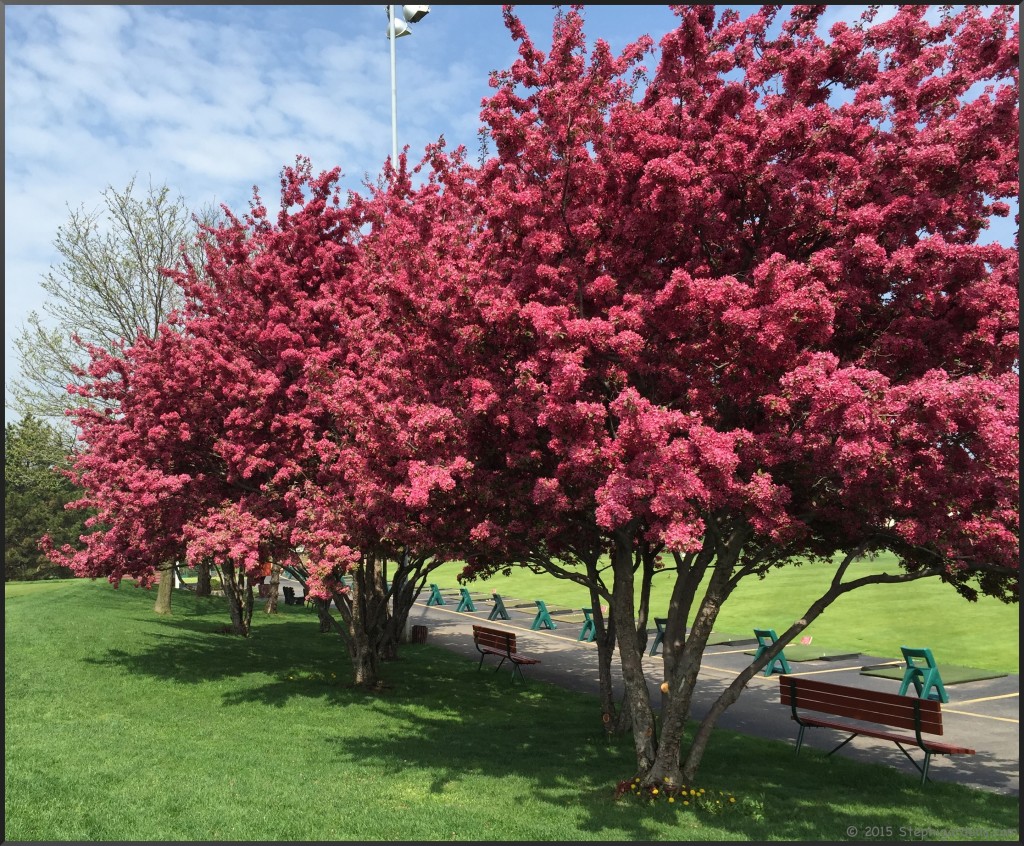
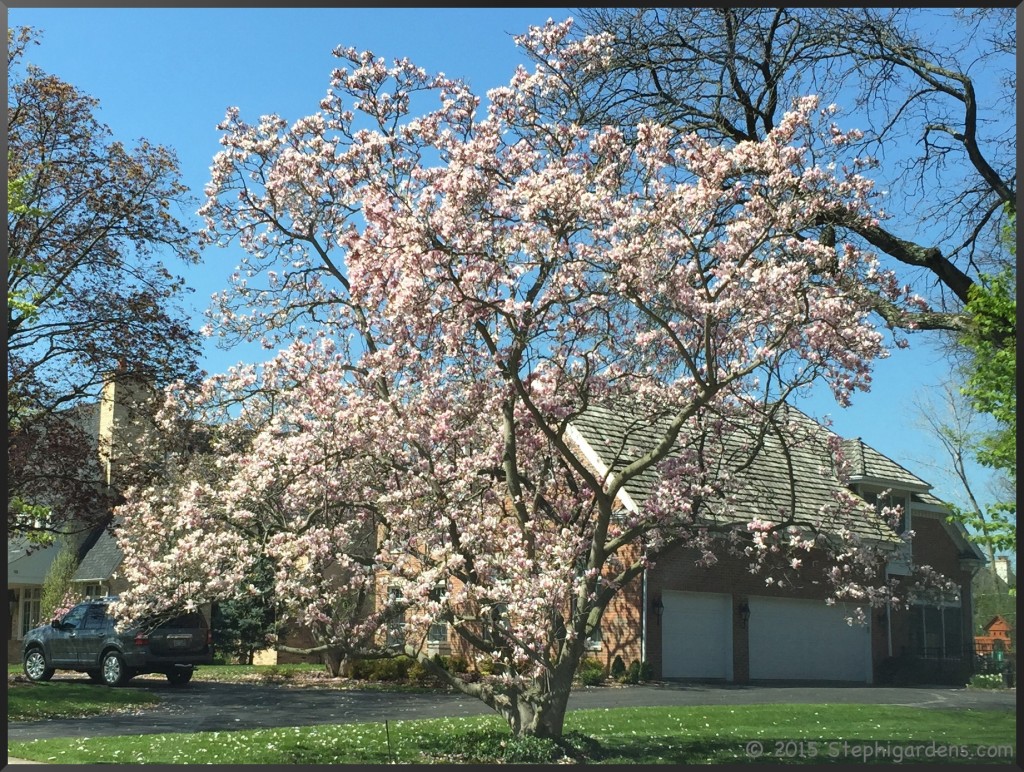
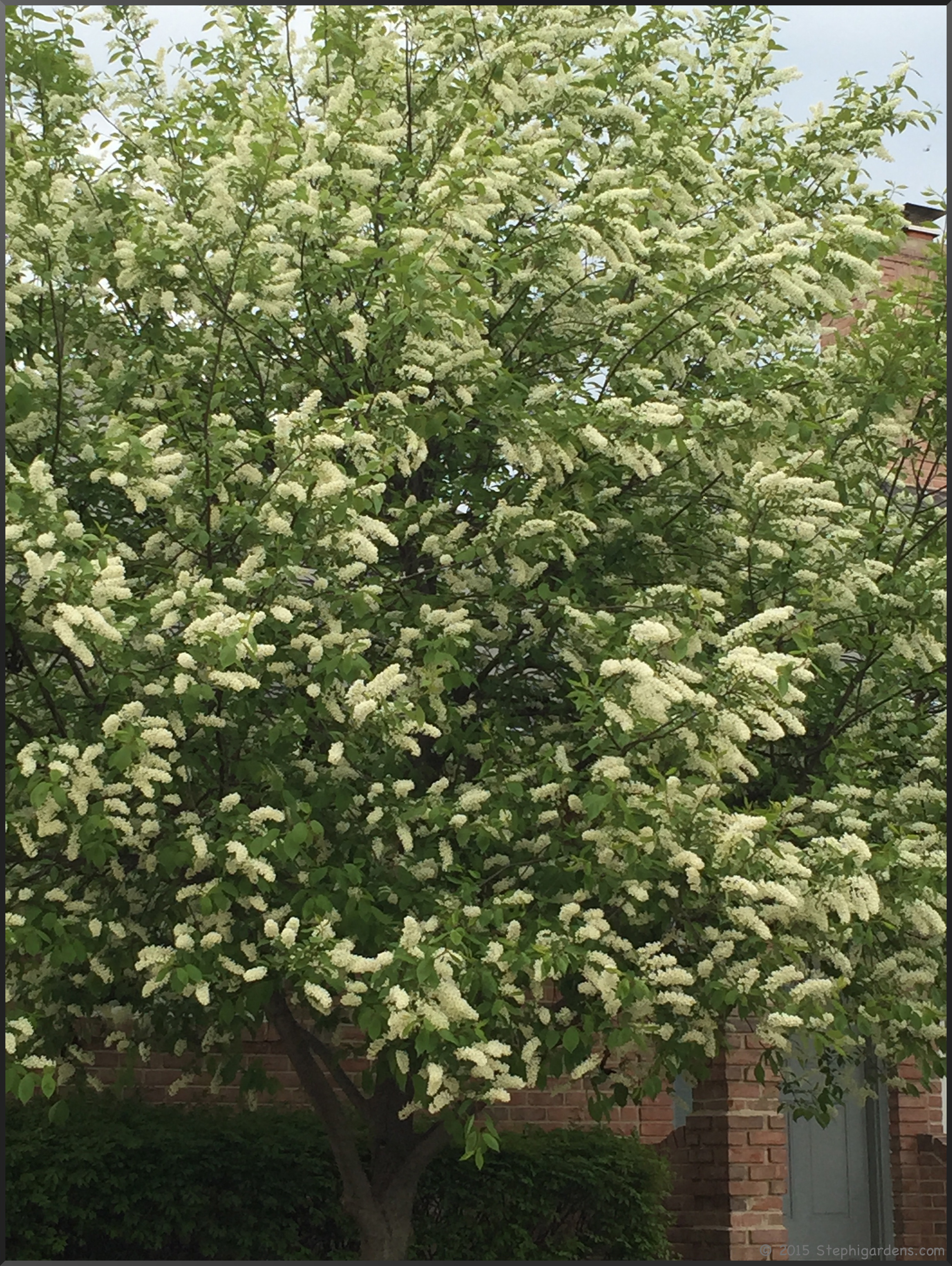
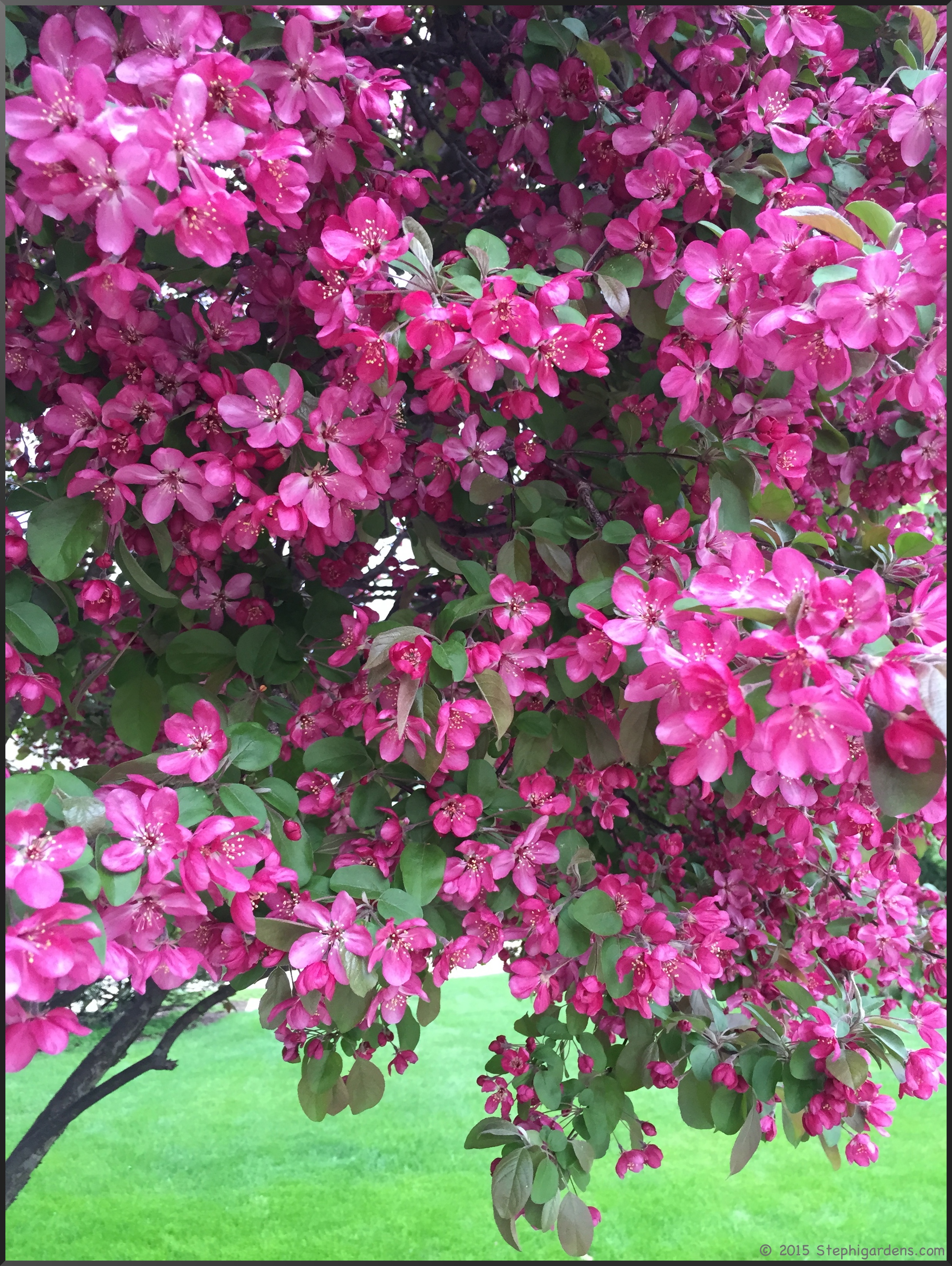
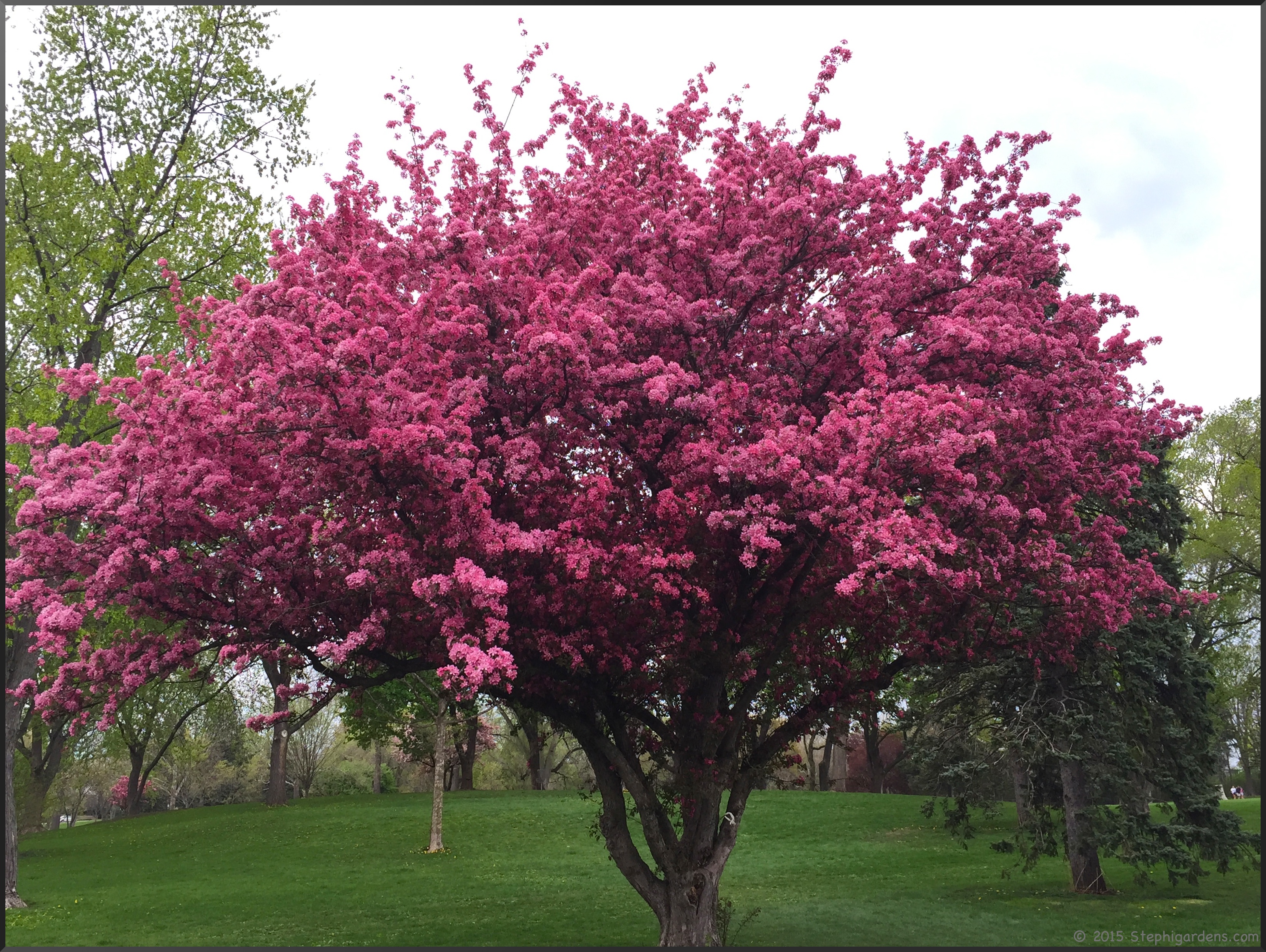
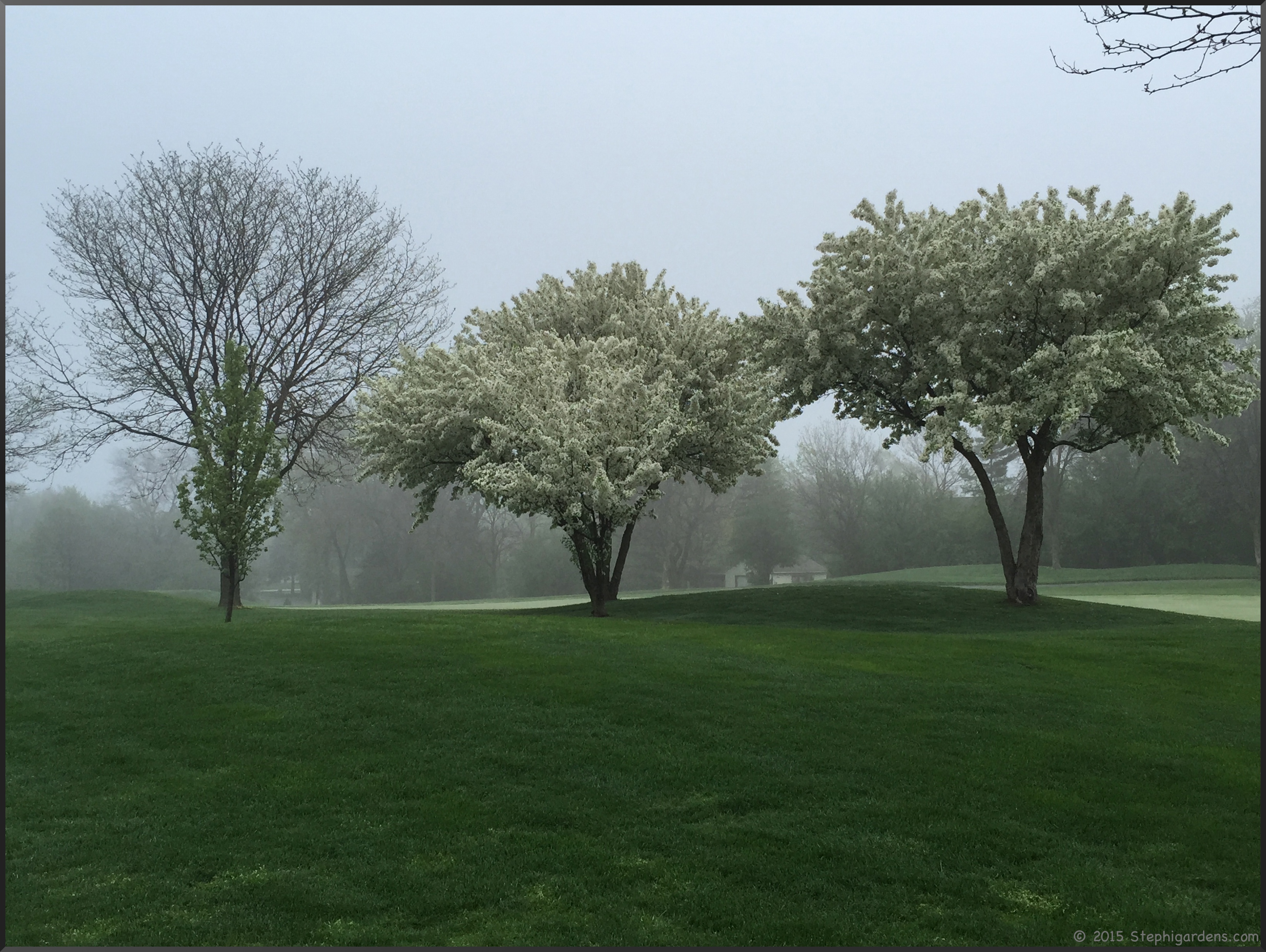
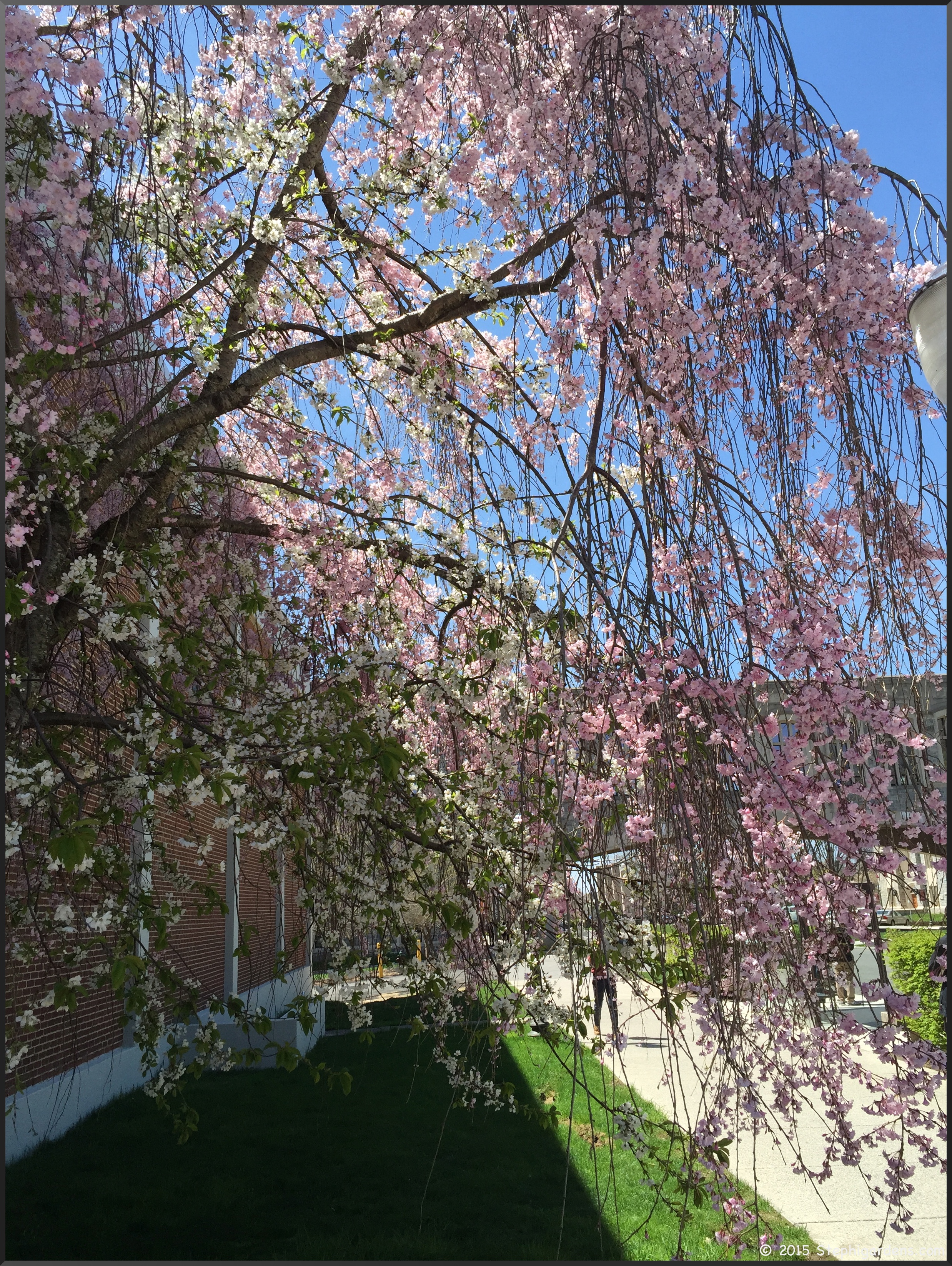
This spring, despite (or maybe in spite of) the poor weather the trees exploded in color like I have never seen before.
How were your flowering trees this year? I need to replace the maple tree we lost last year (So Long Beautiful Maple Tree) so I’m thinking a magnolia is in order. I’m so inspired by all the spring color this year.
Sadly, while all these trees are blooming so many ash trees are succumbing to the Emerald Ash Borer (Emerald Ash Borer:Part 1,Part 2)
We had the chance to go to Virginia last weekend to make one last visit to two colleges before the May 1 deadline requires my twins to make a decision as to their plans next year. Aside from the great admitted student tours, it was a real treat to leap ahead a couple of weeks into full blown spring. We’ve had a few nice days here and there in Chicago and some spring flowers are starting to bloom, but not anywhere near peak yet.
All the trees were in full bloom! Pink and white everywhere.
This one was puzzling since it was white and pink??
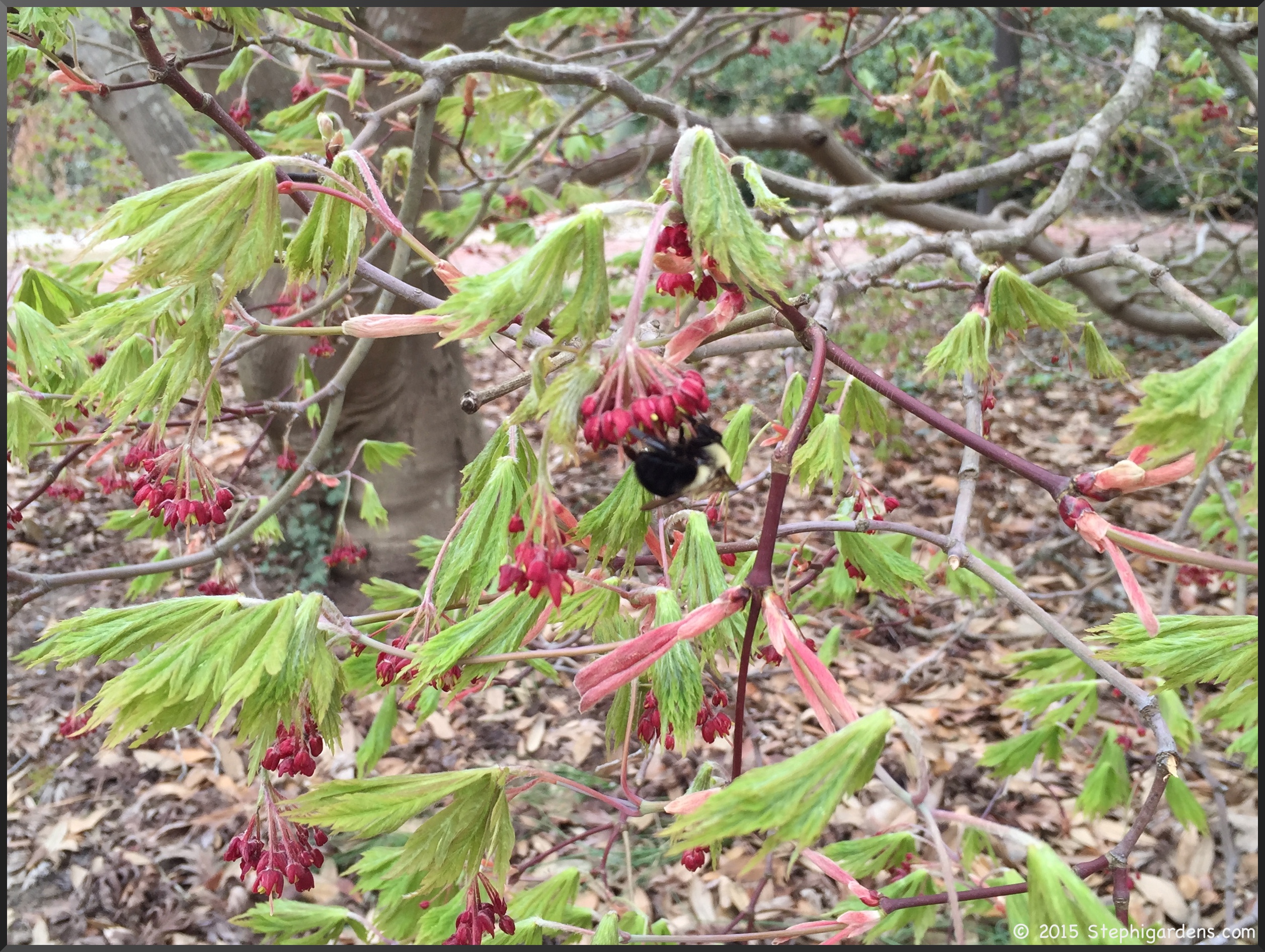
The bees were out already hard at work!
Brightly colored tulips and daffodils were everywhere.(Even the yews looked healthy and green, unlike many of mine.)
What beautiful splashes of color!
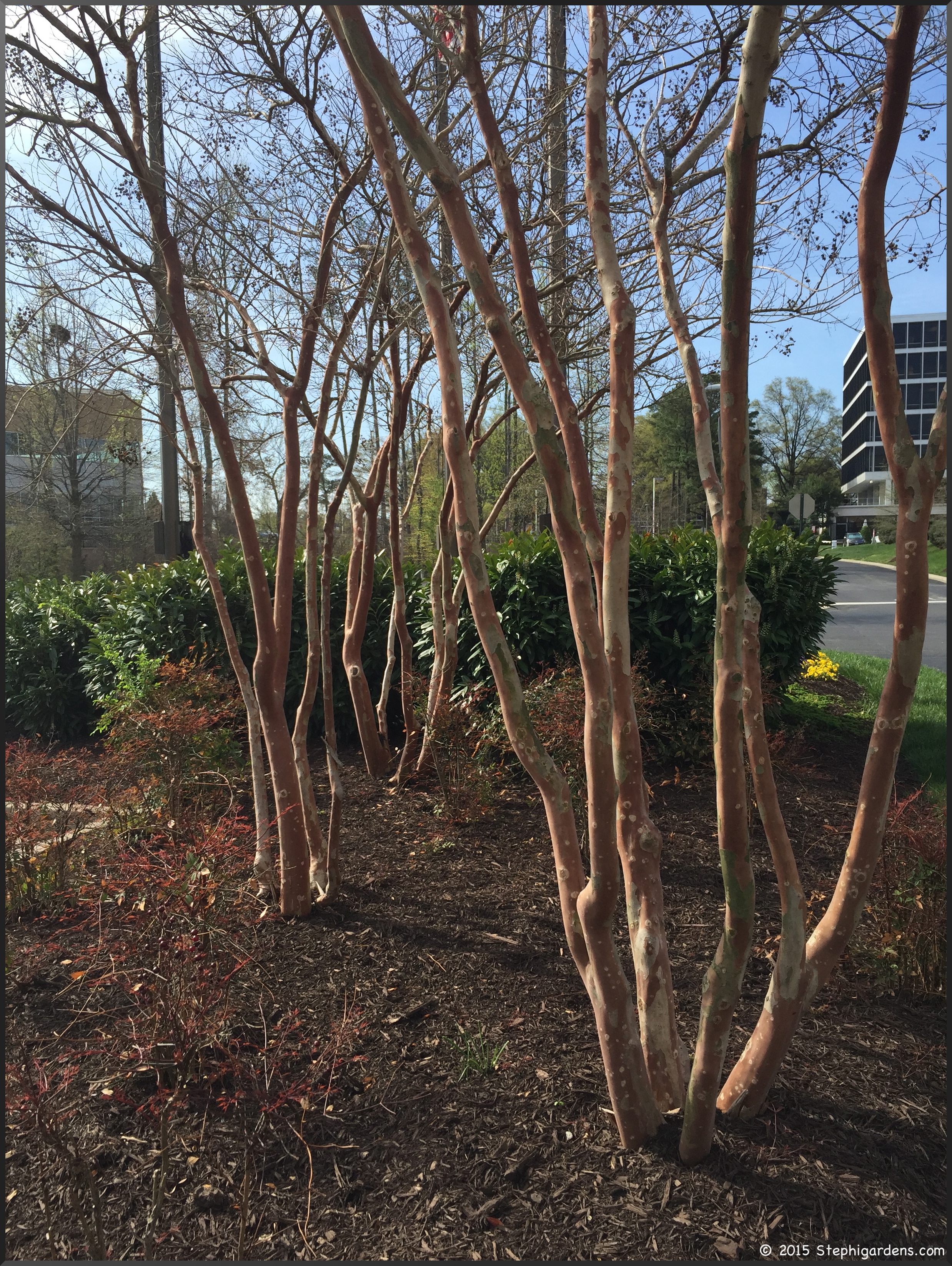
Crepe Myrtles are everywhere. They bloom in the summer, but their bark is also so interesting I thought I’d add them to the post. We can’t grow them here, but back in NJ my favorite plant in my garden was a dwarf crepe myrtlette. I hated leaving it behind when we moved.
Now that I’m back home, I’ll get to see the second round of spring come alive very soon. Our Redbud, Crabtree and Judd Viburnum are just starting to bud and the daffodils just bloomed in the last couple of days. Spring is here!
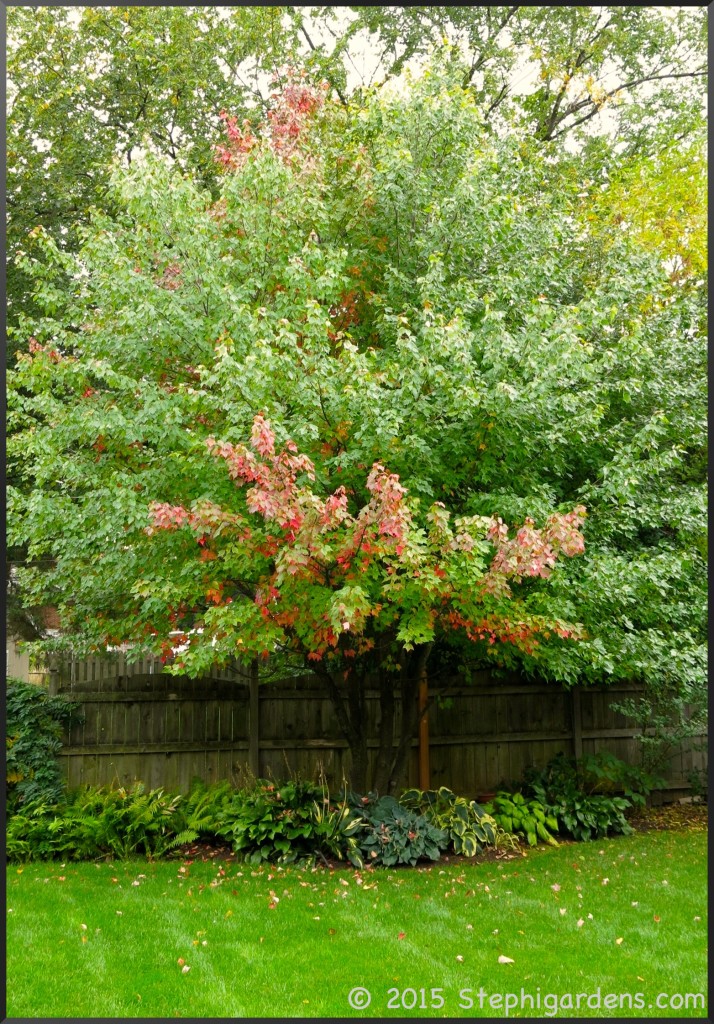
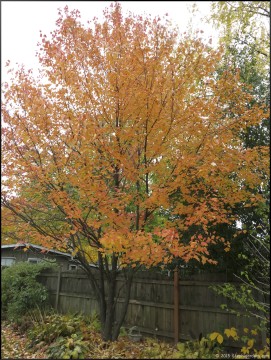
One of the major casualties in my garden this year was an 18 year old branched Freeman Maple that was one of the anchors of the backyard.
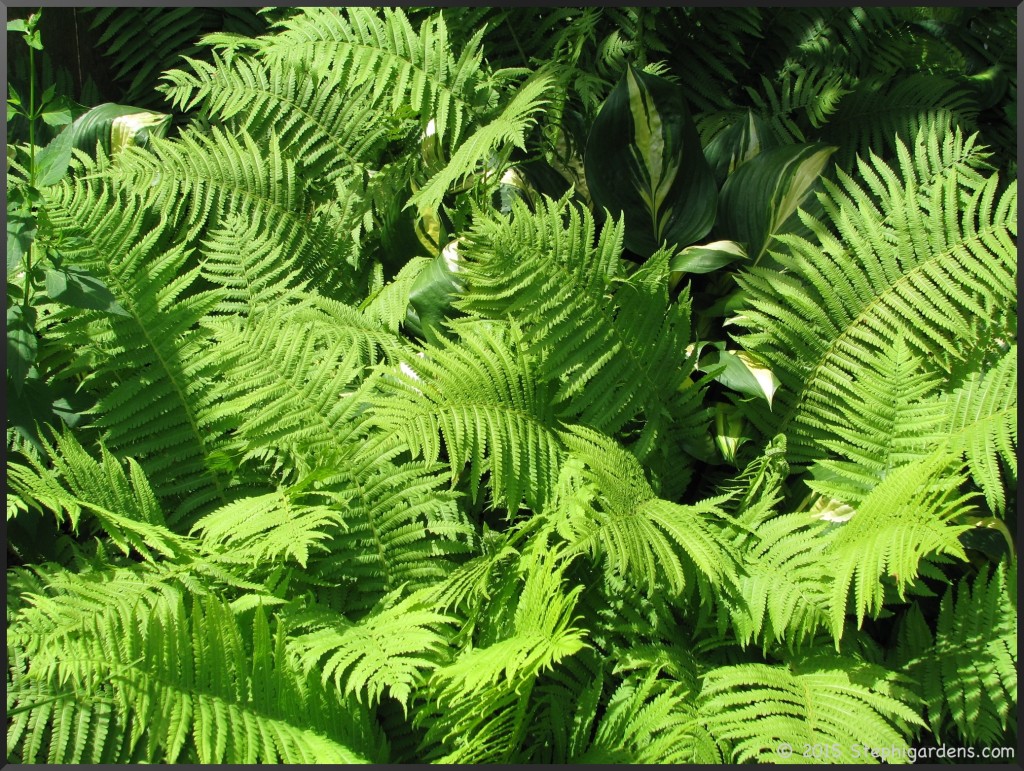
When we moved in about 20 years ago, along the side property line was a row of very scraggly Siberian Elms that were nearing the end of their life spans and dangerously dropping large branches in every wind storm. We decided to remove those and put in a specimen tree. The maple provided great shade and was surrounded by a hosta and fern garden.
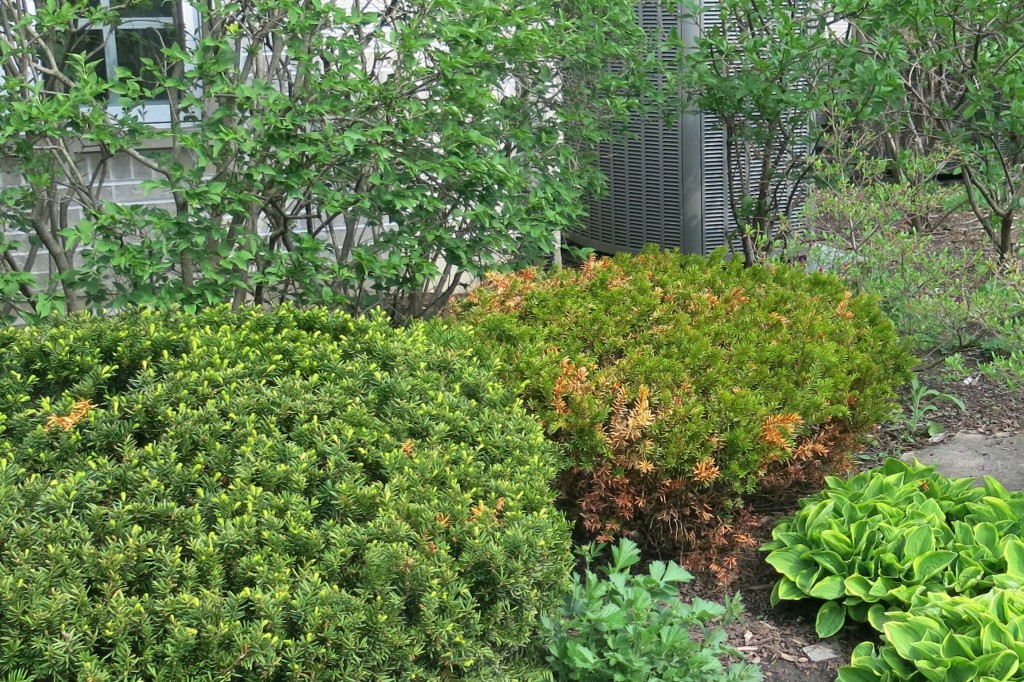
Last winter/spring, we had a couple of things happen on that side of the yard that likely contributed to the demise of this beautiful tree. First was the unusually cold winter we had. There were a lot of garden casualties reported in the Chicago blogging world and I had a few also, including some yews and grasses.
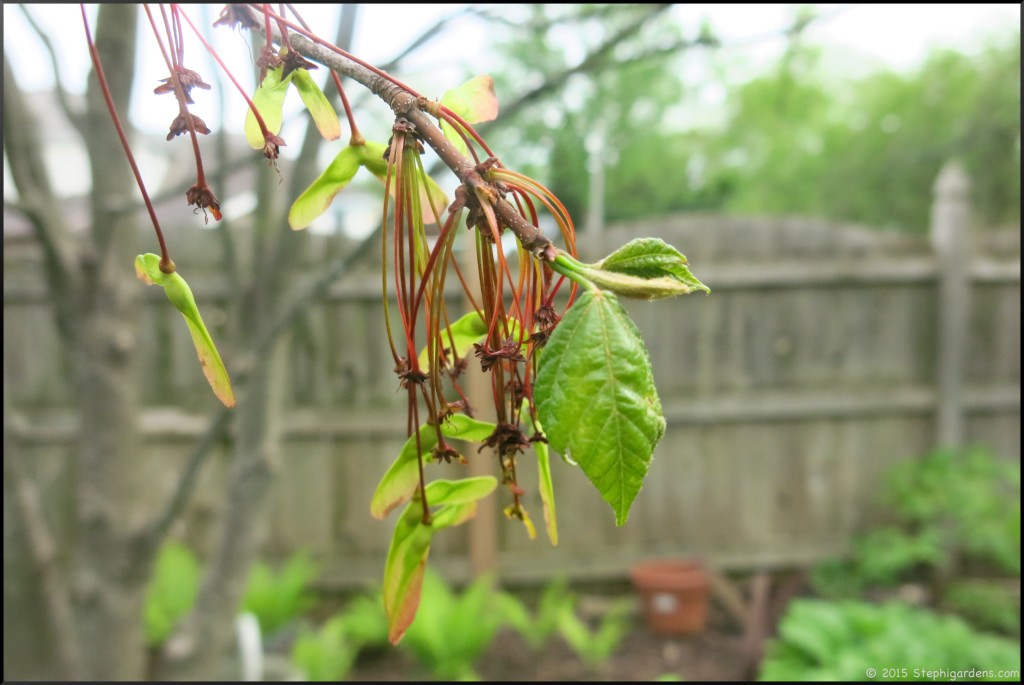
But, the maple looked fine as spring came, sending out buds, leaves and seeds.
It was also so established that it really should have survived just fine and no other maples in the area looked as though they were struggling.
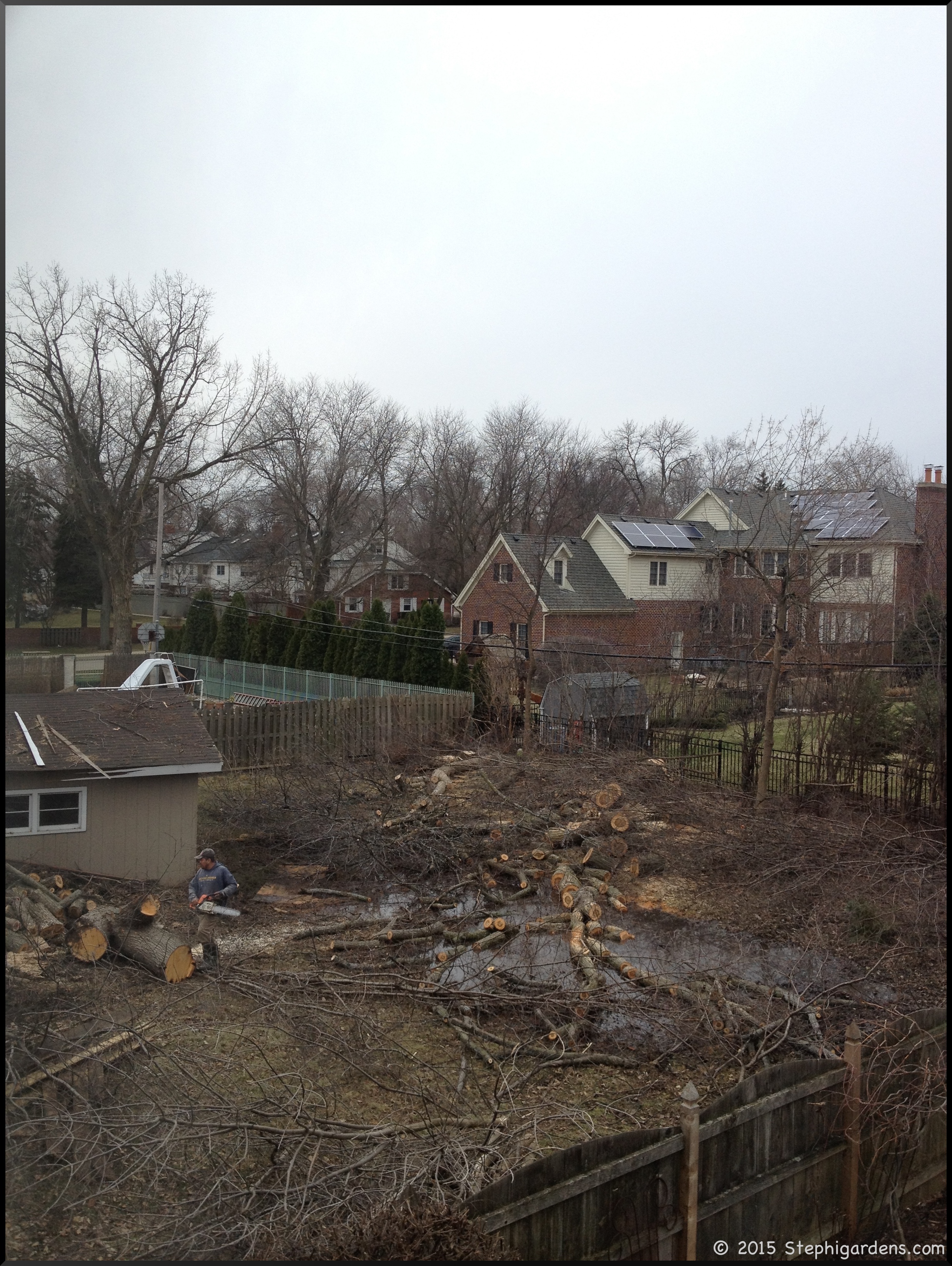
Then in early April, in preparation for the house next door being torn down for new construction, all the trees were removed leaving a barren and swampy lot for weeks. It was really a mess.
Because of the heavy equipment, the poor soil was compressed further and the natural neighborhood water drainage was disturbed. Then came the spring rains on top of already saturated soil.
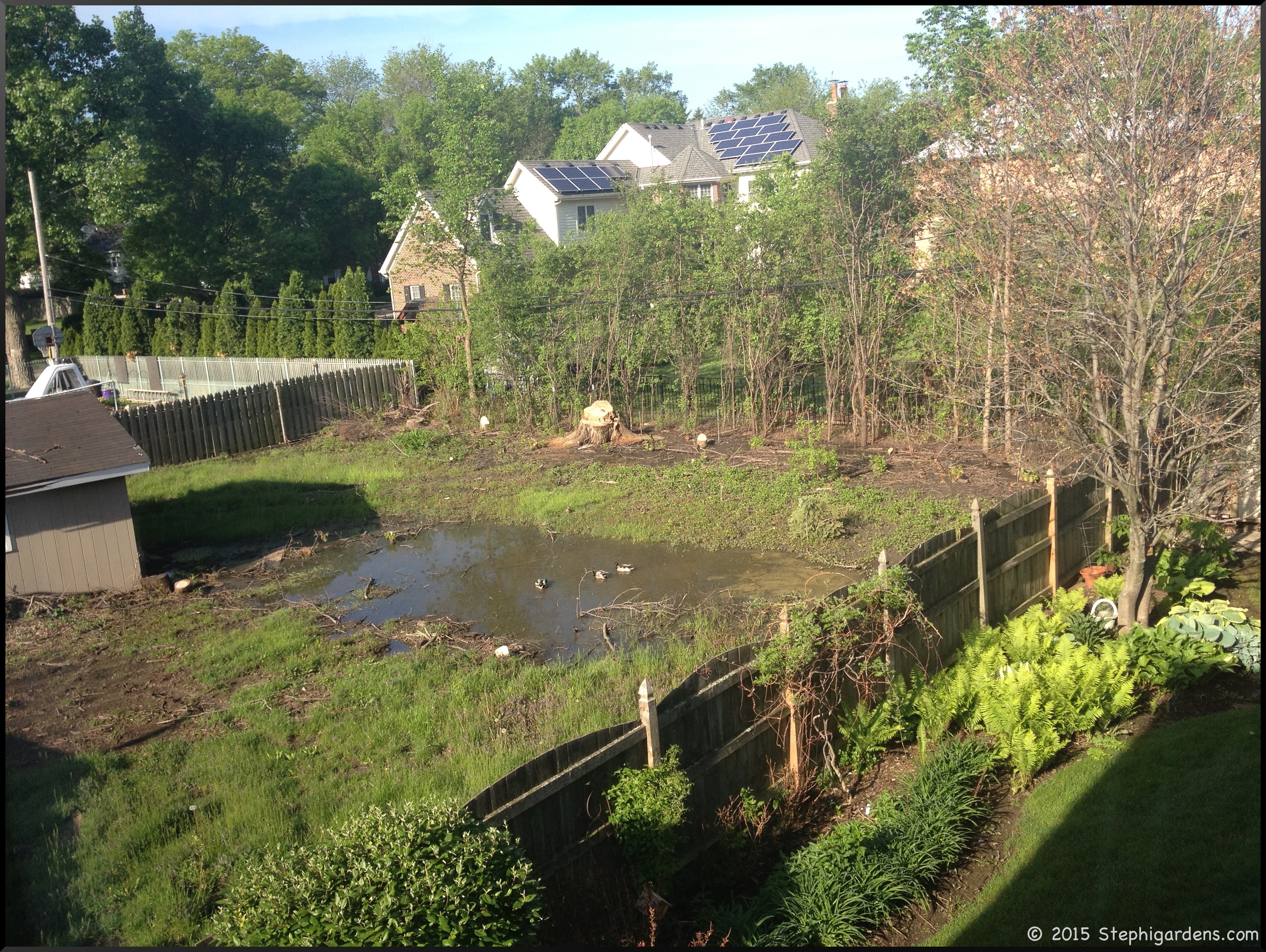
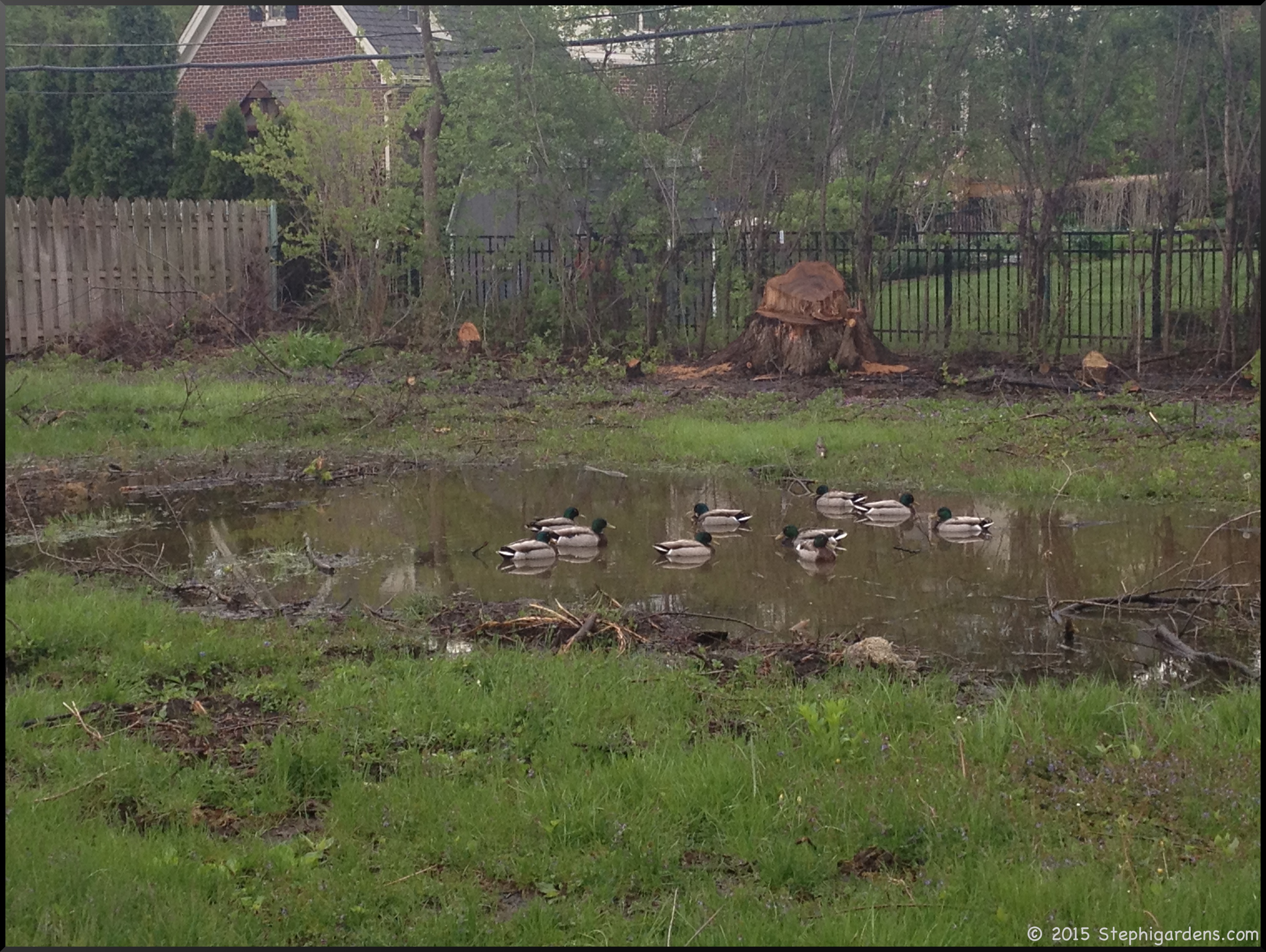
The Mallard Ducks don’t mind the situation at all. Neither did the breeding toads who hummed loudly all spring.
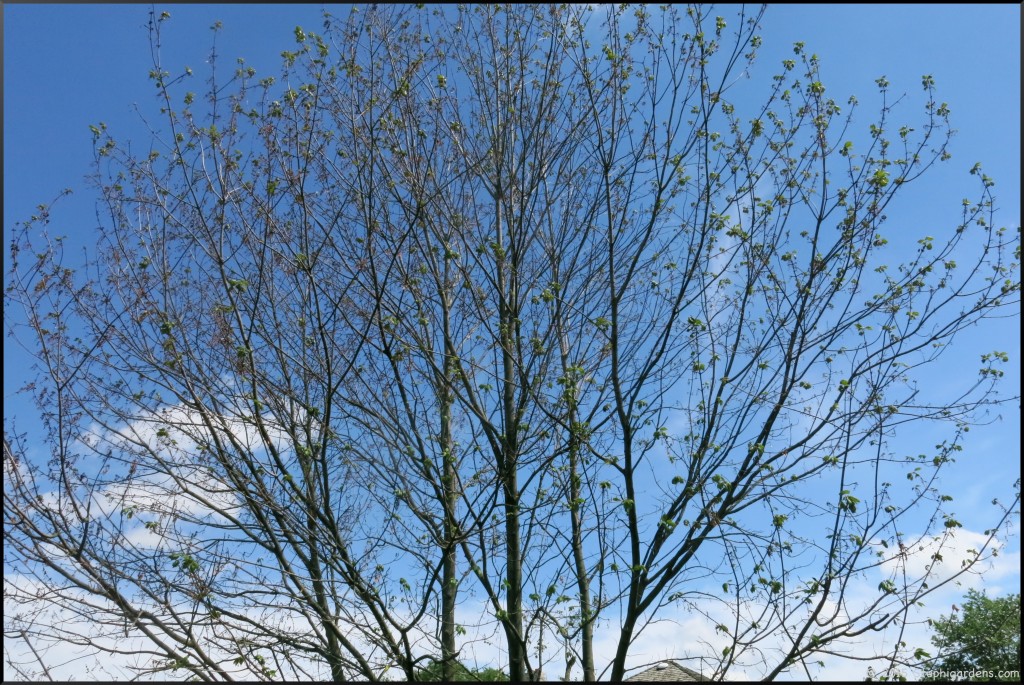
Unfortunately for our tree, it was right next to the property line and probably suffered the consequences of root damage. So adding together the stress of the winter and the stress of the standing water, it led to the death of the tree by mid summer. It never put out any more leaves and just looked frozen in time.
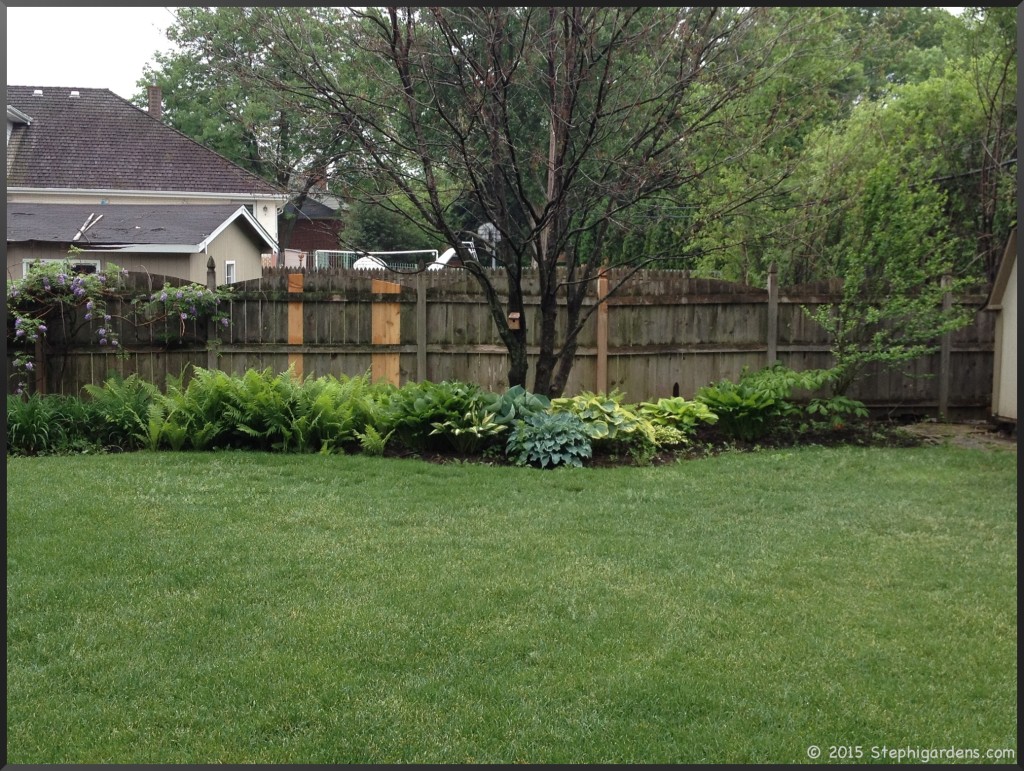
We finally had to have it taken down, and now need to decide what to do in the area. The hostas and ferns were a bit sunburned by the new situation, but they’ll be fine. We’re reluctant to replace it yet, not knowing what the new neighbors might plan for their landscaping. So in the meantime, we’re in a bit of a holding pattern trying to make the best of it.
The good news is that as part of the construction, they have fixed and enhanced the drainage in the area, so further flooding shouldn’t be an issue going forward, and should actually be markedly improved. Maybe I won’t be needing to be wearing my rain boots to trudge around the yard so often anymore (see “My New Rain Boots“)
So much has changed for us with the construction next door. Some we’ve prepared for, some will be a work in progress. It’ll be a while until it’s all sorted out. I’ll be writing about some of it in the weeks ahead. Have you had events in your yard that completely change the landscaping?
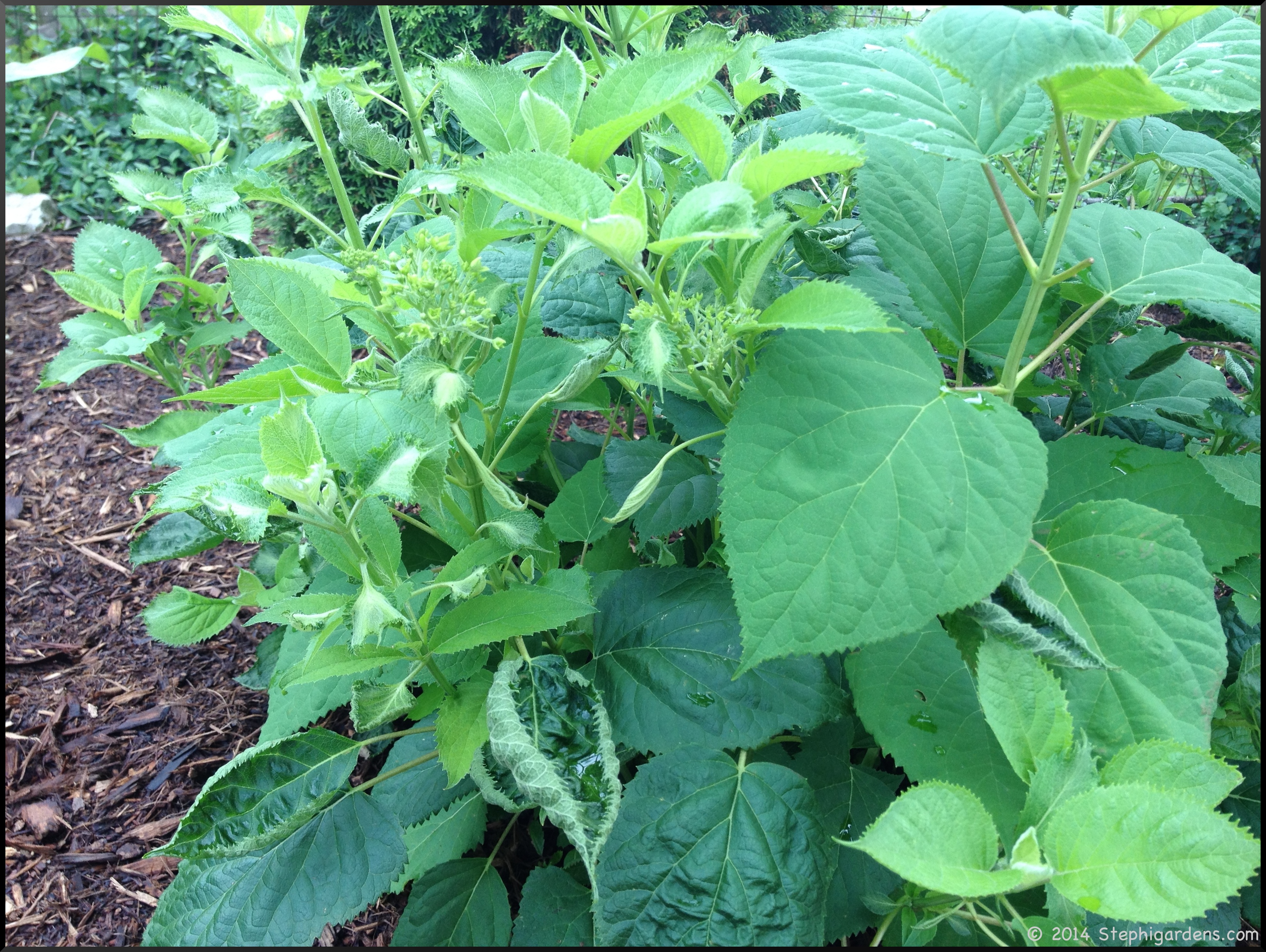
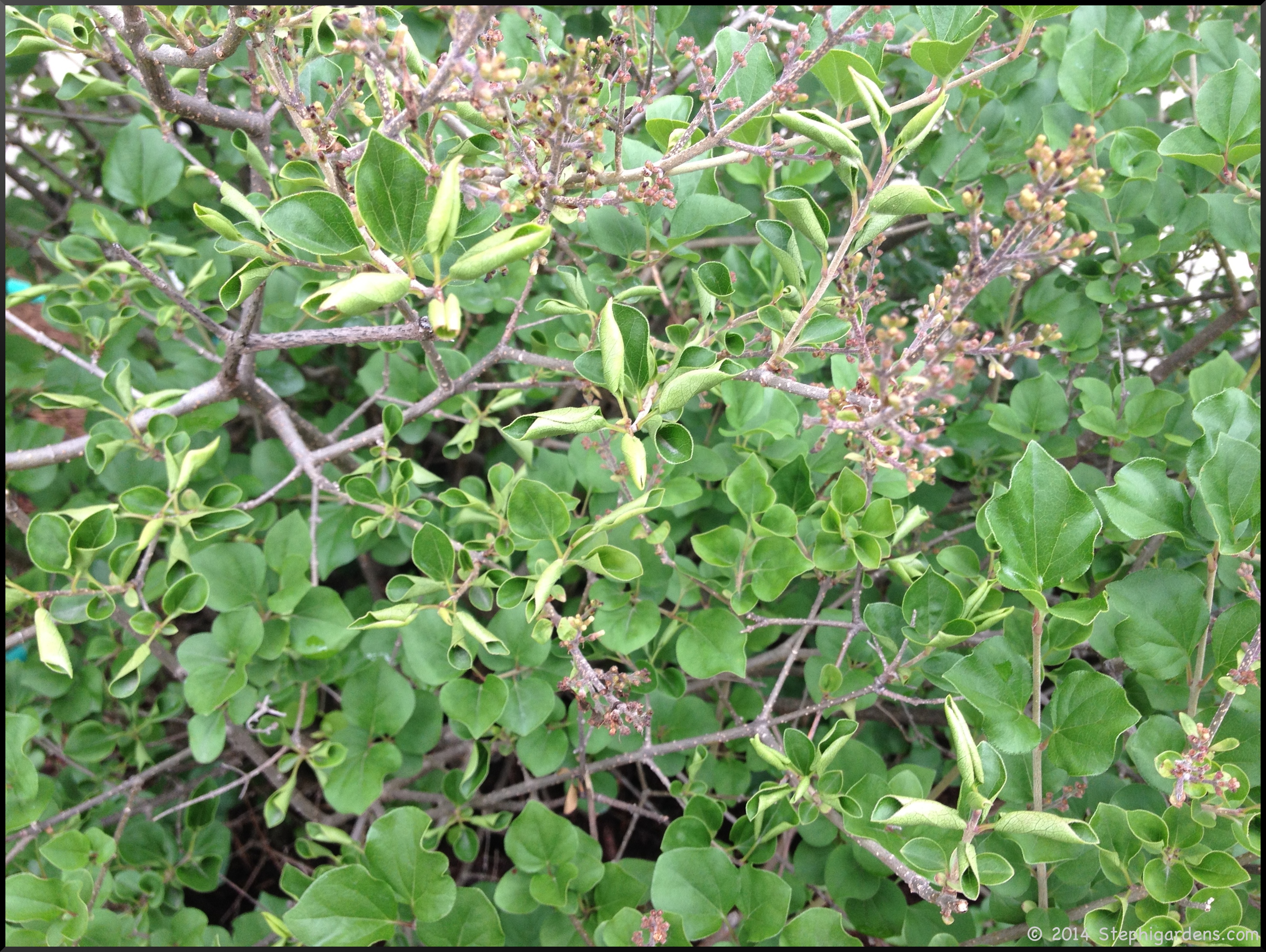
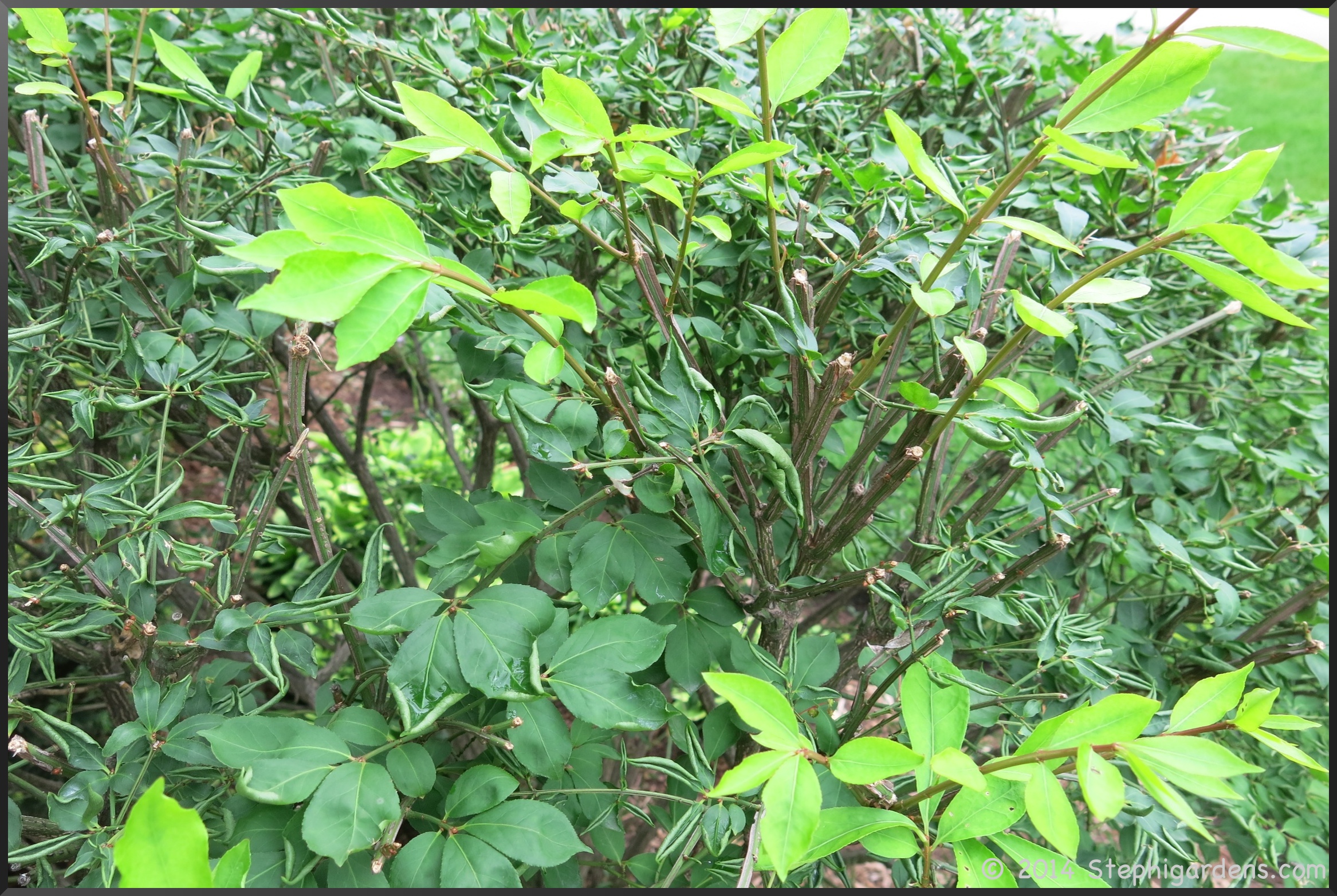
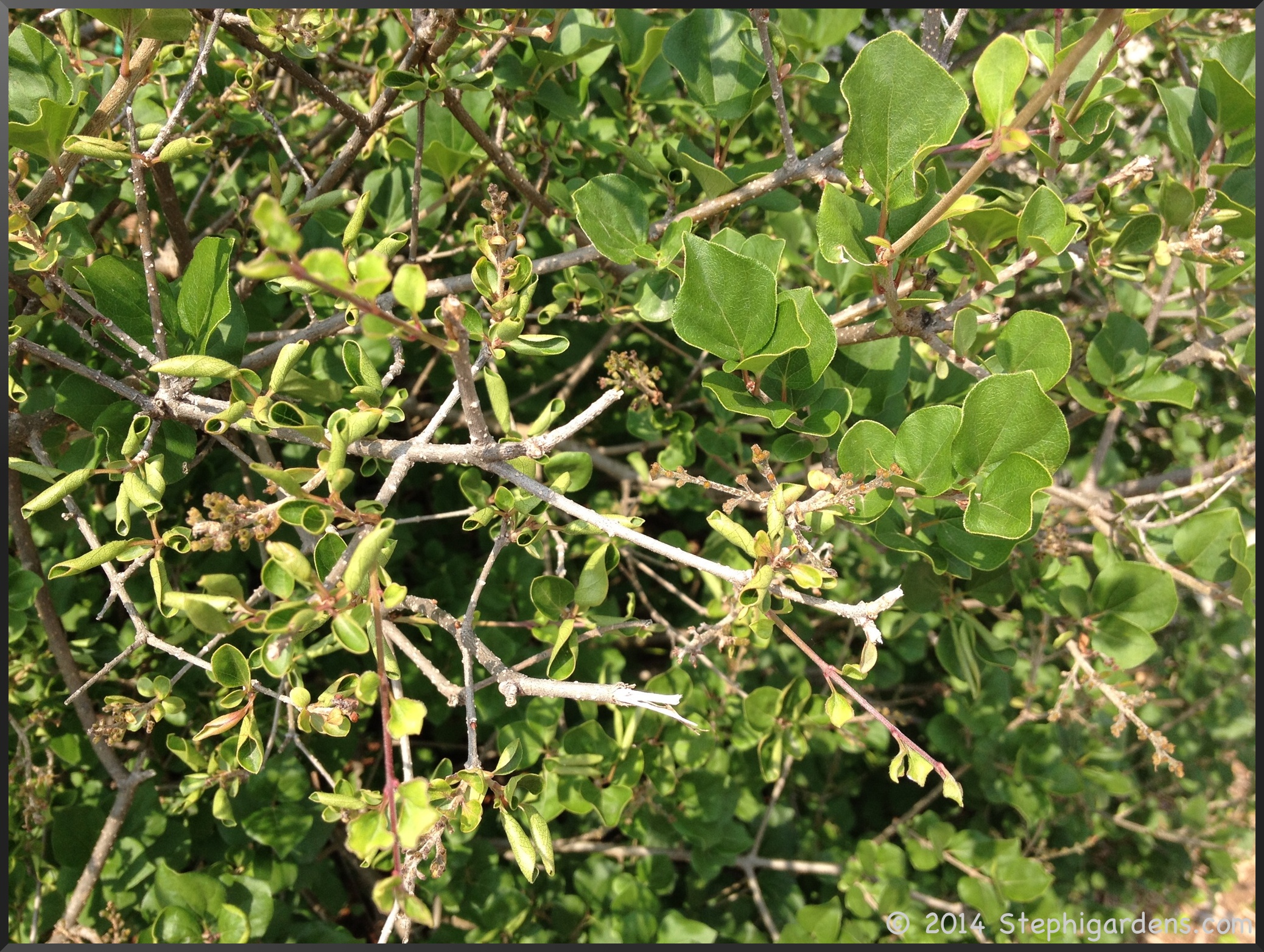
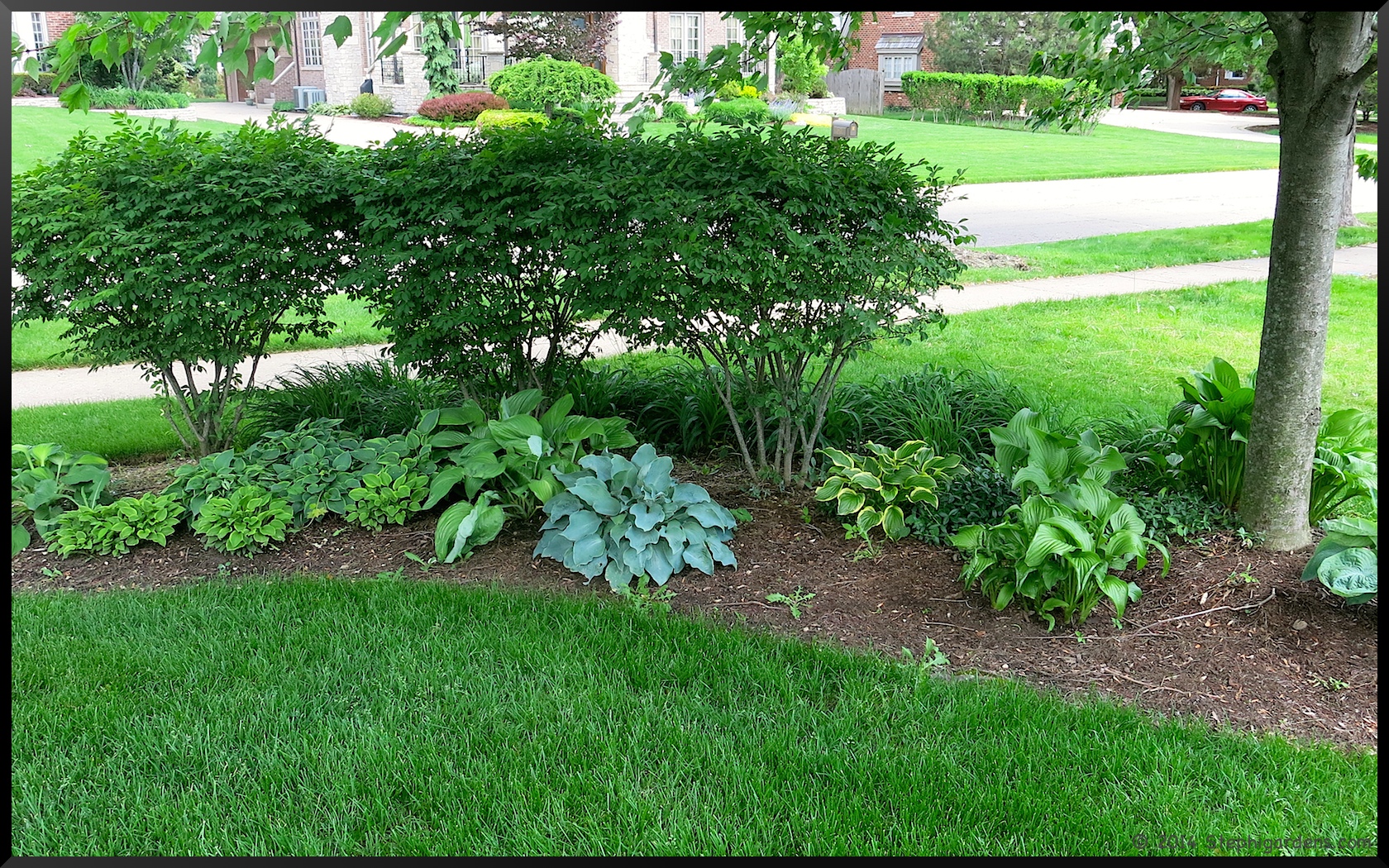
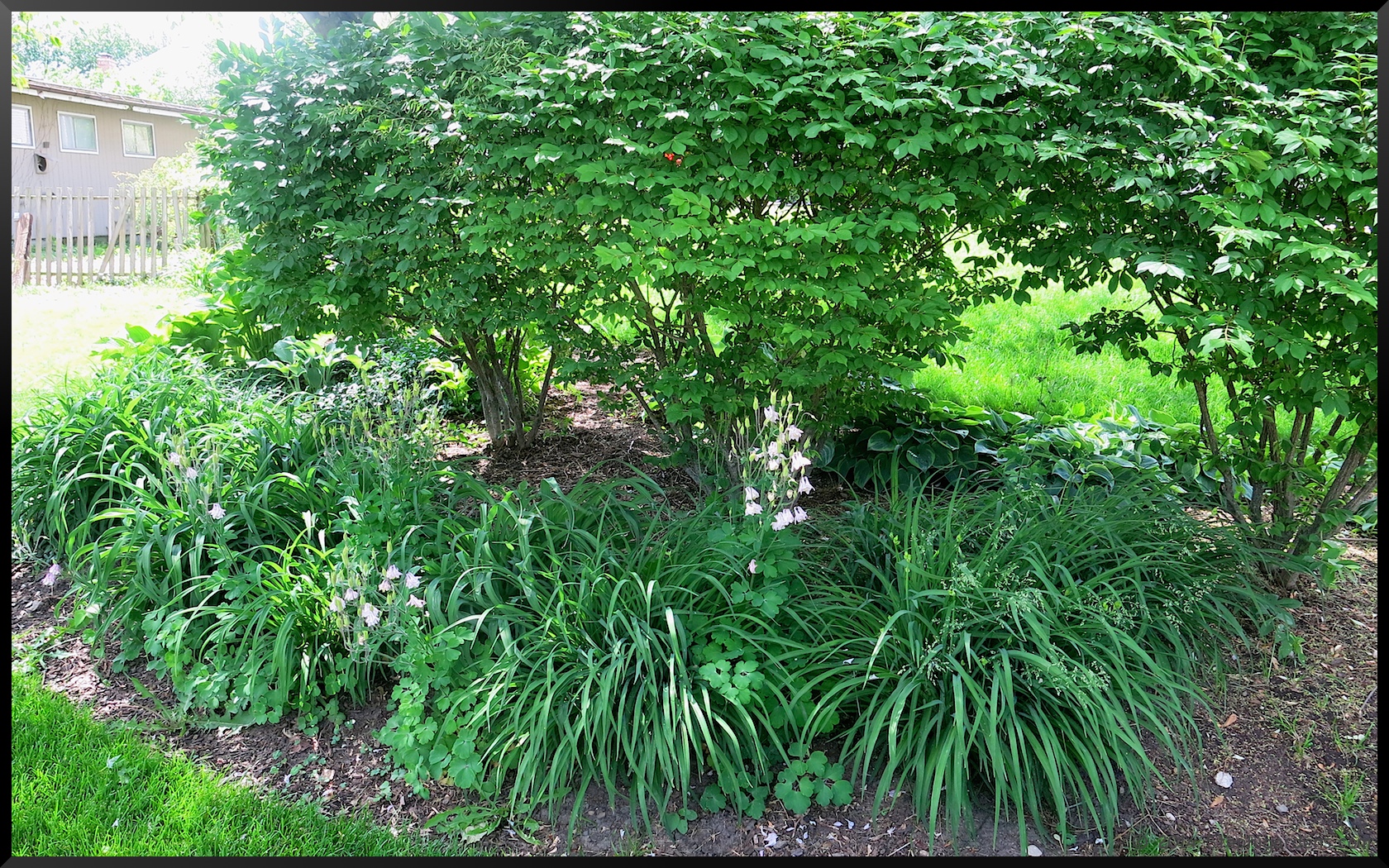
Earlier in the spring, I began to notice that many, but not all, of my bushes in the front yard (Dwarf Korean Lilacs, Judd Viburnum, Boxwoods, Burning Bushes, Annabelle Hydrangea) were looking a bit unhealthy. Their leaves were oddly curling and looking dry, even though we’d had plenty of rain. The worst was one of the Burning Bushes and large sections of the lilacs.
Not knowing what to do, I called my tree and shrub caretaker to come and take a look. He diagnosed it as mealy bugs and mites, although I had trouble seeing what he saw. Looking into it some more, it seems it could have also been related to any number of other pests, or even incorrect watering or fertilizing. No matter the reason, it was clear from the symptoms that something was literally sucking the life out of the leaves and they needed to be treated or the shrubs could die. He recommended spraying with a pesticide/fungicide combo to cover all the bases. I don’t usually like spraying nonspecifically, but whatever the problem was it was affecting a number of specimen shrubs in my front yard that were already stressed from the harsh winter. I had already lost one large burning bush to mites a couple of years back and I didn’t want to chance losing all these bushes this year, so went ahead with the sprays.
Just recently, I finally started to finally see some new healthy growth on the shrubs and no further damage. Some of the curled leaves uncurled, others remained curled, but stayed green and didn’t appear to be any further damaged. Crisis averted for this year.
Have you ever seen anything like this? Any suggestions as to the cause?
This is the area of biggest change. In preparation for new construction, all the trees next door were taken down in early April. We knew this was likely at some point (see Problem Areas) and had tried to plan ahead. This garden contains arborvitae, annabelle hydrangeas, hostas and some annuals. It went from almost full shade to full sun. So far so good.
Under an Autumn Blaze Maple, we have some burning bushes, hostas, and daylilies.
Also some Columbines that have travelled from the backyard.
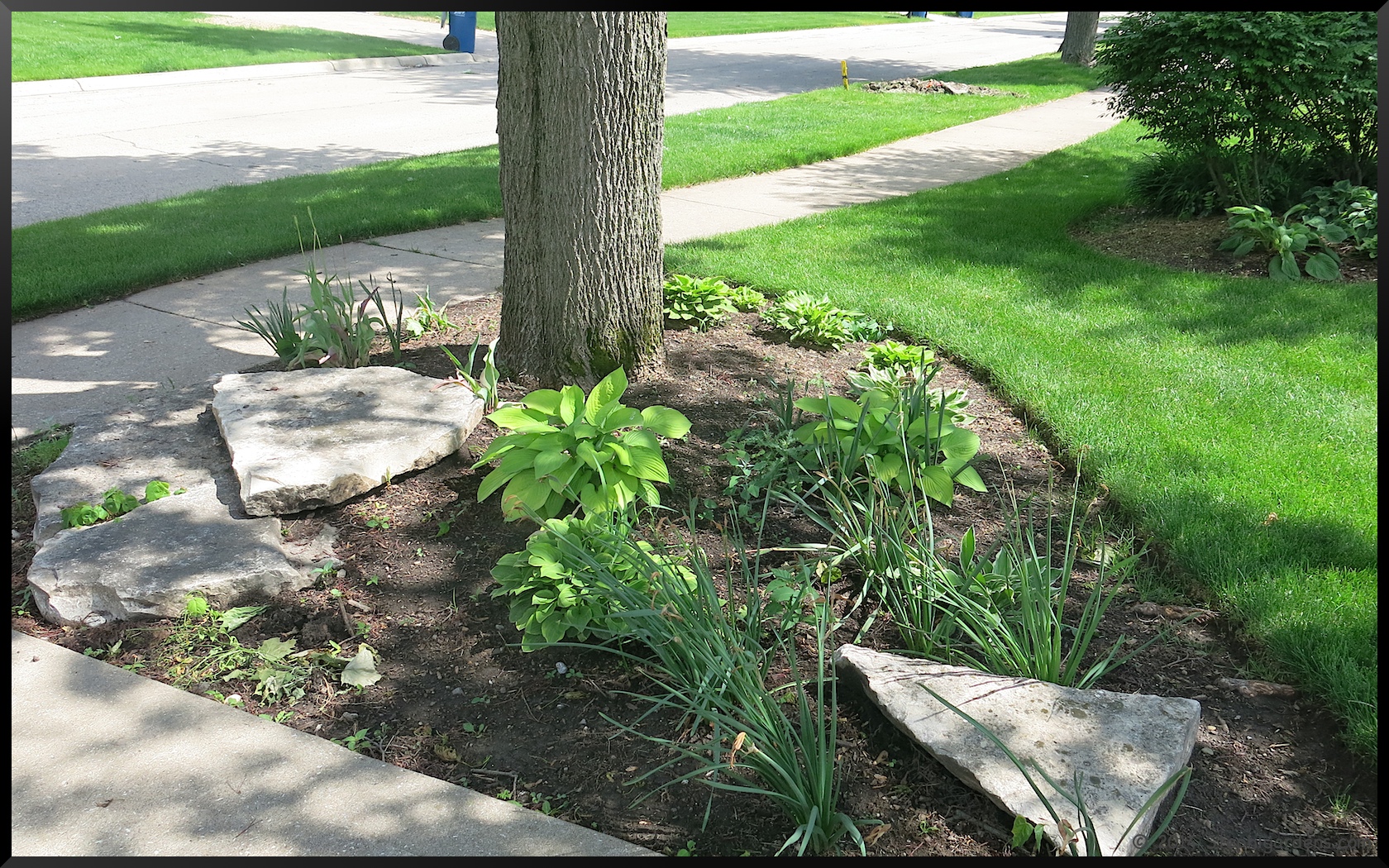
This was another problem area where nothing seemed to grow under a mature maple. I was happy to see the hostas I planted last year came back nicely. When I split some more, I’ll add them to continue to fill in the space. We are a little worried about the health of this parkway maple. It’s pretty old and showing a lot of signs of being unhealthy. But it’s still standing, for now.
On the other side of the driveway, a few years ago a rather large maple fell down in a wind storm. We replaced it with this Swamp White Oak (Quercus bicolor) that has finally seemed to take off after it’s brush with cicadas its second year. Underneath are more densi yews, Russian Sage, daylilies and a burning bush.
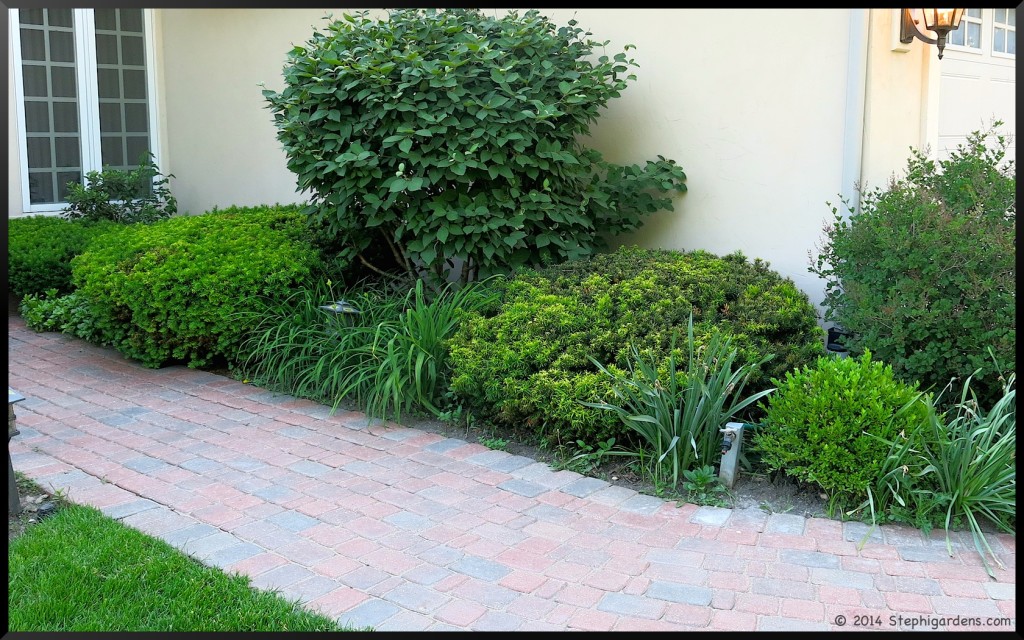
Back up to the house, there’s an awful lot of green since the Korean Lilac and Judd Viburnum have finished blooming. The yews are a bit overgrown and the Rhododendron in the corner a bit spindly. This may become the next area to fix up.
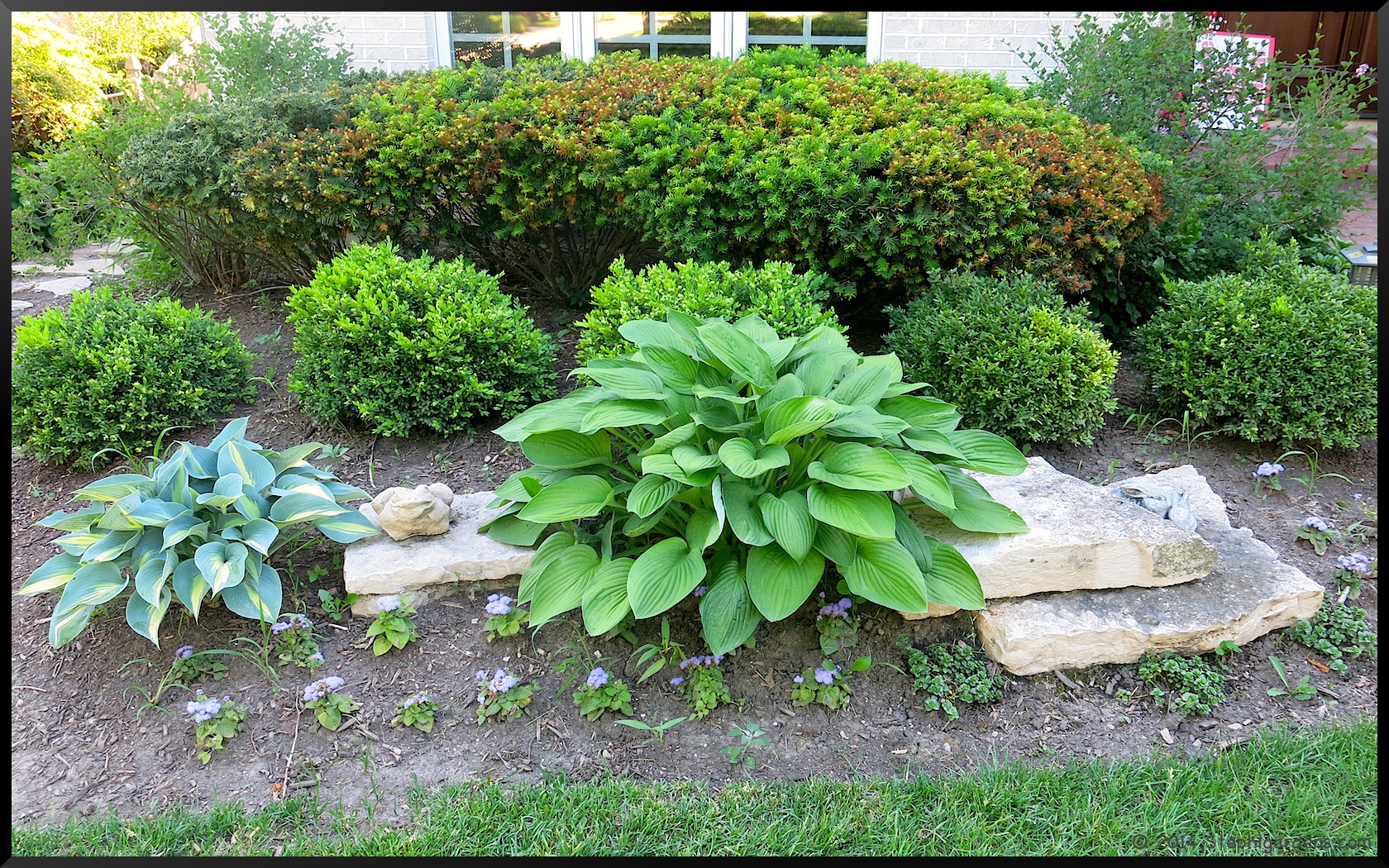
The yews took a bit of a beating this winter and will look fine after a trim. The boxwoods and hostas are new last year and make a nice addition to the area (although the one hosta looks a little big for the space). A little sprucing up and mulch and this area will be good to go.
That’s most of the garden spaces that I write about and toil in. Hopefully this summer will bring perfect garden weather.
I took a tour of my yard today to see how everything was looking. Other than a little late, most things were looking quite healthy. It seems I’m often focussed on the “little picture”, so it was nice to just step back and look at the “big picture”.
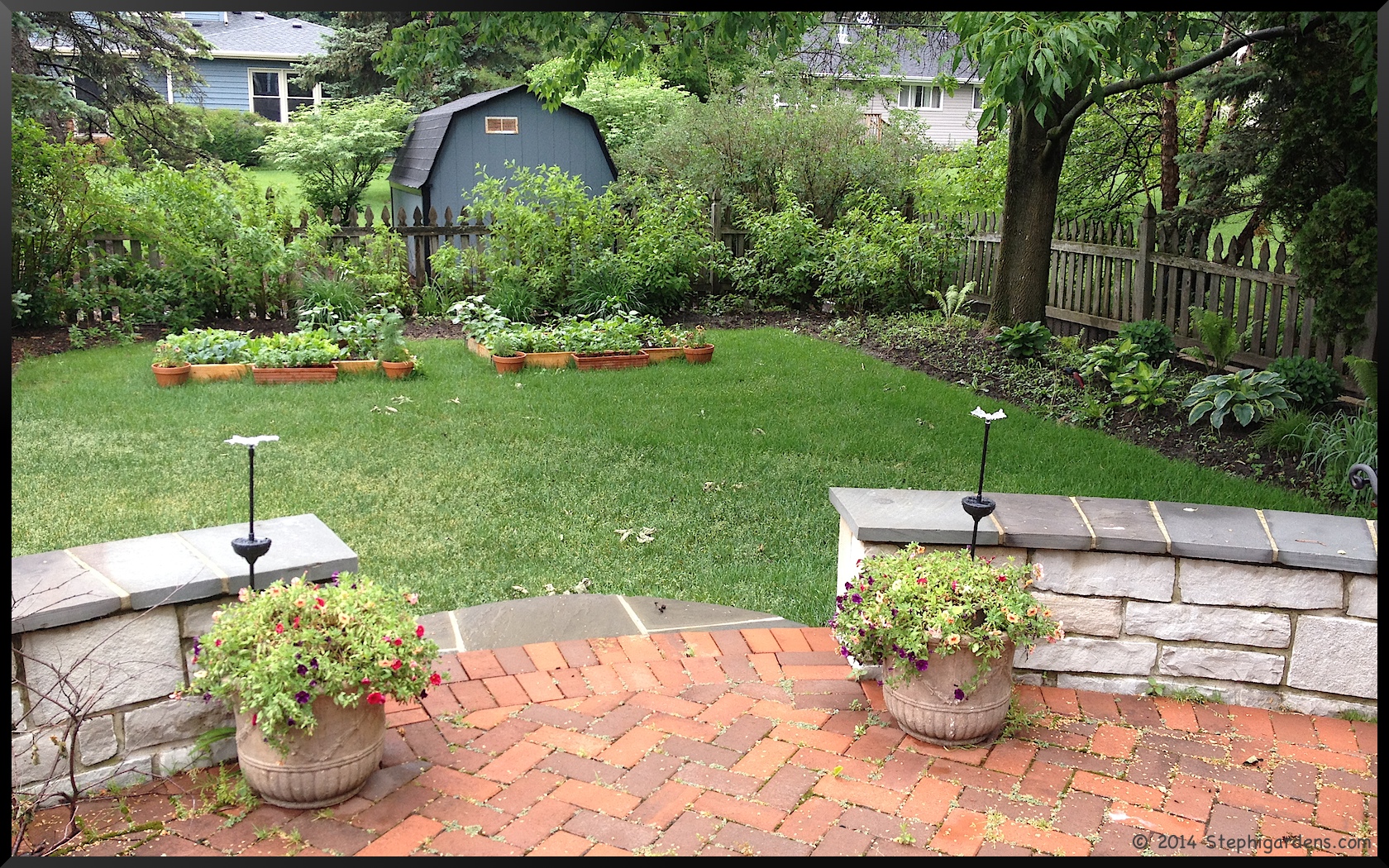
Starting in the back…
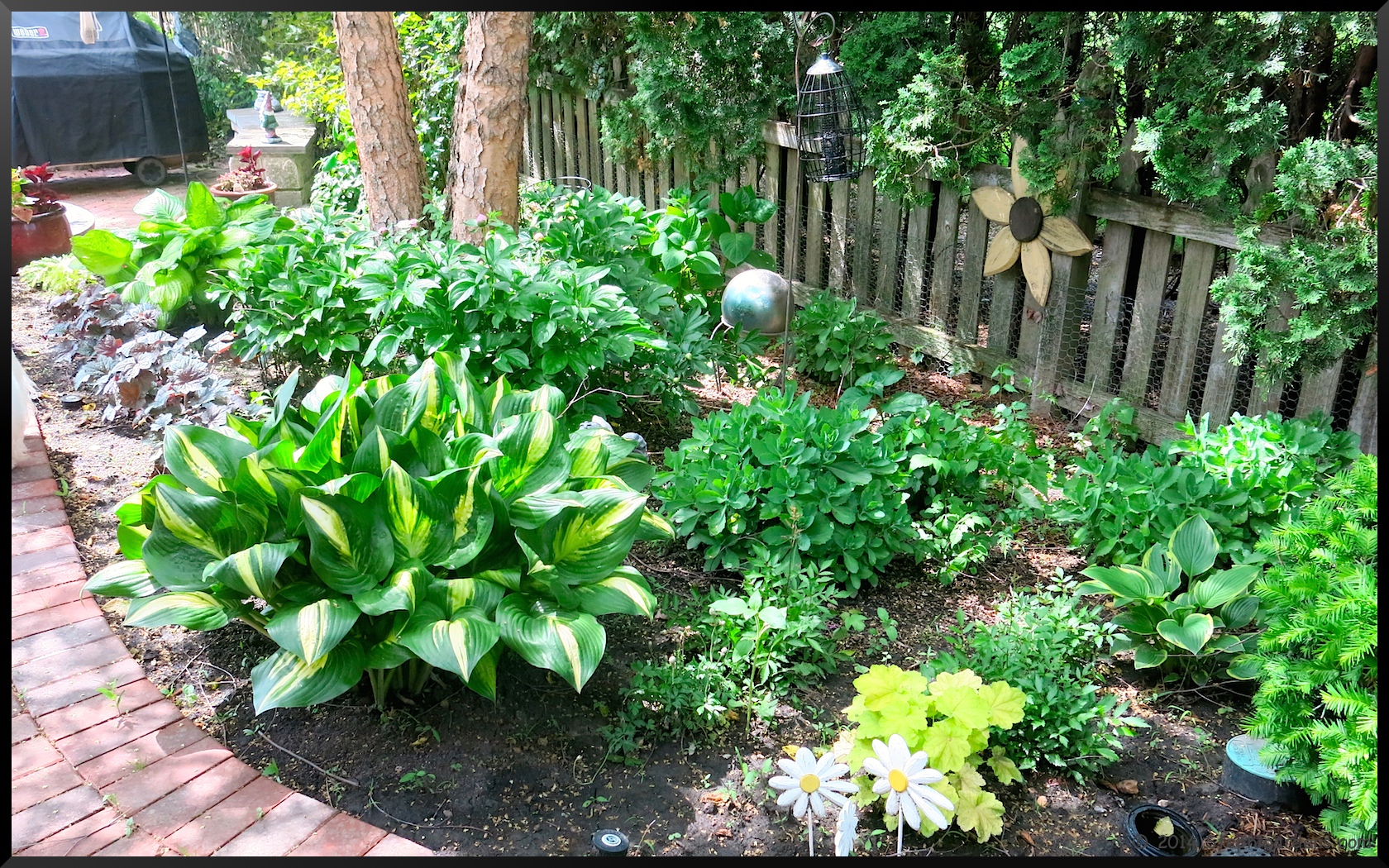
Hostas, sedum, peonies, windflowers, astilbe, heuchera, hydrangea, spurge and a River Birch fill this part shade bed that borders the patio.
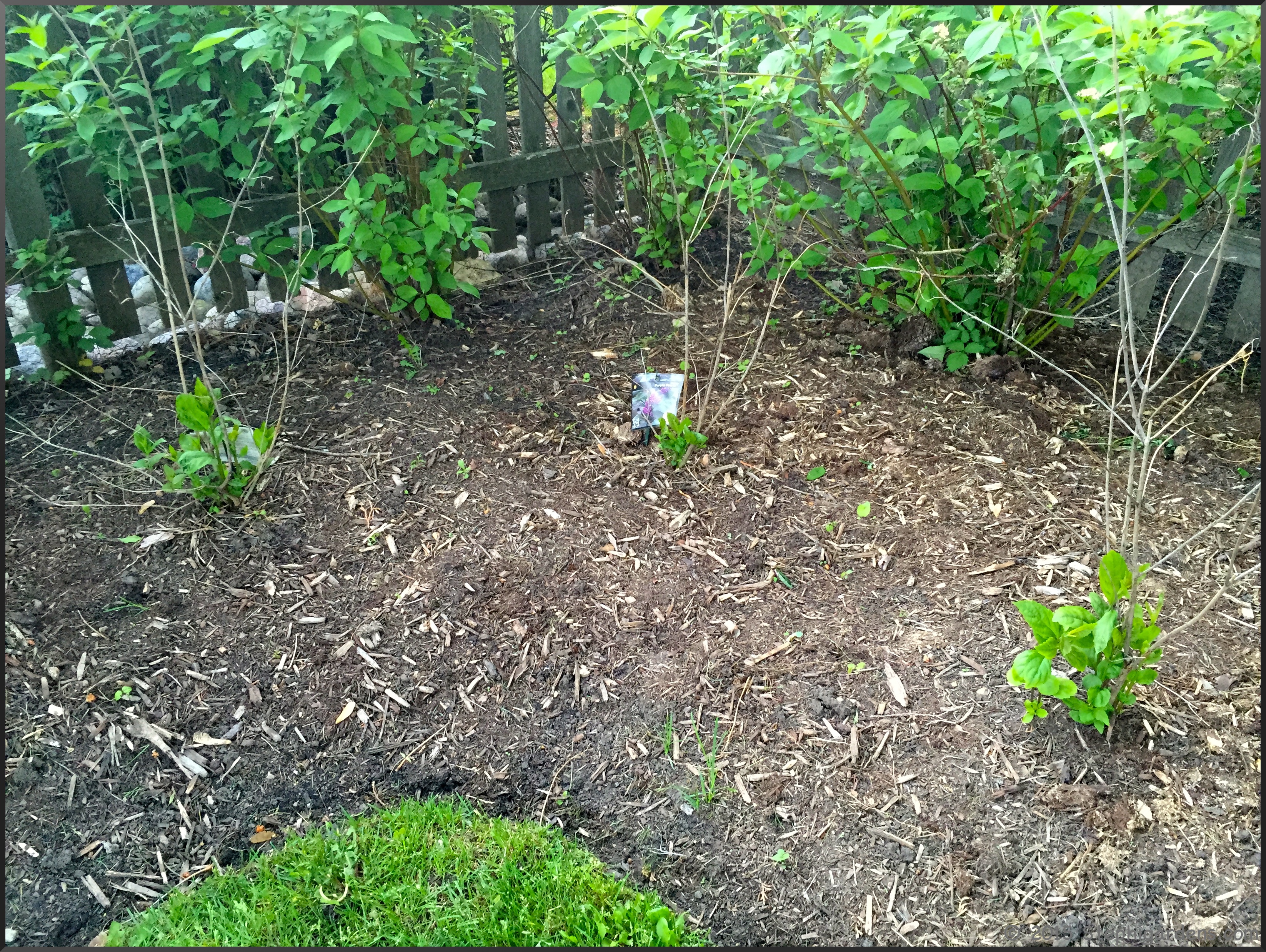
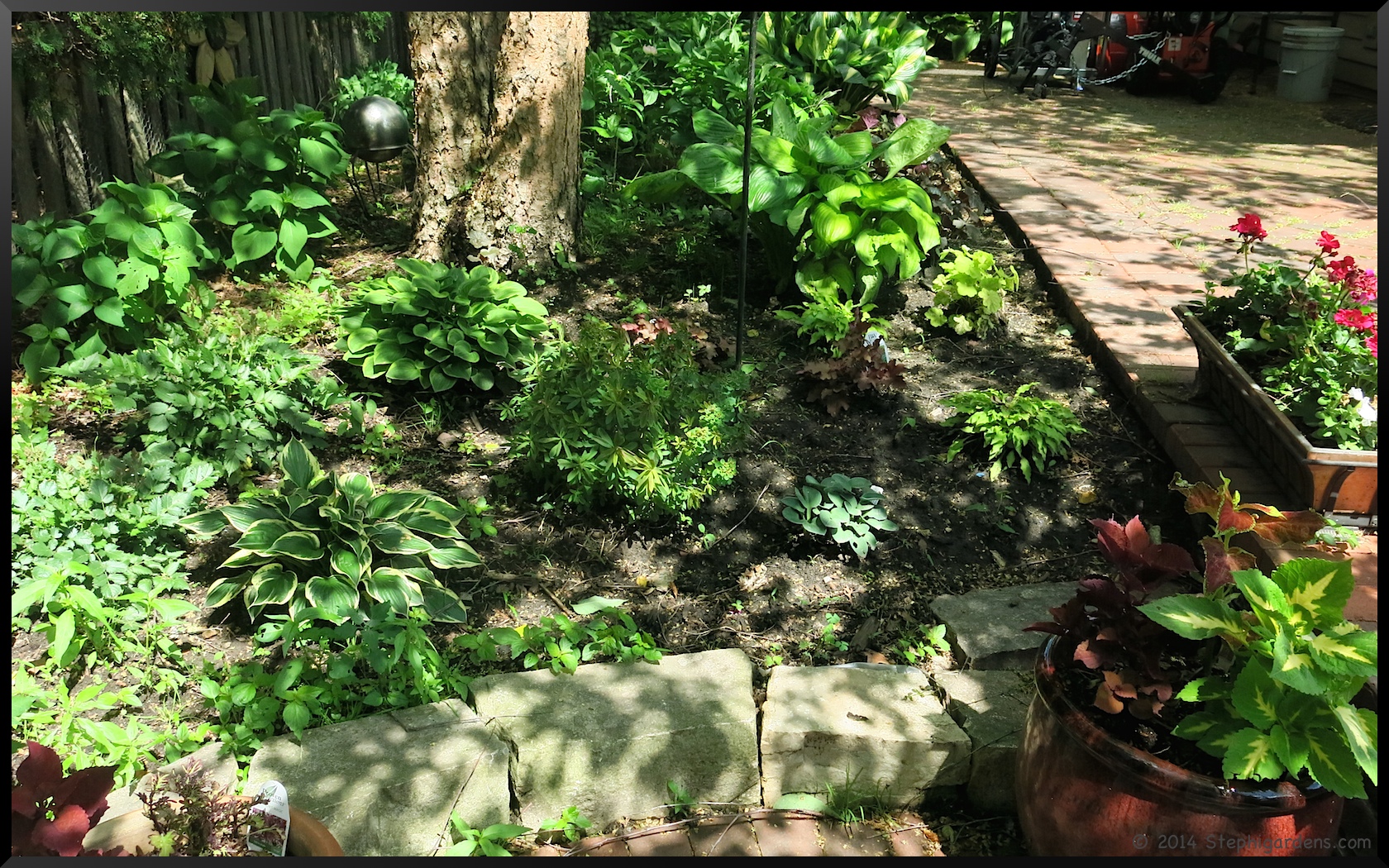
Off the back of the patio is the Purple Ash that looks quite healthy this year after it’s treatment for Emerald Ash Borer last year (Attack of the Emerald Ash Borer: Part 1 and Part 2). I recently split and transplanted some hostas, ferns and sedum underneath it to make it look more like a garden rather than a dirt pile I also added 3 Purple Beautyberry Bushes in the corner to join some raggedy looking Red Twig Dogwoods. This also where my 2 new raised vegetable beds are located.
Finally, my Siberian Irises are blooming. Only 2 blooms, but better than nothing!
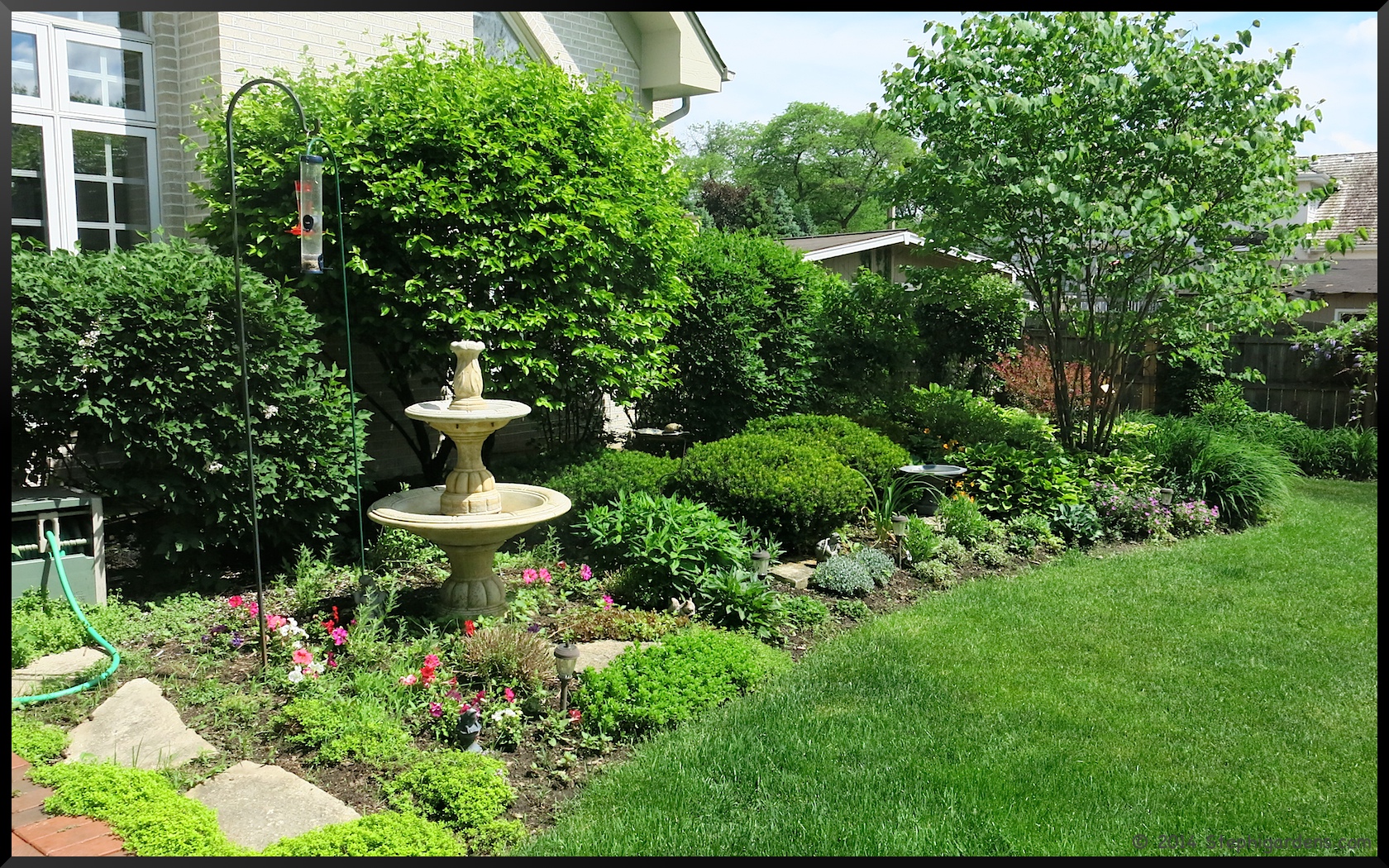
The back of the house is planted with Miss Kim lilacs, a Blackhaw viburnum, a Redbud, densi yews, an assortment of creeping sedums, creeping thyme, Russian sage, a few other perennial specimens, hostas, daylilies and petunias.
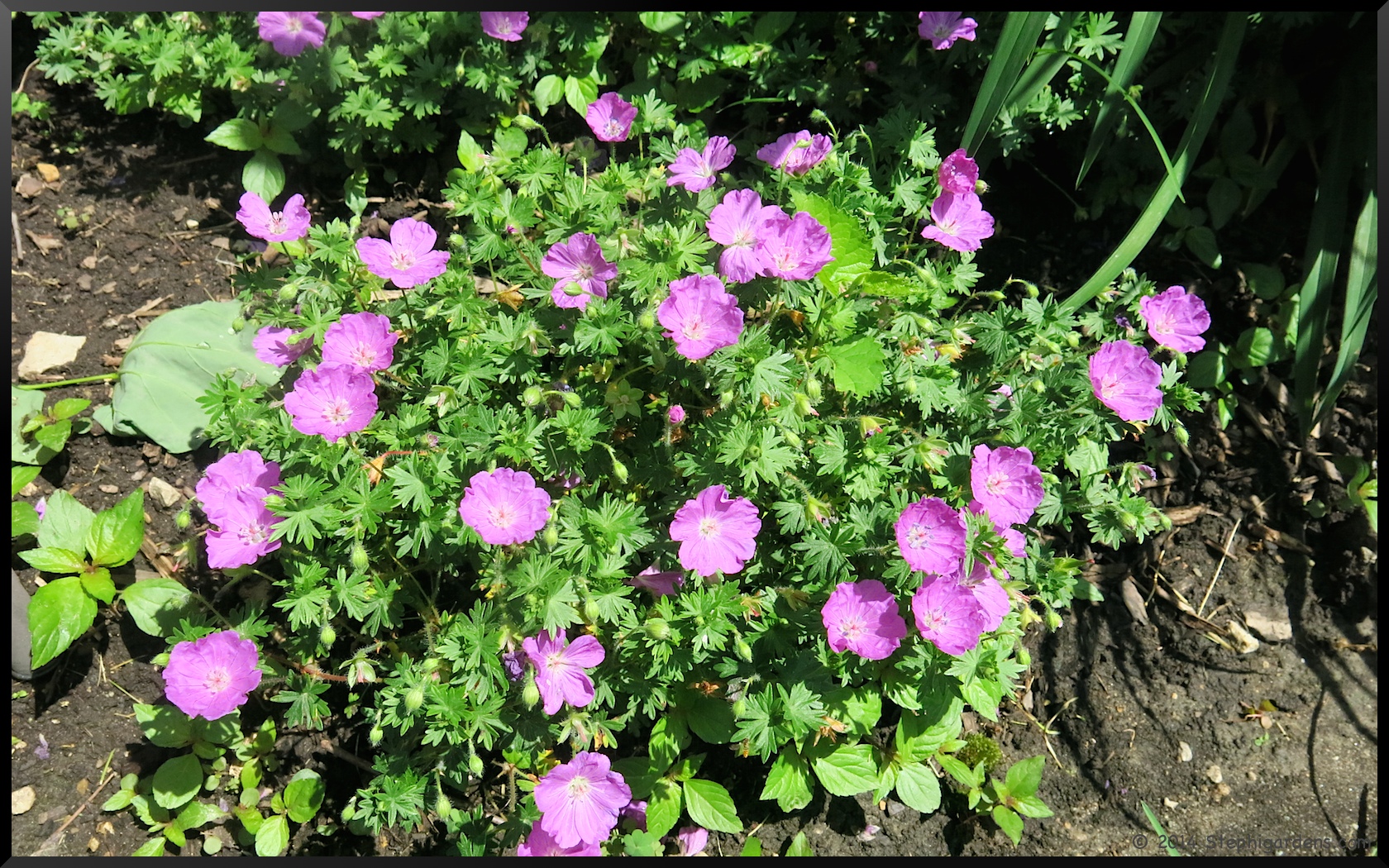
Johnson Blue Geranium
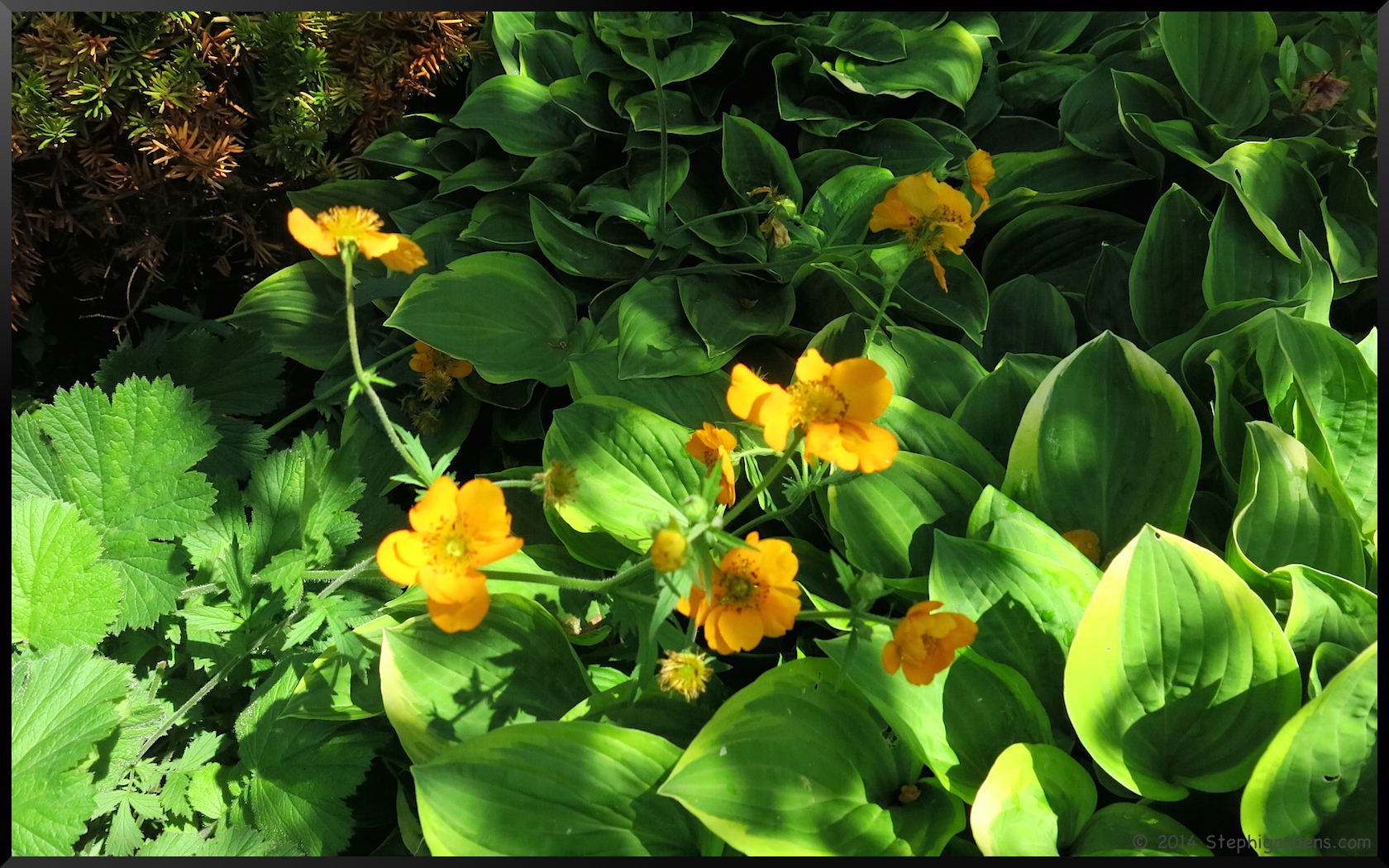
Tangerine Avens–my best guess is that it is Geum “Totally Tangerine”.
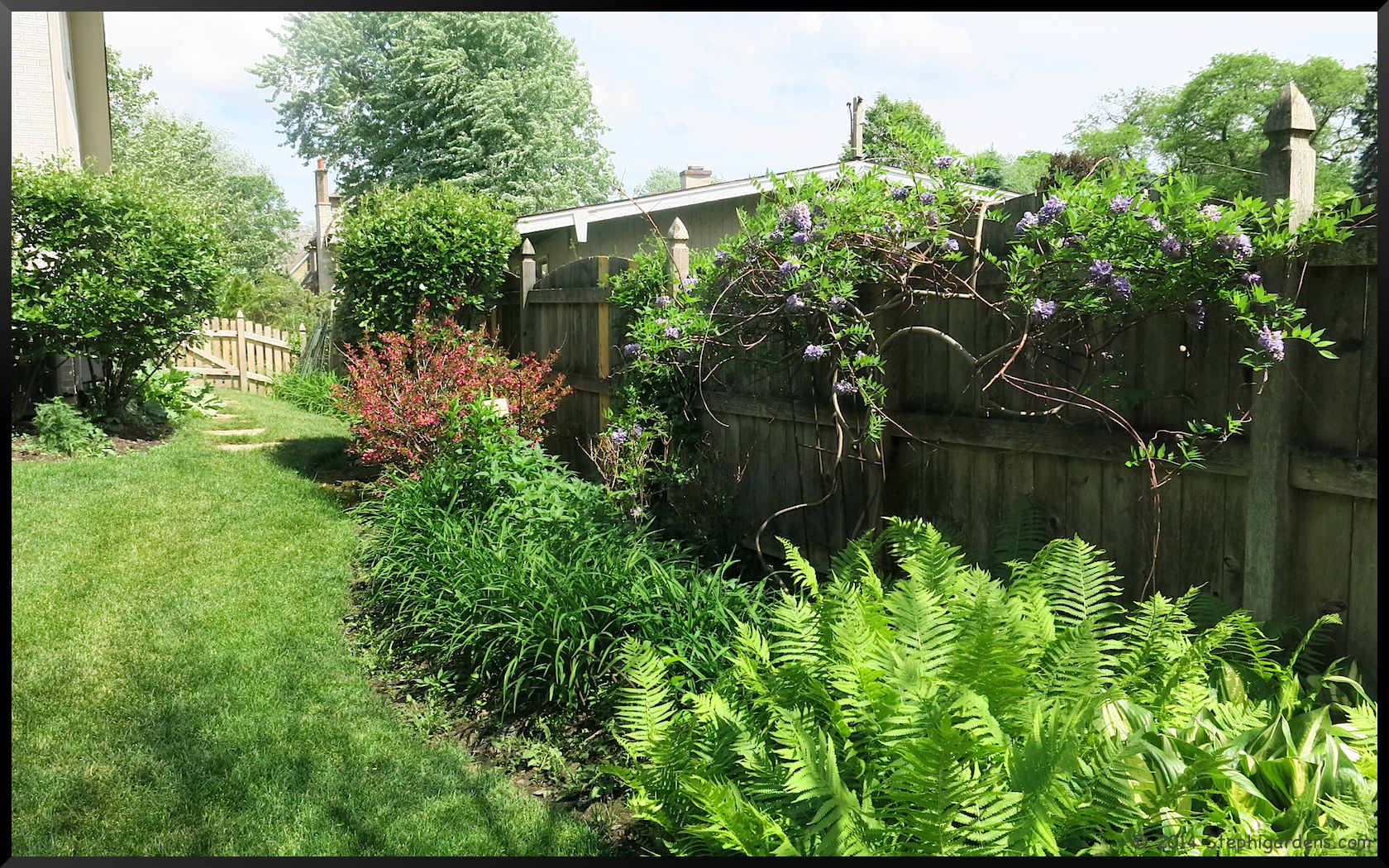
The side yard is undergoing some transition as the house next door is undergoing construction. What used to be sun/part shade, is now full sun. Along here are ferns, hostas, phlox, bee balm, wisteria, knock-out roses, daylilies, weigeila and honeysuckle. There is also a 15 yr old multi-stemmed Freeman’s Maple just outside the shot, but I’ll leave that for another day. But here’s a hint, it’s June and it’s casting almost no shadow…
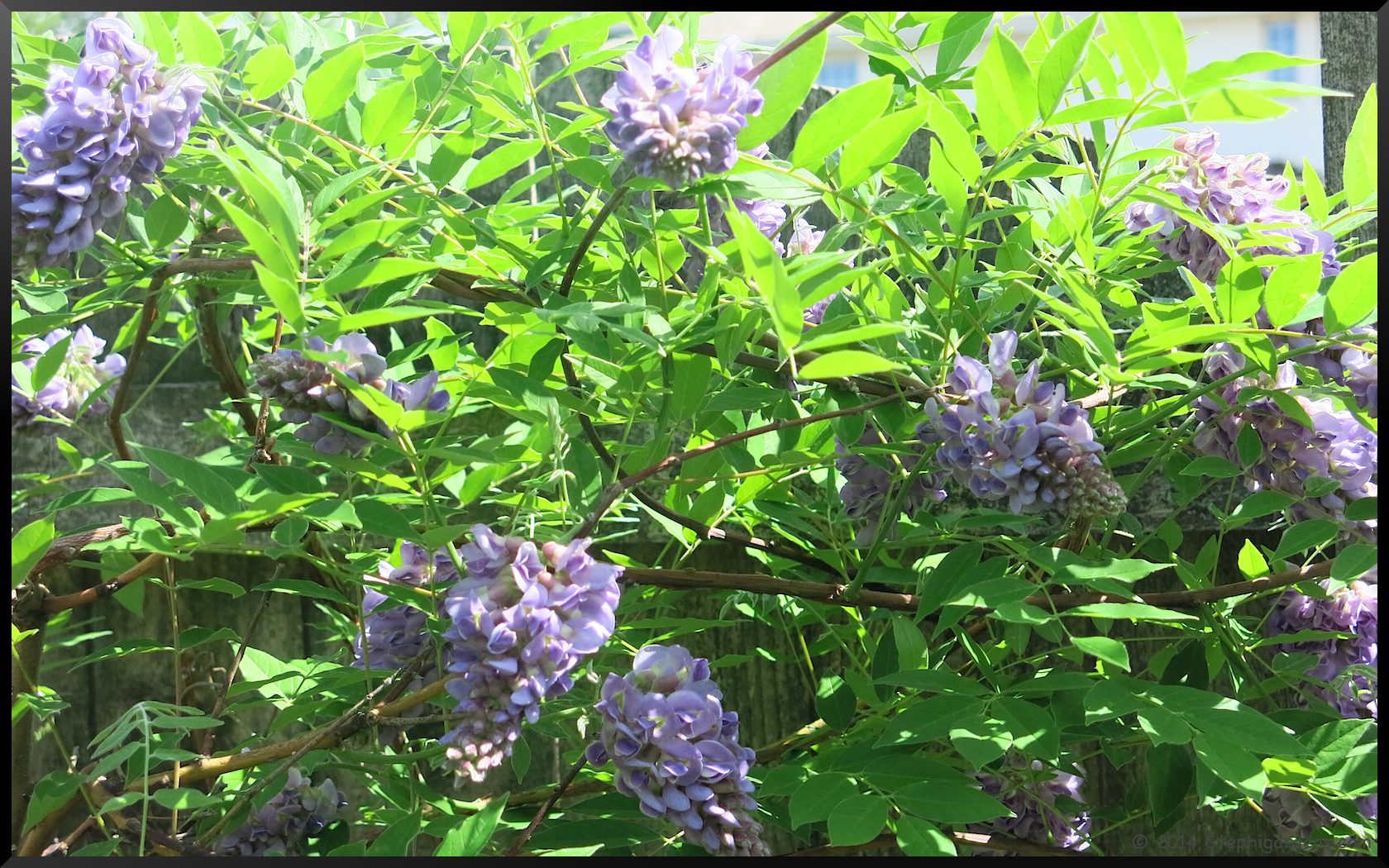
Wisteria is starting to bloom.
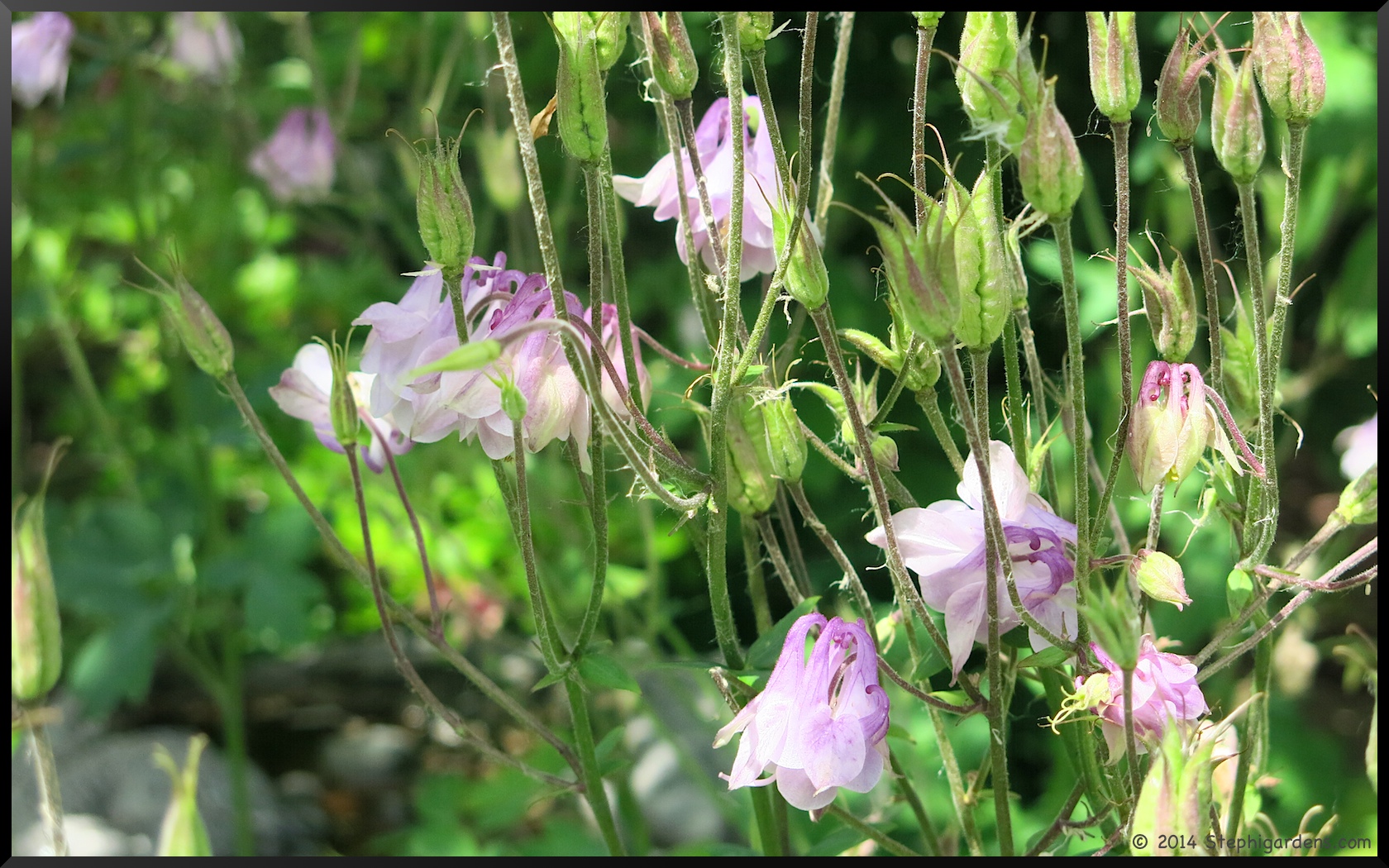
All around the yard are these Columbines. They just pop up unexpectedly and provide some pretty spring colors. They’re a spreading plant that I don’t mind having out of place. These all came from a gift of one plant soon after we moved in.