Poster Child of Pollinators: Monarch Butterflies

From the time I started this post to finally getting back to finish it, a lot has happened. Who would have imagined where we are today, outside of a fictional story. I hope this post is finding you safe and well in this time of uncharted territory. We are doing ok. As are many families, we are dealing with the logistics of the new normal. We worry about our kids living around the country (including NYC) and their heath and job security, our moms and family scattered around the country, and a remote learning situation for the one still in grad school. It is stressful, but we are managing. Hopefully you and your family are too.

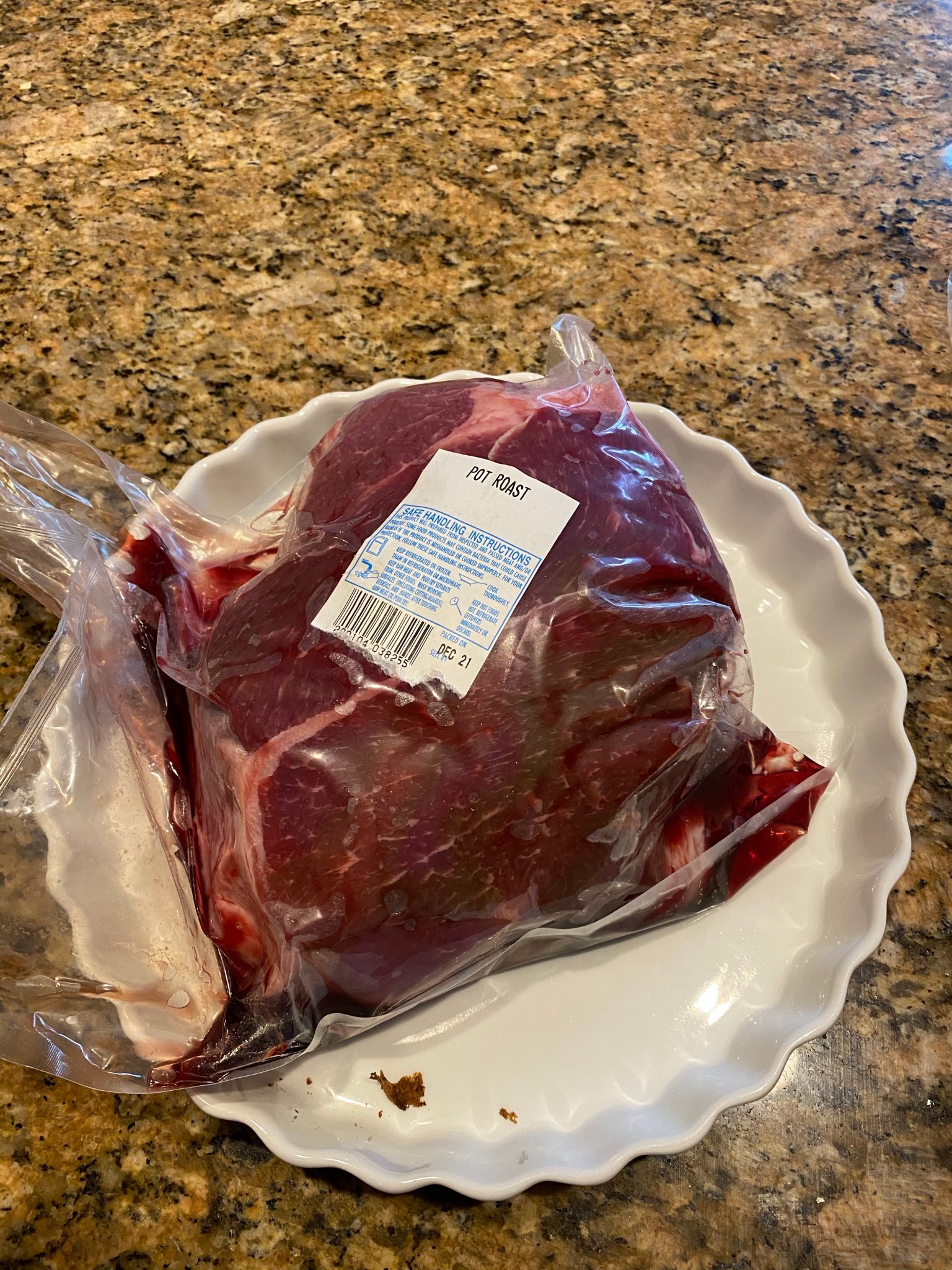
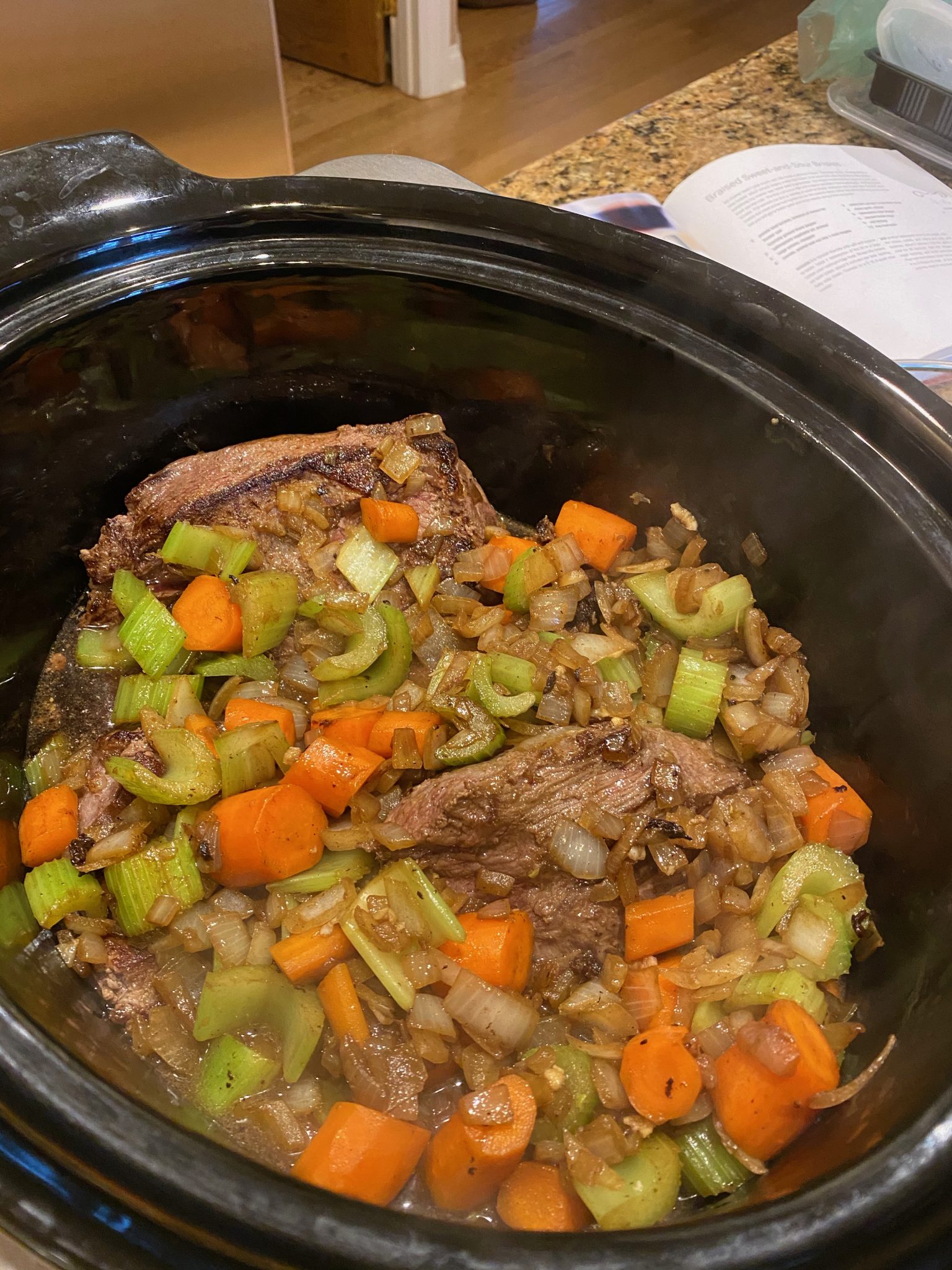
Thankfully since going out isn’t an option for the foreseeable future, I do like to cook and am using this as an opportunity to see what treasures my freezer holds.
In the next couple of weeks, I’m planning on posting about what we’re doing to keep busy, and how I’m getting the garden ready for spring. Spring sure can’t come fast enough for sure.  And please Stay Home, it’s really important.

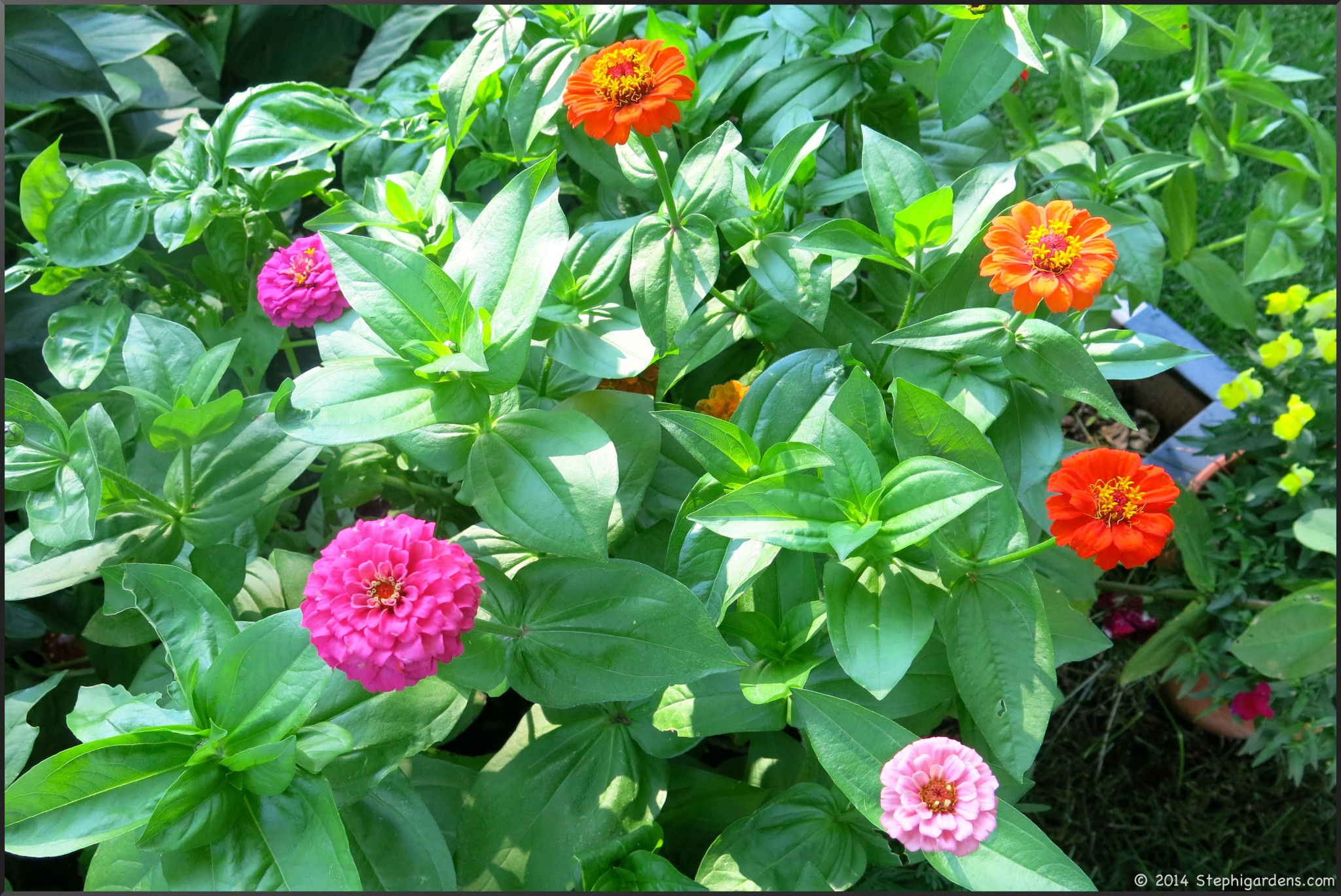
On to something more cheerful! Who doesn’t love a butterfly? From the first of the season, to the summer caterpillars, to the late summer ones flitting on zinnias, they just bring a smile to my face.
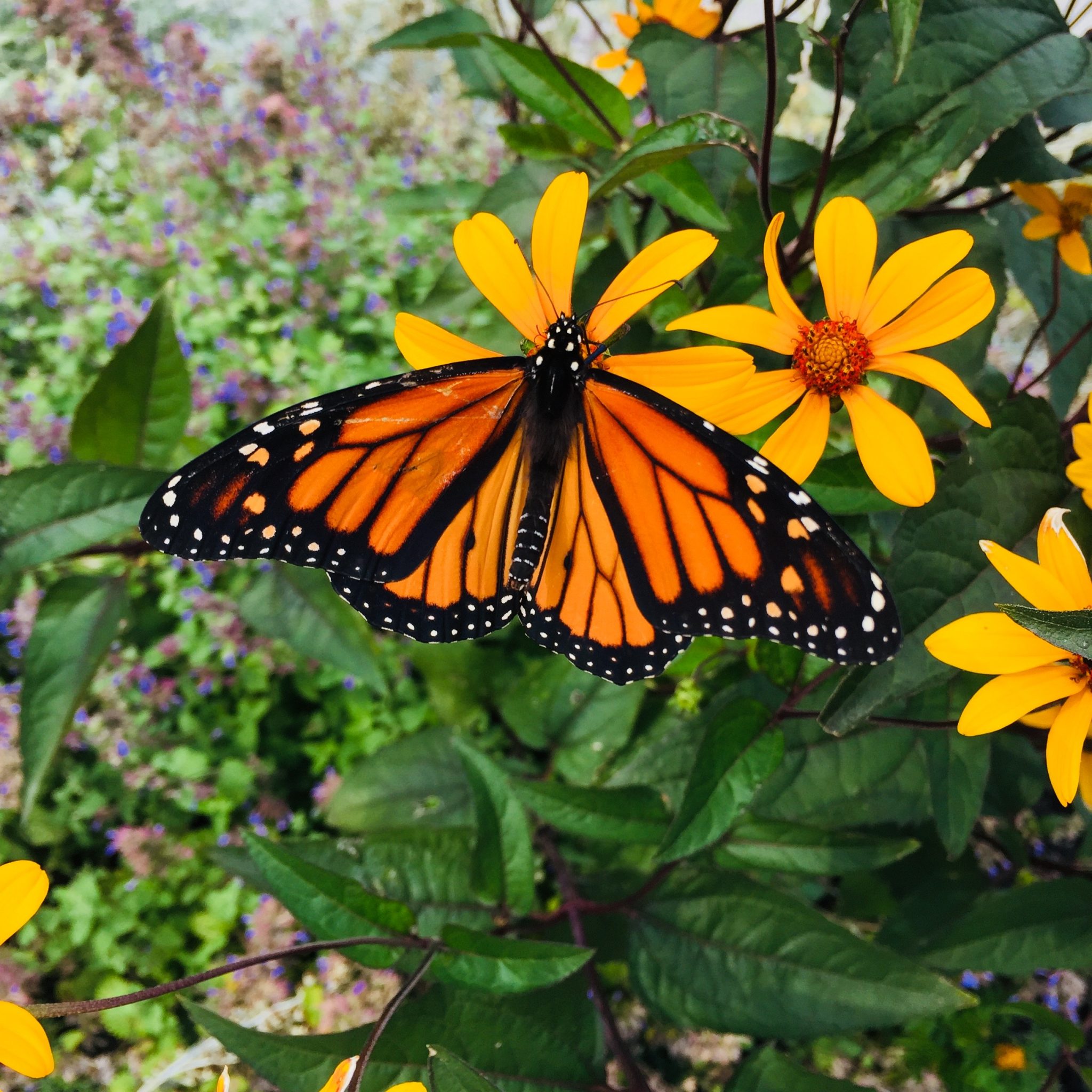
But, while they entertain us with their beauty, they also serve a vital function in nature. Along with bees, wasps, moths, flies, beetles and even birds and bats, they are necessary for the reproduction of almost all flowering plants and for the pollination of about one-third of our food plants.
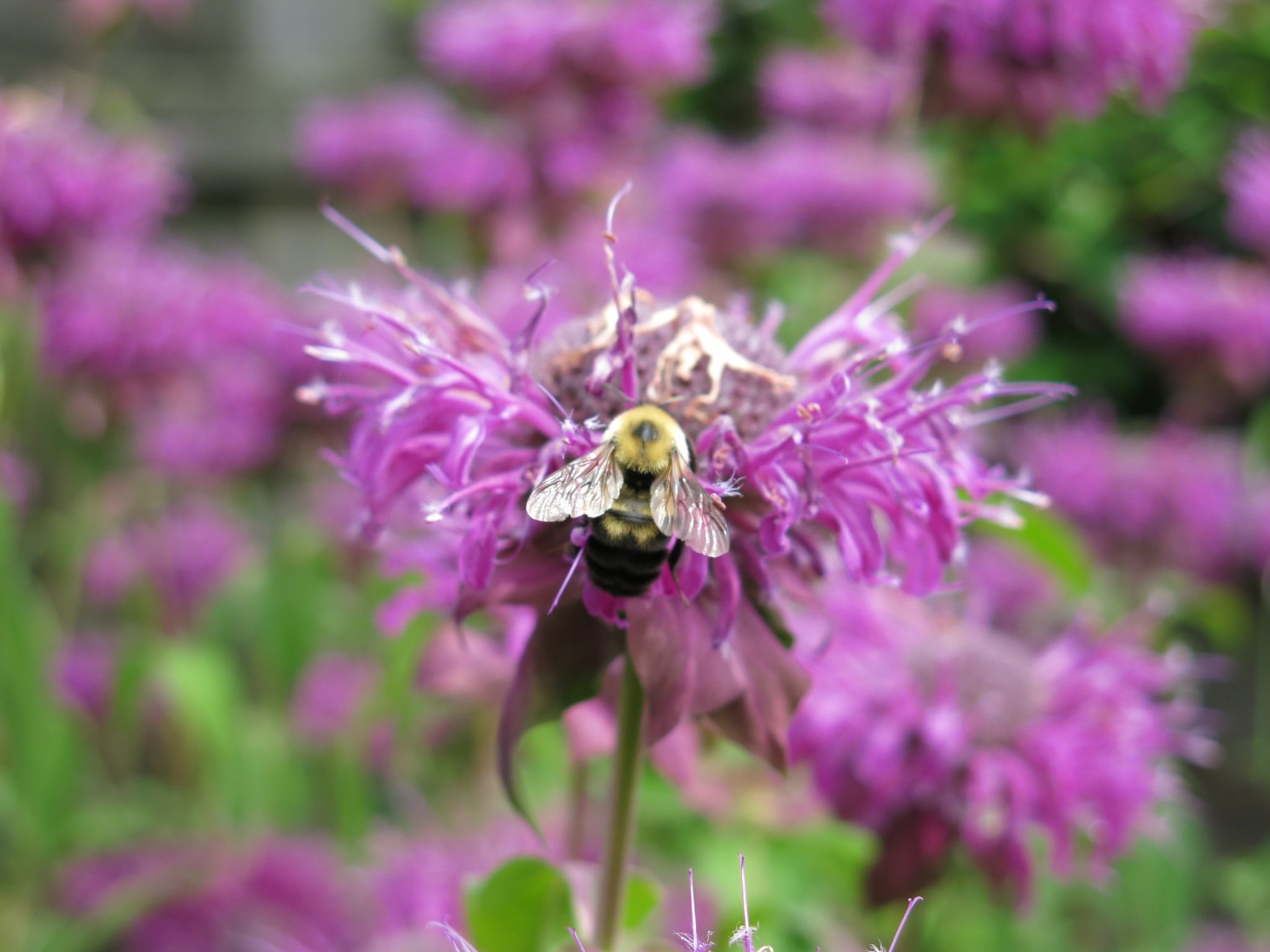
Monarchs may not be the most efficient pollinator species, but they are generally considered the poster child for all pollinators. They are amazing, inspiring creatures that are able bring people together to protect pollinators. Creating habitat for monarchs, including milkweed and nectar sources, aids in their survival and benefits many other important pollinator species. 
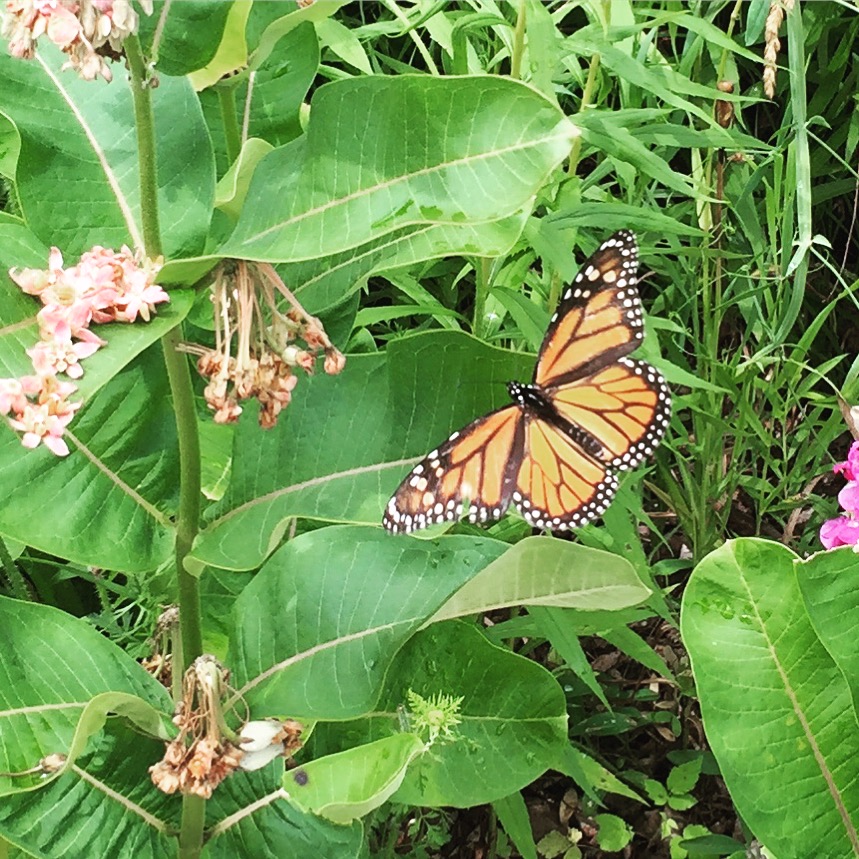
Monarchs live mainly in prairies, meadows, grasslands and along roadsides in North America. Most monarchs will live only a few weeks, but a second wave emerges in late summer and early fall. These fall butterflies live for eight or nine months and accomplish an amazing, lengthy migration to California and Central Mexico. There they spend the winter before coming back up north in the spring. 

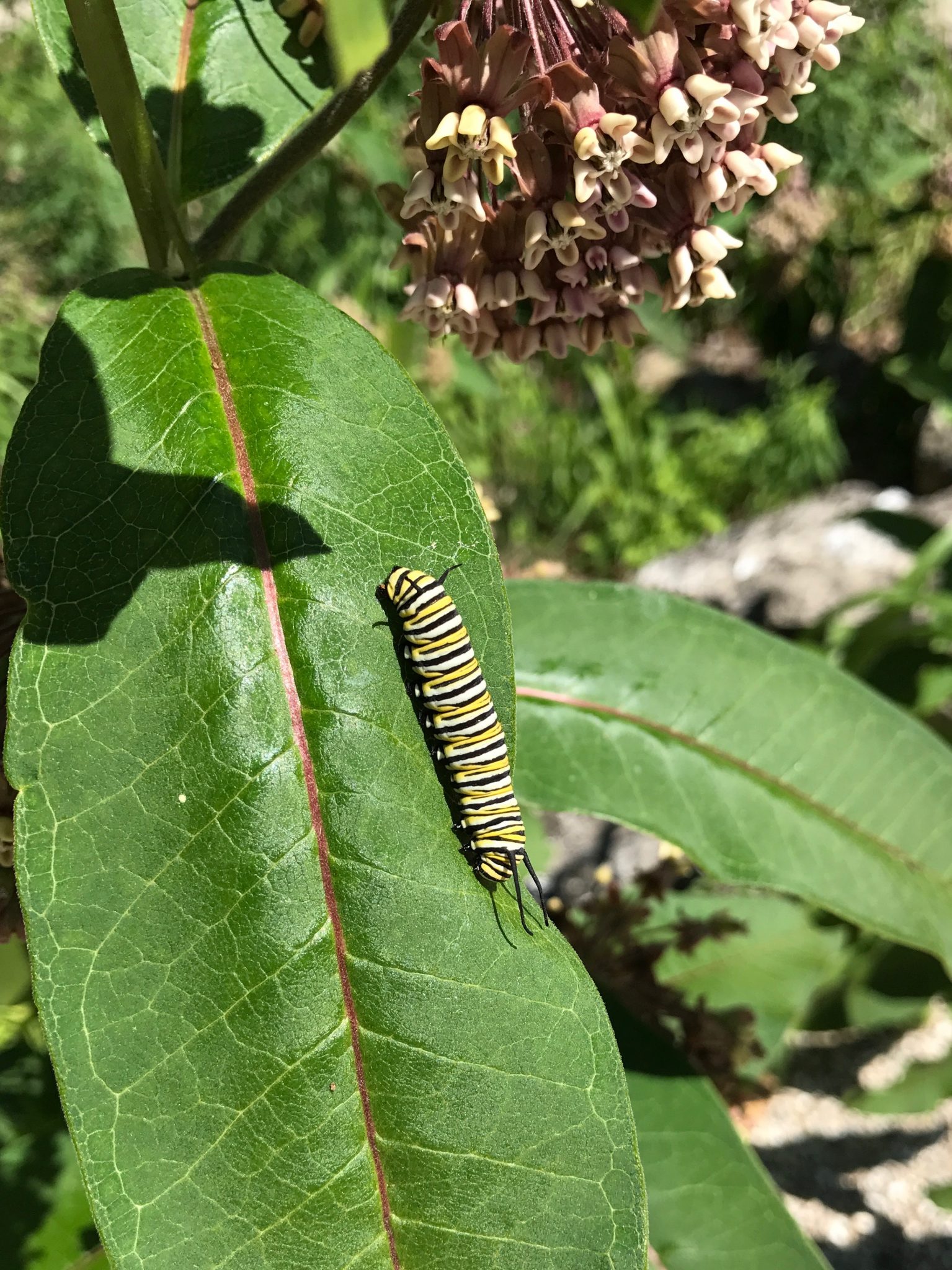
Monarchs, like other butterflies and moths, undergo complete metamorphosis, meaning that they have an egg, larva (caterpillar), pupa (chrysalis), and adult stage. Milkweed plants play a crucial role in the life cycle of monarchs. 

Monarch life cycle
Photo credit: Monarch Joint Venture

Adult monarchs will feed a variety of plants. But female monarchs will only lay eggs on milkweed, which makes sense since the caterpillars will only eat milkweed leaves. Milkweed plants are the the sole food source for the growing caterpillar and it eats almost constantly for about two weeks.
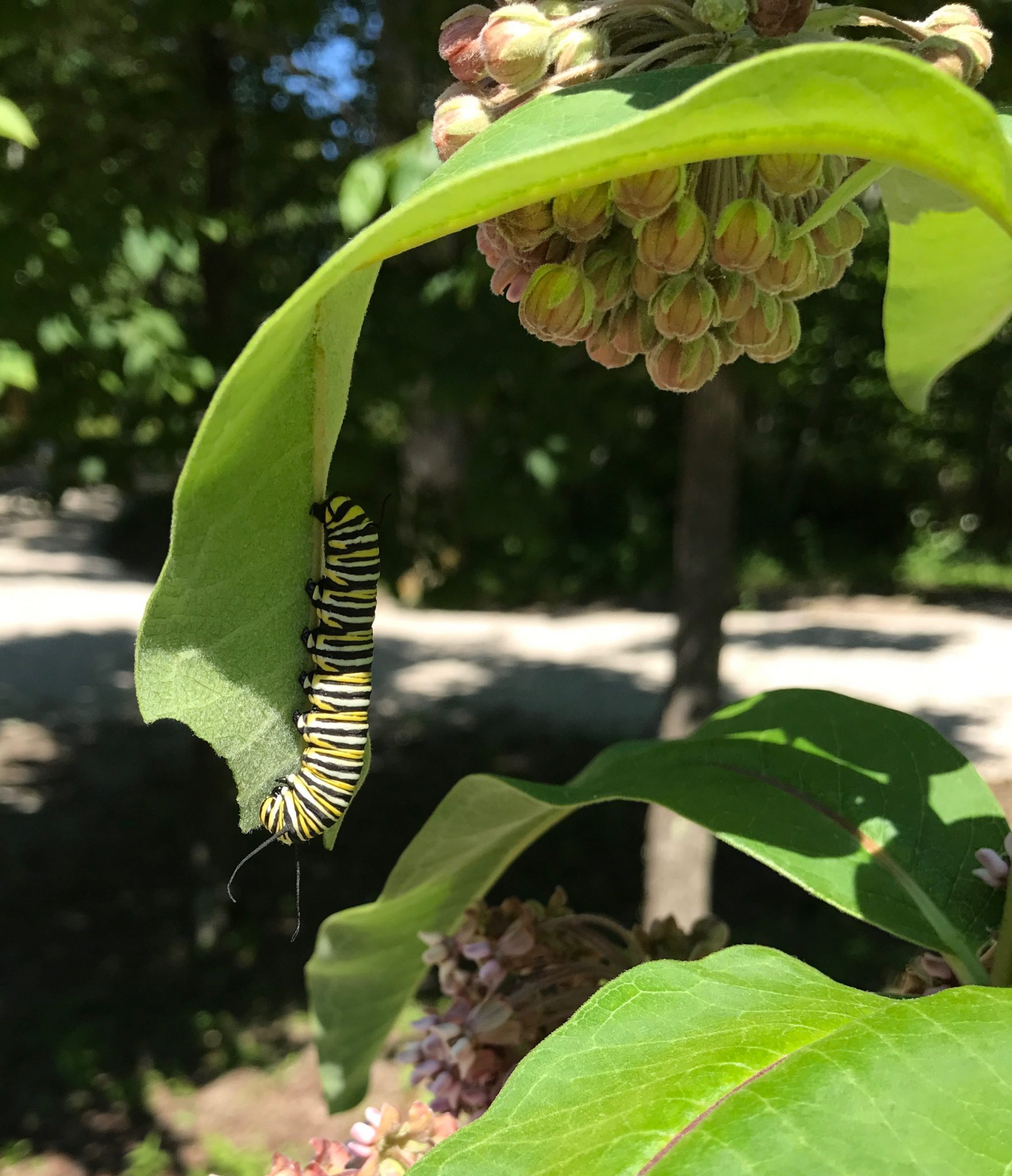
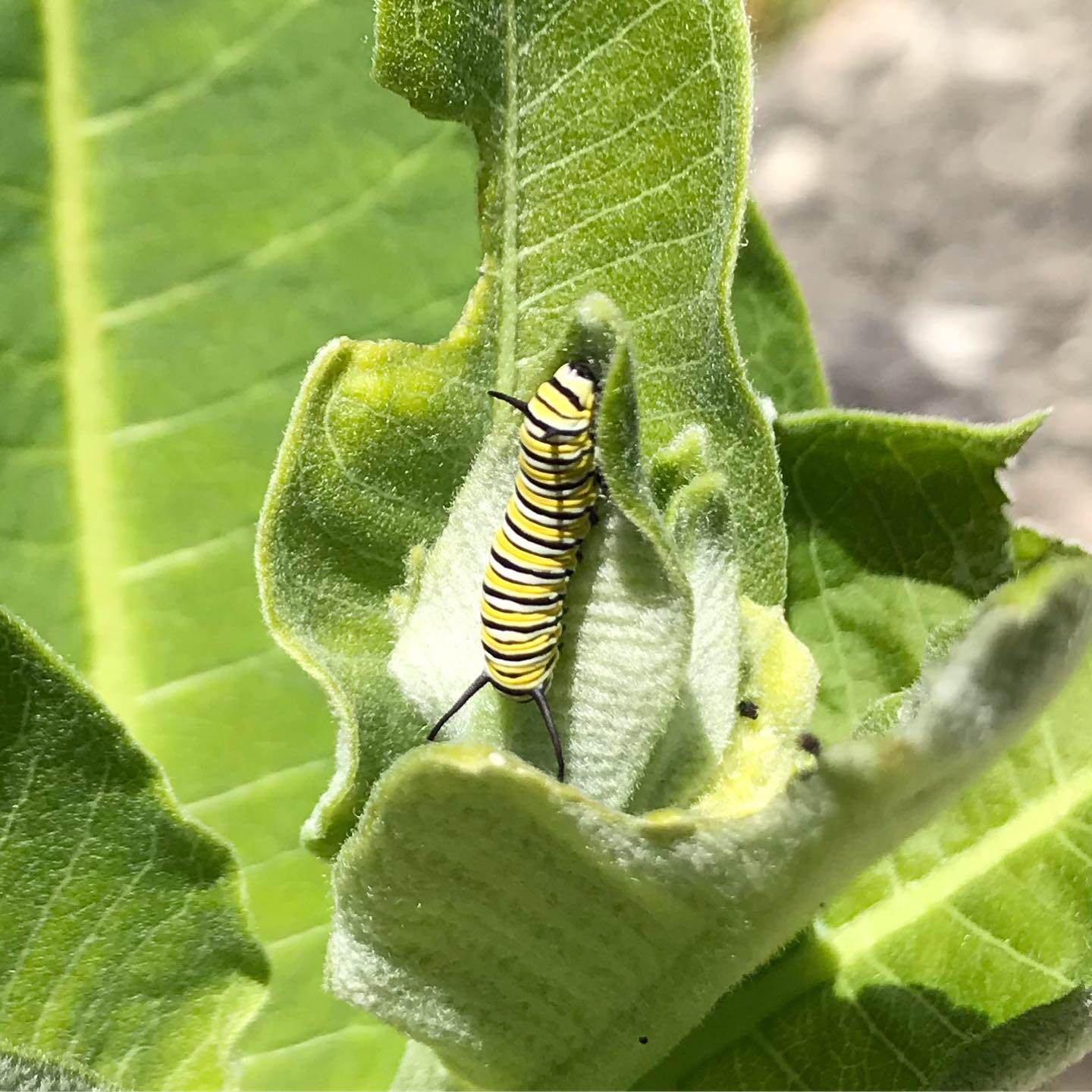
When full grown, the caterpillar will crawl away from the milkweed to a safe location where it forms a silk pad and hangs upside down in a J shape. It sheds its skin one last time to expose the bright green chrysalis. In 8 to 15 days, an adult monarch emerges.
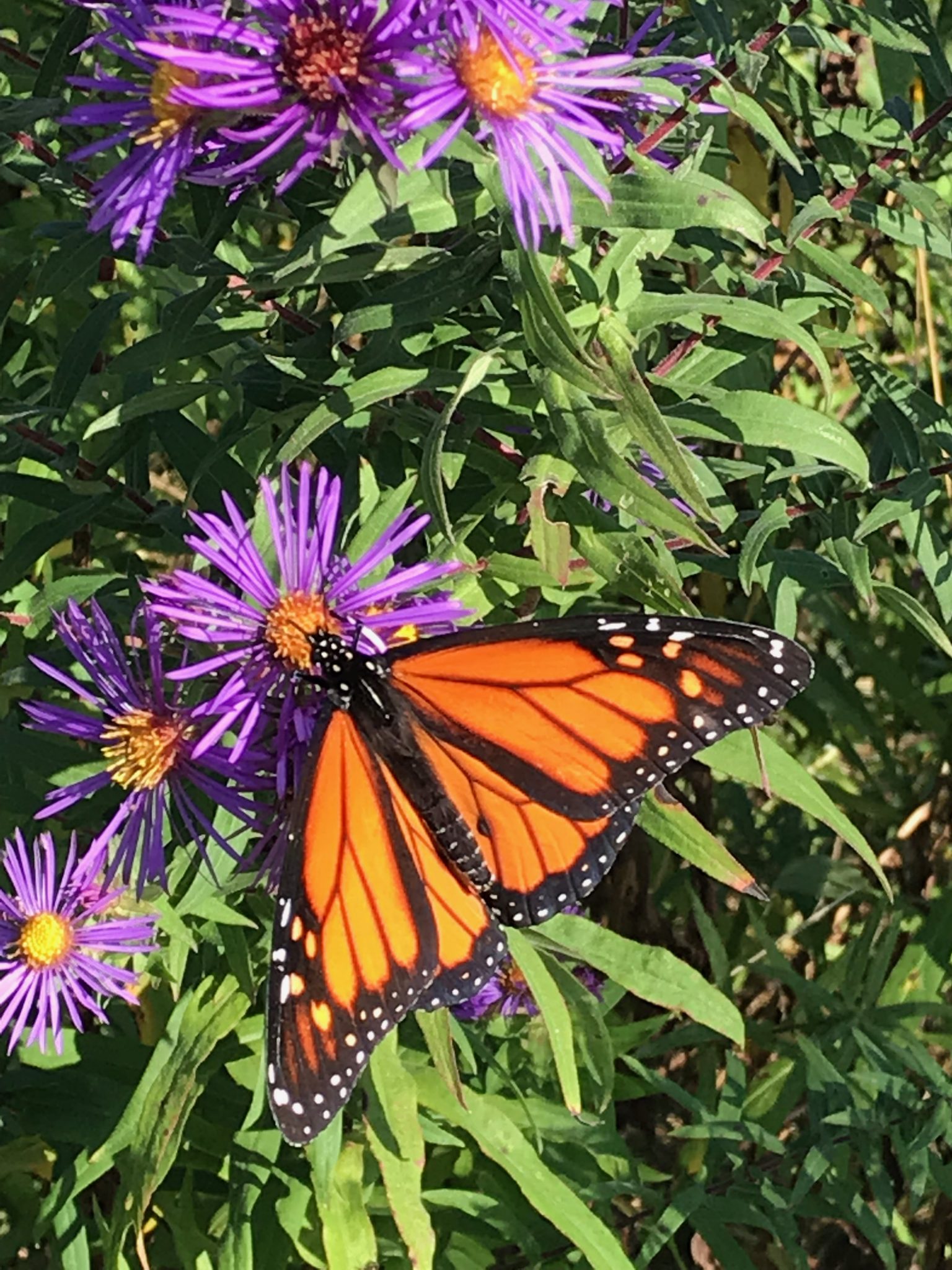
Monarchs and other pollinators are under threats to their survival, and their loss could negatively impact our agricultural food sources and natural plant ecosystems.

  • There’s been a loss of habitat, specifically loss of milkweed in their summer breeding locations and their general habitat in their over-wintering locations.
  • Climate changes can impacting migratory routes and habitat conditions.
  • Insecticides and herbicides have caused widespread loss of butterflies and milkweed leading to steep declines in their numbers.
  • Especially toxic is the neonicotinoids, which are widely used on farms and urban landscapes. While these insecticides are thought to be minimally harmful to humans and other mammals is minimal, they are extremely toxic to arthropods, including butterflies and bees.

So how can we help? Butterfly gardens, full of attractive flowers and milkweed can make a huge difference.
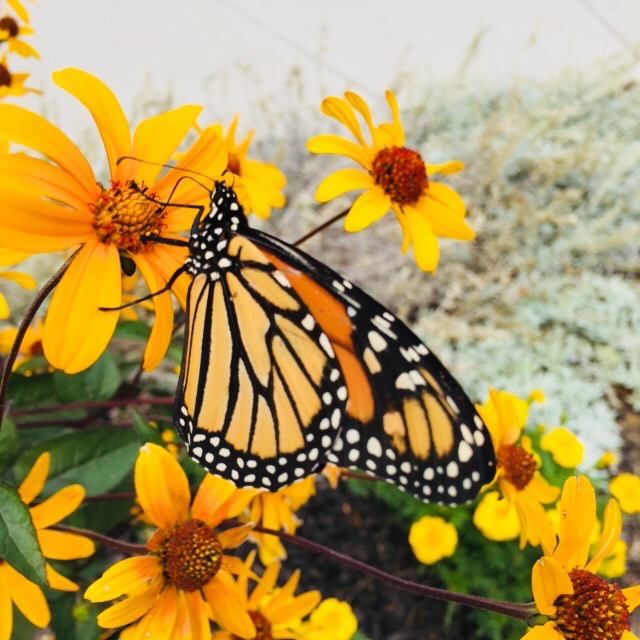
In my next post, look for how I plant wild milkweed to create habitat for the monarchs.

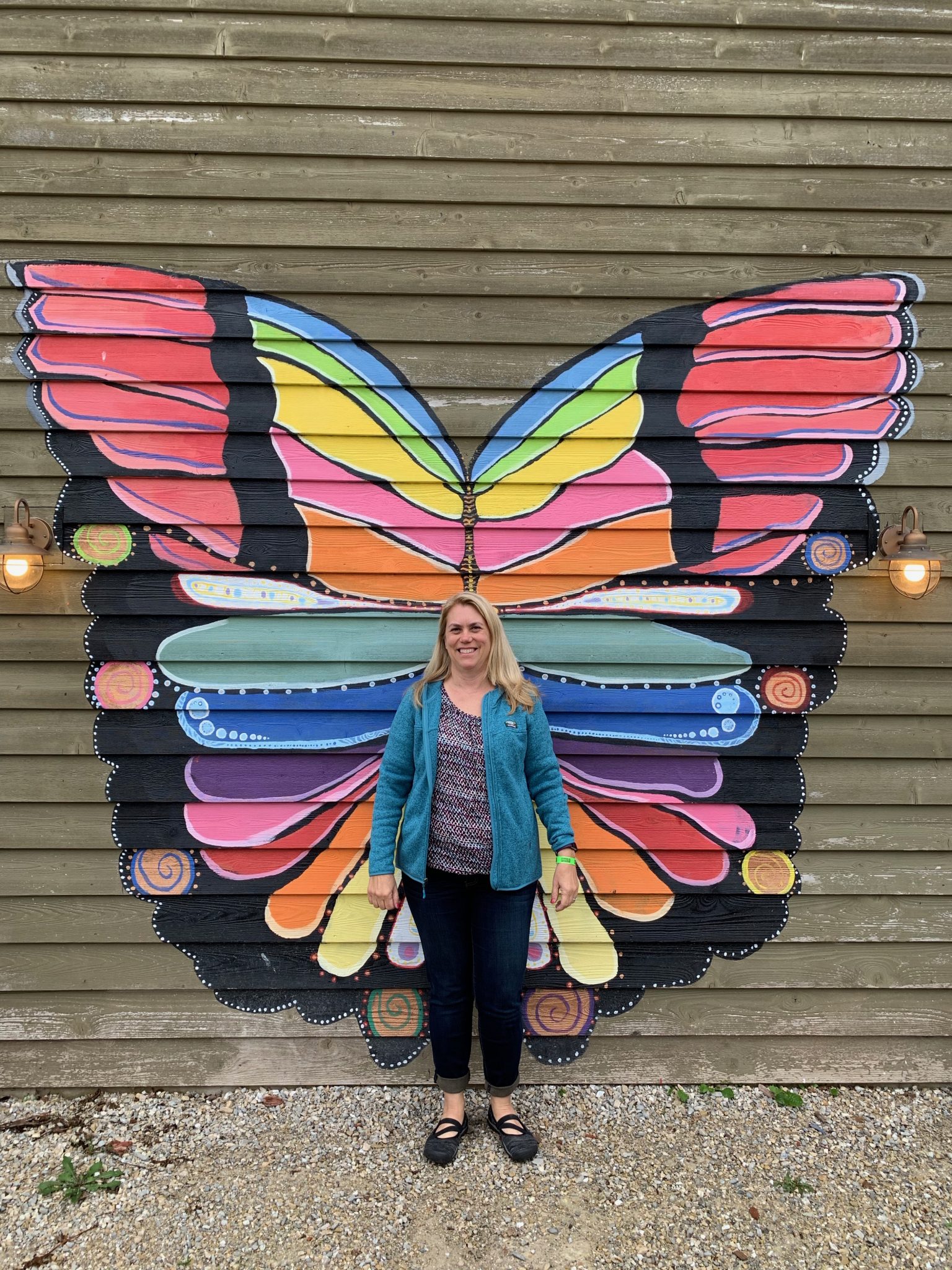
In the meantime, here’s me with some fun butterfly murals at the University of Michigan and the Hands On Art Center in Door Co , WI ! I need to keep my eyes open for more.

Thanks to my mom Peggy, for her great photos of the monarchs. Haven’t used her pictures in a while, but they are always so much better than mine ❤️❤️ 🦋
Rear Garden Refresh

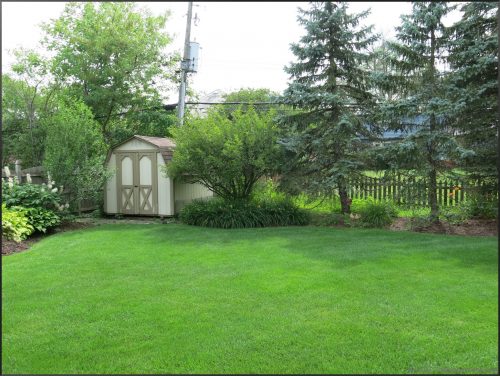
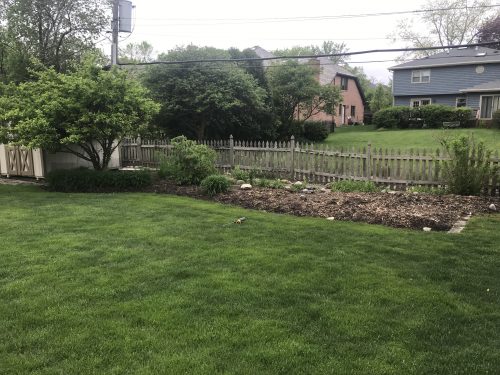
Along the back fence line we had three big spruces that afforded us privacy from the rear neighbors. But age, disease, weather and water were not their friend. After one fell down and the second came perilously close to falling down, we ended taking them out April. My previous posts, “Another Tree Toppled” and “Spruce Down“, tell the whole sad story.

They had been on the decline for a while, but it was still a big loss to have them come down.

But it gave me a chance to rethink what we’d like to have there. Because of the wetness of the swale area and widespread spruce Cytospora canker, it was not an option to replant more spruce. Arborvitae make a great privacy hedge, would also not do well in that location so I had to go in a different direction.

One of my complaints about many of the shrubs we have is that they have to be pruned yearly to be appropriate for the space.

Here was a chance to create a hedge of shrubs that could be allowed to grow naturally. It’d eventually be dense enough to provide privacy in the summer and a distraction in the winter.

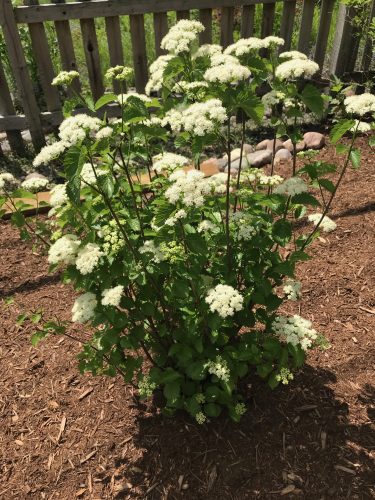
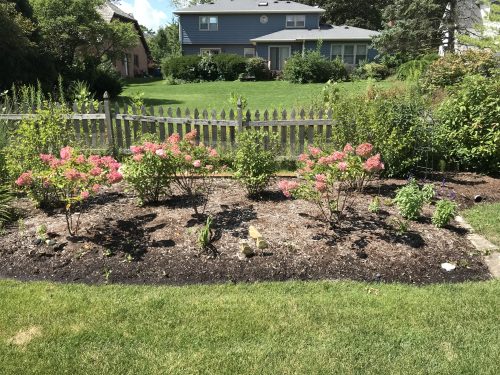
What to plant? I knew I needed Zone 5 hardiness and the growing conditions weren’t ideal for many shrubs, so I settled on viburnums as the main plantings. There’s a large selection of varieties, each with different flowering patterns, fall colors and sizes. I then included a couple of hydrangeas to add some floral interest in the front.

Interesting fact about planting Viburnum dentatums, like I planned, is that they are not self pollinating. They need to have a different cultivar planted nearby with a similar flowering time to have adequate pollination and berry production. I didn’t know this before researching this new bed, and it explains why my other viburnums never really seemed to set many berries.

We planted:

(2) Chicago Lustre® Arrowwood Viburnum (Viburnum dentatum ‘Synnestvedt’) These large viburnums will grow 10′ to 12′ in height with an 8′ to 10′ spread, has glossy foliage, produces creamy white flowers in mid- to late June and are highly attractive to birds for food and shelter. The fall berries are dark metallic blue and the leaves turn a mild purple-red. This viburnum is one of the Chicagoland Grows® varieties

(2) Blue Muffin™ Arrowwood Viburnum (Viburnum dentatum ‘Christom’) This viburnum is a more compact variety,  growing 5 to 7 feet high and 6 to 8 feet wide. It has medium green foliage, showy white flowers in mid-late June and turns orange to red in the fall. The abundant berries are a showy bright blue and a favorite of birds.

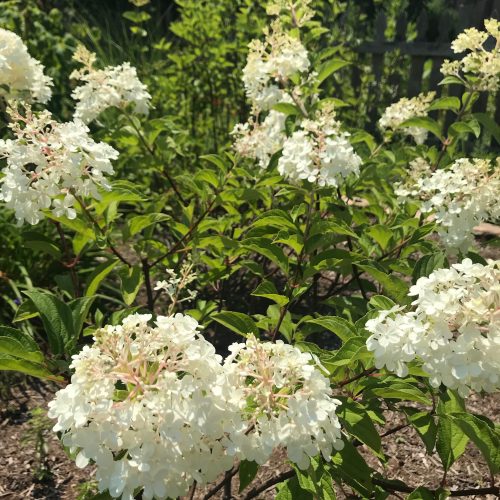
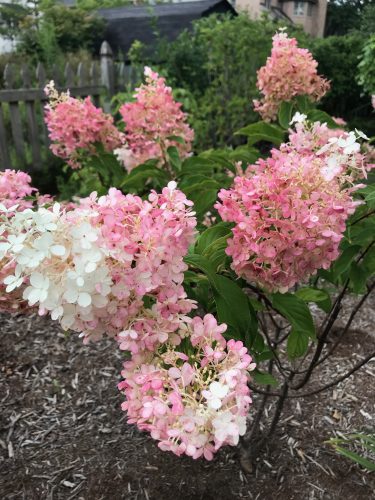
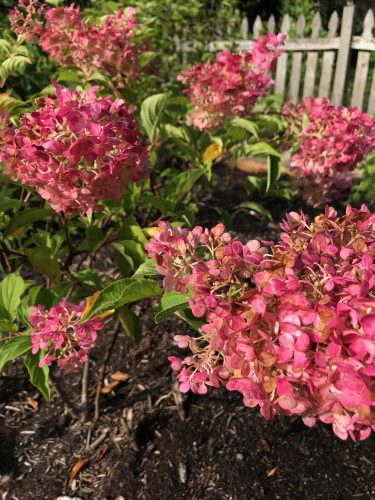
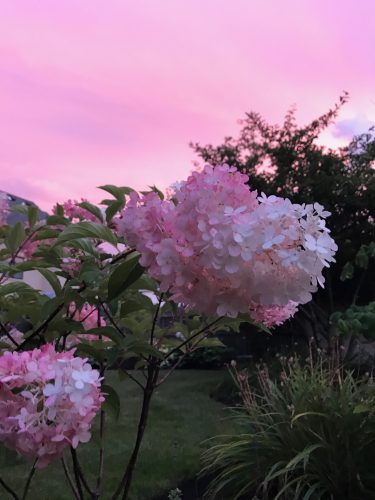
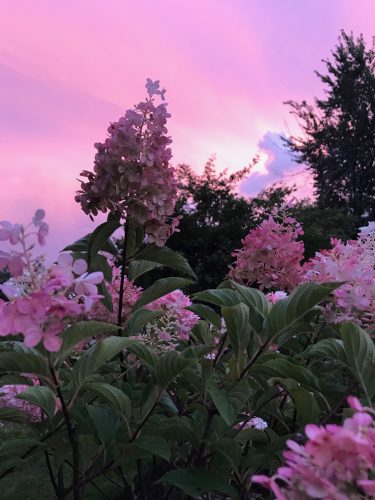
(3) Vanilla Strawberry Panicle Hydrangea (Hydrangeapaniculata ‘Renhy’ Vanilla Strawberry) This hydrangea grows 6 to 8 ft high and 4-5 ft wide and flowers as beautifully as the name sounds. The large flowery panicles (7” by 5”) develop in mid-summer, beginning white and finally maturing late summer to pinkish-red. The strawberry red flower color typically lasts for 3-4 weeks prior to flowers turning brown in the fall.

And what a beautiful show! Especially when the flowers match the sky.

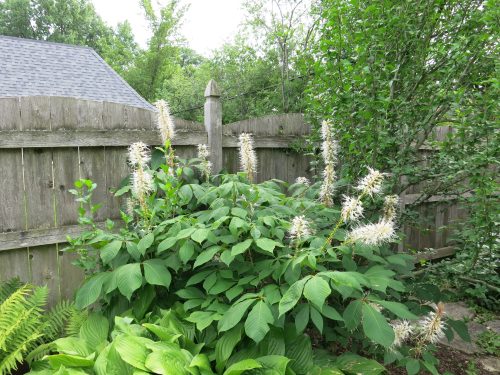
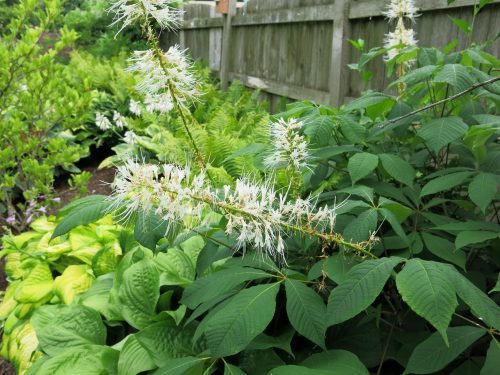
In addition to the new plantings, there was an existing Bottlebrush Buckeye and Sargent Crab, which I decided were nice enough specimens to keep. The bottlebrush buckeye is a wide-spreading plant, growing 8 to 12 feet high and 12 to 15 feet wide. It blooms in early July, producing interesting long fluffy white flower clusters. This plant had already been moved once because it wasn’t in an appropriate space for it, so I hope it’s happier in this new location.

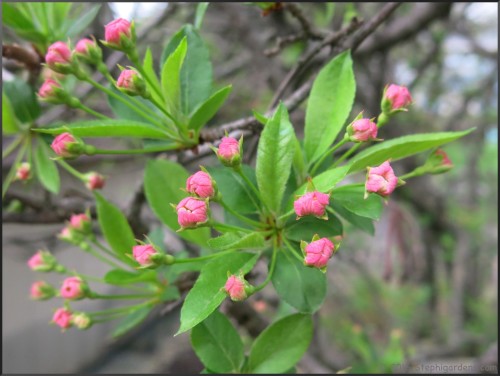
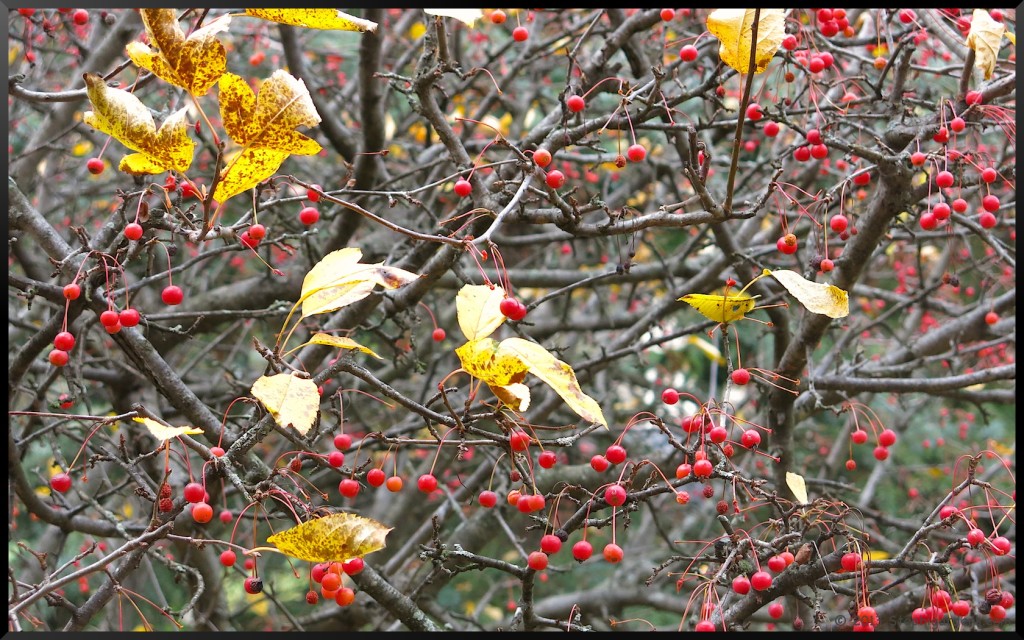
The Sargent Crab is a 6 to 10 foot dwarf crabapple. In spring, pink buds open to a profusion of fragrant, white flower clusters. This tree has also been moved a couple of times and settled into this location about 10 years ago. It’s been a very hardy specimen, and the berries seem to attract Cedar Waxwings to my backyard. That makes it a keeper!

I purposefully didn’t overdo the number of shrubs I planted.

In the past, I’ve been advised to plant too many plants that look great in a year or two, only to have to remove them a few years later because of overcrowding. Very wasteful. So this time I’ll be patient and have a healthy shrub border in a few years. In the meantime, I’ll enjoy the interesting colors and textures and fill in the spaces with some annuals.

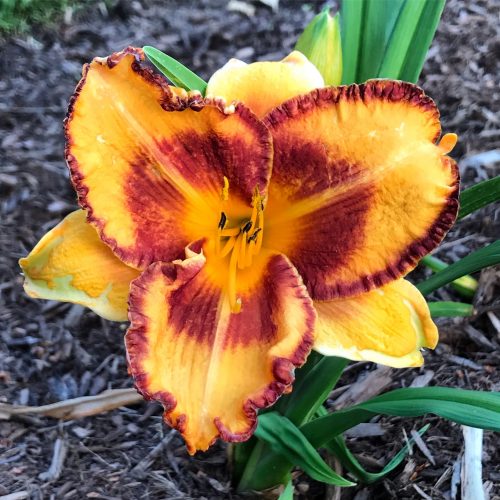
I may have also added a few interesting daylilies even though I swore I was done buying any more. But how could I have passed up planting a VT Spirit Daylily (Hemerocallis VT Spirit), to celebrate one of my boys graduating this year??? Go Hokies 😉

Have you had a chance you redo an entire garden? How did it turn out?

Many Hands in the Garden

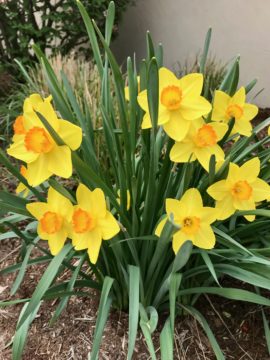
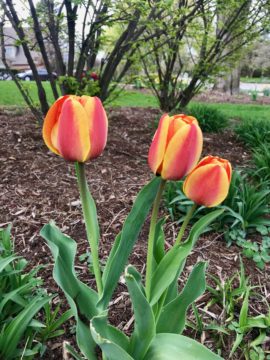
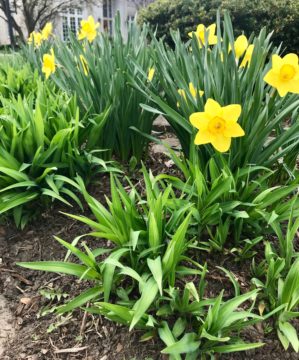
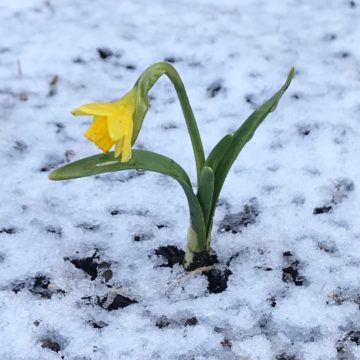
It’s finally starting to look like spring! The daffodils and tulips are blooming.

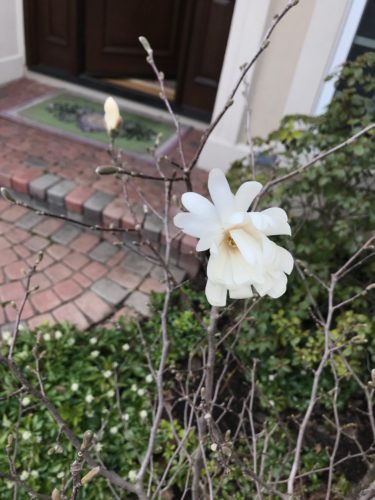
The Star Magnolia, focus of My Magnolia Saga, is showing signs of life and trying to bloom…

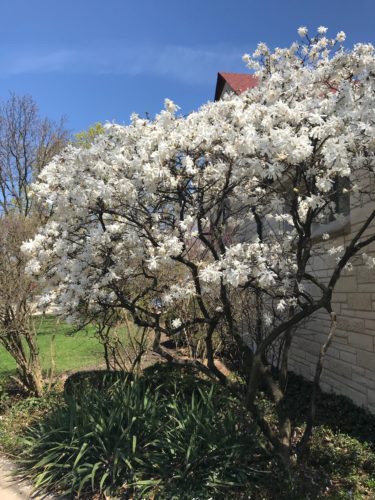
…although around town they are in full bloom.

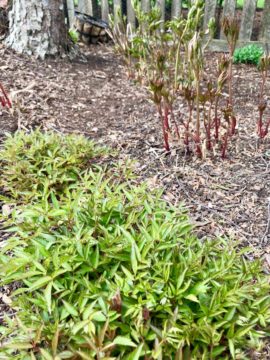
And the hostas, daylillies, astilbe and peonies are all bursting out from the ground.

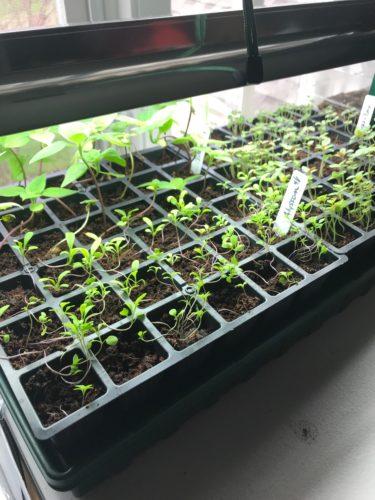
In the house, the seeds are sprouted and the next set are ready to be planted.

Why so many hands in the garden this year? It’s hard write this down, but I am currently not able to garden or do anything strenuous for about a month following recent surgery for breast cancer <<sigh>>. I went for my screening yearly mammogram back in February, and after lots of testing was ultimately diagnosed with a Stage 1 invasive breast cancer. Boy, was I not prepared for this and there’s definitely no good time to get a bad diagnosis. I’m still waiting to find out exactly what the next steps are after surgery (there’s a lot of waiting) and a little stressed out over what family events I may or may not have to miss. But every day, I am so thankful that this was caught early and my prognosis is excellent after treatment. I’m also thankful for my husband and kids, and all my family and friends who have reached out with support and to help in any way they can.

So while my hands may be out of the garden for a bit, I’ve also realized a garden can be a very healing place when going through a stressful life event. I can still plan and enjoy the beauty and smells of the spring blooms. I am also blessed by many who have offered to help make sure I get things growing and cared for in a timely fashion, and keep my life as normal as possible. This will be a village garden this year.

It may not be a great year for my garden, but that’s what this blog is all about. Real life experiences of a casual suburban gardener. And gardeners get sick sometimes.

Finally, Planting Season is Beginning

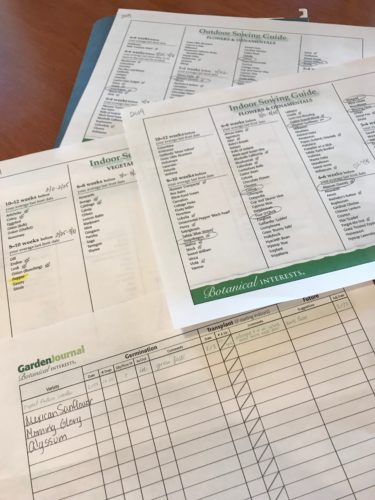
Finally, I can stop thinking about last year’s garden and start thinking about this year’s. I’ve ordered all my seeds, (maybe) and printed out my growing resources from Botanical Interests.

I’ve used these garden resources for years to organize my plantings, both for indoor and outdoor sowing. I thought they didn’t have them this year, but instead they made them part of this journal package. Phew! I really rely on them to know when to plant and keep track of what I’ve planted, when and where.

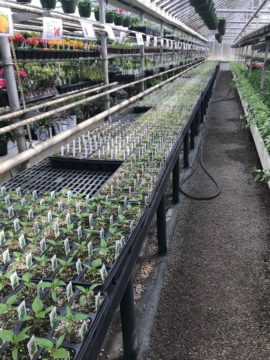
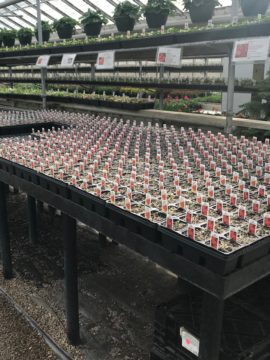
I’m finally ready to get started sowing the inside seeds. I grow some things myself and rely on my local nursery for the rest (shout out to Vern Goers Greenhouse!). Along with wonderful annuals and perennials, they have an amazing selection of peppers, tomatoes and other vegetables. I went to visit them the other day to see how things are coming along. Looks like it’ll be a little while until they’re ready, but it is only the beginning of April.

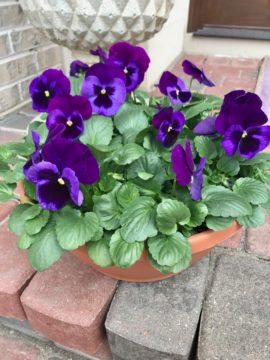
While I was there I did get some beautiful pansies to brighten the porch.

What did I sow today?

Flowers:

Vegetables:

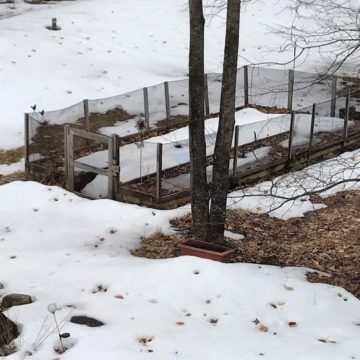
I was hoping to get some cold weather seeds sowed this weekend, but my WI garden looked like this:

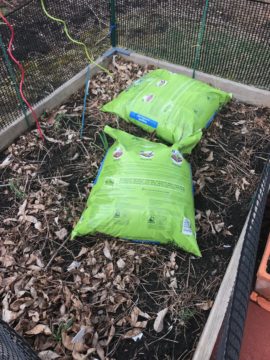
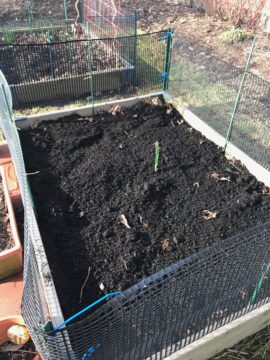
Still had to get some new dirt turned into the beds at home, so got that done this afternoon. Next post, I’ll let you know what I planted!

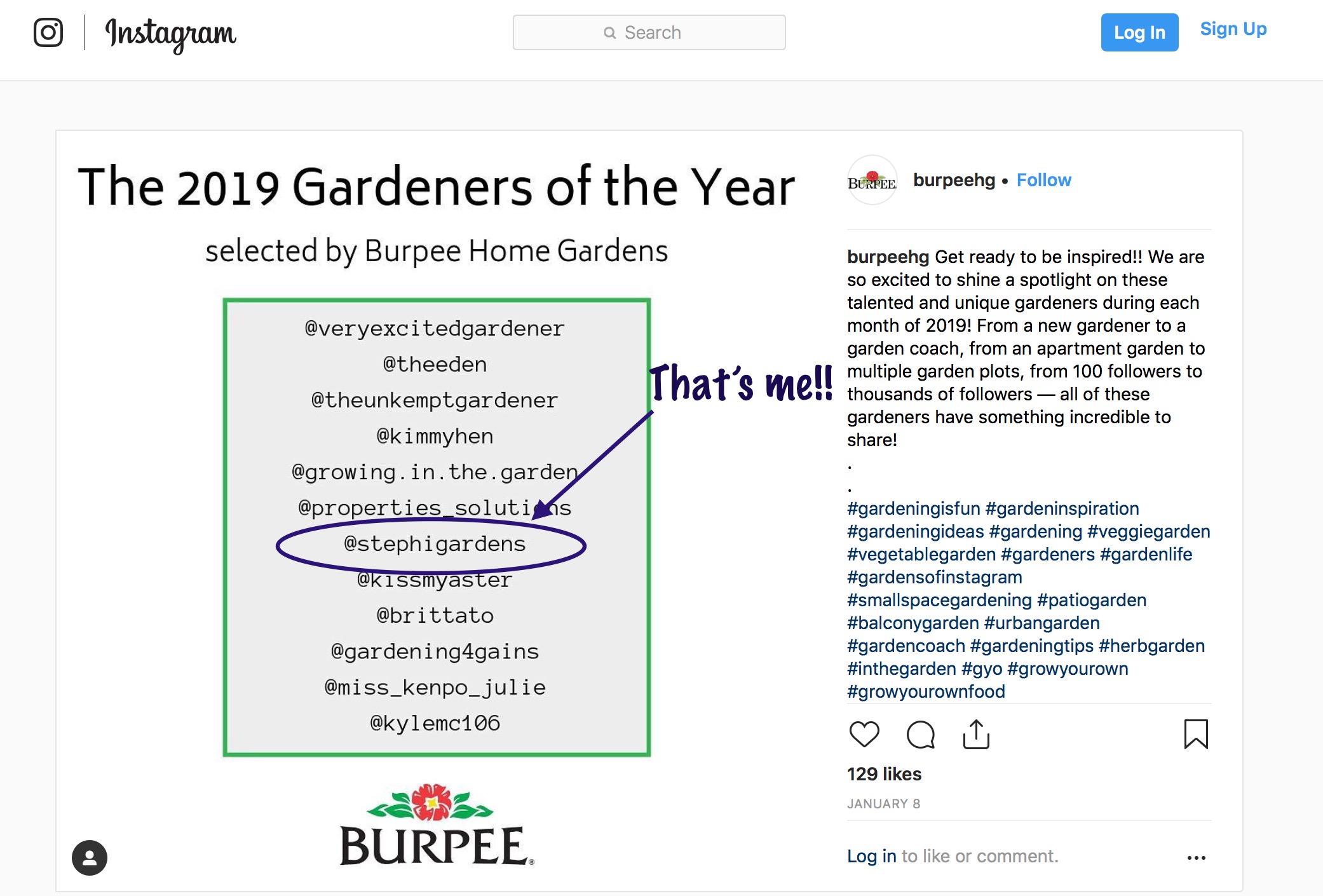
Burpee Home Garden 2019 Gardeners of the Month-I’m July!

Yep, that’s me! Last fall on Instagram, Burpee Home Gardens asked gardeners to enter themselves or a friend to be one of BHG’s 2019 Gardeners of the Month. I shamelessly submitted my name with the following description:

“I would love to be one of your featured gardeners. I may not have the most perfect garden, but it’s immensely fun to see what’s going on out there in the yard, to see what has worked well this year, and think about what I might try next year. Check out my blog and see what’s going on in my suburban yard!”

I didn’t really think I’d get picked since there are so many exceptional, passionate gardeners out there. Then much to my surprise, or rather shock, I got the following message by to me Instagram inbox:

“We apologize for the delay, but we have good news! You’ve been selected as one of Burpee Home Gardens’ 2019 Gardeners of the Year! What does this mean? Either you submitted yourself or a friend submitted you to be featured on our account! We think you’re great and will feature you on the following month: July 2019. As a gift for being such an awesome gardener, we’d like to send you an exclusive plant sample box of our new varieties for 2020! Please reply with an address to which we can ship the box. (You won’t receive these until early summer, but we need to confirm you on our list now.) Congrats again, and we look forward to showing our followers how amazing you are! 🌱😁”

Wow, wow, wow!!! How exciting is this?

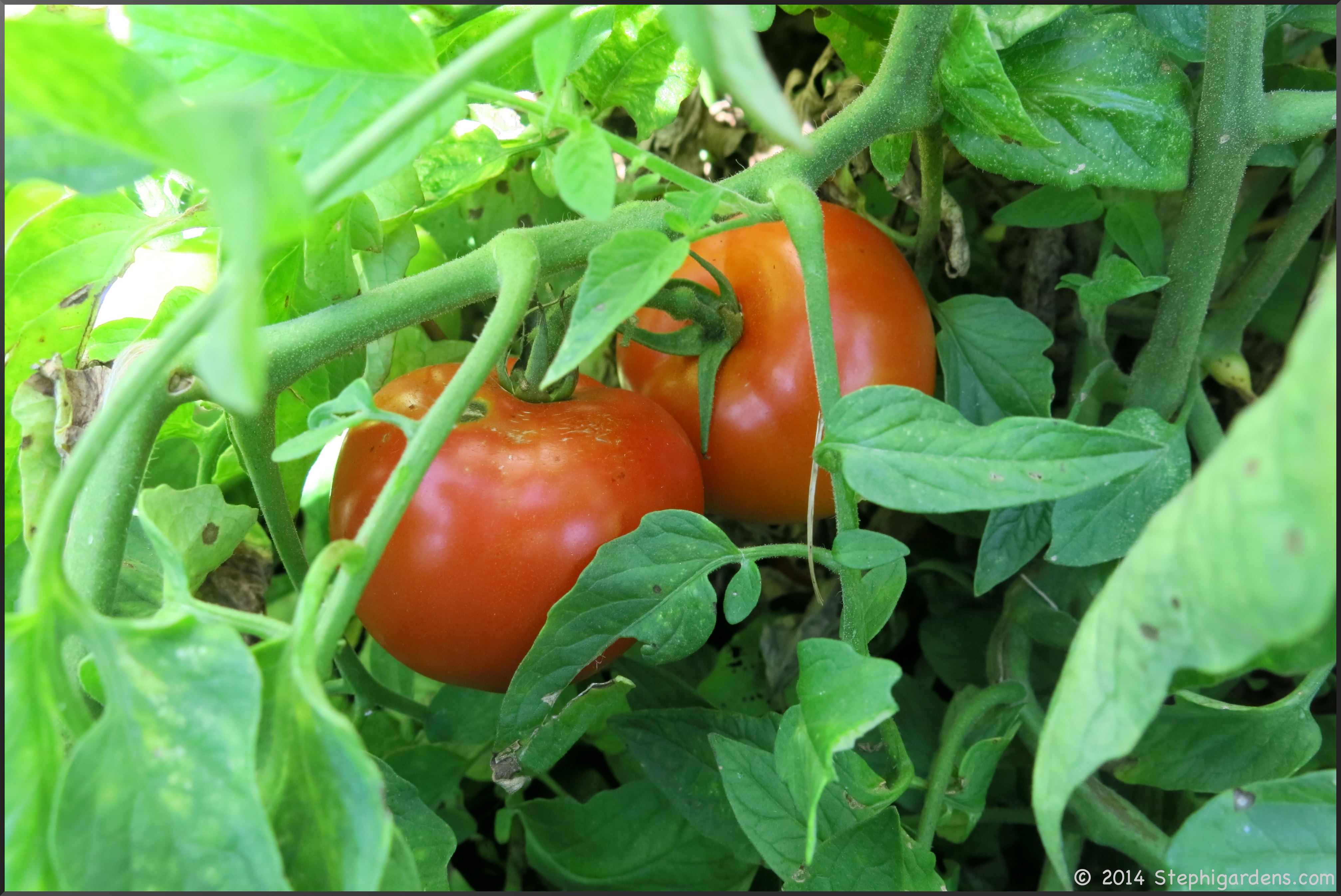
Burpee Early Girl Tomato

Announcement from the Burpeehg instagram site last week:
“Get ready to be inspired!! We are so excited to shine a spotlight on these talented and unique gardeners during each month of 2019! From a new gardener to a garden coach, from an apartment garden to multiple garden plots, from 100 followers to thousands of followers — all of these gardeners have something incredible to share!”

Now the pressure is on. What am I going to grow this year? What new things do I want to try? How will I compare to the other gardeners? What unexpected things are going to happen this year? What, what what…

One thing I do know, is that people garden for all different kinds of reasons and no one really has a perfect garden. I grow what makes me happy and I love writing about it. The good and the bad. That’s real life. I hope some of what I experience encourages someone else to try their hand at growing something, or just getting outside to appreciate nature.

Can’t wait to follow Burpee and Burpee Home Gardens as they highlight all these gardeners this year.  Watch for me in July on their Instagram site and blog. I’ll be sure to let you know when I’m featured 😉

2018 Garden Recap: Flowers

Now that the outdoor growing season has officially ended here in Chicago, I thought it was time to look back and see how things went.

It was definitely a mixed year weather-wise, but for the most part everything looked pretty good all summer. Except for the weed infestation that took a while to get under control!

Here’s some highlights:

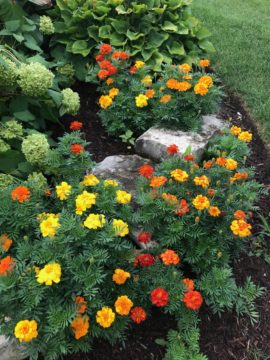
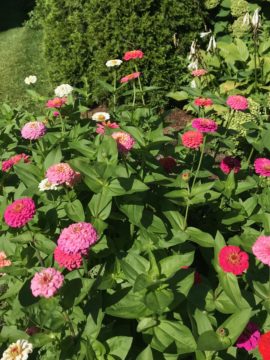
I was excited to get my zinnia and marigold beds laid down from seeds that I had collected from last years’ flower beds.

I waited for the soil to warm up enough, prepared the beds, separated out the seeds and spread them out over the soil, then watered.  The seedlings were about 3 inches when disaster struck! Some wayward weed-wacking had pulverized them after mistaking the seedlings for weeds.

So back to ground zero, but it was now mid-June and everything was pushed back quite a bit. So, replanted what little seed I had left and added some new Burpee Cut and Come Again Zinnias and Burpee Boy O’Boy Marigold Mix.  Much to my delight, I did end up with beautiful flower beds before too long.

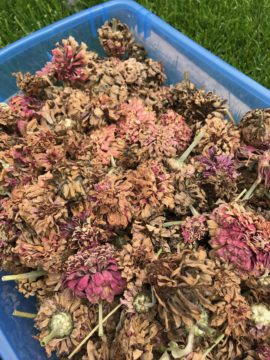
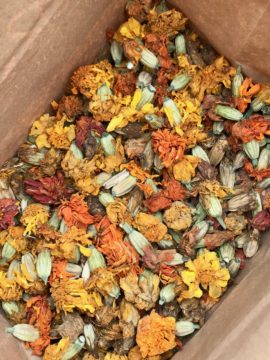
Like last year, I collected up all my seeds to keep for next spring.  Check out my previous post, Cheerful and Bright Zinnias Bed, for an easy how-to to get dense flower beds like these.

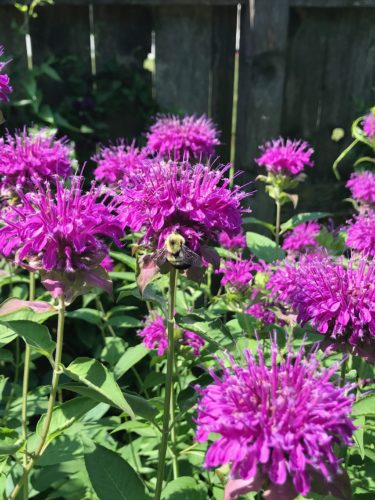
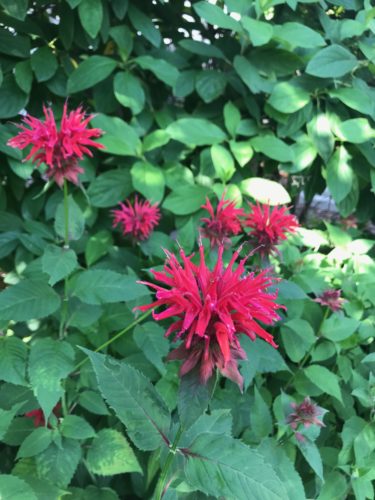
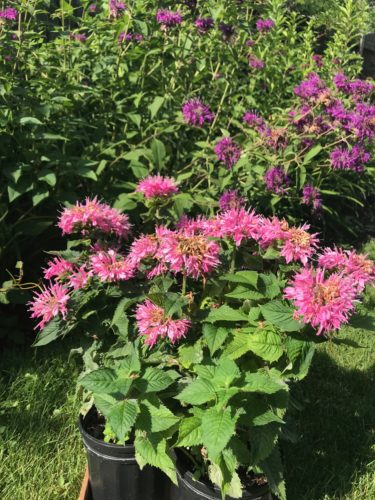
The Monarda added mid-summer festive colors and are always a favorite of the bees.

Monarda didyma ‘Purple Rooster’ Monarda

I’ve enjoyed the summer color from my current Monardas who have grown really well in their new locations (The Bee Balm is Very Happy). I added another variety this summer, Marje Pink Bee Balm (Monarda ‘Marje Pink’). Hopefully it grows as well as the other two have.

Monarda 'Marje Pink'

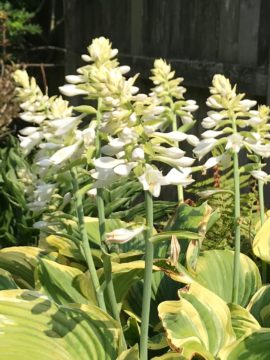
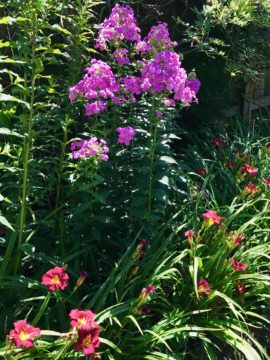
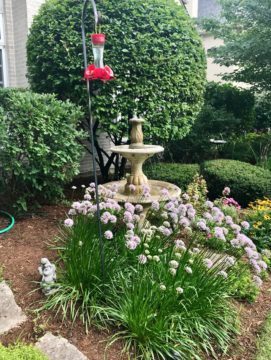
Other garden standbys did well this summer. Hostas, Daylilies, Phlox and the newly added Summer Beauty Allium (Allium Tanguticum ‘Summer Beauty’) added plenty of summer color

I moved some plants around and put some new ones in. We’ll see how they look in the spring!

I replaced some scraggly looking daylilies next to the front walkway with the much neater Summer Beauty Allium (Allium Tanguticum ‘Summer Beauty’), and filled in some holes n the side and back gardens with Flames of Passion Avens (Geum ‘Flamers of Passion’), Max Frei Geranium (Geranium Sanguineum ‘Max Frei’), early summer blooming Pumila Astilbe (Astible Chinensis ‘Pumila’) and late summer blooming Visions Astilbe (Astible Chinensis ‘Visions’)

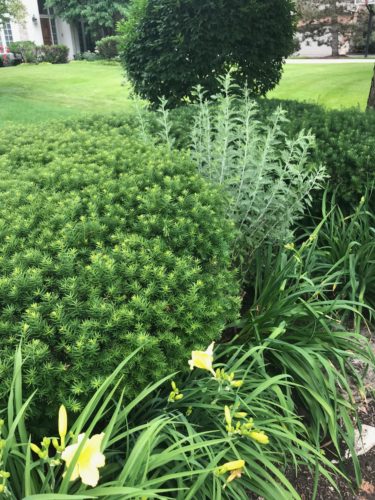
I also took out this Russian Sage that never looked quite right in the midst of the yews. I tried to transplant it, but I didn’t really like being moved mid-summer.  We’ll see if it comes up anywhere. I’m sure there will be some stragglers to remove and try again to transplant in the spring.

Overall pretty good year, but I’m excited to see what next spring will bring. Feel like it’s going to be a long winter…

Troll Hunt!

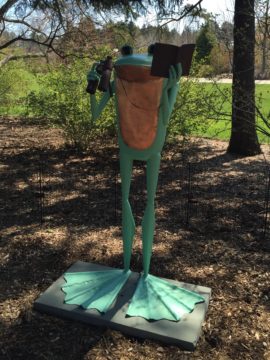
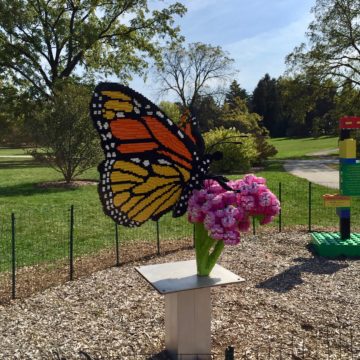
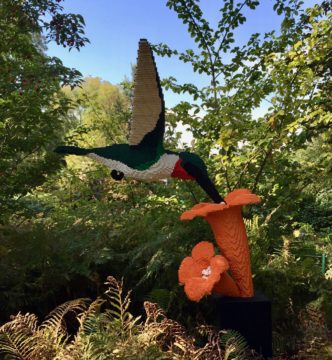
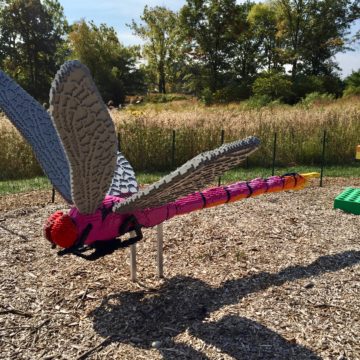
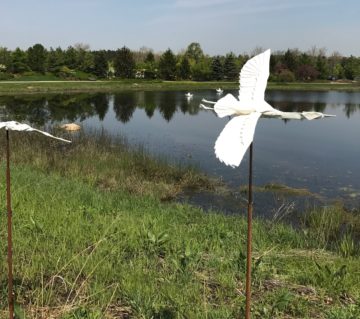
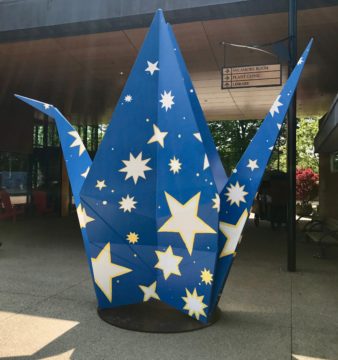
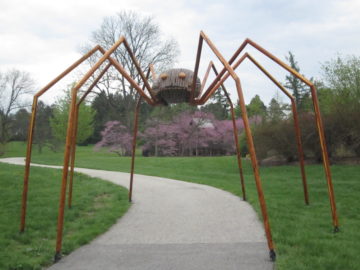
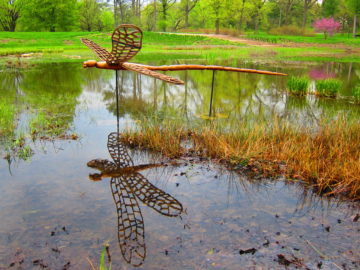
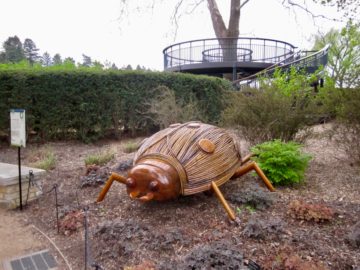
The last few summers the Morton Arboretum has had a “BIG” exhibit to bring people outdoors and celebrate nature. There’s been frogs, giant bugs, giant lego statues, and life size origami.

And this year, a Troll Hunt!

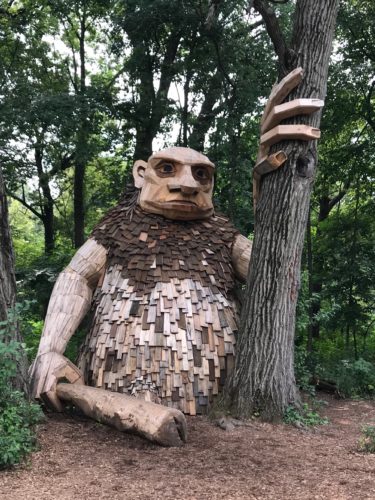
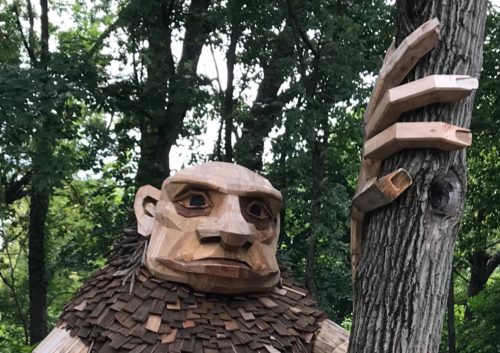
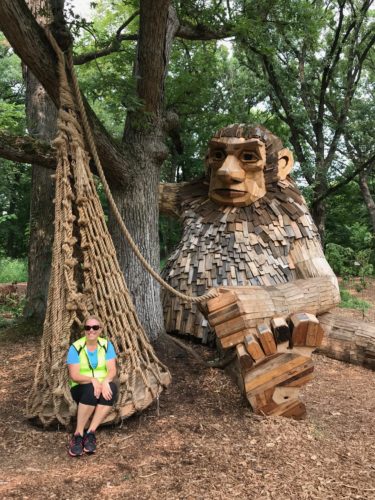
The Trolls are the design of Danish artist Thomas Dambo. These 15- to 30-foot-tall, and one 60-foot long, sculptures are created from reclaimed wood and other forest items to bring people out into nature and serve as protectors of our environment. This guy, Neils Bragger, definitely says, “Don’t mess with me or my woods!”.

This Troll Hunt exhibit is Dambo’s first large exhibit in the US and part of a worldwide fairy tale that Dambo is creating, “The Great Story of the Little People and the Giant Trolls“.  The first installment was in Copenhagen, the second in South Korea and the third now at the Arboretum. The Morton Arboretum is lucky to have it!

The faces, hands and feet were built from recycled wood in Dambo’s shop in Copenhagen and shipped to the Arboretum.

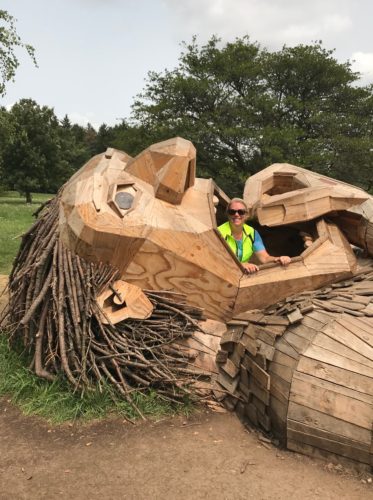
All year the Arboretum collected wood scraps, battered boards, fallen trees and branches, and the remains of pallets and packing crates which were added on site to create the massive Trolls including Furry Ema, who would like to trap some visitors!

Unlike the past exhibits, to see the trolls does require some driving and walking, or in my case bike riding.

You can see some from the Arboretum roads, but to see them up close you need to leave the road and walk just a few feet or up to 3/4 of a mile to see them over pavement, wood-chipped, and mown grass trails. There is a Troll tram that will bring you to the sites and give you lots of interesting facts about the Trolls and the arboretum if you prefer to have someone else do the driving.

Any way you get there, be careful you don’t get eaten by Little Arturs!

Be sure to pick up the Troll Hunter’s Handbook at the Visitors Center. It looks like a kid’s adventure guide, but The Handbook will help you find the trolls and collect clues to locate the Troll’s secret hideout, which I sadly missed on this trip. I will be back! The Trolls are expected to be around through the end of the year, maybe longer if they hold up well. Check out this Arboretum page if you need more information and tips for your visit.

Of course, no trip the Arboretum is complete without seeing some of the amazing plant collection and finding something I need in my garden.

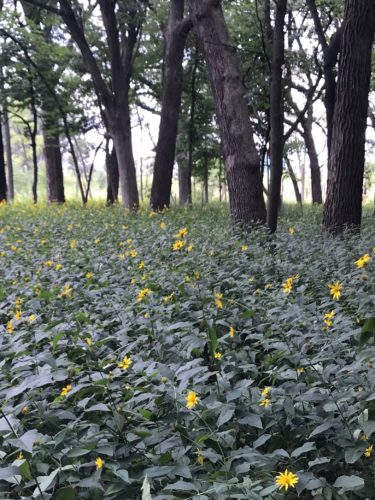
Pale-leaved Wood Sunflowers (Helianthus strumosus) were in full bloom on the forest edge on the East Side.

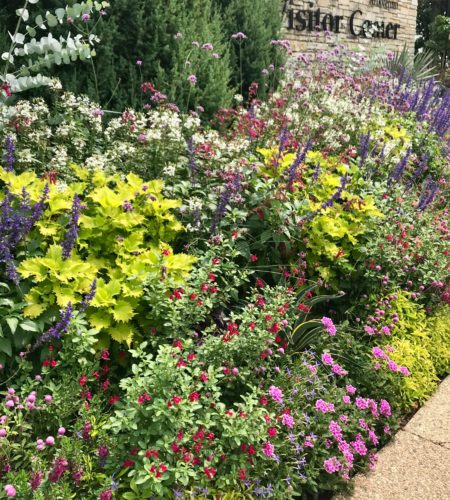
Always a stunning seasonal display in the garden in front of the visitor center!

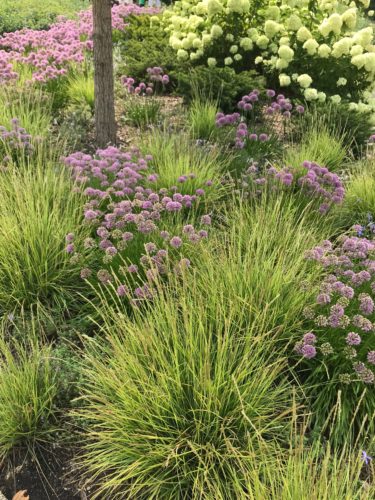
I may need to add some of this Autumn Moor Grass (Sesleria Autumnalis).  Looks great next to the Summer Beauty Allium (Allium senescens subsp. montanum ‘Summer Beauty’).


Have you been on the Troll Hunt? I’ll let you know on Instagram at Stephigardens when I find The Hideaway!


Weeds, Weeds, Weeds

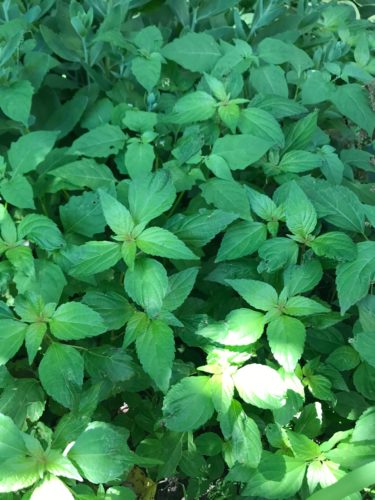
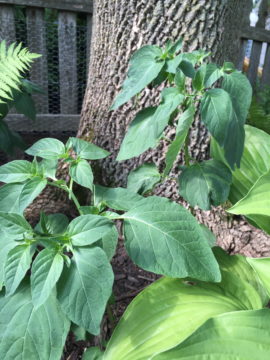
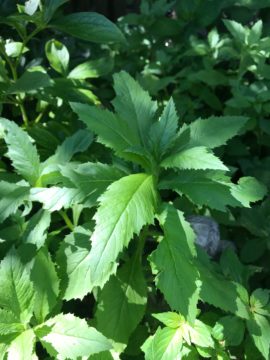
Just when I finally got the garden under control, I go on vacation and leave it to its own devices for a few days. I came home to an explosion of weeds. Where do they come from? I think I get the Preen down early enough, but that never seems to be the case. I don’t help matters by going and digging around after it’s down, messing up the protection it affords. So I pull and pull and pull. Among a long list, probably my most annoying weeds are Shepards Purse, Spotted/Prostate Spurge, Yellow Woodsorrel (Oxalis), Canadian Thistle and Three-seeded Mercury.

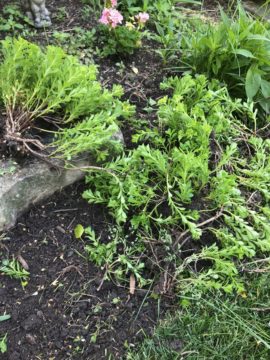
Shepards Purse (Capsella bursa-pastoris) has been a particularly stubborn issue for me since it blended into my succulent garden and was camouflaged by similar looking plants.

By the time I figured out it was actually a separate plant, it was everywhere. Because it’s so intertwined, the best I can do is just keep pulling it out whenever I can get to it. Between that and the grass, I finally just pulled up a whole section to tease the wanted plants from the unwanted. A lot of work, but so much better!

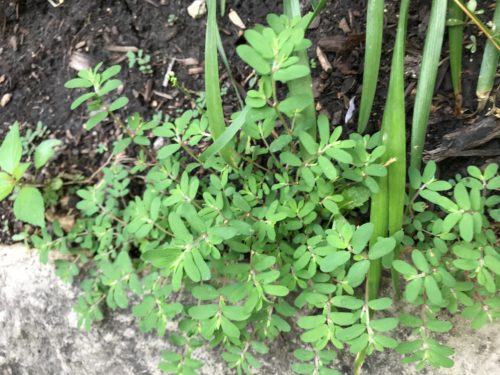
Spotted/Prostate Spurge (Euphorbia maculata/prostatais another weed that seems to grow with abandonment in my yard, It’s a low growing, small leaved, poor-soil and sun-loving weed. It’s virtually impossible to distinguish the two species, so they are often considered to be one. It’s also hard to distinguish from prostate knotweed (Polygonum aviculare), but only the spurges produce a milky-white latex fluid when broken (similar to a dandelion).

Prostrate spurge will tolerate some shade but thrives in harsh full-sun baked sites. It especially loves to grow in the gaps between the bricks on my patio.

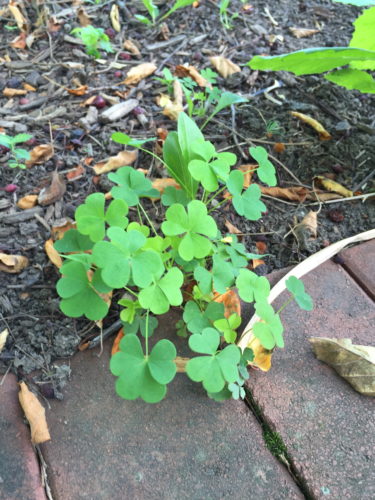
Yellow Woodsorrel (Oxalis) is a pretty yellow-flowered clover looking flower that I actually enjoy because it reminds me of native wood sorrels, until it starts to take over. If not controlled early, it’ll spread by both its stems and seeds and then it just looks messy and weedy in the garden.

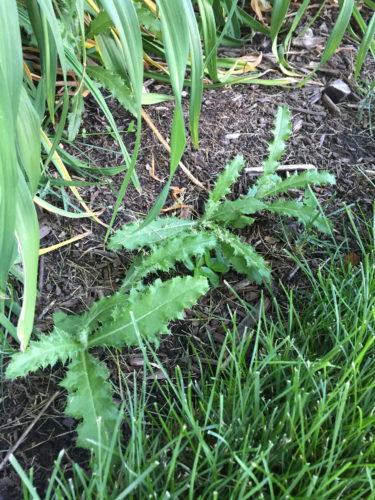
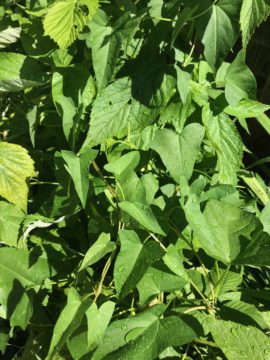
Canadian Thistle is a relatively new issue for me. Not sure where it came from, but it sure grows BIG and prickly. I was worried it came from the thistle I was feeding the goldfinches, but the “thistle” seeds are actually Nyjer ® seeds from the African yellow daisy (Guizotia abyssinica) and are sterilized to not germinate. Maybe since I’ve attracted goldfinches to the yard, they are somehow carrying the real thistle seeds as well. In any case, to get these out I need a thick pair of gloves and a hand weeder to pull it out or try a natural weedkiller if it’s just too big. As with most weeds, you can’t just cut them since they will regrow asap.

Three-seeded mercury (Acalypha rhomboidea) was a little more difficult to identify, but is actually quite widespread east of the Rockies. It’s a tall growing weed and belongs to the spurge (Euphorbia) family. It has a shallow tap root making it quite easy to pull out, which is about its only saving grace in my mind considering how widespread it is in my garden.

What else is growing like weeds in my garden?

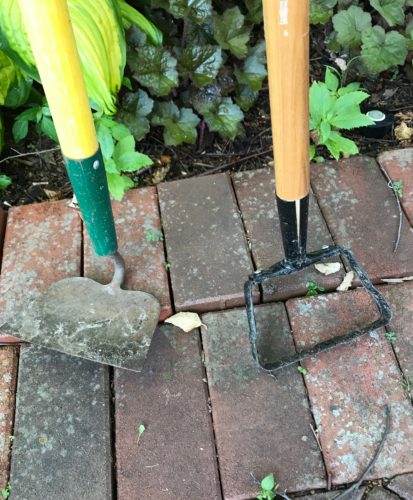
When I need a weed killer I use a natural mixture made from white vinegar and about a teaspoon of dish soap.  Put the mixture in a sprayer and on a hot, sunny day, give the plant a good soaking. I have mixed results, but it helps often enough. I like this methods as safer alternative to Round-up, and since I’m just dousing the leaves it shouldn’t affect the pH of the soil. I also have some trusty tools I like, a good old-fashioned hoe and my more recent addition, a Hula-Ho Weeder Cultivator for larger areas.

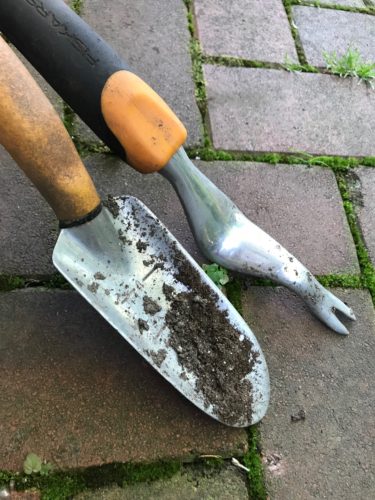
I also have a Fiskars hand weeder and Fiskars trowel for smaller areas or things with deeper roots. All the tools work better in most soil rather than dry. I try to weed after a rainfall or watering.

It is interesting that some of these weeds like Purslane and Lamb’s Quarters are edible and Shepards Purse is medicinal. I’m too much a of a chicken to trust my identification skills to try them though. Anyone try them?

What’s the biggest nuisance in your garden?  Had some recent conversations with friends about weeds and one has wild strawberries in her yard and the other has wild grapevines. Both sound bad!

Spring Into Summer

You may have noticed I took another little break from blogging.  Nothing exciting going on, just got busy with some other projects. But, my garden is in full growing mode after a tough winter and spring. Winter was long, cold and at our place in Door Co, WI, very snowy.  Spring came slow and seemed as though wouldn’t ever arrive.

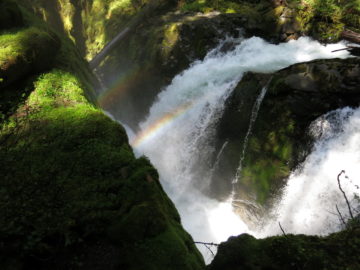
I was late getting the flowers and vegetables in the ground because of a combination of the ground being too cold, and some poorly timed travel plans.  Really, who plans a vacation right at the peak of planting season?  But, it was fun visiting Seattle and Olympic National Park, and having both college kids home for a visit.

Then finally, spring and summer arrived almost all at once. All the spring blooms seemed to explode at the same time making for a spectacular show.

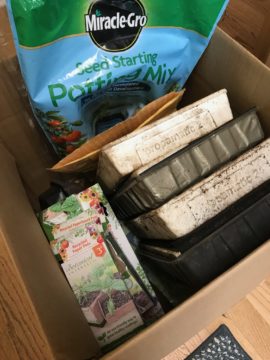
Back in early April, I started some of my favorite vegetables indoors;

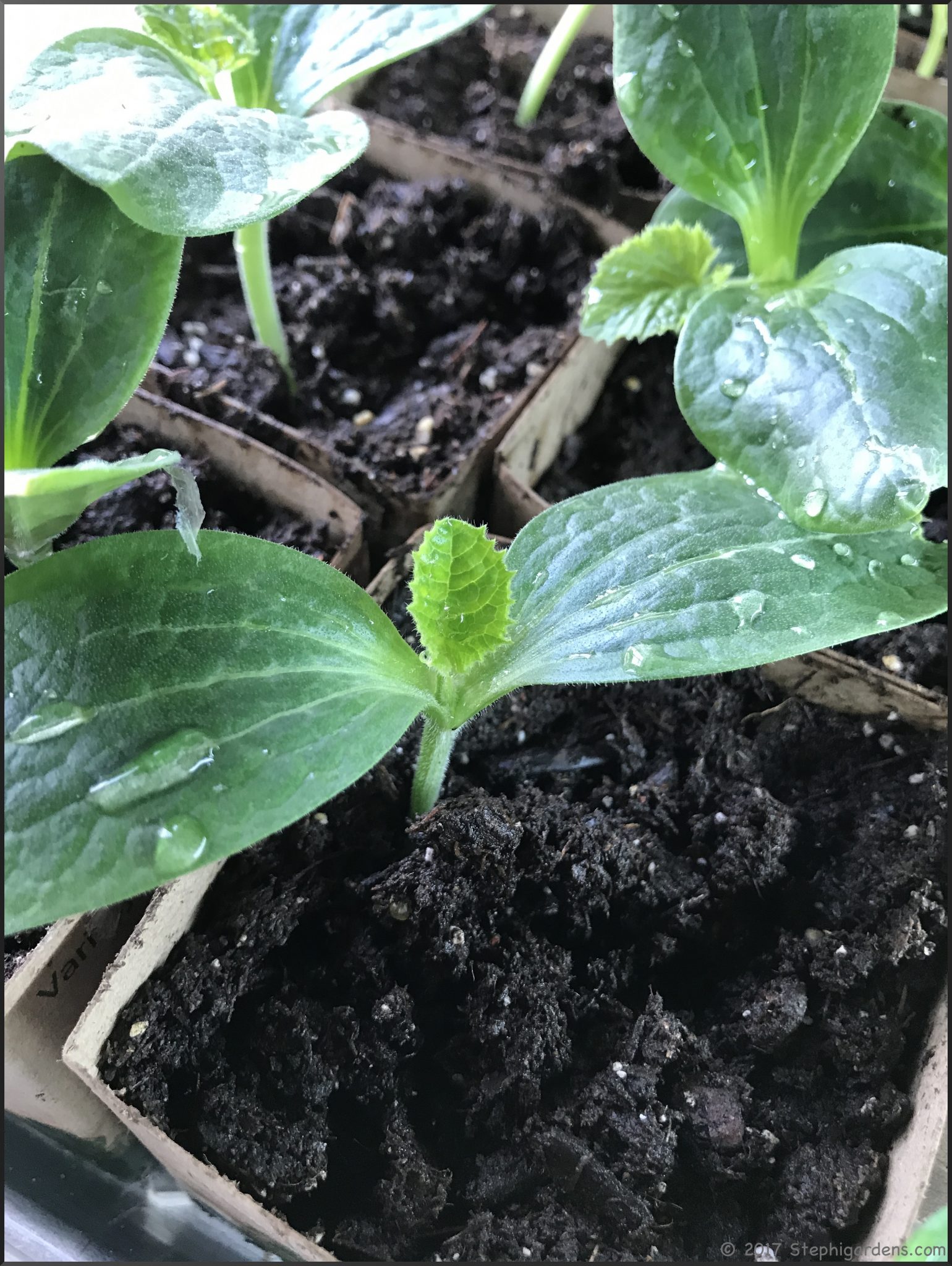
  • English Telegraph Cucumber (Botanical Interests)
  • Sweet Burpless Hybrid Cucumber (Burpee)
  • Emerald Delight Zucchini (Botanical Interests),
  • Gold Hybrid Gourmet Gold (Burpee).
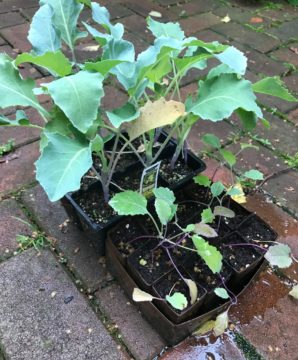
  • I tried growing Kohlrabi, but again they just didn’t grow well for me.  Luckily, my local nursery had plenty!

Mine in the front, nursery grown in the back


Outdoors in late April, I planted my early, cool temperature loving seeds including

More recently, I got the rest of the seeds planted including a second planting of the cool weather plants, and added Danvers and Calliope Carrots (Botanical Interests).  I also bought beautiful

  • Tomato (Sweet Million Cherry, Early Girl and Champion)
  • Sweet Pepper (Yolo Wonder, California Wonder and North Star)
  • Herbs for the “right outside the door” herb pots
  • cabbage and kohlrabi plants

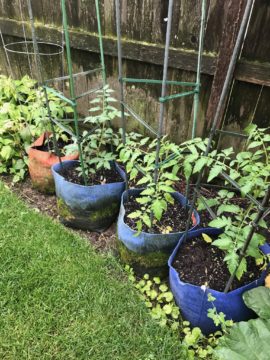
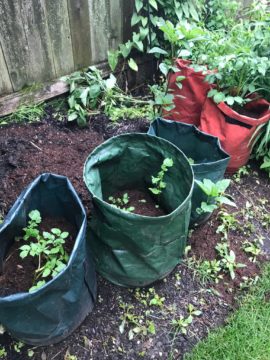
from Vern Goers, a local nursery. I was also gifted a lovely yellow pear tomato plant from my mom. (I’ve switched to growing my non-cherry tomatoes in bags to leave more room in the raised bed for the squash, zucchini, cucumbers and kohlrabi.)

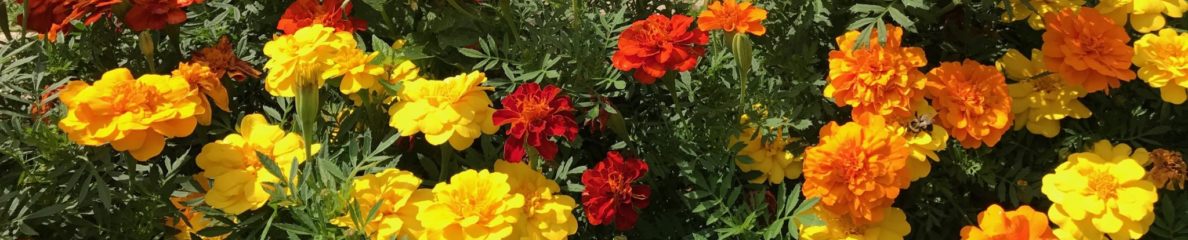
I also got my bed of zinnias sowed, and this year added a bed of marigolds from seeds I collected last fall. Check out my previous post, Cheerful and Bright Zinnias Bed, for an easy how-to.

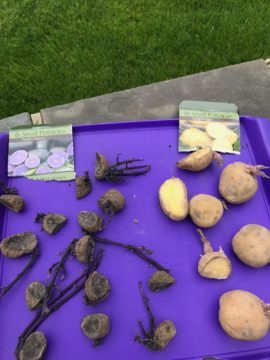
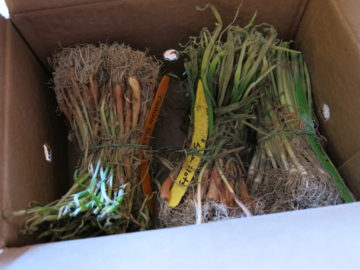
Last but not least, I got my potato bags going with three different varieties (for more info, visit these past potato posts) and planted lots of Lancelot leeks, shallots, and yellow sweet Spanish onions (Dixondale Farms).

Almost forgot, I got all my flower pots planted too!

So I think I’m all caught up for now, but lots more to write about! Hope you’ve had a good spring and your gardens are growing beautifully!

SaveSave

SaveSave

SaveSave

SaveSave

SaveSave

Happy New Year 2018!

Happy New Year! I hope this post finds you healthy and happy. I’ve been on a bit of a hiatus with my writing, but hopefully the new year will get me back on track. While I was still attentive to my garden all fall, I do most of my writing in the evenings and I got distracted the last few months watching all seven seasons of Game of Thrones with my husband. (In case you were thinking about watching, it was just as great as the kids said it is and the final season can’t come fast enough!)

But, that’s done and most shows don’t require that level of attention so I have my evenings back! We also did a fair amount of traveling to see visit the kids and out of town family and I’ll share some of the highlights of those trips in the next couple of months.

Lastly, I got a new laptop and the transition was pretty straightforward except for switching from Apple iPhoto to Photos. I procrastinated for a long time since I had everything organized so nicely in iPhoto for my blog, but it was time to convert. You’d think it would be as easy as say “Go”, but for a bunch of reasons, I couldn’t get it to transfer properly. Eventually I did it, but I’m still dealing with photos scattered about in a bit of a disorganized way. Does anyone use a photo manager to organize your photos? The edit features in Photos are fine, but I don’t love the organizational options.

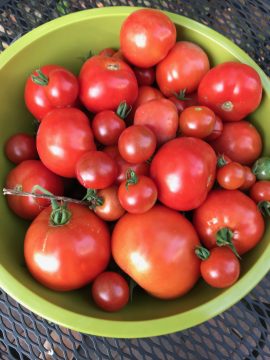
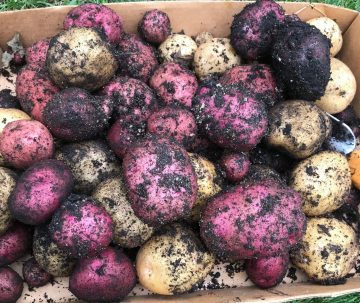
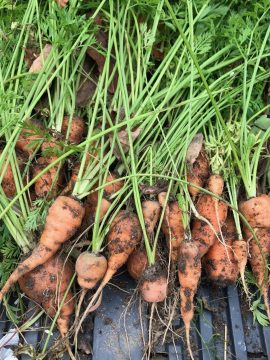
What have I been up to in the garden? Well, like many of you it was a very strange fall with warm temperatures well into November keeping things green and growing well past normal times. Great for the vegetable garden, but probably not so great for the trees and shrubs that really need to get ready for winter. Here’s some of what I was harvesting the end of October.

I spent a lot of time this fall watering to be sure the plants were ready for winter (First Too Much Water, Now Not Nearly Enough). But, with temperatures hovering around 0°F for some time now, I’m not sure how the plants will tolerate this winter no matter what I did.

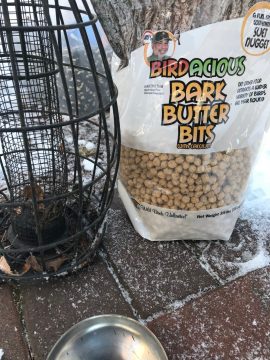
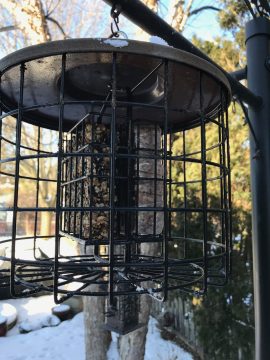
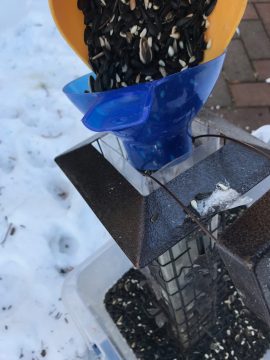
With all this cold weather, I’ve been going through a lot of bird seed trying to help the birds survive this extreme weather. Glad I bought lots of seed at the fall seed sale at my local Wild Bird Unlimited in Lisle, IL. By the way, they are currently having their January Feed sale, so if you live in the area it’s a great time to stock up. They even store it for you until you need it.

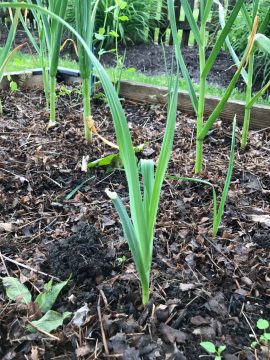
My new gardening adventure this year was planting leeks. Leeks are one of my favorite foods to cook with and growing them seemed intriguing. I’m already looking where to buy my starter plants this spring, so it definitely worked out well.  A post with more details will be coming soon.

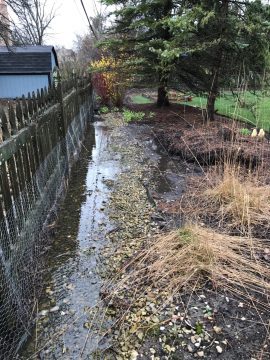
Right now, all snuggled warm in my house I’m enjoying all the teaser emails from the seed companies and the catalogs that are starting to come in. What new vegetables to grow? What new gadgets to buy? Check out my Vendors and Resources page to see where I like to order from. I’ve recycled all the Christmas catalogs to make room for them. I have a couple of areas that need attention so I need to find some time to research what will work best in these areas. One is the swale area that seems perpetually wet, then of course dries out mid summer.

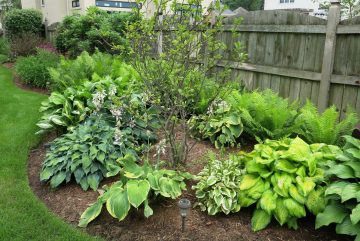
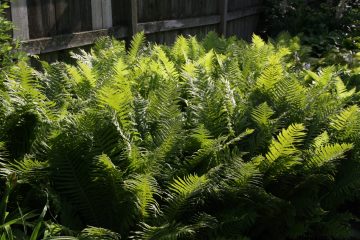
The other is under the new magnolia that replaced the Freeman maple tree that died a couple of years ago. The hostas are doing fine in the new found sun, but the ferns have gone crazy! Not sure the species, but in the shade they were kept in check, but they’ve proliferated out of control in the sun. And they are hard to pull out! Word to the wise, be careful where you plant ferns!

I look forward to sharing you more about what’s up in my garden and where I’ve been, but in the meantime I wish you all a Happy New Year and Go Bills!

While I live in Chicago, I grew up in Buffalo and will always be a Bills fan.  This has been an exciting year for us!!