…and the Ugly, Not!

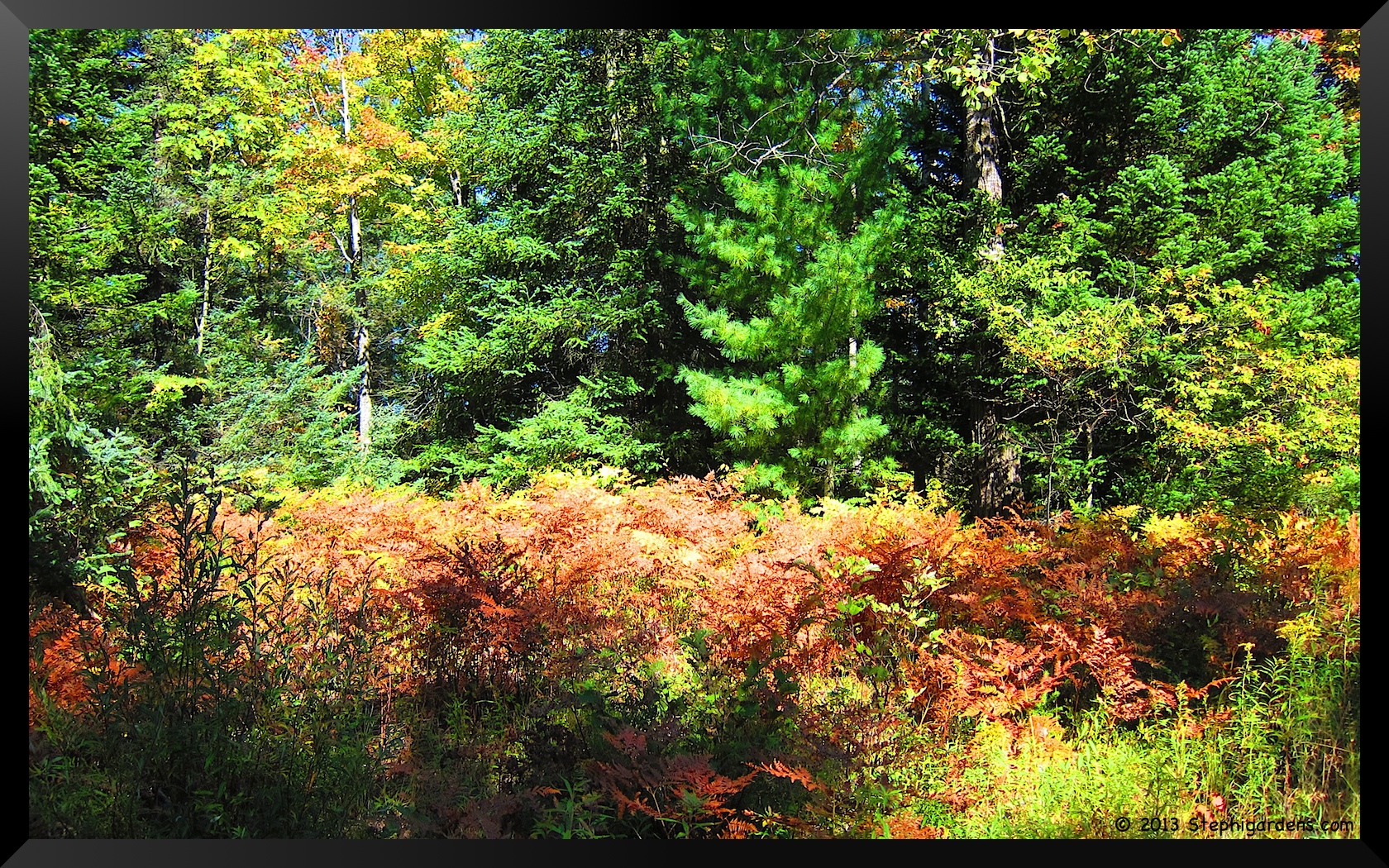
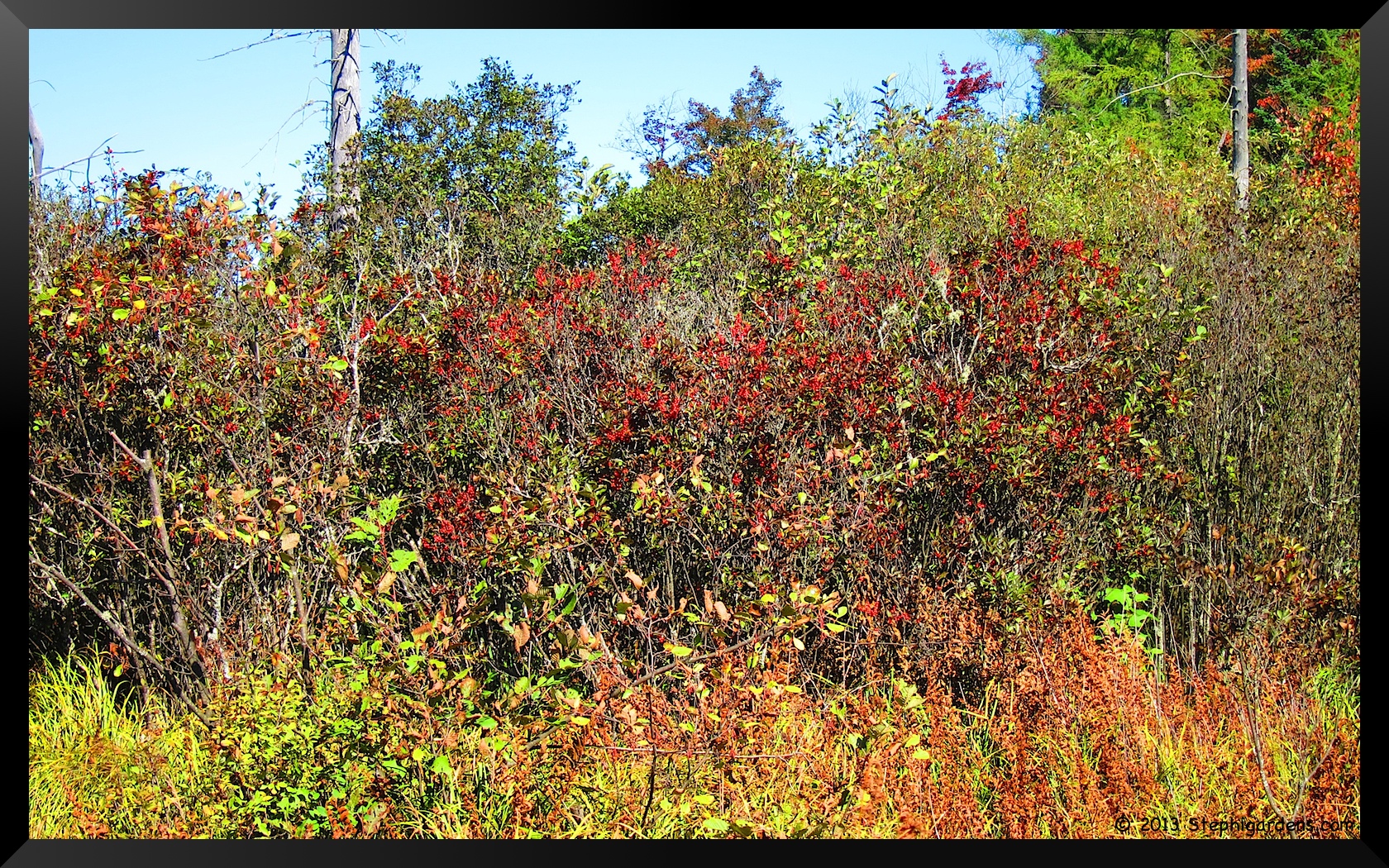
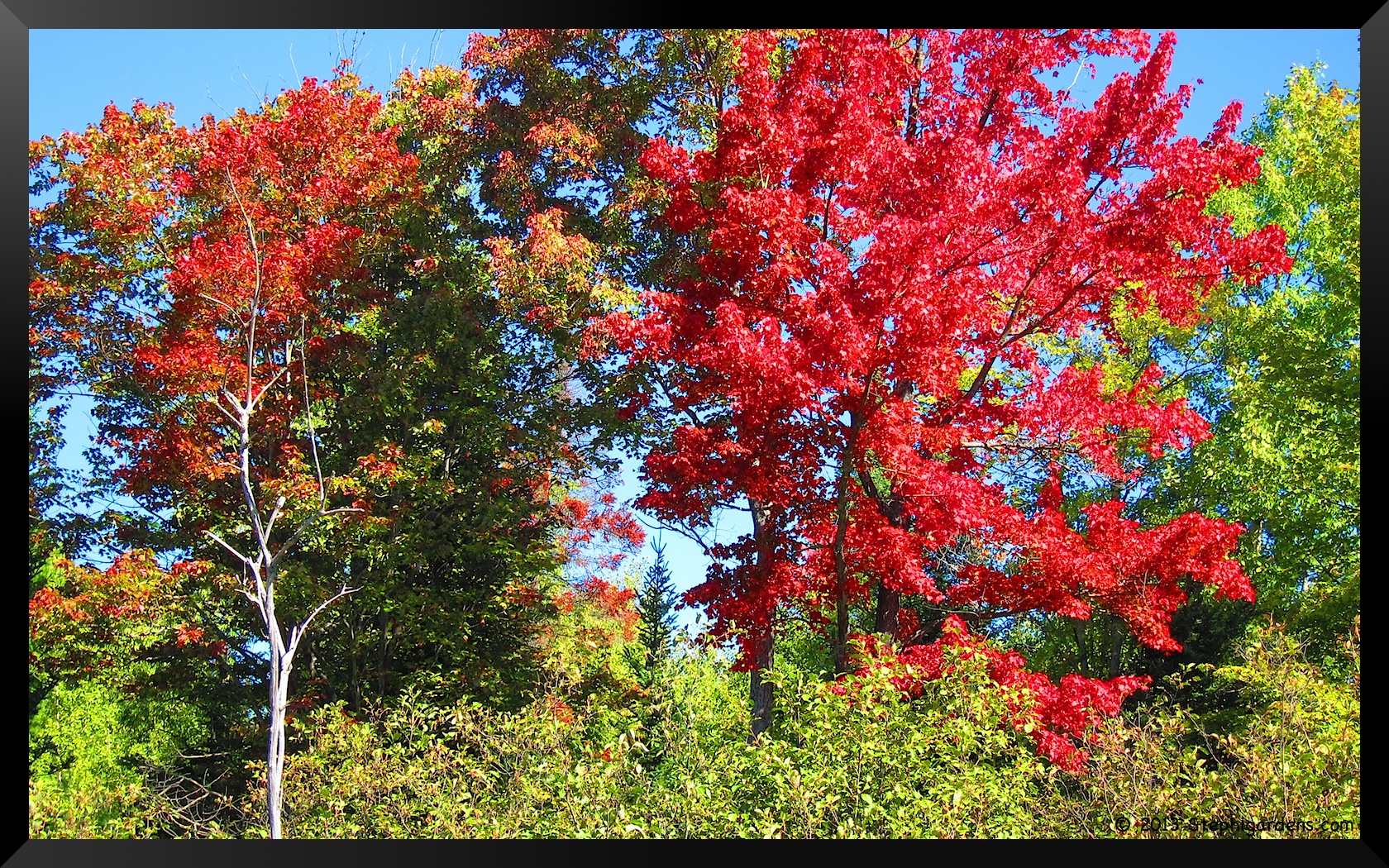
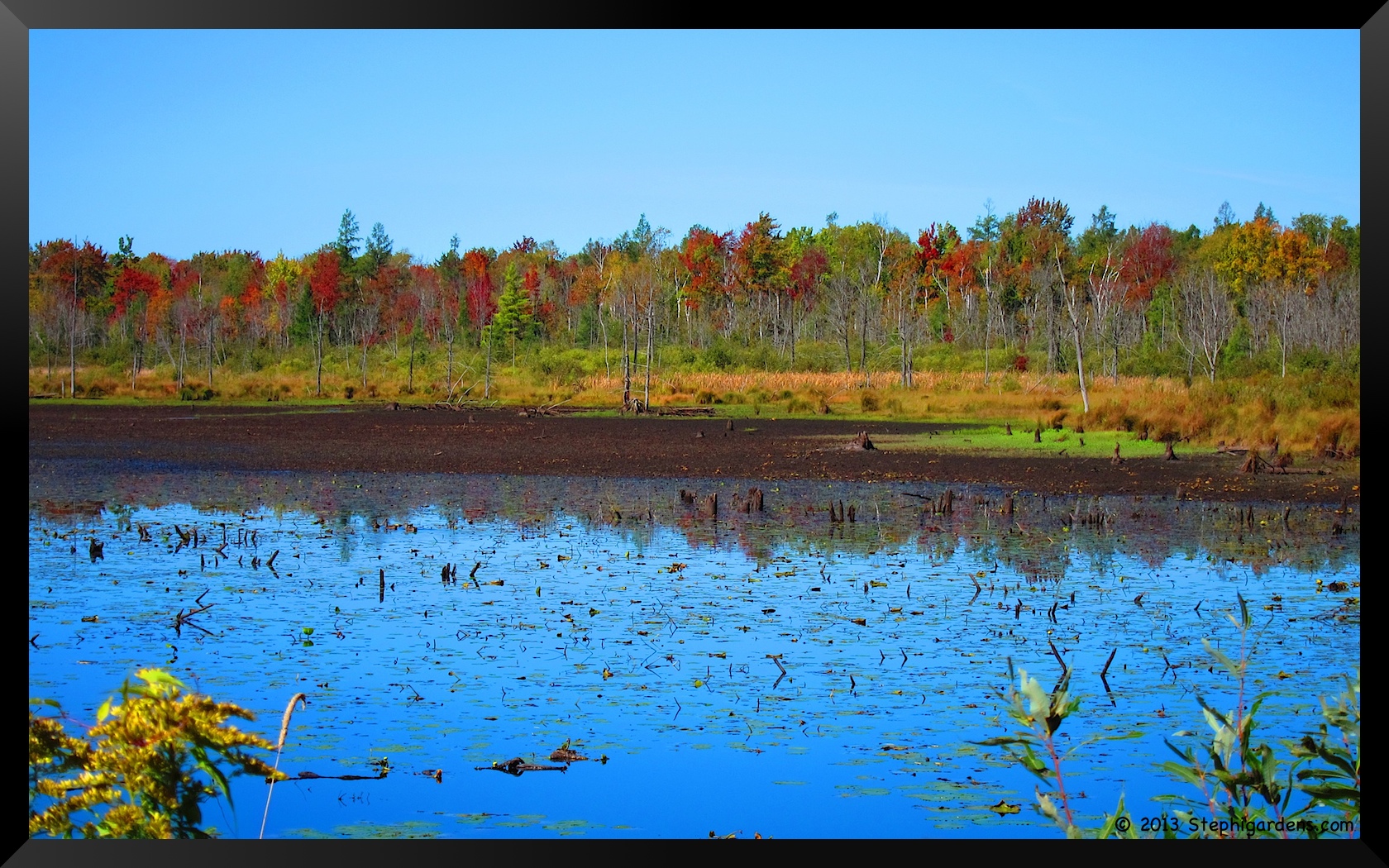
It was brought to my attention that following the good and the bad should be the ugly. But since I thought the bad was ugly enough, I thought I’d spare you the ugly! Instead, I thought I’d just continue to post some of the beautiful Michigan fall photos from Peggy.

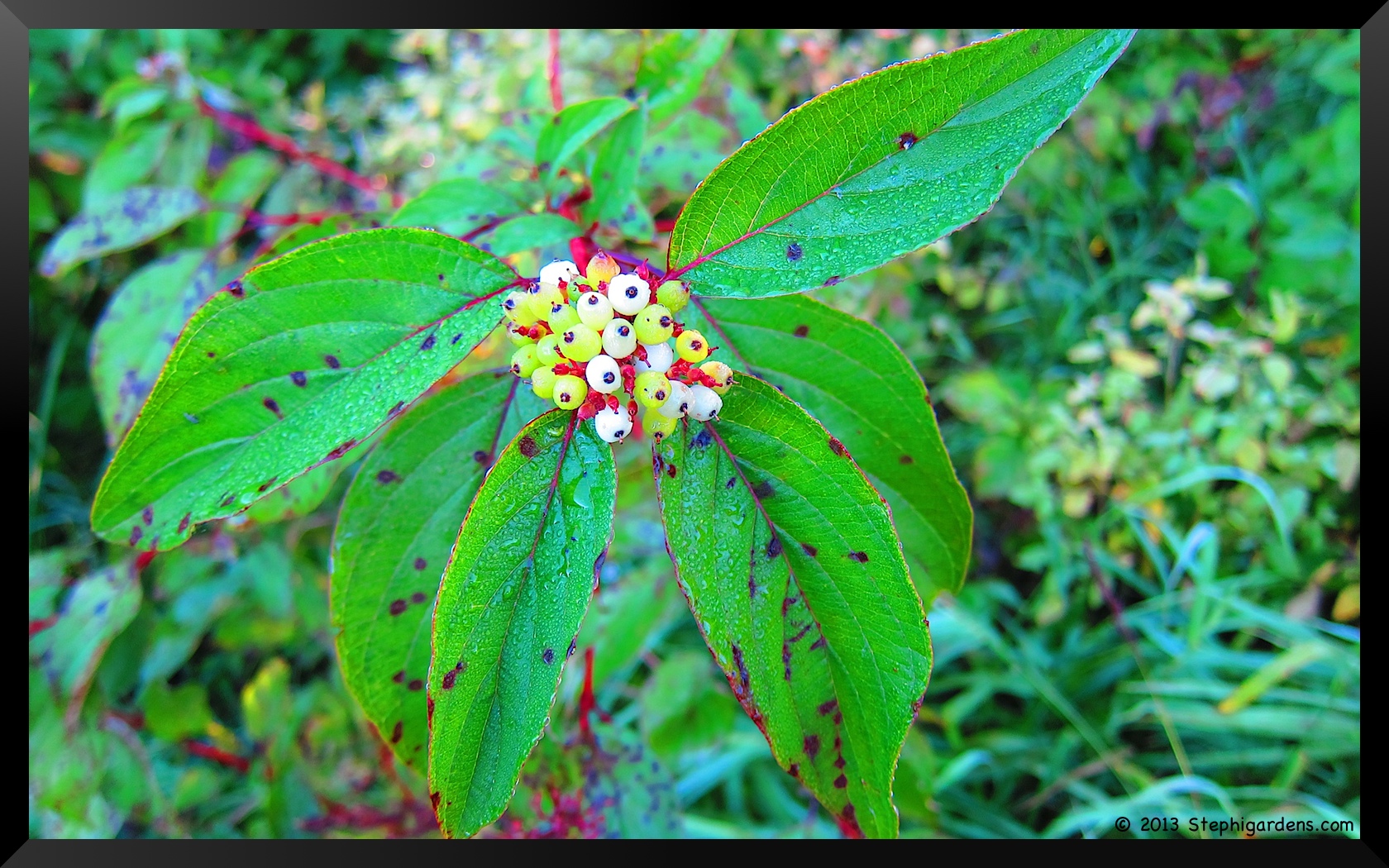
 Gray Dogwood

IMG_5568

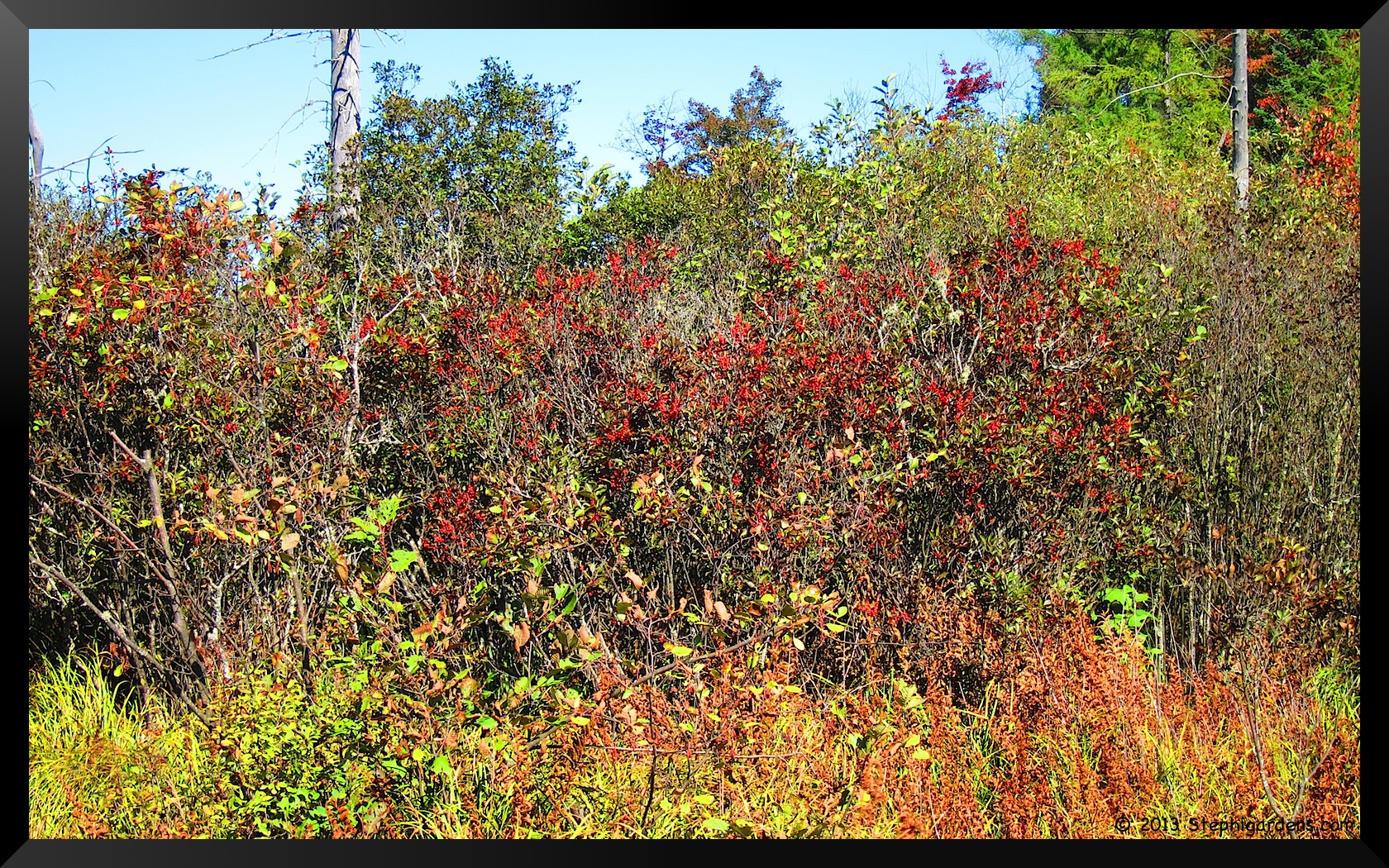
Winterberry or Michigan Holly

IMG_5575

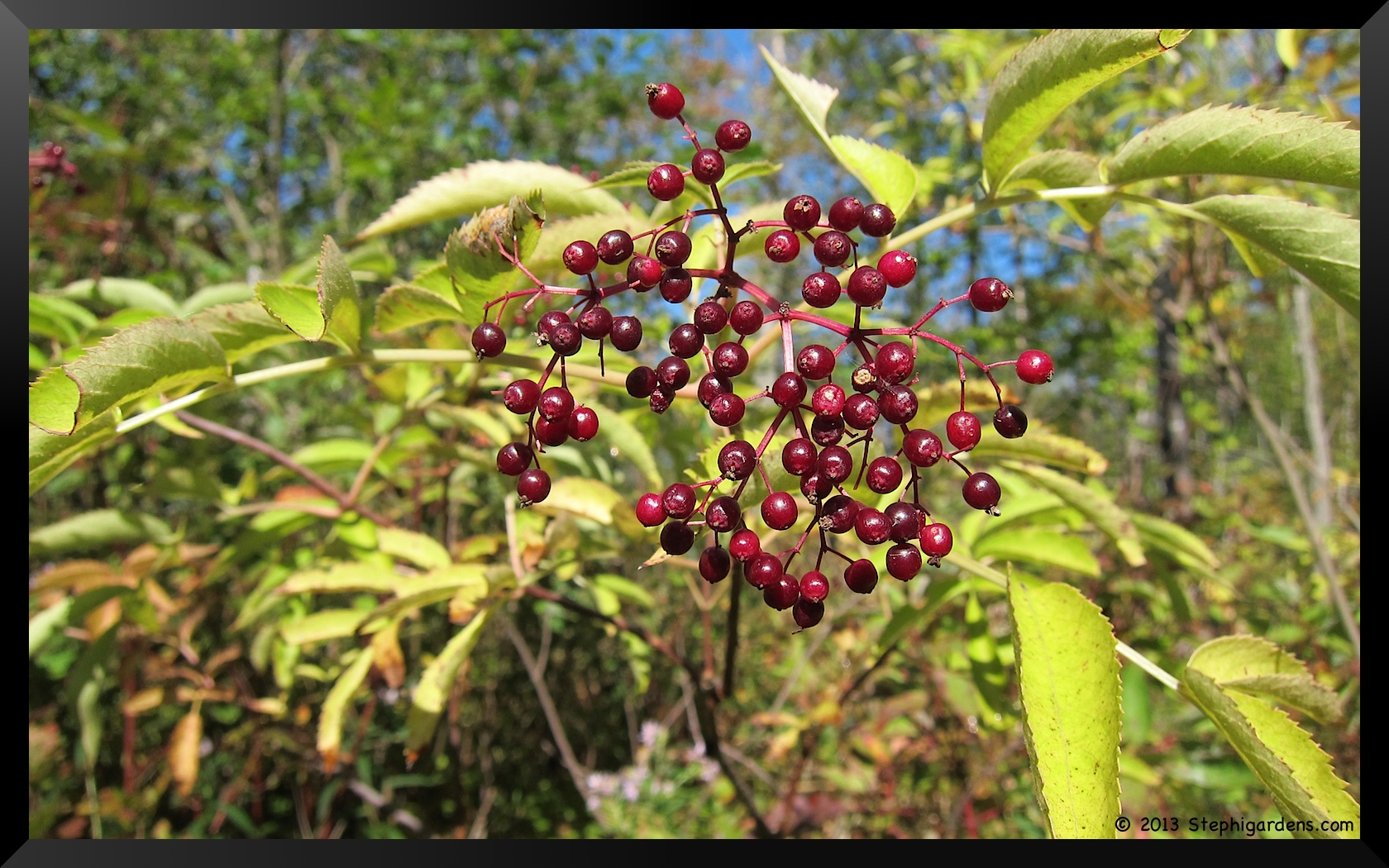
Elderberies

IMG_5584

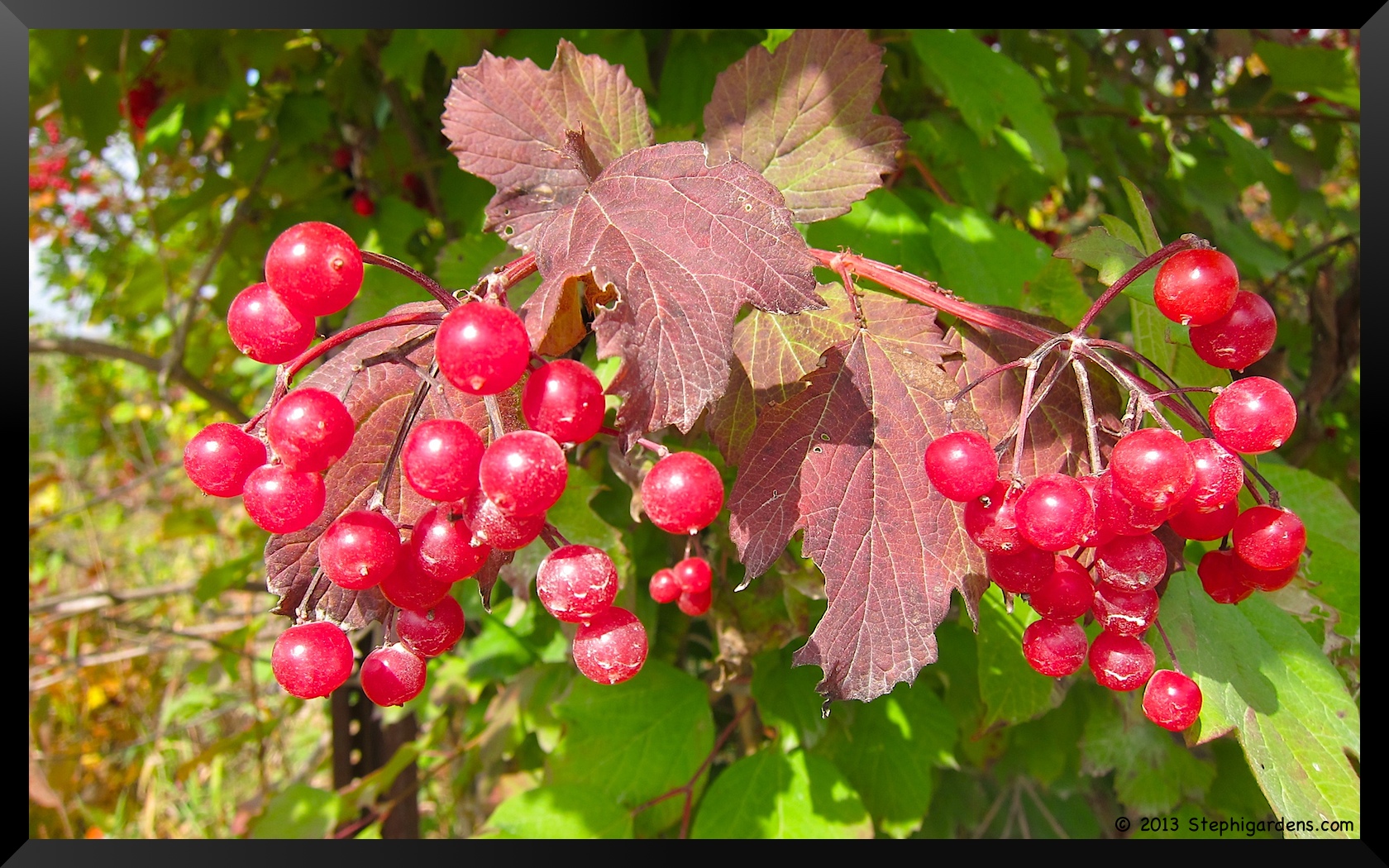
Viburnum trilobum

IMG_5712
IMG_5598

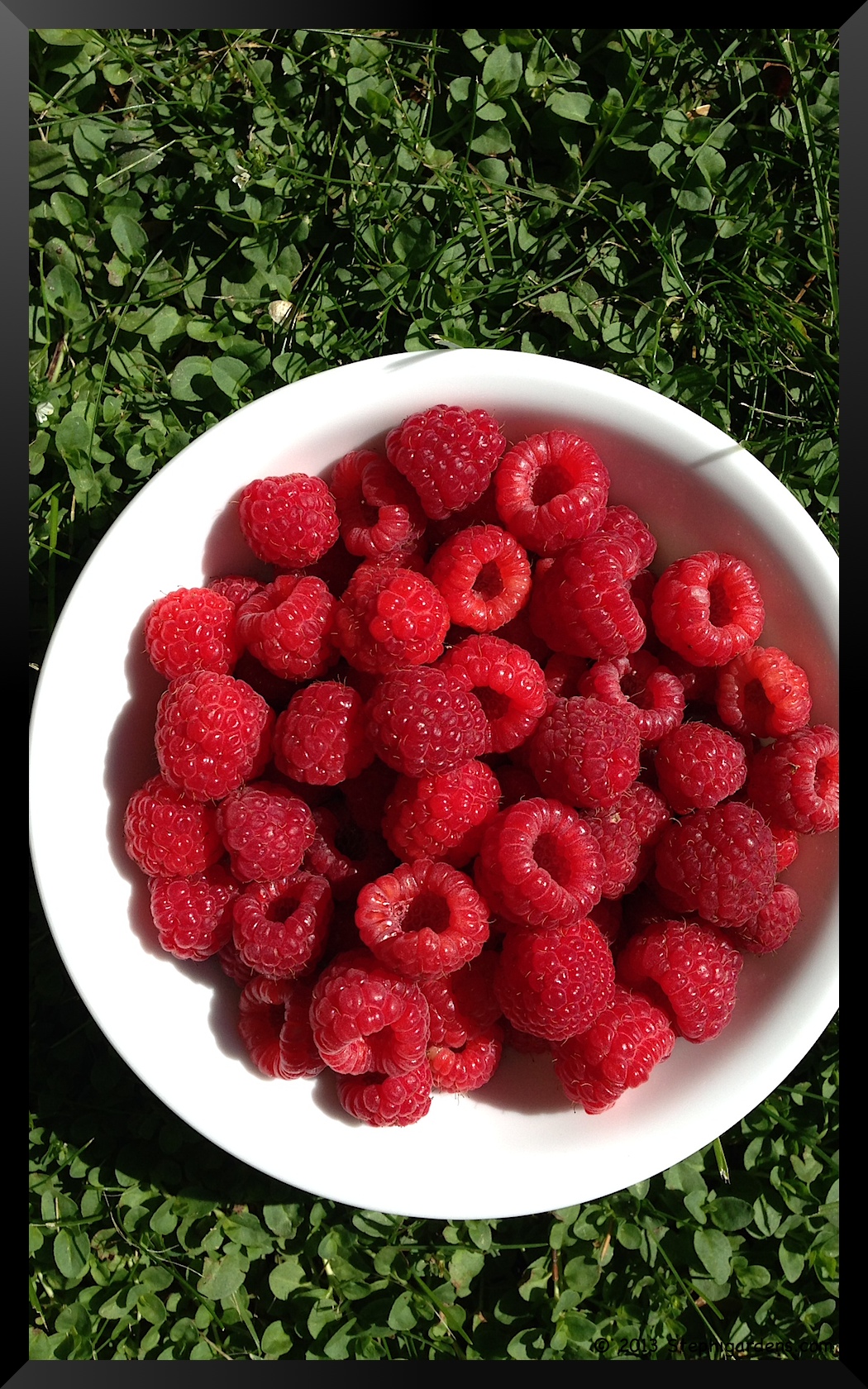
The birds and animals aren’t the only ones to have yummy berries to eat– The garden raspberries are still producing berries! 

IMG_0086

photos by Peggy

The Garden in Fall: The Bad

It’s the beginning of October and the days are getting shorter, the nights growing colder. While yesterday I posted about the good things in the fall garden, there are also a lot of plants and beds that are really past their prime.  Whether it’s overgrown, or the plants need to be trimmed back, or just haven’t aged well, they really detract from the pretty parts of the yard. Here’s some of the plants and spaces that don’t make me smile.

Those beautiful daylilys are really past their prime!

IMG_0523
IMG_0524

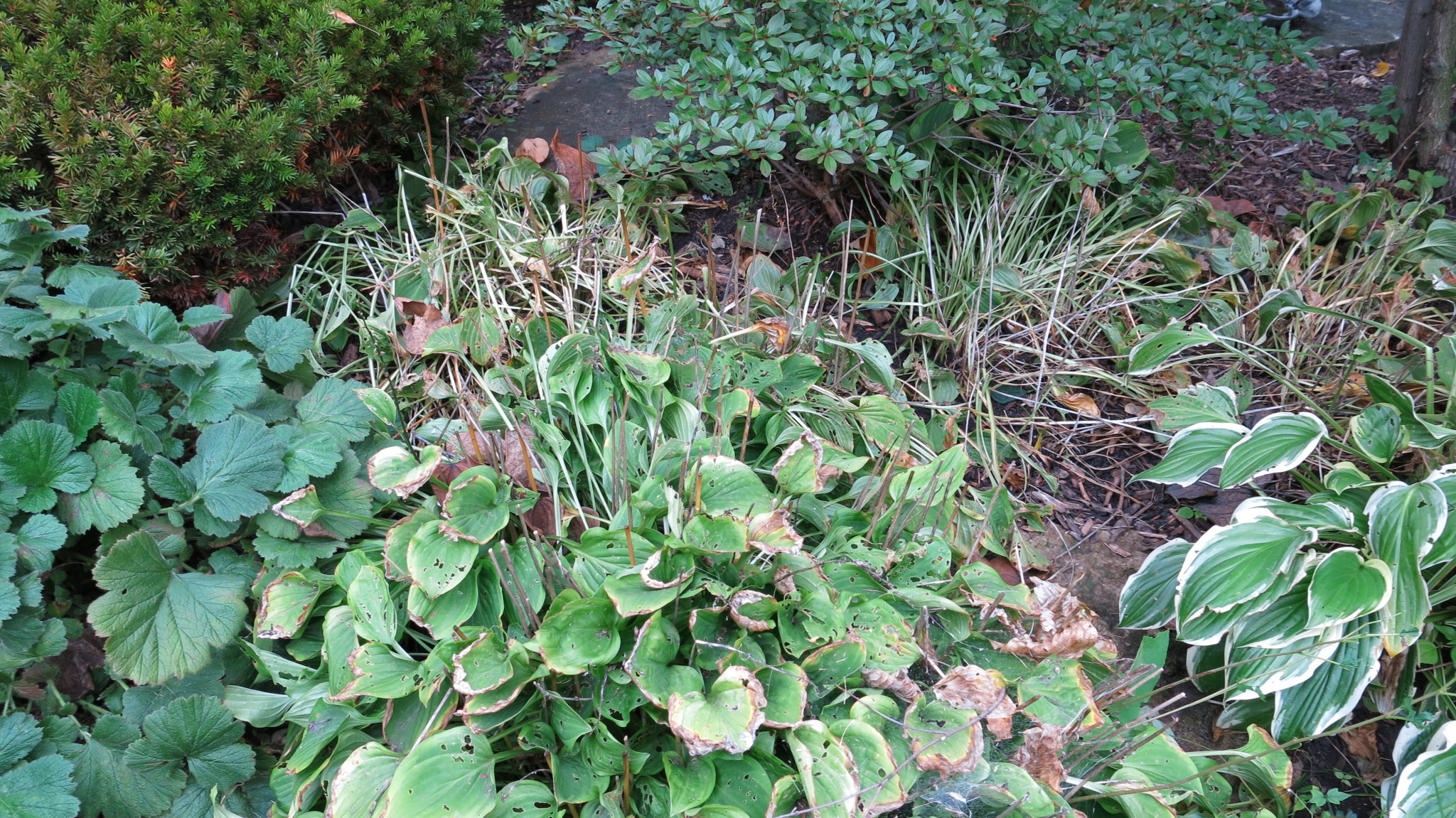
I’m not even sure what happened to these hostas???  Slugs, rabbits, too much sun, water???

IMG_0560

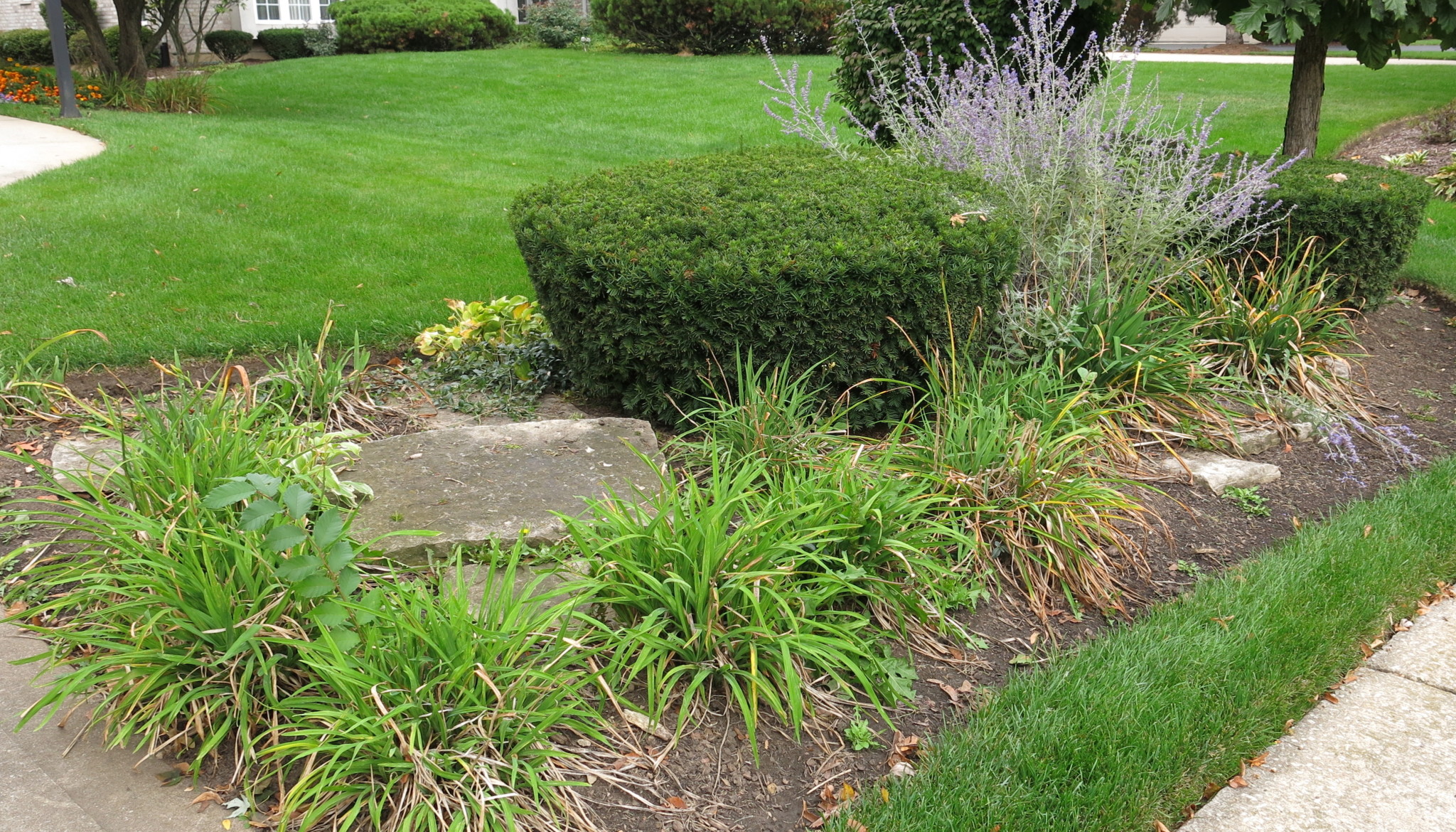
Some beds are just not right and need plants moved/and or added.  Will be doing that soon!

IMG_0540

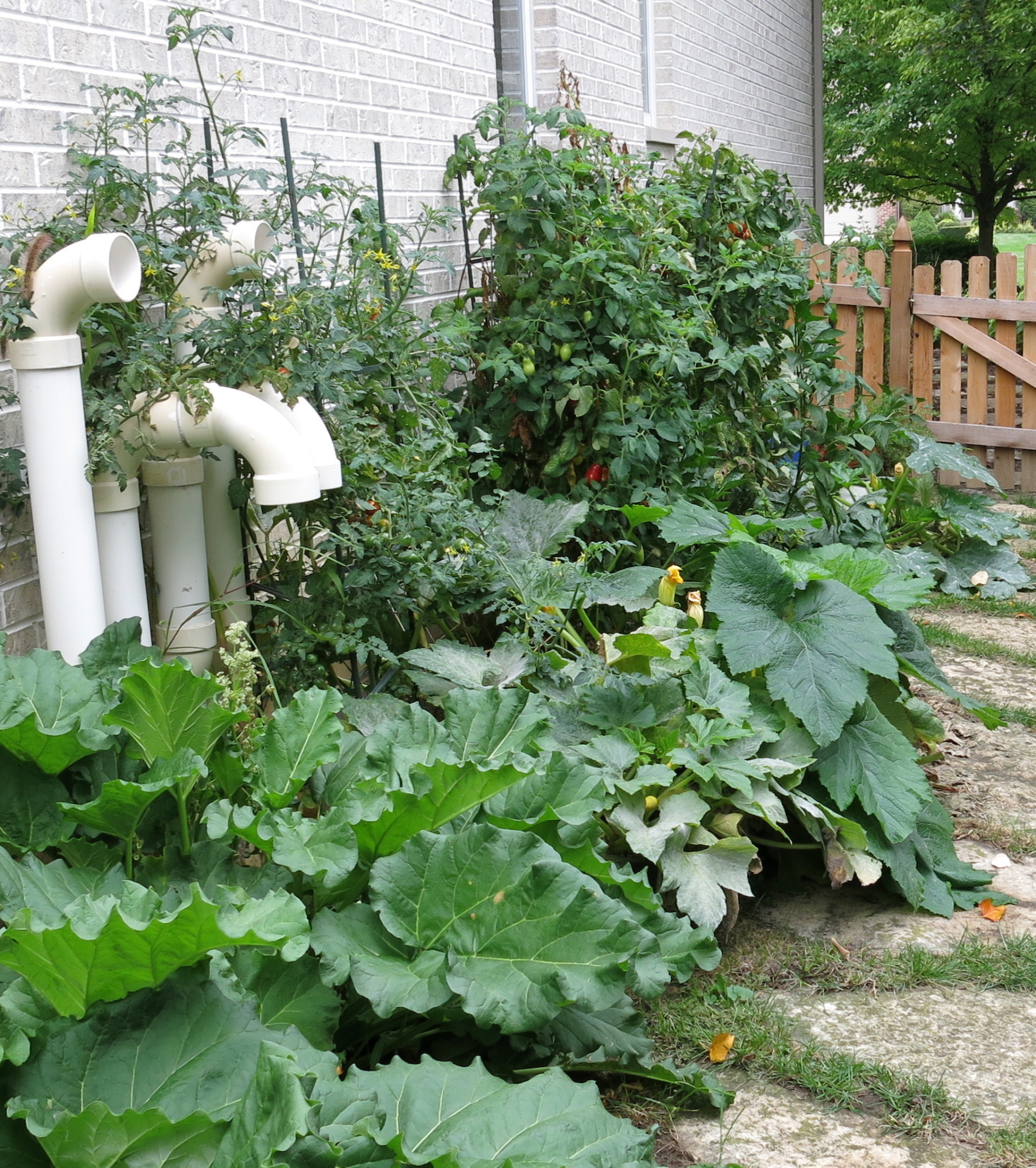
My vegetable garden is just too small and becomes overgrown every year.  But, I think I finally have a plan to expand the garden!

IMG_0569

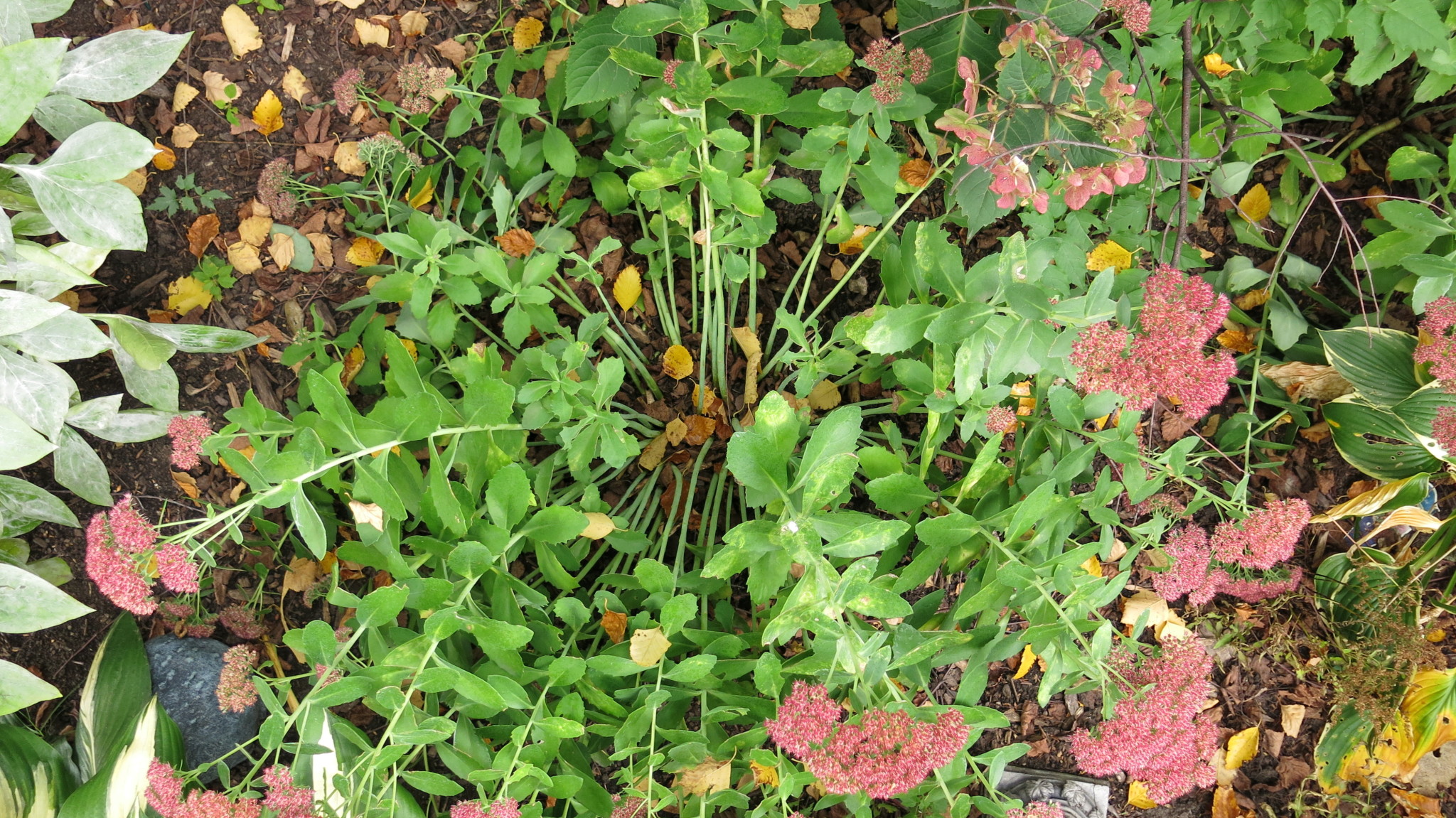
Plants need to be split.  Need to get on that, too! 

IMG_0549

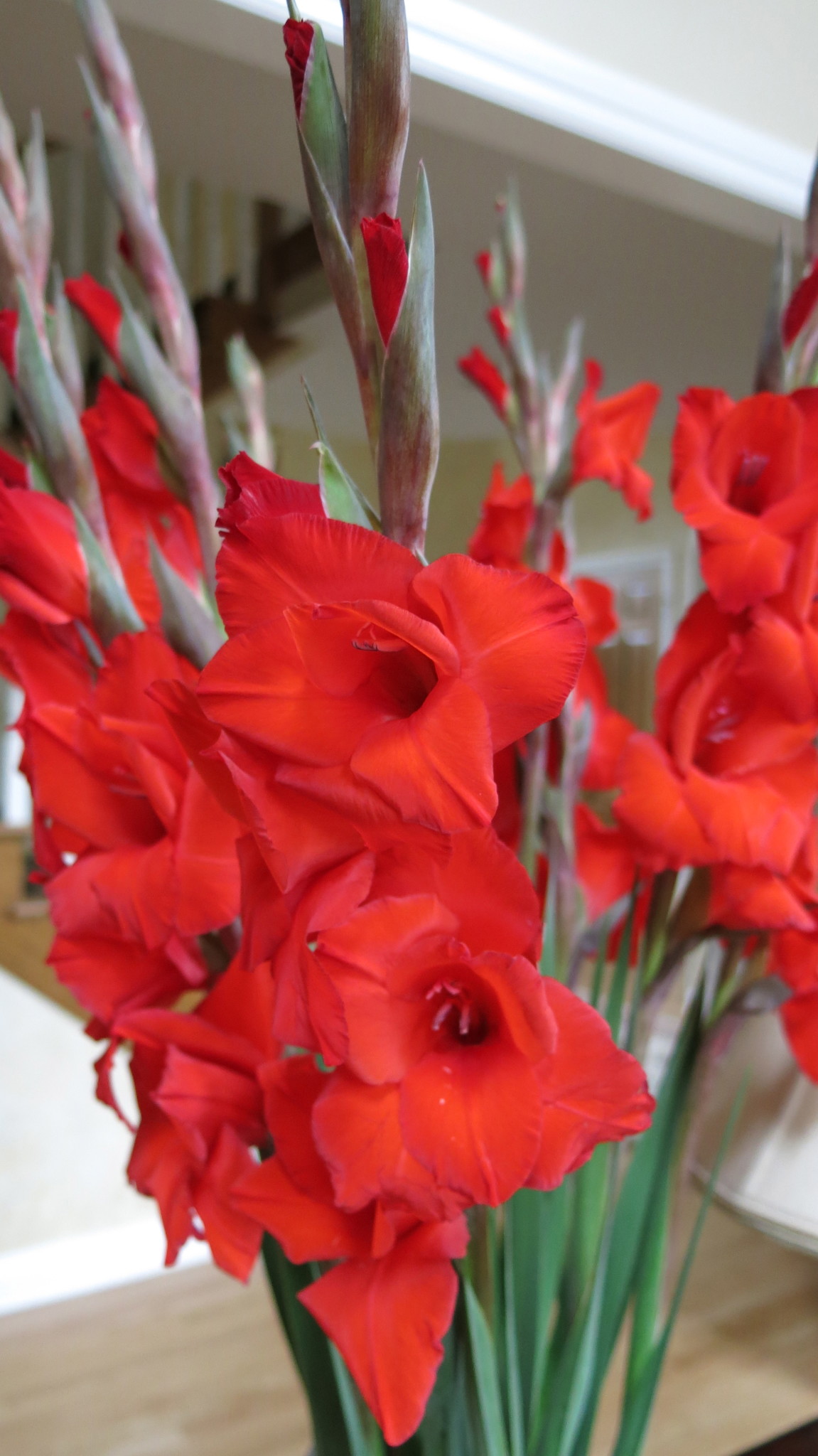
After looking at all this mess, I went to the farmers market and pick up a lovely bunch of gladiolas!

IMG_0598


The Garden in Fall: The Good

It’s the beginning of October and the days are getting shorter, the nights growing colder. These are the last gasps for the garden before it settles into the winter hibernation. In some ways, fall gardens can be very pretty. I’m always surprised at the plants that continue to bloom well in to fall, some even looking their best. And of course, there are the things that take all summer to finally show their colors. Here’s some of the plants and areas of my garden that make me smile.

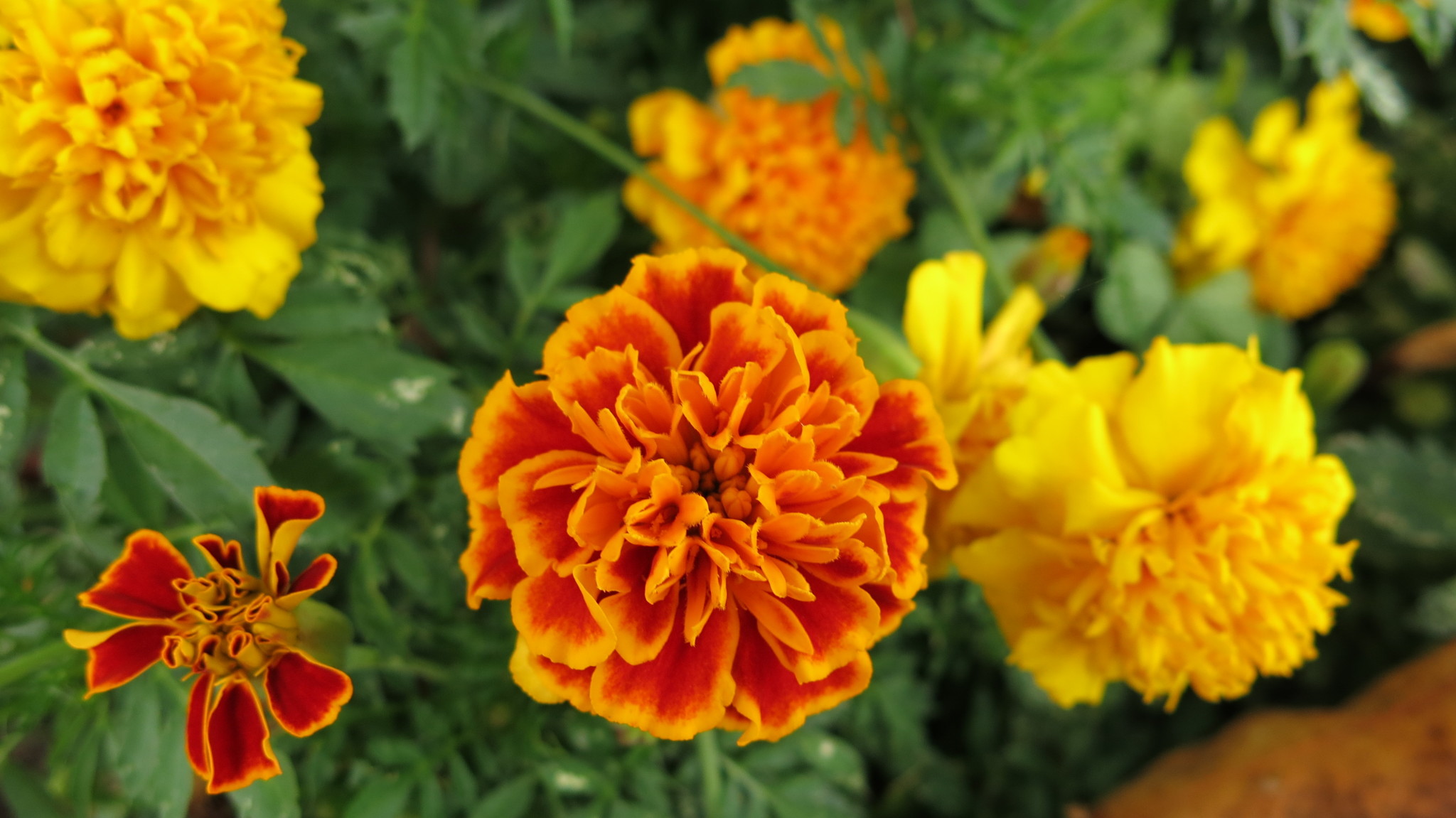
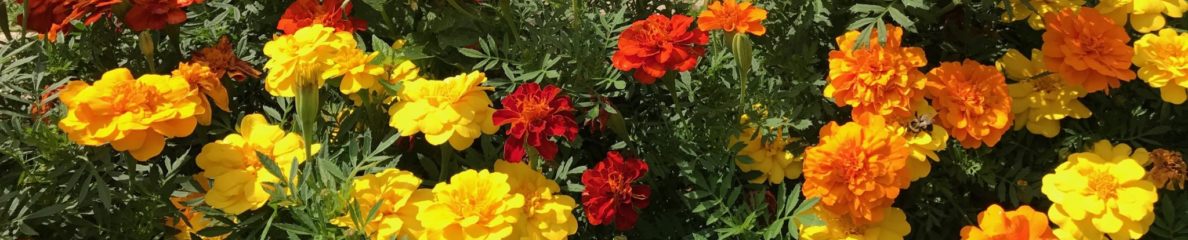
Marigolds

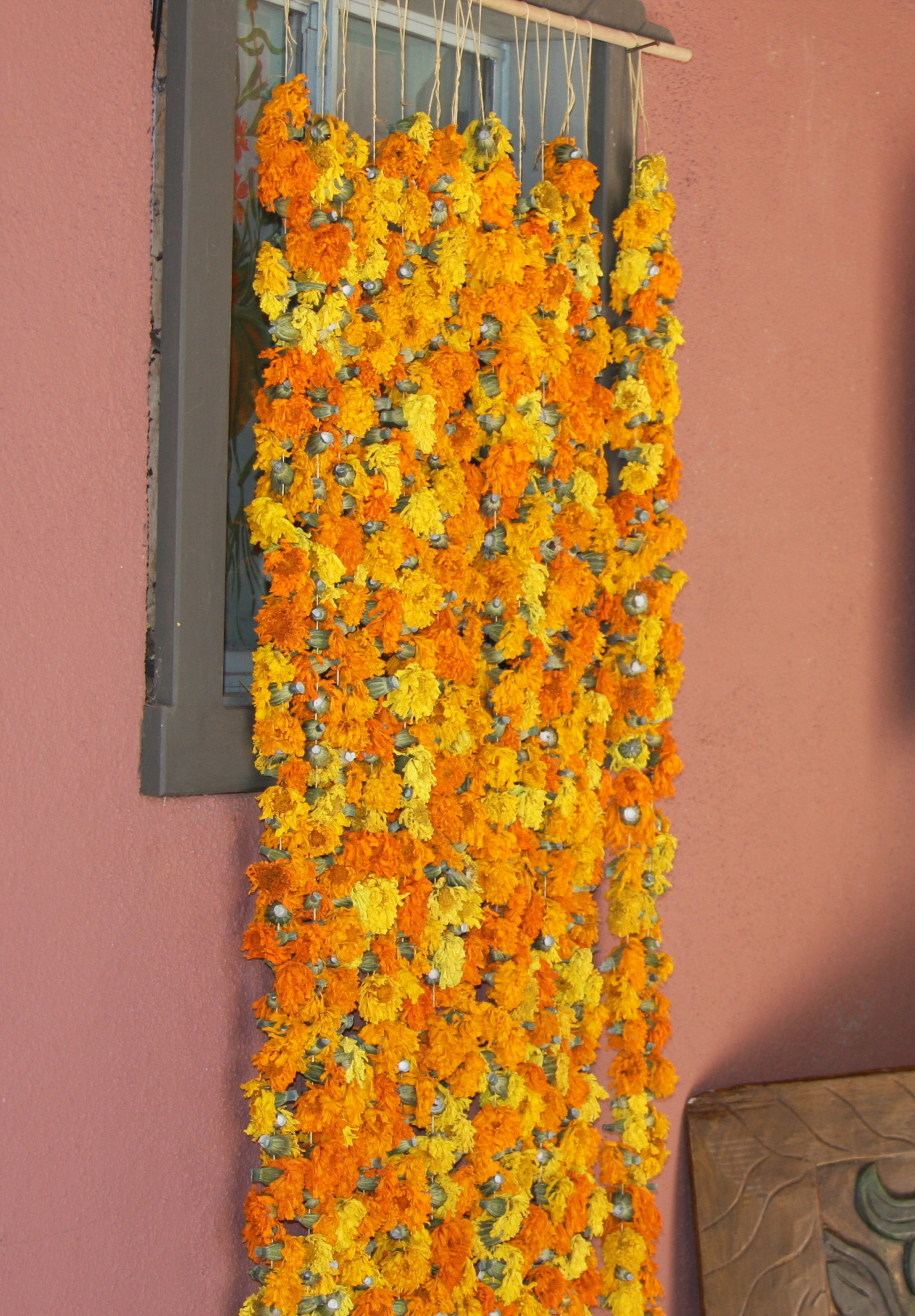
One of my favorite flowers is the marigold. I love the smell (although I might be the only one) and the colors. They always seems to just come alive in the fall and it has always had a place of prominence in my garden. I’m also reminded of a trip to Taos, NM, where I saw the prettiest marigold chains.  One year when an early frost was going to wipe out the flowers prematurely, I made one myself that hung beautifully in the kitchen.

boy o boy marigold

IMG_0570.JPGIMG_0578

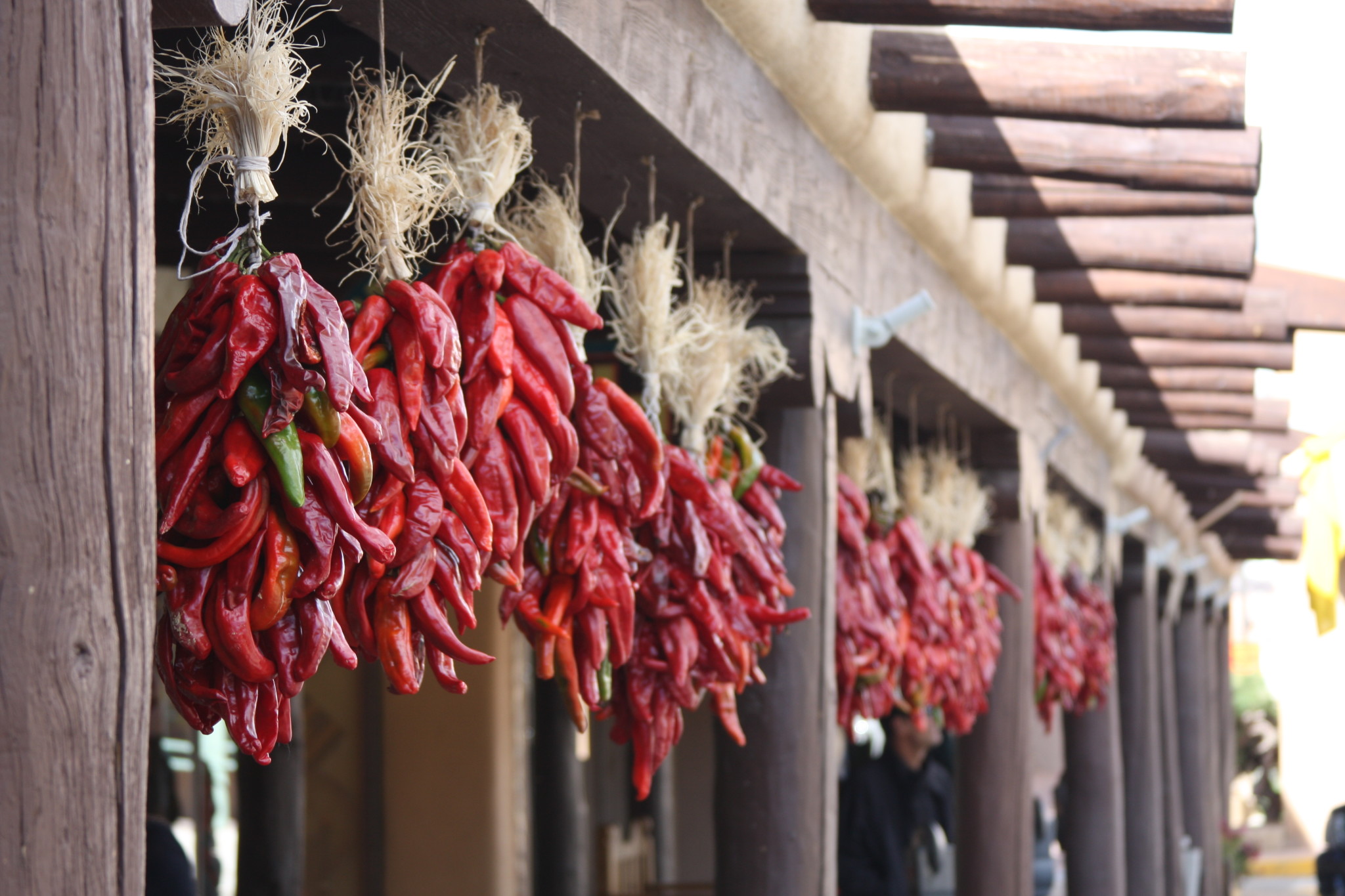
(There were also  lots of bundles of hot peppers that just looked pretty hanging there)


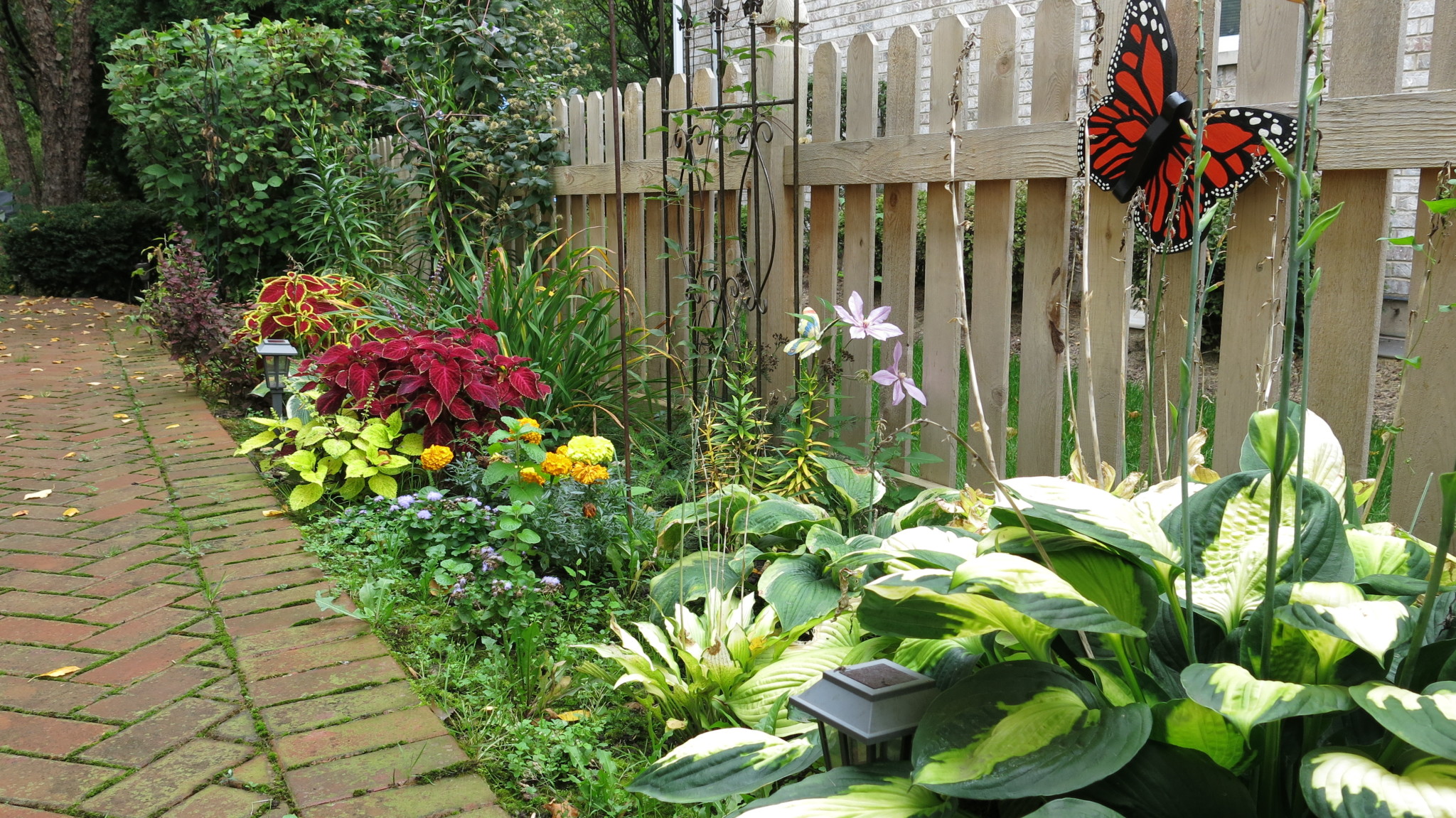
There’s lots of color in the garden...

IMG_0541
IMG_0564
IMG_0563
IMG_0594

IMG_0558

And interest…

IMG_0554

IMG_0544
IMG_0528
IMG_0526

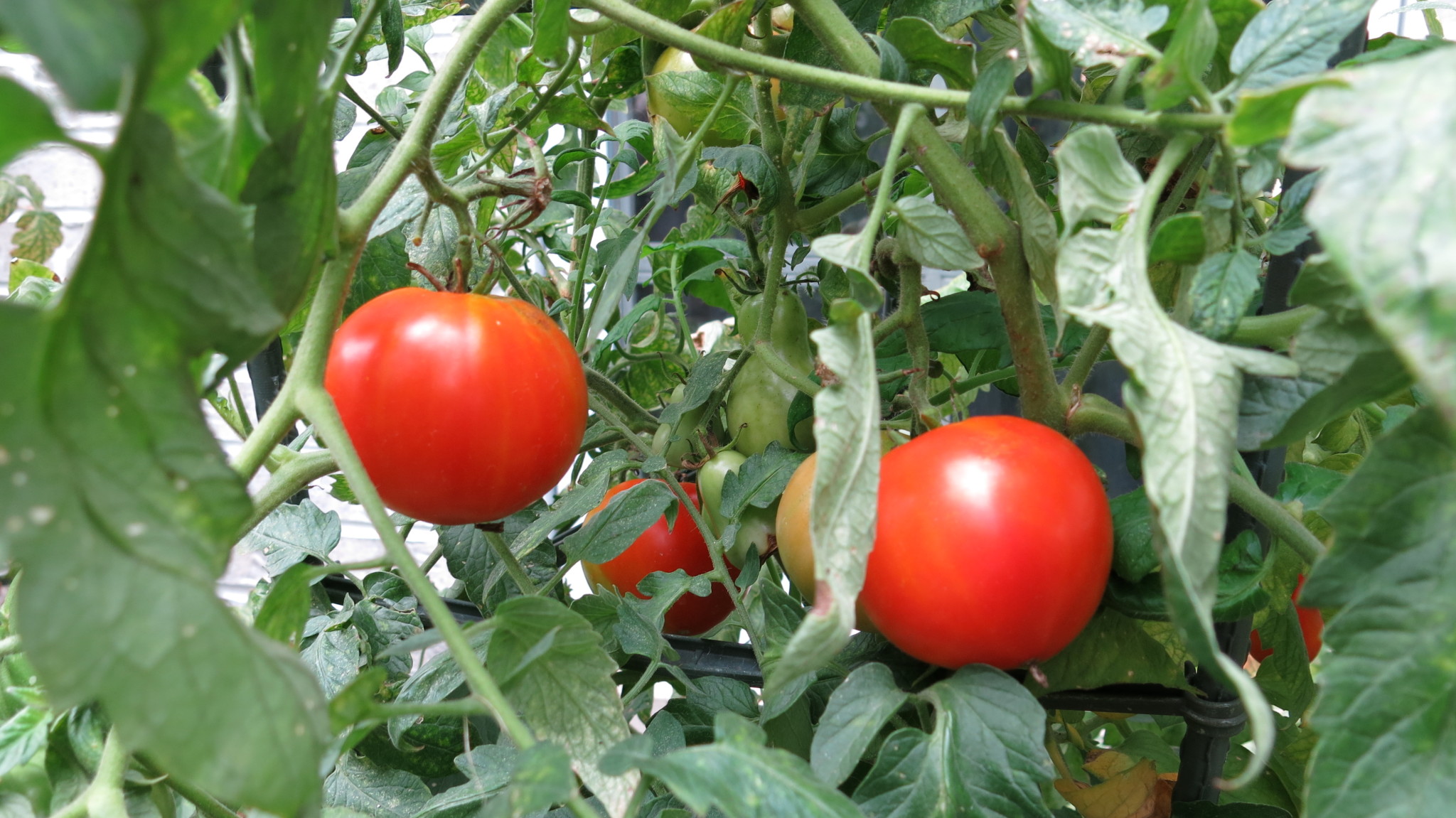
And vegetables are still coming, as long as we don’t have a frost!

IMG_0577
Early girl tomato
IMG_0581


Time for the Yarrow to Go

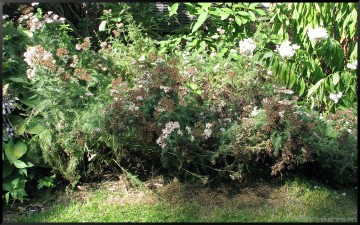
I posted before about the problems I was having with my yarrow and I’ve finally decided it’s time to go.   It’s been a garden invader for years and especially this year, just downright ugly.

IMG_0974

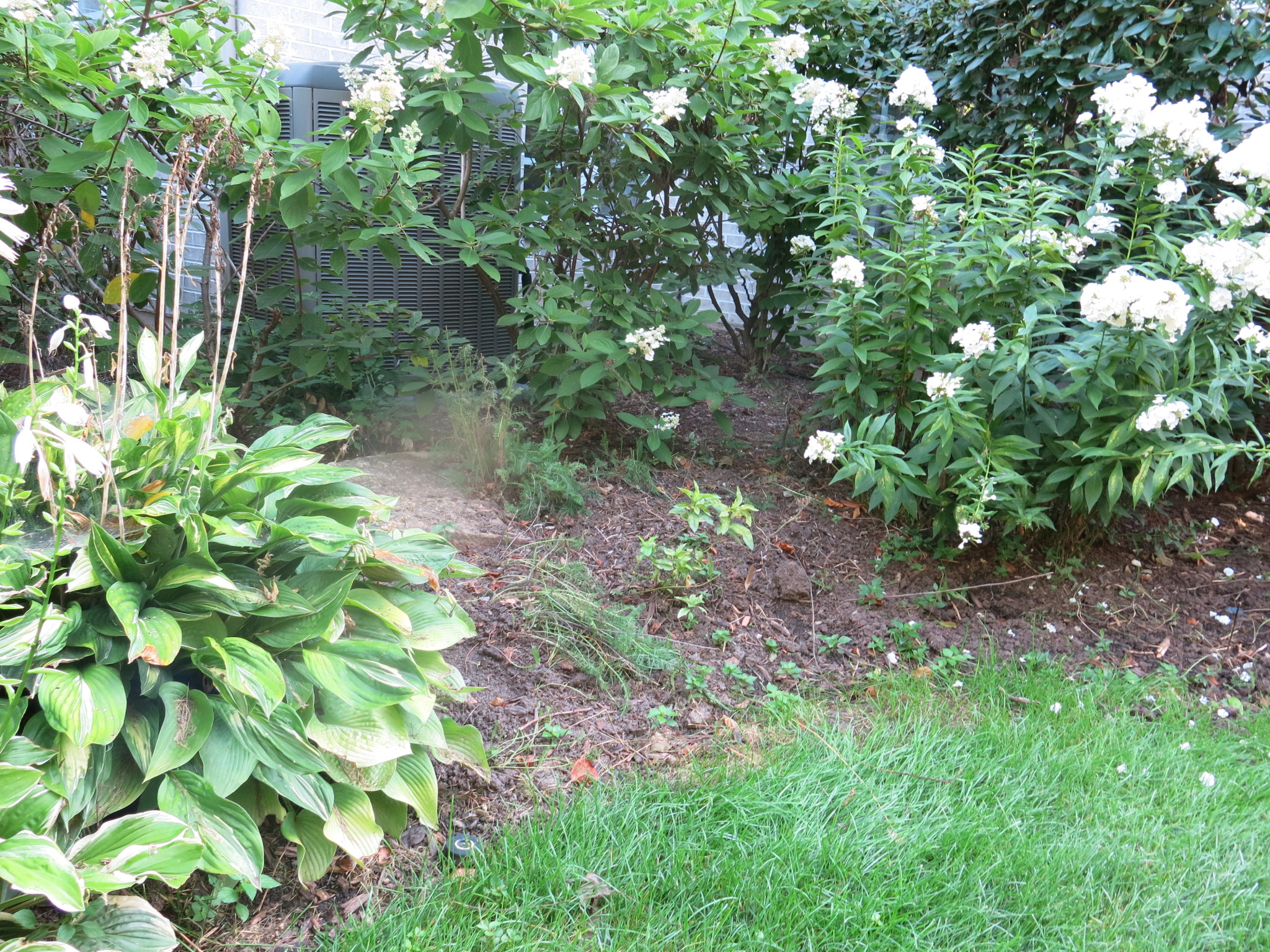
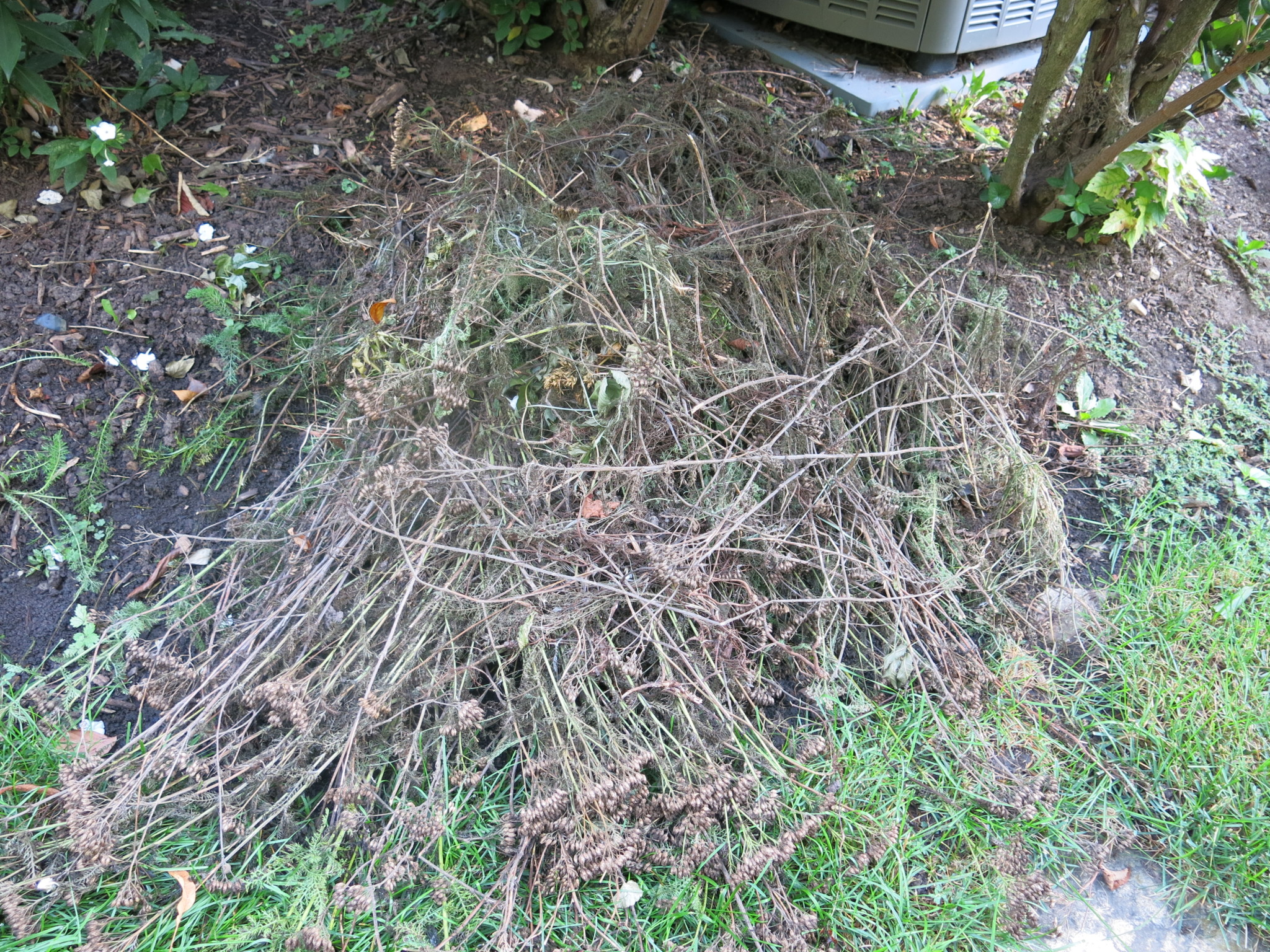
So I pulled it out.

IMG_0366
IMG_0367
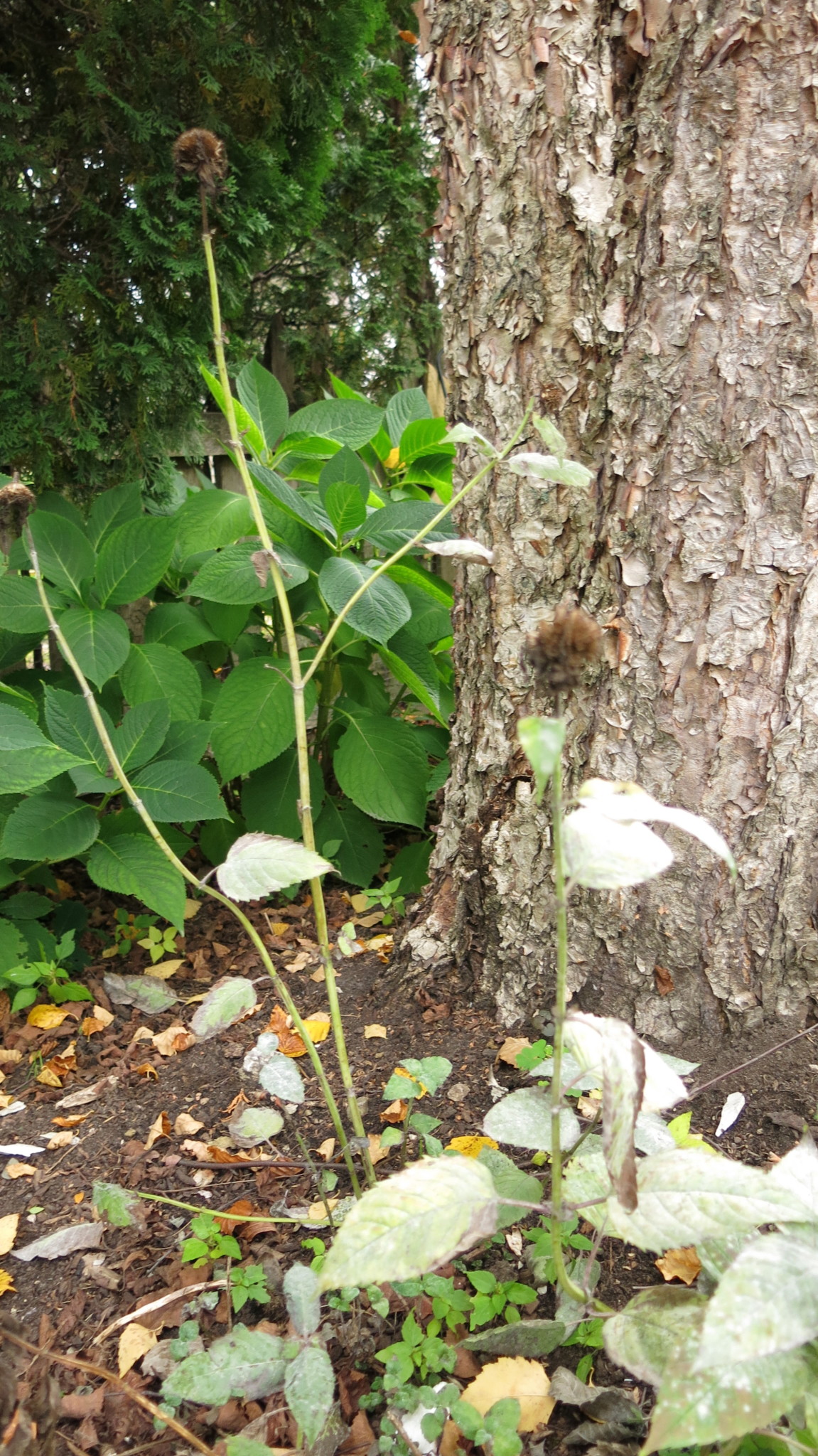
This left an ugly gaping hole, but by next spring it’ll have something new in it’s place.  I’m thinking I’ll move the red Bee Balm (variety unknown) that is currently almost in full shade under a River Birch.

IMG_0546

That was one of those mistakes made by a landscaper before I knew to ask questions and look into plant choices myself.  Sure, it was only lightly shaded back when the tree was planted almost 15 years ago.  But now, it’s dappled full shade and much too shady to grow a sun loving plant like Bee Balm.  I get a few meager flowers each year, but mostly it’s leggy, sparse and often gets a powdery mildew.  Time for a new home. There’s plenty of great shade loving plants that can take it’s place.


More Hawk Moths

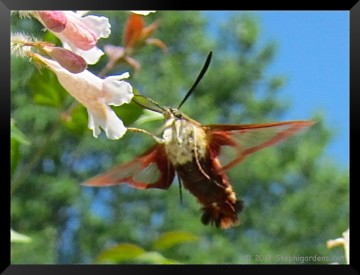
After I saw the very cool White Lined Sphinx Moth last week in my backyard, I heard from my mom and other family members that they too were seeing similar Hummingbird Moths in Michigan.  My mom was able to get a picture of this Hummingbird Clearwing Moth (Hemaris thysbe) feeding in her backyard.

IMG_0481
I am just fascinated by these great pollinators and I’m amazed I have never seen one before.  Or at least I don’t think I’ve seen any of these before.  Maybe I was seeing them and just though it was a hummingbird, or a giant bumblebee if it was another type of Hummingbird Moth (Snowberry clearwing (Hemaris diffinis)).  I will definitely be keeping my eyes open because these guys are really worth finding and watching.

Have you been seeing them in your garden?  Which ones?

photos by Peggy

35 Pounds of Tomatoes

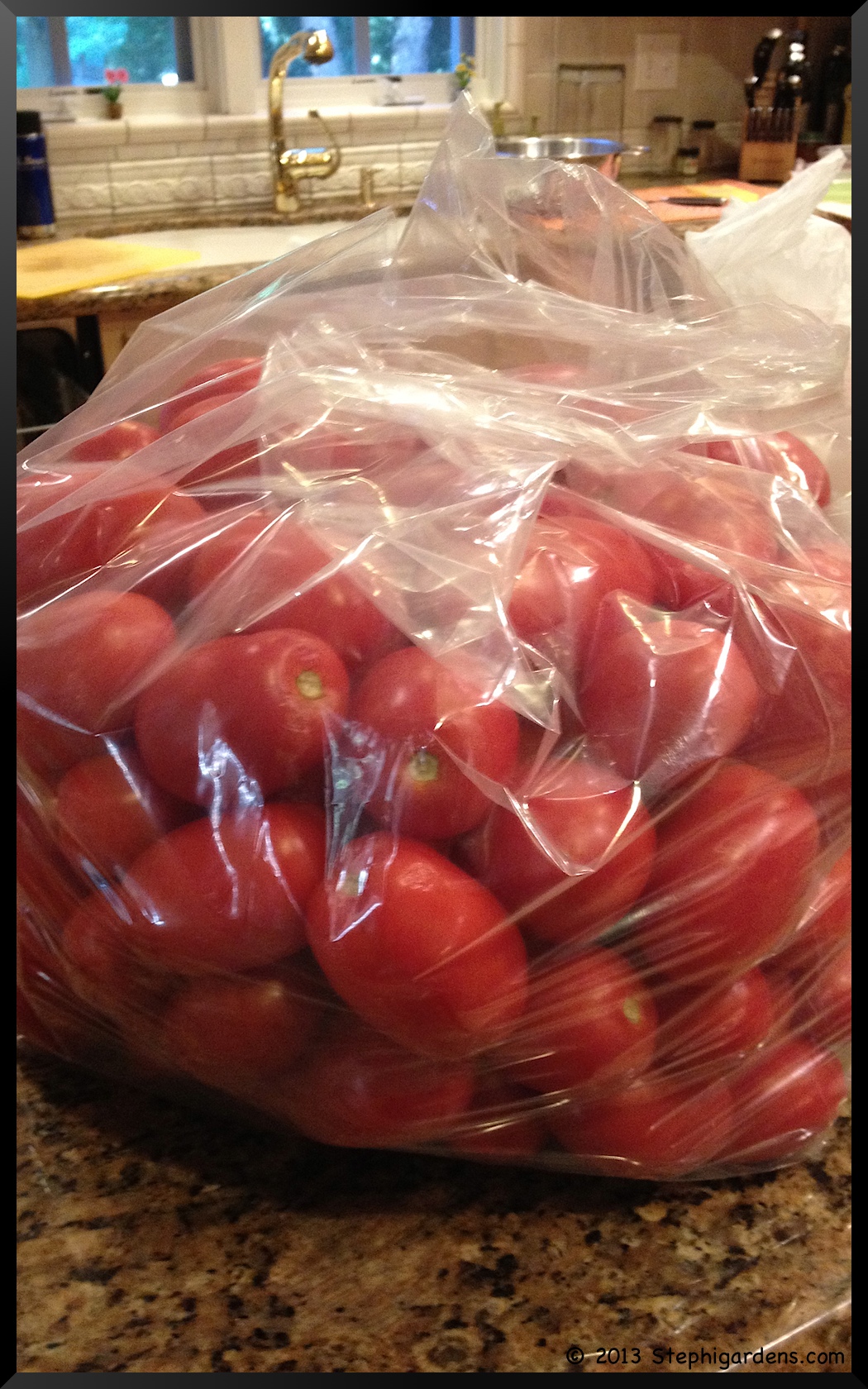
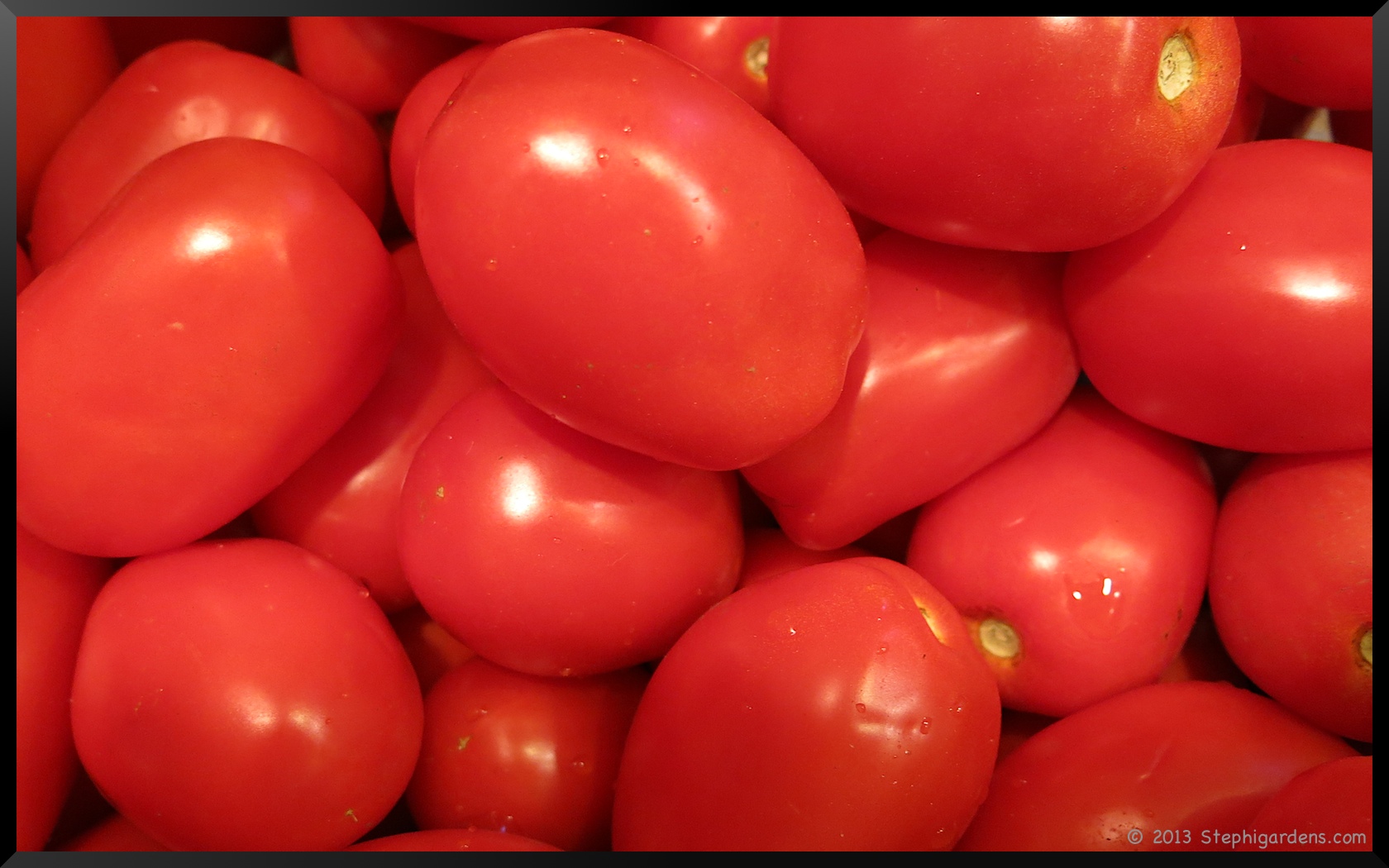
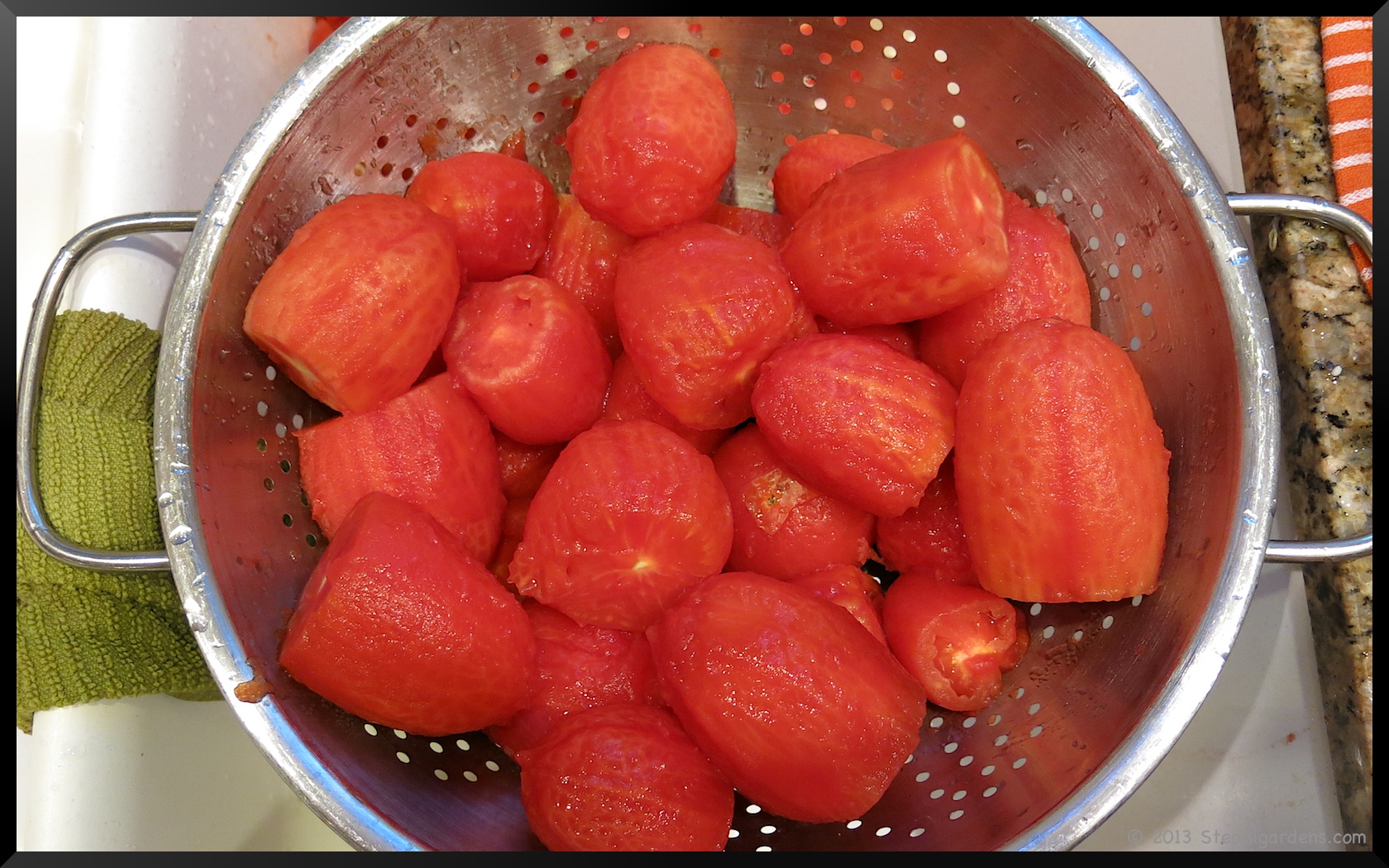
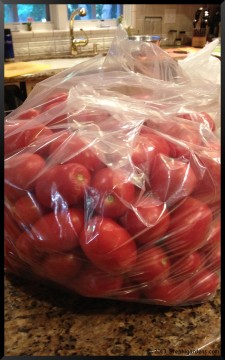
No, I didn’t grow that many in my garden.   I got a decent harvest this year to keep us in fresh tomatoes for the summer and early fall, but for stocking up for winter, I went to the local Farmers Market.   I bought the large, 10 lb box last week and processed those for the freezer, then decided I needed more.  Being the savvy consumer that I am, I realized I could get 2.5x as many tomatoes in the half bushel as in the large box for only 25% more.  That’s a screaming deal in my book,  and they were beautiful red, perfectly ripe roma tomatoes.  My first hint of how much work was ahead of me was when I picked up the bag they were in to carry them to the car.  A half bushel of tomatoes is really heavy-apparently about 25 lbs.
IMG_3617

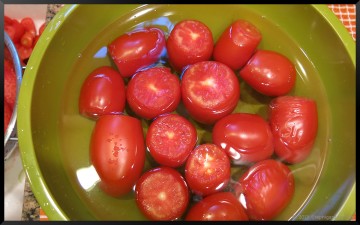
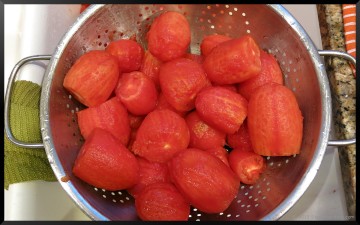
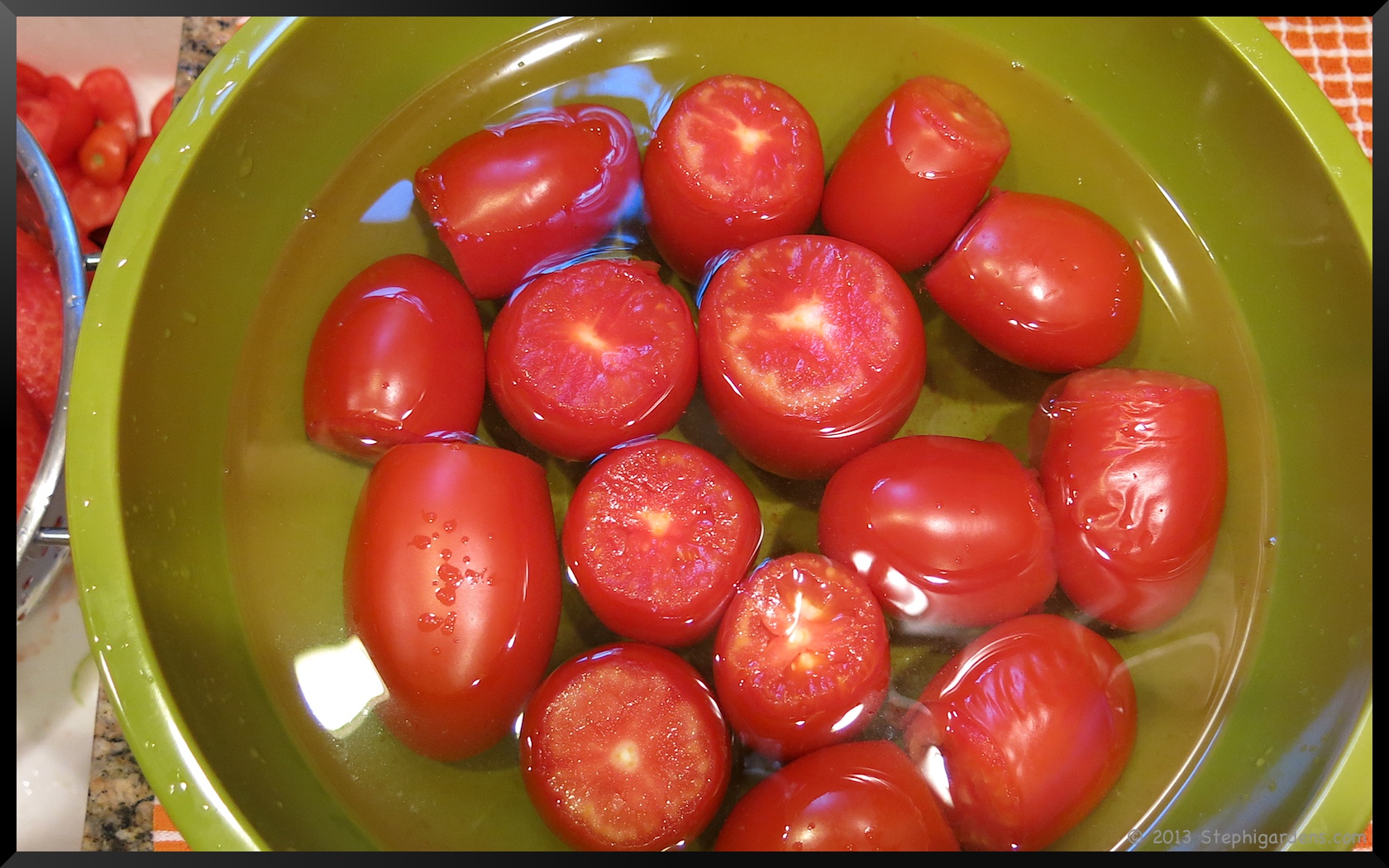
Over two nights, I made 2 double batches of pasta sauce using America’s Test Kitchen’s (recipe here).  Instead of the canned crushed tomatoes, I used 3 cups of lightly pureed, peeled tomatoes.  I also found that the texture of the tomatoes was better when pureed in my food processor than in my blender.  As I’ve described before, peeling tomatoes is pretty easy, and I think necessary to have a more pleasing sauce texture.  (Just personal preference, but I’m not a fan of tough skins floating in my sauce, soups or stews.)
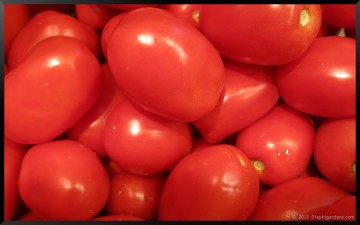
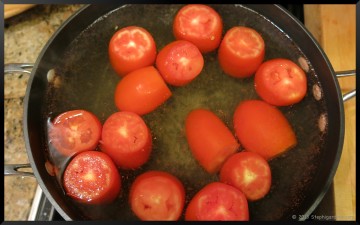
IMG_0445IMG_0441

IMG_0443
IMG_0444


While the tomatoes looked beautiful, my kitchen was a mess!

    IMG_0452 (1) IMG_0452

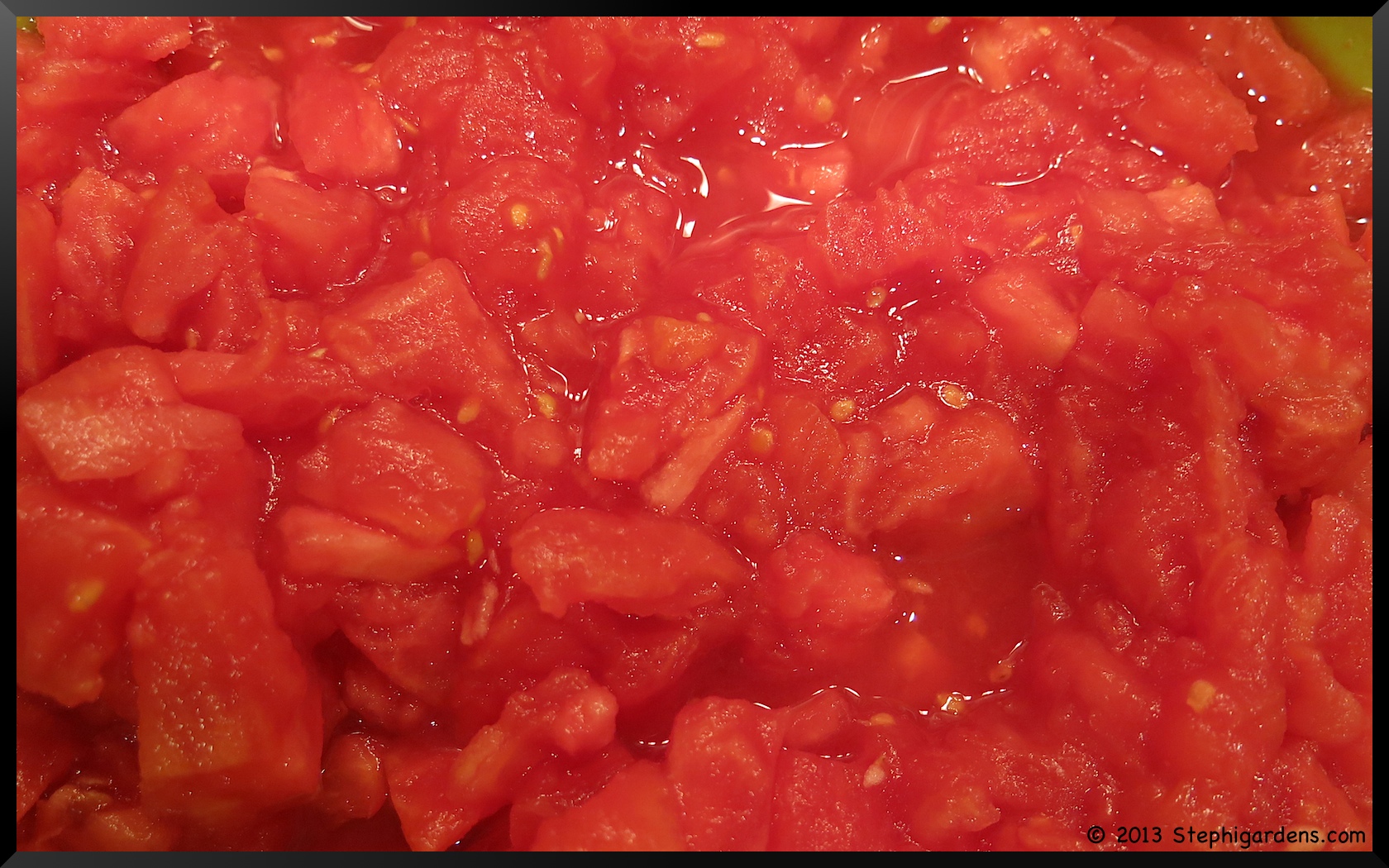
Once I had the tomatoes peeled, I was ready to make the sauce and chop up the rest for a variety of uses.  I left most only roughly chopped to allow for more versatility.  I can further chop or puree the frozen tomatoes depending on what I need them for.

I’m pleased with the final number of bags, it didn’t seem like a lot at first, but I think this will last me quite a while.  The large bag of while tomatoes was turned into 4 more bags of pasta sauce the next evening.  I ran out of garlic so had to have time to run to the store.
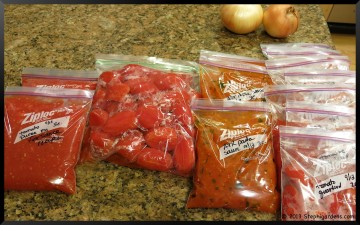
IMG_0458

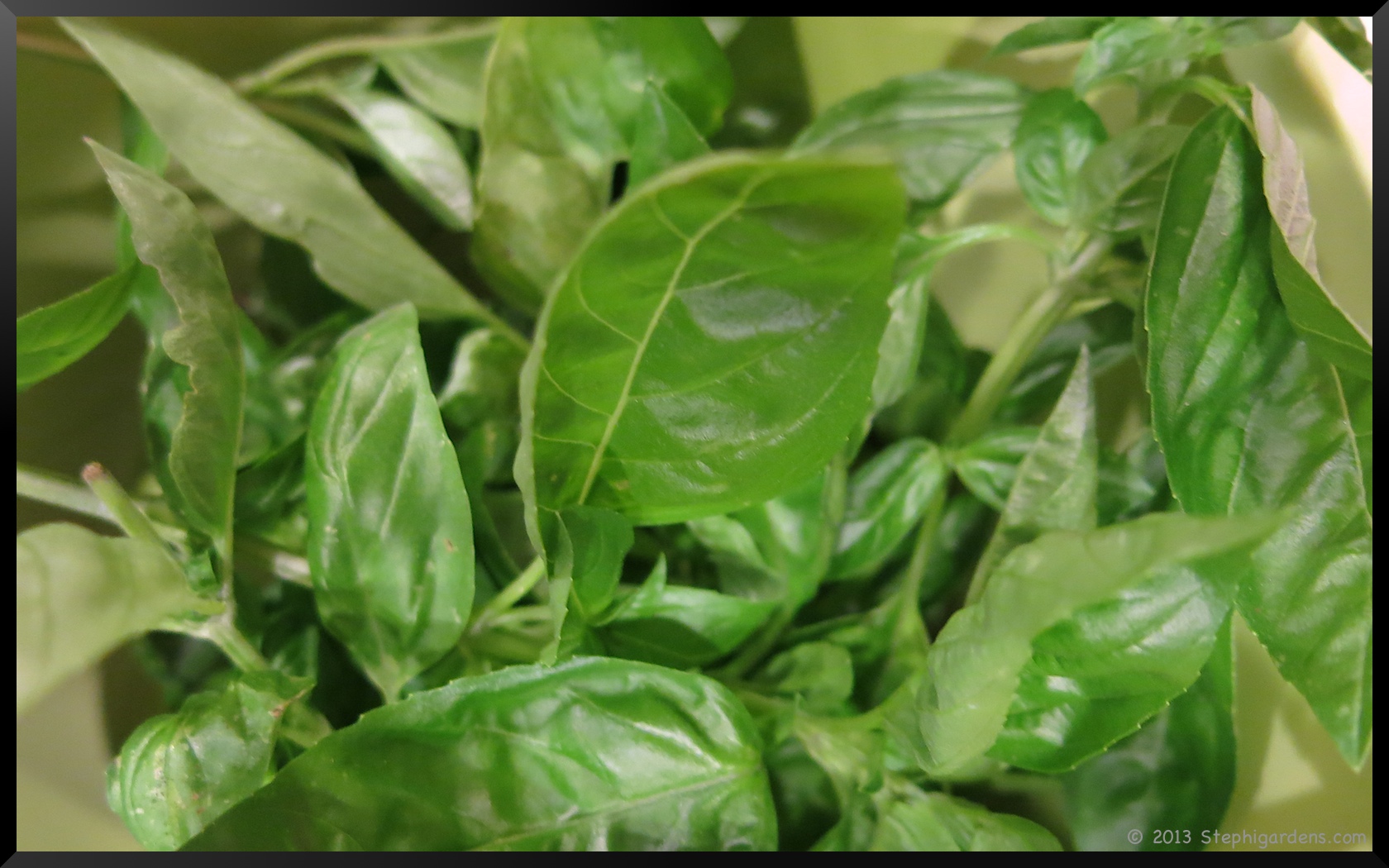
And what are tomatoes without some basil?
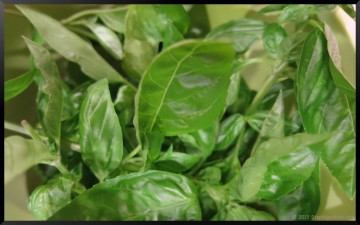
IMG_0447

So in the end, did it save me money over buying canned diced tomatoes and jarred pasta sauce?  Maybe, maybe not, but my tomatoes and sauce will definitely have a better, fresher taste, with only those ingredients in them I want.  I’m actually looking forward to winter cooking (but maybe not the weather).
What’s Going in My Freezer?

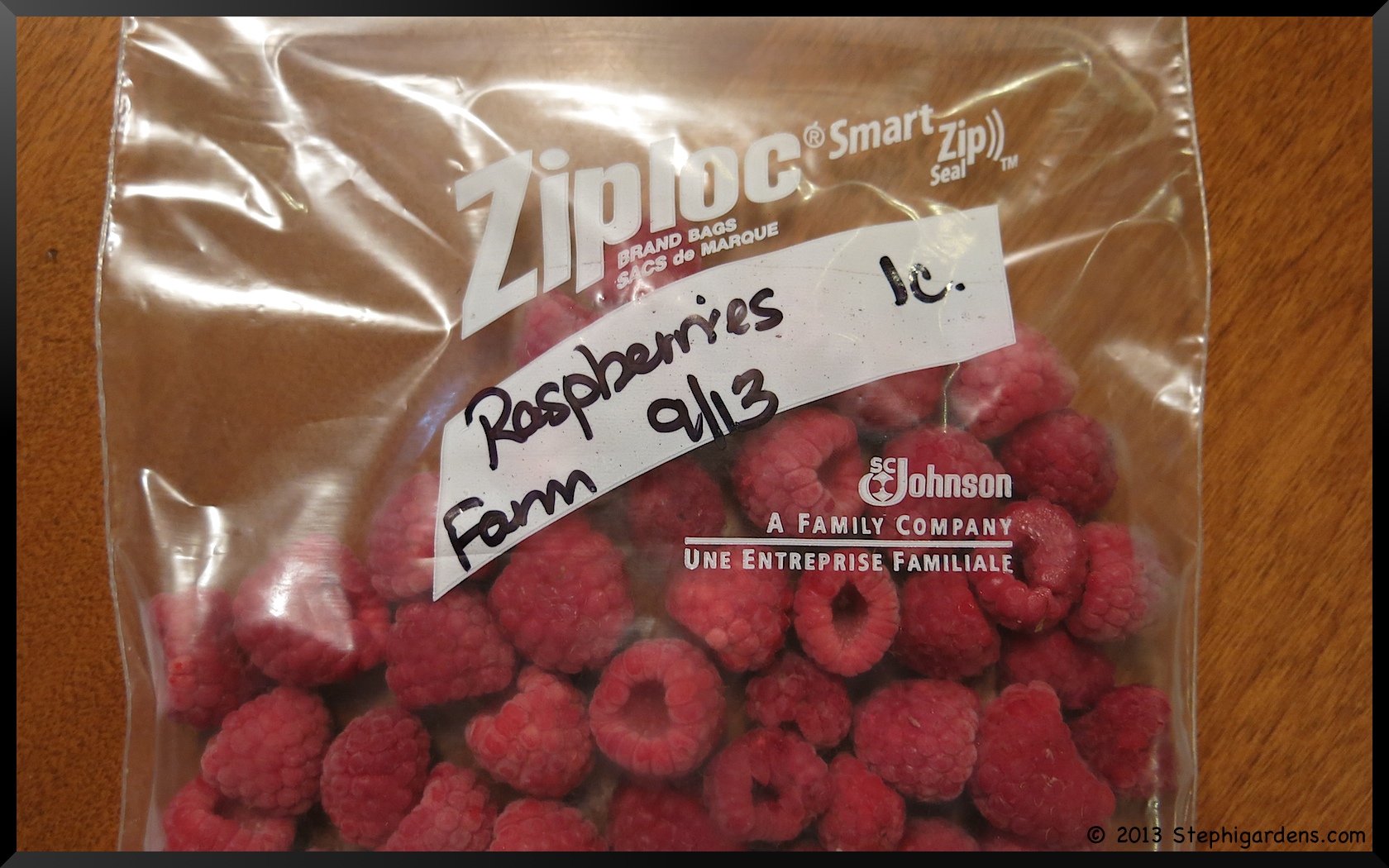
I have been very busy freezing whatever I can fresh from the Farmer’s Market for the winter. I seem to have a lot more freezer space than cupboard space, so I decided to forego the canning of the things I can freeze. Here’s just some of what I have so far:

Strawberries, Raspberries and Blueberries

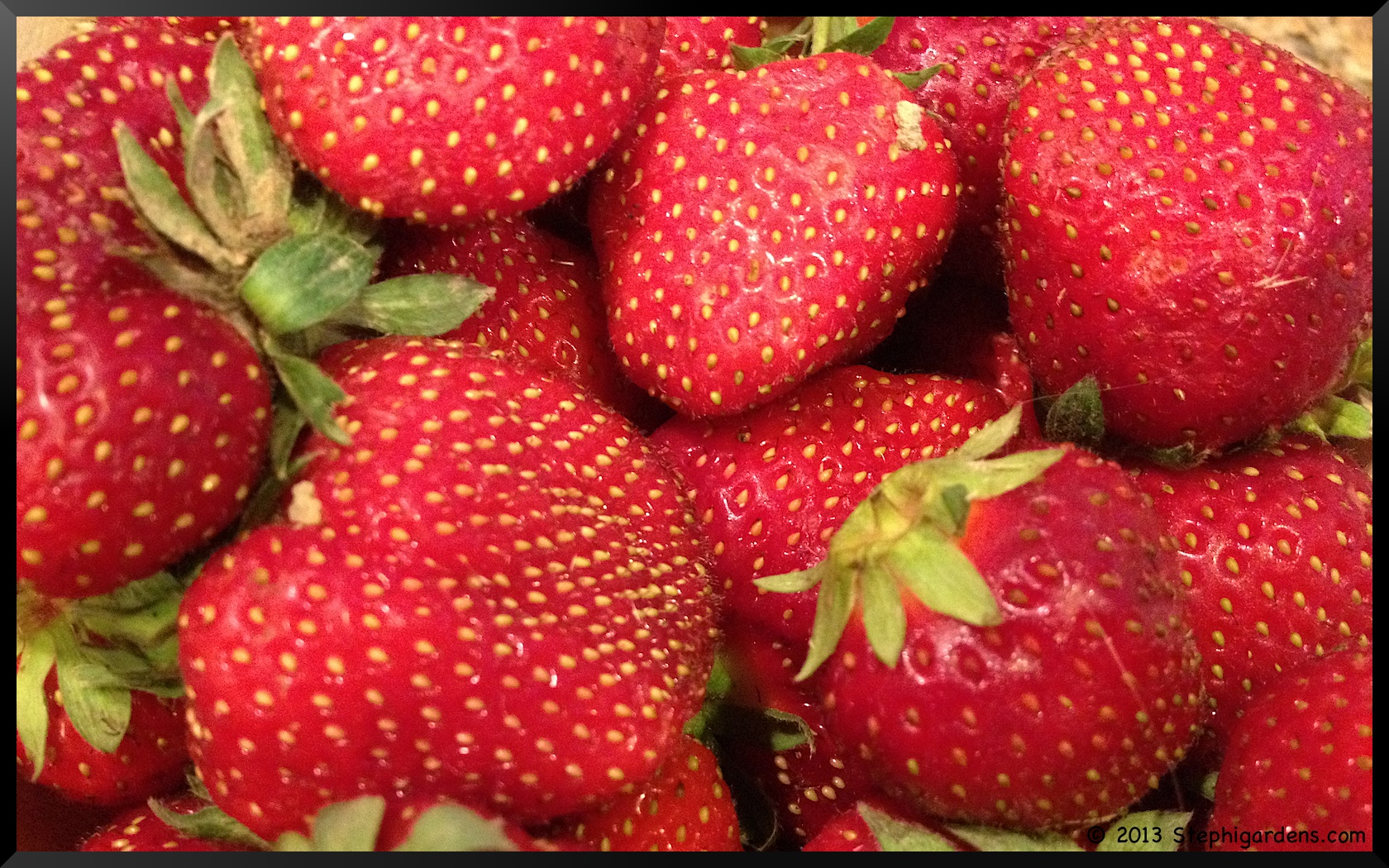
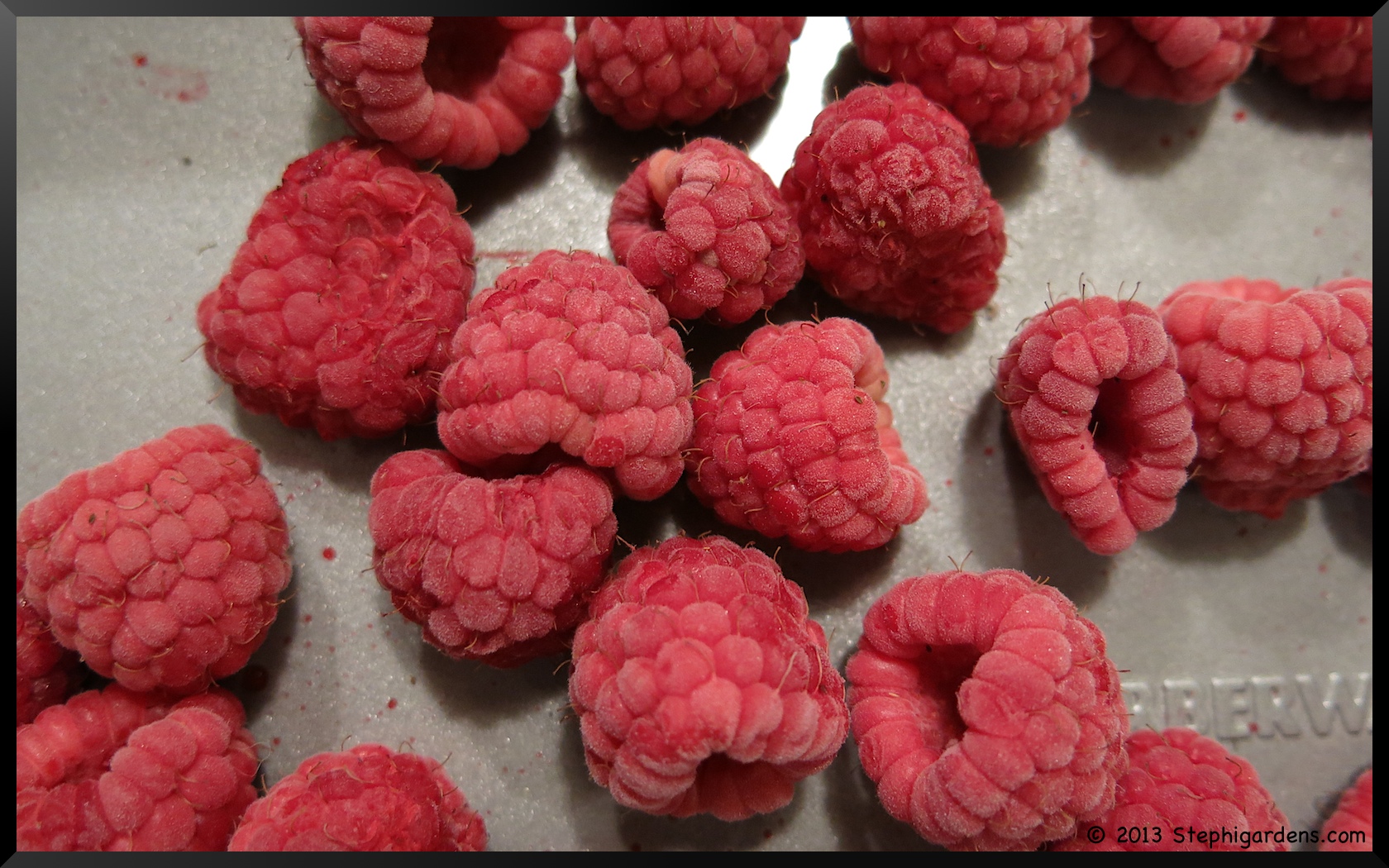
Strawberries, raspberries and blueberries should be fresh, unwashed and checked over for damaged or generally yucky ones.   Then they are spread in a single layer on a pan, placed in the freezer until frozen and then put into freezer bags.  They can be used frozen or thawed, but need to be rinsed since you didn’t wash them before freezing.  I like to keep a bag of blueberries in the freezer, take out a few in the evening, rinse them, put them in my cereal bowl and put the bowl in the fridge overnight.  Fresh blueberries are all ready for my cereal in the morning.  Or you can thaw them quickly by putting what you want into one of those handy little berry colanders and rinsing with running lukewarm water.  Washed and thawed all in one!
IMG_2554
IMG_0346
IMG_0348
IMG_0362

ZUCCHINI

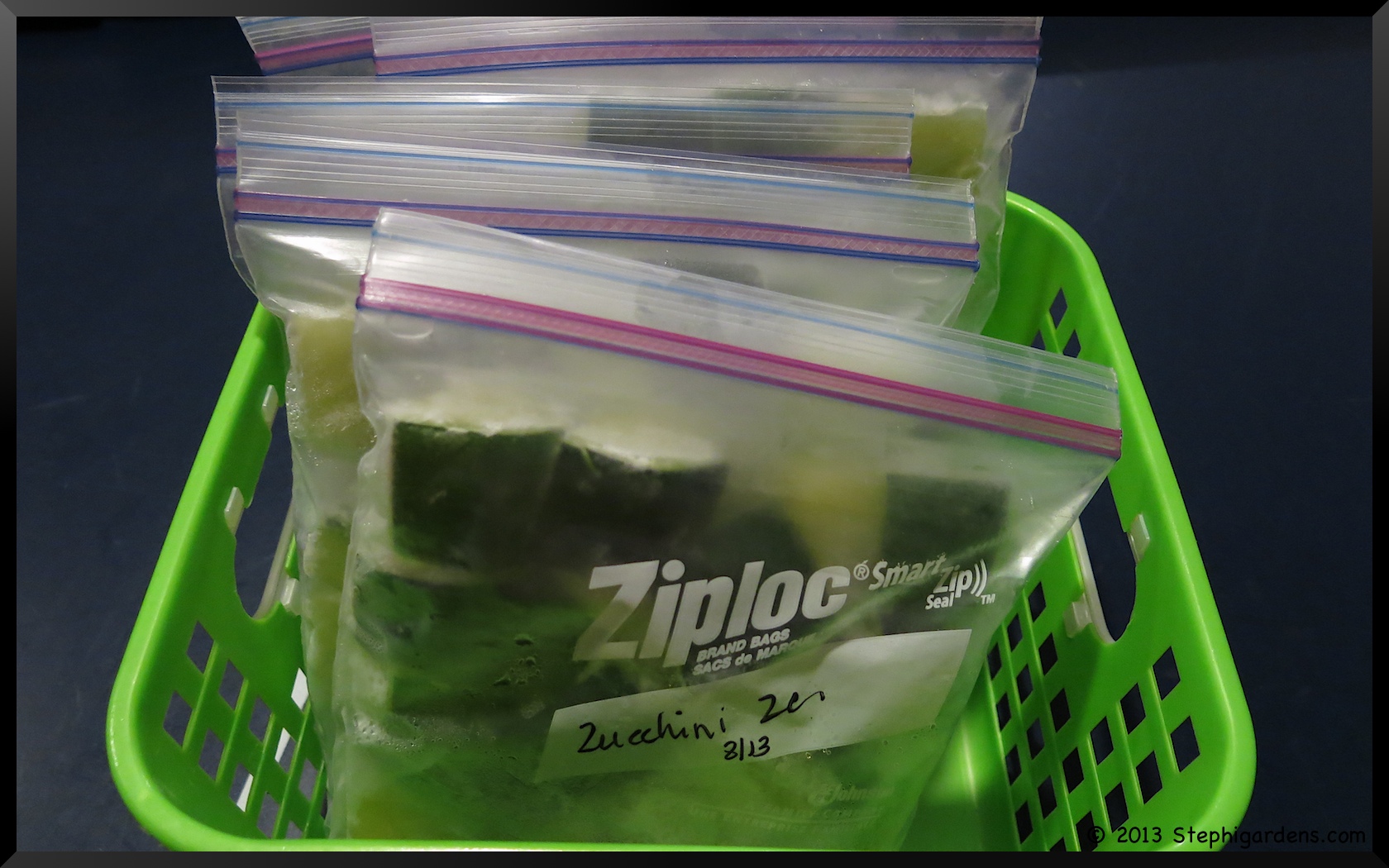
In a previous post I talked about how to freeze zucchini, either shredded or in chunks.  I’ve got a whole winters worth of zucchini stored away!

IMG_0361

Tomatoes

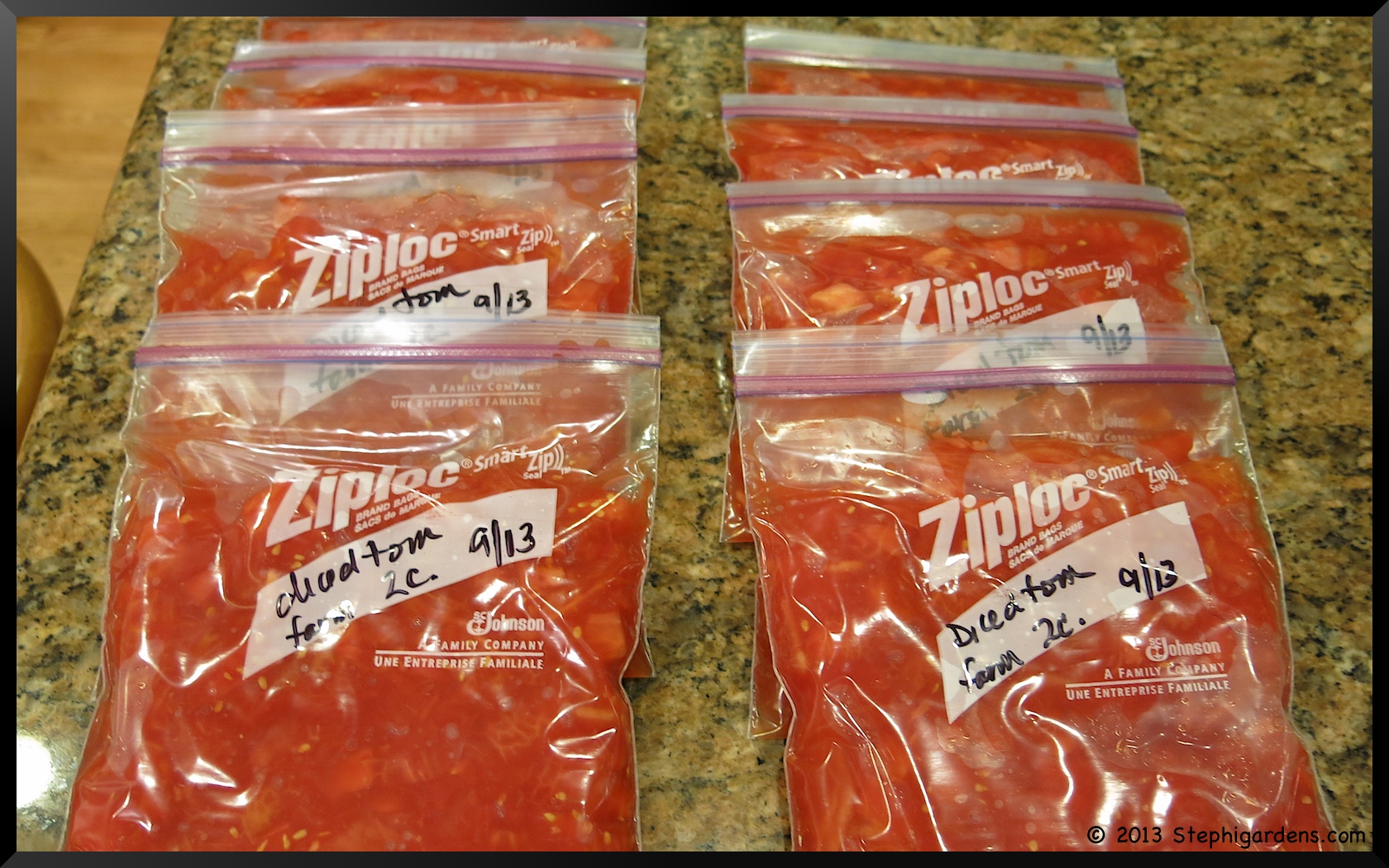
I’ve used what I grew in the garden, then bought lots more (about 30 lbs worth–I got a great deal!) at the Farmer’s Market.  I now have many bags of whole cherry tomatoes (not blanched, treated like the berries), chopped and diced tomatoes,  tomatoes crushed for sauce, and ready to go sauce.  It was like a little factory in my kitchen!  I’ll talk more about all that in a later post, but you can see how to generally prepare tomatoes for freezing here.

IMG_0018

IMG_0355
IMG_0356
IMG_3617
IMG_0458

Green and Red Peppers

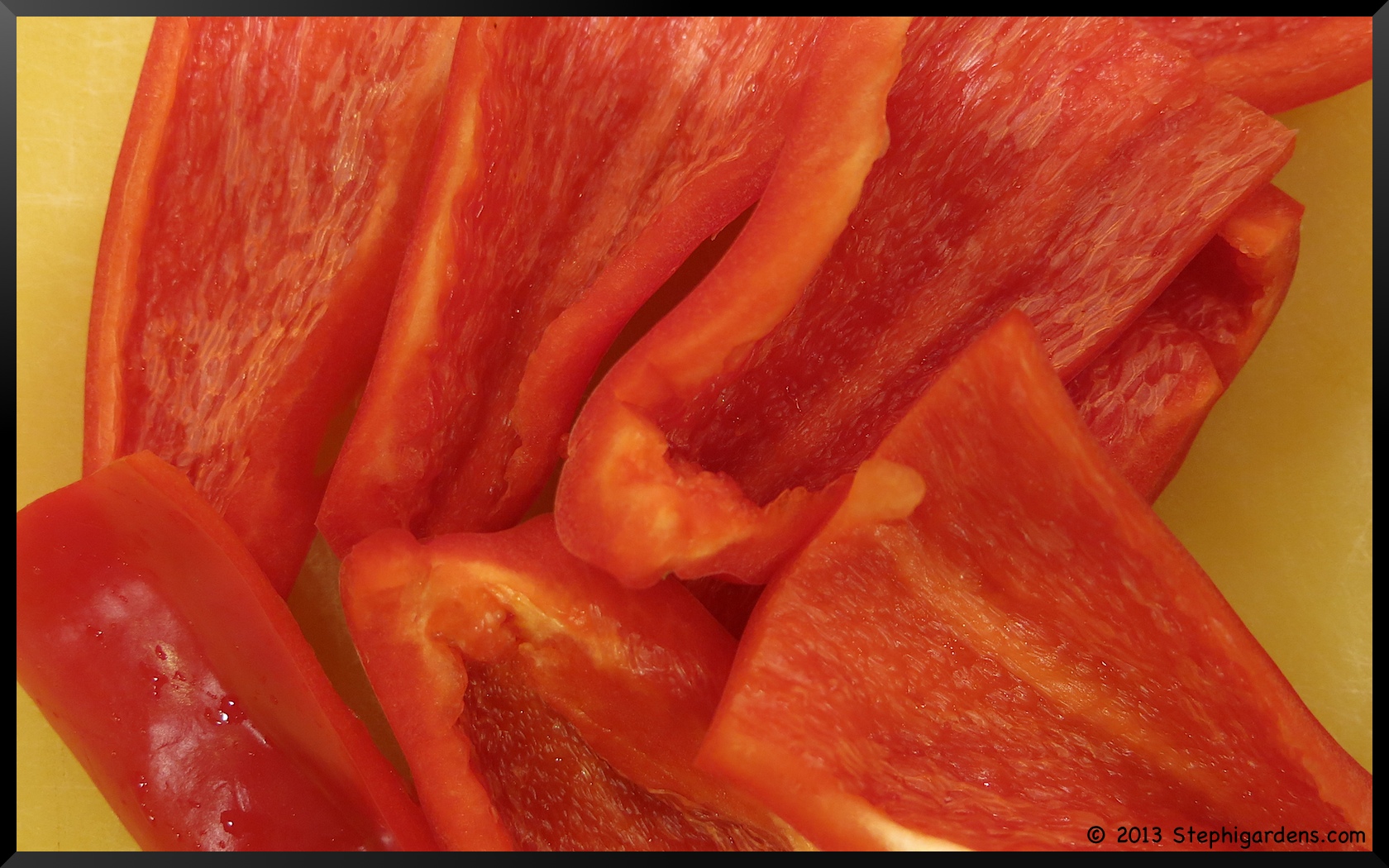
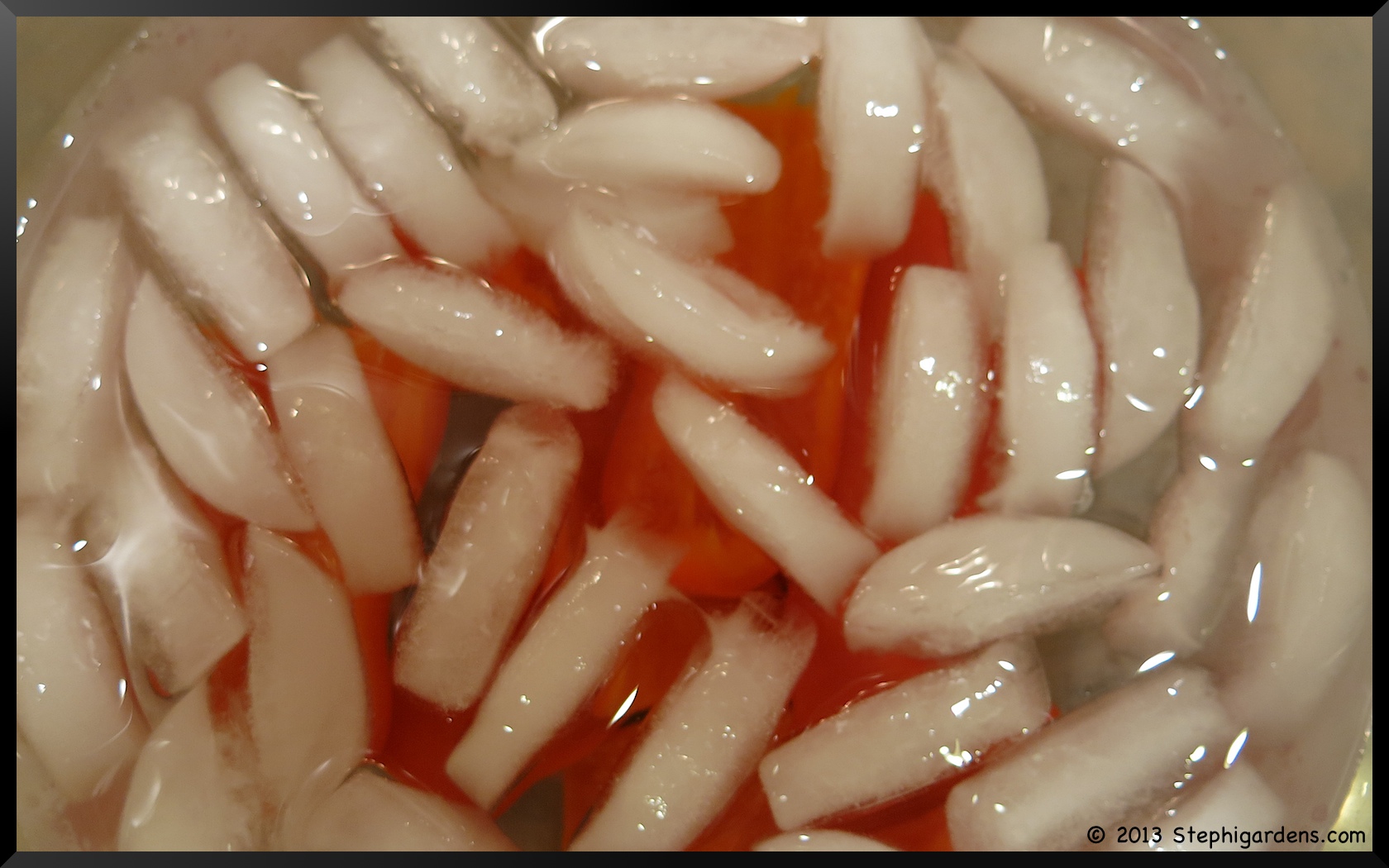
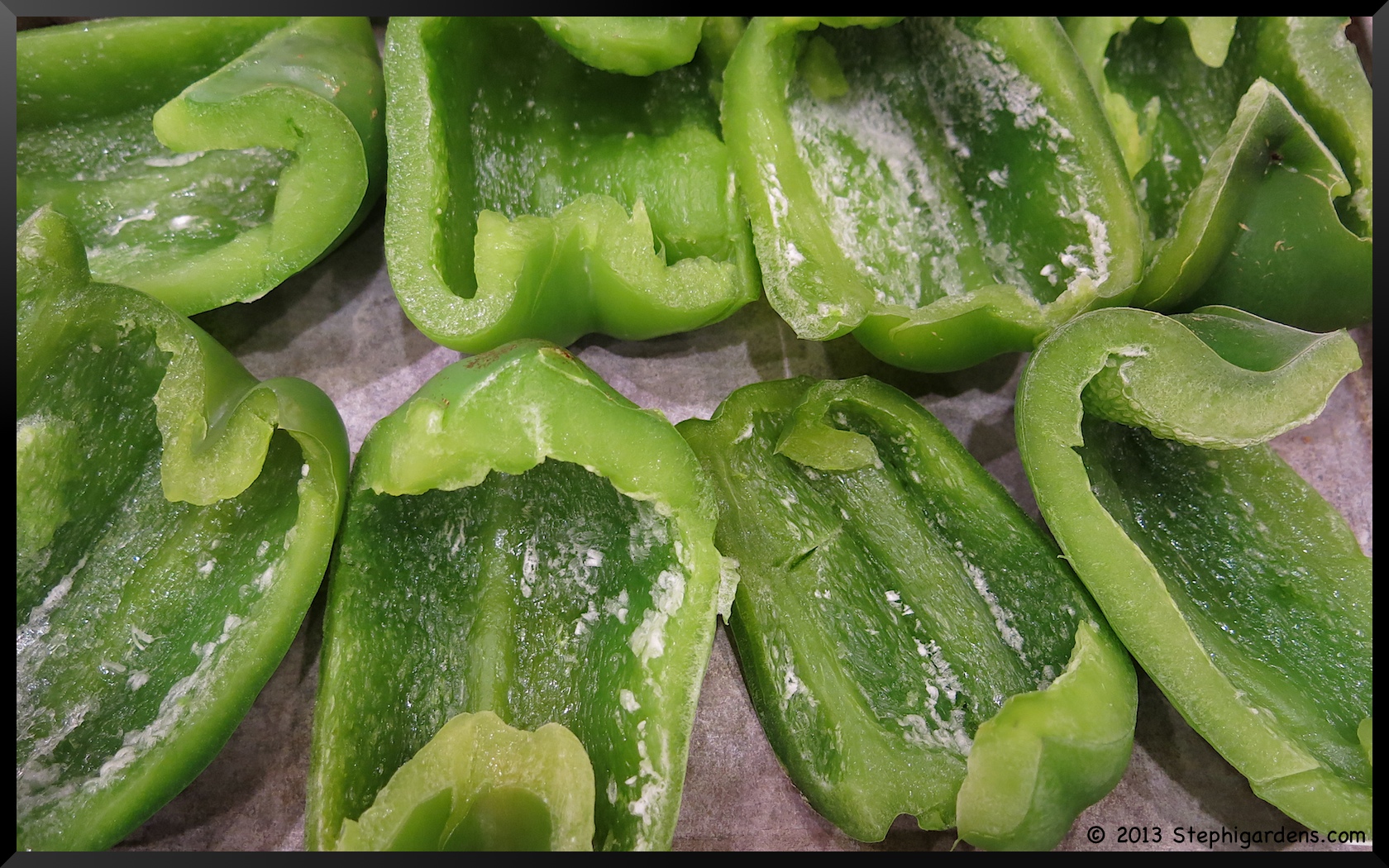
I didn’t have much luck with green peppers this year, but they looked great at the Farmer’s Market.  I’ve been buying a few at a time for freezing.  Like most other vegetables, you need to wash them, look and remove any blemished areas, blanch in boiling water for 2-3 minutes then plunge into ice water to stop any further cooking.  I left mine in pretty big chunks so I can use them as needed for a recipe, but in the past I’ve frozen them diced or sliced.  I freeze them in a layer on a pan in the freezer and then put into a freezer bag so they don’t freeze as one giant clump together in the bag.

IMG_0350 IMG_0352 IMG_0353 IMG_0359

And more…

I also have a few bags of diced and sliced spring onions.  I’m thinking about freezing some corn if I can get some really fresh, otherwise it’s no better than the store bags.  I bought a head of cabbage today to make some “freezer slaw” from a family recipe from a friend.  Can’t wait to try that!  So, what’s in your freezer this year?

White Line Sphinx Moth

The other night I was outside helping grill around dusk. Right next to the grill, I have planters with geraniums, petunias and coleus.

image

Flitting around the petunias that night was this hummingbird-dragonfly-bug-like thing. Its wings were beating so fast, I really couldn’t get a handle on what it was. All I could really tell was that it was not a hummingbird, but was definitely getting nectar from the petunias, checking out the other flowers, distinctively patterned and very pretty. I meant to try to look it up, but I really didn’t know what I was looking for.

Then, oddly enough, the next morning my radio alarm comes on and there is an interview with a local garden specialists about the recent explosion of something called a White Line Sphinx Moth (Hyles lineata). That was it, made my ID pretty easy. For some reason that I haven’t been able to figure out, they’ve been spotted in higher numbers lately in the Midwest, including Chicago.
White Line Sphinx Moths, also known as Hawk Moths, are fairly large moths and behave much like a hummingbird, flitting about, hovering above flowers and using its very long tongue (or proboscis) to reach into the flower and drink the nectar. The caterpillar phase of this moth is also unusually large (3 inches or more) and has a distinct hornlike appendage. They look similar to the very destructive tomato hornworm, but are not as much of a garden pest.

I hope they stick around a bit, it was fun to watch.

Photo Credit: Larry Lamsa (Creative Commons licensing)

Fall Spinach

IMG_0459

I wasn’t really thinking fall crops with all the 90° days we’ve had lately, but I was at the farmers market and one of my favorite farmers was talking about having just planted their fall spinach. I chatted with him a while about it, which I appreciate since whatever I grow takes away from his sales, and realized that I’d better get my seeds in the ground soon. What I found the most interesting is that even if I don’t get a great harvest now, it will overwinter and I’ll have some very early spring spinach.

I found a great article in Mother Earth News on growing fall spinach.  Some of the highlights are that spinach doesn’t germinate well above 75°, and not at all above 85°, it’s not so much the heat that makes it bolt in the spring as much as the length of daytime, and some varieties are better for overwintering than others.  Unfortunately for me, I thought about this all too late, so I just planted what I had and I’ll see what happens.  It does seem like we’re in for a cool stretch, so  maybe I’ll get them to germinate and be healthy plants before the first frost.

Next, I’ll be looking up some of these other varieties that they found to be tastier grown in the fall, the smooth-leaf varieties “Olympia” and “Viroflay”were hits, and the standard savoy varieties, “Bloomsdale Long Standing”  and “Tyee” were not as good.  There also seemed to be differences in ability to not bolt in warm fall weather, with  “Olympia” and “Spinner” fairing the best.  I think I’ll be ordering some Olympia seeds next spring!

Next year, required reading will be this Mother Earth News article on planting fall vegetables in general.  Late September is not the time to be first thinking about this.