My husband had a running weather joke all summer, “Enjoy it now, it’ll be snowing in 3 months”. We’d all roll our eyes.
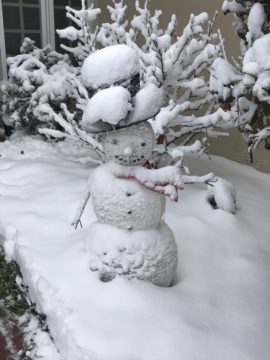
Well, he really wasn’t all that far off. We had the 5th biggest November snowfall last night, and it was a very messy storm.
Thankfully, my college kids had left Saturday to head back to school before the weather turned. We fared a bit better than many parts of Chicago, but we still got 3.9 inches of heavy, wet snow that knocked out our power for a few hours this morning.
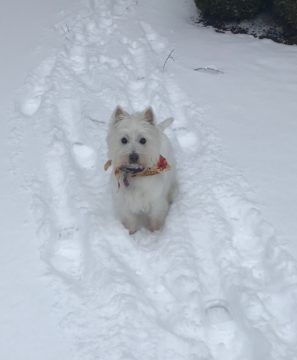
That’s the kind that’s really tough to move around and really damaging to the trees and power lines. Luckily, we didn’t have too much damage and fared better than some of my friends.
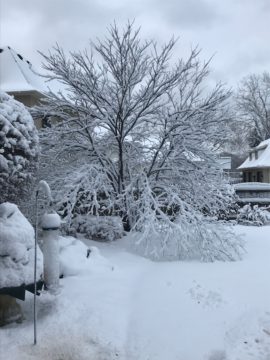
The backyard redbud was heavy with icy snow, practically touching the ground. No branches seem broken so it should be fine. I’m leaving it alone so I don’t make things worse for it.
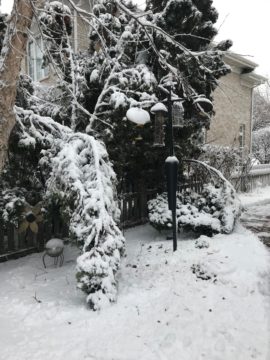
The arborvitae and other evergreens were all really sagging under the weight of the snow. Hopefully everything will bounce back once the snow melts. If they’re really bad like these, you can try and gently brush the heavy snow off the shrubs or trees with your hands or a broom as soon as it stops snowing, or even while it is snowing. But be careful to not be too rough and cause even more damage. Definitely don’t beat on the branches to break off ice.
Once the snow melts, if the branches aren’t popping back up you can try tying up the sagging branches to reshape the shrub. If you use ropes, be sure to loosen them every year so you don’t girdle the stem and kill it. Seems like during every storm my neighbor’s arborvitaes along the property line fall my way, so we have quite a system of woven ropes tying them up. Arborvitea make a great privacy fence, but the winter is really tough on them.
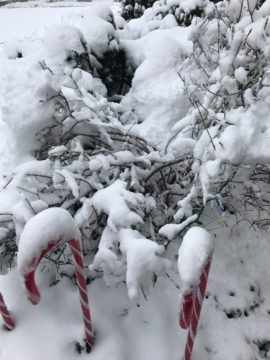
The yews and boxwoods are similarly drooping. I’ve had good luck with them bouncing back in the past so I tend to leave them alone.
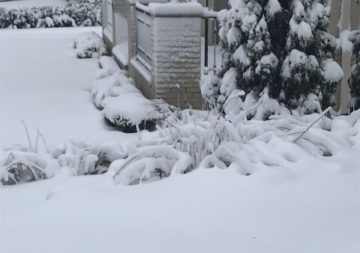
During the fall clean up, I always leave the grasses and hydrangeas for winter interest and bird habitat. Not sure what they’re going to look like after this snowfall though. It won’t affect their next year’s growth, but they may look crushed the rest of the winter. I’ll have to decide whether to cut them back or leave them once this snowfall melts.
Annabelle hydrangeas (seen above) bloom on new wood so late fall or winter pruning won’t affect next summer’s blossoms. Be sure before you do any winter pruning you know what kind of hydrangeas you have. Many have different pruning requirements depending on when they bloom and if it’s on new or old stems.
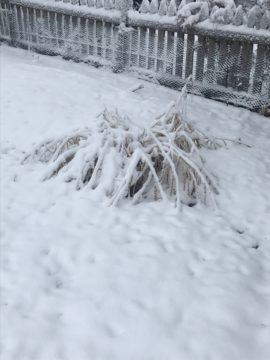
Ornamental grasses can be pruned back to the ground anytime after late fall. I like to leave mine and prune in the early spring. If you don’t think they look good, trim them to the ground in the fall or winter. If you do leave them, be sure to cut them back to a couple of inches in early spring before new growth starts. I’m guessing these will not look good this winter.
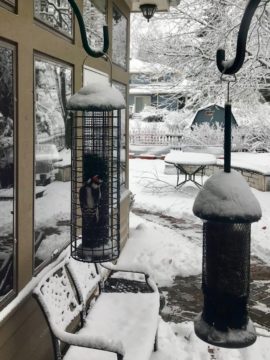
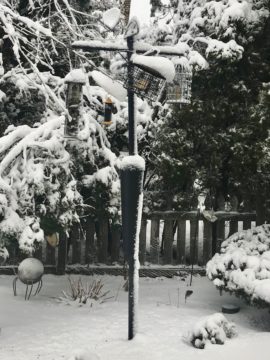
The snow made the bird feeders a bit cock-eyed. But the birds didn’t mind and seemed thrilled to have food available. The squirrels and juncoes kept the snow cleaned of any spills. I even had a red-bellied woodpecker visit the suet feeder this morning. No camera nearby, but trust me, he was beautiful!
How did your yard fare with this storm?