Bird Count Time

It’s that time of year again! The 22nd Annual Great Backyard Bird Count is this weekend, Friday, February 15, through Monday, February 18, 2019.
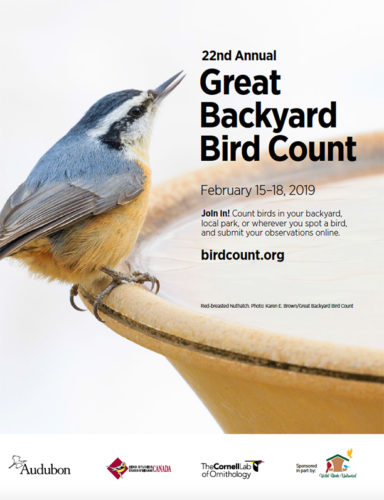
This is a wonderful citizen science project that helps researchers at the Cornell Lab of Ornithology and the National Audubon Society learn more about how birds are doing, and how to protect them and the environment we share.
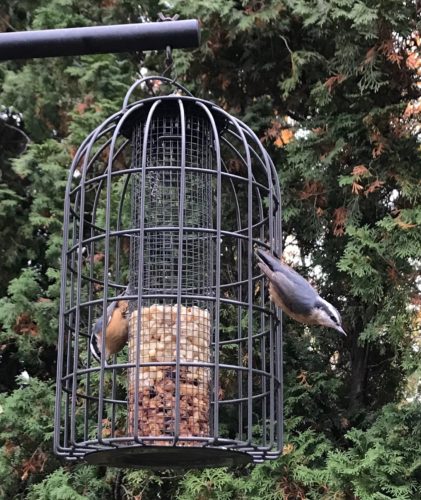
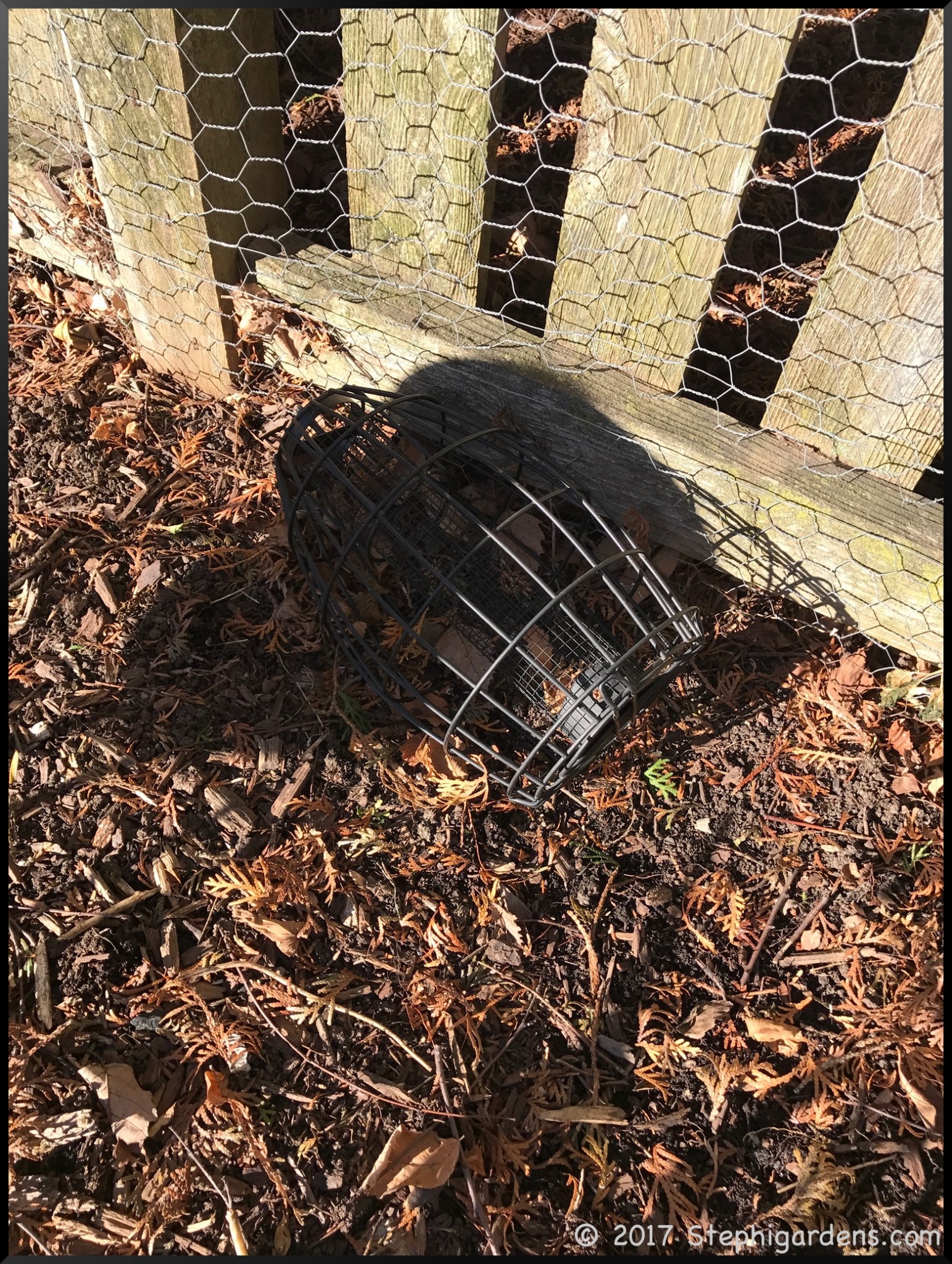
peanut feeder

It can be as simple as looking out your window for as little as 15 min, or go out to your favorite birding spot and report on what you see. Every report is important to create a worldwide snapshot of where all the birds are at one moment. Scientists use this information to investigate how weather and climate change influence bird populations, why some birds like winter finches appear in large numbers during some years but not others, how the timing of birds’ migrations compare with past years, how are bird diseases, such as West Nile virus, affecting birds in different regions and have there been changes in bird diversity in cities versus suburban, rural, and natural areas?

Once you’ve counted your birds, you can log your sightings online at birdcount.org. This morning I counted 2 red-breasted nuthatches, 1 downy woodpecker, 4 house finches, 6 house sparrows and 1 female cardinal. I’ll report again tomorrow morning and hopefully one of my unusual visitors like the Red-bellied Woodpecker or Coopers Hawk decides to visit.

Need help identifying what you see? Check out these mobile apps, these online resources, or order my favorite bird book for beginner to intermediate birders, Birds of North America: A Guide to Field Identification.

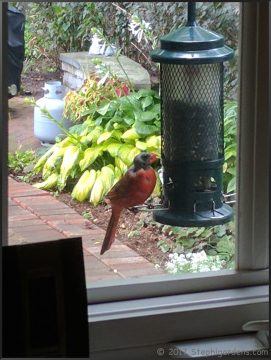
This is a male cardinal from a few days ago. He was just frozen there at the feeder with the striped sunflowers in his beak. Not sure what he was doing, but he sat like this probably for a minute or so.
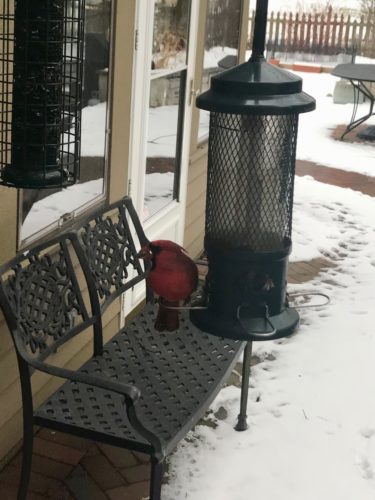
In the past, I generally didn’t have red-breasted nuthatches this time of year. They’d come through on migration for a couple of weeks and then move on elsewhere. This is exactly the type of data they are looking for.
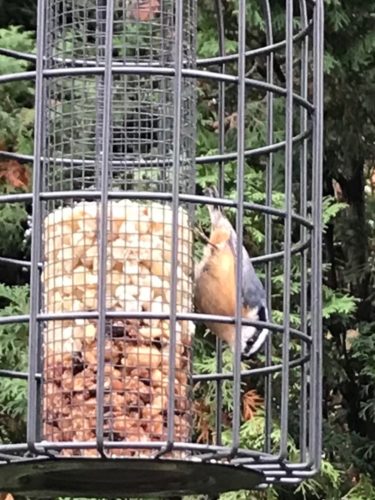
squirrel proof peanut bird feeder

Interested in what everyone else is seeing? On the GBBC website you can explore real-time maps and charts that show what others are reporting.  Be sure to check out the Explore a Region tool to see what everyone else is seeing in your area. Want to have your own checklist specific to your area? Check this tool out.

Want to help count birds all year round? You can keep counting throughout the year with eBird, which uses the same system as the Great Backyard Bird Count to collect, store, and display data any time, all the time. I love this tool to see what birds others are seeing (and where) when I’m out and about.

I did my part 😊
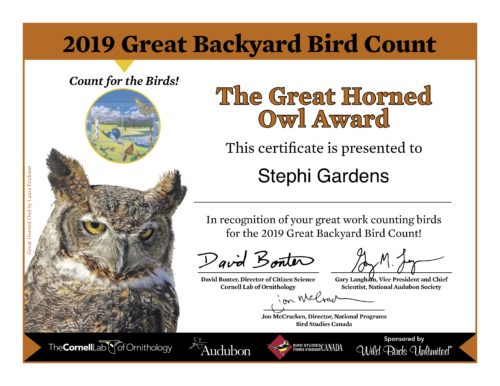
You can get your own certificate, just follow this link.

Happy Birding! Hope you see something interesting, but even if you don’t, know you’ve made a difference for science.
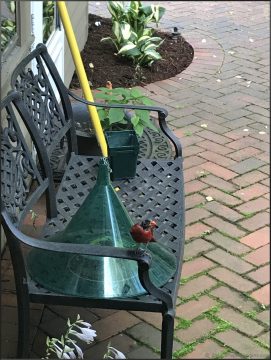
“Cardinal Vulture”

I’m sure most of us have seen a turkey vulture, that dark soaring bird with a featherless head. Well, I have a new vulture to add!

I was startled earlier this summer by a red bird right outside the family room window that I had not seen before. I saw a spectacular new red bird this year, a Summer Tanager, so I thought I had another to add to my life list. All I caught before it flew off was that it was an all red bird with a black head. Out came the bird book, only to find there is no such bird to be found. Hmm.

Then it came back again, and it was with the female cardinal.

I had to figure this out, so I filled up the squirrel-proof sunflower seed feeder, hung it right in front of the kitchen window and hoped it would entice this odd bird in so I could identify it.

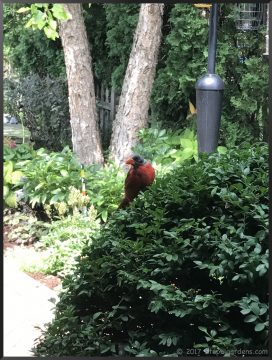
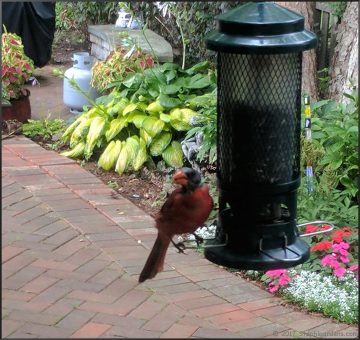
Lo and behold, he arrived and it was a male cardinal with no feathers on his head.

After some research on the internet, it seems bald cardinals are not all that unusual and there seems to be a few reasons it may occur:

  • Something can go wrong in the post-breeding molting process. Although these molting birds usually replace feathers in waves so that bare spots rarely appear, some species like cardinals, blue jays and grackles seem to be particularly susceptible to losing all their head feathers at once during molting.
  • Feather mites. The birds aren’t able to pick them off their heads during preening and the mites destroy the feather shafts. The birds will eventually grow new feathers.

Some less likely reasons are:

  • Feather-pecking by other birds.  Some birds like crows, will attack other birds and peck off feathers. But they usually only attack their own species. Interestingly, my mom has this issue with her chickens.
  • Disease. But, the birds generally don’t show any other symptoms of being sick
  • Other factors might include nutritional deficiencies, unusually high temperature, or other environmental stress.
  • It’s also possible that total feather loss may be a normal occurrence for individual birds.

No matter what the reason is, it seems not be a cause for worry. The feathers will grow back, and in this bird’s case, it hasn’t interfered with attracting a mate. I hope he grows his feather’s back before the weather turns cold.

For more details on how this interesting phenomena, check out these other articles:

Save

Happy New Year’s To My Backyard Birds!

Happy New Year! I hope this day finds you all well and looking forward to this new year. I’ve been away a bit from blogging, but one of my goals for this year is to keep up much better. So much has happened this summer and fall with great gardening and travel, so I’ll spend the winter catching up!

On to the birds

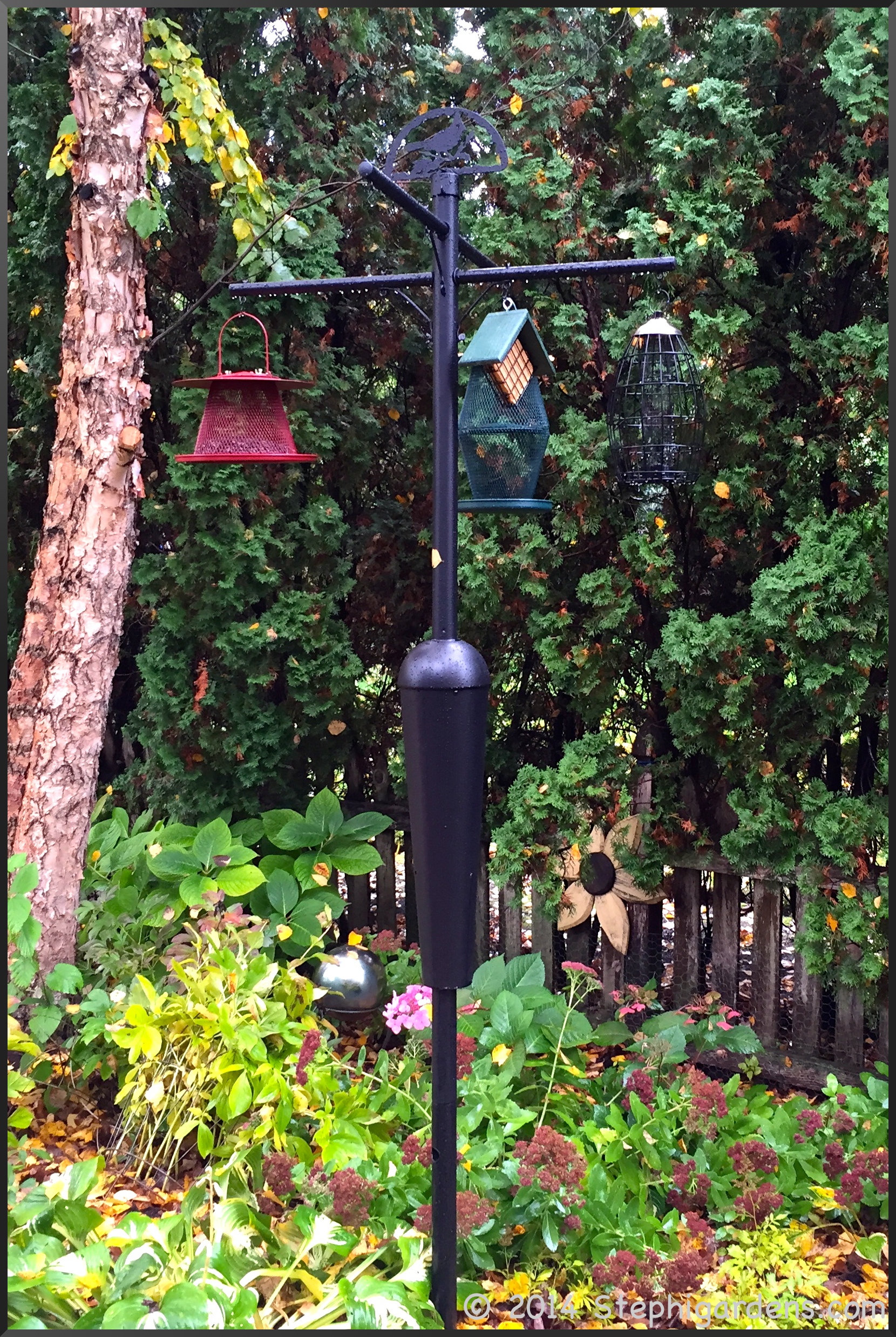
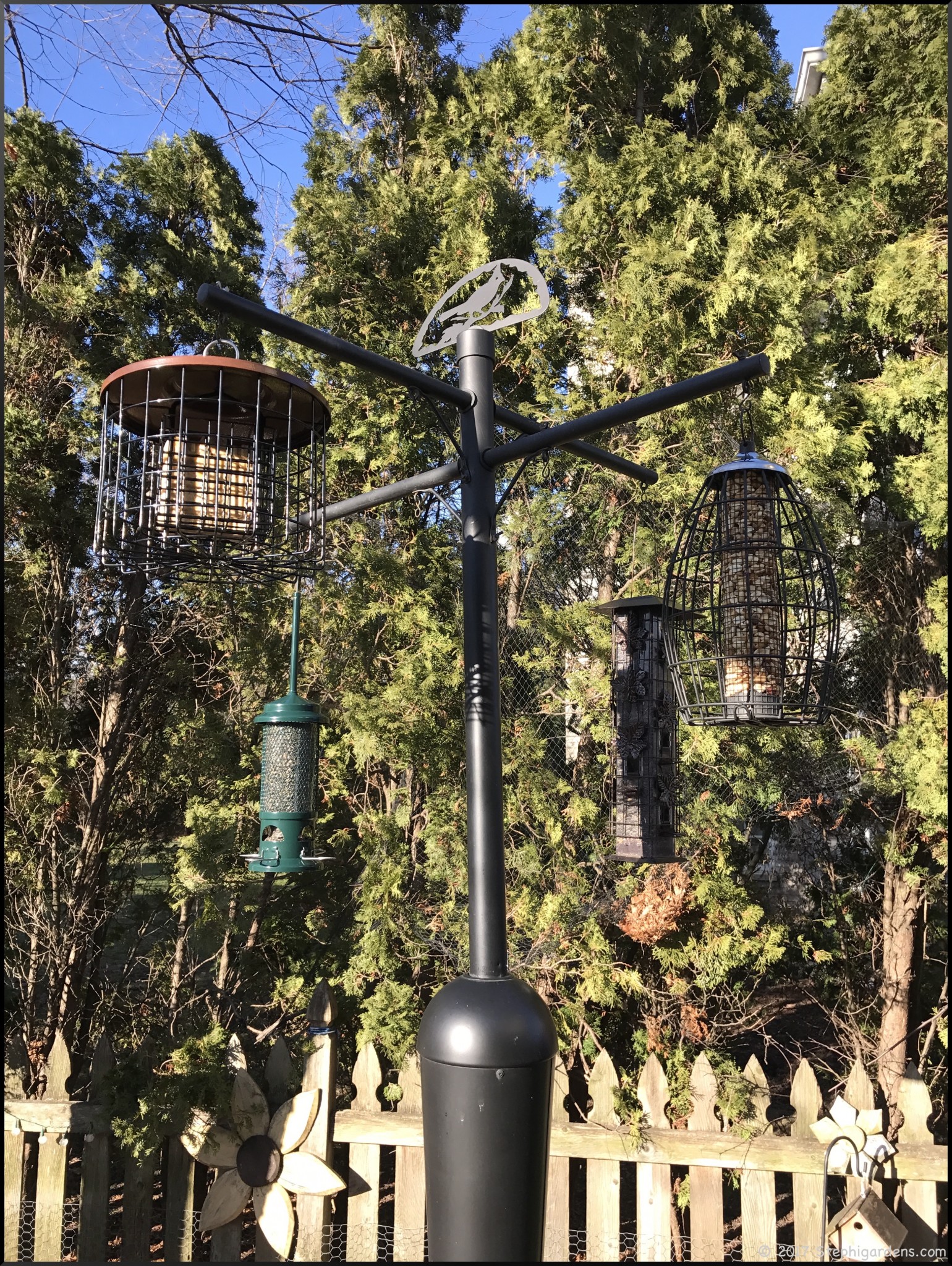
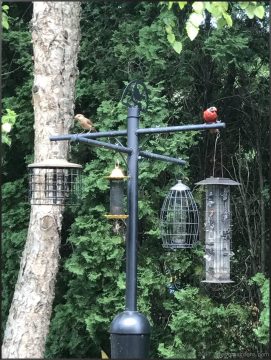
Like most people, I have a heck of a time finding balance between feeding the birds and feeding the pesky squirrels. I really love my squirrel-proof pole, but it’s only as good as your placement.

Stephi Gardens

In my case, for me to have it in a perfect viewing spot from the kitchen window, it is just too close to the tree. Since squirrels are quite the acrobats, the pole really needs to be at least 10 feet from any object than can jump from. BTW, I have never seen a squirrel successfully climb up the pole! Since I’m not willing to move it, I either need to put up with feeding the squirrels or try some other feeders or shields.

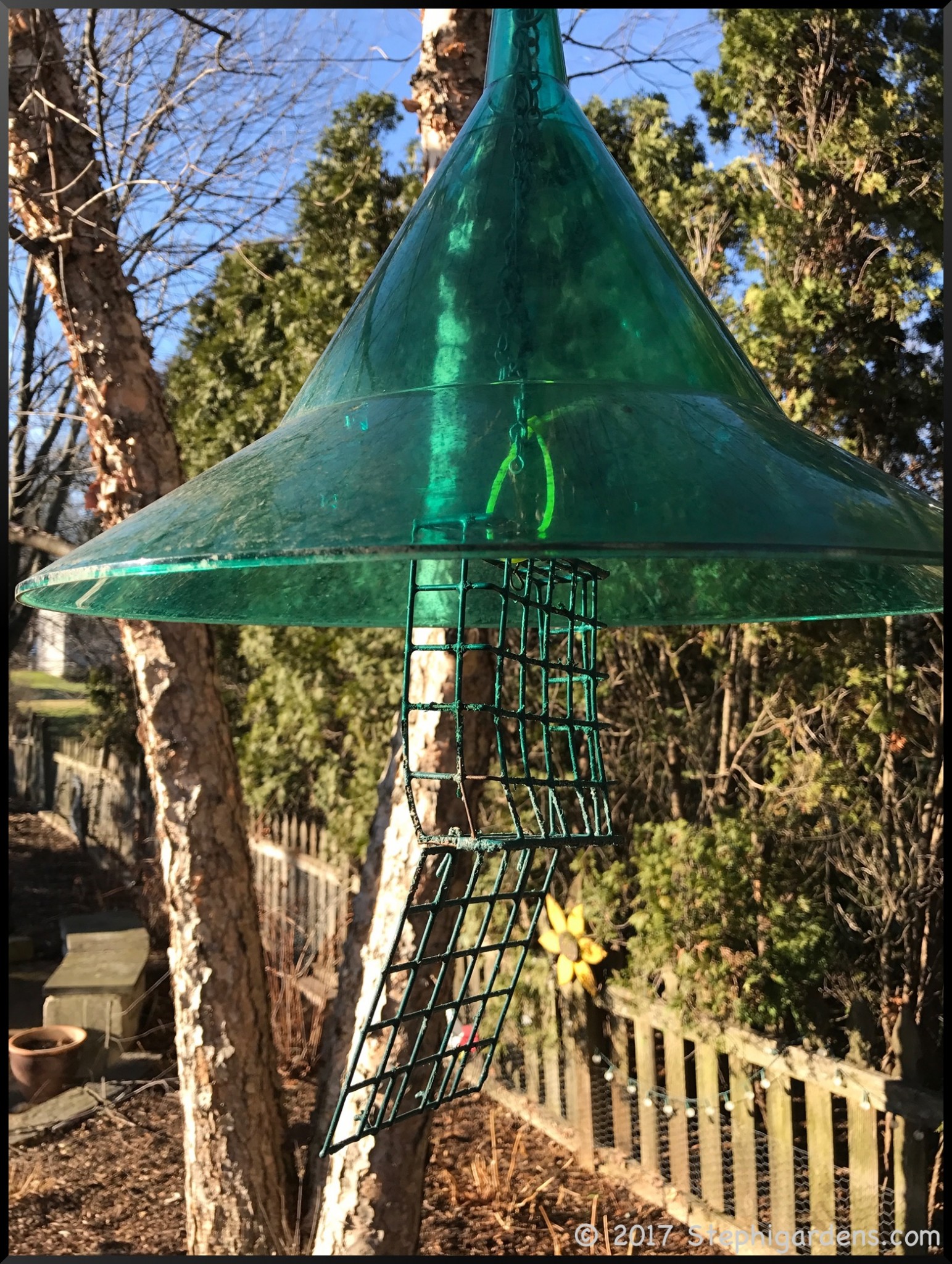
I tried the clear dome feeder covers and decided those were really only good to keep the finch socks dry. I tried tying shiny ribbons around the tree to distract the squirrels and that only made it look like trash had become trapped on the tree somehow. I also tried the Squirrelaway Baffle, which also got great reviews.  But, alas, my squirrels finally outwitted it 🙁  It did work pretty well with the suet feeder tucked up there, but regular feeders it was able to s-t-r-e-t-c-h and reach around to grab it.

My last attempt was to try some of the squirrel proof feeders. Since it was recently Christmas, I added a couple to my Christmas wish list. I also had a couple around that I dusted off.

Here’s what I’m trying:

Peanut Feeder– I’ve had this one a couple of years and the nuthatches and downy’s just love it. I’m not sure the brand, but I got it at a Tractor Supply Store.  No squirrels can get into it. But, the other day I must not have screwed on the top as tight as I should have since it was missing one morning. I found it quite a ways away from the pole, so someone had quite a feast!

squirrel proof peanut feeder

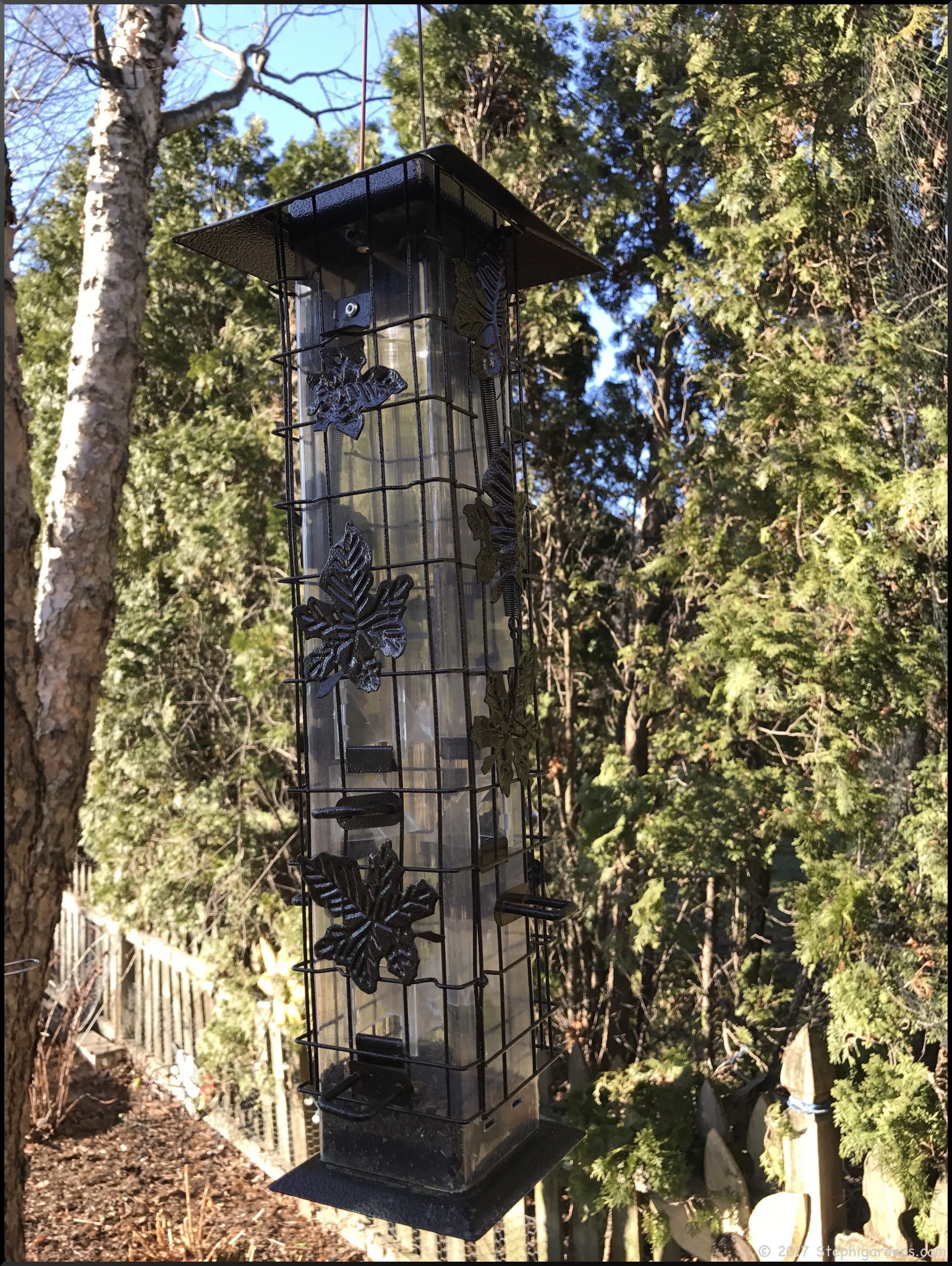
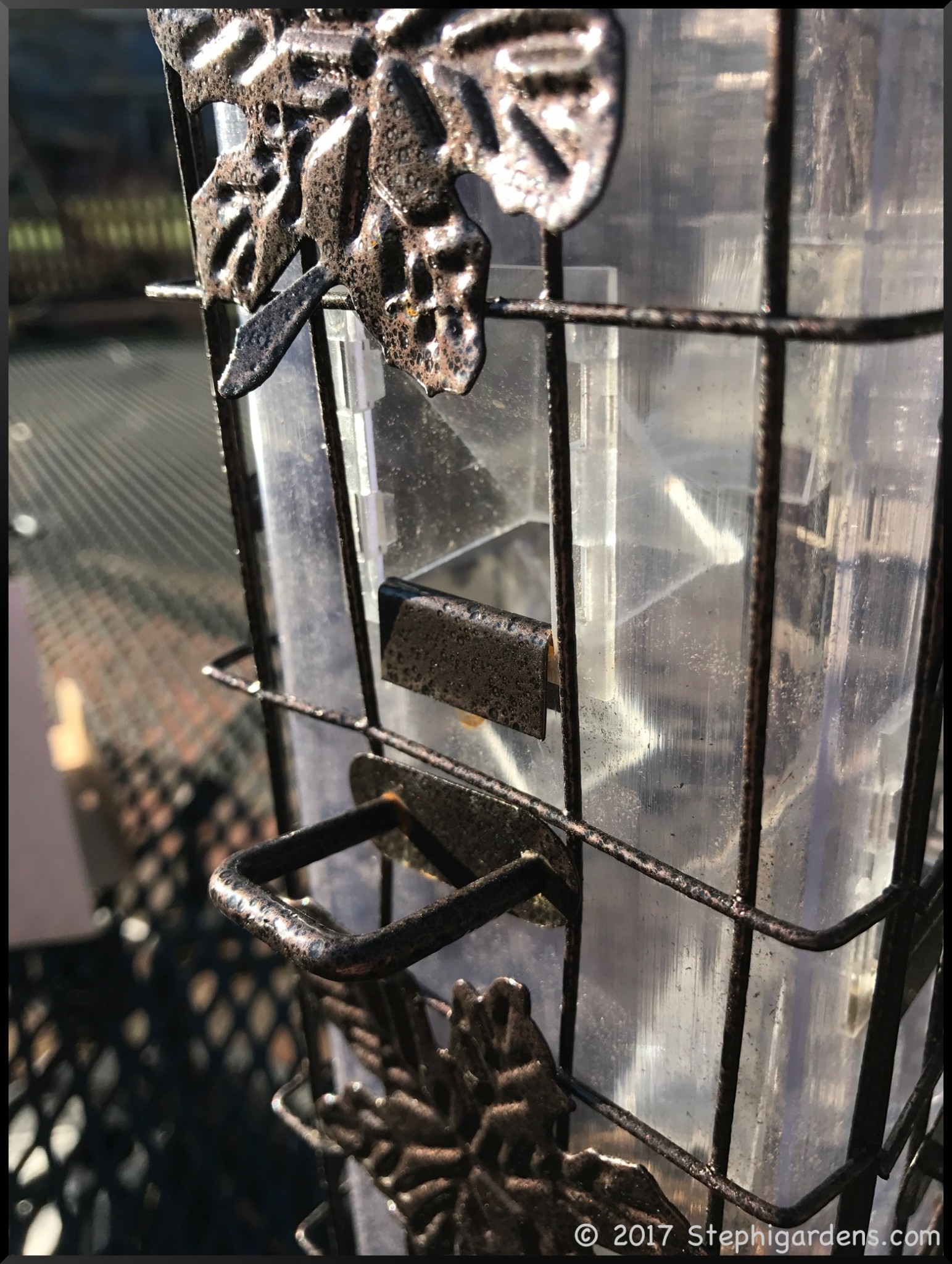
Sunflower Seed Feeder–I just put out this Perky-Pet Squirrel-Be-Gone®Wild Bird Feeder and hope it lives up to it’s name. If a squirrel gets onto it, the outer wire cage lowers and closes the feeder slots.

Perky-Pet® Squirrel-Be-Gone® Wild Bird Feeder

My only concern is the plastic tube. Hope my squirrels aren’t chewers.

Perky-Pet® Squirrel-Be-Gone® Wild Bird Feeder

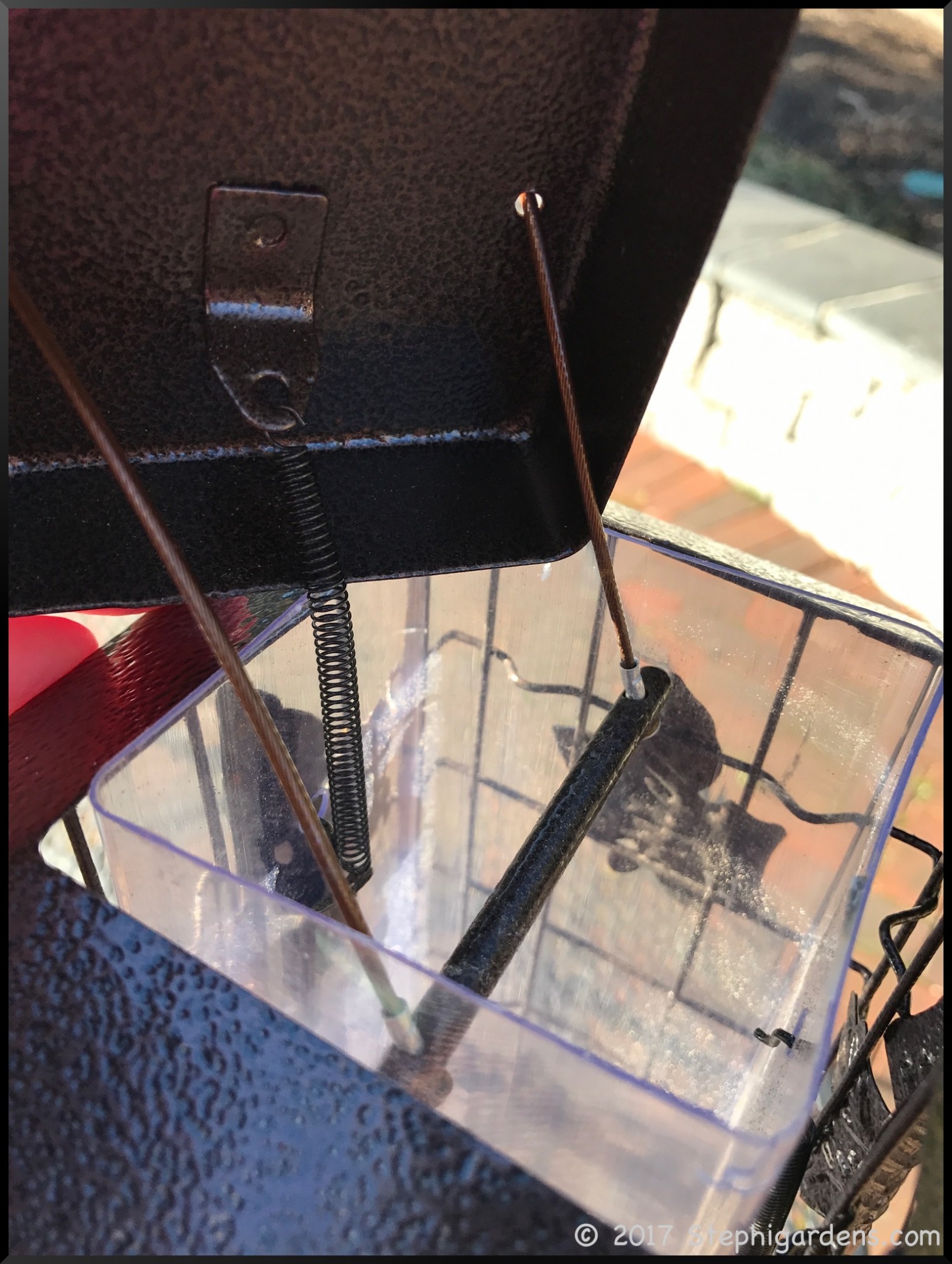
The top seems really good and tight to keep them out.

Perky-Pet® Squirrel-Be-Gone® Wild Bird Feeder

My new suet feeder– I’ve really tried to used shields with my suet feeders and they worked for a while. Then this happened. Maybe I just didn’t figure out how to get the feeder hidden in their well enough, or I just have super smart squirrels. Either way a new approach was needed.

squirellbuster baffel

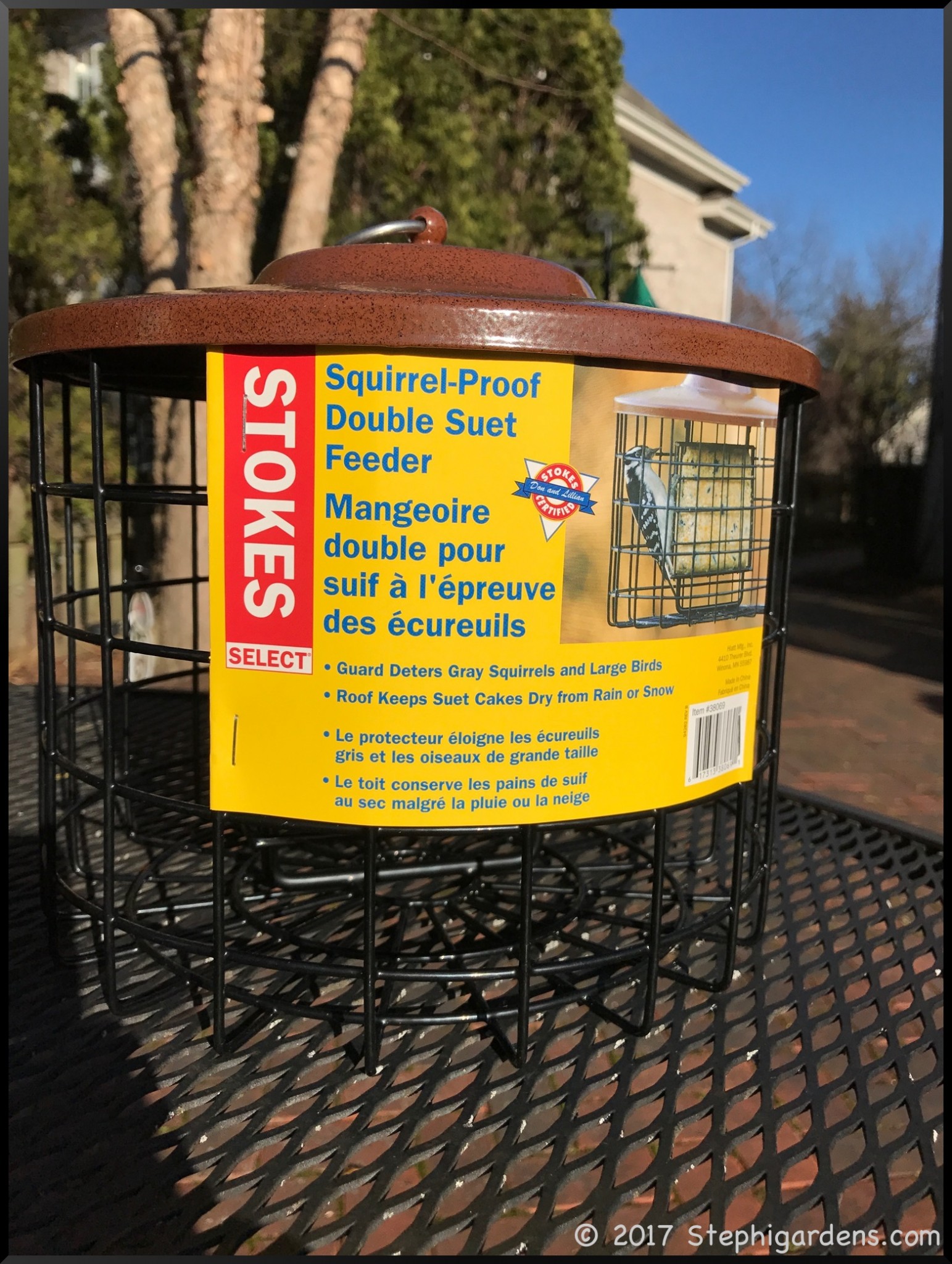
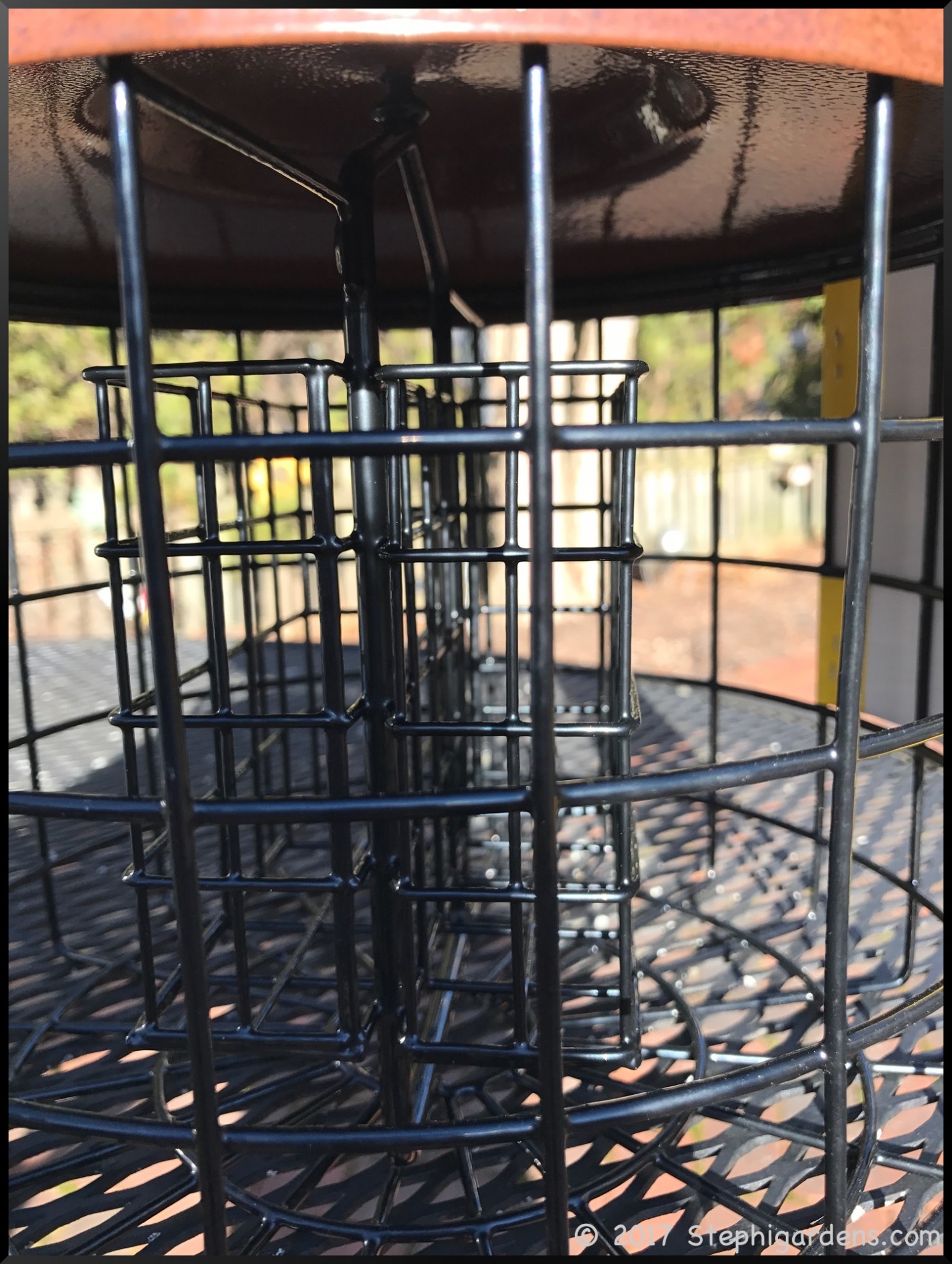
I’m now going to try the Stokes Select Squirrel Proof Double Suet Feeder. Seems to be well reviewed, so we’ll see. Looks pretty solid.

Stokes squirrel proof suet feeder

Stokes squirrel proof suet feeder

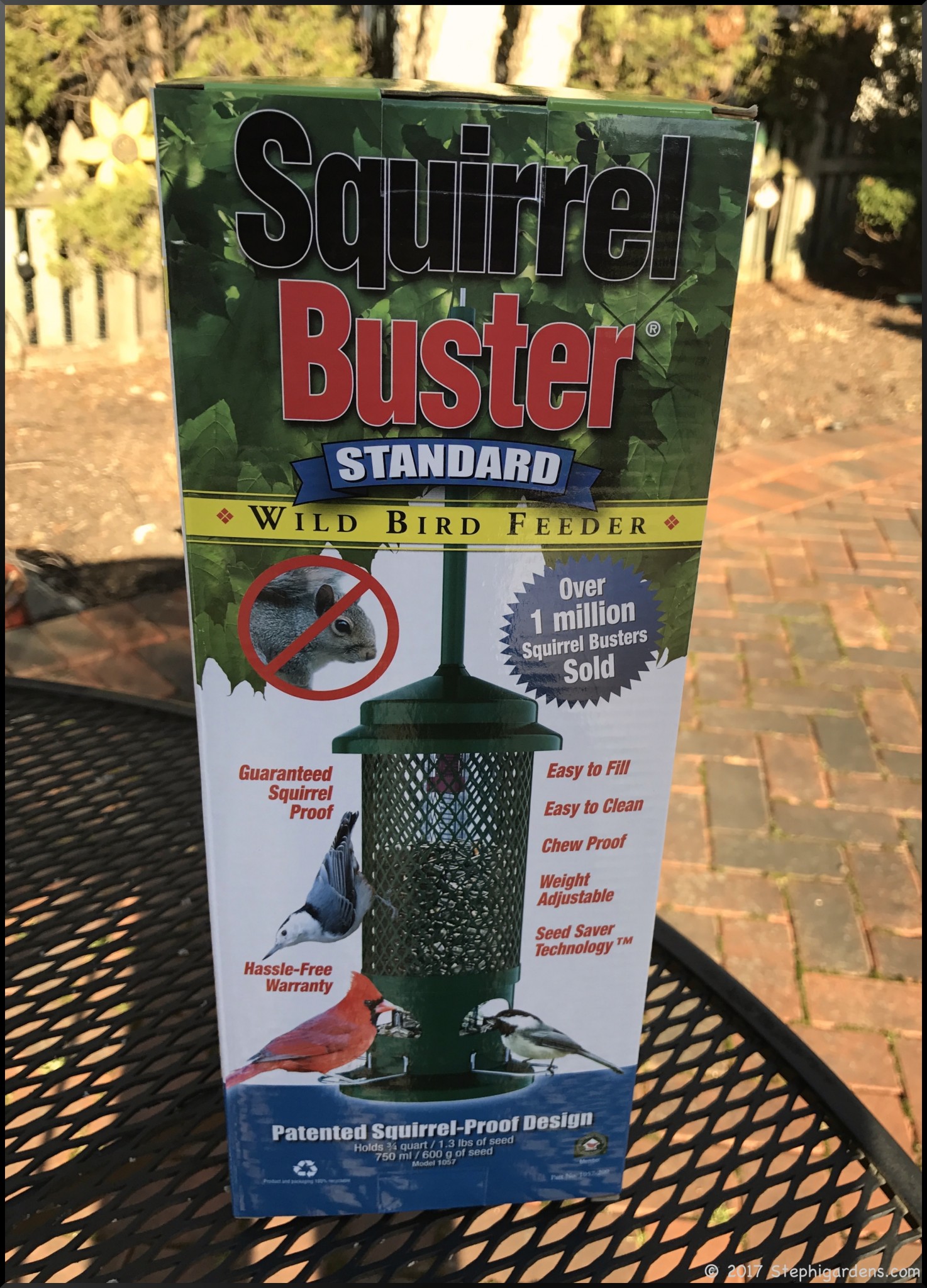
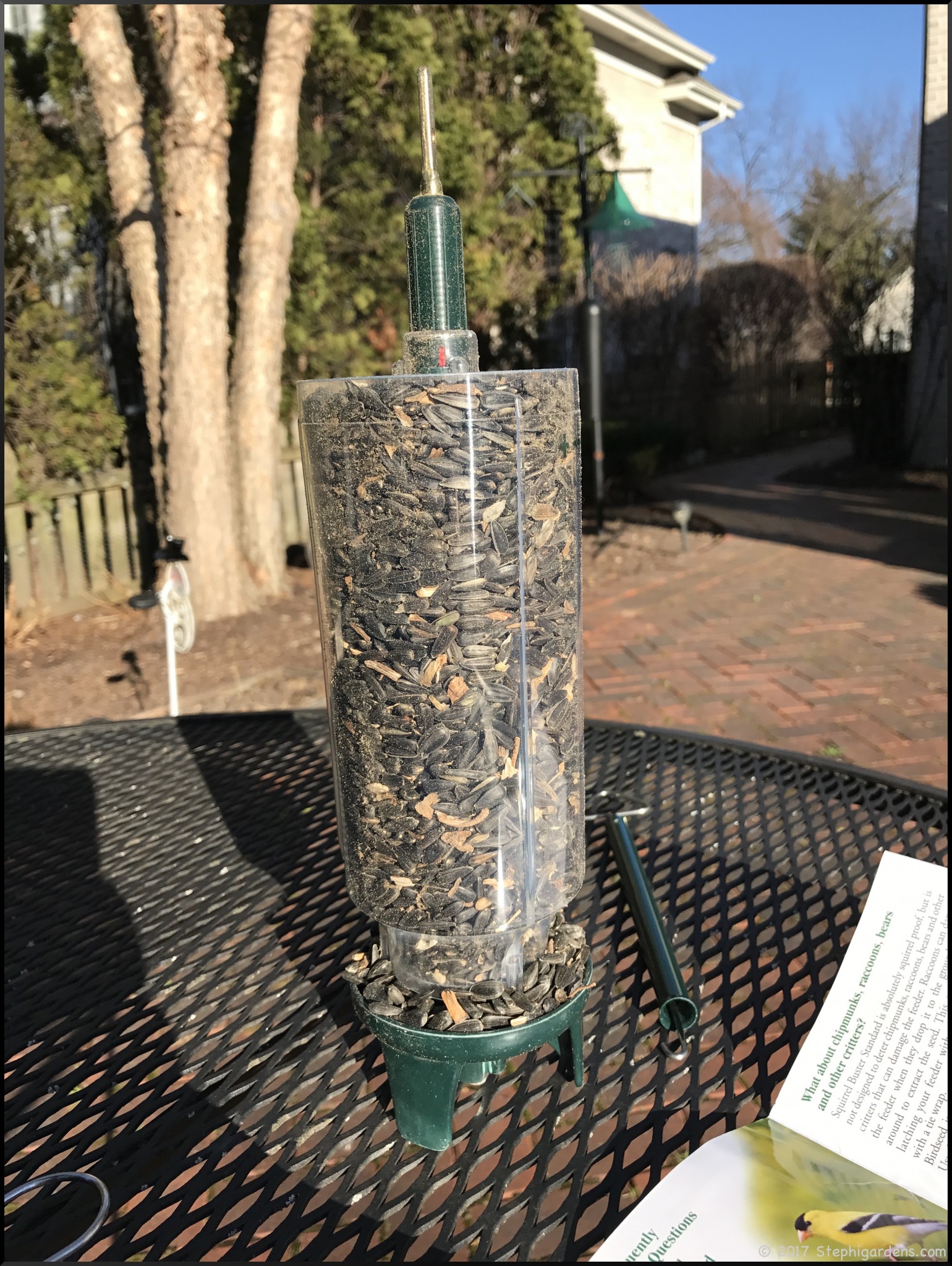
Black Oil Sunflower Feeder– And lastly, my new favorite! A Brome 1057 Squirrel Buster Standard Wild Bird Feeder. This seems to be everyone’s favorite brand, and I was pleasantly surprised at how well it seems to be made. Comes with really good instructions in case you want to adjust the closure weight.

Brome 1057 Squirrel Buster Standard Wild Bird Feeder

Brome 1057 Squirrel Buster Standard Wild Bird Feeder

Brome 1057 Squirrel Buster Standard Wild Bird Feeder

I chose this one because it has perches that Cardinals seems to like. They were the trickiest to find a squirrel proof feeder for since they like to perch instead of cling. Worst case scenario, they seem to be happy with the spills.

So here we have it. All ready for the birds and hopefully will have outsmarted the squirrels.

img_1520

I’ll keep you posted!  How do you outsmart the squirrels?

P.S. To help keep the sparrows and house finches away from my more expensive seeds, I usually place a couple of other feeders farther away in the yard filled with a cheaper wild bird seed mixtures. That seems to keep them happy!

A Rare Treat: A Cardinal’s Nest At Eye Level

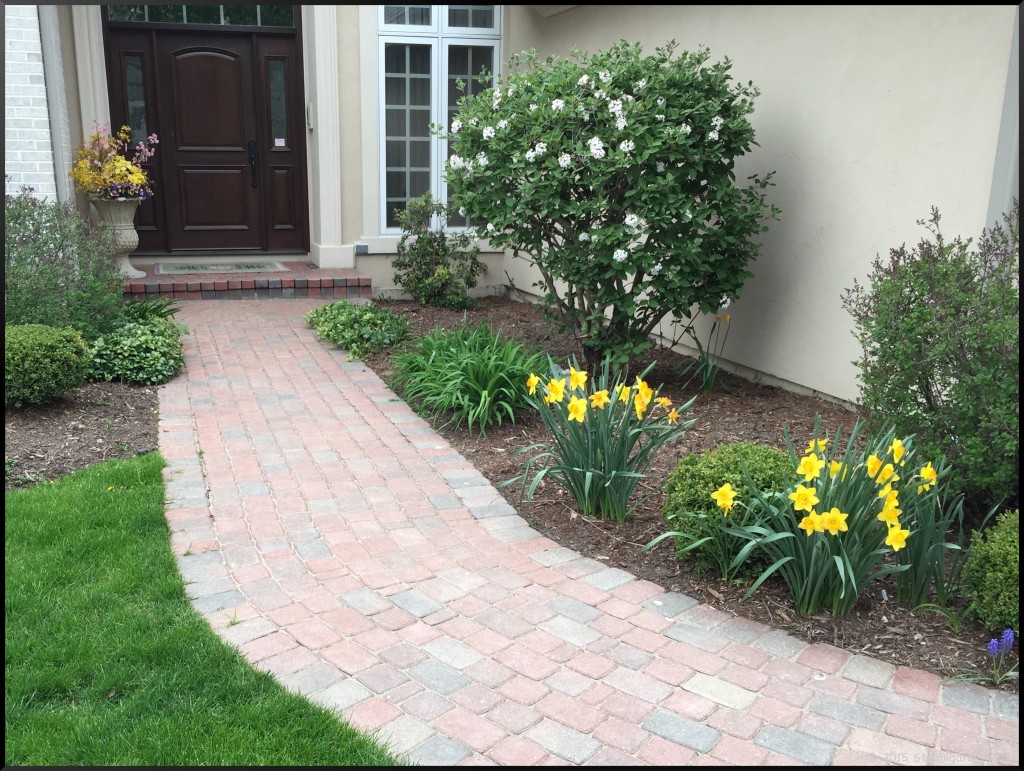
Right outside my front door is a Judd Viburnum that has been home to many robin’s nests throughout the years

Judd Viburnum

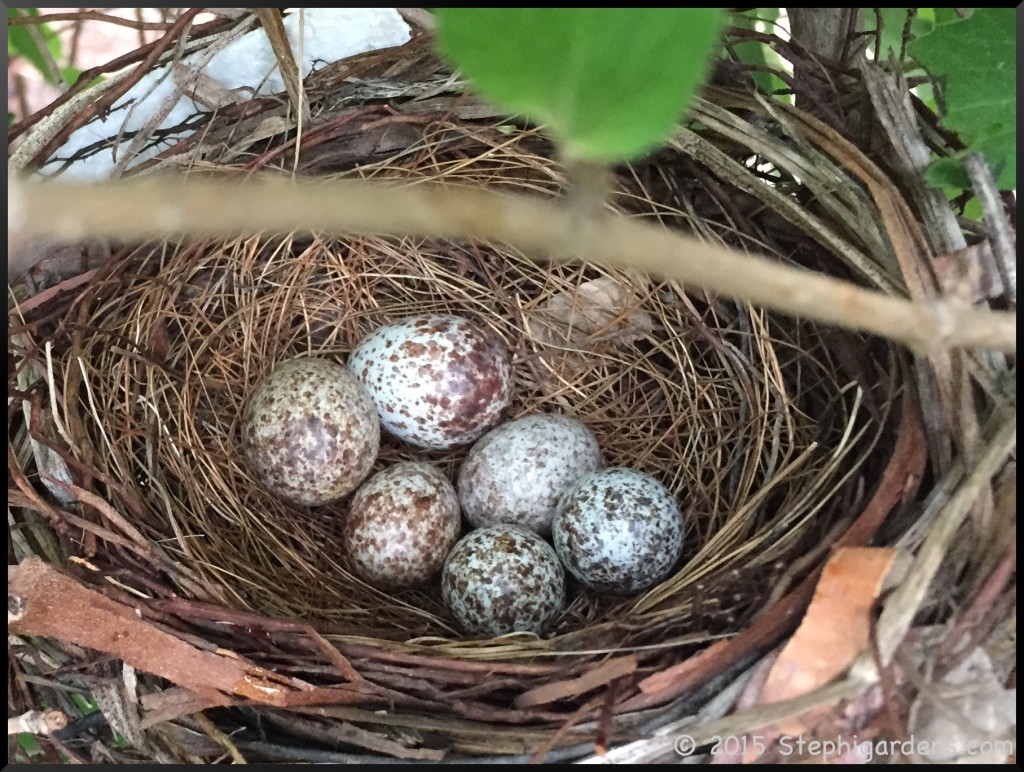
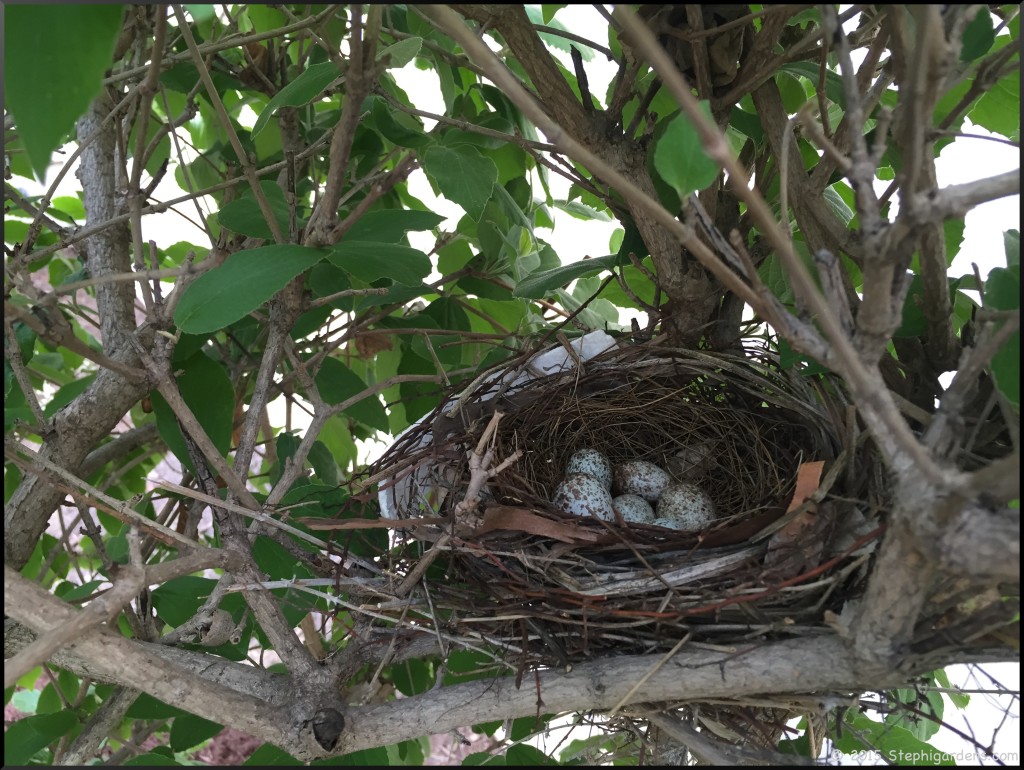
This year, we saw some busy birds flying in and out, so of course I had to investigate.  I assumed it was a robin as before, but a quick peak at the eggs and nest materials, it was clearly not a robin.

cardinal eggs

cardinal eggs

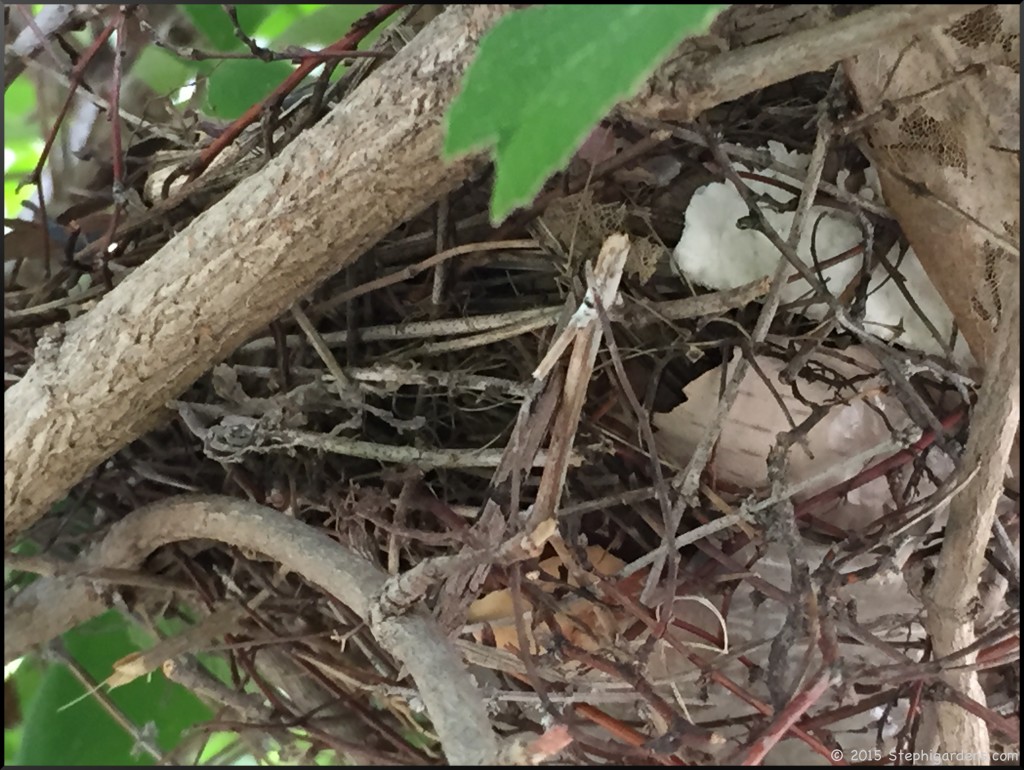
cardinal nest

So what were they?  House sparrow?  Maybe, eggs look similar, but not in a typical location.  Cardinal?  Never saw a cardinal nest before but definitely fits.
Location–dense shrubs
Height–4-6 ft from the ground
Material–thin twigs, stems, bark, vines,  dead leaves, rags, paper, and other fine material (no mud like in a robin’s nest)
Eggs–glossy white or pale green and have gray, brown, or reddish speckling throughout, which is usually more dense along the larger end.

Looks like I have a cardinal nesting nearby!

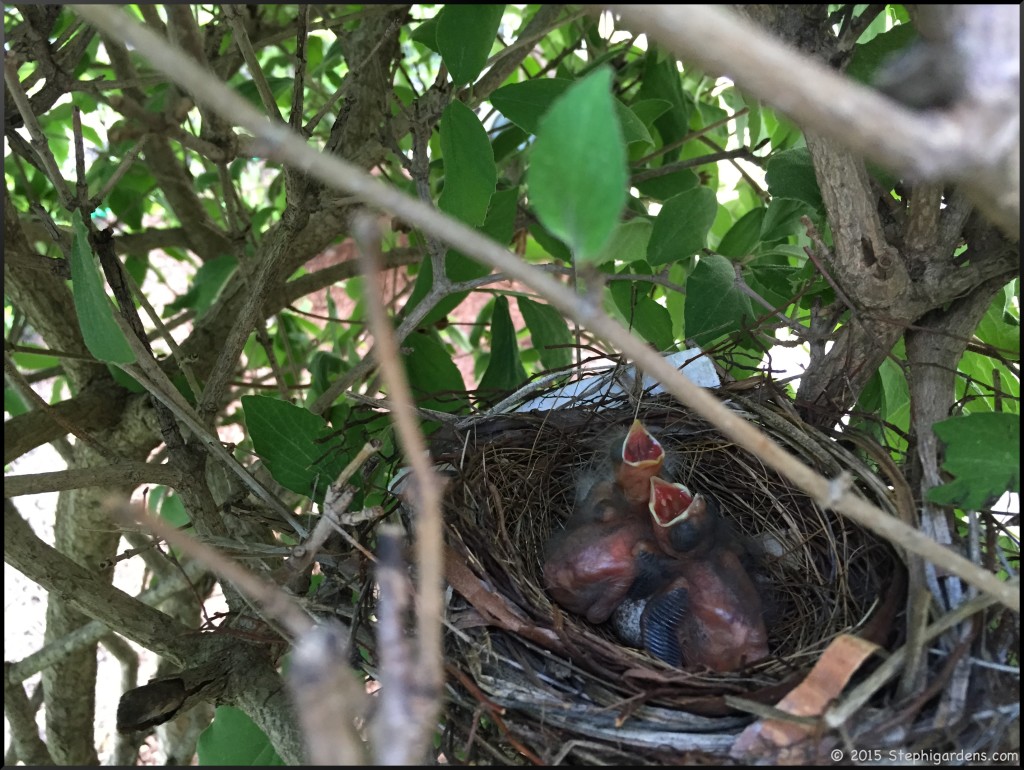
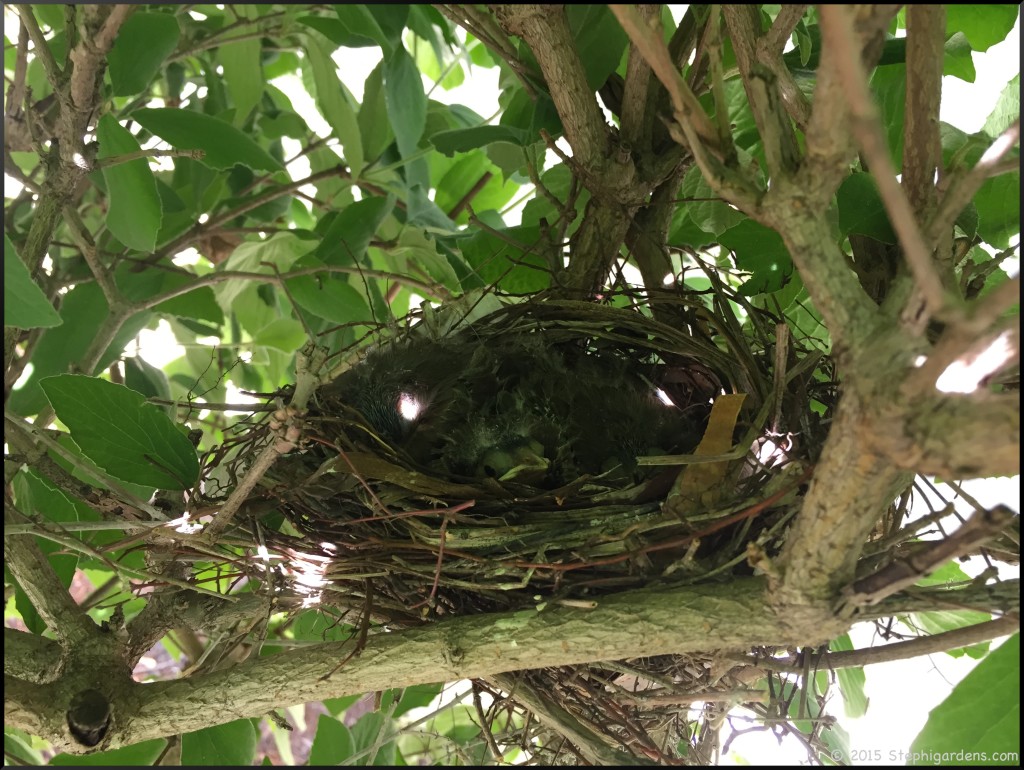
Within four days of seeing the eggs, the babies had hatched.  They were very noisy and hungry, and I saw momma cardinal coming and going very frequently with food no doubt.

cardinal hatchlings

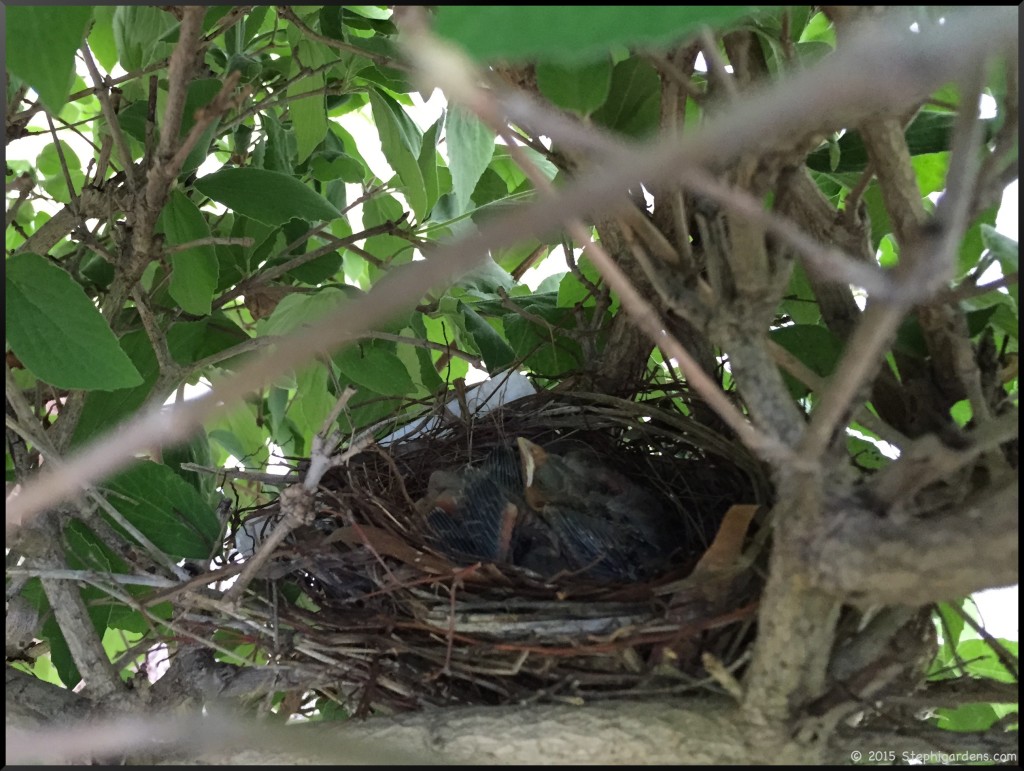
I checked back three days later and their eyes were open and they were still very noisy.  Not sure how many there were.  I could see three for sure, but hard to tell if there was a couple more hidden in there somewhere.

cardinal hatchlings

Another three days and they were growing nicely and starting to be a lot more interactive with their mother’s calls.  In this shot, the babies had been chirping, the mom saw me from a nearby tree and gave a sharp chirp.  Everyone huddled down and got really quiet.

cardinal hatchlings

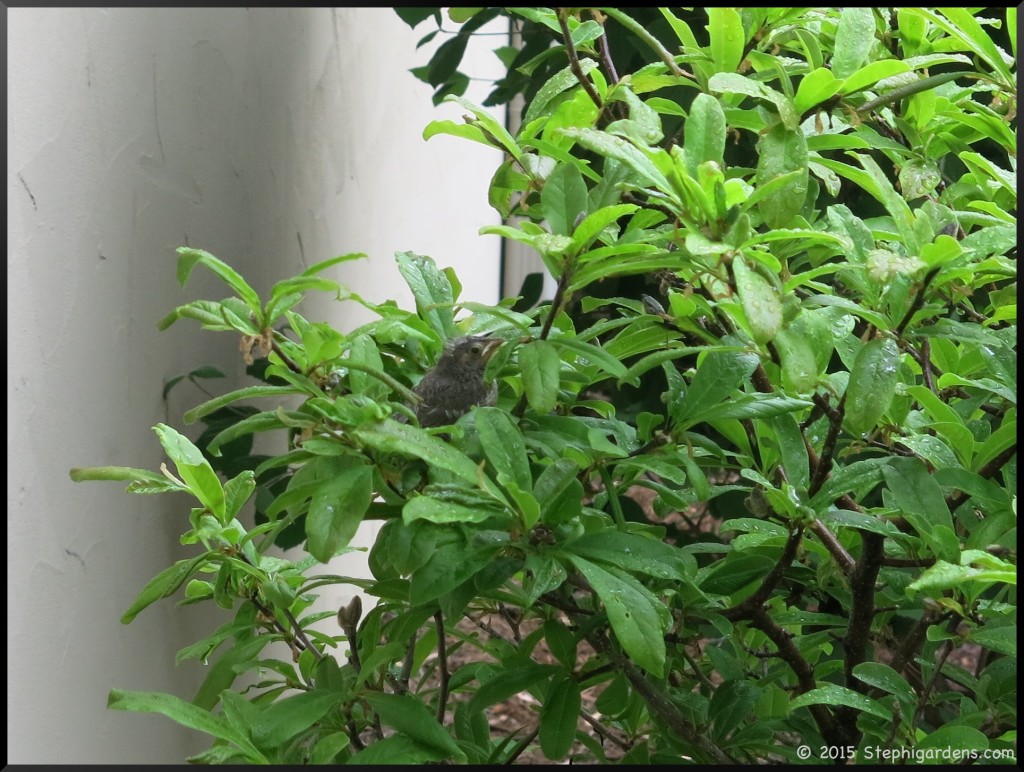
The next day, when I went to peak at them  there were none left in the nest and this one little guy in a bush nearby trying to stay dry in a rain shower.

cardinal fledgling

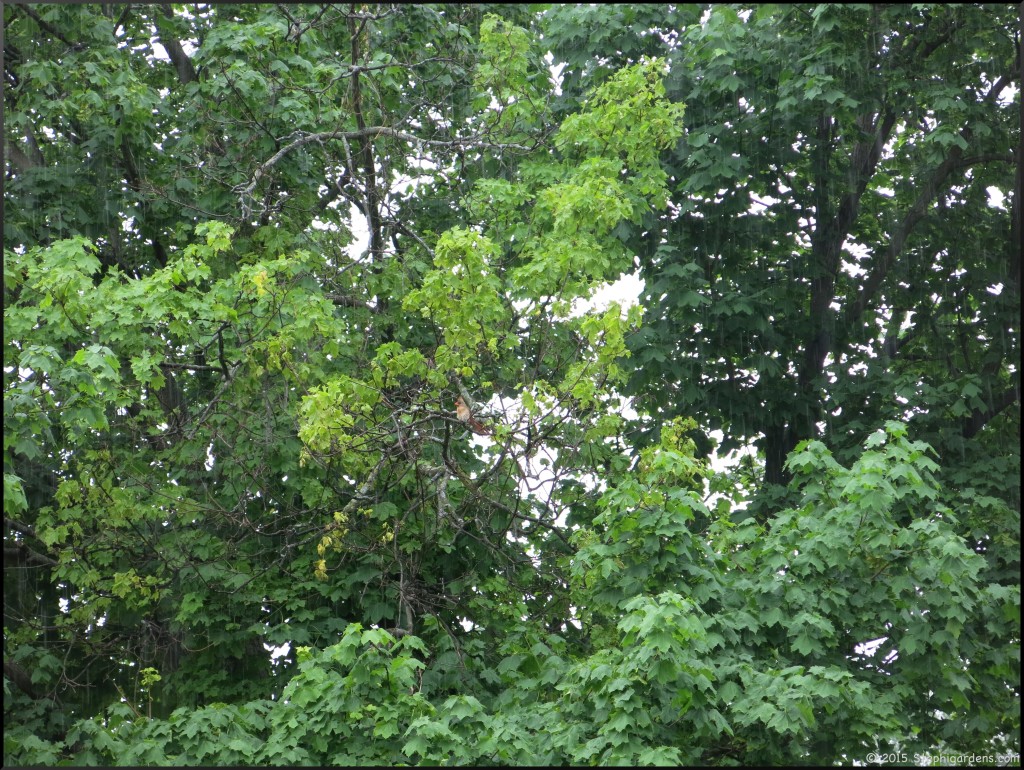
Mom and Dad weren’t far away in the maple tree keeping an eye on them.  By that evening, they were all gone.

female cardinal

I could still hear the babies chirping in the yard for a few more days as the parents kept an eye on them until they’re ready to be completely on their own.