23rd Annual Great Backyard Bird Count

It’s that time of year again! The 23rd Annual Great Backyard Bird Count (GBBC) is this weekend, Friday, February 14, through Monday, February 19, 2020.

During this weekend, volunteers from around the world count the birds they see for at least 15 minutes, on one or more days of the count and then enter their checklists at birdcount.org. It can be as simple as looking out your window, or going out to your favorite birding spot and report on what you see.
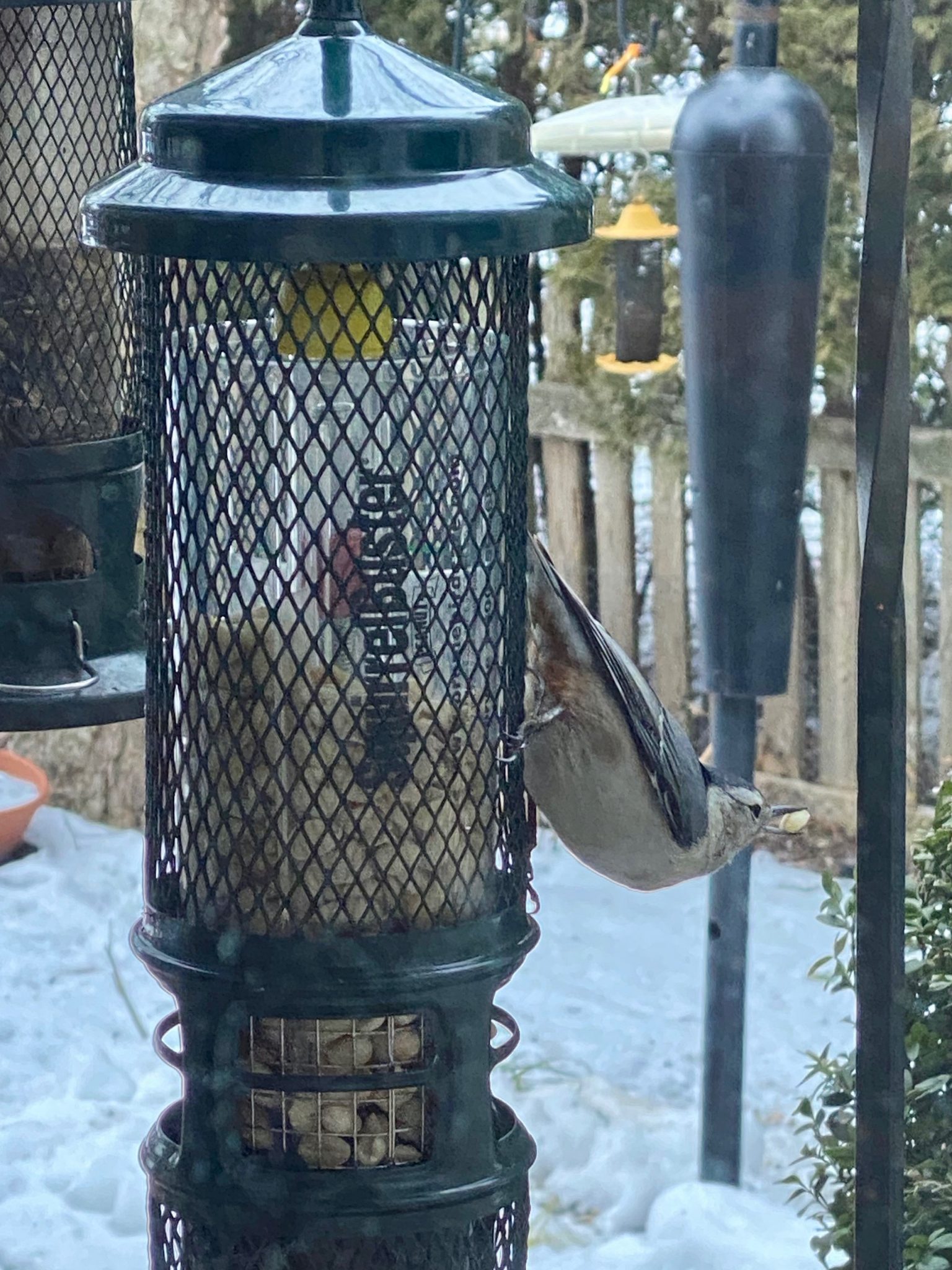
White-breasted nuthatch at my new Squirrel Buster Peanut + feeder from Brome. Filled with shelled peanuts it’s a great feeder for attracting nuthatches and woodpeckers.

Why does this matter?

There was a recent study in the journal Science last fall that described the decline in the overall number of North American birds by 29% since 1970. Birds also face a number of issues that certainly could affect their future numbers. Citizen science projects like the GBBC give scientists at the Cornell Lab of Ornithology and the National Audubon Society valuable information on where the birds are, how their numbers might be changing overall or regionally, and how they may be adjusting to new habitats. You can learn more about the GBBC at https://gbbc.birdcount.org.

Wondering what the #1 reported bird is in the U.S.?

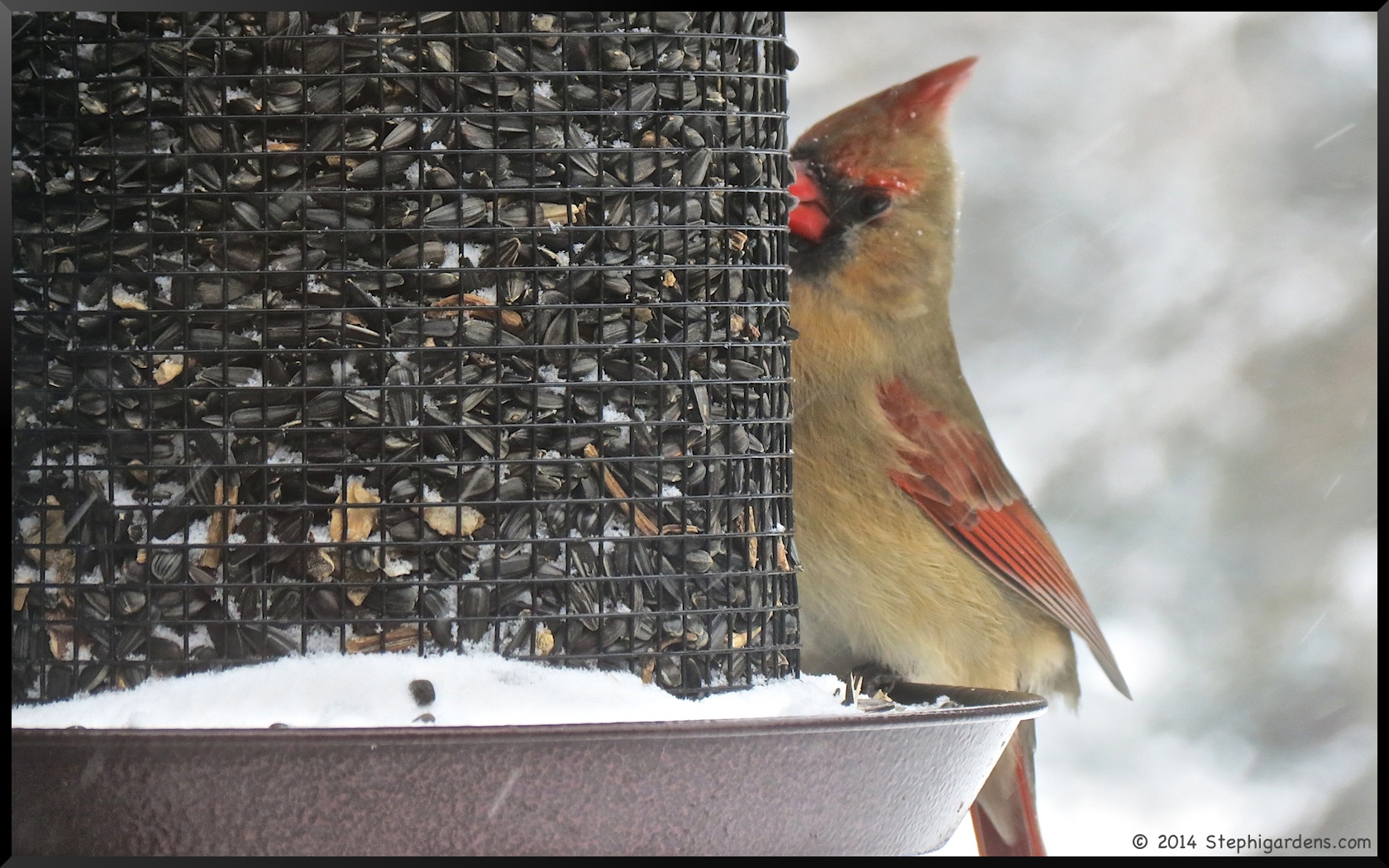
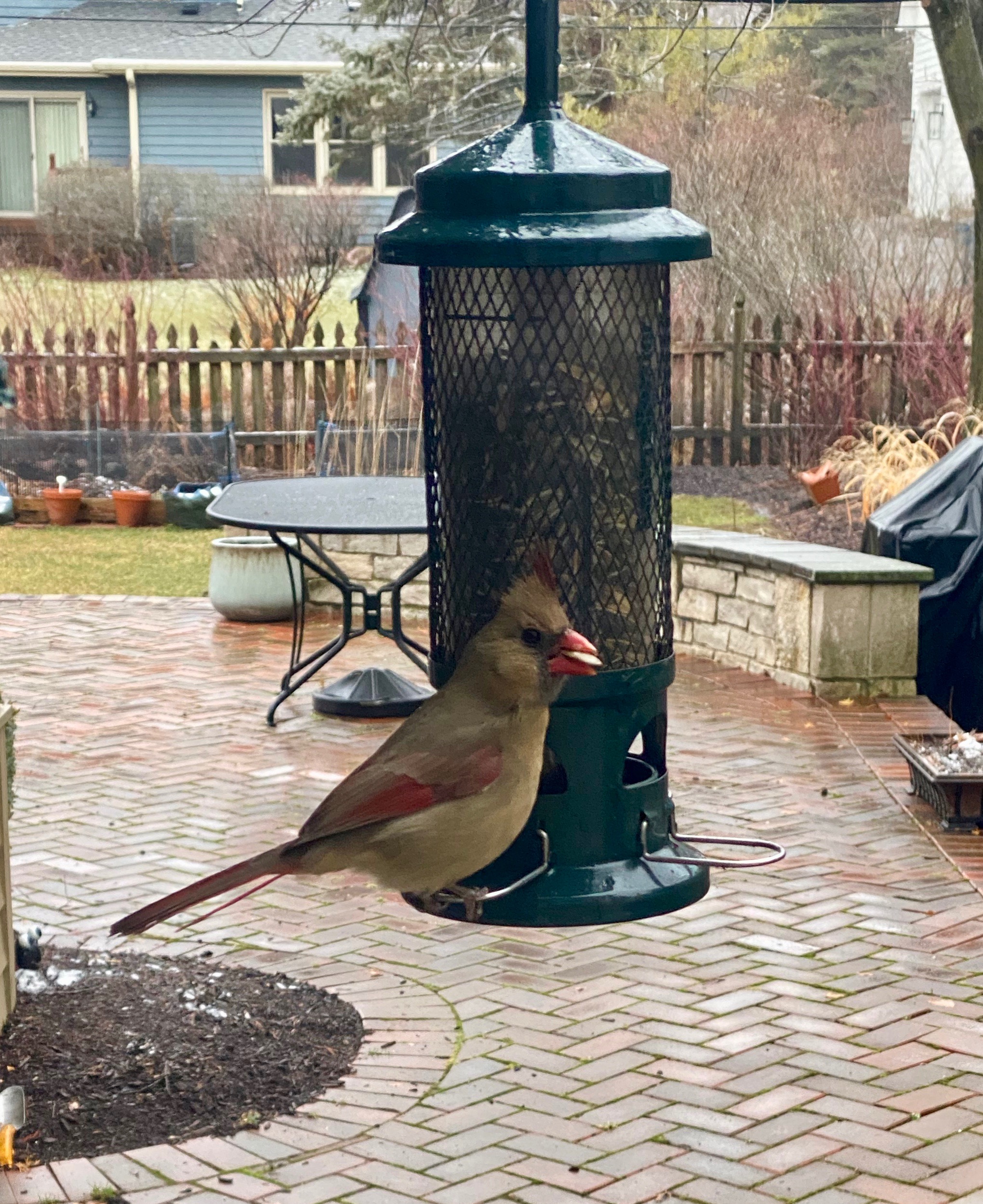
Most years it’s been the Northern Cardinal, a favorite at my feeders. I have this Squirrel Buster Standard Squirrel-proof Bird Feeder from Brome with perches perfect for cardinals right outside the kitchen window. I fill it with striped sunflower seeds which have a thicker shell than black-oiled sunflower seeds. House sparrows and house finches can’t really eat them, but are just fine for the cardinals. Makes dishwashing much more entertaining watching these beautiful birds.
What did I report this morning in my 15 min of watching my feeders in the backyard?

  • 1 Northern Cardinal (female)
  • 1 White-breasted nuthatch
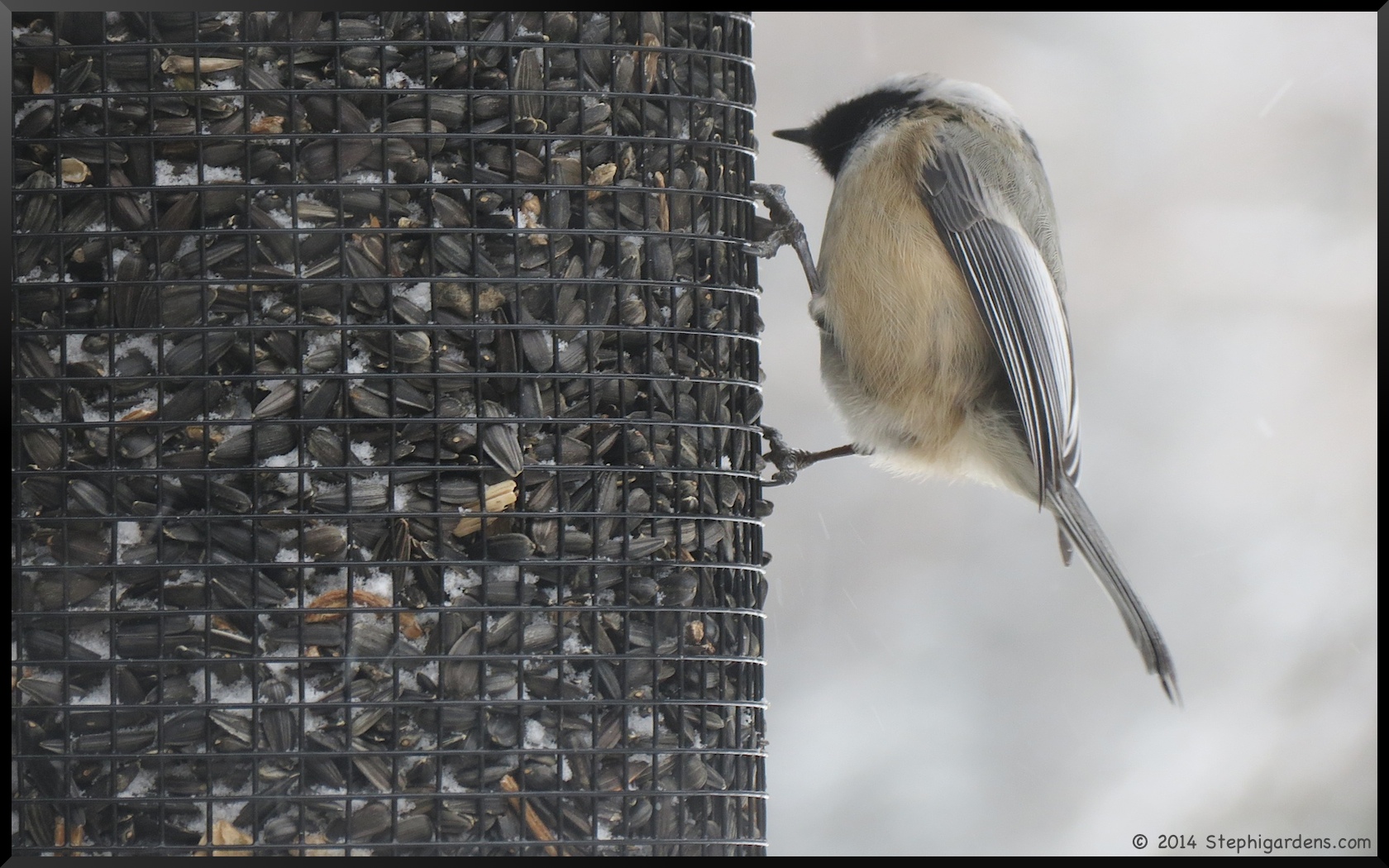
  • 3 Black-capped chickadees
  • 2 Juncoes
  • 6 House sparrows
  • 4 House finches
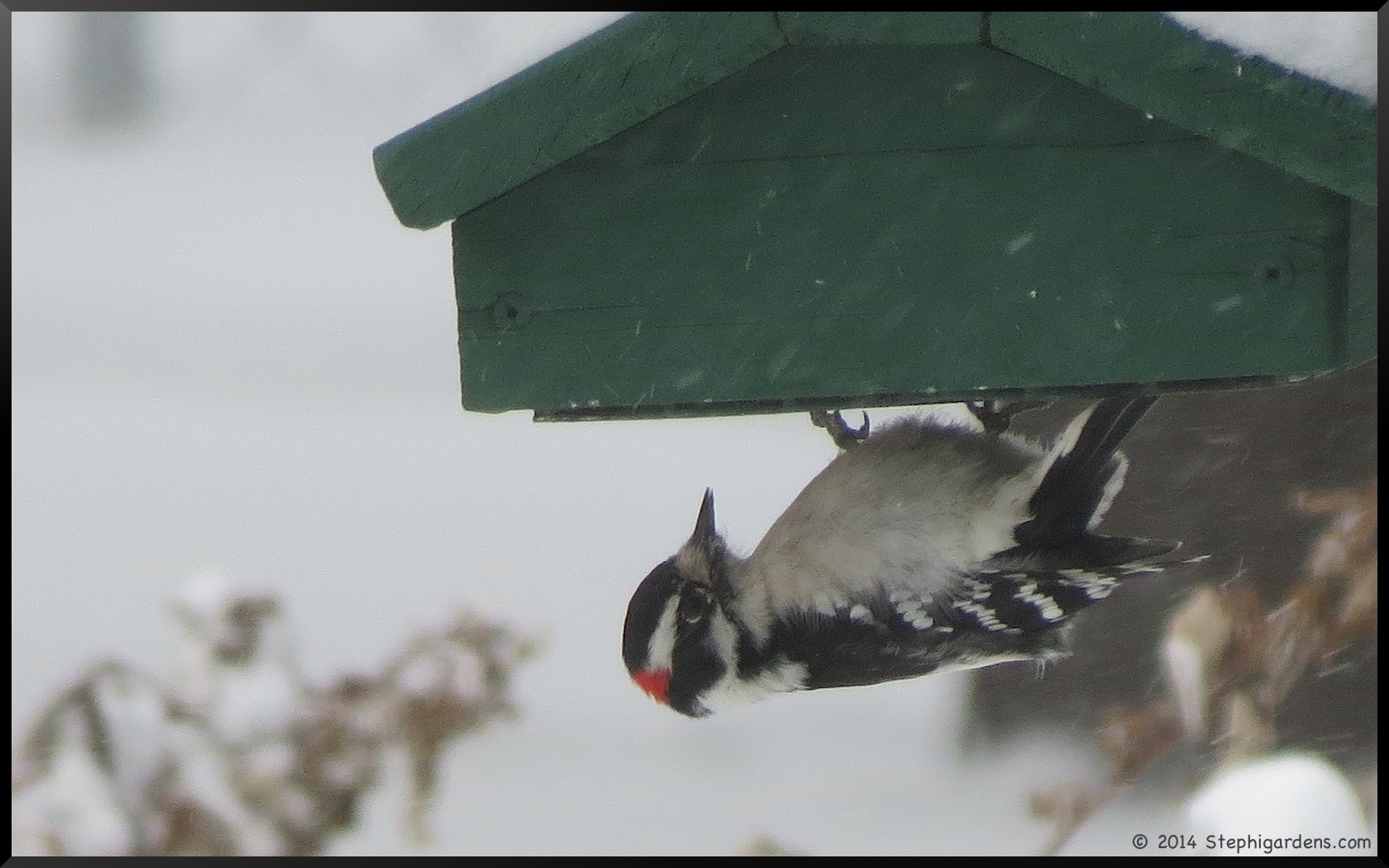
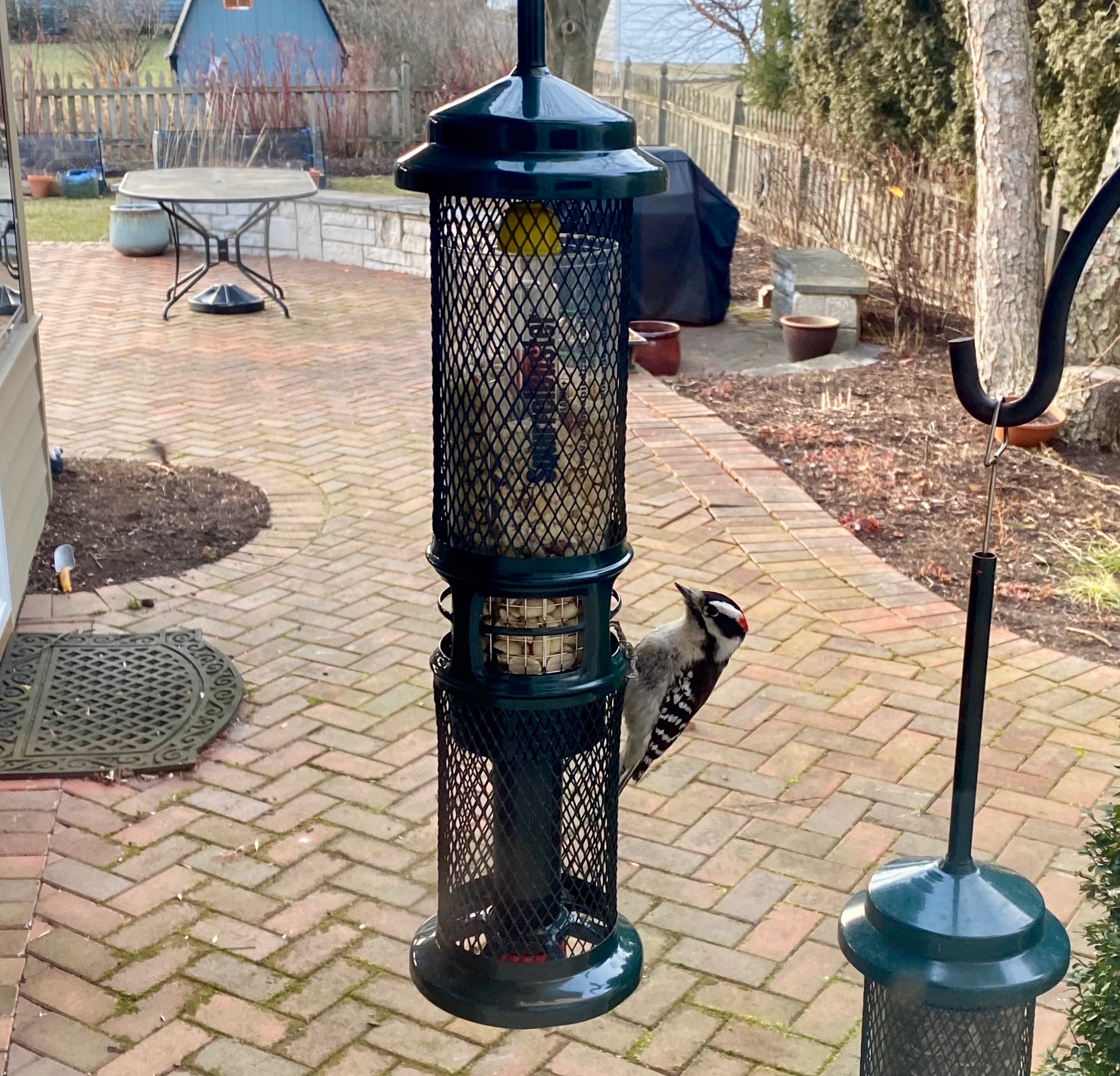
  • 1 Downy woodpecker
  • 1 squirrel – no, I didn’t really report it, but it was there eating the crumbs off the ground so I’ll count it.
Too bad there wasn’t anything unusual today, but happy to have anything in addition to the ever present and obnoxious house sparrows and house finches.

Need help identifying what you see? Check out these mobile apps, these online resources, or order my favorite bird book for beginner to intermediate birders, Birds of North America: A Guide to Field Identification.

Interested in what everyone else is seeing? On the GBBC website you can explore real-time maps and charts that show what others are reporting.  Be sure to check out the Explore a Region tool to see what everyone else is seeing in your area. Want to have your own checklist specific to your area? Check this tool out.

I did my part!
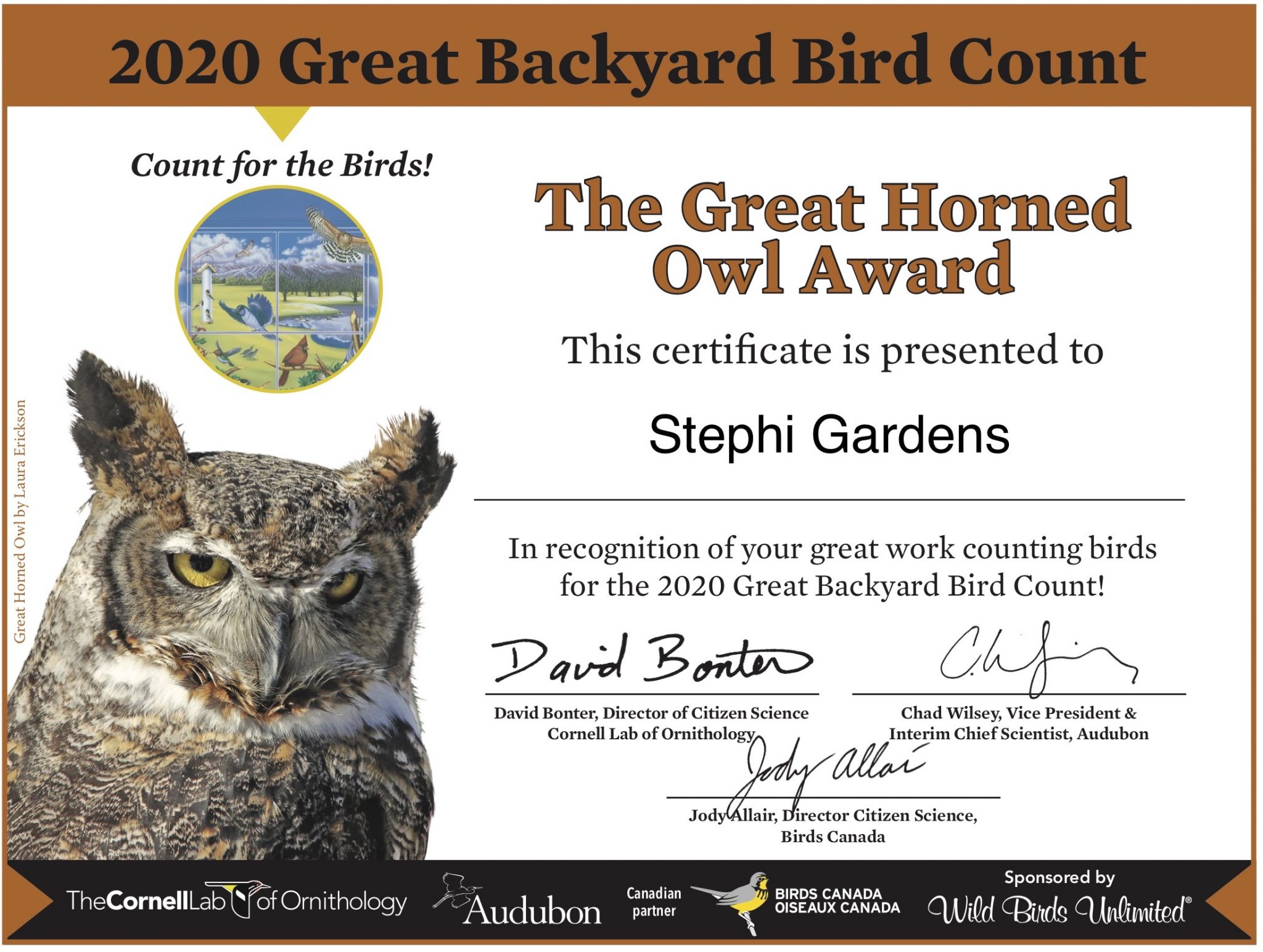
You can get your own certificate, just follow this link.

Want to help count birds all year round? You can keep counting throughout the year with eBird, which uses the same system as the Great Backyard Bird Count to collect, store, and display data any time, all the time. I love this tool to see what birds others are seeing (and where) when I’m out and about.

Happy Birding! Hope you see something interesting, but even if you don’t, know you’ve made a difference for science. Let me know what you saw this weekend!

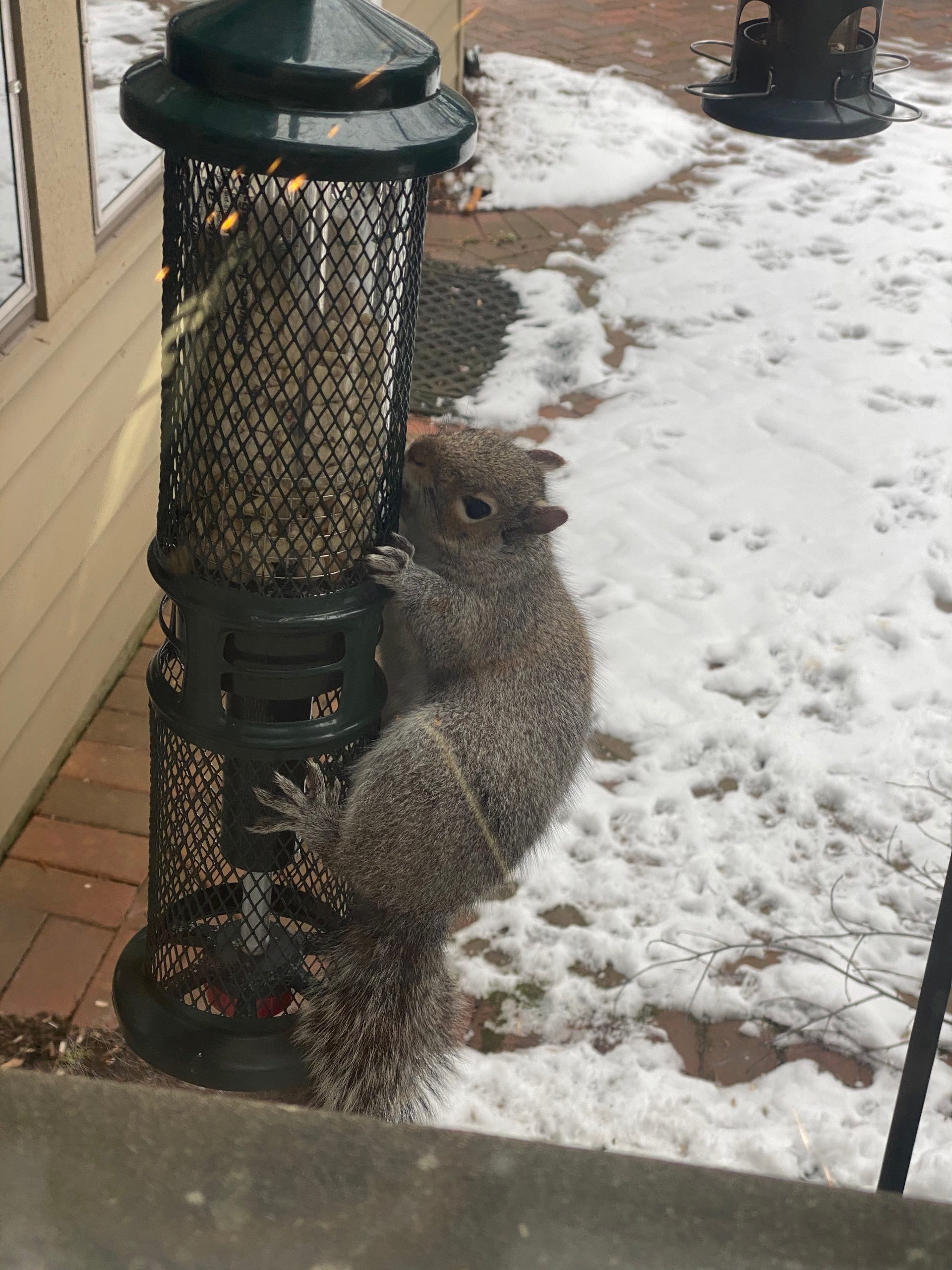
BTW, these Brome feeders really do keep out the squirrels! This guy tried a few times and has since given up.
A Hawk at My Feeders

As I was reading comfortably on the couch one afternoon, out of the corner of my eye something BIG went by the window. Now there’s always a gaggle of birds out there because of the feeder I have hung in that area, but they don’t usually make me think, “What was that!” Of course I have to investigate, hoping whatever it was remained nearby. It did!

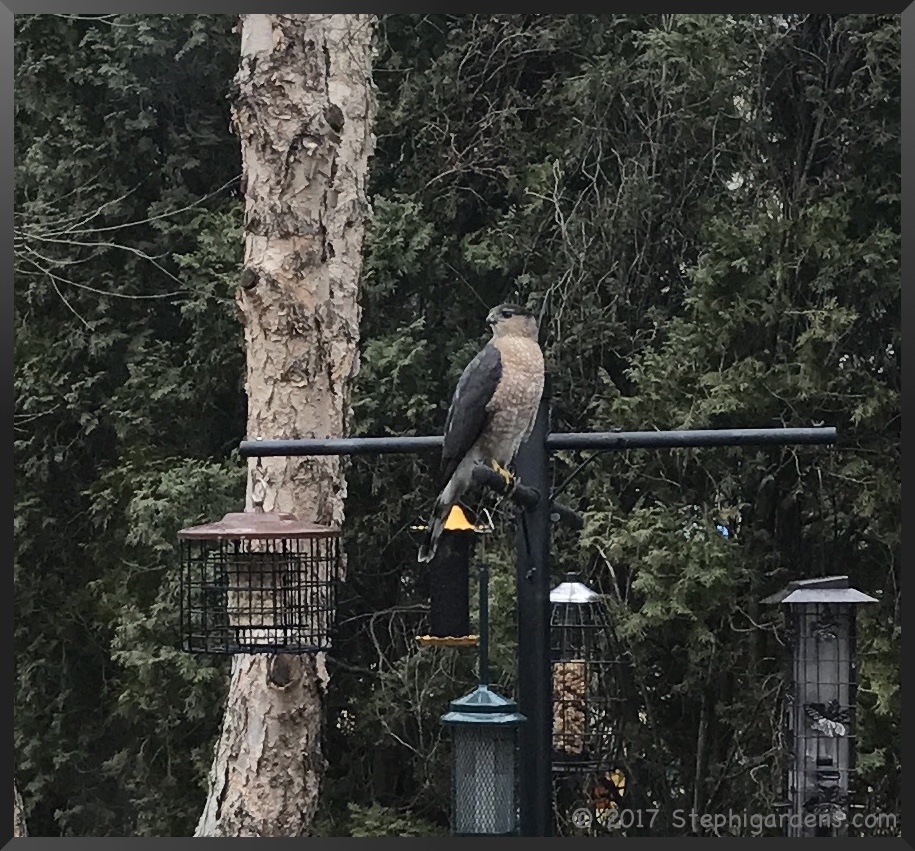
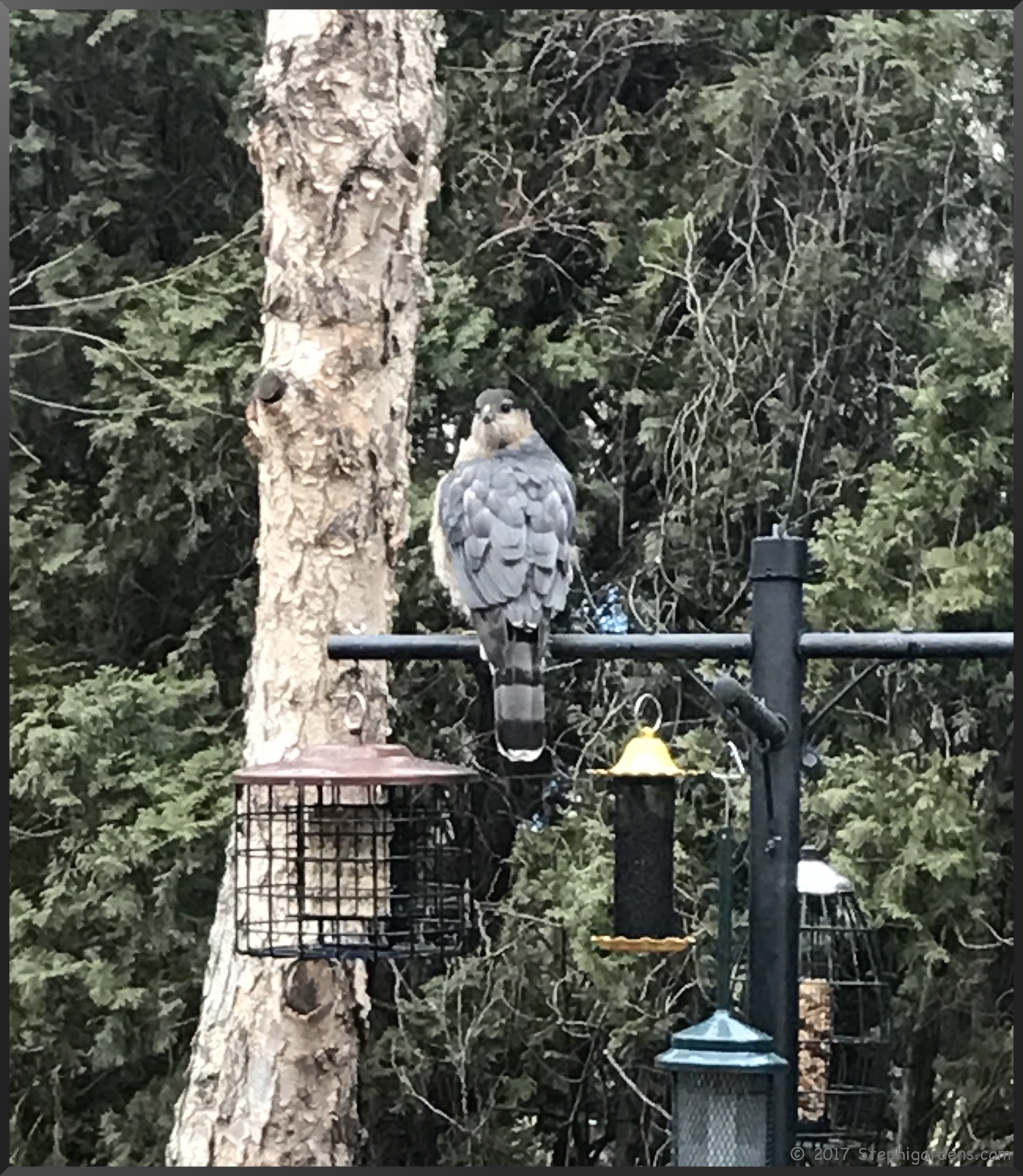
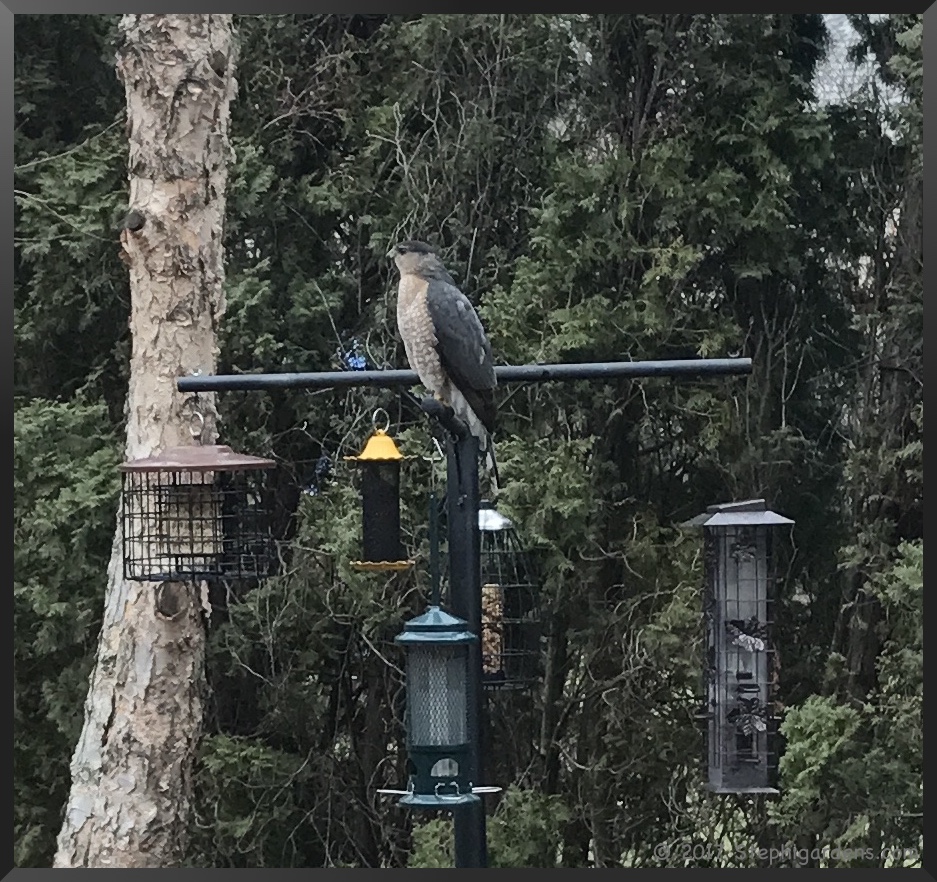
A beautiful Cooper’s Hawk (Accipiter cooperii) had landed on the top of my feeder pole and sat there surveying the area. Presumably looking for food, but smartly everyone had scattered. He posed for a while so I could see his beautiful blue gray back and get a good look at his tail. The rounded tail is a pretty strong marker that it’s a Cooper’s Hawk and not the very similar Sharp-shinned Hawk (Accipiter striatus) which has a straight, squared off tail.

Then it turned around so I could see it’s breast which was mottled rust and white.

It’s actually can be pretty difficult to tell the difference between the Cooper’s Hawk and Sharp-shinned Hawk.  Cooper’s Hawks tend to be larger, more the size of a crow, Sharp-shinned, more the size of a Blue Jay.  Cooper’s Hawks have a much bigger, distinct head in proportion to their body and look as though they are wearing a dark cap because of the light coloring of their nape. They are typically woodland birds, but are increasingly likely to be found in suburban areas.  Sharp-shinned Hawks nest almost exclusively in conifers and heavily wooded forests and are less frequent visitors to the suburbs.

A Cooper’s Hawks main diet is primarily small to medium birds and occasionally mammals like chipmunks, rabbits, mice, squirrels, and bats. They can be an unwelcome visitor to in a yard if they seem to have taken up residence because of the abundance of birds attracted to feeders. Removing the feeders for a few days should be enough to have them move on. But, honestly if having a hawk around  helped reduced the squirrel population, I may not mind having it visit occasionally.

Fortunately this one didn’t stick around long, although I know it lives somewhere in the area since it’s been to my yard a few times this winter.  Luckily, I saw it in the neighborhood over the weekend and could report it as part of the Great Backyard Bird Count.

After flying off the pole, it rested on a patio table, then moved on.

It was fun to see, but I hope I’m not providing dinner by attracting songbirds to my yard with feeders.

Wondering what I’m reading? See the latest list of books I’ve read (and liked) on the right.

Any Hawks in your yard?  Or a favorite book you’ve read lately?


Great Backyard Bird Count 2017

Great Backyard Bird Count
February 17-20, 2017

Cardinal

Since 1998, birders of all kinds have come together for a four day bird count in February. Counting birds at the same time every year provides a snapshot into the overall health of bird populations around the world. It can also help scientists learn more about such things as

  • Will the weather and climate change influence bird populations?
  • How will the timing of this year’s birds’ migrations compare with past years?
  •  How are bird diseases, such as West Nile virus, affecting birds in different regions?
  • What kinds of differences in bird diversity are apparent in cities versus suburban, rural, and natural areas?  Have they changed?

Chickadee

Years ago as a service project, my Girl Scout Troop participated in this event. It was really fun teaching the girls about what they were possibly going to see in their backyards, and introducing them to thinking a little more about their natural surroundings. The girls loved it!

Downy Woodpecker

It’s super easy to participate. Register online and then simply tally the numbers and kinds of birds you see for at least 15 minutes on one or more days of the count.  You can count from any location, any time of day, anywhere in the world!

2017 GBBC Poster with Allen's HummingbirdTo get more information and register your observations, go to the GBBC site.

Are you participating? Did you see anything unusual?

Need help identifying what you see? Here’s a few of my favorite birding books:

You can even get lists of birds seen specifically in your area from the GBBC website. This is a great way to narrow down what you are trying to identify.

This winter I’ve been seeing a Cooper’s Hawk on my feeder pole. I hope he shows up while I’m counting!

Cooper's hawk

This project is a joint venture between the Audubon Society, The Cornell Lab,  and Bird Studies Canada. It is also made possible by support by Wild Birds Unlimited and the National Science Foundation.

Photos by Peggy and Stephi