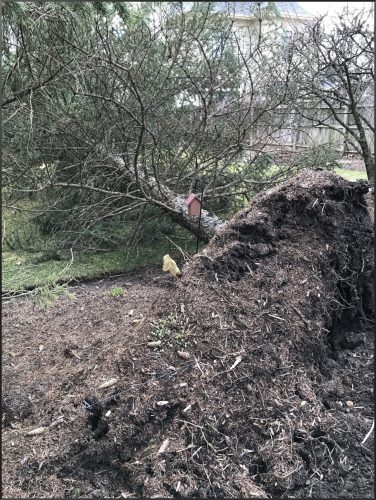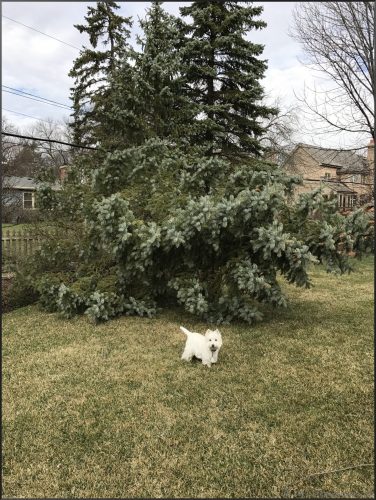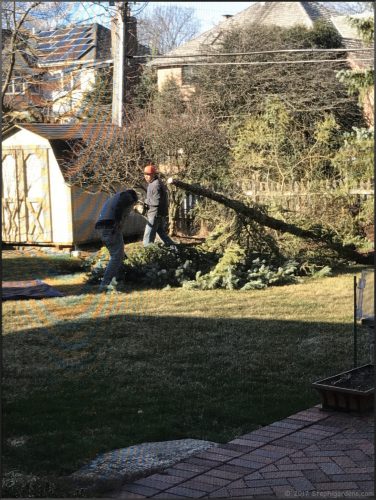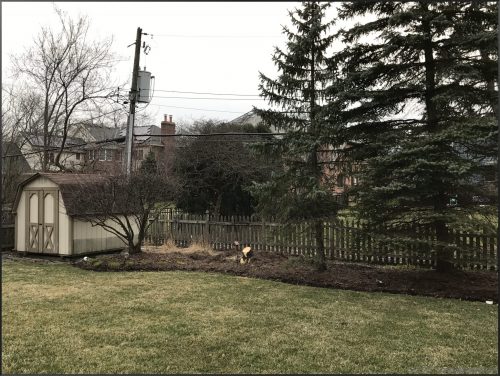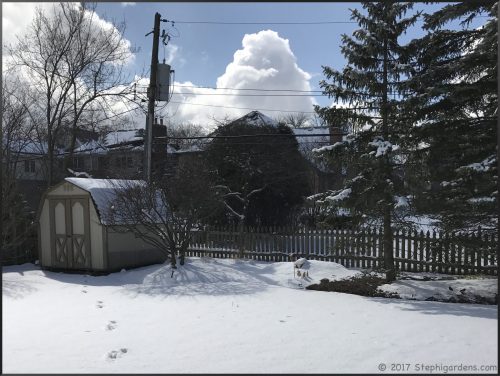
Along the back fence line we had three big spruces that afforded us privacy from the rear neighbors. But age, disease, weather and water were not their friend. After one fell down and the second came perilously close to falling down, we ended taking them out April. My previous posts, “Another Tree Toppled” and “Spruce Down“, tell the whole sad story.
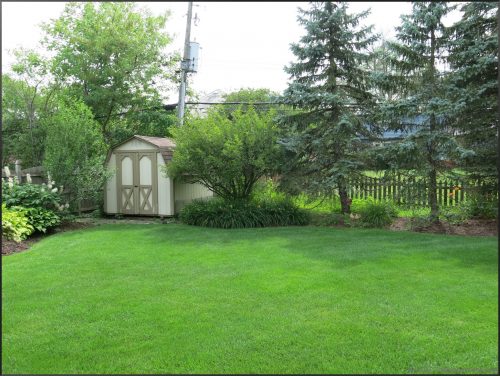
They had been on the decline for a while, but it was still a big loss to have them come down.
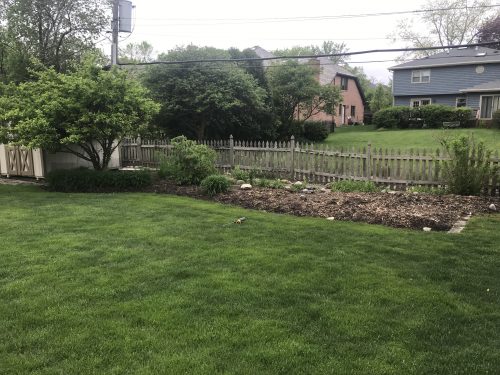
But it gave me a chance to rethink what we’d like to have there. Because of the wetness of the swale area and widespread spruce Cytospora canker, it was not an option to replant more spruce. Arborvitae make a great privacy hedge, would also not do well in that location so I had to go in a different direction.
One of my complaints about many of the shrubs we have is that they have to be pruned yearly to be appropriate for the space.
Here was a chance to create a hedge of shrubs that could be allowed to grow naturally. It’d eventually be dense enough to provide privacy in the summer and a distraction in the winter.
What to plant? I knew I needed Zone 5 hardiness and the growing conditions weren’t ideal for many shrubs, so I settled on viburnums as the main plantings. There’s a large selection of varieties, each with different flowering patterns, fall colors and sizes. I then included a couple of hydrangeas to add some floral interest in the front.
Interesting fact about planting Viburnum dentatums, like I planned, is that they are not self pollinating. They need to have a different cultivar planted nearby with a similar flowering time to have adequate pollination and berry production. I didn’t know this before researching this new bed, and it explains why my other viburnums never really seemed to set many berries.
We planted:
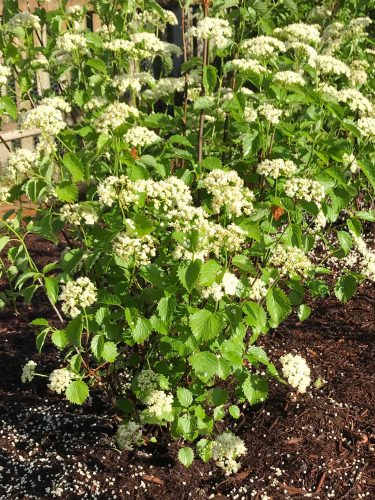
(2) Chicago Lustre® Arrowwood Viburnum (Viburnum dentatum ‘Synnestvedt’) These large viburnums will grow 10′ to 12′ in height with an 8′ to 10′ spread, has glossy foliage, produces creamy white flowers in mid- to late June and are highly attractive to birds for food and shelter. The fall berries are dark metallic blue and the leaves turn a mild purple-red. This viburnum is one of the Chicagoland Grows® varieties
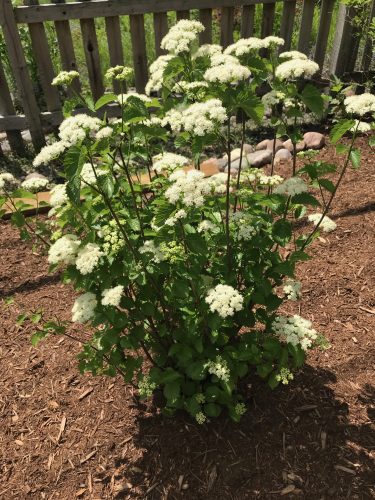
(2) Blue Muffin™ Arrowwood Viburnum (Viburnum dentatum ‘Christom’) This viburnum is a more compact variety, growing 5 to 7 feet high and 6 to 8 feet wide. It has medium green foliage, showy white flowers in mid-late June and turns orange to red in the fall. The abundant berries are a showy bright blue and a favorite of birds.
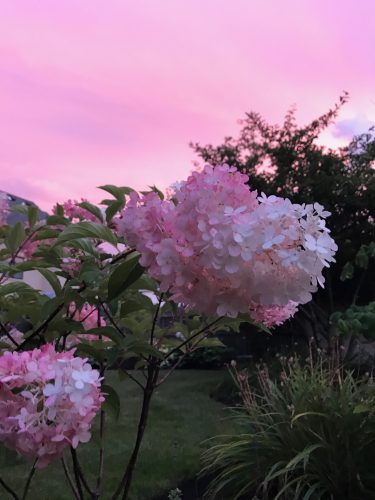
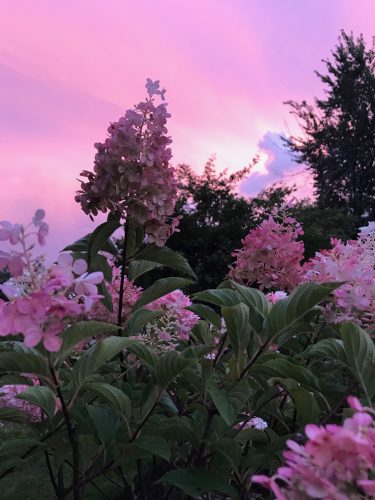
(3) Vanilla Strawberry Panicle Hydrangea (Hydrangeapaniculata ‘Renhy’ Vanilla Strawberry) This hydrangea grows 6 to 8 ft high and 4-5 ft wide and flowers as beautifully as the name sounds. The large flowery panicles (7” by 5”) develop in mid-summer, beginning white and finally maturing late summer to pinkish-red. The strawberry red flower color typically lasts for 3-4 weeks prior to flowers turning brown in the fall.
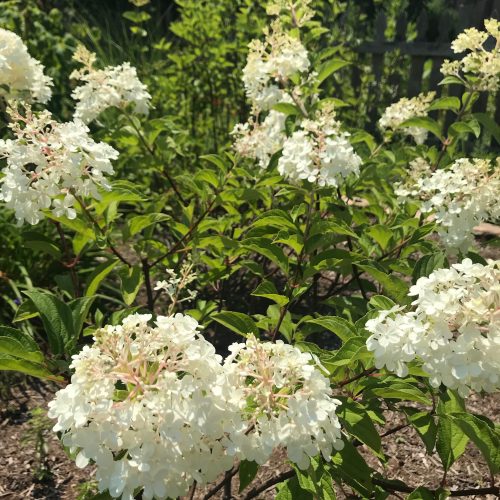
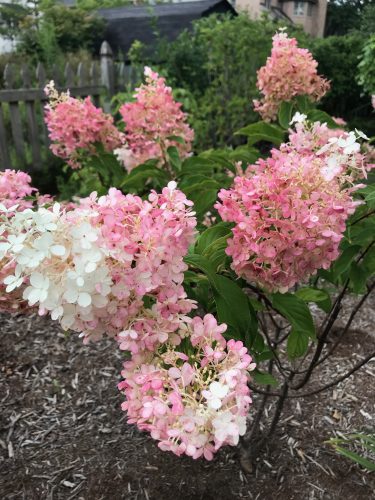
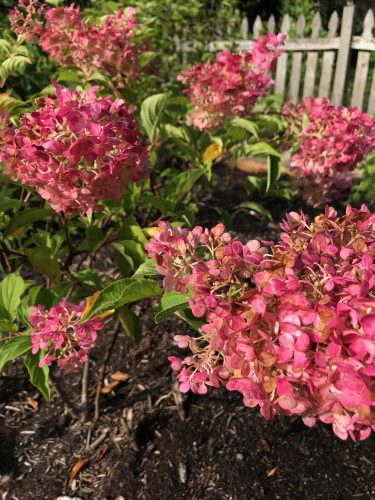
And what a beautiful show! Especially when the flowers match the sky.
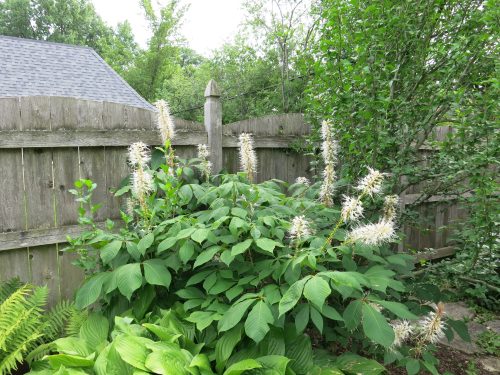
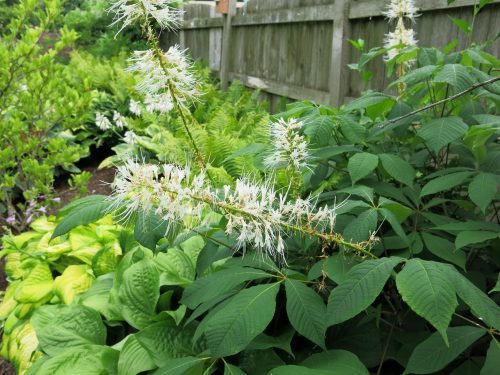
In addition to the new plantings, there was an existing Bottlebrush Buckeye and Sargent Crab, which I decided were nice enough specimens to keep. The bottlebrush buckeye is a wide-spreading plant, growing 8 to 12 feet high and 12 to 15 feet wide. It blooms in early July, producing interesting long fluffy white flower clusters. This plant had already been moved once because it wasn’t in an appropriate space for it, so I hope it’s happier in this new location.
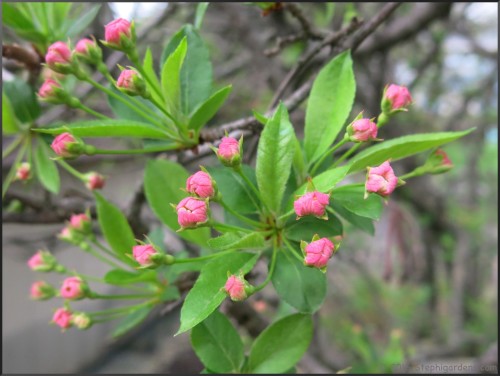
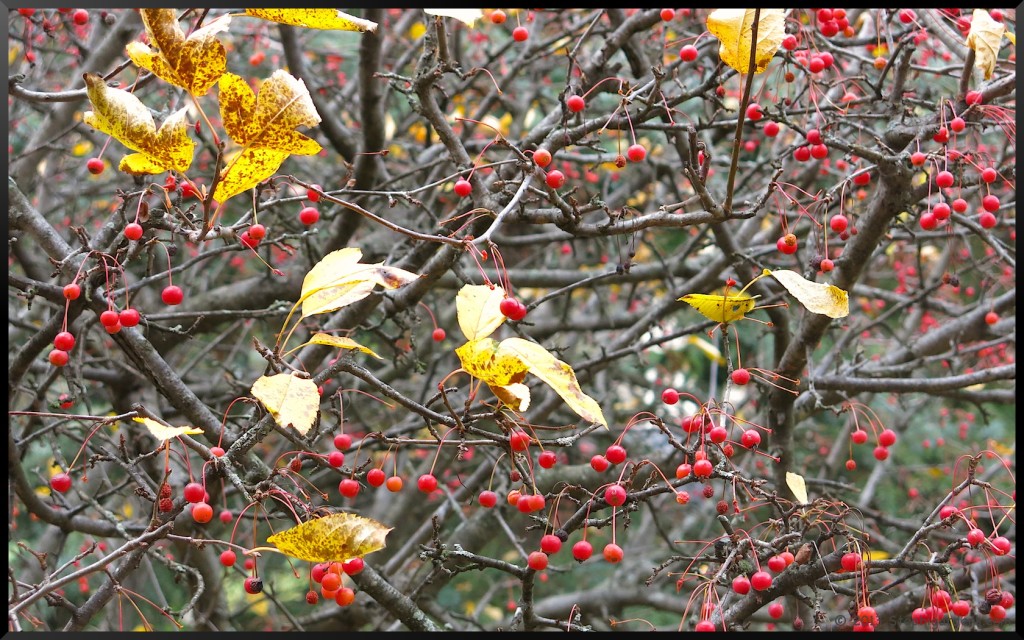
The Sargent Crab is a 6 to 10 foot dwarf crabapple. In spring, pink buds open to a profusion of fragrant, white flower clusters. This tree has also been moved a couple of times and settled into this location about 10 years ago. It’s been a very hardy specimen, and the berries seem to attract Cedar Waxwings to my backyard. That makes it a keeper!
I purposefully didn’t overdo the number of shrubs I planted.
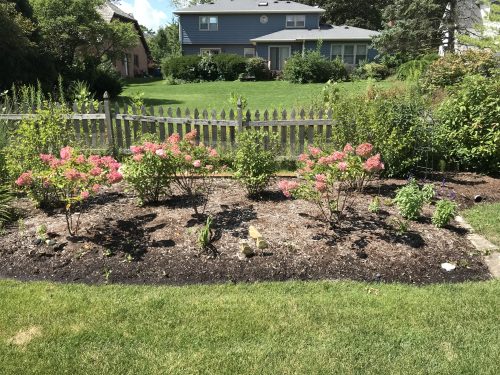
In the past, I’ve been advised to plant too many plants that look great in a year or two, only to have to remove them a few years later because of overcrowding. Very wasteful. So this time I’ll be patient and have a healthy shrub border in a few years. In the meantime, I’ll enjoy the interesting colors and textures and fill in the spaces with some annuals.
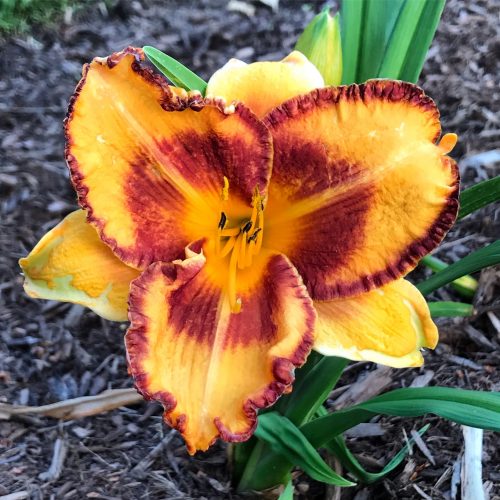
I may have also added a few interesting daylilies even though I swore I was done buying any more. But how could I have passed up planting a VT Spirit Daylily (Hemerocallis VT Spirit), to celebrate one of my boys graduating this year??? Go Hokies 😉
Have you had a chance you redo an entire garden? How did it turn out?