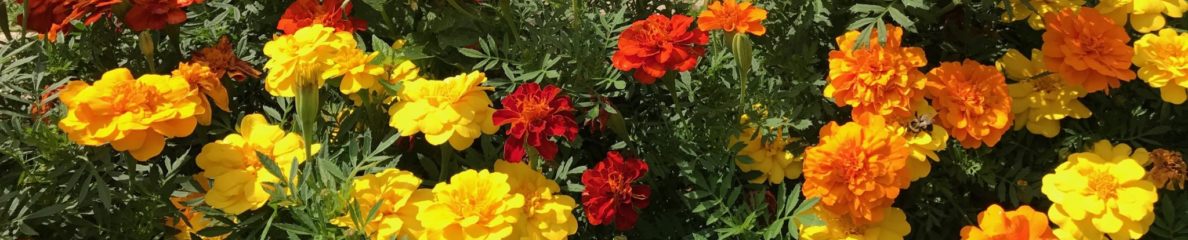
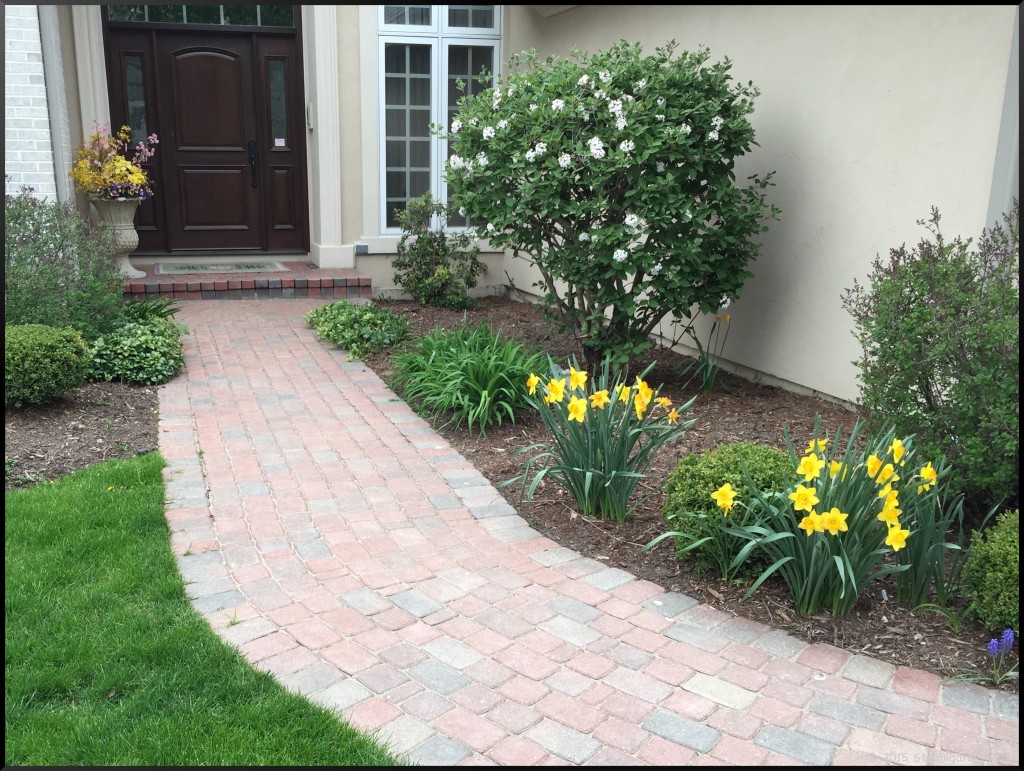
Right outside my front door is a Judd Viburnum that has been home to many robin’s nests throughout the years
This year, we saw some busy birds flying in and out, so of course I had to investigate. I assumed it was a robin as before, but a quick peak at the eggs and nest materials, it was clearly not a robin.
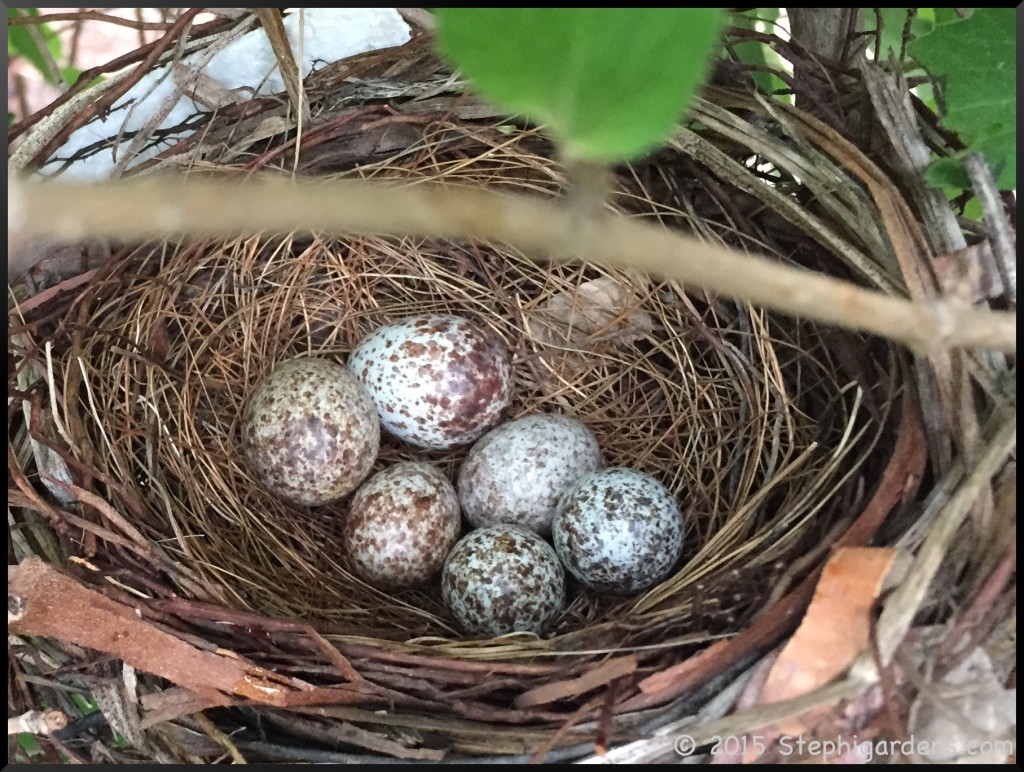
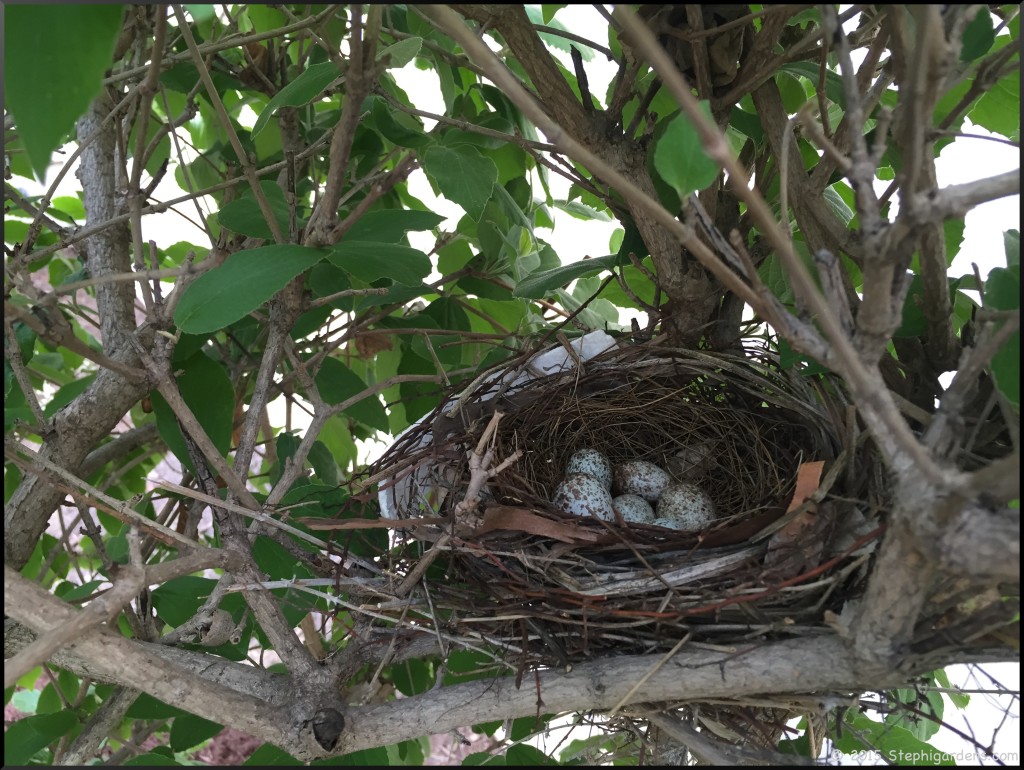
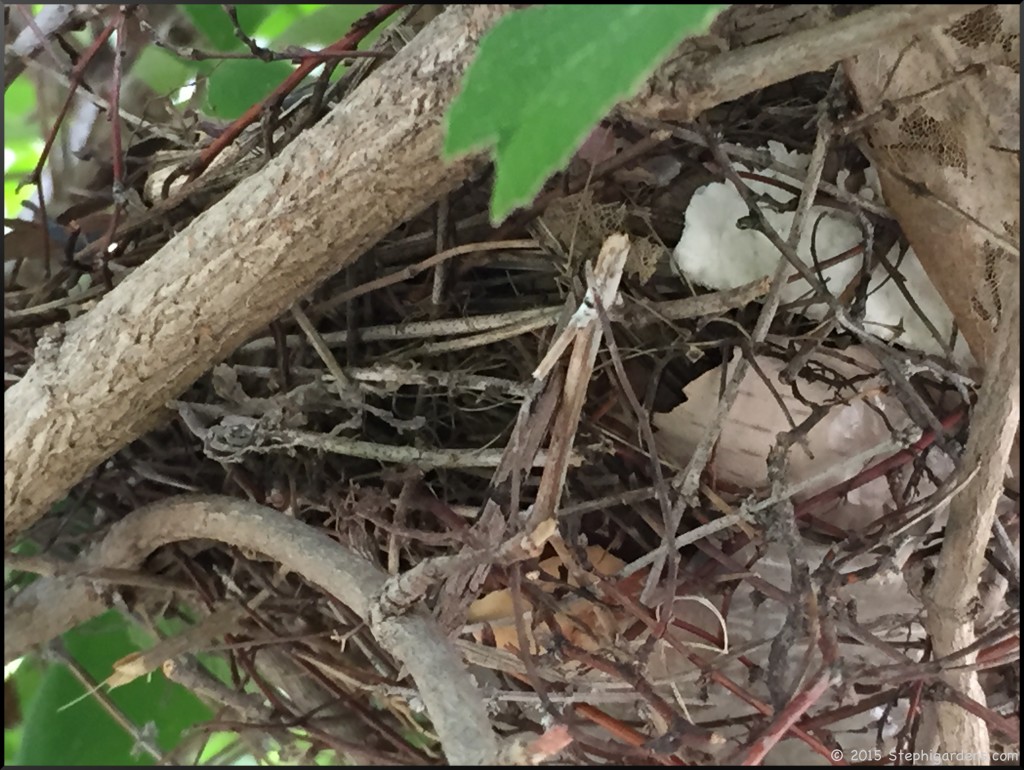
So what were they? House sparrow? Maybe, eggs look similar, but not in a typical location. Cardinal? Never saw a cardinal nest before but definitely fits.
Location–dense shrubs
Height–4-6 ft from the ground
Material–thin twigs, stems, bark, vines, dead leaves, rags, paper, and other fine material (no mud like in a robin’s nest)
Eggs–glossy white or pale green and have gray, brown, or reddish speckling throughout, which is usually more dense along the larger end.
Looks like I have a cardinal nesting nearby!
Within four days of seeing the eggs, the babies had hatched. They were very noisy and hungry, and I saw momma cardinal coming and going very frequently with food no doubt.
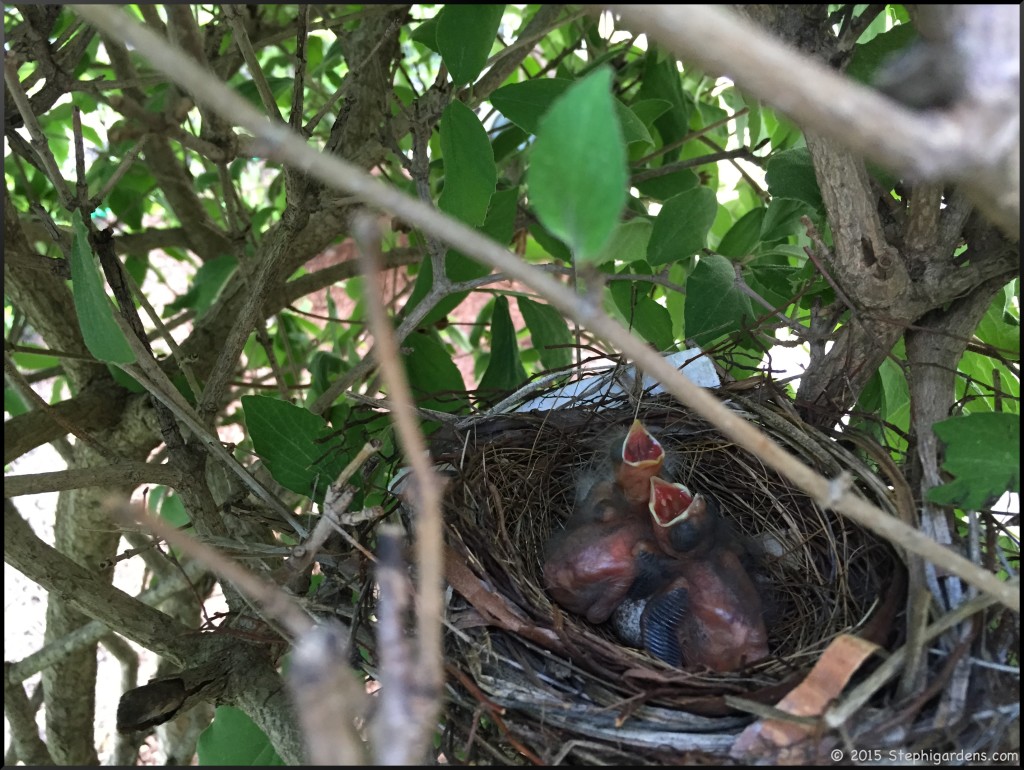
I checked back three days later and their eyes were open and they were still very noisy. Not sure how many there were. I could see three for sure, but hard to tell if there was a couple more hidden in there somewhere.
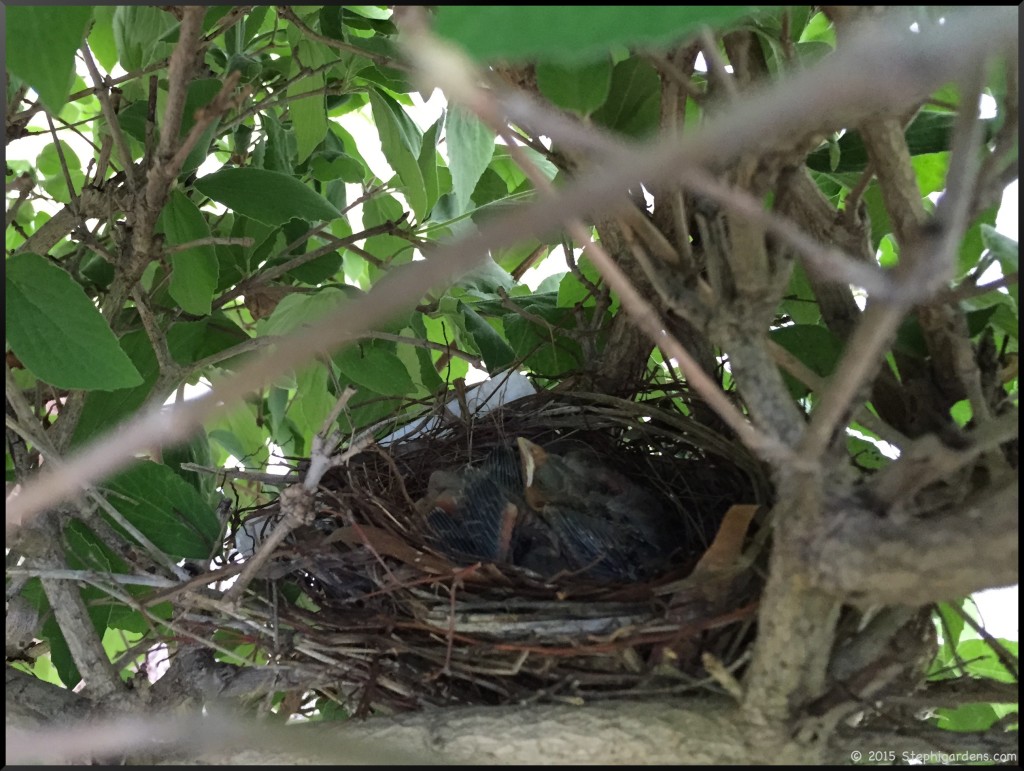
Another three days and they were growing nicely and starting to be a lot more interactive with their mother’s calls. In this shot, the babies had been chirping, the mom saw me from a nearby tree and gave a sharp chirp. Everyone huddled down and got really quiet.
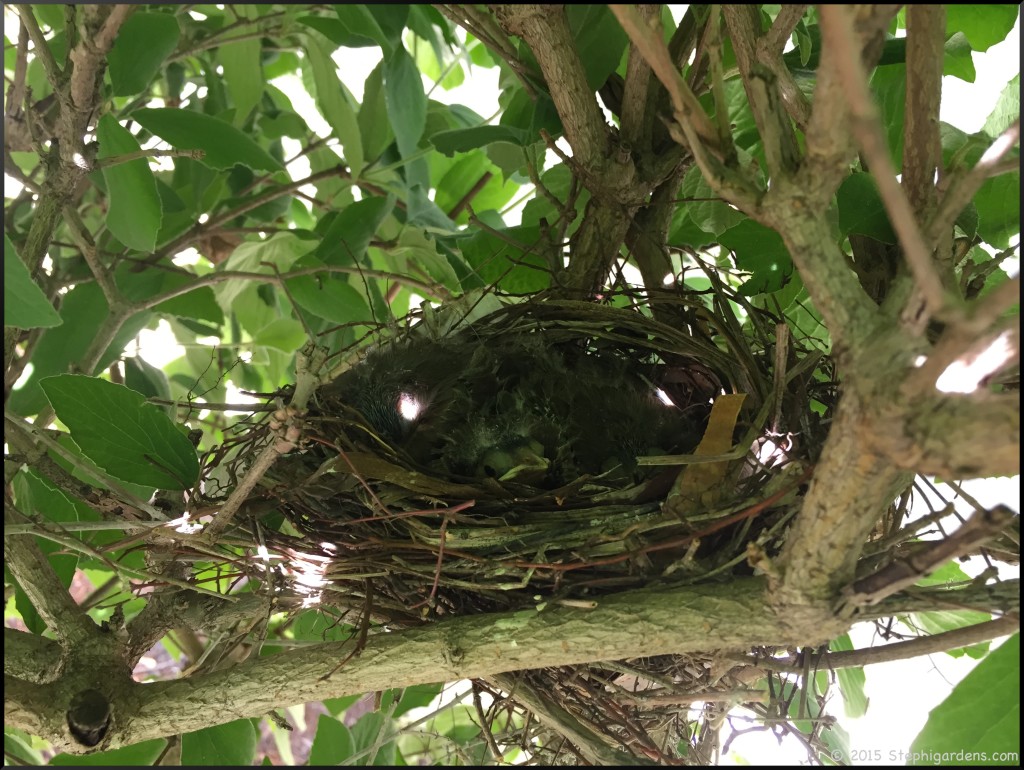
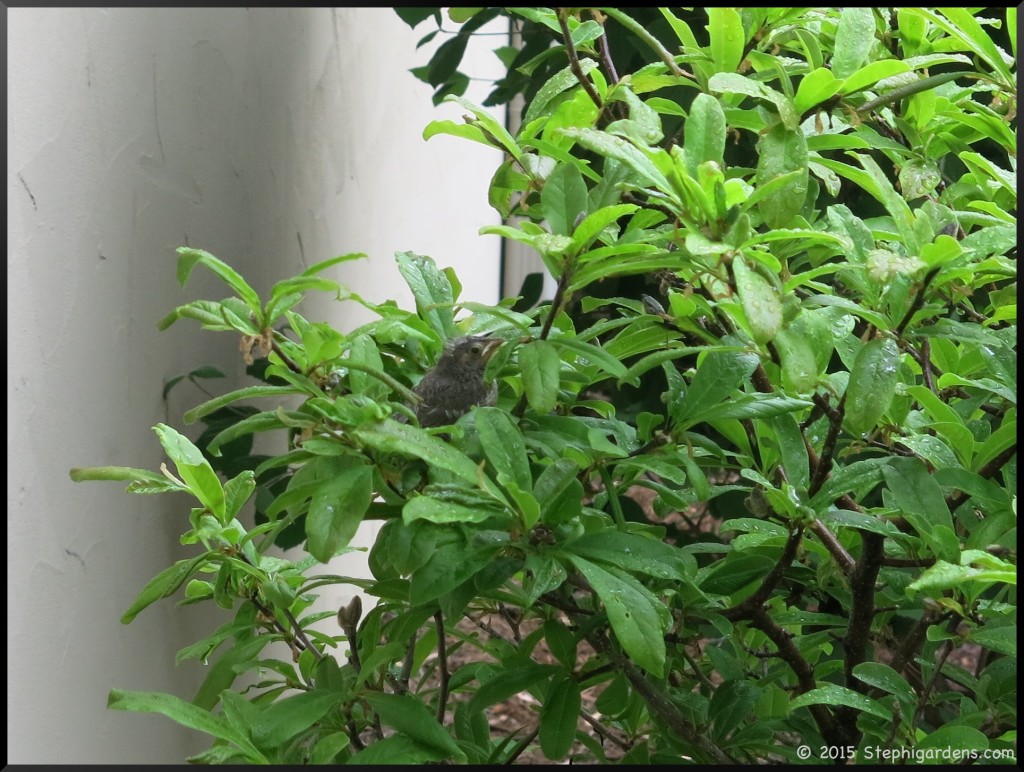
The next day, when I went to peak at them there were none left in the nest and this one little guy in a bush nearby trying to stay dry in a rain shower.
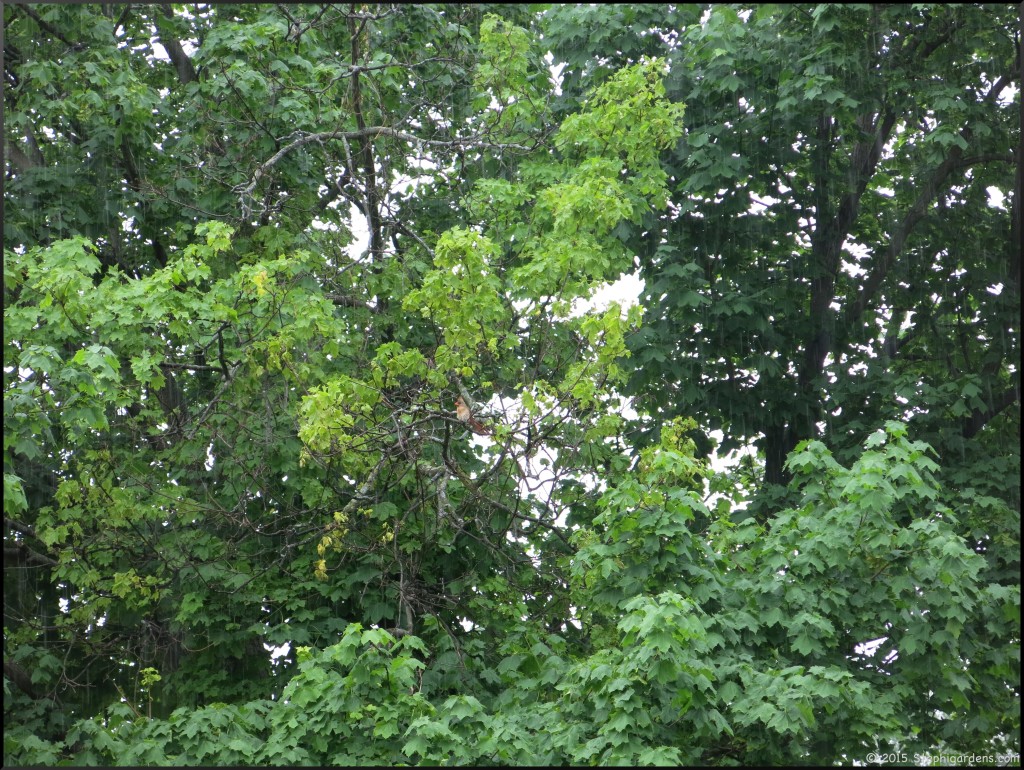
Mom and Dad weren’t far away in the maple tree keeping an eye on them. By that evening, they were all gone.
I could still hear the babies chirping in the yard for a few more days as the parents kept an eye on them until they’re ready to be completely on their own.