This Crazy Winter

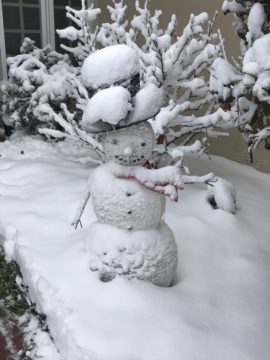
The winter of 2019 is definitely one for the books. We’ve been through snow, rain, crazy temperatures swings, a winter thunderstorm, the polar vortex…and now another ice storm has hit the Chicago area.

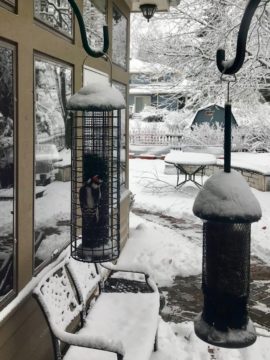
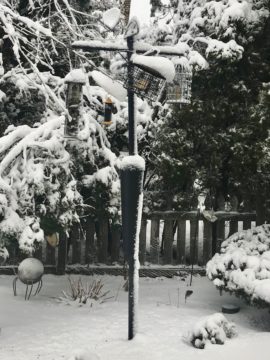
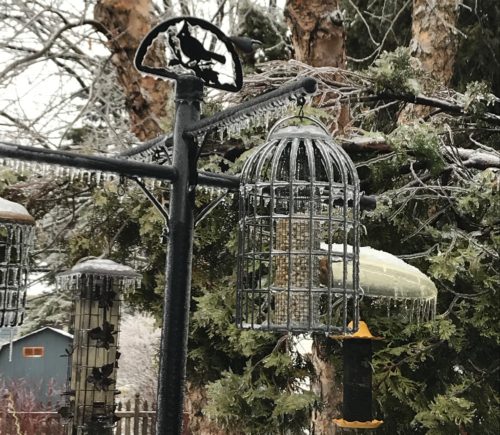
As temperatures hovered around freezing, the precipitation has rotated between rain, sleet, freezing rain and snow. Aside from the treacherous driving and walking, the ice made for beautiful scenery. Pretty much everything outside, like my feeder pole and feeders, were covered in ice and icicles. If you look closely at the icy peanut feeder, you can see one of the red-breasted nuthatches that is spending the winter in my yard on the peanut feeder.
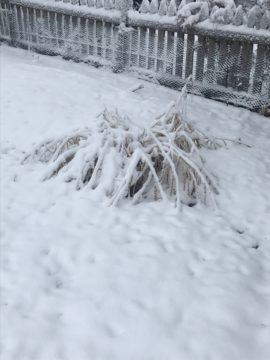
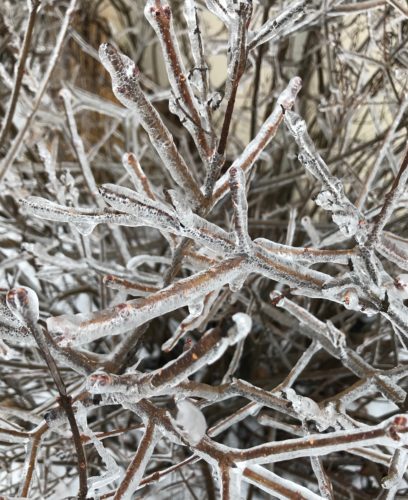
Looking around the yard everything, like this Dwarf Korean Lilac, was encased in a thick layer of ice.
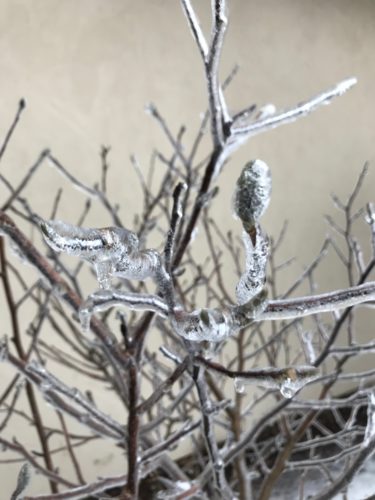
The buds on the star magnolia were similarly encased. The spring flower buds are actually protected by the layer of ice as long as I don’t try to knock the ice off.
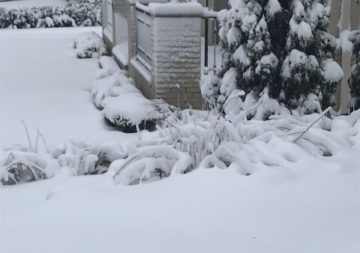
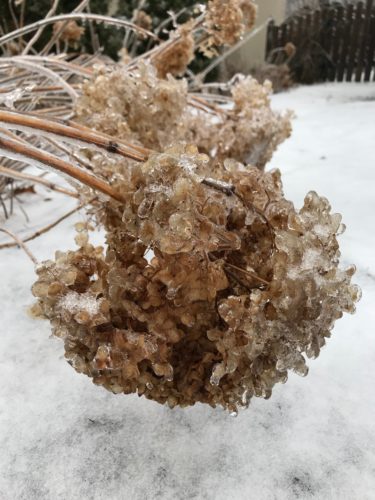
The annabelle hydrangeas are hanging heavy…
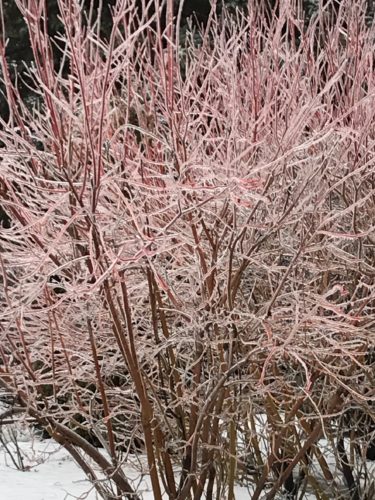
And the neighbors red-twig dogwoods are truly showing their winter colors.
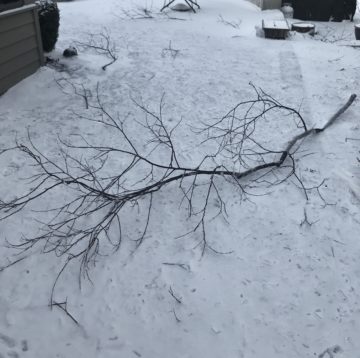
What do do about the ice? Not much you can do without inflicting more damage to weak branches and spring buds. Best to just wait and hope that it thaws soon. The wind has been howling tonight, which means probably even more breakage since the weight of the ice makes everything really heavy. The river birch has been dropping branches all over the patio.
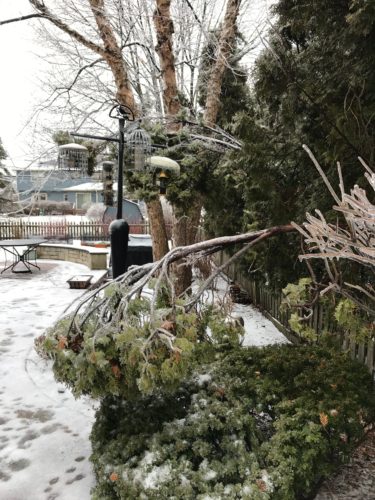
The arborvitaes are really having a rough winter between the heavy snow earlier this winter and now the ice. Only thing to do at this point is be patient. Multi-stemmed evergreens like arborvitae can be protected in the fall by tying up loosely with cloth, burlap or twine. But these are my neighbors shrubs, so all I can do is in the spring tie up the branches that have fallen on my side.
The Morton Arboretum has a great article on Winter Injury to Shrubs and Plants.

How are your plants fairing this winter?

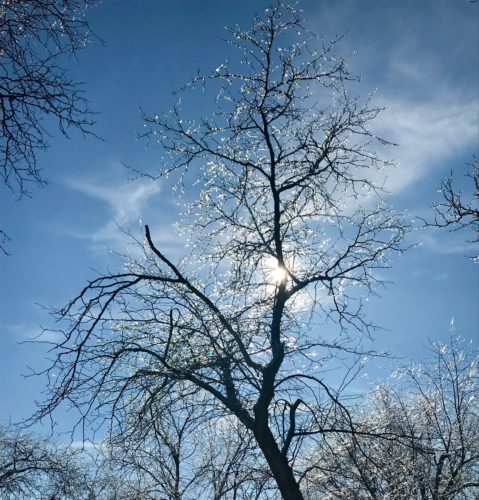
Bonus photo: The sun came out today and made everything super sparkly!
 

Winter Has Arrived ❄️❄️

My husband had a running weather joke all summer, “Enjoy it now, it’ll be snowing in 3 months”. We’d all roll our eyes.

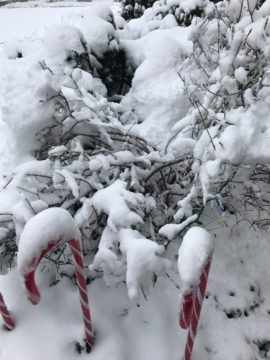
Well, he really wasn’t all that far off. We had the 5th biggest November snowfall last night, and it was a very messy storm.

Thankfully, my college kids had left Saturday to head back to school before the weather turned. We fared a bit better than many parts of Chicago, but we still got 3.9 inches of heavy, wet snow that knocked out our power for a few hours this morning.

That’s the kind that’s really tough to move around and really damaging to the trees and power lines. Luckily, we didn’t have too much damage and fared better than some of my friends.

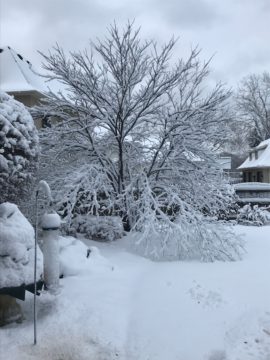
The backyard redbud was heavy with icy snow, practically touching the ground. No branches seem broken so it should be fine. I’m leaving it alone so I don’t make things worse for it.

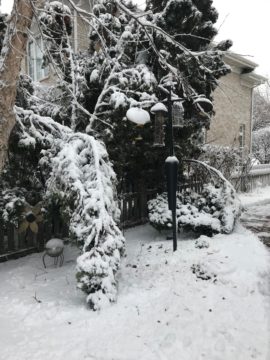
The arborvitae and other evergreens were all really sagging under the weight of the snow. Hopefully everything will bounce back once the snow melts. If they’re really bad like these, you can try and gently brush the heavy snow off the shrubs or trees with your hands or a broom as soon as it stops snowing, or even while it is snowing. But be careful to not be too rough and cause even more damage. Definitely don’t beat on the branches to break off ice.

Once the snow melts, if the branches aren’t popping back up you can try tying up the sagging branches to reshape the shrub. If you use ropes, be sure to loosen them every year so you don’t girdle the stem and kill it. Seems like during every storm my neighbor’s arborvitaes along the property line fall my way, so we have quite a system of woven ropes tying them up. Arborvitea make a great privacy fence, but the winter is really tough on them.

The yews and boxwoods are similarly drooping. I’ve had good luck with them bouncing back in the past so I tend to leave them alone.


During the fall clean up, I always leave the grasses and hydrangeas for winter interest and bird habitat. Not sure what they’re going to look like after this snowfall though. It won’t affect their next year’s growth, but they may look crushed the rest of the winter. I’ll have to decide whether to cut them back or leave them once this snowfall melts.

Annabelle hydrangeas (seen above) bloom on new wood so late fall or winter pruning won’t affect next summer’s blossoms. Be sure before you do any winter pruning you know what kind of hydrangeas you have. Many have different pruning requirements depending on when they bloom and if it’s on new or old stems.

Ornamental grasses can be pruned back to the ground anytime after late fall. I like to leave mine and prune in the early spring. If you don’t think they look good, trim them to the ground in the fall or winter. If you do leave them, be sure to cut them back to a couple of inches in early spring before new growth starts. I’m guessing these will not look good this winter.

The snow made the bird feeders a bit cock-eyed. But the birds didn’t mind and seemed thrilled to have food available. The squirrels and juncoes kept the snow cleaned of any spills. I even had a red-bellied woodpecker visit the suet feeder this morning. No camera nearby, but trust me, he was beautiful!

How did your yard fare with this storm?


Cheerful and Bright Zinnia Bed

Last year, my friend Susan described to me how she grows a beautiful hedgerow of zinnias every year by collecting the seed heads in the fall (Fall Seed Gathering Means Beautiful Summer Zinnias).

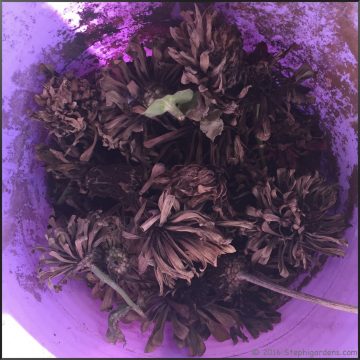
I thought I’d give it a try this spring, so I collected all the zinnia heads from my garden last fall.

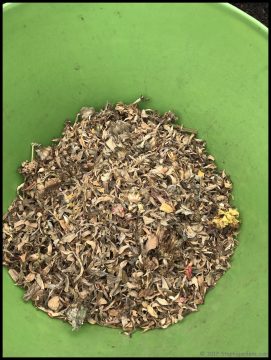
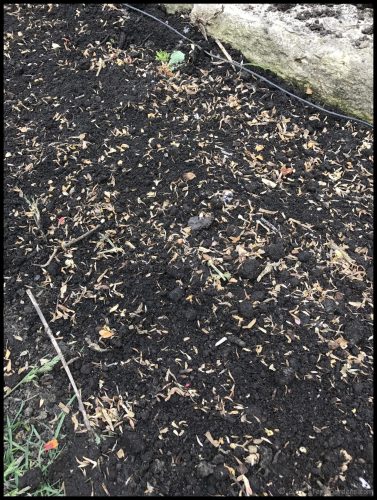
I left them in a bag over the winter on the porch and this spring crumbled up the dry seed heads to release all the seeds. No need to separate the seeds from the rest of the smaller plant material.

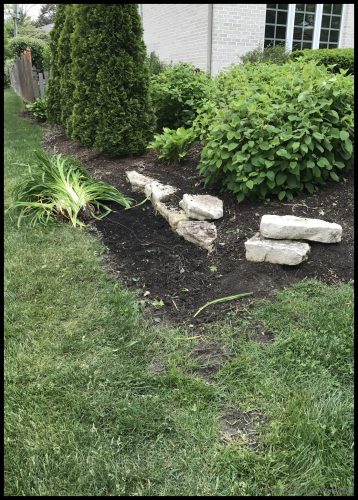
This spring, when the soil temperature was warm enough (usually not until after Mother’s Day here at my zone 5 home) I planted the overwintered seeds in a bare spot in the front garden that just needed some color. Just sprinkle out the seed mixture in thick rows or mat. Zinnias are definitely picky about temperature, so don’t start too early. (The dug-up plant on the left? A random daylily that was really out of place after a bunch of landscaping changes. It got replanted up at the WI cabin.)

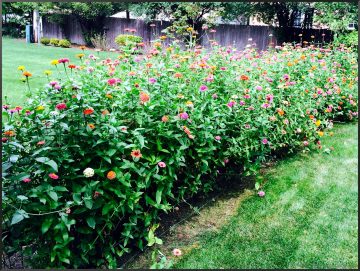
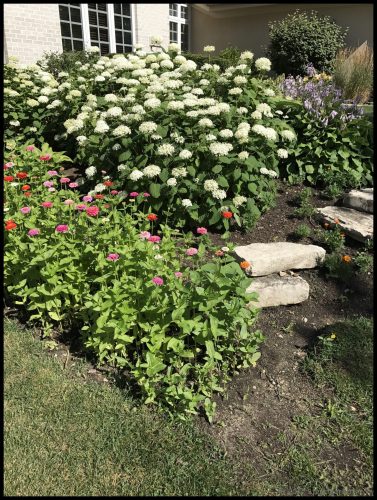
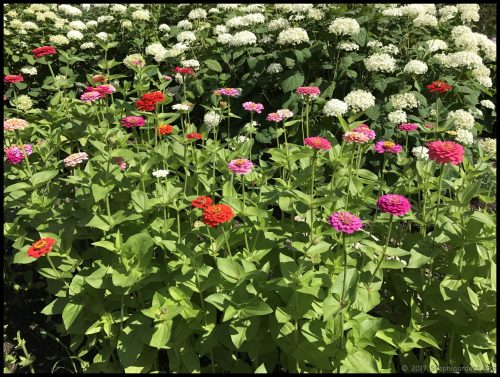
Then I waited. I was surprised at how fast the seeds germinated, and by early July I had a beautiful, welcoming splash of color.

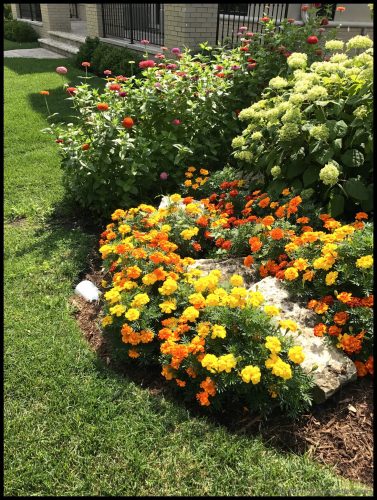
They’ve been blooming beautifully all summer, and the Durango Outback marigolds (Johnny’s Seeds) and Annabelle hydrangeas are perfect companions. I think the marigolds will be perfect candidates to try this seeding method with next spring.

Durango Outback Marigold

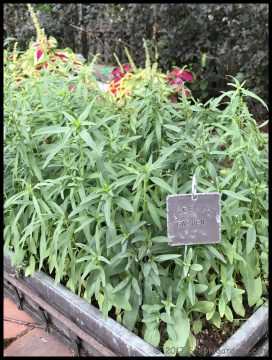
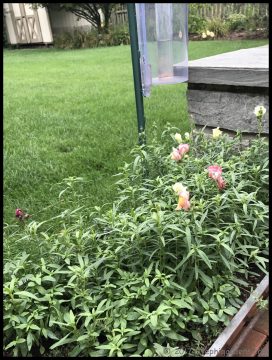
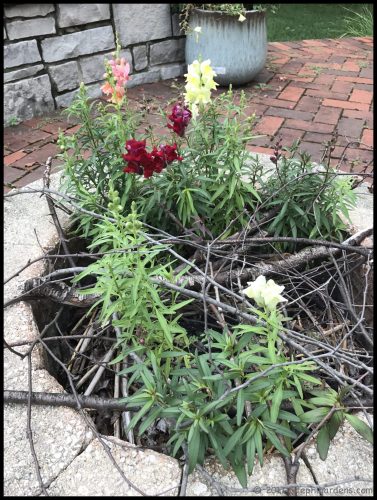
I did try this seeding method this year with snapdragons. They germinated and grew really nicely, but for some reason haven’t flowered very well.

Maybe because they’re in a planter, or maybe it needed more fertilizer, or the seeds didn’t overwinter properly? Funny thing though, they seem to have grown just great in our fire pit where I must have tossed some “waste”.

I will be definitely be collecting all the seeds heads again this fall!


Curled Leaves on the Bushes

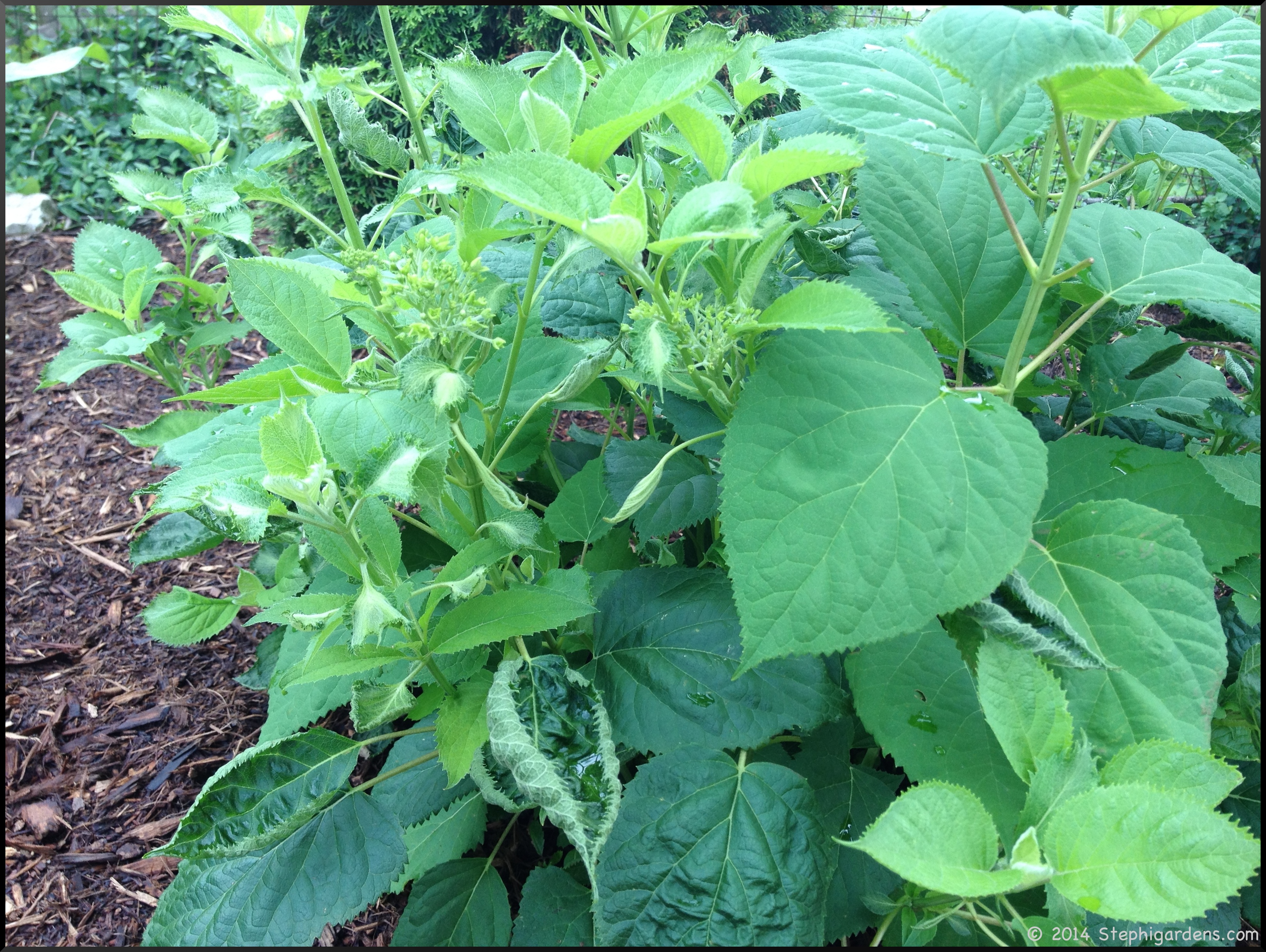
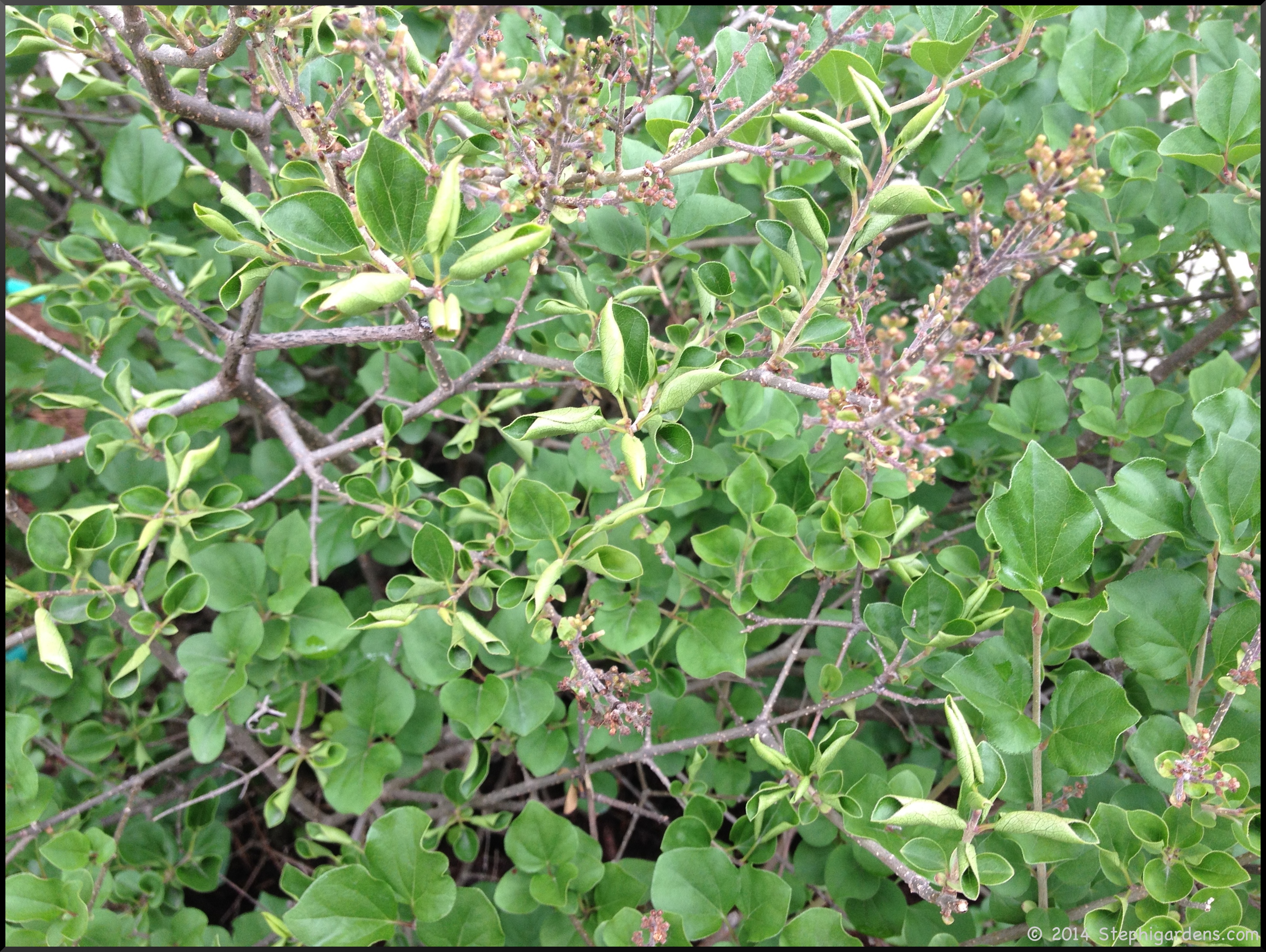
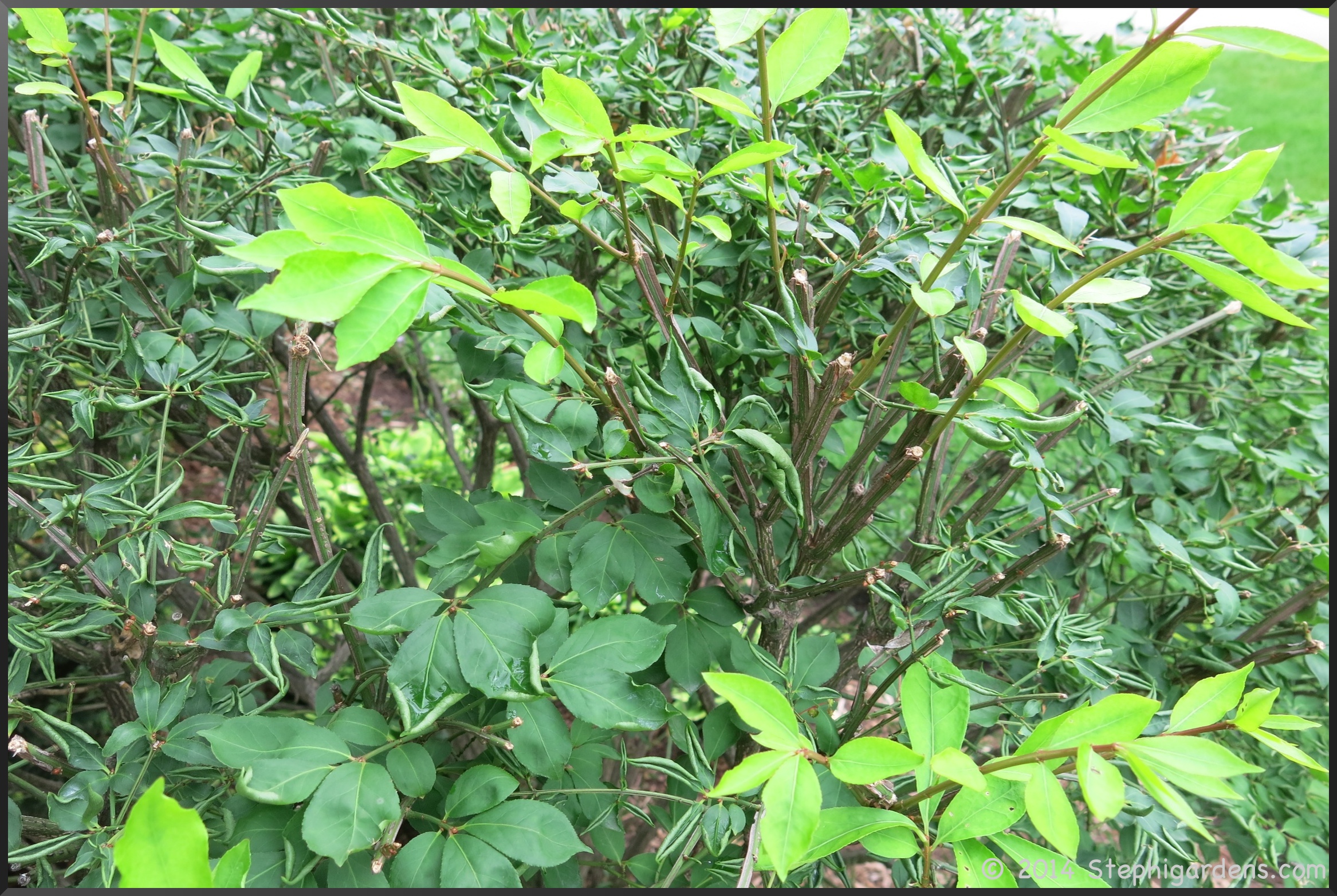
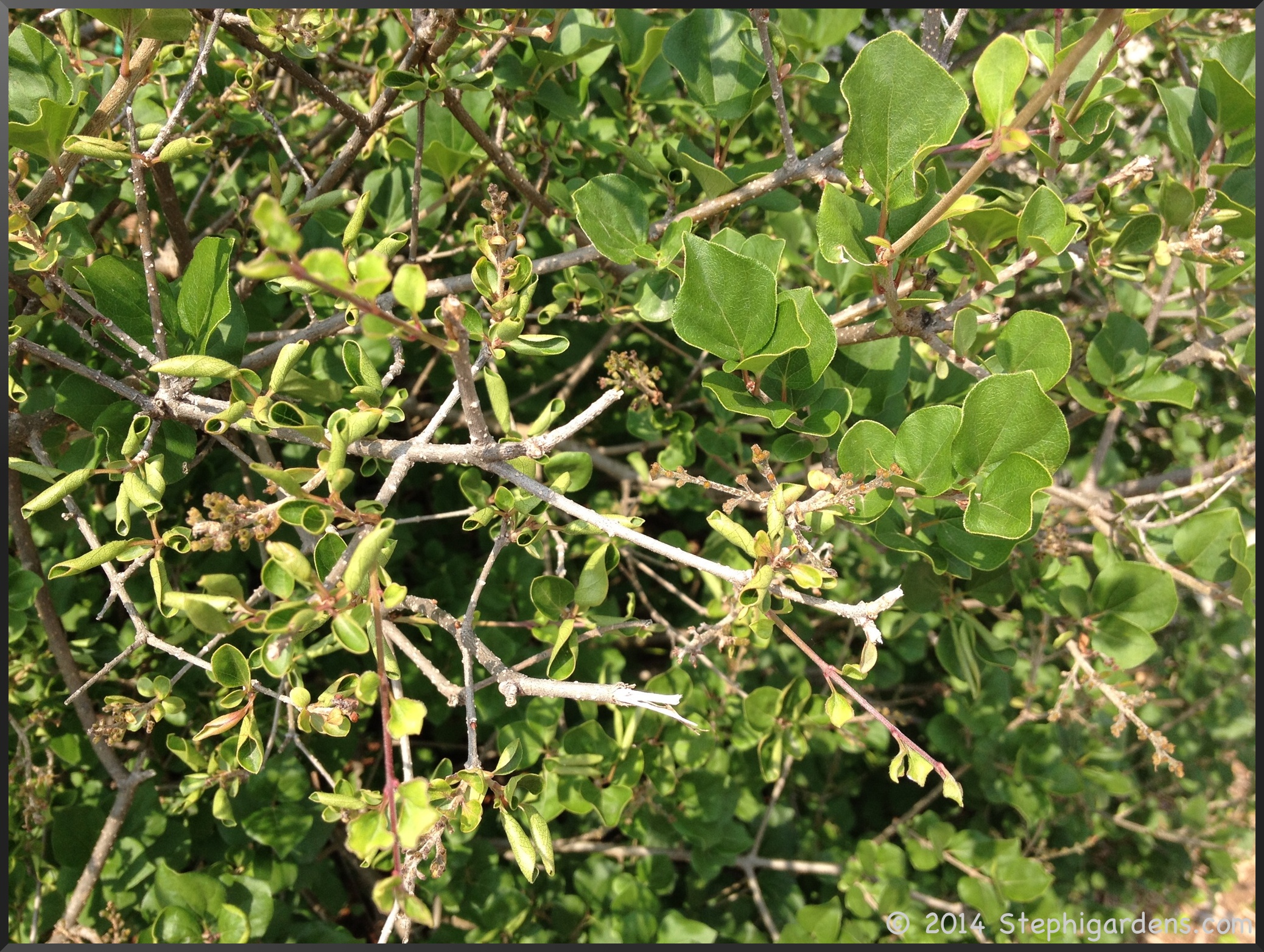
Earlier in the spring, I began to notice that many, but not all, of my bushes in the front yard (Dwarf Korean Lilacs,  Judd Viburnum, Boxwoods, Burning Bushes, Annabelle Hydrangea) were looking a bit unhealthy. Their leaves were oddly curling and looking dry, even though we’d had plenty of rain. The worst was one of the Burning Bushes and large sections of the lilacs.

Annabelle Hydrangea


Burning Bush


Dwarf Korean Lilac

Not knowing what to do, I called my tree and shrub caretaker to come and take a look. He diagnosed it as mealy bugs and mites, although I had trouble seeing what he saw.  Looking into it some more, it seems it could have also been related to any number of other pests, or even incorrect watering or fertilizing.  No matter the reason, it was clear from the symptoms that something was literally sucking the life out of the leaves and they needed to be treated or the shrubs could die. He recommended spraying with a pesticide/fungicide combo to cover all the bases. I don’t usually like spraying nonspecifically, but whatever the problem was it was affecting a number of specimen shrubs in my front yard that were already stressed from the harsh winter.  I had already lost one large burning bush to mites a couple of years back and I didn’t want to chance losing all these bushes this year, so went ahead with the sprays.

Just recently, I finally started to finally see some new healthy growth on the shrubs and no further damage.  Some of the curled leaves uncurled, others remained curled, but stayed green and didn’t appear to be any further damaged.  Crisis averted for this year.

annabelle hydrangea

Burning Bush


dwarf korean lilac

Have you ever seen anything like this?  Any suggestions as to the cause?

Yet another problem area addressed

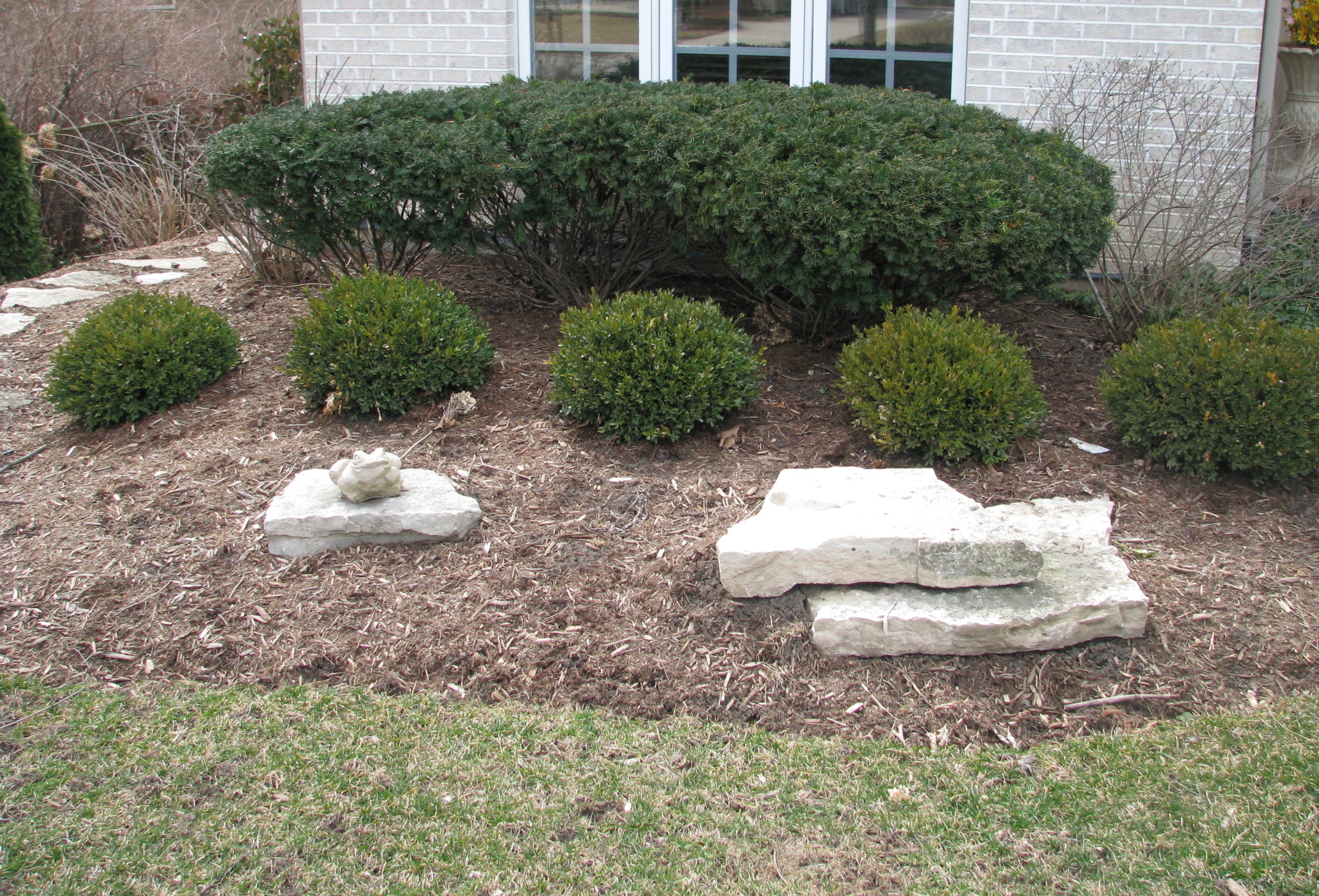
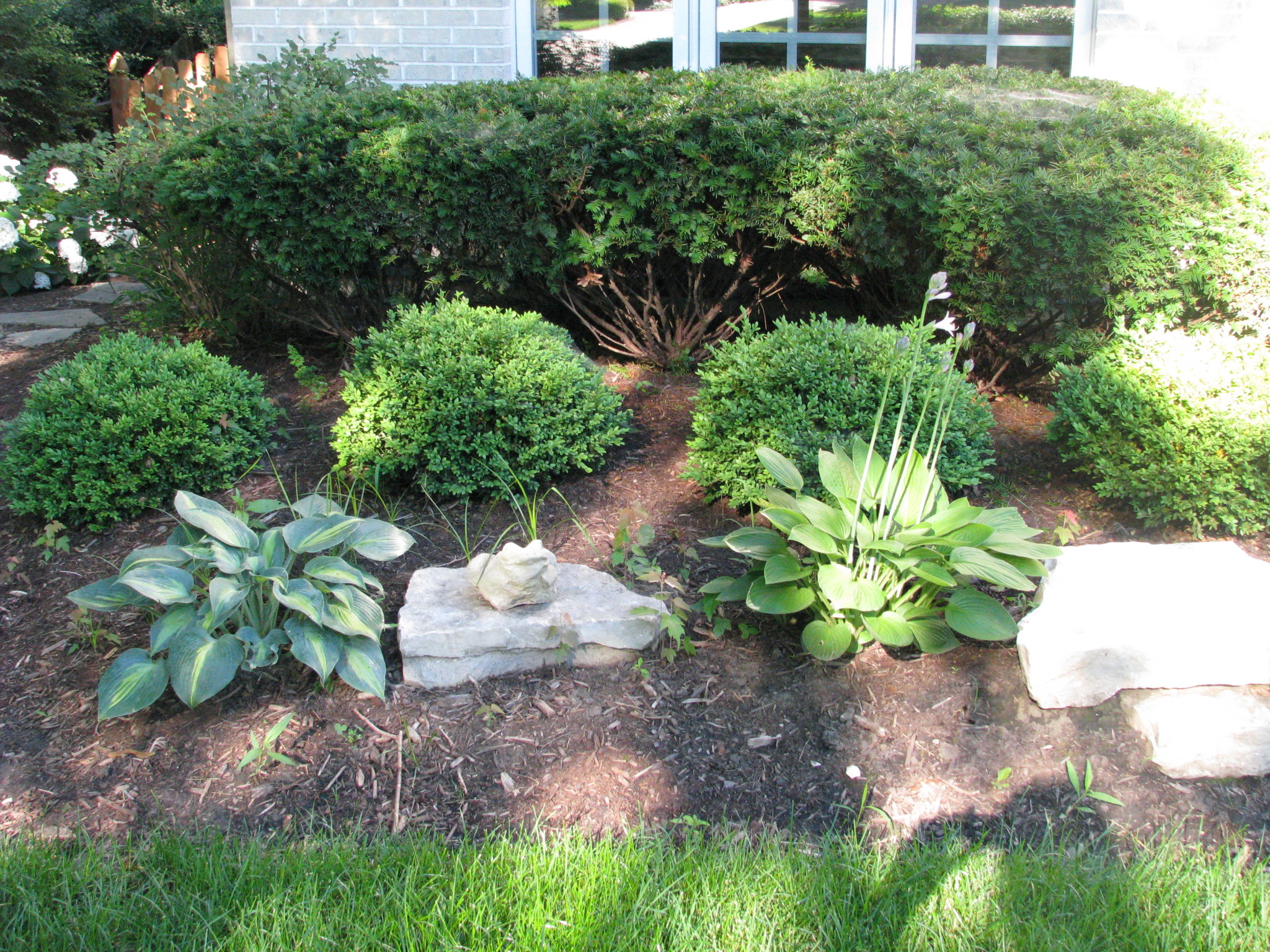
As I’ve worked on the problem areas in the front yard, I created another sore spot in the area where we moved the Annabelle hydrangeas from. On the north side of the house were the 4 hydrangeas and a row of Hicks yews. The hydrangeas had to go because they were just too big for the space, leaving big gaps at either end. They look great where they are now!

image

image

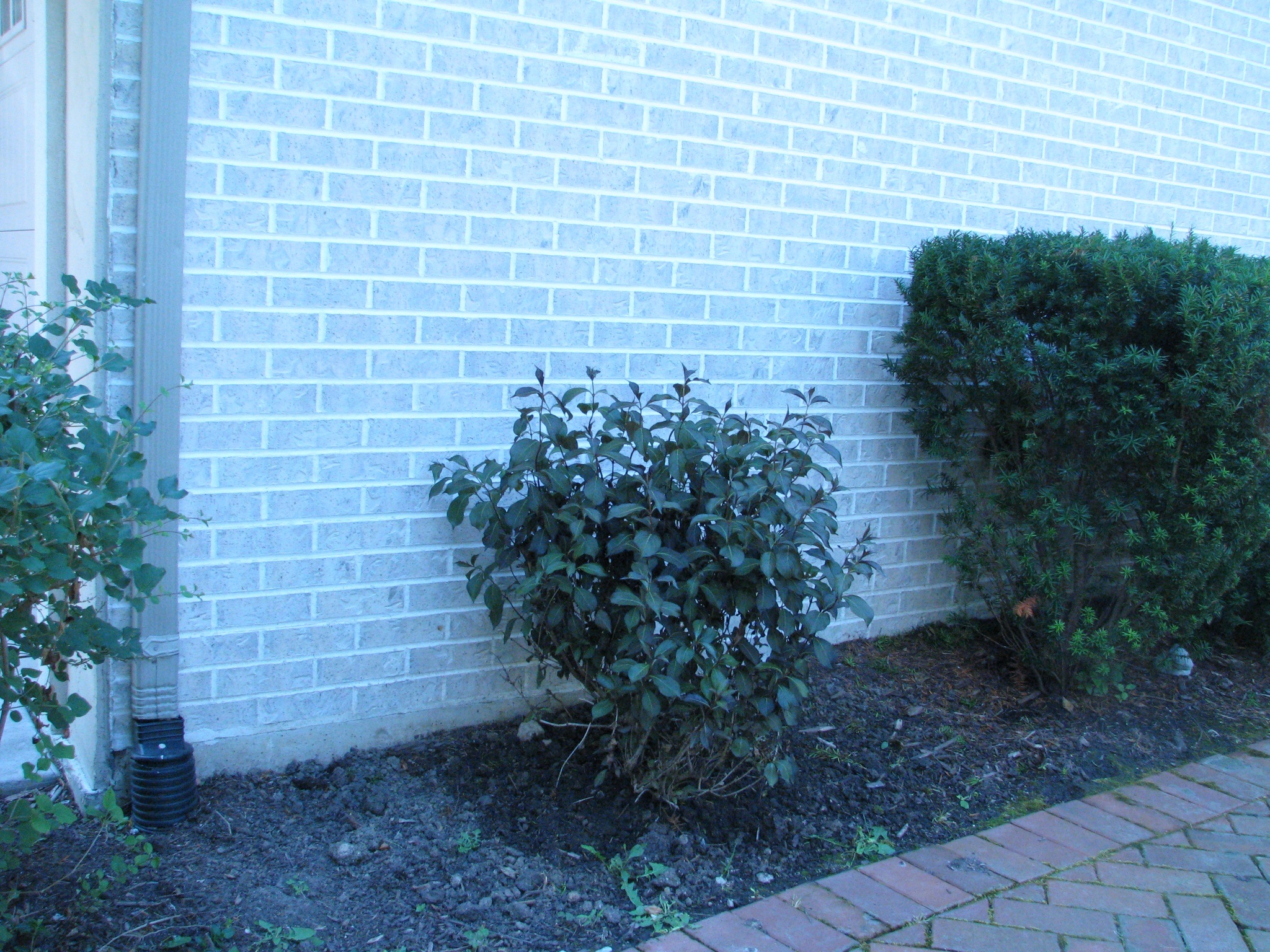
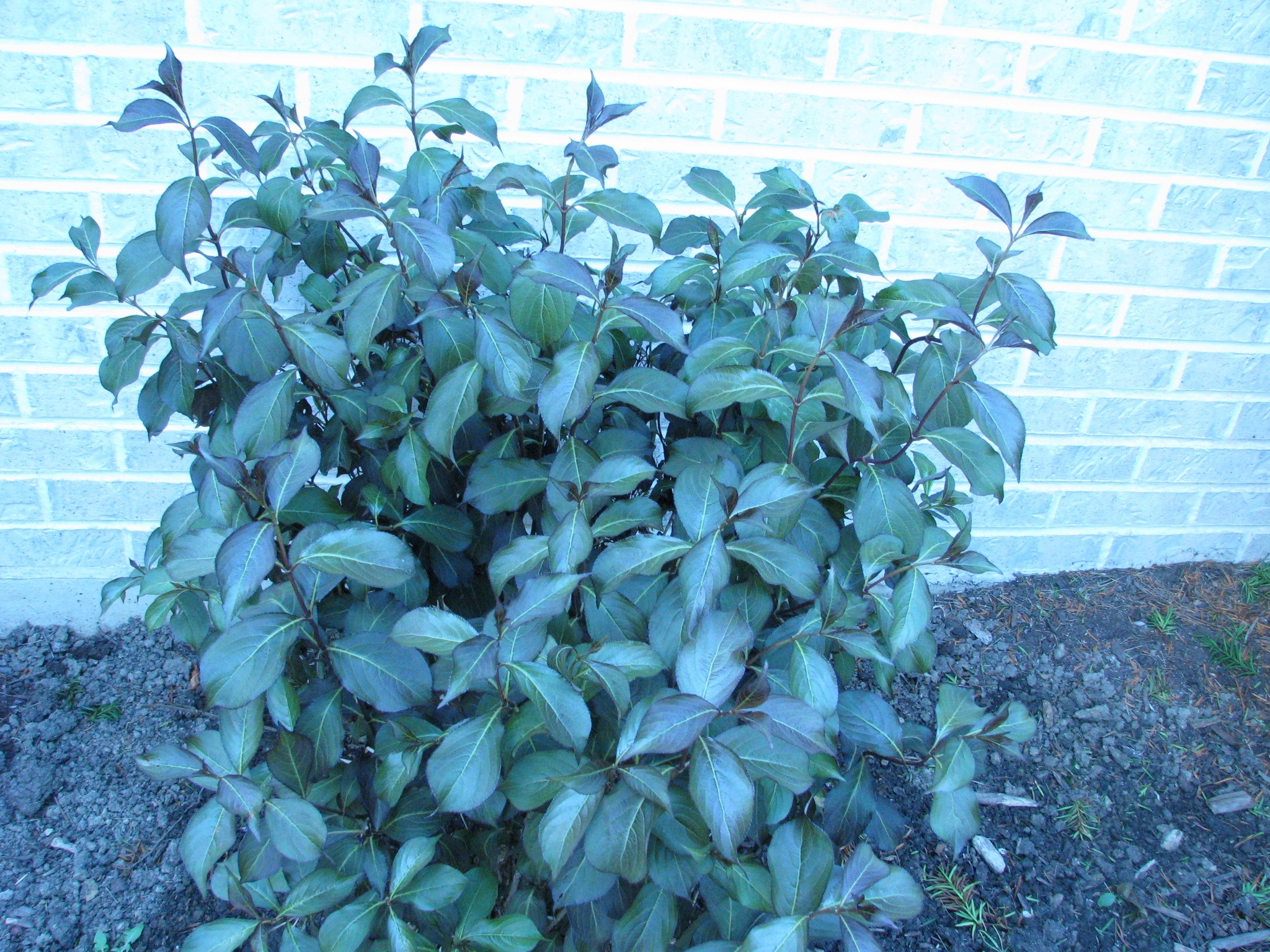
It’s is a difficult place to plant because it is on the north side and under the soffit of the house. Therefore very shady and somewhat dry. The yews have done just fine, but I do give them at least about a watering can full of water dumped right down the center every 2-3 weeks during the summer and into fall. I didn’t want to add more yews, but instead wanted a deciduous plant that could take those conditions. I watched the location for a few weeks and decided it gets about 3 hours max of full sun. I settled on Wine and Roses Weigela. While it would flower better and have darker leaf color in full sun, I think it will look good in the space, and be a good contrast to the yews, even in this less than ideal location. If it does awful, I like the plant enough to move it to a different location after a couple of years.

image

image

image

This area still looks a little sad, especially without the mulch in yet, but I’ve learned in the past to be patient and let plants grow into the space. I’ve had to dig too much up after a few years because too many flowers, shrubs and even trees were planted too close together. Money down the drain! In a few years this will grow to be a healthy plant and not be overflowing the space.

Problem Areas

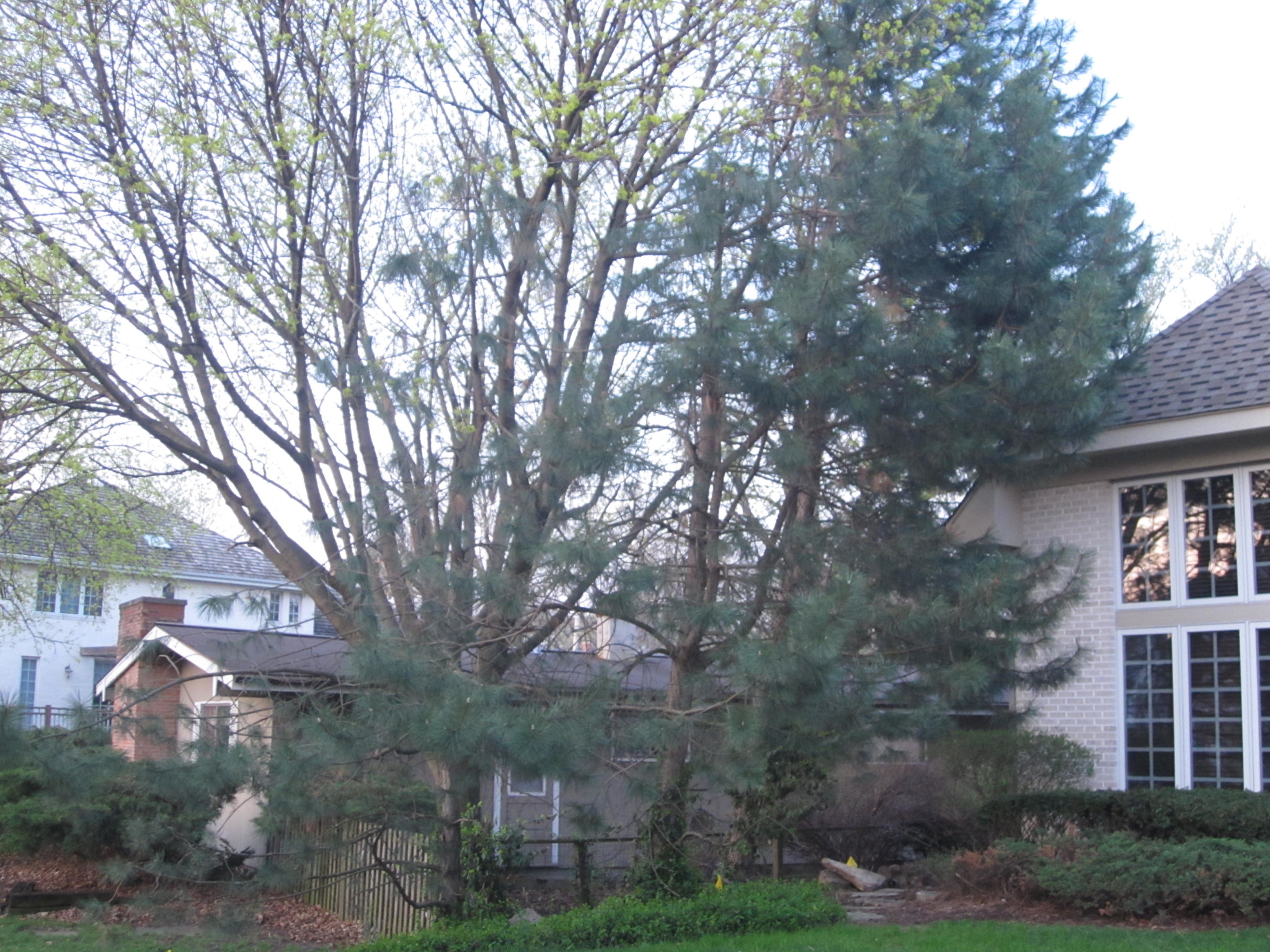
Everyone has problem areas in their yard.  This week, I’m going to show some of ours and some of the solutions we’ve finally come up with.  First was an area off the corner of the house.  When we first moved in, the landscaper designed the space to have 3 large Austrian Pines in the corner with some yews and junipers in front of the window.

IMG_4059
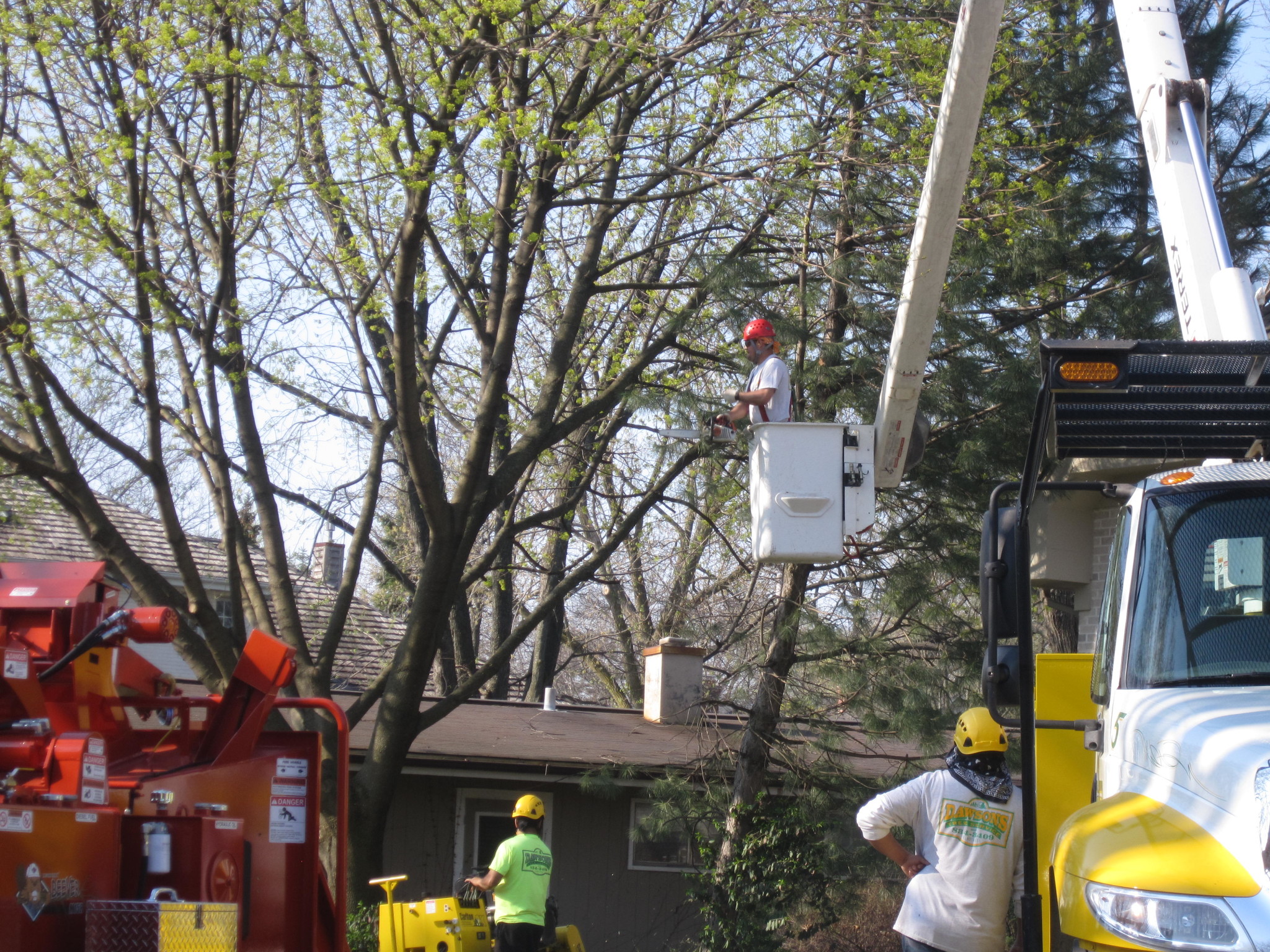
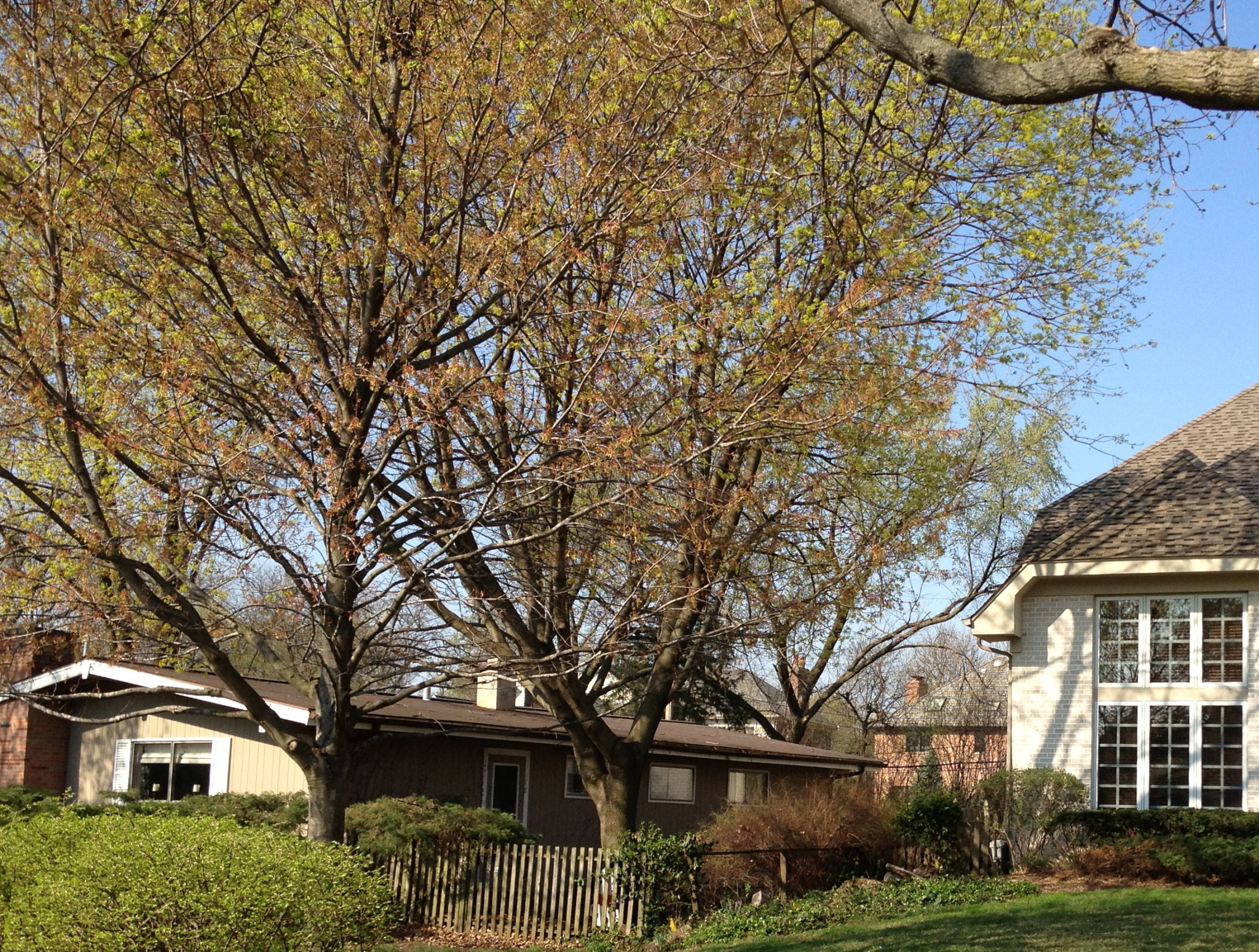
Little did we know that a self-planted maple was growing right next to it in my neighbors yard. It grew extremely rapidly to become one of the biggest trees around the property. It was so dense that it created too much shade for the Austrian Pines to grow properly (and killed off all her shrubs as well). So, last year we finally threw in the towel and had our trees removed to try and fix up this very noticeable part of the garden and house. In the process, we also took out the creeping junipers that were half dead as well from lack of sun.

IMG_4062

IMG_0375 - Version 2

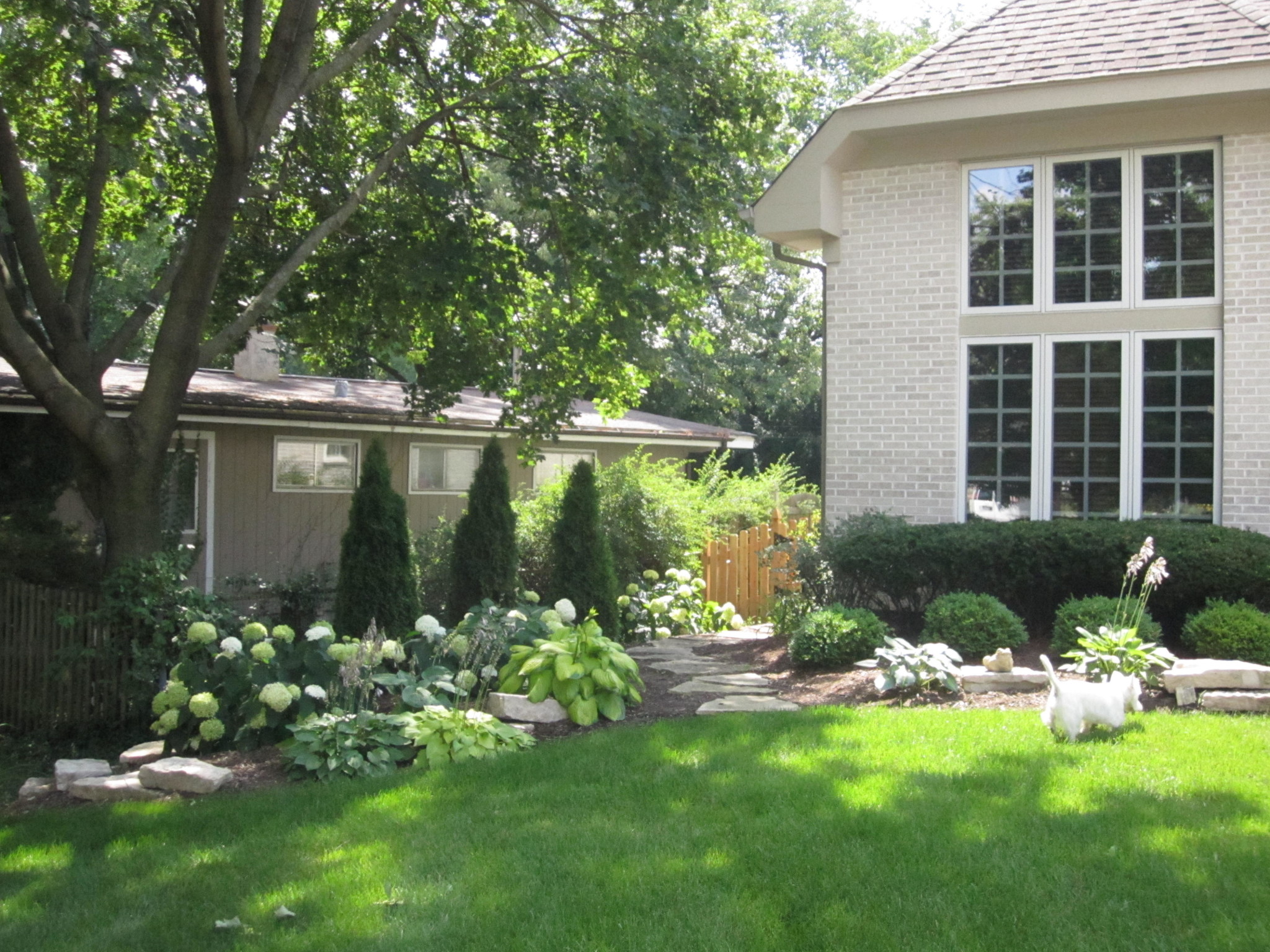
In the new garden we wanted some type of visual distraction from the neighbors fence since that’s where your eyes would go as you walk up the front walk. But, also wanted to keep it fairly low budget and therefore decided on 3  Arborvitaes. They’re one of the few evergreens that will tolerate shade, although their growth will be very slow. We didn’t want a full privacy hedge, just something to distract your eyes.  We happened to have 4 Annabelle hydrangeas on the side of the house that are far too big for the space and by mid season flop over into the main brick walkway to the back of the house. In this new shade garden we created, the hydrangeas would be a perfect plant. They can obviously tolerate the shade and can finally just grow as they want in an appropriate space. Of course, to fill in the rest, I moved some hostas from elsewhere in the yard. We also had some boxwoods added to give the space a more finished, less wild look.

IMG_0703

IMG_0801

IMG_2792

IMG_5512

We think this was a great improvement to the front yard. The only problem we had was that everything was planted/transplanted right before the drought hit last summer. I did a lot of watering to keep all the plants alive and they all survived the drought and the winter.