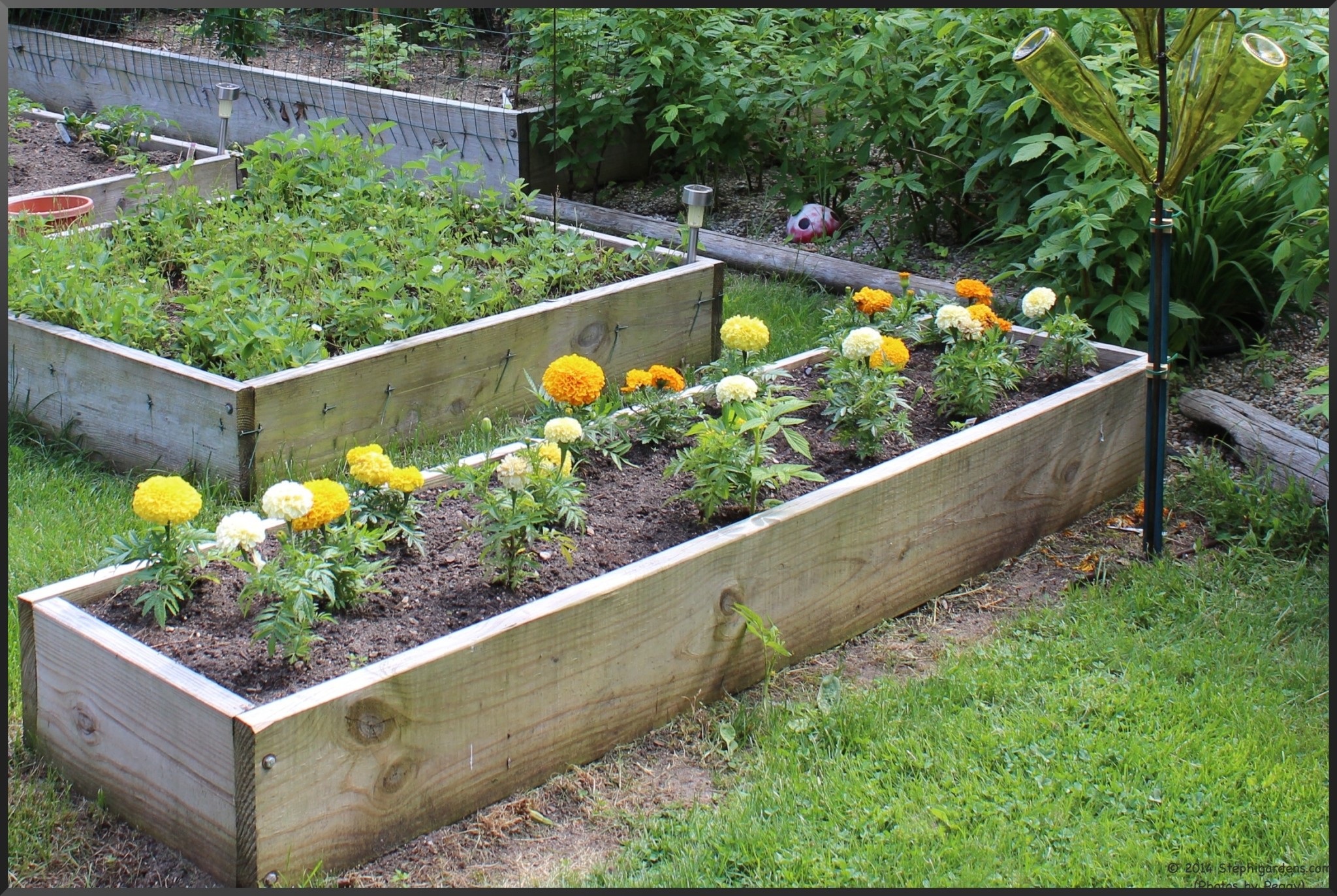
In one of my mom Peggy’s raised beds she had the beginnings of a beautiful bed of huge African Marigolds (Tagetes erecta). If you love marigolds like I do, I couldn’t wait to see how this was going to look in the next few weeks. Then, one morning she woke up to this…
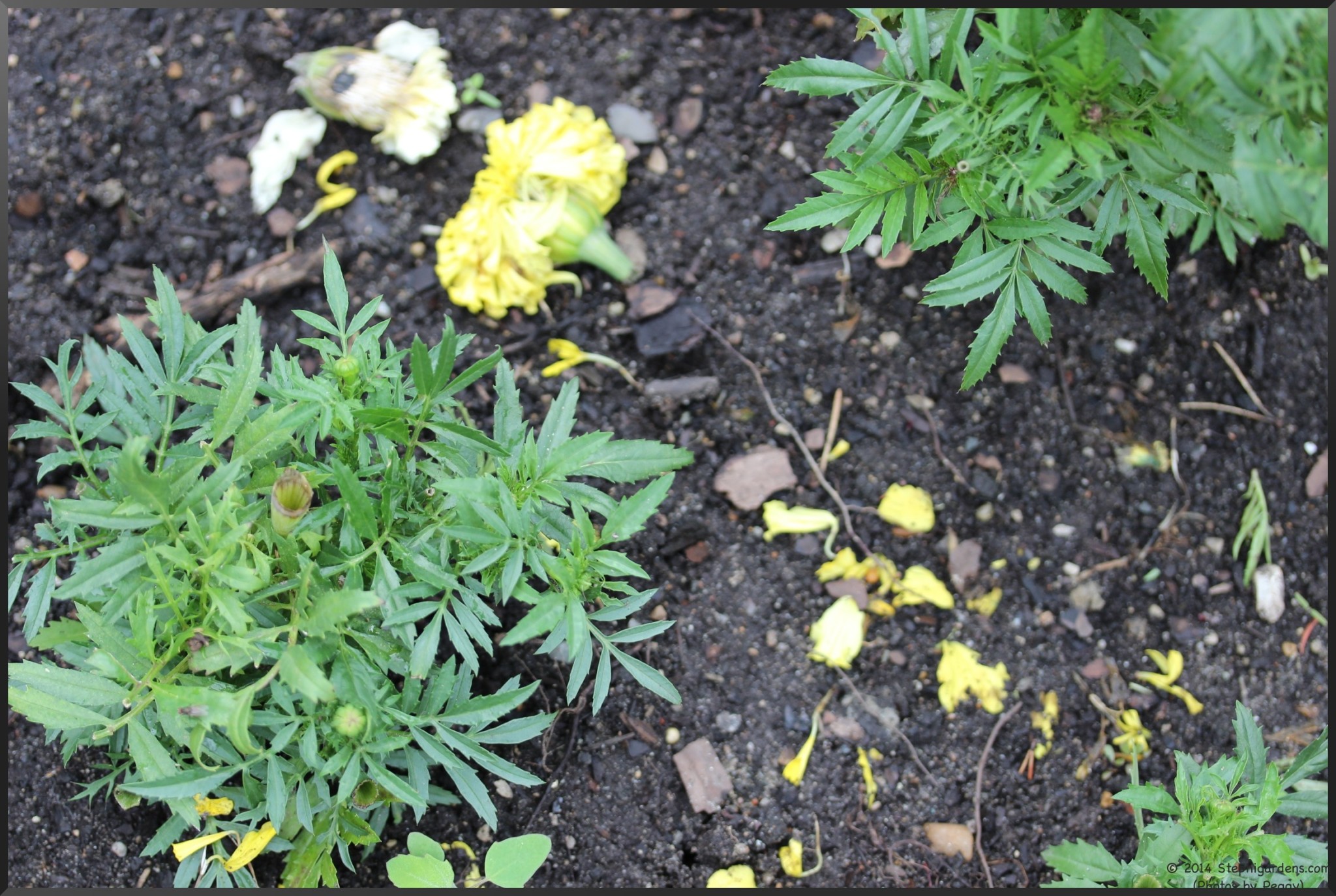
…and I got a frantic text outlining what had happened. Many of the flowers had been cleanly nipped off and petals strewn everywhere. We were puzzled as to how this happened. Weren’t marigolds supposed to repel most garden varmints?Apparently not, after some research and this first hand experience. This could have been the work of rabbits, chipmunks, squirrels, deer and even birds. Based on critter observations and the bed being a little high for rabbits to get in, our best guess is the chipmunks.
We were hoping this was a one night event and the critters would move on, but no such luck. This was the bed the next day.
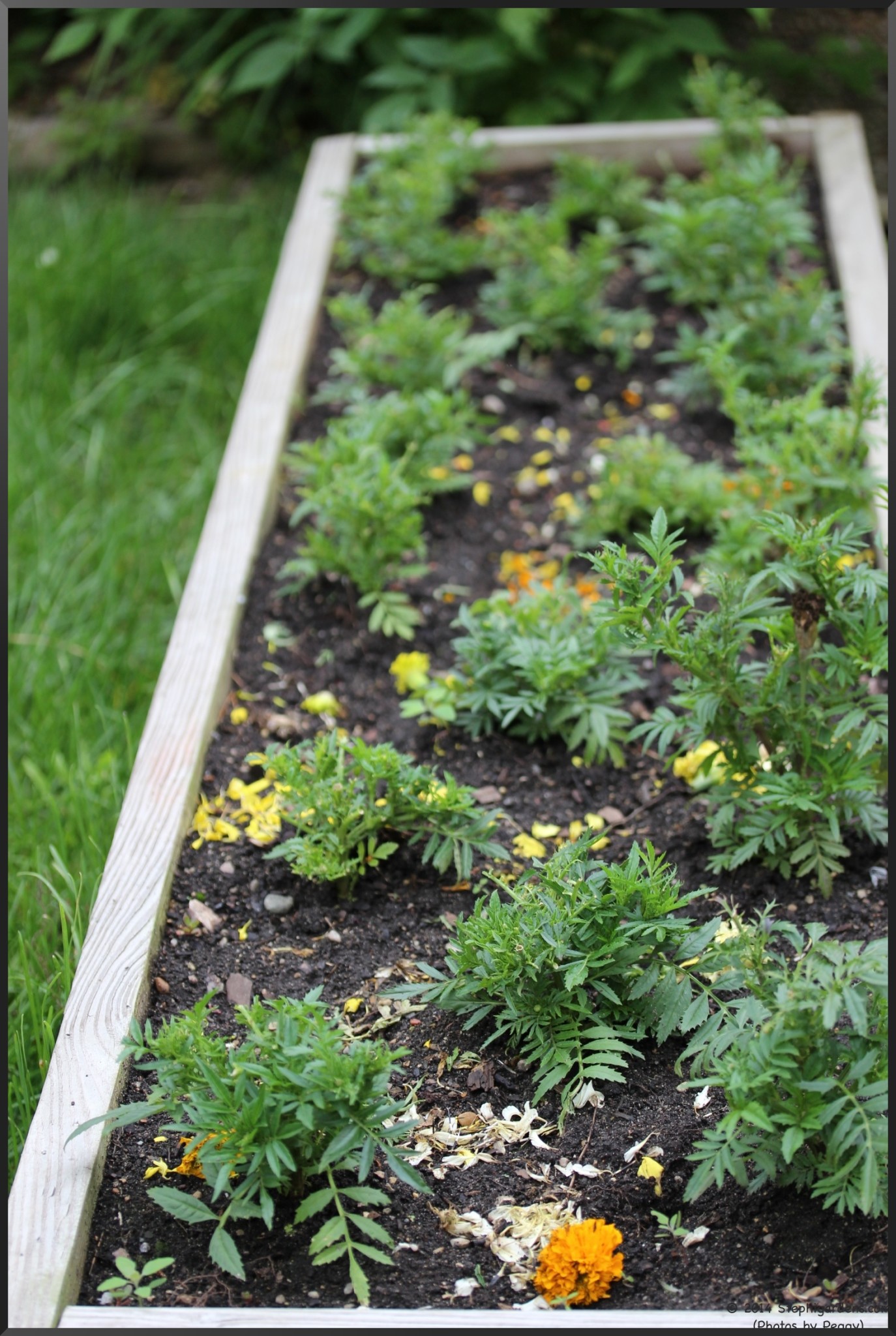
All the flowers cleanly cut off and many shredded. Very disappointing and frustrating. Might be time to put a fence around the bed like some of the others that attract rabbits. But, if it is chipmunks, a fence is not going to help. She’ll need to be even more creative to keep them out, or throw in the towel on the marigolds.
While I haven’t had the same problems with my marigolds, through the years I’ve had more issues with slugs and earwigs. They go more for the foliage, and can really do a lot of damage to the leaves. Best way to diagnose these pests is to go out at night with a flashlight and see what’s going on. When I had smaller gardens I had good luck with a pie plate of beer put out at night. It is a bit gross in the morning, but it does work. These days I have more issues with my hostas being attacked by slugs than I do my marigolds. Because of the larger garden size, I now I use the organic Sluggo slug bait instead when things get bad.
Earwigs (which I just hate probably only second to palmetto bugs) can be beneficial in small numbers but a pest in larger numbers. I’ve had luck trapping them in the beer filled tins with the slugs, or by placing rolled up damp newspapers in the garden at night. In the morning, grab the newspapers and dunk them in a pail of water. Some others have reported that using small tuna sized cans with about a 1/4 inch of cooking oil in it as traps works well too.
Have you ever woken up to find one of your gardens destroyed overnight?